Digital Health Strategies to Fight COVID-19 Worldwide: Challenges, Recommendations, and a Call for Papers
←
→
Page content transcription
If your browser does not render page correctly, please read the page content below
JOURNAL OF MEDICAL INTERNET RESEARCH                                                                                             Fagherazzi et al

     Viewpoint

     Digital Health Strategies to Fight COVID-19 Worldwide:
     Challenges, Recommendations, and a Call for Papers

     Guy Fagherazzi, MSc, PhD; Catherine Goetzinger, MSc; Mohammed Ally Rashid, MD; Gloria A Aguayo, MD, PhD;
     Laetitia Huiart, MD, PhD
     Luxembourg Institute of Health, Strassen, Luxembourg

     Corresponding Author:
     Guy Fagherazzi, MSc, PhD
     Luxembourg Institute of Health
     1 A-B Rue Thomas Edison
     Strassen, 1445
     Luxembourg
     Phone: 352 33669396334
     Email: guy.fagherazzi@lih.lu

     Abstract
     The coronavirus disease (COVID-19) pandemic has created an urgent need for coordinated mechanisms to respond to the outbreak
     across health sectors, and digital health solutions have been identified as promising approaches to address this challenge. This
     editorial discusses the current situation regarding digital health solutions to fight COVID-19 as well as the challenges and ethical
     hurdles to broad and long-term implementation of these solutions. To decrease the risk of infection, telemedicine has been used
     as a successful health care model in both emergency and primary care. Official communication plans should promote facile and
     diverse channels to inform people about the pandemic and to avoid rumors and reduce threats to public health. Social media
     platforms such as Twitter and Google Trends analyses are highly beneficial to model pandemic trends as well as to monitor the
     evolution of patients’ symptoms or public reaction to the pandemic over time. However, acceptability of digital solutions may
     face challenges due to potential conflicts with users’ cultural, moral, and religious backgrounds. Digital tools can provide collective
     public health benefits; however, they may be intrusive and can erode individual freedoms or leave vulnerable populations behind.
     The COVID-19 pandemic has demonstrated the strong potential of various digital health solutions that have been tested during
     the crisis. More concerted measures should be implemented to ensure that future digital health initiatives will have a greater
     impact on the epidemic and meet the most strategic needs to ease the life of people who are at the forefront of the crisis.

     (J Med Internet Res 2020;22(6):e19284) doi: 10.2196/19284

     KEYWORDS
     coronavirus; COVID-19; digital health; eHealth; digital technology; health care; surveillance; communication; review; epidemiology;
     infodemiology; public health

                                                                           East respiratory syndrome (MERS), severe acute respiratory
     Background                                                            syndrome (SARS), or Ebola virus [3]. Second, COVID-19 can
     Countries around the world have been affected by the                  be considered as the first true global epidemic of this magnitude
     COVID-19 pandemic since December 2019 [1], and the health             in the digital era; digital health solutions, which have reached
     care systems in these countries are rapidly adapting to the           a certain level of maturity but are not widely deployed and
     increasing demand. The World Health Organization (WHO)                accepted yet, can play a major part in our response to the crisis
     has called for coordinated mechanisms to support the response         [4]. Indeed, the COVID-19 pandemic is occurring in an era of
     to the outbreak across health sectors, and digital health solutions   massive technological advancement. Digital tools can effectively
     have been identified as one of the most promising approaches          support institutions during a pandemic by facilitating the
     to address this challenge in modern societies [2].                    immediate widespread distribution of information [5], tracking
                                                                           transmission in real time, creating virtual venues for meetings
     The COVID-19 pandemic is singular in many ways. First, in             or day-to-day operations, and providing telemedicine visits for
     terms of number of people infected, transmissibility, and             patients [6]. However, some digital health strategies and tools
     spectrum of clinical severity, it has had a greater impact to date    may face challenges associated with barriers to access,
     than previous epidemics such as pandemic influenza, Middle            acceptability, and ethical issues. For instance, some governments

     http://www.jmir.org/2020/6/e19284/                                                             J Med Internet Res 2020 | vol. 22 | iss. 6 | e19284 | p. 1
                                                                                                                  (page number not for citation purposes)
XSL• FO
RenderX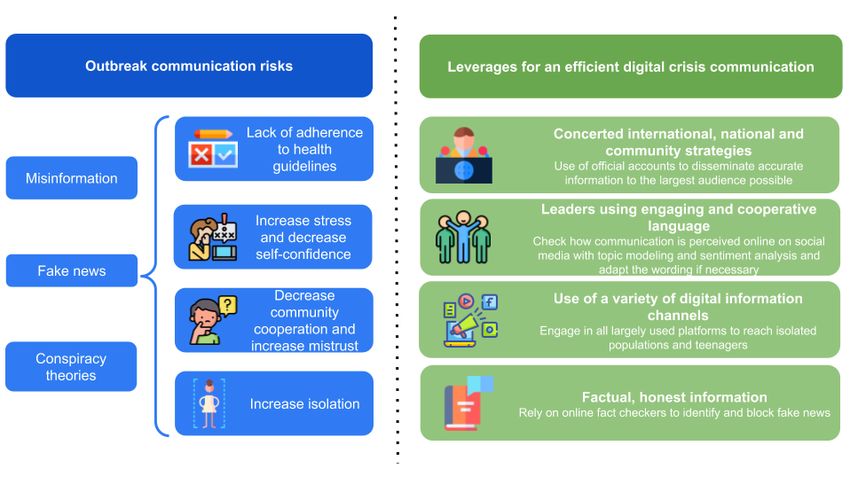
JOURNAL OF MEDICAL INTERNET RESEARCH                                                                                                       Fagherazzi et al

     worldwide are responding to this public health emergency with
     an unprecedented array of surveillance tools designed to identify
                                                                                  Digital Health Care Models
     and track people who may be infectious [7]. These measures                   New health care models are needed during the COVID-19
     have escalated existing debates regarding individual privacy                 pandemic. Due to the high transmission rate of COVID-19,
     and government oversight of private citizens.                                most countries have ordered strict lockdowns; hence,
     The COVID-19 pandemic is providing a starting point to discuss               patient-physician communication and visits are challenging. In
     how digital health solutions can and should be leveraged to                  the era of digital health technologies, the focus on new models
     address this unprecedented crisis [8]. This editorial offers an              has shifted to telehealth (virtual visits, virtual care), mobile apps
     overview of the digital health strategies that have been employed            (remote patient monitoring), and websites and chatbots (risk
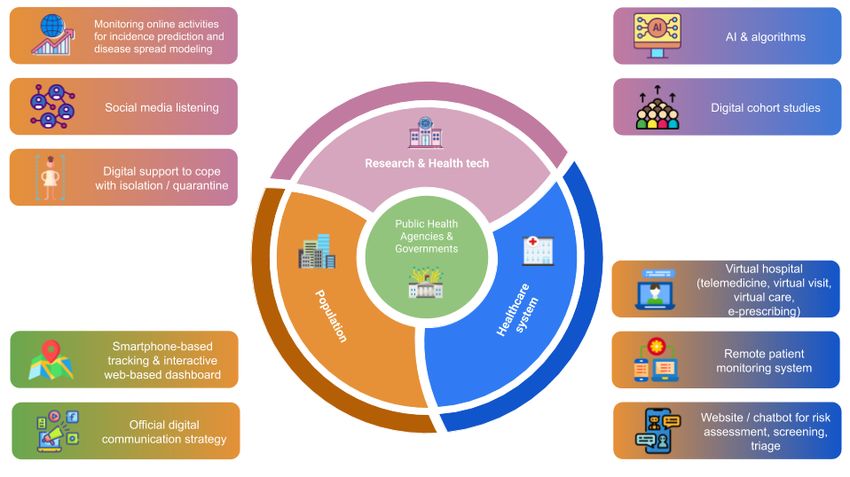
     worldwide to fight COVID-19 to date as well as a discussion                  assessment, screening, triage). Figure 1 describes the main
     of the challenges to developing more meaningful [9] and ethical              stakeholders at the forefront of the COVID_19 crisis (the
     solutions in the near future.                                                population, the health care systems, and the research and health
                                                                                  technology environment in coordination with public health
                                                                                  agencies or governments) with significant illustrations of
                                                                                  efficient digital health strategies that have been implemented
                                                                                  to date at various levels.
     Figure 1. The COVID-19 digital health ecosystem. AI: artifical intelligence; e-prescribing: electronic prescribing; tech: technology.

                                                                                  established in Luxembourg (Predi-COVID) to study factors
     Telemedicine and Remote Patient                                              associated with COVID-19 disease severity; this study uses data
     Monitoring Systems                                                           from the national telesurveillance system that is used for
                                                                                  virtually all patients who tested positive for COVID-19 and
     Telemedicine allows patients to receive care at home [10], thus              combines the data with biological sampling, electronic
     avoiding the spread of COVID-19 in overcrowded emergency                     patient-reported outcomes, and innovative digital data
     or waiting rooms [11]. Telemedicine not only supports secured                collections such as smartphone-based voice recording to identify
     care for COVID-19 patients but also allows routine primary                   vocal biomarkers of respiratory syndromes. In another study,
     care and electronic prescriptions (e-prescriptions). In addition,            Wang et al [13] described armband sensors that can remotely
     health care professionals can screen and monitor symptoms in                 measure the accuracy of hand hygiene based on WHO
     real time, provide useful medical advice when needed, and keep               procedures.
     stable patients at home away from overloaded hospitals [12].
     Additionally, these tools can serve as useful resources to rapidly           Triage and Risk Assessment
     collect meaningful information on large cohorts of patients to
     study the evolution of their symptoms in real time; this increases           The COVID-19 virus has caused panic and uncertainty within
     understanding of the different clinical phenotypes of people                 populations; to ensure better allocation of resources,
     infected with COVID-19 and enables the study of its long-term                telemedicine based on videoconferences can be used not only
     health consequences. Such a prospective cohort was recently                  to comfort patients but also for triage [14]. Hollander et al [15]

     http://www.jmir.org/2020/6/e19284/                                                                       J Med Internet Res 2020 | vol. 22 | iss. 6 | e19284 | p. 2
                                                                                                                            (page number not for citation purposes)
XSL• FO
RenderX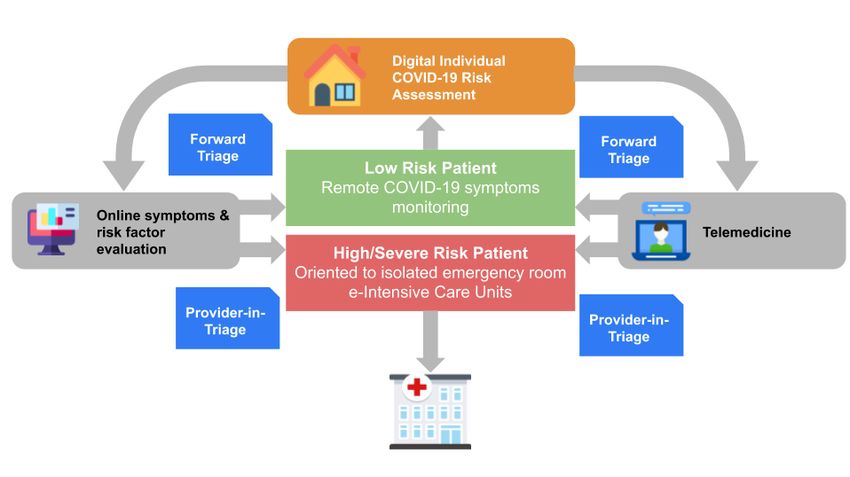
JOURNAL OF MEDICAL INTERNET RESEARCH                                                                                                  Fagherazzi et al

     highlighted that telemedicine can serve as a triage system in            have launched within-hospital telemedicine programs. A robot
     different phases. The first stage is “forward triage;” here,             enters the room of a patient infected with COVID-19 to monitor
     patients are categorized as possibly COVID-19 infected or                both vital and cardiac signs and enable communication between
     uninfected before they arrive at the hospital. In addition,              the patient and health care professionals where applicable. All
     telemedicine ensures close monitoring of less severely infected          the robot’s actions are controlled by nurses or physicians outside
     patients at home by allowing communication around the clock.             the room [16]. Figure 2 shows the typical path of an individual
     The second phase of triage occurs in the hospital and is referred        from the time they have questions about their health or
     to as the “provider-in-triage model.” In this phase, patients at         symptoms potentially related to COVID-19. Digital technologies
     high risk for COVID-19 are screened by rapid evaluation of               now enable online symptom checks, video consultations, and
     clinical characteristics and testing. Patients are kept in isolated      e-prescriptions and allow forward triage instead of overloading
     emergency rooms, where they are given tablet devices to                  hospitals and increasing the spread of the virus. Low-risk
     communicate with professionals [15]; the tablets are cleaned             patients can be regularly monitored from home, whereas patients
     between patients. To reduce risk of infection among health care          with more severe symptoms can be monitored at hospitals with
     professionals, hospitals have also implemented electronic                a provider-in-triage using digital tools.
     intensive care unit monitoring. For example, a few countries
     Figure 2. Risk assessment and triage of COVID-19 in a digital health care model. COVID-19: coronavirus disease.

     Web-based symptom trackers such as maladiecoronavirus.fr                 and treatment of the disease have been present on the internet
     [17] in France and beatcovid19now.org [18] in Australia were             and in government communications, social media, and SMS
     rapidly established to help individuals assess their risk for            text messages. These communication problems also cause
     COVID-19; these trackers are being updated as knowledge of               confusion and mistrust; the consequences are negative at both
     COVID-19 evolves. Site users must answer several questions               the individual and community levels. To provide the most useful
     to feed the risk prediction algorithms; then, based on risk              information in a timely fashion, effective digital risk
     stratification, the website advises the user to call a hotline to        communication has been established internationally by WHO
     receive further instructions or to stay at home and follow               as well as nationally and regionally through an active factual
     international guidelines. Similarly, chatbots such as Symptoma           information campaign using several digital channels. Good
     are systems that digitally assist individuals in performing risk         communication strategies help manage people's fear and increase
     assessment of COVID-19 [19].                                             the likelihood that they will adhere to the measures imposed on
                                                                              them during the crisis. Risk communication promotes
     Digital Communication During the                                         community engagement, avoids or decreases the profusion of
                                                                              rumors, and reduces threats to public health. However, poor
     Pandemic                                                                 risk communication can create a great deal of confusion,
     Communication between political leaders and scientific                   frustration, and future mistrust of leaders. Communication in
     authorities is crucial during a pandemic crisis [20] (Figure 3).         epidemics must not only be clear and unambiguous but must
     Since the start of the COVID-19 pandemic, disinformation,                also reach the target population quickly (health workers, local
     “fake news,” and conspiracy theories about the origin, spread,           authorities, and the public). For instance, guidelines around

     http://www.jmir.org/2020/6/e19284/                                                                  J Med Internet Res 2020 | vol. 22 | iss. 6 | e19284 | p. 3
                                                                                                                       (page number not for citation purposes)
XSL• FO
RenderX
JOURNAL OF MEDICAL INTERNET RESEARCH Fagherazzi et al
practicing social distancing have been judged to be unclear and stimulated, especially for older persons [21]. Digital methods
prone to misunderstanding. These guidelines should be followed appear to be promising solutions, as they enable people to
with more direct messages, such as “stay at home,” especially maintain physical distance while keeping informed or
to clarify the concept of social distancing for vulnerable maintaining contact with others; for example, the WhatsApp
populations or younger people. The WHO webpage uses the messaging platform provides health alerts in different languages
phrase “physical distance” in addition to “social distance” to [22].
emphasize this necessity. However, social contact must be
Figure 3. Communication risks and strategies during disease outbreaks.
In addition, digital health can play a major role at a communication tool, and for detecting and supporting people
governmental level. Government initiatives have been taken to at risk [25]. An example of a communication strategy that was
provide guidelines and information on government websites to developed very quickly and effectively to fight fear and rumors
inform the population about appropriate behavior during the among a population is the sending of messages by the
lockdown period, hand hygiene, etc. Most of these initiatives government of Singapore through WhatsApp [26]. Finally, a
were supported by international guidelines from WHO or the strategy to include marginalized and vulnerable populations
US Centers for Disease Control and Prevention (CDC). should be planned. Such a strategy should involve establishing
multiple means of communication, including digital platforms;
The use of apps or instant messaging services to enable
using adequate, simple, and nondiscriminatory language; and
ministries or health agencies to contact health workers remotely
taking differences in health literacy into account [27].
and to inform government officials about the number of cases,
symptoms, and prevention measures are just a few examples of
measures that have been efficiently used in previous pandemics
Digital Data to Model COVID-19 Spread,
[23] or early in the COVID-19 crisis [22]. A crucial consequence Evolution, and Perception
of a bad risk communication strategy is the likelihood of
increased levels of anxiety within the population. Contradictory The monitoring of online or social media activities for public
information and overexposure to sensationalist headlines from health purposes has been investigated since the first days of the
mass media and social media can affect people’s mental health digital epidemiology field in the early 2010s, with the objective
and increase the general level of fear. Lockdown can amplify of capturing health-related trends and modeling disease
the problem due to increased exposure to social media and outbreaks. The most famous examples of internet health
rumors as well as lack of confrontation of ideas and debate in surveillance were developed to predict the incidence of
the real world [24]. Consequently, lockdown reinforces the influenza, such as Google Flu Trends, or to obtain insights from
importance of institutional development of digital strategies. social media platforms such as Twitter about influenza A/H1N1
Therefore, during the outbreak, official communication plans [28], measles [29], the Zika virus [30], and the Ebola virus
should promote easily accessible and diverse channels of digital [31,32]. Despite their high potential in public health, these
communication at all stages and for different purposes (global, studies have been criticized for their lack of theorization and
regional, and community-based communication). These channels appropriate standard methodology [33], which can prevent
should be integrated as an information system, as a comparison of their results and raises questions regarding the
http://www.jmir.org/2020/6/e19284/ J Med Internet Res 2020 | vol. 22 | iss. 6 | e19284 | p. 4
(page number not for citation purposes)
XSL• FO
RenderXJOURNAL OF MEDICAL INTERNET RESEARCH Fagherazzi et al
safety of relying on their findings to design targeted public they are applied in high-income, medium-income, or low-income
health measures in the real world. To move beyond the simplistic areas or when they are deployed in individualistic versus
thought that Twitter is a “giant playground” for data scientists, collectivistic countries [49].
ongoing initiatives to use Twitter data to study the COVID-19
In Singapore, an app called TraceTogether has been used to
outbreak should build upon previous mistakes, with a more
track patients infected with COVID-19. Based on Bluetooth
rigorous approach as well as an open source/open data mentality.
signaling, Singaporean health authorities can track individuals
Online activities are very good indicators of trends in society. and inform them if they have been in contact with a patient
Exploiting data such as Google Trends [34], Wikipedia searches, infected with COVID-19 [50]. This patient monitoring system
or the Baidu Index and Weibo Index in China has already proved may be beneficial in disease surveillance and outbreak
useful. In China, internet searches and social media data related management; however, in European countries, it would not be
to COVID-19 have been shown to be highly correlated with possible to use it due to individual data protection laws. France
daily disease incidence and exhibit an online peak 10 to 14 days conceived the CoronApp, which is based on similar standards
before the peak of daily incidences in the real world [35]. [51]. Individuals need to register on the app and provide
Although there are few reports to date, such data sources could information on their health status and whether they have
also prove useful for early identification of less common symptoms. A geolocation system is used to trace this
symptoms related to COVID-19 using a similar approach to information and is updated every hour. King's College London
that used to detect weak pharmacovigilance signals from social conceived the COVID Symptom Tracker app, which aims to
media and identify side effects of drugs [36]. The main help patients monitor their own symptoms [52]. The app gained
advantage of these data sources is that they can be accessed such popularity that it is now also used in the United States. In
early in the epidemic and at low cost. addition to its individual benefits, the app can be used for
research purposes to study the epidemiology of COVID-19.
However, predicting disease incidence from online activities or
social media data has never been used in a real time prospective Urged by the European Commission, an unprecedented
fashion for public health guidance on a large scale; rather, such consortium of eight giant telecommunications companies
predictions are performed retrospectively by training algorithms recently agreed to share aggregated and anonymized geolocation
to replicate gold-standard data, such as those obtained from the data from their clients to track their movements and activities.
CDC [37], as closely as possible. COVID-19 may be the first This raises numerous questions around data privacy [53] and
outbreak where such a prospective analysis occurs, combining ethics in Western and African countries [54], despite the
data from standard sources of disease surveillance with social availability of privacy-preserving proximity tracing technology
media data or activity trackers [38] to improve overall accuracy. such as the Decentralized Privacy-Preserving Proximity Tracing
(DP-3T) protocol [55]. In Asia, the response to the COVID-19
Social media data analysis is also relevant during the COVID-19
crisis in South Korea has received much attention and has been
outbreak to monitor how people react to the pandemic evolution
widely cited as an exemplary model. With the increased
over time (sentiment, anxiety, level of stress) as well as common
flexibility in South Korea’s digital privacy laws since the MERS
beliefs, opinions [39,40], fears, or hopes regarding treatment or
crisis in 2015, numerous aggressive digital solutions have been
vaccines. Perhaps most importantly, identifying and combating
used, such as a national smartphone app, GPS tracking of
the spread of “fake news” about COVID-19 is highly necessary
infected people, and detailed emergency alerts when a positive
in our modern digital society [41,42]. This could help to
case has been identified in a person’s geographical area.
rationalize the debates and actions around COVID-19 and should
However, it was proved that this approach was only efficient
be further extended [43].
to reduce the number of new daily cases due to a vast parallel
testing campaign to identify COVID-19 hotspots combined with
Discussion strong isolation and quarantine measures. In Europe, where
Challenges Related to Digital Health Implementation testing is not as widespread as in South Asia, the use of such
monitoring using GPS coordinates is therefore ethically
The COVID-19 crisis is a typical example of the impossibility questionable.
of establishing a single global technological solution to a given
problem. To increase acceptability of digital technologies, the Regarding telehealth, the challenge of implementing feasible
different cultural, moral, and religious backgrounds of users systems lies with governments in most cases [56], as billing
should be considered. With priority given to collective public systems must be adapted [15]. Telemedicine consultations must
health benefit and maintaining local social order during the also ensure patient security in terms of data protection. Hence,
current emergency [44], digital measures can be intrusive and close collaborations between different actors, such as health
can erode individual freedoms. In some countries, a strong care professionals, health technology companies, and health
digital divide persists today, and vulnerable populations may politicians, must be ensured [15]. Once such a system is running,
be overlooked during the implementation of digital approaches both patients and health care professionals can benefit from
[45-47]. Digital solutions may be less frequently understood better allocation of resources and adequate care, all with reduced
and used by people with low health literacy levels or by specific risk of exposure. Telemedicine and digital technologies such
subgroups such as minorities, older individuals, or people who as apps can also play larger roles in the present crisis not only
live in rural or low-income areas [48]. For all these reasons, to fight COVID-19 but also to address the frequent health issues
digital approaches can be received in very different ways when associated with isolation or quarantine, such as psychological
needs [57], mental health conditions [58], and physical inactivity
http://www.jmir.org/2020/6/e19284/ J Med Internet Res 2020 | vol. 22 | iss. 6 | e19284 | p. 5
(page number not for citation purposes)
XSL• FO
RenderXJOURNAL OF MEDICAL INTERNET RESEARCH Fagherazzi et al
[59]. Lastly, some developing countries face major obstacles the COVID-19 pandemic [63]. The German health ministry
to the effective delivery of digital health solutions in rural and even claims that they now aim to accelerate the digitization of
remote locations, such as incomplete or insufficient basic digital health care in Germany and help to translate new laws into
infrastructures (eg, computers, internet networks, and practical solutions.
electricity), lack of sustainable funding to develop, operate, and
Digital initiatives to fight COVID-19 should be relevant to both
maintain digital platforms, and high telecommunication costs
hospital and public health systems, adapted to the population,
[4,60,61].
rapidly deployable, and capable of evolving with the growth of
Recommendations to Improve Future Digital Health the body of knowledge related to COVID-19. Regarding
Systems common standards for data collection in digital COVID-19
solutions, future initiatives should consider the example of
In France, where the COVID-19 epidemic is growing at a rapid
ISARIC (the International Severe Acute Respiratory and
pace, the health technology ecosystem has rapidly and
emerging Infection Consortium [64]), who successfully
generously contributed to management of the crisis. Numerous
organized clinical research on COVID-19 by providing
telemedicine and telemonitoring platforms have been locally
standardized but customizable clinical research forms in several
deployed in hospitals or general practices. However, a lack of
languages, ensuring a harmonized core set of international and
coordination between operators has led to issues such as an
comparable data, or the DP-3T initiative, an open
absence of consensus about the symptoms to monitor and the
implementation of a decentralized privacy-preserving proximity
alert systems to establish. We could argue that some
tracing solution [65].
telemonitoring is better than no monitoring; however, given the
rapidly evolving body of knowledge around COVID-19, more Conclusion
transparent communication and greater comparability should Time is key to fight COVID-19, and digital health solutions
be pursued to rapidly and homogeneously update the different provide the opportunity to buy time and human resources. As
solutions. Otherwise, some populations will lose the opportunity the COVID-19 pandemic is the first true global health crisis in
to gather this data and later use it for research or evaluation. the digital era, we have observed and will observe a plethora of
In previous emergency situations such as the Ebola virus digital solutions. This pandemic has at least demonstrated the
outbreak, Hurricane Harvey, and Hurricane Irma, as well as usefulness and reactivity of digital health solutions and
currently during the COVID-19 pandemic, telehealth has been constitutes an opportunity to insert these solutions into our
explored to support patient-physician communication and, health care systems in the long term. This creates an urgent need
hence, improved health outcomes. It must be ensured that for policy makers, researchers, and health professionals to
outside of emergency situations, telehealth will be appropriately collectively and efficiently implement digital solutions into
implemented into national health care systems in the long term. practice without further fragmenting the existing landscapes of
This would facilitate use of telehealth systems during outbreaks care. We now call for more concerted measures to have an
[62]. Germany is an example of a country where early optimal impact on the epidemic and to address the most strategic
implementation of telemedicine and mobile apps into the health needs to ease the life of people who are at the forefront of the
care sector since 2018 have shown short-term benefits during COVID-19 crisis [66].
Acknowledgments
GF and LH are supported by the Luxembourg National Research Fund (FNR) (Predi-COVID, Grant Number 14716273).
Conflicts of Interest
None declared.
References
1. Zhu N, Zhang D, Wang W, Li X, Yang B, Song J, China Novel Coronavirus Investigating and Research Team. A Novel
Coronavirus from Patients with Pneumonia in China, 2019. N Engl J Med 2020 Feb 20;382(8):727-733 [FREE Full text]
[doi: 10.1056/NEJMoa2001017] [Medline: 31978945]
2. World Health Organization. 2020 Mar 07. Responding to community spread of COVID-19: interim guidance, 7 March
2020 URL: https://apps.who.int/iris/handle/10665/331421 [accessed 2020-06-08]
3. Lipsitch M, Swerdlow DL, Finelli L. Defining the Epidemiology of Covid-19 - Studies Needed. N Engl J Med 2020 Mar
26;382(13):1194-1196. [doi: 10.1056/NEJMp2002125] [Medline: 32074416]
4. Mahmood S, Hasan K, Colder Carras M, Labrique A. Global Preparedness Against COVID-19: We Must Leverage the
Power of Digital Health. JMIR Public Health Surveill 2020 Apr 16;6(2):e18980 [FREE Full text] [doi: 10.2196/18980]
[Medline: 32297868]
5. Center for Systems Science and Engineering at Johns Hopkins University. COVID-19 Dashboard URL: https://coronavirus.
jhu.edu/map.html [accessed 2020-04-21]
http://www.jmir.org/2020/6/e19284/ J Med Internet Res 2020 | vol. 22 | iss. 6 | e19284 | p. 6
(page number not for citation purposes)
XSL• FO
RenderXJOURNAL OF MEDICAL INTERNET RESEARCH Fagherazzi et al
6. Reeves JJ, Hollandsworth HM, Torriani FJ, Taplitz R, Abeles S, Tai-Seale M, et al. Rapid response to COVID-19: health
informatics support for outbreak management in an academic health system. J Am Med Inform Assoc 2020 Jun
01;27(6):853-859 [FREE Full text] [doi: 10.1093/jamia/ocaa037] [Medline: 32208481]
7. Power B. The Washington Post. 2020 Mar 27. The coronavirus is expanding the surveillance state. How will this play out?
URL: https://www.washingtonpost.com/politics/2020/03/27/
coronavirus-is-expanding-surveillance-state-how-will-this-play-out/ [accessed 2020-04-21]
8. Ohannessian R, Duong TA, Odone A. Global Telemedicine Implementation and Integration Within Health Systems to
Fight the COVID-19 Pandemic: A Call to Action. JMIR Public Health Surveill 2020 Apr 02;6(2):e18810 [FREE Full text]
[doi: 10.2196/18810] [Medline: 32238336]
9. Pérez Sust P, Solans O, Fajardo JC, Medina Peralta M, Rodenas P, Gabaldà J, et al. Turning the Crisis Into an Opportunity:
Digital Health Strategies Deployed During the COVID-19 Outbreak. JMIR Public Health Surveill 2020 May 04;6(2):e19106
[FREE Full text] [doi: 10.2196/19106] [Medline: 32339998]
10. Greenhalgh T, Wherton J, Shaw S, Morrison C. Video consultations for covid-19. BMJ 2020 Mar 12;368:m998. [doi:
10.1136/bmj.m998] [Medline: 32165352]
11. Greenhalgh T, Koh GCH, Car J. Covid-19: a remote assessment in primary care. BMJ 2020 Mar 25;368:m1182. [doi:
10.1136/bmj.m1182] [Medline: 32213507]
12. Hong Z, Li N, Li D, Li J, Li B, Xiong W, et al. Telemedicine During the COVID-19 Pandemic: Experiences From Western
China. J Med Internet Res 2020 May 08;22(5):e19577 [FREE Full text] [doi: 10.2196/19577] [Medline: 32349962]
13. Wang C, Sarsenbayeva Z, Chen X, Dingler T, Goncalves J, Kostakos V. Accurate Measurement of Handwash Quality
Using Sensor Armbands: Instrument Validation Study. JMIR Mhealth Uhealth 2020 Mar 26;8(3):e17001 [FREE Full text]
[doi: 10.2196/17001] [Medline: 32213469]
14. Gong K, Xu Z, Cai Z, Chen Y, Wang Z. Internet Hospitals Help Prevent and Control the Epidemic of COVID-19 in China:
Multicenter User Profiling Study. J Med Internet Res 2020 Apr 14;22(4):e18908 [FREE Full text] [doi: 10.2196/18908]
[Medline: 32250962]
15. Hollander JE, Carr BG. Virtually Perfect? Telemedicine for Covid-19. N Engl J Med 2020 Apr 30;382(18):1679-1681.
[doi: 10.1056/NEJMp2003539] [Medline: 32160451]
16. HealthManagement. COVID-19: What Can Healthcare Learn? URL: https://healthmanagement.org/c/healthmanagement/
issuearticle/covid-19-what-can-healthcare-learn [accessed 2020-04-22]
17. maladiecoronavirus.fr. URL: https://maladiecoronavirus.fr/ [accessed 2020-06-08]
18. Beat COVID-19 Now. URL: https://beatcovid19now.org/ [accessed 2020-06-08]
19. Martin A, Nateqi J, Gruarin S, Munsch N, Abdarahmane I, Knapp B. An artificial intelligence based first-line defence
against COVID-19: digitally screening citizens for risks via a chatbot Internet. bioaRxiv 2020 Apr 06:preprint. [doi:
10.1101/2020.03.25.008805]
20. Wetsman N. The Verge. 2020 Mar 04. Effective communication is critical during emergencies like the COVID-19 outbreak
URL: https://www.theverge.com/2020/3/4/21164563/coronavirus-risk-communication-cdc-trump-trust [accessed 2020-04-21]
21. World Health Organization. 2020 Mar 27. Mental health and psychological resilience during the COVID-19 pandemic
URL: http://www.euro.who.int/en/health-topics/health-emergencies/coronavirus-covid-19/news/news/2020/3/
mental-health-and-psychological-resilience-during-the-covid-19-pandemic [accessed 2020-04-21]
22. World Health Organization. WHO Health Alert brings COVID-19 facts to billions via WhatsApp URL: https://www.who.int/
news-room/feature-stories/detail/who-health-alert-brings-covid-19-facts-to-billions-via-whatsapp [accessed 2020-04-21]
23. ICTworks. 2017 Jan 25. How We Fought Ebola with Information - ICTworks Internet URL: https://www.ictworks.org/
how-we-fought-ebola-with-information/ [accessed 2020-04-21]
24. Ni MY, Yang L, Leung CMC, Li N, Yao XI, Wang Y, et al. Mental Health, Risk Factors, and Social Media Use During
the COVID-19 Epidemic and Cordon Sanitaire Among the Community and Health Professionals in Wuhan, China:
Cross-Sectional Survey. JMIR Ment Health 2020 May 12;7(5):e19009 [FREE Full text] [doi: 10.2196/19009] [Medline:
32365044]
25. Ryan G, De Silva M, Terver JS, Ochi OP, Eaton J. Information systems for global mental health. Lancet Psychiat 2015
May;2(5):372-373. [doi: 10.1016/S2215-0366(15)00097-8] [Medline: 26360265]
26. Basu M. GovInsider. 2020 Mar 03. Exclusive: How Singapore sends daily Whatsapp updates on coronavirus URL: https:/
/govinsider.asia/innovation/singapore-coronavirus-whatsapp-covid19-open-government-products-govtech/ [accessed
2020-04-21]
27. ReliefWeb. 2020 Mar 15. COVID-19: How to include marginalized and vulnerable people in risk communication and
community engagement - World Internet URL: https://reliefweb.int/report/world/
covid-19-how-include-marginalized-and-vulnerable-people-risk-communication-and [accessed 2020-04-21]
28. Signorini A, Segre AM, Polgreen PM. The use of Twitter to track levels of disease activity and public concern in the U.S.
during the influenza A H1N1 pandemic. PLoS One 2011 May 04;6(5):e19467 [FREE Full text] [doi:
10.1371/journal.pone.0019467] [Medline: 21573238]
http://www.jmir.org/2020/6/e19284/ J Med Internet Res 2020 | vol. 22 | iss. 6 | e19284 | p. 7
(page number not for citation purposes)
XSL• FO
RenderXJOURNAL OF MEDICAL INTERNET RESEARCH Fagherazzi et al
29. Du J, Tang L, Xiang Y, Zhi D, Xu J, Song H, et al. Public Perception Analysis of Tweets During the 2015 Measles Outbreak:
Comparative Study Using Convolutional Neural Network Models. J Med Internet Res 2018 Jul 09;20(7):e236 [FREE Full
text] [doi: 10.2196/jmir.9413] [Medline: 29986843]
30. Stefanidis A, Vraga E, Lamprianidis G, Radzikowski J, Delamater PL, Jacobsen KH, et al. Zika in Twitter: Temporal
Variations of Locations, Actors, and Concepts. JMIR Public Health Surveill 2017 Apr 20;3(2):e22 [FREE Full text] [doi:
10.2196/publichealth.6925] [Medline: 28428164]
31. Liang H, Fung IC, Tse ZTH, Yin J, Chan C, Pechta LE, et al. How did Ebola information spread on twitter: broadcasting
or viral spreading? BMC Public Health 2019 Apr 25;19(1):438 [FREE Full text] [doi: 10.1186/s12889-019-6747-8] [Medline:
31023299]
32. Morin C, Bost I, Mercier A, Dozon J, Atlani-Duault L. Information Circulation in times of Ebola: Twitter and the Sexual
Transmission of Ebola by Survivors. PLoS Curr 2018 Aug 28;10:E1 [FREE Full text] [doi:
10.1371/currents.outbreaks.4e35a9446b89c1b46f8308099840d48f] [Medline: 30254789]
33. Tang L, Bie B, Park S, Zhi D. Social media and outbreaks of emerging infectious diseases: A systematic review of literature.
Am J Infect Control 2018 Sep;46(9):962-972 [FREE Full text] [doi: 10.1016/j.ajic.2018.02.010] [Medline: 29628293]
34. Ayyoubzadeh SM, Ayyoubzadeh SM, Zahedi H, Ahmadi M, R Niakan Kalhori S. Predicting COVID-19 Incidence Through
Analysis of Google Trends Data in Iran: Data Mining and Deep Learning Pilot Study. JMIR Public Health Surveill 2020
Apr 14;6(2):e18828 [FREE Full text] [doi: 10.2196/18828] [Medline: 32234709]
35. Li C, Chen LJ, Chen X, Zhang M, Pang CP, Chen H. Retrospective analysis of the possibility of predicting the COVID-19
outbreak from Internet searches and social media data, China, 2020. Euro Surveill 2020 Mar;25(10):pii=2000199 [FREE
Full text] [doi: 10.2807/1560-7917.ES.2020.25.10.2000199] [Medline: 32183935]
36. Tricco AC, Zarin W, Lillie E, Jeblee S, Warren R, Khan PA, et al. Utility of social media and crowd-intelligence data for
pharmacovigilance: a scoping review. BMC Med Inform Decis Mak 2018 Jun 14;18(1):38 [FREE Full text] [doi:
10.1186/s12911-018-0621-y] [Medline: 29898743]
37. Alessa A, Faezipour M. Flu Outbreak Prediction Using Twitter Posts Classification and Linear Regression With Historical
Centers for Disease Control and Prevention Reports: Prediction Framework Study. JMIR Public Health Surveill 2019 Jun
25;5(2):e12383 [FREE Full text] [doi: 10.2196/12383] [Medline: 31237567]
38. Viboud C, Santillana M. Fitbit-informed influenza forecasts. Lancet Digital Health 2020 Feb;2(2):e54-e55 [FREE Full
text] [doi: 10.1016/s2589-7500(19)30241-9]
39. Luo X, Zimet G, Shah S. A natural language processing framework to analyse the opinions on HPV vaccination reflected
in twitter over 10 years (2008 - 2017). Hum Vaccin Immunother 2019;15(7-8):1496-1504. [doi:
10.1080/21645515.2019.1627821] [Medline: 31194609]
40. Abd-Alrazaq A, Alhuwail D, Househ M, Hamdi M, Shah Z. Top Concerns of Tweeters During the COVID-19 Pandemic:
Infoveillance Study. J Med Internet Res 2020 Apr 21;22(4):e19016 [FREE Full text] [doi: 10.2196/19016] [Medline:
32287039]
41. Kouzy R, Abi Jaoude J, Kraitem A, El Alam MB, Karam B, Adib E, et al. Coronavirus Goes Viral: Quantifying the
COVID-19 Misinformation Epidemic on Twitter. Cureus 2020 Mar 13;12(3):e7255 [FREE Full text] [doi:
10.7759/cureus.7255] [Medline: 32292669]
42. Pennycook G, McPhetres J, Zhang Y, Rand D. Fighting COVID-19 misinformation on social media: Experimental evidence
for a scalable accuracy nudge intervention. PsyArXiv 2020 Mar 17:preprint [FREE Full text] [doi: 10.31234/osf.io/uhbk9]
43. Park HW, Park S, Chong M. Conversations and Medical News Frames on Twitter: Infodemiological Study on COVID-19
in South Korea. J Med Internet Res 2020 May 05;22(5):e18897 [FREE Full text] [doi: 10.2196/18897] [Medline: 32325426]
44. Pan X. Application of personal-oriented digital technology in preventing transmission of COVID-19, China. Ir J Med Sci
2020 Mar 27:1-2 [FREE Full text] [doi: 10.1007/s11845-020-02215-5] [Medline: 32219674]
45. Mackert M, Mabry-Flynn A, Champlin S, Donovan EE, Pounders K. Health Literacy and Health Information Technology
Adoption: The Potential for a New Digital Divide. J Med Internet Res 2016 Oct 04;18(10):e264 [FREE Full text] [doi:
10.2196/jmir.6349] [Medline: 27702738]
46. Sim I. Mobile Devices and Health. N Engl J Med 2019 Sep 05;381(10):956-968. [doi: 10.1056/NEJMra1806949] [Medline:
31483966]
47. Gamble A, Pham Q, Goyal S, Cafazzo JA. The Challenges of COVID-19 for People Living With Diabetes: Considerations
for Digital Health. JMIR Diabetes 2020 May 15;5(2):e19581 [FREE Full text] [doi: 10.2196/19581] [Medline: 32392473]
48. Nguyen A, Mosadeghi S, Almario CV. Persistent digital divide in access to and use of the Internet as a resource for health
information: Results from a California population-based study. Int J Med Inform 2017 Jul;103:49-54. [doi:
10.1016/j.ijmedinf.2017.04.008] [Medline: 28551001]
49. Ferretti L, Wymant C, Kendall M, Zhao L, Nurtay A, Abeler-Dörner L, et al. Quantifying SARS-CoV-2 transmission
suggests epidemic control with digital contact tracing. Science 2020 May 08;368(6491):eabb6936 [FREE Full text] [doi:
10.1126/science.abb6936] [Medline: 32234805]
50. Payments News & Mobile Payments Trends. 2020 Mar 25. App Lets Singapore Track Virus Patients’ Movements URL:
https://www.pymnts.com/coronavirus/2020/app-lets-singapore-track-virus-patients-movements/ [accessed 2020-04-22]
http://www.jmir.org/2020/6/e19284/ J Med Internet Res 2020 | vol. 22 | iss. 6 | e19284 | p. 8
(page number not for citation purposes)
XSL• FO
RenderXJOURNAL OF MEDICAL INTERNET RESEARCH Fagherazzi et al
51. Aron M. L'Obs. 2020 Mar 26. « CoronApp », une application française pour géolocaliser les porteurs du coronavirus URL:
https://www.nouvelobs.com/coronavirus-de-wuhan/20200326.OBS26600/
coronapp-une-application-francaise-pour-geolocaliser-les-porteurs-du-virus-covid-19.html [accessed 2020-04-22]
52. Jee C. MIT Technology Review. 2020 Mar 25. A new app might help researchers monitor the spread of coronavirus URL:
https://www.technologyreview.com/2020/03/25/950310/a-new-app-might-help-researchers-monitor-the-spread-of-coronavirus/
[accessed 2020-04-22]
53. Abeler J, Bäcker M, Buermeyer U, Zillessen H. COVID-19 Contact Tracing and Data Protection Can Go Together. JMIR
Mhealth Uhealth 2020 Apr 20;8(4):e19359 [FREE Full text] [doi: 10.2196/19359] [Medline: 32294052]
54. Ekong I, Chukwu E, Chukwu M. COVID-19 Mobile Positioning Data Contact Tracing and Patient Privacy Regulations:
Exploratory Search of Global Response Strategies and the Use of Digital Tools in Nigeria. JMIR Mhealth Uhealth 2020
Apr 27;8(4):e19139 [FREE Full text] [doi: 10.2196/19139] [Medline: 32310817]
55. GitHub. DP-3T Documents URL: https://github.com/DP-3T/documents [accessed 2020-05-15]
56. Keesara S, Jonas A, Schulman K. Covid-19 and Health Care’s Digital Revolution. N Engl J Med 2020 Apr 02:e82 [FREE
Full text] [doi: 10.1056/nejmp2005835]
57. Liu S, Yang L, Zhang C, Xiang Y, Liu Z, Hu S, et al. Online mental health services in China during the COVID-19 outbreak.
Lancet Psychiat 2020 Apr;7(4):e17-e18 [FREE Full text] [doi: 10.1016/S2215-0366(20)30077-8] [Medline: 32085841]
58. Zhou X, Snoswell CL, Harding LE, Bambling M, Edirippulige S, Bai X, et al. The Role of Telehealth in Reducing the
Mental Health Burden from COVID-19. Telemed J E Health 2020 Apr;26(4):377-379. [doi: 10.1089/tmj.2020.0068]
[Medline: 32202977]
59. Torous J, Jän Myrick K, Rauseo-Ricupero N, Firth J. Digital Mental Health and COVID-19: Using Technology Today to
Accelerate the Curve on Access and Quality Tomorrow. JMIR Ment Health 2020 Mar 26;7(3):e18848 [FREE Full text]
[doi: 10.2196/18848] [Medline: 32213476]
60. Muinga N, Magare S, Monda J, English M, Fraser H, Powell J, et al. Digital health Systems in Kenyan Public Hospitals:
a mixed-methods survey. BMC Med Inform Decis Mak 2020 Jan 06;20(1):2 [FREE Full text] [doi:
10.1186/s12911-019-1005-7] [Medline: 31906932]
61. Kruse C, Betancourt J, Ortiz S, Valdes Luna SM, Bamrah IK, Segovia N. Barriers to the Use of Mobile Health in Improving
Health Outcomes in Developing Countries: Systematic Review. J Med Internet Res 2019 Oct 09;21(10):e13263 [FREE
Full text] [doi: 10.2196/13263] [Medline: 31593543]
62. Smith AC, Thomas E, Snoswell CL, Haydon H, Mehrotra A, Clemensen J, et al. Telehealth for global emergencies:
Implications for coronavirus disease 2019 (COVID-19). J Telemed Telecare 2020 Mar 20:1357633X20916567 [FREE Full
text] [doi: 10.1177/1357633X20916567] [Medline: 32196391]
63. Olesch A. Healthcare IT News. 2020 Mar 26. Germany benefits from digital health infrastructure during COVID-19
pandemic URL: https://www.healthcareitnews.com/news/europe/
germany-benefits-digital-health-infrastructure-during-covid-19-pandemic [accessed 2020-04-21]
64. International Severe Acute Respiratory and emerging Infection Consortium. COVID-19 New: Clinical data report URL:
https://isaric.tghn.org/ [accessed 2020-04-21]
65. GitHub. DP^3T URL: https://github.com/DP-3T [accessed 2020-04-21]
66. Call for papers: COVID-19 research rapidly peer-reviewed and published in JMIR journals. JMIR Publications. URL:
https://www.jmir.org/announcement/view/202 [accessed 2020-06-16]
Abbreviations
CDC: US Centers for Disease Control and Prevention
COVID-19: coronavirus disease
DP-3T: Decentralized Privacy-Preserving Proximity Tracing
e-prescription: electronic prescription
ISARIC: International Severe Acute Respiratory and emerging Infection Consortium
MERS: Middle East respiratory syndrome
SARS: severe acute respiratory syndrome
WHO: World Health Organization
http://www.jmir.org/2020/6/e19284/ J Med Internet Res 2020 | vol. 22 | iss. 6 | e19284 | p. 9
(page number not for citation purposes)
XSL• FO
RenderXJOURNAL OF MEDICAL INTERNET RESEARCH Fagherazzi et al
Edited by G Eysenbach; submitted 11.04.20; peer-reviewed by SM Ayyoubzadeh, C Auschra; comments to author 20.04.20; revised
version received 22.04.20; accepted 04.06.20; published 16.06.20
Please cite as:
Fagherazzi G, Goetzinger C, Rashid MA, Aguayo GA, Huiart L
Digital Health Strategies to Fight COVID-19 Worldwide: Challenges, Recommendations, and a Call for Papers
J Med Internet Res 2020;22(6):e19284
URL: http://www.jmir.org/2020/6/e19284/
doi: 10.2196/19284
PMID: 32501804
©Guy Fagherazzi, Catherine Goetzinger, Mohammed Ally Rashid, Gloria A Aguayo, Laetitia Huiart. Originally published in
the Journal of Medical Internet Research (http://www.jmir.org), 16.06.2020. This is an open-access article distributed under the
terms of the Creative Commons Attribution License (https://creativecommons.org/licenses/by/4.0/), which permits unrestricted
use, distribution, and reproduction in any medium, provided the original work, first published in the Journal of Medical Internet
Research, is properly cited. The complete bibliographic information, a link to the original publication on http://www.jmir.org/,
as well as this copyright and license information must be included.
http://www.jmir.org/2020/6/e19284/ J Med Internet Res 2020 | vol. 22 | iss. 6 | e19284 | p. 10
(page number not for citation purposes)
XSL• FO
RenderXYou can also read


