DIGITAL LECTURES AND SEMINARS - OFFERED AT THE INSTITUTE FORTECHNOLOGY ANDRESOURCES MANAGEMENT IN THETROPICSANDSUBTROPICS (ITT), TH KÖLN - DAAD
←
→
Page content transcription
If your browser does not render page correctly, please read the page content below
Digital Lectures and Seminars

offered at the
I n s t i t u t e f o r Te c h n o l o g y a n d R e s o u r c e s
Management in the Tropics and Subtropics
(ITT), TH Köln
Previous experience in implementing digital teaching formats

Master Programs in the ITT offered with partner universities: Double, Joint
and Single Master Degrees:

  „Integrated Water Resources Management”
  focus on the Middle East and Northern Africa in Cologne and
  Amman (IWRM-MENA)
  (offered since 2007 in cooperation with the German Jordanian University)

  „Environment and Resources Management”
  focus on Latin America and the Caribbean in San Luis Potosí
  and Cologne (ENREM)
  (offered since 2008 in cooperation with the Autonomous University of San Luis
  Potosi)

  Two joint M.Sc. Programs on Environment and Climate
  Change Adaptation in Vietnam
  (offered since 2016 with the Vietnam Academy for Water Resources)

     => ca. 20 new students per year in each
        master program
                                                                                  Source: ITT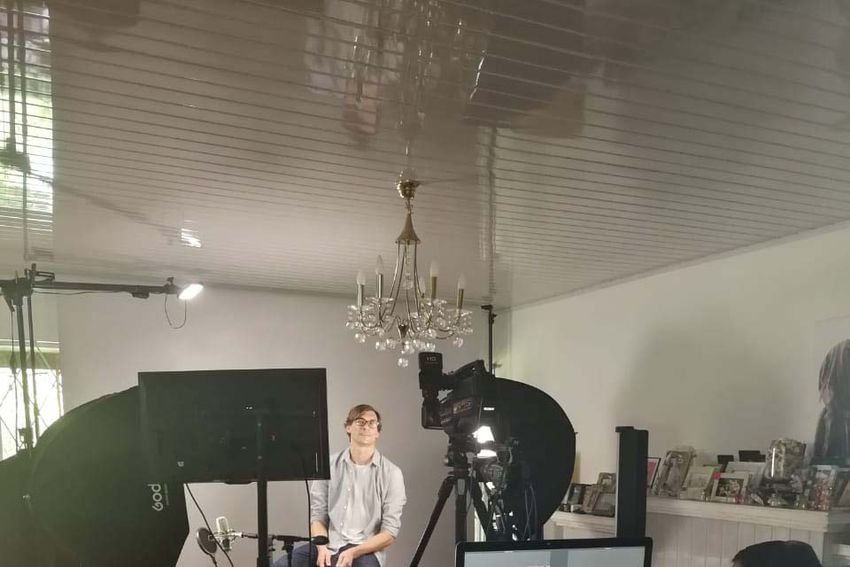
Structure of the international Master Programs at the ITT
The students study either two semesters in Cologne or two in the partner university and
exchange for one semester to the other university. They are enrolled in both universities.
Traditional in class-study with lecturers exchange complemented by the following digital
elements:
Traditional email communication between students and lecturers;
Online-lectures given by lecturers from the partner university (usually being part of a module
taking place in the home university and supported by lecturers from the university abroad);
Online master thesis exams by joint supervision of lectures from both partner universities:
one of the supervisors participates online;
=> Tools: skype/ adobe connect in the past, now zoom
Other exams usually as reports/ exercises: students submit their reports to the ILIAS
platform.
New International Master Program: Integrated Water Resources
Management with focus on Latin America and the Caribbean (IWRM-LAC)

 Background:

 Joint project of the University Costa Rica, School of Geography and the ITT, TH Köln
 called: “International Master Program: Integrated Water Resources Management with
 focus on Latin America and the Caribbean (IWRM-LAC)” (2019-2023)

 The project is supported by the DAAD in the scope of the program: “Transnational
 Education – Degree Programs offered abroad by German Institutions”.

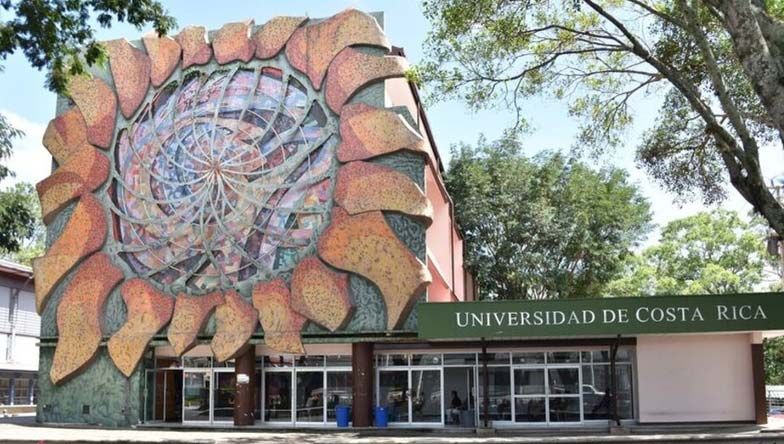
        University of Costa Rica,
        Photo: Justyna Sycz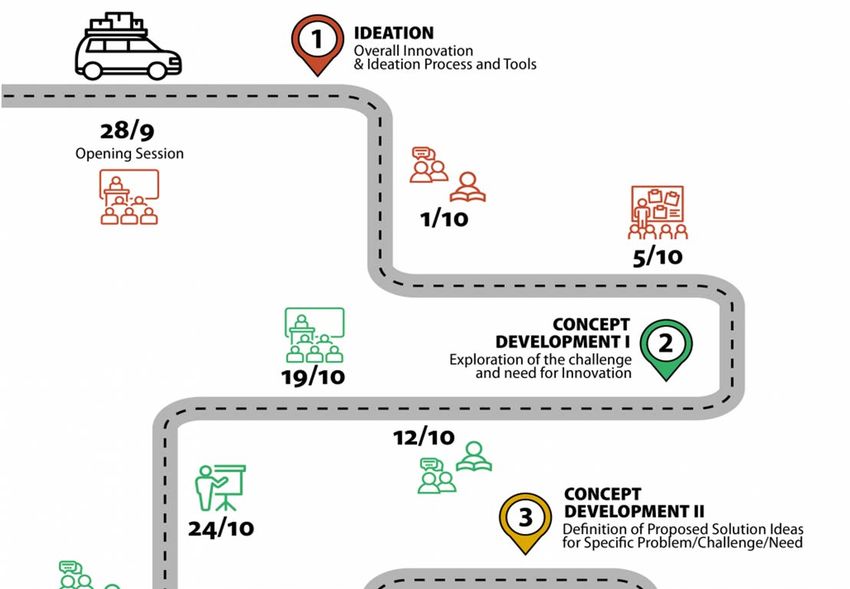
Hybrid Learning

One of the project objectives is to:
prepare all modules taught in the master program as fully digitized materials
and offer a hybrid learning format of traditional face-to-face classroom lecture
accompanied by digital modules with online meetings and materials for self-
study.

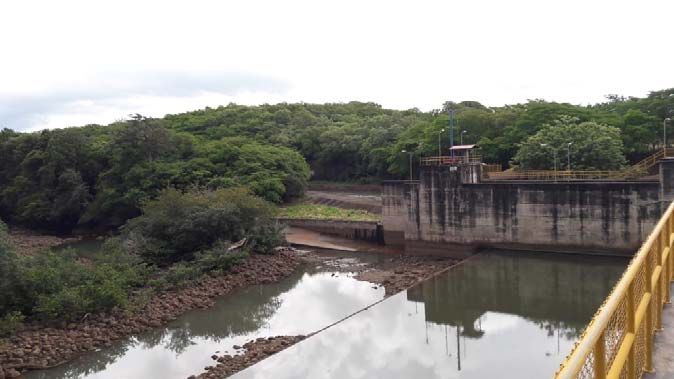
Irrigation Water Distribution System,
Areal Tempisque, Costa Rica
Case study in the curriculum of the
Master Program
COVID-19 has
                                   accelerated the
                                   digitalization of the Master
                                   Program
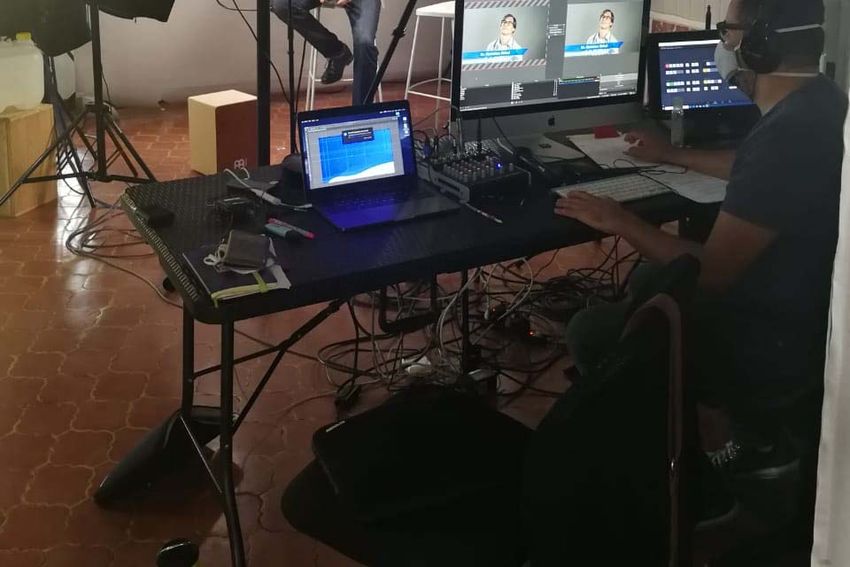
                                   Online Inauguration of the
                                   International Master Program
                                   IWRM-LAC,
                                   10th of August, 2020;
                                   San José, Costa Rica
                                   (Zoom and live broadcasting via
                                   Facebook)

Photo: Master Programme IWRM-LAC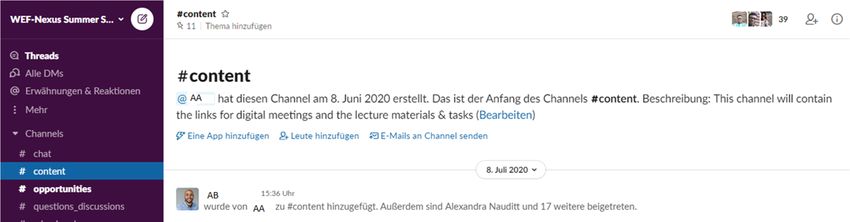
Realization:
Conceptualization and development of fully digitized modules which
include:
Handbooks for each learning unit of the module consisting of slides
with annotations; questions, exercises, and recommendations for
further reading => The material is adequate for self-study.
Regular online meetings with presentations; as questions-
discussions sessions dedicated to the conent of the learning units
and handbooks; or group work using the breakout-session function in
zoom;
The combination of online meetings, self-study, group work and
exercises varies depending on the module and its content/format.
Exams: Reports and questions which are answered by students in
written form and submitted via e-mail.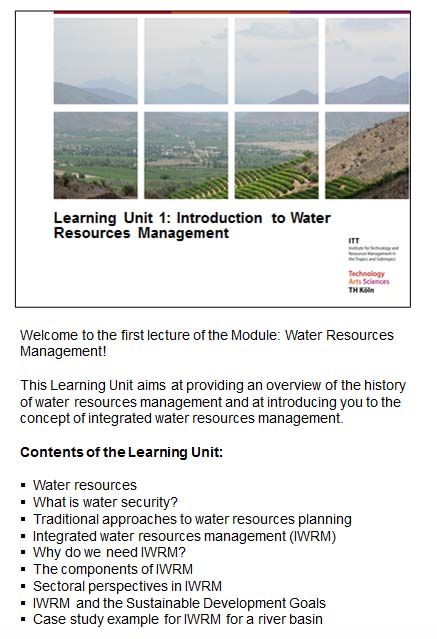
Example: Handbook for the module „Water Resources Management“; “Learning Unit 1: Introduction to Water Resources Management”. Power Point allows printing the materials as handbook and is a living document: The lecturers have to possibility to regular update the material contributing new contents and recent research results. The teaching materials are available for lecturers in both universities.
Preliminary Schedule for Joint Lecture „Water Scarcity and Drought“

Offered at the University Costa Rica for students in the MSc Program:
IWRM-LAC, Third semester 08.03.2021-04.07.2021
  Date         Time                     Topic                                    Lecturer
  08.03.2021   09:00-10:30 Costa Rica   Introduction and Key Concepts            Alexandra Nauditt
               17:00-18:30 Germany                                               TH Köln
  10.03.2021   09:00-10:30 Costa Rica   Understanding Drought                    Alexandra Nauditt
               17:00-18:30 Germany                                               TH Köln
  15.03.2021   09:00-10:30 Costa Rica   Drought Hazard Indices                   Alexandra Nauditt
               17:00-18:30 Germany                                               TH Köln
  17.03.2021   09:00-10:30 Costa Rica   Exercise: Calculate Selected Drought     Oscar Baez Villanueva, TH Köln
               17:00-18:30 Germany      Indicators

  22.03.2021   09:00-10:30 Costa Rica   Exercise: Continued and Feedback         Oscar Baez Villanueva, TH Köln
               17:00-18:30 Germany
  24.03.2021   09:00-10:30 Costa Rica   Understanding Water Scarcity             Lars Ribbe TH Köln
               17:00-18:30 Germany
  29.03.2021   09:00-10:30 Costa Rica   Climate Change and Water Scarcity        Christian Birkel, University Costa
               17:00-18:30 Germany                                               Rica
  31.03.2021   09:00-10:30 Costa Rica   Drought Risk Assessment and Exercise     Alexandra Nauditt
               17:00-18:30 Germany                                               Oscar Baez Villanueva, TH Köln

  12.04.2021   09:00-10:30 Costa Rica   Coping with Water Scarcity and Drought   Christian Birkel, University Costa
               17:00-18:30 Germany                                               Rica
  …..          ……                       ……
Examples of two other events organized by the ITT as online formats due to the COVID-19 Online Summer School: “From Data to Decision: Assessment of the Water- Energy-Food (WEF) Security Nexus” for DAAD scholarship holders hosted by the ITT, 31 participants; Alumni Innovation Hub 2020 “Green Innovation in the Middle East and Northern Africa: Idea to Application” hosted by the ITT, German-Jordanian University and CEWAS Middle East - the entrepreneurship experts in the water sector; Both events were developed as tratidional face-to face seminars. Due to COVID-19 both events took place online.
Online Summer School Realization 1: Main phase: Two weeks summer school from 17-26 August, 2020; Each day the participants studied the material of one Learning Unit: 13:00 o'clock: The materials were uploaded in the slack platform and consisted of a video available in YouTube, a handbook (slides with annotations provided in the PDF format) and exercises. 11:00 o'clock: A zoom-session took place. The session was designed as a questions- discussions session dedicated to the learning unit studied the day before.
Summer School Zoom
                                                  Session

                                  Zoom-Session;

Communication with the participants using
the slack platform
Online Summer School
Realization 2:
- Second phase September-December 2020: The main phase ends with a
task for the participants: The participants work on a WEF-Nexus case study
in own region.
- The work on the case study took place between September-December
2020.
- Every two weeks a feedback session was organized, in which a group of
participants presented their progress and received feedback.
- 24-18 December: Presentation of the case study results.
Summary of the tools:
Slack as communication platform: https://slack.com/intl/de-de/.
Videos recorded by the lecturers using the software Camtasia, uploaded to
YouTube as introduction to each learning unit plus PDF handbooks;
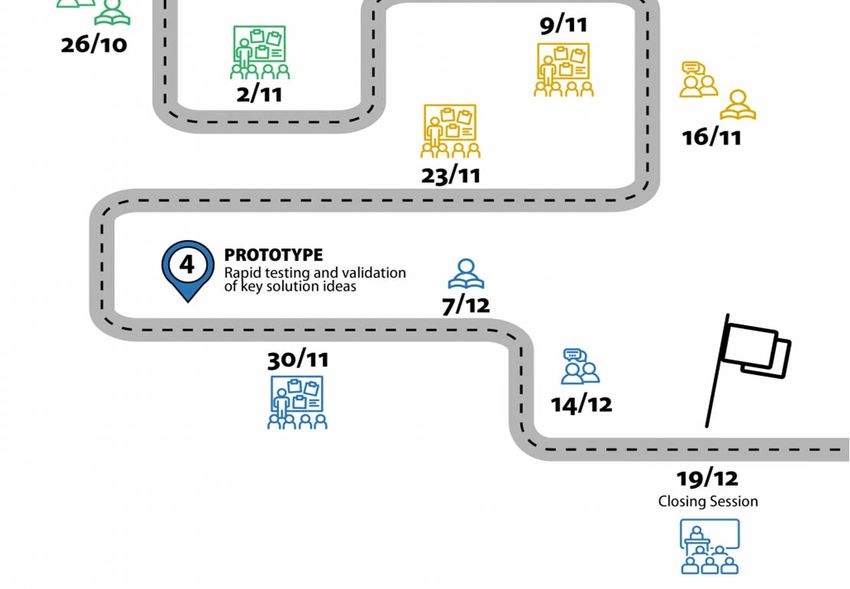
Zoom sessions.Alumni Innovation Hub 2020 Format: 10-week online, free seminar: September 29-December 19, 2020; Online Platform developed for the seminar: https://gimena.creation.camp/the-program/ Objective: to support alumni in the development of their own innovative business and project ideas; The program consisted of four main stages. The graph shows the main stages and the timeline. Flexible program structure: During the course of the seminar, the speakers structure was continuously developed and adapted to the requirements and demands of the participants.
Alumni Innovation Hub 2020
Each program stage consisted of different types of activities:

       Workshops: trainers presented open-source or low-cost tools and platforms for
       growth hacking, marketing, management, and sales.
       Support for the participants to lay out the most effective paths to develop their
       ideas for real world application

       Plenary sessions: guest lecturers presented cutting-edge information on inspiring
       and innovative topics in the areas of energy, water, and natural resource
       management and development.

       Marketplace: participants meet various entrepreneurs and experts in digital
       booths, present own ideas and receive feedback from practitioners to better
       understand the market demand.

       Coaching sessions: offered direct input and feedback on how to develop and
       apply the particular idea of a participant in his work/ study/ market environment.
Thank you for your attention! Contact: Justyna Sycz TH Köln Institute for Technology and Resources Management in the Tropics and Subtropics (ITT) Justyna.sycz@th-koeln.de Greta Dekker, Summer School, Greta.dekker@th-koeln.de Sudeh Dehnavi, Alumni Hub 2020, Sudeh.dehnavi@th-koeln.de
You can also read


