Digital - The Magazine 1.20 - Robert Bosch Stiftung
←
→
Page content transcription
If your browser does not render page correctly, please read the page content below

The Magazine                          1.20

Digital
How data collection and new
technologies are changing our lives

THE MAGAZINE
1.20
                                                                         Editorial   3

                      Dear Readers,

               Ones and zeros form the basis of the digital world. They are
               what bits and bytes are made of. Transformed into electrical
               or optical signals – power or no power, light or no light – these
               ones and zeros store and transport unimaginable volumes of
               data these days. For ones and zeros, power and light, it is the
               rules of mathematics and physics that apply. At first glance,
               the world of binary figures is clear and logical. But that’s only
               true up until the point when humans come in.
                      Digitalization does not make the world simpler and more
               logical for people. On the contrary. The effect of big data
               and algorithms on almost all areas of our lives is highly ambi-
               valent. Does unlimited access to information empower respon-
               sible citizens? Or do they simply become manipulable objects
               due to the analysis of their data? What does that mean for
               democracy? Does social media still foster the “spring” for civil
               society, as was the case a few years ago in the Arab world?
               Or are we in danger of being subjected to total surveillance
               through facial recognition and the across-the-board capturing
               of our digital tracks? Does digital education help all children
               to realize their full potential, or does it simply intensify the
               digital division in society?
                      Whether it is the potentials or the risks that ultimately
               turn into reality is not down to fate. We must set the rules of
               digitalization together as a society. To do so, we require a
               nuanced debate, in which civil society must have a say. You’ll
               hopefully find more than a few ideas for that in this issue.

                      We hope you enjoy the read!

               Joachim Rogall, Sandra Breka, Hans-Werner Cieslik
               Board of Management of the Robert Bosch Stiftung
4                                                                              Robert Bosch
                                                                                   Stiftung

                        06                           10                             18

6                            10                            18
Facts                        Digital Election              Debate
How digitalization is        Campaigns                     Digitalization offers civil
changing our lives           How campaigns use             society new tools – but
                             social media to influence     methods of surveillance
8                            voters, and how this          and control are also
Beginnings                   affects democracy             increasing
The “GeschichtsCheck”
project exposes historic     16                            24
fake news online             Infographic                   Critical Mapping
                             It is usually not the great   Citizens compile infor-
                             masses, but vocal mi-         mation about their neigh-
                             norities that are behind      borhoods in digital maps
                             hate campaigns                to help initiate change –
                                                           an example from Berlin

                                                           28
                                                           Essay
                                                           Computer scientist Cath-
                                                           erine Mulligan on digital
                                                           inequality, power, and
                                                           cryptocurrencies
THE MAGAZINE
                                 1.20
                                                                                                                                        Contents                                   5

                                                                       30                                               44

                                 30                                               44                                               Topics Related to the
                                 Digital Orientation                              Behind the scenes                                Coronavirus Crisis
                                 at Schools                                       How researcher Julia                             The coronavirus crisis has given a new urgency

                                 The coronavirus crisis hit                       Ebner went undercover                            to many questions relating to digitalization.
                                                                                                                                   Some of these questions are addressed on the
                                 schools overnight –                              in extremist right-wing                          following pages of this issue:

                                 those with experience in                         online forums                                    Discussion of the opportunities and risks
                                                                                                                                   of digitalization for civil society – page 18
                                 digital learning were at
                                 an advantage                                     46                                               Essay on the inequality to access digital
                                                                                                                                   technology – page 28

                                                                                  Foundation laid                                  Report on school lessons during the
                                 36                                               The MESH Collective                              pandemic – page 30

                                 The Foundation                                   takes political issues
                                 of the Future                                    where they actually reach
                                 We present the topics                            young people: YouTube
                                 upon which our three                             and Instagram
                                 areas Health, Education,
                                 and Active Citizenship
                                 will focus in the future
Illustration: Doreen Borsutzki

                                 IMPRINT PUBLISHER Robert Bosch Stiftung GmbH, Heidehofstraße 31, 70184 Stuttgart, magazin@bosch-stiftung.de, www.bosch-stiftung.de | BOARD
                                 OF MANAGEMENT Prof. Dr. Joachim Rogall, Sandra Breka, Dr. Hans-Werner Cieslik | RESPONSIBLE Stefan Schott, Senior Vice President of Commu-
                                 nications | EDITORIAL DIRECTOR, ROBERT BOSCH STIFTUNG Regina Mennig | EDITORIAL DIRECTORS, PUBLISHER Martin Petersen, Nicole Zepter |
                                 PUBLISHING COMPANY TERRITORY Content to Results GmbH, Bei den Mühren 1, 20457 Hamburg, www.territory.de | MANAGING DIRECTOR Sandra
                                 Harzer-Kux | PUBLISHING MANAGEMENT Nicola Braun | ART DIRECTION Maja Nieveler, Anne Stiefel | PHOTO EDITOR Vanessa Zeeh | PRINT Merkur
                                 Druck GmbH, Oststraße 49, 22844 Norderstedt, merkur-druck.com ISSN NO. 1865-0910 | COVER Tarek Mohamed Mawad
6                      Facts

How digitalization is
changing our lives
Eight aspects that show why transparency, civil
rights and liberties, and inclusion must be renegoti-

                                                                                                            Sources: ICILS survey 2018, Digital News Report 2019 by the Reuters Institute/University of Oxford, Institute for Strategic Dialogue study, Digital News Report 2019, CNBC 2019, the US organization Freedom House, Faz.net
                                                                         By now, more than half of all
ated in the digital age.                                                 Internet users worldwide live in
                                                                         the Global South.

                                       Only around a quarter of          Internet freedom as measured
                                       German teachers and students      on the basis of aspects such

    50%
                                       have access to Wi-Fi at their
                                                                         as censorship of content and
                                       schools.
                                                                         surveillance has improved
                                                                         in 16 countries around the
                                                                         world.
    of likes for hate
    comments on
    Facebook can be
                                                                         It has
                                                                         worsened in

                                                                         33
    traced back to only

    5%
    of accounts.                                                         countries.

                                       In 2019, 34%
                                       of the Germans used social
                                       media as a news source.
                                                                         69%
                                                                         of Germans have basic
                                                                         digital skills (calling
                                       The figure was 18% in 2013.
    According to conservative                                            up e-mails and websites).
    estimates, the amount of data
    available globally doubles every   The former is the lowest figure   That is higher than the
    twenty months.                     in Europe.                        European average of 59%.
THE MAGAZINE
                                                                                                                           1.20
                                                                                                                                                                                 7

                                                                                                                                  Around the world there are

                                                                                                                                  770 million
                                                                                                                                  cameras
                                                                                                                                  monitoring public areas. More than half
                                                                                                                                  of those are in China – however, the USA has
                                                                                                                                  the highest per capita concentration.
Text and research: Jan Abele | Photos: Kent Andreasen, Per Swantesson/Stocksy, Heinrich Holtgreve/OSTKREUZ, Getty Images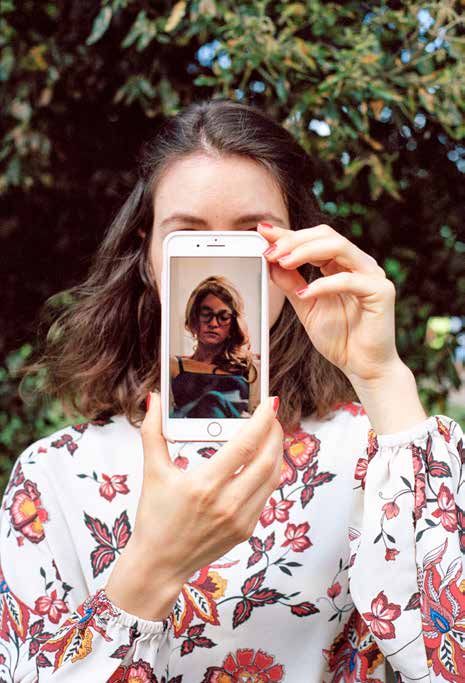
8                                                      Robert Bosch
                                                           Stiftung

    As a historian, Theo Müller not only scours the
    Internet for historical falsehoods; with similar
    elaborateness, the twenty-eight-year-old is cur-
    rently also focusing on his dissertation at
    Heidelberg University and the School of Advanced
    Studies in the Social Sciences (EHESS) in Paris.
THE MAGAZINE
                                             1.20
                                                                                                                                             Beginnings                                   9

                                             Facts vs. Fabrication
                                             Historian Theo Müller’s project “GeschichtsCheck.de” (“History Check”)
                                             responds to Internet users who spread fake news as historical facts on
                                             the web.

                                             I
                                                                                       places. We want to show that histori-               The website is easy to find through
                                                                                       ans don’t just sit in archives writing              keywords on search engines and
                                                                                       books that no one reads; in fact, they              provides users with a tool to distin-
                                                                                       can make a significant contribution to              guish the historical facts from the lies.
                                                                                       improving the climate for dialog in our             We regularly scan the Internet to see
                                                                                       society. Thus, it was with great                    what historical distortions are cur-
                                                                                       enthusiasm that we began our mission                rently being circulated, and we write
                                                                                       across all channels. We commented,                  corresponding articles that are then
                                                                                       explained, and set things straight. I               published on GeschichtsCheck.de.
                                                                                       started a long debate on Twitter with               It often involves very fundamental
                                                                                       the user who had asserted that the                  questions: whether or not Germany
                                                                                       Wirtschaftswunder didn’t involve                    is a sovereign state, why the European
                                                                                       immigrants, and I was quickly                       Union was established or what the
                                                                                       stretched to my limits. As soon as I had            term “racist” exactly means.
                                             t was the peak of the so-called refugee   refuted his argument, he confronted                         But sometimes the topics are
                                             crisis about four years ago. We           me with new ludicrous claims. I finally             more difficult. Recently, for instance,
                                             noticed a new caliber of public           gave up, with the sobering realization              I’ve been noticing a considerable
                                             racism, hate speech, and turbulence       that there was no hope of reasoning                 increase in anti-Semitic content. With
                                             in the world of social media. Many        with the Internet trolls, even with solid           responses supported by facts, we aim
                                             writers corroborated their contemp-       argumentation. But if the facts don’t               to take an objective approach in
                                             tuous argumentations with what were       get through to the conspiracy theorists             countering the often aggressive
                                             supposedly historical connections.        and agitators, we must at least open up             disparaging comments. We can only
                                             This gave them a dangerous veneer of      the reading audience to the facts. On               effectively tackle the problem of fake
                                             trustworthiness. One user, for            the website GeschichtsCheck.de, we                  news if we ensure that those who are
                                             example, substantiated his hostile        make factual knowledge available for                spreading falsehoods on the Internet
                                             attitude toward immigration by            all those who are confronted with                   no longer have a leg to stand on – be-
                                             stating that Germany managed to           historical claims on the Internet and               cause the broader public is simply
                                             achieve its Wirtschaftswunder, its        want to know what’s actually true.                  savvier than they are.
                                             economic miracle, in the 1950s
                                             without the help of immigrants. This is
                                             just one example of the profusion of
                                                                                           GeschichtsCheck.de and the NETTZ
Text: Jan Abele | Photo: Anne-Sophie Stolz

                                             historical nonsense that arose on the
                                             Internet during that time – and that          The GeschichtsCheck.de team is not only working against hate speech, disparagement,
                                             we, as historians, could not simply           and the propagation of fake news online. The project also involves related workshops
                                             leave unchallenged. But what were we          for school classes, in which students learn to more critically assess content they encounter
                                             able to do?                                   on the web. “NETTZ – the network against hate speech,” a platform founded at the end
                                                     “We” in this instance refers to       of 2017, supports GeschichtsCheck.de and other projects and initiatives that seek to
                                                                                           promote more mutual respect, humanity, and a positive culture of dialog on the Internet.
                                             members of the Open History organi-
                                                                                           Robert Bosch Stiftung and Stiftung Mercator are patrons of the NETTZ.
                                             zation, a network of people working on
                                             and with history in many different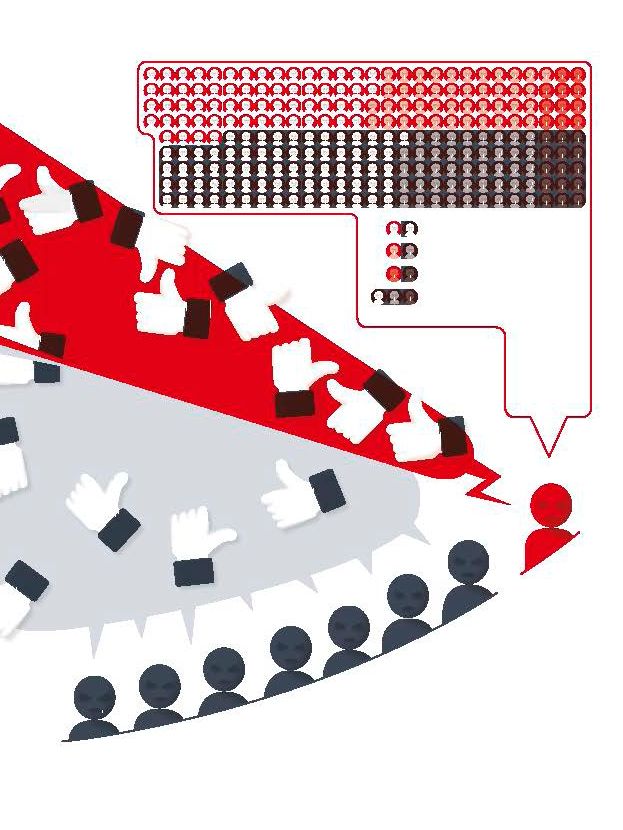
10                  Robert Bosch
                        Stiftung

The Digital Influence
Machine                     TEXT
                  Martin Petersen
THE MAGAZINE
1.20
Feature 11
Election campaigns are increasingly moving to social media, especially
in the United States, and using their customized tools. A look
at the toolkit of the digital campaign industry – and how its methods
are impacting democracy.12 Feature Robert Bosch
Stiftung
O
In April 2020 alone, the Trump
reelection team ran around 30,000
Facebook ads. Most were viewed just
by a few hundred targeted individuals,
but all can be found in Facebook’s Ad
Library, which the company intro-
duced in 2018 to add transparency to
advertising. For the two-year period
from May 2018 to May 2020, Trump’s
campaign team spent around 38
million dollars solely on election ads
nly the details differ in the slew of appearing on Trump’s Facebook page.
Facebook ads that Donald J. Trump This is roughly the amount that a
ran on a single day in April. All consist corporation like Google spends on
of an image with a headline. A promi- online advertising in Germany in a
nent element in the center of the single year.
image is a red-colored section of wall The main reason for these sums
reminiscent of the barrier at the is that important people close to the
US-Mexican border. Visible in the US president are convinced that the
background is a construction site with 2016 election was won primarily in the
a row of blue portable toilets. Embla- social media – an assessment that is
zoned across the top of the image apparently shared by Facebook’s top
is the question SHOULD WE DEPORT manager Andrew Bosworth. In a
ILLEGALS? Along the lower edge leaked staff memo, Bosworth, who is a
viewers read: HAVE YOUR SAY. confidant of Mark Zuckerberg, wrote
This was the first of the more of Trump: “He was elected because he
than 1,000 almost identical ads. The ran the single best digital ad campaign
next was in vertical format, and the I’ve ever seen from any advertiser.”
portable toilets were cut off. The third According to Bosworth, the campaign
featured a slightly different text with team working for Trump’s Democrat
ANSWER NOW written at the bottom. opponent, Hillary Clinton, used itsTHE MAGAZINE
1.20
13
digital advertising budget far less
effectively. With a view toward the
“The whole industry is trying
2020 election, the Trump campaign
wants to continue the momentum of to find the magic formula
for changing a voter’s political
2016. Its numerous, nearly identical
ads with the red wall are proof of
the massive use of a tool that could
once again play a decisive role in the
election: microtargeting.
preference.”
Gary Wright is an expert in
digital advertising campaigns. With
his small team at the Berlin-based
NGO Tactical Technology Collective, tion,” says Wright. It is automatically
he studies what type of data is used by displayed in thousands of variations,
different political actors and how and an algorithm analyzes the text,
their various methods work. Wright’s color, and section of the image that
team has learned that no fewer than appeals the most to different users.
three hundred companies are This helps ensure that the ad achieves
involved in the US digital election the desired results among a growing
campaign. These companies special- number of targeted individuals. In the
ize in collecting and analyzing the campaign featuring the red wall, the
information and digital traces we all goal was to get users to participate in a
leave behind on the Internet; in survey that asked for their e-mail
creating profiles; and in developing address. The telephone number is
and implementing strategies to turn often transmitted as well. “In the hands
this treasure trove of data into votes. of experienced campaign managers,
“The whole industry is trying to find this is a powerful tool,” Wright says.
the magic formula for changing a “As soon as you’ve got the contact
voter’s political preference,” Wright details, you can continue your efforts
says. However, digital campaigns with automated telephone calls and
rarely work so directly. “The direct text messages.”
Photos: Hill Street Studios/Getty Images (M, previous page), Dan Thornberg/EyeEm (M), Zuma Press/action press (M)
deep-rooted supporters of another Collecting contact data is worth
party are not even targeted at first, it for two reasons. Once a campaign
because it’s an inefficient use of has received an e-mail address in this
money.” The Trump campaign’s
experienced professionals are relying
on other strategies – at least for the
moment.
IDENTIFYING AND
MOBILIZING VOTERS
“Political digital campaigning has
grown out of digital marketing,”
Wright says. “The rule is: the better
you know and understand your voters,
the better you can create messages
that elicit voter responses and
actions.” The focus is on identifying
and mobilizing supporters – “whether
it is through a call to vote, to donate
money, or to volunteer.”
The ad with the red wall shows
how campaigns can achieve this goal
most effectively. “Every Facebook ad is
in itself a mechanism for data collec-14 Feature Robert Bosch
Stiftung
way – or at campaign rallies, in Jeanette Hofmann is a professor of
petitions, or through newsletter Internet policy at Freie Universität
registrations and free offers – mobili- Berlin and a researcher at the Berlin
zation can be stepped up with the Social Science Center. At these
help of Facebook and Google. “The and other institutions, she studies the
moment you upload a contact data- tensions between democracy and
base,” explains Wright, “Facebook digitalization, paying close attention
looks to see whether there is a to microtargeting. “Election cam-
Facebook profile for each of the paigns as we know them allow people
entries. This is usually the case. Then, to challenge specific statements or
with the help of artificial intelligence, promises,” she says. “When it is no
it looks for similar profiles based on longer possible to critically monitor
characteristics that are invisible to the political advertising because it doesn’t
eye.” With just one click, a target reach the public, then we have a
group of 30,000 contacts becomes one problem. It’s harmful. It undermines
with 60,000 contacts. Facebook calls democratic discourse, particularly at
this tool “Lookalike Audiences.” times when this discourse is vital
Google offers “Similar Audiences,” because it provides a foundation for
which works the same way. our voting decisions.”
DARK ADS THAT SPREAD ALGORITHMS THAT
FAKE NEWS POLARIZE
Digital campaign marketing is The shady methods of digital market-
particularly effective in a winner- ing play a much smaller role in
takes-it-all system with majority elections based on proportional
decisions. This can be seen in the US representation, which are the norm in
election campaign and was also the EU. To be sure, a great deal of
evident in the 2016 referendum on the money is also flowing into digital
UK’s exit from the EU. The Vote Leave election advertising in Europe. As the
campaign, whose leaders currently 2019 European Parliament elections
hold key positions in the UK govern- show, between March and May 2019,
ment, spent more than 98 percent €17 million was spent on targeted
of its budget on digital advertising, as political advertising across the EU,
campaign manager Dominic Cum- with €2.4 million disbursed in Germa-
mings revealed in a Spectator article. ny. Yet Europe has not seen the
Vote Leave and other pro-Brexit massive digital mobilization cam-
campaigns also channeled their paigns of the US presidential election.
money into “dark ads” that were Facebook’s publicly accessible Ad
displayed to extremely small target Library and other measures were
groups via microtargeting and were introduced to eliminate targeted dark
not initially made public. German ads containing false information, like
investigative journalism center those used before the Brexit referen-
Correctiv has analyzed the ads that dum. “We can assume that microtar-
Facebook agreed to disclose in geting is not so influential in our
2018 after a long tug-of-war with the electoral system,” says Hofmann.
British House of Commons. Its
analysis shows how the political
demand to leave the EU was adapted
to different target groups and that the
ads were used to spread fake news,
such as Turkey’s imminent accession
“From the perspective of
to the EU. Although it is impossible
to track the effects of the individual democratic theory, the goal is to
create a sophisticated public.”
ads, the success of the campaign
as a whole is well known.THE MAGAZINE
1.20
15
What instead concerns European grow with the involvement of users.”
political scientists about the efforts to At any rate, Hofmann argues,
address voters through social media the existing social networks should
is the effect of algorithms on opinion enter into dialog with political leaders
formation. As Hofmann explains, and society. This could take place at
“Everyone in the research community newly founded agencies in which
knows that on platforms such as platform operators, users, and
YouTube, due to the recommendation political leaders engage in open
algorithms they use, a person who discussions and develop solutions to
views far-right content will be offered improve the social media and their
more far-right content as a way of principles in the interests of a demo-
creating user loyalty. This is absolute- cratic society.
ly detrimental to the development of Meanwhile, in the US election
democracy.” From the perspective campaign, there continue to be
of democratic theory, Hofmann says, massive investments in social media.
the goal is to create a sophisticated It is already clear that the upcoming
public that forms its own opinions and election will be more heavily influ-
in turn influences political decision- enced by digital media than any other
making. Ideally, this means not previous election. “Due to the corona
polarizing voters but offering infor- crisis, there has been a huge push into
Photos: Melinda Nagy/Shutterstock (M), private (graphic shows a Facebook ad for the Vote Leave campaign placed as from April 27, 2016, published on www.parliament.uk)
mation and enabling them to weigh digital media,” says Gary Wright.
options.” “There has also been an increased
Social media companies are willingness by all parties to go as far as
paying an increasing amount of possible, to pull out all the stops in
attention to their platforms’ political order to convince the targeted people
and social effects, which is demon- to take action, donate money, and
strated by both official and unofficial vote.”
statements. In a guest contribution to A look at the Facebook Ad
the Financial Times in February 2020, Library shows that the Trump cam-
Facebook CEO Mark Zuckerberg, for Below paign has already adopted this mode
Using targeted ads
example, voiced his support for of operation and is heavily exploiting
like this, the Vote
greater government regulation, even if Leave campaign the toolkit of digital campaign adver-
it might “hurt Facebook’s business in sent fake news to tising.
the near term.” At the same time, receptive voters.
Facebook’s management has been
defending the pillars of its business
model – targeted advertising and the
related tools, including the algorithms
that populate newsfeeds. Zuckerberg
and co-director Sheryl Sandberg see
the dissemination of political fake
news as part of an open social debate.
When it comes to issues such as
polarizing algorithms and data
privacy, there are clear ideological
differences between Europe and US
platform providers such as Facebook
and Google. Given these differences,
Hofmann wonders why Europeans do
not plant a few seeds in the social
media space themselves. “I’d like to
see us take money in hand on the
European level and create alterna-
tives,” says the researcher. “And
I don’t mean alternatives that are
handed down from above, but which16 Infographic Robert Bosch
Stiftung
The post
On May 10, 2018, the Gen-
eral Students’ Committee
of the University of Cologne
wrote a Facebook post
about construction
workers dressed in Hate campaign
clothing associat-
ed with the right- The post unleashed an online hate campaign,
wing scene. rife with derogatory and relativizing
comments. These negative comments re-
ceived 6,052 likes.
52%
Likes from profiles
active to a normal
degree
Vocal
Minority
Philip Kreißel from the German online activist group
#IAmHere has analyzed eighteen hate campaigns on Face-
book and reached the following conclusion: a small group = 250
likes
of those who post and like negative comments are down-
right hyperactive in this undertaking. We use a sample hate
campaign, which was viewed by over 220,000 people, to
= 250
show just how vocal this minority can be. profilesTHE MAGAZINE
1.20
17
121 gave 6 to 9 likes
109 gave at least 10 likes
48%
Likes from
26 gave at least 20 likes
highly active 136 were also active in other hate
profiles campaigns that were examined
Participating 256
Highly active
profiles profiles*
Nearly half of the likes for negative
comments came from a small group
of highly active profiles.
13%
Highly active
profiles*
87%
Profiles active to a
Shown here are all participants who
were active in the thread and did not
belong to Kreißel’s #IAmHere group,
Illustration: Josh Schaub
normal degree who joined the discussion after the
hate campaign was already underway.
#IAmHere strives to combat hate con-
*Highly active profiles are those that use the “like” feature tent on the Internet.
at least twice as many times as the average profiles do.18 Debate Robert Bosch
Stiftung
The Lights and Darks
of DigitalizationTHE MAGAZINE
1.20
19
The two people we
show here in one
room were actually
in two different
locations. The
debate was held via
video conference.
A discussion with German intelligence expert Thorsten
INTERVIEW
Martin Petersen Wetzling and Hong Kong-based US journalist David
Bandurski on the benefits and dangers of digitalization
ILLUSTRATION
Studio Pong
for civil society.20 Debate Robert Bosch
Stiftung
“There are lots of tools that
and WeChat – they are both super for
surveillance and interactivity. This is
what always makes them deeply, deep-
can be used by state and private ly problematic. If we look for ways that
Chinese people are using technolo-
entities for a wide range of gies to interact and maybe make cer-
tain inroads, the feminist movement is
purposes, some good, some a good example. It’s basically network-
ing but without a network, because
nefarious.”
these tools are also monitoring you,
and the Chinese Communist Party
does not permit true networks to form
Thorsten Wetzling and have longevity.
How can civil society make even
better use of the potential of
digitalization in the future?
Around the world, digital develop- Wetzling: One thing that we are cur-
ment is rapidly advancing. What are rently trying – with the help of the
the major gains for civil society? aboutintel.eu blog – is preparing on-
Wetzling: There are a lot of oppor- line debates among diverse stakehold-
tunities for civil society organiza- ers on surveillance. The topic is not
tions, academia, and other players to confined to Asia; in Europe we also
come together more quickly and to have to address the issue that lots
work collaboratively on specific tasks. of tools can be used by state and pri-
For instance, there is our own proj- vate entities for a wide range of pur-
ect work that relies on various digital poses, some good, some nefarious.
tools to coordinate the work with our Gradually, we are seeing that govern-
research partners in Paris and London ments are showing more readiness for
more effectively. Civil society groups dialog because the resistance and con-
also come together in virtual forums testation in civil society is now more
to conduct strategic litigation, say, coordinated. Digitalization has, in my
against security legislation. If they fear view, contributed to this.
that the state has gone too far in terms
of infringing civil rights, digital tools Which other digital tools have
can be harnessed to engage more pro- already proven to be of great use
ductively in national comparisons or to civil society?
to bring in an expert from abroad. We Bandurski: What we see – if I can
may also set up collective databases switch to Hong Kong for a moment – is
so that journalists and civil society or- in what a clever way the existing tech-
ganizations can find resources more nologies are being used. For example,
quickly. the police was looking out for people
who were using secure, encrypt-
David, how do you think digitaliza- ed messaging on Telegram – 20,000
tion benefits initiatives and move- people, say, might be in such a Tele-
ments across the world? gram group, but there has to be a visi-
Bandurski: For our work at the Chi- ble admin account. To counteract this,
na Media Project, we’re dealing with someone created a bot that essential-
journalists, intellectuals, and academ- ly anonymizes the host of this Tele-
ics in China. But it’s been consistent- gram network. Even things like Tin-
ly – for over two decades now – the case der, which we don’t tend to think of as
that we’ve been dealing with a leader- a tool for civil society, right? –
ship that is determined to not just con-
trol information, but to put curbs on – Tinder is a dating platform –
civil society. If we think of social me- Bandurski: Well, in Hong Kong, they
dia tools – in China, we have Weibo have been using it as a platform to postTHE MAGAZINE
1.20
21
schedules for marches, for instance.
So there’s this kind of surreptitious use
of technologies that are garden-vari-
ety in the West. Another great exam-
ple is the use of the green laser point-
ers. This is the way to cheat the facial
recognition systems. The protesters
point the laser pointers at the cam-
eras, which essentially disables them.
There’s this constant kind of cat and
mouse game over the use of technol-
ogies as surveillance, and as an em-
powerment tool in Hong Kong. I think
Hong Kong is a good litmus test of
what we might see in other environ-
ments. We’re seeing the transforma-
tion of Hong Kong, and the erosion of
its freedoms, the true foundation of
civil society, which must be based on
the rule of law, protection, and civ-
il liberties. This is why it has become
more of a technological issue than it
might have been before.
It’s interesting to hear those
examples. Thorsten, what do you
think are the greatest dangers
for civil society that come along
with digitalization?
Wetzling: We are witnessing rapid-
ly-evolving surveillance technology.
Before Snowden, people had an idea
that there was a lot of data collection Thorsten Wetzling emergency in response to the corona-
heads the research
going on, but now with biometric sur- virus pandemic, and the powers that
on surveillance,
veillance, voice and face recognition, fundamental rights
the governments have acquired may
there’s a lot of new technological pos- and democracy at well not be relinquished so easily. We
sibilities and there are plenty of risks the Stiftung Neue must remember how long it has taken
to established rights and democratic Verantwortung, a for some countries to acquire essential
principles such as effective indepen- think tank for digital rights and freedoms and how quickly
technologies, politics
dent oversight and transparency. Of- these may disappear again.
and society based
tentimes, technology is not necessar-
in Berlin. He is
ily developed and designed with due editor-in-chief of What needs to be done?
process and fundamental rights in the aboutintel.eu Wetzling: There needs to be a strong
mind. It’s more like: “Hey, this is fresh blog and created the civil society, and there needs to be
data – we should use it.” European Intelli- parliamentarians who have expert
gence Oversight
knowledge readily available to them,
Network (EION). He
Are we in the process of a world- so that they can put legal safeguards
is also a principal
wide surge of state surveillance investigator in the in place before passing new bills.
and control? collaborative The evolution of technology poses
Wetzling: You can look in every corner research project a big risk because it doesn’t go hand
of the world at the moment and find GUARDINT that in hand with safeguards. There also
risks to democratic practice. In Israel, addresses the gap needs to be strategic litigation, there
between transnation-
for instance, there is live surveillance needs to be people who have civ-
al surveillance
of the entire population taking place. practices and il rights in mind and who say “Look,
In some countries, such as Hungary, national accountabili- does the law really do what it says?”
the governments are calling states of ty mechanisms. We need the laws to be more precise22 Debate Robert Bosch
Stiftung
and backed by sanctions should gov-
ernments overstep their mandate. To
achieve this, we need to push harder
on reporting obligations. Reports by
the government or security services
are important, but so are the reports
by oversight bodies about the tools
and instruments they use to hold the
executive accountable.
The European Union and its coun-
tries are often referred to as having
a strict stance on data protection.
Do they live up to their reputation?
Wetzling: Clearly there are grave risks
in Europe, too. Although we have a da-
ta protection directive and we have
gone further than some other coun-
tries in writing data protection mea-
sures into our laws, this doesn’t mean
that we always put this into practice
or that European governments are not
tempted to curtail the spread of en-
crypted communication, for example.
How far are EU states going in ac-
tively collecting their citizens’ data?
Wetzling: I don’t want to say that ev-
ery infringement of our rights is due to
sinister motives, but of course there’s
a documented interest on part of many
players – both on the corporate
and on the government sides – in gath-
ering as much data on citizens as is le-
gally permissible. There is also this
premise that Europe wouldn’t be do- coronavirus patients. Interestingly,
ing itself a favor by investing too much at one point the government stopped
into data protection, because some and said they had changed their mind.
things would be much easier with- Although they had already invested
David Bandurski
out it. I think that’s a false premise, be- significant resources into making an
is a researcher and
cause data protection and efficiency lecturer at the
app that stores this sensitive informa-
are not diametrical opposites. There Journalism and tion on a centralized server, they de-
can be a lot of interesting progress and Media Center cided to cancel that and switched their
we are seeing that with some apps that (JMSC) at the focus to a solution with locally stored
are being developed: there’s a whole University of Hong data. I hope that this new solution will
Kong and a former
market for privacy by design and mak- ensure sufficient data protection. So
Richard von
ing use of digitalization in a way that Weizsäcker Fellow of
at least there was openness to debate,
empowers people to opt out and have the Robert Bosch mutual learning, and a preparedness
their say. Academy in Berlin. to engage with different arguments,
For more than twelve which strengthens us as a country and
Can you give us a positive example years, he has been civil society in the long run.
leading the
of where data protection and effi-
independent China
ciency come together? Media Project, a
David, Thorsten already mentioned
Wetzling: In Germany, for instance, globally renowned that all states have an interest in
there was this heated debate around resource on China’s collecting data on their citizens.
the creation of the tracing app for media landscape. Could you push it further and argueTHE MAGAZINE
1.20
23
that surveillance and data that Chinese people make: that their
analysis are generally beneficial lives have improved in a sense. They
for a society? can express themselves, and I mean in
Bandurski: This is a case that’s made a very basic sense, they can generate
every second of every day by the Chi- their own content, whether it’s TikTok
nese authorities. I would say the big- videos, or chatting about what they
gest engineering project that China bought during the day. Everyone feels
has is control of information and pub- empowered in a way that they never
lic opinion – and they sell it to the pub- were, and this is a really, really power-
lic as beneficial to society. China has ful impulse, to see technology as a net
two other big projects, one is called good and not to look at the flip side of
Sharp Eyes; in China it’s referred to as it. We in our open societies tend to see
Project Dazzling Snow. This is a proj- the dark side, the potential for abuse,
ect for rural areas, and the goal is to but in China, because there isn’t a dis-
install around 200 million cameras. cussion, and the mechanisms that
For the urban areas, there’s a different Thorsten’s talking about aren’t there
project called Skynet. The idea is to – people often don’t see this darker
link the surveillance cameras with fa- side. They are not literate in the risks
cial recognition technology – this has of technology. This is not to say that we
already happened in some cities, like are literate about these in Germany or
Shenzhen – to create what will eventu- Europe, or the US, but at least we are
ally be a national database. having a conversation. Picking up on
what Thorsten said, I also found a lot
Is there an explanation as to why of it very encouraging. One thing that
this is being set up? really behooves us to show in our so-
Bandurski: The reason is that the law cieties is the ways that we can achieve
enforcement wants to know what’s better and more efficient democratic
happening at any place, at any giv- systems with the technologies.
en time. One of the things they did
to effectively – as they say – deal with What do you think civil society can
Covid-19 was to police and isolate contribute towards counteracting
Covid-19 patients by using the sur- the dark sides of digitalization?
veillance grid system that was already Wetzling: They can look into differ-
in place across the country for gen- ent policy fields and say, for instance,
eral social surveillance, security, and what can we learn from auditing done
regime stability purposes. Humans in the banking industry? Or, in the field
monitor these grids locally, which es- of police and intelligence, different so-
sentially divide the country up into cieties are facing similar challenges, so
manageable quadrants. In addition you don’t have to reinvent the wheel.
to facial recognition cameras, the au- Sometimes there are solutions to a
thorities are also installing scanning particular problem that minimize civil
devices for mobile phones. So it’s real-
ly a combination of digital technology
“In Hong Kong liberty infringements, and it’s import-
ant to identify those. However, there’s
and this existing human system of sur-
veillance and gridding. they have been so much legalese, there are so many
technological documents that only a
using Tinder
handful of people can really decipher.
How does the usage of all this tech- Civil society has a role to play here, I
nology resonate with the popula- think, by helping to break down com-
tion?
Bandurski: I think we have to recognize
as a platform to plicated questions of policy, to publish
them in a language that people can un-
that China really leapfrogged and went
straight into a kind of mobile-driven
post schedules derstand, and to help citizens to en-
gage more directly in open conversa-
era. Things like consumer financing
and buying things with your cell phone for marches.” tions about the best way forward.
are still brand new and exciting, even David, Thorsten, thank you very
in 2020. And there’s a legitimate point David Bandurski much.24 Feature Robert Bosch
Stiftung
Key
Number of events
that have occurred at
the site at least three
times since January 2010
(as at May 2020)
Modernization
New building
Vacancy
Change of owner
Vacation apartment
TEXT
Nicole Zepter
A Fresh Look
at the City
ILLUSTRATION
Doreen
Borsutzki
-
Why citizens’ initiatives are relying on digital maps –
an example of critical mapping from Berlin.THE MAGAZINE
1.20
25
ss
iscu
to d
m eet s i n g
rs u
hbo d ho
Neig ntal an
r r e
thei n.
atio
situ
ns are
lutio
s e d so ed
po talk
Pro and
red
sha
ut.
abo
ta
t da
n s p aren
tra er
The bett
tes a of the
crea en t
ssm
asse .
s i n g
hou26 Feature Robert Bosch
Stiftung
increases had caused tenants to move
out. The initiative set up working
groups and founded a housing
cooperative. Today it is using a digital
map as an information tool. With it, a
new form of civic involvement has
become possible: residents can now
M
directly record the changes in the
neighborhood.
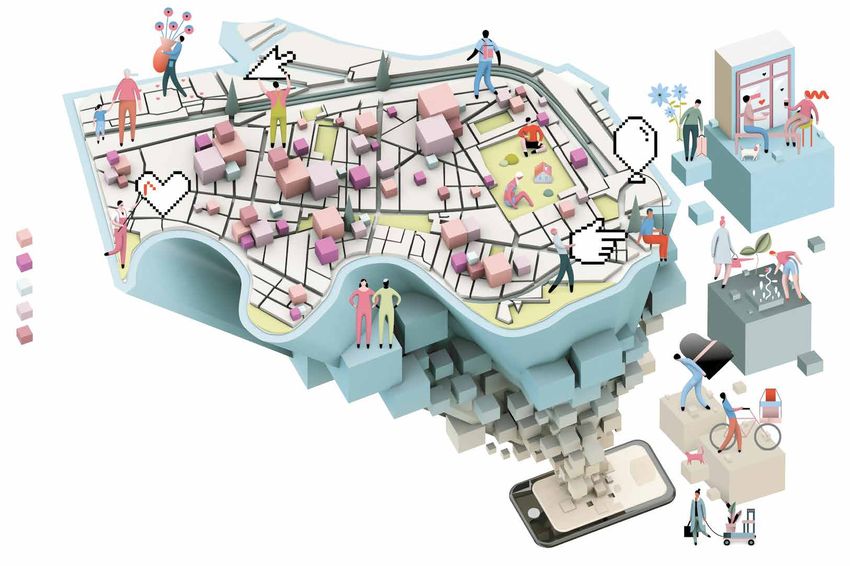
Cities change; they are drivers
of the economy and centers of
innovation. Most of all, they are
environments in which residents
shape their lives. In many countries,
neighborhood initiatives are using
maps to visualize developments in the
places they live and to initiate change.
The research project “Critical
Mapping in Municipalist Move-
ments,” which is integrated into the
Institute of Urban and Regional
Planning at Technische Universität
Berlin and is funded by the Robert
Bosch Stiftung, is studying the effects
of digital mapping. In addition to
ost tenants don’t know who owns the Berlin, the research team is focusing
building they live in,” says Susanne on Belgrade and Barcelona. “We’re
Torka, 67, sitting in B-Laden, an office interested in what these tools mean
for neighbor-to-neighbor assistance for so-called municipalist movements
in Lehrter Straße in Berlin. Torka is – citizens’ initiatives that aim to shape
the co-founder of “Wem gehört the city at the local level, beyond
Moabit?” (“Who Owns Moabit?“), an high-level politics and estab-
initiative that aims to create housing lished parties,” explains project
transparency in the district. The director Andreas Brück. The goal is
construction boom of the last twenty to investigate the potential of critical
years has changed the cityscape. mapping: “We want to understand
Buildings have been modernized and urban transformation, but also the
sold, which has unsettled tenants and strategic countermeasures taken by
long-established shopkeepers. This is initiatives.”
one reason why Torka’s office has Maps are never neutral; they
become a central meeting place for illustrate power structures. For a long
tenants, both new and old. Her time they were the privilege of the
initiative is based on the idea of civic powerful few who negotiated borders
involvement: everyone is invited to and made decisions about infrastruc-
share information about their housing ture. Today maps are ubiquitous: they
situation. This input is creating a are always with us on our cell phones
clearer picture of the neighborhood’s and are constantly being generated
ownership structure, revealing which with the help of GPS data. Surveying
buildings are owned by housing
associations, international invest-
ment companies, cooperatives, and
individuals. In 2009, Torka distribut-
ed around 10,000 questionnaires
together with other members of the “Maps are never neutral;
they illustrate power structures.”
initiative. The results showed where
modernization and massive rentTHE MAGAZINE
1.20
27
expertise is no longer necessary; the initiative’s members. “We often
cartography has been democratized. gather information at stands and add
In Susanne Torka’s case, maps take it to the map,” explains Torka. She
the form of a free online platform, hopes that more neighbors will take
crowdmap.com, where every user can part – “To reach them, we need to do
upload information. Torka reviews more advertising,” she says. Even
the entries and approves them for now, though, the work is helping
publication. The focus is on develop- people: in some cases, potential
ments in the buildings – how tenants tenants have decided not to rent
are being treated, whether apart- apartments because the owners have
ments are being rented out to tourists, notably poor ratings.
whether there are vacancies. So far, Critical mapping can help
most of the entries have been made by pinpoint, visualize, and clearly
communicate problems. It can also be
used to address a broad range of
topics. Some initiatives map vacant
properties to make intermediate uses
possible and illustrate an overheated
real estate market in the neighbor-
hood. Others mark areas in the city in
which people feel insecure or make
suggestions regarding public trans-
portation.
Members of the research
project “Critical Mapping in Munici-
palist Movements” are examining
different topics that are being ad-
dressed and mapped by initiatives.
Housing is a central issue. Each of the
three cities under study – Barcelona,
Belgrade, and Berlin – are affected by
housing conflicts, says Brück. “At the
moment,” he adds, “housing has a
dynamic that is mobilizing people. We
view it as a broader concept that goes
beyond actual housing and includes
people’s concerns about their daily
livelihoods.” Recreational opportuni-
ties and access to education are as
much an object of study as is the
percentage of a person’s income that
goes to housing. Evictions and the
problem of apartment rentals to
tourists are additional issues that the
initiatives are studying as part of their
efforts to develop alternatives.
Entering data into Excel tables
would have been far less effective
than using a visible interactive map,
says Susanne Torka from the Moabit
initiative. However, change always
depends on people. “A map is an
information tool. If tenants want to
achieve something with it, they have
to band together.”28 Essay Robert Bosch
Stiftung
Participation for All
We are transferring real-world inequality into the digital
sphere, says computer scientist Catherine Mulligan. She calls for
the courage to think differently.
2020 has been a watershed year as global digital inequality technologies. Since the advent of the silicon age in the 1960s
has been placed into stark relief. Due to Covid-19, millions we chose to recreate the digital world in the image of the
of children are missing out on school: others are being taught existing physical economy; an economy that is based on
digitally. Similarly, a dramatic line has been drawn between inequality between capital and labor that has formed society
those who can work remotely and those who cannot. for centuries. Inequalities in the real world have merely been
Previously, digital exclusion was often viewed as something transferred to – and often compounded – in the digital one.
that could be put off for later, but the last few months have For example, we are told we must accept inequalities
illustrated that digital inequality is real and an issue in nearly in the accumulation of data for all sorts of reasons – the costs
every nation in the world. of storing data, the level of investment needed, the skills
When we wrote the UN High-level Panel report on required in analytics. This means that data monopolies have
Digital Cooperation, we did not foresee that our section on been created and exist in a small number of corporations and
digital inclusion would have such relevance so quickly. Our in a small number of nations.
recommendations for every adult to have access to digital Recreating the digital world in the image of the
networks, as well as digitally-enabled financial and health ser- physical one has also just not worked – it has created an
vices certainly resonate well in today’s world and not just in incredibly brittle economy overly dependent on centraliza-
lower income nations – the fault lines of digital inequality are tion and multi-national corporations; an economy that
clear across all countries from the Global South to the USA grinds to a halt if one part falters. This has been presented to
and UK as schools in deprived areas are just as unable to us as an inevitable natural process; but it isn’t. Overcoming
deliver education as those in the Global South. The report inequality requires greater resilience in our economic
suggested that private sector, governments, NGOs and civil system. The basis of the physical economy – land, capital and
society should work together to deliver full digital inclusion labor – really don’t have the same meaning within the digital
and enable data sharing for delivery of the Sustainable realm and this is being ignored.
Development Goals. It is now more important than ever for us The digital world requires a new social contract – one
to ask ourselves: what does full digital inclusion mean? that demands a rethink about what labor looks like when so
Digital inequality is deeply seated in inequality itself – much of our data is used for commercial benefit. Policy-
and in our preconceived ideas about how the world works. makers so far are looking at important but small things like
It is our accepted norm that some people/countries get “less,” privacy while failing to address the wider implications of
while others get “more.” This is a norm solely because digital. We are therefore sleepwalking into even higher levels
we have accepted for several generations that this is the of digital inequality – paradoxically by our intention to do
way things are. This continues today in the digital world and good.
hampers the ability for individuals and nations to fully The reason digital inequality is so complex is because
embrace digital technologies. it reflects real-world inequality. Those without access are
As humans, we tend to blame the grand sweep of usually in a nexus of exclusion – merely having connectivity
history for industrial and societal revolutions – as though we does not guarantee you have the education, electricity and
had no choice. Ultimately, however, humans caused these employment to make effective use of it. Indeed, many nations
events, affected them and directed them. In the same way our can buy digital technology but struggle to apply it effectively –
current digital revolution is in our hands, but we must this productivity paradox is clearly seen in the UK.
challenge ourselves to not just think differently, but also act Failure to take the full spectrum of digital inequality
Text: Catherine Mulligan
differently. In order to overcome digital inequality, we need to into account, therefore, merely compounds the impact of
overcome some aspects of inequality itself and these cannot digital exclusion; you might be able to connect but only ever
be treated as separate things. as a participant contributing data to monopolies housed
Humans are simultaneously extremely innovative and in other nations, never as someone fully empowered to reap
tremendously narrow-minded about the potential of digital the economic and social benefits yourself. The balance ofTHE MAGAZINE
1.20
29
“In order to overcome
digital power is an important question when assessing digital
inequality; many narratives focus on “advanced” countries
and “those that need help.” A critical aspect governments,
digital inequality, we private sector and civil society need to think through proper-
ly is: what is the global social contract around digital? Without
need to overcome some this, it can become a form of digital colonization.
Often when I raise this point, people raise cryptocur-
aspects of inequality rencies as an example of how the average everyday person
can “win,” not merely participate in the digital world – but is
itself and these cannot
this really true?
Bitcoin emerged during the 2008 financial crisis. The
first truly peer-to-peer currency, Bitcoin’s inventor(s) behind
be treated as separate the pseudonym “Satoshi Nakamoto” outlined a way to remove
the need for banks from value exchange between individuals.
things.” Leaving aside the mystery surrounding Satoshi and roller-
coaster valuations of cryptocurrencies, Bitcoin’s biggest
achievement is the thought experiment it launched. Rather
than merely recreate the existing financial system of central-
ized control by government and large companies, Satoshi
instead took full advantage of the digital world to create a
currency run by the people for the people.
It was a bold idea and led to significant wealth creation
for some people. It has not yet, however, done much to
overcome inequality – digital or otherwise. Cryptocurrencies
for me are highly illustrative of the narrow mindset often
applied around digital technologies – technology does not
exist in a vacuum and needs to navigate a complex set of
political and corporate interests. A decentralized approach
makes many people uncomfortable – particularly those that
have deep vested interests in our current economic system.
This is the same problem that many of the solutions
proposed to overcome digital inequality also face; not
technical problems, political ones. Giving people full access
to the economic system via digital technologies across all
nations as full equals often makes people just as uncomfort-
able as decentralization does. It requires us to think different-
ly about the underlying forces of ownership of data and other
digital assets and forge new norms for interaction. Some
people will lose power and so we need strong political will to
achieve it.
Digitally enabled decentralization – not solely crypto-
currencies – can redefine more than just money – it can
empower us to create a different world and apply innovative
ways to connect local with global, small with large and
multinational. It frees us to not just imagine a world with
digital equality but to build it too; we just need to realize it like
Dr. Catherine Mulligan
is an honorary senior research associate in
Satoshi did. Digital co-ordination of decentralized economic
computer science at University College London activity could enable a balance between local economic
and co-director of the Centre for Cryptocur- growth and globalization in a way that is beneficial to – and
rency Research at Imperial College London. equal for – all, where data created by individuals is used to
She was a member of UN Secretary General increase their agency and grow the economic capacity of the
António Guterres’ High-level Panel on Digital
nation they are living in, not only global data monopolies.
Cooperation. This group of experts developed
It will take courage to drop our established ideas about
recommendations for how our digital future
can be designed for the good of all and in the digital inequality and it will take deep thought; it is the
spirt of the UN’s Sustainable Development challenge of our generation – we must rise to it and build the
Goals. political and citizen will to do it.30
THE MAGAZINE
                                               1.20
                                                                                                                                             Report                         31

                                               The Crucial Test
                                               The coronavirus crisis has posed enormous challenges for all
                                               schools. Those who already had experience in digitalization were at
                                               an advantage. A look at three schools in Germany.

                                               A
                                                                                         ward-looking digital profile, the            process, however. “We have always
                                                                                         students are familiar with the sound         invested in digital technology when
                                                                                         of squeaking blackboard chalk. How           there was a specific need for it,”
                                                                                         does all that fit together? “Pretty well,”   explains Zelle. For example, if the art
                                                                                         says Stefan Zelle, who has been the          department wanted to use laptops in
                                                                                         school’s media officer since 2012.           lessons. In such cases Zelle himself
                                                                                         Zelle has a long ponytail and a thick        then acts as an advisor “and as a
                                                                                         beard – he has a captivating calmness        facilitator.” As a result, the school has
                                                                                         about him. When asked what exactly           become digitally more literate with
                                                                                         the school’s digital concept is, he          each passing year, without ever
                                                                                         answers with a smile: “We actually           needing to concretely formulate that
Text: Jan Abele | Photo: Christian A. Werner

                                                                                         follow more of a no-concept ap-              as a goal. “Digitalization is not an end
                                               crossed out cell phone symbol is          proach.” Working with mobile                 in itself. We always start with the
                                               displayed on the glass entrance of the    devices and using social media and           question: what’s it for, ultimately?”
                                               1960s pavilion in the Hamburg             apps in lessons is so natural here that              The progressive school
                                               district of Bahrenfeld. Blackboards       it is no longer regarded as something        encourages personalized and
                                               hang on the walls. In the classrooms of   special. The school regulations have         independent learning, and that right
                                               Max Brauer School, a multi-award-         long allowed students to use their own       from elementary school, where the
                                               winning progressive school that is        tablets or laptops for lessons. Getting      children work with their teachers to
                                               also regularly praised for its for-       there wasn’t a straightforward               develop work plans, which they then
32 Report Robert Bosch
Stiftung
implement independently. Digital
media is an important requirement
because the students may all be sitting
in one room, but they are all working
on individual subjects that are of
interest to them. How do they coordi-
nate the personalized lesson plans?
Doesn’t that involve a huge amount of
work for the teachers? “No,” answers
Zelle. Again in this case, digitalization
is more of a blessing than a curse. “All
the teaching material we develop is
available to all teachers as a matter of
principle, and is handed over to the
next grade every year.” By now, the
school has an enormous digital
archive of material that has proved
useful in lessons and that can be
integrated relatively easily into the
individual work plans, Zelle explains.
“However, that only works because
we are a united team of teachers, each
happy to share own knowledge and
the results of own work, and prepared
to upgrade on digital skills.”
When we conducted this
interview with Stefan Zelle in the
deserted school shortly before Easter
2020, it was still impossible to predict
when schools could re-open in light of
coronavirus concerns. Since then,
schools in Germany have re-opened
on a restricted basis. One lesson can
already be drawn: when faced with
the Herculean task of switching from
classroom teaching to decentralized
teaching in just a few days, schools
that had already used digital technol-
ogy in the past were at an advantage –
the students and the teachers were
simply better prepared. That is also you’re also much more productive.”
confirmed by a telephone conversa- At the end of March, the
tion with Matti and Ake, twelve and German government decided to
fourteen years old, two friends who allocate €100 million from the “Digital
attend Max Brauer School. “We Pact” (an agreement between the
already knew how the apps used for federal and state governments for bet-
homeschooling lessons worked,” ter equipping schools with digital
explains Ake. Teachers upload tasks technology) to expand digital teach-
onto platforms such as “Schulcloud,” ing during the period German schools
and the students are then responsible would be closed. That was due to the
for preparing a weekly work plan in fact that there is a significant social
which they set out their learning dimension to the issue. The School
objectives. “And when we need help, Barometer, a representative survey
that’s all really easy via Schulcloud,” Right commissioned by the Robert Bosch
explains Matti. “We also frequently Top Twelve-year-old Matti Stiftung in collaboration with the
upload videos showing what we’re Stefan Zelle, didn’t need to learn German weekly DIE ZEIT, found that
media officer at Max how the learning two thirds of all the teachers surveyed
doing in our free time.” That’s all
Brauer School in apps work when
somehow helped to make him feel in Germany were not prepared when
Hamburg, can access homeschooling start-
closer to the school and his class- an archive of digital ed – he was already distance learning started after the
mates. “Learning is far more fun when teaching materials familiar with them coronavirus hit. In addition to a lack
you have these kinds of options. And from home. from school. of equipment, the survey respondentsYou can also read


