LIBR S ATHE SMTATEE OFRICA'S - A RIE - AMERICAN LIBRARY ...
←
→
Page content transcription
If your browser does not render page correctly, please read the page content below

SPECIAL REPORT | APRIL 2020

THE MAGAZINE OF THE AMERICAN LIBRARY ASSOCIATION

THE STATE OF

America’s
Libraries         A report from the
                  American Library Association

Top 10 Most Challenged Books                  p. 15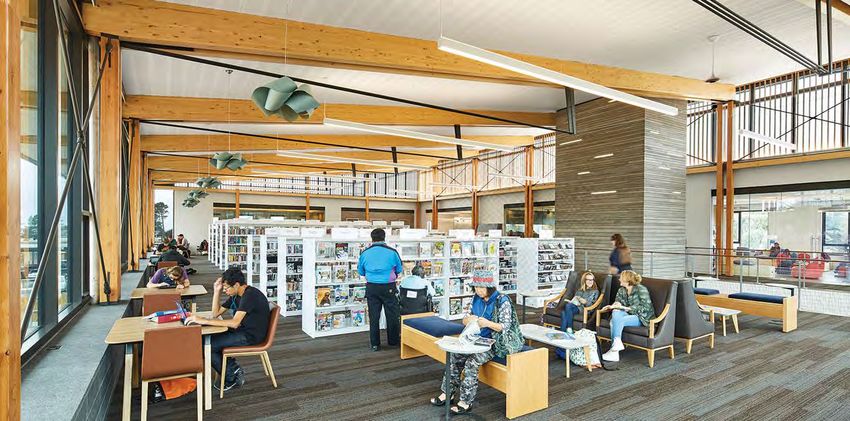
About the Report
                                                                                    STEVE ZALUSKY is communications specialist with the
       THE MAGAZINE OF THE AMERICAN LIBRARY ASSOCIATION                             American Library Association’s Communications and Mar-
                                                                                    keting Office. Prior to working with the Association, he
                                                                                    spent many years working for news organizations in the
                                                                        Chicago area. He can be reached at 312-280-1546 or szalusky@ala.org.
              Address:    50 E. Huron St., Chicago, IL 60611
              Website:    americanlibrariesmagazine.org
              Email:      americanlibraries@ala.org
                                                                        The following ALA divisions and offices also contributed to this report.
              Phone:      800-545-2433 plus extension                   ■   American Association              ■   Library and Information
                                                                            of School Librarians                  Resource Center
                       EDITOR AND PUBLISHER
                            Sanhita SinhaRoy
                                                                        ■   American Libraries                ■   Office for Diversity, Literacy,
                       ssinharoy@ala.org | x4219                        ■   Association for Library               and Outreach Services
                          MANAGING EDITOR                                   Service to Children               ■   Office for Intellectual Freedom
                           Terra Dankowski
                      tdankowski@ala.org | x5282                        ■   Association of College            ■   Public Library Association
                            SENIOR EDITORS                                  and Research Libraries            ■   Public Policy and
                                Amy Carlton
                         acarlton@ala.org | x5105
                                                                        ■   Association of Specialized,           Advocacy Office
                          George M. Eberhart                                Government, and Cooperative       ■   Young Adult Library
                       geberhart@ala.org | x4212
                                                                            Library Agencies                      Services Association
                           Phil Morehart
                      pmorehart@ala.org | x4218                         ■   Communications and
                           EDITOR-AT-LARGE                                  Marketing Office
                               Anne Ford
                          aford@ala.org | x4213

              EDITORIAL AND ADVERTISING ASSISTANT                       PRESS CONTACT
                            Carrie Smith
                      casmith@ala.org | x4216                           Macey Morales
                             ART DIRECTOR                               Deputy Director
                             Rebecca Lomax
                         rlomax@ala.org | x4217
                                                                        Communications and Marketing Office
                           ADVERTISING
                                                                        American Library Association
           Michael Stack mstack@ala.org | 847-367-7120                  312-280-4393
        Acceptance of advertising does not constitute endorse-
          ment. ALA reserves the right to refuse advertising.           mmorales@ala.org
                    PUBLISHING DEPARTMENT
             Mary Mackay, Associate Executive Director
        Mary Jo Bolduc, Rights, Permissions, Reprints | x5416           HOW TO CITE THIS REPORT
                           MEMBERSHIP
             Lorelle Swader, Associate Executive Director
                                                                        American Library Association. The State of America’s Libraries 2020: A
                         ADVISORY COMMITTEE
                                                                        Report from the American Library Association. Steve Zalusky, ed. 2020.
         Susan H. Polos (Chair), Salvador Avila, Joseph M. Eagan,       http://www.ala.org/news/state-americas-libraries-report-2020
       Sonja Eyler, Mary L. Hastler, Ben Allen Hunter, Jasmina Jusic,
         Sigrid Kelsey. Committee associate: Lisa Anne Romano
           Editorial policy: ALA Policy Manual, section A.8.2

                               PUBLISHED
                                                                        ABOUT ALA
       American Libraries (ISSN 0002-9769) is published 6 times         The American Library Association (ALA) is the foremost national
       yearly with occasional supplements by the American
       Library Association (ALA). Printed in USA. Periodicals           organization providing resources to inspire library and information pro-
       postage paid at Chicago, Illinois, and additional mailing        fessionals to transform their communities through essential programs
       offices. POSTMASTER: Personal members: Send address
       changes to American Libraries, c/o Membership Records,
                                                                        and services. For more than 140 years, the ALA has been the trusted
       ALA, 50 E. Huron St., Chicago, IL 60611. ©2019 American          voice of libraries, advocating for the profession and the library’s role in
       Library Association. All rights reserved. No portion of this
       magazine may be reproduced or republished without
                                                                        enhancing learning and ensuring access to information for all. For more
       written permission from the publisher.                           information, visit ala.org.

2   April 2020 | americanlibraries.org
American Libraries        | April 2020 | ISSN 0002-9769
Photo: Anthony Lindsay Photography

                                     The Half Moon Bay branch of the San Mateo County (Calif.) Libraries was featured in the 2019 AIA/ALA Library Building Awards.

                                     THE STATE OF

                                     America’s
                                     Libraries
                                     A report from the American Library Association
                                     EDITED BY Steve Zalusky

                                                                                                                                                         April 2020 | americanlibraries.org   3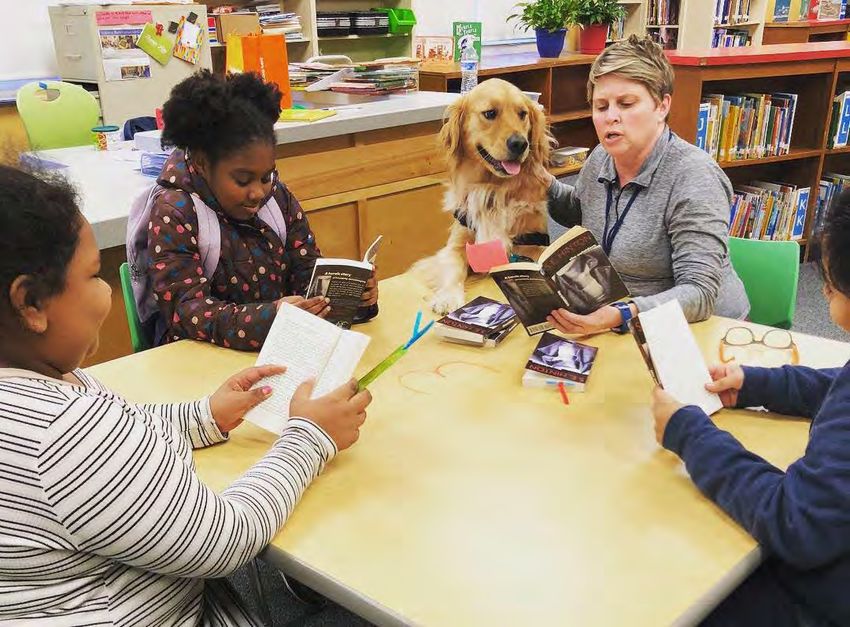
THE STATE OF

          America’s
          Libraries                      A report from the
                                         American Library Association

          EDITED BY   Steve Zalusky

          T
                  he theme of National Library Week in 2020 is “Find the
                  Library at Your Place.” (The theme was changed from
                  “Find Your Place in the Library” to reflect the altered
          landscape in the COVID-19 pandemic and highlight how
          libraries are offering the virtual services and digital content
          their communities need more than ever.) It takes its cue from
          2019–2020 ALA President Wanda Kay Brown’s presidential
          initiative “Finding Your ALA,” which aims to promote the value
          of libraries through a lens of social justice and inclusion. At
          the beginning of her term, Brown wrote in American Libraries,
          “Libraries are essential for the health of our democracy, our
          communities, and our future.” During the week of April 19–25,
          Americans take time to celebrate the libraries and library work-
          ers who connect them with the resources they need. Libraries
          provide free access to books, online resources, and family
          programming. Library business centers help support entrepre-
          neurship and worker retraining. Attendance at free public pro-
          grams in libraries has gone up. Libraries offer opportunities for
          everyone and—in many cases—a safe place to be.

4   April 2020 | americanlibraries.org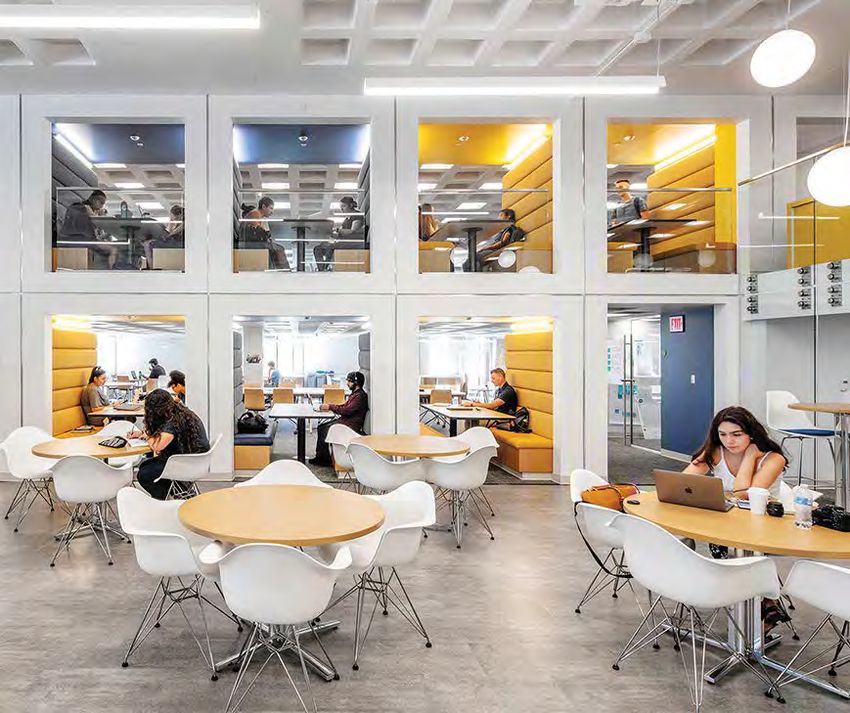
Access and                                          EDITOR'S NOTE
challenges
Most challenges to library resources in
2019 focused on materials and programs
                                                   A     s the State of America’s Libraries report goes to
                                                         press, the coronavirus pandemic has upended our
                                                    nation and our profession, so much so that aspects of
associated with issues of concern to those          this report—which provides a snapshot of our industry
in the gay, lesbian, transgender, and               in 2019—now read like dispatches from a distant era.
queer communities, most notably books                  What hasn’t changed is our belief that service and
affirming transgender youth, like Alex              stewardship to our communities are core to the library
Gino’s George.                                      profession. We continue to see this every day even as
                                                    library buildings close to the public but often sustain
Top Ten Most Challenged Books in                    or grow their virtual services and make their resources
2019. The ALA Office for Intellectual               freely available to all. Today and everyday, our nation’s
Freedom tracked 377 challenges to                   libraries are on the front lines, playing an invaluable
library, school, and university materials           role in keeping communities connected.
and services in 2019. Of the 566 books                 From the vantage point of the present, it’s clear
challenged or banned in 2019, the                   that, as this report attests, libraries are more import-
following are the top 10 most frequently            ant and necessary than ever—and they have an
challenged:                                         important role to play in keeping our communities
1. George, by Alex Gino                             strong during and after this unprecedented time. Read
2. Beyond Magenta: Transgender
                                                    on for inspiration and assurance that our profession is
   Teens Speak Out, by Susan Kuklin                 ready for the challenge. •

3. A Day in the Life of Marlon Bundo,
   by Jill Twiss, illustrated by EG Keller
4. Sex is a Funny Word, by Cory
   Silverberg, illustrated by Fiona Smyth
5. Prince & Knight, by Daniel Haack,           country, public libraries provide the only access to information
   illustrated by Stevie Lewis                 for underrepresented, marginalized, and vulnerable communi-
6. I Am Jazz, by Jessica Herthel               ties. Often the library is the first point of contact that connects
   and Jazz Jennings, illustrated              people who have serious needs to other community agencies.               DID YOU KNOW?
   by Shelagh McNicholas
7. The Handmaid’s Tale, by                     Inclusion. ALA was one of 100 voluntary national partner orga-           Following a
   Margaret Atwood                             nizations that participated in the design of Truth, Racial Healing,
                                                                                                                        year of intense
8. Drama, written and illustrated
                                               and Transformation (TRHT), the W. K. Kellogg Foundation’s
   by Raina Telgemeier                         national and community-based process to plan for and bring               engagement by
                                               about transformational and sustainable change and to address
9. Harry Potter series, by J. K. Rowling                                                                                ALA members,
                                               the historic and contemporary effects of racism. As part of this
10. And Tango Makes Three, by Peter            work, ALA’s Public Programs Office and Office for Diversity,
   Parnell and Justin Richardson,              Literacy, and Outreach Services convened Racial Healing Circles
                                                                                                                        the president
   illustrated by Henry Cole                   at nine library conferences, helping participants to recognize our       signed a
                                               common humanity, acknowledge the truth of past wrongs, and
                                                                                                                        spending bill
Major issues                                   build the authentic relationships necessary to begin transforming
                                               communities and shifting our national discourse.
Today’s libraries are at the heart of their                                                                             containing a
communities, delivering innovative edu-        Federal funding. Libraries rely on federal funds to support
                                                                                                                        $10 million
cational resources and programs. Library       initiatives on the local, state, and federal levels. Most federal
staff work to create an equitable society by   library funds are distributed through the Institute of Museum            increase
providing free access to accurate infor-       and Library Services (IMLS) to each state through the Library
mation to all people. In many parts of the     Services and Technology Act (LSTA). The Innovative Approaches            for IMLS.

                                                                                                         April 2020 | americanlibraries.org   5
STATE OF AMERICA’S LIBRARIES

                         to Literacy (IAL) grant program from the US Department of Edu-           ■ $192 million for Striving Readers
                         cation supports school libraries working to foster reading skills at       Comprehensive Literacy Grants
                         the most crucial early years of a child’s development. LSTA and            ($190 million in FY2019)
                         IAL provide critical assistance, giving libraries across the country     ■ $1.25 billion for 21st Century

                         the financial support they need to serve their communities.                Community Learning Centers
                            Following a year of intense engagement by ALA members,                  ($1.22 billion in FY2019)
                         Congress approved in December, and the president signed, a               ■ $16.3 billion for Title I Grants

                         spending bill containing a $10 million increase for IMLS, the              to Local Education Agencies
                         largest increase for the program in more than a decade.                    ($15.9 billion in FY2019)
                            Congress appropriated $252 million for IMLS, including a              ■ $2.13 billion for Title II Supporting

                         $6.2 million increase dedicated to LSTA. Highlights from the               Effective Instruction ($2.06 billion
                         $195.4 million for LSTA include:                                           in FY2019)
                         ■ $166.8 million for LSTA Grants to States                                 The Library of Congress and the
                            ($160.8 million in FY2019)                                            National Library of Medicine also received
                         ■ $5.3 million for LSTA Native American Library                          funding increases.
                            Services ($5.1 million in FY2019)
                         ■ $10 million for LSTA Laura Bush 21st Century

                            Librarian grants ($10 million in FY2019)                              The 2020 Census:
                         ■ $13.4 million for LSTA National Leadership
                                                                                                  Striving for a
                            for Libraries ($13.4 million in FY2019)
                            Overall funding for the Department of Education increased by          complete count
                         $1.3 billion, raising its total budget to $72.8 billion. The IAL pro-    Public libraries are playing a key role
                         gram received $27 million for FY2020, the same level as 2019.            in the success of the 2020 Census. In
                         Other library-eligible programs received increases:                      preparation for the census, public libraries
                         ■ $1.21 billion for Title IV Part A Well-Rounded                         ramped up efforts to ensure an accurate,
                            Education ($1.17 billion in FY2019)                                   fair, and inclusive count for communi-
                                                                                                  ties. With staff support and resources
                                                                                                  developed by ALA and the Public Library
                                                                                                  Association (PLA), including its Libraries’
                                                                                                  Guide to the 2020 Census, library workers
                                                                                                  from around the country joined state and
                                                                                                  local Complete Count Committees, collab-
                                                                                                  orating with community stakeholders.
                                                                                                     On Census Day, April 1, 2019,
                                                                                                  then–ALA President Loida Garcia-Febo
                                                                                                  highlighted libraries’ critical role of
                                                                                                  achieving a fair and accurate count in the
                                                                                                  2020 Census by participating in a press
                                                                                                  conference held by the US Census Bureau,
                                                                                                  joining top leaders in the bureau and
                                                                                                  other national stakeholders.
                                                                                                     Also, on Census Day, ALA joined an
                                                                                                  amicus brief to the US Supreme Court
                                                                                                  opposing the last-minute addition of a
                                                                                                  citizenship question to the 2020 Census.
                                                                                                  In June, the Supreme Court ruled against
From left: ALA President Loida Garcia-Febo; Chickasaw Nation Governor Bill Anoatubby; and Annie   the administration’s proposed addition,
E. Casey Foundation President and CEO Lisa Hamilton at the US Census Bureau’s Census Day press    removing a significant distraction from
conference at the National Press Club in Washington, D.C., April 1, 2019.                         preparations for a complete count.

6   April 2020 | americanlibraries.org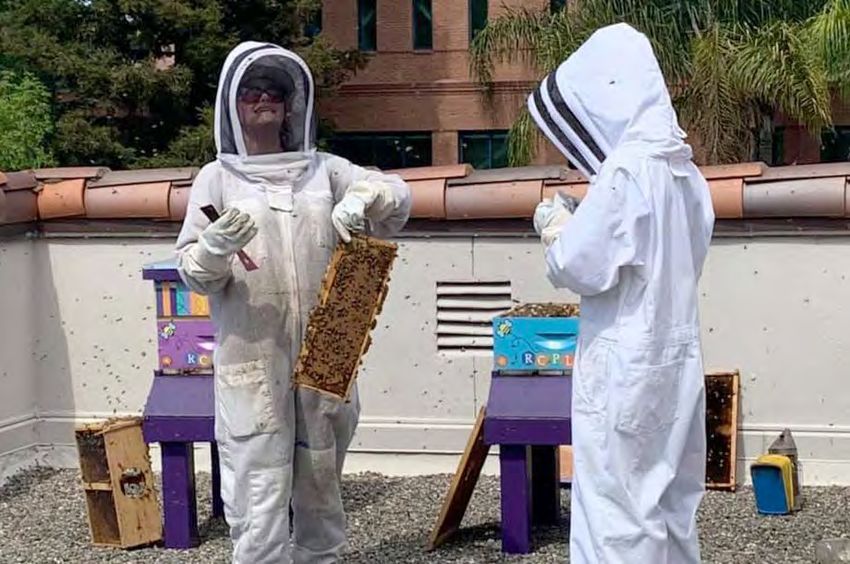
Big Life Change?
Don’t forget your health insurance!
You may qualify for a Special Enrollment Period!

                                                                          and
                                                                         many
                                                                         more!
Birth or adoption   Moving         Immigration status change

  Also, did you know you can enroll in Medicaid and CHIP anytime
     of the year? Visit healthcare.gov/screener to learn more.

Libraries can                      • Coverage options, including
                                     Medicaid or Special Enrollment Period
act now with                       • Using your health insurance

premade                            • Preventive care
                                   • Social media–friendly assets
communications                     • Radio ad scripts
materials for...                   • Spanish-language assets

                             The Libraries Connecting You to Coverage initiative is
                             made possible by funding from the Robert Wood Johnson
                             Foundation and Community Catalyst. Learn more at
                             ala.org/pla/initiatives/connectingyoutocoverage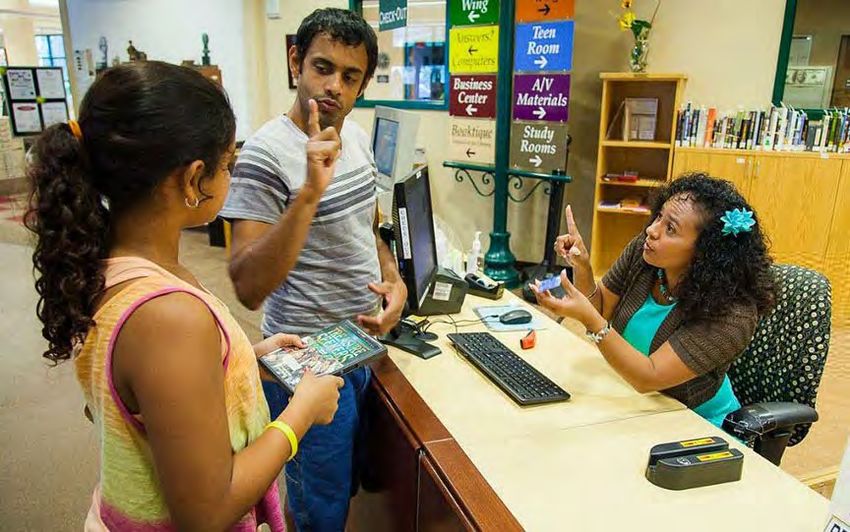
movie rentals, or activities for children,
                                                                                                libraries are most utilized by young adults,
                                                                                                women, and residents of low-income
                                                                                                households.”

Public                                                                                          Learning and parent
                                                                                                engagement

libraries                                                                                       Libraries are embracing their roles in
                                                                                                learning and promoting parental engage-
                                                                                                ment in education. Research shows that
                                                                                                increased parental involvement reduces or
                                                                                                eradicates the literacy gap between chil-

                     T
                                                                                                dren whose mothers have varying levels
                             he popularity of libraries is surging. The public response
                                                                                                of education.
                             to the work of our nation’s libraries is reflected in an               While high-income households can
                             increased number of visits. According to a recent Gallup           spend more on enrichment activities,
                      poll, visiting the library is the “most common cultural activity          public libraries are leveling the playing
                                                                                                field by offering free access to collections
                      Americans engage in by far.” In 2019, US adults reported taking
                                                                                                and programs that bring families together.
                      an average of 10.5 trips to the library, a frequency that exceeded        Parental support helps teenagers improve
                      their participation in eight other common leisure activities.             their interpersonal and decision-making
                      Americans attended live music or theatrical events and visited            skills and avoid reckless impulses, while
                                                                                                public libraries offer enriching programs
                      national or historic parks roughly four times a year on average
                                                                                                for all ages that help kids and their
                      and visited museums and gambling casinos 2.5 times annually.              parents bond by learning side-by-side.
                         Public libraries are attracting a cross-section of visitors, includ-   The public library also helps parents
                      ing adults in low-income households and young people. For                 avoid social isolation and its potential for
                      example, US adults aged 18–29 visit the library much more than            depression, which decreases the fami-
                      older age groups.                                                         ly’s risk of child behavioral issues and
                         According to Gallup, “Despite the proliferation of digital-based       maltreatment.
                      activities over the past two decades—including digital books,                 The Public Library Association (PLA),
                                                                   podcasts, streaming          a division of ALA, is helping libraries
                                                                   entertainment services,      capitalize on all these strengths through
                                                                   and advanced gaming—         its family engagement initiatives
                                                                   libraries have endured as    and training.
                                                                   a place Americans visit
                                                                   nearly monthly on average.
                                                                   Whether because they offer   Wellness and health
                                                                   services like free Wi-Fi,    Promoting wellness and helping commu-
                                                                                                nity members connect to vital health and
                                                                                                social services is a growing trend in US
                                                                DigitalLearn.org offers free    public libraries. More than 70% of Ameri-
                                                                courses geared toward users
                                                                new to computers.
                                                                                                cans agree that libraries can assist people
                                                                                                who are seeking health information.
                                                                                                More than 80% of those looking for diet,
                                                                                                nutrition, and fitness information online at
                                                                                                the library report that they subsequently
                                                                                                made changes in their diet and exercise.

8   April 2020 | americanlibraries.org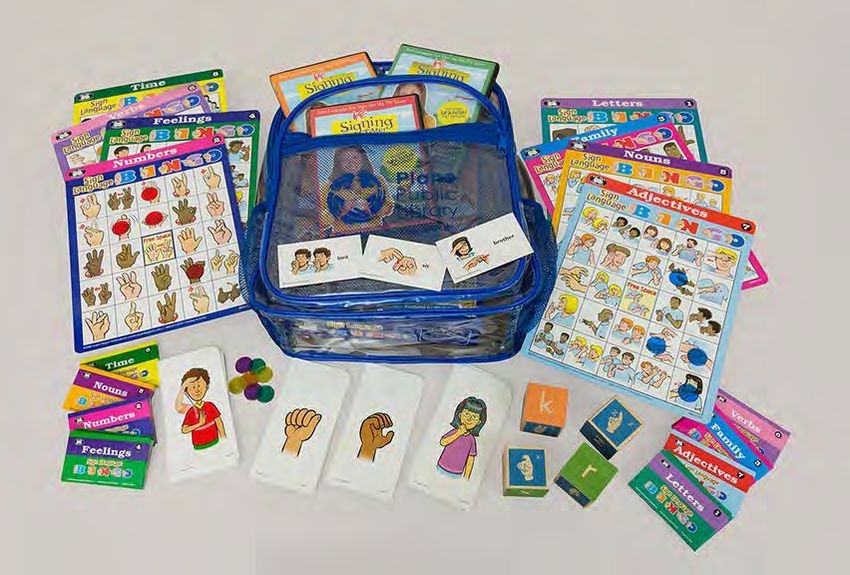
Libraries provide a diverse array of
                                              health literacy and awareness services for
                                              their communities. Public library collec-
                                              tions offer materials on healthy lifestyles,
                                              cookbooks that address medical dietary
                                              needs, multimedia for physical exercise
                                              instruction, and self-help mental health
                                              materials. Some libraries take healthy
                                              lifestyle services even further by offering
                                              walking, hiking, bicycling, or running
                                              programs that take place outside the
                                              library building. Nearly 23% of public
                                              libraries host fitness or yoga classes. Inde-
                                              pendently and with support from PLA’s
                                              Libraries Connecting You to Coverage
                                              project, hundreds of public libraries are
                                              encouraging community members to
                                              secure health insurance coverage through
                                              information dissemination, education,
                                              and partnerships.                               The Redwood City (Calif.) Public Library installed two bee hives on the downtown library’s rooftop.
                                                  Dozens of public libraries are also
                                              hiring social work practitioners, interns,      classes and even providing seed capital through business-plan
                                              or students to address the social service       competitions.
                                              needs of their customers. PLA’s Social             Public libraries are ideal partners in researching new ideas or
                                              Worker Task Force and the training              markets, developing business plans, gaining access to emerging
                                              and resources it provides to the public         technologies, and learning about intellectual property. PLA helps
                                              library field are identifying best practices    public libraries increase digital literacy and economic opportu-
                                              and educating public library staff about        nity by creating tools like DigitalLearn for teaching basic com-
                                              such critical issues as trauma-informed         puter skills and by developing such initiatives as Libraries Lead
                                              care, serving persons experiencing              with Digital Skills, a 2019 partnership with Grow with Google
                                              homelessness, and more.                         that provided funding and tools so that hundreds of public
                                                                                              libraries could offer programs to help community members
                                              Economic                                        develop their skills, careers, and businesses.
                                                                                                                                                                               DID YOU KNOW?
                                              opportunity                                                                                                                      Patrons can
                                              Public libraries drive economic oppor-          Nontraditional collections
                                              tunity for their community members              The best proof that public libraries are about more than just                    check out
                                              through skill development and small             books is their evolution into libraries of things, offering non-
                                              business support. Nearly 90% of public          traditional collections that are community-specific and imagi-
                                                                                                                                                                               kitchenware,
                                              libraries offer digital literacy training       native. The wide array of items available to check out includes                  outdoor
Photo: Redwood City (Calif.) Public Library

                                              programs, through which community               mattresses, dolls, bicycles, binoculars, and accordions. At the
                                              members can learn résumé development            Beaverton (Oreg.) City Library, patrons can check out kitchen-                   equipment,
                                              and job searching and gain new skills           ware, outdoor equipment, and games.
                                              to aid in career advancement. Nearly               Libraries have even delved into the area of beekeeping. The                   and games at
                                              half of the more than 16,000 public             Redwood City (Calif.) Public Library collaborated with the                       the Beaverton
                                              libraries in the US provide free services       Beekeepers’ Guild of San Mateo and the owner of a local farm,
                                              for small businesses and entrepreneurs,         culminating in the installation of two hives on the downtown                     (Oreg.)
                                              from offering access to market-trends           library’s rooftop. If there is something that can’t be checked out
                                              databases to hosting business-coaching          at your public library, it likely hasn’t been invented yet.                      City Library.

                                                                                                                                                               April 2020 | americanlibraries.org   9
of academic libraries in the US provide
                                                                                                support for at least one high-impact
                                                                                                educational practice. (This statistic
                                                                                                and other academic library data can be
                                                                                                found in ACRL’s 2018 ACRL Academic

ACADEMIC                                                                                        Library Trends and Statistics and the
                                                                                                ACRLMetrics subscription-only data-
                                                                                                base online.)

libraries                                                                                       Programs and
                                                                                                services
                                                                                                Academic librarians are uniquely situated

                        O
                                                                                                to influence student learning in a variety
                                     ur nation’s academic libraries have a major impact
                                                                                                of ways—through the reference desk,
                                     on student success. Statistics gathered by the Asso-       one-shot classroom sessions, one-on-one
                                     ciation of College and Research Libraries (ACRL), a        consultations, collaboration with faculty,
                         division of ALA, demonstrate how academic libraries support            and cocurricular activities. Academic
                         many types of high-impact educational practices (HIPS) that            library staff provided instructional ses-
                                                                                                sions (both face-to-face and electronic)
                         have beneficial effects on student retention, graduation rates,
                                                                                                to more than 7 million students annually
                         time to graduation, and grade point average.                           (nearly one-third of the 2018 student FTE
                            ACRL conducts an annual survey of staffing, collections,            enrollment). More than 57% of the almost
                         expenditures, operations, and initiatives for all academic libraries   800,000 instructional sessions were digi-
                         in the United States. The most recent data, from 2018, show that       tal or electronic.
                         academic libraries promote deep learning by promoting student             Doctoral degree-granting institutions
                         engagement as measured by the National Survey on Student               averaged more than 15,400 reference
                         Engagement (NSSE). Of the 10 practices that qualify as HIPS,           transactions and consultations per year,
                         first-year seminars, writing-intensive courses, undergraduate          followed by comprehensive universities
                         research with a faculty member, and capstone projects for seniors      (with more than 4,900 transactions
                         are the learning experiences most frequently promoted by aca-          and consultations), community colleges
                         demic libraries.                                                       (with more than 8,100 transactions and
                            Academic libraries also support other high-impact practices,        consultations), and baccalaureate schools
                         including international study and global learning, service-            (more than 2,700 transactions and
                         learning projects, internships, and e-portfolios. Nearly 27%           consultations.

                         DID YOU KNOW?

                         7 million                                                              1 billion+
                         students received instructional sessions                               visits were reported by academic
                         (both face-to-face and electronic) from academic                       libraries collectively in 2018
                         library staff annually (nearly one-third of the 2018                   (an average of 47 visits per
                         student FTE enrollment).                                               FTE student).

10   April 2020 | americanlibraries.org
Access and usage
Libraries in doctoral degree–granting
institutions were open an average of
109.75 hours per week and were visited
by more than 966,000 users on average
annually. Comprehensive university
libraries were open on average 91.02
hours per week and averaged 296,000
visits per year. Baccalaureate libraries
were open an average of 89.74 hours
per week and averaged 179,000 visits
per year. Community colleges were
open an average of 63.77 hours per
week and averaged 203,000 visits per
year. Collectively, academic libraries
reported more than 1 billion visits in
2018 for an average of 47 visits per
FTE student.
Electronic resource usage contin-
ued to grow in academic libraries.
Materials in institutional repositories
received more than 622 million uses,
ebooks more than 532 million uses,
and e-serials recorded more than 818
million uses. Additionally, academic The Barbara J. Burger iZone at the University of Rochester in New York, was featured in American
libraries borrowed more than 6.3 Libraries' 2019 Library Design Showcase.
million items for their communities
from other libraries through inter- spent an average of 73.8% of their materials budget on ongoing
library loan. subscriptions.
In 2018, doctoral degree–granting institutions spent an aver-
age of $356.77 per student on materials; comprehensive schools
Collections spent an average of $140.18; baccalaureate schools averaged
Academic library expenditures for col- $222.55 per student in materials expenditures; and associate
lection materials averaged $5,346,929 degree–granting institutions spent an average of $39.65.
for doctoral degree–granting insti-
tutions, $682,823 for comprehen-
sive degree–granting institutions, Staffing trends
$494,883 for baccalaureate schools, and Spending on salaries and wages accounted for 56.3% of total
$196,050 for associate degree–granting library expenditures on average. Salaries and wages constituted
institutions. 72.9% of total library expenditures for associate degree–granting
On average, doctoral degree–grant- institutions, 51.6% for baccalaureates, 55.4% for comprehensive
ing institutions spent 77.4% of their schools, and 42.8% for doctoral or research institutions.
materials budgets on ongoing commit- Associate degree–granting institutions had an average of
ments to subscriptions in 2018; com- 4.92 FTE librarians serving 4,945 students; baccalaureate
Photo: Revette Studio
prehensive schools spent an average schools had an average of 5.38 FTE librarians serving 2,224 stu-
of 80.7%; baccalaureate schools spent dents; comprehensive universities served an average of 4,871
an average of 79.6%; and associate students with an average of 7.8 FTE librarians; and doctoral or
degree–granting institutions spent an research institutions served 14,957 students with 30.13 FTE
average of 64.8%. All academic libraries librarians.
April 2020 | americanlibraries.org 11The 2018 National School Library
Standards for Learners, School Librarians,
and School Libraries, developed by the
American Association of School Librarians
(AASL), a division of ALA, establishes
school an integrated framework for the learner,
school librarian, and school library as
an essential element of teaching and
libraries learning. Within this framework, the
shared foundations (Inquire, Include,
Collaborate, Curate, Explore, and Engage)
are centered on information to enable
success through innovation, collaboration,
S
exploration, deep thinking, and creativity.
chool librarians and school libraries continue to
School librarians hold a common belief
evolve to meet the demand for equity and access in that reading is the core of personal and
a culturally responsive learning environment offer- academic competency.
ing physical and digital resources and connections to a As literacy leaders, school librarians
global world. Today’s world requires them to navigate an are positioned to elevate the importance
of reading and reading proficiency to
increasingly complex information landscape, yet school
support all learners’ academic success.
librarians—a unique position in the school environment for
Decades of research indicates that there
understanding the questioning, selection, and creation of is a positive correlation between learners’
knowledge from this landscape—continue to be threatened attending schools with full-time, state-
with the loss of positions. certified school librarians and higher
scores on standardized reading tests.
The need for school librarians to
Standards instruct students in information literacy
In a 2012 Pew Research Center survey, 83% of teachers is evident in the need for using data in
responded that students are overwhelmed by the amount of decision-making. The perception is that
information available online, and 60% stated that the increasing youth growing up with access to ubiqui-
array of technologies makes it more difficult to locate credible tous technology can easily and effectively
information. The inability to curate information was echoed in use data. Yet a recent report on data
a 2016 Stanford University study that found nearly 80% of high literacy found that “60% of US workers
school students struggle to verify the credibility of a source. This 16 to 24 years old—people who had been
lack of knowledge and skill is the result of many schools failing raised surrounded by technology—are
to provide students with well-resourced school libraries staffed overwhelmed by the data they must read
by qualified school librarians—the vital center in every school for and analyze as part of their jobs.”
improved reading scores, one-to-one technology initiatives, and As school districts face constrained
expanded pathways to college, career, and life. budgets each year, all too many consider
DID YOU KNOW?
Decades of research indicates that there is a positive correlation
between learners’ attending schools with full-time, state-certified
school librarians and higher scores on standardized reading tests.
12 April 2020 | americanlibraries.orgKerri Price, a Charleston County (S.C.) Teacher Librarian Cohort member in University of South Carolina's Library Scholar program,
works with students in her school library, alongside her therapy dog, Bailey.
school librarians for potential cuts. that they would lose their jobs in 2020, since the school district
In a nation rebounding economically suffers from a $31 million deficit.
from low unemployment rates, Forbes School librarians have been described as an endangered
magazine notes that the “public school species in Michigan. In 2019, 92% of schools statewide don’t
librarian sector has not rebounded, and employ a full-time, certified librarian, while the number of
the nation’s collective failure to rebuild school librarians in the state declined 73% between 2000 and
its public information infrastructure is 2016, far beyond the national decline of 20% during that period.
hitting minorities the hardest.” Michigan is 47th in the nation in the number of librarians it
offers per student.
A 2019 informational brief sponsored by the New York State
Case studies Library reviewed research studies on the critical role of the
In South Carolina, which requires school librarian in the learning process. The brief found signifi-
every public school to have at least one cance in the “sustainability of school libraries for the success of
school librarian with an MLIS degree, all students” and concluded that as education and employment
the state had 60 school librarian vacan- changes, “the school librarians’ contributions, whether direct
cies in 2018. or indirect, are consistently shown to be of positive value to
In April 2019, every librarian in not only students and teachers, but the wider community” for
Spokane (Wash.) Public Schools was told future learning.
April 2020 | americanlibraries.org 13Organized groups also continued to
protest and disrupt Drag Queen Story
issues Hour events held in libraries, claiming
that the events advance political, social,
and religious agendas that are incon-
and sistent with the groups’ conservative
Christian beliefs about gender and sexual
identity. In 2019, OIF tracked more
trends than 30 challenges to Drag Queen Story
Hours and other Pride programs, and
identified a new and distressing trend of
disinviting authors who had been invited
to speak or read from their books, solely
on the grounds that the authors identify
Intellectual freedom as LGTBQIA+ or because their books
C
hallenges to library materials and programs address- include LGBTQIA+ themes. Authors who
have been disinvited include Lilah Sturges
ing issues of concern to those in the lesbian, gay,
(Lumberjanes), Leslèa Newman (Gittel’s
bisexual, transgender, queer and/or questioning, Journey), Julia Watts (Quiver), Meredith
intersex, asexual, and related (LGBTQIA+) communities con- Russo (If I Was Your Girl), and Robin Ste-
tinued unabated in 2019, with a rising number of coordinated, venson (Kid Activists).
While challenges to LGBTQIA+ books
organized challenges to books, programs, speakers, and other
made up the majority of entries on OIF’s
library resources that address LGBTQIA+ issues and themes. Top Ten Most Challenged Books list
A notable feature of these challenges is an effort to frame any for 2019, libraries continued to receive
material with LGBTQIA+ themes or characters as inherently por- challenges to library resources based on
nographic or unsuitable for minors, even when the materials are objections to profanity, sex, and themes
intended for children and families and they are age and devel- related to race, religion, and social justice.
opmentally appropriate. For example, a pastor in Upshur, West These included books such as Marga-
Virginia, challenged the children’s picture book Prince & Knight, ret Atwood’s The Handmaid’s Tale, Nic
claiming that the fractured fairy tale “is a deliberate attempt to Stone’s Dear Martin, Jason Reynolds’s and
indoctrinate young children, especially boys, into the LGBTQA Brendan Kiely’s All American Boys, and
lifestyle.” Similarly, an organized group in Loudoun County, the Harry Potter series by J. K. Rowling.
Virginia, protested the addition of diverse children’s and young Also challenged were online research
adult books addressing LGBTQIA+ themes and characters to databases provided by EBSCO and Gale
classroom libraries, claiming that the books advance a “political Cengage, based on unsubstantiated and
agenda” endorsed by the LGBTQIA+ community. unverified claims that these databases,
curated to be appropriate for each age
and educational level, contain explicit
Prince & sexual content.
Knight, Like the challenges to LGBTQIA+
written
by Daniel
materials, many of these challenges are
Haack and pursued by well-organized pressure
illustrated groups intent on banning books and
by Stevie resources they deem pornographic or
Lewis
unsuitable for minors. A serious concern
is their efforts to pass state legislation that
would make it possible to sue or crimi-
nally prosecute librarians and educators
14 April 2020 | americanlibraries.orgfor providing or lending constitution- titles removed from the library were W. E. B. Du Bois’s The Souls
ally protected, mainstream materials to of Black Folk and The Narrative of the Life of Frederick Douglass.
minors. Among the works identified as Despite all these challenges and concerns, libraries across the
unsuitable by these groups are Haruki country continued to be welcoming community institutions that
Murakami’s Kafka on the Shore, Toni Mor- foster intellectual freedom and inclusivity by developing and
rison’s The Bluest Eye, Khaled Hosseini’s defending collections, resources, and services that reflect and
The Kite Runner, and Cristina García’s celebrate the diversity of their communities.
Dreaming in Cuban.
The decision made by county commis- Top 10 Most Challenged Books in 2019. The ALA Office for
sioners in Citrus County, Florida, to deny Intellectual Freedom tracked 377 challenges to library, school,
funding for a digital subscription to the and university materials and services in 2019. Overall, 566 books
New York Times demonstrated how parti- were targeted. Here are the “Top 10 Most Challenged Books in
san differences can impair public library 2019,” along with the reasons cited for censoring the books:
users’ access to high quality information
resources. The commissioners unani-
mously denied a request from their local 1 | George by Alex Gino
library to spend $2,700 annually on the Challenged, banned, restricted, and hidden
digital resource, stating that the paper to avoid controversy; for LGBTQIA+ content
is “fake news” and that they “agree with and a transgender character; because
Donald Trump.” Approval of the subscrip- schools and libraries should not “put books
tion fee would have reduced costs for the in a child’s hand that require discussion”;
for sexual references; and for conflicting
library and expanded access from four
with a religious viewpoint and “traditional
print copies of the newspaper to unlimited family structure”
digital access for every person holding a
Citrus County Library card.
A number of high-profile challenges to 2 | Beyond Magenta: Transgender
materials in prison libraries and class- Teens Speak Out by Susan Kuklin
rooms drew attention to the chronic and Challenged for LGBTQIA+ content, for “its
arbitrary censorship of reading materials effect on any young people who would
and information resources in prisons. read it,” and for concerns that it was
Reports compiled by PEN America sexually explicit and biased
revealed that thousands of mainstream
publications—including fiction, nonfic-
tion, and periodicals—have been banned 3 | A Day in the Life of Marlon Bundo
from prisons on the grounds that the by Jill Twiss, illustrated by EG Keller
materials pose a threat to the “good order” Challenged and vandalized for LGBTQIA+
or security of the prison. But a close content and political viewpoints, for
concerns that it is “designed to pollute the
examination of these lists reveals that
morals of its readers,” and for not including
many books banned from prisons share a content warning
a focus on social justice, race relations,
or racism in the administration of the
criminal justice system. In one instance, 4 | Sex is a Funny Word by Cory
prison staff entered a library maintained Silverberg, illustrated by Fiona Smyth
by the University of Illinois Education Challenged, banned, and relocated for
Justice Project at the Danville Correctional LGBTQIA+ content; for discussing gender
Center and removed 200 books that were identity and sex education; and for
previously approved for use by people who concerns that the title and illustrations were
are incarcerated and were earning college “inappropriate”
degrees through the program. Among the
April 2020 | americanlibraries.org 15STATE OF AMERICA’S LIBRARIES
censorsh i p
B y t h e N u m b e r s 2 01 9
Censorship is a dead end. It limits
exploration and creates barriers to
access information. The path toward the
freedom to read starts at the library.
Learn more at ala.org/bbooks.
W h o i n i t i at e s c h a l l e n g e s ?
18% 13% Board/
Parents administration
12% Political/religious
what is a
groups
Challenge? 8% Librarians/teachers
Attempt to 3% Elected officials
45%
remove or restrict Patrons 1% Students
materials or Statistics based on 361 responses
services based
on content Reasons for challenges
what is a
Ban?
Removal of
materials or
cancellation of
services based
Each word and phrase in this graphic is cited from 2019 censorship reports
on content
16 April 2020 | americanlibraries.orgSTATE OF AMERICA’S LIBRARIES
Where do readers on
challenges censorship
“
ta k e p l a c e ?
607
Had I had a book like
66% that on the shelf, I
Public libraries
might have realized a
Total materials
19% lot sooner that I could
School libraries
affected in censorship love myself. I might
attempts in 2019 12% have realized a lot
(including books, Schools
films, newspapers) sooner that it’s O.K.
2% to feel different.”
Academia
+14% 1%
Special/prison
Community member on
keeping “Prince & Knight”
on a public library’s shelves
“
Increase from libraries
last year Statistics based on 377 responses
Obviously, I’m a
books and beyond Christian, and I take
The ALA’s Office for Intellectual Freedom tracked my God very seriously,
377 challenges in 2019. Here’s the breakdown: but if I just simply ban
everything that’s going
to be said about my
God or about my faith,
then I’m living in my own
little, narrow world.”
56% 22% 9% 8% 5% Pastor on the inclusion of
Books Programs, Displays, Films Other* “The Curious Incident of the
meeting artwork Dog in the Night-Time” on a
rooms school’s summer reading list
* Includes social media, hate crimes, games, filtering, databases,
newspapers, magazines
CENSORSHIP
STATISTICS
COMPILED BY:
April 2020 | americanlibraries.org 17Privacy. In January 2019, the ALA Coun-
5 | Prince & Knight by Daniel Haack, cil unanimously approved the addition of
illustrated by Stevie Lewis a new, seventh article to the ALA Library
Challenged and restricted for featuring a Bill of Rights: “All people, regardless
gay marriage and LGBTQIA+ content; for of origin, age, background, or views,
being “a deliberate attempt to indoctrinate possess a right to privacy and confidenti-
young children” with the potential to cause
ality in their library use. Libraries should
confusion, curiosity, and gender dysphoria;
and for conflicting with a religious viewpoint advocate for, educate about, and protect
people’s privacy, safeguarding all library
use data, including personally identifi-
6 | I Am Jazz by Jessica Herthel able information.”
and Jazz Jennings, illustrated by The new article establishes a robust
Shelagh McNicholas information norm in support of library
Challenged and relocated for LGBTQIA+ users’ privacy rights and provides
content, for a transgender character, and libraries and librarians with a strong
for confronting a topic that is “sensitive, foundation for advocating for users’
controversial, and politically charged”
privacy rights. Recent controversies
concerning third-party library service and
resource providers’ practices regarding
7 | The Handmaid’s Tale
by Margaret Atwood the collection, storage, and use of library
Banned and challenged for profanity and users’ personal data and circulation
for “vulgarity and sexual overtones” records prompted ALA’s Intellectual
Freedom Committee to form a working
group to establish privacy guidelines for
library vendors.
8 | Drama written and illustrated Net neutrality
by Raina Telgemeier
The ALA continues to fight against for
Challenged for LGBTQIA+ content and an open internet. In October 2019, the
for concerns that it goes against “family
US Court of Appeals for the D.C. Circuit
values/morals”
upheld the Federal Communications
Commission’s authority to issue its 2018
Order eliminating network neutrality pro-
tections. However, the Association was
9 | Harry Potter series by J. K. Rowling heartened by the court’s ruling that states
Banned and forbidden from discussion may fill the gap left by the FCC’s abdica-
for referring to magic and witchcraft, for tion of its broadband authority. The court
containing actual curses and spells, and for
vacated the portion of the Order in which
characters that use “nefarious means” to
attain goals the FCC attempted to preempt state or
local efforts to protect an open internet.
As ALA President Wanda Kay Brown
stated, “Without strong and clear net
10 | And Tango Makes Three neutrality protections in place, there is
by Peter Parnell and Justin Richardson, nothing to stop internet service pro-
illustrated by Henry Cole viders from blocking or throttling legal
Challenged and relocated for LGBTQIA+ internet traffic or setting up commercial
content arrangements where certain traffic is
prioritized.”
18 April 2020 | americanlibraries.orgBuilding 21st-
century skills
Libraries are at the forefront of efforts
to promote digital literacy. ALA’s Digital
Literacy Task Force defines digital literacy
as “the ability to use information and com-
munication technologies to find, evaluate,
create, and communicate information,
requiring both cognitive and technical
skills.” In the process, libraries have forged
partnerships that play a critical role in
fostering digital literacy.
Building on the strong partnership
between ALA’s Public Policy and Advocacy
Office and Google through the multiyear
Libraries Ready to Code initiative, the
$1 million Libraries Lead with Digital
Skills initiative launched at the end of
January 2019 with a 50-state tour kickoff
at the Free Library of Philadelphia. Fol- Plano (Tex.) Public Library System offers bilingual backpacks that include books, flash cards, and other
resources to support language learning.
lowing each state tour, the Public Library
Association opened grant applications to
local public libraries that are working to ■ Research by Digital Equity for Learning estimates at least
develop digital skills. To support outreach 20% of mobile-only families have too many people sharing
in each state, ALA collaborated with the the same device. As a result, there is not enough access for
Chief Offices of State Library Agencies and everyone.
ALA chapters to promote the grant oppor- ■ Libraries connect families of all ages, incomes, and abilities
tunities in their states, providing resources with a variety of tech experiences, offering such resources as
and updates. STEAM kits and bilingual backpacks with DVDs and tablets
Libraries help bridge the digital divide providing learning language tools.
experienced by families facing economic
challenges and lacking access to such
technologies as smartphones and tablets. Services to teens DID YOU KNOW?
■ The National Center for Education Sta- A 2016 World Economic Forum report underscores that 65% of
tistics found that a student’s access to
digital resources at home greatly affects
academic and literacy scores. On aver-
children entering elementary school will be employed in jobs
that do not yet exist. The same report also notes, “Workers will
need to have the appropriate skills enabling them to thrive in
65%
age, those without access scored at least the workplace of the future and the ability to continue to retrain
of children
8% lower in core subjects. Even more, throughout their lives.” In June 2019, the Afterschool Alliance entering
Photo: Plano (Tex.) Public Library System
their literacy scores were more than reported that employers ranked critical thinking, problem-
20% lower than students with access. solving, teamwork and collaboration, and communication skills elementary
■ The Pew Research Center notes that as essential competencies for entry into the workforce.
more than 25% of low-income house- Similarly, a May 2019 report produced by the Connected school will be
holds do not have a smartphone. Nearly Learning Alliance notes that in order for young people to develop employed in
50% do not have a computer, and even an occupational identity (a vision of their future selves in the
more do not own a tablet. In contrast, workforce, a knowledge of what they like to do and what their jobs that do
more than half of higher income fami- skills are, and a sense of where they belong) requires exposure
lies have more than one device. to role models, engagement in activities parallel to professional not yet exist.
April 2020 | americanlibraries.org 19practice, and participation in authentic communities of practice staff member are offering training. In the
through work experiences, internships, and civic action. first 18 months of the project, more than
Taking the workforce development needs of teens into 500 library staff were trained; by the end
account, the Young Adult Library Services Association (YALSA), of the project on June 30, 2021, some
a division of ALA, is leading two IMLS-funded projects that are 7,000 library staffers will be bringing
designed to help library staff support teens in gaining the skills their newly acquired skills to more than
necessary to succeed in the workforce of the future. 100,000 youths.
Eighty small, rural, and tribal library staff members through-
out the United States were trained as a part of the Future Ready
with the Library project. They gained skills in working with their
Equity, diversity,
communities to assist middle schoolers in identifying their inter- and inclusion
ests and learning with and from peers and adult experts about Equitable access means more than equal-
those passions. Library services developed through this project ity. It includes working to make sure com-
include the Pottsboro (Tex.) Library and the Cherokee (Iowa) munity members have all the resources
Public Library, which both produced e-sports programs. As a part they need. These needs may differ as a
of these initiatives, teens who are passionate about gaming can result of their race and ethnicity, reli-
build critical-thinking, problem-solving, and teamwork skills, and gious beliefs, sexual orientation, gender
at the same time learn about how a gaming-related interest can identification, socioeconomic status, or
lead to future work opportunities. physical ability.
The Transforming Teen Services: A Train the Trainer Approach In 2019, ALA and several other library
initiative brings 45 states, the Northern Mariana Islands, and associations in the US pledged their
the District of Columbia together in support of library staff commitment to Equity, Diversity, and
acquiring skills to help teens find their interests and gain the Inclusion (EDI). In a joint statement they
computational-thinking literacies required for their future work. declared, “Libraries serve as the corner-
In each of the states and territories, at least one staff member stone of our society. Regardless of the
from the state library agency and one public library front-line type of library, constituency, or region,
we stand together to support the efforts of
libraries to provide equitable access for all
through inclusive collections, resources,
services, and programs.”
29% That statement was backed up by
efforts across the spectrum of library
of low-income households service during 2019. ALA President Loida
Garcia-Febo and her Diversity Advisory
do not have a smartphone. Board developed an EDI video series to
give visibility to a diverse representa-
tion of library workers, champions, and
46% patrons to help deepen the understanding
of the principles of equity, diversity, and
of low-income households inclusion in action in our nation’s libraries.
ALA’s Office for Diversity, Literacy,
do not have a computer. and Outreach Services (ODLOS) worked
diligently to promote EDI, facilitating the
64%
first ever EDIcon, a half-day training for
library and information services audiences
that introduced foundational concepts of
of low-income households equity, diversity, and inclusion within a
social justice framework. In its pilot year,
do not have a tablet. ODLOS offered the workshop 10 times at
20 April 2020 | americanlibraries.orgvarious sites across the country. The train-
ing encouraged participants to see equity,
diversity, and inclusion as part of every-
one’s everyday work. ODLOS staff also
engaged in short- and long-term consul-
tation with several public and academic
libraries and library associations.
In partnership with the Office for Intel-
lectual Freedom, ODLOS launched a new
resource on hateful conduct in libraries.
This document responds to requests by
ALA members seeking to address a spike
in reported hate crimes in libraries across
the US, which ALA began tracking in
2016. It outlines best practices on how to
create an environment that discourages
hate speech and hateful conduct in the
library, recommends what steps library
Ellen Oh, children’s book author and president and cofounder of We Need Diverse Books, raised the
workers should take after an incident, and issue of the lack of diversity in children’s books In her keynote speech at the American Association of
suggests how libraries can better reflect School Librarians National Conference in Louisville, Kentucky, in November 2019.
the needs and values of their commu-
nities. Hate crimes in libraries can be to EDI. ALA’s Youth Media Awards at the ALA 2020 Midwinter
reported via ALA’s online form. Meeting in Philadelphia included award announcements from the
Other resources ODLOS introduced American Indian Library Association, the Association of Jewish
in 2019 include two updated outreach Libraries, and the Asian/Pacific American Librarians Association.
toolkits, “Literacy for All: Adult Literacy The 20th annual Dr. Martin Luther King Jr. Holiday Observance
through Libraries” and “Keys to Engaging and Sunrise Celebration took place in January 2019. In addition
Older Adults,” as well as a Libraries to a keynote address by author Jeanne Theoharis, library leaders
Respond page on cyber-bullying and Virginia Moore and Satia Orange gave remarks on their shared
doxxing. vision for creating a space for library workers to honor King’s prin-
ciples of nonviolent social change and racial equality for all. 2019
The need for diverse books. In her key- also marked the 50th anniversary of the Coretta Scott King Book
note speech at the American Association Awards. Library professionals were encouraged to host their own
of School Librarians National Conference programming surrounding the awards.
in Louisville, Kentucky, in November ALA’s Social Responsibilities Round Table celebrated its 50th
2019, Ellen Oh, children’s book author anniversary with an event at the ALA Annual Conference in
and president and cofounder of We Need Washington, D.C., that featured Phyllis Bennis of the Institute for
Diverse Books, raised the issue of the lack Policy Studies speaking on current events and human rights.
Photo: American Association of School Librarians
of diversity in children’s books. “There
are still more books about animals and Assistive technology and accessibility. In the United States,
inanimate objects than people of color,” nearly 10 million persons are hard of hearing, and close to one mil-
Oh said, citing statistics collected by the lion are functionally deaf, according to the Survey of Income and
Cooperative Children’s Book Center at the Program Participation. Libraries have promoted improved assistive
University of Wisconsin–Madison’s School technologies for many years. Today, there are assistive listening
of Education. technologies, real-time captioning services, internet captioning
Although much work remains to be applications, a wide range of relay services, digital television with
done, 2019 proved a milestone year for lit- captions, and video remote interpreting services. Many libraries
erary events and cultural celebrations that provide American Sign Language interpreters for programs, and
reflect the library world’s commitment some include sound amplification and digital loop technology.
April 2020 | americanlibraries.org 21Library, and liaisons in county public
library systems, DCDL offers online
resources on deaf culture, programming,
and training for library staff in the state.
Public libraries that offer services for
the deaf and hard of hearing include
the San Francisco Public Library and
the District of Columbia Public Library.
Tennessee’s Library Services for the Deaf
and Hard of Hearing program, a statewide
special library headquartered at Nashville
Public Library, offers assistive devices,
media resources, and in-service training
programs. The Deaf Literacy Center of
Pinellas (Fla.) Public Library Cooperative
serves the greater Tampa area.
National Black Deaf Advocates, the offi-
cial advocacy organization for thousands
The Deaf Literacy Center of Pinellas (Fla.) Public Library Cooperative serves the greater Tampa area. of deaf African Americans, offers books
on deaf culture not always available in
Assistive technology can include low- or high-tech options public libraries.
that improve how individuals interact and engage with products, Other library accessibility efforts
programs, and services. This is one area where libraries are work- include:
ing to incorporate new and existing options so that patrons with ■ The Center for Accessibility, part of
disabilities can maximize their library experiences. Libraries can the District of Columbia Public Library,
partner with community organizations that specialize in assistive supports patrons through its DC Talking
technology, seek feedback from community members who need Book and Braille Library, part of the
access to assistive equipment, and work with state technology National Library Service for the Blind
centers to open the door wider for patrons with disabilities. and Print Disabled. There are three
Libraries are paying extra attention to patrons with special librarians, each overseeing one area:
needs. One example is the Louisville (Ohio) Public Library, service to the deaf community, service
which, with the assistance of a $50,000 LSTA grant, opened its to the blind community, and assis-
Sensory Space in August 2018. It offers teen sensory relaxation tive technology resources. It plans to
sessions, adult sensory exploration, sensory storytimes, and hire a children’s librarian. Successful
other activities for patrons on the autism spectrum. Louisville is programming for youth has included
one of the first public libraries to offer a free multisensory envi- a Braille book club for girls, a Vision
ronment, which is housed in the library’s Discovery Center. Impaired Teens program (in partnership
The Institute of Museum and Library Services includes with DC Public Schools that provides
accessibility as one of its 10 priority areas. Our nation’s libraries technology and employment training),
Photo: Pinellas (Fla.) Public Library Cooperative
strive to create environments, services, and programming that and a series of classes on gaming for
are accessible to all. Accessibility can include a range of options blind youth led by a volunteer from the
that improve patron participation in library programs and expe- Federal Communications Commission.
rience with library resources. Libraries are expanding their reach ■ Brooklyn (N.Y.) Public Library’s
to include persons with disabilities. Inclusive Services provides unique
Local public, state, university, and school libraries are welcom- programs for children and teens both
ing and including deaf and hard of hearing adults and children. with and without disabilities. It works
Maryland State Library sponsors the Deaf Culture Digital Library closely with its community of disabled
(DCDL). In partnership with the Maryland Governor’s Office of persons in Brooklyn, attending meet-
the Deaf and Hard of Hearing, the Montgomery County Public ings and discussing ways to make the
22 April 2020 | americanlibraries.orgYou can also read


