Doctor of Veterinary Medicine Program - Welcome to The Ohio State University College of Veterinary Medicine - The Ohio State ...
←
→
Page content transcription
If your browser does not render page correctly, please read the page content below

The Ohio State University College of Veterinary Medicine

                                    Welcome to
                       The Ohio State University
                 College of Veterinary Medicine

Doctor of Veterinary
 Medicine Program
                                   vet.osu.edu/admissions
                                 dvmprospective@osu.edu
                                              614-292-1171
The Ohio State University College of Veterinary Medicine

Message from the Dean
Dear Prospective Students,

Thank you for considering The Ohio State University College of Veterinary Medicine as you pursue
your dream of becoming a veterinarian. We consider teaching and preparing the next generation of
veterinarians our foremost purpose. We focus on enhancing our students' education, career
development, and total wellness.

Ohio State has one of the most well established and comprehensive colleges of veterinary medicine
in the world. It is the only one located on a campus where there are six other health science colleges
(dentistry, medicine, optometry, pharmacy, and public health), all collaborating on the One Health
initiative.

Additionally, we have strong associations with many of Ohio State's colleges including agriculture,
business, engineering and social work. With such strong connections, you will find opportunities for
comparative and translational research and clinical training as well as advanced opportunities in
business training within our DVM program.

We have a rich history, strong tradition, and solid foundation of excellence on which to build and focus
our leadership and advancement of veterinary education, clinical practice, and veterinary and
comparative medical research.

We exist to benefit society and enhance the well-being of animals and people. Our vision is that the
College of Veterinary Medicine will be the nation's best veterinary and comparative learning
community where our students are prepared for careers of excellence, our faculty and staff work
collaboratively to further veterinary medicine and solve problems of significance, and our alumni
become the next generation of global leaders.

The breadth and depth of our training contributes to our college being consistently ranked in the top
five colleges of veterinary medicine, indication our reputation of excellence among our peers. The
veterinary profession offers diverse and rich career opportunities and we invite you to examine the
numerous career opportunities open to our graduates.

We would be honored to have each of you join our College family as we pursue excellence in our
mission areas of teaching, research, service and outreach. We hope you will choose to become a
Buckeye and become a part of our diverse and inclusive college community, and eventually one of
our over 9,400 loyal and passionate alumni.

Kindly,

Dr. Rustin M. Moore,
Dean
                                                                        vet.osu.edu/admissions
                                                                      dvmprospective@osu.edu
                                                                                   614-292-1171
The Ohio State University College of Veterinary Medicine

Thank you for your interest in the College of Veterinary Medicine
at The Ohio State University!
We are delighted that you are considering
The Ohio State University and are interested
in pursuing the veterinary profession. This
brochure will provide you with information about
our four-year Doctor of Veterinary Medicine
program, including academic requirements, how
to become a competitive applicant and
information about our admissions process. You
can find updated information on our website at
vet.osu.edu/admissions.

The College of Veterinary Medicine hosts
a variety of events that include Buckeye             Ohio State College of Veterinary
Exploration Day and Vet for a Day that will give     Medicine at a Glance
you an opportunity to take an inside look at
The Ohio State University College of Veterinary      Year founded: 1885
Medicine and to learn more about the profession      Ranking: Fifth in the nation among veterinary
and veterinary school. Whether you are getting       schools
ready to apply or will be applying years from        Clients: More than 35,000 patients each year
now, it is never too early to prepare yourself for   representing a wide range of species
the application process and your future in the       including companion, farm, and equine
veterinary field.                                    animals
                                                     Enrollment: Approximately 620 professional
If you have any questions at all please feel free    students (largest in the nation)
to contact us at dvmprospective@osu.edu or
                                                     Faculty: 130
614-292-1171.
                                                     Degrees offered: Doctor of Veterinary
                                                     Medicine (DVM); MS and PhD in Comparative
                                                     and Veterinary Medicine; Master of Public
                                                     Health (MPH) with a specialization in
                                                     Veterinary Public Health (in partnership with
                                                     the College of Public Health)
                                                     Alumni: 9,400 alumni practice in all 50 states
                                                     and 40 countries
                                                     Notable discovery: First feline leukemia
                                                     vaccine
                                                     Leading-edge research: Retroviruses,
                                                     oncology, food safety, avian influenza,
                                                     infectious diseases, and advanced neurologic
                                                     and orthopedic procedures.

                                                                      vet.osu.edu/admissions
                                                                    dvmprospective@osu.edu
                                                                                 614-292-1171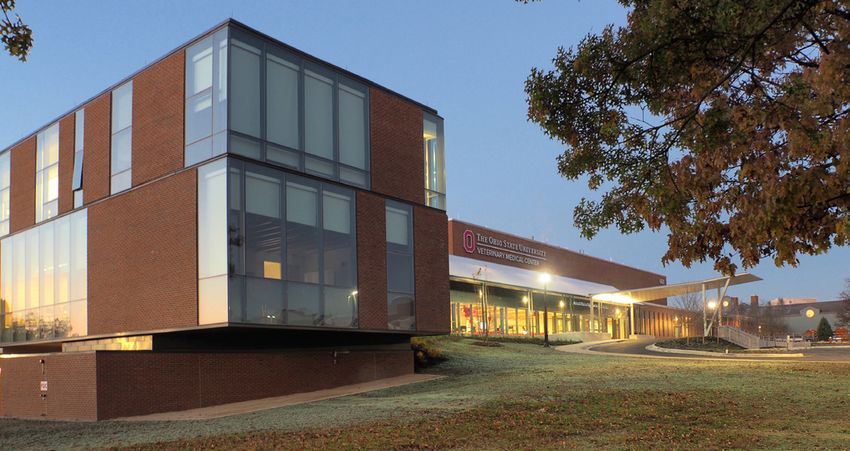
The Ohio State University College of Veterinary Medicine

About the College of Veterinary Medicine
The Ohio State University College of Veterinary
Medicine is ranked fifth in the nation among
veterinary schools according to U.S. News &
World Report’s “Best Graduate Schools.” The
college includes more than 1,000 faculty, staff,
and students in the Departments of Veterinary
Biosciences, Veterinary Clinical Sciences and
Veterinary Preventive Medicine. Located on a
six-acre mini campus within one of the largest
universities in the United States, the College of
Veterinary Medicine includes three academic
and research buildings, one of the country’s
largest veterinary teaching hospitals and
affiliated off-campus facilities.

Doctor of Veterinary Medicine

The Ohio State College of Veterinary Medicine
offers a four-year Doctor of Veterinary Medicine
(DVM) degree that educates students in the
broad field of veterinary medicine, encourages
critical and analytical thinking, and prepares
students for lifelong learning and professional
growth.

The curriculum consists of core and elective
courses that foster development within the
professional area that students select for their
careers. The core courses represent the major
part of the veterinary program for the first three
years of study and provide the necessary
background in animal physiology and treatment
of animal diseases on an organ-system basis.

Electives permit students to study areas of
special interest at the college and university in
approved programs offered at other off-campus
facilities. Fourth-year veterinary students receive
clinical experience in all parts of the hospital.

                                                                  vet.osu.edu/admissions
                                                                dvmprospective@osu.edu
                                                                             614-292-1171
The Ohio State University College of Veterinary Medicine

College Facilities                                     Off-campus Facilities
 • The Veterinary Medical Center, a                      • Ohio State Large Animal Services in
   comprehensive referral center for veterinary            Marysville, OH
   practitioners offering 24-hour emergency              • Food Animal Health Research Program
   care, includes:                                         in Wooster, OH, at the Ohio Agricultural
      o the Hospital for Companion Animals                 Research and Development Center
      o the Hospital for Farm Animals                    • Finley Farm, a 133-acre teaching and
      o the Galbreath Equine Center                        research farm
 • Veterinary Medicine Academic Building,                • Animal Emergency Hospital in Dublin, OH,
   nearly 10,000 square feet of space, including           open 24 hours a day for emergencies.
   research labs, classrooms, a library and
   computer lab                                        The Ohio State Medical Campus
 • Sisson Hall, home to the Department of              Ohio State’s College of Veterinary Medicine is
   Veterinary Preventive Medicine                      part of one of the largest and most
 • Goss Lab, home to the Department of                 comprehensive health sciences centers in the
   Veterinary Biosciences                              country. Ohio State’s medical colleges include:
                                                        •   Dentistry           • Pharmacy
Clinical Skills Lab                                     •   Medicine            • Public Health
A state-of-the -art Clinical and Professional Skills    •   Nursing             • Veterinary Medicine
lab is slated to open at The Ohio State University      •   Optometry
College of Veterinary Medicine in August 2018.

The first-ever veterinary educational lab of
its kind at Ohio State, the clinical skills lab is
designed to offer first- and second-year students
an opportunity to start developing clinical and
professional skills early in their program with
interactive experiences that emphasize active
learning.

“The goal is to give students hands-on clinical
practice and empower students to gain mastery
of their abilities at their own pace,” said Dr.
Tatiana Motta, who is overseeing the lab’s
development. Dr. Motta is assistant professor of
Companion Animal Surgery in the Department of
Veterinary Clinical Sciences.

“Our aim is to graduate students who are ready
to practice deeper-thinking and work on all
levels of complexity once they enter clinical
practice,” she said.
                                                                       vet.osu.edu/admissions
                                                                     dvmprospective@osu.edu
                                                                                  614-292-1171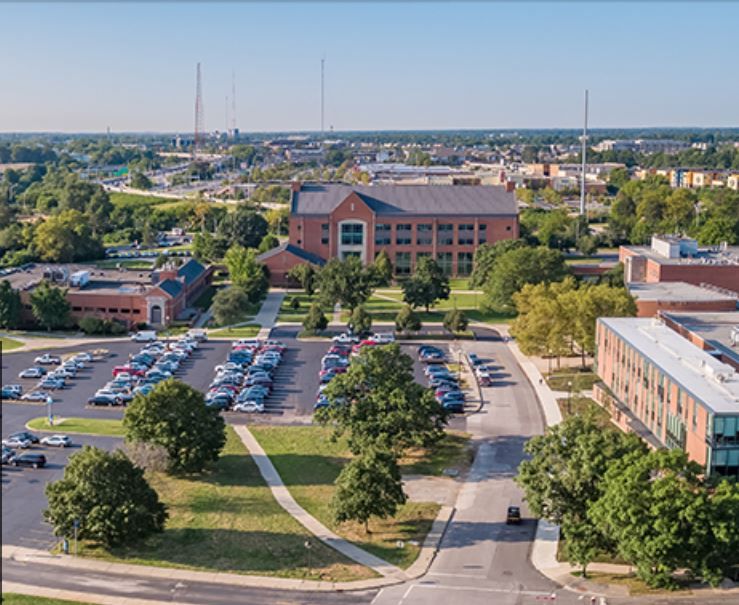
The Ohio State University College of Veterinary Medicine

Careers in Veterinary Medicine
                       As a Doctor of Veterinary Medicine, you’ll have a range
                       of employment opportunities after graduation. About 70
                       percent of veterinarians enter some form of private
                       practice. However, many veterinarians are involved in
                       preventive medicine, regulatory veterinary medicine,
                       military veterinary medicine, laboratory animal
                       medicine, industrial research and development, and
                       teaching and research in a variety of basic science and
                       clinical specialty disciplines

                       Private Practice: either general practice or specialty
                       fields such as ophthalmology, orthopedics, aquatic
                       animal medicine, marine biology, wildlife animal
                       medicine, or emergency animal medicine

                       Corporate Veterinary Medicine: corporations that
                       provide veterinary care, test human drugs for safety, or
                       produce animal-related products

                       Federal Government: work with USDA, NIH, CDC, and
                       FDA on biosecurity, environmental quality, public
                       health, meat inspection, regulatory medicine, and
                       agriculture animal health

                       U.S. Army Corps and U.S. Air Force: work with food
                       safety and military working dogs as well as receive
                       special training

                       Research: either in a university setting or with
                       companies that produce animal-related products or
                       pharmaceuticals

                       Academia: working at a college or univeristy

                       Public Health: work with government agencies to
                       control the transmission of zoonotic diseases

                       Public Policy: work for governments on animal and
                       zoonotic diseases, animal welfare, public health issues,
                       or as consultants with non-government agencies

                       Shelter Medicine: working with communities and
                       agencies to ensure the health and well-being of
                       animals housed in shelters

                                                  vet.osu.edu/admissions
                                                dvmprospective@osu.edu
                                                             614-292-1171
The Ohio State University College of Veterinary Medicine

Why Study Veterinary Medicine at Ohio State?
The Veterinary Medical Center
• Largest veterinary medical center in Ohio and
  surrounding area; three separate hospitals –
  Hospital for Companion Animals, Hospital for
  Farm Animals and Galbreath Equine Center
• Full range of specialty services, including
  veterinary behavior, internal medicine,
  dermatology, neurology, cardiology,
  ophthalmology, oncology, surgery, and
  theriogenology
• Food animal opportunities including a large
  ambulatory field service practice serving 18
  counties
                                                  Our DVM Program and Curriculum
• Partnership with the Capital Area Humane
  Society where all students participate in        • Consistently ranks among the top five
  a fourth-year clinical rotation in shelter         veterinary schools in the nation
  medicine and surgery
                                                   • Dedicated, highly-skilled and experienced
• The Galbreath Equine Center offers an              faculty, including leading-edge educators,
  equine treadmill and sports medicine               scientists and clinical specialists
  expertise, as well as a robust equine field
                                                   • Internationally known surgeons, clinicians,
  service practice
                                                     educators and researchers
• More than 35,000 animal patients per year
                                                   • Curriculum flexibility allows students to
  and an animal blood bank that provides
                                                     pursue their clinical interests through
  blood products to veterinary hospitals across
                                                     elective courses; Fourth-year students have
  the country
                                                     the opportunity to select a “Career Area of
                                                     Emphasis” (CAE) for their senior rotations
                                                   • Accredited veterinary public health master’s
                                                     degree program (MPH) – concurrent with
                                                     DVM option
                                                   • Top-ranked graduate program in
                                                     Comparative and Veterinary Medicine
                                                   • Ohio State now offers the only business
                                                     minor in the country designed for graduate
                                                     students majoring in the health professions

                                                                vet.osu.edu/admissions
                                                              dvmprospective@osu.edu
                                                                           614-292-1171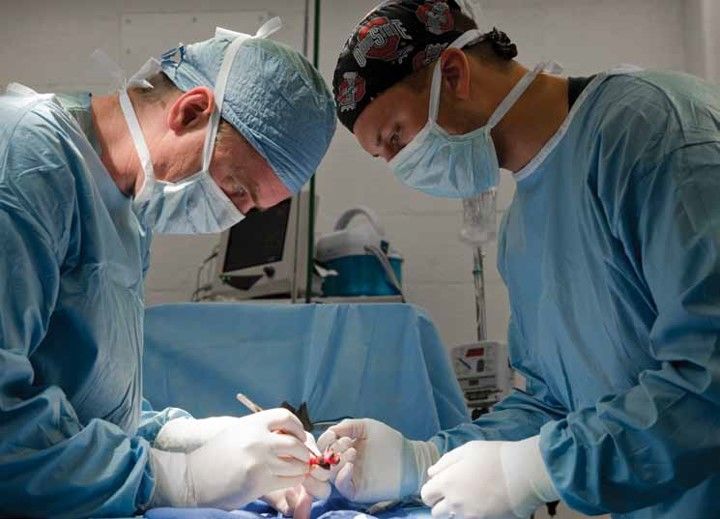
The Ohio State University College of Veterinary Medicine

Why Study Veterinary Medicine at Ohio State?
Outside the Classroom                           Research
 • More than 35 student clubs and               • The Veterinary Scholar Summer Research
   organizations—from shelter medicine to         Program includes:
   theriogenology. Clubs are a great way to         o A robust summer research program,
   get hands-on and leadership experiences            including grant support for summer
   outside the classroom, with wet labs               research opportunities
   covering a variety of topics
                                                    o International learning research in Spain,
 • The Office of Professional Programs has a          Ethiopia, Brazil, Thailand and other
   strong commitment to providing support for         countries
   veterinary students:
                                                • The research environments available for
     o Office of Career Management                veterinary students include a diverse array of
                                                  opportunities
     o 2 Full-time counselor – personal
       counseling, health and wellness          • The Ohio State University College of
     o Financial Aid Advisor                      Veterinary Medicine is at the forefront of the
     o Professional Development                   “One Health Initiative,” which studies the links
                                                  between animal health, human health and
     o Peer Tutoring Program                      environmental health
     o Office of Professional Program Support
                                                • Ohio State’s College of Veterinary Medicine is
     o Office of Teaching & Learning              part of the largest and most comprehensive
                                                  health science centers in the country

                                                                  vet.osu.edu/admissions
                                                                dvmprospective@osu.edu
                                                                             614-292-1171
The Ohio State University College of Veterinary Medicine

Application Requirements

    Application Checklist
        ☐ Completion of prerequisite courses            ☐ 3 Letters of recommendation
        ☐ VMCAS application                             ☐ Supplemental Application
        ☐ Academic transcripts

Prerequisite Courses                               VMCAS Application
Admission to Ohio State’s College of               All applicants are required to apply online
Veterinary Medicine requires completion of         through the Association of American Veterinary
the prerequisites, or their equivalents, from      Medical College’s (AAVMC) Veterinary
any accredited college or university. All of the   Medical College Application Service (VMCAS).
prerequisite courses must be completed by the      Applicants can begin submitting their VMCAS
end of the summer term preceding the autumn        applications in May. The submission deadline is
term when you would start vet school. (You do      typically mid-September. For more information,
not need to have all of the prerequisites          visit aavmc.org.
completed before applying.)
 • A grade of C or better must be earned in all
   prerequisite course work. Courses can be
   completed at any accredited college or
   university as long as the courses are
   determined to be equivalent to our required
   courses by the Office of Graduate and
   Professional Admissions.
 • We do not accept grades for any science
   courses 10 years or older. However, If you
   are able to prove advanced coursework or
   career use of the scientific information that
   supports your mastery of the content
   covered in these courses, you may submit
   (along with your application) a letter of
   petition.
 • You must have a 3.0 or higher overall GPA to
   be eligible for admission. If you have any
   questions about GPA, please contact us at
   DVMprospective@osu.edu or 614-292-1171.

                                                                  vet.osu.edu/admissions
                                                                dvmprospective@osu.edu
                                                                             614-292-1171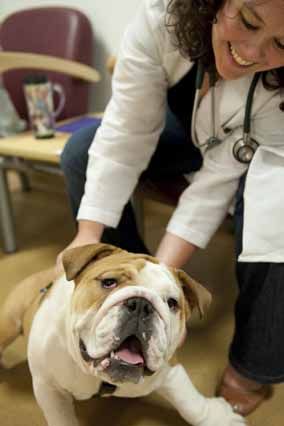
The Ohio State University College of Veterinary Medicine

Application Requirements
Academic Transcripts                                    Strong Letters of Recommendation
Students who complete a VMCAS application               The College of Veterinary Medicine requires
are required to submit all their official transcripts   a total of three letters of recommendation. At
to AAVMC by September 1st. Please visit                 least one letter must be from a veterinarian.
AAVMC’s website for more information on                 Letters of recommendation must be submitted
transcript verification:                                electronically through the Veterinary Medical
aavmc.org/transcriptver.aspx                            College Application Service (VMCAS) and have
                                                        the same deadline as the VMCAS application.
*Applicants that are offered a seat will be             You should request letters from individuals
required to submit final transcripts to The Ohio        who know you well enough to thoroughly
State University by July 1st.                           and accurately comment on your ability to
                                                        be successful in veterinary school. Letters
Supplemental Application                                of recommendation from family members
Applicants who designate The Ohio State                 will not be accepted.
University on the electronic VMCAS application
are required to complete a supplemental                 Personal Interview
application.
                                                        After an evaluation of each applicant’s file,
You will not receive the supplemental application       academic record and non-academic portions of
email until your VMCAS application has been             the application, a point value is assigned. This
completed and transcripts are verified. Once you        value will determine which applicants will be
have the email verification, you have one week          invited for a personal interview.
to complete. There are no essay questions on
                                                        For those who qualify for an interview, the
the supplemental application and an applicant
                                                        interview is typically 30 minutes with two
should be able to complete the application in
                                                        interviewers. The personal interview will be used
about a half-hour. There is a non-refundable
                                                        to clarify any issues arising from the academic
application fee of $60 to be paid electronically,
                                                        and non-academic evaluation, and to assess the
upon submission of the application.
                                                        applicant’s maturity, motivation, communication
                                                        skills, knowledge of the profession, and desire
                                                        to contribute to society through veterinary
                                                        medicine.
                                                        If you have questions, please contact
                                                        dvmprospective@osu.edu
                                                        or call 614-292-1171.

                                                                        vet.osu.edu/admissions
                                                                      dvmprospective@osu.edu
                                                                                   614-292-1171
The Ohio State University College of Veterinary Medicine
Presenting a Competitive Application
Because the number of applicants exceeds the number of spaces available in each class, the
college utilizes a holistic and selective admission process. Applicants are evaluated on academic
profiles and other non-cognitive factors, including motivation and commitment to the profession,
character, communication and interpersonal skills, leadership ability, veterinary experience, animal
exposure, and knowledge of the profession. The admissions committee is looking for well-rounded
students with a passion for people, animals, science and learning. Each applicant is considered
based on a combination of factors, which include:
Academic Background Veterinary and Animal Experience
Applicants should have a strong overall GPA in • Volunteer or work with a veterinarian(s) to
undergraduate/graduate coursework and gain a realistic perspective of the profession
required science prerequisite courses.
• Gain experience with a variety of veterinary
• Minimum Overall GPA: 3.0 average or above career paths to develop your knowledge of
the profession
• Competitive Overall GPA: 3.6 average or • Experience should be of appropriate breadth
above
and depth in order to gain an appreciation for
• Competitive Science/Math GPA: 3.6 average and understanding of the duties and
or above responsibilities of the veterinarian and the
scope of veterinary medicine
Community/Volunteer Service, Work • Work with a variety of animal species (large
and Leadership Experience and small animals, food animals, equine,
exotic and research, etc.)
The College of Veterinary Medicine is looking for
applicants who are involved in community
service and extracurricular activities throughout Leadership Ability, Communication and
their academic years. Applicants should have Interpersonal Skills
community and volunteer service with humans. • Leadership ability can be demonstrated
The degree of involvement will be taken into in many ways, such as positions of
consideration as well as the contribution of responsibility in employment, church,
welfare to others. community, and school organizations
including coaching, tutoring, mentoring and
Letters of Recommendation sports
The College of Veterinary Medicine requires a
total of three letters of recommendation. White • Applicants must be able to communicate
VMCAS allows you to submit 6 letters of effectively and possess skills to express their
recommendation, we will only review 3. At least thoughts and ideas
one letter must be from a veterinarian. Letters of • Applicants must have strong interpersonal
recommendation must be submitted electronically skills and work experience with diverse
through the Veterinary Medical College groups of people
Application Service (VMCAS) and have the same
deadline as the VMCAS application. Letters of
recommendation from family will not be accepted.
vet.osu.edu/admissions
dvmprospective@osu.edu
614-292-1171The Ohio State University College of Veterinary Medicine
Prerequisite Courses
Admission to the Ohio State’s College of Veterinary Medicine requires completion of the
prerequisites listed below, or their equivalents, from any accredited college or university.
Prerequisite Courses Semester Hours Course Offering at Ohio State Notes
If Biochemistry is taught as a two-part
Biochemistry* 3-10 BIOCHEM 4511 sequence, both parts are required.
Lab is not required.
Microbiology* 3-5 MICROBIO 4000 Lab is required.
Physiology can be awarded for a single
intro-level Human or Animal Physiology
PHYSIO 3200 or ANIMSCI 3140
5-10 course covering all systems, or a two part
Physiology** (for Ohio State Animal Science
combined Anatomy & Physiology
students)
sequence (2 qtrs or 2 sems, Must have
both courses to fulfill). Lab is not required.
COMM 2110 or 2131 or Basics of public speaking & critical
Public Speaking
3-5 AGCOMM 3130 (for Ohio State thinking. This should be a public
(Communication)
Animal Science students) speaking course.
Includes, but not limited to: Biology,
chemistry, anatomy, immunology, cell
Science Electives*** 35 biology, molecular genetics, animal
science, ecology, environmental science
or other science courses.
Includes, but not limited to: History,
Humanities/Social economics, anthropology, psychology,
16
Science Electives art, music, literature, languages, writing
and ethics.
The number of hours provided is a guideline. In assessing course content for equivalency, actual hours may
vary for your institution. In some cases a multiple course series may be needed to fulfill prerequisite
coursework. If you are unsure of whether or not a course will be accepted to fulfill a prerequisite, please
review the information under ‘Additional Guidelines’.
*Prerequisite Courses - All of the prerequisite courses must have been completed within the past 10
years.
+At some institutions, the prerequisite for Biochemistry is general and/or organic chemistry.
Note: Physiology course work must be a comprehensive, intermediate systems physiology series.
All systems are required: musculoskeletal, neurology, urinary/renal, endocrine, reproductive,
digestive, cardiovascular, and respiratory. At some institutions, two physiology or physiology/
anatomy courses are needed to meet this requirement.
vet.osu.edu/admissions
dvmprospective@osu.edu
614-292-1171The Ohio State University College of Veterinary Medicine
ADDITIONAL GUIDELINES
Prerequisite Courses – Biochemistry, Microbiology, Physiology, and Communication coursework
must be completed with: (1) a grade of C or better in each course, (2) a minimum of 3.0 (B) average
among the courses, and (3) no more than one C among any of the capstone courses.
• If any of the capstone courses are taken as a multiple-part series, this rule will apply to each
part as an individual course.
• All the prerequisite courses must be completed by the end of the summer term preceding
the autumn term when you would start vet school. You do not have to have all the
prerequisites completed before applying.
Advanced Placement – To receive credit for AP courses, they must be listed on official
transcripts from a college or university you have attended.
Ten Year Course Work Rule – If any science prerequisites are older than ten years, the applicant
must either report course work in that specific area or submit convincing evidence of current
mastery in the appropriate science to the Admissions Committee. The applicant must prove they
have current experience to show they have maintained knowledge in the field.
Prerequisite Evaluation – Professional Admissions at Ohio State offers free coursework
evaluations for students attending other institutions to provide assistance in selecting and taking
coursework that meets our prerequisite requirements. If you would like to request a prerequisite
evaluation, please complete the prerequisite evaluation form. For course equivalency questions,
please contact OSU Professional Admissions Office at professional@osu.edu or (614) 292-9444
or visit their website at: http://professional.osu.edu
Prerequisite Evaluation - Professional Admissions at Ohio State offers free coursework
evaluations for students attending other institutions to provide assistance in selecting and taking
coursework that meets our prerequisite requirements. If you would like to request a prerequisite
evaluation, please complete the prerequisite evaluation form. For course equivalency questions,
please contact OSU Professional Admissions Office at professional@osu.edu or (614) 292-9444
or visit their website at: http://professional.osu.edu
Common prerequisite courses for Ohio schools can be found here: http://admissions.osu.edu/
standards/programs.aspx?prog+42
If you have any questions about the prerequisite courses, please contact us at:
dvmprospective@osu.edu
If you have any questions about course equivalency, please contact Ohio State Professional
Admissions Office:
Email: professional@osu.edu
Phone: (614) 292-9444
Website: professional.osu.edu
vet.osu.edu/admissions
dvmprospective@osu.edu
614-292-1171The Ohio State University College of Veterinary Medicine
DVM Program Curriculum
First Year
Autumn (Semester 1) Spring (Semester 2)
VPMI: Introduction to Epidemiology and Population Systems Gross Anatomy 2 (Horse, Cow)
Gross Anatomy 1 (Dog, Cat, Pig) Comparative Biology of Disease 1: General Pathology and Immunology
Introduction to Veterinary Diagnostic Imaging Comparative Biology of Disease 2: Animal Pathogens
Comparative Structure and Function of Tissues Principles of Veterinary Pharmacology
Structure and Function of Cells Introduction to Clinical Veterinary Medicine
Professional Development I Musculoskeletal System
Clinical Pathology Professional Development II
Introduction to Animal Behavior Electives
Second Year
Autumn (Semester 3) Spring (Semester 4)
Clinical Veterinary Medicine Experience Introduction to Animal Welfare
Urinary System Cardiovascular System
Nervous System Respiratory System
Endocrine System Integumentary System
Reproductive System Digestive System
Professional Development III Clinical Veterinary Parasitology
VPM II: Zoonotic Diseases Professional Development IV
Electives Electives
Third Year
Autumn (Semester 5) Spring (Semester 6)
Clinical Reasoning and Decision-Making Applied Clinical Veterinary Parasitology
Applied Clinical Veterinary Parasitology VPM III: Emerging Diseases and Public Veterinary Practice
Professional Development V Professional Development: VI
Introduction to Comparative Veterinary Ophthalmology Veterinary Diagnostic Imaging
Introduction to Veterinary Anesthesia Clinical Microbiology and Pharmacology of Antimicrobial Agents
Introduction to Surgery Small Animal Operative Practice
Veterinary Emergency and Critical Care Medicine Small Animal Medicine Techniques
Small Animal Operative Practice Farm Animal Medicine, Diagnostic Techniques, and Procedures
Farm Animal Medicine, Diagnostic Techniques, and Procedures Equine Medicine, Diagnostic Techniques, and Procedures
Equine Medicine, Diagnostic Techniques, and Procedures Electives
Electives
Fourth Year - Applied Veterinary Medicine
Shelter Medicine and Surgery Applied Pathology
Small Animal Internal Medicine Small Animal Critical Care
Small Animal Surgery - Soft Tissue Small Animal Emergency
Small Animal Surgery – Orthopedics Ophthalmology
Farm Animal Medicine and Surgery Dermatology
Large Animal Ambulatory Services Cardiology
Equine Medicine Small Animal Neurology
Equine Surgery Small Animal Oncology
Equine Field Service Theriogenology
Equine Emergency and Critical Care Medicine Advanced Theriogenology
Radiology Preventive Medicine
Clinical Anesthesiology Advanced Preventive Medicine
vet.osu.edu/admissions
dvmprospective@osu.edu
614-292-1171The Ohio State University College of Veterinary Medicine
Cost of Attendance
The Cost of Attendance (COA) is a figure determined by Ohio State and the College of Veterinary
Medicine every year. The COA represents the annual estimated cost of the DVM program, and
considers tuition, books and supplies, housing, meals, etc., in the total. *Note, the COA does not
include Student Health Insurance. If you are planning on using the University-offered insurance, be
sure to account for that in your personal budget.
*Estimated Costs of Attendance First year only (August-May)
Direct Costs—Tuition & Fees VME 1
Estimated Base Tuition $31,160
Clinical Education Fee $555
Non-Resident Fee $38,376
Total Estimated Fees (Ohio) $31,175
Total Non-Res Fees (non-Ohio residents) $70,091
Indirect Costs—Academic Expenses
Books, supplies & equipment, vaccinations/immunizations and misc. (clinical travel, student dues)
Total Academic Expenses $3,571
Indirect Costs--Living Expenses
Rent & Utilities $8,802
Meals & Groceries $2,988
Laundry & Clothing $1,052
Transportation $2,658
Miscellaneous $2,028
Total Living Expenses $17,528
Total Cost of Attendance (Ohio residents) $52,814
Total Non Res Cost of Attendance (non-residence) $91,190
Non-resident students can apply for residency after completing their first year of veterinary school for
tuition purposes. For more information go to registrar.osu.edu/Residency or call 614-292-0300.
*Please Note: This is an estimated cost of attendance and is subject to change at any time.
vet.osu.edu/admissions
dvmprospective@osu.edu
614-292-1171The Ohio State University College of Veterinary Medicine
Financial Aid and Budget Breakdown
The College of Veterinary Medicine and the Office of Student Financial Aid at The Ohio State
University are committed to providing help and information to our students with the financial aid
process. The financial aid awarding philosophy of the College of Veterinary Medicine also reflects
the college’s commitment to provide financial aid assistance to students in the form of scholarships,
grants, and loans whenever possible.
Scholarships
Many scholarships at the College of Veterinary Medicine have been established through gifts from
alumni, friends and other sources of private support. A number of these carry eligibility criteria in
addition to financial need, as well as preferences based on the donors’ interests in animal health,
the college and our students. For a list of scholarships, please go to: vet.osu.edu/education/
scholarships
Financial Aid
Meeting the cost of a professional education can be challenging and requires careful planning. Our
Financial Aid staff is dedicated to helping veterinary students meet these needs and to guiding them
through the complexities of applying for financial assistance.
Each year, the Office of Student Financial Planning prepares a nine-month student expense budget
defining standard allowances for education costs of professional students.
Residency
Non-residents can apply for residency after their first year for tuition purposes. If you have
questions about residency, contact the Student Service Center at 614-292-0300, email SSC@osu.
edu or review the Ohio Board of Regents guidelines on the registrar’s website at registrar.osu.edu/
Residency
Contacting Financial Aid
Emily Gonzalez
Financial Aid Advisor | College of Veterinary Medicine
Office of Professional Program Support
005 Veterinary Medical Center
Website: vet.osu.edu/education/financial-aid-
information
Office hours M/T/W 8am-5pm
M/T/W: 614-247-8778
Th/F: 614-292-4625
cvm-dvmfinancialaid@osu.edu
vet.osu.edu/admissions
dvmprospective@osu.edu
614-292-1171The Ohio State University College of Veterinary Medicine
Dates and Deadlines
Mid May: VMCAS application is available.
August 17: Get S.E.T. for verification day – VMCAS recommends that you get S.E.T. for
verification by making sure VMCAS receives the following data from you
BEFORE the September 17th deadline.
S: E-Submit your VMCAS application & application fee
E: Have all three (3) required electronic letters of recommendation received by VMCAS
T: Make sure VMCAS has ALL of your required transcripts
September 1: Transcripts are due to VMCAS.
September 17 at midnight: VMCAS application deadline. Please note: this deadline is firm!
The verification process for a VMCAS application can take 3 to 4 weeks following your
application being submitted. Once the VMCAS application is vefified, then it can take an
additional 5 to 7 DAYS for you to receive the supplemental application. The supplemental
application is due 1 WEEK following the email link being sent.
April 15: Deadline for accept/decline decision.
Please note: We highly recommend that you submit your VMCAS application by August 15,
this increases your chances of being verified before the September 15th
deadline! Verification can take up to four (4) weeks.
Send transcripts to: Veterinary Medical College Application Service
VMCAS – Transcripts (VMCAS)
P.O. Box 9162 Phone: 617-612-2884
Waterman, MA 02471 Fax: 617-612-2051
The Association of American Veterinary The Ohio State University
Medical Colleges (AAVMC) College of Veterinary Medicine
1101 Vermont Avenue, NW 1900 Coffey Road
Suite 301 127 Veterinary Medicine Academic Building
Washington, DC 20005 Columbus, Ohio 43210
Aavmc.org Phone: 614-292-1171
Phone: 202-371-9195 Fax: 614-292-6989
Fax: 202-842-0773 dvmprospective@osu.edu
vet.osu.edu
Office Hours: 8 am - 5 pm
vet.osu.edu/admissions
dvmprospective@osu.edu
614-292-1171vet.osu.edu
You can also read


