Does the Building Code Apply to Mobile Homes? - 3rd Edition - jsheld.com - JS Held
←
→
Page content transcription
If your browser does not render page correctly, please read the page content below
Does the Building Code Apply to
Mobile Homes?
3rd Edition

              516.621.2900 • info@jsheld.com • jsheld.com

                   Copyright © 2020 J.S. Held LLC, All rights reserved.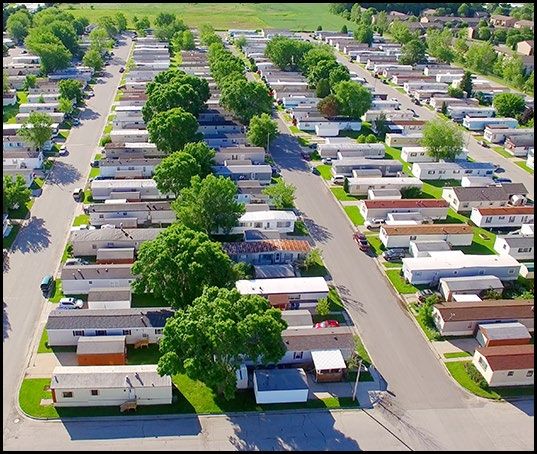
TECHNICAL
                                                                                                   TOPICS

   Overview
   Mobile home, Manufactured Building, Manufactured
   Home, Premanufactured Home, Single-Wide, Double-Wide,
   Trailer; these are all words we tend to use to describe the
   semi-permanent, transportable, economical structures that
   many people simply call “home.” However, it is these terms
   that create the confusion we face when identifying who
   has jurisdiction over these types of structures. Many people
   assume that all buildings are governed by the Building Code,
   but this is not the case. Throughout the country, there are
   several types of structures, which are exempt from the
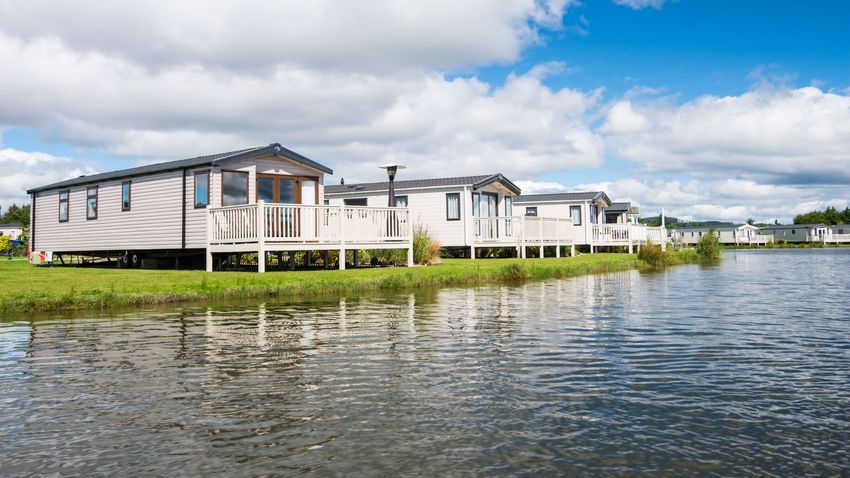
   provisions of the Building Code. Within Florida for example, the                        Example of a mobile home
   law exempts “structures specifically regulated and preempted
   by the federal government” from the requirements of the
   Florida Building Code (FBC). So, are mobile/manufactured
   homes required to comply with the FBC? Yes, and no.

   History
   To better understand where we are today regarding this issue,
   we need to understand where we came from. This issue goes
   back to the “New Deal” passed during the Great Depression
   which enacted the “National Housing Act of 1934” in an
   attempt to protect homeowners from foreclosure. This law
   was amended in 1937 and again in 1949 which led to the                                  Example of mobile homes
   development of several national public housing programs.
   In 1965, these programs merged into one department,
   creating the United States Department of Housing and
   Urban Development (HUD). The law was further amended
   to become The National Manufactured Housing Construction
   and Safety Standards Act of 1974 which limited the regulation
   that local governments had over manufactured structures
   and recommended that the standards developed by HUD be
   applied to mobile homes. Several laws have been adopted
   since that time that have further narrowed the ability of
   local jurisdictions to regulate mobile structures. Due to the
   lack of local control, the permitting, construction, inspection,
   maintenance, repair, etc. of these structures has become a
                                                                                           Example of a mobile home
   game of finger pointing.

2020                                                                                                                  1
                                    Copyright © 2020 J.S. Held LLC, All rights reserved.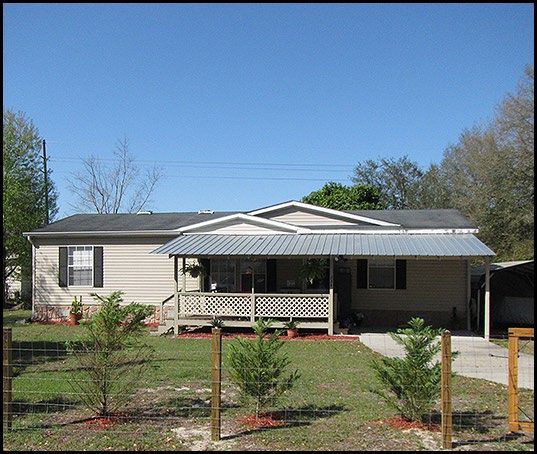
TECHNICAL
                                                                                           TOPICS

   However, if we follow the bread crumbs left for us, we can navigate the various documents governing the
   use of manufactured homes.

   Florida Statute Regulations
   At inception, the laws in place regulate the overall idea or intent of the “mobile home.” Florida Statute
   Chapter 553 provides Building Construction Standards which govern both Manufactured Buildings (Fla.
   Sta. §§ 553.35-553.42) as well as the Florida Building Code (Fla. Sta. §§ 553.70-553.898). Upon first
   glance, Fla. Sta. § 553.35 (The Florida Manufactured Building Act of 1979) appears to point us right back
   to the building code in section 553.355:

             Minimum construction requirements established. —The Florida Building Code and
             the Florida Fire Prevention and Lifesafety Codes shall be the minimum construction
             requirements governing the manufacture, design, construction, erection, alteration,
             modification, repair, and demolition of manufactured buildings.

   However, the subsequent section parses out “Mobile Homes” from the globally defined “Manufactured
   Buildings,” “Modular Building,” or “Factory Built Building” and specifically includes that “this part does
   not apply to mobile homes.” Mobile Homes are specifically defined as “any residential unit constructed to
   standards promulgated by the United States Department of Housing and Urban Development.” Fla. Sta. §
   553 goes on to provide specific requirements for “manufactured buildings” but, as previously noted, this
   part does not apply to “mobile homes.” Further into the statutes, the vague definition of “mobile home”
   is refined in Chapter 723 Mobile Home Park Tenancies - Section 723.003 Definitions:

             (8) “Mobile home” means a residential structure, transportable in one or more
             sections, which is 8 body feet or more in width, over 35 body feet in length with
             the hitch, built on an integral chassis, designed to be used as a dwelling when
             connected to the required utilities, and not originally sold as a recreational vehicle,
             and includes the plumbing, heating, air-conditioning, and electrical systems
             contained therein.

2020                                                                                                            2
                                    Copyright © 2020 J.S. Held LLC, All rights reserved.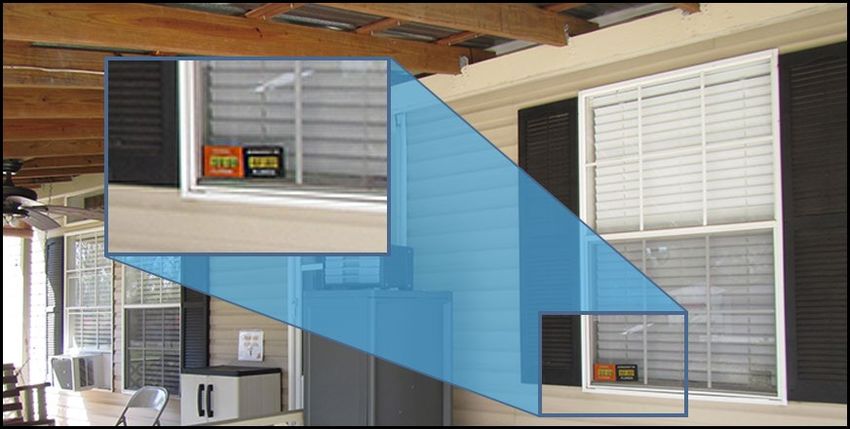
TECHNICAL
                                                                                           TOPICS
   Although this definition applies specifically to Chapter 723, this aids in our understanding of what a
   “mobile home” truly is. For standard mobile homes, the topic of this discussion, we can now proceed to
   the standards developed and regulated by HUD.

   HUD Regulations
   The HUD documents, which regulate the construction and transport of mobile homes are found in the
   Code of Federal Regulations Title 24, Housing and Urban Development Subtitle B, most notably Part 3280
   and Part 3285. The former provides “Manufactured Home Construction and Safety Standards” while
   the latter provides “Manufactured Home Installation Standards.” In short, these documents provide the
   regulations applicable from the beginning of the manufacturing process, to the preparation for transport,
   and then for the delivery to a specific site, and on until the installation has been completed, at which time
   the structure is able to be occupied and used as a dwelling unit.
   However, between the manufacturing of the structure and installation of the structure, there exists a
   very important phase: transportation. Given that these structures are mobile homes, the Department
   of Highway Safety and Motor Vehicles (DMV) also has jurisdiction over their construction and transport,
   thus requiring them to be registered with the DMV. All mobile homes placed on leased property are
   required to be registered each year. However, if placed on a property that is owned, the home may
   qualify to be taxed as real property and a permanent, one-time registration sticker can be purchased.

   We can find additional requirements within Florida Statute Chapter 320, Motor Vehicle Licenses. Section
   320.822 provides definitions applicable to this section:
   320.822(2) “Code” means the appropriate standards found in:
   (a) The Federal Manufactured Housing Construction and Safety Standards for single-family mobile homes,
   promulgated by the Department of Housing and Urban Development;
   (b) The Uniform Standards Code approved by the American National Standards Institute, ANSI A-119.2 for
   recreational vehicles and ANSI A-119.5 for park trailers or the United States Department of Housing and
   Urban Development standard for park trailers certified as meeting that standard; or
   (c) The Mobile Home Repair and Remodeling Code and Used Recreational Vehicle Code
   320.8232 Establishment of uniform standards for used recreational vehicles and repair and remodeling
   code for mobile homes —
   (1) Each used recreational vehicle manufactured after January 1, 1968, and sold or offered for sale in this
   state by a dealer or manufacturer shall meet the standards of the Used Recreational Vehicle Code. The
   provisions of said code shall ensure safe and livable housing and shall not be more stringent than those
   standards required to be met in the manufacture of recreational vehicles. Such provisions shall include,
   but not be limited to, standards for structural adequacy, plumbing, heating, electrical systems, and fire
   and life safety.
   (2) The provisions of the repair and remodeling code shall ensure safe and livable housing and shall

2020                                                                                                               3
                                    Copyright © 2020 J.S. Held LLC, All rights reserved.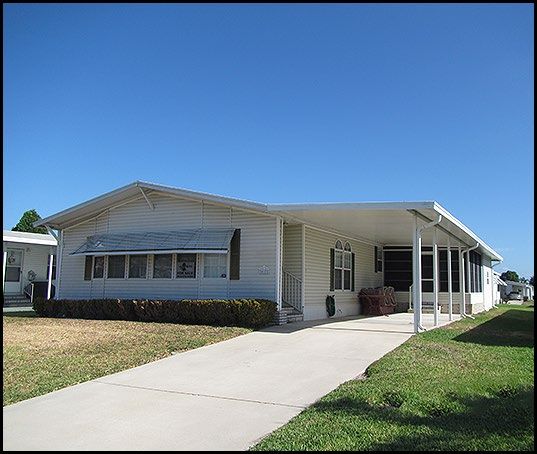
TECHNICAL
                                                                                           TOPICS
   not be more stringent than those standards required to be met in the manufacture of mobile homes.
   Such provisions shall include, but not be limited to, standards for structural adequacy, plumbing, heating,
   electrical systems, and fire and life safety.
   In short, Section 320.8232 requires that standards for the repair and remodeling of mobile homes be
   established. This requirement points us to Fla. Sta. § 320.822(2)(c) above, which referenced “The Mobile
   Home Repair and Remodeling Code and Used Recreational Vehicle Code.” It should be noted that the
   statute limits the regulations on the repairs or remodels of mobile homes to be no more stringent than
   was required for the manufacture of the structure. Section 320.8245 goes on to provide limitations of
   alteration or modification to mobile homes or recreational vehicles.

                                     Example of mobile home registration stickers

2020                                                                                                             4
                                    Copyright © 2020 J.S. Held LLC, All rights reserved.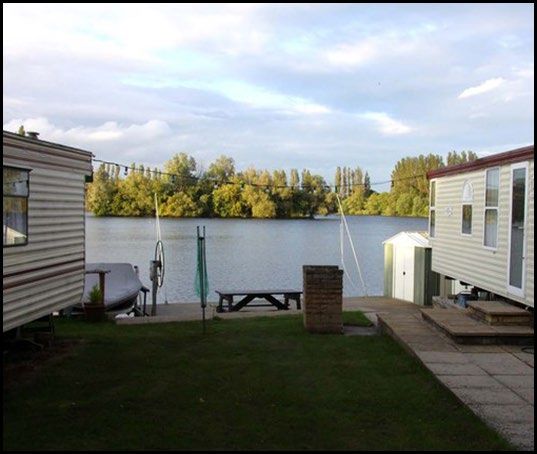
TECHNICAL
                                                                                           TOPICS

   Department of Highway Safety and Motor Vehicles
   Regulations
   Florida Administrative Code provides the Rules of Department of Highway Safety and Motor Vehicles
   Division of Motor Vehicles Chapters 15C-1 and 15C-2. Chapter 15C-1 provides General Rules regarding
   the installation of mobile homes and generally refers back to the manufacturer’s installation instructions
   or the HUD standards. However, some prescriptive installation standards are provided. As noted above,
   one of the codes governing mobile homes is the “The Mobile Home Repair and Remodeling Code and
   Used Recreational Vehicle Code.” The Mobile Home Repair and Remodeling Code is also known as 15-C-
   2.0081. Although quite brief, this code reiterates the requirements set forth in Fla. Sta. § 320.822. In its
   entirety, the code is as follows:
   15C-2.0081 Mobile/Manufactured Home Repair and Remodeling Code.
   These guidelines shall be used to assure safe and livable housing and shall not be more stringent than the
   standard to which the home was originally constructed.

            (1) Structure.
            (a) Additions, including, but not limited to add-a-rooms, roof-overs and porches shall
            be free standing and self-supporting with only the flashing attached to the main
            unit unless the added unit has been designed to be married to the existing unit. All
            additions shall be constructed in compliance with State and locally adopted building
            codes.
            (b) Anchoring of additions shall be in compliance with requirements for similar type
            construction.
            (c) Repair or remodeling of a mobile/manufactured home shall require the use of
            material and design equivalent to the original construction. Structure shall include,
            but not be limited to, roof system, walls, floor system, windows and exterior doors of
            the mobile/manufactured home.
            (2) Electrical repair and replacements shall require the use of material and design
            equivalent to the original construction.
            (3) Plumbing repairs and replacements shall require the use of material and design
            equivalent to the original construction.

2020                                                                                                              5
                                    Copyright © 2020 J.S. Held LLC, All rights reserved.
TECHNICAL
TOPICS
Florida Building Code
Regulations
So, at this point we have the Florida Statutes, the Code of
Federal Regulations, HUD, Florida Administrative Code and
the DMV sharing in the governing of the manufacturing
and use of mobile homes. But where did the FBC go? The
Florida Building Code – Building was noted earlier to have
departed from the jurisdiction over mobile homes. However,
the Florida Building Code – Residential discusses “mobile
homes” within a few sections. The Residential code defines
the term “manufactured home” as follows:
MANUFACTURED HOME. Manufactured home means a Mobile homes in flood hazard area
structure, transportable in one or more sections, which in the
traveling mode is 8 body feet (2438 body mm) or more in
width or 40 body feet (12 192 body mm) or more in length,
or, when erected on site, is 320 square feet (30 m2) or more,
and which is built on a permanent chassis and designed to be
used as a dwelling with or without a permanent foundation
when connected to the required utilities, and includes the
plumbing, heating, air-conditioning and electrical systems
contained therein; except that such term shall include any
structure that meets all the requirements of this paragraph
except the size requirements and with respect to which the
manufacturer voluntarily files a certification required by the
secretary (HUD) and complies with the standards established
under this title. For mobile homes built prior to June 15, 1976,
a label certifying compliance to the Standard for Mobile
Homes, NFPA 501, in effect at the time of manufacture is
required. For the purpose of these provisions, a mobile home
shall be considered a manufactured home.
This definition is quite similar to the definition included in
Fla. Sta. § 723.003. This brings us to one of the few conditions
for which the FBC does have jurisdiction over mobile homes.
Chapter 3 of the Residential code provides the following
provision:
Example of a mobile home data plate
2020 6
Copyright © 2020 J.S. Held LLC, All rights reserved.TECHNICAL
TOPICS
R322.1.9 Manufactured homes. In addition to the applicable requirements of the state agency with
jurisdiction over installation of manufactured homes, installation of manufactured homes in flood hazard
areas is subject to the applicable provisions of the local floodplain management ordinance.
Mobile Home Identification
Mobile homes are required to have identifiers which provide pertinent information regarding the
construction of the structure. This differs from manufactured buildings which aren’t governed by HUD.
All mobile homes are required to have a Data Plate (shown right). The data plate should be in a readily
accessible location and permanently fixed. Typically, the data plate is attached to or inside of the main
electrical panel. The data plate provides at a minimum:
(a) The name and address of the manufacturing plant in which the manufactured home was manufactured.
(b) The serial number and model designation of the unit, and the date the unit was manufactured.
(c) The applicable statement:
This manufactured home is designed to comply with the Federal Manufactured Home Construction
and Safety Standards in force at the time of manufacture; or this manufactured home has been
substantially completed in accordance with an approved design and has been inspected (except for
the components specifically identified in the instructions forcompletion on-site) in accordance with the
Federal Manufactured Home Construction and Safety Standards and the requirements of the Department
of Housing and Urban Development (HUD) in effect on the date of manufacture.
(d) A list of the certification label(s) number(s) that are affixed to each transportable manufactured
section under §3280.8.
(e) A list of major factory-installed equipment, including the manufacturer’s name and the model
designation of each appliance.
(f) Reference to the roof load zone and wind load zone for which the home is designed and duplicates
of the maps as set forth in §3280.305(c). This information may be combined with the heating/cooling
certificate and insulation zone map required by §§3280.510 and 3280.511. The Wind Zone Map on the
Data Plate shall also contain the statement:
This home has not been designed for the higher wind pressures and anchoring provisions required for
ocean/coastal areas and should not be located within 1500′ of the coastline in Wind Zones II and III, unless
the home and its anchoring and foundation system have been designed for the increased requirements
specified for Exposure D in ANSI/ASCE 7-88.
(g) The statement:
This home has—has not—(appropriate blank to be checked by manufacturer) been equipped with storm
shutters or other protective coverings for windows and exterior door openings. For homes designed to
be located in Wind Zones II and III, which have not been provided with shutters or equivalent covering
devices, it is strongly recommended that the home be made ready to be equipped with these devices in
2020 7
Copyright © 2020 J.S. Held LLC, All rights reserved.TECHNICAL
TOPICS
accordance with the method recommended in the manufacturers printed instructions.
(h) The statement: “Design Approval by”, followed by the name of the agency that approved the design.
As noted in item (d) above, each transportable section shall have a permanently-affixed certification label
(shown below). The certification label is to be located at the taillight end of the section near the base of
the vinyl siding and is blind rivetted to the siding. The label is required to be approximately 2”x4” in size
and should be etched into 0.32-inch-thick aluminum plate. The certification label, often refferred to as
the “construction code label,” is one of the easiest ways to recognize a mobile home and differentiate
one from a manufactured building.
Example of a mobile home certification label
Conclusion
In summary, the manufacturing of mobile homes is governed by the HUD as defined in the Florida Statutes.
However, because these structures must be transported, they must also comply with the requirements
for mobile vehicles which are governed by the DMV. Once a mobile home arrives on site, it must be
installed according to the HUD standards. However, the mobile home must comply with the floodplain
requirements of the FBC – Residential and the local floodplain ordinance. Additionally, any appurtenant
structures built on site are required to comply with the FBC.
It should be noted that appurtenant structures must be self-supported because modifications to and
alterations of mobile homes are restricted within the Florida Statutes. Furthermore, repairs to damaged
components are governed by the requirements of the Florida Administrative Code, as found within the
rules of the DMV. The local Authority Having Jurisdiction (AHJ) is the responsible entity for the enforcement
of some of the regulations mentioned in this document hence the reason you will see permits issued for
the placement, tie down and floodplain related aspects of manufactured homes.
2020 8
Copyright © 2020 J.S. Held LLC, All rights reserved.TECHNICAL
TOPICS
Acknowledgements
We thank our colleagues Mike Rimoldi, MPA, CBO, CFM and Geoffrey A. Chambers who provided insight
and expertise that greatly assisted this research.
References
• International Code Council. (2017). Florida building code: Building (6th ed.). Country Club Hills,
IL: International Code Council Inc.
• International Code Council. (2017). Florida building code: Residential (6th ed.). Country Club
Hills, IL: International Code Council Inc.
• Manufactured buildings [PDF]. (2006). Building a Safer Florida, Inc. & University of Florida’s
Resource Efficient Communities.
• Rules of department of highway safety and motor vehicles division of motor vehicles chapter
15C-1 general [PDF]. (1999). Florida Administrative Code.
• Rules of department of highway safety and motor vehicles division of motor vehicles chapter
15C-2 general rules and procedures for the bureau of mobile home and recreational vehicle
construction [PDF]. (1999). Florida Administrative Code.
• Title 24: Housing and urban development part 3280 manufactured home construction and
safety standards [PDF]. (1975). U.S. Department of Housing and Urban Development.
• Title 24: Housing and urban development part 3285 model manufactured home installation
standards [PDF]. (2007). U.S. Department of Housing and Urban Development.
This publication is for educational and general information purposes only. It may contain errors and is provided as is. It is not intended as
specific advice, legal or otherwise. Opinions and views are not necessarily those of J.S. Held or its affiliates and it should not be presumed
that J.S. Held subscribes to any particular method, interpretation or analysis merely because it appears in this publication. We disclaim any
representation and/or warranty regarding the accuracy, timeliness, quality, or applicability of any of the contents. You should not act, or
fail to act, in reliance on this publication and we disclaim all liability in respect to such actions or failure to act. We assume no responsibility
for information contained in this publication and disclaim all liability and damages in respect to such information. This publication is not a
substitute for competent legal advice. The content herein may be updated or otherwise modified without notice.
Find your expert.
sm
2020 9
Copyright © 2020 J.S. Held LLC, All rights reserved.You can also read


