Down with Cancer - Malaghan Institute
←
→
Page content transcription
If your browser does not render page correctly, please read the page content below
67

M A L A G H A N I N S T I T U T E O F M E D I C A L R E S E A R C H | N E W Z E A L A N D | W W W. M A L A G H A N . O R G . N Z | O C TO B E R 2 0 1 8

  Down with
   Cancer

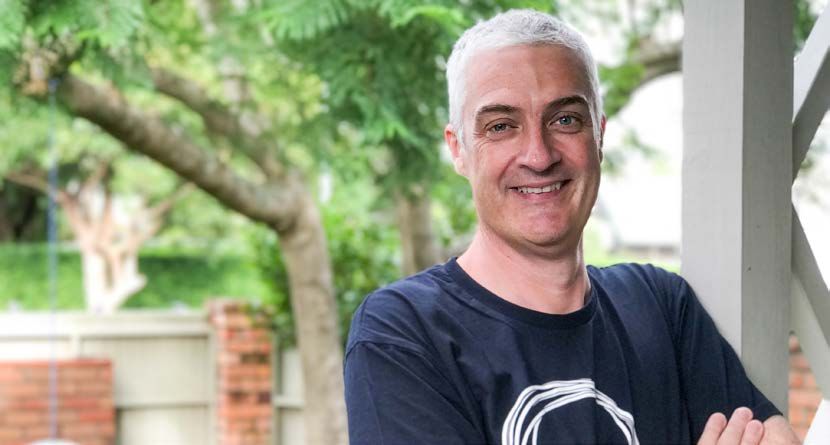
                                                                                                                                              David Downs

Cancer survivor and self-declared ‘genetically                               David received in the United States sent his cancer into
modified organism’ David Downs launched the Down                             complete remission.
with Cancer fundraising campaign in September.                               After returning to New Zealand, David visited the Institute
David is on a mission to raise $1 million for the                            to share his experience and find out more about our own
Malaghan Institute’s ground-breaking CAR T-cell                              CAR T-cell therapy clinical trials and research programme.
                                                                             Inspired by what he heard, he pledged to raise $1 million
therapy programme and give New Zealanders early
                                                                             to help bring the treatment to New Zealand.
access to potentially life-saving treatment.
                                                                             Led by clinical director Dr Rob Weinkove, the Institute’s
In January 2017, the businessman, author, comedian
                                                                             CAR T-cell therapy team is currently focused on ensuring
and public speaker was diagnosed with non-Hodgkin
                                                                             the trial meets New Zealand’s strict regulatory and safety
lymphoma. After 12 rounds of chemotherapy, he was told
                                                                             standards, to ensure it will be as safe for patients as possible.
he had less than a year to live.
                                                                             David’s Down with Cancer campaign kicked off with a flurry
Fortunately, David was accepted into a clinical trial for
                                                                             of media activity, including in the Dominion Post, on Stuff,
CAR T-cell therapy in the United States. A revolutionary
                                                                             the New Zealand Herald, Idealog, Mike Hosking Breakfast
new approach to cancer treatment, CAR T-cell therapy
                                                                             and TV3’s The Project. David will be speaking at a range
harnesses the body’s immune system to fight cancer cells.
                                                                             of events across the country to encourage Kiwis to get
It involves modifying a patient’s immune cells (T-cells) in
                                                                             behind the cause. For more information on the campaign
the laboratory, to redirect them against cancer cells. The
                                                                             and to get involved, visit www.downwithcancer.nz.
modified T-cells are then returned to the patient, where
they can attack and destroy cancer cells. The treatment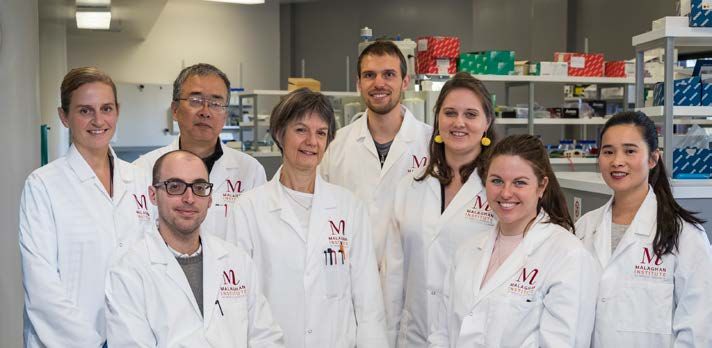
OUR RESEARCH

                                                     Award-winning
                                                     research by multiple
                                                     sclerosis team
                                                     Research into a type of white blood cell by the Malaghan
                                                     Institute’s multiple sclerosis team has received international
                                                     recognition by the journal Immunology & Cell Biology.
                                                     The team’s paper, ‘Glatiramer acetate treatment normalised the
                                                     monocyte activation profile in MS patients to that of healthy
                                                     control’ was named runner up publication of the year by the
                                                     journal’s editorial board.
                                                     “For this paper, we looked at monocytes – a type of white blood
                                                     cell that affects MS – in the blood of MS patients,” said MS team
                                                     leader Professor Anne La Flamme. “What was really interesting
                                                     was comparing what monocytes look like in MS patients versus
                                                     healthy subjects – and what happens when you treat MS patients

From our Director                                    with glatiramer acetate, a common therapy drug for relapsing-
                                                     remitting MS.

In the final issue of Scope for 2018, I would like   “What we found was that these monocytes look completely
to take a moment to reflect on the tremendous        different. But, when MS patients are treated with glatiramer
support the Malaghan Institute has received in       acetate, it appears to alter monocyte activation. When you look
this landmark year.                                  at them again, these monocytes look like those from a healthy
                                                     subject, not an MS patient.”
The year has been a stand-out example of the
impact committed individuals and organisations       “No one knows quite how this drug works in MS – but this
can have on improving the health and wellbeing       research provides evidence that this monocyte alteration is one
of our communities. Alongside the fantastic          of the ways glatiramer acetate is modifying the immune system
and cumulative support of individual donors,         in a positive way.”
we have received significant backing from
trusts and foundations who recognise the
Malaghan Institute’s unique position to advance
biomedical discovery for the benefit of all.
The passion and commitment of David Downs
and the overwhelming public response to his
Down with Cancer campaign is encouraging
reaffirmation of Kiwis’ strong desire to bring
globally-significant medical advancements to
New Zealand. It gives us courage that we are
working towards a goal that is supported, both
financially and in spirit, by New Zealand.
Thank you.

Prof Graham Le Gros
CNZM FRSNZ FRCPA (Hon)
Director
                                                     Prof Anne La Flamme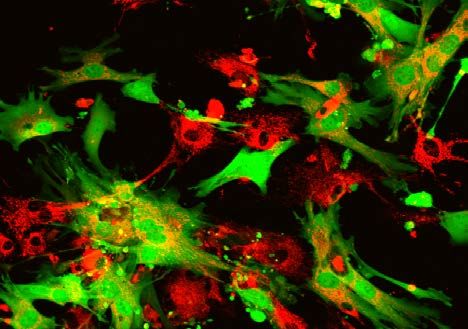
OUR RESEARCH

                                                                                                  How the skin
                                                                                                  influences the
                                                                                                  gut during an
                                                                                                  allergy
                                                                                                  Cross-talk between the skin and the
                                                                                                  gut has been a focus of research for
                                                                                                  the translational immunology team.
                                                                                                  A recent project has been looking at
                                                                                                  how molecules produced in the skin
                                                                                                  during an allergic response influence
                                                                                                  the gut and the gut’s sensitivity to an
   Stem cells (red) and healthy astrocytes (green).                                               allergen.

Cell sacrifice in the
                                                                                                  Dr Katherine Woods explains:
                                                                                                  “Alarmins are molecules secreted by
                                                                                                  many cells, in response to an allergen.

line of duty
                                                                                                  For skin cells, these alarmins signal a
                                                                                                  barrier breach – a typical result from
                                                                                                  exposure to an allergen where the
                                                                                                  integrity of the skin is compromised.
                                                                                                  The alarmins then spread around
What happens when you deprive a                       Deteriorating astrocyte function plays      the body, including places like the gut
key brain cell such as an astrocyte                   an important role for diseases such         where it goes on to influence the local
of its essential energy-generating                    as Alzheimer’s, Parkinson’s and motor       immune cells.”
components? That’s the question                       neuron disease. By showing a new way
Dr Melanie McConnell and her brain                    stem cells work to support other cell       How much of an influence alarmins
cancer biology team at the Malaghan                   types like astrocytes, Dr McConnell and     such as the molecule TSLP (thymic
Institute asked in a recently-completed               her team’s work is shedding light on how    stromal lipoprotein) have on the
research project, funded by the estate                certain stem cell therapies may work in     immune system in the gut, and how it
of Desley Mackey. Originally looking                  preserving brain function during disease.   may affect allergies, is something Dr
at the role mitochondrial transfer                                                                Woods and the rest of her team are
plays in brain biology, what the team                                                             investigating thanks to funding from
discovered was far more unusual,                                                                  the Dairy Goat Co-operative.
and has real implications for treating                                                            “We’re looking at TSLP in detail to see
neurodegenerative disease.                                                                        whether it plays a role in accelerating
“Astrocytes are a type of brain cell that                                                         allergies and cross-talk between
support neurons to function properly,”                                                            different organs.”
says Dr McConnell. “We originally
developed an astrocyte cell line which
could be deprived of its ability to make
energy, to look at how these cells might
be supported under stressful conditions.”

“What we found has intrigued the wider
brain research community. We knew that
cells communicated with each other, but
we didn’t realise that this could extend
to whole cells ‘sacrificing’ themselves. In
particular, we saw stem cells fuse with
the stressed astrocytes to restore the                 Dr Melanie McConnell                       Dr Katherine Woods

health of these critical brain cells.”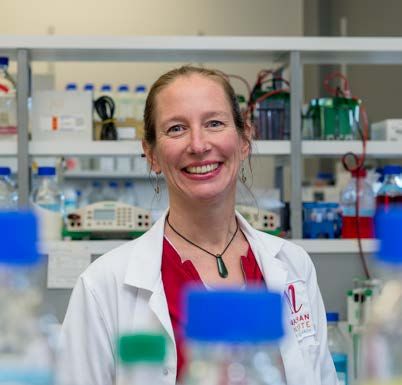
OUR RESEARCH

 Immune cell biology team

HRC funding big picture research into dendritic cells
With more than $1 million in funding          they still have an incomplete picture.         to understand what makes an allergic
over the next three years, the Health         Dendritic cells are also responsible for       response different to an antiviral
Research Council is backing a major           inducing a response to fight a bacterial       response.”
research project looking at molecular         or viral infection, so have a vital role in
                                                                                             The HRC grant, which secures an
characterisations of dendritic cells during   proper immune function.
                                                                                             additional research fellow for the team,
different immune responses.
                                              “We’ve already collected a lot of data         will allow them to dive deeper into the
Led by Professor Franca Ronchese, her         looking at this, but we’re finding it’s not    genes stimulated in dendritic cells during
immune cell biology team will be              enough – there are so many changes             different immune responses. By
investigating what makes a dendritic cell     that it’s impossible to tell which ones are    generating and analysing substantial
‘prime’ an unwanted allergic response.        relevant and which aren’t,” says Prof          amounts of data, the ultimate goal is to
While the team have spent a lot of time       Ronchese. “We need to look at the              find and isolate the genes responsible
understanding what happens to a               bigger picture and what happens to             for the development of allergies.
dendritic cell during an allergic response,   dendritic cells in other situations in order

OUR PEOPLE

                                              Dr Philip George: Clinical research fellow
                                              Joining the Malaghan Institute earlier this year as a clinical research fellow, Dr Philip
                                              George is playing a vital role in the Malaghan Institute’s CAR T-cell therapy clinical
                                              programme. Previously a Haematology Registrar in Leicester in the United Kingdom,
                                              Dr George brings his wealth of clinical expertise to help set up and manage this
                                              New Zealand-first trial.
                                              Dr George’s current focus is preparing for the trial from a regulatory perspective,
                                              ensuring it will meet all ethical, safety and risk-management standards. He is also
                                              working with clinical staff at Wellington Regional Hospital, where patients enrolled in
                                              the CAR T-cell therapy trial will be treated.
                                              Once the CAR T-cell therapy clinical trial is underway, Dr George will be directly
                                              involved in patient treatment and the day-to-day care of patients who have
                                              undergone this revolutionary cancer-fighting therapy.
                                              Dr George’s role has been made possible thanks to the funding from the Florence
                                              Petersen Leukaemia Trust.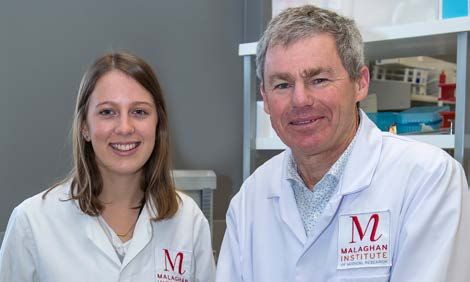
OUR RESEARCH
OUR RESEARCH                                                                                           BY GRAHAM LE GROSS

 Harvard collaboration looking at genes that cause asthma
                                                                                         for transcription and why helps give
                                                                                         researchers like Jodie insight into
                                                                                         their development in relation to
                                                                                         disease.
                                                                                         “In the case of allergic diseases
                                                                                         like eczema, we know that the
                                                                                         production of the molecule IL-13 is
                                                                                         associated with its development. We
                                                                                         hope that by finding out how the
                                                                                         transcription of genes that code for
                                                                                         IL-13-producing cells are regulated,
                                                                                         we might be able to trace it back to
                                                                                         its precursor origins and hopefully
                                                                                         stop eczema developing in the first
                                                                                         place.”
   Jodie Chandler and Prof Graham Le Gros                                                While Jodie, whose PhD is
                                                                                         supported by the Colin Williamson
 Malaghan Institute PhD student             by looking at which segments of              Charitable Trust, still has to sort
 Jodie Chandler recently returned           DNA are unpacked at a given time –           through all the data generated
                                            meaning which genes are available for        during her time in Boston, she’s
 from a research trip to Harvard
                                            transcription.”                              optimistic her team will be able to
 Medical School in Boston where
                                            For cells to express genes and carry         fill in many of the blanks associated
 she spent six weeks working in the                                                      with allergic disease – both here and
                                            out their function, DNA first needs to
 Benoist-Mathis Laboratory, tracing         be unwrapped from its tightly-wound          internationally.
 the origins of allergic diseases like      coil before being transcribed into           “This work connects us with the
 asthma.                                    strands of RNA. These strands are then       global network of leaders in asthma
                                            translated into proteins, the building       research” says Professor Graham Le
 “I was working on a cutting-edge           blocks that make cellular functions          Gros, team leader and supervisor for
 research technique called ATAC-seq         possible. Traditionally, researchers have    Jodie’s PhD. “Not only has Jodie’s
 (Assay for Transposase-Accessible          focused on RNA to understand which           time in Boston brought relevance
 Chromatin using sequencing),” says         genes are currently active in a cell.        to our work, it has also enabled us
 Jodie. “ATAC-seq can be used to            However, stepping back and looking at        to keep contributing to the global
 figure out how transcription works         which segments of DNA are available          effort for a cure.”

                                             Thank you to our partners

                                                                   Performance Partner

                                                                                                                       HUGH GREEN FOUNDATION

The Malaghan Institute wishes to acknowledge the
support of the Health Research Council of New Zealand
Upcoming Events                                                               Recent grants
                  2018 - 2019                                                                July - Sept 2018
          Malaghan Institute Wellington Friends Cocktail Evening                               Albert (Pat) Devine Charitable Trust
         with Lexus of Wellington | Guest speaker David Downs |                                Florence Petersen Leukaemia Trust
                       Wednesday 7 November 2018
                                                                                                 Humphry Bayly Charitable Trust
 Malaghan Institute Auckland Friends Golf Tournament, Remuera Golf Club                            Infinity Foundation Limited
| Supported by the David Levene Foundation | Monday 19 November 2018
                                                                                                   Jennifer Smith Family Trust
        Malaghan Institute Bay of Plenty Friends Golf Tournament,                                     The Lion Foundation
         Summerhill Golf Club, Papamoa | Friday 8 March 2019                                The Margaret Ann Tibbles Charitable Trust

          Malaghan Institute Wellington Friends Golf Tournament,                             The Dr Marjorie Barclay CharitableTrust
Royal Wellington Golf Club | Supported by FNZC and Lexus of Wellington |                          The Nick Lingard Foundation
                         Monday 18 March 2019
                                                                                                      NZ Community Trust
            Malaghan Institute Taupo Friends Golf Tournament,                                     Rex & Betty Coker Foundation
           Wairakei Golf + Sanctuary | Thursday 28 March 2019                                            The Southern Trust
                                                                                                         Spark Foundation
                                                                                              The Thompson Family Foundation Inc
    Please contact our Head of Development for more information
  about these events: jsim@malaghan.org.nz or 04 499 6914 ext. 811                               Tonks Family Foundation Limited

                           YES! I’D LIKE TO ACCELERATE THE PACE OF RESEARCH.

 NAME:                                                                  EMAIL:

 ADDRESS:
 I’d like to donate $                    to help accelerate the pace of research.       PHONE:

      I would like information about leaving a gift in my will to the Malaghan Institute.

 DONATION METHOD
      Credit card – Visa / MasterCard / AMEX / Diners
      Card number                                                                               Expiry           /
      Name on card                                                                              Signature
      Cheque – Payable to the Malaghan Institute of Medical Research
 Please return to PO Box 7060, Wellington, 6242

 Online – www.malaghan.org.nz
 Electronic transfer – Bank Account 06 0507 0052635 30
 Please call to inform us of your donation so we can send your tax receipt. Donations over $5 are eligible for a tax refund of up to 33%.
            Or call 0800 MALAGHAN (0800 625 244) to make a donation over the phone.

                                                      Research is our journey. Cure is our destination.

  T: +64 4 499 6914 | PO Box 7060 | Wellington 6242 | New Zealand | w w w.malaghan.org.nz | info@malaghan.org.nz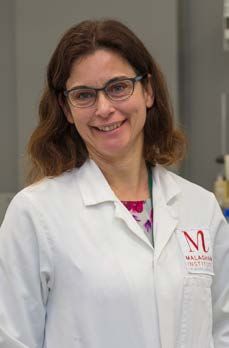
You can also read


