DRIVING DEMAND 2018 Outlook for the Intercity Bus Industry in the United States - BY JOSEPH P. SCHWIETERMAN & BRIAN ANTOLIN | JANUARY 29, 2018 ...
←
→
Page content transcription
If your browser does not render page correctly, please read the page content below
DRIVING DEMAND
             2018 Outlook for the Intercity
            Bus Industry in the United States

           BY JOSEPH P. SCHWIETERMAN & BRIAN ANTOLIN | JANUARY 29, 2018

                                         1

CHADDICK INSTITUTE FOR METROPOLITAN DEVELOPMENT AT DEPAUL UNIVERSITY | POLICY SERIES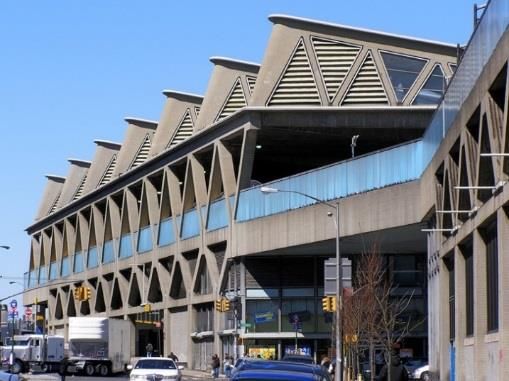
2
I  ntercity bus lines rolled into 2018 with
   renewed emphasis on route expansion,
ending a period of considerable restraint—and
                                                         frequency additions on the busiest corridors),
                                                         these additions suggest there is growing
                                                         optimism about the financial payoff of increasing
targeted retrenchment—with respect to service
                                                         capacity, which is likely to manifest itself in more
offering. A late-year rise in fuel prices and a
boost in the rate of economic growth paves the           expansion this year.
way for new service initiatives while major tech-
oriented transformations push the sector in new          Among the highlights was BoltBus adding stops
directions. This report explores the intercity bus       in Fresno, CA and Richmond, VA, and Megabus
industry’s performance and competitive status.           adding new routes to Annapolis, MD and Virginia
Part I provides insights into what can be                Beach, resuming a daily roundtrip to Omaha, and
expected to affect the sector over the next
                                                         adding new stops in Florida. Go Buses expanded
several years based on a review of notable
trends. Part II reviews the most significant             beyond the Northeast by adding routes to Key
service changes in various regions of the                West Florida, while Jefferson Lines returned to
country, while Part III looks to the future.             Winnipeg—initiatives discussed further in
                                                         Section III.

                                                         In the Northeast, much of the impetus for
I. SHORT-TERM OUTLOOK FOR THE                            growth was the heavily publicized termination of
INTERCITY BUS INDUSTRY                                   the Pool Agreement between Greyhound and
Five trends stand out that illustrate the notable        Peter Pan on September 27, 2017. This
changes underway in scheduled intercity bus              agreement, having been approved by the
travel.                                                  Surface Transportation Board back in 1997 and
                                                         1998, allowed the carriers to coordinate
TREND 1:                                                 schedules and share revenues with antitrust
After a period of relatively slow growth marked          immunity. The agreement was forged in the
by targeted service cuts among express coach             midst of intense competition that prompted
lines, scheduled carriers are again expanding,           each to boost frequency, creating what some
albeit at a less frenetic pace than during the           regarded as an oversupply of seats and
2008 – 2013 period.            Greyhound Lines           persistent fare cutting, which was seen as
introduced extensive new schedules in the                financially unsustainable. The Pool Agreement
Northeast following the termination of their             governed four corridors, Boston – Albany,
“Pool Agreement” with Peter Pan, and BoltBus,            Boston – New York, New York – Philadelphia,
Go Buses, and Megabus launched service to                New York – Washington DC, that were large
several new cities.                                      revenue generators encompassing prominent
                                                         intermediate stops, including Hartford and New
Major bus lines added many new routes and                Haven, CT, Springfield, MA, Baltimore, and
schedules in 2017, putting it on a growth                numerous smaller points.i
trajectory that has not been seen since 2014.
Although most new additions besides
Greyhound’s involve secondary routes around
the country (rather than major hubs or
                                                     1
The notable “upside” of the Pool Agreement was
allowing passengers to freely switch between
departures with minimal hassle – conveniences
that permitted the carriers to compete more
effectively with Amtrak and airlines. By having
coordinated schedules, passengers enjoyed
service at regular intervals – often hourly – in
major corridors, putting the bus on a more even
footing with the airline “shuttles” and Metroliner
trains that were popular at the time.
Increasingly, however, the “downsides” of
pooling reared their heads. The Agreement
proved administratively complex, created                 The refurbished George Washington Bridge Station at 179th
                                                         Street in northern Manhattan. This station’s bus pavilion on
difficulties with e-ticketing and added                  the third level became a focal point for Greyhound’s Northeast
complications to providing guaranteed seating            Corridor expansion in 2017. (Flickr photo)
to all ticketed passengers. Such seat guarantees,
which eliminate the need to arrive at the station        TREND 2:
early to secure a place in line, have become             Following several difficult years in which
universal on express coach lines such as BoltBus         revenues ebbed, the financial picture has
and Megabus.                                             brightened, particularly since summer 2017.
                                                         Among the largest carriers, revenues per bus-
With the Pool’s elimination, Greyhound and               mile operated have increased, and margins
Peter Pan are once again head-to-head                    remain positive.
competitors. Each has rolled out e-ticketing and,
                                                         The remarkable expansion of the intercity bus
as noted in Section II, Greyhound has added
                                                         industry from 2006 to 2014 brought significant
significant capacity on most major Northeast
                                                         revenue growth. Aggressive expansion by
Corridor routes, including New York to Boston
                                                         express coach lines, such as BoltBus, Go Buses,
and Washington. The historic carrier also
                                                         and Megabus, enlarged the revenue pie. These
launched an entirely new route linking Boston to
                                                         lines emphasized curbside pickup and offered
Washington via Hartford and the George
                                                         guaranteed seating to all reservation holders.
Washington Bridge Station in northern
                                                         Greyhound rolled out Greyhound Express,
Manhattan. Despite going their separate ways,
                                                         which also offered guaranteed seating while
however, both carriers continue to share space
                                                         using conventional terminals, on an ambitious
in most of the terminals previously used for Pool
                                                         timetable.
service.

                                                     2
Table 1: Price trends for Oil, 2013 – Present
                                   West Coast Intermediate Crude

                                                                                             January 15, 2018
                                                                         January 15, 2017

         Source: West Texas Intermediate (WTI or NYMEX) crude oil prices on www.matrotrends.net

This era of expansion, during which oil sold for         light trucks and SUVs--tend to have an edge
more than $100 per barrel, was followed by a             when oil prices drop due to their greater fuel
more austere period, beginning in late 2014.             dependence.iii This effect is particularly acute
Plummeting fuel prices blunted one of intercity          outside the Northeast Corridor, where fewer
bus’ chief advantages—its tremendous fuel                barriers to driving exist. A rise in the price of
efficiency—by disproportionately lowering the            West Texas intermediate crude from about $50
cost of driving and flying. Weaker demand,               per barrel last July to $64 per barrel in January
together with a soft economy and problems with           2018, however, has been beneficial, pushing the
pickup and drop-off locations, hurt the sector.          average retail price of gasoline nationwide to
In some cities, attractive locations became              $2.43/gallon. As recently as last summer, it had
increasingly difficult to find due to development        been $2.16 and, in early 2016, it was as low as
pressure and neighborhood opposition.                    $1.88.iv This increase, along with a more
                                                         buoyant national economy, is strengthening
As noted in past Outlook reports, demand for             demand and giving operators more pricing
bus travel tends to be sensitive to oil price            power. (A review of the finance results of
reductions. Airlines and private vehicles—cars,          FirstGroup and Stagecoach illustrates the degree
                                                    3
to which “cheap oil” negatively affected the           from service provided during both years,
bottom line while also showing that a                  dropped 4.9% while other schedule service was
turnaround appears to be underway, enhanced            down just 0.9%.
by significant rise in oil prices.v)
                                                       Performance improved sharply during the first
FirstGroup/Greyhound. Like most bus lines,             six months of the present fiscal year, which
Greyhound’s owner, London-based FirstGroup,            ended in October. Total revenues fell 1.3%,
faced considerable hardship in North America           while margins improved from 6.7 to 8.3%.vii
during 2015 and 2016. When its revenues are            Importantly, like-for-like revenues rose 0.1%.
measured in U.S. dollars, Greyhound (including         Revenues on Megabus fell 4.6% while other
BoltBus), experienced a 7.3% drop in revenues          scheduled services grew 0.7%.         Although
during the 2016 fiscal year, which ended in            Megabus’ latest decline is no doubt unwelcome,
March 2016. In the 2017 fiscal year, revenues          it appears largely the result of frequency
dropped another 2.2%. Nevertheless, the first          reductions on certain routes. Indeed, revenues
six months of the 2018 fiscal year, which ended        appear to have firmed up: Megabus’ revenue
last September, saw a 1.2% gain in revenue,            per bus mile rose 3.2% compared to the same
despite major weather-related disruptions in           period the year before.
Florida and Texas.vi By all indications, revenue
will be up appreciably for the fiscal year as a        Exactly how much passenger traffic changed in
whole.                                                 recent years remains a matter of speculation, as
                                                       traffic statistics are not made publically
Profit margins at Greyhound rose to 7.5% from          available. Based on our analysis of the above
6.6% during this most recent six-month period          financial results, along with an evaluation of
compared to the same period the year before.           newly collected schedule information, we
Moreover, margins of this unit remain higher           believe that passenger traffic on scheduled
than most FirstGroup units. Recent expansion by        intercity carriers nationwide remains in the 60 –
both BoltBus and Greyhound suggests that               65 million range, and that traffic was up
company management is confident that demand            slightly—perhaps 1%-- in 2017 after several
has strengthened.                                      years of stagnation or modest decline. (Please
                                                       refer to our Remaking the Motor Coach report
Stagecoach/Megabus. Stagecoach Group’s                 from early 2015 for our industrywide traffic
performance in North America has followed a            estimates). The evidence points to short-haul
similar pattern: This Scotland-based company           routes (dominated by conventional bus lines)
reported a 2.4% drop in revenue (measured in           performing better than longer-haul routes
U.S. dollars) during its 2017 fiscal year, which       (heavily served by express coach lines like
also ended in April 2017. This decline was             BoltBus and Megabus) in recent years.
partially the result of Megabus’ major service
cuts, including those that ended its presence in
Columbus, OH, Grand Rapids and Lansing, MI,
and Kansas City, MO. During this same period,
Megabus’ “like-for-like revenue”, i.e., revenue
                                                   4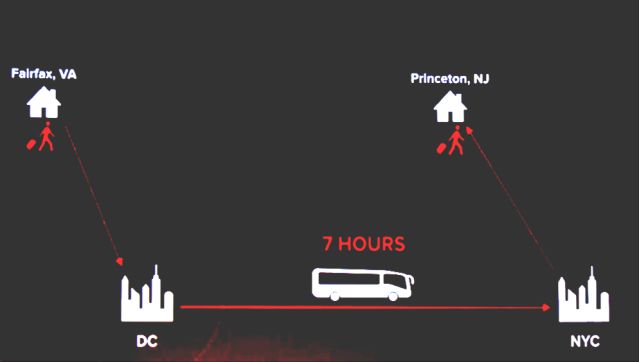
TREND 3:                                                  trip fails to attract enough riders, it does not
Technological innovation is pushing scheduled             operate and no fares are collected. Ticket prices
intercity bus travel in important new directions,         rise as the number of reservations increase. The
with several technologies’ disruptive effects             companies contract with charter operators to
accelerating the change.           Crowdsourced           operate the buses, which generally involve travel
services, innovations in transportation network           to festivals, music and sporting events, and other
companies, and Flixbus will likely be primary             cultural activities, with some resembling
change agents over the next several years.                intercity services.

In addition to incremental tech-oriented                  Both companies had breakthrough years in
measures taken over the past year, such as                2017, showcased by their extensive traffic to the
Greyhound’s and Peter Pan’s system-wide                   Women’s March on Washington, DC on January
rollout of e-ticketing and improvements to “bus           21. Skedaddle carried an estimated 10,000
tracker     program”,      several  larger-scale          people, around 5% of all participants, to the
technological innovations deserve attention.              event. In December, the company reported it
                                                          was carrying 50,000 people per month and that
                                                          it was commencing with an Initial Coin Offering
    Notable Players Active in Advancing
                                                          (ICO) in 2017. Another bus line with its roots in
        Technological Innovation
                                                          crowdsourcing, OurBus (discussed in detail on
                                                          the following page), is experimenting with
                                                          “popup” bus services during holidays that could
                                                          provide a glimpse of the future.

                                                          Innovations are also underway to use
                                                          crowdsourcing to bridge the divide between
                                                          transportation network companies (TNCs), like
                                                          Lyft and Uber, which rely primarily on small
                                                          vehicles, and conventional motor coach
                                                          operators. Axle Travel is partnering with TNCs
                                                          and intercity bus lines to allow a traveler to book
                                                          a door-to-door journey with one click. For
The expansion of crowdsourced bus service                 example, a trip could be reserved from a private
Crowdsourcing is allowing motor coach                     residence in New Jersey to a final destination in
operators to respond quickly and nimbly to                Northern Virginia that might involve taking an
customer demand for bus service. Rally Bus and            Uber on the first leg of the journey, transferring
Skedaddle accomplish this with considerable               to a bus bound for Washington, D.C., and then
sophistication: If enough travelers express a             using a Lyft for the final leg—with the price
willingness to pay for a bus leaving at a set time        locked-in at the time of booking. The creators of
on a particular day, the service is operated, and         Axle (which regards itself as a TNC) believe that,
the person who launches the bus trip travels              by aggregating demand data, it will be able to
free, if enough others pay to join the ride. If the       coordinate with different transportation
                                                      5
providers to fill supply gaps in real-time. For adding hotels and selected Chinatown bus lines
example, it plans to utilize a mix of charter and that meet its inclusion criteria.
scheduled buses, as well as other modes of
transportation. Axle is presently beta-testing its The ability to instantly gain access to tens of
mobile app for travel between the New York and thousands of customers interested in
Washington, DC areas. comparison shopping is allowing bus lines to
experiment in previously unseen ways, which
has been exemplified by the growth of OurBus.
Unlike other companies that initially focus on
one or two routes to build brand identity,
OurBus actively experimented while relying on
Wanderu and other booking aggregator sites,
including busbud.com, and starting this year,
iLikebus.com and gotobus.com, to test the
market.
OurBus launched its first intercity route last
This Axle Travel graphic shows the circuitous--and time
January connecting Allentown to New York City.
consuming-- nature of many trips involving intercity buses.
The startup envisions using aggregation techniques to allow
Although insufficient demand soon resulted in
for more dynamic bus routing and partnerships with its elimination, a New York – Washington service
Transportation Network Companies like Lyft and Uber to bring took its place during March, supplemented with
passengers to collection points. extra schedules on weekends. Bucking the trend
of adding new pickup and drop-off locations near
the endpoints of Northeast Corridor routes,
Ticket aggregator sites like Wanderu are
OurBus added secondary stops at underserved
becoming platforms of innovation, making
locations farther from its endpoints. It first
new “popup” services possible, such as that
added a stop in New Brunswick, NJ, home to
offered by OurBus
Rutgers University, and another in Columbia,
As noted in past Outlook reports, new “ticket
MD, about halfway between Baltimore and
aggregator” websites continue to make headway
Washington. When a second New York –
in their effort to make shopping for bus travel
Washington roundtrip was added later in the
easier. Wanderu, the Boston-based booking
year, OurBus began stopping at Hamilton, NJ,
website, is a leader in this space, selling tickets
near Trenton, and Union City, NJ, a more typical
on all major U.S. bus brands as well as many
stop five minutes outside of New York. Soon,
international brands. The company expanded in
OurBus was up to six daily trips operated in each
2017 by adding German railway Deutsche Bahn
direction, depending on the day of the week.
to its lineup. Wanderu also vets the bus lines for
which it sells tickets to give consumers
confidence they will have a safe and favorable More expansion followed. Over Labor Day
experience. Wanderu has also taken steps to weekend, the company did a “pop-up launch”
give customers a wider array of travel options by from George Washington Bridge Bus Station, Ft.
6Lee and Paramus, NJ to Washington. This considerable market power in several major
consisted of two trips in each direction on Friday European markets, including its home country,
and Monday of the holiday weekend. That same since its 2013 launch. In 2016, Megabus turned
weekend, it also ran buses from Brooklyn and over its entire continental Europe operation to
Staten Island to the nation’s capital – the first Flixbus, for which it operates buses under
direct service between the route’s endpoints contract. This suggests that the two lines are
since 2010.viii Other “pop-up” services followed poised to “bump elbows” when the latter makes
during the Columbus Day and Thanksgiving a U.S. move. Although details regarding Flixbus’
weekends. Most recently, a daily service linking U.S. launch are scant, there are indications that
New York to Malvern, PA and other Philadelphia operations here will be based in Los Angeles,
suburbs was added.ix which signals that change in the West region
may be most imminent.
Such nimbleness appears to be a harbinger,
made possible by the ability for entrepreneurial
TREND 4:
startups to use booking aggregator sites to lower
Premium services, including business-class
customer search costs and experiment. More
offerings, continue to be rolled out by carriers
established carriers are also getting in on the act.
seeking to capitalize on the airport “hassle
Peter Pan, for example, ran direct Albany –
factor” and a desire to avoid driving amid
Boston buses over the Christmas holiday that
worsening congestion. Cabin, a new overnight
had a “pop-up” quality.x The dynamic nature of
sleeper service in California, demonstrates the
such scheduling borrows a page from the airlines
ability for such premium operators to attract
and contrasts sharply with rail service, which
private capital.
typically requires many months or years for new
routes to be launched.
Notable Carriers Active in Increasing
Premium Services
Announced expansion to U.S. by Flixbus
Another disruptive force being fueled by
technology is Flixbus, which desires to extend its
footprint beyond continental Europe. The
Germany-based company announced in
November that it was launching U.S. operations
in 2018. Known for its lime green buses and The expansion of premium bus services reported
rapid expansion into new markets, the company in our past Outlook report gained momentum in
seeks to change the way people see and use 2017, with five established carriers making
intercity bus services. It partners with existing moves. Concord Coach and C&J Bus expanded
bus lines to operate the service while retaining business-class service between northern New
control of all pricing and scheduling decisions. England and New York. Texas’ Vonlane, which
Through sophisticated marketing, and backed by has luxurious 22-seat buses, including four seats
extensive venture capital, Flixbus has acquired in a small conference room, launched a Fort
7Worth – Austin service, complementing its Texas TREND 5:
Triangle service. Redcoach enhanced its Enhanced coordination between Amtrak and
expansive intra-Florida network with a new motor coach lines indicates that both types of
overnight business-class service from Miami to transportation providers see untapped
Tallahassee to give travelers an early start in potential in bus-train transfers as part of the
their destination. Redcoach remains the Amtrak Thruway bus program. Some of these
country’s only scheduled line that operates both feeder services are financed through the
business-class and first-class buses. Additionally, federal “5311b” program, which remains
Tripper launched its first class Tripper Bus Elite robust.
between New York and Washington. All of these
services are described in greater detail in the Notable Carriers Active in Expanding
“Notable New Routes” section below. Thruway Connections
The most heavily publicized new service of the
year, Cabin, launched in July between Santa
Monica and San Francisco. Originally piloted in
2016 as “Sleepbus”, Cabin describes itself as a
moving hotel, having “private sleeping cabins”
that allow passengers to lie flat while also having
onboard lounges with conventional seating.
Cabin’s attendants work to keep passengers
comfortable while also positioning it as a lifestyle
and hospitality brand. After initially charging a With many people looking for alternatives to
flat rate of $115 per person for the eight-hour private vehicle travel, Amtrak is expanding its
journey, Cabin turned to demand-based pricing, Thruway network and making its amtrak.com
with fares starting at $85 on off peak travel days, website a more prominent hub for multi-modal
making it comparable to a moderately priced travel. Thruway service allows passengers to buy
hotel. Drivers often use secondary roads to tickets involving bus-rail connections with a
assist with the smooth operation of the coaches, single click. Buses are typically emblazoned with
allowing for a better night’s rest. the railroad’s logo to publicize the service and (in
our view) to help alleviate the apprehension that
Cabin represents a bold experiment away from some passengers might have about using a
the standard seating configuration used by other scheduled intercity bus line. To support these
premium providers and could be indicative of connections, Greyhound has opened ticket
things to come, particularly on medium distance offices in several railroad depots, including
routes. It remains to be seen, however, how Chicago’s Union Station.
scalable the sleep-pod concept proves to be.
Cabin operates several times a week, having an A report the Chaddick Institute released in
11 p.m. departure and 7 a.m. projected arrival in November identifies California and Oregon as
both northbound and southbound directions. leaders in the Thruway concept on account of
their state governments’ ambitious efforts to
8use motor coaches to fill gaps in Amtrak routes. transportation services to communities outside
This past year, though, expansion has been of urban areas with populations of 50,000 or
particularly brisk in the East and Midwest. less. These funds are generally awarded to state
governments with the stipulation that 15% be
A new tri-weekly route by Barons Bus linking spent on intercity bus services. State and local
Charleston and Clendenin, WV, with stops in governments are required to match a significant
Morgantown, Clarksburg/Bridgeport, and other portion of the federal funds provided. It is not
points, provides connections to the Cardinal, a uncommon for bus companies to receive funds
Chicago - New York train. In Michigan, Indian equivalent to about $2.00 per bus mile to
Trails Bus Lines, working with the state’s provide this service.
transportation department, aligned all of its
Much of the “5311b” expansion of the recent
schedules to facilitate bus-train transfers, while
past has involved Greyhound. The major moves
Miller Transportation/Hoosier Ride launched
from 2017, however, centered on smaller
Thruway service between Detroit and Port
carriers, including Miller Transportation, and
Huron. We discuss both of these initiatives in
Silver State Trailways, which sell interline tickets
Section II below.
on greyhound.com to maximize the potential for
bus-to-bus connections. Please refer to our
In the Northeast, Bieber Tourways announced
2017 Outlook report for recent milestones of
an agreement with Amtrak to operate new
5311 program.xi
Amtrak Thruway services from Philadelphia and
Lancaster, PA, to numerous cities in the
northeastern part of the states, including
Allentown and Bethlehem. This agreement, II. NOTABLE NEW SERVICE
leveraging Bieber’s existing routes to the Lehigh
Valley, gives passenger railroad’s new city-pair Most regions of the United States received at
combinations to see on its website. Several least some new service in 2017.
buses operate from Philadelphia in each
New England
direction daily.
Among the hottest regions for service expansion
In New England, Vermont Translines launched a in 2017 was New England. Following the
new twice-daily “Vermont Shires Connector” cancelation of its Pool Agreement in October,
linking Manchester and Bennington, VT to Greyhound increased its offerings in Springfield,
Amtrak’s Albany/ Rensselaer station, capitalizing MA in competition with hometown carrier and
on the station’s frequent service to Buffalo, former “Pool Partner” Peter Pan. New
Rochester, Syracuse and New York. Greyhound Express services link this
Massachusetts city with both Boston and New
Several new Thruway services as well as other York, with the latter route, which runs via
feeder routes unaffiliated with Amtrak (many Hartford, CT, complementing its existing
described below) are supported by the Federal schedule linking White River Junction, VT to
Transit Administration’s “Section 5311b” Midtown Manhattan.
Program, which provides funding for
9Greyhound also boosted Boston – New York Concord and Nashua, NH, eliminating the need
frequency and launched an Albany, NY – Boston for those at its two busiest stations in the Granite
route with stops in Framingham, Sturbridge, State to transfer in Boston to reach Manhattan.
Springfield, Lee and Pittsfield, MA. This daily Operating under the Concord Coach Plus brand,
roundtrip, made possible with support from the service features business-class style seating
Massachusetts’ BusPlus program, augments in lush leather seats, Wi-Fi and outlets, expanded
existing Greyhound Express service between the legroom, snacks and beverages and reserved
state capitals via Worcester, putting it in direct seating. Concord offers a morning departure
competition with Peter Pan. Greyhound also from New Hampshire and early afternoon return
created a route linking Boston to Washington, from New York.
DC, via Hartford and the refurbished George
Washington Bridge station in upper Manhattan. After years of planning and coordination with
This important new high-frequency corridor is the State of Maine, Concord Coach established a
discussed in greater detail in the Mid-Atlantic Portland – Auburn route in June with up to six
section. daily trips in each direction and a stop at a new
Exit 75 transportation center in
Concord Coach, building on the success of its Lewiston/Auburn. Passengers can make
relatively new express service from Portland, ME connections to Boston and other destinations, as
to New York, launched a similar service from
Figure 1: Notable New Bus Routes of New England in 2017
10well as disembark at Lewiston’s Bates College including Orange, Athol and Gardner, MA, have
during the fall and spring semesters. lost intercity bus service altogether.
To provide direct access between New
Hampshire’s Merrimack Valley and Manhattan,
C&J Bus extended its New York – Portsmouth Mid-Atlantic States
business class service 13 miles to Dover, NH. Nearly all of the major players were active in the
Mid-Atlantic states. As previously noted, when
Previously, C&J customers had to either make Pool Agreement with Peter Pan ended in
connections in Boston or drive to Portsmouth for September, Greyhound added frequency on its
a New York-bound bus. Two to three schedules mainline Washington – New York Port Authority
operate in each direction daily, with most Bus Terminal (PABT) route. On peak days, the
southbound trips leaving Dover in the morning carrier now operates 23 schedules from PABT to
and return trips scheduled for the morning and Washington, compared to 13 before.
afternoon.
Greyhound also launched a major new
Vermont Translines launched the Vermont Greyhound Express route from Boston through
Shires Connector, a new Amtrak Thruway service the renovated George Washington Bridge
linking Manchester, NH and Bennington, VT to (GWB) bus station at 179th Street in upper
Albany, NY. The two daily roundtrips launched in Manhattan, with some buses continuing to
August offer convenient bus-train connections at Philadelphia and the others to
Albany/Rensselaer station, thus capitalizing on Baltimore/Washington. By bypassing Midtown
the state capital’s frequent Amtrak’s Empire Manhattan, this new service saves travelers
Service to New York, Rochester, Syracuse, and considerable time compared to trips using the
other points while enhancing economic traditional route through PABT, which is six miles
development and tourism. south of the GWB station. Although service
varies by the day of week, two or three schedules
As bus and train travel service to Vermont link the GWB station to Philadelphia daily, three
becomes increasingly competitive, Megabus or four run to Baltimore and Washington DC, and
quietly discontinued the last of its Burlington, VT five run to Boston (with a Hartford stop). GWB
– New York service last summer, citing a gradual Station had not had intercity bus service in over
decline in ridership. Its once-daily trip in each a decade and is positioned to capture business
direction had been the only regularly operated from the northern regions of New York City.
direct service from Montpelier, VT to Amherst,
MA and Manhattan. Furthermore, MAXBus Greyhound owned Boltbus expanded to
ended its Boston and Brattleboro, VT run last Richmond, VA, its first major move in the
June. Created by the Massachusetts BusPlus Northeast Corridor in several years. Its two to
program in 2016, MAXBUS had realigned its three daily roundtrips to this new city are
routes after subsidies ended. With its extensions of its New York – Washington route
termination, several intermediate stops no and terminate near downtown, on the Virginia
longer have one-seat rides to Boston and a few, Commonwealth University campus. Megabus
11Figure 2: Notable New Bus Routes of Mid-Atlantic States in 2017
closed a gap in its network by launching service class travelers a new option. The daily roundtrip,
to Virginia Beach areas in June with a tourist- launched last month, uses a 34-seat bus with
friendly stop just two blocks from the boardwalk. spacious 2 + 1 seating.
This once-a-day service, an extension of its
Philadelphia - Richmond route, which has Megabus also began operating the new Virginia
Baltimore, Washington, and Hampton, VA stops, Breeze, created with the assistance of the
allows for transfers to New York at the nation’s Virginia transportation department. The Breeze
capital. In early 2018, Megabus launched an links Blacksburg, VA, and Washington, with stops
Annapolis – New York service, its first service to in Christiansburg, Staunton, Harrisonburg, Dulles
Maryland’s state capital. This state capital International Airport and other points. Unlike
remains devoid of any rail service and had most other state-supported services (which
previously lacked direct service to Manhattan. leverage Greyhound’s vast network and
Meanwhile, Tripper’s new Tripper Bus Elite distribution system), Virginia took the novel
between New York and Washington gives first approach of partnering with Megabus, possibly
12due to its desire to appeal to different department, Fullington Trailways, which is also
constituencies. The new service, which based in the region, assumed all of the
experienced sold-out buses during the Christmas discontinued routes. The affected routes
holiday, is operated by Dillons, a sister Coach included Elmira, NY – Harrisburg, PA, Elmira, NY
USA company, with tickets sold on – Harrisburg, PA, New York – Williamsport, PA,
megabus.com.xii and New York – Shamokin (Sunbury).
The most notable new carrier to emerge in the Southeastern U.S.
Northeast, OurBus, now operates extensive Several notable expansions took place in Florida,
service on a variety of routes from New York, which continues to be a focal point for express
including daily service to Ithaca, the Philadelphia coach lines. Redcoach added its first “redeye”
region, and Washington, D.C. We describe the business-class service between Miami and
many innovations it employed, including “pop- Tallahassee, an eight-hour trip giving travelers a
up” service and stops in underserved locations, new early morning arrival option. This boosts
such as New Brunswick, on page 9. frequency on the route to nine trips, seven via
Orlando and two via Tampa, in each direction.
A significant amount of service, meanwhile, was Megabus added a stop in Daytona Beach with
realigned in Pennsylvania. Bieber Tourways service commencing in August along its Atlanta –
essentially combined several of its routes into Jacksonville – Orlando route, with one bus
one. The carrier’s New York – York, PA route via stopping daily in each direction. That same
Norristown and Lancaster was consolidated with month, Megabus added a stop on its Tampa –
its Philadelphia-Pottstown route, the former Orlando – Miami route in Lakeland, an inland
route part of its earlier acquisition of Capitol community it typically serves with two or three
Trailways of Harrisburg. Although this adds to buses in each direction daily.
travel time on some trips, New York customers
now have direct service to Pottstown and Last January, Go Buses launched service linking
Philadelphia, as well as higher frequency to Miami and South Beach to Key West, FL, its first
Lancaster, while others benefit from direct route outside the Northeast. This builds on its
service between Limerick, Lancaster and York. As New York – Washington/Northern Virginia
previously noted, Bieber also launched Amtrak expansion described in last year's report. Aimed
Thruway service from Philadelphia to Allentown at providing a budget-friendly option for tourists,
and Bethlehem last year. this new service is oriented toward daytrips,
having an early-morning departure and evening
Susquehanna Trailways, based in Lock Haven, return. Evidently due to the success with this
PA, announced in August that it was service, Go Buses launched a second route in
discontinuing its entire intercity bus operation June linking the international airports of Miami
for financial reasons, threatening to sever the and Fort Lauderdale to Key West. Initially
only direct links between many smaller offering one daily round trip, this second route
Pennsylvania communities and major Eastern was then expanded to two daily roundtrip
population centers. After a month-long departures.
negotiation with the state’s transportation
13Figure 3: Notable New Bus Routes in Florida in 2017
Midwest
After witnessing cutbacks in 2016, the Midwest Michigan’s Indian Trails Bus Lines revised all of it
is again benefitting from new offerings. A new is schedules to align with Amtrak connections at
service by Miller Transportation/Hoosier Ride Kalamazoo, Lansing, and other points. The new
links Detroit and Port Huron with stops in schedule offers improved connections with
Roseville, Mount Clemens, and New Baltimore. Amtrak trains between Chicago and Detroit, with
These buses connect the eastern ends of emphasis on having eastbound trains from
Amtrak’s Wolverine service, which terminates in Chicago connect with northbound buses in
the Detroit region, and Amtrak’s Blue Water Battle Creek and southbound buses connecting
route, which terminates in Port Huron. The with Windy City-bound trains in Kalamazoo. This
Thruway route is well suited to students at the alignment enhances the mobility of
state’s universities by providing convenient disadvantaged populations through the state’s
connections to major college towns, including southern peninsula: an estimated 36% of Indian
Ann Arbor, East Lansing, and Kalamazoo. Trails’ 230,000 annual passengers do not have
14access to a car, and 20% reportedly do not or According to a report in the Chicago Tribune,
cannot drive. daily schedules were reduced from 26 to 16.xiii
During this transition, the carrier moved its
As noted in last year’s Outlook report, lower gas pickup and departure location to Polk Street,
prices and weakened passenger demand over several blocks further south, putting it further
the past several years prompted Megabus to from the central Loop district and rapid-transit
continue to gradually deemphasize Chicago. stops.
This resulted in the elimination of routes to
Omaha, NE and Lansing and Grand Rapids, MI. Despite this, Megabus nonetheless resumed
The downsizing is significant, as Chicago was a service over the Chicago – Omaha route in
lynchpin for the company’s early expansion February in partnership with Windstar Lines, an
efforts, becoming its first U.S. hub in 2006. arrangement leveraging Windstar’s local
Figure 4: Notable New Bus Routes of Midwest States in 2017
15knowledge, drivers, and equipment that consists intermediate stops in Fargo and Grand Forks, ND
of one trip daily in each direction. This service and Sioux Falls, SD while continuing Jefferson
makes intermediate stops in Lincoln, NE, Iowa Lines’ past practice of gradually expanding its
City, IA, Des Moines, IA and Moline, IL. network throughout the Upper Great Plaines.
Another favorable development is Peoria
Charter Coach’s new ticket agency in
Champaign, IL, which supports its expanded Southwest and West Coast
service between Chicago’s airports and the
The most significant moves in the Southwest and
prominent university town. The carrier now
West involved smaller carriers. Silverado
operates ten weekday buses between these
Stages, experiencing success on its Silverado
points.
Mainline service between Las Vegas and Reno,
NV, added a second daily roundtrip in
On the region’s northern periphery, Jefferson
coordination with the Nevada transportation
Lines initiated a new route between Winnipeg
department in August. The new evening and
and Minneapolis oriented toward connecting
overnight schedule complements its existing
traffic between Manitoba and a wide variety of
daytime trip and includes intermediate stops at
U.S. destinations. This once-a-day service has
Figure 5: Notable New Bus Routes of Southwest and West in 2017
16Reno Airport, Sparks, Carson City, and Tonopah. runs offering a four-hour trip to Los Angeles. In
In Arizona, Stagecoach Express worked with November, Europe’s Flixbus captured headlines
Amtrak to launch a new Thruway connection by announcing that it expects to launch U.S.
between Phoenix and Maricopa, a stop on the service, possibly in Los Angeles, in 2018, a topic
Sunset Limited route. This creates a new ground we discuss on page 9.
travel option between the Arizona Capital and
Los Angeles that is more direct than the long- In Texas, Vonlane introduced Fort Worth –
established route via Flagstaff. Austin service in October with executive-class
buses seating 16 passengers and equipped with
As previously noted, Cabin launched a heavily the latest technological advances. By having
publicized sleeper service between Los Angeles schedules and amenities oriented toward
and San Francisco, with an 11 p.m. departure in business travelers, and with fares on the new
both cities. This service, featuring “private route typically $79, Vonlane has charted a course
sleeping cabins” and on-board attendants, has much different than most other operators
received a great deal of attention in the popular outside of the Eastern Seaboard. The new route
press (see page 10). has up to four roundtrips on weekdays, with less
service on weekends. In Fort Worth, buses
More established carriers also made some depart near the Omni Hotel and the city’s
notable moves. Boltbus added a new convention center, both downtown. The efforts
Fresno stop on its San Francisco Bay Area – Los by both Cabin and Vonlane to be seen as
Angeles route in October, which closes a gap in
hospitality brands rather than intercity bus
express coach lines between California’s Central companies suggest that premium operators are
Valley and the state’s largest cities. The stop, using new marketing strategies to overcome
replacing a rest stop in Avenel, is served by two
obstacles to attracting upscale customers.
buses in each direction daily, with southbound
17III. CONCLUSION AND
PROJECTIONS
Guaranteed seating and the ability to
change tickets online becoming
The intercity bus industry once again finds itself
pervasive on all major bus lines,
on a growth trajectory, having weathered a
including Greyhound, which has
sharp drop in fuel prices starting in 2014, which
eliminated obstacles to these
ended an era of frenetic growth that brought the
enhancements with the cancellation of
industry a great deal of attention. Whereas
its Pool Agreement with Peter Pan;
much of the sector’s earlier expansion centered
on new bold hubs and route networks by
Growing traveler use of booking
BoltBus, Megabus and other express coach lines,
aggregator sites, thereby giving smaller
this most recent expansion has been more
lines and ethically based operators,
nuanced, generally spurred by a desire to fill
including Chinatown bus lines, the ability
gaps in the system, improve connectivity with
to experiment with seasonal, weekend-
Amtrak, and strengthen existing routes with new
only, and “popup” schedules, much as
intermediate stops. Nevertheless, the recent
airlines do;
rise in fuel prices and Greyhound’s major moves
in the Northeast, together with the emergence
Continually improved financial
of Cabin and Ourbus last year, suggests that
performance by FirstGroup/Greyhound
profitable expansion is once squarely again on
and Stagecoach/Megabus, which have
the minds of industry executives and venture
become more adept at closely matching
capitalists.
capacity to market conditions and
benefit from the recent rise in fuel
The outlook for the next twelve months suggests
prices.
the following projection:
Strategic, financial and tech-related moves:
Several likely developments in route planning
Increased efforts by tech-oriented bus
and competition also stand out.
lines and startups to use crowdsourcing
and dynamic scheduling to attract new
Routes and competition:
markets, including those involving TNCs
More growth of business-class and
and charter bus trips open to the general
luxury bus services to destinations that
public;
have not yet had a taste of these
offerings, particularly outside the
E-tickets becoming an industry
Florida, the Northeast, and Texas. These
standard, much as Wi-Fi and power
services will increasingly offer reserved
outlets became several years ago,
seating, comparable to that on most
closing a gap with air and rail service;
airlines.
18 A push to move intercity bus service
into public transit terminals and Amtrak
stations, a trend that has been gaining
traction for several years, resulting in
the closure of many traditional intercity
bus stations.
The emergence of Germany-based
Flixbus into the U.S. market, as a
potentially disruptive force, possibly
starting with service on the West Coast.
More feeder routes to Amtrak stations
as state government seek to expand
mobility while lacking the budgets for
significant increase in train service.
These suggest that a once-sleepy industry will
continue to experiment to expand its role in a
hotly competitive U.S. transportation market.
To reach the study team, please email
chaddick@depaul.edu or call 312.362.5732.
Additional Chaddick Institute publications, including
past annual reviews of intercity bus travel, can be
found at las.depaul.edu/Chaddick.
19NOTABLE RELATED STUDIES BY THE CHADDICK INSTITUTE
Ground Transportation Gaps:
The Most Heavily Traveled Intercity Routes Without
Express Coach or Rail Passenger Service in the U.S.
November 17, 2017
Our analysis of major travel corridors in which travelers do
not have access to express coach lines, such as BoltBus, Go
Buses, and Megabus, or passenger railroads, making it
difficult to avoid flying or driving. Full report here.
Running Express: 2017 Outlook for the Intercity Bus
Industry in the United States
January 13, 2017
A complete review of major initiatives by the intercity bus
industry in calendar year 2016, organized by region. Full
report here.
The Remaking of the Motor Coach:
2015 Year-in-Review of Intercity Bus Service in the
United States
January 13, 2016
Our review of major initiatives by the intercity bus industry
in calendar year 2015 as well as our estimates of the number
passengers and bus miles encompassed by the intercity bus
line, including approximate breakdowns by major carrier,
based on an analysis of schedules. Full report here.
20AUTHOR INFORMATION
Joseph P. Schwieterman, Ph.D., a professor of Public Service Management
and director of the Chaddick Institute for Metropolitan Development at
DePaul University, is a nationally known authority on transportation and
urban economics. He has testified three times on transportation issues
before subcommittees of the U.S. Congress. Schwieterman holds a Ph.D. in
public policy from the University of Chicago and is president of the Chicago
chapter of the Transportation Research Forum. He is widely published on
intercity bus and rail travel.
Brian Antolin is an entrepreneur, consultant and researcher following his
childhood love for travel and transportation. As a respected thought leader in
public transportation, Brian’s research and commentary has been cited in
numerous national publications including the Boston Globe, Philadelphia
Inquirer, New York Times, and regional affiliates of National Public Radio.
Prior to launching his tour and transportation company, CoTo Travel, Brian
worked for BoltBus, a division of Greyhound Lines, Inc. in various operations
and management positions.
The Chaddick Institute, which promotes effective planning and transportation, does not receive financial
support from intercity bus lines or suppliers of bus operators.
21SELECTED BIBLIOGRAPHY
FirstGroup Ltd, Annual Report and Accounts 2017.
Hall, David. (2013). The Intercity Bus Renaissance: One Company’s Experiences, TR News: A Publication of the
Transportation Research Board, 303 (May/June 2013, pp. 11–16).
Higgins, Laura, Jeff Warner, Curtis Morgan, and Philip Dunham. (2011). Examining Long-Distance Express Buses as
an Extension of and Feeder to Passenger Rail Systems. University Transportation Center for Mobility, Texas
Transportation Institute, The Texas A&M University System.
Klein, Nicholas J. (2009). Emergent Curbside Intercity Bus Industry: Chinatown and Beyond. Transportation
Research Record: Journal of the Transportation Research Board, 2111 (pp. 83–89).
Klein, Nicholas J. (2015). Get on the (curbside) bus: The new Intercity Bus. Journal of Transport and Land use, 8(1),
(p. 155).
McGuckin, N. (2013). Intercity Travel Market Analysis. Prepared for Committee for a Study of Intercity Passenger
Travel Issues and Opportunities in Short-Haul Markets. Retrieved from http://www.travelbehavior.us/Nancy--
ppt/Intercity%20Travel%20Market%20Analysis.pdf
Schwieterman, Joseph and Lauren Fischer. (2012a). Competition from the Curb: Survey of Passengers on Discount
Curbside Bus Operators in Eastern and Midwestern Cities. Transportation Research Record, 227 (pp. 49–56).
Schwieterman, Joseph, Frederick J. Klein, and Alexander Levin, Direct to Your Destination: The Size, Scope and
Competitive Status of Express Coach Carriers in the United States, DePaul University working paper, 2017.
Schwieterman, Joseph and Lauren Fischer. (2012b). The Decline and Recovery of Intercity Bus Service in the United
States: A Comeback for an Environmentally Friendly Transportation Mode. Environmental Practice, 13 (pp. 7–15).
Stagecoach Group Ltd., Preliminary results for the year ended 29 April 2017.
Transportation Research Board. (2016). Interregional Travel: A New Perspective for Policy Making.
i
Examples of intermediate stops governed by the agreement are: Silver Spring and New Carrollton, MD, and Mount
Laurel, NJ
iii
For more discuss of the elasticity of demand, see Running Express: 2017 Outlook for the Intercity Bus Industry in
the United States. A link is available on the previous page.
iv
Average price information derived from US Energy Information Administration,
https://www.eia.gov/petroleum/gasdiesel/
v
Oil prices derived from http://www.macrotrends.net/1369/crude-oil-price-history-chart
vi
Greyhound financial results for the most recent period take from :
http://www.firstgroupplc.com/~/media/Files/F/Firstgroup-Plc/reports-and-presentations/press-release/pr-14-11-
2017.pdf
vii
Megabus results for the most recent period are reported in the following:
http://www.stagecoach.com/~/media/Files/S/Stagecoach-Group/Attachments/media/press/pr2017/2017-12-
06.pdf
22viii
The last operator known to provide the service from Brooklyn to Washington was the Know It Express
ix
For details of this new service, see https://ourbus.com/blogdetail/13
x
This direct service eliminated the need for transfers in Springfield, MA, giving customers a new service option.
xi
The matching-funds requirements can in some cases be accomplished through in-kind service, such as additional
frequencies, provided by bus companies. Many of these services sold on
greyhound.com to maximize the potential for passenger connections.
xii
As part of the rollout of the new Virginia Breeze service, Megabus dropped its existing service between Knoxville,
TN, and Washington, DC.
xiii
For more information, please refer to this Chicago Tribune article: http://www.chicagotribune.com/business/ct-
megabus-downsizing-chicago-1111-biz-20161110-story.html
23You can also read


