Dual vocational education: How the future works - Handwerkskammer Frankfurt-Rhein-Main
←
→
Page content transcription
If your browser does not render page correctly, please read the page content below
1

Dual vocational education: How the future works
2

    Graphic Credits Cover: © MT Mediendesign Michael Tewiele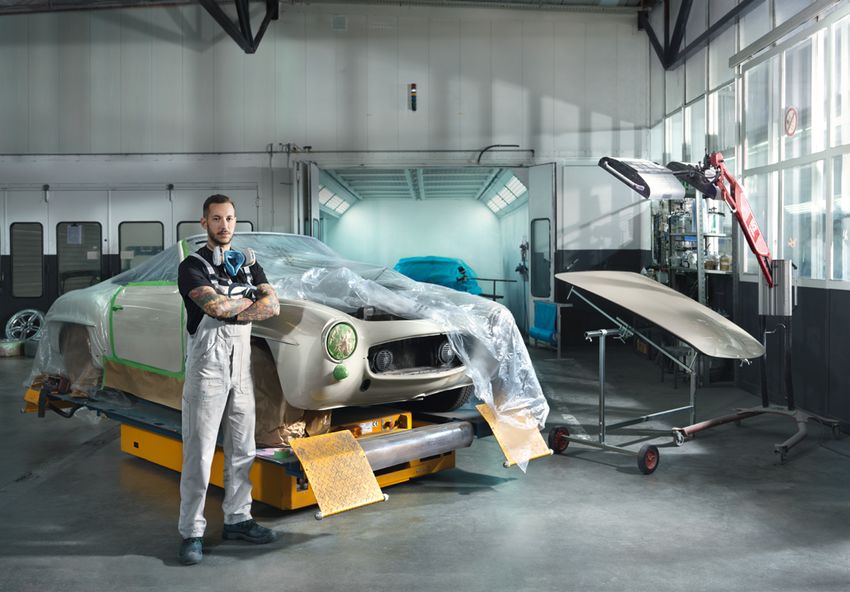
3

Dual vocational education:
How the future works
4   Content

                      Content

                                                           7              How dual vocational education works
    The role of the companies                         8

                                                           9    Trainees in dual vocation education programmes

    The role of vocational schools                    10

                                                           11          The role of the chambers of skilled crafts

    The practical side of dual vocation education     14

                                                           30                          Background information
    Explanatory videos on dual vocational education   32
5
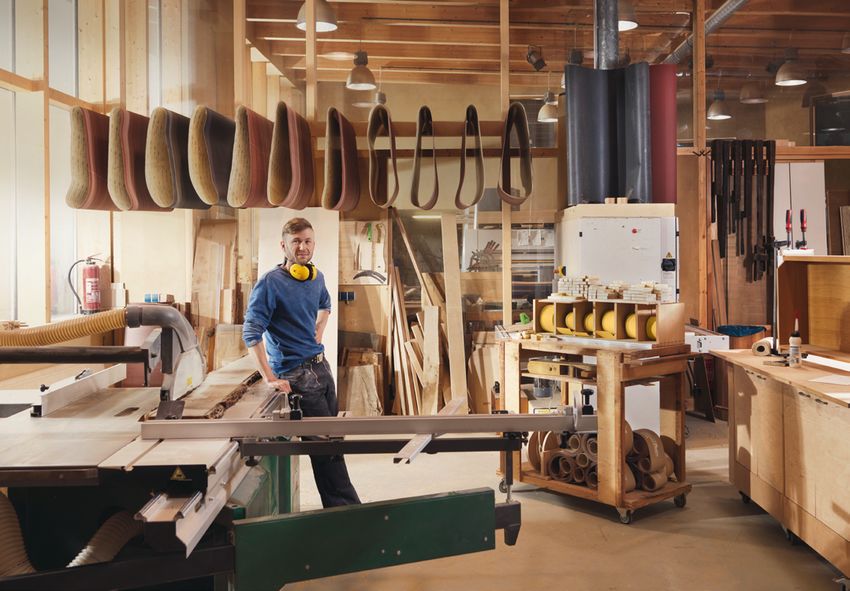
                                                     Martin, Tischler

Erstes Gehalt mit 29?
Ich hab was Besseres vor.
Finde den passenden Beruf für Dich auf handwerk.de
6
Handwerkskammer Frankfurt-Rhein-Main, KdÖR, Bockenheimer Landstraße 21, 60325 Frankfurt am Main

                                                                                                                                 Der Rhein Main Campus – das vielseitige
                                                                                                                                 Aus- und Weiterbildungsprogramm
                                                                                                                                 für das Handwerk.

                                                                                                                                 Bleiben Sie neugierig –
                                                                                                                                 es geht um Ihre Zukunft!

                                                                                                      www.rhein-main-campus.de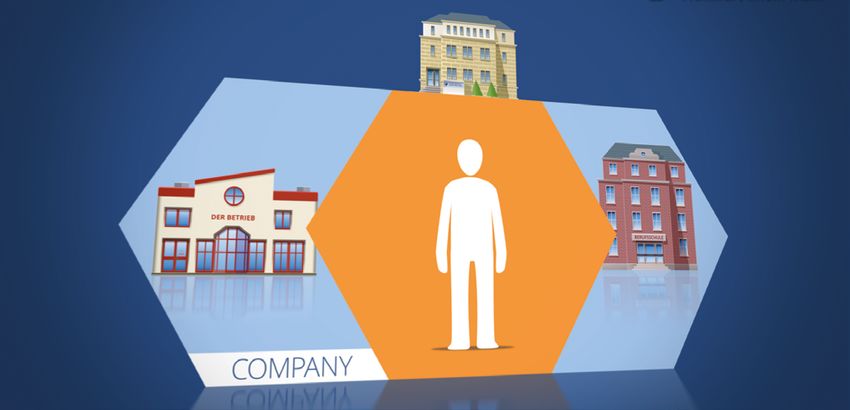
How dual vocational education works    7

              How dual vocational education works

Germany has a high-performing and versatile economic system. Dual vocational education forms the basis of this system.
On the one hand, it provides young people with opportunities for working and for rising through the ranks – and on the other
hand, it consistently provides a sufficiently large number of skilled workers. Dual vocational education is the foundation for later
earning a Master Craftsman’s certificate, which is equivalent to a Bachelor. The Master Craftsman’s certificate paves the way to
leadership positions, to being self-employed or even to attending university. Dual vocational education is possible for around 350
vocational professions, including approx. 130 in the skilled crafts sector.

“Dual” means that part of the training takes place at the companies and part of it at school.
It is the task of the company to provide the apprentice with practical expertise in terms of skills and abilities above all. The school
in turn gives the trainees theoretical expertise and a general education background. Then there are (for all skilled crafts companies
that offer apprenticeships) the chambers of skilled crafts: They coordinate, regulate and supervise the entire process. Further, they
set up industry-wide training centres for learning special methods, techniques and technologies. The tasks of all of the partners in
the dual education system are precisely regulated. The content and procedures are set.

With that, the companies obtain young employees who can directly play a productive part. The schools take on an important social
and educational function. The apprentices profit from a vocational education that is comprehensive, diversified and useful for
many later professions, remunerated from the start by the employer.

The strength of the economic system in Germany as a business location grows from the dual educational system, because the
companies not only invest in the education, but at the same time also in the future of their company and the future of their trade.
So it is a system with a model character, also for other countries and regions in Europe.

               Video: „Dual vocational training: That´s the future“

               https://www.youtube.com/watch?v=mtBgiosPyE4
8   How dual vocational education works

    The role of the companies

    There are almost a million skilled crafts companies across the nation, more than 33,000 in the region covered by the Chamber of
    Skilled Crafts Frankfurt-Rhein-Main alone. They are all under no obligation to train anyone – but every company that trains and
    thus invests in their own future must comply with the rules of the Crafts Code and the Vocational Training Act. For every occupa-
    tion requiring training there are detailed training regulations that stipulate the point at which the instructing Master has to teach
    which skills and knowledge. This must be ensured and documented by the employer.

    The apprentices receive compensation from the company. To earn this, the up-and-coming young workers labour right alongside
    everyone else at the company with the start of their apprenticeship, coming into contact with their later vocational field. The in-
    structors at the company use “learning by doing” to teach the trainees above all practice-oriented and professional abilities and
    information. Experience shows that, in doing so, social competences are also learned along the way in the two to three and a half
    years of vocational education. And nothing is more motivating than holding the result in one’s own hands at the end of a work
    unit. Companies are also interwoven with the vocational schools and they work closely together as partners.

    The dual education system has numerous advantages for the companies. The most important one: The companies select their
    apprentices themselves, train them to become qualified and with that they are also able to cover their own need for specialists in
    a targeted manner.

                   Video: „Dual vocational training: Entrepreneurs design the future“

                   https://www.youtube.com/watch?v=Zf830PGx4dg
How dual vocational education works    9

Trainees in dual vocation education programmes

The apprentices themselves are the focus of the dual education system.
They profit from dual vocational education in multiple ways. For example, they are provided with direct contact to genuine chal-
lenges of their later vocational field. They are included in operational procedures and company processes from the start. And expe-
riencing what develops from one’s own work is just as motivating as the remuneration received by the apprentices.

The fact that every apprenticeship is comprised of verifiable learning steps also has a positive impact. Every dual vocational
apprenticeship is based on a clear structure. This structure in turn pools:
      Specialised knowledge
      Craftsmanship
      General education
      The promoting of social competences and vocational experience

With that, the dual educational system ensures high-quality vocational training recognised everywhere. In turn, it is the perfect
entry to a in the skilled crafts sector. Apprentices can choose from 130 skilled crafts professions – that career, especially means nu-
merous chances for the individual with many opportunities for apprenticeships and continuing education. By means of the Master
Craftsman’s certificate, which is equivalent to a Bachelor degree, academic studies are even available to today’s apprentices, wi-
thout their Abitur (German university entrance qualification).

Dual vocational education is at the beginning of the path – and at the same time it ensures the future of the economic location.

               Video: „Dual vocational training: The future for young talents“

               https://www.youtube.com/watch?v=OafszSfxuTM
10   How dual vocational education works

     The role of the vocational schools

     Within the dual education system, the vocational schools take on an educational mandate. The duty of these state schools, ho-
     wever, differs from the teaching function of other schools: The focus is on teaching content that has a direct connection to the
     respective apprenticeship occupation. As part of specialised classes that are each related to one vocation, the apprentices learn
     the theoretical foundations of their occupation with technical or commercial specialized knowledge, averaging twelve class hours
     per week.
     What is also important here is that general education content is taught along the way. With this knowledge the schools also open
     the apprentices’ eyes to the bigger social and economic connections. Plus social competences are also practiced here as well.

     A schematic allocation of “company = practical side” and “school = theory” would fall short, because the two worlds are genuinely
     interwoven. Among other things, the feedback from the companies ensures that the respective current demands of working life
     are incorporated in the specialised classes.

     The complete training period ends with theoretical and practical exams – and a comprehensively trained young person who helps
     shape the future.

                    Video: „Dual vocational training: Vocational schools as partners“

                    https://www.youtube.com/watch?v=Wt2b31I_D8Q
How dual vocational education works 11
The role of the Chamber of Skilled Crafts Frankfurt-Rhein-Main
Within the course of dual vocational education in the skilled crafts sector, companies and schools work together in a coordinated
manner to teach the apprentices different content.
The chambers of skilled crafts are attributed with a special role in this national system, because they assume responsibility for
the coordination of the approx. 130 skilled crafts professions. They are the superordinate authority to whom the companies and
instructors, schools and teachers, and of course the trainees themselves, can turn to for answers to all of their questions about
vocational education.
With that, the chambers of skilled crafts have an umbrella function for dual vocational education. They are advisors, helpers, in-
termediaries, organisers – and equally competent and independent partners to all participants.
Video: „Dual vocational training: Services offered by the chambers of skilled crafts“
https://www.youtube.com/watch?v=kS5QAIlE9TQ»
12 How dual vocational education works
Voices from real life
«»
From my point of view, dual education is the
best kind of training: It combines theory and
practice. My international experience shows that
dual education is a successful export. Wherever
training is not regulated as strictly, there is sim-
ply less expertise available.
»
Richard Kling, Master Baker (Bäckermeister),
Head of the Bakers Guild Frankfurt Dual education is so important for
our company, because high-quality
«
training must consist of the com-
bination of theory and practice, so
«
as to meet the requirements of the
professionals we need. The theoreti-
cal side is necessary for new manu-
Dual education is so important, because facturing technologies in the skilled
you can directly apply a learned theory crafts sector, and the social skills of
in the practice. Hav-ing the practical ex- the trainees are developed in vocati-
perience makes the theory much easier onal school.
and faster to learn, so the transition from
Klaus und Florian Orio,
apprentice to journeyman was not a pro-
CEO, DIATEST
blem.
Sara Heydweiller, 23 years old,
pastry cook, Bakery Hofmann13 WWW.HWK-RHEIN-MAIN.DE Robert, Fahrzeuglackierer Nine to five eine Null sein? Ich hab was Besseres vor. Finde den passenden Beruf für Dich auf handwerk.de
14   The practical side of dual vocation education

                         We take on responsibility in
                         dual education and training

     The Chamber of Skilled Crafts Frankfurt-Rhein-Main makes an       approx. 25,200 of them in Hessen alone. In the area covered by
     active effort to engage young people into vocational educati-     the Chamber of Skilled Crafts Frankfurt-Rhein-Main, around
     on and training. Our mission statement states:                    10,000 young people completed dual education in 2015. More
                                                                       than 1,600 young skilled craftsmen decide to further their per-
     “We take on responsibility in society, support young people
                                                                       sonal education here each year. Of these, 900 alone acquire
     in the development of their professional future and support
                                                                       the title of Master Craftsman each year. The German Master
     initiatives on the efficient usage of resources”.
                                                                       Craftsman’s certificate ensures high-quality apprenticeships
     It provides orientation for the daily action of the Chamber’s     for young people and moreover guarantees work done by
     employees, and the many diverse activities and projects of the    quality skilled craftsmen. The Master Craftsman’s certificate
     Chamber are also shaped by this mission statement.                also enables young skilled craftsmen to study at an institution
                                                                       of higher education without having done their Abitur (Ger-
                                                                       man matriculation exam).

                                                                       Both a successfully completed dual vocational education and
     Making an apprenticeship possible for young people –
                                                                       the passing of the Master Craftsman’s exam form the basis
     society’s obligation
                                                                       for continued professional success. The dual system’s high
     The dual system of vocational education contributes to cover-     level of practical orientation ensures a smooth transition to
     ing the need for skilled workers in a manner tailored to suit     the professional life. The combination of working at a com-
     those needs in Germany. Across Germany just about 371,000         pany and attending vocational school enables a very practical
     young people were doing skilled crafts apprenticeships in 2015,   orientation of the education of apprentices, which is directed
The practical side of dual vocation education 15
at the actual demands of the industry and professional life. In order to offer young people career perspectives and to fill
The practical side also offers young people with learning dif- vacancies in apprenticeships, the German Federation of Skil-
ficulties a successful start to their careers. The small-business led Crafts has joined the Alliance for Initial and Continuing
structure in the skilled crafts sector ensures constant indivi- Training. This alliance strives to increase the significance and
dual supervision. And the skilled crafts sector educates far attractiveness of vocational education. An important objec-
more young people than necessary to cover its own needs. The tive, however, is a reduction in the number of young people
apprenticeship quota in the skilled crafts sector, as measured without a school diploma and the supporting of young peop-
by the total number of employed persons in skilled crafts in le interested in vocational education in achieving the earliest
Germany, at just about 8% is more than twice as high as in the possible vocational qualification.
economy as a whole. In this manner, the high level of training
by the skilled crafts sector makes a considerable contribution
to ensuring the existence of the next generation of workers in
the overall German economy. Hessian Vocational Training Pact
As a member of the German Federation of Skilled Crafts, the
Chamber of Skilled Crafts Frankfurt-Rhein-Main additionally
participates in the vocational pact of the State of Hessen. The
National Alliance for Initial and Continuing Training
conjoint “Coalition for Vocational Education for 2015-2019” is
The skilled crafts sector is aware of its social responsibili- supported by the industry, the unions, the municipal organi-
ty and makes an effort to place every young person seeking sations, the Hessen regional directorate of the Federal Emplo-
an apprenticeship. Due to a rising number of young people yment Office, and the Hessen State government. One of the
studying at institutions of higher education and a declining objectives here is increasing the attractiveness of vocational
number of school graduates, it is becoming harder and har- education and enabling dual education for young people. For
der for skilled crafts establishments to find apprentices for this, the Chamber of Skilled Crafts Frankfurt-Rhein-Main star-
their vacant apprenticeship positions. At the same time, many ted a number of initiatives to place young people in apprenti-
young people don’t find an apprenticeship. In 2015 alone ceships. Plus there has been an abundance of successful mea-
around 27,000 vacant apprenticeship positions were counted. sures being implemented for years already.16 The practical side of dual vocation education
European Alliance for Apprenticeships
The successful dual vocational education is international-
ly acknowledged. It is an extremely effective weapon in the Click here to go the European Alliance for Apprenticeships –
battle against unemployment among young people. Having the pledge of the Chamber of Skilled Crafts Frankfurt-Rhein-Main
a qualification is the central prerequisite to ensure an approp-
riate income and the best protection against unemployment. http://ec.europa.eu/social/main.jsp?catId=1149&
This has been acknowledged in the meantime by the Euro- langId=en&idPledge=133
pean Commission, which also wants to strengthen the dual
vocational education system in Europe. To do so, the Commis-
sion established the European Alliance for Apprenticeships
on July 7, 2013. The Alliance for Apprenticeships is meant to
combine the efforts of the EU member countries, social part-
ners, the industry and other stakeholders in the dual educa-
tion sector. The goal is to establish high-quality vocational
educational systems. The Chamber of Skilled Crafts Frankfurt-
Rhein-Main was the second German chamber of skilled crafts
to join the European Alliance for Apprenticeships in 2015. In a
public declaration, it stated its commitment to disseminating
professional information on the dual education system on Eu-
ropean and international levels, and to improving the image
of dual education. Moreover, interested stakeholders are ad-
vised in the execution and implementation of dual education.
Photo: AMHThe practical side of dual vocation education 17
Selection of activities of the Chamber of Skilled Crafts Frankfurt-Rhein-Main
as part of the apprenticeship alliances/ the image communication
Educational guidance
Brief information:
The educational advisors of the Chamber of Skilled Crafts Frankfurt-Rhein-Main inform and advise on all aspects of vocational training
and retraining, and provide support in case of problems and conflict situations.
Objective:
To provide individual guidance and advice for young people, parents, teachers and businesses on career paths in the skilled crafts sector
To provide individual information all around the topic of dual vocational education
To provide support in the transition between school and profession
Coordination of ‘Schools - Skilled Crafts 2.0’ (Schule-Handwerk 2.0)
Brief information:
Shortly before completing their schooling, many young people have no real idea about their career opportunities, particularly the op-
portunities to work in the skilled crafts sector. This is where the project ‘Schools – Skilled Crafts 2.0’ comes in. As part of the cooperation
with schools, the Chamber offers schools support in the career orientation of the pupils. For example, combined informational events,
company tours and internships are organised.
Objective:
To support and promote the career orientation of pupils
To optimise the transition of pupils to vocational education and their profession
To ensure the next generation of skilled workers and management in the skilled crafts sector18 The practical side of dual vocation education
‘Apprenticeship Radar’ (Lehrstellenradar)
Brief information:
On: www.lehrstellen-radar.de, interested young people and parents can obtain information on careers requiring vocational training
and take a look at vacant apprenticeships/internships. ‘Apprenticeship Radar’ is available as an app for Android and iOS. The skilled
crafts companies and the chambers of skilled crafts came together to offer this service: www.lehrstellen-radar.de.
Objective:
To inform young people on possible career paths in the skilled crafts sector
To provide information on vacant apprenticeship positions in the region
The German skilled craft sector’s national image campaign
Brief information:
Fewer and fewer people have a correct and specific idea of the everyday work of a company in the skilled crafts sector. A national image
campaign was initiated in order to change this. It is essentially about raising the positive image of this sector of industry and increa-
singly addressing young people, in order to boost the attractiveness of skilled crafts training. The image campaign has already caused
a clear improvement in the emotional and positive perception in the broad population.
Objective:
To increase the visibility of skilled crafts among the general public
To portray the diversity of careers in the skilled crafts sector
To increase the attractiveness of skilled crafts
To win over young people to the dual education system
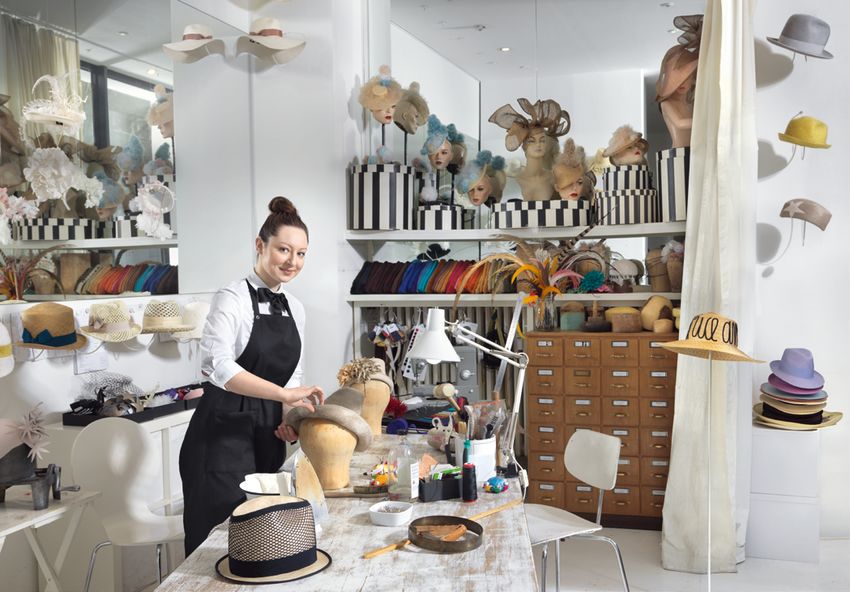
To gain the next generation of people who will donate their time in honorary positions in the skilled crafts sector19 WWW.HWK-RHEIN-MAIN.DE Anna, Modistin Träume unter Akten begraben? Ich hab was Besseres vor. Finde den passenden Beruf für Dich auf handwerk.de
20   The practical side of dual vocation education

          Working and learning in Europe – Mobility advice from the industry in Hessen

          Brief information:
          Vocational training faces new challenges from the increasing internationalisation of the economy. In addition to professional and per-
          sonal competence, acquiring foreign language skills and intercultural experiences are becoming more and more important during and
          after vocational training. Therefore, the Hessian economy’s mobility advising supports vocational trainees and companies in placing
          young people in internships abroad or also foreign trainees. Moreover, courses in intercultural competence are offered at vocational
          schools.

          Objective:
             To promote intercultural competence with stays abroad and exchanges in foreign countries in Europe (European agreement)
             To increase the chances for trainees in the labour market
             To increase the attractiveness of companies
             To make a contribution to European collaboration

          Financed by funds from the Hessian Ministry of Economics, Energy, Transport and Regional Development and the European Union’s European Social Fund

     Beyond the projects that have been described, the Chamber of Skilled Crafts Frankfurt-Rhein-Main supports a multitude of additi-
     onal projects to place young people in dual education vacancies. For example, there are cooperations with additional regional and
     local organisations, plus informational events, vocational training fairs and open days are also held regularly.
The practical side of dual vocation education 21
Providing a safe place, taking on social responsibility for refugees –
the skilled crafts sector in the era of the refugee crisis
Hundreds of thousands of people have been given asylum in ment of measures on the current refugee situation. The goal
German in recent weeks and months. In 2016 as well, hundreds of the “Labour Market Working Group” is to improve the inte-
of thousands more will likely come to Germany seeking safe- gration of refugees in the labour market.
ty from war, displacement and political persecution. Many of
these people will stay here for a longer time or forever. In this
situation it is also a social responsibility of the skilled crafts
sector to make an active contribution to solving the current
crisis situation. Officially recognised victims of persecution
Project: PAuL – Work and quality of life perspectives
who remain in Germany must be placed in schools, trainee po-
sitions and employment as quickly as possible. That is the best For this purpose, the Chamber of Skilled Crafts Frankfurt-
way to ensure lasting integration and a quick end to receiving Rhein-Main has started a number of projects. The goal of the
public assistance. In addition to the diverse initiatives and the project “PAuL - work and quality of life perspectives” of the
overwhelming support of the regional skilled crafts compa- Chamber and its project partner, the District of Bergstraße
nies, the Chamber of Skilled Crafts Frankfurt-Rhein-Main also (Landkreis Bergstraße), is the integration of refugees in the la-
tries to do justice to its social responsibility. The President of bour market. The central element here is learning the German
the Chamber of Skilled Crafts Frankfurt-Rhein-Main and the language. The participants of project PAuL are taken care of by
Hessian Skilled Crafts Association, Bernd Ehinger, also took trainers, social educators and teaching staff in the vocational
the chair of the “Labour Market Working Group” as part of the training centre of the Chamber of Skilled Crafts in Bensheim
Hessian convention on asylum (Hessischer Asylkonvent). Wit- five days a week from 8 am to 3 pm. The programme focuses
hin the convention on asylum, more than fifty representatives on four areas: getting to know everyday work life, learning
from the political arena and our society discuss the develop- practical skilled crafts abilities, company processes and exerci-22 The practical side of dual vocation education
sing language competence relevant for everyday life. The pro- fessional perspectives in the Rhein-Main region. The different
fessional competence is primarily taught in the areas of colour capabilities of the partner organisations have been combined
and interior design, construction, wood and metal. for this purpose. The Wilhelm-Merton-Schule in Frankfurt tea-
ches pilot groups of refugees in what are called ‘InteA-Klassen’
The project PAuL takes place in cooperation with the Bergstraße District and the Hessian Minis-
try for Social Affairs and Integration, and is financed by the European Social Fund.
and helps them acquire the knowledge necessary to obtain a
German Hauptschule degree. The concept of the InteA-Klassen
is specifically directed at refugee children, immigrants and eth-
nic German repatriates with a starting age of 16 or older. The fo-
cus of the classes is on language instruction and is possible for
up to two years. Following this, the Chamber of Skilled Crafts
Frankfurt-Rhein-Main provides the young people with contacts
to companies tailored to them. During the entire time period
the young people are accompanied socially and educationally
by cooperation partner “Lernportal”. Among other things, Lern-
portal’s multi-ethnic staff have pertinent experience in coping
with trauma. The goal of the project is the transition to regular
vocational education in a skilled crafts enterprise or repatriati-
on to their country of origin with job-related assistance on-site.
Financed by funds from the German Federal Ministry
for Economic Cooperation and Development
Projekt: Perspektive Handwerk
A project funded by the German Federal Ministry for Economic
Cooperation and Development (BMZ) and carried out by the
Chamber of Skilled Crafts Frankfurt-Rhein-Main in cooperation
with the Lernportal association and the Wilhelm-Merton-Schu-
le Frankfurt endeavours to offer young refugees longterm pro-The practical side of dual vocation education 23 Offering Spanish young people career perspectives – the Spain Project of the Chamber of Skilled Crafts Frankfurt-Rhein-Main In the course of the economic and financial crisis, unemploy- ment among young people in Spain reached a level of more than 50%. In order to offer young Spaniards perspectives, in November 2012 the State of Hessen (DE) and the Autonomous Community of Madrid (ES) signed a cooperation agreement in the area of the labour and vocational training market. As part of the cooperation agreement, the Chamber of Skilled Crafts Frankfurt-Rhein-Main makes it possible for young Spaniards to participate in dual vocational education in the professi- ons of plant mechanic, electronics technician and roofer. The practical dual apprenticeship training course provides the young people with a multitude of career perspectives both in Spain and Germany. After 3 or 3.5 years, they will be awarded a state-approved training qualification, the so-called “Gesel- lenbrief“. The young Spaniards will receive constant professi- onal and social support from staff at the Chamber of Skilled Crafts Frankfurt-Rhein-Main during the project. The goal is the best-possible integration of the young people into com- panies and society. After participating in informational events, application inter- views and German classes in Madrid and a work placement in Frankfurt with their future employers in April 2013, 43 young Spaniards came to Frankfurt in late August 2013. The first two Photo: © panthermedia.net/Detlef weeks served as orientation and for handling the most im-
24   The practical side of dual vocation education

     portant formalities. On September 1, 2013 the apprenticeship
     training began for all participants.

     During their entire apprenticeship-training course, German                                Best practice on the EU Commission’s Website on Integration
     and Spanish trainees complete a rotation of practical phases
     at the company, industry-wide training courses and blocks of                              https://ec.europa.eu/migrant-integration/intpract/collaborati-
     vocational school sessions together. The Spanish trainees at-                             ve-training-for-young-spaniards-in-the-crafts-trade-in-hesse
     tend evening German courses twice a week. Staff constantly
     provide the young people with social and educational support
     and offer assistance in case of any problems. The project is lis-
     ted as a best practice on the European Commission’s Europe-
     an Website on Integration.

     The project is being financed by funds provided by the Hessian
     Ministry of Economics, Transport and Regional Development
     and the European Social Fund. Funding of the language cour-
     ses, financial support to ensure the living expenses are cover-
     ed in Germany and two flights a year to their home country
     come from the Mobi-Pro-EU programme run by the German
     Federal Ministry of Labour and Social Affairs.

     Financed from funds provided by the Hessian Ministry of Economics, Transport and Regio-
     nal Development and the European Union’s European Social Fund.
The practical side of dual vocation education 25
Taking on global responsibility –
development cooperation in the skilled crafts sector
In recent years, a global awareness has developed of the fact such as the Kreditanstalt für Wiederaufbau (KfW Group) or
that vocational training is a central key to fighting poverty the Gesellschaft für Internationale Zusammenarbeit (German
and safeguarding financial and social independence. Thus Agency for International Cooperation).
vocational training is attributed with increasing importance
In addition to advising skilled crafts enterprises, the Chamber
in the international development cooperation community.
of Skilled Crafts Frankfurt-Rhein-Main is active in diverse pro-
For many years now, the Chamber of Skilled Crafts Frank-
jects in international cooperation. The Chamber is currently
furt-Rhein-Main has already been supporting other European
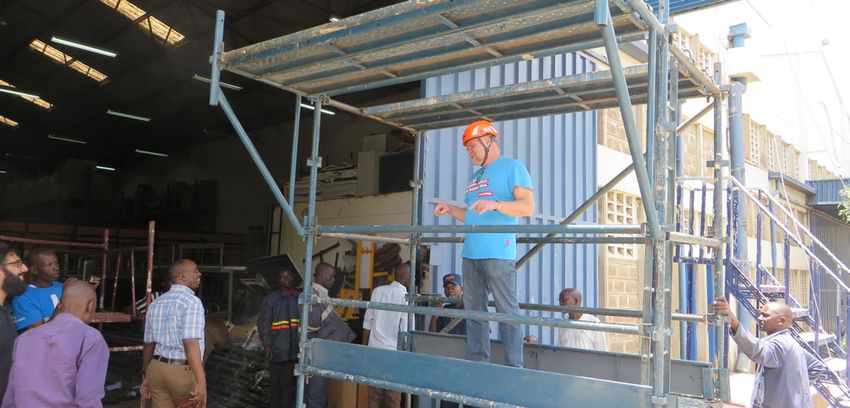
involved in projects in Morocco, Zambia and Kenya.
member countries and developing countries in creating dual
education structures.
The direct contact at the Chamber for the companies is the
Marocco
‘Development Cooperation Scout’ (EZ-Scout). He is the di-
rect contact for all projects of development cooperation with The Chamber of Skilled Crafts in Fès-Boulemane, Morocco has
emerging markets. As the liaison of the German Federal Mi- already been working successfully with the Chamber of Skil-
nistry for Economic Cooperation and Development (BMZ), he led Crafts Frankfurt-Rhein-Main since 1986. The focus of the
advises regional skilled crafts companies on site on all issues vocational training partnership is on training the trainers and
having to do with the topic of development work. As an ad- conducting continuing education for skilled craftsmen in the
visor, he accompanies the enterprises from concept develop- areas of automobile technology, energy management and so-
ment to application submission to the implementation of the lar technology. Together with its project partners, the Cham-
investment project. Further, he also provides guidance on the ber of Skilled Crafts Frankfurt-Rhein-Main implemented im-
conditions of aid programmes and access to international and pact monitoring and evaluation systems that regularly check
local networks. In doing so, he is in direct contact with the the status and course of the vocational training projects, en-
BMZ and other German development cooperation institutes, suring the continued success of the partnership.26 The practical side of dual vocation education
Zambia
Since 2012 the Chamber of Skilled Crafts Frankfurt-Rhein-
Main has continuously maintained a chamber and association
partnership project with the Zambia Chamber of Commerce
and Industry (ZACCI). Together the private sector is to be sus-
tainably strengthened and fragmentation counteracted. The
improvement to the business and investment climate is the
focus here. The Chamber of Skilled Crafts Frankfurt-Rhein-
Main supports the Zambian chamber in developing internal/
external communications strategies and acquiring new mem-
bers. For example, the chamber’s own “ZACCI Journal” was
revised and with it the financial situation of the chamber was
improved. At the same time, members are provided with rele-
vant information to a stronger degree than before.
Kenya
Kenya possesses great economic potential, which could not
yet be fully utilised due to a lack of specialists. Therefore the
Chamber of Skilled Crafts Frankfurt-Rhein-Main, together
with the Chamber of Commerce Gießen-Friedberg, has main-
tained a vocational training partnership with Kenyan associa-
tions and vocational training facilities since 2015. The partners
include the Kenya Private Sector Alliance (KEPSA), the Kenya
Association of Manufacturers (KAM) and the Kenya Associati-
on of Technical Training Institutions (KATTI). The goal is to es-
tablish vocational training in pilot projects in selected trades Photo: HWK
using the dual system as a role model. As part of the project,The practical side of dual vocation education 27
first a knowledge management system is to be created in the form of a database with already existing providers and possibilities
of vocational training in Kenya. Moreover, curricula are to be developed, trainers trained and vocational training carried out as an
example for selected occupational profiles.
In addition to the projects already mentioned, in November 2012 the Chamber of Skilled Crafts Frankfurt-Rhein-Main signed a
mutual cooperation contract together with the State of Hessen (DE) and the Autonomous Region of Madrid (ES). The goal is the
improved cooperation in the employment and training market. The Chamber of Skilled Crafts Frankfurt-Rhein-Main, moreover,
joined the European Alliance for Apprenticeships.
Photo: HWK28 The practical side of dual vocation education
School on Saturdays for gifted skilled craftsmen –
encouraging committed young skilled craftsmen
In 1816 the citizens of Frankfurt founded the Polytechni- reness of current developments in skilled crafts. At the same
sche Gesellschaft Foundation. In addition to businesspeop- time, what it means to take responsibility for yourself, for
le, grammar school teachers, architects and booksellers, the your employees, for the industry and thus also for society is
founding members also included skilled craftsmen. The goal communicated to them. The participants are also encouraged
of advancing education, technology, science and trade in the to obtain their Master Craftsman’s certificate and later build
city was what brought them together. 26-year-old educator up and run their own company. The Saturday students com-
and mathematician Adolph Diesterweg was among the foun- plete an intense and compact seminar programme between
ding members. The idea of a free “Sunday school for skilled April and December. The Saturday school is comprised of six
craftsmen” is thanks to him. The Sunday school was to sup- one- to two-day events. In addition to the seminars, the young
plement the skilled crafts apprenticeship, in order to give the skilled craftsmen have personal talks with successful people
many journeymen immigrating to Frankfurt a broad general from the skilled crafts sector. These expert discussions offer
education “as a gift from the free city”. 190 years later, the the opportunity to exchange ideas and help them profit from
Polytechnische Gesellschaft Foundation and the Chamber of the many years of experience of the skilled crafts mentors.
Skilled Crafts Frankfurt-Rhein-Main brought the basic idea of
The participants of the “Saturday school for gifted skilled
working together across trades back to life and adjusted it to
craftsmen” are selected by the Chamber of Skilled Crafts
the demands placed on an innovative, modern skilled crafts
Frankfurt-Rhein-Main, which is also responsible for the coor-
sector.
dination of the project. The costs for the programme are borne
The Saturday school for gifted craftsmen is directed at the by the Polytechnische Gesellschaft Foundation.
best journeypersons in their final year of training from all tra-
des from the past three years. Each year, ten to fifteen com-
mitted young people who live or work in Frankfurt am Main
are invited into the programme as scholarship holders. The
intention of the Saturday school is to introduce the skilled
craftsmen to their leadership abilities. The scholarship holders
learn fundamental key competences and increase their awa-The practical side of dual vocation education 29
yourPUSH – from the lecture hall to the skilled crafts sector
Finding suitable skilled workers is one of the greatest chal- YourPUSH is directed at students who are questioning their
lenges for small and medium-sized enterprises in the skilled studies or have already interrupted their studies and want to
crafts sector. Many students of institutions of higher learning take a new career path. The initiative thus addresses capab-
already question their choice after their first semesters, won- le and enthusiastic young people whose qualifications with
dering whether studying is the right thing for them and see- their Abitur (university qualification exam) can be prove to be
king alternatives. a gain for the skilled crafts companies.
To support companies in finding the right young people for The companies also get something out of it: Students seeking
them and to offer young talented people an alternative to stu- reorientation have high potential to take over future manage-
dying at an institution of higher learning in one of the more ment tasks at the companies and to further qualify themsel-
than 130 skilled crafts professions, the Chamber of Skilled ves for example by becoming a Master Craftsman.
Crafts Frankfurt-Rhein-Main founded the project your-PUSH.
The advisors of the yourPUSH teams inform university stu-
As part of the programme “JOBSTARTER plus – Training for the
dents on the apprenticeship and further education possibili-
Future”, the project is being funded by the Federal Ministry of
ties in the skilled crafts sector. At the same time, skilled crafts
Education and Research and the European Social Fund.
companies can turn to the yourPUSH team when they are
looking for suitable applicants for vacant apprenticeship posi-
tions. Thus YourPUSH communicates between companies and
potential up-and-coming young people and supports both si-
des in apprenticeship and career planning.
The project is being funded by the national initiative “JOBSTARTER plus – Training for the Future” of the
Federal Ministry of Education and Research.
Click here for the yourPUSH website:
www.yourpush.de30 Background information
Background information
Chamber of Skilled Crafts Frankfurt-Rhein-Main The German Confederation of Skilled Crafts
With around 33,000 member companies, the Chamber of Skil- The German Confederation of Skilled Crafts (ZDH) represents
led Crafts Frankfurt-Rhein-Main is one of the largest chambers the interest of more than 1 million skilled crafts companies
of skilled crafts and one of the German economy’s largest in- in Germany with over 5 million employees, around 380,000
stitutions of self-administration. In the region covered by the trainees and annual turnover of 533 billion Euro. The ZDH
Chamber, each year around 5,000 companies train approx. works on behalf of dual vocational education nationally and
9,000 young people. As the operator of three training centres, across Europe.
the Chamber of Skilled Crafts is an integral component of dual
vocational education. Further, the Chamber of Skilled Crafts
Frankfurt-Rhein-Main offers extensive consultation possibili-
ties for member companies and apprentices.
www.hwk-rhein-main.de http://www.zdh.de/themen/bildung.htmlBackground information 31
The Federal Institute for Vocational Education and Training – European Centre for the Development of Vocational Training
GOVET (CEDEFOP)
The Federal Institute for Vocational Education and Training The European Centre for the Development of Vocational Trai-
(BIBB) is an institution for research and development, service ning (CEDEFOP) is an agency of the European Union. CEDEFOP
and consulting in the area of vocational education. GOVET supports the creation of European strategies on vocational
(German Office for International Cooperation in Vocational education and contributes to their implementation. The agen-
Education and Training) is the central point of contact for cy provides assistance to the European Commission, EU mem-
international vocational education cooperation and works ber countries and social partners in the development of per-
on behalf of the German Federal government in several core tinent European political concepts for vocational education.
areas. GOVET serves as the central contact for national and
international stakeholders in working together for vocational
education. Requests are either directly answered by GOVET or
GOVET places them with the responsible party.
https://www.bibb.de/en/govet_index.php http://www.cedefop.europa.eu/en
WWW.HANDWERK.DE WWW.HWK-RHEIN-MAIN.DE
Leidenschaft ist das beste Werkzeug.32 Explanatory videos on dual vocational education
Explanatory videos
on dual vocational education
„Dual vocational training: That’s the future“
Introductory video on the dual education system
https://www.youtube.com/watch?v=mtBgiosPyE4
„Dual vocational training:
Entrepreneurs design the future“
Highlights the role of companies in dual education
https://www.youtube.com/watch?v=Zf830PGx4dg
Graphics: © MT Mediendesign Michael TewieleExplanatory videos on dual vocational education 33
„Dual vocational training: The future for young talents“
Highlights the role of trainees in dual education
https://www.youtube.com/watch?v=OafszSfxuTM
„Dual vocational training: Vocational schools as partners“
Highlights the role of vocational schools in dual education
https://www.youtube.com/watch?v=Wt2b31I_D8Q
„Dual vocational training:
Services offered by the chambers of skilled crafts“
Highlights the role of the chamber of skilled crafts
in dual education
https://www.youtube.com/watch?v=kS5QAIlE9TQ
Graphics: © MT Mediendesign Michael Tewiele34
WWW.HANDWERK.DE WWW.HWK-RHEIN-MAIN.DE
Die Zukunft
ist unsere
Baustelle.35
36

     Publisher:

     Handwerkskammer Frankfurt-Rhein-Main
     Bockenheimer Landstraße 21
     60325 Frankfurt am Main
     Phone: +49 (69) 97 17 20
     Telefax: +49 (69) 97 17 21 99
     Email: info@hwk-rhein-main.de
     Internet: www.hwk-rhein-main.de
     Editorial: Oliver Dehn, Florian Schöll

     Registration Number in the Transparency Register of the European Union: 67816104631-57
You can also read


