Building back equal Girls back to school guide - Unicef
←
→
Page content transcription
If your browser does not render page correctly, please read the page content below
United Nations
                      Educational, Scientific and
                          Cultural Organization

                      Building back equal
                      Girls back to school guide
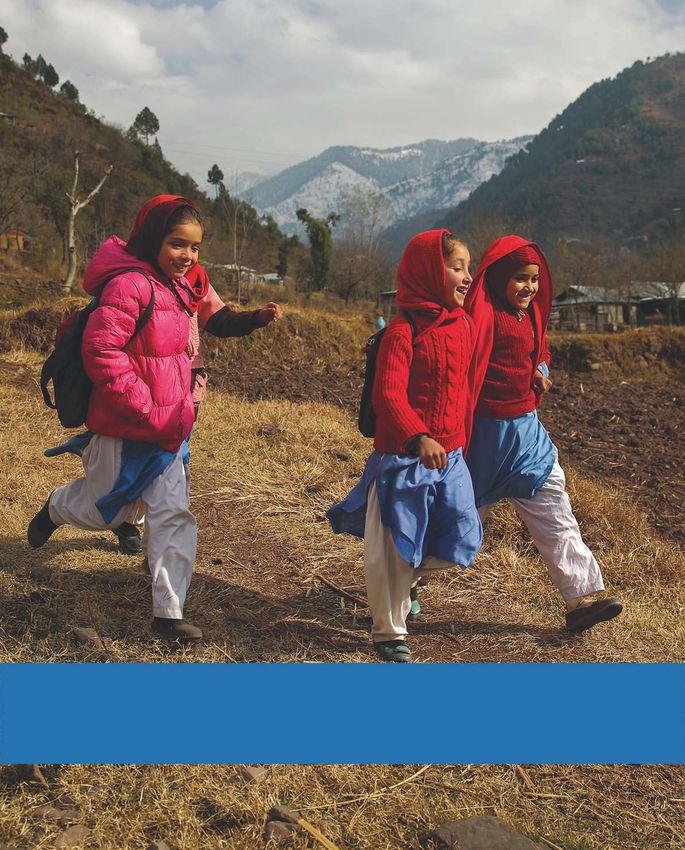
© UNESCO/Asad Zaidi
© UNICEF/Panjwani

                    Introduction
                    The COVID-19 pandemic has caused the largest disruption of education in history. Most
                    governments around the world have temporarily closed schools and other learning spaces in
                    recent months in an attempt to contain the spread of the virus. At the peak of the pandemic in
                    April 2020, these nationwide closures impacted more than 1.5 billion students, or over 90% of the
                    world’s student population, from pre-primary to higher education in 200 countries.1

                    This unprecedented disruption to education has the potential to roll back substantial gains made
                    on girls’ education in recent decades, with broader immediate and longer-term effects on the
                    achievement of the Sustainable Development Goals, including those related to poverty reduction,
                    health and well-being, inclusive quality education and gender equality. The most marginalised,
                    including girls with disabilities, those in conflict-affected contexts, remote and rural communities
                    and those in the poorest quintile, are expected to be most affected by COVID-related school

                                                                                                                 1.5
                    closures, facing additional constraints on their ability to fulfil their
                    right to education, health and protection, among other rights.

                    As some schools and education institutions around the world
                    have reopened and others are preparing to do so, governments,
                    education sector officials, community leaders, teachers and school
                    staff should see this as an opportunity to build back equal, through
                    gender-responsive measures that transform education systems,
                    prioritise resilience and address the key bottlenecks and barriers to
                    girls’ education.                                                                           billion learners have seen their
                                                                                                               education interrupted due to the
                                                                                                                      COVID-19 pandemic.
                    1. UNESCO. 2020. Global Monitoring of School Closures Caused by COVID-19. Paris, UNESCO.

                                                                                                                  Building back equal: Girls back to school guide | 2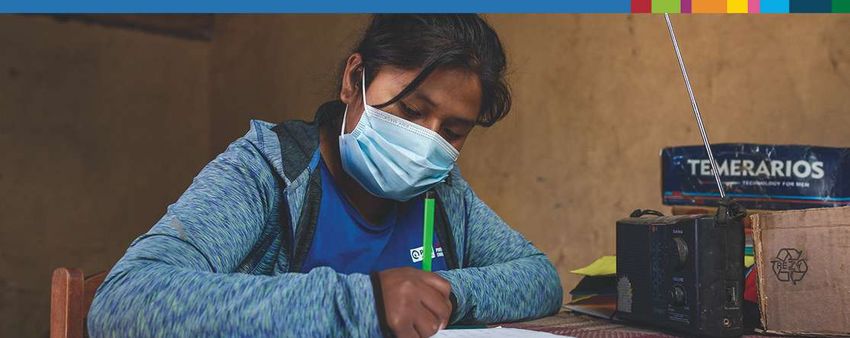
Why is a guide focused
on girls’ return to school needed?
                    These types of crises are the product of a patriarchal
                    structure that place girls at the bottom of the pyramid. Our
         experience from the Ebola crisis says that if we do not think about
         girls now, we will suffer serious consequences. We could lose a whole
         generation. For girls, every day counts. – Chernor Bah, Co-Founder and
         Chief Executive Officer, Purposeful, Sierra Leone

Before COVID-19, we were already a long way from gender equality in and through education.

While global figures showing gender parity in education are often cited as a great success story for
gender equality, these figures mask large regional, national and local disparities. On average, just
two in three countries have achieved gender parity in primary, one in two in lower secondary, and
one in four in upper secondary education enrolment.2

Over 115 countries still allow child marriage to take place, although it is a violation of girls’ right to
education, freedom from violence, among other rights.3

Over 620 million children worldwide lack basic sanitation services,
and 900 million lack basic hygiene services at their school, often
putting a sharp end to girls’ education during menstruation.4
                                                                                                                  Back to school
                                                                                                                    resources
Evidence from past crises shows that girls are particularly
                                                                                                             This guide builds on the UN Framework
vulnerable in the face of prolonged school closures. School
                                                                                                             for Reopening Schools and the Safe
closures have been found to exacerbate girls’ and women’s                                                    Back to School Practitioners Guide,
                                                                                             5
unpaid care work, limiting the time available to learn at home.                                              and other guidance developed to help
The gender digital divide and girls’ reduced access to information                                           governments and school communities
                                                                                                             to ‘build back better’ after COVID-19.
and communication technology (ICT), even in contexts with high
                                                                                                             It goes further, calling for action to
mobile and internet coverage, also translates into reduced learning
                                                                                                             ‘build back equal’ – promoting the
opportunities during school closures.6 COVID-related quarantines
                                                                                                             development of gender-responsive
have placed many girls at heightened exposure to gender-based                                                education systems and targeted
             7                                            8
violence including sexual exploitation and early and unintended                                              actions to ensure girls’ continuity of
                    9
pregnancies, while also removing access to vital services for                                                learning and return to school when
                                                                                                             these reopen.
protection, nutrition, health and well-being.

2.   UNESCO Institute for Statistics (UIS). 2020. UNESCO Institute for Statistics Database. Montreal, UIS.
3.   Pew Research Center. 2016. Marriage Laws around the World. Washington, D.C, Pew Research Center.
4.   UNICEF and WHO. 2018. Drinking Water, Sanitation and Hygiene in Schools: Global Baseline Report 2018. New York, UNICEF and Geneva, WHO.
5.   UNFPA. 2020. State of the World Population Report 2020. New York, UNFPA.
6.   UNESCO. 2020. Gender Dimensions of School Closures. Paris, UNESCO.
7.   World Vision. 2020. COVID-19 Aftershocks: A Perfect Storm. World Vision.
8.   UNFPA. 2020. State of the World Population Report 2020. New York, UNFPA.
9.   Plan International. 2014. Young Lives on Lockdown. London, Plan International.

                                                                                                                 Building back equal: Girls back to school guide | 3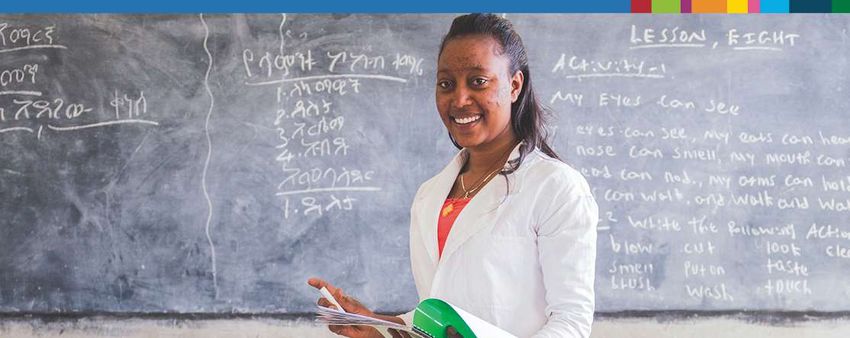
It is difficult to predict the long-term impacts of COVID-19 on learning
loss and drop-out rates, but increases in both are predicted at all                                                                    Key terms
levels of education. Estimates of learning loss suggest that 25 per cent                                                   Gender
                                                                                                                           The socially constructed roles and
more students may fall below a baseline level of proficiency needed
                                                                                                                           relationships, personality traits,
to participate effectively and productively in society, and in future
                                                                                                                           attitudes, behaviours, values,
learning opportunities.10 In addition to learning losses, UNESCO has                                                       relative power and influence that
estimated that globally, 23.8 million children, adolescents and youth                                                      society ascribes to the two sexes
from pre-primary to tertiary may drop out or not have access to school                                                     on a differential basis. Gender is
                                                                                                                           relational and refers not simply to
next year due to the pandemic’s economic impact alone, including
                                                                                                                           women or men, or girls and boys, but
11.2 million girls and young women.11 Other estimates have put this
                                                                                                                           to the relationship between them.
figure higher, up to 20 million girls and young women in low- and
                                                                                                                           Gender-responsive
low-middle income countries.12 While the numbers are not yet certain,                                                      Policies and programmes which fulfil
it is clear that school closures due to COVID-19 will have devastating                                                     two basic criteria: 1) gender norms,
impacts on girls’ futures, as well as intergenerational impacts on health                                                  roles, and relations are considered
                                                                                                                           and 2) measures are taken to actively
and nutrition, on economic growth, and many other outcomes.13
                                                                                                                           reduce the harmful effects of
                                                                                                                           gender norms, roles, and relations –
Ensuring girls’ continuity of learning and return to school is needed to
                                                                                                                           including gender inequality.
protect gains in education made over the last two decades, where the
number of out of school girls has decreased by 79 million. 14 The return
to school provides a unique opportunity to ensure that the 130 million girls who were already out
of school before the pandemic are included within all school reopening plans, and that plans to
ensure continuity of learning and support for all students, including the most marginalised, are put
in place for future crises and disruptions to education.15

Who is the guide for?
This guide has been developed for policymakers and practitioners in Ministries of Education,
including those directly involved in the planning and delivery of formal and non-formal education,
from pre-primary through higher education. Local Education Groups (LEGs), education and refugee
education clusters and education in emergency working groups involved in COVID response
planning may also find this of value, as would professional associations, youth-led and youth-serving
organizations, girls and women’s rights groups, parents’ organizations, civil society organizations,
development and private sector partners supporting all learners’ right to education. Finally, the
guide may also be valuable for national stakeholders in health, adolescents and youth, child
protection, safe schools, and the water, sanitation and hygiene (WASH) sectors who cooperate with
the education sector for broader development outcomes.

10. World Bank. 2020. Simulating the Potential Impacts of the COVID-19 School Closures on Schooling and Learning Outcomes: A set of Global Estimates.
    Washington, D.C., World Bank.
11. United Nations. 2020. Education During COVID-19 and Beyond. New York, UN.
12. It is difficult to predict the impact of COVID-19 on girls’ return to school. The Malala Fund has estimated that 20 million more secondary-school age girls in
    low- and low-middle income countries could be out of school. The World Bank has estimated that 7 million primary and secondary students are at risk of
    dropping out, with an increase in the out-of-school population by 2%. Save the Children has estimated that between 7 and 9.7 million children are at risk
    of dropping out of school due to rising levels of child poverty.
13. Wodon, Q., C. Montenegro, H. Nguyen, and A. Onagoruwa. 2018. Missed Opportunities: The High Cost of Not Educating Girls. Washington, D.C., World
    Bank.
14. UNICEF 2020. A New Era for Girls. New York, UNICEF.
15. UNESCO. 2016. Leaving No One Behind. Paris, UNESCO.

                                                                                                                           Building back equal: Girls back to school guide | 4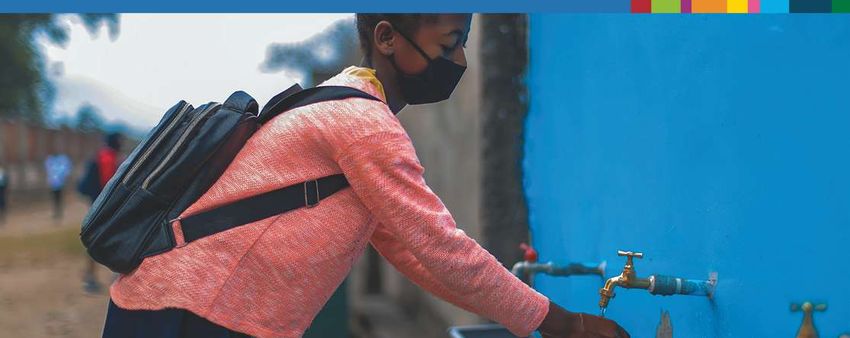
What is included in this guide?
The guide provides targeted inputs to ensure continuity of learning during school closures, and
comprehensive, timely and evidence-based plans for reopening schools in a way that is safe,
gender-responsive and child-friendly, and meets the needs of the most marginalised girls.
It considers four dimensions of school closures, highlighted in the diagram below,
covering learning; health, nutrition and WASH, protection and teachers. The guide presents
recommendations for these four dimensions along a continuum which considers the distinct
actions needed prior to school reopening, as part of the school reopening process, and when
schools have reopened, recognising that schools may close again to respond to subsequent waves
of the pandemic. It is for this reason that the guide emphasises an approach to ‘build back equal’
through gender-responsive measures that transform education systems, prioritise resilience and
address the key bottlenecks and barriers to girls’ education, including:
Gender-responsive data and evidence to inform action, including data disaggregated by sex and
gender-responsive monitoring to identify promising practices to promote gender equality.
Policies, laws and plans to advance girls’ rights, including the removal of discriminatory practices
that impede girls’ educational participation and completion, and ability to apply their learning.
Sustained financing to achieve results, protecting education financing for girls’ education,
alongside health, social protection and economy recovery initiatives with an equity lens.
Health, nutrition
Learning Protection Teachers
and WASH
Community mobilisation and engagement
Meaningful participation of girls and women
Gender-responsive data and evidence to inform action
Policies, laws and plans to advance rights
Sustained financing to achieve results
The meaningful participation of girls and women, and community mobilisation and engagement,
cut across the four dimensions as essential elements of success. Governments should ensure that
girls and women are consulted and can contribute to decisions about school reopening through
regular feedback mechanisms, and their engagement in decision-making and planning processes.
Similarly, community engagement and mobilisation is vital for getting girls back to school. In
particular, parents and caregivers should be engaged in discussions and decisions concerning
the reopening of schools, recognising the key role they play in girls’ lives, including their access to
educational opportunities and learning.
Building back equal: Girls back to school guide | 5
Guiding principles to build back equal
The guide includes four overarching ‘guiding principles’ to inform all policies and plans for school
reopening as well as longer-term education sector planning. These guiding principles are essential
for a gender-responsive approach which aims to build back equal.

         Adopt a system-wide approach                    Prioritise the leadership of girls
         to school reopening which brings                and women and recognise their role
         a gender and inclusion lens to                  as agents of change. Systematically
         education analysis, and takes                   and meaningfully integrate them in
         steps to remove gender bias                     consultations and decision-making
         and discrimination within and                   on COVID-19 education response
         across education systems, from                  and recovery planning, from needs
         teacher recruitment and training                assessments to the design of remote
         to curriculum and materials                     learning opportunities, and other
         development, and ensure school                  interventions to plan and monitor
         environments are resilient, safe,               school reopening and promote
         and free from violence.                         life-long learning.

         Prioritise action to bring all girls             Promote an integrated and
         back to school – both returning                  coordinated approach that
         students and those previously                    addresses girls’ holistic education,
         out of school – through targeted                 health and protection needs.
         measures for the poorest and most                Catalyse cooperation between
         marginalised girls. Ensure school                teachers, school administration,
         reopening plans are equity-focused               families and communities, and
         and designed to leave no one                     support cross-sectoral collaboration
         behind, with contextualised                      to ensure an inclusive and
         consideration to intersecting and                gender-responsive school reopening
         exacerbating inequalities.                       that safeguards rights.

How to build back equal
The following section provides recommendations across four dimensions of school closures, calling
for distinct actions prior to school reopening, as part of the school reopening process, and when
schools have reopened, recognising that schools may close again to respond to subsequent waves
of the pandemic. These actions aim to support girls’ continuity of learning during school closures
and return to school when these reopen, while developing more gender-responsive, resilient
education systems that address the barriers and bottlenecks to girls’ education.

                                                                             Building back equal: Girls back to school guide | 6
© Plan International

                       Learning
                                              It is better to study from school as I can listen to the teacher
                                              and ask the teacher if I do not understand something. Now
                               it is difficult for me to understand some of my school topics. If only I had
                               access to technology, I could ask my teacher directly. In my house, only
                               my Dad has a mobile phone that I can borrow from time-to-time.
                               – Angel, age 13, Indonesia

                       Around the world, countries are making efforts to ensure continuity of learning through alternative
                       delivery modalities, including online and other distance learning approaches. For the most
                       marginalised, online learning is compounding existing inequalities: an estimated 826 million students
                       do not have a computer at home and an estimated 706 million lack internet access.16 Many of these
                       students without internet access are girls living in the least developed countries, where digital
                       gender gaps are growing fast to girls’ and women’s disadvantage.17 Even in contexts with adequate
                       infrastructure and connectivity, girls are less likely to have access to digital devices than boys18 and
                       many educators lack the ICT skills needed to facilitate quality distance learning.19 In addition, distance
                       learning strategies often don’t consider children with disabilities20 and the specific language needs of
                       minority groups.21 A combination of television and radio programming, and the distribution of print
                       materials, has been used in low-income contexts as a more accessible and inclusive strategy to reach
                       learners. However, few countries are monitoring the effective reach and use of these distance learning
                       modalities, and the short- and long-term learning loss is expected to be great.22 As schools reopen,
                       governments should motivate learners and their families for a full return to school, assess potential
                       learning loss during school closures and adapt curricula appropriately, and ensure quality teaching
                       and learning opportunities that are gender-responsive and respond to girls’ needs.

                       16. UNESCO. 2020. COVID-19: A Global Crisis for Teaching and Learning. Paris, UNESCO.
                       17. EQUALS Research Group. Taking Stock: Data and Evidence on Gender Equality in Digital Access, Skills and Leadership. Geneva, International
                           Telecommunications Union (ITU).
                       18. Girl Effect and Vodafone Foundation. 2018. Real Girls, Real Lives, Connected.
                       19. UNESCO. 2020. Supporting Teachers and Education Personnel in Times of Crisis. Paris, UNESCO.
                       20. United Nations. 2020. Policy Brief: The Impact of COVID-19 on Children. New York, United Nations.
                       21. UNESCO. 2020. Global Education Monitoring (GEM) Report, 2020: Inclusion and Education: All Means All. Paris, UNESCO.
                       22. UN. 2020. Policy Brief: Education during COVID-19 and beyond. New York, UN.

                                                                                                                                           Building back equal: Girls back to school guide | 7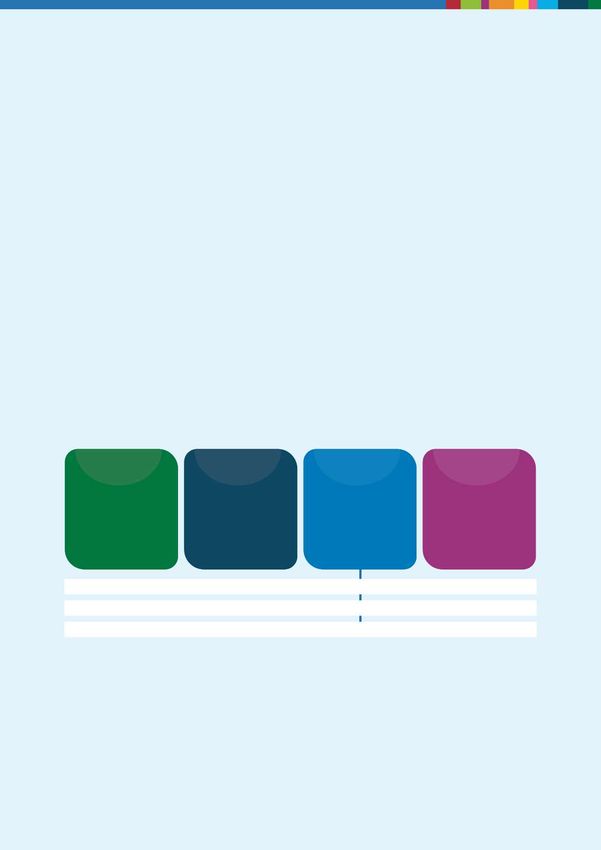
Table 1. Recommended actions to support learning

                                                     Prior to reopening                        Part of the reopening process                                 With schools reopened

                                           Collect and use sex-disaggregated data             Prioritise meeting the educational needs of              Establish more robust gender-responsive risk
                                           on participation in distance learning              girls, particularly the most marginalised, who           analysis, standard operating procedures and
                                           programmes, and support received for               have had reduced access to distance learning             contingency plans for future shocks, drawing
       Participation and retention

                                           learning during school closures.                   in the context of phased return to school.               on feedback and lessons learned.
                                           Establish gender-responsive school-level           Ensure that robust guidance, protocol and                Ensure robust gender-responsive data
                                           ‘early warning systems’ to record regular/         referral systems are in place to respond to each         collection capacity and mechanisms through
                                           extended absenteeism or non-returns to             case of regular/extended absenteeism or non-             Education Management Information Systems
                                           school when these reopen, and the associated       return to schools, with associated measures              (EMIS) and other measures to identify and
                                           reasons, including options such as marriage,       established according to the reason for these            monitor the enrolment and participation
                                           pregnancy, inadequate WASH, and other              absences.                                                status of all learners, with associated
                                           barriers to girls’ education.                                                                               protocols to ensure learning for all.
                                           Ensure that digital and other distance learning    Review curriculum and learning materials for             Build long-term institutional capacity within
                                           materials produced to support continuity of        gender bias and stereotypes and establish a              Ministries of Education to support curriculum
                                           learning are of high quality, and are accessible   process for materials and curriculum reform              reform that promotes gender equality across
                                           and inclusive, including the representation        that also considers content missed during                all subjects and levels of education.
       Curriculum and learning materials

                                           of girls with disabilities, from ethnic minority   school closures. Consider girls’ well-being
                                           groups and from other backgrounds and              and re-engagement with learning, as part of
                                           contexts.                                          catch-up plans.
                                           Expand girls’ access to online learning, through   Support girls’ early, safe and sustained                 Establish broader and sustained approaches
                                           temporary free internet data packages,             exposure to digital technologies, with the aim           to narrow the gender digital skills divide
                                           zero-rate traffic to educational content or        to build girls’ digital skills, self-efficacy, as well   through role models and mentors, gender-
                                           other measures, while introducing specific         as their interest in technology-linked careers.          responsive ICT-infused curricula, and efforts
                                           safeguarding measures against online violence                                                               to increase girls’ understanding of, and
                                           and abuse, including equipping girls with the                                                               exposure to, technology-linked careers.
                                           knowledge and skills they need to stay safe
                                           online.
                                           Promote the establishment of feedback loops        Use formative assessments to track learning              Ensure that remedial programmes and
                                           to monitor learning during school closures,        loss and inform targeted remedial measures               adapted curricula to address learning
       Learning assessments

                                           promoting timely, constructive assessments         for girls, considering accessibility measures            loss are delivered in safe and accessible
                                           of learning, guided by the principles of equity    for girls with disabilities and those in                 environments. Engage with parents and
                                           and inclusion.                                     challenging contexts. Pay particular attention           communities to ensure girls’ participation in
                                                                                              to assessments informing the transitions                 these programmes, and their transition to
                                                                                              between levels of education, and from school             different levels of education, and to training/
                                                                                              to training/employment.                                  employment.
                                           Ensure distance learning programmes                Remove discriminatory school policies that               Provide special accommodations, including
                                           offer flexible scheduling, are delivered in        prevent pregnant and married girls from                  flexible learning, particularly for pregnant
                                           appropriate languages and modalities and           attending school and consider the possibility            girls and young mothers and other measures
       Reaching the most marginalised

                                           allow self-paced learning, considering that        of flexible attendance options for pregnant              to build knowledge and skills, and ensure all
                                           girls often have a heightened care burden          and married girls/new mothers.                           girls’ right to education.
                                           during school closures.
                                           Deliver diverse, inclusive and accessible          Lift financial costs that act as barriers to             Maintain and continue to scale up gender-
                                           distance learning solutions, including radio       learning– preventing the poorest and most                responsive and inclusive distance learning
                                           and TV programmes and paper-based                  marginalised girls from returning to school.             measures to reach the most marginalised
                                           materials in connectivity-poor settings,           These include school fees, examination fees,             girls and support continuity of learning.
                                           addressing accessibility, language, quality and    and other indirect costs. Provide financial
                                           resource barriers to learning.                     support to girls at risk of dropping out.
                                           Allocate funding for, and partner with, girls-     Work with girl- and women-led movements,                 Increase the representation of women
girls and women
 participation of

                                           and women-led initiatives that are actively        and other key influencers, including                     in school management, and leadership
   Meaningful

                                           supporting girls’ continuity of learning during    community and religious leaders, to develop              positions, recognising their key role in girls’
                                           school closures and ensure their engagement        back to school campaigns to ensure relevance             continuity of learning and return to school.
                                           in consultative processes.                         and outreach.
                                           Undertake contextualised, inclusive, and           Undertake contextualised, inclusive, and                 Establish/strengthen linkages between
                                           culturally-relevant campaigns, in collaboration    culturally-relevant back to school campaigns,            schools and communities, through parent
  Community mobilisation
     and engagement

                                           with community, traditional and religious          in collaboration with community, traditional             teacher organizations, school-community
                                           leaders, men and boys, caregivers and other        and religious leaders, men and boys, caregivers          partnerships, cooperation with community
                                           champions for gender equality, to increase         and other champions for gender equality, that            and youth centres, and other means to
                                           girls’ access to and participation in distance     challenge pervasive gender norms that reduce             ensure sustained support to equal rights
                                           learning programmes during school closures.        the likelihood of girls’ return to school.               and opportunities for girls and boys through
                                                                                                                                                       education.

                                                                                                                                                                Building back equal: Girls back to school guide | 8
© UNICEF/Mulala

                  Health, nutrition and WASH
                                    Previously, I would spend my time at school where I received
                                    education and training on girls’ rights including sexual and
                          reproductive health and child marriage. Due to the coronavirus, this
                          has stopped. I no longer have access to this support which kept me
                          informed. – Angela, age 17, Mozambique

                  For many girls, schools provide a lifeline, offering vital information and support (onsite or through
                  referral services) for their nutrition, menstrual hygiene management (MHM), and broader
                  psychosocial and sexual and reproductive health needs. Due to COVID-related school closures,
                  roughly 370 million school children are missing out on school meals and other types of health
                  support.23 Safeguarding vital services for girls, particularly the most marginalised, through
                  alternative delivery mechanisms for health and nutrition education, commodities and support
                  is needed during school closures to avert educational, psychosocial, health and other negative
                  outcomes. As schools reopen, governments’ first priority is to protect the health and safety of all
                  learners, teachers and all school staff to control the pandemic. An integrated, gender-responsive
                  and multi-sectoral approach to planning for school health, nutrition and WASH is also needed to
                  ensure the (re-)establishment of health-promoting learning environments and essential services
                  that address girls’ specific needs.

                  23. World Food Programme (WFP). 2020. A Chance for Every School Child: Partnering to Scale Up School Health and Nutrition in the COVID Era. Rome, WFP.

                                                                                                                                   Building back equal: Girls back to school guide | 9
Table 2. Recommended actions to support health, nutrition and WASH
Prior to reopening Part of the reopening process With schools reopened
Develop and disseminate gender- and age- Promote and prioritise school-based CSE to Strengthen CSE programmes in both
responsive and developmentally-appropriate, strengthen resilience and life skills, especially traditional and virtual formats, as part of
sexuality education (CSE)
accessible, evidence-based, digital CSE to among girls, to manage stress, negotiate efforts to ensure girls’ retention and broader
Comprehensive
reduce girls’ and young women’s vulnerability difficult circumstances and respond to the well-being. Strengthen links between CSE
to early and unintended pregnancy, HIV and specific challenges girls may have faced during and affordable, youth-friendly and gender-
gender-based violence during school closures. school closures, including violence within the responsive services, including access to
home and other constraints to their health and modern contraception and other sexual and
well-being. reproductive health (SRH) commodities and
services.
Ensure the most vulnerable girls and their Gather sex-disaggregated data on access Strengthen social protection systems, such as
families have their food needs met during to alternative school health and nutrition cash transfers and nutritional aid to keep girls
school closures through food vouchers, meal programmes during school closures to better in school and to motivate families to prioritise
Food and nutrition
deliveries, take home rations, cash transfer or understand gender impacts and inform school their daughter’s education despite difficult
other means. meal programming that meets girls’ needs. economic circumstances.
Document good practice, lessons learned Draft a plan with specific benchmarks for Strengthen national policies, systems and
and impacts of alternative school health and the re-establishment of school feeding and programmes related to school feeding with
nutrition packages supported during COVID-19 nutrition programmes, including attention for the view to build stronger, gender-responsive
on girls’ continuity of education and return to micronutrient supplementation for girls and and resilient systems that are prepared for
school to inform school reopening plans. other support, where needed. future shocks and school closures.
Ensure that the most marginalised girls have Conduct MHM rapid assessments, where Maintain continuity of safe MHM education
management (MHM)
access to menstrual hygiene information needed, and support the provision of MHM and services that enable girls to manage their
Menstrual hygiene
and products while they are out of school, materials, and the safe disposal or laundering menstruation in dignity and stay in school.
including the provision of menstrual materials of menstrual products in school facilities when Ensure education and services are accessible
in distributions of food or non-food items to schools reopen to reduce girls’ absenteeism and inclusive, reaching girls with disabilities,
girls and women in lockdown. and drop out during menstruation. those in crisis and emergency contexts, and
other hard-to-reach settings.
Maintain consistent messaging on Audit school facilities to identify gaps in Ensure sustainable financing for safe,
handwashing as a key strategy for COVID-19 WASH provision. Ensure that every school has accessible and age-responsive hygienic
prevention, accessible to girls with disabilities, safe, accessible, age-responsive and hygienic single-sex WASH facilities in schools,
WASH
those from minority language groups, and single-sex WASH facilities to ensure a safe including in remote, fragile and conflict-
those in remote, fragile, and conflict-affected return to school for female learners and staff, affected areas.
areas. including in remote, fragile and conflict-
affected areas.
Undertake gender analysis to understand Ensure health education in the curriculum Ensure the sustainable application of proven
Reaching the most
marginalised
increasing health and nutrition inequalities meets the needs of the most marginalised girls strategies to address the health and nutrition
resulting from school closures, and use by recognising and addressing their realities needs for marginalised girls, providing
the findings to plan for community-wide and enabling skills-building on risk recognition holistic support to their psychosocial, sexual
education, health and related interventions. and health-seeking behaviours. and reproductive health, and nutrition needs.
Engage girls and young women, including Engage girls and young women, including Systematically integrate girls and women
Meaningful participation
the most marginalised, in the development the most marginalised, in monitoring the into emergency and crisis education response
of girls and women
of content, the provision of remote learning effectiveness of COVID response and recovery decision-making processes, and intentionally
on health and nutrition, and other decision- efforts, and planning and decision-making ensure equity of voice and opportunities for
making processes, ensuring their safety and focusing on providing a safe and health- the most marginalised.
building their capacity. promoting environment for learning and
well-being.
Promote local consultations between Consult communities and engage youth Ensure sustained support to address
Community mobilisation
and engagement
subnational authorities and affected groups, civil society organizations, faith/ community and parental resistance to
communities, to ensure local ownership of religious leaders, the media, and other key CSE, and other policies and programmes
health and education campaigns that are stakeholders to ensure that health concerns advancing gender equality and girls’ sexual
relevant, accessible and contextualised. linked to school reopening are identified and and reproductive health and education.
addressed.
Building back equal: Girls back to school guide | 10© World Bank/Arne Hoel
Protection
Young people are on the ground creatively responding to
the inequalities girls are facing at home during this time.
A youth-led network in Nigeria has set up a hotline with qualified
individuals for young women and girls to report cases of gender-based
violence and to receive counselling services...How are you going to
partner with youth networks to ensure that girls return to school?
– Maryam, age 19, Pakistan
Ensuring protection from physical, psychological and sexual violence remains an essential part
of a gender-responsive, safe learning environment. Assuring this in the context of COVID-related
school closures is a challenge, particularly when learning has shifted online or through other
remote measures. The COVID-19 pandemic is also creating new protection risks for girls and
women. Lockdown-related disruptions could lead to a projected 7 million additional unintended
pregnancies, an additional 31 million cases of gender-based violence, and an additional 13 million
child marriages over the next ten years.24 Governments should establish mechanisms to prevent
harm for all children during school closures, including related to their participation in online
learning, and address the unique safety risks for girls. As schools reopen, governments will need
to be prepared to address what children, including girls, may have endured during school closures
and the potential impact on their learning and well-being. Support mechanisms and whole-
school approaches are needed to ensure schools are safe and supportive, with strong policies to
prevent and respond to violence in all of its forms.25 Special attention should be given to girls with
disabilities, and girls in settings of fragility, displacement, crisis and conflict, who face additional
risks that affect their health and well-being and that have the potential to prevent their continuity
of education and return to school.26
24. UNFPA, with contributions from Avenir Health, Johns Hopkins University (USA) and Victoria University. 2020. Impact of the COVID-19 Pandemic on Family
Planning and Ending Gender-based Violence, Female Genital Mutilation and Child Marriage. New York, UNFPA.
25. Global Working Group to End School-Related Gender-Based Violence (SRGBV). 2020. COVID-19: Policy Brief and Recommendations Strengthening Efforts
to Prevent and Respond to School-Related Gender-Based Violence as Schools Reopen.
26. UNGEI and the Overseas Development Institute (ODI). 2017. Evidence Review Mitigating Threats to Girls’ Education in Conflict-Affected Contexts:
Current Practice. New York, UNGEI.
Building back equal: Girls back to school guide | 11Table 3. Recommended actions to support protection
Prior to reopening Part of the reopening process With schools reopened
Prioritise measures to protect girls from Communicate to parents and learners the Apply whole-school approaches to ensure
cyber-bullying, exploitation and other measures undertaken as part of school schools are safe and supportive, and
online violence during distance learning reopening to (re-)establish safe, prevention and response mechanisms are in
programmes, and establish reporting gender-sensitive and inclusive environments place to address school-related gender-based
Gender-based violence
measures and referrals to support for those including school policies, and strong violence.
affected. prevention, reporting and accountability
mechanisms.
Support the delivery of culturally and Provide teachers and school officials with Establish mechanisms between school health
age-responsive messages in educational appropriate training to manage confidential and protection services to connect girls who
programmes and through the media calling discussions with girls who have been affected have witnessed or experienced violence during
for protection of children from violence, abuse by violence during school closures as well as school closures with psychosocial and legal
and neglect during COVID-19, recognising the referral to appropriate services. services.
particular risks for girls in some contexts.
Deliver gender- and age-responsive, inclusive, Update school-based reporting and referral Support the establishment of regular
Psychosocial support
developmentally-appropriate messages and mechanisms to ensure gender- and age- professional development for teachers, school
activities to promote psychosocial well-being, responsive, and developmentally-appropriate management and other education sector
and stress prevention as part of distance and inclusive support for psychosocial and staff to identify and support girls who are
learning programmes. protection needs when schools reopen. struggling psychologically, as part of crisis-
sensitive education planning.
Address stereotypes or superstitions about Provide support to teachers to initiate socio- Promote the integration of social and
discrimination
Stigma and
persons affected by COVID-19, including girls emotional learning activities as part of the emotional learning in curriculum and learning
with heightened caring responsibilities during reopening period, ensuring safe spaces for girls materials, as part of efforts to build resiliency,
school closures. to share their experiences of school closure cognitive and socio-emotional development,
and inclusive learning environments. and inclusion.
Ensure community-based programmes Train education and other support workers Support education-related interventions
Child, Early and forced
marriage and unions
continue during school closures, addressing to ensure that they have the knowledge and to end CEFM, including cash-transfers,
CEFM as a human rights violation that robs skills needed to recognise and prevent the risk community awareness to address cultural
(CEFM)
girls of their education, health and long-term of CEFM and other harmful practices, through and social norms, life skills, CSE and other
prospects. safe referral practices and protection services. interventions, paired with laws on the
minimum age of marriage.
Ensure continuity and availability of child Assess the impact of COVID-19 on girls’ Maintain and expand budgets and
Reaching the most
protection services for all children, particularly protection risks (such as violence, CEFM, early investments aimed at child protection and
marginalised
those in fragile and humanitarian contexts, and unintended pregnancy, child labour) and ending gender-based violence, and referrals
and attention to harmful gender norms that mitigating measures to meet girls’ needs and between education, health and child
increase girls’ vulnerabilities. transition them back to school. protection systems, with a focus on the most
marginalised girls.
Engage girls’ and women’s organizations Engage girls in the development of peer-to- Establish learner-focused, spaces that enable
Meaningful participation
of girls and women
working at the community-level to identify, peer support mechanisms, and awareness- them to speak out and share their experiences,
respond to and address children and families raising activities about available support ensuring that these are safe for girls, and
in distress, and facilitate referrals to services. mechanisms and how/when they should be awareness-raising of available support
activated. mechanisms, should schools need to close
again.
Ensure communication with communities Work with local actors (caregivers, teachers, Establish protection continuity plans with
Community mobilisation
through media and other means on potential school leadership, community leaders and parents/caregivers and other key community
and engagement
protection concerns during emergencies, such local government) to assess and improve stakeholders, drawing on lessons learned from
as girls’ heightened exposure to violence, their disaster/emergency preparedness and COVID-19, for future school closures, paying
neglect, exploitation or other dangers, as well response, with particular attention to risks particular attention to risks facing girls.
as sources of support for those affected. and local resources to address girls’ protection
needs.
Building back equal: Girls back to school guide | 12© UNESCO/Genaye Eshetu
Teachers
I prepare the lesson plans as well as teach my children at
home. Sometimes, I talk to the teachers at school and also
to the students through the phone. I ask my students about the lessons
and their family’s news. I want to know about their activities because
if something happened in their family...I would love to help them. –
Khankeo, teacher, Lao PDR
Teachers are the most important in-school factor when it comes to learning, and female teachers
have been found to have a positive impact on girls’ education, particularly in contexts with rigid
gender norms.27 More than 65 million teachers around the world have been affected by school
closures during the COVID-19 pandemic.28 Many of these teachers are women; nearly 94% of
teachers in pre-primary education, while about half of those in upper secondary education, are
women.29 Teachers’ roles have been rapidly evolving during school closures to respond to the need
to facilitate quality distance learning and provide support to learners in high-stress environments.
They have been doing so often with little professional support, training or additional resources and
often in contexts where they must also support their own children’s learning from home. Ensuring
attention to teachers’ and education support personnel’s health, safety and well-being must be the
first priority. As schools reopen, governments should also support teachers to create a safe, gender-
responsive and inclusive classroom and school environment, in partnership with school leaders,
communities and caregivers. The further recruitment and retention of female teachers is also
needed, along with interventions to bridge the gender gap in teaching and school leadership.
27. Unterhalter, E. et al. 2014. Girls’ Education and Gender Equality: Education Rigorous Literature Review. London, Department for International
Development (DFID).
28. International Task Force on Teachers for Education 2030. 2020. Response to the COVID-19 Outbreak. Call to Action on Teachers. Paris, UNESCO.
29. UNESCO. 2019. Global Education Monitoring Report 2019: Gender Report: Building Bridges for Gender Equality. Paris, UNESCO.
Building back equal: Girls back to school guide | 13Table 4. Recommended actions to support teachers
Prior to reopening Part of the reopening process With schools reopened
Collect sex-disaggregated data on teachers to Monitor teachers and ensure access to Ensure teachers’ health, safety and well-being
Health and well-being
better understand and address the differential psychosocial, health and other support, and figure in COVID-19 response and recovery
impact on teachers’ health and well-being that their health, rights and entitlements are plans, with attention to differential needs by
during school closure.with particularly protected during school closures, after school gender, location and other aspects. Ensure this
consideration to the impacts of additional reopening, and in planning for future closures. focus is ongoing and continuous, and part of
caregiving responsibilities and increased rates broader efforts to support teacher satisfaction,
of domestic and gender-based violence. motivation and well-being.
Support female teachers, recognising the Preserve female teachers’ employment, Prioritise, with adequate remuneration
double role that they have often had to play in salaries and benefits, as they will be essential and appropriate support, the recruitment,
Female teachers
ensuring continuity of learning for students, for a rapid and effective recovery when retention and safe deployment of female
while facing childcare responsibilities and a schools reopen. Promote their professional teachers in remote and rural areas, in higher
larger burden of unpaid domestic and caring development through flexible self-paced levels of education, and in managerial and
responsibilities during school closures. delivery modalities. leadership posts, as they play a key role in girls’
participation and retention.
Deploy and adapt existing teaching materials Review teacher education curriculum and Build institutional capacity to remove gender
Teaching materials
to ensure they are free from gender bias and learning materials for gender bias and bias from teacher education materials and
stereotypes, challenge negative social norms, stereotypes and establish a process for support curriculum review and reform that
and promote gender equality. materials and curriculum reform, along with promotes gender equality.
prioritisation of content to be delivered when
schools reopen.
Provide support and training to teachers to Promote ongoing professional development Reform initial and ongoing teacher education
adapt their practice to online and distance for teachers to develop their ICT skills, while to include digital literacy, ICT-infused
learning, with particular attention to gender assessing the e-readiness of educators and pedagogy, and online assessments, with
gaps in digital access and skills among schools in future school closures. the aim to close gender digital access and
Professional development
teachers. skills gaps among teachers, while also
addressing training needs in low-/lower-tech
environments.
Equip teachers with the knowledge, skills and Support teachers to conduct formative Mainstream gender-responsive and learner-
attitudes for gender-responsive and learner- assessments of girls’ learning to inform centred pedagogy in initial and ongoing
centred pedagogy, ensuring equal treatment gender-responsive and learner-centred professional development programmes for
and participation of girls and boys during teaching practices and identify additional teachers, to improve girls’ participation,
distance learning. support where required. retention and achievement and promote
gender-equal classrooms.
Support teachers in rural, remote and other Identify and document the needs and Support initiatives that strengthen teachers’
Reaching the most
marginalised contexts to provide distance experiences of teachers in rural, remote and resilience, instructional capacities, and access
marginalised
education (e.g. providing equipment, marginalised contexts, to find out what to technical and skills in rural, remote and
supporting connectivity, purchasing data) and worked during school closures and address other marginalised contexts to ensure their
professional development for online teaching, gaps in skills, resources, and infrastructure as ability to assure continuity of learning in the
or other support relevant to the context. schools reopen. event of future shocks.
girls and women
Ensure associations of female teachers are Engage associations of female teachers in Sustain professional bodies of female teachers
participation of
Meaningful
represented in the crisis response, particularly preparation for school reopening, ensuring over the long-term through adequate
in the design, delivery and monitoring of measures address their own health, well-being financial, institution and human investment.
distance learning programmes. and needs for a safe teaching environment.
Facilitate communication between teachers, Collect feedback from communities of school Strengthen parent-teacher committees, school
mobilisation and
learners and caregivers to assess participation closures and the support they received for management committees, and other bodies
engagement
Community
in distance learning, difficulties and needs learning and well-being. Use feedback to that can inform future gender-responsive,
for learning and other support, particularly inform planning for school reopening. inclusive plans for future disruptions to
for girls. education.
Building back equal: Girls back to school guide | 14Conclusion: Building back equal
to ensure a new normal for girls
Ensuring continuity of learning and preventing the permanent exit from education for millions
of girls will depend upon short-term measures informed by rigorous gender-responsive data and
evidence and longer-term approaches that aim to build back stronger, gender-responsive and
resilient systems that are prepared for future shocks, stresses and school closures. Such planning
must be approached with a long-term perspective that prioritises equitable access, community
mobilisation and engagement and efforts to ensure no girl is left behind.
In the longer term, the global disruption to education presents the opportunity for Ministries
of Education and their partners to build back equal and establish a ‘new normal’ for girls. A new
normal where deep structural change occurs. Where we tackle barriers to girls’ education and
ensure that education does not perpetuate unequal power structures, but rather serves as a force
to accelerate sustainable gender equality and full inclusion.
We asked girls what this new normal would look like. Here are some of their responses.
“My vision for a new normal: a world where girls are safe to learn, free from
violence.” – Pooja, youth advocate, Plan International Nepal
This new normal places gender equality centrally within education systems, and ensures girls can
learn in safe and inclusive environments, have the knowledge and skills they need for the jobs of
today and tomorrow, and the ability to tackle challenges that face people and the planet.
“My vision for a new normal: a world where we can harness the power
of technology for educational advancement and increase learning
opportunities for children, especially girls in the rural setting.” – Faith, youth
advocate, Girls’ Advocacy Alliance Liberia
This new normal requires a transformation in our approach to ensure education systems are
gender-responsive by design. Building back equal for girls means putting gender equality at the
heart of education – from teaching and learning environments, teacher training and practice,
education curricula and materials, to leadership and administration. It also calls for cross-sectoral,
cross-ministerial cooperation and integrated approaches to build back more gender-equal
education systems.
“My vision for a new normal: a world where a girl is not just a community
member, but a decision-maker in the community.” – Beatrice, a youth advocate
and teenage mother, Girls’ Advocacy Alliance Kenya
Only through collective, intergenerational and sustained action and investments can we truly
transform education systems and build back equal.
Building back equal: Girls back to school guide | 15COVID-19 Global Education Coalition
Gender Flagship
This guide was developed by a core group of representatives from UNESCO’s COVID-19 Global
Education Coalition Gender Flagship, including members of the following organizations:
Malala Fund, Plan International, the UN Children’s Fund (UNICEF), the UN Girls’ Education Initiative
(UNGEI), and the UN Educational, Scientific and Cultural Organization (UNESCO).
The Gender Flagship provides a collaborative platform for stakeholders committed to gender
equality, and girls’ and women’s empowerment in and through education.
Interested organizations are invited to contact us to discuss what support, tools or services they
can offer to address the gender dimensions of COVID-related school closures and ensure that
#LearningNeverStops.
Contact us to support the Gender Flagship at Gender.ed@unesco.org.
Stay in touch
COVID-19 Global Education Coalition
COVID19taskforce@unesco.org
https://on.unesco.org/globaleducationcoalition
@UNESCO
@UNESCOYou can also read


