School Prospectus 2020-2021 - English Bicknor C of E VC Primary School - working with - English Bicknor Primary School
←
→
Page content transcription
If your browser does not render page correctly, please read the page content below
English Bicknor C of E VC
      Primary School

      A ‘Forest School’

        working with
   Bicknor Bears Nursery

 School Prospectus
      2020-2021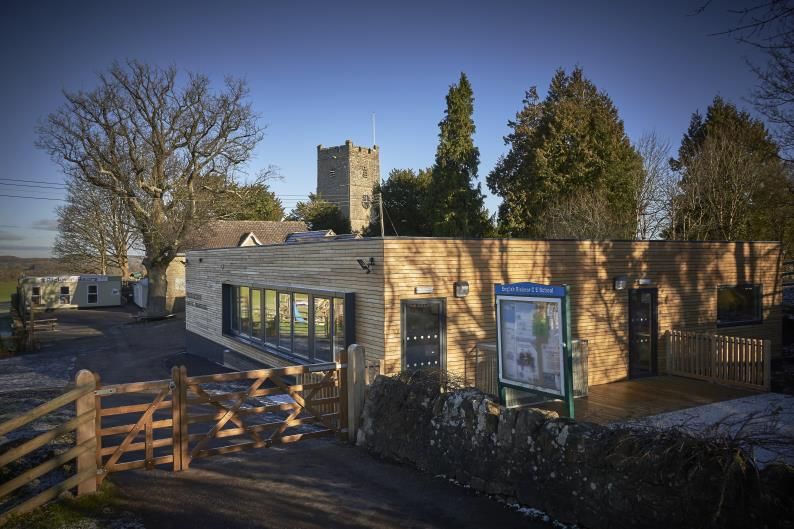
English Bicknor Church of England V.C. Primary School
English Bicknor
Coleford
Gloucestershire
GL16 7PG

Tel: 01594 860367

head@englishbicknor.gloucs.sch.uk

admin@englishbicknor.gloucs.sch.uk

www.englishbicknor.gloucs.sch.uk

Local Authority
Gloucestershire County Council
Shire Hall
Gloucester
GL1 2TP
01452 425000

bicknorbears@englishbicknor.gloucs.sch.uk

A Voluntary Controlled Church School
English Bicknor School is a Voluntary Controlled
School; it was originally provided and maintained by the
Church. Under the 1944 Education Act, the Church
relinquished most of its control to the county authority.

 St Mary’s Parochial Church Council retains the right to
nominate the ‘Foundation’ members of the Governing Body
who are then appointed by the Gloucester Diocesan Board
of Education, to represent the Church.

In accordance with the 1988 Education Act, a daily act of Christian worship takes place. The Vicar,
or his representative, takes the school worship on a regular basis. Acts of worship are held in church
at Harvest, Christmas, Easter and at the end of each term. During June, the Y6 children attend a
special leavers’ service at Gloucester Cathedral, held for all Church of England schools.

Christian ethos and values underpin all that we do to create a caring and supportive environment for
learning.

                                                  2
Our School Vision
Our Vision for our children, parents, staff and school is inspired by
‘All things are possible for one who believes’ Mark 9:23
We acknowledge that ‘beliefs’ take many forms. Our vision is that the whole school community will
‘believe’ in themselves and each other, and in our potential to achieve, alongside a deeper
understanding of how the Christian Faith can enable these.
Our Vision
Through the quality of the education we provide, the example of Christ, and the teachings of
the Bible, we aim to value and develop the whole child to reach their full potential, with
limitless aspirations and a lifelong passion for learning.
We encourage our children to live by Christian Values and to carry them in their hearts throughout
life. Our Core Christian Values which underpin all that we do are:
Trust, Respect, Compassion and Perseverance
As a church school we provide time and space for reflection and prayer for children to learn about
and explore their individual spirituality, as well as regular collective Worship, including those planned
and led by children.
We focus on the development of the whole child within a nurturing environment, as well as academic
progress and achievement.
We are passionate about being an inclusive school, with our children bringing a wide range of abilities
and coming from different backgrounds, with talents and aspirations lying in many different areas,
which may not appear in formal assessment measurements.
Value –Enrich – Aspire
We work hard to prepare our children for the future, to be resilient independent thinkers, who
value, respect and care about others.
We aim for our children’s lives to be enriched through their learning and development as part of our
school community, and for them to be confident, resourceful and eager learners.
Through trust in our own abilities, the love of others, and perseverance, we will have the courage to
aspire to be the best that we can be in all areas of learning and life.
Through respect we will value the opinions of everyone and recognise that everyone is unique, and
made in the image of God.
Through compassion and with God’s love and support we will enrich the lives of everyone in the school
community and those we meet along the way by caring and supporting each other; by being thoughtful
and passionate about what we say and do, and enabling adults and children to flourish.
Our school ethos
To ensure that Christian values are at the heart of our community.
To create a happy, caring community where children, parents, governors and staff feel
valued, respected and where good relationships are developed.
To set high expectations for ourselves and others.
To encourage children to gain in confidence and further develop self esteem.
To provide opportunities to develop the potential of every individual.
To develop independent thinking and encourage a creative, enquiring mind.
3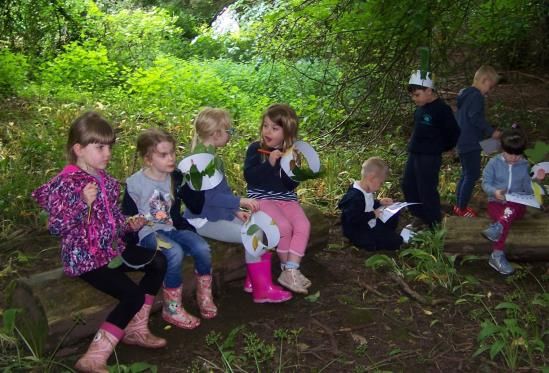
To nurture social, moral, spiritual and cultural values.
To make full use of our idyllic, rural setting through outdoor learning.
To treat others in the same way as we would like to be treated.
Collective Worship
The legal requirement for worship, in a
controlled school, is that all children
should take part in a daily act of
Collective Worship. Parents do have the
right to withdraw their children from
Collective Worship although it should be
understood that the act of worship is
central to the life of the school. Please
note that DfE circular 1/94 states that
worship should provide the opportunity
for pupils to worship God, consider
spiritual and moral issues, participate
and respond and develop community
spirit, common ethos, shared values and
reinforce positive attitudes.
Worship is rooted in bible stories and the Christian year. Worship:
Is engaging, inspiring, influential, reflective
Includes a range of creative opportunities- music, silence, symbolism and drama
Develops our Christian vision, values and ethos and contributes to the spiritual, social, moral
and cultural developments of participants
Provides a graduated structure for children to become leaders in collective worship
We meet regularly in church for services and any special services including Christmas, Easter and
other Christian Festivals. Each half term, worship focuses around a specific value; twelve values over
the course of two years. These values are: respect, trust, compassion, perseverance, friendship,
generosity, courage, forgiveness, thankfulness, justice, service and truthfulness.
School Governing Body
Chair of Governors Headteacher Vice-Chair of Governors
Co-opted Governor Mrs H Alliston Ms Jo Munn
Mr Anselm Jacobs
4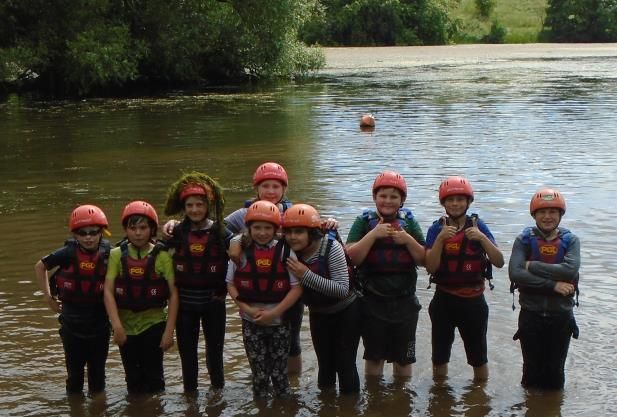
Foundation Governor Parent Governor Parent Governor
Mr John Furnival Mrs Abigail Simpson Mrs Sophie Allen
Ex-officio Local Authority Governor Staff Governor
Rev Tony Williams Mrs Gerry Buckland Miss Ellie Johnson
Co-opted Governor Clerk to the Governors
vacancy Mrs Carolyn Shaw
The school has a committee of governors who meet, at least six times per year, to discuss the
development and progress of the school. There are also Finance and Ethos sub-committees.
The Governors work collectively with the Head teacher and staff. They:
ensure that the curriculum is broad and balanced and designed to meet the spiritual, moral,
cultural and physical developments of the pupils;
ensure the curriculum respects the requirements of the National Curriculum 2014;
determine the nature of religious worship;
control the devolved school budget;
appoint staff, teaching and non-teaching, and deal with personnel matters;
give guidance on behaviour, discipline and exclusion
control lettings of the premises;
are accountable to parents
Foundation Governors are:
communicant members of the Church of England;
interested in the school and the welfare of the pupils and staff, and are prepared to attend
Governors’ meetings;
5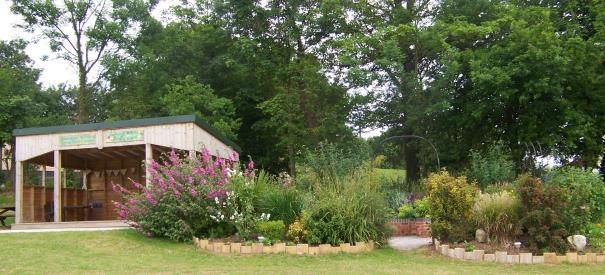
prepared to keep themselves informed and up to date by visiting the school, by reading
reports, undergoing training and attending meetings;
prepared to make the governorship of the school, a priority.
In addition to these responsibilities, Foundation Governors will be involved, in activities of a religious
nature. e.g. regular church services that are part of the school calendar. They, like the other
Governors, are always prepared to come into school.
All parents/carers are entitled to participate fully in the election of the parent/carer
representative on the Governing Body.
The Staff
Headteacher School Administrator Consultant SENCO
Mrs H Alliston Ms L Bonser Mrs S Anderson
Oak Y5/6 Maple Y3/4 Maple Y3/4 Chestnut YR/1/2
Miss E Johnson Miss R Simon Mrs N Childs Miss Lucy Hunt
Teaching Assistant Teaching Assistant Teaching Assistant Catering Supervisor
Mr M Neal Mrs I Burgess Ms J Pearce Mrs Louise Toomer
School Organisation
Our number on roll from September 2019 was 55. The Governors have agreed to the following for the
academic year 2020-2021:
Class Structure
Chestnut Class YR 8 Yr 1 3 Y2 2 13
Maple Class Yr 3 12 Yr 4 8 20
Oak Class Yr 5 9 Yr 6 9 18
School total 51
6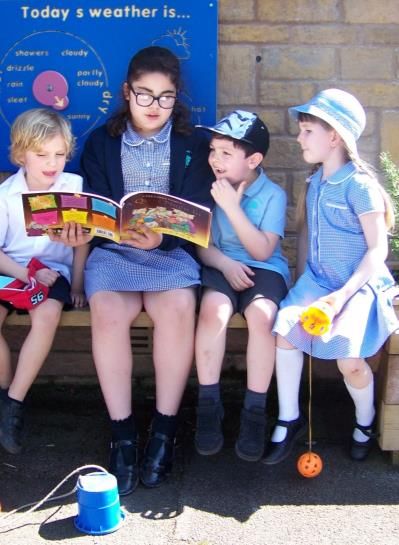
We use our funding to staff, over and above, the county funding level for a school of this size. This
arrangement is reviewed annually. There are three, mixed aged classes; teaching assistants work
across all classes. Teachers plan for learning matched to the age of the pupil and assessment is also
matched to the pupil’s age. Pupils are expected to work at age related expectation with an emphasis
on working at a deeper understanding.
The School Environment
This Victorian school was built in 1834. It was extended in 1873, 1987 and 1999. The Nursery was
added in 2009. In November 2014 we moved into the new classrooms in the Pod building. During the
summer of 2017 a new nursery room was built as an integral part of the school building.
The school has a playing field adjacent to the playground. This also contains a castle play area and
vegetable garden. In the spring term 2013 the spiritual garden and outdoor stage were added and in
the summer of 2016 the new school pond was constructed to enhance our commitment to outdoor
learning.
A few minutes’ walk from the school is the Forest School site. We use Forestry Commission land,
where we have a log circle base. The land next to the school field is ’Glebe’ land and is joint owned by
the village hall, church and school. We also use this for outdoor learning opportunities.
Our School Curriculum
Our curriculum is a whole school theme based
curriculum that draws together all subject areas to
make learning relevant, engaging and enriching for all
pupils. This runs on a two year rolling program.
The Education Reform Act of 1988 stipulates that
the curriculum should be broad and balanced and
should:
promote the spiritual, moral, cultural, mental and physical development of pupils at the school
and of society
prepare pupils for the opportunities, responsibilities and experiences of adult life
Reception children are taught through the Early Years Foundation Stage Profile. Y1 to Y6 are taught
through the national curriculum. This is further broken down into key stage one (Y1-Y2), lower key
stage two (Y3-Y4) and upper key stage two (Y5-Y6).
Learning through experience is fundamental to how children learn. As part of our school curriculum
we aim to provide real experiences to engage and enthuse. By offering integrated experiences
through a subject centred thematic approach, children will not only develop knowledge and
understanding, but self-esteem, tolerance and resilience. As their skills are fostered and their self-
confidence strengthened, we will encourage each child to become an independent learner.
In delivering our curriculum, we believe that a variety of teaching methods, both formal and informal,
are appropriate. Our local environment, a range of materials and resources will all be used as much as
possible.
Mathematics
We use Numicon and a range of other practical equipment to help pupils develop
reasoning and problem solving skills. To help pupils develop greater depth in
7
understanding of mathematical concepts, all pupils will use practical equipment and draw pictorial
    representations.

 English
 Language is an integral part of our entire curriculum. We prioritise speaking as a tool to learning and
 firming understanding. All children will be encouraged to work collaboratively. They will be given time to
 discuss, order thoughts and express themselves clearly and fluently.
 Reading is taught through phonics and guided reading comprehension. KS1 children have a daily phonics
 session using the ‘Read, Write, Inc’ scheme and Oxford University Press ‘Origins’ are used as part of our
 guided reading resources. Your child should be encouraged to read and share books with you at home, to
 help develop a love of stories and reading. Reception children need to share a book, ideally, every day.
 Older, independent readers should read for enjoyment at least 4 times per week. Children are
 encouraged to choose books, for themselves, from a wide range suitable for their stage of development.
 The main reading scheme for the school is Oxford University Press www.oxfordowl.co.uk and Read
 Write Inc. scheme books.

                                   The teaching of spelling, punctuation and grammar is taught through
                                   the ’No Nonsense Spelling and Grammar’ Babcock scheme. We teach
                                   grammar as part of English lessons; spelling is taught outside the main
                                   English lessons. Cursive handwriting is introduced at YR but taught
                                   from Y1. There is an expectation that all pupils will write with a
                                   cursive style from Y1. The purpose, features and structures of the
                                   different genres of writing are taught during English lessons. Children
                                   then use these skills to produce writing though theme work. A balance
                                   of fiction, non-fiction and poetry are taught each term.

                                   Other curricular areas
                                   All other areas of the curriculum are taught through a thematic
                                   approach each term will have a history, geography and science main
                                   focus.

Computing
We have a class set of laptops and ipads which are used by all classes. Wi-fi is accessible throughout the
school which makes their use more convenient. Each class has an interactive touch screen. Teachers and
pupils use IT as an integral part of daily teaching.

Physical Education
In addition to the school hall, playground and field, we use a number of local sporting venues to enhance
our curriculum. Pupils swim at Freedom Leisure Sports Centre Cinderford; gymnastics is taught by a
professional gymnastic coach at the Forest of Dean Gymnastics Centre, Berry Hill. As a member of the
Youth Sport Trust and local small school cluster, we regularly
enter the local school inter-school events and competitions. We
also enter the annual Forest of Dean Country Dance Festival.

Sports Grant is money given to schools to develop sport and
promote a healthy life style. We are using our grant to part
fund gymnastics and swimming as well as after school sports
activities. We are committed to the ‘Daily Mile’ which was
introduced a couple of years ago.

                                                      8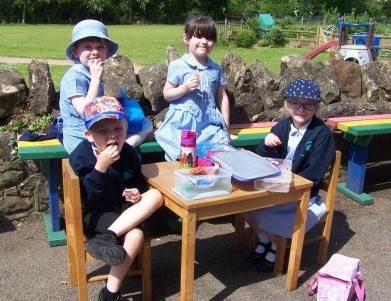
Religious Education

Religious Education is a statutory requirement. The aim of RE is to enable pupils to understand the
nature of religious beliefs and practises. The curriculum is drawn largely from the study of
Christianity but children will also be introduced to other religions, customs and traditions. Pupils will
be helped to discover some of the ways in which others shaped social life and attitudes. R.E. shares
common ground with other elements in the curriculum in contributing to the personal, cultural, moral
and social development of pupils. The teaching of R.E. will include opportunities to visit places of
worship and to meet people from other faiths.

Relationships and Sex Education

Relationships and sex education is part of health, wellbeing and science education. Throughout their
school life, children ask many different questions about themselves and others. We want to be able
to answer their questions in an atmosphere, which promotes easy discussion, so that they value family
life. We use a sequence of programs produced by Channel 4 and curriculum resources produced by
Gloucestershire Healthy Living and Learning (GHLL).

Home learning
Weekly home learning activities are given to all children. Reading and spelling are weekly tasks with
other areas linked to learning in class. Please see the homework policy on the school website.

Special Educational Needs
The Headteacher is the school contact for SEND but we buy additional support from an experienced
consultant SENCO. The SEN Code of Conduct sets out the procedures and systems schools need to
help pupils with disabilities and special educational needs. We work with a range of external agencies
who offer a comprehensive support. If we feel your child needs support, we will talk to you. If you
have any concerns, please contact the Headteacher. Your concerns are important to us. Together we
will support your child with learning.

Forest School
Forest School is an outdoor classroom led by qualified
Forest School leaders. It places young people in real
situations and encourages them to take risks and reflect on
their actions. Activities involve specific tasks through which
pupils learn and develop a range of personal and social skills.
It contributes directly to many areas of the National
Curriculum.

Structure of the school day

    School registration                          9:00

    KS1 morning session                          9:00-12:00
    KS2 morning session                          9:00-12:05
    Afternoon session                            1:00-3:15
    KS1 10 minute break
    KS1 teaching week excluding                  22 hours and 5 minutes
    registration, worship, break and lunch
    KS2 teaching week excluding                  23 hours and 30 minutes

                                                   9
registration, worship, break and lunch

    Children arrive at school between 8.50 and 9.00. Please note we cannot accept responsibility for
    children who arrive before 8.50, or who are on the premises after 3:25pm. Children, who are brought
    to school early, remain the responsibility of their parents until 8.50. Bicknor Bears Nursery is open
    at 7:30 for breakfast club. Please ask for details from the school administrator or Bicknor Bears
    Nursery.

    It is important that the school day starts promptly at 9.00. On arrival, children wait in the
    playground until the bell is rung. During bad weather children may enter their classroom from 8:50.
    Children are collected from the playground at the end of the school day. Children will wait, with their
    class teacher, until they are collected. Should you wish your child to make their own way home, please
    write a letter of consent to the Headteacher. If for any reason you cannot collect your child at
    3.15pm please inform the school administrator or class teacher.

    Parking
    The majority of children are brought to school by car; this has had an impact on the residents of
    English Bicknor Village. Residents have asked us to remind you, not to park on the bend or on the
    pavements. The residents of Balls Hill have asked us, to remind you, not to park in their driveways.
    Please take care when you enter, manoeuvre and leave the car park.

    Playtimes
    All pupils have a 20 minute playtime in the morning;
    Pupils are encouraged to eat a piece of fruit at morning
    break time. Fresh fruit is supplied, by the Government
    for the YR-Y2; older pupils can bring fresh fruit, of
    their choice, to eat at play time. Pupils should not bring
    snack bars for morning snack. All pupils have the
    opportunity to have milk. Information is available from
    the school administrator.

    Pupils are not permitted to bring toys, games or personal
    objects to school. However, on the Friday following their birthday, they may bring two presents and
    their cards to show during Friday Celebration Worship. These must be given to the class teacher for
    safekeeping during the day.

School Attendance/Absence

Only the school, within the context of the law, can approve absence from school during term time.
It is the parent’s responsibility to inform the school of a child’s absence. Please contact the school to
inform us of the nature of the absence. When the absence is due to illness, the school should be notified
of the nature of the illness and when the child is expected to be able to return to school. Where there is
no explanation, the absence must be treated as unauthorised.

Medical visits in school time
Parents will need to complete an ‘Absence from learning’ request form, if your child needs to attend a
medical appointment. These will then be signed by the Headteacher and a copy returned to the parent.
These forms will then be saved and filed. Ideally dental and medical appointments should be made outside
of the school day.

                                                      10
Late Arrival
A pupil arriving late may seriously disrupt not only his/her continuity of learning, but also that of
others. Where pupils miss registration altogether and fail to provide an adequate explanation, they
will be marked as ‘unauthorised absence’ for that session. Pupils arriving after close of registration
have to be marked as ‘late’. If a child is ten minutes late every day, they would miss 32 hours of school
in a year - equivalent to over six days of teaching.
Special Occasions
Only exceptional occasions will be sanctioned through authorised absences.
Family Bereavement
The school will respond sensitively and has discretion to authorise absence.
Leave of Absence
Pupil absence is part of the Ofsted criteria when making an overall judgment of the quality of the
school. Persistent absence and lateness has to be logged and presented at inspection. Headteachers
may not grant any leave of absence during term time unless there are exceptional circumstances.
Family holidays are not ‘exceptional circumstances’. Further details can be found on the DfE website
via the link below:
https://www.gov.uk/government/uploads/system/uploads/attachment_data/file/361008/Advice_on_s
chool_attendance_sept_2014.pdf
Page 6 All schools must agree with the relevant local authority, the regular interval that the school
will inform the local authority of any pupil who fails to attend school regularly, or has been absent
without the school’s permission for a continuous period of 10 days or more. Local authorities have a
duty to put in place arrangements for identifying (as far as it is possible) those children of compulsory
school age in their area who are not school registered or receiving education otherwise than at a
school. Local authorities should trace those children and ensure that they receive full-time education.
Page 7 The school should follow up any absences to:
• Ascertain the reason;
• Ensure the proper safeguarding action is taken;
• Identify whether the absence is approved or not; and,
•Identify the correct code to use before entering it on to the school’s electronic register, or
management information system which is used to download data to the School Census .
You must complete an ‘Absence from learning request form’ as soon as possible before your
child’s planned absence from school.
English Bicknor School Absence
2017-18 2018-19 2019-20
School 3.4% 3.6% No data due
Absence to Covid 19
National 4.8% 4.5% No data due
Absence to Covid 19
School Meals
School meals, provided by Caterlink, are not cooked on the premises but
brought in from the kitchen at Coalway Junior School. All YR, Y1 and Y2
pupils are entitled to a free school lunch. See the school administrator
11for details.
Menus need to be completed and handed to the class teacher or TA on Mondays;
Pay online using PARENT PAY. Please ask for details from the school administrator;
Individual days may be booked as well as whole weeks;
Free school meals are available to children from families receiving Income Support.
Application forms can be downloaded from www.gloucestershire.gov.uk/freeschoolmeals.
Alternatively, please ask the school administrator.
All lunch boxes must be clearly marked with your child’s name.
We actively encourage children to eat healthily. Sweets are not permitted in lunchboxes.
If a drink is included, please ensure that it is in a leak-proof container. No glass bottles or
cans; pupils can bring weak squash/juice. No fizzy drink permitted.
Drinking water is provided at lunch time as well as being available throughout the day.
Uniform
The school governors encourage all pupils to wear the school uniform.
Polo shirts: blue or white
Trousers: black or grey
Skirts and pinafores: navy, black or grey
Jumpers and cardigans: navy
Summer dress: blue check
Black shoes
P.E. kit: school t-shirt and navy or black shorts, blue or black track suit. Please note children
must wear black daps for indoor PE; trainers can be worn for PE on the school field. PE kits
need to be stored in a named bag which will be hung in the cloakroom.
A book bag
All items are available online from: www.pbparentsonline.co.uk/englishbicknor or www.tesco.com/ues.
Links are available from the school website. You may purchase similar clothes from an alternative
supplier. Please make sure that ALL clothing, including footwear, is named.
Admission Procedures: Starting School
In normal circumstances, new reception children would be invited to attend two afternoon sessions, in
June but due to Covid 19, we are unable to offer this. We aim to provide a Parent’s information meeting
before the summer break.
We aim for all children to return to school in September 2020 but due to Covid19 we will abide by DFE
guidance. Reception children will start school, on a part-time basis, at the beginning of the autumn term.
In week one, new reception children will attend afternoon sessions (1:00-3:15). In week two they will
attend morning and lunch time sessions (9:00-1:00). Week three, they will attend full time (9:00-3:15).
The school reserves the right to vary the start date for full time attendance, in consultation with you,
should we feel that it is in the best interest of the child and the school. A child may start full time after
the term of their 5th birthday.
The GCC local authority organises our school admissions. If you are unsure about the procedures for
applying for a place, please contact the school administrator. Full admission details are available from the
local authority. Parents are given confirmation of a school place at a date specified by the LA (end of
March). Parents, who have not been offered a place at their chosen school, may appeal to the LA.
12Transfer of pupils from nursery
The Headteacher and class teacher will visit each child at their nursery, during the summer term
prior to starting school. They will discuss any needs, with the child’s key worker, in preparation for
starting school. We may arrange a home visit.
Transfer of pupils to Secondary School
At the beginning of Y6, all parents need to make an admission to a secondary school of your choice.
Secondary schools offer information evenings during the beginning of the autumn term. Parents can
also attend information evenings when their children are in year 5. Please inform the Headteacher
of your choice so that transition meetings can be arranged.
In case of accidents or illness
All parents must complete a New Admissions School-Parent’s Sheet to enable us to contact you. It is
the parents’ responsibility to inform us when a mobile, landline or address changes. If we do not have
the correct information, we cannot contact you, especially in an emergency.
All minor injuries are dealt with by staff trained in first aid. An ambulance will be called in an event
of an emergency. Should your child bump their head, you will receive a letter of explanation.
If your child is on medication, please inform the school administrator. If your child needs
medication 3 times per day, parents need to administer before school, on return home from school
and in the evening. Parents need to administer medication to their children. In exceptional
circumstances, medication brought to school must be handed in to the school office by the parent
who will be required to fill in an Administration of medicines at school form. The school
administrator will administer the medication. Medicine will not be administered without this form
being completed.
We can only administer prescribed medicines that require more than 3 doses per day
Containers must be labelled with the child’s name, instructions and the reason it is to being
taken.
Medicine must be collected, by the parent, from the office at the end of the school day.
Parents are responsible for checking that the medication is still in date.
Pupils must not be given Calpol or cough sweets to store in bags/pockets to then self-
medicate.
If your child needs regular medication, e.g. asthma, please contact the Headteacher. Inhalers
will be held in the classroom and will be administered under staff direction.
Communication
If you would like to speak to the class teacher, we would appreciate that you do this at the end of
the school day. If you have important information that the class teacher needs to know, tell the
school administrator or Headteacher who will then pass this on. Parents are asked politely not to ask
to speak to the class teacher when they are teaching their class.
We are always prepared to discuss anything that affects your child’s education. Please contact the
school office to make a mutually convenient appointment.
Formal parent consultation evenings
Autumn term: October Formal consultation
Spring term: March Formal consultation
13Summer term: July Written report, Consultation on request
School Closure
Should school close due to bad weather visit: www.gloucestershire.gov.uk/closures
You may also hear a list of schools closed on Radio Gloucestershire at 07.45.
Radio Gloucestershire is available on. 7 FM or 1413 AM. Also available at: www.bbc.co.uk/gloucestershire.
We will also post on the front page of our school website the day that we are closed and when we will
reopen.
After School Activities
After school clubs are run Monday to Thursday 3:15-4:15 unless stated otherwise. Each club costs £2.
We run at least one sports club per week; some terms will have more.
You will need to complete the attendance form for the beginning of each term. Places will be offered on a
first come first served, basis.
Complaints Procedure
Under the Education Reform Act 1988, the Authority has established arrangements to consider
complaints about the school. For our school complaints procedure, please visit the school website.
Complaints are, in the first instance, to be directed to the Headteacher. If this fails, there is then a
formal appeals procedure.
Behaviour
The school has a Behaviour Policy which has been approved and agreed by the Governing Body. The policy
is available from the school website. Expectation of good behaviour is reinforced though the schools
Christian values.
We believe in positive reinforcement, encouragement and reward. Children only benefit from a positive
ethos in which to thrive and learn effectively. Our aim is to enable children to learn and exercise self-
control, tolerance and respect. Our positive reward system is based on the recognition of good
behaviour, respect, effort, care for others, perseverance and responsibility. Children earn acorns which
build into trees which are collected onto a Tree Card. When a pupil completes a Tree Card, they choose a
book from the Tree Card box collection.
If a child’s behaviour is unacceptable; is a danger to others, is disrespectful to people or objects, or if
effecting capacity to learn, the pupil will be removed from being in contact with others. There will be a
consequence for their actions.
Child Protection and Safeguarding
We must, by law, report any safeguarding concerns immediately to the local authority safeguarding team.
The DFE have clear procedures for us to follow. Mrs Alliston is the designated safeguarding lead and
Miss Johnson is the deputy designated safeguarding lead. The governors for Safeguarding are Mrs
Sophie Allen and Mrs Gerry Buckland.
Data Protection (GDPR) and Freedom of Information
We need to keep records of personal information on file. These will only be used for school purposes.
You can download a copy of the school Privacy Notice, Data Protection and Freedom of Information
documents, from our school website.
Parents and the community
We welcome helpers into school. If you feel you can help, please contact the Headteacher. We
encourage links with the local community and there is an open invitation for anyone to attend school
14activities. To satisfy safeguarding regulations, a DBS check will be required.
Friends of English Bicknor School Association (FOEBs)
All parents are automatic members of FOEBs and are invited to the meetings, usually held once per
term. Social and fundraising events are held regularly. The school and pupils benefit tremendously
from the money raised by these events and so your active support would be most welcome and
appreciated.
Charging Policy
The vast majority of activities will be financed by the school with funds received from the local
authority. There are however, some valuable education activities which the school cannot provide
without seeking some financial support from parents. Without these voluntary contributions extra-
curricular activities may be cancelled. Payments need to be made through PARENT PAY. Please ask
the school administrator.
School Visits
Educational visits are organised to enrich the school curriculum. However, there are insufficient
school funds to provide these free of charge. Most trips are part funded by FOEB’s, so we will ask
for a parental contribution. There will be no compulsory charge but voluntary contributions will be
invited. If we do not receive enough parental contributions, the trip will be cancelled. Full charges
may be levied, for visits occurring out of school hours or for the board and lodging cost of any
residential activity.
Parents will be informed of the cost for swimming and gymnastics and will be invoiced for a minimal
amount, at the start of the block of sessions.
Y6 PGL residential
During the summer term, Y6 pupils are offered the
opportunity to visit a PGL, mid-week, residential.
Activities include: abseiling, canoeing, raft building,
fencing, archery, rifle shooting and zip wire. This is a
fantastic opportunity for the pupils to experience
activities they have never done before as well as
strengthening self esteem and confidence.
Equipment and material
No compulsory charges will be made, although
occasionally pupils will want to keep the product they
have produced in some art and DT activities. A small contribution may then be appreciated.
Available documentation
The following documentation can be downloaded from our school website:
The OFSTED Inspection Report
SIAMs Inspection Report
Complaints Procedure
Privacy Notice
Data Protection Policy
Freedom of Information Policy
Our school broad and balanced curriculum
The Agreed syllabus for R.E.
Behaviour Policy
15 Safeguarding Policy
Child Protection Policy
SEND Policy
Attendance Policy
Home School Agreement
Homework Policy
As part of the transition from primary to secondary education, Y6 pupils attend a leaver’s service at
Gloucester Cathedral. We wish all our Y6 pupils success in their new schools.
16You can also read


