Be School Ready - West Witney Primary School
←
→
Page content transcription
If your browser does not render page correctly, please read the page content below
Be School
Ready
2019 | A WELCOME TO YOUR SCHOOL FROM

                                                          Colouring
                                                         & Counting!
                                                          FUN ACTIVITIES
                                                           TO DO WITH
                                                           YOUR CHILD

TOP TIPS
FOR STARTING
SCHOOL

 WIN!       S
   £250 M&for
          s
  voucher the
   you and PTA*
  school's
                           Page 7           Page 8              Page 20
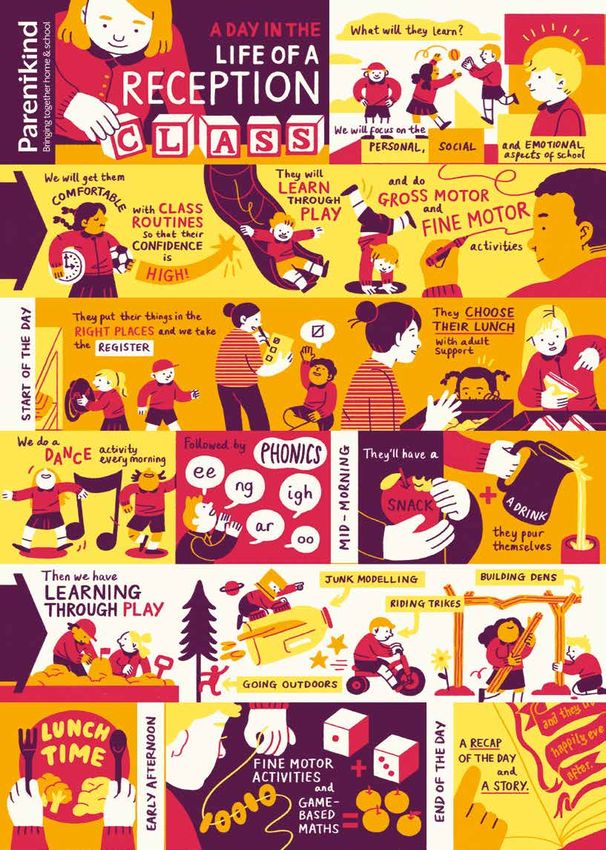
                       GETTING READY       A DAY IN        FORCE FOR GOOD!
                          TO READ         THE LIFE OF      GETTING INVOLVED
                         AND WRITE     RECEPTION CLASS      IN SCHOOL LIFE
CONTENTS BE SCHOOL READY
What 's inside Welcome!
3
4
WELCOME
TOP TIPS FOR STARTING SCHOOL
Practical ideas and advice from parents,
for parents
10 LEARN THE LINGO
School words, phrases and
abbreviations from ARE to SEND!
11 FUN ACTIVITIES 7
Enjoy reading
B
time together
W elcome to Be School Ready magazine from Parentkind –
the charity that brings together home and school. Inside
you’ll find top tips from other mums and dads, practical
information about school life, advice to help you and your child feel
happy and confident about starting school, and some fun activities.
A pull-out section for your child with
6 READY, SET, SCHOOL! activities from National Literacy Trust We’d also like to welcome you to your PTA (they might be called the
Help your child feel prepared for the and National Numeracy
changes ahead PTFA, Friends group or something else at your school). Now that your
15 WHO’S WHO AND child is enrolled at the school you’re automatically a member of the
7 GETTING READY TO WHAT DO THEY DO? parents’ association, so get ready to take part (as much or as little as
READ AND WRITE Get your home/school communication you like). Over the coming months a member of your PTA’s committee parentkind.org.uk
How sharing books and building strength off to a great start by finding out who will let you know more about how you can get involved and support
will help your child learn does what the school.
8 A DAY IN THE LIFE OF 16 KEY STAGES, TESTS Starting school is an exciting time for the whole family, and there’s
A RECEPTION CLASS @Parentkind.org.uk
AND ASSESSMENTS overwhelming evidence that children do better
A glimpse at what your child might get
20
A quick look at what to expect at when their parents are engaged and involved in
up to at school primary school their education, so jump in right from the start.
9 TURN SCHOOL MORNING 19 PTA FACT FROM FICTION It’ll be worth it for you and your kids.
Be inspired @Parentkind
CHAOS INTO CALM!
Michelle
How your PTA supports your child’s to make a
Tips for a great morning and school difference
after-school routine Acting Chief Executive, Parentkind
20 BE A FORCE FOR GOOD!
Parents make an incredible info@parentkind.org.uk
difference in schools. Read our
members' stories and be inspired!
0300 123 5460
16 9
How to turn
WIN! £250 vouchers for you and the PTA
A quick guide to morning chaos
key stages, tests into calm
B
and assessments Head to parentkind.org.uk/feedback and answer a few questions
B about Be School Ready magazine to enter our prize draw.
You could win £250 of M&S vouchers - £100 for you to spend on uniform or
4
Top tips
for starting other school essentials, and £150 for your school’s PTA to buy raffle prizes
'big school'
B or event supplies.
Closing date 30/09/2019. Full terms and conditions at
parentkind.org.uk/feedback-tandc
2 | parentkind.org.uk parentkind.org.uk | 3
STARTING SCHOOL
Top tips for Listen up
starting school
“Nothing” and “I can’t remember”
are standard answers to questions
about your child’s day. If you’re used
to detailed nursery handovers, this
lack of information can come as a bit
of a shock. Don’t be discouraged: wait
a little and the stories will come out,
usually at an odd time – when they’re
The next few months are Label it
Shop for the
in the bath or on the toilet! Try asking
the perfect time to focus on specific questions like “who did you
helping your child feel happy essentials If it is not permanently attached to
your child, put their name on it! Labels
play with at break?” or “what made you
laugh today?”
and confident about starting The school will probably give you a list of Get yourself help them identify their own clothes,
everything your child needs, but it might and also help staff deal with piles of
school. There are lots of easy
not all be essential right from the start, so organised identical jumpers and bookbags. If
things you can do now. ask other parents what can wait until later.
Children come home covered in everything
There’s a surprising amount of
admin to deal with once your child
your child isn’t reading yet, use labels
with little pictures next to their name. Familiarise & socialise
To help you get started, – mud, lunch, paint, playdough – you starts school. Letters and forms There are lots of quick and effective Familiarise your child with their school before they start. Go along to the summer fair so they
name it. So if you don’t want to be washing come home every week and it's in alternatives to sew-in nametapes, start to feel like it’s ‘their school’. Attend the welcome events, get to know other parents and if
here are some top tips every night, it’s a good idea to have plenty your child’s interests that you are on including stamps, stick in labels, or the possible arrange a few playdates so your child sees a few familiar faces on their first day. Do a
from the Parentkind team, of uniform. Ask whether the PTA runs top of things – you don’t want your old marker pen on the label trick. dry run of your journey to school, just as if it is the big day itself.
our PTA members and pre-loved uniform sales – particularly for child to be the only one in uniform
school logo items, they’re a great way to on an own clothes day! Read the
Facebook community of support the school and save money. And newsletters, familiarise yourself
mums and dads. to help get your child excited about school,
let them help choose anything that isn’t
with the school website and note
dates on your calendar. Remember Lunches
school specific, like a skirt, shorts, wellies or to share information with everyone Children don’t get a lot of time to eat
their PE bag. involved in your child’s care. lunch, and usually they don’t want to
sit down for too long, so make sure
packed lunch quantities are manageable.
If your child will be having a hot dinner
(all Reception children in England are
entitled to a free school lunch), look at
Accept that they’re the menu together in advance to make
choosing less daunting. Try out similar
going to be tired meals at home so they get used to the
food on offer, but don’t underestimate
Even children who are used to nursery or peer power – children will often give new
pre-school will be tired after school, so things a go at school.
get into a routine of early bed
times and wake ups well
Develop Be positive Get involved
in advance and prepare
yourself for meltdowns!
independence Avoid fear It’s not a race
After a day of listening,
playing and learning, and calm in school life Try and dodge playground
Though Early Years staff are happy of the unknown there can be an Your child may feel anxious if they see Volunteering for the PTA, helping in discussions about whose child
to help with shoes, PE changes, There are lots of ways you can get your outpouring of that you are worried. Accept that, just like class, or joining a Parent Council are can already read or count –
cutlery etc., the effort you put in to child used to the idea of school – start by emotions once your them, you will learn as you go. If you have all great ways to be involved with the your child will develop at their
preparing your child for school life borrowing a few books about going to child’s back home. concerns, talk to their teacher, school school and take part in own pace. The qualities that
by encouraging independence won’t school from your local library and read They’ll be hungry office, or head teacher; they are your child’s school life. matter most in Reception age
go unnoticed. Encourage your little them often. Treat your child to a sticker or too, so bring a there to help. On the first day Attend meetings and children are things like curiosity,
one to practise getting dressed and activity book about starting school, play healthy snack don’t stay around at drop off; get-togethers and independence, imagination, and
undressed, and make things easier ‘school’ with their teddies, and let them at pick up it’s generally best to leave you will soon get to enjoying playing and sharing
for them – think Velcro shoe straps wear their new uniform around the house – time for a them to it and have a box know other parents with other children.
and elasticated waist bands! if there’s anything itchy or annoying you can quick energy of tissues ready at home who understand the
deal with it before the big day. boost. – just in case! school well.
4 | parentkind.org.uk parentkind.org.uk | 5
PREPARING YOUR CHILD FOR SCHOOL READING AND WRITING
Getting ready to parent tip
Bring out the
read and write
paper, paints
and brushes
– building up
arm and chest
muscles helps
them write too!
Ready, set,
Every child is different and will develop at their own pace. Children aren’t
expected to be able to read and write before they start school, but there’s
plenty you can do at home that will help them get off to a great start.
SCHOOL!
READING TO YOUR CHILD LEARNING TO WRITE
The benefits of reading regularly with your child are Learning to write is tricky. Young bodies need to develop
well documented. Here’s why it’s such an enjoyable muscle strength in the fingers, wrists, elbows, shoulders
and simple way to support your child’s learning: and back to be able to hold a pencil properly. Here are
some ideas for building strength through play:
Together with all Imagination and creativity. Messy play. Get out the play dough and do
the excitement of starting Looking at the pictures, talking some modelling. Use pinching, chopping
B
about how the characters feel and
Get them used to schools
school, it’s completely natural and squeezing actions to help develop all
to worry a little. Here’s how you 1 what’s going to happen next can
really ignite their imagination.
the muscle groups needed for writing.
can help your child develop Your child’s school will arrange taster sessions, welcome meetings and tours
before they start, but don’t stop there; try and visit schools with your child as
B
the skills to cope with new much as you can over the next few months – even if it’s not the one your child will Puzzles and games. Jigsaws are
brilliant for developing hand-eye
situations and bounce be going to. Go along to school summer fairs and as you walk around, talk about Concentration. Sitting down regularly coordination and building with
what goes on in the playground, classrooms etc. (they’re great for picking up cheap to read together can help increase the
back when things second-hand toys and books too). If you have older children already at school, take length of time your child is able to sit
wooden bricks and Lego can help
strengthen little hands and fingers.
go wrong. little ones along to their open days and school performances. still and concentrate – this will help B
B
them when they start school.
2 THAT THING
CALLED RESILIENCE 4 BIG-UP GOING
TO SCHOOL
Language skills. Children hear and
learn words that are different from their
Helping at home. Get your child involved
in a bit of housework: pegging out washing,
Being resilient means that children (and How you and your family talk about day-to-day vocabulary through books. dusting and sweeping all build strength
adults) are able to cope with change and school with (or in earshot of) your child B (why is it that kids enjoy tidying and cleaning
B
bounce back quicker when things go wrong. will have the biggest influence on how when it’s not their bedroom?!)
Three easy things you can work on together they feel about going. So even if your own
that will help build resilience are feelings, memories of school aren’t particularly
positivity and coping. Encourage your child happy ones, make sure you talk positively Play outdoors. Head to the park, the
Let’s pretend
Learn about the world. Choosing
to talk about how they’re feeling, teach them
the names of the different emotions and how
3 to your child about what school will be
like for them. If there’s something you’re
books about a wide variety of topics
beach or mess around in the garden.
Make a den, build sandcastles, feed
Do lots of school-type activities at home helps children learn about different
they can recognise how other people might concerned about, ring the school or drop the ducks, squirt a water pistol, climb
be feeling. When problems come up, show
your child how to look at them in a good way
with a ‘glass half-full’ attitude. And let them
(you probably do lots of these already):
read to your child and look at books
together, talk about the time of day and
in and ask to
speak to your
child’s teacher parent tip
places, cultures and interests. They’ll
develop a greater understanding
of the world around them and an
B trees and swing from play frames –
pretty much every outdoor game will
support their physical development.
B
days of the week, sing rhymes together empathy for others.
know that sometimes things do go wrong, or a member
but there are ways to distract themselves if and play with musical instruments, role of the pastoral “Relax and be there
B
they feel upset or angry, like counting up to play, help them recognise their name care team to support your Tummy time. Nope, it’s not just for
B
ten or finding something different to do. when it’s written on things (think bedroom about your child. Try not to be Time together. Cuddling up and babies. When your child is looking
door sign, novelty rulers, clothes labels worries, so stressed, your child having some quality time is a great at books or watching a bit of telly, by
Read more about resilience at etc.), and count things together - like going you don’t pass will pick up on your way to relax and enjoy a story getting them to lie on their stomach,
parentkind.org.uk/BeSchoolReady up and down the stairs or yellow cars them onto emotions” together away from the regular they’ll be developing core strength
when you’re out and about. your child. demands of busy lives. and coordination.
6 | parentkind.org.uk parentkind.org.uk | 7
GETTING TO SCHOOL AND BACK SAFELY GETTING THE SCHOOL DAY OFF TO A GREAT START
Turn school morning chaos
Even the most
organised parents
with years of
into calm!
school- run
AFTER SCHOOL AND
G
YOUR MORNIN
experience will tell
you that mornings EVENING ROUTINE
can be a challenge. ROUTINE
You'll need to
be adaptable, Get up half an hour earlier than Check your child’s book bag for
your child to give yourself a head any letters or notes from their
but having a start teacher, the school office, or PTA –
routine will help party invites are often sent out this
you manage the Open curtains or switch on a lamp way too
mayhem – making it in your child’s room 10 minutes
before they need to get up, to give Talk about their day, read
easier for your child them a chance to wake up naturally together and (in time) help
(and you) to enjoy with homework tasks
the day ahead. Use the Parentkind morning
checklist with your child so they Make sure any books that come
KIDS MORNING
learn what they need to do each home are back in their bag each
day – as they get older encourage evening
CHECKLIST them to do more by themselves
Find out if there’s anything
me]
[Child’s Na Allow enough time for breakfast special going on the next day
MORNIN
G Checklist
d DONE?
– try and leave 15-20 minutes to
sit at the table, it’ll give you a few
that they need something out
of the ordinary for e.g. wellies,
Get dresse
Tidy bed
DONE?
minutes to talk about the day cardboard boxes, a costume for
DONE?
ast ahead, and eating a filling breakfast World Book Day!
Eat breakf
DONE?
Wash
DONE?
will help your child concentrate at
h
Brush teet school
Hair brushe
d
DONE?
Help your child lay out their
DONE?
Shoes on uniform ready for the morning
DONE?
Bag Switch off distractions like TV or (including BOTH shoes)
!
Ready to go tablets – perhaps build in a few
minutes to watch a bit of telly if Get them to bed on time, because
everyone’s ready on time, but not tired and grumpy children aren’t
Download at if you know it’s going to cause fun in the morning!
parentkind.org.uk/BeSchoolReady problems leaving the house!
Parentkind tip
It might take a while to
establish a routine (or
even remember that you
have one), but stick with
it and on the days when
it all goes to plan, you’ll
find mornings are much More about being an organised
calmer. parent and the importance of sleep at
parentkind.org.uk/BeSchoolReady
parentkind.org.uk | 9
fun activities
        SCHOOL LANGUAGE AND ABBREVIATIONS

                                                                                                          School life has

      Learn                                         the lingo
                                                                                                          a language and
                                                                                                          vocabulary all of its
                                                                                                          own. If things are getting
                                                                                                          lost in translation, check                      As a parent or carer there are lots of simple ways                  The National Literacy Trust is an
                                                                                                          our list of words, phrases                      you can support the communication and language                      independent charity that transforms
                                                                                                          and abbreviations used                          skills your child is learning at school.                            lives through literacy.
                                                                                                          in primary school.                              Chatting and playing with your child develops                       Their website for parents has
ARE: Age related expectations.                      Guided reading: A method of teaching that        Phoneme: A unit of sound – examples would            listening and speaking skills. Sharing stories inspires             tips, milestones and activities like
                                                    involves reading with children in small groups   be the noises you make when you say “t” or           children to love books and to want to learn to read.                the ones in this booklet for you to
Blending: The merging together of the               so that their individual needs can be met.       “k”. They can be put together to make words.         Scribbling and drawing develops early writing skills                complete with your child to help
separate sounds in a word.                                                                                                                                and helps children express themselves. Pointing out
                                                    High frequency words: The words that             Phonics: A method for teaching reading
                                                                                                                                                                                                                              them develop their literacy skills.
Circle time: When the teacher brings the            occur most often in written texts. They          and writing by developing the ability to hear,       signs and words when you’re out and about helps                     Visit wordsforlife.org.uk for
children together to share news or discuss          include ‘the’ and ‘and’.                         identify, and manipulate units of sound.             children understand the world around them.                          lots more.
values. The class sit in a circle on chairs or on
the floor.                                          Home–school agreement: Non-binding               PSHE: Personal, social and health education.
                                                    statement explaining the school’s aims and
                                                                                                                                                               Little Fish is a colourful, friendly fish who loves to splish and splash with
Digraph: Two letters that represent a single
sound. For example, “sh” or “ch”.
                                                    values, the responsibilities of both school
                                                    and parents, and what the school expects
                                                    of its pupils.
                                                                                                     SEN: Special Educational Needs. The needs
                                                                                                     of children with a learning difficulty which
                                                                                                     means they require special educational
                                                                                                                                                      1        underwater friends. Colour in the fish using your favourite colours.
EAL: English as an additional language.                                                              provision either in mainstream or specialist
                                                    INSET day: In-Service Education and              schools.
Early Years Foundation Stage (EYFS): The            Training days for teachers – a day off for
                                                                                                                                                                                                          by
regulatory and quality framework for children       the children!                                    SEND: Special Educational Needs and
between birth and the academic year in                                                               Disabilities.
which they turn five.                               Learning objective (LO) or We are
                                                    learning to (WALT): Describes what children
Fine motor skills: The skills that involve          are expected to learn or achieve from a task             More on the w
using smaller muscles of the hands, like using      or activity.                                      parentkind.org.uk/ ebsite
a pencil or scissors, building with Lego and
                                                                                                                        BeSchoolReady
doing up buttons.                                   NQT: A newly qualified teacher in their first
                                                    year of teaching.
Free play: A time when children choose their
own play activities (indoors or outdoors) with      Number bonds: Simple addition sums that
little adult direction or intervention.             your child will (eventually) memorise and
                                                    recall automatically.
G&T: Nope, not that! It’s an abbreviation
of gifted and talented used to describe             Number line: A line with numbers on it
children who have the ability to develop            used to teach maths by providing a visual
significantly beyond what’s expected for            representation of numbers.
their age.
                                                    Number sentence: An arrangement of
Golden time: A strategy used to promote             numbers and symbols, for example 6 + 5 = 11.
positive behaviour. Children stop work and
spend time doing special, enjoyable activities      Parental engagement: The partnership
for a period of up to an hour, usually on a         between home and school, where schools
Friday.                                             actively reach out to parents and parents
                                                    are committed to supporting their child’s
Gross motor skills: The skills that involve         learning and development.
whole body movement, using large muscles
like standing, walking, running and jumping.        Partitioning: A method of working out
They also include hand-eye coordination             maths problems by splitting the numbers
skills like throwing, catching and kicking.         into simpler units.                                                                                              Illustrations copyright © 2005 – 2018 by Lucy Cousins,
                                                                                                                                                                     reproduced by permission of Walker Books Ltd.

10                        | parentkind.org.uk
2   Grandma says she's seen a Tiger in the garden. Can you follow
    the lines below to help Nora find him?
                                                                            fun with numbers
                                                                                      We all use maths every day, often without realising it.
                                                                            National Numeracy believe that every child can develop the numeracy
                                                                                 skills they will need, both at school and throughout their lives.
                                                                            Maths is about solving problems, thinking logically and finding different
                                                                              ways of working things out. Helping your child feel confident about
                                                                                       numbers now will prepare them for learning in class.

                                                                        1    Cost of an ice lolly
                                                                             Matthew wants to buy an ice lolly. It costs 5p
                                                                             What coins could he use to pay for the lolly?
                                                                             How many different ways can you find to pay 5p?

                                                                             Helpful hints:
                                                                             Try to work methodically, starting with 1p coins
                                                                             and developing the idea of exchanging 2 x 1p coins
                                                                             to make a 2p coin.
                                                                             If your child finds this easy, ask what would
                                                                             happen if you only had 10p?

           Illustrations © Lizzy Stewart, reproduced by permission of
           Frances Lincoln Children's Books
GETTING TO KNOW YOUR CHILD'S SCHOOL
Shapes of food
2
Think about the shape of some of the food
Who’s who
you eat.
Do you eat any of these shapes?
and what do they do?
B
Who does what varies
from school to school,
Senior Leadership Team (SLT)
Accountable to the Governing Body for the leadership
and management of the school. The team includes
Senio
r Lea
Team dership
(SLT)
depending on the needs the Headteacher or Principal, Deputy Head or Vice
Principal and other key teaching staff. Each member of
of the school community, the team has specific responsibilities.
staff skills, and of course,
funding. Knowing what Pastoral Care
Supports the social and
Pastoral
support is available and Care
emotional health and
who you can go to with wellbeing of children at
questions or concerns school. Hopefully your
child’s school blends
can really make a pastoral care throughout
difference to your child’s their teaching, they may
also have a dedicated
enjoyment of school. pastoral care team
either led by a teacher
(often with responsibility SENC
O: T
for inclusion), or as a educa he speciali
tion st
co-or al needs
B
specialist role. dinat
or
Parentkind tip
Can you draw them? Check out the school SENCO: The Specialist
website. Look for a parents'
Educational Needs Co-ordinator
Are there any other shapes you find in your food? section and important
SENCOs work in partnership with the
information like: what to
families of children with SEN to make sure
Could you make a different shape from food? do if your child is unwell,
they get the support they need at school
who’s who, the curriculum
B
and that any plans or provision agreed
and what your child will
are carried out. A member of the SLT may
be learning, class pages
Helpful hints: (that’s where you’ll usually
have SENCO responsibilities at your child’s
school, or it could be a stand-alone role.
find homework) school
Talk about circles, squares, rectangles, triangles and any other shapes you might dinners, clubs, Parent Family
Council and PTA updates.
find. If possible, make shapes from sandwiches, biscuits, pizzas etc. Talk about Support
how many straight sides and round edges there are. Family Support
Extends pastoral care to parents and carers.
Parent support advisers, family liaison or
education welfare officers can help you with
any issues you may have supporting your
B
children at home and in school.
more on the website
Learn more about shapes, space, measures and all of the parentkind.org.uk/BeSchoolReady
Essentials of Numeracy at www.nationalnumeracy.org.uk
Family Maths Toolkit resources are available at:
www.familymathstoolkit.org.uk
parentkind.org.uk | 15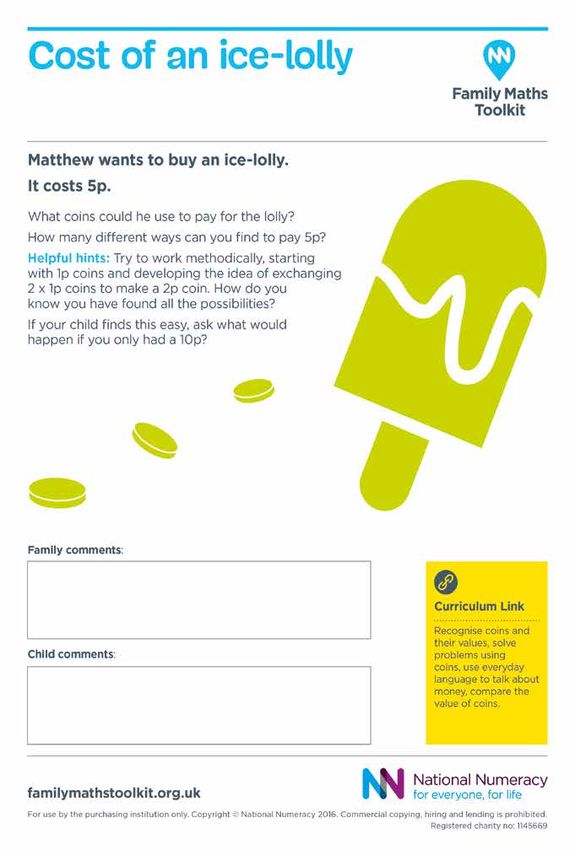
KEY STAGES AND ASSESSMENTS
Tests and assessments The Council for the Curriculum,
Examinations and Assessment (CCEA) NORTHERN
at primary school
explains: IRELAND
In Years 1 to 7, teachers assess your child’s
learning in these aspects of the Northern AGE SCHOOL KEY STAGE TESTS AND ASSESSMENTS
Ireland Curriculum: Areas of Learning, YEAR
Cross-Curricular Skills and Thinking Skills
4 to 5 Primary 1 Foundation Ongoing assessment of learning
and Personal Capabilities.
and skills based on teacher
observation
Schools can decide how they will assess your
With the Reception child’s progress in the Areas of Learning 5 to 6 Primary 2 Foundation Ongoing assessment of learning
and in the Thinking Skills and Personal and skills based on teacher
Baseline Assessment being observation
Capabilities. However, all primary schools
introduced in England from use the Levels of Progression (LoP) to assess
September 2020 and a new the Cross-Curricular Skills in Years 3 to 7. 6 to 8 Primary 3-4 Key Stage 1 Teachers will use the LoP to
make a judgement about the
curriculum for Wales in 2023, it can The Levels of Progression are a framework
level your child has achieved at
of assessment criteria that teachers use to
be hard to keep track of how and assess your child’s progress in the Cross-
the end of Key Stage 1
when your child’s progress will Curricular Skills.
be assessed. Here’s a quick 8 to 11 Primary 5-7 Key Stage 2 Teachers will use the LoP
to make a judgement about
guide on what the level your child has
to expect. For more information visit ccea.org.uk achieved at the end of
Key Stage 2
The Department for Education told
ENGLAND Parentkind
Education in Wales is changing
The Reception Baseline Assessment
will be introduced from September 2020
From September 2022 there will be a new curriculum
for all schools (except Independent schools).
WALES
AGE SCHOOL KEY STAGE TESTS AND ASSESSMENTS as a new starting point for primary On their website, Welsh Government says: The
YEAR school progress measures, giving credit curriculum has been made in Wales but shaped by
to schools for the important work they the best ideas from around the world. There will
4 to 5 Reception Early Years Teacher assessments also be changes to improve how we assess pupils,
Foundation do with their children in the first 3 years. AGE SCHOOL KEY STAGE TESTS AND ASSESSMENTS
teacher training and school accountability. These YEAR
A teacher will carry out the assessment improvements will complement the new curriculum.
5 to 6 Year 1 KS1 Phonics screening check one-to-one with the child, in a familiar
5 to 6 Reception Foundation Teacher assessments
environment, using materials children Our national mission in Wales is to Year 1
6 to 7 Year 2 KS1 SATs (Standard Attainment can easily handle. It should only last raise standards, raise the attainment of all
Tests) and teacher assessments around 20 minutes, and breaks can be 6 to 7 Reception Foundation National Reading and Numeracy
children and ensure we have an education
in English, Maths and Science taken if needed. There will be no scores Year 2 (reasoning) Tests
system that is a source of national pride
or marks given, and the data will only be and public confidence.
7 to 11 Years 3-6 KS2 SATs at end of year 6 used 7 years later with key stage 2 results 7 to 11 Years 3 – 6 KS2 National Reading and Numeracy
Kirsty Williams, Minister for Education (reasoning) Tests
to form the progress measure.
Find out more about why the
Read about SATs, phonics and other tests curriculum is changing at
at parentkind.org.uk/for-parents gov.wales/education-changing
16 | parentkind.org.uk parentkind.org.uk | 17
SUPPORTING YOUR PTA
PTA fact from fiction
When you support your PTA, you’re not just baking a cake, writing a cheque or giving up
your time to volunteer. You’re buying your child playground equipment to climb on at break
time, sending them on outings to places they’ve never been, making new friends, building a
community and helping to make your child’s school even more brilliant.
WHAT IS A PTA? Everyone’s invited IT WON’T TAKE
A PTA (aka Friends group, Now that your child has started at school,
Parents Association or
OVER YOUR LIFE
you’re automatically a member of the parent
(unless you want it
something else) is an open association. How involved you choose to to!)
There are always ple
and friendly group of become is up to you. If you’re passionate about nty of
opportunities to vo
parents and (depending making a difference and want to be involved lunteer
for your PTA. Wheth
on the type of group) in running the association, you might want to er you
work full-time, part-
teachers, extended family consider joining the committee. If you have ideas time,
or you’re a stay-at-h
and members of the local to share or want to know more about the group, ome
parent, any time yo
community, working head along to the next meeting. u can
offer will be welcom
towards a common goal; ed.
PTAs are involved in
supporting the education of a huge
range of activities, all
the children at your school with
varying time comm
and strengthening the itments,
so how much or ho
school community. It's good for you STAR
you choose to get inv
w little
The PTA is a fast way to get to olved
really is up to you.
know other parents and school staff.
IT ’S GREAT FOR Feeling part of a community is a very real
I N ! THE KIDS (even if
they don’ t realise it)
human need – and more practically, these
friendships create a support network.
W £250 vouchers for you and the PTA Studies show there’s
direct link betw ee n
a
pa rental
ol and
Chances are there will be opportunities
for you to learn new skills, and who
involvement at scho knows, you may even discover
. When
how well children do some hidden talents!
in
they see us involved
Enjoying the magazine? their school and lea
encourages them
best. Being ac
group not on
tiv
ly
e
im
to
in
rning, it
pr
a
do their
ov
parent
es your
es you
We all have something to offer
It doesn’t matter how many children you have,
child’s school, it mak how old you are, or what your background is;
odel.
an excellent role m the skills that PTAs need are so diverse, everyone
Tell us what you think of Be School Ready magazine to has something to offer. Of course, if you have
book-keeping experience you could be a future
enter our prize draw to win £100 M&S vouchers for you to treasurer, and anyone showing a creative flair
A R might be asked to design a poster or two - but
ST
spend on school uniform or other essentials, and £150 M&S the most important skills you can bring to
your PTA are enthusiasm and a willingness
vouchers for your PTA to spend on raffle prizes or other to get stuck in.
items for PTA events at your child’s school.
Enter at parentkind.org.uk/feedback
Only parents at Parentkind member schools who have received Be School Ready
magazine 2019 may enter. Closing date 30/09/2019. Full terms and conditions at
parentkind.org.uk/feedback-tandc
parentkind.org.uk | 19PARENT INVOLVEMENT IN SCHOOLS
Get involved in school life and
Be a force
help make your child’s school Be vocal
If you’re keen to have a say on school matters, like uniform or homework policy,
brilliant! By taking part, you’ll have behaviour or wrap-around care; find out whether there’s a parent voice group at
a positive influence on your child’s your child’s school.
for good!
Some PTAs act as a consultative group for school leaders and governors, but
education, because when children parent voice can also be heard in a Parent Council, or other type of parent forum.
see their parents involved in their A Parent Council is a forum where parents meet, share ideas and feedback
to the head teacher or governors. Membership should reflect the entire school
school and learning, it encourages community and give a voice to all parents. A well-run group helps develop the
them to do their best. partnership between parents and schools, as parents views are included in school
decision-making.
SUCCESS STORY!
START SCHOOL TOGETHER Be a fundraiser Having faced a challenging few years, St Nicholas CE Primary Academy set
You’re in luck! Your child’s school has an Whether you do it to create an outdoor up a Parent Council to create a vital link between home and school. Read
active PTA (they could be known as the PTFA, classroom, stock the library with new books, why it’s been so beneficial at parentkind.org.uk/St-Nicholas
friends group or another name) and they’re or buy new technology - if you’re interested
waiting to welcome you on board. in fundraising your PTA needs you!
As you might expect, fundraising is a Funds raised from PTA activities make
priority for most PTAs, but they do a lot more such a difference to your school and the BE AN INFLUENCER
than you might imagine: running events and opportunities and experiences available to If you’re looking for deeper involvement,
socials, holding pre-loved uniform sales, your child. And as a member of the PTA, being a school governor or trustee is a
helping improve communication between you have a say on how those funds are spent. challenging but rewarding opportunity
parents and your school, or linking the Events will always be at the heart of PTA that benefits you, your child and the
school to the wider community (among fundraising, because as well as making school. As The National Governance
other things!) money, they bring families together and Association put it “Governors play a vital
To find out what your PTA gets up to and play an important role in building the school role in shaping the education of young
how you can be involved, talk to a committee community. But if they’re not your thing, people by helping to set the ethos, vision
member or go along to the next meeting – or don’t fit in around your family life, ask and strategy for schools.”
everyone’s welcome! your PTA about non-event fundraising, like Be a force for good!
easyfundraising or Amazon Smile, where Because it’s not always possible to take part in activities READ MORE...
PTA SUCCESS! parents raise money for the PTA when they within the school gates, or be active on the PTA or
shop online. Parent Council, there are other ways to participate Read more about being a governor at
PTAs make a valuable contribution to and share your views. Look out for surveys being sent parentkind.org.uk/parent-governors
the schools they support – last year SUCCESS STORY! home by the school and if you’re in England, complete
Parentkind member PTAs raised a Ofsted’s Parent View online, so your opinions are taken
whopping £108 million! Friends of Heathbrook helped raise £130k into account during inspections.
for an all-weather astroturf pitch that If you want to help shape education matters at
“ I love helping and benefits the whole community. Read their national level, sign up for the Parentkind Parent
story at parentkind.org.uk/heathbrook eBulletin and we’ll keep you updated with the latest
organising events; seeing news and consultations, or join our new Parent Insight
all the children’s faces and Panel to be sent regular surveys.
knowing that we are
BE A HELPER
Any offer of help is welcomed in schools, so if you want to SIGN UP!
helping the school and volunteer, just ask. Parents often help out in class, by listening
”
the children. to children read, going on school trips, or running sports or Visit parentkind.org.uk/BeSchoolReady to
creative activities. If helping with the kids isn’t for you, or you’re sign up for the Parent eBulletin or join the
Kate, PTA Treasurer not able to offer your time regularly, ask if there’s a one-off Parent Insight Panel
project you could get involved with, like building a vegetable
“ Work can make it hard to be part
garden or outdoor learning area.
of school life. Being a PTA dad allows
“ For me it’s about being part of a
community and teaching my daughter
me to show that daddy cares and is
involved with their school. I can see
”
how rewarding that can be.
”
how proud they are.
Caron, PTA volunteer
Scott, PTA dad at St John’s CofE Academy, Coleford
20 | parentkind.org.uk parentkind.org.uk | 21SUPPORT
A PAGE FROM
HEADER
PARENTKIND
HERE
As seen
Beginners' guide to parental on TV!
involvement and engagement
Bringing together home and school
Children do better at school Over the coming years there will be so many ways you'll
when their parents are involved engage with your child's education and get involved at school
and engaged in their education. – and it all counts!
In fact, research has shown
Getting your child to school on time
"the effect of parental
engagement over a student's Reading together at home
school career is equivalent to
adding two or three years to
that student's education"*
Going to parents’ evenings,
class assemblies and other events
“We love sharing
Children with involved parents Showing your child you’re interested that time together!”
Anne, Flo’s mum
are more likely to: in what they’re learning
Be well behaved Getting to know your child’s teachers
Be confident and resilient Support for parents
We want all parents to be able to build a really great partnership
Attend school regularly with their child’s school. You’ll find lots of information, ideas and
resources on the Parentkind website to help you support school £7.50
Enjoy learning life, learning at home, your child’s safety and wellbeing, and to monthly
have a voice in education yourself.
Get better results subscription
SC0369 Scope is a registered charity, number 208231. Copyright Scope March 2019
parentkind.org.uk/school-life parentkind.org.uk/
• starting primary school safety-and-wellbeing
• exams, tests and assessments • positive behaviour
• communicating with the school • social and emotional wellbeing
• getting involved at school
parentkind.org.uk/ Fun family activity cards inspired by
mindfulness and delivered to your
parentkind.org.uk/ parent-power
supporting-learning • parent voice in education
• supporting homework
• reading and writing
• learning in everyday life door every month!
Receive regular updates straight to your inbox.
Sign up to the Parentkind eBulletin at
parentkind.org.uk/signup
Activity
31
Concentr
ati on
Sign up for your monthly
Activ
Posi
ity 8
2
Activity 2
tivity
Relaxation
mindful activity Creacards online
Activity 19
tivity
22 | parentkind.org.uk *John Hattie, Visible Learning 2008 mindfulmonsters.co.ukYou can also read


