HOME GROWN SCHOOL FEEDING CLUSTER - CESA 2019 2021
←
→
Page content transcription
If your browser does not render page correctly, please read the page content below
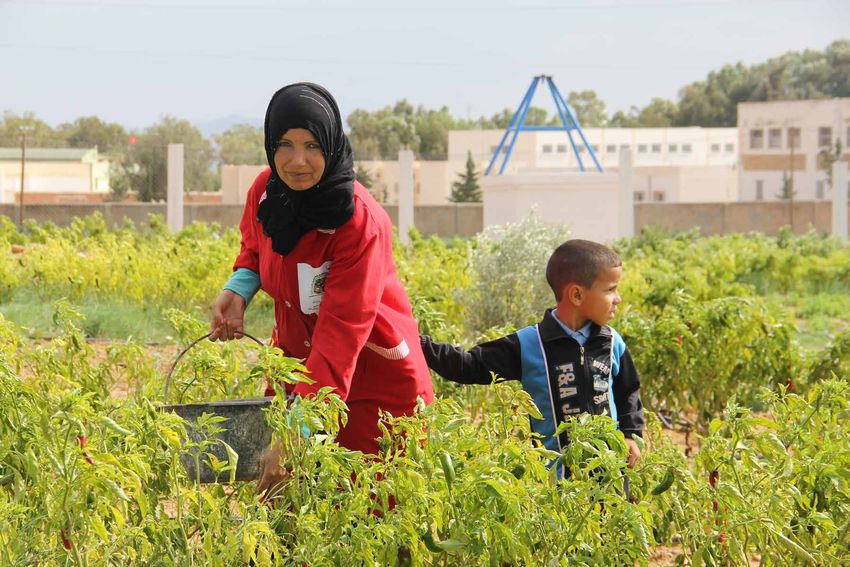
WFP/Giulio d’Adamo

                      CESA
HOME GROWN SCHOOL FEEDING CLUSTER
 Terms of reference, Strategy, Workplan and Indicators

                    2019 - 2021
CESA
HOME GROWN SCHOOL FEEDING CLUSTER
Terms of reference, Strategy, Workplan and Indicators

2019 - 2021

Contributors to the CESA School Feeding Cluster Instruments

African Union Commission
African Union Commission
Dr. Beatrice Njenga
Dr. Laila Lokosang
Mr. Abraham Asha

World Food Programme Centre of Excellence against Hunger
Ms. Christiani Buani
Mr. Bruno Magalhaes
Mr. Igor Carneiro
Ms. Mariana Rocha
Ms. Nadia Goodman

World Food Programme Africa Office
Ms. Angelline Rudakubana
Mr. Addisu Bekele
Ms. Beza Berhanu
Ms. Magdalena Moshi
Ms. Priscilla Wanjiru

Food and Agriculture Organization Subregional Office for Eastern Africa
Mr. Dia Sanou
Ms. Kankou Kaba

United Nations Educational, Scientific and Cultural Organization
International Institute for Capacity Building in Africa
Ms. Yumiko Yokozeki

Layout
Mr. Natan Giuliano (WFP)

                        Addis Ababa, ETHIOPIA P. O. Box 3243
                        Telephone: 251 11 551 7700 Fax: 251 11 5505928
                        www.au.int
CESA
HOME GROWN SCHOOL FEEDING CLUSTER
 Terms of reference, Strategy, Workplan and Indicators

                    2019 - 2021
FOREWORD
The Continental Education Strategy for Africa          multi-sectoral engagement to ensure harmonious
(CESA 16-25), the African Union’s continental          development of school feeding programmes,
operationalization framework of the global SDG4,       especially Home Grown School Feeding. Cluster
was developed as informed by Agenda 2063.              members commit to working together towards the
CESA aims at ensuring inclusive, quality,              common African Union vision, so as to optimise
transformative education for all, which will promote   the outcomes of collective initiatives, and avoid
African values, innovation and entrepreneurial         unnecessary parallel programmes that end up
mind-sets towards achieving and integrated,            dissipating limited human and financial resources.
peaceful and prosperous Africa. School Feeding         Cluster members have to identify synergies and
has been seen as a major tool for achieving            develop work plans to enable working in harmony
access, high performance and completion of             for enhanced efficiency and effectiveness.
education for all, while also contributing to ending
hunger and alleviating poverty especially where        I believe that this Cluster will work to shift
Home grown School feeding is practiced.                mentality so that School Feeding is seen
                                                       as an essential effectual tool necessary for
The Heads of State and Government of the               transformative education from early childhood
African Union therefore took the decision              to tertiary levels; for ensuring well rounded
(Assembly/AU/Dec.589 (XXVI) in January 2016            development of mind and body; for supporting
acknowledging the value of school feeding. The         school health policies; for promoting the local food
decision called for establishment of a                 production economy and ensuring zero hunger in
Multidisciplinary group of African Experts in          the most critical population sector in Member
support of School Feeding, in recognition of the       States. Investing in School Feeding is investing
multi-sectoral outcomes in education, health and       in the future of Africa. It is my hope that the work
nutrition, food production and local economic          of the Cluster will help to enhance local resource
growth. The Heads of State also established 1st        mobilisation in support of school feeding, while
of March and the African Day of School Feeding.        also ensuring generation of information to enable
                                                       knowledge based planning for more innovative
The Commission subsequently has worked to              and sustainable programmes.
secure a high level institutional engagement from
Member States and partner agencies working in          The Cluster should guide Member States on
areas supportive of School feeding, by                 maintaining nationally owned programmes linked
establishing the School Feeding Cluster, which         to local food production within comprehensive
supports implementation of CESA as well as             policy frameworks; building institutional capacity;
realisation of the goals of other continental policy   and enhancing investments from local sources.
frameworks for addressing child welfare, ending
hunger and ensuring food security.                     Encouraging co-operation among partners inside
                                                       and out of Africa will also be beneficial to facilitate
The School Feeding Cluster is an AU platform           productive experience sharing and situating Africa
where stakeholders from different sectors engage       in the global context.
and share technical information on the design and
implementation of effectual school feeding             I am happy to express appreciation to the
programmes. It provides the space to organize          World Food Programme for the support
joint actions to support advocacy and resource         provided in the development of this initiative,
mobilization in this area.                             as well as FAO in its partnership towards
                                                       strengthening the multi-sectoral linkages.
The School feeding Cluster will ensure                 I appreciate all current Cluster members
coordination, strengthened partnerships, and           and invite other agencies toparticipate in
dynamic links between knowledge, policy and            this important work that is increasingly crucial
                                                                                                                 WFP/Marco Frattini

practice. It will support the strengthening of local   in achieving the African We Want.

                                             H.E. Prof. Sarah Anyang Agbor
                                             Commissioner for Human Resources,
                                             Science and Technology
TABLE OF CONTENTS

Acronyms                                                                                       6

Section 1: The CESA Home Grown School Feeding Cluster (CHGSFC) Strategy                        7
1. Background                                                                                  8
2. Vision, Mission and Values of CESA Home Grown School Feeding (CHGSF)                        9
3. Cluster functions                                                                          10
4. Cluster Strategic Priorities                                                               10
5. Work plan                                                                                   11
6. Institutional Arrangement and Coordination of SF Cluster                                   17
6.1 Policy Level                                                                              17
6.2 Coordination Level                                                                         18
6.3 Implementation level                                                                       19
7. Reporting                                                                                   19
7.1 Reporting System                                                                           19
7.2 Reporting Frequency                                                                       20
7.2 Communication Framework                                                                   20
7.3. Reporting Framework                                                                      20
8. Membership                                                                                  21
8.1 Members                                                                                    21
8.2. Application process for membership                                                        21
9. Sustainability considerations                                                              22

Section 2: The CESA Home Grown School Feeding Cluster (CHGSFC) Terms of Reference             23
1. Background and Overview                                                                    24
2. CESA’s School Feeding Cluster                                                              25
3. CSFC functions                                                                             25
4. The membership to CESA’s Home Grown School Feeding                                         26
5. Institutional arrangement and coordination mechanism of CESA’s Home Grown School Feeding   26
5.2.1 Policy level coordination                                                               27
5.2.2 Technical level coordination                                                            27
5.2.3 Implementation level                                                                    27
6. Meetings                                                                                   28
7. Communication and Reporting Framework                                                      29
7.1 Communication                                                                             29
7.2 Reporting Framework                                                                       29
8. Financial Arrangements                                                                     30
9. Period                                                                                     30
10. Amendment of the ToR                                                                      30
11. Exit Clause                                                                               30
12. Amendments                                                                                30

Section 3: The CESA Home Grown School Feeding Cluster (CHGSFC) Indicators                     31
ACRONYMS

ADEA            Association for the Development of Education in Africa
ANCEFA          African Network Campaign on Education for All
AUC             African Union Commission
CAP             Common African Position
CEMASTEA        Centre for Mathematics Science and Technology Education in Africa
CESA            Continental Education Strategy for Africa
DP              Development Partner
EAC             East African Community
ECCAS           Economic Community of West African States
EFA             Education for All
EMIS            Education management Information System
EST             Education, Science and Technology
FAO             Food and Agriculture Organisation of the United Nations
FAWE            Forum for African Women Educationalists
IGAD            Intergovernmental Authority on Development
IPED            Pan-African Institute of Education for Development
M&E             Monitoring and Evaluation
NEPAD           New Partnership for Africa’s Development
OSISA           Open Society Initiative of Southern Africa
RACA            Report on Annual Continental Activities
RECs            Regional Economic Communities
STC             Specialized Technical Committee
STEM            Science, Technology, Engineering, and Mathematics
TVET            Technical Vocational Education and Training
UNECA           United Nations Economic Commission for Africa
UNESCO-IICBA    United Nations Education Science Culture Organisation –
                International Institute for Capacity Building in Africa
WFP             World Food Programme of the United Nations
WHO             World Health Organisation of the United Nations

6   CESA HOME GROWN SCHOOL FEEDING CLUSTER
Section 1
The CESA Home Grown
School Feeding Cluster
             Strategy

                                                                     WFP/Giulio d’Adamo

         Terms of reference, Strategy, Workplan and Indicators   7
Section 1
The CESA HGSF Cluster Strategy

1. Background
The African Union (AU) has adopted the                       Furthermore, the AU highlights in its CAADP/
Continental Education Strategy for Africa                    Malabo Declaration on Accelerated Agricultural
2016-2025 (CESA), in partnership with                        Growth and Transformation for Shared Prosperity
member-states and key stakeholders, as an                    programme the promotion of innovative school
initiative to advance the African Agenda 2063.               feeding programmes that use food items sourced
The Strategy is a regional alignment to the Global           from local farming communities. Linked to that,
Education 2030, which unpacks Sustainable                    NEPAD has launched home-grown school feeding
Development Goal 4 (SDG 4) with focus on Africa              pilot projects in different Member States,
for specific priorities. CESA aims to set up a               sensitising countries to incorporate the
“qualitative system of education and training to             home-grown school feeding initiatives into existing
provide the African continent with efficient human           school feeding programmes. This is stressing the
resources adapted to African core values and,                importance of sourcing local foods to sustainable
therefore, capable of achieving the vision and               multi-sectoral development.
aspirations of the African Union”. The Strategy is
designed to be implemented through the coalition             During the 31st Ordinary Session of the AU
of stakeholders as per the AU (Summit decision               Executive Council, the AU also acknowledged
July 2014), ensuring that every stakeholder has a            school feeding as a strategic programme towards
place and a role. Accordingly, it aims at securing a         the implementation of the Africa Regional
high-level institutional engagement from partners;           Nutrition Strategy (2015-2025), and the fulfilment
promoting multi-sectoral approach; jointly                   of the Malabo Declaration to improve nutritional
identifying and developing strategic initiatives;            status (EX.CL/ Dec.965-986(XXXI)). As a
and identifying and mobilizing education and                 follow-up to this decision, the Africa Union
school feeding champions.                                    launched a pilot project on sustainable school
                                                             food and nutrition programmes in Ethiopia,
CESA’s Strategic Objective 02 guides this                    Kenya, Rwanda and Uganda to create an enabling
document to focus on a healthy and conducive                 environment and capacity for school food and
learning environment in all sub-sectors and for all,         nutrition in Eastern Africa. This movement also
to expand access to quality education. Under the             proposes the development of a strategic
light this objective, and after a visit to Brazil in 2015,   framework that incorporates and links among
the African Heads of State (Assembly/AU/Dec.                 smallholder agriculture systems, school food
589) identified in 2016, the African Heads of State          programs prioritizing nutrition education and
(Assembly/AU/Dec 589) identified Home-Grown                  development of rural economies.
School feeding as a valuable opportunity to
advance education, boost local economies,                    In parallel, the African Union Commission and key
promote smallholder agriculture, and advance the             stakeholders have established thematic clusters
Sustainable Development Goals. This decision also            to implement specific CESA objectives, for
set the 1st of March as the African Day of School            example; Education Planning; School Feeding;
Feeding and established a Multidisciplinary                  and Peace and Education, among others.
Committee of African Experts on School Feeding               Clustering under specific thematic areas has been
to facilitate the implementation of this agenda.             identified as an effective tool for enhancing
                                                             coordination, strengthening partnerships, and
                                                             linking knowledge, policy and practice around
                                                             common themes and policy issues.

    CESA HOME GROWN SCHOOL FEEDING CLUSTER
6
8
WFP/Ramin Rafirasme
Participating UN agencies, NGOs, and
stakeholders, including AU Member States,
appoint a coordinating team to manage the wok
of cluster. This is anticipated to enhance
alignment and harmony among stakeholders as
well as to facilitate the identification and
deployment of governance synergies for
enhanced efficiency and effectiveness.
The cluster mechanism acts as an AU forum
where stakeholders from the education sector
have access to technical information on the
design and implementation of school feeding
programmes. It also provides the space to
organise joint actions to support advocacy and
resource mobilization in this area. This
operational structure for policy dialogue supports
maximizing the spread of school feeding
information across the AU.

The School Feeding Cluster was launched in 2017
during the meeting of the ‘Third Continental
Consultation of the AU and the WFP on
Home-Grown School Feeding’. The initial
members of the cluster were a multi-sectoral
technical experts of school feeding composed of
                                                                             2. Vision, Mission
Member States, WFP Africa Office, WFP Centre of                              and Values of CESA
Excellence against Hunger in Brazil, FAO, UNESCO
IICBA, and UNICEF. During the launching
                                                                             HGSF Cluster
ceremony, the WFP Africa Office and Centre of                                Vision: The fulfilment of globally agreed targets
Excellence in Brazil agreed to be the coordinating                           aimed at creating well educated and food secure
agents of the cluster. The cluster aims to bring                             citizens, as specified in AU Agenda 2063 and UN
together actors working on school feeding (SF),                              Agenda 2030.
and aligning their respective initiatives to achieve
the CESA 16-25 and Sustainable Development                                   Mission: To improve the educational access and
Goals (SDGs) expected results.                                               outcomes; nutritional and health status of school
                                                                             children by enabling coordination and knowledge
The purpose of this strategy and work plan is to                             exchange mechanisms of home-grown school
guide the CESA School Feeding Cluster (CSFC)                                 feeding programmes.
actions, and coordinate resources for achieving
CESA´s vision and mission over the next three                                Values: Respect for diversity and teamwork;
years in strategic and operational planning.                                 Think of Africa above all; Transparency and
                                                                             accountability; Integrity and impartiality;
                                                                             Efficiency and professionalism; and Information
                                                                             and knowledge sharing.

                                                                         Terms of reference, Strategy, Workplan and Indicators   9
WFP/Giulio d’Adamo
 3. Cluster functions                                    4. Cluster Strategic Priorities
 The core functions for the CSFC include,                Strategic Priority 1: Policy and Legal Framework
 but are not limited to:                                 Objective 1.1: Support the development of
                                                         national school feeding policies and frameworks
 • Provide a platform for ensuring that the              to strengthen the sustainability and
 AU Assembly Decisions for School Feeding                accountability of SF/HGSF programmes
 (Dec 589 XXVI) and (EX.CL/Dec.965-986(XXXI))
 are fully operational;                                  Strategic Priority 2: Coordination
 • Promote an institutionalized venue where              Objective 2.1: Strengthen coordination of school
 education stakeholders and all relevant                 feeding related initiatives across various AU
 stakeholders can deepen their knowledge                 departments and NEPAD.
 and expertise on school feeding by interacting          Objective 2.2: Support the establishment and
 on an ongoing basis;                                    strengthen national and regional coordination
 • Provide technical guidance to AU                      platforms to deliver effective support and
 departments, NEPAD, RECs, Members States                governance for SF/HGSF programmes.
 and partners on planning and implementing
 school feeding initiatives.                             Strategic Priority 3: Knowledge Management,
 • Provide a platform through which school               Monitoring and Evaluation, Accountability and
 feeding stakeholders in Africa share                    Learning (MEAL)
 information and experiences to build consensus          Objective 3.1: Enhance and update national
 on priority actions, identify and build                 knowledge on SF/HGSF for policy making and
 partnerships for a harmonised implementation            programme implementation
 of school feeding initiatives;                          Objective 3.2: Establish effective monitoring and
 • Develop mechanisms to eliminate duplication           evaluation, accountability and impact assessment
 of service delivery;                                    for SF/HGSF at the national level
 • Harmonize and share the findings of                    Objective 3.3. Support the establishment of a
 policy-relevant researches, assessments,                continental knowledge-sharing platform on HGSF
 evaluation, analysis, practices, and lessons learnt;
 • Set strategic priorities, standards and guidelines;   Strategic Priority 4: Strengthening and
 • Monitor and measure performance against the           building capacity
 cluster strategy;                                       Objective 4.1: Enhance the capacity of Member
 • Undertake advocacy to member states                   States to design, implement, and deliver SF/HGSF
 and other school feeding stakeholders;
 • Build capacity of member states in                    Strategic Priority 5: Advocacy for Political
 implementing the home-grown school feeding.             Commitment and Resource Mobilization
                                                         Objective 5.1: Increase budget for SF/ HGSF
                                                         Objective 5.2: To increase predictable and multi-
                                                         year funding for coordination of SF programmes

     CESA HOME GROWN SCHOOL FEEDING CLUSTER
10
5. Workplan
Strategic Priority 1: Policy Framework
Objective 1: National school feeding policies are in place to strengthen the sustainability
and accountability of school feeding programs
Baseline in Means of Responsability/ Budget
Activity Indicator December 2018 verification Resource Lead/Participant Duration estimate
Activity 1: Number of 37 countries Cluster Report Technical AUC/ WFP ADD office Continuous
Hosting policy (source: Sustainable Financial and Centre of
national dialogues School Feeding Excellence / AUC
and conducted Across the AU Partners
continental study, 2018)
dialogues
on school
feeding
policiesStrategic Priority 2: Coordination
Objective 1: National and Regional coordination platforms deliver effective SF/HGSF programmes
Baseline in Means of Responsability/ Budget
Activity Indicator December 2018 verification Resource Lead/Participant Duration estimate
Activity 1: Number of 13 countries Cluster Report Technical AUC/ WFP ADD office Annual
Monitoring and countries (source: Sustainable and WFP Centre Financial and Centre of
providing with School Feeding of Excellence in Excellence / AUC
regular multi-sectoral Across the AU Brazil Annual Partners
feedback to national study, 2018) Report
national and coordination
regional platforms for
platforms school
feeding
Activity 2: An 1 draft website Functional Technical AUC/ WFP ADD office Regular
reactivation operational online platform Financial and Centre of basis
of an online and website Excellence / AUC
platform for updated Partners
the Cluster on-line
platform
Activity 3: A complete 3 Cluster Report Technical AUC/ WFP ADD office Continuous
mapping and and WFP Centre Financial and Centre of
regional updated of Excellence in Excellence / AUC
initiatives and mapping Brazil Annual Partners
partners for report of Report
supporting initiatives
development of and
nationally-owned partners
SF/GFSF profile
programmes
Activity 4: Number 2 Minutes/ Technical AUC/ WFP ADD office Regular
Cluster and types communiqués/ Financial and Centre of basis
coordination of meetings Declarations Excellence / AUC
meetings and WFP Centre Partners
of Excellence in
Brazil Annual
ReportObjective 2: Increased predictable and multi-year funding for coordination
Baseline in Means of Responsability/ Budget
Activity Indicator December 2018 verification Resource Lead/Participant Duration estimate
Activity 1: Percentage TBD during 2019 Survey/Budget Technical AUC/ WFP ADD office Continuous
Creating increase in ADSF Expenditure Financial and Centre of
mechanism for multi-year Report Excellence / AUC
predictable and funding for Partners
multi-year national,
funding for regional and
coordination continental
platforms
Strategic Priority 3: Knowledge Management, M&E
Objective 1: National governments have increased and updated knowledge on
SF and HGSF for policy making and programme implementation
Baseline in Means of Responsability/ Budget
Activity Indicator December 2018 verification Resource Lead/Participant Duration estimate
Activity 1: Number of 1 Annual Review Technical AUC/ WFP ADD office Continuous
Generating, studies Reports and Financial and WFP Centre of
Publishing and publications WFP Centre of Excellence / AUC
Disseminating disseminated Excellence in Partners
Studies on Brazil Annual
SF/HGSF Report
Activity 2: Number of N/A in 2018 – It will Annual Review Technical AUC/ WFP ADD office Biennial
Publish Annual reports/ be developed as of Reports Financial and Centre of
report/outlook outlook 2019 Excellence / AUC
for member- Partners
states
Activity 3: Number of 2 symposium Technical AUC/ WFP ADD office Annual
Organizing symposiums report Financial and Centre of
Symposiums for organized Excellence / AUC
research Partners
findingsObjective 2: Effective monitoring and evaluation for school feeding
Baseline in Means of Responsability/ Budget
Activity Indicator December 2018 verification Resource Lead/Participant Duration estimate
Activity 1: A Continental N/A in 2018 – It will Annual Report Technical AUC/ WFP ADD office Continuous
creating the AU M & E system be developed as of Financial and Centre of
data repository in place 2019 Excellence / AUC
on SF & HGSF Partners
Activity 2: EMIS, N/A in 2018 – It will Annual Report Technical AUC/ WFP ADD office Continuous
Technical including SF be developed as of Financial and Centre of
platform for indicators 2019 Excellence / AUC
support to /Cross-sector Partners
establishing al Indicators
effective national incorporated
SF & HGSF M&E in the SF M&E
systemsStrategic Priority 4: Strengthening and building capacity
Objective 1: Enhanced capacity of member states to implement SF/ HGSF
Baseline in Means of Responsability/ Budget
Activity Indicator December 2018 verification Resource Lead/Participant Duration estimate
Activity 1: Number of 2 per year (ADSF Proceedings Technical AUC/ WFP ADD office Annual
Technical and Trainings and and GCNF) and WFP Centre Financial and Centre of
capacity workshops of Excellence in Excellence / AUC
building Brazil Annual Partners
workshops Report
Activity 2: A regional 1 (designing stage Report and Technical AUC/WFP ADD TBD N/A
Support the Centre of in 2018) WFP Centre of Financial office and WFP Centre
establishment Excellence Excellence in of Excellence/AUC
of a regional in Africa is Brazil Annual partners
WFP Centre of established Report
Excellence in
Cote d’Ivoire
Activity 3: Number of 3 Annual report Technical AUC/WFP ADD TBD
Support the joint Financial office and WFP Centre
development of planning and of Excellence/AUC
Joint Planning, tools partners
standards & developed
tools to be by the
adopted at cluster
country levelStrategic Priority 5: Advocacy for political commitment and resource mobilization
Objective 1: Enhanced / strengthened multi-sectoral collaboration in SF/HGSF
Baseline in Means of Responsability/ Budget
Activity Indicator December 2018 verification Resource Lead/Participant Duration estimate
Activity 1: A communi- 1 Annual HGSF Technical AUC/ WFP ADD office Strategy by
Developing and cation and Progress Report Financial and Centre of 2019
implementing advocacy Excellence / AUC implementa-
advocacy and strategy doc Partners tion- on
communication for SF going
strategy for
SF/HGSF
Activity 2: Annual 3 ADSF Minutes/com- Technical AUC/WFP ADD Annual N/A
Organizing the commemo- muniqués/Dec- Financial office and WFP Centre
African Day of ration larations of Excellence/AUC
School Feeding partners
Activity 3: An N/A in 2018 – It will Cluster report Technical AUC/WFP ADD Annual
Conducting a investment be developed as of Financial office and WFP Centre
cost-benefit case 2019 of Excellence/AUC
analysis for conducted partners
HGSF-
Conducting an
economic
investment case
for SF/HGSF
Activity 4: Number of 10 countries with Cluster Report Technical AUC/WFP ADD Annual
Supporting national SF concrete outcomes in and WFP Centre Financial office and WFP Centre
Technical and HGSF 2018 (Source 2018 of Excellence of Excellence/AUC
Assistance or policies, WFP Centre of Annual Report partners
Virtual Exchanges programmes Excellence in Brazil
facilitated by the and system Annual Performance
WFP Centre of components Report)
Excellence in with
Brazil with the capacity
Government of strengthened
Brazil and other as a result of
developing WFP Centre
countries for of Excellence
further in Brazil
engagement and South-South
awareness of AU cooperation
Member States6. Institutional Arrangement
and Coordination of HGSF Cluster
AU Summit HGSF
Executive Council Champion(s)
STC STC STC
Agriculture Education Health NEPAD
POLICY LEVEL AU Interdepartamental SF Committee
COORDINATION (HRST, DSA, DREA, NEPAD)
Multisectoral Technical
Committee of African SF Experts
TECHNICAL LEVEL (HRST, DSA, DREA, NEPAD, WFP, FAO, UNICEF, IFPRI,
COORDINATION Universities, Resource Persons, etc.)
HSGF Coordination
Secretariat
IMPLEMENTATION LEVEL Regional HGSF National HGSF
COORDINATION RECs Focal Points
6.1 Policy Level
A. Interdepartmental Committee B. School Feeding Champion(s):
on School feeding (IDC-SF) • Independent and well-respected individuals
• Commissioners of HRST, DREA and DSA and identified by the IDC-SF to undertake voluntary
NEPAD CEO or their representatives will have advocacy activities for increased resource allocation,
deliberative voice. and to promote a conducive environment for school
• Chaired by H.E. Commissioner for HRST. feeding policies and programmes.
• Meet annually to review progress on key SF • Champions report to the AU Summit
indicators and to provide policy direction. • Work plan coordinated by the Coordination
Secretariat
• ToR including qualifications, scope of work,
deliverables and resources to be defined
Terms of reference, Strategy, Workplan and Indicators 176.2 Coordination Level
A. Technical level coordination through Multisectoral Technical Committee of African Experts
• All the decisions are coordinated and • Meet every year to review progress on
harmonized through the all-inclusive school performance of the SF Cluster, identify
feeding cluster coordination. In this layer, all the constraints to implementation, and recommend
relevant AU departments and Organs, UN key strategic directions for consideration by
agencies, Civil Societies, Member States, private the IDC-SF.
sector, and Financial Institutions come together • Review and implement decisions made by
as a Multidisciplinary Technical Committee of the IDC-SF
African Experts on Home Grown School Feeding. • Addressing challenges of expanding the HGSF
• Chaired by Director AU HRST/Head of requires new thinking. AU in close liaison and
Education Division collaboration with its member states can provide
• Composed of key experts designated by AU a range of opportunities through capacity
departments of HRST, Social Affairs, Rural augmentation and increased adoption of best
Economy and Agriculture, RECs, UN agencies, practices giving due consideration for the below
teaching and research institutions, civil society strategic priorites :
and individual experts.
I. Partnership and coordination
1. Supporting national platforms and ensuring III. Capacity building
AU Assembly Dec 589 XXVI is operationalized 1. Strengthening capacity through
2. Resource mobilization national/regional and global platforms
3. Provide leadership, and eliminate to support countries
duplication of service delivery
STRATEGIC
PRIORITIES
II. Knowledge Management (KM) and M&E
1. Generating knowledge around Novel Approaches IV. Advocacy and Influencing
2. Dissemination publications assesments, analysis, 1. Robust advocacy on behalf of school children,
digests and outlooks smallholder farmers, partners and member states
3. Plan processes, standards and tools are integrated 2. Conduct Research
4. Establish regional/continental EMIS - indicators
B. HGSF Coordination Secretariat
• In both policy and coordination levels, • Chaired: AU;
the secretariat housed at AU HRST coordinates, • Secretary: WFP Centre of Excellence in Brazil
communicates, and manages smooth and WFP AU Office;
implementation of HGSF initiatives in Africa. • Members: WFP, FAO.
• Hosted in HSRT and with the secretariat • Meetings (presential and virtual): Every three
coordinated by by WFP (Regional Office for Africa months
and Centre for Excellence) and supported by FAO. • Mandate: day-to-day functions of coordination,
• Organization: management, administration, and reporting
CESA HOME GROWN SCHOOL FEEDING CLUSTER
186.3 Implementation level
• School Feeding Committees • Each country will promote that an existing
• RECs: Regional Cluster Focal Persons (RECs) ministry or lead institution will implement or
• Country level HGSF focal points (country) oversee the implementation of HGSF programmes
• The Regional Economic Communities have • There should be a national coordinator
the responsibility to: responsible for chairing the national taskforce or
- Collect information on the progress and multi stakeholder group who oversees education
challenges of the HGSF programmes in their issues in each country.
respective regions. • Coordinated by RECs and guided by NEPAD,
- Plan humanitarian and development activities Member states will put declarations into practice.
- Provide required tools, processes, assessments • The National Task Force should meet on
and frameworks quarterly bases to review information gathered
- Strengthen and acquire new skills sets for the African Union . Those reports would be
and knowledge sent forward to the respective Regional Economic
- Seek new and strengthen existing partnerships Communities (RECs).
WFP/Tara Crossley
7. Reporting
7.1 Reporting System
• Data collection throughout the year – especially • Evaluation: AU Human Resources Science
during African Day of School Feeding and Global and Technology and WFP Centre of Excellence
Child Nutrition Forum: for each requested in Brazil will present the draft summary of the
indicator. The AU survey might be applied annual report during a CESA School Feeding
annually through an online questionnaire. Links Cluster meeting prior to the annual Africa Day
to access the survey will be made available by of School Feeding;
the AU prior to data collection; • Synthesis and publication: AU Human Resources
• Data harmonization: AU Human Resources Science and Technology and WFP Centre of
Science and Technology and WFP Centre of Excellence in Brazil will present alongside CESA
Excellence in Brazil will harmonize all inputs; School Feeding Cluster member states during the
• Data analysis: AU Human Resources Science and annual Africa Day of School Feeding the major
Technology and WFP Centre of Excellence in Brazil achievements; constraints and challenges; lessons
will framework in line with all data into the learnt; opportunities; and recommendations;
Sustainable School Feeding across the African • After the annual Africa Day of School Feeding,
Union study and other pertinent literature for restart evaluation process updating report
analysing data both quantitatively and qualitatively. template based on the current year’s communique.
Results collected and analysed by the cluster will
be validated and presented at the Head of States
Summit for information and tracking progress
Terms of reference, Strategy, Workplan and Indicators 197.2 Reporting Frequency
Frequency of reporting
African Union Sub-cluster on
Education can produce its
annual report to
stakeholders
Continental
Level
Regional Economic Communities
Regional (RECs) to report on a biannual basis
Level to Sub-cluster on Education
National Member states can report to the
Level Regional blocks on a quarterly basis
7.3 Communication Framework
• All official communications will be managed • Members are encouraged to communicate
through the coordinator/secretariat to ensure among each other on matters of interest as
consistency and accuracy of the information. deemed fit.
7.4 Reporting Framework
• Partner members will report on a semi-annual • The cluster will work with Education
basis against the agreed upon activities and Observatory in order to develop and implement
indicators for each of the activities. a Monitoring and Evaluation (M&E) framework
• A standard reporting template will be for its functions that is consistent with what other
developed and shared by the African Union clusters are using to ensure harmonised M&E
to harmonise the reporting function. and reporting on CESA.
• The semi-annual reports will be sent centrally
to the coordinator /secretariat where they will be
consolidated and shared annually with the
African Union Commission and the School
Feeding Cluster partner members.
CESA HOME GROWN SCHOOL FEEDING CLUSTER
208. Membership
8.1 Members
• Deliberative members: African Union • Each member will identify the activities they
member-states; are already doing that could contribute towards
• Observer members: World Food Programme achieving the goals of CESA and commit to
liaison office to the African Union; World Food reporting about progress on a semi-annual basis.
Programme Centre of Excellence in Brazil; World Templates will be developed for these purposes.
Food Programme country offices and regional • Members will be expected to interact and share
bureaus across the African Union space; other ideas with each other and attend the cluster’s
United Nations agencies developing school annual review and planning meetings.
feeding, home-grown school feeding, and • Members will volunteer to host the cluster’s
education programmes in African Union meetings and provide support for the
member-states; academia; non-governmental coordination of activities through provision
organizations developing school feeding, of funds or other resources such as staff time.
home-grown school feeding, and education • Members are expected to, at the earliest
programmes in African Union member-states. convenience, include Agenda 2063 and CESA
• Application process for membership is 16-25 as guiding frameworks for their work and
described on the CSFC Terms of Reference. reflect this in new programmes and activities
8.2. Application process for membership
A. Selection Process B. Criteria for Membership
Membership of the CSFC will be achieved by Nominees for membership must be able
calling for nominations and through an online form to demonstrate:
available at CFSC homepage at HRST website. • Extensive community networks and linkages
An initial call will be circulated via email to local • An ability to represent a broad range of views
networks, groups and will be formally sent to that reflect the diversity of the community
national government school feeding focal points. • A strong understanding of school feeding
Specific HRST representatives may also be invited and/or home-grown school feeding
to nominate. • A willingness to contribute positively to
meetings in a fair and unbiased manner
A nomination form must be completed by • An ability to look beyond personal interests for
interested representatives and all nominations will the benefit of the community and residents of the
be assessed against the Criteria for Membership. AU member-states
• A capacity to commit to the CSFC for the
required duration
• A willingness to celebrate the successes and
achievements of the CSFC
• Endorsement by their own organization
or government
• A commitment to actively support the work of
the CSFC and the successful achievement of the
cluster objectives
Terms of reference, Strategy, Workplan and Indicators 219. Sustainability
considerations
Embeddedness in AU frameworks such as CESA
framework, platform for common accountability
towards AU Executive Council Decision on ADSF,
and institutional arrangements and coordination
mechanism will enhance the sustainability of the
cluster. In addition, it is envisaged that
mainstreaming HGSF in RECs and National
Frameworks through HGSF focal persons and SF
coordination committees will further enhance the
sustainability of the initiatives. Furthermore,
financial sustainability will be secured through
AU/NEPAD domestic funding through various
initiatives (ARNS, CAADP, CESA, etc.), and
supported by WFP/FAO for the coordination
secretariat. Additionally, it is important to
encourage other key cluster members to
contribute for common goals and work on
advocacy and resource mobilization strategies.
WFP/Isadora FerreiraSection 2
The CESA Home Grown
School Feeding Cluster
Terms of Reference
WFP/George Fominyen
Terms of reference, Strategy, Workplan and Indicators 23Section 2
The CESA HGSF Cluster Terms of Reference
1. Background and Overview
As part of its Agenda 2063, the African Union, The first CESA 16-25 planning meeting held at the
in partnership with the member states and key African Union offices in Addis Ababa, Ethiopia on
stakeholders, developed and adopted the June 23 and 24, 2016 brought together
Continental Education Strategy for Africa (CESA stakeholders and agencies working in education
16-25). As described in the strategy’s foreword, development in Africa to establish the coalition
this is a continental strategy that matches the of education stakeholders called for by the July
2016-2025 framework of the African Union 2063 2014 Summit of the African Union; and to begin
Agenda, meets the Common African Position to develop thematic clusters for the
(CAP) on the Post-2015 Development Agenda implementation of CESA 16-25. The thematic
and draws lessons from previous continental clusters, including the School Feeding Cluster,
plans and strategies with regard to the role and were created with the goal of bringing together
place of the AUC (AU) which, unlike member actors working on similar themes to achieve
states, has no territory for the implementation of the strategy’s expected results.
strategies in the field. Furthermore, it capitalizes
on numerous and active players ready to mobilize The meeting adopted the innovative and
financial, human and technical resources within partnership-based approach as a means of
national, regional and continental coalitions for achieving the objectives of the strategy. The
education, science and technology. meeting also developed an overall framework for
the implementation and follow up of the strategy.
Furthermore, the AU CAADP/Malabo Declaration
on Accelerated Agricultural Growth and The value of School Feeding has been highlighted
Transformation for Shared Prosperity programme through the decision of African Heads of States
highlighted the promotion of innovative school Assembly/AU/Dec 589 XXV to establish an
feeding programmes that use food items sourced African Day of School Feeding as 1st of March;
from local farming community. In addition, and to establish a Multidisciplinary Committee of
NEPAD launched home-grown school feeding African Experts on School Feeding under the
pilot projects in different member states, and chairmanship of the AUC. The decision reiterated
sensitised countries to incorporate the the importance of the support of institutions such
home-grown school feeding model into existing as WFP and its Centre of Excellence Against
school feeding programmes, and stressed the Hunger in Brazil. The same year, 2017, the 31st
importance of sourcing local foods to the Ordinary Session of the AU Executive Council
sustainable multi-sectoral development. Similarly, (EX.CL/Dec.965-986 (XXXI)) recommended
Africa Union Commission (Department of Social School Food and Nutrition as a strategic
Affairs) has launched a pilot project that aims programme towards the implementation of the
to strengthening the enabling environment and Africa Regional Nutrition Strategy (2016-2025),
capacity for school food and nutrition in Eastern and in fulfilment of the 2014 Malabo Declaration
Africa using a strategic framework that to improve nutritional status.
incorporates and links smallholder farming,
school meals and nutrition education. The Multidisciplinary Committee of African Experts
on School Feeding that serves as a technical arm
for the political commitment of the Heads of
States in promoting Home Grown School Feeding
across the Member States. This committee was
launched on May 31, 2017, and will be a forerunner
of the CESA School Feeding Cluster in the
continent and the coordinating platform for
all AU school feeding related initiatives.
CESA HOME GROWN SCHOOL FEEDING CLUSTER
24
222. CESA’s HGSF Cluster
During the first CESA 16-25 planning meeting, The action areas whose accomplishment would
School Feeding was raised as a strategic area lead to the achievement of CESA’s strategic
of intervention in order to ensure access for objective 3 include: ensure harmonious
the majority; especially for those affected by social development of the body, taking into account
economic poverty, promoting retention and a voluntary feeding and school health policy;
completion, and promoting optimal mental Formulate appropriate policies conducive to
development of the children to ensure excellent expansion of education with special focus on early
performance- which will ultimately lead to the childhood care and education, TVET and general
improved performance of education systems in secondary education, as well as tertiary education;
Member States, and meet the goal of Agenda 2063. Address access constraints imposed by poverty,
lifestyle, culture, location among others.
This cluster will support several of the strategic
objectives of CESA. In particular, it will support
the implementation, monitoring and evaluation
of the CESA’s Strategic Objective 02: Build,
rehabilitate, preserve education infrastructure and
develop policies that ensure a permanent, healthy
and conducive learning environment in all
sub-sectors and for all, so as to expand access
to quality education.
3. CHGSFC functions WFP/Badre Bahaji
The core cluster Functions are: • Harmonize and share the findings of researches,
• Provide a platform for ensuring that the AU assessments, evaluation and analysis
Assembly Decisions for School Feeding • Set strategic priorities, standards
(Dec 589 XXV, Dec.965-986 (XXXI)), and guidelines.
CAADP/Malabo declaration, and NEPAD • Monitor and measure performance against
initiatives are fully operational the cluster strategy
• Provide technical guidance to AU • Undertake advocacy activities to member states
departments, NEPAD, RECs, Members States and other school feeding (SF) stakeholders.
and partners on planning and implementing The cluster will identify and work with champions
school feeding initiatives to support advocacy efforts.
• Provides a platform through which SF • Build capacity of member states in
stakeholders in Africa share information and mainstreaming the Home Grown School Feeding
experiences build consensus on priority actions, (HGSF) in key development plans
identify and build partnerships for a harmonised • Produce and disseminate regular publications,
implementation of school feeding initiatives. such as digests and outlooks
• Develop mechanisms to eliminate duplication • Support research, dissemination,
of service delivery and communication
Terms of reference, Strategy, Workplan and Indicators 254. The membership to CESA’s HGSF Cluster
Membership to CESA’s School Feeding Cluster 4.7 Each member will identify the activities they
is open to: are already doing or planning to do that
4.1 AU Member States’ Ministries responsible for contribute towards achieving the goals of CESA
Education or School Feeding Departments that and commit to reporting about progress on a
are willing to join the Cluster; Ministries of semi-annual basis. Templates will be developed
Agriculture, Health and other Ministries for these purposes.
supporting School Feeding 4.8 Members will be expected to interact and
4.2 Representatives from departments in charge share ideas with each other and attend the
of School Feeding of RECs cluster’s annual review and planning meetings.
4.3 Organisations or institutions that can 4.9 Members will volunteer to host the cluster’s
contribute to the achievement of the CESA’s meetings and provide support for the
strategic objective 3 including learning institutions coordination of activities through provision of
such as schools, universities and institutions funds or other resources such as staff time.
4.4 UN agencies involved in school feeding, 4.10 Members are expected to, at the earliest
nutrition, food security including WFP, UNICEF, convenience, include Agenda 2063 and CESA
FAO, WHO, UNESCO, etc. 16-25 as guiding frameworks for their work and
4.5 Individual experts that can contribute to the reflect this in new programmes and activities
achievement of the CESA’s strategic objective 3
and different school feeding initiatives;
4.6 The following organisations upon invitation:
• Agencies in charge of School Feeding at Basic and
Secondary Education, Higher Education and TVET
• International and regional intergovernmental
organizations
• African knowledge organizations e.g. ADEA
• Civil Society: e.g. FAWE, ANCEFA and so on
• Private Sector
• Funding organisations and countries
5. Institutional arrangement and coordination
mechanism of CESA’s HGSF Cluster
5.1 Organisation of the cluster is paramount in i) Differentiation based on level of education;
order to harness synergy among partner ii) Differentiation based on sourcing of foods -
members and consequently the achievement of local or other;
the CESA’s strategic objective 3. The School iii) Different sectors of Home Grown
Feeding Cluster will benefit from other relevant School Feeding
structures such as the networks established by
ministries, researchers, practitioners, and 5.2 The Structure/organization proposed for the
development partners across the African region school feeding Cluster:
among others.
The CSFC is structured around three levels:
Cluster Members may agree to form relevant policy, technical, and implementation.
sub-Clusters to enhance performance and
coordination efficiency because of convergent
challenges and opportunities. For example,
sub-clusters under the School Feeding may be
established according to the following criteria:
CESA HOME GROWN SCHOOL FEEDING CLUSTER
265.2.1. Policy level coordination
• The Interdepartmental Committee on School • School Feeding Champion(s) are independent
feeding is composed of Commissioners of the and well-respected individuals identified by the
concerned departments namely HRST, DREA and IDC to undertake voluntary advocacy activities
DSA and NEPAD or their representatives. The IDC to advance the SFN agenda in Africa. Champions
for School Feeding is chaired by H.E. will use their individual and professional prestige
Commissioner of HRST and meets annually and networks to advocate for increased resource
to review progress on key SF indicators and allocation, and to promote a conducive
to provide policy direction. The committee environment for development and
reports to various specialized technical implementation of school feeding policies
committees of Education, Agriculture and Health. and programmes. SFC report (s) to the IDC.
5.2.2. Technical level coordination
• The CSFC Coordination secretariat is hosted by • The Multi-sectorial Technical Committee of
HSRT and chaired by the Director, HRST. It African Experts of School feeding is comprised
comprises of a coordinator, an AU staff seconded of key experts nominated by AU Departments
by a development partner, the secretariat will be of Education, Rural Economy and Agriculture
coordinated by WFP Centre of Excellence in and Social Affairs, NEPAD, RECs, UN agencies,
Brazil and WFP Africa Office. This will be teaching and research institutions and civil
supported by FAO liaison office to AU and any society. The Director, Director Human Resources,
other partner approved by HRST. The Science and Technology chairs the Multi-sectorial
coordination secretariat meets quarterly. The Technical Committee. The committee meets twice
coordinator is charged with the day-to-day a year to review progress on progress in
functions of coordination, management, implementation the Cluster work plan and
administration, and reporting on the Cluster strategy, analyse budget performance, identify
Strategy and Work Plan. constraints to multi-sectoral implementation,
and recommend key strategic direction for
consideration by the Coordination secretariat and
the Interdepartmental School Feeding Committee.
This committee is also in charge of reviewing,
and implementing decisions made by the
Interdepartmental School Feeding Committee.
5.2.3. Technical level coordination
• School Feeding Focal Persons in RECs* • National School Feeding Task Forces
• School Feeding Focal Persons in Member States • National development partners
WFP/Giulio d’Adamo
Terms of reference, Strategy, Workplan and Indicators 27WFP/Isadora Ferreira
6. Meetings
6.1 Face to face meetings will be held at least once
every year on a rotational basis duringn the ADSF.
6.1.1. Additoinal virtual meetings might take place
whenever necessary to complement the annual
presential meeting.
6.2 The partner members will volunteer to host
the meetings and the host partner members will
take care of the logistics for the meeting.
6.3 The date of the meeting shall be agreed in a
group decision or by the AU HRST, unless partner
members agree on a convenient date.
6.4 The purpose of the annual meetings will be to:
• Share information and updates on the
cluster activities.
• Review progress of the cluster; identify
opportunities and challenges.
• Plan and develop yearly programmes.
• Discuss and validate the yearly report to be
submitted to the chair organisation and AUC.
6.5 Sub cluster meetings will be arranged if 6.9 School Feeding experiences, models
deemed necessary but partner members are and best practices
encouraged to communicate as often as possible 6.10 Studies providing evidence of the
with each other to enhance the achievement multi-dimensional value of school feeding,
of the cluster’s goals. including performance evaluation
6.6 Online meetings will be organized throughout 6.11 New approaches, emerging issues and
the year for specific reasons whenever there is need. debates in School Feeding
6.7 The Cluster shall have online platforms both 6.12 All meetings will be chaired by the chair,
for external and internal communication. the co-chair or any appointed coordinator
6.8 The platforms will facilitate the exchange and partner member.
of strategic communication about the cluster 6.13 A meeting quorum will be one third
including posting of information and research of the partner members.
findings, including: 6.14 Decisions will be made by consensus and in
cases where consensus will not be possible, the
chair of the meeting will make the final decision.
6.15 The coordinator will ensure preparation
of the meeting agenda, notes or any other
information regarding meetings.
6.16 A volunteer from the partner members will
take minutes during the meetings and compile
a report for approval by the Chair of the meeting
and the coordinator.
6.17 The coordinator is responsible for receiving
agenda items and the distribution of the minutes
of the meetings.
6.18 The coordinator will develop a draft
agenda for approval by the chair one month
prior to the meeting.
6.19 Every partner member has the opportunity
to suggest or place and item on the meeting’s
agenda. These shall be received no later than
six weeks to the next meeting.
CESA HOME GROWN SCHOOL FEEDING CLUSTER
287. Communication and Reporting Framework
7.1 Communication
• All official communications will be managed • Members are encouraged to communicate
through the coordinator to ensure consistency among each other on matters of interest
and accuracy of the information. as deemed fit.
7.2 Reporting Framework
• Partner members will report on a semi-annual
basis against the agreed upon activities and
indicators for each of the activities.
• A standard reporting template will be
developed and shared by the African Union
to harmonise the reporting function.
• The semi-annual reports will be sent centrally
to the coordinator /secretariat where they will
be consolidated and shared annually with the
African Union Commission and the School
Feeding Cluster partner members.
• The cluster will work with Education
Observatory in order to develop and implement
a Monitoring and Evaluation (M&E) framework
for its functions that is consistent with what other
clusters are using to ensure harmonised M&E
and reporting on CESA.
WFP/Marco Frattini
Terms of reference, Strategy, Workplan and Indicators 29WFP/George Fominyen
8. Financial Arrangements
8.1 The cluster will mobilise funds, through joint
proposals, to carry out the coordination work of
the cluster and other agreed activities that will be
identified as important that are not being carried
out by any partner members.
8.2 The partner members will use their available
resources for undertaking activities within their
own mandates and institutional plans
8.3 Partner members may also provide resources
needed for joint cluster activities either in terms
of funds, staff time or other in kind support.
9. Period
This Terms of Reference is effective from 2018 to 2025 unless revised by the partner members.
10. Amendment of the ToR
10.1 This Terms of Reference may be amended.
10.2 An annual review will be carried out in consultation with the partner members to ensure
the ToR is always relevant and achieving the purpose for which it was intended.
11. Exit Clause
The cluster will be wound up if the partner members consider the work has been achieved.
12. Amendments
The partner members may alter or change the scope of the cluster as circumstances change over time,
with the majority agreement
CESA HOME GROWN SCHOOL FEEDING CLUSTER
30Section 3
The CESA Home Grown
School Feeding Cluster
Indicators
WFP/Erika Oliveira
Terms of reference, Strategy, Workplan and Indicators 3132
Section 3
The CESA HGSF Cluster Indicators
1. Key Recommendations from the Sustainable School Feeding study
Action Plan Indicator at the Current Achievements - Action undertaken in Planned actions
R.N. Description national level Baseline 2018-2019 2025 target 2018-2019 School Year for 2020
School Year (please describe) (please describe)
1.1 The contribution of school # of public schools
feeding for ensuring that covered by the SF
all girls and boys have programme
access to quality
pre-primary, primary and # of school children
secondary education benefiting from a SF
programme
% of enrolled students
covered by SF
programme
% increase of enrolled
girls in schools due to
SF programme
(including take-home
rations) since 2016
Grades covered under
SFP
1.2 The contribution of school % school feeding
feeding for ending hunger programs that
integrate nutrition
education and
Complementary
interventionsAction Plan Indicator at the Current Achievements - Action undertaken in Planned actions
R.N. Description national level Baseline 2018-2019 2025 target 2018-2019 School Year for 2020
School Year (please describe) (please describe)
1.3 The extent to which local quantity of food items
producers are linked to sourced from local
markets through school markets
feeding approach
% of school food items
purchased directly
from local farmers
# rural small holder
farmers benefiting
from local food
purchasing
No of women
participating in local
economies through
school feeding
programmes
1.4 The National proportion of amount (in US dollars)
budgets are allocated to of national budget
school meals programmes; allocated to SF
% of national budget
allocated to SF from
the total SF budget
1.5 Coordination platforms for # of meetings held by
SF programs are in place SF coordination
and operational platform
# of national
agencies/in the SF
coordination meetingsYou can also read


