Effectiveness and Safety of Direct Oral Anticoagulants versus Vitamin K Antagonists for People Aged 75 Years and over with Atrial Fibrillation: A ...
←
→
Page content transcription
If your browser does not render page correctly, please read the page content below
Journal of
           Clinical Medicine

Review
Effectiveness and Safety of Direct Oral
Anticoagulants versus Vitamin K Antagonists for
People Aged 75 Years and over with Atrial
Fibrillation: A Systematic Review and Meta-Analyses
of Observational Studies
Anneka Mitchell 1,2, * , Margaret C. Watson 1 , Tomas Welsh 3,4 and Anita McGrogan 1
 1    Department of Pharmacy and Pharmacology, University of Bath, Bath BA2 7AY, UK;
      magswatsonbusiness@gmail.com (M.C.W.); a.mcgrogan@bath.ac.uk (A.M.G.)
 2    Pharmacy Research Centre, University Hospital Southampton, Southampton SO16 6YD, UK
 3    Research Institute for the Care of Older People (RICE), Bath BA1 3NG, UK; tomas.welsh@nhs.net
 4    Institute of Clinical Neurosciences, University of Bristol, Bristol BS8 1TH, UK
 *    Correspondence: am3148@bath.ac.uk; Tel.: +44-1225-384-215

 Received: 7 March 2019; Accepted: 18 April 2019; Published: 24 April 2019

 Abstract: Older people, are underrepresented in randomised controlled trials of direct oral
 anticoagulants (DOACs) for stroke prevention in atrial fibrillation (AF). The aim of this study
 was to combine data from observational studies to provide evidence for the treatment of people aged
 ≥75 years. Medline, Embase, Scopus and Web of Science were searched. The primary effectiveness
 outcome was ischaemic stroke. Safety outcomes were major bleeding, intracranial haemorrhage,
 gastrointestinal bleeding, myocardial infarction, and mortality. Twenty-two studies were eligible for
 inclusion. Two studies related specifically to people ≥75 years but were excluded from meta-analysis
 due to low quality; all data in the meta-analyses were from subgroups. The pooled risk estimate of
 ischaemic stroke was slightly lower for DOACs. There was no significant difference in major bleeding,
 mortality, or myocardial infarction. Risk of intracranial haemorrhage was 44% lower with DOACs,
 but risk of GI bleeding was 46% higher. Our results suggest that DOACs may be preferable for the
 majority of older patients with AF, provided they are not at significant risk of a GI bleed. However,
 these results are based entirely on data from subgroup analyses so should be interpreted cautiously.
 There is a need for adequately powered research in this patient group.

 Keywords: anticoagulants; atrial fibrillation; stroke; hemorrhage; aged

1. Introduction
     The prevalence of atrial fibrillation (AF) increases with age, with 14% of over 80s having this
condition [1]. AF predisposes sufferers to the risk of embolic stroke, and it is estimated that 25% of all
strokes in those over 80 years occur in patients with AF [1]. Strokes due to AF tend to be larger, more
severe and result in higher mortality rates than their non-AF counterparts [2].
     Meta-analyses have consistently shown that among patients with AF, with a moderate to high risk
of thromboembolic events, anticoagulation with warfarin, a vitamin K antagonist (VKA), significantly
reduces the incidence of stroke with an acceptable bleeding risk compared with placebo [3]. Trials in
older people comparing warfarin with aspirin also found this to be the case [4], yet individuals over
80 years old are less likely to be anticoagulated with warfarin than younger people even where their
stroke and bleeding risks are the same [5].

J. Clin. Med. 2019, 8, 554; doi:10.3390/jcm8040554                                  www.mdpi.com/journal/jcm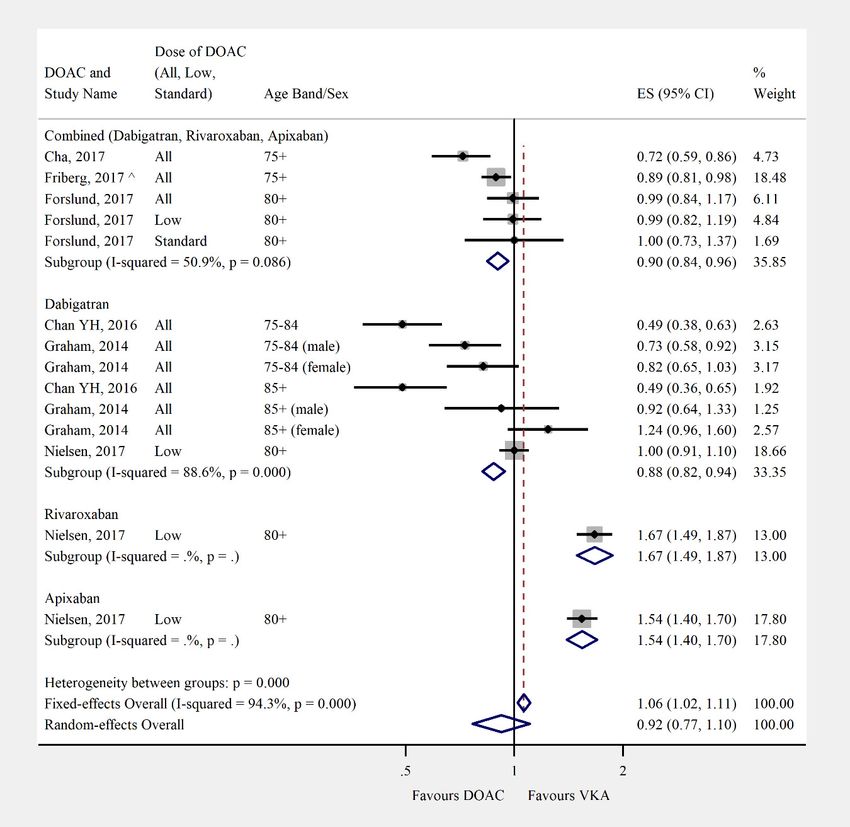
J. Clin. Med. 2019, 8, 554                                                                           2 of 21

     The direct oral anticoagulants (DOACs), dabigatran, rivaroxaban, apixaban and edoxaban, were
introduced from 2010 onwards as alternatives to VKAs. The initiation rate of DOACs increased 17-fold
between 2012 and 2015 in UK general practice and use of VKAs has subsequently declined [6]. DOACs
have been recommended internationally as an option for stroke prevention in AF for people with
additional risk factors for stroke [7,8]. Additional risk factors are defined by the CHA2 DS2 -VASc score
as chronic heart failure, hypertension, age ≥75 years, diabetes mellitus, prior stroke/transient ischaemic
attack, vascular disease, age 65–74 years, female sex. This risk stratification tool defines being aged
≥75 years as a major risk factor for stroke and allocates a score of 2 to this risk factor, meaning that all
patients in this age group should be considered for anticoagulation.
     To date, no randomised controlled trials (RCTs) have included older people (defined as ≥75 years)
as the primary population of interest and inclusion and exclusion criteria limit the generalisability of
the results to older people. Numerous co-morbidities and medications would cause patients to be
ineligible to join the trial, and a number of these such as cancer, cognitive impairment and severe renal
impairment are more common in older people.
     Whilst numerous systematic reviews and meta-analyses of DOACs have been published in recent
years, none focus solely on observational studies of older people aged ≥75 years where there is a
need to better understand effectiveness and safety. The aim of this review and meta-analyses was to
combine data from observational studies comparing DOACs with VKAs for people ≥75 years with AF
to gain generalisable estimates of the effectiveness and safety of specific outcomes in this population.
The outcomes being considered are ischaemic stroke, as a measure of effectiveness; major bleeding,
intracranial haemorrhage, gastrointestinal bleeding, mortality and myocardial infarction as measures
of safety. The main aim of anticoagulation is to reduce the risk of ischaemic stroke, consequently
this was chosen as the primary effectiveness outcome. Major bleeding and the risk of intracranial
haemorrhage is a significant concern to those prescribing anticoagulants particularly to older people
who may be at higher risk of falls. The risk of gastrointestinal bleeding was shown to increase with
DOACs in the RCTs by up to 79% and myocardial infarction increased by 38% with dabigatran in the
RE-LY trial.

2. Experimental Section

2.1. Search Strategy and Selection Criteria
     For this systematic review and meta-analyses, we searched without language restrictions for
observational studies comparing the use of DOACs with VKAs for older people (defined as aged
≥75 years) with atrial fibrillation. Studies were excluded if results did not specify outcome data for
participants aged 75 years and over; if anticoagulation was prescribed for multiple indications and
results were not stratified for participants with AF; if a DOAC was being compared with a non-vitamin
K antagonist anticoagulant or no anticoagulation. We also excluded studies that used randomised,
controlled or interventional study designs.
     We searched Medline, Embase, Scopus, and Web of Science from 1st January 2009, when the
DOACs were first licensed, to 3rd January 2018. Full search terms and search strategy for both Medline
and Embase are presented in Appendix A. Database searches were supplemented by contacting
pharmaceutical companies to request unpublished data. Reference lists of relevant studies, reviews,
and letters were screened for additional articles. Foreign language articles were translated.
     A.M. conducted the searches and screened all titles and abstracts for inclusion. A.M.G.
independently duplicated screening of 10% of titles and abstracts. Full-text review was conducted
independently and in duplicate by two reviewers (A.M. and either A.M.G., M.C.W. or M.L.). Conflicts
were resolved through discussion.
     Studies were included in the systematic review and meta-analyses if they compared at least one
DOAC with a VKA and, presented data of one or more outcomes of interest for participants aged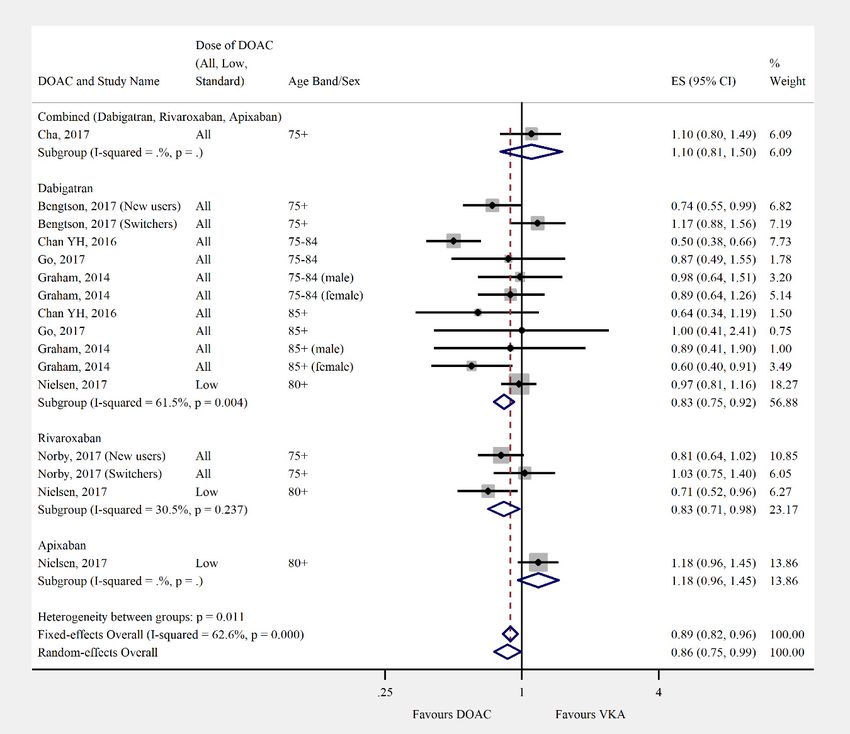
J. Clin. Med. 2019, 8, 554                                                                        3 of 21

≥75 years with atrial fibrillation. The study protocol was registered with PROSPERO (CRD42018081696)
prior to starting the systematic review and is available online [9].

2.2. Data Analysis
      Data extraction was completed independently and in duplicate by A.M. and A.M.G. using a
pre-piloted form in Microsoft Access. Primary effectiveness outcomes of interest were ischaemic stroke
and/or systemic embolism. Composite outcome measures of effectiveness (e.g., all strokes, or stroke
and transient ischaemic attack or other thromboembolic events) were analysed as secondary outcome
measures. Primary safety outcomes were major bleeding, gastrointestinal bleeding and intracranial
haemorrhage. Major bleeding was primarily defined as per the International Society on Thrombosis
and Haemostasis (ISTHM): “A reduction in haemoglobin of at least 20 g/L, and transfusion of at least
2 units of blood, or symptomatic bleeding in a critical area or organ”. However, similar definitions and
hospitalisation for bleeding were also included as major bleeding. Secondary outcomes were: all-cause
mortality, non-major or other bleeding, and myocardial infarction and composite safety outcomes (e.g.,
all bleeding, or any combination of safety outcomes of interest).
      The quality of studies was assessed using the Newcastle–Ottawa Scale by duplicate, independent
assessment (A.M. and A.M.G.). Discrepancies were resolved through discussion and the studies were
rescored using a modified version of the Newcastle–Ottawa scale which better reflected the reviewers’
bias assessment (Appendix B).
      Data were extracted for the following variables: total number of participants, total number of
participants aged ≥75 years, sex, data source, healthcare setting, co-morbidities and medication at
baseline, definition of exposure to DOAC or VKA, dose of DOAC, inclusion and exclusion criteria,
hazard ratios or incident rates comparing DOAC to VKA in participants aged over 75 years only (or
event numbers if summary estimate not available) for all outcomes of interest.
      All studies scoring ≥6 on the modified Newcastle–Ottawa scale were included in the meta-analyses.
Adjusted hazard ratios and their 95% confidence intervals were extracted and pooled for meta-analyses,
results were stratified by individual DOAC then grouped by DOAC dose and age band. For the
purposes of this study DOAC dose was stratified as “low” (dabigatran 75 mg or 110 mg, rivaroxaban
15 mg, apixaban 2.5 mg) or “standard” (dabigatran 150 mg, rivaroxaban 20 mg, apixaban 5 mg).
Where hazard ratios were not reported, incident rates were used to calculate incident rate ratios and
associated 95% confidence intervals. Heterogeneity was assessed using the Cochrane Q statistic, and
Higgins and Thompsons’ I2 . Heterogeneity was defined as low if I2 = 25%, moderate if I2 = 50%, or
high if I2 = 75% [10]. High levels of heterogeneity were anticipated due to the varying designs of
observational studies so both a fixed model (using the inverse-variance method) and a random-effects
model (using the DerSimonian and Laird method) were used to combine the data. Statistical analysis
was undertaken using Stata 14 [11] and the Stata package admetan [12].

3. Results

3.1. Study Identification
      We identified 12,330 records through database searching. Title and abstract screening excluded
12,019 records, a further 289 were excluded after full text screening. Finally, 22 studies were eligible
for inclusion in the systematic review [13–34]. Only 20 studies were included in the meta-analyses as
two scored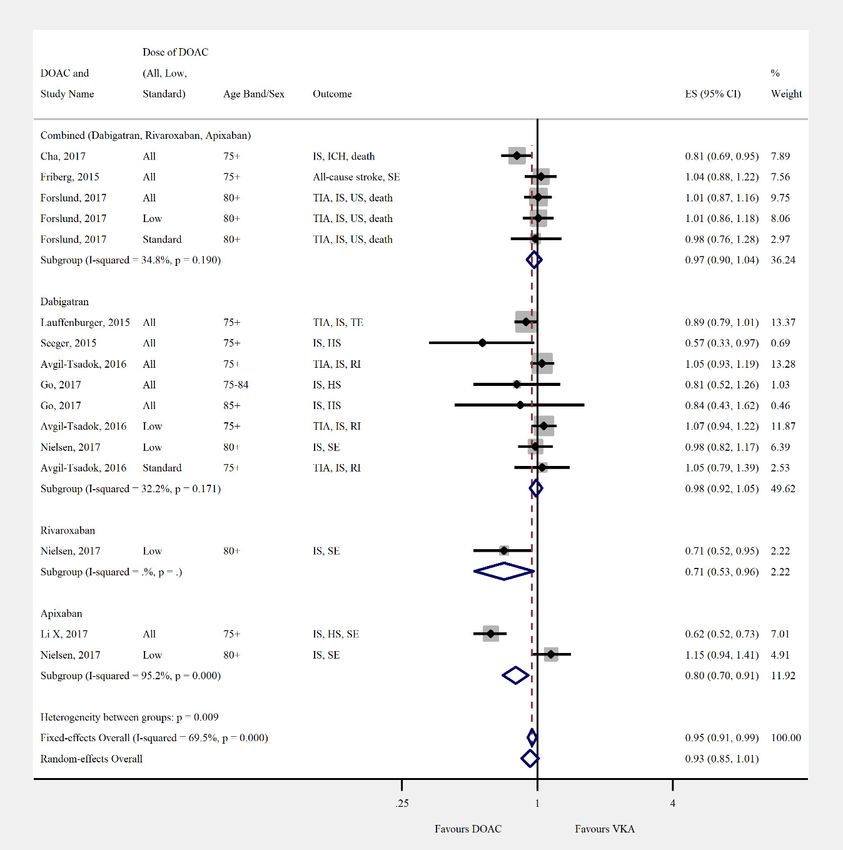
J. Clin. Med. 2019, 8, 554                                                                                         4 of 21
      J. Clin. Med. 2019, 8, x FOR PEER REVIEW                                                               4 of 22

                                                  Figure1.1. Study
                                                 Figure      Study Selection.
                                                                   Selection.

3.2. Characteristics  of Included
      3.2. Characteristics          Studies
                           of Included Studies

     The The     20 studies
           20 studies         included
                           included   ininthe
                                            themeta-analysis
                                                meta-analysis included
                                                                 includedoverover428,031
                                                                                    428,031patients  agedaged
                                                                                              patients     ≥75 years.
                                                                                                               ≥75 years.
     However,     not  all studies reported  the total number   of patients in this age group.   Table
However, not all studies reported the total number of patients in this age group. Table S1 provides     S1 provides a
     breakdown of the total participants in each study. Eleven studies were conducted in the USA and
a breakdown of the total participants in each study. Eleven studies were conducted in the USA and
     Canada [13,16–18,24,26,28–30,32,34], followed by Asia [14,15,22,25,33] (n = 5), Europe [19–21,27,31] (n
Canada [13,16–18,24,26,28–30,32,34], followed by Asia [14,15,22,25,33] (n = 5), Europe [19–21,27,31]
     = 5), and New Zealand [23] (n = 1). Most studies compared dabigatran with a vitamin K antagonist
(n = [13–31,33,34]
      5), and New         Zealand [23] (n = 1). Most studies compared dabigatran with a vitamin K
                      (n = 21); rivaroxaban [14,16–21,25,27,28,31] and apixaban [14,17,19–21,31,32] were
antagonist
     licensed later so have(nnot
              [13–31,33,34]       = 21);
                                     beenrivaroxaban      [14,16–21,25,27,28,31]
                                            studied as extensively   (n = 11 and n  and
                                                                                      = 7,apixaban    [14,17,19–21,31,32]
                                                                                            respectively).  The VKA
were comparator
      licensed laterwas so predominantly
                            have not been studied
                                              warfarin;asone
                                                           extensively   (n = 11any
                                                               study allowed            n = 7,but
                                                                                  andVKA,       respectively).
                                                                                                    the majorityTheofVKA
comparator     was predominantly
     participants   were prescribed warfarin;
                                       fluindione one
                                                    [27].study
                                                          Table allowed
                                                                S1 showsany    VKA, but
                                                                           a summary     of the
                                                                                            the majority   of participants
                                                                                                main characteristics
were ofprescribed
         the included   studies. [27]. Table S1 shows a summary of the main characteristics of the
                      fluindione
included studies.
      3.3. Risk of Bias
3.3. Risk ofThe
             Bias
                Newcastle–Ottawa scale has been widely used in the literature, but we found that interrater
      agreement
     The          on some domains
           Newcastle–Ottawa         washas
                                 scale    lowbeen
                                              due to the subjective
                                                   widely   used innature of the questions
                                                                    the literature, but we and vaguethat
                                                                                             found    decision
                                                                                                         interrater
      rules accompanying the tool, a limitation which has been noted elsewhere [35]. We therefore
agreement on some domains was low due to the subjective nature of the questions and vague decision
      modified the tool to make it more specific and transparent (Appendix B). Overall, the quality of
rules accompanying the tool, a limitation which has been noted elsewhere [35]. We therefore modified
      included studies was high, with over half scoring 8 or more out of 12 [15,16,20,21,23,26,27,29–33].
the tool
      Two tostudies
             make itscored
                      moreless
                            specific
                               than and
                                     6 andtransparent    (Appendix
                                             were excluded   from theB). Overall, the Table
                                                                      meta-analyses.  quality  of included
                                                                                            1 shows         studies
                                                                                                     the score
was high,
      for each study. Exclusion of these studies is unlikely to have affected the result of the meta-analyses less
            with over  half scoring  8 or  more  out of 12 [15,16,20,21,23,26,27,29–33].   Two  studies scored
than as
      6 and
         theywere
               were excluded
                    very smallfrom   the[22,25].
                               studies     meta-analyses. Table 1 shows the score for each study. Exclusion
of these studies is unlikely to have affected the result of the meta-analyses as they were very small
studies [22,25].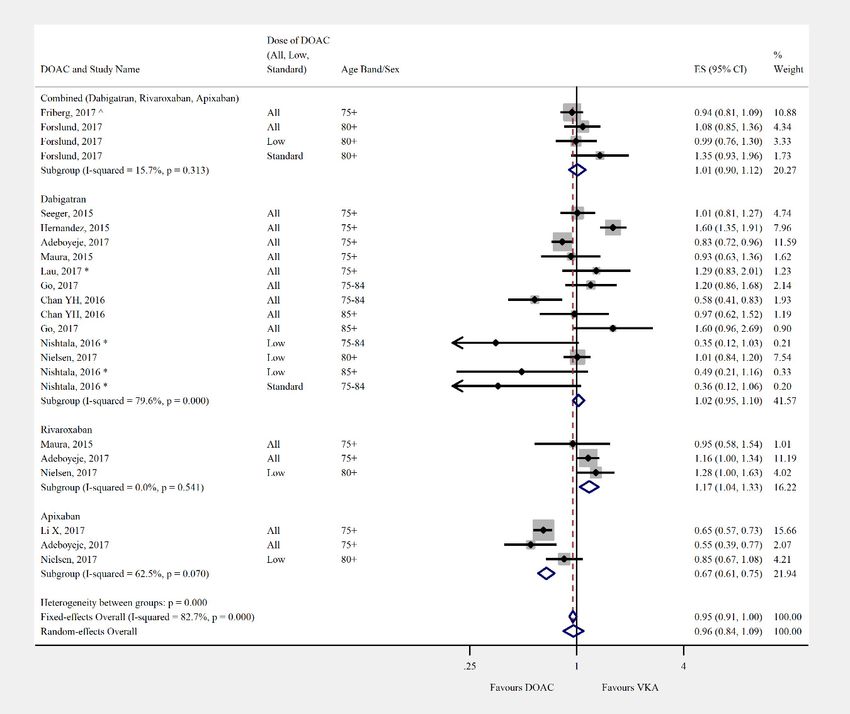
J. Clin. Med. 2019, 8, 554                                                                                                                                                           5 of 21

      Table 1. Quality assessment of included studies based on the modified Newcastle–Ottawa scoring system (Appendix B). Red = low quality, Amber = medium quality,
      and Green = high quality for each individual domain. Ordered by score (high to low) then alphabetically by author (A–Z).

                                             Score per Modified NOS Domain
                                                                                               Total                                  Comments
           Author, Year       1       2       3        4       5        6       7        8
            Lau, 2017         2       1       2        1       2        1       2        0       11
          Halvorsen, 2017     2       1       2        0       2        1       2        0       10         No demonstration that outcome was not present at start of study.
            Li X, 2017        2       1       2        0       2        1       2        0       10         No demonstration that outcome was not present at start of study.
                                                                                                       Intention to treat approach stated so exposure assumed to continue from
            Maura, 2015       2       1       1        0       2        1       2        1       10        index date until censored. No demonstration that outcome was not
                                                                                                                                 present at start of study.
                                                                                                         Exposure monitoring after initial fill date not stated. No demonstration
           Friberg, 2017      2       1       1        0       2        1       1        1       9
                                                                                                                     that outcome was not present at start of study.
                                                                                                       Used a 5% sample of Medicare patients, so unclear how representative of
         Hernandez, 2015      1       1       2        0       2        1       2        0       9         US population as a whole. No demonstration that outcome was not
                                                                                                                                 present at start of study.
                                                                                                         Exposure monitoring after initial fill date not stated. No demonstration
          Chan YH, 2016       2       1       1        0       2        1       1        0       8
                                                                                                                     that outcome was not present at start of study.
          Forslund, 2017      2       1       1        0       2        1       1        0       8          No demonstration that outcome was not present at start of study.
                                                                                                          Commercially insured population may not be truly representative of
        Lauffenburger, 2015   1       1       1        0       2        1       2        0       8        average US population. Exposure monitoring after initial fill date not
                                                                                                       stated. No demonstration that outcome was not present at start of study
                                                                                                         Exposure monitoring after initial fill date not stated. No demonstration
           Nielsen, 2017      2       1       1        0       2        1       1        0       8
                                                                                                                     that outcome was not present at start of study.
                                                                                                         Only includes patients with a hospital admission in the 5 years prior to
                                                                                                        study entry, so potentially represents sicker patients than in the average
           Nishtala, 2016     1       1       2        0       2        1       1        0       8
                                                                                                          population. No demonstration that outcome was not present at start
                                                                                                                                         of study.
                                                                                                         Exposure monitoring after initial fill date not stated. No demonstration
            Norby, 2017       1       1       1        0       2        1       2        0       8
                                                                                                                     that outcome was not present at start of study.
                                                                                                         Predominantly commercially insured patients only, so may not be truly
            Seeger, 2015      1       1       2        0       2        1       1        0       8     representative of average US population. No demonstration that outcome
                                                                                                                             was not present at start of study.
                                                                                                             Does not include Medicare patients, so may not represent older
                                                                                                       population well. Length of follow-up not stated, so unclear if long enough
          Abraham, 2015       1       1       2        0       2        1       0        0       7
                                                                                                       for outcomes to occur. No demonstration that outcome was not present at
                                                                                                                                      start of study.
                                                                                                       Commercially insured patients only, so may not be truly representative of
          Adeboyeje, 2017     1       1       2        0       2        1       0        0       7     average US population. No demonstration that outcome was not present
                                                                                                                                     at start of study.
                                                                                                       Only represents patients diagnosed with AF as inpatients, so may not be
        Avgil-Tsadok, 2016    1       1       1        0       2        1       1        0       7      truly representative. No demonstration that outcome was not present at
                                                                                                                                      start of study.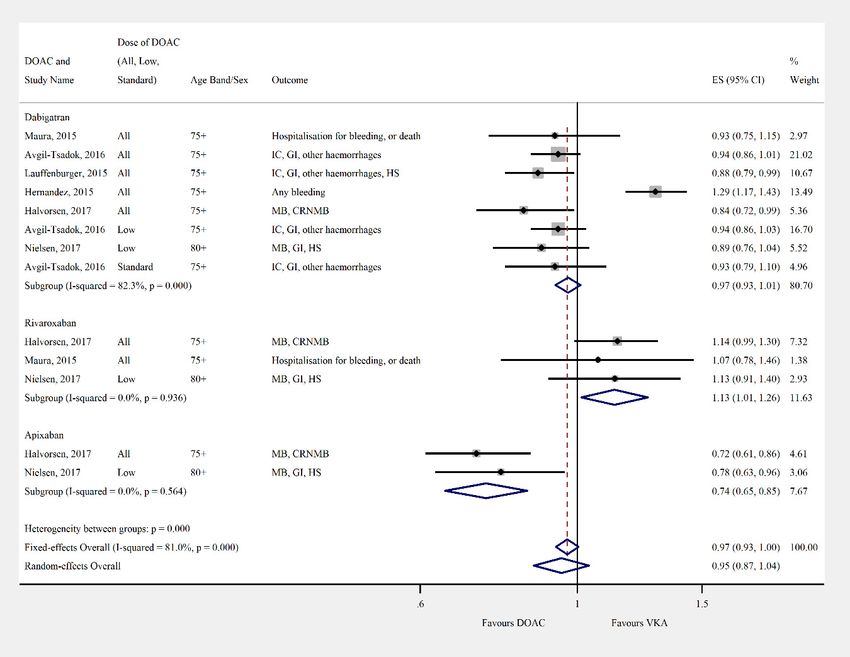
J. Clin. Med. 2019, 8, 554                                                                                                                                                                      6 of 21

                                                                                               Table 1. Cont.

                                                      Score per Modified NOS Domain
                                                                                                                  Total                                 Comments
           Author, Year            1         2          3         4         5          6         7        8
                                                                                                                        Exposure monitoring after initial fill date not stated. No demonstration
          Bengtson, 2017           1         1          1         0         2          1         1        0         7
                                                                                                                                      that outcome was not present at start of study.
                                                                                                                       Intention to treat approach stated, so exposure assumed to continue from
                                                                                                                       index date until censored. Propensity score used in analysis to adjust for
             Cha, 2017             2         1          1         1         0        1        1        0         7
                                                                                                                       confounders. However, it seems to include CHADS2 -VASC2 score as the
                                                                                                                                                       only variable.
                                                                                                                           Predominantly privately insured population, so may not represent
              Go, 2017             1         1          2         0         2        1        0        0         7
                                                                                                                                                  average US population.
                                                                                                                           Included only Medicare patients, so may not represent average US
           Graham, 2014            1         1          2         0         2        1        0        0         7     population. Follow-up duration not explicitly stated. However, sensitivity
                                                                                                                             analysis for different lengths of follow-up did not affect results.
                                                                                                                           Data from one hospital only. No description of how exposure was
            Kwon, 2016             0         1          1         0         0        2        1        0         5             measured. Limited attempts to control for confounding. No
                                                                                                                              demonstration that outcome was not present at start of study.
                                                                                                                           Data from one hospital only. No description of how exposure was
          Chan PH, 2016            0         1          0         0         0        1        2        0         4
                                                                                                                                measured. Limited attempts to control for confounding.
                                                                            Modified Newcastle–Ottawa scale (NOS) domains:
                                                  Selection                                             Comparability
                                                                                                                                                         Outcome
                               1. Representativeness of the exposed cohort                             5. Comparability
                                                                                                                                                 6. Assessment of outcome
                                  2. Selection of the non-exposed cohort                               of cohorts on the
                                                                                                                                    7. Was follow-up long enough for outcomes to occur
                                       3. Ascertainment of exposure                                       basis of the
                                                                                                                                            8. Adequacy of follow-up of cohorts
                 4. Demonstration that outcome of interest was not present at start of study           design or analysis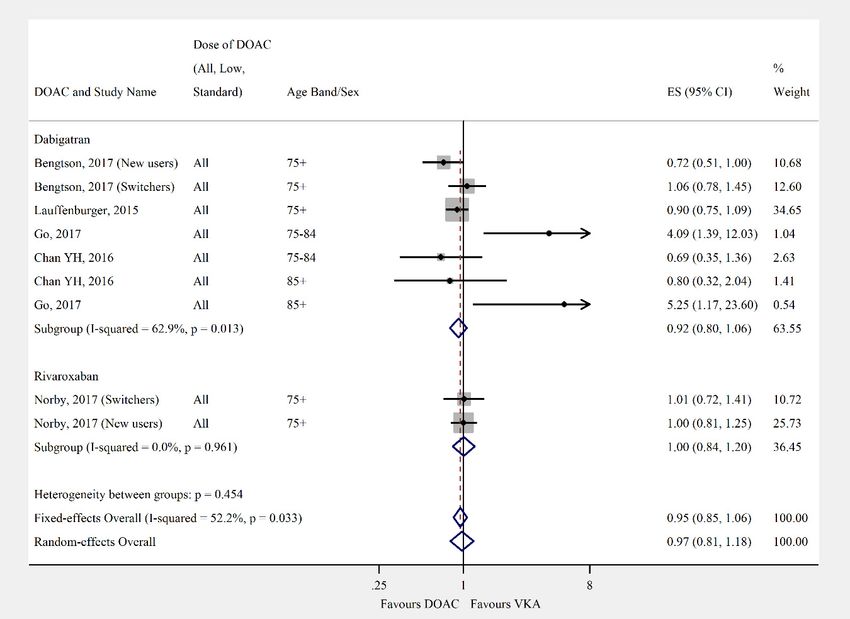
J. Clin. Med. 2019, 8, x FOR PEER REVIEW                                                                           7 of 22
J. Clin. Med. 2019, 8, 554                                                                                         7 of 21

3.4. Outcomes
3.4. Outcomes
     Overall, the pooled risk estimate for both ischaemic stroke and composite effectiveness
     Overall,
outcomes    weretheof
                    pooled  risk estimate
                       borderline           for both
                                   significance       ischaemic
                                                  (ischaemic       strokeseven
                                                                 stroke:   and composite
                                                                                  studies, 0.86effectiveness   outcomes
                                                                                                   (95% CI 0.75–0.99),
were
Figureof2;borderline
           compositesignificance
                        effectiveness(ischaemic
                                         outcomes:stroke:     seven studies,
                                                     nine studies,    0.93 (95%0.86   (95% CI 0.75–0.99),
                                                                                  CI 0.85–1.01),     Figure 3) Figure
                                                                                                                between 2;
composite
DOACs and   effectiveness
               VKA. There  outcomes:     nine studies,
                              were no significant       0.93 (95% between
                                                     differences    CI 0.85–1.01),
                                                                               DOACs Figure
                                                                                          and3)VKA
                                                                                                 between    DOACs
                                                                                                       in the        and
                                                                                                              composite
VKA.   There were
or majority           no significant
               of individual    safetydifferences
                                        outcomes between
                                                    (composite  DOACs    and
                                                                    safety: sixVKA     in the
                                                                                 studies,      composite
                                                                                            0.95   (95% CIor0.87–1.04),
                                                                                                                majority
of individual
Figure  4; major safety outcomes
                   bleed:           (composite
                          12 studies,   0.96 (95%safety:   six studies,
                                                   CI 0.84–1.09),        0.955;(95%
                                                                     Figure           CI 0.87–1.04),
                                                                                mortality:              Figure
                                                                                             six studies,   0.924;  major
                                                                                                                 (95%  CI
bleed:  12 studies,
0.77–1.10),  Figure 6;0.96 (95% CI 0.84–1.09),
                        myocardial     infarction: Figure    5; mortality:
                                                   five studies,   0.97 (95% sixCIstudies,   0.92Figure
                                                                                    0.81–1.18),    (95% CI 7).0.77–1.10),
                                                                                                               However,
Figure  6; myocardial
there was                infarction:
            a significantly           five of
                              lower risk   studies, 0.97 (95%
                                              intracranial       CI 0.81–1.18),
                                                             haemorrhage      (10 Figure
                                                                                   studies,7).0.56
                                                                                                However,
                                                                                                    (95% CIthere    was a
                                                                                                              0.48–0.67),
significantly
Figure 8) and a significantly higher risk of gastrointestinal bleeding (nine studies, 1.46 (95% CI and
              lower   risk of intracranial  haemorrhage      (10 studies, 0.56  (95%    CI 0.48–0.67),   Figure  8)     a
                                                                                                                    1.31–
significantly
1.63), Figure higher
               9) withrisk   of gastrointestinal
                         DOACs    than with VKAs.  bleeding (nine studies, 1.46 (95% CI 1.31–1.63), Figure 9)
with DOACs than with VKAs.

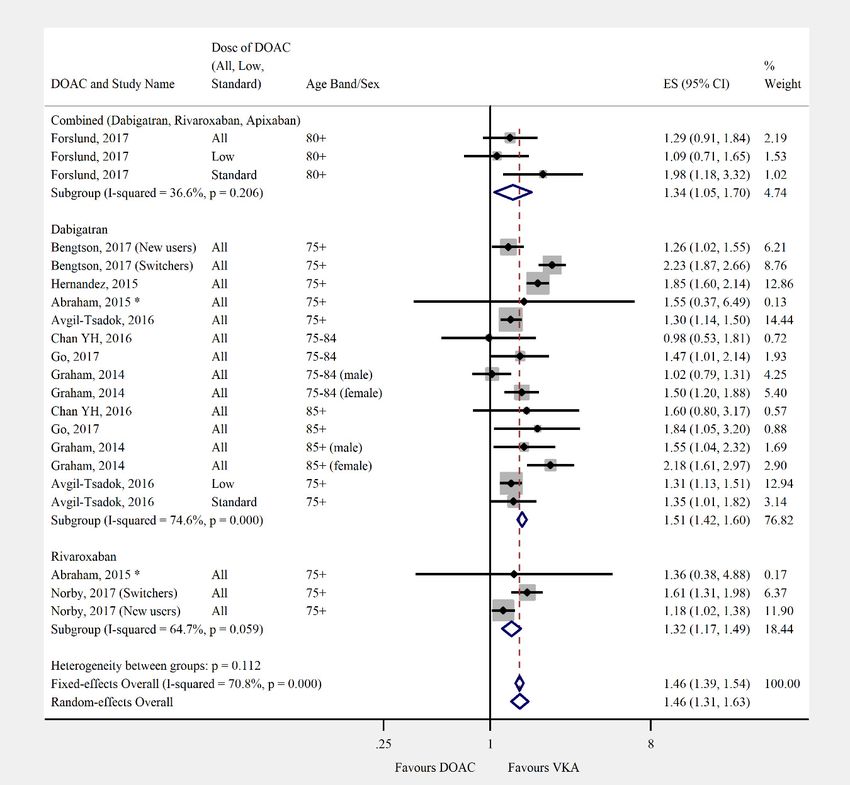
      Figure
      Figure 2.    Meta-analysis of
               2. Meta-analysis   of observational
                                     observational studies
                                                    studies on
                                                            on ischaemic
                                                                ischaemic stroke
                                                                          stroke stratified
                                                                                 stratified by
                                                                                            by direct
                                                                                               direct oral
                                                                                                      oral
      anticoagulant (DOAC), then grouped by age band and DOAC dose. New users = no previous
      anticoagulant (DOAC), then grouped by age band and DOAC dose. New users = no previous use of
      use of VKA, and switchers = previous use of VKA prior to starting DOAC. Effect sizes reported are
      VKA, and switchers = previous use of VKA prior to starting DOAC. Effect sizes reported are hazard
      hazard ratios. Sex is male and female unless otherwise stated.
      ratios. Sex is male and female unless otherwise stated.
J.J. Clin.
Clin. Med. 2019, 8, 554
x FOR PEER REVIEW 88 of
of 21
22
Figure 3. Meta-analysis of observational studies on composite effectiveness outcomes stratified by
Figure 3. Meta-analysis of observational studies on composite effectiveness outcomes stratified by
DOAC, then grouped by age band and DOAC dose. HS = haemorrhagic stroke, ICH = intracranial
DOAC, then grouped by age band and DOAC dose. HS = haemorrhagic stroke, ICH = intracranial
haemorrhage, IS = ischaemic stroke, RI = retinal infarct, SE = systemic embolism, TIA = transient
haemorrhage, IS = ischaemic stroke, RI = retinal infarct, SE = systemic embolism, TIA = transient
ischaemic attack, and US = unspecified stroke. Effect sizes reported are hazard ratio. Sex is male and
ischaemic attack, and US = unspecified stroke. Effect sizes reported are hazard ratio. Sex is male and
female unless otherwise stated.
female unless otherwise stated.J. Clin. Med. 2019, 8, 554 9 of 21
J. Clin. Med. 2019, 8, x FOR PEER REVIEW 9 of 22
Figure 4. Meta-analysis of observational studies on composite safety outcomes stratified by DOAC,
Figure 4.by
then grouped Meta-analysis
age band of andobservational
DOAC dose. studiesCRNMB
on composite safety outcomes stratified
= clinically-relevant by DOAC,
non-major bleeding,
then grouped by age band and DOAC dose. CRNMB = clinically-relevant non-major bleeding, GI =
GI = gastrointestinal
J. Clin.gastrointestinal
bleeding,
Med. 2019, 8, x FOR
HS = haemorrhagic stroke, IC = intracranial haemorrhage, and MB10=ofmajor
PEER REVIEW
bleeding, HS = haemorrhagic stroke, IC = intracranial haemorrhage, and MB = major 22
bleeding. Effect sizes reported are hazard ratio. Sex is male and female unless otherwise stated.
bleeding. Effect sizes reported are hazard ratio. Sex is male and female unless otherwise stated.
Figure 5. Meta-analysis of observational studies on major bleeding stratified by DOAC, then grouped
Figure 5. Meta-analysis of observational studies on major bleeding stratified by DOAC, then grouped
by age band and DOAC dose. Effect sizes reported are hazard ratios, except where ˆ = sub-hazard ratio,
by age band and DOAC dose. Effect sizes reported are hazard ratios, except where ^ = sub-hazard
and * = ratio,
incident
and *rate ratio. rate
= incident Sexratio.
is male
Sex and female
is male unless
and female otherwise
unless stated.
otherwise stated.J.J. Clin.
Clin. Med. 2019, 8, 554
x FOR PEER REVIEW 11 of
10 of 21
22
Figure 6. Meta-analysis of observational studies on mortality stratified by DOAC, then grouped by age
Figure
band 6. DOAC
and Meta-analysis of observational
dose. Effect sizes reportedstudies on mortality
are hazard stratified
ratios, except where byˆ =
DOAC, then grouped
sub-hazard ratio. Sexby
is
age band
male and DOAC
and female dose.
unless Effect sizes
otherwise reported are hazard ratios, except where ^ = sub-hazard ratio.
stated.
Sex is male and female unless otherwise stated.J. Clin. Med. 2019, 8, 554 11 of 21
J. Clin. Med. 2019, 8, x FOR PEER REVIEW 12 of 22
Figure 7. Meta-analysis of observational studies on myocardial infarction stratified by DOAC, then
grouped
grouped by
by age
age band
band and
and DOAC
DOACdose.
dose. New users =
New users switchers =
= no previous use of VKA, and switchers = previous
use
use of
of VKA
VKA prior
prior to
to starting
starting DOAC.
DOAC. Effect
Effect sizes
sizes reported
reported are
are hazard
hazard ratios.
ratios. Sex
Sex is
is male
male and
and female
female
unless
unless otherwise
otherwise stated.
stated.J.J. Clin.
Clin. Med.
Med.2019, 8,x554
2019,8, FOR PEER REVIEW 12 of
13 of 22
21
Figure 8. Meta-analysis of observational studies on intracranial haemorrhage stratified by DOAC, then
Figure 8. Meta-analysis of observational studies on intracranial haemorrhage stratified by DOAC,
grouped by age band and DOAC dose. New users = no previous use of VKA, and switchers = previous
then grouped by age band and DOAC dose. New users = no previous use of VKA, and switchers =
use of VKA prior to starting DOAC. Effect sizes reported are hazard ratios. Sex is male and female
previous use of VKA prior to starting DOAC. Effect sizes reported are hazard ratios. Sex is male and
unless otherwise stated.
female unless otherwise stated.J.J. Clin.
Clin. Med.
Med.2019, 8,x554
2019,8, FOR PEER REVIEW 13 of
14 of 22
21
Figure 9.
Figure Meta-analysisof
9.Meta-analysis ofobservational
observationalstudies
studiesonongastrointestinal
gastrointestinal bleeding
bleeding stratified
stratified by
by DOAC,
DOAC, thenthen
grouped by age band and DOAC dose. New users = no previous use of VKA, and switchers
grouped by age band and DOAC dose. New users = no previous use of VKA, and switchers = previous = previous
use of
use of VKA
VKA prior
prior to
to starting
starting DOAC.
DOAC. Effect
Effect sizes
sizes reported
reported are
are hazard
hazard ratios,
ratios, except where ** =
except where incident
= incident
rate ratio. Sex is male and female unless otherwise stated.
rate ratio. Sex is male and female unless otherwise stated.
Differences were shown when the DOACs were analysed individually. Dabigatran had a lower
Differences were shown when the DOACs were analysed individually. Dabigatran had a lower
risk of mortality than VKA (three studies, 0.78 (95% CI 0.61–0.99)). Rivaroxaban performed less
risk of mortality than VKA (three studies, 0.78 (95% CI 0.61–0.99)). Rivaroxaban performed less
favourably than DOACs overall in safety outcomes. There was no significant difference in risk of
favourably than DOACs overall in safety outcomes. There was no significant difference in risk of
intracranial haemorrhage (two studies, 0.79 (95% CI 0.41–1.54)), and a higher risk of major bleeding
intracranial haemorrhage (two studies, 0.79 (95% CI 0.41–1.54)), and a higher risk of major bleeding
(three studies, 1.17 (95% CI 1.04–1.33)) when compared with VKA. Apixaban had a significantly lower
(three studies, 1.17 (95% CI 1.04–1.33)) when compared with VKA. Apixaban had a significantly
risk of major bleeding (three studies, 0.68 (95% CI 0.55–0.84)), but there was no significant difference in
lower risk of major bleeding (three studies, 0.68 (95% CI 0.55–0.84)), but there was no significant
the risk of intracranial haemorrhage (one study, 0.82 (95% CI 0.46–1.46)).
difference in the risk of intracranial haemorrhage (one study, 0.82 (95% CI 0.46–1.46)).
Nielsen and colleagues [19] found an excess risk of death in both the apixaban and rivaroxaban
Nielsen and colleagues [19] found an excess risk of death in both the apixaban and rivaroxaban
groups (1.54 (95% CI 1.4–1.7), 1.67 (95% CI 1.49–1.87) respectively). This was the only study that looked
groups (1.54 (95% CI 1.4–1.7), 1.67 (95% CI 1.49–1.87) respectively). This was the only study that
at mortality with these agents and they only considered low doses of these drugs.
looked at mortality with these agents and they only considered low doses of these drugs.
4. Discussion
4. Discussion
This systematic review with meta-analyses is the first to investigate the effectiveness and safety
This systematic review with meta-analyses is the first to investigate the effectiveness and safety
of DOACs compared with VKAs in people aged 75 years and over. We found that there were no
of DOACs compared with VKAs in people aged 75 years and over. We found that there were no
significant differences in effectiveness outcomes between DOACs and VKAs, but their safety outcomes
significant differences in effectiveness outcomes between DOACs and VKAs, but their safety
varied. The risk of ischaemic stroke was similar and there was no difference when composite outcomes
outcomes varied. The risk of ischaemic stroke was similar and there was no difference when
composite outcomes were analysed. There was no significant difference between DOACs and VKAsJ. Clin. Med. 2019, 8, 554 14 of 21
were analysed. There was no significant difference between DOACs and VKAs for major bleeding.
However, for site-specific bleeding, there was a 46% increased risk of gastrointestinal bleeding and a
44% decreased risk of intracranial haemorrhage in the DOAC group compared with the VKA group.
In contrast to the combined DOAC results, dabigatran alone was associated with a lower risk of major
bleeding. Rivaroxaban had a higher risk of major bleeding. There was a lower risk of major bleeding
with apixaban than VKA; no studies investigated gastrointestinal bleeding with apixaban.
The main strengths of this study are the focus on older people who have been underrepresented
in the RCTs, the use of real world data which are more representative of older people being treated
with anticoagulants in clinical practice, and the broad search strategy (which allowed identification
of studies where older people were the primary study population or where they were analysed as a
subgroup). The quality of each study included in the review was thoroughly assessed, with emphasis
on the methods used, exposure definition, outcomes, bias and the potential for misclassification. We
translated foreign language studies to minimise the risk of bias. The primary weakness was the use of
aggregated data as opposed to using patient level data. We have not been able to validate the results
reported as the authors did not include sufficient information. These meta-analyses highlighted the
scarcity of evidence comparing the safety and effectiveness of DOACs with VKAs in people aged
≥75 years with AF. Only two studies looked specifically at outcomes in older people and these studies
were small, conducted in Asia and low quality which led to exclusion from the meta-analyses [22,25].
All other data came from subgroup or sensitivity analyses within larger studies, which meant that
detailed information was often lacking for this specific group and we had to rely on limited results
presented as tables or graphs.
The included studies had a number of strengths. Most included a treatment population and
comparator group representative of people with AF. Most studies considered a wide range of potential
confounders and accounted for these in the analysis using a variety of methods (propensity scores
used for matching [13,15,23,26–28,32,34], or weighting of survival models [17,19,20,29,30,33], or as a
covariate in the survival model [24,31]; high dimensional propensity scores used for matching [16], or
adjustment of survival model [18]; adjustment within survival models for age, sex, risk scores and
baseline co-morbidities [20] and baseline medications [21]).
The main weaknesses of the included studies firstly related to how exposure was measured.
The majority of studies used prescription records from administrative or claims data. All studies
described how the initial exposure was identified, but half did not describe how ongoing exposure
was measured [16,18,19,24,29,31,33] or stated that an intention-to-treat approach was used [14,24,27].
Two studies were conducted using registry data from a single hospital and did not describe how
exposure was measured [22,25]. Observational studies using routinely collected data have been
criticised for not considering variation in compliance. It could therefore be argued that not describing
ongoing exposure is worse as there is a further risk of misclassification. This is particularly the
case where people may have switched anticoagulant or stopped treatment altogether. Secondly,
whilst most studies addressed the influence of confounders, three studies did very little to control for
confounding [14,22,25]. Where matching was used to control for confounding, there was sometimes a
loss of significant numbers of patients from the VKA group who were not eligible for matching [13,15]
which may have limited overall generalisability. Follow-up was relatively short for most studies.
Ten studies had less than one year’s follow-up for the DOAC group [13,14,21,25–27,30–33], and four
studies did not state the average follow-up time [17,23,28,34]. Follow-up times, where stated, were for
the population of the study as a whole and may not have been the same for the sub-group of patients
aged ≥75 years included in these meta-analyses. It is unlikely that studies with less than a year’s
follow-up would have been long enough to capture effectiveness outcomes adequately. Finally, only
two studies described follow-up of patients throughout the study and reported details about loss to
follow-up [27,31].
Large RCTs have demonstrated that DOACs are at least as effective as warfarin for preventing
stroke and systemic embolization in AF [36–39] and may also be associated with significantly lessJ. Clin. Med. 2019, 8, 554 15 of 21
intracranial haemorrhage and major bleeding episodes [36–39]. A reduction in major or clinically
relevant non-major bleeding with the DOAC apixaban was also observed for patients prescribed
concomitant antiplatelet therapy following acute coronary syndrome or percutaneous coronary
intervention [40]. Meta-analyses of RCTs found DOACs to be superior to warfarin for the prevention
of stroke and systemic embolism [41–44]. However, many found no significant difference in the risk of
major bleeding between DOACs and warfarin [41–43]. Concerns have been raised about the conduct of
some of these trials and the impact this may have had on the validity of the results [45,46]. There is also
less substantial evidence for the use of DOACs in older individuals, particularly those aged 75 years
and over as people in this group only made up 30–40% of the total study populations [36–39]. Subgroup
analyses of RE-LY [47], ROCKET-AF [48], and ENGAGE AF-TIMI 48 [49] and two meta-analyses [50,51]
suggest that whilst at standard doses, the benefits of DOACs may be maintained in older patients, the
risk of major extracranial, and in particular GI bleeding, is significantly higher. Meta-analyses which
included both RCTs and observational studies identified similar trends to RCTs alone. On the whole,
DOACs were favourable to warfarin in reducing stroke and systemic embolism [52,53], they found no
significant difference between DOACs and warfarin for the outcome of major bleeding [53,54] and a
significantly reduced risk of ICH [53]. Risk of GI bleeding was reported by only one study and found
no significant difference in the pooled risk between DOACs and warfarin when RCTs or observational
studies were combined [53].
In our meta-analysis, we used ischaemic stroke as the only effectiveness outcome as we argue that
haemorrhagic stroke is a safety outcome. We found that the risk of ischaemic stroke was lower for
DOACs. However, this was of borderline significance. It is likely that in the RCTs, the reduction in
stroke with DOACs was due to their effect on haemorrhagic stroke rather than ischaemic stroke. Three
meta-analyses of phase III RCTs showed this effect, all finding a significant reduction in the combined
outcome of stroke and systemic embolism with DOACs, a significant reduction in haemorrhagic stroke
but no significant difference in the risk of ischaemic stroke between DOACs and warfarin [42–44].
We found no significant difference in major bleeding between DOACs overall and VKAs which is
in line with other meta-analyses in the age group [42,51]. Only Sharma and colleagues, who based
their meta-analyses on individual DOACs, found that major bleeding was significantly reduced
with apixaban compared with warfarin, which our results agreed with. We found rivaroxaban to
significantly increase the risk of major bleeding whereas Sharma and colleagues found no significant
difference. However, their meta-analyses included both trials of both AF and venous thromboembolism
where we focused solely on AF [50]. We found the risk of GI bleeding was increased and intracranial
haemorrhage decreased significantly with DOACs compared with warfarin, which is in keeping with
previous meta-analyses of RCTs in patients aged over 75 years.
The results of these current meta-analyses and those published previously suggest that DOACs
are no less effective than warfarin when prescribed to older patients with AF, do not significantly
increase the risk of major bleeding as a whole, and cause significantly less intracranial haemorrhage
than warfarin at the expense of an increased risk of gastrointestinal bleeding. However, the majority of
data, both in the present meta-analyses and previous analyses, are based on sub-group or sensitivity
analyses from studies that were not designed or powered to look at outcomes in this age group, so the
results must be interpreted with caution. These meta-analyses highlight the high level of heterogeneity
between the results of observational studies which may be due to a number of factors. Firstly, a number
of studies were conducted in Asian patients [14,15,22,25,33] who are known to have a higher risk of
ICH when treated with warfarin [55]; this may cause DOACs to appear more favourable for bleeding
outcomes. Lower INR targets have also been advocated in Asian patients due to the increased risk of
ICH and this may contribute to DOACs appearing more efficacious than warfarin [56]. Secondly, a
number of studies included in these meta-analyses were conducted in the US [13,16–18,26,28–30,32,34].
The FDA did not approve the 110 mg dose of dabigatran which is widely used in Europe.
This systematic review has highlighted a need for research which is well conducted, adequately
powered, and generalizable to older patients prescribed oral anticoagulants for AF. ObservationalJ. Clin. Med. 2019, 8, 554 16 of 21
studies should be transparent in how exposure is measured and use methods that address patients who
switch or stop therapy during the study period. There are often differences in patient characteristics
for those prescribed new medications to those prescribed older medications that influence prescribing.
This potential for channelling is important and should be taken into account during the analysis.
The follow-up time should be sufficient to assess all desired outcomes and follow-up should be
described for all patients.
Supplementary Materials: The following are available online at http://www.mdpi.com/2077-0383/8/4/554/s1,
Table S1: Description of included studies.
Author Contributions: Conceptualization, A.M. (Anneka Mitchell), M.C.W., T.W. and A.M.G. (Anita McGrogan);
methodology, A.M. (Anneka Mitchell), M.C.W., T.W., and A.M.G. (Anita McGrogan); formal analysis, A.M.
(Anneka Mitchell) and A.M.G. (Anita McGrogan); investigation, A.M. (Anneka Mitchell), M.C.W. and A.M.G.
(Anita McGrogan); data curation, A.M. (Anneka Mitchell) and A.M.G. (Anita McGrogan); writing—original draft
preparation, A.M. (Anneka Mitchell); writing—review and editing, M.C.W., T.W. and A.M.G.(Anita McGrogan);
visualization, A.M. (Anneka Mitchell) and A.M.G. (Anita McGrogan).
Funding: This work was supported by The Dunhill Medical Trust (grant number RTF109/0117).
Acknowledgments: We thank Marianna Liaskou (M.L.) for contributing to the screening of the full text articles.
Conflicts of Interest: The authors declare no conflict of interest. The funders had no role in the design of the
study; in the collection, analyses, or interpretation of data; in the writing of the manuscript, or in the decision to
publish the results.
Appendix A Search Strategy
Medline was searched using a combination of subject headings (denoted as MeSH) and free text
terms in title or abstract (denoted as ti,ab):
1. Rivaroxaban (MeSH and ti,ab) OR Xarelto.ti,ab OR Apixaban.ti,ab OR Eliquis.ti,ab OR Dabigatran
(MeSH and ti,ab) OR Pradaxa.ti,ab OR Edoxaban.ti,ab OR Lixiana.ti,ab OR Savaysa.ti,ab OR Factor
Xa Inhibitors (Pharmacological Action) OR Antithrombins (Pharmacological Action) OR “New oral
anticoagulant$”.ti,ab OR “Novel oral anticoagulant$”.ti,ab OR “direct oral anticoagulant$”.ti,ab
OR (NOAC or NOACS).ti,ab OR (DOAC or DOACS).ti,ab OR oral adj2 anticoagulant$.ti,ab)
2. (Warfarin (MeSH and ti,ab) OR exp Coumarins (MeSH) OR Coumarin*.ti,ab OR Acenocoumarol
(MeSH and ti,ab) OR Fluindione.ti,ab OR Phenindione (MeSH and ti,ab))
3. (exp Atrial fibrillation (MeSH and free text) OR exp atrial flutter (MeSH and free text) OR exp stroke
(MeSH and ti,ab) OR ((atrial or atrium or auricular) adj3 fibrillat*).ti,ab OR heart fibrillat*.ti,ab
OR ((atrial or atrium) adj3 (tachycardi$ or arrythmi$)).ti,ab OR (atrial adj3 tachyarrhythmi$).ti,ab
OR ((atrial or auricular) adj3 flutter$).ti,ab).
The three searches were conducted separately then combined using AND
EMBASE was searched using a combination of subject headings (denoted as Emtree) and free text
terms in the title or abstract (denoted as ti,ab):
1. Rivaroxaban (Emtree and ti,ab) OR Xarelto.ti,ab OR dabigatran (Emtree and ti,ab) OR dabigatran
etexilate (Emtree) OR Pradaxa.ti,ab OR apixaban (Emtree and ti,ab) OR Eliquis.ti,ab OR edoxaban
(Emtree and ti,ab) OR Lixiana.ti,ab OR Savaysa.ti,ab OR thrombin inhibitor (Emtree) OR exp
blood clotting factor 10A inhibitor (Emtree) OR “direct oral anticoagulant$”.ti,ab OR “novel
oral anticoagulant$”.ti,ab OR “new oral anticoagulant$”.ti,ab OR (NOAC or NOACS).ti,ab OR
(DOAC or DOACS).ti,ab OR oral adj2 anticoagulant$.ti,ab
2. Warfarin (Emtree and ti,ab) OR antivitamin k (Emtree) OR fluindione (Emtree and ti,ab)
OR acenocoumarol (Emtree and ti,ab) OR phenindione (Emtree and ti,ab) OR exp coumarin
anticoagulant (Emtree)
3. Exp Cerebrovascular accident (Emtree) OR stroke.ti,ab OR exp atrial fibrillation (Emtree or ti,ab)
OR atrial flutter.ti,ab OR heart atrium flutter.ti,ab ((atrial or atrium or auricular) adj3 fibrillat*).ti,abJ. Clin. Med. 2019, 8, 554 17 of 21
OR heart fibrillat*.ti,ab OR ((atrial or atrium) adj3 (tachycardi$ or arrythmi$)).ti,ab OR (atrial adj3
tachyarrhythmi$).ti,ab OR ((atrial or auricular) adj3 flutter$).ti,ab
Appendix B Modified Newcastle–Ottawa Scale
Note: This has been adapted from Wells, G. A, Shea, B., O’Connel, D. et al. The Newcastle–Ottawa
scale (NOS) for assessing the quality of non-randomised studies in meta-analyses. http://www.ohri.ca/
programs/clinical_epidemiology/oxford.htm. The underlined sections show where changes have been
made or additional information has been added to the original score.
Selection
1. Representativeness of the Exposed Cohort
a) Truly representative of the average atrial fibrillation patient in the community (2 point)
b) Somewhat representative of the average atrial fibrillation patient in the community
(1 point)
c) Selected group of users e.g., hospital inpatients
d) No description of the derivation of the cohort
2. Selection of the Non-Exposed Cohort
a) Drawn from the same community as the exposed cohort (1 point)
b) Drawn from a different source
c) No description of the derivation of the non-exposed cohort
3. Ascertainment of Exposure
a) Secure record (e.g., medical records)—describes how both the initial and ongoing
exposure were measured (2 points)
b) Secure record (e.g., medical records)—describes only how the initial exposure was
measured (1 point)
c) Structured interview (1 point)
d) Written self-report
e) No description
4. Demonstration that Outcome of Interest was not Present at Start of Study In the case of mortality
studies, outcome of interest is still the presence of a disease/ incident, rather than death. That is to
say that a statement of no history of disease or incident earns a star
a) Yes (1 point)
b) No
Comparability
5. Comparability of Cohorts on the Basis of the Design or Analysis
a) Study controls for age, sex, medication and comorbidities at baseline (1 point)
b) Study controls for the above plus any additional factors (such as socioeconomic
status, type of prescriber) (2 points)
c) Limited or no attempt to control for differences in cohorts
Outcome
6. Assessment of OutcomeJ. Clin. Med. 2019, 8, 554 18 of 21
a) Independent or blind assessment stated in the paper, or confirmation of the outcome by
reference to secure records (x-rays, medical records, etc.) (2 point)
b) Record linkage (e.g., identified through ICD codes on database records) (1 point)
c) Self-report (i.e., no reference to original medical records or x-rays to confirm the outcome)
d) No description
7. Was Follow-Up Long Enough for Outcomes to Occur
a) yes—for all primary outcomes (minimum follow-up of 3 months for bleeding outcomes,
1 year for effectiveness outcomes) (2 points)
b) Yes—for some outcomes (1 point)
c) No
d) Length of follow-up not stated
8. Adequacy of Follow-Up of Cohorts
a) Complete follow-up - all subjects accounted for (1 point)
b) Subjects lost to follow-up unlikely to introduce bias - small number lost, follow-up, or
description provided of those lost) (1 point)
c) Follow-up rateJ. Clin. Med. 2019, 8, 554 19 of 21
13. Go, A.S.; Singer, D.E.; Toh, S.; Cheetham, T.C.; Reichman, M.E.; Graham, D.J.; Southworth, M.R.; Zhang, R.;
Izem, R.; Goulding, M.R.; et al. Outcomes of Dabigatran and Warfarin for Atrial Fibrillation in Contemporary
Practice A Retrospective Cohort Study. Ann. Intern. Med. 2017, 167, 845–854. [CrossRef]
14. Cha, M.J.; Choi, E.K.; Han, K.D.; Lee, S.R.; Lim, W.H.; Oh, S.; Lip, G.Y.H. Effectiveness and Safety of
Non-Vitamin K Antagonist Oral Anticoagulants in Asian Patients with Atrial Fibrillation. Stroke 2017,
48, 3040–3048. [CrossRef]
15. Lau, W.C.Y.; Li, X.; Wong, I.C.K.; Man, K.K.C.; Lip, G.Y.H.; Leung, W.K.; Siu, C.W.; Chan, E.W. Bleeding-related
hospital admissions and 30-day readmissions in patients with non-valvular atrial fibrillation treated with
dabigatran versus warfarin. J. Thromb. Haemost. 2017, 15, 1923–1933. [CrossRef]
16. Norby, F.L.; Bengtson, L.G.S.; Lutsey, P.L.; Chen, L.Y.; MacLehose, R.F.; Chamberlain, A.M.; Rapson, I.;
Alonso, A. Comparative effectiveness of rivaroxaban versus warfarin or dabigatran for the treatment of
patients with non-valvular atrial fibrillation. BMC Cardiovasc. Disord. 2017, 17, 238. [CrossRef]
17. Adeboyeje, G.; Sylwestrzak, G.; Barron, J.J.; White, J.; Rosenberg, A.; Abarca, J.; Crawford, G.; Redberg, R.
Major Bleeding Risk During Anticoagulation with Warfarin, Dabigatran, Apixaban, or Rivaroxaban in
Patients with Nonvalvular Atrial Fibrillation. J. Manag. Care Spec. Pharm. 2017, 23, 968–978. [CrossRef]
18. Bengtson, L.G.S.; Lutsey, P.L.; Chen, L.Y.; MacLehose, R.F.; Alonso, A. Comparative effectiveness of
dabigatran and rivaroxaban versus warfarin for the treatment of non-valvular atrial fibrillation. J. Cardiol.
2017, 69, 868–876. [CrossRef]
19. Nielsen, P.B.; Skjoth, F.; Sogaard, M.; Kjaeldgaard, J.N.; Lip, G.Y.H.; Larsen, T.B. Effectiveness and safety of
reduced dose non-vitamin K antagonist oral anticoagulants and warfarin in patients with atrial fibrillation:
Propensity weighted nationwide cohort study. Br. Med. J. 2017, 356, j510. [CrossRef]
20. Forslund, T.; Wettermark, B.; Andersen, M.; Hjemdahl, P. Stroke and bleeding with non-vitamin K antagonist
oral anticoagulant or warfarin treatment in patients with non-valvular atrial fibrillation: A population-based
cohort study. Europace 2018, 20, 420–428. [CrossRef] [PubMed]
21. Halvorsen, S.; Ghanima, W.; Tvete, I.F.; Hoxmark, C.; Falck, P.; Solli, O.; Jonasson, C. A nationwide registry
study to compare bleeding rates in patients with atrial fibrillation being prescribed oral anticoagulants.
Eur. Heart J. Cardiovasc. Pharmacother. 2017, 3, 28–36. [CrossRef] [PubMed]
22. Chan, P.H.; Huang, D.; Hai, J.J.; Li, W.-H.; Yin, L.-X.; Chan, E.W.; Wong, I.C.K.; Lau, C.-P.; Chiang, C.-E.;
Zhu, J.; et al. Stroke prevention using dabigatran in elderly Chinese patients with atrial fibrillation. Heart
Rhythm 2016, 13, 366–373. [CrossRef]
23. Nishtala, P.S.; Gnjidic, D.; Jamieson, H.A.; Hanger, H.C.; Kaluarachchi, C.; Hilmer, S.N. ‘Real-world’
haemorrhagic rates for warfarin and dabigatran using population-level data in New Zealand. Int. J. Cardiol.
2016, 203, 746–752. [CrossRef]
24. Avgil-Tsadok, M.; Jackevicius, C.A.; Essebag, V.; Eisenberg, M.J.; Rahme, E.; Behlouli, H.; Pilote, L. Dabigatran
use in elderly patients with atrial fibrillation. Thromb. Haemost. 2016, 115, 152–160. [CrossRef]
25. Kwon, C.H.; Kim, M.; Kim, J.; Nam, G.B.; Choi, K.J.; Kim, Y.H. Real-world comparison of non-vitamin
K antagonist oral anticoagulants and warfarin in Asian octogenarian patients with atrial fibrillation.
J. Geriatr. Cardiol. 2016, 13, 566–572. [PubMed]
26. Seeger, J.D.; Bykov, K.; Bartels, D.B.; Huybrechts, K.; Zint, K.; Schneeweiss, S. Safety and effectiveness
of dabigatran and warfarin in routine care of patients with atrial fibrillation. Thromb. Haemost. 2015,
114, 1277–1289. [PubMed]
27. Maura, G.; Blotière, P.O.; Bouillon, K.; Billionnet, C.; Ricordeau, P.; Alla, F.; Zureik, M. Comparison of
the Short-Term Risk of Bleeding and Arterial Thromboembolic Events in Nonvalvular Atrial Fibrillation
Patients Newly Treated with Dabigatran or Rivaroxaban Versus Vitamin K Antagonists A French Nationwide
Propensity-Matched Cohort Study. Circulation 2015, 132, 1252–1260. [CrossRef] [PubMed]
28. Abraham, N.S.; Singh, S.; Alexander, G.C.; Heien, H.; Haas, L.R.; Crown, W.; Shah, N.D. Comparative risk
of gastrointestinal bleeding with dabigatran, rivaroxaban, and warfarin: Population based cohort study.
Br. Med. J. 2015, 350, h1857. [CrossRef]
29. Lauffenburger, J.C.; Farley, J.F.; Gehi, A.K.; Rhoney, D.H.; Brookhart, M.A.; Fang, G. Effectiveness and safety
of dabigatran and warfarin in real-world US patients with non-valvular atrial fibrillation: A retrospective
cohort study. J. Am. Heart Assoc. 2015, 4, e001798. [CrossRef]
30. Hernandez, I.; Baik, S.H.; Piñera, A.; Zhang, Y. Risk of Bleeding with Dabigatran in Atrial Fibrillation.
JAMA Intern. Med. 2015, 175, 18–24. [CrossRef]J. Clin. Med. 2019, 8, 554 20 of 21
31. Friberg, L.; Oldgren, J. Efficacy and safety of non-Vitamin K antagonist oral anticoagulants compared with
warfarin in patients with atrial fibrillation. Open Heart 2017, 4, e000682. [CrossRef]
32. Li, X.; Deitelzweig, S.; Keshishian, A.; Hamilton, M.; Horblyuk, R.; Gupta, K.; Luo, X.; Mardekian, J.;
Friend, K.; Nadkarni, A.; et al. Effectiveness and safety of apixaban versus warfarin in non-valvular atrial
fibrillation patients in “real-world” clinical practice: A propensity-matched analysis of 76,940 patients.
Thromb. Haemost. 2017, 117, 1072–1082. [PubMed]
33. Chan, Y.H.; Yen, K.C.; See, L.C.; Chang, S.-H.; Wu, L.-S.; Lee, H.-F.; Tu, H.-T.; Yeh, Y.-H.; Kuo, C.-T.
Cardiovascular, Bleeding, and Mortality Risks of Dabigatran in Asians with Nonvalvular Atrial Fibrillation.
Stroke 2016, 47, 441–449. [CrossRef] [PubMed]
34. Graham, D.J.; Reichman, M.E.; Wernecke, M.; Zhang, R.; Southworth, M.-R.; Levenson, M.; Sheu, T.-C.;
Mott, K.; Goulding, M.-R.; Houstoun, M.; et al. Cardiovascular, Bleeding, and Mortality Risks in Elderly
Medicare Patients Treated with Dabigatran or Warfarin for Non-Valvular Atrial Fibrillation. Circulation 2015,
131, 157–164. [CrossRef]
35. Hartling, L.; Milne, A.; Hamm, M.P.; VanderMeer, B.; Ansari, M.; Tsertsvadze, A.; Dryden, D.M. Testing
the Newcastle Ottawa Scale showed low reliability between individual reviewers. J. Clin. Epidemiol. 2013,
66, 982–993. [CrossRef]
36. Connolly, S.J.; Ezekowitz, M.D.; Yusuf, S.; Eikelboom, J.; Oldgren, J.; Parekh, A.; Pogue, J.; Reilly, P.A.;
Themeles, E.; Varrone, J.; et al. Dabigatran versus Warfarin in Patients with Atrial Fibrillation. N. Engl.
J. Med. 2009, 361, 1139–1151. [CrossRef] [PubMed]
37. Hylek, E.M.; Al-Khalidi, H.R.; Ansell, J.; Bahit, M.C.; Ezekowitz, J.A.; Geraldes, M.; Golitsyn, S.;
Hermosillo, A.G.; Mohan, P.; Lewis, B.S.; et al. Apixaban versus Warfarin in Patients with Atrial Fibrillation.
N. Engl. J. Med. 2011, 365, 981–992.
38. Patel, M.R.; Mahaffey, K.W.; Garg, J.; Pan, G.; Singer, D.E.; Hacke, W.; Breithardt, G.; Halperin, J.L.;
Hankey, G.J.; Piccini, J.P.; et al. Rivaroxaban versus Warfarin in Nonvalvular Atrial Fibrillation. N. Engl.
J. Med. 2011, 365, 883–891. [CrossRef]
39. Giugliano, R.P.; Ruff, C.T.; Braunwald, E.; Murphy, S.A.; Wiviott, S.D.; Halperin, J.L.; Waldo, A.L.;
Ezekowitz, M.D.; Weitz, J.I.; Špinar, J.; et al. Edoxaban versus Warfarin in Patients with Atrial Fibrillation.
N. Engl. J. Med. 2013, 369, 2093–2104. [CrossRef] [PubMed]
40. Lopes, R.D.; Heizer, G.; Aronson, R.; Vora, A.N.; Massaro, T.; Mehran, R.; Goodman, S.G.; Windecker, S.;
Darius, H.; Li, J.; et al. Antithrombotic Therapy after Acute Coronary Syndrome or PCI in Atrial Fibrillation.
N. Engl. J. Med. 2019, 380, 1509–1524. [CrossRef]
41. López-López, J.A.; Sterne, J.A.C.; Thom, H.H.Z.; Higgins, J.P.T.; Hingorani, A.D.; Okoli, G.N.; A Davies, P.;
Bodalia, P.N.; A Bryden, P.; Welton, N.J.; et al. Oral anticoagulants for prevention of stroke in atrial fibrillation:
Systematic review, network meta-analysis, and cost effectiveness analysis. Br. Med. J. 2017, 359, j5058.
[CrossRef]
42. Ruff, C.T.; Giugliano, R.P.; Braunwald, E.; Hoffman, E.B.; Deenadayalu, N.; Ezekowitz, M.D.; Camm, A.J.;
I Weitz, J.; Lewis, B.S.; Parkhomenko, A.; et al. Comparison of the efficacy and safety of new oral
anticoagulants with warfarin in patients with atrial fibrillation: A meta-analysis of randomised trials. Lancet
2014, 383, 955–962. [CrossRef]
43. Ntaios, G.; Papavasileiou, V.; Diener, H.C.; Makaritsis, K.; Michel, P. Nonvitamin-K-antagonist oral
anticoagulants versus warfarin in patients with atrial fibrillation and previous stroke or transient ischemic
attack: An updated systematic review and meta-analysis of randomized controlled trials. Int. J. Stroke 2017,
12, 589–596. [CrossRef]
44. Makam, R.C.P.; Hoaglin, D.C.; McManus, D.D.; Wang, V.; Gore, J.M.; Spencer, F.A.; Pradhan, R.; Tran, H.;
Yu, H.; Goldberg, R.J. Efficacy and safety of direct oral anticoagulants approved for cardiovascular indications:
Systematic review and meta-analysis. PLoS ONE 2018, 13, e0197583. [CrossRef]
45. Cohen, D. Dabigatran: How the drug company withheld important analyses. Br. Med. J. 2014, 349, g4670.
[CrossRef]
46. Cohen, D. Rivaroxaban: Can we trust the evidence? Br. Med. J. 2016, 352, i575. [CrossRef]
47. Eikelboom, J.W.; Wallentin, L.; Connolly, S.J.; Ezekowitz, M.; Healey, J.-S.; Oldgren, J.; Yang, S.; Alings, M.;
Kaatz, S.; Hohnloser, S.-H.; et al. Risk of Bleeding With 2 Doses of Dabigatran Compared With Warfarin in
Older and Younger Patients With Atrial Fibrillation: An analysis of the randomized evaluation of long-term
anticoagulant therapy(RE-LY) trial. Circulation 2011, 123, 2363–2372. [CrossRef]J. Clin. Med. 2019, 8, 554 21 of 21
48. Halperin, J.L.; Hankey, G.J.; Wojdyla, D.M.; Piccini, J.-P.; Lokhnygina, Y.; Patel, M.-R.; Breithardt, G.;
Singer, D.-E.; Becker, R.-C.; Hacke, W.; et al. Efficacy and Safety of Rivaroxaban Compared with Warfarin
Among Elderly Patients With Nonvalvular Atrial Fibrillation in the Rivaroxaban Once Daily, Oral, Direct
Factor Xa Inhibition Compared With Vitamin K Antagonism for Prevention of Stroke and Embolism Trial in
Atrial Fibrillation (ROCKET AF). Circulation 2014, 130, 138–146.
49. Kato, E.T.; Giugliano, R.P.; Ruff, C.T.; Koretsune, Y.; Yamashita, T.; Kiss, R.G.; Nordio, F.; Murphy, S.A.;
Kimura, T.; Jin, J.; et al. Efficacy and Safety of Edoxaban in Elderly Patients with Atrial Fibrillation in the
ENGAGE AF-TIMI 48 Trial. J. Am. Heart Assoc. 2016, 5, e003432. [CrossRef]
50. Sharma, M.; Cornelius, V.R.; Patel, J.P.; Davies, J.G.; Molokhia, M. Efficacy and Harms of Direct Oral
Anticoagulants in the Elderly for Stroke Prevention in Atrial Fibrillation and Secondary Prevention of Venous
Thromboembolism. Circulation 2015, 132, 194–204. [CrossRef]
51. Kim, I.S.; Kim, H.J.; Kim, T.H.; Uhm, J.-S.; Joung, B.; Lee, M.-H.; Pak, H.-N. Non-vitamin K antagonist oral
anticoagulants have better efficacy and equivalent safety compared to warfarin in elderly patients with atrial
fibrillation: A systematic review and meta-analysis. J. Cardiol. 2018, 72, 105–112. [CrossRef]
52. Bai, Y.; Guo, S.D.; Deng, H.; Shantsila, A.; Fauchier, L.; Ma, C.-S.; Lip, G.Y. Effectiveness and safety of oral
anticoagulants in older patients with atrial fibrillation: A systematic review and meta-regression analysis.
Age Ageing 2018, 47, 9–17. [CrossRef]
53. Almutairi, A.R.; Zhou, L.; Gellad, W.F.; Lee, J.K.; Slack, M.K.; Martin, J.R.; Lo-Ciganic, W.-H. Effectiveness and
Safety of Non-vitamin K Antagonist Oral Anticoagulants for Atrial Fibrillation and Venous Thromboembolism:
A Systematic Review and Meta-analyses. Clin. Ther. 2017, 39, 1456–1478. [CrossRef] [PubMed]
54. Bai, Y.; Deng, H.; Shantsila, A.; Lip, G.Y. Rivaroxaban Versus Dabigatran or Warfarin in Real-World Studies
of Stroke Prevention in Atrial Fibrillation: Systematic Review and Meta-Analysis. Stroke 2017, 48, 970–976.
[CrossRef] [PubMed]
55. Shen, A.Y.; Yao, J.F.; Brar, S.S.; Jorgensen, M.B.; Chen, W. Racial/ethnic differences in the risk of intracranial
hemorrhage among patients with atrial fibrillation. J. Am. Coll. Cardiol. 2007, 50, 309–315. [CrossRef]
[PubMed]
56. Wang, K.L.; Chiang, C.E. Optimal International Normalized Ratio for Atrial Fibrillation in Asians and
Japanese. Circ. J. 2013, 77, 2242–2243. [CrossRef] [PubMed]
© 2019 by the authors. Licensee MDPI, Basel, Switzerland. This article is an open access
article distributed under the terms and conditions of the Creative Commons Attribution
(CC BY) license (http://creativecommons.org/licenses/by/4.0/).You can also read


