ELearning for Renewable Energy Higher Education in Africa: Role, Potential and Outlook
←
→
Page content transcription
If your browser does not render page correctly, please read the page content below

eLearning for Renewable Energy Higher Education in Africa: Role, Potential and Outlook
eLearning for Renewable Energy Higher Education in Africa: Role, Potential and Outlook
2
Imprint
Published by: Design & Layout:
European Union Energy Initiative Schumacher. Design und digitale Medien
Partnership Dialogue Facility (EUEI PDF) www.schumacher-visuell.de
Photos:
Ute Grabowsky / photothek.net, cover
PAUWES p. 9, p. 24, p. 43
The Guardian p. 14
c/o Deutsche Gesellschaft für
Legacywebservices p. 15
Internationale Zusammenarbeit (GIZ) GmbH
EUEI PDF p. 17
P.O. Box 5180
GIZ/Kropke p. 20
65726 Eschborn, Germany
Catapult p. 3
recp@euei-pdf.org Skope-Groupe p. 39
www.euei-pdf.org University of Loughborough p. 40
www.africa-eu-renewables.org Elektor p. 41
Valuewalk p. 44
PAUWES p. 48
Light Up Africa p.48
Production:
Printed on 100% recycled paper
Place and date of publication:
Eschborn, February 2017
This report has been financed through the
Africa-EU Renewable Energy Cooperation
Editor:
Programme (RECP).
Niklas Hayek (EUEI PDF)
Erick Gankam Tambo and Joerg Szarzynski (United The RECP, initiated by the Africa-EU Energy
Nations University Institute for Environment and Partnership (AEEP), is being implemented by
Human Security, UNU-EHS) the EU Energy Initiative Partnership Dialogue
Facility (EUEI PDF).
Authors:
The EUEI PDF is an instrument of the EU Energy
Erick Gankam Tambo , Lucy Larbi,
Initiative (EUEI). It currently receives contributions
David Paulus, Joerg Szarzynski
from the European Commission, Austria, Finland,
Germany, Italy, the Netherlands and Sweden.
Acknowledgments:
Pan African University Institute of Water and
Energy Sciences (including climate change)
(PAUWES)
Dr Sanjaya Mishra, Commonwealth of Learning
Dr Sheryl Williams, Loughborough University
Dr Bakri Abdul Karim, African Development Bank
Florian Lenz
Luca Ferrini, EUEI PDF
Katharina Maria Wuropulos, EUEI PDF
Dr Abbes Sebihi
TABLE OF CONTENTS                                                                                                                                                                 3

Executive Summary................................................................................................................................................. 5
Abbreviations and Definitions............................................................................................................................... 6
Terminology.............................................................................................................................................................. 7
Introduction: Background, Context and Objective of the Study...................................................................... 9

Chapter 1: eLearning and Distance Education in Africa................................................................................... 11
    1.1 	eLearning Flagship Initiatives Relevant for Africa.....................................................................................12
    1.2 National Open Universities..............................................................................................................................15
    1.3 	Other Networks and Institutions....................................................................................................................16

Chapter 2: University Programmes and eLearning for Renewable Energy .................................................. 19
    2.1 	Renewable Energy Curricula.............................................................................................................................19
    2.2 	Renewable Energy eLearning Programmes at African Universities....................................................20
    2.3 	Renewable Energy eLearning Programmes at European Universities ..............................................21
    2.4 	Examples of Online Programmes for Renewable Energy ......................................................................22

Chapter 3: NON-UNIVERSITY Renewable Energy eLearning RESOURCES..................................................... 27
    3.1 	Non-university Renewable Energy eLearning Courses and Programmes . ......................................28
    3.2 	Open Educational Resources............................................................................................................................29
    3.3 	Massive Open Online Courses (MOOCs)......................................................................................................31

Chapter 4: Educational Technology for Renewable Energy Higher Education ............................................ 33
    4.1 	From Face-to-Face to eLearning/Blended Learning Curricula...............................................................33
    4.2 	Reference Architecture of a Virtual or Digital Learning Environment................................................34
    4.3 	Learning Technology to Support Practical Exercise in Renewable Energy Education ..................41

Chapter 5: Potential, Outlook and Recommendations ................................................................................... 47
    5.1 	Potential of and Outlook for Renewable Energy and eLearning in Africa.........................................47
    5.2 	Recommendations for Activities and Support Initiatives......................................................................49

Annex....................................................................................................................................................................... 53
List of Figures.......................................................................................................................................................... 55
List of Tables............................................................................................................................................................ 56
Literature................................................................................................................................................................. 57
eLearning for Renewable Energy Higher Education in Africa

4
Role, Potential and Outlook

EXECUTIVE SUMMARY                                                                                            5

Pointing to the great promise renewable energy          Europe. Furthermore, the study presents a list of
holds for affordably mitigating climate change          Online Courses, Open Educational Resources and
and enhancing energy security, the development          MOOCs (Massive Open Online Courses) related to
of this sector strongly depends on the availability     renewable energy higher education.
of pertinent and capable human resources. Hence,
skills and capabilities are cardinal to the effective   Yet, the combination of educational technology
development and utilisation of renewable                and renewable energy is less prevalent and
energy technology. To this end, education plays         is hence offered only by a limited number of
a key role in training individuals in becoming          African universities or universities that are
energy professionals in Africa. Engineers, as well      accessible to Africans. The study then reveals an
as policy-makers need to be trained in order to         existing, however not sufficient awareness for
plan, size, design, develop, operate, and maintain      the usage of educational technologies in African
renewable energy installations at all sizes and         higher education. It also summarises learning
levels, as well as to develop conducive policy          technologies, which could be used to transform
frameworks that promote the use of renewable            a didactical traditional face-to-face curriculum
energy technologies.                                    into a blended or eLearning programme or
                                                        curriculum for renewable energy studies. The
The study focuses on the role of educational            reference architecture of a digital learning
technology and its potential to enhance and             environment with the integrated components/
strengthen higher education in the field of             tools to support open and distance teaching/
renewable energy in Africa. It is targeted at higher    learning is described in the study. The respective
education lecturers and managers seeking to             components/tools of the architecture are
use eLearning technologies to enhance their             presented and most frequently used solutions
education programmes and courses, managers              in the African context (open source) for their
aiming to implement eLearning supported                 implementation are presented.
renewable energy programmes and curricula
in their institutions, as well as international         Finally, the study provides an outlook and further
organisations involved in support interventions         perspectives on eLearning for renewable energy
for renewable energy education and training             higher education in Africa. A number of short-
in Africa.                                              term and long-term recommendations that
                                                        enhance and strengthen eLearning for higher
Among others, the study elaborates on the               education in the field of renewable energy in
activities and impact from well-established             Africa are presented.
organisations in the sphere of eLearning in
Africa with a special focus on renewable energy
education. Referring to a previous RECP study
on higher education for renewable energy in
Africa, this study presents the extended portfolio
of face-to-face and eLearning programmes and
curricula for renewable energy in Africa and
eLearning for Renewable Energy Higher Education in Africa

6   ABBREVIATIONS AND DEFINITIONS

    AEEP       Africa-EU Energy Partnership

    ACDE       African Council for Distance Education

    AfDB       African Development Bank

    AR         Augmented Reality

    AU         African Union

    AUF        Agence Universitaire de la Francophonie

    AVU        African Virtual University

    COL        The Commonwealth of Learning

    CREST      The Centre for Renewable Energy Systems Technology

    EUEI PDF   EU Energy Initiative Partnership Dialogue Facility

    GDLN       Global Development Learning Network

    ICT        Information and Communication Technologies

    MOOC       Massive Open Online Course

    NOUN       National University of Nigeria

    RE         Renewable Energy

    RECP       Africa-EU Renewable Energy Cooperation Programme

    REDC       Renewable Energy for Developing Countries

    PAUWES     Pan African University Institute of Water and Energy Sciences (incl. climate change)

    ODL        Open Distance Learning

    OER        Open Educational Resources

    OU         Open University

    OUT        Open University of Tanzania

    Saide      South African Institute for Distance Education

    UNISA      University of South Africa

    VR         Virtual Reality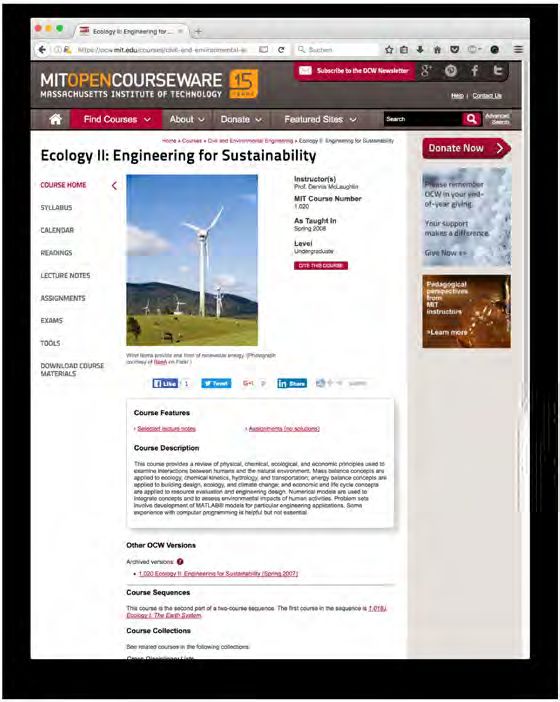
Role, Potential and Outlook

TERMINOLOGY1                                                                                                           7

Distance education is a mode of teaching and                    Open University is a type of single-mode distance
learning characterised by the separation of                     teaching institution that also offers flexibility in
teacher and learner in time and/or place for                    terms of choice of courses, entry requirements,
most of the educational transaction, mediated                   learning media and approaches, and time and
by technology for delivery of learning content. It              place of study. Courses and programmes of an
may involve, for example, face-to-face interaction              open university may offer different degrees of
for learner–teacher and learner–learner                         openness in their provision, based on the nature
interaction; the provision of two-way didactic                  of the studies and the legal contexts of operation.
communication; and economies of scale.
                                                                Virtual Universities/Cyber Universities are higher
eLearning is an umbrella term that refers                       education institutions, or networks of higher-
to the use of any digital device for teaching                   education institutions, responsible for designing,
and learning, especially for the delivery or                    developing and offering courses and programmes
accessing of content. Thus, eLearning can take                  in a flexible online environment.
place without any reference to a network or
connectivity. The digital device used by the                    Learning Management System (LMS), often called
learner to access materials need not be connected               course management system or virtual learning
to a digital network, either a local area network               environment, is a web-based software system
or the internet (or even to a cell phone network                that assists teachers to manage courses and
if a tablet is used as a terminal or access device).            deliver lessons online. It helps in administration,
                                                                tracking and reporting of learning processes.
Massive Open Online Course (MOOC) is an online
course available for large enrolment on the                     Blended Learning is a teaching and learning
open web, where “open” largely refers to open                   approach that demonstrates a blend of different
registration and not necessarily to registration                methods, technologies, and resources to improve
fees or open licensing models of the course.                    student learning. Some examples of blended
                                                                learning are flipped classroom, online interaction
Open and distance learning (ODL) refers to                      followed by face-to-face teaching, and online
a system of teaching and learning that is                       learning supplemented by face-to-face sessions.
characterised by separation of teacher and
learner in time and/or place. It uses multiple                  Learning Technologies are used for the
media for delivery of instruction; and involves                 enhancement of teaching, learning and
two-way communication and occasional face-                      assessment. In other words, it is the use of a
to-face meetings for tutorials and learner–                     range of ICT (Information and Communication
learner interaction.                                            Technology) for teaching, learning and
                                                                assessment. Learning technologies can be seen
Open educational resources (OER), as defined                    deployed as tools for drill and practice, tutorials,
by the OER Paris Declaration 2012, means any:                   information retrieval systems, simulations,
“teaching, learning and research materials in                   communication, among others.
any medium, digital or otherwise, that reside in
the public domain or have been released under                   Online Learning is eLearning with a mandatory
an open license that permits no-cost access, use,               involvement of a digital network which a
adaptation and redistribution by others with no                 learner needs in order to access at least part
or limited restrictions.”                                       of the learning materials and services. Online
                                                                learning refers to network enabled teaching

1   Definitions are mainly retrieved from the Commonwealth of Learning: http://oasis.col.org/handle/11599/829
eLearning for Renewable Energy Higher Education in Africa
8
and learning that allows the learner to have in
creased interaction with content, teachers and
other learners.
Open Learning refers to policies and practice of
openness in entry requirements (with minimal or
no restriction on qualifications), choice of courses,
or the place of study and time. It is an educational
philosophy where learning can happen anywhere,
anytime and from any resource. This can be seen
as a common practice in face-to-face institutions.Role, Potential and Outlook
INTRODUCTION: BACKGROUND, CONTEXT
AND OBJECTIVE OF THE STUDY 9
Background identify feasible and impactful projects within
Renewable energy markets in Africa are still this field. In general, several programmes and
in their early stages. In order to enter the job initiatives already exist to foster renewable
market, for example as renewable energy energy education in the African tertiary sector.
entrepreneurs or policy-makers, graduates of However, the idea to provide virtual education in
renewable energy higher education programmes renewable energy higher education in Africa is
have to be highly flexible and innovative. rather in its infancy, and this is why it is necessary
Therefore, renewable energy programmes to map the already existing programmes and
need to offer a broad curriculum, straining the opportunities as well as make the most of lessons
universities’ human and financial resources. At learnt and best practices from other providers of
the same time, distance education has gained virtual education when engaging in this sector.
significant relevance in Africa, due to decreasing
costs of mobile devices, increasing connectivity Hence, this study showcases the role, potential
and a fast developing ICT market. In this light, and avenues of possible cooperation in the field
distance education approaches promise to be low of eLearning for renewable energy in African
cost, and high impact opportunities for university higher education in order to identify action areas
education. By complementing university in this respective field.
programmes with eLearning, human and
financial resources can be used more efficiently, The assessment:
while students are provided with modern
teaching methods and up-to-date knowledge to »» provides an overview of eLearning and distance
successfully enter the job market. education in Africa, as well as of main actors
and initiatives;
Context of the Study »» presents renewable energy eLearning
The study was conducted within the context of programmes in higher education in Africa;
the Africa-EU Renewable Energy Cooperation
»» sketches eLearning programmes and educa-
Programme (RECP). The RECP aims at developing
tional technologies related to renewable energy
renewable energy markets in Africa and is
higher education in Europe and lessons learnt;
hence catalysing efforts in shaping this market
by training the next generation of energy »» discusses potential of renewable energy and
professionals and promoting renewable energy distance learning in Africa and submits recom-
innovation in Africa. One of the principles of the mendations designed to induce a way forward.
RECP is to complement existing donor initiatives,
where possible. With the help of this assessment Target Group
study, the RECP explores the area of eLearning This study is mainly targeted at higher education
for renewable energy in African higher education lecturers and managers seeking to use eLearning
foremost to map the existing initiatives in this technologies to enhance their education
field and to identify windows of opportunity. programmes and courses, at managers aiming
The study has been conducted in cooperation to implement eLearning supported renewable
with the United Nations University Institute for energy programmes and curricula in their
Environment and Human Security (UNU-EHS), and institutions. It is also targeted at international
authored by Dr Erick Tambo assisted by Lucy Larbi. organisations involved in support interventions
for renewable energy education and training in
Africa, and all individuals who seek collaboration
Objectives of the Study
in the field of eLearning in renewable energy in
The overall goal of this study is to explore the
Africa or merely seek to expand the knowledge
role and potential of eLearning in renewable
base on this topic.
energy in African higher education and toeLearning for Renewable Energy Higher Education in Africa 10
Chapter 1 ELEARNING AND
DISTANCE EDUCATION IN AFRICA                                                                              11

Higher education in Africa is facing a critical     of self-motivation, discipline and concentration.
challenge to meet new demands of the 21st           The best use of online learning is to pair it with
century with the continent’s high rates of          some practical instruction and assessment (Mark
population growth. The demographic shift            West, 2015). Despite all intricacies associated
will translate into a larger number of students     with the set-up and advancement of virtual
that will seek access to all levels of education,   education initiatives in Africa, policy-makers have
including tertiary education. The use of            acknowledged the added value from the usage
information and communication technologies          of educational technologies and increasingly
can contribute to the expansion of tertiary         make this a policy priority.
education as well as accelerate the progress
many African countries have already made in         The following section displays a selection of
education disciplines that are critical to the      flagship initiatives/programmes that provide
economic development of Africa.                     educational technology services in Africa, mostly
                                                    funded by external donors. The selected entities
Virtual education makes it possible for students    are among the most renowned organisations
in any location who have internet and web           in eLearning in Africa. The respective activities,
connections to enrol in online courses and          impacts, challenges and lessons learnt provide an
benefit from this alternative way of education.     insight into the functioning and performance of
Despite the promises of virtual education, high     the projects.
dropout rates still plague virtual universities,
as the online environment requires a high level
eLearning for Renewable Energy Higher Education in Africa
12
1.1 eLearning Flagship Initiatives to the use of radio, text messages, voice mail,
Relevant for Africa television, video, print and newsprint to enable
community-based and “village” learning.
Commonwealth of Learning2
The Commonwealth of Learning (COL) is Pan African E-Network3
an intergovernmental organisation created The Pan African E-Network is an ICT cooperation
by Commonwealth Heads of Government to platform between India and the African Union
encourage the development and sharing of to enable access to and sharing of expertise
open learning/distance education knowledge, between India and African states in the areas of
resources and technologies throughout the Tele-Education and Tele-Medicine. It started in
Commonwealth’s 54 member states. COL has February 2009, and aimed at connecting the then
evolved into one of the world’s leading distance 53 African Nations of the African Union through
education providers and leads the international a satellite and fibre optic network that would
development in distance education along provide effective communication in two key areas,
with UNESCO. It works with institutional and Tele-Education and Tele-Medicine:
individual partners to give policy advice and to
implement programme activities in consultation The Tele-Education network consists of five
with governments, and provides best practice African Regional Leading Universities (University
examples that demonstrate how ODL can help of Kwame Nkrumah in Ghana, Makerere
education opportunities expand more rapidly. University in Uganda, University of Yaounde 1
in Cameroon, University of Alexandria in Egypt,
Among others, COL carries out the following University of Zomba in Malawi) connected to
activities related to eLearning: 53 learning centres on the continent and to
seven universities in India. The universities are
Synergising: COL focuses and aligns the work connected to India via a 2mbps broadband/
of partners on a specific set of educational and VSA. To enhance capacity building, the Indian
learning outcomes, linked to a broad strategy for government has committed to provide free
development. education programmes to 10,000 African
students. The educational programmes range
Consultancy: COL helps governments and from graduate and postgraduate diplomas to
other institutions expand the scale, efficiency certificates, and short term courses in the area of
and quality of learning by using appropriate Business Management, Information Technology,
technologies, particularly those that support Business Administration and Financial
open and distance learning. Management.
Alternative form of learning: COL offers other The Tele-Medicine connectivity will enable 12
forms of learning: flexible learning approaches Super Specialty Hospitals to provide expert
for formal and non-formal contexts as well as services to 53 Remote Hospitals that are
skills development; a range of different learning equipped with the medical equipment such
strategies and methods to enable the education as Electro-Cardio-Gram (ECG), Ultra Sound,
of girls and women; and a focused approach and pathology and X-ray at each location. The
network will also provide continuing medical
education (CME) services based on the selected
2 Sources: (CoL1, 2015), (CoL2, 2015), (CoL3, 2015) and 3 Source: (PanAfricanE-Network1, 2016).
(Murgatroyd, 2015).Chapter 1 eLearning and Distance Education in Africa
13
Super Specialty disciplines in the medical courses consortium of 18 universities, which is working
offered by the Indian and AU Regional Super to improve the quality of, and access to, primary
Specialty Hospitals as a certificate and diploma school teacher education in Africa. The Health
course as per the AU requirement. Education and Training (HEAT) project is designed
to train and support community health workers
Further activities of the network involve across Africa. The OU also acts as consultant
support to video conferencing and VoIP services, to governments that aim to launch their open
and support to e-Governance, e-commerce, universities that predominantly teach by distance
infotainment, resources mapping, and learning. Currently, the OU is consulting the
meteorological services. By the end of 2012, Ghanaian government in launching the National
9916 students from African countries had Open University of Ghana.
registered with Indian universities for a variety
of postgraduate, undergraduate and certificate OU’s wide outreach is reflected in its numbers
courses. The network also provides trainings at of beneficiaries: 800,000 teachers have benefitted
the regional centres in Africa for the Telecom, IT from OU’s TESSA project; more than 21,000
and paramedical staff. The network is designed people with disabilities studied with the OU
to have 169 terminals (learning centres) that are in 2014/15.
connected to the hub aiming to strengthen the
South-South cooperation.
African Virtual University5
The African Virtual University (AVU) commenced
The Open University – the pilot project phase in 1997. It is the leading
International Development Office4 Pan African eLearning institution. AVU assists
The Open University (OU) is a public distance institutions by identifying course demand,
learning and research institution, and one of the providing the technical infrastructure as well as
biggest universities in the UK for undergraduate matching students’ demands to the institutions’
education. Through its International Devel offers. By promoting open distance eLearning,
opment Office, the University has also been it aims to increase access to affordable tertiary
active in Africa over the past twenty years. Here, education. Courses are offered in English, French
the OU helps deliver development programmes and Portuguese.
in partnership with governments, NGOs, funding
institutions and local partners and addresses The AVU partners with many African universities
areas such as frontline health, teacher education and institutions to launch new distance learning
and English language teaching. Besides the facilities that offer degrees and diplomas or
programmes, the OU provides open educational certificates in ICT, maths and science. AVU offers
resources and selected degree courses for open educational resources through a portal
African students. that currently hosts 219 modules – 73 modules
in each of the three languages, including 46 in
Selected courses of the Open University are mathematics and sciences, four in ICT basic skills,
available in Africa or via partner universities in 19 teacher education professional courses, and
Africa. For example, the Open University Business four in integration of ICT in education.
School provides African managers with globally
recognised qualifications and expertise. Teacher
Education in Sub-Saharan Africa (TESSA) is a
4 Sources: (OpenUniversity1, 2016), (OpenUniversity2, 2016), 5 Source: (AVU, 2016).
(OpenUniversity3, 2016), (OpenUniversity4, 2016).eLearning for Renewable Energy Higher Education in Africa
14
The AVU supports clients in converting existing the North (mainly France and Canada) and the
course material into eLearning format or South (Burkina Faso, Cameroon, Egypt, Senegal,
developing new eLearning material, and consults Madagascar, Tunisia, Vietnam, Morocco and Libya).
institutions that want to adopt distance and
eLearning. The AVU also acts as a hosting In the academic year 2016/2017, the AUF offers
institution by allowing third parties to use the almost 90 Bachelor and Master degrees as well
AVU platform to offer programmes and courses. as certificates entirely remotely. Also Massive
and Open Online Courses are offered (MOOC).
Since its establishment in 1997, the AVU has Study programmes range from engineering and
trained more than 43,000 students through human sciences to medicine and public health,
partner institutions. Also, approximately 1.5 environment and sustainable development,
million downloads in the AVU’s open education education and formation, law, economics and
resources took place over a period of five years. management. Lastly, the AUF offers scholarships
The AVU works with more than 50 academic for the programmes.
partner institutions in more than 27 countries
in Africa and is the largest network of open The AUF offers a series of “training of trainers”
distance and eLearning in Africa. Further, it has workshops for Information Technology and
developed over 70 curricular models in English, Communication, which are named “Transfer”.
French and Portuguese. These training workshops assist in the case
of deployment to francophone countries in the
South and East where information technologies
Formation Ouverte à Distance (Agence
and communication are to be developed
Universitaire de la Francophonie)6
for academia.
The Agence Universitaire de la Francophonie
(AUF) is an international association comprising
The AUF has a network of 36 francophone digital
francophone universities, grandes écoles,
campuses and 39 partners around the world
academic networks and scientific research
offering different services ranging from access to
centers all over the world. With a network of
scientific and technical information infrastructure
812 members in 104 countries, it is one of
of distance learning (e.g. videoconferencing),
theworld’s largest higher education and re
support the production of courses, training
search associations. The AUF retains expertise
of trainers workshops, and the provision of
in highereducation and research tailored to
incubators for entrepreneurs. In 2012, 10,131
francophone countries.
students were registered to pursue an online
degree with the FOAD programme. In total, more
AUF runs an extensive francophone digital
than 10,000 students benefitted from the services
campus network on the five continents where
of the network of the digital francophone campus.
it represents a tool for sharing and capitalising
experiences, assists in structuring the pedagogic
and scientific offer the AUF supplies, and project The AfDB eInstitute7
implementation of university projects. 90 online The eInstitute is the virtual knowledge and
programmes are offered within the framework learning environment for capacity building of the
of FOAD. FOAD is a collaboration platform African Development Bank (AfDB). The eInstitute
involving higher education institutions from knowledge portal is built internally at the AfDB
by integrating several open-source and a few
6 Source: Agence Universitaire de la Francophonie 7 Source: Dr Bakri Abdul Karim (RECP Report, 2016).
(AUF, 2016).Chapter 1 eLearning and Distance Education in Africa
15
commercial applications. As such it harvests the and Blended Learning. Among others, the portal
Bank’s internal knowledge for delivery in distance provides learning and course management
learning modes including eLearning, mobile systems for learning and training as well as a
learning and blended learning. Further, this virtual library and archive management system
institute aims at developing the capacity of AfDB for the knowledge and virtual resource center.
staff and member countries to use ICT to deliver The AfDB is striving to enhance the portal and
training on the eInstitute platform. Courses on open it up for learners in Africa as well as others
renewable energy are planned for 2016. who are interested in development knowledge.
The project is envisioned to become the African
The eInstitute harvests the Bank’s internal Knowledge Hub in order to build e-learning
knowledge for delivery in distance learning capacity throughout the continent.
modes including eLearning, Mobile Learning
1.2 National Open Universities National Open University of Nigeria (NOUN):
NOUN is Nigeria’s largest university and the
Besides the above-mentioned international first provider of open distance education in
initiatives, various African universities provide West Africa. NOUN offers certificates, degrees
eLearning courses or eLearning resources in and postgraduate courses. Currently more than
multiple disciplines. The following overview list 150,000 students are enrolled in more than 50
is non-exhaustive, however the most renowned programmes, which are nationally accredited.
institutions have been chosen to provide 63 study centres are associated with NOUN.
examples of African National Open Universities:
The Open University of Tanzania (OUT): OUT is
University of South Africa (UNISA): UNISA is the first provider of open distance education in
not only one of the largest providers of open East Africa and operates through 30 regional
distance education in Africa but also one of the centres and 70 study centres. OUT offers
largest worldwide. UNISA offers internationally certificates, diploma, degree and postgraduate
accredited Bachelor, Master and doctoral degree courses through five faculties and two institutes.
programmes in numerous disciplines. The Currently, over 30,000 students are enrolled.
university counts over 300,000 students from
more than 130 countries.eLearning for Renewable Energy Higher Education in Africa
16
Open University of Zimbabwe: The Open 1.3 Other Networks and Institutions
University of Zimbabwe delivers more than
30 programmes. It counts six faculties and
eLearning Networks
11 regional centres and confers certificates,
African Council for Distance Education: The
diplomas, undergraduate degrees, Master’s
African Council for Distance Education (ACDE)
degrees, and PhD degrees. Since 2003, more than
is a continental educational organisation
27,000 students have graduated.
currently comprising 39 African universities
and other higher education institutions,
which are committed to expanding access to
quality education and training through open
and distance learning. Participating countries
are Botswana, Cameroon, Kenya, Mauritius,
Mozambique, Nigeria, Republic of Congo,
Ruanda, Somalia, South Africa, Sudan, Swaziland,
Tanzania, Zambia and Zimbabwe. In addition,
ACDE also hosts a platform on open educational
resources in Africa.
Global Development Learning Network (GDLN):
Funded by the World Bank, GDLN is a partnership
programme of about 120 affiliates in more
than 80 countries that helps designing learning
programmes in the field of distance learning.
The services range from designing and organising
formal training courses to multi-country, multi-
cultural dialogues and “virtual” conferences,
using face-to-face and distance learning
approaches. As a global platform for learning and
knowledge exchange on development issues,
GDLN operates on three levels:
1. roviding the physical infrastructure for
P
learning and knowledge-sharing activities
in capital cities and in remote areas.
2. O
ffering a broad set of advisory and imple-
mentation services from needs assessments
to the design, delivery, and evaluation of
learning activities and products.
3. roviding access to a wealth of know-how
P
and sector expertise.Chapter 1 eLearning and Distance Education in Africa
17
e/merge Africa: e/merge Africa is a new and most recently established a Kenya-based
educational technology network which has been initiative, OER Africa (Open Educational Resources),
designed for educational technology researchers to promote the development and sharing of
and practitioners in African higher education. OER on the African continent. Saide acts as an
It offers regular online seminars, workshops and advocate, catalyst, and facilitator to bring about
short courses. Upon the scrutiny of a proposal, change in existing educational practices.
e/merge allows individuals to lead a seminar,
workshop or short course on its platform. Also, Research on open educational resources for
interested students are screened for eligibility development (ROER4D), South Africa: The primary
and have to hence undergo a selection procedure. objective of the ROER4D programme is to improve
educational policy, practice, and research in
developing countries by better understanding
Think Tanks – Research Institutes
the use and impact of OER. ROER4D does this by
South African Institute for Distance Education
building an empirical knowledge base on the use
(Saide): Saide’s task is to contribute to the
and impact of OER focusing in post-secondary
development of new models of open and distance
education, developing the capacity of OER
education practice that accord with and take
researchers, building a network of OER scholars
forward the values, principles, and goals of the
and communicating research to inform education
evolving education systems in the Southern
policy and practice.
African region. It has also paid particular attention
to the appropriate use of technology in educationeLearning for Renewable Energy Higher Education in Africa
18
Reneweable energy curriculum model
Educational 1st semester 2nd semester 3rd semester 4th semester Profession
background
Engineer
Technical RE technologies Off-grid power Research
Engineering
Grid Integration oriented Entrepreneur
RE resources
Natural science of RE
Modelling & Researcher
Simulation Household
Social science energy
Energy systems Professor
Environmental science Agriculture &
Energy and
Non technical Energy Application
Society Planner
Economics oriented
Jurisprudence Politician
Professionalisation
Basics Core Tracks Thesis
120 credit points
Figure 1 Renewable
Energy Curriculum Model
(RECP, 2015)Chapter 2 UNIVERSITY PROGRAMMES
AND ELEARNING FOR RENEWABLE ENERGY 19
2.1 Renewable Energy Curricula8 For now, throughout Africa there are only a
limited number of Master’s programmes on the
Renewable energy markets in Africa undergo ground or in the planning phase in the sector
rapid changes. In order to enter the job market, of renewable energy. They differ significantly in
for example as renewable energy entrepreneurs the stage of development, teaching and content
or policy-makers, graduates of renewable profiles, financing structure and experience.
energy higher education programmes have to
be highly flexible and innovative. Therefore, As such, the offered programmes range from
renewable energy programmes need to certificate courses to full degree courses. Even
offer a broad curriculum, often straining the fewer African higher institutions offer both
university’s human and financial resources9. graduate and postgraduate programmes.
Picture 3 illustrates a renewable energy Annex 1 displays a list of 35 African universities
curriculum model providing a “strategic approach or institutions that offer teaching in renewable
for renewable energy Master programmes, energy. The table contains an already existing list
based on theoretical consideration and empirical of universities identified in the frame of a study
analyses”. The study on higher education for conducted by the RECP.
renewable energy in Africa conducted by RECP
gives more details about components of the
structure and components of the curriculum.
Courses at the undergraduate level are not
designed to address problems in renewable
energy. The lack of qualified teaching staff
and scarce financial resources are the two
major hindrances to effective and sustainable
renewable energy higher education in Africa.
8 Source: (RECP, 2015).
9 See also RECP’s study on “Higher Education for Renewable
Energy in Africa”: http://www.euei-pdf.org/en/recp/
action-area-4-innovation-and-skills-development/higher-
education-for-renewables-in-africaeLearning for Renewable Energy Higher Education in Africa
20
2.2 Renewable Energy eLearning their studies and can tailor it to individual needs
Programmes at African Universities and circumstances. Furthermore, eLearning
infrastructure and partnerships allow students
Given the challenges of higher education for to access knowledge of external actors.
renewable energy in Africa, one way to change
the status quo is to supplement the existing While several African universities do engage in
face-to-face traditional education with eLearning. eLearning and many universities in Africa offer
It is assumed that by offering eLearning courses, study programmes in the field of renewable
access to higher education can be increased energy, only few offer eLearning courses or
by reaching large numbers of students and programmes in this field. The currently existing
professionals in multiple sites simultaneously programmes range from free webinars to full
(Agenda 2063). As eLearning, open and distance degree programmes.
learning are not bound to a specific place and
time, students have more flexibility in organising
Country/Region Institution Programme Approach Link
African Virtual http://www.avu.org/avuweb/en/
Pan-Africa Certificate Renewable Energy Online
University courses/renewable-energy/
Algeria CDER Renewable energy http://www.cder.dz/?lang=en
Blended
Burkina Faso 2iE FPL 2iE-Taxi Brousse Low-Cost http://fpl.2ie-edu.org/login/index.php
learning
KNUST College of
Ghana Short Courses in Renewable Energy Online https://energycenter.knust.edu.gh/
Engineering
Jimma University
M.Sc in Sustainable Energy Blended
Ethiopia Institute of https://www.ju.edu.et/programmes
engineering learning
Technology
National Open http://nouedu.net/programmes/
Bachelor Environmental Science and
Nigeria University of bsc-environmental-science-resource-
Resource Management (ESM)
Nigeria management
Table 1 Examples of
African higher education
institutions offering
virtual education
programmes related to
renewable energyChapter 1 eLearning and Distance Education in Africa
21
2.3 Renewable Energy eLearning selected examples of eLearning programmes
Programmes at European related to renewable energy higher education
Universities in Europe. The list of programmes presented
is extendable and was based on an online survey
eLearning programmes provided by European distributed amongst practitioners in the field Table 2 Examples of
institutions offer a wide series of programmes of higher education for renewable energy. universities in Europe
and courses. The following table presents engaged in eLearning in
renewable energy
Country Institution Programme Link
https://www.tugraz.at/en/studying-and-
teaching/degree-and-certificate-programmes/
Austria Graz University of Technology Master of Engineering in Hydropower continuing-education/part-time-masters-
programmes-and-university-programmes/
hydropower/
Management Center Environmental, Process & Energy https://www.mci.edu/en/study-program/master/
Austria
Innsbruck Engineering environmental-process-energy-engineering
Germany University Oldenburg Master Programme Renewable Energy https://www.uni-oldenburg.de/en/reo/
Frankfurt School of Finance & Certified Expert in Climate & Renewable http://www.frankfurt-school.de/linked/en/
Germany
Management Energy Finance courses/renewable-energy.html
RENAC (The Renewables http://www.renac.de/en/masters-degrees/
Germany MBA Renewables
Academy) mba-renewables.html
https://www.srh-hochschule-berlin.de/de/
B.Sc International Business Administration
Germany SRH Hochschule Berlin studium/bachelor/international-business-
with focus on Renewable Energy administration-focus-on-renewable-energy/
Germany Uni Freiburg & Fraunhofer ISE Solar Energy Engineering http://www.study-solar.com/
Open University of The https://www.ou.nl/web/english/energy-analysis
The Netherlands Energy Analysis
Netherlands
https://www.tue.nl/en/education/tue-graduate-
University of Eindhoven
The Netherlands MSc. Sustainable Energy Technology school/masters-programs/sustainable-energy-
(Blended) technology/
http://www.ub.edu/web/ub/en/estudis/
Centro Universitario Master of Science in Renewable Energy
Spain oferta_formativa/master_universitari/fitxa/R/
Internacional de Barcelona and Energy Sustainability MD703/index.html
http://www.funiber.us/knowledge-areas/
Fundación Universitaria
Spain Master in Renewable Energy environmental-studies/master-in-renewable-
Iberoamericana energy/
http://www.hig.se/Ext/En/University-of-Gavle/
Education/Programmes/Programsidor/
Sweden University of Gävle MSc. Energy Engineering Online Avancerad-niva/Master-Programme-in-Energy-
Engineering-Online-60-cr.html
https://www.unitar.org/event/full-catalog/
e-Learning Courses in Renewable Energy for
United Kingdom Cifal Scotland cifal-scotland-renewable-energies-developing-
Developing Countries countries-environmental-necessity-economic
http://www.lboro.ac.uk/study/postgraduate/
Master in Renewable Energy Systems
United Kingdom Loughborough University programmes/taught/renewable-energy-systems-
Technology technology/
Renewable Energy Module Bachelor http://www.openuniversity.edu/courses/
United Kingdom Open University
of Engineering qualifications/details/t313?orig=q78
https://www.ulster.ac.uk/courses/course-
United Kingdom Ulster University Renewable Energy Management finder/201718/renewable-energy-and-energy-
management-13572eLearning for Renewable Energy Higher Education in Africa
22
2.4 Examples of Online Programmes for in this field they will be further assessed. Hence,
Renewable Energy the following describes the development of
the curricular, as well as the lessons learnt and
The Open University and the Loughborough the avenues for collaboration.
University are two renowned universities that
provide eLearning programmes in the field
of renewable energy. Due to their prominence
PROJECT EXAMPLE:
The Open University10 The module is supported by a learning
The Open University offers the following energy management system to manage teaching and
related programmes: learning processes of the module.
»» Bachelor of Engineering (Degree) The OU is keen on partnerships with other
organisations to deliver courses, collaborate on
»» Energy and Sustainability module –
new curricula, as well as to validate programmes
undergraduate (30 credits)
and share expertise: With a licensing partnership,
»» Renewable Energy Module – partner universities can utilise and flex the
undergraduate (30 credits). existing courses and methods of the OU to their
exact requirements. A teaching partnership with
OU enables a joint delivery of Open University
Programme costs vary. For undergraduate
courses and qualifications to international students.
programmes the same costs apply for every
student. The costs are congruent to UK
Given the international student profile of the OU,
undergraduate tuition fees. At Master’s level,
the modules provide limited scope for adapting
non-UK based students pay between
the course content to suit the local needs of the
£10,743–£12,406 for Energy and Technology
students. However, in order to achieve maximum
programmes and between £11,071 and £13,089
suitability, the modules are developed by multi-
for Environment, Development and International
disciplinary course teams comprising academics,
Studies programmes. For diploma, certificate
educational technologists, media specialists,
or single module courses, less tuition fees apply.
respected academics and external examiners.
10 Information in this section relies on the Open
University website: http://www.openuniversity.edu/
courses/modules/t313Chapter 1 eLearning and Distance Education in Africa
23
Table 3 Module set up for
Renewable Energy Module – Study Level 3 30 Credits
Renewable Energy at the
Open University
Overview of the current status of renewable energy in the
An introduction into renewable energy
context of the world’s present primary energy situation
Overview of the physics of solar heat and how this may be
Solar thermal energy captured in a variety of different ways, as well as the complex
topic of passive solar heating
A structured introduction to this critical technology, starting
Solar photovoltaics with the physics of crystalline silicone to issues of integration
and future prospects
Various bioenergy products and processes, illustrated with a
Bioenergy range of practical examples examining the factors that are
likely to affect the uptake of bioenergy systems
A critical look at small- and large-scale hydro in terms of their
Hydroelectricity
respective benefits and penalties
Including barrages, lagoons and the rapidly emerging and
Tidal power
potentially significant tidal current technologies
A detailed overview of a wide range of aspects of one of the
Wind energy fastest growing energy technologies globally that is set to
become a major generator of electricity throughout the world
Basic principles and detailed technology case studies and
Wave energy a review of the most promising future designs for this
potentially significant global source of renewable energy
Why it is treated as renewable even though it is being mined,
Geothermal energy
its usage over the last century and its future
A detailed look at the conditions under which various
Integrating renewable energy into
renewable energy sources can make an increasingly significant
energy systems
contribution to energy needs worldwideeLearning for Renewable Energy Higher Education in Africa
24
PROJECT EXAMPLE:
Loughborough University11 The module is supported by a learning
Loughborough University has 15 years of management system to manage teaching and
experience in managing a distance learning MSc learning processes of the programme (online
in Renewable Energy Systems Technology. The tutorials, assignments and computer aided
programme operates parallel to the full time on- assessments) live streamed and recorded lectures,
campus MSc course, which has been operating virtual and remote labs for practical exercises.
for 23 years. Programme costs vary, however fees
commence at £6,600 per year. The university According to Dr Sheryl Williams, Flexible and
offers the following programmes in the field of Distance Learning Manager at Loughborough
renewable energy: University, one key challenge is the interaction
of students and lecturers and the distant
»» Master in Renewable Energy Systems Tech- learning team’s support of the programme. It is
nology (180 credits) important to use innovative ICT to ensure student
engagement and sound pedagogy. To tackle this
or an early leave within the Master programme
problem, Loughborough University has developed
is awarded with:
a Photovoltaic Remote Laboratory for distant
learning students – enabling students to conduct
»» Postgraduate diploma in Renewable Energy
experiments from their computer.
Systems Technology (120 credits)
»» Postgraduate certificate in Renewable Energy
Systems Technology (60 credits).
Table 4 RE Systems
Master in Renewable Energy Systems Technology (180 credits)
Technology curriculum at
Loughborough University Compulsory Modules Optional Modules (student must choose three)
Module 1: Sustainability and Energy Systems Module 1: Advanced Solar Thermal
Module 2: Integration of Renewables Module 2: Advanced Photovoltaics
Module 3: Solar 1 Module 3: Wind Power 2
Module 4: Wind 1 Module 4: Energy Storage
Module 5: Water Power Module 5:Energy System Investment and Risk Management
Module 6: Biomass
Module 7: Research Project
11 Information relies on the website of Loughborough
University http://www.lboro.ac.uk/?external, as wells as
on an interview conducted with the distant learning team
of Loughborough University.Chapter 1 eLearning and Distance Education in Africa
25eLearning for Renewable Energy Higher Education in Africa 26
Chapter 3 NON-UNIVERSITY RENEWABLE
ENERGY ELEARNING RESOURCES                           27

This chapter explores online courses/
programmes, Open Educational Resources
(OER) and Massive Open Online Courses
(MOOCs) related to renewable energy offered
by institutions not yet mentioned in this study.
While Open Educational Resources are more
likely to be used by lecturers who seek to improve
their teaching courses, MOOCs are online
courses offered for a defined time period and
mainly target students.
eLearning for Renewable Energy Higher Education in Africa

28

                                  3.1 Non-university Renewable Energy
                                       eLearning Courses and Programmes

                                  A large number of non-academic institutions           interested individuals. Programme offers range
                                  and organisations offer short- and long-term          from certificates to capacity building courses
                                  open courses on renewable energy that are             to webinars and diploma courses.
                                  accessible to students, graduates, and any

      Institution       Type of Offer    Programme      Course                       Target Group                 Link

      Alison            Free online      Diploma in     27 Modules related to        Professionals in the area    https://alison.com/courses/
                        course           Sustainable    Sustainable Development      of environmental science,    Diploma-in-S
                                         Development    including renewable and      students or the individual
                                                        non-renewable energy         student
                                                        sources

      Alison            Free online      Renewable      11 Modules related to        Teachers and students        https://alison.com/courses/
                        course           Energy         renewable energy             who want to learn more       Renewable-Energy-Sources
                                         Sources                                     about energy use and
                                                                                     how renewable sources
                                                                                     of energy will be of
                                                                                     vital importance for a
                                                                                     sustainable future

      UNIDO             Free online      Capacity       7 Modules related to RE      All individuals interested   http://www.
      (United           training         Building                                    in renewable energy and      renenergyobservatory.
      Nations           programme        Programme      »» E nergy and Climate      sustainability               org/capacity-building-
      Industrial                         in Renewable       Change;                                               programme.html
      Development                        Energy         »» Small Wind Energy;
      Organization)                                     »» Biogas;
                                                        »» Small Hydro Energy;
                                                        »» Photovoltaic Energy;
                                                        »» Solar Thermal Energy;
                                                        »» Energy Efficiency in
                                                            Buildings

      Climate-KIC       Free online      New massive    Renewable energy             All individuals interested   https://learning.climate-kic.org/
      (Knowledge        course           open online                                 in renewable energy and      courses/rei-mooc
      and                                course on                                   fighting climate change
      Innovation                         renewable
      Communities)                       energy
                                         innovation

      L3EAP             Free online      Energy         Sustainable Energy for SID   All individuals interested   http://project-l3eap.eu
                        course           security,                                   in renewable energy for
                                         access and                                  developing states
                                         efficiency

     Table 5 Examples of
     non-university elearning
     courses and programmes
Chapter 3 Further Renewable Energy eLearning Programmes and Courses
29
3.2 Open Educational Resources
Name Courses Status Repository/Website
Merlot 10 courses related to RE Open https://www.coursera.org/courses?query=renewable%20energy
11 courses related to RE
MIT Open Course Ware Open https://www.edx.org/course?search_query=renewable+energy
NovoEd 1 course related to RE Open http://online.stanford.edu/course/economics-competing-energy-technologies
Open2Study 3 course related to RE Open https://www.open2study.com/search/site/renewable energy
Udemy 3 course related to RE Open https://www.udemy.com/
Table 6 Examples of Open
Open Educational Resources (OER) are freely Energy Studies Minor, which develops the
Educational Resources
accessible, openly licensed documents and expertise needed to reshape how the world
media that are useful for teaching, learning, and uses energy. The heart of the Energy Students
assessing as well as for research purposes. A list Minor is a core of foundational subjects in
of courses in renewable energy available on main energy science, technology, and social science,
OER repositories is provided above. complemented by a programme of electives
allowing students to tailor their Energy Minor
The MIT Energy Initiative represents the MIT hub to their particular interests” (MITEnergy, 2016).
for energy research, education, and outreach. More than thirty educational contents of
“The Initiative has devised an undergraduate the initiative are available as Open Educational
Resources (MITEnergyOER, 2016).You can also read


