EMERGENCY APPEAL FOR THE IMPACT OF COVID-19 SOUTH AFRICA - MAY - NOVEMBER 2020 - ReliefWeb
←
→
Page content transcription
If your browser does not render page correctly, please read the page content below
EMERGENCY APPEAL        MAY -
                    NOVEMBER
FOR THE IMPACT OF        2020

COVID-19
SOUTH AFRICA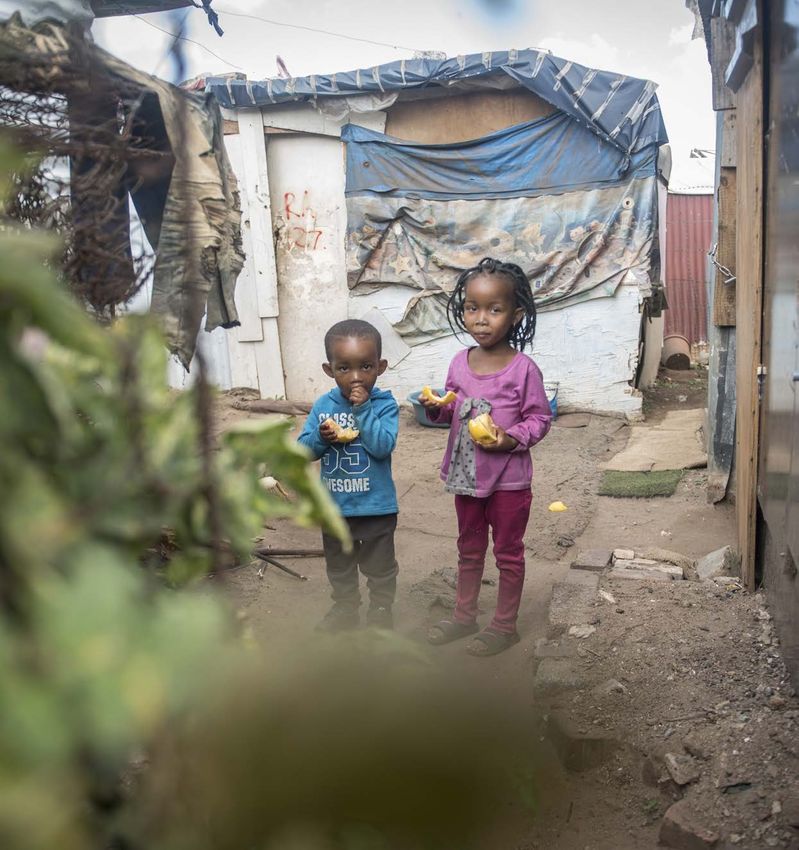
SOUTH AFRICA
Overview Map ZIMBABWE
BOTSWANA
NAMIBIA
Vhembe
MOZAMBIQUE
Capricorn
v
® LIMPOPO Mopani
Waterberg
v
®
Sekhukhune
Ehlanzeni
Bojanala
®
!
v
® ®v
®
City of Tshwane
\v
v Nkangala
Ngaka Modiri Molema MPUMALANGA
City of Johannesburg
NORTH WEST v®v
®v®
v
®v
®
West Rand Ekurhuleni
Dr Ruth Segomotsi Mompati Sedibeng Gert Sibande
ESWATINI
v
®
Dr Kenneth Kaunda
John Taolo Gaetsewe
Fezile Dabi
Amajuba Umkhanyakude
Zululand
Z F Mgcawu Frances Baard Lejweleputswa Thabo Mofutsanyane Umzinyathi
v
®
v
® FREE STATE v
® KWAZULU-NATAL
v
® Uthukela Uthungulu v
®
Mangaung iLembe
Umgungundlovu
NOTHERN CAPE
v
® v
®Xhariep LESOTHO v
®
eThekwini
v
®
Sisonke
Pixley ka Seme Alfred Nzo
Namakwa
Ugu
Joe Gqabi
Indian Ocean
South Atlantic Ocean
v
® O.R.Tambo
v
®
CAPE TOWN
Chris Hani
West Coast v
®
EASTERN CAPE
Central Karoo
v
® Amathole
v
®
Cacadu
Buffalo City
Cape Winelands
v
® Health Facility
v
®
City of Cape Town
WESTERN CAPE
Eden v
® v
®
Nelson Mandela Bay !
\ Capital City
v
®
v v
®
® v v
® v
®
® Overberg
v
® Province Boundary
v
®
Number of People by district
The designations employed and the presentation of material in the report do not imply the expression of any opinion whatsoever on the part of the Secretariat of the United Nations
concerning the legal status of any country, territory, city or area or of its authorities, or concerning the delimitation of its frontiers or boundaries.
COVER PHOTO
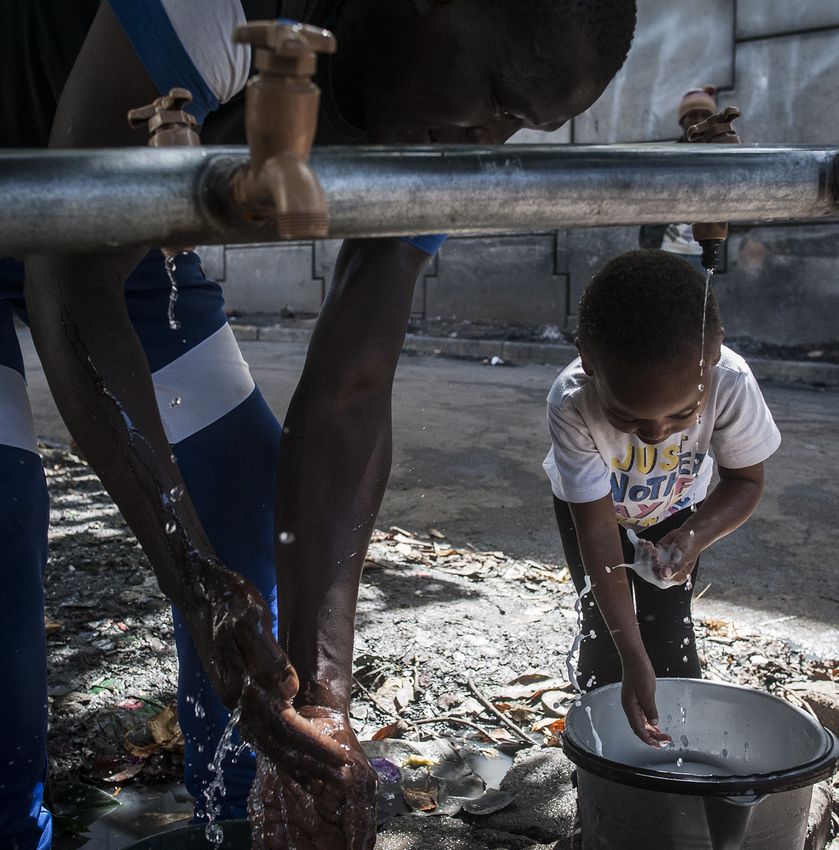
A little girl and her father are washing their hands at a communal water point in the Bekezela
Informal Settlement, Newtown. Residents of this settlement are in need of basic amenities and
some of them have seen their living conditions worsen as they are not allowed to work, due to the
lockdown enforced in the country to halt the spread of COVID-19.. Photo: UNICEF/Mohammed
2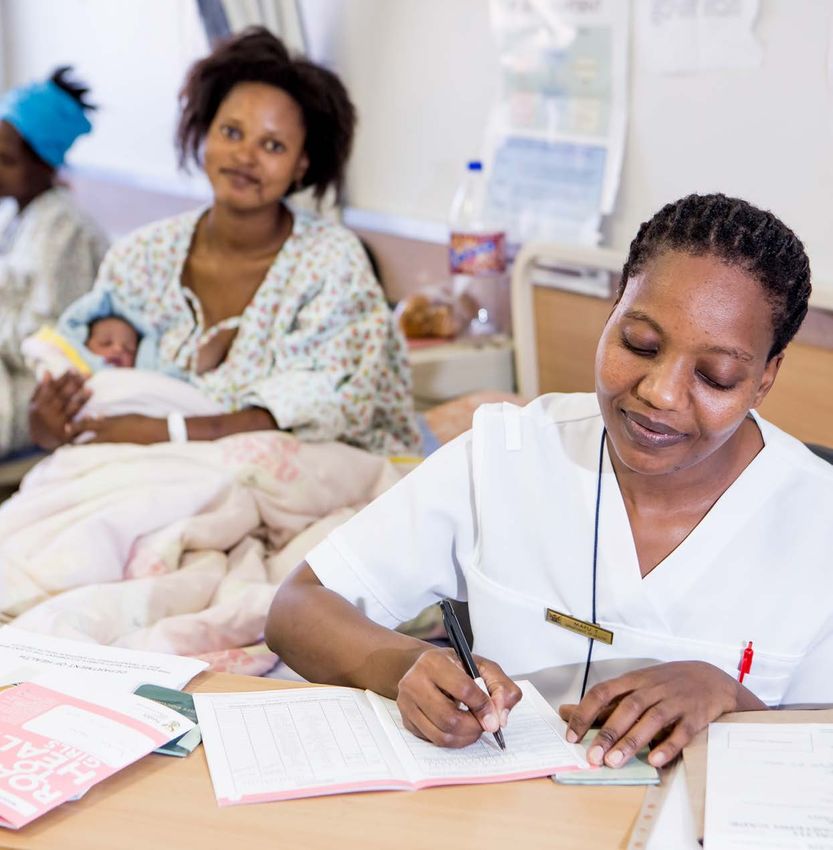
EMERGENCY APPEAL

Table of
Contents
04    Appeal at a Glance

05    Overview of the Crisis

07    Response Approach

09    Strategic Objectives

10    Sector Response Strategy Sector Plans
11    Education
12    Food Security and Nutrition
13    Governance
14    Health
15    Protection, Gender, and Gender-based Violence
16    WASH
17    Coordination & Common Services

18    Annexes
19    Participating Organizations
20    Projects
26    Methodology for Calculations of People in Need and People
      Targeted

                                                                  3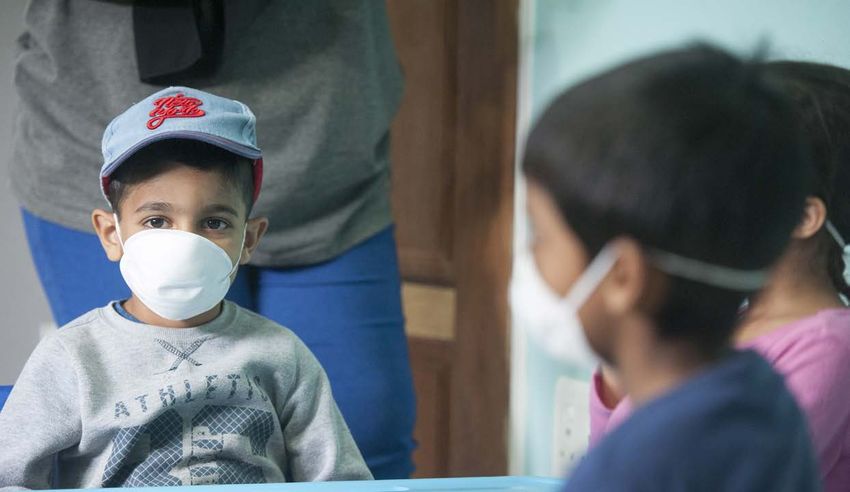
SOUTH AFRICA
Appeal at a
Glance
PEOPLE IN NEED PEOPLE TARGETED REQUIREMENTS (US$) OPERATIONAL PARTNERS
33.3M 9.9M $ 136M 21
People in Need and Targeted by Sector Overview of People in Need & Targeted
ZIMBABWE
Water, Sanitation
26.9 M
and Hygiene (WASH) Limpopo MOZAMBIQUE
2.5 M
BOTSWANA
18.9 M
Health
Mpumalanga
5.2 M North West
Gauteng
NAMIBIA SWAZILAND
13.8 M
Food Security and
Nutrition
1.3 M KwaZulu-Natal
Free State
13 M Nothern Cape
Education LESOTHO
10 M
SOUTH AFRICA
10.7 M
Protection, Gender and
Gender-based Violence Eastern Cape
5M ATLANTIC
OCEAN
INDIAN
OCEAN
3M People In Need
Governance People Targeted Western Cape
1M
Proportion of PIN targeted People in Need (PIN)
8M
People Targeted 4M
1M
Requirements by Sector Operational Partner by Type
Health $54.5 M INGO
Food Security and
1
Nutrition $28.2 M National
NGO
Protection, Gender and
$15.3 M
Gender-based Violence
Consortia
Education $15 M 4
Water, Sanitation
and Hygiene (WASH) $9.3 M
Coordination and
Common Services $8.77 M
Governance $5 M
UN
16
4EMERGENCY APPEAL
Overview of
the Crisis
South Africa reported it fist case of COVID-19 on 5 March 2020. available data, HIV prevalence in these populations is much higher
While the first cases were imported, local transmission has led to than general population and antiretroviral therapy (ART) coverage
a rapid increase in the number of cases. As of 21 April 2020, more much lower. For example, while 2018 ART coverage among adult
than 3,400 cases and 58 deaths had been confirmed. On 15 March, men, 15-years-old and above, was estimated to be 57 per cent, it
President Cyril Ramaphosa declared a national state of disaster, was only 44 per cent among men who have sex with men, and much
and the government has since taken several measures to curb the lower among people who inject drugs. Beyond access to ART, these
spread of the virus, including closing borders, implementing strict marginalized populations face issues such as not being part of the
social distancing measures and a 35-day nation-wide lockdown. formal economy. Further, there are more than an estimated 300,000
These measures, along with the global economic shock caused by people who have active TB infections in South Africa, with more than
the pandemic, are expected to generate rising needs requiring an half of them (177,000) having a dual HIV and TB infection. Among all
immediate and urgent response. Although South Africa is considered people with active tuberculosis (TB) infections, there are 73,000 who
an upper-middle-income country, the amount of disparities—social, are not yet diagnosed or notified of their disease, generally called
economic, and gender—make the country particularly vulnerable during “missing TB cases.” It is estimated that there more than 72,000 people
this emergency. For example, 33 per cent of the urban population living with both HIV and active TB infection who are not receiving ART
is concentrated in overcrowded slums; if the novel coronavirus is to or TB treatment, putting them at a double risk.
strike this population, the probability of excess morbidity and mortality Despite its standing as an upper-middle income country, nearly half
is a very real prospect. Furthermore, as a strategic regional business/ of all households across the country struggle to meet their basic
socio-economic hub and key to the region’s socio-economic stability, food needs and are particularly vulnerable to disruptions in market
a crisis in South Africa could have devastating broader regional dynamics. Informal labourers, and small farmers, especially women,
consequences. that do not have access to social grants, are particularly vulnerable.
The public health emergency is unfolding into protection challenges The latest quarterly Labour force survey (Q4 2019) indicates that
which affect people and communities that are marginalized or nearly 20 per cent of the country’s workers, approximately 3 million
in situations of vulnerability. Experiences in other countries has people, work in the informal sector and would require assistance
shown that the pandemic is highly likely to compound existing to compensate for income losses from movement restrictions that
gender inequalities and increase risks of gender-based violence prevent them from earning their livelihoods, with lasting effects on
(GBV). Considering South Africa’s existing challenge with GBV this is community resilience and social cohesion. Small scale farmers have a
expected to escalate during and post the lockdown. According to the high dependence on their produce for both consumption and income
Demographic Health survey, one in five women (17 per cent) aged 18 generation that subsidizes their additional expenses. Any disruption
to 24 had experienced violence from a partner in the past 12 months, to their activity places them in a situation where they will constitute
6 per cent of women older than 18 experienced sexual violence by a one of the key vulnerable sectors. While the Department of Agriculture
partner whilst a woman is murdered every four hours in South Africa Land Reform and Rural Development launched a 1.2 billion Rand grant
where half of the cases identified were perpetuated by an intimate facility for small scale farmers to face supply side constraints due to
partner1. lockdown, more needs to be done to complement the government’s
initiative by reaching out to vulnerable farmers and households that
The pandemic will have devastating consequences for people living
will be unable to apply for the grants.
with HIV AIDS (the highest number globally- more than 7.5 million)
who are particularly vulnerable to the impact of the virus. Some Over 13.8 million people live below the food poverty line, making
2.5 million among them who are HIV-positive but not on antiretroviral less than 561 South African Rand (about US$29.3) per person/month
(ARV) drugs, including many of the 1.5 million people living with HIV/ (in April 2019 prices), meaning that they are unable to afford the daily
AIDS (PLHIV) who are aged 50 years old or older and an estimated minimum required daily energy intake, according to 2015 statistics.
500,000 people who have low CD4 counts are extremely vulnerable. The consequence of this are risks of malnutrition particularly for
Many PLHIV also belong to marginalized populations such as sex children which have negative long-term effects on their health and
workers, men who have sex with men (MSM), transgender people, educational outcomes. The pandemic is expected to impact negatively
people who inject drugs (PWID) and people in prisons. According to on this already persistent food insecurity. This is particularly alarming
5SOUTH AFRICA
given that currently the prevalence of stunting and malnutrition jobs this year, on a net basis, with business insolvencies increasing
among children under age 5 is 27 per cent (1,5 million) and 2.5 per by roughly 1,600 firms as the economy contracts. Such impact has
cent (360,500) respectively, according to UNICEF2. The impacts of the the potential for triggering xenophobia, racism and discrimination on
COVID-19 pandemic on the nutritional status of children and women migrants as competition over scarce jobs intensify.
are expected to include: significant undermining of the current efforts The closure of schools for an extended period will impact children’s
on breastfeeding due to inaccurate information about mother-to-child well-being and have a longer-term impact on inequalities, as
viral transmission; a significant impact on the quality of children’s and the most vulnerable families may not send children (particularly
women’s diets (frequency, quantity and diversity) due to disrupted food adolescent girls) back to school. Nearly 13.1 million learners have
systems (access to food) and a hike in food prices; and an increase in been affected by the closure of schools. While distance-learning
the number of undernourished children in need of therapeutic feeding mechanisms are being attempted, they will not reach all children and
and care due to poorer breastfeeding practices, poorer diets, increased youth, and those without internet access or adult supervision will be
morbidity, and disrupted primary health care systems. disadvantaged. Furthermore, 9 million children who normally benefit
Many of the 273,488 refugees and asylum seekers live in crowded from school feeding, will be vulnerable during protracted school
conditions, the scale of the outbreak could be massive, particularly closure. School health programmes have been disrupted posing
for this vulnerable group, according to UN-Habitat. The country has further health challenges for children. Children in lockdown situations
more than 2,700 informal settlements with an estimated number of 6.8 are prone to heightened violence and abuse, including online. GBV is
million people3. Informal settlements in South Africa are characterized a major concern affecting women and girls who are locked down in
by profound inequalities in access to basic services such as water, unsafe homes. An estimated 600,000 migrant children live in South
sanitation, and electricity. There is concern that if informal settlements Africa. These children are particularly vulnerable to potential exclusion
are hit by COVID-19, the result could be extremely high infection from safety nets and services. Equally, there is a need to ensure the
rates given the poor access to water and sanitation, as well as the right to education for the approximately 55,000 refugee and asylum-
population density. According to the South Africa Reserve Bank, seeker children not affected.
preliminary estimates suggest South Africa could lose about 370,000
People living in Informal Settlements
ZIMBABWE
Limpopo MOZAMBIQUE
BOTSWANA 278,536
Gauteng
2,371,264 472,637
NAMIBIA SWAZILAND
688,632 Mpumalanga
North West
Free State KwaZulu-Natal
Nothern Cape 397,344
931,635
ATLANTIC LESOTHO INDIAN
OCEAN 153,836 OCEAN
SOUTH AFRICA
Eastern Cape
510,452
Western Cape
1,024,070
No. People in Informal Settlements
per Province (2016)
Sources: Statistics South Africa Community Survey 2016, Department of Human Settlements.
6EMERGENCY APPEAL
Response
Approach
The United Nations recognizes that the outbreak is a global In addition to the government’s response, civil society
challenge that must be addressed through an inclusive approach organizations, with a rich history of cooperation and collaboration
based on international solidarity and cooperation among all to improve the lives of South Africans, have come to the forefront
stakeholders. It serves as a reminder that the human rights dimension to mitigate the effects of COVID-19 on society across all sectors.
of the pandemic determines that in order to combat any public health The United Nations has actively engaged a number of these civil
emergency, everyone – including persons with specific health issues, society organizations through sector networks that have either been
disabilities, the LGBTI communities, refugees and asylum-seekers, established by organizations during this period to coordinate the
migrants and other marginalized and vulnerable groups, should be able sector’s response or existing platforms that have come together
to access health facilities and services in a non-discriminatory manner. during this period. Examples include the C19 People’s Coalition and the
Civil Society Platforms of the South African National AIDS Council and
This Emergency Appeal for South Africa prioritizes the response
that of the National Economic Development and Labour Council
necessary to address the immediate public health crisis and the
secondary impacts of the pandemic on vulnerable South Africans, The Emergency Appeal has been developed to support the existing
including children, the elderly, women, people living with disabilities, coordination efforts of government, stakeholders and other
people living with HIV, refugees, migrants in the most affected regions partners with the aim to ensure efficient and effective prevention
of Gauteng, Kwa-Zulu-Natal and Western Gape, and in support of the and response to identified national priorities. The World Health
Government-led response to COVID-19,to be carried out in the next six Organization represents the UN in the daily and weekly coordination
months (April to October 2020). meetings and, through this collaboration, has helped to identify gaps
to which the UN and partners can support the response. Through
The Appeal complements the Government of South Africa’s
UN consultation with government and other key stakeholders (civil
three-pronged strategy. This includes: intensifying the public
society, youth serving organizations, private sector organizations,
health response to slow down the rate of transmission and to
the Solidarity Fund and other development partners), gaps and
reduce infections; increasing social safety nets to cushion the
needs have been identified and the government has requested both
impact of COVID-19 control measures; and effective coordination
technical and financial support from the UN. Thus, the Emergency
of the response. Since recording the first cases of COVID-19, the
Appeal not only brings together all the needs/gaps, it also indicates
government has instituted a raft of public health measures in line
the financial implications which exceed the resources available within
with the advice of the World Health Organization (WHO). It has also
the UN system and its partners in-country to address national gaps
developed a comprehensive package of economic support measures
and priorities. In bringing these needs together, the expectation is that
to assist businesses and individuals affected by the pandemic,
this will enhance alignment, harmonization and ensure that additional
including increasing access to credit and financial markets by reducing
support from all other partners responds to the government-identified
interest rates, supporting market liquidity and protecting the banking
needs/gaps and that it is managed in a coordinated manner. In line
system; creation of a special COVID-19 Temporary Employer/Employee
with this, the expectation is that the UN and its partners will maintain
Relief scheme with over R30 billion to provide income support to
its programming modality and bring added value through expert
workers where employers are unable to pay their full salaries due to
guidance and technical oversight, as well as coordination support,
the lockdown; increased social support services to protect poor and
with implementation being done by government partners, civil society
vulnerable households; and established the Solidarity Fund to mobilize
and other developmental partners. To complement the Government’s
resources from companies, organizations and individuals to combat
response and in light of the Government’s priority response areas,
the pandemic. It has thus far raised around R2.2 billion (President’s
the United Nations in South Africa’s Emergency Appeal presents a
Speech, 9 April 2020). To ensure that the strategies are effectively
combination of: strictly re-prioritized activities from the United Nations
coordinated and informed by comprehensive, real-time data, the
Development Assistance Framework (UNDAF) for South Africa, which
government has established the COVID-19 Information Center at the
have been identified as most time-critical and urgent in support of
Council for Scientific and Industrial Research (CSIR) (DOH, 9 April
the COVID-19 response; and new activities identified as immediately
2020). The government does face daunting challenges to their ability
required to stem the outbreak and mitigate against its consequences.
to wholly manage this crisis. These challenges, including fiscal
To maximize efficiency and effectiveness, wherever possible,
shortfalls, limited access to tax revenue and the recent downgrading
activities included in the Emergency Appeal build on, augment, adapt
of their credit worthiness to junk stock status, will not allow the
and expand activities and initiatives already being implemented by
government to solely manage this crisis.
7SOUTH AFRICA
partners from both private and public sectors, including undertaking closely with established networks of community-based organizations
an assessment of the longer term socio-economic impact in to reach people in need in a principled manner, including adhering to
order to develop a 12-18 months development plan together with the principles of PSEA.
national business associations, individual companies, civil society The United Nations Resident Coordinator will engage with the
organizations, and non-governmental organizations. Government in order to effectively implement the activities in the
The Appeal reflects the centrality of protection and a ‘Rights Up Appeal, including: ensure sustained access to particularly vulnerable
Front’ approach to COVID-19, which is imperative to prevent stigma hotspot areas, including to refugees and those living in urban informal
and discrimination at this critical juncture. Community engagement settlements; facilitate internal movement of essential supplies and
and accountability to affected people will be at the heart of the workers in case of lockdown; UN agencies and partners engaged in the
response, both to enhance understanding of the additional impact Appeal commit to respecting all public health measures necessary to
of COVID-19 on people that are already vulnerable and to inform ensure community’s safety, alongside effective localization measures.
and adjust programming approaches and priorities as the response This will help reinforce community acceptance and reduce the risk of
continues. spreading the coronavirus while helping those in need. Partners will
employ only personnel that are trained on implementing activities in
Prevention of Sexual Exploitation and Abuse (PSEA) will be
the era of social distancing and equipped, as appropriate depending
prioritized across all aspects of the Appeal’s implementation,
on relevant guidance for the specific activities carried out, with the
including through ensuring that all people receiving assistance are
necessary Protective Personnel Equipment (PPE) to contain the spread
aware that it is unconditional and know how to access complaints
of the virus.
mechanisms and survivor-centred services. Recognizing that
local actors will play a central role in the response to COVID-19,
the Emergency Appeal prioritizes the principles of partnership and
coordination. All actors engaged in the Appeal commit to working
JOHANNESBURG
Before the closure of schools, students learnt how to wear masks
at a pre-school in Lenasia, as part of a preventative measure
against COVID-19. Photo: UNICEF/Mohammed
8EMERGENCY APPEAL
Strategic
Objectives
Strategic Objective 1
Support public health responses to the spread of the COVID-19 pandemic
The key focus under this Strategic Objective is to ensure that partners are prepared and ready to support the government and the most
vulnerable population to respond to COVID-19 in the 9 provinces of South Africa and specifically in the more at-risk high density urban and
peri-urban areas, such as informal settlements. The actions are focused on containing the spread of the COVID-19 pandemic and decreasing
morbidity and mortality. This will include strengthening preparedness measures to decrease risks and protect vulnerable groups, including older
people and those with underlying health conditions, as well as strengthening health services and systems. In addition, support will be provided to
detect and test all suspect cases while supporting efforts to improve the understanding of COVID-19 epidemiology. National and local emergency
coordination mechanisms will be stepped up throughout the country and appropriate level of expertise and capacity to deliver advanced
supportive care. Another key element of this Strategic Objective is risk communication and community engagement, including a specific focus
on urban and peri-urban communities, informal settlements and rural areas. As frustration among the general public rises, this appeal aims to
prevent, anticipate and address risks of violence, discrimination, marginalization and xenophobia towards refugees, asylum seekers, irregular
migrants, and people of concern by enhancing awareness and understanding of the COVID-19 pandemic at community level.
Strategic Objective 2
Provide life-saving assistance to vulnerable communities to mitigate against negative socioeconomic impacts of COVID-19
Under this Strategic Objective the aim is to preserve the ability of the most vulnerable population—including migrants, asylum seekers and
other vulnerable groups—to meet any additional food security, nutrition and other needs caused by the pandemic, including through productive
activities and access to social safety nets and life-saving assistance and protection. This will include securing the continuity of the supply chain
for essential commodities and services such as food and time-critical productive and agricultural inputs for the food insecure and those at risk of
hunger. Actions under this Objective will also ensure the continuity and safety of essential services delivery - including health (immunization, HIV
and tuberculosis care, sexual reproductive health, psychosocial and mental health, and gender-based violence services), water and sanitation,
food supply, nutrition, protection, and education - for the communities and groups most exposed and vulnerable to the pandemic and its
consequences. The UN will also work to ensure that prevention of sexual exploitation and abuse (PSEA) of beneficiaries is a key, cross-cutting
requirement throughout the response.
Strategic Objective 3
Support government response for the COVID-19 through immediate interventions to improve governance, human rights and
gender equality, coordination, social cohesion and service provision.
This objective aims to support strengthening of governance across a range of selected key sectors to support delivery of essential services
and enable the government COVID-19 response to be fully implemented. Support will be provided to enhance capacity of existing government
COVID-19 cluster structures at national and sub-national levels including multi-sectoral and multi-stakeholder players, within the private sector,
civil society networks and community structures to implement vertical and horizontal coordination approaches to ensure efficient COVID-19
response delivery. Capacity building of selected levels of local government sectors to deliver basic services to their populations will be prioritized.
Priority focus will be actions enhancing the realization of human rights, addressing impacts of the pandemic on the most marginalized and
vulnerable populations including children, women, the elderly, people with disabilities, migrants, refugees and other key populations. Special
focus will be the engagement of law enforcement agencies to address excesses in enforcement of movement restrictions and other regulations
established by government. Support will be provided to civil society, community groups and the media to monitor, document and report as well as
demand observance of human rights, gender equality, protection and promotion of positive values and practices to bolster COVID-19 response.
9SOUTH AFRICA
Sectoral Objectives
& Response
A nurse is pictured at a maternity yard of a hospital. Photo: UNFPA
10EMERGENCY APPEAL
Education
PEOPLE IN NEED PEOPLE TARGETED REQUIREMENTS (US$) PARTNERS PROJECTS
13M 10M $ 15M 2 1
Response Strategy (exit points). This is specifically tailored, including broadcast,
The main objective is to find solutions for the immediate period of app-based and online support programmes, and includes content
school closures and for the post-closure period where the focus development and digitalization, and installation of receivers in
will be on curriculum catch up, working closely with government, the most vulnerable populations.
the private sector and civil society. The government will lead in the
4. School Health and Sanitation Support through provision of Basic
restoring of the educational system, taking into account the most
and Essential Sanitation and Hygiene Package for each school
vulnerable learners, with the technical support and input of UNICEF,
(handwashing stations, classroom/office, toilet/bathroom, food
UNAIDS and civil society organizations.
preparation areas, protective gear for cleaning). Mobilization of
key private sector partners to provide children with urgent food
Priority activities and hygiene supplies. Some of the corporates already responding
through the Department of Basic Education include: Tiger Brands,
1. Communication products in local languages, sign language, Nestle, Woolworths Trust.
digital voice, etc. including by translating epidemiological
models into understandable messages as well as programmatic 5. Capacity support and System Strengthening of DBE, including
implications of these models and by engaging with partners embedded technical assistance; supporting the Department
developing community-level information, education and of Basic Education in implementing the Standard Operating
communications (IEC) materials based on targets, priorities and Procedures for the basic education sector to provide guidance
messaging agreed with the National Department of Health and to schools and education offices on how to prepare for the
reflecting global messages, tailored to local needs. re-opening of schools.
6. Implement a last mile ecosystem model to leverage a network
2. Support the government's Department of Basic Education
of unemployed youth as community ambassadors to facilitate
through Children’s Radio Foundation to develop and provide
product sales and distribution. Intervention will leverage several
education messages to learners through youth-friendly radio
existing technologies and distribution capabilities to create
media.
digital jobs for youth, support existing township business and
3. Learner Support Programmes for online and broadcast support facilitate market inclusion for township consumers, small scale
resources comprising subject content from early childhood manufacture and distribution.
to FET, with a special focus on Grade 7 and Grade 12 learners
Partners: UNICEF, UNAIDS
Contact information of Lead Agencies:
Dr. Jama Gulaid, UNICEF Representative, jgulaid@unicef.org
Dr. Mbulawa Mugabe, UNAIDS Country Director, mugabm@unaids.org
11SOUTH AFRICA
Food Security and Nutrition
PEOPLE IN NEED PEOPLE TARGETED REQUIREMENTS (US$) PARTNERS PROJECTS
13.8M 1.3M $ 28.2M 5 5
Response Strategy Priority activities
COVID-19 has the potential to significantly disrupt both food supply
1. Support the Solidarity Fund in reaching out to 250,000 food
and demand. Against that background, the UN response aims to
unsecure households in collaboration with CSOs
provide alternative ways to access food, expand access to markets
and to work with government and private sectors to monitor and 2. Provide technical expertise for designing and rolling out of
provide critical information on food security. Collaboration between mechanisms that allow for redemption through small retailers
the government, UN and civil society will enable the response to reach 3. Expand work with female smallholder farmers to ensure market
the most vulnerable and to decrease the likelihood of suffering and access and support to rural livelihoods and food systems.
malnutrition.
4. Distribute agricultural inputs to 13,000 people in restoring their
agricultural production in seven province targeting small-scale
farmers and vulnerable households already affected by drought
5. Support food and nutrition security of communities living in
critical ecosystems to leverage yield increases by integrating
Ecosystems Based Adaptation approaches.
Partners: FAO, WFP, IFAD, UNEP, WVI
Contact information of Lead Agencies:
Francesco Pierri, FAO Representative, Francesco.Pierri@fao.org
Lola Castro, WFP Regional Director, lola.castro@wfp.org
Robson Mutandi, Country Director/Head of IFAD Southern Africa Hub, r.mutandi@ifad.org
Cecelia Njenga, UNEP Representative, cecilia.njenga@un.org
Maxwell Sibhensana - WVI, maxwell_sibhensana@wvi.org
12EMERGENCY APPEAL
Governance
PEOPLE IN NEED PEOPLE TARGETED REQUIREMENTS (US$) PARTNERS PROJECTS
3M 1M $ 8.8M 3 3
Response Strategy Priority Activities
The strategy focuses on providing support to enhance the National
1. Support small to medium scale businesses by providing technical
Disaster Management Centre (NDMC) at the national, provincial and
assistance, trainings, and acquisition of machinery to re-purpose,
local government levels for rapid responses, including involvement
retool operations to strengthen their capacity to absorb the crisis.
of civil society, by strengthening coordination mechanism and
monitoring of human rights, gender issues, documentation and 2. Recruit United Nations Volunteers to support essential service
reporting on COVID-19 crisis and governmental response. A socio- programs, including health, WASH, informal workers, and to
economic impact analysis of COVID-19 will be developed to provide facilitate and support efforts on peace and stability, social
scenarios for use in national, post-crisis adjustment plans focusing cohesions and conflict prevention of violence against vulnerable
on short-, medium- and long-term, especially for the most vulnerable groups during and post-COVID-19.
population group; and support national industrial production and 3. Undertake a social and governance impact analysis of COVID-19
business continuity for small and medium-sized enterprises (SMEs) to generate recommendations to mitigate short and long-term
during the crisis. impacts especially for the most vulnerable population groups.
The government will take the lead on creating an environment in which 4. Support the Government to develop a framework for providing
critical information is gathered, analyzed and acted upon with the social safety nets for workers in the informal sector.
technical guidance from the UN and critical input from civil society
5. Develop and pilot a digital application that will allow the elderly
organizations.
and disabled to receive social grants without moving out of their
homes and also allow them to purchase food online.
6. Strengthen national and sub-national, multisectoral and multi-
stakeholder command council responses to the COVID-19
pandemic.
7. Create a centralized communications hub to share and distribute
information on COVID-19, HIV and TB, human rights, access
to services, and cross-cutting messaging from the national,
provincial, district and neighbourhood levels for advocacy and
social mobilization.
Partners: UNIDO, UNDP, SANAC
Contact information of Lead Agencies:
Khaled El Mekwad, UNIDO Representative and Head of Regional Office, k.elmekwad@unido.org
Ayodele Odusola, UNDP Resident Representative - UNDP, ayodele.odusola@undp.org
Mabalane Mfundisi, SANAC Civil Society Forum National Chairperson, mabalane@showmeyournumber.org.za
13SOUTH AFRICA
Health
PEOPLE IN NEED PEOPLE TARGETED REQUIREMENTS (US$) PARTNERS PROJECTS
18.9M 5.2M $ 54.5M 7 9
Response Strategy people living with disabilities, people living with HIV, people belonging
The overall goal of the health appeal is to ensure rapid containment to indigenous groups and those living in poverty aligned around the
and to reduce excess mortality and morbidity due to the COVID-19 following areas:
outbreak and its effect on the health system. The government, in
1. Maintenance of Immunization services.
collaboration with WHO, sister UN agencies and civil society, will
support the roll out of preventative, mitigation and responses to 2. Maintenance of Maternal, Child and Newborn Health services
fight the COVID-19 pandemic in South Africa. It will also ensure the including prevention of mother-to-child transmission of HIV
continuity of care for essential, lifesaving services. (PMTCT), pre- and post-maternal care, routine childhood
illnesses, nutrition, and paediatric AIDS services.
3. Maintenance of Community Health services, including SRHR
Priority Activities
information and services.
The COVID-19 proposed activities are aligned around 6 main pillars:
4. Maintaining mental health services.
1. Case management
5. Behavioural change and community engagement.
2. Surveillance (including at Points of Entry), laboratory and
6. Ensure that nutrition services remain integrated in maternal
diagnostics
and child nutrition, including monitoring the use of breastmilk
3. Risk Communication & Community Engagement substitutes.
4. Coordination 7. Ensure continued monitoring of severe acute malnutrition and
5. Technical assistance stunting at national, provincial and district levels.
6. Procurement 8. Provide strategic information support data to detect impact of
the COVID-19 lockdown on the provision and access to PMTCT
The maintenance of essential health services and Continuity of and paediatric HIV services.
Universal Access to youth-friendly and integrated Sexual and
reproductive health and rights (SRHR), HIV and gender-based violence 9. Raise awareness and promote compliance with the NDOH
(GBV) services and information; ensuring access to essential SRHR, guidelines on COVID-19 through social mobilisation to ensure the
maternal health, GBV prevention and response services for women, flattening of the curve.
girls, adolescents, youth and other vulnerable persons including
Partners: WHO, UNFPA, UNAIDS, IOM, UNICEF, SANAC
Contact information of Lead Agencies:
Dr Owen Laws Kaluwa, WHO Representative to South Africa, kaluwao@who.int
Dr. Mbulawa Mugabe, Country Director, mugabm@unaids.org
Ms. Lily SANYA, Chief of Mission - IOM, sanya@iom.int
Ms. Beatrice Mutali, Representative - UNFPA, mutali@unfpa.org
Dr. Jama Gulaid, Representative - UNICEF, jgulaid@unicef.org
Ms. Zhuldyz Akisheva, Regional Representative - UNODC, zhuldyz.akisheva@unodc.org
South African National Aids Council (SANAC)
14EMERGENCY APPEAL
Protection, Gender and
Gender-based Violence
PEOPLE IN NEED PEOPLE TARGETED REQUIREMENTS (US$) PARTNERS PROJECTS
10.7M 5M $ 15.3M 8 31
Response Strategy 2. Support the enhanced capacity of Emergency GBV Referral
The main objectives are to provide much needed targeted assistance Pathways.
to the most at risk communities , (including women and children,
3. Conduct risk analysis to inform policy, promote risk
vulnerable and marginalized communities, people living with HIV,
communication and community engagement and mobilization.
refugees, asylum-seekers, migrants homeless people, persons with
disabilities and persons deprived of liberty), support the Government 4. Provide a safety net for people of concern who have lost
and relevant stakeholders with technical expertise, as well as enhance livelihoods due to the lockdown conditions with distributions of
community-based protection and advocate for social cohesion cash-based assistance to support access to health care services,
through protection monitoring, coordination and direct implementation purchase food and make rental payments, and emergency relief
activities. items.
5. Continue social assistance and counselling services for SGBV
survivors and people with specific needs remotely, including
Priority activities
reinforcing the resources of national providers of protection
1. Provide protection coordination, support and technical guidance services.
to relevant Government agencies, social service providers, civil
6. Assist stranded migrants to access services and advocacy for
society and other stakeholders to enable a targeted and effective
inclusion of migrants in on-going preparedness and response
response whilst ensuring the inclusion of everyone irrespective of
plans to avoid stigmatization.
status in the national response plans.
Partners: UN WOMEN, UNFPA, UNHCR, UNODC, IOM, UNAIDS, OHCHR, SANAC
Contact information of Lead Agencies:
Ms. Anne Shongwe, MCO Representative - UN Women, anne.githuku-shongwe@unwomen.org
Ms. Abigail Noko, Regional Representative - OHCHR, anoko@ohchr.org
Ms. Beatrice Mutali, Representative -UNFPA, mutali@unfpa.org
Mr. Leonard Zulu, Representative for South Africa Multi-Country Office (SA MCO) - UNHCR, zulu@unhcr.org
Ms. Zhuldyz Akisheva, Regional Representative - UNODC, zhuldyz.akisheva@unodc.org
Ms. Lily SANYA, Chief of Mission - IOM, lsanya@iom.int
15SOUTH AFRICA
Water, Sanitation and
Hygiene (WASH)
PEOPLE IN NEED PEOPLE TARGETED REQUIREMENTS (US$) PARTNERS PROJECTS
27M 2.5M $ 9.3M 5 4
Response Strategy 4. Strengthen municipalities, communities and waste reclaimers
To prevent the spread of COVID-19 and minimize its impact, the in safe disposal of COVID-19 hazardous medical and sanitary
project will focus on improved Water, Sanitation and Hygiene (WASH) waste.
services, risk communication and community engagement in informal
5. Rapid community assessments using alternate approaches for
settlements, under resourced townships. With the leadership of
intervention development: Undertaking and supporting virtual
responsible government agencies, the UN and civil society will help to
public dissemination of rapid assessments, polls and other,
shore up a key pillar of the COVID-19 response—Infection Prevention
messages and other two-way communication mechanisms using
and Control (IPC)—which is a matter of life and death during this
easy-access technologies (e.g. social media, U-report) and other
pandemic and is currently overstretched to meet the needs of the
technology innovations.
population.
6. Deployment of handwashing, sanitation and hygiene messaging
and supplies: support development/adaptation and deployment
Priority activities of rapid, easy to use information management modalities and
messaging for WASH; Infection Prevention and Control (IPC)
1. Provision of handwashing and sanitation infrastructure (hand
interventions for COVID19 response, coordination and monitoring
washing stations, soap, hygiene kits, sanitary pads, hand
as well as the provision of supplies to ensure adaptation of
sanitizers etc..) and supplies in informal settlements and other
practise. Supplies to be provided include hand washing soap,
potentially high-risk communities.
hygiene kits, sanitary pads, hand sanitizers and other supplies in
2. Hygiene promotion: In tandem with engaging local partners informal settlements and other potentially high-risk communities.
and stakeholders to identify installation points for handwashing
infrastructure. 7. Support to continuity of critical WASH services: Working with the
engaging local leaders, women’s groups, clubs/stokvels, partners
3. Data collection, analysis and dissemination to: support and stakeholders to identify locations for critical infrastructure
development/adaptation and deployment of rapid, easy to use installation such as hand washing stations, water points,
information management modalities for WASH and Infection sanitation facilities and support continued provision of hygienic
Prevention and Control (IPC) interventions for COVID19 WASH services in informal and deprived communities.
response and coordinate the review and utilization of data
for decision making; Assist in data collection and analysis 8. Data and Information Management: Strengthen the review,
efforts associated with COVID-19 and response activities, analysis and utilization of available data for improved decision
develop recommendations, share findings with other agencies/ making on associated interventions and response activities for
stakeholder and Support virtual public dissemination of rapid the COVID-19 by developing recommendations and disseminating
assessments, polls and other two-way communication using findings with other agencies /stakeholders.
easy-access technologies (e.g. social media, U-report) and other
appropriate use of technology.
Partners: UNICEF, UNEP, UNIDO, ILO, WVI
Contact information of Lead Agencies:
Dr. Jama Gulaid, Representative - UNICEF, jgulaid@unicef.org
Dr. Joni Musabayana, Director - ILO
Ms. Cecelia Njenga, Representative - UNEP, cecilia.njenga@un.org
Mr. Khaled El Mekwad, UNIDO Representative and Head of Regional Office, k.elmekwad@unido.org
Mr. Maxwell Sibhensana, WVI, maxwell_sibhensana@wvi.org
16EMERGENCY APPEAL
Coordination &
Common Services
REQUIREMENTS (US$) PARTNERS PROJECTS
$ 500K 1 1
Response Strategy Priority activities
The strategy focuses on establishing a common UN logistics
1. Develop a common UN information, communication and
and operational support services aimed at increasing efficiencies
technology (ICT) services for COVID-19.
and reducing transaction costs of UN Operations and enhancing
overall quality of operational support to program delivery. While the 2. Utilize established common procurement pipeline for PPEs and
government continues to create an enabling coordination environment other essential items.
through their leadership within the National Command Council for 3. Develop a common financial reporting and accountability tool.
COVID-19, the UN will support the coordination and movements of
information, and commodities; ensuring the appropriate monitoring of
financial and relief services accountability to communities, to the last
mile.
Partners: UNFPA
Contact information of Lead Agencies:
Ms. Beatrice Mutali, Representative - UNFPA, mutali@unfpa.org
17SOUTH AFRICA
Annexes
JOHANNESBURG
Two kids are seen in their yard in an informal settlement in the Jerusalema Informal
Settlement, Johannesburg,. Lack of facilities, water and proper sanitation pose a threat
to informal settlement dwellers. Photo: UNICEF/Mohammed
18EMERGENCY APPEAL
Participating
Organizations
ORGANIZATION REQUIREMENTS ORGANIZATION REQUIREMENTS
(US$) (US$)
FAO 13.75 M UNDP 6.5 M
Higher Health 0.5 M UNEP 1.25 M
IOM 1.30 M UNFPA 4.4 M
Lithalabantu 0.5 M UNHCR 2.37 M
National Shelter Movement 0.5 M UNICEF 23.9 M
OHCHR 0.22 M UNODC 1.65 M
SANAC 1.12 M WFP 13.5 M
Southern Africa Catholic Bishop Conference 0.5 M WHO 53 M
UN WOMEN 1.5 M WVI 0.5 M
UNAIDS 1.36 M
19SOUTH AFRICA
Projects
Education
Agency Amount Projects Contact
Requested (US$)
UNICEF 15,000,000 Education Sector COVID-19 Sector Response Programme Dr. James Gulaid
jgulaid@unicef.org
Sub-total 15,000,000
Food Security and Nutrition
Agency Amount Projects Contact
Requested (US$)
FAO 250,000 Emergency assistance for vulnerable small-scale farmers Dr Francesco Pierri
and households already affected by El Niño-induced drought Francesco.Pierri@fao.org
FAO and UNWomen Value Chain Facilitation for Building Climate-Smart Inclusive Dr Francesco Pierri
Women Value Chains in Limpopo and Free State Provinces of Francesco.Pierri@fao.org
South Africa
UNEP 400,000 Ecosystem-based Approaches to Adaptation: Strengthening Cecilia Njenga
Capacity for Evidence and Informing Policy for Climate cecilia.njenga@un.org
Change Adaptation Action
UNEP 400,000 Ecosystem-based Approaches to Adaptation: Strengthening Cecilia Njenga
Capacity for Evidence and Informing Policy for Climate cecilia.njenga@un.org
Change Adaptation Action
WFP, FAO 27,000,000 Emergency Food Relief for vulnerable households Lola Castro
lola.castro@wfp.org
WVI 180,000 Maxwell Sibhensana
maxwell_sibhensana@wvi.org
Sub-total 28,230,000
20EMERGENCY APPEAL
Governance
Agency Amount Projects Contact
Requested (US$)
UNDP 5,000,000 UN response to Governance and Livelihoods implications for Dr. Ayodele Odusola
South Africa as a consequence of COVID-19 ayodele.odusola@undp.org
UNDP 1,500,000 UN response to Governance and Livelihoods implications for Dr. Ayodele Odusola
South Africa as a consequence of COVID-19 ayodele.odusola@undp.org
UNIDO, UNEP 2,300,000 Identifying products & components which can be locally Mr. Khaled El Mekwad
manufactured to reduce dependency on imported ones k.elmekwad@unido.org
Sub-total 8,800,000
Health
Agency Amount Projects Contact
Requested (US$)
IOM 630,000 Reducing preventable mortality and morbidity due to the Lily Sanya
COVID-19. lsanya@iom.int
IOM 88,500 Strengthening capacity of national border agencies, communities Lily Sanya
including port health and civil society for COVID-19 pandemic lsanya@iom.int
preparedness and response along the mobility continuum in
South Africa
UNAIDS 40,000 COVID-19 Communication for Communities Dr Mbulawa Mugabe
MugabeM@unaids.org
UNAIDS 70,000 Continuity of HIV and TB services Dr Mbulawa Mugabe
MugabeM@unaids.org
UNODC 240,000 Reducing Prison overcrowding as a means of limiting the expo- Ms.Zhuldyz Akisheva
sure to COVID-19 zhuldyz.akisheva@un.org
UNODC 180,000 Covid-19 prevention and response in prisons Ms.Zhuldyz Akisheva
zhuldyz.akisheva@un.org
UNODC 160,000 Covid-19 prevention among people who use drugs Ms.Zhuldyz Akisheva
zhuldyz.akisheva@un.org
21SOUTH AFRICA
UNODC 100,000 Improving outcomes of COVID-19 prevention and treatment Ms.Zhuldyz Akisheva
among PWUD zhuldyz.akisheva@un.org
WHO 53,000,920 Supporting the health sector response to COVID19 pandemic in Dr. Owen Laws Kaluwa
South Africa and mitigating its impact on the health system kaluwao@who.int
Sub-total 54,509,420
Protection
Agency Amount Projects Contact
Requested (US$)
Higher Health 500,000 Promoting Safer Campuses during and post COVID-19 lockdown Anne Githuku-Shongwe
anne.githuku-shongwe@
unwomen.org
IOM 300,000 Provision of protection and assistance to migrants affected by Lily Sanya
COVID-19 lsanya@iom.int
IOM 288,500 Strengthening migrant communities and key stakeholders Lily Sanya
readiness and response to the coronavirus COVID-19 in border lsanya@iom.int
communities and urban areas of South Africa
Lithalabantu 500,000 Reducing vulnerability and response to GBV Anne Githuku-Shongwe
anne.githuku-shongwe@
unwomen.org
National Shelter 500,000 Strengthening GBV referral pathways in context of COVID-19 Anne Githuku-Shongwe
Movement during and post lockdown anne.githuku-shongwe@
unwomen.org
OHCHR 220,000 Strengthening protection of human rights in the COVID-19 Abigail Noko
response in South Africa anoko@ohchr.org
Southern Africa 500,000 COVID-19 support to vulnerable communities Anne Githuku-Shongwe
Catholic Bishop anne.githuku-shongwe@
Conference unwomen.org
UN WOMEN 400,000 Support to Women Living with HIV (WLWHIV) during COVID-19 Anne Githuku-Shongwe
pandemic anne.githuku-shongwe@
unwomen.org
UN WOMEN 500,000 Response to Gender-based Violence in the Context of COVID-19 Anne Githuku-Shongwe
Lockdown anne.githuku-shongwe@
unwomen.org
22EMERGENCY APPEAL
UN WOMEN 400,000 Social Protection for Women in the Informal Sector Anne Githuku-Shongwe
anne.githuku-shongwe@
unwomen.org
UN WOMEN 50,000 Crisis Support to Women-Owned Businesses (WOB), Anne Githuku-Shongwe
including Women Farmers anne.githuku-shongwe@
unwomen.org
UN WOMEN 150,000 Virtual Learning and Ongoing Support to Women Owned Anne Githuku-Shongwe
Enterprises anne.githuku-shongwe@
unwomen.org
SANAC 1,050,000 Community-Based Measures on COVID-19 in mitigating Dr Mbulawa Mugabe
the adverse effect of socio-economic impact and reducing MugabeM@unaids.org
the peak and spreading the infections over a longer period
of time to drastically improve quality and reduce the
mortality rate through linkage to the NDP and NSP 2017
- 2022.
UNAIDS 200,000 Safety and protection for PLHIV and marginalized popu- Dr Mbulawa Mugabe
lations MugabeM@unaids.org
UNAIDS 1,050,000 Safety and protection for PLHIV and marginalized popu- Dr Mbulawa Mugabe
lations MugabeM@unaids.org
UNFPA 2,000,000 Responding to women, girls and Vulnerable Groups survi- Ms. Beatrice Mutali
vours of GBV During COVID-19 mutali@unfpa.org
UNFPA 2,400,000 Initial Response Plan to Ensure Continuity of Sexual Ms. Beatrice Mutali
Reproductive Health and Rights Services During the mutali@unfpa.org
COVID-19 Pandemic in South Africa
UNHCR 607,200 To strengthen and support the technical capacity of zulu@unhcr.org
government agencies to respond to the humanitarian
emergency
UNHCR 1,271,000 Social and livelihoods assistance to refugees and asylum zulu@unhcr.org
seekers
UNHCR 441,800 Social cohesion in KwazuluNatal, Western and Eastern zulu@unhcr.org
Cape Provinces
UNHCR 50,000 Communication with communities zulu@unhcr.org
UNICEF 910,000 Prevention and response to GBV and violence against Mayke Huijbregts
children mhuijbregts@unicef.org
23SOUTH AFRICA
SANAC 18,000 Community-Based Measures on COVID-19 in mitigating Mabalane Mfundisi
the adverse effect of socio-economic impact and reducing mabalane@showmey-
the peak and spreading the infections over a longer period ournumber.org.za
of time to drastically improve quality and reduce the
mortality rate through (i) Advocacy (ii) Communications
& public awareness (iii) Social mobilisation (iv) Contact
tracing and screening and (v) Legal support and Human
Rights
UNODC 80,000 Supporting the Government in collection of evidence Ms.Zhuldyz Akisheva
based data on COVID-19 zhuldyz.akisheva@
un.org
UNODC 210,000 supporting Law Enforcement and immigration officers in Ms.Zhuldyz Akisheva
responding to COVID-19 zhuldyz.akisheva@
un.org
UNODC 80,000 Support to victims of trafficking and smuggling of mi- Ms.Zhuldyz Akisheva
grants to access critical services zhuldyz.akisheva@
un.org
UNODC 200,000 Support to victims of Trafficking and Smuggling of Mi- Ms.Zhuldyz Akisheva
grants including procurement of PPEs and daily use items zhuldyz.akisheva@
for use in Shelters un.org
UNODC $100,000 Support to the Criminal Justice System to operate critical Ms.Zhuldyz Akisheva
functions within the limitations of COVID zhuldyz.akisheva@
un.org
UNODC 200,000 Support to victims of GBV in accessing legal services Ms.Zhuldyz Akisheva
zhuldyz.akisheva@
un.org
UNODC 100,000 Support to victims of GBV focused on the Criminal Justice Ms.Zhuldyz Akisheva
System and Crisis Lines zhuldyz.akisheva@
un.org
SANAC 60,000 Community-Based Measures on COVID-19 in mitigating Mabalane Mfundisi
the adverse effect of socio-economic impact and reducing mabalane@showmey-
the peak and spreading the infections over a longer period ournumber.org.za
of time to drastically improve quality and reduce the
mortality rate through linkage to the NDP and NSP 2017
- 2022.
Sub-total 15,336,500
24EMERGENCY APPEAL
WASH
Agency Amount Projects Contact
Requested (US$)
UNEP, UNIDO 550,000 Provision of hazardous waste management infrastructure Cecilia Njenga
and supplies in informal settlements and other potentially cecilia.njenga@un.org
high-risk communities:
UNEP 350,000 Increase capacity and support municipalities in safe and Cecilia Njenga
environmentally sound management of hazardous medical cecilia.njenga@un.org
and chemical waste:
UNEP 100,000 Environmental education and communication programmes Cecilia Njenga
regarding COVID-19 pandemic waste management in cecilia.njenga@un.org
communities:
UNICEF, UNEP, ILO 8,000,000 Strengthen infection prevention and control IPC measures, Muriel Mafico
WASH services and Hygiene Promotion in informal settle- mmafico@unicef.org
ments and other potentially high-risk communities
WVI 320,000 Maxwell Sibhensana
maxwell_sibhensana@wvi.org
Sub-total 9,320,000
25SOUTH AFRICA
Methodology for
Calculations of People in
Need and People Targeted
People in Need (PIN) by sector: are often the most vulnerable during any emergency. Some 273,488
refugees and asylum-seekers have sought international protection in
Education estimates are from official statistics from the Department
South Africa. Around 12 per cent of the refugee and asylum seekers
of Basic education on the number of children currently in school.
population are over 60 years of age and around 5 per cent currently
Food Security: These estimates were derived from the Food Poverty receive assistance from UNHCR and its partners. People of concern
Line. These are official statistics from the country’s statistical in South Africa live in densely populated townships and are daily
department. wage workers, exacerbating the challenges of social distancing and
Governance: This was estimated based on the informal sector, which loss of livelihoods as a result of measures designed to combat the
accounts for around 20 per cent of total employment in the country. COVID-19 Pandemic. We also included the other vulnerable groups
These are official statistics from the country’s statistical department. estimates of irregular migrants, given that they are difficult to locate,
disaggregation. To mitigate the effects of the COVID-19 requires the
Health estimates were based on women of reproductive age (15-49),
inclusion of all vulnerable groups living in South Africa, especially
adolescent girls (10-19), adolescent boys and girls (10-19), women
refugees, asylum seekers, migrants and stateless people, in all
who are currently pregnant, pregnant women who will experience
initiatives for enhanced social protection and economic stimulus at the
complications, deliveries requiring C-section, cases of sexual violence
national and local levels to ensure an integrated and comprehensive
who will seek care, people living with HIV (PLWHIV) and PLWHIV
response. In addition, the protection and psychosocial needs of
who are receiving ART. These groups are considered to be vulnerable
women and children have been prioritised
given that COVID-19 has also resulted in the overburdening of the
health system in most affected countries and also compromises the WASH: These are official statistics from the country’s statistical
continuity of care. The number of these cohort is over 33 million, department. The numbers have been revised using the 2017
however recognizing that not everyone in the cohort is necessarily Population estimates and the updated data.
vulnerable, the team decided to estimate 18.9 million as potentially People Targeted by sector: Although the targets were based on the
more vulnerable than other. need and identified gaps, other proxies such as the UN's comparative
Protection: For Protection estimates, we looked at a number of data advantage, technical capacity and resources were also considered.
points, the first was the estimate of GBV and registered numbers of From there, a ratio was calculated to determine what the targets would
refugees and asylum seekers in South Africa. In South Africa, as in be for the different provinces.
many countries, studies show that there is gross underestimate of Overall People in Need and People Targeted:
GBV in the country given the low reporting of cases. As such we used
The overall PIN and PT is calculated by aligning all the sector's (except
one third of the country's women and adolescent girls as possibly
from Protection) people in need and targets by province, and taking the
being at risk for GBV, Intimate Partner Violence or other types of GBV.
highest figure by province to ensure minimum duplication. Every effort
The number used was based on the 3 targeted provinces of Kwazulu-
was made to ensure that there was no duplication during calculations
Natal, Western Cape and Gauteng as a representative population. We
of people in need and people targeted.
looked at women of reproductive age and adolescent girls as they
End Notes
1. Republic of South Africa. ‘Statistical Release: National Poverty Lines, 31 July 2019.’ Retrieved at: http://www.statssa.gov.za/publications/P03101/P031012019.pdf
2. UNICEF, 2020 Joint Malnutrition Estimates (https://data.unicef.org/resources/jme-report-2020/)
3. Statistics South Africa 2016 Community Survey ( http://cs2016.statssa.gov.za/wp-content/uploads/2016/07/NT-30-06-2016-RELEASE-for-CS-2016-_Statistical-releas_1-July-2016.pdf)
26You can also read


