Lift Us Up, Keep Us Going - Washington County's Use of Coronavirus Relief Funds 2020
←
→
Page content transcription
If your browser does not render page correctly, please read the page content below
Lift Us Up,
Keep Us Going
Washington County’s Use of
Coronavirus Relief Funds 2020
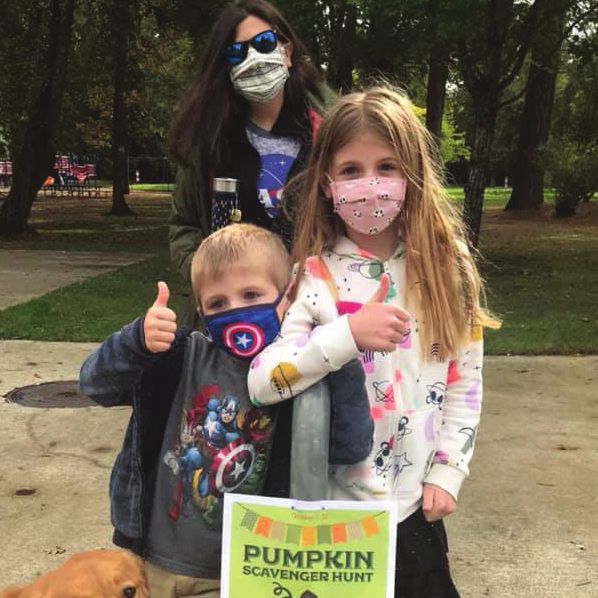
Table of Contents
PROTECT PUBLIC HEALTH
        Protect Public Health...............................................................................................................7-11
        Cities & Special District Assistance................................................................................. 12-13

STABILIZE THE LOCAL ECONOMY
        Business Assistance............................................................................................................ 14-20
        Child Care Provider Assistance........................................................................................ 21-22
        Distance Learning Support...............................................................................................23-24
        Food & Tourism Industry Assistance............................................................................25-26
        Stable Housing Assistance......................................................................................................27
        Utility Assistance.........................................................................................................................28
        Houseless Population Programs.................................................................................... 29-30

SUPPORT COMMUNITY-BASED ORGANIZATIONS & NONPROFITS
        Nonprofit Grant Program................................................................................................... 31-33

BUILD PUBLIC MENTAL HEALTH & COMMUNITY PSYCHE
        Parks Departments Programs.........................................................................................34-36

CONCLUSION.........................................................................................................................................37

                                                                 Cities and
                                                              Special Districts
                         Business                                Assistance
                        Assistance                             $13.69 million                                                Protect
                       $15.7 million                                                                                       Public Health
                                                                                                                          $40.93 million
                                                                                               Houseless
                                                                                              Population
                                                                                                Services
                                                                                              $2.9 million

 Stable Housing
   and Utility
   Assistance
  $7.69 million
                                          $104.66 million
                                                                                                                                Childcare
                                                                                                                                Providers
                   Public Mental                                                                                                Support
                    Health and                                                                                                 $5.5 million
                    Community
                      Psyche                                  Food and
                     $1 million                                Tourism                     Distance
                                                               Industry
                                                             Assistance                    Learning
                                    Community                $1.5 million                  Support
                                      Based                                              $10.5 million
                                   Organizations
                                     Support
                                   $5.25 million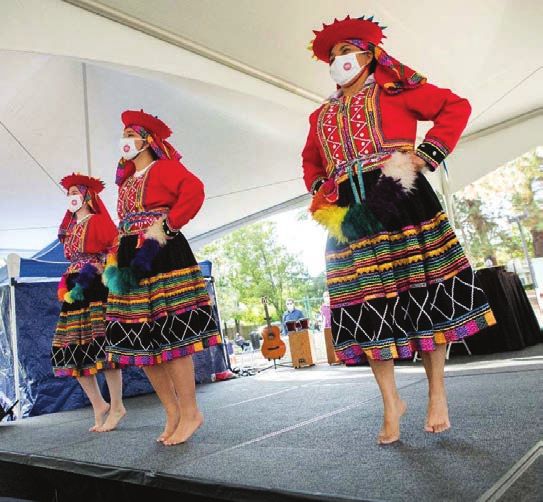
WASHINGTON COUNTY
                                                                                        OREGON

On February 28, 2020, Washington County became the first county in Oregon, and among the
first in the United States, to report a case of COVID-19, a disease caused by a virus that was almost
entirely new to our worldwide public health and medical systems by that point. Over one year
later, our county, along with the rest of the world, continues to respond to what has become the
first pandemic in many of our lifetimes. True to form, Washington County has attempted to pursue
our response collaboratively, working alongside partner organizations including health and medical
providers, state leaders and agencies such as Governor Kate Brown and the Oregon Health
Authority, cities, schools, special districts, private businesses and community-based organizations.
Together, our coalition quickly experienced the limits of our resources and capacity, even as we
worked to focus our combined efforts. In addition, this new virus made clear the inequities in our
systems that we knew existed but had not addressed.
With great support from Congresswoman Suzanne Bonamici, Senator Jeff Merkley and Senator
Ron Wyden, Washington County became the recipient of $104.66 million from the Coronavirus
Aid, Relief and Economic Security (CARES) Act. Our Board of County Commissioners took pains
to make thoughtful but rapid decisions, compliant with federal requirements, around putting these
one-time funds into the most positive use possible for the entire community. Our approach was
also greatly informed by the county organization’s first-ever Equity Resolution, which the board
had adopted just days before the first reported case of COVID-19.
The story of how Washington County spent our share of federal coronavirus relief dollars is
provided in this brief report. It is a story of heroic public service conducted collaboratively among
government, nonprofit and private-sector organizations. It is also a story of what can happen when
there is a collective will to remove barriers that have historically excluded people and to begin
building more inclusive, equitable systems to support our physical and economic health.
We are grateful to everyone associated with the work described on the pages to follow, including
our own Washington County employees and those of our partner organizations.
Thank you.

     Kathryn Harrington                     Nafisa Fai                       Pam Treece
    Chair, Board of County             County Commissioner,              County Commissioner,
       Commissioners                         District 1                        District 2

                 Roy Rogers                                         Jerry Willey
        County Commissioner, District 3                    County Commissioner, District 4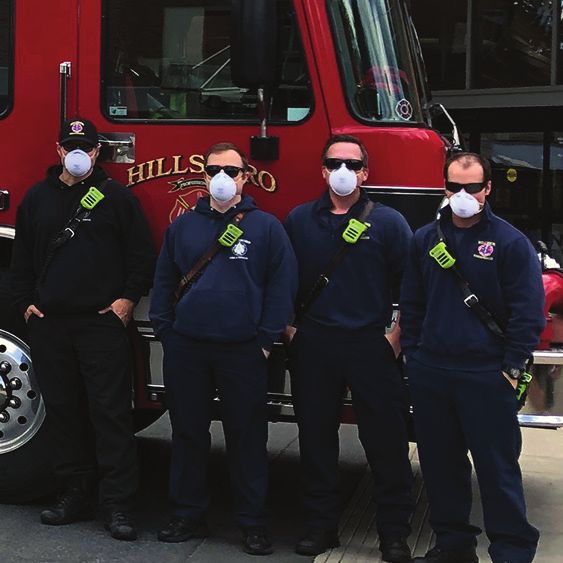
The Coronavirus Aid,
Relief and Economic
Security (CARES) Act
was signed into law on March 27, 2020, and provided a direct disbursement of
federal aid of $104.66 million to Washington County from the Coronavirus Relief
Fund (CRF). This report shows how those federal funds were used and the impacts
that these investment decisions of the Washington County Board of Commissioners
have had on our community.
The board established priorities and principles for how these funds would be used to lift up
the community through the pandemic during 2020 and keep the county and community going
through the pandemic. These priorities and principles guided every program’s decisions for the
creation and execution of their mission. Inherent in all of the priorities and principles was the over-
arching requirement that the programs enact the equity expectations adopted by the Washington
County Board’s Equity Resolution.
PRIORITIES
   1. Provide the most positive impact for the most amount of people
   2. Maintain adherence to the CARES Act and guidelines provided by the Treasury
PRINCIPLES
   1. Protect public health
   2. Stabilize our local economy
   3. Support facility adjustments for re-opening
   4. Build public mental health and community psyche
To achieve these goals, allocations were made to 11 funding areas, including a contingency fund
that was reallocated as further needs were identified. The 10 programs were designed to address
the variety of needs in community – to lift us all up and to keep us all going.
Spreading these funds to meet the needs of our community took incredible work across all
departments of the organization. It also required that Washington County lean in with partnerships
– with fellow local governments to experienced service providers to community-based
organizations – in order to be effective.
PROTECTING                                                      COUNTY PROGRAMS
                                                                In the context of a new disease and

PUBLIC                                                          pandemic, the response required the
                                                                ability for the county’s work to rapidly

HEALTH                                                          change and adapt to the science
                                                                and the community. It also required
                                                                coordination, communication, and a
                                                                much larger workforce than Washington
                                                                County has ever had. Resources from
                                                                the Coronavirus Relief Fund were
                                                                deployed to address these needs. By
                                                                investing in county work, we could
                                                                reach into areas where those most
                                                                impacted and those most vulnerable
                                        Peak EOC
                                      Staffing from             could be assisted in their recovery and
                                      other county              keeping the rest of the community safer.
                                      departments:
                                        201
                                     EMPLOYEES
                                       (ON MAY 20, 2020)

                                                     Cities and
                                                  Special Districts
                   Business                          Assistance
                  Assistance                       $13.69 million                                 Protect
                 $15.7 million                                                                  Public Health
                                                                                               $40.93 million
                                                                           Houseless
                                                                          Population
                                                                            Services
                                                                          $2.9 million

Stable Housing
  and Utility
  Assistance
 $7.69 million

                                                                                                   Childcare
                                                                                                   Providers
           Public Mental                                                                           Support
            Health and                                                                            $5.5 million
            Community
              Psyche                              Food and
             $1 million                            Tourism               Distance
                                                   Industry
                                                 Assistance              Learning
                            Community            $1.5 million            Support
                              Based                                    $10.5 million
                           Organizations
                             Support
                           $5.25 million

                                                      Washington County’s Use of Coronavirus Relief Funds 2020   7
“
Emergency Operations Center                                All of our contact tracers are local residents,
One of the most effective tools that the                   that was a value for us. We knew that people
county can use to create a coordinated                     had lost jobs in our community and we were
response to major events is the Emergency                  successful in recruiting this amazing and
Operations Center (EOC). Our EOC was                       talented interview and contact tracing team.
stood up to bring county departments and                         – Tricia Mortell,
employees into a single structure to ensure                        Public Health Division Manager, on the
that the work that was accomplished was                            COVID response team recruited by the
not duplicative and remained coordinated.                          Oregon Public Health Institute
The EOC activation also allowed for better
communication to the public by bringing
together the communications and public                 Contact Tracing
affairs activities of every city, special district,    Diseases like COVID-19 move through a
hospital, clinic and school district operating         population when the conditions are right for
within Washington County. By establishing              spread, people are susceptible and the disease
an equity officer position within the EOC              is contagious. Public health practitioners
early in its activation, Washington County’s           rely on tried and true disease mitigation
response benefited from centering equity               measures, including case investigation and
considerations in the decision-making                  contact tracing, until an effective vaccine is
process around the use of limited resources            distributed widely. Disease detective teams
and assistance. As we all know, the virus              follow the trail of the disease through a
causing COVID-19 is novel, and the science             community by interviewing a person with the
and information regarding its behavior                 disease (a case), asking about the people they
changed often. The standards for community             have been near (contacts) and where they
behavior and business operations changed               may have gotten sick (to determine possible
swiftly as our knowledge grew over time and            outbreaks). Contact tracers then confidentially
as state and federal guidance was amended.             share information with cases and contacts
The EOC allowed the county to speak and act            and provide education about what they can
with one voice, based on the science.                  do to keep themselves, their families, their
                                                       neighbors and their community safe. These
                                                       disease detective teams are the reason we, as
                                                       a community, know who is most impacted and
                                                       how to prevent the disease from spreading
                                                       further.
                                                       Based on the size of Washington County,
                                                       there was need for a robust team to conduct
                                                       case investigation and contact tracing. We
                                                       doubled the workforce of our Public Health
                                                       Division, bringing in over 100 people from
                                                       the community to do this work. By the end
                                                       of 2020, over 16,000 cases of COVID-19 were
                                                       investigated by our team and over 12,000
                                                       contacts were notified and educated by
                                                       Washington County. Our team investigated 355
                                                       outbreaks of COVID-19 throughout 2020 and
                                                       provided infection control and other support
                                                       to prevent outbreaks from getting larger.
 8    Washington County’s Use of Coronavirus Relief Funds 2020
By using Coronavirus Relief Fund resources, we were able to do so much more. We made
sure that people who were asked to quarantine because they were exposed to COVID-19
were supported while they stayed home to stop the spread of the disease. For some of these
families, if they could not leave home to go to work, then they could not pay rent or utilities or
get food for their children. About one-in-five people who were asked to quarantine told our
team they needed help to be able to stay at home. Using the Coronavirus Relief Fund, our team
was able to connect over 3,000 households with what they needed to ensure that staying home
did not mean they risked losing their livelihoods, felt further isolated or felt stigmatized.

     16,286 Washington County cases of COVID-19 through 12/31/20.
          Over   12,000 people were notified through contact tracing
                  that they were exposed to COVID-19 and provided education.

Staff dedicated more than    6,000 hours of time interviewing and educating cases.
           A total of   355 outbreaks of COVID-19 were investigated.
   Approximately    20% of individuals (one in five) who were asked to isolate or
                        needed additional support to stay home.
 quarantine indicated they

                                                 3,743 people to
             Resource Coordinators followed-up with over
                  assess   eligibility for resource support.
            Washington County funding     helped 3,096 households
            with housing, utilities and/or food needs during isolation or quarantine.

            Support included   at least one month of payments
                           for housing, utilities, and food needs.

  Washington County contracted with     six culturally specific community
based organizations            to provide support for households in isolation or quarantine.

                     Approximately  70%   of the households that received
                         wraparound services identified as     Latinx
                                                                    .

  The Food Access Special Populations Mini Grants awarded nearly        $106,000 to 28
 organizations        across Washington County. Recipients fell into three main categories:
  school pantry programs, faith-based food assistance and community-based organizations.

  663 older adult home bound clients were served a total of 54,195 meals.

                                         Washington County’s Use of Coronavirus Relief Funds 2020   9
Outreach to Organizations - Businesses and Individuals
   Approximately 2,300 outreach calls to check with facilities on contact
             information, COVID-19 exclusions, physical distancing and food safety.

           Approximately     300 outreach calls      to non-licensed businesses
                in unincorporated Washington County to provide education.

          3/25/20 to 6/18/20 the EOC liaison line received       266 phone calls.
  3/6/20 to 8/24/20 the EOC Liaison received over           250 questions via email.

Outreach Campaigns
The Board of Commissioners anticipated the public’s
need for clear guidance and widespread understanding
of the protective measures that would stop the spread
of this new virus, strengthening the county’s ability
to progress through the statewide reopening phases.
This was especially important as recommendations
and guidance changed as more was understood about
COVID-19. The board determined that an additional
investment of $300,000 for paid media outreach was
necessary to assist the community. Using a positive
tone, the first round encouraged Washington County
residents to follow basic public health guidance
with the tag line “Let’s keep going.” Ads were run on
multiple platforms and in 12 different languages. These
ads garnered over three million impressions in June
and July.
The second round of ads continued the same positive
tone but responded to the changing circumstances
of the pandemic. Working with regional partners, the
overall reach of the campaign expanded to include
the combined residents of Clackamas, Multnomah and
Washington counties. Content in English and Spanish
focused not only on the general adult population but
also on people in their 20s due to disproportionately
high case numbers among them. The overall campaign produced an estimated 17.4 million
impressions regionwide over the weeks leading up to the Labor Day weekend and in early
December 2020. A separate Facebook and Instagram campaign promoted content translated
into 15 non-English languages, running from mid-September until the end of October 2020.
The county’s use of CRF dollars to support this paid advertising campaign re-enforced key
public health messages during some of the most dangerous months of the pandemic. By
sharing these federal resources with partner counties, the effort also helped expand the
campaign’s reach and target a critical audience of young people.

 10   Washington County’s Use of Coronavirus Relief Funds 2020
Respite Centers
Taking care of the community means taking care of everyone. Those who did not have a home
but were diagnosed with or suspected of having COVID-19 needed somewhere safe and secure
to isolate. Washington County partnered with hotels to find spaces for these individuals to
take care of themselves and their communities. We were able to assist 301 people by placing
them in respite centers within these hotels. This program helped keep contacts to a minimum,
reducing the likelihood that our must vulnerable community members would be stuck in a
situation that spread the new coronavirus through our community.
County Function
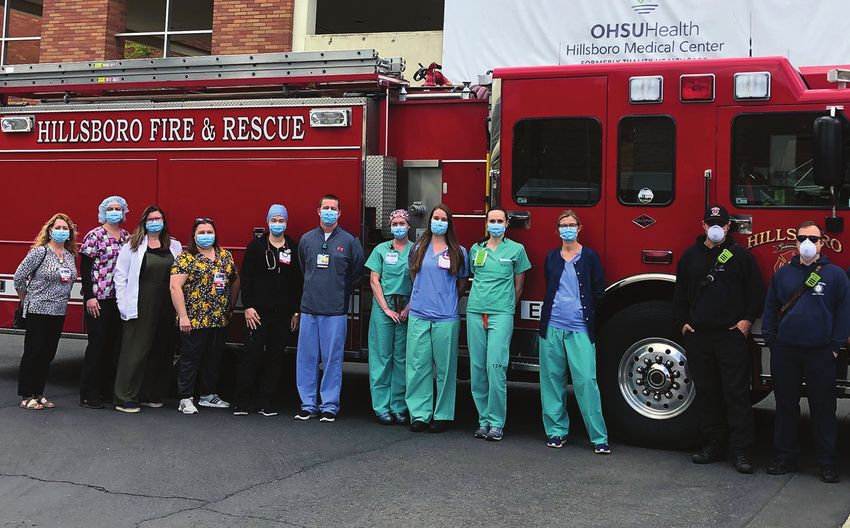
Protecting public health also meant keeping county
employees safe and protected while they continued
their day-to-day work for the county. COVID-19 does
not care if you are an essential worker and that you
work for the public agency that is fighting community
spread of the virus. In response, Washington County
invested in a variety of ways to reduce the risk of
spread among county workers and the community
they serve. This included changes to the physical
infrastructure of the organization, streamlining
purchasing processes, distributing personal protective
equipment, modifying work schedules and work
conditions, increasing the technological capacity
to increase work from home and enabling more
remote meetings. In pursing these steps, the county
organization also took actions to specifically address
work areas of most vulnerability within county
programs, like the jail, circuit court, community
corrections center and the juvenile shelter.
As a key example, a collaborative effort supported by
Coronavirus Relief Fund resources helped the circuit
court resolve a backlog of over 1,200 criminal cases
that had developed during the pandemic. This federal
support enabled the county to lease a portion of the
new Wingspan facility on the county fairgrounds, now
called Westside Commons. For two-and-a-half months
in the fall of 2020, this first official use of a portion
of the new 52,000-square-foot facility allowed court
proceedings to operate securely. The effort resulted
directly from the cooperation among the Washington
County Circuit Court, District Attorney’s Office, Sheriff’s
Office, Community Corrections Department, Public
Health Division, Department of Support Services
and the staff of Westside Commons. All of these
investments focused on protecting our community
and staff from the spread of the virus by creating safer
county practices and facilities.
Washington County’s Use of Coronavirus Relief Funds 2020 11CITIES AND SPECIAL DISTRICTS ASSISTANCE
Washington County was one of three local governments to directly receive federal
Coronavirus Relief Funds in the state of Oregon. The Washington County Board of
Commissioners agreed that part of our funds would be used to aid and assist our city
and special district partners with their efforts to protect public health. This meant that
we set aside a pool of funds for those governments to use to keep their workforces
safe, the public safety protected and respond to the public health needs within their
jurisdictions.
Federal restrictions prohibited using these dollars to replace lost revenues, so what did the
funds get used for?
Cities and special district needed to continue to provide public services, but, like so many
others, had to modify how that work was accomplished.
Public safety personnel responded to increased calls and emergencies. This required an
investment in personal protective equipment to keep first responders as safe as they could
be. Increased medical call-outs meant emergency medical teams and fire departments had to
respond to emergencies where they could be treating a patient with severe COVID-19 impacts.
To keep them safe, they needed masks, gowns, face shields and gloves — items that were in
short supply across the country. Law enforcement agencies were challenged to provide public
safety services at a reduced level of inter-personal contact. This single aspect of the public
health restrictions curtailed training dramatically, both in facilities and in the field. Again,
federal funds supported the use of personal protective equipment for law enforcement and
other first responders.
Cities and
Special Districts
Business Assistance
Assistance $13.69 million Protect
$15.7 million Public Health
$40.93 million
Houseless
Population
Services
$2.9 million
Stable Housing
and Utility
Assistance
$7.69 million
Childcare
Providers
Public Mental Support
Health and $5.5 million
Community
Psyche Food and
$1 million Tourism Distance
Industry
Assistance Learning
Community $1.5 million Support
Based $10.5 million
Organizations
Support
$5.25 million
12 Washington County’s Use of Coronavirus Relief Funds 2020In addition, the work of CITY REIMBURSEMENT AMOUNT
water and sewer providers
needed to continue. Without Banks $10,178
a functioning water and sewer Beaverton $1,367,097
system, people cannot wash Cornelius $141,701
their hands. Much of the work
done by these public servants Forest Grove $271,227
cannot be done remotely and Hillsboro $1,893,705
puts people in contact with
King City $114,114
others and with materials that
could contain the COVID-19 North Plains $49,068
virus. To do their jobs safely, Sherwood $1,456,912
these workers needed to
Tigard $587,222
avoid sharing cars, to work in
smaller teams and to avoid Tualatin $579,922
too many contacts between SERVICE DISTRICT REIMBURSEMENT AMOUNT
teams. Washington County’s
Banks Fire District #3 $57,114
allocation helped them cover
these costs. Clean Water Services $1,600,621
Finally, the work to support Gaston Rural Fire District $8,328
our communities cannot stop, Tigard Tualatin Aquatic District $64,620
especially when the services Tualatin Hills Park & Recreation District $3,720,815
provided by these entities are
vital to the overall wellness of Tualatin Valley Fire & Rescue $1,311,919
the community. These dollars Tualatin Valley Irrigation District $7,448
helped find new ways of
Tualatin Valley Water District $175,000
operating libraries, making it
safe to continue development Note: The County fulfilled all requested reimbursements.
of housing, continuing
road safety programs and
providing vital access to
recreational opportunities so
that our community could
continue to utilize these
services with minimized
risk to their health.
Washington County’s Use of Coronavirus Relief Funds 2020 13STABILIZE BUSINESS ASSISTANCE
Outside of the impacts to the public
THE LOCAL health, the response to the COVID-19
crisis required many businesses to
ECONOMY
shut down, slow down or significantly
alter the way they did business.
The Washington County Board of
Commissioners recognized that there
would be a need to find ways to lift
up county businesses, particularly
smaller businesses and businesses that
lacked access to federal programs. As
businesses were required to close, many
workers found themselves with limited
options. Therefore, the board invested
$15.7 million in Coronavirus Relief Fund
dollars in business assistance programs.
Cities and
Special Districts
Business Assistance
Assistance $13.69 million Protect
$15.7 million Public Health
$40.93 million
Houseless
Population
Services
$2.9 million
Stable Housing
and Utility
Assistance
$7.69 million
Childcare
Providers
Public Mental Support
Health and $5.5 million
Community
Psyche Food and
$1 million Tourism Distance
Industry
Assistance Learning
Community $1.5 million Support
Based $10.5 million
Organizations
Support
$5.25 million
14 Washington County’s Use of Coronavirus Relief Funds 2020Grants
The largest portion of the funds went toward direct assistance to provide small businesses
throughout the county with grants to help lift their revenues. To stretch assistance further,
the county held a portion of the grant allocations for businesses in unincorporated areas and
smaller cities and partnered with the cities to run programs within their jurisdiction. Through
all these programs, there were efforts undertaken to ensure there was outreach through
partners to smaller, BIPOC-owned businesses. Efforts were undertaken to prioritize those
businesses that were most likely the primary income for families and least likely to have access
to larger programs run by the federal and state governments. By working together, the dollars
were stretched further and reached across the county. In addition, the county partnered with
Micro Enterprise Services of Oregon (MESO), a community development financial institute that
specializes in working with small businesses that have historically lacked access to traditional
banking opportunities. While many of these grants were not large, the lift of hope they
provided were meaningful to grant recipients.
Prioritized:
• Small, local businesses located in Washington County
THE Basic requirements:
PROGRAM • Located in Washington County or within a city within
Partners: MESO, Washington County
Banks, Beaverton, • Had revenue losses due to COVID-19 or
Cornelius, North Plains, were closed because of state orders
Hillsboro, Tigard,
Tualatin and • Had 25 or fewer employees
Sherwood Results:
County allocations:
• 1,102 grants provided to businesses in Washington County
in four rounds of grants1, which included businesses within
Durham, Forest Grove, Gaston, King City and the portion of
Wilsonville located within Washington County.
City allocations2:
“
• Beaverton $2,057,000
• Hillsboro $1,780,000
• Tigard $1,481,000
• Tualatin $680,000
• Sherwood $248,000 A big THANK YOU to Washington
County for awarding me the Business
• Cornelius $170,000
Recovery Grant. Your grant allowed
• North Plains
me to pay my lease and utilities,
$85,000
which I passed on to the independent
• Banks $75,000
stylists. The money came at a time I
was trying to find funding and only
running into dead ends. It gave me
1
These numbers do not include the additional funding that came at the
end of 2020 from the state to use for assisting businesses impacted by the hope I needed and reassured me
the statewide freeze at the end of November.
that we will get through this.
2
Many cities mingled these funds with other funding sources to extend
their programs further. To find out more about their results, please visit
their websites. – Kathy Kolodziejczak, Salon 26
Washington County’s Use of Coronavirus Relief Funds 2020 15Business Recovery Centers
To assist businesses working to respond to the changing requirements and various business
support programs, the county worked with partners to create four business recovery centers.
The business recovery centers focused on outreach, technical assistance and education for
all businesses within Washington County. They also became a place for the distribution of
personal protective equipment provided by the county to businesses. Providing these services
helped businesses throughout the county as they worked to adjust and adapt to ongoing
regulatory changes. The business recovery centers provided one-on-one assistance, providing
a life line and lifting our community’s businesses up. Because staff members to these business
recovery centers were visiting businesses, they were able to create lines of communications to
businesses that would not otherwise be aware of opportunities for assistance or connection to
county resources. Finally, the centers coordinated the “Every Plate Project” which connected
restaurants and caterers with community based organizations to make and deliver meals to
community members and programs.
Prioritized:
• Small and medium-sized businesses within
THE Washington County
PROGRAM Basic requirements:
• Be a business in Washington County
Partners: Adelante
Mujeres, Beaverton Results:
Chamber of Commerce, • 2,127.5 estimated hours of consultation to businesses
Hillsboro Chamber of
• 417,762 pieces of personal protective
Commerce and Tualatin
Chamber of Commerce equipment distributed
“
• 4,506 businesses received outreach or direct assistance
Mi nombre es Araceli de la Cruz mi negocio
es La Popular LLC venta de comida fresca
y autentica Mexicana de Estado de Jalisco.
Quiero agradecer al Centro de Recuperacion
de Negocios de Forest Grove por el apoyo
brindado a traves de Ivette Heredia por el
asesoramiento profesional recibido en estos
tiempos dificiles Pude encontrar el apoyo
para construir una pagina de Internet para
poder ofrecer mis productos de comida,
toma de fotografias de los productos que
ofrezco y el apoyo con mascarillas y equipo
esencial para mantener operando el negocio
seguro. Muchas Gracias.
– Araceli, La Popular
16 Washington County’s Use of Coronavirus Relief Funds 2020Examples of BRC Impacts
Adelante Mujeres
Every Plate Project
Paired small catering or restaurant businesses with nonprofits
to provide catered meals to meal service programs, such as
shelters, day centers, homebound/senior service. Connecting
nine small businesses to nine nonprofits, they provided 1,946
meals to community members facing food insecurity.
Beaverton BRC
Programming & education
Created educational and informational sessions for businesses to
attend free of charge that focused on providing businesses with
tools and resources on how to adapt businesses to public health
compliance, improve business administration to better qualify for
assistance and other timely topics. Over 50 hours of programming
was provided in English and Spanish.
Hillsboro BRC
Communications
Serving the largest area and the most diverse business
communities, they went door-to-door to build trust and
determine what small businesses needed. Focusing on
language and outreach barriers, materials were provided
in multiple formats from the website they maintained to
postings on community boards to mailers. Business owners
were provided information in the language they requested to
ensure knowledge of the state business guidance.
Tualatin BRC
Economic impact
Using one-on-one sessions, one business counselor guided
businesses through local, state and federal assistance programs.
This counseling brought in $160,200 to businesses in the area
— $100,500 in city, county, state and federal grants and $59,700
Economic Injury Disaster Loans.
Washington County’s Use of Coronavirus Relief Funds 2020 17Workforce
As businesses have had to reimagine how they do business, many workers have lost their
jobs. In order to help address the potential long-term changes in the economy, Washington
County partnered with experienced workforce development programs to help individuals
start re-training. These programs focused on providing opportunities for individuals to start
pathways to long-term career education, paths focused on jobs that were not as impacted
by the pandemic, primarily in health care and manufacturing. These programs also provided
additional support for workers while they gained new skills and sought new jobs.
Prioritized:
• Workers who have had employment in industries that faced
THE significant layoffs due to COVID-19
PROGRAM • Workers desiring training for new career paths
Partners:
Worksystems, Inc.; • Youth needing educational opportunities
Portland Community • Historically underserved communities
College and
Centro Cultural • Low-income workers
Basic requirements:
• Reside in Washington County
• Referral or application to the program
• Programmatic requirements
Results:
• 768 Washington County community members served
• 138 youth provided GED preparation and advancement and
training, safety net and employment services
• 22 Families provided rent assistance while re-training or
job seeking
• 137 laptops purchased for use by job seekers and
career coaches
• $84,000 in financial assistance to cover basic needs and
new job-related expenses (e.g., transportation, work clothes,
child care)
18 Washington County’s Use of Coronavirus Relief Funds 2020COURSE ENROLLMENT
18 students in IT support training
19 students in a COVID compliant Commercial Drivers License training,
8 more placed in programs outside Washington County due to capacity concerns
9 participants in the On Ramp to Manufacturing course
22 participants in the On Ramp to Healthcare course
25 participants in the Healthcare Essentials course
61 participants for Contract Tracing course
8 participants in subsidized work experience
51 individuals received one-on-one career coaching
WASHINGTON COUNTY PARTICIPANT DEMOGRAPHICS FOR CARES PROGRAM SERVICES
TOTAL RESIDENTS SERVED 362
GENDER NUMBER SERVED PERCENT SERVED
Male 130 36%
Female 229 63%
Non-Binary 1 NA
Not Disclosed 2 NA
RACE NUMBER SERVED PERCENT SERVED
American Indian or Alaskan Native 3 .8%
Asian 9 2%
Black or African American 28 8%
More than one race 16 4%
Native Hawaiian or Pacific Islander 8 2%
Not Disclosed 111 31%
White 187 52%
ETHNICITY NUMBER SERVED PERCENT SERVED
Hispanic or Latino 175 48%
Not Hispanic or Latino 172 47%
Not Disclosed 15 5%
Washington County’s Use of Coronavirus Relief Funds 2020 19PCC Demographics
BREAKDOWN OF These numbers capture the results of our intake
form. This form was completed by the jobseekers
JOB SEEKERS REACHED themselves. Full results are available upon request.
46% identified as non-white
77% identified as female
56% said that their parents did not graduate from college (or they weren’t sure)
35% said they were currently receiving
Supplemental Nutrition Assistance Program (SNAP) benefits
7%said they were currently receiving
Temporary Assistance for Needy Families (TANF) benefits
57% said they did not yet have a degree
4% reported barriers due to legal convictions
4% reported veterans status
Percentages rounded to the nearest decimal
20 Washington County’s Use of Coronavirus Relief Funds 2020CHILD CARE PROVIDER ASSISTANCE
Washington County, like all of Oregon,
has a shortage of child care providers
to meet the needs of the community.
The Washington County Board of
Commissioners recognized that many
smaller child care providers might
struggle to comply with new operational
requirements and would face revenue
losses due to families following state
guidance to limit contacts outside of
households. The Washington County
Board of Commissioners determined
that child care was a vital resource that By investing in smaller child care facilities,
this use of Coronavirus Relief Fund dollars
consists of essential workers, and if child
has kept these vital providers working. A
care providers were to close down, the survey after the grants had been provided
losses would exacerbate the current showed that 99% of the respondents were
shortage and hamper the future still operating at their prior capacity and
economic recovery. 60% were able to increase their capacity.
Maintaining this vital workforce assistance is
important as the community works toward
economic recovery.
Cities and
Special Districts
Business Assistance
Assistance $13.69 million Protect
$15.7 million Public Health
$40.93 million
Houseless
Population
Services
$2.9 million
Stable Housing
and Utility
Assistance
$7.69 million
Childcare
Providers
Public Mental Support
Health and $5.5 million
Community
Psyche Food and
$1 million Tourism Distance
Industry
Assistance Learning
Community $1.5 million Support
Based $10.5 million
Organizations
Support
$5.25 million
Washington County’s Use of Coronavirus Relief Funds 2020 21Prioritized:
• Child care providers with small operating capacities and budgets
• Providing care for underserved families
THE • Keeping child care facilities open
PROGRAM Basic requirements:
Partner: MESO • Located in Washington County
• An active child care provider license
• No more than 15 employees
• Annual revenue under $500,000 in 2019
Results:
• 318 grants to 292 grantees
• $3.18 million in awarded funds
Washington County child care grant recipients self-reported race
compared to state-wide child care providers.
RACE/ETHNICITY CHILD CARE GRANT AWARDEES STATE AVERAGE
American IndianDISTANCE LEARNING SUPPORT
State guidance required that school districts close in-person schooling starting
in the 2019-2020 school year. This left many families trying to balance working
outside the home while having to care for school-aged children. To help school
districts continue to provide education services to these children and lift up
the families that could otherwise fall through the cracks, the county invested
Coronavirus Relief Fund dollars in distance learning programs to help families
successfully navigate learning from home. Our partner school districts determined
how to best meet the education needs of their populations throughout 2020.
Cities and
Special Districts
Business Assistance
Assistance $13.69 million Protect
$15.7 million Public Health
$40.93 million
Houseless
Population
Services
$2.9 million
Stable Housing
and Utility
Assistance
$7.69 million
Childcare
Providers
Public Mental Support
Health and $5.5 million
Community
Psyche Food and
$1 million Tourism Distance
Industry
Assistance Learning
Community $1.5 million Support
Based $10.5 million
Organizations
Support
$5.25 million
Washington County’s Use of Coronavirus Relief Funds 2020 23Prioritized:
• Children of essential workers
THE
• Children of families earning below 300% of
PROGRAM federal poverty guidelines
Partner: School
Districts of: Banks, • Children of vulnerable communities or otherwise defines as
Beaverton, Forest requiring in-person support
Grove, Hillsboro, Basic requirements:
Tigard-Tualatin and
Sherwood • Requirements were established by the individual
school districts
Results:
• 1,615 reimbursements provided for child care costs across
the county
• 100 students provided persistent care at a district site
• Technology support for child care providers
• $2.7 million to support comprehensive distance learning
• $1.1 million for food assistance
• $300,000 for sanitation & custodial work
HILLSBORO:
441 child care
BANKS: reimbursements
assistances for Mini-grant for child
55 students care provider
technology support
BEAVERTON:
assistances for
900 child care
reimbursements
FOREST
GROVE:
100 students with
persistent care
at a district site
TIGARD
TUALATIN:
90 students placed in child
care slots with extensive
supports (transportation,
meals, enrichment)
SHERWOOD: 120 reimbursements
45 reimbursements
for child care
for child care
Assessment team created
to identify families in
need of support
24 Washington County’s Use of Coronavirus Relief Funds 2020FOOD AND TOURISM INDUSTRY ASSISTANCE
One industry that was specifically targeted for relief with Coronavirus Relief
Fund dollars was food and tourism. Economic reporting across the state showed
that these businesses have suffered some of the greatest revenue losses, while
licensing requirements and other fixed costs remained. With this loss of revenues,
any ongoing cost may have been enough to overwhelm the slim margins of these
businesses. The county dedicated funds to keep them going, using the opportunity
of license renewal communication to offer a grant program to these businesses.
Cities and
Special Districts
Business Assistance
Assistance $13.69 million Protect
$15.7 million Public Health
$40.93 million
Houseless
Population
Services
$2.9 million
Stable Housing
and Utility
Assistance
$7.69 million
Childcare
Providers
Public Mental Support
Health and $5.5 million
Community
Psyche Food and
$1 million Tourism Distance
Industry
Assistance Learning
Community $1.5 million Support
Based $10.5 million
Organizations
Support
$5.25 million
Washington County’s Use of Coronavirus Relief Funds 2020 25Prioritized:
• Food & Tourism businesses licensed by the county
THE Basic requirements:
• Simple application attesting to meeting requirements
PROGRAM
Results:
Partner: none
• 628 business representing 740 facilities
• $705,900 total grants
$1,124 Average Grant
per Business $955 Average Grant
per Facility
RESTAURANT TYPE NUMBER OF GRANTS TOTAL LICENSE HOLDER
Small & Mobile 174 518
Medium Restaurants 484 1,021
Large Restaurants 55 117
TOURIST FACILITY TYPE NUMBER OF GRANTS TOTAL LICENSE HOLDERS
Hotels 50 or fewer rooms 5 12
Hotels 51-100 rooms 7 19
Hotels greater than 100 rooms 6 29
Campgrounds & Tourist RV Parks 2 8
26 Washington County’s Use of Coronavirus Relief Funds 2020STABLE HOUSING ASSISTANCE
The best practices for reducing the spread of COVID-19 called for individuals to stay
home, but many ran the risk of eviction as their income was lowered due to business
closures or slowed operations. This meant that employees stopped receiving pay
checks, and the lowest-wage earners were left with rent to pay but less or no income
to pay it with. High eviction rates would have devastated our community and our
public health response. To avoid large waves of evictions or foreclosures, money
was set aside to directly pay the rent or mortgage for households most likely to face
losing their housing.
Cities and
Special Districts
Business Assistance
Assistance $13.69 million Protect
$15.7 million Public Health
$40.93 million
Houseless
Population
Services
$2.9 million
Stable Housing
and Utility
Assistance
$7.69 million
Childcare
Providers
Public Mental Support
Health and $5.5 million
Community
Psyche Food and
$1 million Tourism Distance
Industry
Assistance Learning
Community $1.5 million Support
Based $10.5 million
Organizations
Support
$5.25 million
Prioritized:
• Low-income households (80% and lower) that were
THE COVID impacted
PROGRAM Basic requirements:
Partner: Community • Documentation of income eligibility and COVID impact
Action, Proud Results:
Ground, Willamette
West Habitat for • $5.6 million allocated
Humanity
RENT 4,063 individuals
1,321 households
MORTGAGE 150 individuals
32 households
Washington County’s Use of Coronavirus Relief Funds 2020 27UTILITY ASSISTANCE
As businesses closed or reduced operations, employees were left with less income
to cover bills including utility payments. While many rental assistance opportunities
were created, the need to keep utility services also required funds to pay the utility
costs for sanitary services — water, sewer and stormwater. Keeping the water
running for vulnerable households allowed families to stay safely at home and
practice necessary hygiene to slow the spread of COVID-19. These direct payments
on the behalf of households took one more burden off these families dealing with
the direct and indirect impacts of COVID-19.
Prioritized:
• Low-income households (80% Area Median Income and lower)
THE Basic requirements:
• Documentation of income eligibility
PROGRAM
• Documentation of COVID impact
Partner: Community
Action Results:
• $600,000 allocated
WATER 3,251 individuals
1,265 households WASTE 902 individuals
371 households
28 Washington County’s Use of Coronavirus Relief Funds 2020HOUSELESS POPULATION PROGRAMS
Coronavirus Relief Fund resources supported a managed, outdoor camping location
for over 50 houseless adults in an effort to reduce the risk of COVID-19 spreading
in the houseless community. This “Safe Sleep Village” was located at Westside
Commons, which is the re-branded name of the property previously referred to as
the Washington County Fair Complex in Hillsboro. A “Safe Sleep RV Park” was also
opened nearby providing a temporary, managed location for 35 vehicles to further
reduce the risk of COVID-19 in the houseless community. These shelter services
enabled many in Washington County’s houseless population, who often have pre-
existing health conditions and may lack access to traditional health care resources, to
prevent the spread of the disease.
While at these shelters, community members were assisted in understanding COVID-19
through education programs and accessing health care for COVID-symptomatic residents. In
addition, shelters provided WiFi access to children, helping keep them connected to school as
education remained online in the fall.
Staff also worked to assist those at these sites move from houselessness into safe, affordable
permanent housing. Combining all of the programs, the average length of stay was 17 days.
From all of the sites, 5% were moved into housing. Most of those transitions came from the
Family Promise Shelters. The ability to provide all these services and successes was due to the
use of Coronovirus Relief Funds.
Cities and
Special Districts
Business Assistance
Assistance $13.69 million Protect
$15.7 million Public Health
$40.93 million
Houseless
Population
Services
$2.9 million
Stable Housing
and Utility
Assistance
$7.69 million
$104.66 million
Childcare
Providers
Public Mental Support
Health and $5.5 million
Community
Psyche Food and
$1 million Tourism Distance
Industry
Assistance Learning
Community $1.5 million Support
Based $10.5 million
Organizations
Support
$5.25 million
Washington County’s Use of Coronavirus Relief Funds 2020 29Prioritized:
• Houseless individuals and families
THE • Imminently houseless individuals and families
PROGRAM Basic requirements:
• Meet eligibility criteria
Partner: Project
Homeless Connect • Follow the rules of the Village/hotel program
Washington County,
Results:
Family Promise of
Tualatin Valley • 637 individuals service across all programs
# OF INDIVIDUALS % CHRONIC % PERSONS
PROGRAM SERVED HOUSELESS OF COLOR
Family Promise Shelters 140 15% 32%
Safe Sleep Village 106 34% 19%
Safe RV Parking 57 9% 16%
Winter Shelters 250 42% 78%
Hotel Vouchers 84 42% 14%
“
We created a safe sleep village within
two weeks of approval that provided 50
tent settings for individuals that were
transitioning from crowded encampments
lacking sanitation to this tent-based
shelter with wrap-around services.
– Annette Evans,
Homeless Programs Manager
30 Washington County’s Use of Coronavirus Relief Funds 2020COMMUNITY- NONPROFIT GRANT PROGRAM
Services that assist children, support
BASED the arts, serve our most vulnerable
ORGANIZATIONS and speak to the many cultures within
our population are often provided by
& NONPROFITS local nonprofits and community-based
organizations.
In addition, these providers have proven
critical in the county’s work to connect with
those in our community who have been
historically marginalized and have come to
not trust government messages by virtue of
their lived experiences.
In times of economic crisis, nonprofits
and community-based organizations find
themselves with fewer donations and lost
fundraising options. Many local nonprofits
depend on large fundraising events or
charges for services delivered in-person to
make their budgets whole. Pandemic-related
restrictions on gatherings and the economic
Cities and
Special Districts
Business Assistance
Assistance $13.69 million Protect
$15.7 million Public Health
$40.93 million
Houseless
Population
Services
$2.9 million
Stable Housing
and Utility
Assistance
$7.69 million
Childcare
Providers
Public Mental Support
Health and $5.5 million
Community
Psyche Food and
$1 million Tourism Distance
Industry
Assistance Learning
Community $1.5 million Support
Based $10.5 million
Organizations
Support
$5.25 million
Washington County’s Use of Coronavirus Relief Funds 2020 31impacts of the COVID-19 response left these
organizations wondering how they would be
able to move forward, and whether they could
continue providing their cultural, educational and
other services that many depend on.
Because losing these vital partners would
put Washington County’s COVID-19 response
at risk and limit its ability to protect those
disproportionately affected by the pandemic,
the Board of Commissioners put $5.25 million
towards supporting their operations.
Prioritized:
Primarily: organizations that work with or for communities
THE hardest hit as either a culturally specific or culturally responsive
PROGRAM organizations
Secondarily: organizations that served other communities that are
Partner: Oregon
Community vulnerable (low income, seniors, health impacted)
Foundation Basic requirements:
• Served Washington County Community
• Revenue loss was COVID-19 related
• Not covered by other programs or grants
Results:
• Requested funds: $6,849,119
• Award total: $5,057,814
“
• 85 different nonprofits served
• 18 are either culturally specific or culturally responsive organizations
It was clear to me during the review process
that the strain felt by nonprofit leadership
was enormous, strain related to serving their
clients as well as doing right by their staff. The
CARES Program funding gave them financial
resources and even hope at a critical moment.
They felt validated and supported. I was glad
to be part of such an important program.
- Megan Schumaker,
Oregon Community Foundation
Grant Evaluator
32 Washington County’s Use of Coronavirus Relief Funds 2020AWARD BY OCF PRIORITY CATEGORY
This chart shows the percent of grants to each category of non-profit.
It also shows examples of the types of nonprofits that received grants within
those categories. More non-profits received grants than are listed below.
Education: Big Brothers Big Sisters Columbia NW (Washington County) supports
216 children a year in Washington County through one-on-one mentorship, 80%
are from low-income homes and 67% identify as Black, Indigenous or People of
Color. Our grant allowed the program to cover personnel costs, facility lease and
adapt its model to keep kids and mentors connected.
Health &
Economic Vitality: Wellbeing:
Adelante Mujeres Westside
(Forest Grove) Food Brigade
provides education
and empowerment
15% (Beaverton)
provides
opportunities for emergency
Latinas and their foods to over
families through 180 families,
education, leadership
and microenterprise 16% 48% representing
around 800
programs. Their people each
grant allowed week in Aloha,
them to cover Beaverton and
lost revenues Hillsboro. The
and support their grant allowed
staffing, technology, them to purchase
training and client- 10%
assistance needs. 11% a refrigerated
food truck to
replace the fresh
food program
Arts & Culture: Mask & that was canceled
Mirror Community Theatre at the beginning
(Tigard) normally provides 40 of the pandemic
performances a year, mostly to and to allow the
retired seniors through an all- organization
Livability: Aloha Community
volunteer organizations. The to transport
Library Association (Aloha) is an
grant allowed them to sustain and preserve
independent nonprofit that relies
operations by preserving sets perishable foods
on fundraising for 20% of its annual
and costumes and maintaining donated by local
budget to provide for library services
their insurance and website. grocery stores.
in this unincorporated community
of Washington County. This grant
helped sustain library services,
which were significantly modified in
response to COVID-19 guidance.
Washington County’s Use of Coronavirus Relief Funds 2020 33BUILD PUBLIC PARKS DEPARTMENT PROGRAMS
One significant impact of the physical
MENTAL HEALTH distance guidance for reducing the
& COMMUNITY spread of COVID-19 is the difficulty in
keeping our community feeling united
PSYCHE and the toll that the pandemic takes on
individual mental health. To mitigate
these impacts, Washington County
partnered with parks and recreation
departments across the county to
develop ongoing programs that could
bring the community together in new
ways while remaining in compliance
with public health requirements.
Cities and
Special Districts
Business Assistance
Assistance $13.69 million Protect
$15.7 million Public Health
$40.93 million
Houseless
Population
Services
$2.9 million
Stable Housing
and Utility
Assistance
$7.69 million
Childcare
Providers
Public Mental Support
Health and $5.5 million
Community
Psyche Food and
$1 million Tourism Distance
Industry
Assistance Learning
Community $1.5 million Support
Based $10.5 million
Organizations
Support
$5.25 million
34 Washington County’s Use of Coronavirus Relief Funds 2020The county’s original partners were Tualatin Hills Park and Recreation District (THPRD),
Hillsboro Parks and Recreation Department and Tigard Parks. There was an additional
agreement reached with the Sherwood Parks and Recreation Department later in the year.
While the county provided all funds to these programs already, each of these departments is
extending their work and programming into 2021, particularly the programs that Sherwood is
providing.
It was important that these programs supporting a healthy community psyche also reflect the
diverse communities within the greater Washington County community.
Prioritized:
• Events that could connect the community with itself and
THE touch on shared community experiences or continuing
PROGRAM normal community events in a COVID-19-safe manner.
Partners: Hillsboro Parks Results:
Department, Tigard Hillsboro – 4 events
Parks Department, • Estimated 72,000 individuals served
Tualatin Hills Park &
Tigard/Durham – 19 events
Recreation District,
Sherwood Parks • Estimated 23,318 individuals served
Department THPRD & City of Beaverton – 19 events
• Estimated 48,515 individuals served
Sherwood – to be determined
• Working on a spring roll out for this program.
Washington County’s Use of Coronavirus Relief Funds 2020 35EXAMPLE PROGRAMS FOCUSED ON COMMUNITY DIVERSITY
Adaptive Mobile Recreation Free adaptive recreation programming for people
experiencing disabilities in partnership with
community-based organizations.
Cultural Celebrations: Free celebrations of diverse art, dance and culture
Message Gardens provided at select locations around the district.
Nature Talk in Spanish
Talking Walls
Welcoming Walks A free organized walk happening as part of the National
Welcoming Week to highlight the important contributions
of immigrants and refugees and to reaffirm our place as a
welcoming and inclusive community.
Culturally Specific Organizations Support culturally specific and community-based
and Community-based organizations that need help funding events, gatherings
Organizations and activities.
Welcoming Week Welcoming Week grants for community-based
organizations to host events recognizing the significant
contributions of immigrant and refugee community
members.
Cultural History of Beaverton Collect stories from Black, Indigenous and People of
Project Color (BIPOC) leaders, nontraditional narratives and
missing pieces of local history.
Community Conversations National trainers/speakers/facilitators to train and
on Race facilitate dialogue for community members.
El Grito Online Celebration of Mexico’s Independence Day
Operation HOPE Tigard partnered with local community members to
coordinate Operation HOPE (Health, Outreach,
Partnership, Encouragement) to help those experiencing
homelessness and isolation by partnering with nonprofits
to donate small care packages. Packages included hand
sanitizer, socks, a wool hat, small treat and a personalized
item.
36 Washington County’s Use of Coronavirus Relief Funds 2020CONCLUSION
This report has attempted to describe the
sweeping effort the Washington County
organization put into motion when using
$104.66 million of federal Coronavirus Relief
Fund dollars. With leadership from the Board
of County Commissioners, these CRF dollars
aided a community unevenly impacted by the
disease — especially with respect to race and
ethnicity — in terms of our public, mental and
economic health. By establishing priorities
and principles to guide the expenditure of
CRF funds, the board emphasized providing
“the most positive impact for the most
amount of people” as well as adhering to
all of CRF’s federal financial requirements.
To implement the board’s vision and the
direction provided in the board’s Equity
Resolution of February 2020, the county
worked with partners like cities, special
districts, community-based organizations and
other key groups to spread the assistance to
those disparately impacted by the effects of
COVID-19 and associated response.
The results can be found not only in the
numbers shown on the pages of this report,
but also in the outcomes experienced by
those who received our support. These
personal stories speak to a long list of aid
granted, including direct rental assistance,
food delivery, payment of utility and other
bills, purchase of personal protective
equipment, upgrades to work and learning
spaces, safe continuation of the arts and
cultural activities and so on. Although
COVID-19 was and remains a severe challenge
to the people of Washington County, our
hope is that the use of these federal dollars
described here reflects the best of our
combined work to help a community in need.
Taken together, this multi-faceted, multi-
organizational effort focused us on the
unifying goal to “lift us up and keep us
going.”
Washington County’s Use of Coronavirus Relief Funds 2020 37You can also read


