Metro North Hospital and Health Service and Brisbane North PHN Year in Review - Working together to enhance health outcomes 2017/18
←
→
Page content transcription
If your browser does not render page correctly, please read the page content below

Metro North
Hospital and
Health Service
and Brisbane
North PHN
Year in Review

                     Working together
                    to enhance health
                 outcomes – 2017/18
Acknowledgment
    We recognise and pay respect to the Turrbal, Dalungbara/
    Djoondaburri, Gubbi Gubbi/Kabi Kabi, Jagera/Yuggera/
    Ugarapul, Jinibara/Jiniburi, Ninghi and Undumbi people
    of the North Brisbane and Moreton Bay region, on whose
    lands we walk, work, talk and live.
    We also acknowledge and pay our respect to Aboriginal
    and Torres Strait Islander Elders both past and present.

2   Metro North Hospital and Health Service and Brisbane North PHN Year in Review
Table of contents
A message from the Brisbane North PHN Chief Executive and Chair                 5
A message from the Metro North Hospital and Health Service
Chief Executive and Chair                                                       7
About our partnership                                                           8
        About Metro North Hospital and Health Service                           8
        About Brisbane North PHN                                                8
The region                                                                      9
        Joint planning                                                          9
        Message from Professor Don Matheson                                    10
A strategic Health Alliance                                                    11
        Health Alliance focus areas                                            11
Improving outcomes for people with chronic conditions                          13
        Team Care Coordination - Keeping people healthy and at home            13
        Hospital patients supported with Staying Healthy, Staying Home         13
        Better outcomes closer to home for patients with Chronic
        Obstructive Pulmonary Disease (COPD)                                   15
        A regional approach to improve chronic wound care                      15
Mental health, suicide prevention and alcohol and other drug services          16
        Developing a regional approach to wellbeing                            16
        Improving community-based mental health support                        17
        Supporting the introduction of the National Disability
        Insurance Scheme                                                       17
Improving the health and wellbeing of older people                             18
        Our plan to improve the health and wellbeing of older people           18
        Commonwealth Home Support Program                                      18
Supporting the integration of care                                             20
        The emergency department isn’t always your best option                 20
        Forum showcases collaboration                                          20
        Working Together to Connect Care                                       20
Closing the gap in Indigenous health                                           21
Strengthening the health workforce                                             21
        HealthPathways – a resource by GPs for GPs                             21
        General Practice Liaison Officers (GPLOs) drive GP engagement          21
        Specialist-led education popular with local GPs                        22
        GPLOs support new models of care                                       23
        Clinician and community engagement on committees                       25
        Brisbane North Allied Health Collaborative                             25
        Immunisation and public health collaboration                           25
        Community palliative care networks help support choice
        at end of life                                                         26

                                                      Working together to enhance health outcomes - 2017/18   3
4 Metro North Hospital and Health Service and Brisbane North PHN Year in Review
A message from the
Brisbane North PHN
Chief Executive Officer
and Chair
While this is the first time we’ve reported on our shared     This report is testimony
achievements, this year in review represents the              to the many and varied
culmination of years of partnership and momentum              efforts of our teams, who
between our organisations in driving health reform.           are rightly proud of their
                                                              collaboration and the improved
The stories in this report are evidence that better
                                                              outcomes that we continue to deliver,
health outcomes are achievable when there is effective
                                                              in partnership with our stakeholders and community.
collaboration between primary and hospital services.
They represent our organisations’ shared commitment           Year on year we continue to build on these partnerships
over many years to working together to improve the            and, since 2014, have showcased our achievements
coordination, integration and provision of care services      at our annual Metro North Health Forum. Notably, at
to support the health and wellbeing of people in the          the 2018 forum, we heard from Nick Steele, Deputy
North Brisbane and Moreton Bay region.                        Director General, Healthcare Purchasing and System
                                                              Performance at Queensland Health, who spoke on
This is a partnership that spans all life stages and
                                                              ‘value-based healthcare’.
populations, and that is underpinned by a shift toward
joint planning and co-sponsored health and wellbeing          Central to this concept is the allocation of resources
plans, such as those published in the last year for           with a focus on safety, quality and outcomes, rather
older people and in mental health, suicide prevention         than volume. Through the achievements detailed in this
and alcohol and other drug treatment services. This           report, it is exciting to see a shift toward value-based
represents a monumental step toward the integration           healthcare already happening in Brisbane North.
of care.
                                                              Enhancements to community-based care are helping us
I am heartened by the many tangible outcomes achieved         to meet our goal of keeping people well and at home for
through this joint planning, such as the $5 million           longer. If hospital treatment is necessary, the frailty and
Nundah House mental health facility, which had its            specific needs of older patients are addressed so they can
genesis in a Partners in Recovery innovation funding          return home safely with the care and support they need.
grant provided to scope the need for such a facility.
                                                              This focus on the care of frail older people is
There have been numerous other wins along the                 strengthening our alliance with MNHHS.
way, including the development of a landmark
                                                              Most recently, we announced the results of our jointly-
recommendations paper on chronic wound care, and the
                                                              funded Geriatric Outreach Assessment Service pilot
launch of a new service offering personalised support
                                                              project. An internal evaluation found this service had
to people discharged from Redcliffe Hospital following a
                                                              potentially prevented 638 Emergency Department
suicide attempt.
                                                              presentations to The Prince Charles Hospital and it won
We thank the staff of MNHHS and the PHN who have              the overwhelming support of the aged care residents
worked tirelessly toward our shared objective of a            and staff involved.
community where good health is available for everyone.
                                                              Such wonderful achievements would not have been
                                                              possible without our dedicated staff and the health and
                                                              medical professionals who contribute their valuable time.
                                                              I commend this report to you.
Abbe Anderson
Chief Executive Officer
Brisbane North PHN

                                                              Dr Anita Green
                                                              Chair
                                                              Brisbane North PHN

                                                            Working together to enhance health outcomes - 2017/18           5
6 Metro North Hospital and Health Service and Brisbane North PHN Year in Review
A message from the
Metro North Board Chair
and Chief Executive

With more than one million people in our local
catchment, Metro North Hospital and Health Service
takes seriously our responsibilities as Australia’s
largest public health service. This responsibility extends
beyond the provision of good healthcare, but also
healthcare that suits the individual needs of patients.
Providing connected, responsive and person centred
care requires strong partnerships between tertiary,
primary and community care providers. The partnership
between Metro North and the Brisbane North PHN is
crucial to ensuring people who live in the northern
Brisbane area have access to care that supports them at
all stages of their healthcare journey.
Metro North is committed to providing healthcare that
                                                                 are frail and elderly, people who require support with
takes into account not only the clinical outcomes but
                                                                 mental health and disabilities, children, and people
the personal goals of patients with the introduction of
                                                                 with socioeconomic disadvantage. Preparation for
a value based healthcare unity. By adopting the value
                                                                 the National Disability Insurance Scheme continued
based healthcare model, we have provided the impetus
                                                                 throughout the year with training and resources
for staff to work in partnership with the patient and their
                                                                 available to staff across the health service.
family and other healthcare providers to ask what they
want from their treatment and ensure positive outcomes           The successes of our partnerships include training for
and experiences.                                                 GPs to provide more treatment options for patients with
                                                                 breaks and sprains, a GP with Special Interest headache
Partnerships like the Health Alliance with the Brisbane
                                                                 clinic, and the Geriatric Outreach and Assessment
North PHN contribute to the excellence of our care.
                                                                 Service at The Prince Charles Hospital.
Through these partnerships, our community can be
assured of seamless care that is responsive to their             Through the partnership with Brisbane North PHN, we
needs. We are committed to providing appropriate and             are continually seeking new ways to better support the
accessible care for vulnerable people like those who             healthcare needs of our entire community.

Dr Robert Stable AM                       Shaun Drummond
Chair, Metro North Hospital               Chief Executive
and Health Board                          Metro North Hospital and Health Service

                                                              Working together to enhance health outcomes - 2017/18        7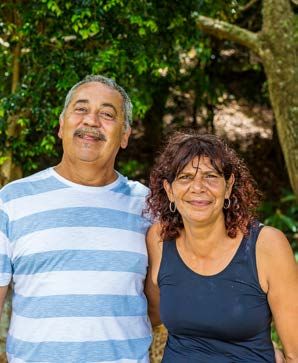
About our partnership                                       About Brisbane North PHN
                                                                Brisbane North PHN supports clinicians and
    Brisbane North PHN and Metro North                          communities in Brisbane’s northern suburbs,
    Hospital and Health Service (MNHHS) have a                  Moreton Bay Regional Council and parts of
    strong history of working together to enhance               Somerset Regional Council.
    health outcomes by ensuring people in the
    North Brisbane and Moreton Bay region                       Our region covers approximately 4,100 km2 of
    receive the right care, in the right place, at              urban, regional and rural areas and covers the same
    the right time.                                             population as Metro North Hospital and Health Service.
                                                                We are one of 31 Primary Health Networks across
    Underpinning this partnership is a joint protocol which     Australia. Our key objectives are:
    recognises that better health outcomes are achievable
    when there is effective collaboration between primary         • to increase the efficiency and effectiveness of
    healthcare and hospital services.                               medical services for patients; particularly those at
                                                                    risk of poor health outcomes
    We continue to build on this partnership year on year,
    with increased examples of collaborative work between         • to improve coordination of care to ensure patients
    our organisations such as the programs and initiatives          receive the right care, in the right place, at the
    detailed within this report.                                    right time.
                                                                Our vision is a community where good health is
                                                                available to everyone.
    About Metro North Hospital                                  Our staff work across offices in Lutwyche and North
    and Health Service                                          Lakes to deliver programs across primary care,
                                                                community care and mental health, suicide prevention
    Metro North Hospital and Health Service is                  and alcohol and other drug treatment services.
    Australia’s largest and most diverse public
                                                                brisbanenorthphn.org.au
    hospital and health service.
    We provide care to a catchment of approximately 1
    million people in the northern Brisbane region. Our
    18,000 staff work across five hospitals, 14 community
    and residential care centres, 14 mental health centres
    and 27 oral health facilities.
    Our diverse health services include surgery, cancer care,
    maternity, trauma, medicine, mental health and more
    than 30 subspecialties and superspecialties such as
    heart and lung transplantation and burns. We care for
    people at all stages of life.
    Our hospitals include Royal Brisbane and Women’s
    Hospital, The Prince Charles Hospital, Redcliffe
    Hospital, Caboolture Hospital and Kilcoy Hospital.
    metronorth.health.qld.gov.au

8   Metro North Hospital and Health Service and Brisbane North PHN Year in Review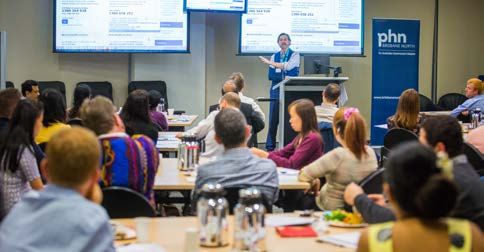
Maroochydore

                                                                                                                    Caloundra

                                                                                                     Glass House
                                           Kilcoy                                                    Mountains
                                         Hospital

                                                                            Woodford

                                                                                        Caboolture
                                                                                          Hospital                          Bongaree

The region                                                                                                     Deception Bay

Brisbane North PHN and Metro North                                          Dayboro

Hospital and Health Service (MNHHS) share                                                                                      Redcliffe
the same geographical region. The region                                                                                       Hospital

covers areas north of the Brisbane River
including parts of the Brisbane City and
Moreton Bay Local Government Area as well
as parts of the Somerset Local Government                                                                          The Prince
                                                                                                                   Charles Hospital
Area (Kilcoy).
                                                                                                                 Lutwyche
                                                                                                Royal Brisbane and
The region is home to almost 960,000 residents and is                                           Women’s Hospital               Wynnum
projected to increase to over 1,200,000 residents by 2036.

                                                                                                              Moorooka

Joint planning
MNHHS and the PHN and have partnered to gain a
shared view of health service planning and health needs
in the region. The region is one of the most diverse in
Queensland with:

ONE IN FIVE                             MORE THAN
                                        87,000                                    THE MEDIAN AGE OF

                                                                                  35.6
(22.1%, 189,128 people)
RESIDENTS BORN OVERSEAS,
WHICH IS > RATE THAN QLD (20.5%)
                                        10.2%PEOPLE
                                        RESIDING IN THE REGION                                                YEARS
                                        SPEAK A FIRST LANGUAGE                    LOWER THAN THE QLD MEDIAN AGE OF 36.8%
                                        OTHER THAN ENGLISH
                                        COMPARED TO THE
                                        QUEENSLAND RATE OF 9.5%
                                                                                  THE REGION IS AGEING
ABORIGINAL AND/OR
TORRES STRAIT
                                                    MORE THAN HALF OF THE
                                                    POPUL ATION
                                                                                              23.9    %
                                                                                              POPULATION
ISLANDER
14,000 PEOPLE LIVE IN THE REGION
                                                    IN THE REGION
                                                    IS A YOUNGER
                                                                                              GROWTH BETWEEN
                                                                                              2010 – 2015
                                                                                              IN THE 65–74 YEARS AGE GROUP
                                                    GENER ATION
1.7      %
             OF THE REGIONS TOTAL
                                               55.6% AGED <
POPUALTION AS AT 2011                                          25 YEARS
                                                             Working together to enhance health outcomes - 2017/18                     9
A message from
     Professor Don Matheson

     The Health Alliance was formed by the Boards of Metro
     North Hospital and Health Service and Brisbane North
     PHN in early 2017. Their vision was to create an “equal
     space” where all parts of the health sector could come
     together to address the challenges that they were
     unable to tackle alone.
     This was a ground breaking idea, signalling a move
     away from “siloed” approaches of the past, and also
     a recognition of the wealth of knowledge and problem
     solving potential that sits across the sector in the North
     Brisbane region.
     The Boards asked the Health Alliance to focus on health
     and wellbeing of three population groups; older people,
     children of Caboolture, and people with complex health
     and social needs who are frequent ED attenders.
     The focus on older people has been the area where
     the most progress has been made. This was aided
     by the existing work of both organisations based on
                                                                  about how health and health care can be improved for
     needs assessments and an older people’s plan, and by
                                                                  this important group of patients. Detailed discussions
     MNHHS’s previous focus on frailty. Older people who
                                                                  are now occurring on how to bring these ideas together
     are frail are at risk of becoming more unwell if they have
                                                                  in the TPCH area (Chermside and surrounding suburbs).
     long waits in ED or prolonged stays in hospital beds
                                                                  Collectively, these ideas represent a new system of care
     beyond what their medical condition requires.
                                                                  for older people. At the heart of these deliberations is a
     The wider health sector has responded very positively        strong focus on older people themselves, their families
     to the opportunity to engage in the Health Alliance          and carers. The Boards’ original vision is unleashing
     process. Discussion on the care of older people has          previously untapped potential of the local sector to work
     uncovered a sector that is alive with innovative ideas       collaboratively to improve the health of its people.

                                                                  Professor Don Matheson

10   Metro North Hospital and Health Service and Brisbane North PHN Year in Review
A strategic Health Alliance
Together, we are embarking on new initiatives such as the Health Alliance, an approach to
tackling health and healthcare problems that transcend the mandate of any one organisation or
part of the health sector, and that can’t be fixed by existing approaches.
It provides a neutral ground where organisations from Health Alliance focus areas
across the health system can come together as equals
to develop solutions to common problems. The focus of the Health Alliance to 2020 is on improving
the health and wellbeing of three population groups:
The Health Alliance encourages health system funders
to work more closely with providers to support long term • older people
sustainable solutions to local health needs. • people with complex health and social needs who
frequently attend emergency departments
• children in Caboolture.
Case study:
System to support older people to age well
Older people face a range of issues in accessing the right care, in the right place at the right time within the
current health and aged care system.
The Ageing Well Initiative (the initiative) presents a once in a generation opportunity to improve healthcare
for older people initially at a local level in North Brisbane, but with the potential to influence change at a
regional, state and even a national level.
It is building on the work of Metro North Hospital and Health Service (MNHHS), Brisbane North PHN (the PHN)
and the Health Alliance.
The initiative is focusing on The Prince Charles Hospital area, including Chermside and surrounding suburbs
where work has already been undertaken to improve health outcomes for older people.
The initiative is co-designing a new model of care with the health and aged
care sectors and with older people, their families and carers.
The new model of care will span the entire health journey for older
people—from living well, living with chronic disease, living with
frailty, crisis and chronic care and dying well. It will cross all
settings, including hospital, general practice, residential aged
care facilities and in the community.
MNHHS and the PHN are exploring new ways of funding,
so that resources can be used flexibly to support the new
model of care and better meet the needs of older people.
The Ageing Well Initiative supports one of six key
directions outlined in the MNHHS and PHN co-authored Five
year health care plan for older people who live in Brisbane
North | 2017-2022. The direction states that the development
of services should ensure older people are supported to stay
healthy, well and independent.
Working together to enhance health outcomes - 2017/18 11An additional area of focus is bringing data and The Alliance has also begun to engage with local
information together across the health system, enabling services providers, including GPs.
health workers and organisations to form a more
This is the most recent part of the Alliance’s work
complete picture of the patient journey, and their impact
and current efforts are focused on understanding the
on patients’ and populations’ health.
journey of care throughout pregnancy, and in the first
People who frequently attend emergency four years of a child’s life. The initial starting point for
departments this work is birth to six months of age.
Many people who frequently attend emergency Data and information
departments experience complex physical and mental
health issues along with social issues like insecure The current health system is data rich, but the many
housing and social isolation. different data sets are held in isolation, limiting the
ability of the health system to take a holistic view of
As a group, these people interact with many different the patient journey, and to effectively and efficiently
parts of the health and social service systems, however manage health system resources.
their care tends to be uncoordinated, and services are
often not delivered in a timely, efficient or effective way. In addition, current arrangements have not supported
clinicians and health service managers to engage
Recent innovative approaches in the emergency with data and information related to the whole patient
department at Royal Brisbane and Women’s Hospital journey and a population health approach.
(RBWH) have worked to identify frequent attenders
and connect them with community-based supports. It will increase data linkage and analytic capacity in
This work has shown how better coordination, case concert with fostering the demand for this information
management and intensive community follow up can across the sector by giving a more complete picture
improve the health system response and better meet of population outcomes, patient experience, service
the needs of people who experience complex health and utilisation and system performance.
social issues. The Health Alliance is working with Queensland Health’s
The Health Alliance has engaged a core group of Clinical Excellence Division, Metro North HHS and
stakeholders focused on this work that includes Brisbane North PHN to create a shared data platform
representatives from MNHHS, the PHN, RBWH where health data from across the sector can be
emergency department, mental health service integrated and made available to the sector.
providers, general practice and non-government In 2017, the Health Alliance worked to map the health
service providers. data sets that are in use in the North Brisbane region.
The core group has reached a shared agreement on Since then, a Memorandum of Understanding has
the challenges facing the local system in caring for been developed to initiate this work, and a governance
this group and this agreed position will now be used structure is under development. The governance
to consider how to improve the local system response, structure will include the current project partners
with an initial focus on the inner city region. along with representatives from general practice and
Indigenous service
Children in Caboolture providers, and
The high level of health need of children in Caboolture patients
is overlaid with social factors, including significant themselves.
socioeconomic disadvantage.
Recognition of these needs has resulted in increased
service delivery from public, private and non-
government providers, as well as a number of initiatives
focused on collaborative action to improve outcomes.
The Alliance aims to support and extend existing
initiatives, and will add value by focusing more directly
on information systems to support health service
provision for these children.
The Health Alliance has engaged a core group of
stakeholders that includes representatives from
MNHHS, Caboolture Hospital, the PHN and Children’s
Health Queensland.
12 Metro North Hospital and Health Service and Brisbane North PHN Year in ReviewHelen Brummell, Team Care Nurse with Leigh Walsh, Team Care Coordination patient
Improving outcomes for people with chronic conditions
Together we are working to ensure people with chronic conditions receive the right care, in the
right place, at the right time, including management close to home in the community.
Team Care Coordination - Keeping Hospital patients supported with
people healthy and at home Staying Healthy, Staying Home
For over 20 years, Team Care Coordination has been Referrals from MNHHS received by the Staying
providing GPs in the North Brisbane and Moreton Bay Healthy, Staying Home program have grown steadily
region with care coordination services for their patients to 525 in 2017/18.
with chronic conditions.
Under the program, patients receiving care at MNHHS
Funded by Metro North Hospital and Health Service facilities who do not require urgent complex clinical
and delivered by registered nurses employed by services but who may benefit from support at home,
Brisbane North PHN, a 2017 evaluation of the program may be referred to Team Care Coordination.
has confirmed it is effective at reducing emergency
department attendances, hospital admissions and the
severity of patient illness. ®
In the 12 months to June 2018, 241 GPs in the region
across 129 practices were referring to Team Care
Coordination. During 2017/18, 635 patients consented
to receive services from Team Care Coordination.
GPs were the sole referral source when Team Care
Coordination was first established, but from 2015
onwards the program began accepting referrals from
MNHHS facilities through the Staying Healthy, Staying
Home initiative.
Working together to enhance health outcomes - 2017/18 13Case study:
Respiratory program helped
Fred get back on track
Before accessing pulmonary rehabilitation,
Margate resident Fred Bryant couldn’t do many
simple things we all take for granted such as
mowing the lawn, going for walks, or going up
and down stairs.
But, eight weeks on and a lot of hard work in
between, plus some great support through the
Pulmonary Rehabilitation program being delivered
by MNHHS’ Community, Indigenous and Subacute
Services (CISS) Fred’s transformation has been
remarkable.
“I am now walking two to three kilometres a day, and am
able to climb up and down the 57 steps at Sutton’s Beach,”
Fred said.
Fred, aged 83, is like many elderly people in our community who suffer from a chronic respiratory
condition that is making it a lot more difficult for them to maintain their independence and
mobility.
“I have experienced some significant respiratory problems over the last 20 years and found
myself in and out of specialist clinics – this eight week program has made all the difference.”
As part of CISS’s Pulmonary Rehabilitation program, Fred undertook two gym sessions each week
over a period of eight weeks at the Brighton Health Campus participating in a range of exercises
including a walking program, resistance training, weights and rowing, and walking tests.
“The support of nurses and physiotherapists has been fantastic – they closely watch what you’re
doing and don’t talk over you – they listen and talk to you,” Fred said.
The current program intake, which has included around 30 participants from across North
Brisbane, included additional educational classes delivered with allied health and nursing
professionals.
Fred Bryant (far right) pictured with other participants (first left) Viviana Solomon, (second left) Daphne Johns and
(fourth left) Fay Henley is one of many locals getting their lives back on track thanks to a very special Pulmonary
Rehabilitation program being delivered by (third left) CISS Clinical Nurse Louisa Hammerslag and (fifth left) Senior
Physiotherapist Bek Barry.
14 Metro North Hospital and Health Service and Brisbane North PHN Year in ReviewAmie Horwood, ICIF COPD Project Co-ordinator, Brisbane North PHN, Susan Marshall, Judy Powell, Partnerships Manager, Lung Foundation
Australia and Sharon Hodby, ICIF COPD Principal Project Officer, Metro North Hospital and Health Service.
Better outcomes closer to home for A regional approach to improving
patients with Chronic Obstructive chronic wound care
Pulmonary Disease (COPD) At the MNHHS Chronic Wound Care Conference in March
Funded through the Queensland Health Integrated Care 2018, the Brisbane North Chronic Wounds Governance
Innovation Fund, MNHHS and the PHN are working with Group launched a recommendations paper recognising
community partners to improve the care of patients with that chronic wounds severely reduce quality of life,
COPD through early disease identification, appropriate capacity to work and increase social isolation.
therapy, early intervention, access to pulmonary The Brisbane North Chronic Wound Governance Group
rehabilitation and reduced hospital admissions. brings together wound specialists from across the region
The project has coordinated satellite pulmonary (including MNNHS, the PHN, the Queensland Department
rehabilitation programs to increase access across the of Health Clinical Excellence Division and the Wound
region. These programs have resulted in significant Management Innovation Cooperative Research Centre) to
improvements in function and quality of life, with a 75 identify relevant local needs in chronic wound care and
per cent completion rate by participants. A case study to ensure that people living with a chronic wound receive
about these programs is featured on page 14. evidence-based, coordinated care.
Local general practices with high MNHHS service The Group is working towards implementing the
utilisation and a high concentration of patients with recommendations of their recommendations paper,
COPD, were targeted as part of the project. 25 general Solutions to the Chronic Wound Problem in Australia:
practices were enrolled in the clinical audits, and 40 A Call to Action on a regional level.
practice nurses attended education on spirometry,
while 49 GPs received education to support diagnosis
and management of COPD.
The project is a collaboration between MNHHS, the PHN,
the Australian Centre for Health Services Innovation and
Lung Foundation Australia.
Brisbane North Chronic Wound Governance Group
Working together to enhance health outcomes - 2017/18 15Case study:
Mental health, suicide Boost for mental health support
on Brisbane’s northside
prevention and alcohol and
A $5 million facility to help adults manage and
other drug services recover from mental health issues has opened on
Brisbane’s northside.
Mental healthcare is undergoing a period of Minister for Health and Ambulance Services Steven
significant reform. Miles said Nundah House would support people’s
recovery in their own community, close to their
MNHHS and the PHN work together to ensure people of family, friends and existing support networks.
all ages, from children to adolescents, adults and older
“Nundah House provides an important
people receive the right mental health services, in the
component of care for adults by helping to bridge
right place, at the right time whether that be in acute
the gap between the community and the hospital
facilities or in the community.
so more people can get the support they need in
Developing a regional approach to the community,” Mr Miles said.
wellbeing Executive Director of Metro North Mental Health
(MNMH) Associate Professor Brett Emmerson
As per the requirement under the Fifth National Plan for AM said services such as Nundah House were
Mental Health and Suicide Prevention, MNHHS and the PHN increasingly being implemented to address a service
have co-sponsored the development of a whole of region gap between inpatient and community care.
plan for mental health, suicide prevention and alcohol and
other drug treatment, titled Planning for Wellbeing. “Our focus is on achieving safe and positive
outcomes in mental health recovery, prevention
Due to be launched during 2018/19, the implementation and community re-engagement,” A/Prof
of the plan involves a range of strategic governance Emmerson said.
groups and activity implementation groups which
include representation from across the sector. The journey started with innovation funding from the
PHN in order to scope the need for
One of these groups is Collaboration in Mind, which such a facility and was able to
brings together organisations and communities in the be realised with the support
North Brisbane and Moreton Bay region to lead and of MNHHS. The 10-bed
coordinate innovative service planning and delivery, so purpose-built facility
that adults with a severe mental illness enjoy a healthy commenced accepting
and fulfilling life. consumers in late-
Collaboration in Mind leads on the development and March 2018, operating
implementation of the severe and complex chapter of the in partnership with
regional plan, which includes shared priority areas for Neami National.
action by the mental health sector over the next five years.
Case study: Mental health expo turns seven
MNHHS and the PHN were again involved in the annual Brisbane Mental Health
Expo, held in collaboration with our colleagues at Metro South Hospital and
Health Service and Brisbane South PHN at Reddacliff Place on 13 October 2017.
Held each year during Mental Health Week celebrations, the event brings
together government, non-government and private sector services in one place
to share mental health information and resources with the community. The 2017
expo theme ‘Opening Doors’ was designed to help reduce stigma and increase
mental health literacy.
The expo attracted thousands of locals who enjoyed a variety of live stage
performances, therapeutic art workshops, story-telling, information stalls, food and
giveaways. Over 70 organisations were represented on the day, with over 20 sponsoring the
event in its seventh year.
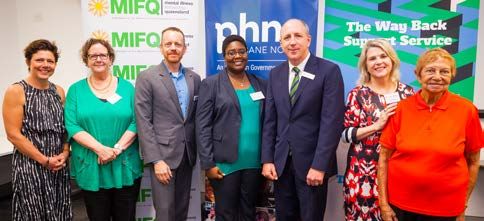
16 Metro North Hospital and Health Service and Brisbane North PHN Year in ReviewPictured at the recent launch of The Way Back Support Service are (L-R) beyondblue CEO Georgie Harman, community representative Tina
Pentland, Brisbane North PHN executive manager Paul Martin, support coordinator Judith BheBhe, Federal Member for Petrie Luke Howarth
MP, MIFQ CEO Jennifer Pouwer and Senior Elder for the Gubbi Gubbi people Dr Eve Fesl.
Improving community-based mental
health support Case study:
Support offers a way back after
While holding separate funding for community-based
mental health services, the PHN and MNHHS collaborate
attempting suicide
to ensure services can meet the needs of our region. A new support service based in Redcliffe is helping
people who are most at risk of dying by suicide.
Supporting the introduction of the
The Way Back Support Service delivers
National Disability Insurance Scheme personalised support to people discharged from
MNHHS and the PHN through Partners in Recovery work Redcliffe Hospital following a suicide attempt.
together to support people with psychosocial disability According to the Australian Bureau of Statistics,
to apply for services under the National Disability the suicide rate in Redcliffe was 17.6 per 100,000
Insurance Scheme. between 2012 and 2016. The national average was
11.74 per 100,000.
Over 140 GPs have now attended information evenings
hosted by the PHN in readiness for the National Tina Pentland’s son Hamish died in 2009, with a
Disability Insurance Scheme rollout, which commenced history of mental health issues and several suicide
in our region from 1 July 2018. attempts. She was also a member of the committee
responsible for establishing The Way Back Support
Service in Redcliffe.
“My son Hamish was 20 when he first attempted
suicide. If the Way Back existed as a support for
him then, I believe he could have had the early
support he desperately needed to help him
take control of his mental health and give
him hope for life and he might still be alive
today.”
The Way Back Support Service is a
Beyondblue program delivered by
Mental Illness Fellowship Queensland,
supported by Redcliffe Hospital and
funded by the PHN.
Community representative Tina Pentland was
on a committee responsible for establishing The
Way Back Support Service in Redcliffe.
Working together to enhance health outcomes - 2017/18 17Improving the health and
wellbeing of older people
Australians are now living longer than ever before.
Around 13 per cent of the population in the region
(more than 124,000 people) is aged 65 years and over
and this is expected to grow as a proportion over the
coming decades.
We’re working in collaboration to meet the challenges
arising from an increased demand for health and aged
care services. Case
study:
Our plan to improve the health and A letter
wellbeing of older people from Cecil
To support the North Brisbane and Moreton Bay and Gilbert
region’s growing community of people aged 65 and
Our life as we know it could change tomorrow,
over, MNHHS and the PHN have developed a Five Year
it could change in the next hour and some of us
Health Care Plan for Older People who live in Brisbane
already know that the end of life is looming.
North 2017-22.
Going to the bathroom, taking out the rubbish and
This plan will guide the way healthcare services are
getting to appointments are all getting harder, and
delivered to this group of people in our community
we may not always understand technology or your
and represents a commitment between MNHHS and
technical jargon. We’ve talked to friends and we
the PHN to improve the coordination, integration and
all agree, we may be older but we want the same
provision of care services to support the health and
things as everyone else. We come to hospital to get
wellbeing of older people to help them stay healthy and
better. We expect to leave hospital feeling better.
at home.
When it is all over, we hope to be able to say, ‘well
that wasn’t so bad after all’ and we trust you to help
Commonwealth Home Support us achieve this.
Program
Along with MNHHS, non-government providers,
consumer and carer representatives and peak bodies,
the PHN leads the delivery of Commonwealth Home
Support Program services to support older people who
need help to keep living independently at home.
CHSP services include domestic assistance, personal
care, social support, care coordination, nursing, allied
health and transport.
During 2017/18, the consortium provided services to
7,902 clients who received CHSP services across North
Brisbane, Caboolture and South Brisbane service areas.
We are also working to improve the transition of older
patients to and from hospital.
18 Metro North Hospital and Health Service and Brisbane North PHN Year in ReviewCase study:
Medical outreach trial delivers better healthcare for older people
A specialised medical outreach service trialled The evaluation has recommended an expansion of
at nursing homes in Brisbane North has won the GOAS across all hospitals in Brisbane North to ensure
overwhelming support of the aged care residents and a regionally-consistent approach to the provision of
staff involved and could save the State Government up healthcare to unwell RACF residents.
to $4 million a year.
Cross-sector collaboration was key to the successful
The Geriatric Outreach Assessment Service (GOAS) was design, planning and implementation of the GOAS.
trialled over 12 months in 24 Residential Aged Care
Metro North HHS Executive Director of Clinical Services
Facilities (RACFs) across The Prince Charles Hospital
Dr Elizabeth Whiting said engagement at the interface
(TPCH) catchment.
between acute and aged care had been critical to
GOAS is an innovative model-of-care aimed at project success.
improving the quality of medical care for acutely unwell
“While more time is needed to assess the long-term
RACF residents while also preventing their unnecessary
effects of GOAS on acute care, surveys show a vast
hospitalisation.
majority of aged care workers are now more confident in
An internal evaluation found GOAS had potentially managing an acutely unwell resident,” Dr Whiting said.
prevented 638 Emergency Department presentations to
The GOAS team provided 417 training sessions on 22
the TPCH, equating to 66 per cent of the 960 episodes
clinical pathways to upskill the 3,019 aged care staff at
of care provided over the life of the project.
the 24 RACFs involved in the project.
Michele Smith, Brisbane North PHN’s Executive
“Going forward, we will continue to offer GOAS as part
Manager for Aged and Community Care, said GOAS had
of Metro North’s Residential Aged Care Assessment and
delivered a significant cost saving to the health system.
Referral (RADAR) Service,” Dr Whiting said.
“Our analysis showed that without GOAS, it would
The RADAR Service is available between 8.00am-4.00pm
have cost the Queensland Government anywhere from
weekdays (phone 1300 072 327).
$3.5m to $4.3m to provide hospital treatment for the
744 aged care residents involved in the 12-month Among other findings from the GOAS evaluation:
trial,” Ms Smith said. • 24 in-scope RACFs within the TPCH catchment
“By comparison, our pilot project cost $746K, inclusive showed a declining trend in inpatient hospital
of set up expenses, and we expect GOAS will cost just admissions compared to out-of-scope RACFs
$464K per year to run on an ongoing basis,” she said. • Emergency Department presentations by residents of
in-scope RACFs remained stable, despite an increase
Australian Government funding from the PHN
in available RACF beds within the catchment area
covered approximately two thirds of project costs,
with the Metro North Hospital and Health Service • 71 per cent of GOAS episodes of care were same-day
(HHS) providing the balance. services and 91 per cent of episodes were seen by
both a Registrar and a Clinical Nurse.
Results from more than 1,700 survey responses
showed GOAS had improved quality of care for RACF The GOAS evaluation has recommended taking
residents, with 98 per cent of consumers likely to a population health approach to the funding and
recommend the service to others. provision of care of older people in all community
and hospital settings to improve coordination and
“Our evaluation confirms GOAS provides responsive, integration across the whole patient journey.
high quality and person-centred medical care at the
Left: GOAS celebration, Above: GOAS launch
right time and in the right place,” Ms Smith said.
Working together to enhance health outcomes - 2017/18 19Supporting the integration of care
Forum showcases collaboration
Since 2014, the PHN and MNHHS have hosted the
Metro North Health Forum. The annual forum brings
together representatives from primary, community and
acute care to network and share ideas to improve the
health of our communities. It showcases the range of
initiatives underway between the PHN and the HHS that
aim to connect and coordinate healthcare.
The 2018 forum and sold out exhibition was attended
by 345 stakeholders, with 70 GPs and practice
(Left) Dr Anita Green – Deputy Chair, Brisbane North PHN managers attending a breakfast briefing beforehand.
(centre) with L-R: Tony Hucker – Director of Clinical Quality
and Patient Safety, Queensland Ambulance Service, Dr Colin
Myers – Executive Director of Critical Care, Metro North Working Together to Connect Care
Hospital and Health Service, and Dr Chris Zappala – President,
AMA Queensland. This program brings a specialised community response
to work closely with hospitals in the region to respond
The emergency department isn’t to individuals frequently presenting to emergency
always your best option departments. Through a coordinated hospital and
community partnership, participants work with Micah
In the lead up to winter each year since 2016, the PHN Projects or Footprint staff who directly respond to the
has led an after-hours community education campaign health, housing and social support needs of participants.
to increase awareness of after-hours services, help
people make informed choices when accessing services
and reduce the burden in inappropriate emergency
department presentations.
The campaign was launched in 2016 at The Prince
Charles Hospital and had the support of Metro North
Hospital and Health Service, Queensland Ambulance
Service and AMA Queensland.
Dr Colin Myers, Executive Director of Critical Care at
Australia’s largest hospital and healthcare service, said
EDs are for emergencies and in many cases patients
who are seeking treatment for minor ailments
will wait.
“Unless it is an emergency, patients
should consider using the alternatives
available to them highlighted in this
campaign as our sickest patients will Above: Metro North Health
always be seen first,” Dr Myers said. Forum session
Left: GP breakfast briefing
during the Metro North
Health Forum
20 Metro North Hospital and Health Service and Brisbane North PHN Year in ReviewClosing the gap in Indigenous health
Together we’re working with the Institute for Urban
Indigenous Health to engage Aboriginal and Torres Strait
Islander communities in the planning, development and
implementation of health services.
A steering group made up of all three organisations is
looking at ways to engage with the community to ensure
health planning considers and is able to respond to the
specific needs of Aboriginal and Torres Strait Islanders
in commissioning, delivering and evaluating healthcare
services across our region.
Strengthening the health workforce
HealthPathways
– a resource for GPs by GPs
HealthPathways provides clinicians in our region with “Our aim is to give you as much information as possible
access to patient assessment, management, as well as in one spot. Trying to find things is always difficult. If
local referral and service information all in one place. you search, you’re really not sure about the provenance,
the quality, the influences that may’ve caused this
During 2017-18, we developed 126 localised pages to information to be where it is,” Dr Bennett said.
cover a range of clinical conditions bringing the total,
including service pathways, to 311 pages. So we’re hopeful of being able to overcome some of
those shortcomings with this product,” he said.
Since July 2017, there have been over 45,000 page views
on the Brisbane North HealthPathways website and
more than unique 3000 users accessing 7773 sessions. General Practice Liaison Officers
The pathway accessed most frequently during this GPLOs) drive GP engagement
period has been the codeine chronic use and de- As part of the MNHHS Strategy of “Putting People First”,
prescribing pathway which was developed in response and the PHN’s organisational vision of “a community
to changing prescribing legislation. where good health is available for everyone” the General
Dr John Bennett (pictured) is a practicing GP from Practice Liaison Officer program has been identified
Toowong and along with his colleague Dr Fabian as a key initiative in the development of connected
Jaramillo has been working as a healthcare across the North Brisbane and Moreton Bay
Clinical Editor to develop region.
a suite of localised By utilising the experience acquired through many years
pathways since of delivering primary care services, our GPLOs provide
November an essential primary care perspective to care delivered
2016. in secondary care.
Our team of 10 GPLOs are GPs who work closely with
hospital outpatient departments, community health
services and primary care to reduce waiting lists and
improve the patient experience.
Working together to enhance health outcomes - 2017/18 21Case study:
GPLO support critical to uptake of the Health
Provider Portal (the Viewer)
The GPLO team has been driving rollout and uptake of the Health
Provider Portal (the Viewer) by GPs across the North Brisbane and
Moreton Bay region, with 465 GPs registered for access at August
2018.
Speaking at the June GP Breakfast as part of the Metro North Health
Forum, GPLO and daily user of the Viewer, Dr Meg Cairns said the
Health Provider Portal was useful to complement the information
provided in a hospital discharge summary.
“For one of my recent patients, I knew I had the electronic discharge
summary, but I used the Health Provider Portal to get more information
about my patient’s treatment in hospital.
“I was able to check the patient’s chest x-ray, CT pulmonary angiogram report, blood
tests, emergency department discharge summary and some instructions on recommended
follow up treatment,” she said.
GPLOs Dr Meg Cairns and Dr James Collins speaking at the GP Breakfast Briefing as part of Metro North Health Forum on 19 June 2018.
Specialist-led education popular with chronic kidney disease, and gastroenterology and
hepatology. Over 225 GPs attended the events which
local GPs culminated in over 70 GPs and practice managers
The GPLOs lead the coordination and delivery of an attending the GP breakfast briefing as part of the Metro
education program to GPs across the North Brisbane North Health Forum on 19 June 2018.
and Moreton Bay region. Delivered in conjunction For a number of years, MNHHS and the PHN have
with specialists at Metro North facilities, the RACGP- collaborated in the delivery of the GP Alignment
accredited education ensures GPs are up-to-date with Program maternity and gynaecology education
the latest clinical guidelines and hospital processes for local GPs. During 2017/18, 28 GPs completed
and have an understanding of local services and maternity education and approximately 70 completed
referral options. gynaecology education, with over 300 GPs across the
Topics are informed by the GPLO program in region now aligned to deliver shared care with Metro
consultation with general practice, specialists at North. During 2017/18 a paediatrics workshop was
MNHHS and local community service providers. Events also held as part of this education program and was
feature presentations from specialists, information attended by 43 local GPs.
about relevant HealthPathways and case studies Our team of GPLOs also represent their GP peers on
relevant to general practice. statewide committees to support decision making on
During 2017/18 events were held on topics including initiatives that impact the primary care workflow.
oncology and haematology, back pain, mental health, GPLO education event
22 Metro North Hospital and Health Service and Brisbane North PHN Year in ReviewGPLOs support new models of care
Case study:
CURE-IT Hepatitis Program In 2018, the GPLOs also supported the MNHHS expansion
of new models of care under GP with a Special Interest
wins award (GPwSI)-led initiatives.
Using a partnership model approach, the CURE-IT program Under the guidance of a specialist, a range of innovative
to cure hepatitis C has recently won the Queensland Health service delivery models can be delivered to patients
Award for Excellence in Connecting Healthcare. in a safe, more timely and cost-effective manner in an
The partnership comprises The Prince Charles Hospital, outpatient setting. Our GPLOs helped with recruitment
Royal Brisbane and Women’s Hospital, Brisbane North PHN and promotion of a GPwSI positions across the region.
and community organisation Queensland Injectors Health
Network (QuIHN).
Providing initial support to connect with local GPs in the
project’s establishment phase, GPLO Dr Noela Kwan spoke Case study:
directly with clinical lead, Dr Tony Rahman. Primary care pathway provides
In addition to curing more than 250 people in the first year fracture treatment and
alone, Dr Rahman confirmed nearly 500 CURE-IT patients management closer to home
have been treated for Hepatitis C with cure rates >98 per
cent. Dr Rahman also added that all patients have been GPLOs from MNHHS and the PHN have also
treated by their GPs and not required any hospital visits. supported the MNHHS musculoskeletal primary
care pathway project which aims to increase
TPCH Executive Director Anthony Williams said the treatment and management of simple fractures in
partnership is one of the most successful models of care to primary care.
treat hepatitis in the community.
At July 2018, over 200 patients were on the
“The CURE-IT partnership model supports community pathway, with nine practices across the North
organisations and GPs in the community to treat patients Brisbane and Moreton Bay region involved and
with hepatitis C and provides education and advice to GPs provided with plaster and casting education.
in regional areas,” he said.
“This is a vulnerable group of people who may not
access conventional healthcare so the success rates
have been good because we’ve been taking the cure to
the patients in the community, with expert advice from
gastroenterologists available as needed,” Mr Williams said.
Working together to enhance health outcomes - 2017/18 23Case study:
Healthy Spine model of care gets patients back on track
The Healthy Spine Service helps to improve the management of patients with back and neck pain by providing
coordinated care, improved access to services, timely treatment, the right level of care, tailored education and
management and care plans monitored by the patient’s GP.
The project involved:
• development and implementation of referral improvement strategies and primary care pathways
• implementation of a single screening and triage hub for patients referred with back and neck pain (Spinal Health Hub)
• community-based back pain assessment and care planning clinic (Healthy Spine Clinic)
• development of education resources supporting patients with back and neck pain including an education program
(Healthy Spine Program)
• enhanced use of telehealth and telerehabilitation to deliver services locally to patients.
The PHN supported MNHHS with the establishment of the Healthy Spine Service by helping to recruit a General Practitioner
with Special Interest (GPwSI) to run the clinics and program at the North West Community Health Centre at Keperra.
The Service was set up in response to surging demand for back pain services, with patients traditionally being referred into
a surgical specialty outpatient department, despite estimations that only 20 per cent would
benefit from consultation with a medical specialist and only 4-5 per cent require surgery.
As part of the project, the PHN and MNHHS supported the development of
education resources that were made available on HealthPathways in October
2017 and co-hosted a back pain education event attended by over 40 local
GPs in March 2018.
Results from the project have shown that 69 per cent of patients seen
via the GPwSI in the community were discharged back into primary
care with a management plan and via improved primary care pathways
referrals into a surgical outpatient department continues to decease.
The Healthy Spine Clinic is predicted to support 1,172 patients per
year, while the Healthy Spine Program is anticipated to support 1,029
patients per year.
The project is subject to a full evaluation and will transition to business as
usual, with direct referral from primary care recommended in the future.
Case study:
Workshop helps build capacity of consumers
In April 2018, MNHHS and the PHN facilitated a joint consumer-led training workshop. The 24 participants were
from the organisations’ consumer networks and included a mix of new and experienced consumers with wide-
ranging experiences across the health sector.
Experienced consumers were able to share their experiences and learnings with the newer consumer
representatives. A representative from Health Consumers Queensland was also there to provide support to the
discussions.
Executives from both the PHN and MNHHS were on hand to speak to the importance of consumer engagement within
their organisations. The PHN believes that those who are affected by a decision have a right to be involved in the
decision making process and that consumer involvement in all stages of the commissioning cycle (the planning,
design, delivery and evaluation), not only improves healthcare services but also outcomes for consumers.
Reflecting on the workshop, participants told us they found it useful to learn from other consumers, especially the
more experienced consumers who have been able to witness the evolution and impact of consumer involvement in
healthcare. Participants also appreciated the opportunity to find support from a diverse group of consumers with
similar motivations.
24 Metro North Hospital and Health Service and Brisbane North PHN Year in ReviewClinician and community engagement Immunisation and public health
on committees collaboration
MNHHS and the PHN conduct joint engagement activities Metro North Public Health Unit and the PHN work to align
through our projects and through representation efforts to improve immunisation rates across the region,
on and joint meetings of on each organisation’s manage public health issues and ensue consistent
relevant committees and councils, such as the MNHHS messaging across the sector.
Community Board Advisory Committee and PHN’s
To support general practice to maintain vaccination
Clinical Council and Community Advisory Committees.
rates, we facilitated eight immunisation catch up events
for 175 local practice nurses in 2017/18.
Collaboratives improve As well as providing a conduit to general practice on
communication across sectors public health news and alerts, the PHN and MNHHS
collaborate at a campaign level to drive uptake of
MNHHS and the PHN co-host collaborative meetings to
immunisation.
enhance continuity of patient care through improved
understanding of services available in general practice
and the hospitals, the timely access to these services
and improved communication between GPs and
hospitals. Our current Collaboratives include:
• Royal Brisbane and Women’s Hospital Collaborative
• Women’s and Newborn’s Service Collaborative
• The Prince Charles Hospital Collaborative
• Redcliffe Hospital Collaborative
• Children’s Health Queensland Collaborative.
Brisbane North Allied Health
Collaborative
The PHN oversees the implementation of the Brisbane
North Allied Health Collaborative, of which MNHHS is a
member of the Steering Committee.
Chair of the Brisbane North Allied Health Collaborative
Steering Group, Dorelle Thompson from Wellness
Nutrition Solutions said this was an outstanding
achievement given the relatively short amount of time for
which the Collaborative had been operational. Allied Health
Collaborative event
“The Collaborative Steering Group has been meeting for
a little over two years now,” Ms Thompson said.
“Within that time, we’ve formalised the structure of
the collaborative model, developed an action plan,
and firmly cemented the Collaborative as one of the
main avenues for allied health support, direction and
leadership in the region.
In August 2017, almost 100 allied
health providers attended a
networking and information event
hosted by the Brisbane North Allied
Health Collaborative, while 43
attended a motivational interviewing
workshop in October 2017.
Working together to enhance health outcomes - 2017/18 25Community palliative care networks
Case study: help support choice at end of life
MNHHS and PHN collaborate for flu
MNHHS and the PHN are involved in regular meetings of
briefing community palliative care networks to improve access to
State Health Minister Steven Miles and other palliative care in community settings.
senior health figures including GP and PHN Board A Communities Palliative Care Collaborative meets
Chair Dr Anita Green launched the MNHHS flu bi-monthly with representatives from services funded
campaign at the Royal Brisbane and Women’s to provide palliative care in the North Brisbane and
Hospital in April 2018. Moreton Bay region. This includes St Vincent’s, Karuna,
Mr Miles said last year’s flu season had put a huge MNHHS Community Indigenous and Subacute Services
strain on the state’s hospitals and the Queensland and some non-government organisations who support
Ambulance Service. palliative care through packaged funding. The aim of
this group is to promote clinical communication and
“We can’t afford to see that happen again,” Mr process improvement across the community sector and
Miles told The Courier-Mail. “We need as many primary health.
Queenslanders as possible to go and get their flu
vaccinations. At a broader level, a South East Queensland
Palliative Care Network meets quarterly to promote
“I’m urging people of all ages to get vaccinated, clinical communication and information sharing
especially younger children because they are across Queensland University of Technology, peak
particularly susceptible,” he said. bodies including Palliative Care Queensland, Carers
The event was a show of unity across the primary Queensland, primary care, non-government and acute
and secondary care sectors, in response to figures sectors (public and private).
showing the 2017 flu season was one of the
worst on record in Queensland, with 56,094 flu
notifications and 6,070 hospitalisations
Dr Green spoke to Courier-Mail medical reporter
Janelle Miles and was quoted describing last
year’s low flu immunisation take-up as
“appalling”.
“It worries me because the flu needs
to be taken seriously,”
Dr Green said.
Brisbane North PHN Board Chair Dr
Anita Green receives her flu vax.
26 Metro North Hospital and Health Service and Brisbane North PHN Year in ReviewYou can also read


