Health impact of ambient air pollution in Serbia - A CALL TO ACTION - United ...
←
→
Page content transcription
If your browser does not render page correctly, please read the page content below

Health impact
  of ambient
 air pollution
   in Serbia
 A CALL TO ACTION

                            РЕПУБЛИКА СРБИJA
                               Министарство
                          заштите животне средине
                          REPUBLIC OF SERBIA
                                Ministry of
                          Environmental Protection
     Republic of Serbia
     MINISTRY OF HEALTH
Abstract

This report, on a comprehensive investigation on the impact of air quality on health in Serbia, assesses the
effects of air pollution on health in major cities. The results show that long-term exposure to air pollution
leads to premature death for a relevant percentage of the population, and short-term exposure to air
pollution increases mortality risk. The investigation collected data on air quality, the population and its
health in 2010–2015. Levels of pollutants exceeding the values of the WHO air quality guidelines and
the limits set by European Union legislation on air quality were recorded in several Serbian cities. The
WHO AirQ+ software was used to calculate the proportion of deaths due to air pollution for the main
Serbian cities. The analysis of the national data shows that nearly 3600 premature deaths every year are
attributable to exposure to fine particulate matter measuring ≤ 2.5 µm (PM2.5) in 11 studied cities in Serbia.
Simulations of progressive reductions in current PM2.5 concentrations point towards major health benefits
from improving air quality in the country. The results of this analysis indicate the importance of a reliable
monitoring of air quality and the need for interventions to reduce the burden of air pollution in Serbia.

Keywords

AIR POLLUTION
EXPOSURE
HEALTH IMPACTS
URBAN HEALTH
SERBIA

 Address requests about publications of the WHO Regional Office for Europe to:
        Publications
        WHO Regional Office for Europe
        UN City, Marmorvej 51
        DK-2100 Copenhagen Ø, Denmark
 Alternatively, complete an online request form for documentation, health information, or for permission to quote or
 translate, on the Regional Office website (http://www.euro.who.int/pubrequest).

© World Health Organization 2019
All rights reserved. The Regional Office for Europe of the World Health Organization welcomes requests
for permission to reproduce or translate its publications, in part or in full.
The designations employed and the presentation of the material in this publication do not imply the
expression of any opinion whatsoever on the part of the World Health Organization concerning the legal
status of any country, territory, city or area or of its authorities, or concerning the delimitation of its frontiers
or boundaries. Dotted lines on maps represent approximate border lines for which there may not yet be
full agreement.
The mention of specific companies or of certain manufacturers’ products does not imply that they are
endorsed or recommended by the World Health Organization in preference to others of a similar nature that
are not mentioned. Errors and omissions excepted, the names of proprietary products are distinguished
by initial capital letters.
All reasonable precautions have been taken by the World Health Organization to verify the information
contained in this publication. However, the published material is being distributed without warranty of any
kind, either express or implied. The responsibility for the interpretation and use of the material lies with the
reader. In no event shall the World Health Organization be liable for damages arising from its use. The
views expressed by authors, editors, or expert groups do not necessarily represent the decisions or the
stated policy of the World Health Organization.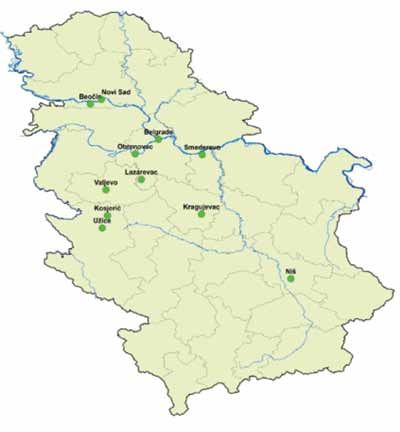
Health impact of ambient air pollution in Serbia

Contents

Abbreviations..................................................................................................................................................iv
Acknowledgements........................................................................................................................................v
Foreword.........................................................................................................................................................vi
Executive summary.......................................................................................................................................vii

1. Background..................................................................................................................................................1
   1.1. Air pollution as a public health issue, globally and in Europe................................................................1
   1.2. Air quality in Serbia............................................................................................................................................2
   1.3. Impacts of air quality on health in Serbia....................................................................................................2
   1.4. Rationale for a new analysis of air quality and health in Serbia...........................................................3

2. Existing knowledge base...........................................................................................................................4
   2.1 Investigations on air pollution and its effects on health in Serbia........................................................4
   2.2 National network of stations for automatic air quality monitoring.....................................................4
   2.3 Data from automatic air quality monitoring stations...............................................................................8

3. Estimates of the health impact of PM pollution................................................................................. 11
   3.1 Methods.............................................................................................................................................................. 11
   3.2 Results................................................................................................................................................................. 12
   3.3 Data limitations and gaps.............................................................................................................................. 17

4. Conclusions and possible action............................................................................................................ 18

References.................................................................................................................................................... 20

Annex 1. Publications and legislation on air pollution and health in Serbia....................................... 22

                                                                                                                                                                                     iii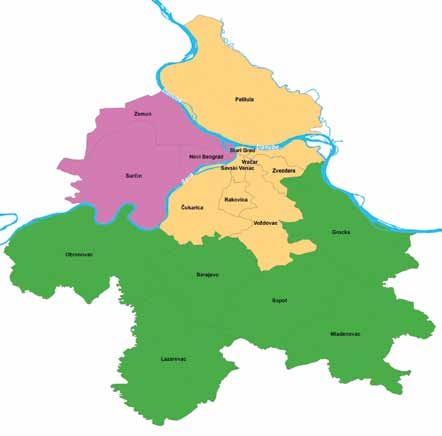
Abbreviations

     ALRI    acute lower respiratory infections

     CI      confidence interval

     COPD chronic obstructive pulmonary disease

     DALY disability-adjusted life year

     IHD     ischaemic heart disease

     NO2     nitrogen dioxide

     NCD     non-communicable disease

     PM      particulate matter

     PM2.5   fine particulate matter measuring ≤ 2.5 µm

     O3      ozone

     SEPA Serbian Environmental Protection Agency

     SO2     sulfur dioxide

     YLL     years of life lost

iv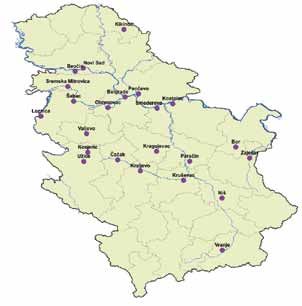
Health impact of ambient air pollution in Serbia

Acknowledgment

This report was developed by Pierpaolo Mudu (WHO European Centre for Environment and
Health, WHO Regional Office for Europe) and Uroš Rakić (Institute of Public Health of Serbia
“Dr Milan Jovanović Batut”). James Creswick and Hanna Yang (WHO European Centre for
Environment and Health, WHO Regional Office for Europe), and Sophie Gumy and Giulia
Ruggeri (WHO headquarters) contributed to the revision of the draft.

Support in data collection and analysis was provided by Branislava Matić Savićević and Marjana
Stojanović (Institute of Public Health of Serbia “Dr Milan Jovanović Batut”), Vesna Mitrović
(Ministry of Environmental Protection, Serbia), Milenko Jovanović and Jasmina Knežević (Serbian
Environmental Protection Agency), Gordana Bjelobrk and Milka Ilić Pešić (Statistical Office of the
Republic of Serbia), Milica Dragović (City of Belgrade, Secretariat for Environmental Protection),
and Vesna Slepčević and Andrej Šoštarić (Institute of Public Health, City of Belgrade). Elizabet
Paunovic and Dorota Jarosinska (WHO European Centre for Environment and Health, WHO
Regional Office for Europe) provided overall oversight of the project. This work came under a
biennial collaborative agreement between the WHO Regional Office for Europe and Ministry of
Health of the Republic of Serbia, and was coordinated by the WHO Country Office, Serbia, in
Belgrade; special thanks go to Zsofia Pusztai and Aleksandar Bojovic (WHO Country Office,
Serbia) for providing valuable support during the project.

Rossella Soldi (consultant) assisted in preparing the report, edited the document and designed
the illustrations.

The preliminary results of the analysis were presented at the sixth International WeBIOPATR
Workshop and Conference on Particulate Matter in Belgrade in September 2017 and at the 21st
meeting of the Joint Convention/WHO Task Force on Health Effects of Long-range Transboundary
Air Pollution in May 2018.

Final version of the report was developed in coordination with Ministry of Health and Ministry of
Environmental Protection of the Republic of Serbia as well as with Institute of Public Health “Dr
Milan Jovanović Batut”.

                                                                                                                       v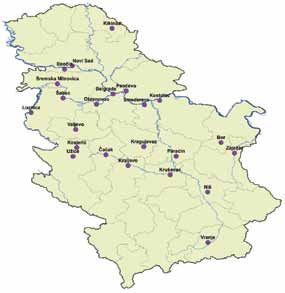
Foreword

     Air pollution from both outdoor and indoor sources represents the single largest environmental
     risk to health globally. WHO estimated that air pollution was responsible for more than 550 000
     premature deaths in the WHO European Region in 2016, almost 6 600 of which were attributed
     to air pollution in Serbia. This disease burden is preventable, if air quality improves.

     Air pollution can affect health in many ways and have both long- and short-term effects. New
     data have revealed a stronger link between exposure to both indoor and outdoor air pollution and
     cardiovascular diseases, such as stroke and ischaemic heart disease, and cancer. In addition,
     air pollution causes respiratory diseases, including acute respiratory infection and chronic
     obstructive pulmonary disease. Further, the International Agency for Research on Cancer has
     classified air pollution in general, as well as particulate matter as a separate component of air
     pollution mixtures, as carcinogenic.

     Air pollution affects different groups of people in different ways. The health effects are more
     severe for people who are already ill. Vulnerable populations – such as children, and people
     who are elderly or members of households with low incomes and limited access to health care–
     are more susceptible to the adverse effects.

     Assessments of the health impacts of air pollution based on national and subnational data are
     the starting point for developing or adjusting policies and measures to protect people’s health.
     Sound policy-making requires good-quality data and reliable monitoring and reporting systems
     for air quality and health. Facing such technical challenges supports policy development and
     provides a solid basis for measuring the progress expected from improving air quality. It also
     supports a debate on possible policy options that address the main drivers of air pollution,
     including energy and transport policies.

     Through strong collaboration, countries and WHO can effectively tackle these challenges. The
     declaration of the Sixth Ministerial Conference on Environment and Health, adopted by all WHO
     European Member States in June 2017 in Ostrava, Czechia, focuses on improving indoor and
     outdoor air quality for all. Further, reducing the number of deaths and cases of illness due
     to poor air quality will contribute to achieving Sustainable Development Goals 3 (on ensuring
     healthy lives and promoting well-being) and 11 (on making cities inclusive, safe, resilient and
     sustainable).

     Serbia and the WHO European Centre for Environment and Health of the WHO Regional Office
     for Europe have a long history of collaboration, using WHO tools and methods to quantify both
     the health effects of air pollution and the benefits of reducing such pollution as a basis for public
     policy actions in non-health sectors to improve air quality. We at the Regional Office hope that this
     report will provide useful evidence to support Serbia’s efforts to improve air quality and tackle the
     associated burden on health. The Regional Office will support Serbia in fulfilling its international
     commitments and achieving its goal of creating healthy, safe, supportive environments for all.

                                                                                    Dr Piroska Östlin
                              Director, Division of Policy and Governance for Health and Well-being,
                                                                    WHO Regional Office for Europe

vi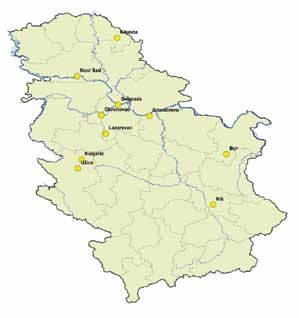
Health impact of ambient air pollution in Serbia

Executive summary

This report summarizes an extensive analysis of air quality and its impacts on health in Serbia,
which was conducted by the WHO European Centre for Environment and Health of the WHO
Regional Office for Europe in cooperation with technical experts from Serbia, and concluded
in early 2018. The main institutions in Serbia contributing to this work included the Dr Milan
Jovanović Batut Institute of Public Health of Serbia, the Statistical Office of the Republic of
Serbia, the Serbian Environmental Protection Agency (SEPA), the Institute of Public Health of
Belgrade, and the City of Belgrade’s Secretariat for Environmental Protection.

The analysis was based on national data and was made using the WHO AirQ+ software. This
report provides policy-makers with an overview of air quality and the health impacts of exposure
to air pollution in Serbia. The report is intended:
• to present estimates of the impact of air pollution on mortality;
• to describe the methods used to monitor air quality and its impact on health;
• to stimulate debate on the effects of air pollution and of policies on the health of the population
  of Serbia; and
• to provide evidence to inform policy-makers in devising strategies for disease prevention and
  health promotion.
Air pollution and its effects on health are a global concern. Exposure to air pollution, especially
airborne particulate matter (PM), is associated with increased mortality and morbidity, particularly
from cardiovascular and respiratory diseases. WHO estimated that exposure to ambient air
pollution accounted for 4.2 million premature deaths globally in 2016, including 0.5 million in
the WHO European Region. Of this total, an estimated 6 592 deaths and 131 183 years of life
lost (YLL) were due to air pollution in Serbia. Details of these estimates are available on the
WHO headquarters website (1). These huge numbers call for policy interventions at the global,
regional and national levels.

In Serbia, the state-managed system for monitoring air quality showed that the concentrations
of air pollutants, particularly PM, in cities regularly exceeds the levels recommended in the
WHO air quality guidelines. The results of this analysis can form the basis of a policy to improve
the quality of air to reduce the health impacts of air pollution. This report provides estimates
of the magnitude of these effects and simulation scenarios for reducing them by progressive
decreases in the concentration of fine PM measuring ≤ 2.5 µm (PM2.5) by 5 μg/m3, 10 μg/m3 and
20 μg/m3.

The analysis is based on the concentrations of air pollutants measured in the national network
of automatic monitoring stations and national data on mortality. This report describes the health
impacts of long-term exposure to PM and calculations of PM2.5 levels in 2010–2015, derived from
data on PM measuring ≤ 10 µm (PM10) with a conversion factor. A comprehensive (400-page)
technical report, to be published later, will document the analysis also provides calculations for
other air pollutants, including nitrogen dioxide (NO2) and ozone (O3). The main findings of the
analysis for 11 Serbian cities are as follows.

• Exposure to PM2.5 accounts for 3585 premature deaths per year, including 1796 in Belgrade.
  Other health outcomes are linked to exposure to NO2 and O3, although they are not reported
  here.
• Over the next 10 years, 150 865 YLL due to air pollution are expected if current levels of air
  pollution persist. Of these, 75 261 YLL will occur in Belgrade.
                                                                                                                       vii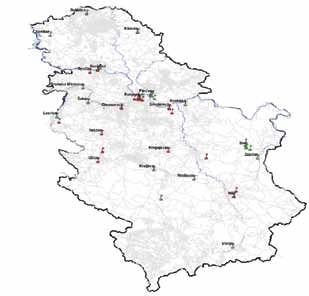
• The simulation of progressive reductions in current PM2.5 concentrations in different scenarios
         (by 5, 10 and 20 µg/m3) indicates that the number of premature deaths due to air pollution
         would decrease from 3585 to 2737, 1862 and 301, respectively.
       • Similarly, progressive reductions in current PM2.5 concentrations (by 5, 10 and 20 µg/m3)
         would decrease the YLL due to air pollution over 10 years from 150 865 to 114 539, 77 515
         and 12 508, respectively.
       The overall health impact of air pollution for the whole of the urban areas in Serbia (not just the
       11 cities studied in detail) was estimated at 6 394 attributable deaths.

       This assessment provides evidence that significant numbers of premature deaths and YLL due
       to air pollution could be prevented, as well as estimates of the health gains to be made if policies
       and measures are put in place to reduce air pollution. The case is strong enough to justify
       calling for urgent action.

       One group of possible interventions would directly reduce air pollution and exposure:

       1. decreasing the use of solid fuels for household heating and cooking;
       2. reducing emissions from industrial sites;
       3. changing to more sustainable mobility;
       4. improving planning to increase the energy efficiency of buildings and make cities greener
          and more compact;
       5. increasing the use of low-emission fuels and renewable combustion-free power sources;
       6. implementing strategies for waste reduction, separation, recycling and reuse; and
       7. improving communication and awareness of risks.

       These actions should ideally be part of an integrated environmental monitoring framework.
       Policies for reducing air pollution should be used as an opportunity to take a cross-sectoral
       approach to air quality management, with shared targets and coordinated interventions across
       the relevant sectors, such as energy, transport, waste management and agriculture.

       Another group of possible actions includes building public health professionals’ capacity
       to introduce contemporary methods for health impact assessment and environmental risk
       monitoring and to fill gaps in knowledge and epidemiological and air pollution data. Appropriate
       actions would include: increasing national technical capacity, implementing national strategies
       for monitoring and mapping environmental risks and their relation to specific health outcomes,
       and conducting environmental epidemiological surveillance.

       Further means of addressing the major public health challenge of air pollution in Serbia include
       strengthening intersectoral and multistakeholder cooperation. The Declaration of the Sixth
       Ministerial Conference on Environment and Health (2), held in Ostrava, Czechia in 2017, often
       called the Ostrava Declaration, provides a framework for designing a national portfolio of actions
       whose objective is to “[i]mprove outdoor and indoor air quality as one of the most important
       environmental risk factors in the Region through actions towards meeting the WHO air quality
       guideline values in a continuous process of improvement”. Sustained work to improve the health
       of the citizens of Serbia by improving air quality will also contribute to achieving the relevant
       targets in the 2030 Agenda for Sustainable Development (3).

viii
Health impact of ambient air pollution in Serbia // Background
1. Background
1.1 Air pollution as a public health issue, globally and in Europe
Exposure to air pollution, especially airborne PM, is associated with increased mortality and
morbidity, particularly from cardiovascular and respiratory diseases. According to the latest
published data, ambient (outdoor) air pollution is one of the main environmental health problems.
In 2016, exposure to PM2.5 caused an estimated 4.2 million premature deaths globally, including
some 0.5 million in the WHO European Region (1).
Air pollution is an important risk factor for noncommunicable diseases (NCDs). The United
Nations high-level meeting on NCDs, held in September 2018, recognized air pollution as one
the five major risk factors, alongside tobacco smoking, the harmful use of alcohol, physical
inactivity and unhealthy diets (4).
1.1.1 WHO policy framework for air quality
The WHO policy framework for air quality comprises several important components.
• Adopted by the Sixty-eighth World Health Assembly in 2015, resolution WHA68.8 on health and
the environment: addressing the health impact of air pollution (5) recognizes clean outdoor
and indoor air as a basic right and the urgent need for the health sector’s involvement in the
response to the effects of air pollution on health. It urges Member States to take action to
raise awareness among the public and stakeholders of the health risks posed by air pollution,
facilitate research, collect data on air quality and conduct surveillance of diseases related to
air pollution.
• The road map for an enhanced global response to the adverse health effects of air pollution in
2016–2019, adopted at the Sixty-ninth World Health Assembly, provides a global framework
for the actions of Member States, WHO and other stakeholders, in which the health sector is
to take a leading role in raising awareness of both the impacts of air pollution on health and
opportunities for public health (6). It sets out the path towards an enhanced global response
in four areas: expanding the knowledge base, monitoring and reporting, global leadership
and coordination, and strengthening of institutional capacity.
• The targets of the Sustainable Development Goals related to air pollution include target 3.9
(by 2030. substantially reduce the number of deaths and illnesses from hazardous chemicals
and air, water and soil pollution and contamination), target 7.1 (by 2030, ensure universal
access to affordable, reliable, modern energy services) and target 11.6 (reduce the adverse
per capita environmental impact of cities, including by paying special attention to air quality
and municipal and other waste management) (3).
• Health 2020, the European policy framework, supports action for health and well-being
across government and society, including the development of national and subnational health
policy, and strategic and technical leadership in governance for health and health equity,
particularly on the social determinants of health, gender, human rights and vulnerabilities (7).
• The Ostrava Declaration (2) recognizes air quality as one of the priorities for action and
encourages Member States in the WHO European Region to improve ambient and indoor air
quality to meet the WHO air quality guidelines and other commitments and processes.
11.2 Air quality in Serbia
Air pollution contributes significantly to the overall burden of disease and premature death in
Serbia, which has higher estimates of premature death due to air pollution than most countries
in the European Union. Assessments of air quality based on data from monitoring stations
managed by national authorities indicate that the concentrations of air pollutants, especially PM,
regularly exceed the levels that protect human health. The latest WHO estimate of the annual
mean PM2.5 concentration in the country is 19.4 μg/m3, with a slightly higher mean in urban than
in rural areas: 21.0 μg/m3 and 19.4 μg/m3, respectively (8). These figures are much higher than
the average annual mean PM2.5 concentration calculated by WHO for the European Region as
a whole (14.0 μg/m3).
The main sources of outdoor air pollution in Serbia include the energy sector (thermal power
plants, district heating plants and individual household heating), the transport sector (an old
vehicle fleet), waste dump sites and industrial activities (oil refineries, the chemical industry,
mining and metal processing and the construction industry). The specific documented sources
of air pollution include: the petrochemical industry complex in Pančevo and Novi Sad; cement
factories in Popovac, Kosjerić and Beočin; chemical plants and metallurgical complexes in
Smederevo, Sevojno and Bor; thermal power plants in Obrenovac, Lazarevac and Kostolac;
fossil fuel-based individual household heating in periurban and rural towns; and increasing road
traffic, especially in large cities such as Belgrade, Novi Sad and Niš.
1.3 Impacts of air quality on health in Serbia
Several international assessments – made by, for example, WHO, the European Environment
Agency and the Institute for Health Metrics and Evaluation – estimate the health impact of
air pollution in Serbia (9–12). These assessments and analyses use internationally available
datasets but base their calculations on different assumptions. Thus, the estimates for Serbia
vary somewhat, and an analysis of the impacts of air quality on health based on national and
subnational data is a better guide for policy in countries, including in municipalities.
Using data from 2012, WHO estimated the health burden of ambient air pollution in Serbia to
be 5 435 premature deaths, 126 637 YLL and 129 313 disability-adjusted life-years (DALYs),
although these figures were considered to underestimate the impact of air pollution, “as [they
do] not include the separate impacts of health from other air pollutants … and [exclude] health
impacts where evidence is still limited (e.g. pre-term birth or low birth weight)” (8). More recent
global estimates of the health burden of ambient air pollution were 6 592 premature deaths,
131 183 YLL and 137 609 DALYs. Those for specific causes of death are shown in Table 1. The
Institute for Health Metrics and Evaluation ranked household and ambient air pollution as the
seventh and eighth leading risk factors, respectively, for most of the disease burden in Serbia
(12).
The burden of disease also has an economic impact. A 2015 study by the WHO Regional Office
for Europe and the Organisation for Economic Co-operation and Development (13) estimated
that the cost of premature deaths due to air pollution represented over 33% of Serbia’s gross
domestic product. Lost working days due to short-term exposure to PM2.5 in Serbia and
Montenegro (almost 2.5 million days) were equivalent to a loss of € 324 million per year (14).
2Health impact of ambient air pollution in Serbia // Background
1.4 Rationale for a new analysis of air quality and health in Serbia
Against this background, the analysis presented here aimed to use national and subnational
data to assess air quality in Serbia and to provide evidence of the impact of air pollution on
mortality. The analysis used the publicly available WHO software AirQ+ to quantify the health
impacts of exposure to air pollution (15).
The data were obtained from the country’s air quality monitoring stations, which measure PM10,
PM2.5, sulfur dioxide (SO2), NO2 and O3. Data were collected for the period 2010–2015 from the
national network of stations for automatic air quality monitoring operated by SEPA and from the
state and local network of the City of Belgrade, managed by the Institute of Public Health of
Belgrade. The analysis covered ambient air pollution in the main Serbian cities with air pollution
monitoring stations, covering about 30% of the total Serbian population. This summary report
focuses on pollution by PM and on its long-term effects on health. The full technical report
includes other air pollutants.
Table 1. Serbia: estimates of premature death, YLL and DALYs attributable to ambient air
pollution in 2016
Cause of Numbers of deaths YLL DALYs
death
Total F M CI Total F M CI Total F M CI
All 6 592 2 979 3 613 5 473– 131 183 50 696 80 487 112 190– 137 609 53 754 83 855 117 303–
7 864 151 661 158 824
Acute lower 289 128 161 177– 5 763 2 287 3 477 3 541– 5 840 2 321 3 520 3 588–
respiratory 411 8 212 8 322
infections
(ALRI)
Chronic 813 314 499 437– 14 640 5 347 9 293 7 868– 16 799 6 197 10 603 9 029–
obstructive 1274 22 932 26 314
pulmonary
disease
(COPD)
Lung cancer 802 216 586 449– 21 260 5 764 15 496 11 896– 21 444 5 819 15 625 11 999–
1213 32 123 32 401
Ischaemic 3 111 1 469 1 641 2 325– 61 387 23 632 37 755 49 277– 62 044 23 922 38 122 49 814–
heart disease 3 879 72 206 72 993
(IHD)
Stroke 1 577 852 725 1 047– 28 132 13 665 14 467 21 204– 31 481 15 495 15 986 23 807–
2 400 37 326 41 751
Notes. F = females; M = males; CI = 95% confidence interval.
Source: Ambient (AAP) air pollution attributable burden of disease, 2016 (May 2018) (1).
32. Existing knowledge base
This section presents the results of studies by Serbian institutions and experts, which were used
as the basis for the assessment described in section 3. Individual studies are not cited; Annex
1 lists the publications consulted, as well as Serbian legislation.
2.1 Investigations of air pollution and its effects on health in Serbia
The rich literature on air pollution and, to a lesser extent, on effects on health in Serbia comprises
a large knowledge base, reflects strong interest in the research community and confirms the
country’s extensive scientific and expert capacity (see Annex 1). Studies address topics
ranging from legislative aspects to monitoring, including with bioindicators. Several studies were
conducted to characterize air pollutants and their effects on urban populations, and these were
used to better frame the overall estimates of the effects of air pollution derived by application
of AirQ+. The results for Belgrade and cities with industrial facilities, such as Bor and Niš, are
summarized here.
In Belgrade, the research provides evidence of an anthropogenic impact of air pollution, with
significant deposition of heavy metals, mainly from intensive vehicular traffic and fossil fuel
combustion; road dust is another source of PM in the city. Seasonality and exacerbation of
air pollution due to winter heating have been reported. Other studies provide evidence of the
production of secondary aerosols and movement of air masses, which affect local pollution,
such as the contribution of the power plant in Obrenovac, with air masses from the south-west.
The effects of transboundary air pollution from eastern and western Europe were also estimated.
Epidemiological studies of the association between air pollution and health indicate a risk related
to exposure to carcinogens such as chromium and arsenic, especially in areas with coal mining
and coal combustion. Another study described the impact of long-term exposure to PM10, NO2,
SO2 and soot on mortality rates.
High levels of SO2 and metals or metalloids, such as arsenic, lead and cadmium, were found
in Bor, where copper is mined and smelted, in 2004–2015. Pollution was also found in soil and
lake water. One study found a statistically significant association between the number of days
on which the statutory PM2.5 level in ambient air was exceeded and the number of cases of
moderate exacerbation of respiratory symptoms in subgroups of adults (with asthma or COPD)
registered in a secondary care hospital.
Several studies addressed the correlation between exposure to air pollution in Niš and anaemia,
allergy and skin symptoms, as well as effects on the respiratory system.
Overall, studies on air quality are more numerous than those on the association between air
pollution and health; this was one of the reasons for performing the study described here.
Nevertheless, there is a recognized need for further research to estimate the size of the
population affected by air pollution and the health impacts of different sources of pollution, such
as industry, traffic and heating.
2.2 National network of stations for automatic air quality monitoring
Since 2006, SEPA has been responsible for the establishment and operational functioning of
a national system for automatic air quality monitoring. SEPA is mandated by law to use the
national network to monitor and to publish an annual report on air quality in Serbia (articles 13
and 67, respectively, of the Law on Air Protection). The first automatic monitoring stations were
set up in Smederevo and Bor. The European Commission supplied monitoring equipment within
4Health impact of ambient air pollution in Serbia // Existing knowledge base
the programme for Community Assistance for Reconstruction, Development and Stabilisation.
After completion of the programme in 2011, the European Union introduced the Instrument
for Pre-accession Assistance in 2012, which supported the establishment of an integrated
environmental monitoring system for air and water quality and included the supply of information
and communication technology, and equipment and software for air quality monitoring. The
aim was to support the collection, updating and processing of data from automatic air quality
monitoring by the national network, for reporting at the national and European Union levels.
The national network comprises 47 stations, 33 in the national SEPA network and 14 in local
networks. The monitoring stations collect measurements of PM, NO2, SO2, O3 and other
pollutants such as carbon monoxide, and the results are publicly available in real time. Fig. 1
shows the locations of the stations in the national network according to the pollutants measured.
Serbia participates in the European Monitoring and Evaluation Programme under the United
Nations Economic Commission for Europe (UNECE) Convention on Long-range Transboundary
Air Pollution and regularly reports the results. The country also reports annually on air quality
monitoring to the European Environment Agency.
Fig. 1. Coverage of the national network of automatic monitoring stations
PM10 monitoring stations SO2 monitoring stations
National network of automatic monitoring stations
for air quality monitoring
NO2 monitoring stations O3 monitoring stations
5Data from air quality monitoring can only be used to assess health effects if the monitoring is
regular and continuous. Table 2 shows the continuity and discontinuity of monitoring by monitoring
stations. As air pollution depends on the characteristics of a region or city, the investigators
prepared a descriptive form for each city with its main features, such as topography, climate,
traffic dynamics, urban structure, industry and heating system. The term the city of Belgrade
means the metropolitan area of the city, while the term Belgrade refers to the municipal area
only. The city of Belgrade comprises six municipalities (Novi Beograd, Savski Venac, Stari
Grad, Rakovica, Vračar and Zvezdara) and parts of the territories of another four municipalities
(Voždovac, Zemun, Palilula and Čukarica). The metropolitan area of Belgrade is divided into
17 municipalities, 10 urban (Čukarica, Novi Beograd, Palilula, Rakovica, Savski Venac, Stari
Grad, Surčin, Voždovac, Vračar, Zemun and Zvezdara) and seven suburban (Barajevo, Grocka,
Lazarevac, Mladenovac, Obrenovac and Sopot).
Table 2. Continuity and discontinuity of PM10 monitoring at SEPA monitoring stations,
2010–2015
Measurement site Continuity (Yes) and discontinuity (No)
2010 2011 2012 2013 2014 2015
Beočin, centre No No No Yes Yes No
Belgrade
Novi Beograd Yes Yes Yes Yes Yes No
Stari Grad Yes Yes Yes Yes No No
“Mostar“ Yes Yes Yes Yes Yes No
Zeleno Brdo No Yes Yes Yes No Yes
Vračar No No Yes Yes Yes Yes
Kosjerić No Yes Yes Yes Yes No
Kragujevac No No No No Yes Yes
Niš
Kamenički Vis–EMEP No No Yes Yes Yes Yes
IZJZ Niš Yes Yes Yes Yes Yes No
Novi Sad
SPENS No No No Yes Yes Yes
Dnevnik Yes Yes Yes No No No
Obrenovac, centre No Yes Yes Yes No No
Popovac, Holcim No No Yes Yes No No
Smederevo
Centre No No No Yes No No
Radinac Yes Yes No No No No
Ralja No Yes Yes No No No
Užice No No No Yes Yes Yes
Valjevo No No Yes Yes Yes Yes
Zajača No No Yes Yes Yes Yes
Fig. 2 shows the locations of the 11 cities assessed for PM10 concentrations, and Fig. 3, the
administrative structure of the city of Belgrade. Belgrade has an extended network of 24 air
quality monitoring stations, run by different agencies.
6Health impact of ambient air pollution in Serbia // Existing knowledge base
Fig. 2. Cities in which PM10 concentrations were analysed
Fig. 3. City of Belgrade
Old Belgrade
New Belgrade
Suburban
Note. The terms New Belgrade and Old Belgrade were devised to distinguish the older and newer parts of the whole of
urban Belgrade, which have different climate zones, wind rates and types of buildings. The areas covered are different
from the municipalities of Novi Beograd and Stari Grad.
72.3 Data from the automatic monitoring stations
Operating monitoring stations produce daily data on the concentrations of pollutants. Table 3,
Fig. 4 and Table 4 show examples of the information derived from the data: levels of PM10 during
2010–2015, the period for which the latest national data on mortality by age were available.
The impacts of long-term exposure to fine PM on mortality rates were estimated for PM2.5 from
values for PM10 according to a ratio of PM2.5:PM10, obtained from data recorded at monitoring
stations that measure both. In 2015, this ratio was 0.81 in Belgrade, 0.79 in Lazarevac and 0.85
in Obrenovac.
Table 3 indicates that, in several years, the average concentrations of PM10 were higher than
the WHO interim target 2 (50 µg/m3) set in the air quality guidelines for human health protection
(17). For PM10, WHO interim target 1 is 70 µg/m3; interim target 2 is 50 µg/m3; interim target 3 is
30 µg/m3, and the air quality guideline is 20 µg/m3. For example, values ≥ 50 µg/m3 were found
in Smederevo in all years in which monitoring was conducted (2010–2013). Fig. 4 and Table 4
shows the numbers of days on which the level of 50 µg/m3 was exceeded.
Table 3. Annual levels of PM10 and average levels of PM10 and PM2.5 for 2010–2015 in 11
cities and towns in Serbia, by city, 2010–2015
City/Town PM10 (µg/m3) PM2.5 (µg/m3)
2010 2011 2012 2013 2014 2015 Average, Average,
2010–2015 2010–2015
Belgrade 39.0 54.2 46.4 41.2 40.7 47.6 44.9 29.19
Obrenovac 37.5 68.1 56.4 41.2 41.0 50.6 49.1 31.92
Lazarevac 52.2 69.8 46.6 48.8 94.9* 45.4 52.6 34.19
Novi Sad 35.8 44.5 35.4 32.6 21.3 40.7 35.1 22.82
Beočin NA NA NA 38.1 30.2 NA 34.2 22.23
Smederevo 60.7 77.0 50.2 54.2 NA NA 60.5 39.33
Kragujevac NA NA NA NA 42.2 51.8 47.0 30.55
Užice NA NA NA 61.5 67.2 76.1 68.3 44.39
Kosjerić NA 63.2 52.6 40.2 35.3 NA 47.8 31.07
Niš 50.9 67.0 37.9 30.8 38.3 NA 45.0 29.25
Valjevo NA NA 62.8 63.1 76.0 72.5 68.6 44.59
Note. NA means that measurements were made on fewer than 180 days in a year.
8Health impact of ambient air pollution in Serbia // Existing knowledge base
Fig. 4. Numbers of days per year with PM10 concentrations over 50 μg/m3 in Serbian cities,
2010–2015
250
200
150
100
50
0
Belgrade
Obrenovac
Lazarevac
Novi Sad
Beočin
Smederevo
Užice
Kosjerić
Niš
Valjevo
Kragujevac
2010 2011 2012 2013 2014 2015
Table 4. Numbers of days per year with PM10 concentrations over 50 μg/m3 in Serbian
cities, 2010–2015
City/Town Days
2010 2011 2012 2013 2014 2015
Belgrade 72 140 106 80 81 101
Obrenovac 77 180 170 95 66 130
Lazarevac 120 107 76 88 89
Novi Sad 61 102 66 47 21 82
Beočin – – – 80 45 –
Smederevo 161 240 102 119 – –
Užice – – – 110 146 146
Kosjerić – 159 142 83 80 –
Niš 121 – 52 52 73 –
Valjevo – – 153 118 162 174
Kragujevac – – – – 90 120
9The information given above is also available for other pollutants. To illustrate, Table 5 presents
the annual average concentrations of NO2 at Serbian monitoring stations.
Table 5. Annual average concentrations of NO2 (µg/m3) and average for 2010–2015, by city
City/Town 2010 2011 2012 2013 2014 2015 Average,
2010–2015
Belgrade 33.2 40.8 43.0 31.5 29.2 34.3 35.3
Obrenovac NA 16.4 25.8 NA NA 22.5 21.6
Novi Sad 69.3 61.7 19.0 18.8 NA NA 42.2
Beočin NA NA NA 24.4 19.1 NA 21.8
Smederevo 16.4 18.8 16.8 13.8 26.6 15.3 18.0
Kragujevac 29.1 53.7 21.5 26.9 NA 29.8 32.2
Užice 44.9 NA 50.6 48.7 32.2 38.4 43.0
Kosjerić NA 16.4 18.8 12.9 NA NA 16.0
Niš 36.4 23.2 33.3 25.9 21.8 26.0 27.8
Valjevo 30.9 18.9 28.3 34.2 21.7 20.7 25.8
10Health impact of ambient air pollution in Serbia // Estimates of the health impact of PM pollution
3. Estimates of the health impact of PM
pollution
This section gives the methods and results of the assessment of the effects of PM on health.
The most recent data (from 2015) on health and mortality attributable to different causes were
retrieved from the Statistical Office of the Republic of Serbia (18). The causes of death considered
were: lung cancer, COPD, IHD, stroke, respiratory diseases, cardiovascular diseases and acute
lower respiratory tract disease (for children aged 0–4 years).
The analysis also used the most recent data (2015) for the population. Serbia had a population
of 7 095 383, comprising 3 640 048 females and 3 455 335 males; Belgrade had 1 364 453
inhabitants. Population ageing is significant, with 17.4% of the population aged ≥ 65 years in
2011, which has implications for the overall burden of disease related to exposure to external
factors, including air pollution.
Further, the assessment used data on populations at risk, which were calculated for the age
groups aged ≥ 30 years and ≥ 25 years, depending on the health outcome assessed and the
availability of relative risks. The at-risk population of adults aged ≥ 30 years was estimated to be
4 842 068, equivalent to 68.24% of the total Serbian population. The population of adults aged
≥ 25 years was estimated to be 5 295 163, equivalent to 74.63% of the Serbian population.
3.1 Methods
The AirQ+ software, developed by the WHO Regional Office for Europe and available online for
downloading, allows estimation of ambient and household air pollution (15). The investigators
assessed only ambient air pollution and the long-term effects of exposure to PM, the most
significant component of air pollution, as it is strongly correlated with other air pollutants and a
variety of adverse health outcomes. PM2.5 is considered to be a greater threat to health than PM10,
as smaller particles are more likely to be deposited deep in the lung and throughout the body.
The long-term effects of PM2.5 therefore provide a good picture of the health consequences of
air pollution.
The method is based on the recent WHO recommendations for concentration–response
functions developed in the Health Risks of Air Pollution in Europe project (18). The calculations
of cause-specific effects on mortality are based on the burden-of-disease method calculation
for 2012 and include relative risks for five diseases: acute lower respiratory tract disease in
children, and COPD, lung cancer, IHD and stroke in adults. They are also based on average
concentrations. The average annual concentration of ambient particles is usually recognized as
a primary exposure measure.
Two options to reduce the health impact were considered:
• comparison of actual PM2.5 levels with a hypothetical scenario of compliance with the WHO
air quality guidelines (17), which would require a reduction of PM2.5 levels to 10 μg/m3; and
• progressive decreases in existing PM2.5 concentrations by 5, 10 and 20 μg/m3 over time.
113.2 Results
3.2.1 Results for 11 Serbian cities
Table 6 summarizes the estimated premature mortality attributable to levels of PM2.5 exceeding
the WHO air quality guideline of 10 μg/m3. In total, 3 585 premature deaths in the 11 cities
were attributable to exposure to such levels of PM2.5. The estimated proportion of all deaths
attributable to PM2.5 ranged from 7.1% in Beočin to 18.8% in Valjevo.
Table 6. Total long-term mortality due to PM2.5 (cut-off = 10 μg/m3) in 11 Serbian cities
City Mean Total Population aged Estimated attributable Estimated attributable
concentration population ≥ 30 years deaths proportion
(µg/m3) No. CI % % (95% CI)
Beočin 22.2 15 304 10 183 14 9–18 7.1 4.68–9.29
Belgrade 29.2 1 364 453 937 461 1 796 1 194–2 337 10.9 7.25–14.19
Old Belgrade 29.4 932 813 640 819 1 259 838–1639 11.0 7.34–14.37
New Belgrade 28.7 431 640 296 642 539 358–702 10.7 7.08–13.87
Kosjerić 31.1 11 341 8 234 25 17–33 11.9 7.93–15.46
Kragujevac 30.5 178 610 122 020 250 166–324 11.6 7.74–15.11
Lazarevac 34.2 57 735 37 999 104 69–135 13.5 9.05–17.54
Niš 29.2 257 883 176 513 354 236–461 10.9 7.27–14.23
Novi Sad 22.8 350 930 231 604 280 185–367 7.4 4.90–9.72
Obrenovac 31.9 72 323 48 594 117 78–152 12.3 8.24–16.04
Smederevo 39.3 105 774 70 221 223 150–287 16.2 10.87–20.85
Užice 44.4 75 805 52 856 180 121–231 18.7 12.62–23.98
Valjevo 44.6 87 944 61 802 242 164–311 18.8 12.69–24.1
All 2 578 102 2 694 948 3 585
Note. PM2.5 values were converted from PM10 values with a coefficient of 0.65.
12Health impact of ambient air pollution in Serbia // Estimates of the health impact of PM pollution
Table 7 presents the rates of mortality attributable to PM2.5 in terms of total deaths and YLL among
adults aged ≥ 30 years. To inform policy-making, three different scenarios indicate the health
benefits that could be gained through policy actions to achieve different cut-off concentrations
of PM2.5. For example, Table 7 shows that reducing the concentration of PM2.5 could substantially
decrease the number of deaths attributable to it in the 11 Serbian cities analysed. Thus, the three
scenarios (reductions by 5, 10 and 20 µg/m3) would reduce the numbers of deaths from 3585 to
2737, 1862 and 301, respectively. In Belgrade, a reduction by 20 µg/m3 would drastically reduce
mortality due to air pollution, theoretically to zero deaths. The number of YLL due to PM2.5 air
pollution calculated over 10 years would be 150 865 in the 11 Serbian cities analysed, including
75 261 in Belgrade. The three scenarios would decrease the number of YLL to 114 539, 77 515
and 12 508, respectively.
Table 7. Mortality attributable to PM2.5 in 11 Serbian cities: mean concentrations,
estimated numbers of attributable deaths and YLL over 10 years from all (natural) causes,
adults aged ≥ 30 years
City Current situation Reduction by 5 µg/m3 Reduction by 10 µg/m3 Reduction by 20 µg/m3
Mean Estimated YLL Mean Estimated YLL Mean Estimated YLL Mean Estimated YLL
(µg/m3) deaths (µg/m3) deaths (µg/m3) deaths (µg/m3) deaths
(cut-off =
10 µg/m3)
Beočin 22.2 14 623 17.2 8 372 12.2 3 116 2.2 0 0
Belgrade 29.2 1 796 75 261 24.2 1 348 56 183 19.2 886 36 740 9.2 0 0
Kosjerić 31.1 25 928 26.1 20 713 21.1 14 495 11.1 1 49
Kragujevac 30.5 250 10 701 25.5 192 8 175 20.5 132 5 599 10.5 7 297
Lazarevac 34.2 104 4 237 29.2 84 3 392 24.2 63 2 531 14.2 19 761
Niš 29.2 354 14 865 24.2 266 11 106 19.2 175 7 275 9.2 0 0
Novi Sad 22.8 280 11 849 17.8 174 7 296 12.8 64 2 656 2.8 0 0
Obrenovac 31.9 117 4 975 26.9 92 3 876 21.9 66 2 757 11.9 11 452
Smederevo 39.3 223 9 593 34.3 187 8 036 29.3 151 6 447 19.3 75 3 173
Užice 44.4 180 7 757 39.4 156 6 692 34.4 131 5 606 24.4 80 3 370
Valjevo 44.6 242 10 076 39.6 210 8 698 34.6 177 7 294 24.6 108 4 406
Total 32.7 3 585 150 865 27.7 2 737 114 539 22.7 1 862 77 515 12.7 301 12 508
Note. Concentrations are rounded to one decimal point; PM2.5 values were converted from PM10 with a coefficient of 0.65.
13Air pollution has by far the highest impact in absolute terms in Belgrade. When estimates per
100 000 of the population at risk are presented, as in Fig. 5, the mortality rates for the 11 cities
and three scenarios appear to be comparable; the existing concentration of PM2.5 (dark-red line)
appears to be associated with the highest relative health impacts of air pollution in Valjevo and
Užice. Fig. 5 shows that interventions for pollution abatement would reduce premature mortality
in all 11 cities.
Fig. 5. Mortality attributable to PM2.5 in 11 Serbian cities: estimated numbers of premature
deaths per 100 000
Belgrade
400
Valjevo 350 Beočin
300
250
200
Užice Kosjerić
150
100
50
0
Smederevo Kragujevac
Obrenovac Lazarevac
Novi Sad Niš
Existing scenario Scenario with 10 μg/m3
reduction
Scenario with 5 μg/m3 Scenario with 20 μg/m3
reduction reduction
14Health impact of ambient air pollution in Serbia // Estimates of the health impact of PM pollution
3.2.2 Results for Serbia as a whole
Data from urban, rural and traffic monitoring stations in Serbia were used to estimate the burden
of disease at the national level on the basis of an average PM2.5 concentration of 19.4 µg/m3 for
urban and rural areas in 2016, based on exposure in 2010–2015. Urban exposure was higher
than the national average, which produces a high burden for cities when considered in isolation.
Exposure to high PM2.5 concentrations accounted for 8033 YLL (Fig. 6): slightly more for women
(4040) than men (3991). The total number of YLL calculated over 10 years was 221 626 (Fig. 7):
fewer for women (108 986) than men (112 076).
Fig. 6. YLL attributable to PM2.5 in 2016 for adults aged ≥ 30 years, in urban and rural areas
and per 100 000 population in urban Serbia
14 000
12 000
10 000
8000
YLL
6000
4000
2000
0
Total Male adults Female adults Total Male adults Female adults
Serbia Urban Serbia
Note. The vertical lines show the 95% CIs.
Fig. 7. YLL attributable to PM2.5 over 10 years among adults aged ≥ 30 years, in urban and
rural areas and per 100 000 population in urban Serbia
400 000
350 000
300 000
250 000
200 000
YLL
150 000
100 000
50 000
0
Total Male adults Female adults Total Male adults Female adults
Serbia Urban Serbia
Note. The vertical lines show the 95% CIs.
15Table 8, Fig. 8 and Table 9 summarize the health effects of air pollution when considering the
whole of the urban areas in Serbia, not just the 11 cities studied. The YLL can be interpreted as
years of life gained by the population if there is a significant reduction in air pollution (Fig. 8 and
Table 9).
Table 8. Estimated annual mortality attributable to PM2.5 in urban areas in Serbia, adults
aged ≥ 30 years
Attributable deaths Estimate Range
Proportion of the total (%) 6.4 4.2–8.4
Number 6 394 4 217–8 386
Number per 100 000 population at risk 132 87–173
Note. The proportions are rounded to one decimal point, and the numbers of attributable deaths are rounded.
Fig. 8. YLL due to PM2.5 under three scenarios: annual decreases in the mean concentration
by 5 μg/m3, 10 μg/m3 and 20 μg/m3
60 000
50 000
40 000
30 000
20 000
10 000
0
Belgrade
Obrenovac
Lazarevac
Novi Sad
Beočin
Smederevo
Užice
Kosjerić
Niš
Valjevo
Kragujevac
Reduction of 5 μg/m3 Reduction of 10 μg/m3 Reduction of 20 μg/m3
16Health impact of ambient air pollution in Serbia // Estimates of the health impact of PM pollution
Table 9. YLL due to PM2.5 under three scenarios: annual decreases in the mean
concentration by 5 μg/m3, 10 μg/m3 and 20 μg/m3
City YLL with annual reductions of:
5 µg/m 3
10 µg/m3 20 µg/m3
Belgrade 56 183 36 740 0
Obrenovac 3 876 2 757 452
Lazarevac 3 392 2 531 761
Novi Sad 7 296 2 656 0
Beočin 372 116 0
Smederevo 8 036 6 447 3 173
Valjevo 8 698 7 294 4 406
Kragujevac 8 175 5 599 297
Užice 6 692 5 606 3 370
Kosjerić 713 495 49
Niš 11 106 7275 0
3.3 Data limitations and gaps
The results of this analysis should be considered approximate and be used with care. One of
the main reasons is that studies of mortality and air pollution show no evidence of a threshold
for concentrations of air pollutants, below which adverse effects on health would not occur.
Assessments only of PM are therefore commonly considered to provide conservative or
underestimates. Further, estimates of mortality among adults aged ≥ 30 years do not include
deaths occurring in the group aged 25–30, which are less likely but do occur.
Other important aspects to be considered for improving knowledge and monitoring of air quality
and its impacts relate to the local collection, quantity and quality of data. After the end of the
European Commission’s support for the establishment and operation of the national network of
automatic monitoring stations, these were no longer regularly maintained, affecting both data
quantity and quality. PM10 is measured at a limited number of automatic monitoring stations, and
only three SEPA stations in the national network measured PM2.5 in 2016: two in Belgrade and
one in Novi Sad. Such measurements would ideally be made throughout the country.
The continuity of measurement is another important issue; without data continuity, health impact
assessments are likely to be biased. For example, a very high PM value was recorded in 2014
in Lazarevac, following prolonged discontinuity in the operation of the monitoring station (see
Table 2). This value was considered unreliable and thus excluded from the calculations.
The Serbian Institute of Public Health provides national data on morbidity, but some data that
are required to assess the health impact of air quality are not sufficiently comprehensive,
and the quality of existing morbidity data could be improved by increasing both human and
technical resources. One way to upgrade capacity would be to establish new disease registers,
with links to various environmental risks. A framework for such a programme could be found
in the indicators for achievement of the Sustainable Development Goals (3) and the provisions
of the Ostrava Declaration (2). The alignment of national indicators with those for achieving the
Sustainable Development Goals is recommended.
174. Conclusions and possible action
The analysis presented in this report provides evidence that a significant number of premature
deaths and YLL due to air pollution could be prevented if the levels of the main pollutants
were reduced to comply with the values given in the WHO air quality guidelines (17). As such
reductions cannot be made immediately, the report presents several scenarios that provide a
solid basis for urgent action. Although the cost of air pollution to human health is externalized,
and is transferred from the polluting sectors to the health sector and health insurance, the
overall negative economic effect is seen in lower productivity due to disease and the costs of
sick leave, medical treatment, and years of life lived with disability. Improvements in air quality
and the prevention of adverse effects on health would therefore have economic benefits for the
whole of society.
A number of policies in various sectors could reduce air pollution. Examples include:
• in industry, introducing clean technologies to reduce smokestack emissions and improving
waste management, including capturing methane gas emitted from waste sites;
• in energy, ensuring access to affordable clean energy for cooking, heating and lighting in
households;
• in transport, changing to clean modes of power generation; prioritizing public transport in
urban areas, walking and cycling networks and interurban rail travel; and changing to cleaner
heavy-duty diesel vehicles and low-emission vehicles and fuels;
• in urban planning, improving the energy efficiency of buildings; making cities greener, more
compact and thus energy efficient; and carefully planning institutions such as schools, play
schools and hospitals;
• in power generation, increasing the use of low-emission fuels and renewable combustion-
free power sources, such as solar, wind and hydropower; co-generating heat and power;
and increasing distributed energy generation (through, for example, minigrids and rooftop
solar power generation); and
• in municipal and agricultural waste management, introducing strategies for waste reduction,
separation, recycling and reuse or reprocessing; improving methods of biological waste
management; and, in case of incineration, using the best available technologies, with strict
emission controls.
These actions should ideally be part of an integrated environmental monitoring framework.
Policies and actions to reduce air pollution should represent an opportunity for a cross-sectoral
approach to air quality management, with shared targets and coordinated interventions in
sectors such as transport, energy, waste and agriculture. Involving stakeholders and raising
awareness and strengthening capacity in the health and other sectors are also important. A
broad perspective should be taken of agendas for air quality and climate change policy, to
identify synergies and maximize the health benefits.
Further, a range of interventions is available to improve knowledge production and management,
from capacity building to strategic planning. They include:
• institutional capacity building and training of human resources in contemporary methods of
health impact assessment and environmental risk monitoring, especially in the network of
institutes of public health;
18You can also read


