Emission Regulation Trends - AVL Emission TechDay 2018, Mattsee, Österreich Engeljehringer, Kurt
←
→
Page content transcription
If your browser does not render page correctly, please read the page content below
AVL List GmbH (Headquarters)

Emission Regulation Trends
AVL Emission TechDay 2018, Mattsee, Österreich

                                                 Engeljehringer, Kurt

 Public
Notes

  Author(s):                Engeljehringer, Kurt    Copyright:
                                                           Der Inhalt dieses Dokuments darf ohne vorherige schriftliche Zustimmung von
  Co-Author(s):                                            AVL weder ganz noch teilweise in irgendeiner Form reproduziert oder an dritte
  Approved by:                                             Personen weitergegeben werden. Die Erstellung dieser Dokumentation wurde mit
                                                           der nötigen Sorgfalt durchgeführt, sodass für verbleibende Fehler oder
  Project Leader:                                          Auslassungen sowie für dadurch eventuell entstehende Schäden von AVL keine
  Version:                  1.0                            Haftung übernommen wird.
                                                           Alle Rechte vorbehalten.
  Release date:             05.03.2018
  Security level:           Public
  Customer:
                                                    Copyright Notice:
  Project:
                                                           The contents of this document may not be reproduced in any form or
  Task ID:                                                 communicated to any third party without prior written agreement of AVL.
                                                           While every effort is made to ensure its correctness, AVL assumes no
  Department:               Emission Test Systems
                                                           responsibility for errors or omissions, which may occur in this document.

Copyright © 2018, AVL List GmbH (Headquarters)

Public                                                                                       Engeljehringer, Kurt | Emission Test Systems | 05 März 2018 | 2
Emission Legislation

                        Introduction

                        Tail pipe emission legislations:
                             •   Light Duty

         Content             •
                             •
                                 Heavy Duty
                                 Non-Road

                        Evaporative Emissions

                        CO2 emission reduction

                        Future Mobility

Public                                              Engeljehringer, Kurt | Emission Test Systems | 05 März 2018 | 4
Emission Legislation
                        Euro-5 and Euro 6 Legislation
                        REGULATION (EC) No 715/2007 OF THE EUROPEAN PARLIAMENT AND OF THE COUNCIL

                        Article 4 - Manufacturers’ obligations
                               ... the technical measures taken by the manufacturer must be such as
                               to ensure that the tailpipe and evaporative emissions are
                               effectively limited, pursuant to this Regulation, throughout the
                               normal life of the vehicles under normal conditions of use.

                        Article 5 – Requirements and tests
                               The use of defeat devices ... shall be prohibited. The prohibition shall
                               not apply where:
                                     • the need is justified for protecting the engine against
                                         damage
                                     • the device does not function beyond engine starting, or
                                     • the conditions are included in the test procedures ...

                        Article 13 – Penalties
                               Member States shall lay down the provisions on penalties applicable
                               for infringement by manufacturers of the provisions of this Regulation
                               and shall take all measures necessary to ensure
                               that they are implemented. The penalties provided for must be
                               effective, proportionate and dissuasive.

Public                                                         Engeljehringer, Kurt | Emission Test Systems | 05 März 2018 | 5
Emission Legislation
                        Before: 1 vehicle was tested in a 20min NEDC test

                        + 10 min since WLTC Test, (one test less per shift)
                        + 1 more vehicle, CO2low and CO2high
         more work      + 30min Ambient Temperature Correction Test 14°C
                        + 90min RDE cold test
                        + 90min RDE warm test
                        ------------------------------------------------------------
                        ----
                        = app. 15 times more work load of testing

Public                                             Engeljehringer, Kurt | Emission Test Systems | 05 März 2018 | 6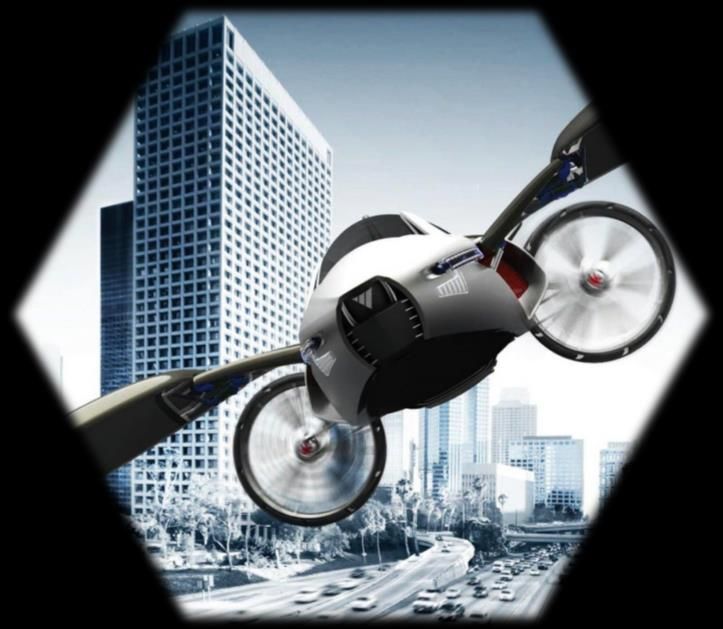
Emission Legislation

                         9/2017     Euro 6d-TEMP
                                                                   9/2019
                        New type                                   Last date of
                        approvals                                  registration

         Back Log

Public                                 Engeljehringer, Kurt | Emission Test Systems | 05 März 2018 | 7
Local driving restrictions
                                   UBA: NO2 Reduction scenarios
                                   Landshuter Allee in Munich

                                                                                                           EU NO2 Immissions Limit (2008/50/EG)

                                                        EU-6 without RDE
                                                        EU-6 d temp with Real Driving Emission (RDE)
                                                        Electrification of public transportation
                                                        Strong share of e-mobility
                                                        Environmental zones for trucks
                                                        Next level environmental zones
                                                        Ban of Diesel

                        Source: UBA Lars Mönch, Martin Lange; Fortschreibung der RDE Gesetzgebung und damit verbundene Herausforderungen, FAD RDE-Workshop, Dresden 2016

Public                                                                                       Engeljehringer, Kurt | Emission Test Systems | 05 März 2018 | 8
Emission Legislation
                             CO2 scenarios for global transportation - tank to wheel (ttw) emissions.
                        10

                         9

                         8

                         7

                         6

                         5

                         4

                         3

                                                                                                                   CO2 Target
                         2

                         1                                                     5         20        40        60
                                                                               %         %         %         %
                         0
                             1960 1970   1980   1990   2000   2010   2020    2030       2040     2050       2060        % share of
                                                                                                                        E-vehicles

Public                                                               Engeljehringer, Kurt | Emission Test Systems | 05 März 2018 | 9
Emission Legislation

         §
                        Introduction

                        Tail pipe emission legislations:
                             •   Light Duty
                             •   Heavy Duty
                             •   Non-Road

                        Evaporative Emissions

                        CO2 emission reduction

                        Future Mobility

Public                                              Engeljehringer, Kurt | Emission Test Systems | 05 März 2018 | 10
UNECE/EU Light Duty Evolution & Revolution
                                                                                                      1380 pages

                                                                                                                                 RDE 4 and
                                                                                                                                 WLTP 2
                               800 pages                                                                                         420 pages

                                           RDE
                                           180 pages                                                                            RDE 3
                                                                                                                                47 pages

                                           GTR-15 (WLTP)     643 pages                                                           GTR-15
                                           350 pages                                                                             RDE 1+2

                                                                          RDE
                 180 pages
                                                                          European-WLTP
                                                                                                                                UNR 83.07
                                           ECE R83.07                     UNR-83
     20 pages                                                                                                                   270 pages
                                           270 pages

   1970 Euro-0   2005 Euro-4   2017: UNR-83 + GTR-15 + RDE   2017: EU-6d-temp                         2018+
Public                                                                   Engeljehringer, Kurt | Emission Test Systems | 05 März 2018 | 11
Fastest ever legislation implementation
Country Topic 2015 2016 2017 2018 2019 2020 2021 2022 2023 2024 2025 Very fast changes
Limits Euro 6b Euro 6d temp Euro 6d ? ? Euro 7 Last-Minute amendments
CO2 130 g/km CO2 95 g/km CO2 -15%
Tech. Reg UN-ECE Reg. 83 EU 2017/1151 (WLTP) For a new Euro-7 legislation
EVAP Euro 6d-temp-EVAP the whole formal and political
decision process must be
RDE Monitor NOx 2.1, PN 1.5 RDE CF NOx < 1.5, CF PN 1.5
passed
ISC New procedure incl. RDE, EVAP, -7°C
Euro-6a,b,c,d,e,f,g,h,i,j, ...
March 2018 RDE Package 4 can be done quickly and
• In Service Conformity, Member State Surveillance without politics.
3Q 2017 revised evaporative emission testing
• Canister aging, test procedures, sealed tank systems for hybrids, ...
Jan. 2017 Guidance on AES and Defeat Devices
• Documentation of AES, engine protection, impact assessment, defeat device testing, ...
Dec. 2016 RDE Package 3
• PN Limit, Cold start, Hybrids
Feb. 2016 RDE Package 2
• NOx Limit, Test Boundary Conditions
2015 RDE Package 1
• Decision on PEMS, Monitoring from 2016
Public Engeljehringer, Kurt | Emission Test Systems | 05 März 2018 | 12Emission legislation – passenger cars
Country Topic 2012 2013 2014 2015 2016 2017 2018 2019 2020 2021 2022 2023 2024 2025 Notes
01/2019: Euro 6d-TEMP-ISC,
Limits Euro 5b Euro 6b Euro 6d-TEMP Euro 6d ? ? Euro 7
09/2019 Euro 6d-TEMP-EVAP
Eu-6d-TEMP:
RDE Monitor RDE NOx + PN RDE CF* NOx 1.43, CF PN 1.5
RDE CF NOx 2.1, PN 1.5
95 g/km CO2 (NEDC based) -15% 2021: WLTP based target,
CO2 /FC 130 g/km CO2
2025: 2021 average -15%
Tech. Reg. UNR 83 (NEDC) EU 2017/1151 (WLTP)
EPA US-EPA – Tier 2 US-EPA – Tier 3 Fuel neutral limits
CARB US-CARB – LEV II US-CARB – LEV III, phase in of 1 mg/mi PM standard 2025-2028 Fuel neutral limits
PEMS used for detection of
RDE defeat devices
GHG (2012-2016) 263 -> 225 g CO2/mi GHG (2017-2025) 212 -> 143 g CO2/mi GHG limits in addition to
CO2 /FC CAFE, under review
Tech. Reg. 40 CFR PART 86 40 CFR PART 1066
National China 4 China 5 China 6a Ch 6b: Eu6 - 50% China 6: Fuel neutral limits
Beijing Beijing 5 China 6b ?
RDE Monitor RDE CF NOx and PN 2.1 Altitude 0-700-1300-2400m
CO2 /FC Fuel Consumption Stage 2 6.9 l/100km (161 g CO2/km) Stage 4: 5 l/100km (117 g CO2/km) , NEDC Stage 5 Stage 5: 4l/100km in 2025
Tech. Reg. GB 18352.3-2005 (NEDC) GB18352.5-2013 (NEDC) GB 18352.6-2016 (WLTP)
*Measurement uncertainty of PEMS equipment to be evaluated annually. CF = 1.0 + measurement uncertainty.
Implementation dates for new types if applicable Status 05.03.2018
Public Engeljehringer, Kurt | Emission Test Systems | 05 März 2018 | 13Emission legislation – passenger cars
Country Topic 2012 2013 2014 2015 2016 2017 2018 2019 2020 2021 2022 2023 2024 2025 Notes
Limits Post New Long Term Post Post New Long Term
RDE RDE CF NOx 2 Diesel only
CO2 /FC Fuel Economy Targets Fuel Economy Targets 2015 Fuel Economy Targets 2020
Tech. Reg. TRIAS (JC08) TRIAS (WLTP)
Limits K-LEV II, 2014: Euro 6 (Diesel) K-LEV III (gasoline), Euro 6 (Diesel)
RDE RDE CF NOx 2.1 RDE CF NOx 1.5 Diesel only
CO2 /FC 17 km/l or 140 g CO2 /km 24.3 km/l or 97 g CO2 /km
Tech. Reg. 40 CFR PART 86 (Gasoline) +UNR 83 (Diesel) 40 CFR PART 1066 (Gasoline) and WLTP (Diesel)
National Bharat III Bharat IV Bharat VI
Cities Bharat IV Bharat VI
RDE Monitor RDE (CF tbd)
CO2 /FC 5.5 l/100km (130 g CO2/km) 4.7 l/100km (113 g CO2/km)
Tech. Reg. MoRTH / CMVR / TAP-115/116 (Indian Driving Cycle vmax = 90 km/h), AIS137 in future (?) WLTP
Limits Euro 2 ... 4 … 6 ?
ASEAN
Tech. Reg. UNR 83 in future (?) WLTP
Implementation dates for new types if applicable Status 08.02.2018
Public Engeljehringer, Kurt | Emission Test Systems | 05 März 2018 | 14CO2 Testing requirements (EU)
CO2 tested for a “CO2 Low” and “CO2 High” vehicle configuration
CO2 emission has to be tested for a vehicle expected to have the lowest CO2 and for a
vehicle expected to have the highest CO2-Emission, per vehicle family.
Individual vehicle CO2 emissions can be interpolated.
CO2 targets (130g/km, 95g/km) are still based on NEDC and UNR-83 testing
For pollutant emissions WLTC with WLTP have to tested and for CO2 OEM may chose to:
• run separately NEDC for CO2 emissions, or
• to predict NEDC result from the WLTC test data, by using the CO2mpas tool from JRC,
to reduce testing burden.
14°C ATCT Ambient Temperature Correction Test at 14°C (for EU)
WLTC at 14°C with for 14°C corrected road load dyno parameters
Soak area: 14°C Trep ± 3°C (1Hz data as 5min running average)
Soak Time: Preconditioning max 10min to Soak area for min 9h ATAC
Test cell: 14°C Trep ± 3°C at test start and ±5°C during test (1Hz)
Intake air humidity: 3.0 ≤ H ≤ 8.1 g H2O/kg dry air
Family Correction Factor: FCF = CO2 Type-I@14°C / CO2 Type-I@23°C
Individual vehicle CO2: CO2_ind = CO2_ind@23°C × FCF
Public Engeljehringer, Kurt | Emission Test Systems | 05 März 2018 | 15Emission Legislation
RDE
Public Engeljehringer, Kurt | Emission Test Systems | 05 März 2018 | 17Technical Regulations: RDE
Application Real Driving Emissions (2016/427 1st package, 2016/646 2nd package, 3rd package)
Light duty vehicle on Real Driving Emission testing:
• Portable Emission Measurement System (PEMS) to measure CO2, CO, NOx,
PN, Exhaust flow, Speed and GPS data.
• Implementation: EU 2016, Korea 2018, China 2019, India 2020, Japan 2021
Standard
Limits:
• CF NOx: 2.1 1.5 CF PN: 1.5 1.x (in discussion)
• 2 calculation options, EMROAD (JRC) or CLEAR (TU-Graz)
RDE Test requirements:
• 30min conditioning drive, 5-56h soak time, cold test and hot start test
• RDE Drive between 90 to 120min in normal traffic.
AVL M.O.V.E • 34% Urban (90km/h)
• max. Speed 145km/h (can be extended to 160km/h on test track)
China Extrem
• positive altitude gain < 1200m/100km
• OVC Hybrid test in Charge–Sustaining mode
Extrem • Periodical Regeneration w/o Regeneration use ki-factors
Moderate
Ambient conditions:
• 0°C to 30°C (extended range -7°C to 35°C)
• up to 700m (extended range 1300m) (China 2400m)
Public Engeljehringer, Kurt | Emission Test Systems | 05 März 2018 | 18Light-Duty Emission LAB 2.0
Soak Area Emission Chassis Dyno Real Driving Emissions
E
E
E
Soak Area: Chassis Dyno: Since 50 years a vehicle was temperature
Old Emission Lab Temperature Conditioning Emission Test conditioned and afterwards an emission test
cycle was done. (1966 CARB Test procedure)
RDE extends emission testing to real driving
ICE Vehicles + RDE Temperature RDE conditions on the road.
Temperature
Electrification extends emission testing into
Plug-In Hybrids Charging energy RDE the Soak area, which becomes part of the
measurement
Temperature E E-Vehicles must also run a regular emission
Battery E-Vehicles Charging energy test cycle (Energy consumption and driving
range measurement)
Fuel FC Fuel-Cell Vehicles must also run a regular
Fuel Cell E-Vehicles Cell emission test cycle for H2 consumption
evaluation
Public Engeljehringer, Kurt | Emission Test Systems | 05 März 2018 | 19Emission Legislation: EU versus US
CVS + AMA + PSS + APC Automation PEMS Chassis Dyno Street Ambient Conditions Driver Traffic
1D
1NDPNP
.S.M.A.D
.S.M.A.D
no
Temperatur
Curves e Smooth low
Humidity
Average WLTC medium
R ETN UO C EL C I TR A P L V A
R ETN UO C EL C I TR A P L V A
Normal,
heavy
myself
Aggressive
Slope Wind
Drafting
Altitude Ambient
06i SV C LVA TEN IBA C GAB 06i LVA TEN IBA C GAB 06i LVA 06i SSP LVA 06i AMA LVA
(Pressure) pressure
06i SV C LVA TEN IBA C GAB 06i LVA TEN IBA C GAB 06i LVA 06i SSP LVA 06i AMA LVA
Lab. Certification + OBD + COP + ISC + I/M since 2017 Euro-6d: Real Driving Emissions (Not to exceed limits)
BES/AES + + + kg + +
kg
Documentation
20-30°C WLTC -7°C WLTC Altitude Dynamic Temperature Weight Road Real Driving Emissions
only Gasoline
Lab. Certification + OBD + COP + ISC + I/M PEMS
RDE used to
„Look into
chase “Defeat
ECU“
20-30°C FTP-75 -7°C FTP-75 Dynamic US06 35°C SC03 1600m FTP-75 Devices”
only Gasoline
Public Engeljehringer, Kurt | Emission Test Systems | 05 März 2018 | 20GTR 15 amendments und RDE4/WLTP2
Amendment 3 (enforced): (355 pages)
• 01_UN_ECE_gtr_15_WLTP_amendment_3_2018-02-01
Amendment 4 (proposal): (358 pages)
• 04_UN_ECE_gtr_15_proposal_for_amendment_4_2017-10
Draft RDE4/WLTP2: (421 pages)
• 001_draft_Commission_Regulation_RDE4_WLTP2_2018-03-03
• In-Service conformity procedure with new emissions standard Euro 6d-TEMP-ISC, performed by granting type approval
authority, OEM or 3rd parties with accredited laboratories
• 01.01.2019 for new types and 01.09.2019 for new vehicles
• WLTP tests
• RDE tests
• EVAP tests
• -7°C tests
• details on AES documentation and assessment
• RDE package 4
• new uncertainty margin for NOx CF of 0.43 (CF NOx=1.43)
• Removal of CLEAR tool and modified EMROAD used for verification of trip validity
• New emissions calculation method (new Appendix 6)
• Removal of Appendix 7c (evaluation for plug-in hybrids), including plug-in hybrids into emissions calculation method
• a number of clarifications and smaller modifications
• WLTP based evaporative emissions test procedure
• amendments to OBD requirements (Annex XI)
• requirements for vehicles that use a reagent for EAS
• implementation of amendments 3 and 4 to UN GTR 15 into EU WLTP
• Introduction of devices for on-board fuel consumption monitoring
Public Engeljehringer, Kurt | Emission Test Systems | 05 März 2018 | 21Guidance on AES and Defeat Devices
EC 715/2007 Evaluation of Auxiliary Emission Strategies and Defeat Devices)
Extended documentation package (since May 2016)
26.1.2017 • Manufacturer declaration that the vehicle does not contain any defeat device
• Extended BES/AES description
• Software versions and checksums
Evaluation and acceptance of AES
• AES for engine protection is limited to “catastrophic” engine damages and if better technologies are
available it shall be used
• Check of parameters used to modulate emission control systems
• Check for EGR modifications (only under certain conditions)
• Check if intentional shifting of particle size below 23 nm, so it is not measured
• Check dual injection systems for gasoline vehicles that were not type approved as GDI
Defeat device recognition for member states surveillance testing (JRC proposal)
• Vehicle selection based on market share.
• “It is worth noting that ... also includes other types of emissions tests such as Evaporative emissions”
Screening the environmental performance
Remote Sensing Vehicle Chasing SEMS • Remote fleet monitoring with “Simplified Emissions Measurement Systems” (SEMS)
• Remote Sensing Devices (RSD) at fixed locations or as chasing test
Testing for Defeat Devices (with the need to keep a non-predictable character)
• Lab-Test with limited modified test CF 1.0
• Lab-Test or Road-Test with conditions different than the legislative cycle CF 1.1
• Road-test with uncontrolled parameters (e.g. RDE compliant testing) CF 1.5
• “Surprise testing” to detect a defeat device (e.g. including Evaporative emissions) CF 2 ... 5
Chassis Dyno RDE EVAP Emission if any test fails, vehicle is classified as „Suspicious“ vehicle
Public Engeljehringer, Kurt | Emission Test Systems | 05 März 2018 | 22Council of the European Union
reform type-approval and market surveillance system
Council agrees to reform type-approval and market surveillance system (May 2017)
• Public health, air quality and innovation are at the core of this agreement.
• The only way to restore and increase trust in the European automobile industry is to help to develop
clean and safety technologies.
• Reliable control tests for cars will be established so that emission irregularities that happened in the
past cannot reappear in the future.
Important changes will be introduced:
• Quality of testing that allows a car to be placed on the market through improved technical services
• Market surveillance to control the conformity of cars already available on the market, with the
possibility for member states and the Commission to carry out spot-checks on vehicles.
• Oversight of type-approval process:
• Technical services will be regularly and independently audited
• National type-approval authorities will be subject to Commission audits
Market surveillance
• Mandatory market surveillance of a least 1 out of every 50,000 new registered cars per country and
year.
• €30 000 (up to) fines by EU Commission on manufacturers per non-compliant vehicle.
• The checks will include verification of emissions under real driving conditions.
Public Engeljehringer, Kurt | Emission Test Systems | 05 März 2018 | 23From WLTP to local Legislation
the plan was: WLTP UN GTR-15 UNR-WLTP Legislation (EU, Jp, ...)
Informal Working Group UN Agreement 1998 UN Agreement 1958 local legislation framework
currently: UNR-83 for Type-II (CO Idle), Type-III (Crankcase), Type-IV (EVAP) Type-V (Durability), Type-VI (-7°C), OBD
WLTP (Phase 1) WLTP (Phase 1a, 1b) WLTP (Phase 2a, 2b – mit Task-Forces)
GTR-15 Version 1 GTR-15 Version 2, ...
GTR-EVAP
RDE
EU 6d-temp EU 6d-EVAP
By that, some requirements might be different in WLTP, GTR and EU
legislation. (e.g. gear shift points)
future: WLTP UN GTR-15
UNR-WLTP Legislation
UN GTR-EVAP UNR-WLTP
Level 1 or 2
missing test types References to UNR-83 and RDE , over time replaced by WLTP
Public Engeljehringer, Kurt | Emission Test Systems | 05 März 2018 | 24Emission Legislation
Introduction
Tail pipe emission legislations:
• Light Duty
• Heavy Duty
• Non-Road
Evaporative Emissions
CO2 emission reduction
Future Mobility
Public Engeljehringer, Kurt | Emission Test Systems | 05 März 2018 | 25Emission Measurement
EU-4: 2016 based on UN-ECE-Regulation 40/47 and GTR-2
Introduction of PM limits for CI and GDI engines, only
EU-5: 2020 based on UN-ECE GTR-2
open discussion (Effect study) in-use conformity
PN measurement
off-cycle emissions
USA: EPA Motorcycle Standard [g/km]
no change since 2010
USA: CARB Motorcycle Standard [g/km]
no change since 2008
Asia (India): still Leading the MC emission regulations
Public Engeljehringer, Kurt | Emission Test Systems | 05 März 2018 | 26Eu-4 and EU-5 Standards
EU-4: 2016 based on UN-ECE-Regulation 40/47 and GTR-2
Introduction of
Introduction of PM
PM limits
limits for
for CI
CI and
and GDI
GDI engines,
engines, only
only
EU-5: 2020 based on UN-ECE GTR-2
open discussion until 2017 (Effect study) in-use conformity, off-cycle emissions and PN
Public Source: Delphi worldwide emissions standards PC-LDV Engeljehringer, Kurt | Emission Test Systems | 05 März 2018 | 27USA Standards
USA: EPA Motorcycle Standard [g/km]
USA: CARB Motorcycle Standard [g/km]
Public Source: Delphi worldwide emissions standards PC-LDV Engeljehringer, Kurt | Emission Test Systems | 05 März 2018 | 28other Countries Public Source: Delphi worldwide emissions standards PC-LDV Engeljehringer, Kurt | Emission Test Systems | 05 März 2018 | 29
Emission Legislation

         §
                        Introduction

                        Tail pipe emission legislations:
                             •   Light Duty
                             •   Heavy Duty
                             •   Non-Road

                        Evaporative Emissions

                        CO2 emission reduction

                        Future Mobility

Public                                              Engeljehringer, Kurt | Emission Test Systems | 05 März 2018 | 30
Emission Trends
Heavy Duty and Non-Road
Public Engeljehringer, Kurt | Emission Test Systems | 05 März 2018 | 31Emission Legislation – Heavy Duty Engines
Country Topic 2012 2013 2014 2015 2016 2017 2018 2019 2020 2021 2022 2023 2024 2025 Notes
Limits Euro-V Euro-VI ? Euro-VII
RDE NOx Screening Off-Cycle Emissions: WNTE Random 15 mode test + In-Service compliance (PEMS) PN-PEMS planned
CO2 CO2 Monitoring & Declaration ? CO2 Limits ?
Tech. Reg. UN-ECE R-49
EPA US-EPA – US10
CARB CARB optional low NOx Mandatory low NOx?
RDE Not to Exceed (NTE) testing with PEMS
CO2 GHG & Fuel Economy – US Phase I GHG Phase II
Tech. Reg. CFR-1065
National China IV China V China VI
Beijing China IV China V ? China VI
RDE Beijing NOx ISC with PEMS
CO2 Fuel consumption Stage 2 Fuel Consumption Stage 3 WHVC on a chassis dyno
Tech. Reg. UN-ECE Reg. 49 GB17691-201x
Public Engeljehringer, Kurt | Emission Test Systems | 05 März 2018 | 32Emission Legislation – Heavy Duty Engines
Country Topic 2012 2013 2014 2015 2016 2017 2018 2019 2020 2021 2022 2023 2024 2025 Notes
Limits PNLT Post PNLT
CO2 Fuel Efficiency 2015 2025
Limits Euro V Euro VI ? Euro VII
CO2 Fuel Consumption ?
Bharat VI with GTR-4 and
Limits Bharat III Bharat IV Bharat VI PEMS
CO2 1st Phase 2nd Phase
Limits ? Euro IV, V or prior ? Euro VI
Public Engeljehringer, Kurt | Emission Test Systems | 05 März 2018 | 33Emission Legislation – Heavy Duty Engines
Application: Country: Main Topics:
Euro VI since 2013:
• Particle Number (PN) limit established in addition to the Particulate Mass (PM) limit for Diesel engines.
• GTR-4 (Global Test Procedure) from UN-ECE.
• WHSC (World Harmonized Stationary Cycle) - Hot test
• WHTC (World Harmonized Transient Cycle) - 2 Tests one cold and one hot
AVL M.O.V.E • “Real Driving Emissions” limits by:
GAS & PM PEMS
• Random 15 mode stationary “Off Cycle Emissions” (OCE) test
• app. 1700m and temperature up to 38°C (depending on altitude)
• “In-Service” on-road tests in vehicle with PEMS (Portable Emission Measurement Systems)
• CO2, CO, NOx, THC, PM (PN in discussion for EU)
• Mix of urban (0-50 km/h), rural (50-75 km/h) and motorway (> 75 km/h) conditions
• Temperature and Altitude as defines for off cycle emission requirements
• Limits are based on the laboratory limits multiplied by 1.5 (CF)
• Result calculation by “Work based window”
Public Engeljehringer, Kurt | Emission Test Systems | 05 März 2018 | 34Emission Legislation – Heavy Duty Engines
Application: Country: Main Topics:
USA (EPA and CARB):
• All testing has to be done based on the technical regulation CFR-1065, since 2010.
• CFR-1065 is quite different to the old regulations CFR-86. CFR-1065 requires changes in all the
complete measurement chain (analyzers, dilution systems, calculations, diagnostic checks,
calibration, …), …) and cross interferences
USA (CARB):
• CARB is proposing an “optional” lower NOx Limit for California. The currently valid 2010 NOX
emission standard for heavy-duty engines of 0.20 g/bhp-hr, should be further reduced by a factor of
10.
CFR-1065:
• All measurement methods (Raw measurement, Partial flow dilution and Full flow dilution) are
accepted for gaseous emissions and Partial flow dilution and Full flow dilution (CVS) is accepted for
PM.
• A lot of new and challenging requirements, like for Analyzer, calibration and check procedures:
• Continuous measuring analyzers must not have an analog gain switch.
• Very challenging CLD Quench check specifications.
• Accuracy, drift and linearity checks based on the emission standard and not anymore on
analyzer range specifications.
• All calculation formulas are new and all are based on Mol
Public Engeljehringer, Kurt | Emission Test Systems | 05 März 2018 | 35HEAVY-DUTY HYBRID, CO2 AND FC TESTING
Hybrid Heavy Duty test procedure – from engine to powertrain
• For hybrid powertrains the total powertrain, energy storage and powertrain control units must
considered.
• In order to avoid testing on a chassis dynamometer, a HILS (Hardware-in-the-loop simulation)
was developed in Japan. In the WHVC cycle, the influence of the hybrid components on the
engine operation is tested. 2 Variants exists:
1. By HILS an engine test cycle is generated and tested on an engine testbed.
2. The whole hybrid powertrain is tested on a powertrain testbed
CO2 and Fuel consumption labeling – from engine to vehicle
• Contrary to exhaust emissions, fuel consumption and CO2 emissions are not part of the GRPE mandate.
Therefore, regional regulations are under development.
• EU: develops a vehicle based procedure, based on transport work and a simulation tool
VECTO (TU-Graz) with 5 different test cycles representative for different vehicle categories.
Implementation planed for 2018 for Trucks and 2019 Buses
• USA: Green House Gas ruIe developed by EPA and NHTSA. There are separate limits values for
engine and vehicle. CO2 and FC are calculated with a simulation tool GEM.
• Japan: since 2015 fuel economy limits are based on a simulation approach. FC is calculated from
engine testbed data and vehicle class generic vehicle parameters, which are base on JE05
and a motorway cycle.
• China: regulates on base of a modified WHVC to be run on a chassis dyno.
Public Engeljehringer, Kurt | Emission Test Systems | 05 März 2018 | 36Emission Legislation
Introduction
Tail pipe emission legislations:
• Light Duty
• Heavy Duty
• Non-Road
Evaporative Emissions
CO2 emission reduction
Future Mobility
Public Engeljehringer, Kurt | Emission Test Systems | 05 März 2018 | 37Emission Legislation – Non-Road Engines
Country Topic 2012 2013 2014 2015 2016 2017 2018 2019 2020 2021 2022 2023 2024 2025 Notes
Limits III-B Stage - IV Stage - V
RDE NTE Off-Cycle + in-service monitoring (PEMS)
CO2 CO2 Monitoring & Declaration
Tech. Reg. ISO GTR-11 (NRSC + NRTC test cycles)
Limits Tier-4
RDE PEMS in Discussion (NRIUT) Currently no progress
CO2 GHG Regulation and CO2 Monitoring & Declaration
Tech. Reg. CFR-1065
2020 + DPF/PN, PEMS with CF
Limits China II China III China IV NOx
Discussions on post Stage IV
Limits Stage - III Stage - IV Stage V
regulation
Limits Tier - 3 Tier - 4
Limits CEV/TREM III BS IV Stage V Stage V + ISC with PEMS, CF tbd
Limits ? Stage IIIA / Tier-3 or prior ? Stage-IV / Tier - 4
Public Engeljehringer, Kurt | Emission Test Systems | 05 März 2018 | 38EU Stage V
Application: REGULATION (EU) 2016/1628 (replacing Directive 97/68/EC, amended by 2012/46/EC)
• All power categories are regulated for the first time.
• Dual-Fuel (Gas) requirements defined
• Engine Categories:
• NRE CI and SI with constant and variable speed, all power ratings
• NRG Mobile generating sets with reference power > 560 kW (< 560 kW NRE)
• NRSh Handheld SI engines < 19 kW
• NRS Non-Handheld SI engines < 19 kW
Country: • IWP propulsion inland waterway vessels engines >= 19 kW
• IWA auxiliary inland waterway vessels engines >= 19 kW
• RLR Engines for railcar propulsion
• RLL Engines for locomotive propulsion
• SMB Snow mobile SI engines (non SI NRE)
• ATS SI engines for All Tertain and side-by-side vehicles (non SI NRE)
• For agricultural tractors the Delegated Regulation (EU) 2015/96 amending Regulation (EU) 167/2013 applies. (EU) 2015/96 needs
to be adjusted to account for the provisions of EU Stage V Regulation
• Compliance with the limits must be demonstrated over the useful lifetime of the engine (as of IIIA), from
Stage V, variable speed and constant speed engines are treated equally.
• CO2 to be measured and reported, indication for CO2 limitation in future
Public Engeljehringer, Kurt | Emission Test Systems | 05 März 2018 | 39EU Stage V
NTE (Not to Exceed) on test beds
• For electronically controlled engines of categories NRE, NRG, IWP, IWA, and RLR.
• When an engine is tested … emissions sampled at any randomly selected point within NTE area …
shall not exceed the applicable emission limit values … by a factor of 2.0.
• The technical service shall select random load and speed points within the control area for testing
(NRSC C1 cycles up to three points; NRSC D2, E2 and G2 one point).
In service monitoring (ISM)
• PEMS (Portable Emission Measurement System)
• Gaseous emissions only (CO, HC, NOx, CO2), PM/PN is not in the scope
• Monitoring and reporting, but no limits.
AVL M.O.V.E GAS
NOx control diagnostics (NCD)
• NOx control and diagnostics (NCD)
• Low reagent level, Reagent quality monitoring, Reagent dosing activity, Failures that might be attributed to
tampering, impeded EGR valve, Removal or deactivation of any sensor that prevents the NCD from diagnosing
failures
• Particulate control diagnostics (PCD)
• Removal of the DPF or substrate, failures attributed to tampering, electrical failures, removal or deactivation of any
sensor or actuator.
• Operator warning / inducement system
Public Engeljehringer, Kurt | Emission Test Systems | 05 März 2018 | 40ISO 8178 - Parts
Part Title and Topic Notes
1 Test bed measurement systems for gaseous and particulate 3rd edition 2017: with up-dates and alignment with CFR-1065, Formulas
emissions were moved to Part-4 and transient testing implemented from Part-11
2 Measurement of gaseous and particulate exhaust emission at site only when Part-1 is not possible and agreed by involved parties.
2nd edition published in 2008. Will be up-dated with PEMS testing
3 Definitions and methods of measurement of exhaust gas smoke Edition 1994 with Opacity and FSN filter smoke number.
under steady-state conditions Revision started 2017: moving Opacity to Part-9, maybe adding BC
4 Test cycles for different engine applications 3rd edition 2017: Implementations of formulas from Part-1 and transient
test cycle from Part-11
5 Test fuels 3rd edition 2015, 2017 revision started
6 Report of measuring results and tests 2013 revision started, draft approved in 2017.
7 Engine family determination Engine variations with similar characteristics and design represented by
one engine of the “engine family”. 2nd edition 2015.
8 Engine group Determination “Engine group” are engines of the same type, but modified when put
into service. Still must comply with emission limits. 2nd edition 2015.
9 Text cycles and test procedures for test bed measurement of 2nd edition 2012, 2017 revision started: Implementation of opacity
exhaust gas smoke emissions from compression ignition engines measurement from Part-3 relevant parts from Part-10. (done by AVL)
operating under transient conditions
10 Test Cycles and test procedures for field measurement of exhaust 1st edition 2002, 2017 revision started: Smoke measurement moved to
gas smoke emissions from compression ignition engines operating Part-9.
under transient conditions
11 Test-bed measurement of gaseous and particulate exhaust “Withdrawn” (Edition from 2006). Content implemented in other parts,
emissions from engines used in non-road mobile machinery under like transient cycle and formulas in Part-4, measurement in Part-1
transient test conditions
Public Engeljehringer, Kurt | Emission Test Systems | 05 März 2018 | 41Emission Legislation
Introduction
Tail pipe emission legislations:
• Light Duty
• Heavy Duty
• Non-Road
Evaporative Emissions
CO2 emission reduction
Future Mobility
Public Engeljehringer, Kurt | Emission Test Systems | 05 März 2018 | 42EVAP: Evaporative Emission
EVAP measuring evaporative emissions (mainly from fuel) form the complete vehicle, but only gasoline vehicles
SHED
Canister Aging
Canister Conditioning
Fuel Cart
+ Point Source running a tailpipe emission cycle and measuring EVAP from selected points
+ Running Loss running an tailpipe emission cycle inside a SHED and measuring EVAP
+ Permeation test measuring the permeation of fuel system components
Public Engeljehringer, Kurt | Emission Test Systems | 05 März 2018 | 43EVAP outlook
Current: little changes in worldwide EVAP legislation, therefore installed base 10 to 15 years old
Mid Term (2019): WLTP/EVAP EU, Japan and China will up-date its legislation, with modified or new test procedures
EU Legislation Road map WLTP, GTR, EU and Japan
Long Term (2022): a new worldwide (except USA) Global Technical Regulation (GTR) will be established
Public Engeljehringer, Kurt | Emission Test Systems | 05 März 2018 | 44UNR: GTR-19
GTR-19 Main GTR-19 topics:
• Effective control of evaporative emissions in real life and improved
durability
• replacing UNR-83 (NEDC) with WLTP test procedures
• Fuel tank aging
• Carbon Canister fuel aging
• Sealed fuel tank systems (mainly for plug-in hybrids)
• not in the scope currently
• no running losses test (running losses SHED nor Point Source)
• no refueling emission tests
Public Engeljehringer, Kurt | Emission Test Systems | 05 März 2018 | 45Emission Legislation
Introduction
Tail pipe emission legislations:
• Light Duty
• Heavy Duty
• Non-Road
Evaporative Emissions
CO2 emission reduction
Future Mobility
Public Engeljehringer, Kurt | Emission Test Systems | 05 März 2018 | 46Emission Legislation
Introduction
Tail pipe emission legislations:
• Light Duty
• Heavy Duty
• Non-Road
Evaporative Emissions
CO2 emission reduction
Future Mobility
Public Engeljehringer, Kurt | Emission Test Systems | 05 März 2018 | 47Emission Legislation
CO2 scenarios for global transportation - tank to wheel (ttw) emissions.
10
9
8
7
6
5
4
3
CO2 Target
2
1 5 20 40 60
% % % %
0
1960 1970 1980 1990 2000 2010 2020 2030 2040 2050 2060 % share of
E-vehicles
Public Engeljehringer, Kurt | Emission Test Systems | 05 März 2018 | 48CO2 Emissions
Source: Life Cycle Environmental Impacts of EVs and the Significance of the Battery System
Felipe Cerdas, MSc., Prof. Dr-Ing. Ch. Herrmann, Technische Universität Braunschweig @ AVL Exhaust and Particulate
Forum, Ludwigsburg, 2018
Public Engeljehringer, Kurt | Emission Test Systems | 05 März 2018 | 49eMobility
Only 1 turn of the propeller of a 8 MW wind
propeller (200 m height) will drive the car:
Tesla Model S 100D
63 km Battery 100 kWh
Electr. Range 630 km (NEDC)
VW e-Golf
80 km Battery 36 kWh
Electr. Range 300 km (NEDC)
smartfortwo coupe
100 km Battery 18 kWh
Electr. Range 160 km (NEDC)
Source: Elektroautomobil - Das Magazin für Elektromobilität, 2018
Public Engeljehringer, Kurt | Emission Test Systems | 05 März 2018 | 50CO2 Emissions – one possible scenario
Electricity H2 PtG PtL
Power to Gas Power to Liquid
Renewable Energy
2030
9
Gt CO2/year - tank to wheel 8
7 Locomotive is already the most electrified transportation segment
6
5
4
Targe
t
3
2
5
Battery Fuel Cell
1 %
0 CO2 free CO2 neutral
Public Engeljehringer, Kurt | Emission Test Systems | 05 März 2018 | 51Emission Legislation
Introduction
Tail pipe emission legislations:
• Light Duty
• Heavy Duty
• Non-Road
Evaporative Emissions
CO2 emission reduction
Future Mobility
Public Engeljehringer, Kurt | Emission Test Systems | 05 März 2018 | 52The future comes in how many years?
Electric car 120
years
Autonomous 65
driving years
Flying car 150+
years
Public Engeljehringer, Kurt | Emission Test Systems | 05 März 2018 | 53Successfully predicting the future
7
years
23
years
20
years
15
years
Public Engeljehringer, Kurt | Emission Test Systems | 05 März 2018 | 54www.avl.com
Our Customer Emission
is our Mission
Public Engeljehringer, Kurt | Emission Test Systems | 05 März 2018 | 55CO2: electric vehicle life-cycle emission
Life-cycle impact of a vehicle:
• Life-cycle impact of a vehicle is the sum of the
emissions impacts from manufacturing,
energy cycle, and use.
• Overall, electric vehicles typically have much
lower life-cycle greenhouse gas emissions
than a typical car in Europe, even when
assuming relatively high battery
manufacturing emissions.
• An average electric vehicle in Europe produces
50% less life-cycle greenhouse gases over the
first 150,000 kilometers of driving, although
the relative benefit varies from 28% to 72%,
depending on local electricity production.
• An electric car’s higher manufacturing
emissions would be paid back in 2 years of
driving with European average grid electricity
compared to a typical vehicle. This emissions
recovery period is no more than 3 years even
in countries with relatively higher-carbon
electricity such as in Germany.
Source: Effects of battery manufacturing on electric vehicle life-cycle greenhouse gas emissions
ICCT, February 2018
Public Engeljehringer, Kurt | Emission Test Systems | 05 März 2018 | 56You can also read


