Ending Child Marriage - A profile of progress in India - UNICEF Data
←
→
Page content transcription
If your browser does not render page correctly, please read the page content below
Ending Child Marriage
A profile of progress in India
2 I Ending Child Marriage: A profile of progress in India
Child marriage in
the global
development agenda
Child marriage is a violation of human rights. Every    SDG: 5
child has the right to be protected from this harmful   Achieve
                                                        gender equality
practice, which has devastating consequences            and empower all
                                                        women and girls
for individuals and for society. Child marriage is
now firmly on the global development agenda,
                                                        TARGET 5.3                            INDICATOR 5.3.1
most prominently through its inclusion in Sustainable
                                                        Eliminate all harmful                 Proportion of women aged
Development Goal (SDG) target 5.3, which aims to        practices, such as child,             20 to 24 years who were
                                                        early and forced marriage             married or in a union before
eliminate the practice by 2030. Although indicator      and female genital mutilation         age 15 and before age 18

5.3.1 measures child marriage among girls, the
practice occurs among boys as well. Regardless
of gender, marriage before adulthood is a breach
of children’s rights.

                                                                                  Ending Child Marriage: A profile of progress in India I 3
Key facts
One in three of the world’s child brides live in India. Of the country’s 223
million child brides, 102 million were married before turning 15.
Over half of Indian child brides live in five states: Uttar Pradesh, Bihar,
5
West Bengal, Maharashtra and Madhya Pradesh. U
ttar Pradesh is home to
the largest population of child brides, with 36 million.
Approximately one in four young women in India were married or in union
before their 18th birthday.
The prevalence of child marriage varies across states and union territories
in India. Over 40 per cent of young women were married before turning 18 in
Bihar and West Bengal, compared to less than 5 per cent in Lakshadweep.
A girl’s risk of child marriage depends on certain background
characteristics. Girls who live in rural areas or come from poorer households are
at greater risk, and a higher proportion of child brides are found among those with
little or no education.
4 I Ending Child Marriage: A profile of progress in IndiaThe majority of young women who married in childhood gave birth
as adolescents. Child brides go on to have larger families compared to
women who marry later.
The practice of child marriage is less common today than in previous
here is evidence of accelerating progress over the last decade.
generations. T
India’s progress is strong compared to other countries in South Asia.
Nonetheless, if child marriage is to be eliminated by 2030, additional efforts
will be required.
Child marriage is less common among boys than girls, and the
practice among boys could be eliminated by 2030 if progress is
accelerated.
Ending Child Marriage: A profile of progress in India I 5Current state of child India is home to 223 million child brides
marriage among girls
World 650
million
South Asia 285
million
One in three of the
world’s child brides
live in India. Of the
country’s 223 million
child brides, 102
million were married
before turning 15
India
223
million
102 million 121 million
Girls and women were married Girls and women were married at or after = 10 million
before age 15 in India age 15 but before age 18 in India
FIG. 1 Number of girls and women who were first married or in union before age 18,
India, South Asia and the world
NOTE: Due to rounding, individual figures may not add up to total.
6 I Ending Child Marriage: A profile of progress in IndiaUttar Pradesh,
Other states and union territories, 16 million 36 million
Assam, 5 million
Chhattisgarh, 5 million
Odisha, 7 million
Over half of Indian Jharkhand, 7 million
child brides live in Telangana, 8 million
Bihar,
five states: Uttar 22 million
Pradesh, Bihar, West Gujarat, 10 million
Bengal, Maharashtra
and Madhya Pradesh. Karnataka, 10 million
Uttar Pradesh is West Bengal,
home to the largest Tamil Nadu, 11 million 22 million
population of child
brides, with 36 million Andhra Praesh, 13 million
Maharashtra,
Rajasthan, 15 million
20 million
Madhya Pradesh,
16 million
FIG. 2 Number of girls and women who were first married or in union before age 18, by state
NOTE: Geographical boundaries follow the National Family Health Survey, 2015-2016. State populations are estimated using data from the Census of India
2011 and the United Nations Department of Economic and Social Affairs, Population Division, 2017.
Ending Child Marriage: A profile of progress in India I 7India ranks fourth among the eight South Asian countries in terms
of child marriage prevalence
% 0 10 20 30 40 50 60
World South Asia
21 30
Maldives Sri Lanka Pakistan Bhutan Afghanistan Nepal Bangladesh
4 10 21 26 35 40 59
India
27
FIG. 3 Percentage of women aged 20 to 24 years who were first married or in union before age 18, countries in South Asia and regional and
world averages
8 I Ending Child Marriage: A profile of progress in IndiaLevels vary across India:
More than 40 per cent
Jammu and Kashmir
of young women were
9
married in childhood in
Himanchal Pradesh
Punjab 9 Bihar (43 per cent) and
8
Haryana
Uttarakhand
14
West Bengal (42 per
19
Delhi
15 Sikkim
Arunachal Pradesh cent) compared to 2 per
28
15 cent in Lakshadweep
Uttar Pradesh Assam Nagaland
Rajasthan
21 Bihar 33 14
36 43 Meghalaya
Manipur
18
14
Jharkhand
Gujarat Madhya Pradesh West Bengal Mizoram
38
26 42 11
33
Chhattisgarh
Tripura
21
Odisha 33
Daman and Diu
Maharashtra 22
25
26
Dadra and
Nagar Haveli Telangana
30 27
Goa
10 Andhra Pradesh
34 Andaman and Above 40%
Karnataka Nicobar Islands
24 18 31% - 40%
Lakshadweep
Puducherry
2 Tamil Nadu 21% - 30%
11
Kerala 16 11% - 20%
8
10% or less
NOTE: This map does not reflect a position by UNICEF
FIG. 4 Percentage of women aged 20 to 24 years who were first married or in union before on the legal status of any country or territory or the
age 18, by state or union territory delimitation of any frontiers.
Ending Child Marriage: A profile of progress in India I 9Girls most at risk of Child brides in India are more likely to live
in poor households, have less education
child marriage and reside in rural areas
100
90
80
70
60
51
50 47
46
40 37
32
29 29
30
20
20 18
10
10
4
0
No education Primary Secondary Higher Poorest Fourth Middle Second Richest Rural Urban
Education Wealth quintile Residence
Married before age 15 Married at or after age 15 but before age 18
FIG. 5 P
ercentage of women aged 20 to 24 years who were first married or in union before ages 15 and 18, by education, wealth
quintile and residence
10 I Ending Child Marriage: A profile of progress in IndiaEducation
The largest
No education Primary Secondary Higher
disparities in the
Wealth quintile
prevalence of
Richest
30 25 32 29 19 18 4 2 child marriage
are found across
women with
Second
38 34 38 38 27 23 4 3
different levels
of education
Middle
49 41 45 46 31 28 6 6
Fourth
52 47 50 45 34 32 8 2
Poorest
56 51 52 49 36 34 9 (5)
Rural Urban Rural Urban Rural Urban Rural Urban
Residence
FIG. 6 P
ercentage of women aged 20 to 24 years who were first married or in union before age 18,
by education, wealth quintile and residence
NOTE: The value in parentheses is based on 25-49 unweighted cases.
Ending Child Marriage: A profile of progress in India I 11Smaller disparities in child marriage prevalence are found across
women from different religious groups and castes/tribes
Religion Caste/Tribe
100 100
90 90
80 80
70 70
60 60
50 50 49
40 38 40
34
31
28 30
30 27 (27) 30 27
21 21
20 18 20
10 8 10
6
0 0
Other Hindu Muslim No Buddhist/ Christian Sikh Jain Don’t Scheduled No caste/ Scheduled Other Other caste/
religion Neo-Buddhist know tribe tribe caste backward tribe
class
Married before age 15 Married at or after age 15 but before age 18
FIG. 7 Percentage of women aged 20 to 24 years who were first married or in union before ages 15 and 18, by religion and caste/tribe
NOTE: Only categories with 25 or more unweighted cases are presented. The value in parentheses is based on 25-49 unweighted cases. “Scheduled castes” and “scheduled tribes” are officially designated
groups by the Indian Government, referring to the most disadvantaged socio-economic groups in India.
12 I Ending Child Marriage: A profile of progress in IndiaState-level overview
100
The states featured on
90 this page have the highest
80 prevalence of child marriage
70 in the country (Bihar, West
Bengal, Jharkhand, Rajasthan
60
and Andhra Pradesh), the
50
43 42 largest population of child
38 36
40
34 33
brides (Bihar, West Bengal,
30 26 Madhya Pradesh, Maharashtra
21 and Uttar Pradesh) or both
20
(Bihar, West Bengal).
10
0
Bihar West Bengal Jharkhand Rajasthan Andhra Pradesh Madhya Pradesh Maharashtra Uttar Pradesh
Married before age 15 FIG. 8 Percentage of women aged 20 to 24 years who were first
Married at or after age 15 but married or in union before ages 15 and 18, selected states
before age 18
Education No education Higher than secondary Wealth quintile Poorest Richest Residence Rural Urban
100 100 100
90 90 90
80 80 80
70
70 70
70 70
60
60 60
60 60
50
50 50
50 50
40
40 40
40 40
30
30 30
30 30
20
20 20
20 20
1010 10
10 10
00 0 0
West Bengal
Bihar
Jharkhand
Rajasthan
West Bengal
Bihar
Jharkhand
West Bengal
Andhra Pradesh
Maharashtra
Uttar Pradesh
Bihar
Jharkhand
Madhya Pradesh
Andhra Pradesh
Maharashtra
Uttar Pradesh
Rajasthan
Madhya Pradesh
Rajasthan
Madhya Pradesh
Andhra Pradesh
Maharashtra
Uttar Pradesh
FIG. 9 Percentage of women aged 20 to 24 years who were first married or in union before age 18, by education, wealth quintile and residence, selected states
Ending Child Marriage: A profile of progress in India I 13Early childbearing Marrying in childhood has repercussions on a
among child brides woman’s age at first birth and her family size
100
The majority
of young 90
women who
80 79
married during 75
childhood gave 70
birth before
they completed 60
adolescence
50
40
30
20
14
Gave birth before age 18
10
Gave birth at or after age
18 but before age 20 0
Married before age 15 Married at or after age 15 Married at or after age 18
but before age 18
FIG. 10 Percentage of ever-married women aged 20 to 24 years who gave birth before ages 18 and 20,
by age at marriage
14 I Ending Child Marriage: A profile of progress in IndiaChild brides have many children to care for at a young age, and also
go on to have larger families compared to women who marry later
50
40
Married before age 15
30
25
20
Married at or after age 15 but before age 18
12
10
2
0
Married before Married at or after Married at or
age 15 age 15 but before after age 18
Married at or after age 18
age 18
FIG. 11 P
ercentage of ever-married women aged 20 to 24 years who FIG. 12 Median number of children of ever-married women
have had 3 or more children, by age at marriage aged 45 to 49 years, by age at marriage
Ending Child Marriage: A profile of progress in India I 15Madhya Pradesh
Rajasthan
Andhra Pradesh
India
Bihar
Jharkhand
West Bengal
Maharashtra
Uttar Pradesh
Many states show
100
disparities in early
childbearing between 90
child brides and
80
non-child brides; the
greatest differences 70
are found in West
Bengal among the 60
key states
50
40
30
20
10
64
63
82
87
73
20
20
72
78
76
81
15
18
12
10
14
14
9
0
Married before age 18 Married at or after age 18
FIG. 13 Percentage of ever-married women aged 20 to 24 years who gave birth before age 20 by
age at marriage, India and selected states
16 I Ending Child Marriage: A profile of progress in IndiaEnding Child Marriage: A profile of progress in India I 17
Generational trends in The practice of child marriage in India
is less common today than in prior
reducing child marriage generations
100
Over the
90 last decade,
80 74
progress
71
70 67 has been
65
61
58
accelerating
60
50
50 47
42
38 37
40 35 33
30 27
28
30
23
18
20
13
10
7
0
1970 1975 1980 1985 1990 1995 2000 2005 2010 2015
Married before age 18 Married before age 15
FIG. 14 Percentage of women aged 20 to 24 years who were first married or in union before ages 15 and 18
NOTE: This trend analysis is based on the prevalence of child marriage across age cohorts, as measured in the National Family Health Survey (NFHS) 1992-1993,
1997-1998, 2005-2006 and 2015-2016. See technical notes for details.
18 I Ending Child Marriage: A profile of progress in IndiaIndia’s progress in the Important advances have been made in reducing
past decade is one of the child marriage, including in high-prevalence and
strongest among countries high-burden states
in South Asia
Table 1. Average annual rate of reduction and 100
current prevalence of child marriage, percentage
of women aged 20 to 24 years who were first 90
married or in union before age 18
80
70
Average annual rate Current prevalance
of reduction of child of child marriage (%) 60
marriage (%)
50
Maldives 21.2 4 40
30
India 5.5 27
20
Pakistan 4.5 21
10
Afghanistan 3.6 35 0
India
Madhya Pradesh
Andhra Pradesh
Bihar
Rajasthan
West Bengal
Jharkhand
Maharashtra
Uttar Pradesh
Nepal 2.7 40
Bhutan 2.6 26
Sri Lanka 2.4 10
Bangladesh 2.2 59 25 years ago 10 years ago Today
NOTE: Table includes all countries in South Asia with nationally FIG. 15 Percentage of women aged 20 to 24 years who were first married or in
representative data on child marriage. Countries are ranked from highest to
union before age 18, selected states
lowest according to the 10-year rate of reduction. Caution is warranted in
interpreting these rates, as in some cases the differences in prevalence in
the last 10 years may not be significant. NOTE: See technical notes for details on the calculation of trends at the state level.
Ending Child Marriage: A profile of progress in India I 19Looking ahead Compared to the last 10 years, progress will need
to be four times faster to eliminate child marriage
towards elimination by 2030
100
If progress is
90 Percentage of women aged 20 to
accelerated,
24 years who were first married or
in union before age 18
1 in 20 young
80
74 women in
70 India will have
61
married in
60
childhood in
50 47 2030 compared
to one in four
40 Percentage of women aged 20 to
24 years expected to be married
today
27 or in union before age 18 if:
30
20 9 Progress of the past
25 years continues
10 4 Progress of the past
10 years continues
0 1 Progress of the past
10 years doubles
1970 1975 1980 1985 1990 1995 2000 2005 2010 2015 2020 2025 2030 2035 2040 2045 2050
FIG. 16 O
bserved and projected percentage of women aged 20 to 24 years who were first married or
in union before age 18
NOTE: See ‘How to read the projections’ on page 26.
20 I Ending Child Marriage: A profile of progress in IndiaIn order to meet
India
Bihar
West Bengal
Jharkhand
Rajasthan
Andhra Pradesh
Madhya Pradesh
Maharashtra
Uttar Pradesh
the SDG target
of eliminating
child marriage by
2030, substantial
acceleration will
be required
30
25.1 24.9
24.3
25 23.8 23.4 23.3
22.0 21.8
20.4
20
15
9.3
10
5.5 5.7 5.5
5.1 5.1
5 4.0 4.2
3.7 3.4 3.5
3.2 2.7 2.8 2.9
2.4 2.2
1.9
0
Average annual rate of reduction:
Observed in the past 25 years Observed in the past 10 years Required for elimination by 2030
FIG. 17 Average annual rate of reduction (%) in the percentage of women aged 20 to 24 years who were first
married or in union before age 18 observed and required for elimination, India and selected states
Ending Child Marriage: A profile of progress in India I 21Child marriage Child marriage among boys does occur in
India, but at levels much lower than those
among boys in India seen in the past
50
Only 1 in 25 men
were married before
40
age 18, but one in
five were married
before the legal age
30 of 21
21
20
10
7
4
1 2
0
Men aged 20 to 24 years Men aged 25 to 29 years
Married before age 15 Married at or after age 15 but before 18 Married at or after age 18 but before age 21
FIG. 18 Percentage
of men aged 20 to 24 years and 25 to 29 years who were first married or in union
before ages 15, 18 and 21
22 I Ending Child Marriage: A profile of progress in IndiaThe practice of child marriage among boys could be
eliminated by 2030 if progress is accelerated
50
40
30
Percentage of men aged 20 to 24
years who were first married or in
union before age 18
19
20
Percentage of men aged 20 to 24
years expected to be married or in
union before age 18 if:
9 0.5 Progress of the past
10
25 years continues
4
0.3 Progress of the past
10 years continues
0 0.0 Progress of the past
1980 1985 1990 1995 2000 2005 2010 2015 2020 2025 2030 2035 2040 2045 2050
10 years doubles
FIG. 19 Observed and projected percentage of men aged 20 to 24 years who were first married or in union
before age 18
NOTE: See ‘How to read the projections’ on page 26.
Ending Child Marriage: A profile of progress in India I 23Working to empower India’s 253 million adolescents should be
active participants in their own path to
adolescents and end adulthood
child marriage in India
Most girls and boys in India are excluded from decisions that determine the adolescent voices to be amplified, challenging gender norms and forging new
trajectory of their lives. socio-economic opportunities for young people as they become adults.
As they become adolescents and social and economic pressures mount,
Indian girls are often deprived of the right to move freely and make choices
Access to education and opportunity
about their work, education, marriage and social relationships. Often, they
Many girls are lost in the transition to secondary school, prematurely called
must drop out of school to perform household duties or informal, unskilled
to the duties of adulthood. Keeping girls in school – and reaching those who
jobs. Many get married and become mothers when they are still children
are out of school, overage or failing to learn – is vital to the realization of
themselves. Child marriage in India provides glaring evidence of widespread
their rights and in the fight against child marriage. But getting adolescent
gender inequality and discrimination in a young woman’s journey to adulthood.
girls to the classroom isn’t enough on its own. Schools must also provide
a safe, secure learning environment and the right skills to prepare for life
Enhancing the value of girls underpins the effective alleviation of social
in the ‘real world’, alongside the know-how to confront vulnerable and
injustice. Education and economic independence play a critical role in delaying demanding situations. Teaching life skills, financial literacy and management
marriage and creating change in one generation. of the school-to-work transition (including through vocational training and
career guidance) are focus areas. With the Ministry of Human Resource
UNICEF’s work to end child marriage and empower adolescent girls and boys Development, UNICEF promotes girls’ education through targeted curricula
in India centres on five key interventions: and teacher training programmes at schools across India, covering the
trajectory from preschool to secondary school.
• Adolescents as agents of change
• Social mobilization among parents and within communities Building competencies at schools forges a better entry to the workplace.
• Investments in education for children both in and out of school UNICEF works with adolescents to provide information on career choices and
• Access to social protection programmes market opportunities. UNICEF is also identifying learning opportunities and
• Linkages with skills and employment opportunities packages for girls and boys who have dropped out or never been to school,
including alternative and flexible education.
To realize these goals, UNICEF collaborates with the Government of India and
its relevant ministries at national, state and district level; with adolescents and Recognizing that cash alone is not sufficient to reduce the interrelated
parents in communities; and with civil society organizations, United Nations social and economic risks that girls face, UNICEF is strengthening existing
agencies and the private sector. The shared aim is to create a platform for government cash transfer schemes for girls and developing new ones.
24 I Ending Child Marriage: A profile of progress in IndiaTo achieve better outcomes, the concept of ‘plus or complementary services’ Right to protection and care
has been introduced, which entails options such as counselling for parents,
career counselling, access to information on choices and aspirations, and UNICEF’s efforts have resulted in realizable, practical government-led action
linkages to skills training and market opportunities. plans and the leveraging of state- and national-level child protection
initiatives – such as Beti Bachao, Beti Padhao (‘Save the daughter, Educate
To date, UNICEF’s programme to end child marriage and promote adolescent the Daughter’) and the Scheme for Adolescent Girls – that share the goal of
empowerment has reached 5 million girls and boys across 13 target states. ending child marriage and promoting adolescent empowerment. Relevant
social and behavioural change communication has reached 1.9 million parents
and community members across 13 target states.
Adolescents as agents of change
Advocacy within UNICEF and with Government has led to enhanced
convergence across the education, health and nutrition, social policy and
Supporting adolescent girls and boys as agents of change is core to UNICEF’s
communication sectors and has increased accountability and visibility of
framework of action. UNICEF’s work enables young members of society to
adolescent and child marriage-related issues and initiatives. UNICEF’s current
identify the challenges affecting their lives, build and implement evidence-
larger-scale, district model has been developed in 13 states and relies on
based solutions, and evaluate their effectiveness. When adolescent voices
large government programmes, using non-governmental organizations as
are amplified in the public domain, they can influence policies and programmes
intermediaries and tapping on amplifiers such as the media, private sector,
concerning them.
and digital and technical communication tools.
UNICEF-facilitated adolescent groups at the community level and school-
based adolescent platforms provide an opportunity for individual and
community concerns to be voiced, offering a safe environment to find the Strategic partnerships and constituency building
solutions. During intergenerational dialogues, girls and boys join community
leaders and parents to discuss topics like child marriage and related issues UNICEF plays a crucial role in convening critical stakeholders around a
such as early pregnancy, health and nutrition, and the value of education. platform that addresses multiple deprivations and supports adolescent girls and
They discuss making informed choices, realizing aspirations and creating boys to build skills for life and livelihoods. Large-scale, multi-state technical
equal opportunities. They explore the ways in which community members partnerships with state government and district administrations have been
can fulfil young people’s right to participation. These interactions are paving established to work with adolescents, parents, community structures and
the way for long-term systemic change in the gender dynamic and the end of front-line workers. To widen the discourse around child marriage, UNICEF
harmful social norms such as child marriage. partners with civil society organizations, academic institutes, the private
sector, other United Nations agencies, volunteer groups, youth networks,
Adolescents are their own best advocates. UNICEF is supporting the the media and the World Bank.
development of adolescent-friendly planning, governance and accountability
mechanisms, which are vital to a successful transition to adulthood. UNICEF’s overall aim is to enable social policies that foster an environment
that protects children from child marriage, child labour, civil strife and other
Through multimedia platforms and key influencers, young voices and stories harmful experiences that limit their ability to realize their full potential. To bring
of change have been amplified to give greater visibility to the adolescent this change, UNICEF will focus on service and system improvements; advocacy,
agenda, reaching more than 25 million people. constituency building and partnerships; and evidence generation.
Ending Child Marriage: A profile of progress in India I 25Technical note Data sources
To assess the prevalence of child marriage, this analysis used SDG Indicator 5.3.1 – the proportion India data are from the National Family Health Surveys 1992-1993, 1997-1998, 2005-2006 and
of women aged 20 to 24 who were married or in union before age 18. The proportion of women 2015-2016 (NFHS 1, 2, 3 and 4). Data for other countries are from UNICEF global databases,
aged 20 to 24 who married before age 15 is also presented to show how early child marriage 2018, based on Multiple Indicator Cluster Surveys, Demographic and Health Surveys and other
happens to girls. All reference to ‘marriage’ or ‘child brides’ includes formal marriages and informal nationally representative surveys, 2004 to 2018. For detailed source information by country, see
unions in which women started living with a partner as if married, as well as all marriages that . Demographic data are from Government of India, Ministry of Home Affairs,
occurred in childhood, regardless of whether or not the gauna ceremony (which is associated with Office of the Registrar General & Census Commissioner, Census of India, 2011 and United Nations
the consummation of marriage) was performed. Department of Economic and Social Affairs Population Division, ‘World Population Prospects: The
2017 Revision’, DVD edition.
Key message titles were developed taking into account confidence intervals. Thus, in cases
where the title indicates that there is a difference among demographic groups or states and union
territories, it has been confirmed as statistically significant.
Trends in the national prevalence of child marriage presented in figures 14, 16 and 19 were
calculated taking into account data from India’s National Family Health Survey (NFHS) 1992-1993,
1997-1998, 2005-2006 and 2015-2016, based on the prevalence of child marriage across age
cohorts. Trends prior to 2010 are based on the 1992-1993, 1997-1998 and 2005-2006 surveys, How to read the projections
while trends in or after 2010 are based on the 2015-2016 survey. The most recent NFHS is
excluded in the trends prior to 2010 since the analysis raised questions about comparability across
pages 20, 21 and 23
surveys for some cohorts of women. This is a deviation from the standard, as this adjustment is Figures 16 and 19 show how the scale of the practice of child marriage has changed since 1970,
not necessary when results are consistent across sources over time. Calculations of the average as well as various scenarios that could occur in the future. Figure 16 shows how the percentage
annual rate of reduction over the last 25 years in Table 1 and Figure 17 relied on this adjusted of young women married in childhood has changed and could continue to change through 2050,
analysis across surveys. and Figure 19 shows the same for young men. Figure 17 shows progress in terms of the rate of
reduction that has been observed and the rates that would be required to meet elimination targets.
The burden of child marriage is defined as the number of girls under age 18 who have already
married plus the number of adult women who were married before age 18, calculated by applying The projection scenarios build on existing trends. They show expected values if progress from
the prevalence of child marriage for each age cohort. At the national level, the adjusted prevalence the past 25 years were to continue (in light blue), or if progress from the past 10 years were to
from the trend analysis is applied for each age cohort across surveys from 18 to 69 years to the continue (in dark blue). Progress appears to have accelerated over the past 10 years, making this
respective female population; at the state level, the prevalence of child marriage based on the the more ambitious of the two scenarios. A third scenario (in yellow) illustrates what could happen
NFHS 2015-2016 is applied for the age cohort 18 to 49 years to the respective female population. if the rate observed over the past 10 years were to double.
Outside this range, direct estimates of the prevalence were not available so the following
assumptions are made: The observed average annual rates of reduction (AARRs) quantify the rate of progress in the
prevalence of child marriage over each period. A higher AARR indicates faster progress. Required
• 0-9 years – all are assumed to be unmarried AARRs are calculated to illustrate the rate necessary to eliminate child marriage by 2030 and
• 10-17 years – indirect estimates are produced using related indicators, including the achieve target 5.3 of the Sustainable Development Goals.
percentage of girls married before age 15 and the percentage of adolescents aged 15 to 17
currently married
• 70+ years at the national level – prevalence of women aged 65 to 69 is used
• 5 0+ years at the state and union territory level – prevalence of women aged 45 to 49 in each
state and union territory is used
Projected values based on a continuation of observed progress apply the average annual rate of
reduction in the prevalence of child marriage, or the percentage of women aged 20 to 24 first
married or in union before 18, over the past 25 years and over the past 10 years. The acceleration
scenario assumes a doubling of the observed annual rate of reduction over the past 10 years. For
statistical purposes, ‘elimination’ is defined here as a child marriage prevalence of less than 1 per
cent. ‘Childhood’ refers to the period from birth until the 18th birthday. ‘Adolescence’ refers to
ages 10 to 19.
Data at the state and union territory level represent geographical boundaries as of NFHS 2015-
2016. In the case of Jharkhand, formed in 2000, the estimates represent the risk over time of
women who currently live in the geographical area which is now Jharkhand. The trend analysis for
states and union territories, as presented in Figures 15 and 17, are based on an age cohort analysis
from the NFHS 2015-2016. The value for ‘25 years ago’ was adjusted using a factor consistent
with the adjustment for the underestimation of child marriage prevalence among the oldest cohort
of women at the national level, as described in the third paragraph of this note.
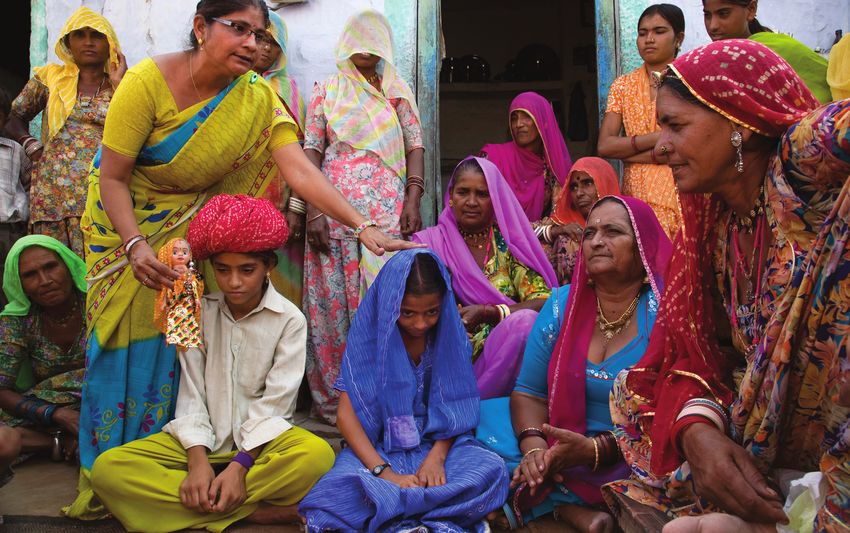
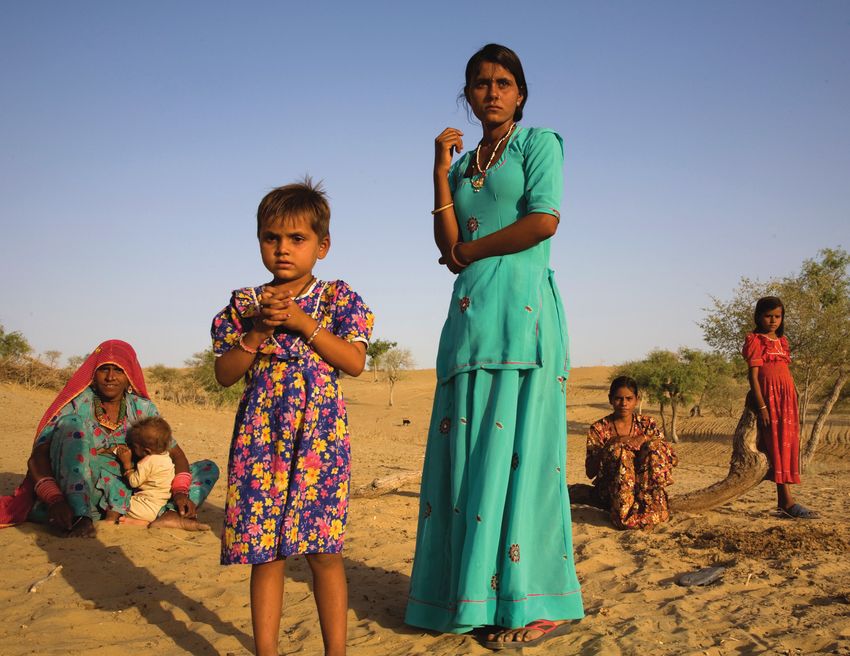
26 I Ending Child Marriage: A profile of progress in IndiaACKNOWLEDGEMENTS: This data brief was prepared by UNICEF’s Data and Analytics Section with inputs from the India Country Office. SUGGESTED CITATION: United Nations Children’s Fund, ‘Ending Child Marriage: A profile of child marriage in India’, UNICEF, New York, 2019. PHOTO CREDITS: Cover: © UNICEF/UNI77781/Khemka Snehlata (in glasses) explains the harmful effects of child marriage to women in Agolai Village, Jodhpur District, Rajasthan State. Two girls (seated in foreground) are dressed as a groom and bride to help illustrate a point. Snehlata is a precheta, a community educator and women’s advocate. Prechetas work with sathins (grassroots-level women’s advocates), anganwadis (village-level health centres), auxiliary nurse midwives, health activists and teachers to promote awareness of domestic violence, child marriage, physical and sexual exploitation, and other issues affecting women. Goga Devi (sitting, in blue) is a sathin. Sathins and prechetas are part of the local government’s development programme for women. Page 2: © UNICEF/UNI77745/Khemka Page 17: © UNICEF/UNI77758/Khemka Page 27: © UNICEF/UNI144957/Singh
For information on the data in this brochure:   For information on child marriage in India:

UNICEF                                          UNICEF India
Data and Analytics Section                      73 Lodi Estate
Division of Data, Research and Policy           New Delhi 110 003, India
3 United Nations Plaza                          Telephone: +91 11 2469 0401
New York, NY 10017, USA                         Email: newdelhi@unicef.org
Telephone: +1 212 326 7000                      Website: unicef.in
Email: data@unicef.org
Website: data.unicef.org
You can also read


