Engaging prison officers on a blended learning programme - a case study of the Irish experience - Fergus Timmons, IT Sligo - EPTA
←
→
Page content transcription
If your browser does not render page correctly, please read the page content below

Engaging prison officers on a blended
learning programme – a case study of
the Irish experience
                    Fergus Timmons, IT Sligo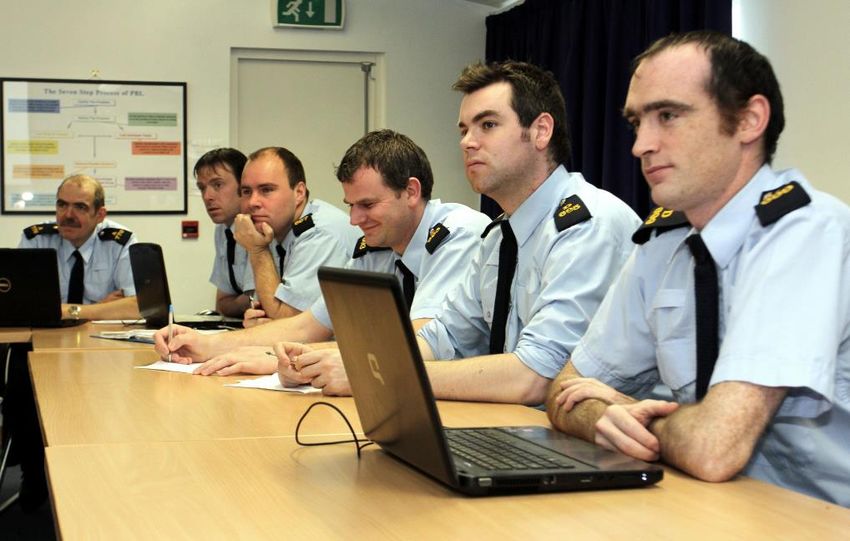
Problem: how do we engage
                             students in full-time
                        employment, working in
Solution:            stressful job, on a blended
Seek to build a        learning programme with
‘community of         limited face-to-face time?
learners’
Use technology
to support face-
                         But, what is the reality?
to-face
workshops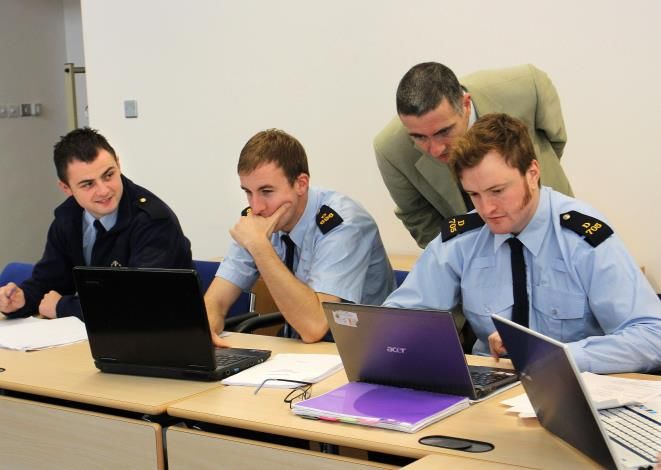
Engaging prison officers – today’s
                  presentation
Part 1 Context
• Custodial Care:
  programme background                      Part 2 The Research
                                            • Key Research
• Pedagogical                                  Questions
                              Further discussion
  approaches
                                           • Research methodology
• Prison officers – Irish /
  UK research                              • Research Findings

                                           • Further discussion &
                                             lessons for the future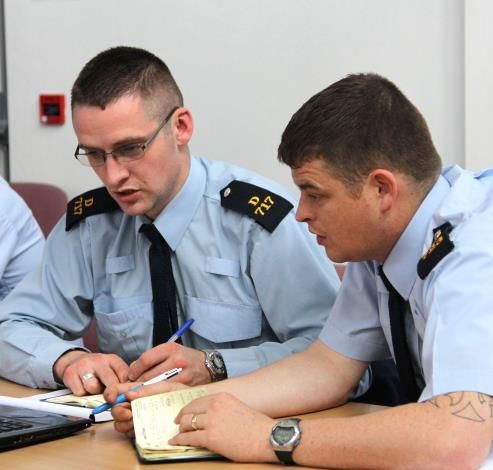
Programme background
• Higher Certificate in custodial care introduced in 2007

• Obligatory for all new recruit prison officers to take and pass
  the two-year programme

• Aims to promote ‘professional practice’ – mix of social
  science, vocational and professional studies

• Four semesters, two years, 120 ECTS

• Delivered via ‘blended’ methodologies – face to face
  workshops and Moodle VLE

• Important programme in changing work practice and culture,
  upholding human rights principles

• Positive impact on prison officers, prisoners and wider
  society

Pedagogical approaches
     ‘Cognitive’ – “active learning, enquiry-led, problem-
     based, goal-based, reflective practitioner, cognitive
     apprenticeship, constructive-based design”

                      ‘Situative’ – “e-moderating framework, dialogue /
                      argumentation, experiential learning, collaborative learning,
                      activity theory, apprenticeships, action research, reciprocal
                      teaching, project-based learning, vicarious learning”

Source: Helen Beetham and Rhona Sharpe (2007) ‘Rethinking Pedagogy for a Digital Age,
Designing and Delivering E-learning’, Oxford, Routledge, Farmer pp236

        ‘Social Constructivist’ - “knowledge is constructed
        through personal understanding and meaningful
        shared experience”, Edudemic 2013
Prison officers – Irish research

• Work in a challenging environment (McGowan 1984 and
  Lonergan 2010)

• Stressful job (Regan 2009)

• Emotional environment (Crawley 2004)

• Complex, demanding roles: security & rehabilitative
  (Liebling and Price 2007)

• Attitudes to professionalism (Share and Timmons 2011)
My Research
• Equality and Diversity module

• One cohort of 36 students, February to June 2012

• Attempted to build ‘online learning community’; ‘bring
  professional knowledge-sharing from the workplace into
  academia’, Buckley (2011)

• How?: ‘connection, participation, safety, support, belonging
  and empowerment’ (West et al 2012)

• Why? To engage learners in a range of activities, to
  supplement face-to-face time

• 4 activities – Moodle page, Discussion Forum, Twitter and
  Live tutorial
My Key Research Questions
• Students’ backgrounds – gender, age, academic
  qualifications, IT skills

• For what purposes did students use Moodle?

• What influenced their propensity to engage on Moodle and
  on the various activities?

• How did they rate their experience?
Research Methodology
• ‘Practical action research’ approach’ (Oliver et al 2007)

• Students engaged in module activities in the usual way

• Survey administered via ‘Polldaddy’ to students via email

• Used adapted ‘Likert Scale’: ‘extremely unhelpful’ to
  ‘extremely helpful’

• Open space at the end of survey for participants to
  elaborate
Research Findings (1)
• Cohort – 36 in cohort, 33 engaged in the module, 3 Deferred,

• 13 responses to questionnaire (39%),

• All male, mostly in the 25-34 age category,

• Almost half listed Leaving Cert as highest education
  qualification,

• Small majority (54%) described their IT skills as good or
  excellent. Only 15% said they had poor IT skills,

• Treat results with caution, but worth investigating findings
  due to uniqueness of student group.
Research Findings (2)
Moodle Usage
                                                 Number    Percentage of
Activity
                                                  (n=13)       total
Uploading assignments                              13         100%
Finding useful readings or other resources         12         92%
Getting information on assessments                 12         92%
Getting feedback on earlier assignments            12         92%
Downloading / viewing lecture notes / slides       10         77%
Gaining general information about the course       10          77%

Viewing tutorials on Moodle related activities     9           69%
Links to IT Sligo Library / E-brary Ebooks         8           62%
Downloading journal articles                       8           62%
Communicating with teaching staff                  8           62%
Viewing study skills tutorials / information       7           54%
Communicating with fellow students                 5           38%
Finding information for gaining an extension       1            8%
Finding out more about Moodle                      1            8%
Other option                                       0            0%
Research Findings (3)
Evaluation of e-learning resources
Question Extremely Unhelpful Neutral Useful Extremely
Unhelpful useful
How would you rate
your experience of 0 1 (8%) 4 (31%) 2 (15%) 6 (46%)
using Moodle?
How would you rate
your experience of 0 2 (17%) 3 (25%) 4 (33%) 3 (25%)
using Discussion
Forums?
How would you rate
your experience of 1 (9%) 2 (18%) 6 (54%) 1 (9%) 1 (9%)
using Twitter?
How would you rate
your experience of 0 0 4 (36%) 6 (55%) 1 (9%)
participating in the
online tutorial?Research Findings (4)
Factors influencing propensity to participate
Individual Factors E D Moodle Discussion Twitter Online
page Forums n=12 tutorial
Individual Factors ED Discussion Twitter Online Average
n=13 Forums
Moodle n=12 tutorial
n=12 n=12
page n=12
Time available 11(85%)
n=13
8 (67%) n=12 5 (42%) 8 (67%)
Structure / contentTime
of available
the 4 (31%) 8 (67%)
11(85%) 55(42%)
(33%)8 (67%) 65% - -
Structure / content 4 (31%) 5 (33%) - - 32%
Moodle site / activity
of the Moodle site /
activity
Own motivation Own
levels
motivation
33 (23%)
(23%) 3 (25%)
3 (25%)2 (17%)
1(8%) 18%
1(8%) 2 (17%)
levels
Interesting exercises
Interesting 22 (15%)
(15%) 1 (8%) 11(8%)
(8%) 4 (33%) 16%1 (8%) 4 (33%)
exercises
Own perception of 2 (15%) 6 (50%) 3 (25%) - 30%
Own perceptionimportance
of of 2 (15%) 6 (50%) 3 (25%) -
activity
importance of activity
Staff 1 (8%) 0 2 (17%) 4 (33%) 15%
Staff encouragement
encouragement 1 (8%) 0 2 (17%) 4 (33%)
My IT skills 1 (8%) 1 (8%) 2 (17%) 1 (8%) 10%
Self-confidence
My IT skills Feedback from 1 00(8%) 3 (25%)
1 (8%)
1-(8%) --
- 6%
2 (17%)
8%
1 (8%)
Self-confidencefellow students 0 3 (25%) - -
The fact it was not - 2 (17%) 4 (33%) 1 (8%) 19%
Feedback from fellow mandatory or
0 1 (8%) - -
students assessed
Other (I don’t use - - 3 (25%) - -
The fact it was not Twitter) - 2 (17%) 4 (33%) 1 (8%)
mandatory or assessed
Other (I don’t use Twitter) - - 3 (25%) -Summary of Research Findings • Students engaged in a wide range of Moodle activities • Students rated the ‘learning community’ activities positively • Students felt their IT skills level were adequate, good or excellent • ‘Time available’ was most important factor in propensity to engage in ‘learning community’ activities • Structure / content of Moodle site also important • ‘Own perception of importance’ of activity and fact ‘activity was not assessed / mandatory’ also important
Further discussion – lessons for the future

• More research required with wider cohort

• Clearer ‘signposting’ within Moodle site

• Accessibility audit, and explicit commitment to Web Content
  Accessibility Guidelines 2.0

• Clearer guidelines for facilitating online participation –
  ‘protocols’ to govern Discussion Forums and ‘Salmon’s 5-stage
  model’ to guide e-tivities

• More ‘scaffolding’ for Twitter activities

• Consider making activities mandatory

• Continue to listen to students views, feedback and act
  appropriately
References

Beetham, H., and Sharpe, R. (2007) Rethinking pedagogy for a digital age: designing and delivering e-
learning. London and New York: Routledge.
Buckley F (2011) Teaching and training, online discussion forums, European Political Science, (10) 402-
415.
Crawley, E (2004) Doing Prison Work, Willan.
Edudemic (2013) A simple guide to 4 complex learning theories, available on line at
http://www.edudemic.com/2012/12/a-simple-guide-to-4-complex-learning-theories/ (accessed 4 June
2013).
Liebling, A, Price, D, Shefer, G (2011) The prison officer, 2e. Oxford: Willan.
Lonergan, J (2010) The Governor, Penguin books.
McGowan, J., (1984) ‘The role of the prison officer in the Irish Prison Service’ Administration 28(3). pp.
259-274.
Oliver, M., Roberts, G., Beetham, H., Ingraham, B., Dyke, M., and Levy P. (2007) Knowlecge, society and
perspectives on learning technology. In: Conole, G and Oliver, M., ed, Contemporary Perspectives on E-
Learning Research. London: RoutledgeFalmer.
Regan, S (2009) Occupational stress and coping among prison officers: An exploratory examination.
Greenhouse Press.
Share, P and Timmons, F (2011) ‘Prison officers and professionalisation’, paper presented to Sociological
Association of Ireland, Annual Conference, University College Cork, 7 May.
West, E., Jones, P., and Sermon, S. (2012) Promoting Community for Online Learners in Special
Education. Journal of Digital Learning in Teacher Education, 28(3), pp. 108-116.
Thank you, I am happy to take questions !
You can also read


