ENROLMENT 2021 - FRONT OUTSIDE - Catholic Education Wodonga
←
→
Page content transcription
If your browser does not render page correctly, please read the page content below
FRONT OUTSIDE

            ENROLMENT 2021
PRINCIPAL’S MESSAGE
Thank you for considering Catholic College Wodonga. We are a welcoming College centred on faith and mercy, a
community inspired by the life of Christ. We are confident we offer the best mix of opportunities for your child locally.
We are mindful that our size of 1230 students can be intimidating, particularly for those coming from a district primary
school. Part of our solution - how we help your child feel connected, supported and valued in a big school - is to place
our students into one of six Learning Communities.

Within a Community, your child will get to know 200 other children, as well as their year level cohort. Their Mentor,
a staff member trained to enhance their social, emotional, spiritual and academic growth, will guide them. This is a
commitment we make to all of our students and by extension, your family.

In 2018 and 2019 we were recognised by Cambridge University as being one of the world’s leading innovative school.
We along with another 99 educational settings world-wide were recognised as a part of their Innovation 800 series.

In 2020 we moved to a Pathways curriculum structure across Year 9–12. This structure provides students across
these year levels with the opportunity to design a learning pathway which best suits their passions, interests and
ultimately their interests beyond Catholic College Wodonga.

As a part of this approach we continue to offer a wide range of curriculum offerings including VCE, VCAL and VET
pathways. This is complimented by our Students Service Model which incorporates our Learning Communities,
Wellbeing, Learning Diversity and Careers teams.

Every person must have the opportunity to flourish using their gifts and talents. It is our quest as educators to make
sure this comes true for every child in our care and we offer long-established programs to create these opportunities.
Pathways made possible by a wonderful staff.

I thank you once again for your interest in joining our
community, please read the following information as it
contains important policies and procedures which we
will discuss in enrolment interviews. I look forward to
meeting you.

Kind Regards,

Darren Hovey Principal
This handbook walks you through our four phases of enrolment: research, enrolling, accepting a
place and familiarisation. The information provided here aims to answer commonly asked
questions and guide you through the transition.

  index
  1. Research
  Vision and Mission | Catholic Identity				             2-3
  College Culture							4
  Curriculum							5
  Learning Communities | Learning Mentor Program		       6-7
  Learning Conversations | Community Cup			              8
  Wellbeing | Defence Force					9
  Diverse Learning | Self Regulation Spaces			           10
  Two Certificate Options for Year 12				                11
  Results | Pathways for Graduates				                   12
  Subject Choices | Career Education & Development		     13
  Enrichment Programs
                           Camps | Retreats | Immersions 14
                           Literacy | Numeracy | Horizon 15
                           The RITE Journey              15
                           Science Honours | Leadership  16
                           Sustainability | Theatre      17
                           Music                         18
                           Sport 					                   19

  2. Enrolling
  Your Action Plan						                                 20
  Enrolment Policy						21
  Key Dates 2020 | 2021						22
  Finance								23-24

  3. Accepting a Place
  What Happens Now? Notification of enrolment status		   25
  			Communication | Uniform		25
  			Transport				26
  			                  ICT | Portable Wireless Devices		 27
                       Transition Events			              27

  4. Familiarisation
  		                 School Map				28
  Communicate        Email | SIMON | PAM			        29
  Engage Interact    Newsletter | Web			           29
  			Parental Participation			30
  Student Basics     Resource Hubs | Study Tools		 30-31
  		                 Locker Security | Canteen		   31
  		                 A Typical College Day			      32
                     Term Dates				                32

                                                                                             -1-
research who we are

 our vision
 At Catholic College Wodonga we believe in living life in Jesus. In keeping with the Mercy tradition, we believe in the
 dignity of the individual and selfless, honest, life-giving relationships based in a child-safe environment. We strive to
 be a spirit filled, educational community that realises the fullest potential of Jesus’ message for creation.

 mission
 Catholic Identity
 • Commits to living lives of service embracing the values of Jesus with relevance to today’s society, both locally
    and globally
  •   Promotes a community in which compassion, justice, fairness and equality exists for all
 • Continuously provides opportunities for immersion in Catholic tradition
 Leadership
  •   Encourages leadership across the school that is visionary, reflective, courageous, collaborative, inclusive and
      respectful
  • Promotes leadership amongst students, staff and community members that nurtures and values individual
    strengths for the benefit of the whole community
 Catholic Learning and Teaching
 • Aims to provide a contemporary and challenging educational environment that fosters relationships to enhance
    learning for all individuals
  •   Develops innovative, creative, engaging, meaningful and flexible curriculum
  •   Recognises the importance of appropriate organisational structures in providing the best possible learning
  •   Commits to the use of collaboration, feedback and reflective practice to enhance performance
 • Promotes effective and practical ways of continually improving teaching practice
 Pastoral Care and Wellbeing
 • Promotes pastoral wellbeing programs and behaviours that enable its community members to be connected
    and stay connected in a child-safe environment
  •   Aspires to provide a balance of spiritual, academic, cultural, physical, emotional and social learning within a
      child-safe environment
  •   Aims to develop a community consciousness of shared responsibility for the care and wellbeing of others
  • Endeavours to enable community members to understand the process of accessing support and to feel
    comfortable to do so
 Stewardship
 • Acknowledges the past and present Indigenous people of this land and endeavours to draw wisdom from their
    connection
  •   Aspires to develop a deep appreciation of the necessity of a healthy relationship between humanity and
      the environment
  •   Promotes the ideals of a sustainable environment for the future, commits to change how we source and use
      energy and other resources
  •   Has an ongoing plan to maintain and renew resources
  •   Aims to explicitly promote a shared contribution and responsibility for the use and maintenance of community
      resource

-2-                                                           -2-
GRADUATE OUTCOMES
Catholic College students live life in Jesus by
•   Developing and sustaining loving, empathetic and supportive and child-safe relationships
•   Serving others with honour, courage and integrity
•   Being creative problem solvers, critical and reflective thinkers and self-directed, life long learners
•   Knowing and valuing themselves, having a sense of confidence and belonging
•   Being flexible and resilient with a sense of dignity and self respect
•   Being environmentally and socially responsible within their local, national and global communities
•   Striving to achieve their best academically

CATHOLIC IDENTITY
An education with us is a living expression of the dynamic and evolving tradition of the Church. A sense of community
is a tangible example of our Catholic Identity.

Formal compulsory RE classes are offered in Year 7-11, with some choice of additional related subjects in Year 10-12
(Youth Ministry or VCE Religion and Society).

As a school we express our faith in many ways. These include whole school liturgies, small community liturgies and
prayer, whole school themes, school retreats and camps, commitment to social justice (expressed in events that raise
awareness of important social issues), commitment to creating connections with our Catholic Parish and dynamic
youth programs such as Youth Ministry and The RITE Journey.

These programs enable your child to put their faith into action. Students are also involved in Carevan and assist with
the maintenance of Clyde Cameron Reserve in Willow Park, Wodonga. These fulfil two of the basic teachings of Jesus
Christ; by feeding the hungry and practising stewardship of the environment.

Youth Ministry students undertake community service within the school and further afield. They work with the three
Catholic Education Wodonga (CEW) primary schools in faith formation, through planning and leading retreats.

                   Chris Telford Leader
                   chris.telford@ccw.vic.edu.au

                                                                                                                     -3-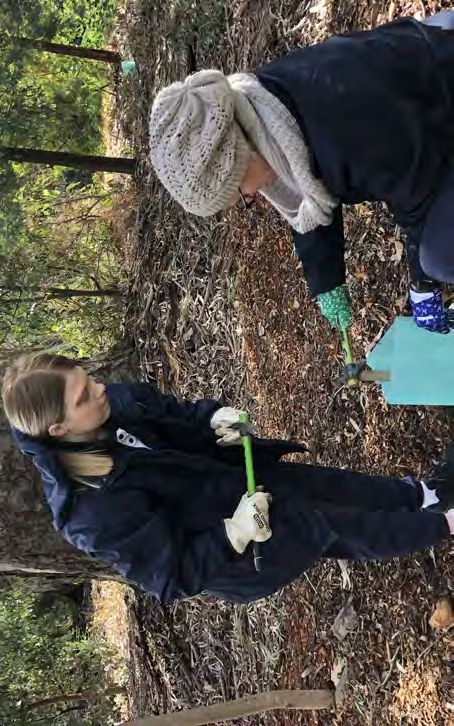
research who we are

 College Culture
 When we talk to students, families and staff, it becomes clear that Catholic College is a special place that
 welcomes all. Regionally, we are renowned for being ‘all about positive and respectful’ relationships. In doing so
 we ‘provide a balance of spiritual, academic, cultural, physical, emotional and social learning within a child safe
 environment’.
 In fostering and maintaining these beliefs - where people have strong and positive relationships, and everyone can
 grow to their fullest potential - each person connected to the College has a fundamental responsibility: ‘to develop
 a community consciousness of shared responsibility for the care and wellbeing of others’.
 Supporting these principles, our Child Safe Policy, Pastoral Care Policy, Student Management and Engagement
 Policy and Parent Code of Conduct state our position on:

  •   Safety and wellbeing
  •   Respectful relationships
  •   Raising concerns and resolving conflict

 By accepting a place for your child or children at Catholic College Wodonga, it is expected that you acknowledge,
 understand and support all College policies. This includes the Student Management and Engagement Policy and
 the Parent Code of Conduct, correct uniform and your child’s attendance at significant school events.
 These policies and more are located on our website, https://ccw.vic.edu.au/our-college/policies/

 WHo to talk to
 When you accept a place, we begin a partnership with your family to maximise your child’s or children’s potential.
 Together, we commit to communicate, engage and interact. This handbook explains how we facilitate that
 partnership once your child starts attending classes.
 There are many reasons why you would want to talk to a teacher or leader at the College. Some of those reasons
 include academic progress, wellbeing concerns, relationships, adapting to school life, absences and passing on
 positive comments about staff.
 While we have an outstanding team with a wealth of experience working with you, our preference is that you
 contact your child’s Learning Mentor (LM) in the first instance. The next appropriate option is your child’s Learning
 Community Leader. You can read more about this on pages 6-7.
 Sometimes, for issues of a serious - highly specific, specialised nature - you may prefer to go direct to Wellbeing
 on 02 6043 5564 or Diverse Learning on 6043 5511. Or me, Eamonn Buckley.
 When in doubt, contact your Learning Mentor first on 6043 5500.

                   Eamonn Buckley Deputy Principal, Student Development
                   eamonn.buckley@ccw.vic.edu.au

-4-                                                          -4-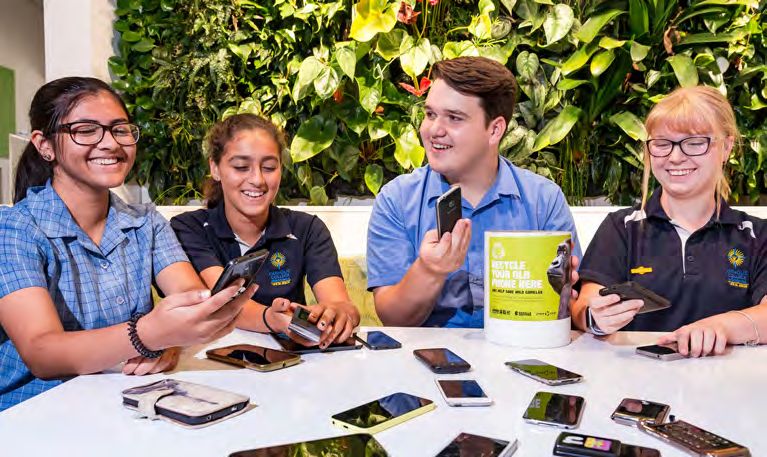
Curriculum

At Catholic College, learning is our reason for being.

In a bid to continuously develop an innovative curriculum
 and learning opportunities, we offer three distinct stages
 of learning: Middle Years (7-8), Pathways (9-10) and
 Senior School (11-12). Each of these stages has different
 purposes, different outcomes and a wide variety of
 experiences. At all stages, students are challenged and
 supported to reach for a potential they have not yet
 begun to imagine.

Middle Years (Year 7-8)
The focus here is to establish skills, knowledge and understandings about secondary school. The transition is well
supported by our Learning Communities and by our approach to Year 7 Learning and Teaching. Students are in
core classes and have a limited number of different teachers, smoothing the changeover to high school.
Students engage in broad experiences across all Learning Areas in the Victorian Curriculum F-10. This is the stage
where we establish habits for success.

Pathways (Year 9-10)
Our priority here is student choice and student engagement.
Moving from the breadth of the Middle Years program, Pathways adds depth to their learning and ‘hones-in’ on
their areas of enthusiasm. We offer more than 80 subjects! Students must study units from all learning areas, but
additional free choice allows them to pursue a learning area and expand their understandings and skills, preparing
them for Senior School.

Senior School (Year 11-12)
At this stage our emphasis is on readiness for life beyond Catholic College. We offer two VCAA approved courses:
VCE and VCAL.
Our VCE program offers choice from over 40 subjects, including an extensive range of Vocational Education and
Training (VET) subjects. VCE students follow a traditional program that culminates in the external exams at the end
of Year 12 and can lead to further tertiary study, TAFE or employment.
Our VCAL program is hands-on, with students working independently and in groups, alongside structured
workplace training. They develop projects across the two years and often combine VCAL subjects with VET and
VCE subjects. Our VCAL graduates generally move into employment or training quickly.

                  Shaun Mason Deputy Principal, Learning, Teaching & Innovation
                  shaun.mason@ccw.vic.edu.au

                                                                                                                      -5-
research helping your child feel connected & supported

 Caroline Chisholm (1808-1877)               Leonardo da Vinci (1452-1519)                Mohandas Gandhi (1869-1948)
           Accept the                              The future is ours                       Be the change you wish
           challenge                               (II future è nostro)                        to see in the world
           Leader                                       Leader                                        Leader
         Aaron West                                 Kieran Mullins                                Shinead Kilroy

 LEARNING Communities
 Our Learning Communities are the foundation upon which the Learning Mentor program is built. They are far more
 than just ‘houses’ for sports carnivals: they are integral to how we help your child feel connected, supported and
 valued in a big school. Every member of staff is also a member of a community.
 Within a short time, most children and staff are passionate and proud of their community - and identify strongly with
 it. We encourage this camaraderie by team building activities such as Community days and novelty events, raising
 money for charity, and sitting together at assembly and Mass.
 The result is an energised school with a sense of ownership and belonging. We place our population of 1230 into six
 Communities. Key features include:

  •   a vertical structure of Year 7–12 students
  •   seven or eight Learning Mentor groups within each community; we aim for 26 students per group
  •   each group is supported by two Learning Mentors
  •   Learning Mentors operate as a team, but work closely with up to 14 students allocated to their care
  •   each Community is coordinated by a Learning Community Leader whose role is similar to a Year Level Leader
      in other secondary schools

-6-                                                         -6-
Fred Hollows (1929-1993)                  Saint Mary MacKillop (1842-1909)                  Lisa Malone (1969-1998)
       A vision for                            Courage, Commitment,                          Ordinary people doing
        everyone                                    Compassion                                 extraordinary things
       Leader                                          Leader                                         Leader
    Markus Busch                                     Shane Piper                                  Chris Darmody

LEARNING mentor program

    Learning Communities                         Learning Mentor Group                        Learning Mentor
          six leaders                              26 students, two staff                       13 students

This program improves our ability to influence the learning capacity of every individual child.

Learning Mentors monitor academic and pastoral progress through learning conversations: the idea being, “know
the student, know the learner.” Students know they are supported, which enables them to be more engaged. We
believe this improves learning and teaching outcomes for students and mentors.

Every student
• is allocated a Learning Mentor
•   gains an understanding of how they learn best, and is guided to use this knowledge to advance
•   is linked to, and engaged within, a Learning Community

Learning Mentors are central to your child feeling connected, motivated and engaged. They meet your
family to discuss progress, and are your first point of contact for concerns or celebrating achievements.

                                                                                                                      -7-
research helping your child feel connected & supported

  learning conversations
  Students meet with their Learning Mentor every morning for eight minutes. During this administration time, attendance
  is marked, daily bulletins checked and late notices shared.
  While Learning Conversations happen every day, every Wednesday, one period of 72 minutes is set aside for
  deeper engagement.
  Common phrases you can hear during LM administration time are: “How are you travelling in class?”, “Is there
  anything I can do to support you?”, and “Would you like me to connect you to ...?”
  Here is an example of where a Learning Conversation can lead...
  A student in Year 8 was preparing for a Trigonometry test. Her LM, a senior English teacher, does not readily recall
  ‘Trig’ from his high school days. However, he knows there are Year 12s studying Special Maths in his Learning Mentor
  Group. The LM put the ‘Trig’ question up on the board and the whole group helped work through the problem,
  enabling the student to write study notes and, later, comfortably pass the test. During the same timeframe, another
  student completed an Accounting Senior Assessment Task. The group chose to celebrate these two achievements
  by having lunch together: sharing each other’s success.

 community cup
 Our Learning Mentor groups reward participation. We applaud ‘having a go’. We value striving for something bigger
 than self. We recognise that individual pursuits - volunteering, languages, favourite subjects or sport - have a role to
 play in our overall school life. Participation adds to our sense of spirit and community, to what we are as a school and
 to who we are as people.
 The Community Cup is coordinated by our Learning Community Leaders. It turns attention to academic achievement
 and community talents, rather than a focus on sports.
  Whether it be in subject competitions, fund raising or our sports carnivals, every student is able to contribute
  and participate.
  The Cup is awarded to the winning Community in Term 4, at the Year 12 final assembly.

-8-                                                          -8-
wellbeing
Mental, physical and emotional wellbeing are essential pre-conditions for successful learning. These qualities cannot
be developed for one person in isolation from the health and wellbeing of our community as a whole, nor would we
want that to be the case.

We expect each person in our school to understand, value and actively promote the wellbeing of all members of
our community. Consequently, pastoral wellbeing may be seen as the unifying focus for the spiritual, academic,
physical, social and emotional aspects of school life. We strive to show respect for one another and treat one another
with dignity, so that each student has a confident sense of self-worth and a willingness to take initiative, accept
responsibility and exercise leadership to become active community members.

A crucial element of wellbeing is using ‘fun’ to help develop a sense of connectedness and belonging. Research has
highlighted how important connectedness is to adolescents and feelings of self-worth. The school uses its Learning
Community activities, CCW Day, RUOK Day and other events for students to have fun and feel nurtured.

Our Wellbeing Team is one part of our student services group. Staff work closely with mentors, community leaders,
the Diverse Learning Unit, pathways, careers, student development, leadership, parents and external specialists and
agencies across many areas, including:
•   mental health and chronic health issues                  •   home visits
•   drug education                                           •   study routines
•   counselling/students at risk of leaving school early     •   motivational strategies and homework planning
•   friendship/relationships                                 •   awareness days, i.e Bullying No Way, RUOK Day
•   anger management                                         •   fitness and wellbeing groups
•   referral to outside support agencies                     •   resources for information
•   independent living                                       •   curriculum content, input and expertise
•   developing communication skills
•   liaising with home and working alongside families

Defence force
Forty children in our school have parents working for the Australian Defence Force. We are very aware of the unique
educational needs these students have, partly due to their mobile lifestyle, when they move in and out of school, and
when a parent is away from home due to deployment and training.

We have a partnership with the Defence Transition Mentor Program, funded through the Department of Defence. Carl
Rogalski is our first ‘point-of contact’ for ADF families. He is available during most holiday breaks. Apart from making
the initial transition as seamless as possible. Carl liases with families for their time at school.

                                                                       Louise Symons Leader
                                                                       louise.symons@ccw.vic.edu.au
                                                                       Rebecca Artis Provisional Psychologist
                                                                       Hayley Paynter Social Worker
                                                                       Carl Rogalski Social Worker

                                                                                                                       -9-
research helping your child feel connected & supported diverse LEARNING If you have enquiries or concerns regarding your child’s learning, your child’s Learning Mentor is the first point of contact. Often a solution can be identified with the Learning mentor and strategies put in place to support your child’s learning needs. However, some students may face difficulties that hinder their development and may need further assistance. At Catholic College we pride ourselves on providing support to students with diverse learning needs. Through individual planning with the student, parents, teachers and learning mentors we collaboratively identify a plan to best support a variety of learning needs within classrooms. Our supports may include Language and Literacy assessments, small intervention groups, classroom support, after school support, cognitive assessments (completed by the Catholic Education Office) and/or Personalised Learning Plans. All decisions around your child’s learning will be made in consultation with you. We strive to provide environments that encourage student growth and assist students to achieve their potential. We are guided by their individual strengths and work towards supporting learning hurdles. If your child has been identified at primary school as requiring additional adjustment, please contact Ronnie to discuss their learning needs. Ronnie Davies Leader Louise Griffiths-Tutt Coordinator, Year 7-8 ronnie.davies@ccw.vic.edu.au Angela Kavanagh Coordinator, Year 9-10 02 6043 5511 Daniel Fitzgerald Coordinator, Year 11-12 SELF regulation spaces We have three self regulation spaces: the Wellbeing Office and two sensory rooms. These are areas where any student can go if feeling overwhelmed, or anticipate benefitting from time out of the classroom. They use the room to regenerate; to reset. There is a clear – respectful – line of sight into the rooms, and our Diverse Learning Team work with students throughout. These rooms are in Duffy (Year 8) and Nganala (Year 9). However, we have break-out rooms in the Aquinas (Science) and Mercy (Year 12) Centres, and our Chapel (Augustine) is always a calming, welcoming space. - 10 - - 10 -
research commitment to lifelong learning

Two certificate options at year 12
The state school system in Victoria differs to New South Wales. Victoria offers two senior secondary certificates: the
Victorian Certificate of Education (VCE) and the Victorian Certificate of Applied Learning (VCAL).

With changes at tertiary institutions such as TAFE and universities, pathways into careers or higher education are
more flexible and varied than they have ever been in Victoria.

Whilst VCE is the pathway to university, VCAL is the pathway into the workforce, or apprenticeship, or TAFE.

Vocational Education and Training (VET) is a course within VCE and VCAL: students enrolled in either can study a
VET course as part of their qualification. The program creates access to nationally accredited courses.

Workplace training, community service projects and classroom activities are part of the pathway your child can take
to enter the workforce or graduate.

Every student has a different pathway and different goals. We support every student through their own pathway;
whether that be VCE or VCAL.

Regardless of qualification earned, our hope is that every student leaves with the desire to be a critical thinker and
a life long learner.

           VCE                                                                       Completion of
    Victorian Certificate                                                                 VCE
                            20-24 units, 40 study areas
        of Education

                                                                                    UNIVERSITY
                                                   Structured
                                                Workplace Learning
                    VET
            Vocational Education                                                          TAFE
               and Training
                                              Training (TAFE, school,
                                               industry, RTO, ACE)
           Contributes to                                                          EMPLOYMENT
           VCE, VCAL, VET                                                      Apprenticeship, Traineeship

          VCal
    Victorian Certificate                                                             Completion of
    of Applied Learning     Literacy, numeracy, industry specific,
                                                                                         VCAL
                            work related, personal development
                                                                               May include VET certificates

                                                                                                                         - 11 -
research commitment to lifelong learning
Year 12 results in 2019
VCAL
VCAL runs across two years, during which students complete Year 12 in all three levels of the certificate:
foundation, intermediate and senior.
Our completion rates are among the best in the Sandhurst Diocese and we are rightly proud of our graduating class,
particularly as a majority were offered apprenticeships throughout the year.
VCE ATAR
Our students consistently score highly in the Victorian Certificate of Education. In 2019, they completed a fantastic
academic year.
• 4% attained 90+
• 21% attained 80+
• 35% attained 70+ (4% increase)
• highest individual 96.95
• average 61.7 (highest since 2015)
• 19 individual study scores above 40, across 13 separate subjects, placing them in the top 9% of the state in
these subjects
Pathways for graduates
In 2019, 141 students completed a qualification. As of March 2020, planned pathways for the cohort are:
Planned pathways 2020 Planned pathways 2021
Education/training pathway Education/training pathway
University 54 University 95
Vocational (TAFE) 17 Vocational (TAFE) 13
Traineeship 17 Traineeship 0
Apprenticeship 7 Apprenticeship 7
Employment pathway Employment pathway
Employment (including gap year) 29 Employment (post VET qualification) 9
Employment (no study/training for 2020) 10 Employment (no study/training in 2021) 10
Elite sport 1 Elite sport 1
Didn’t return contact 6 Didn’t return contact 6
141 141
- 12 - - 12 -Wide range of SUBJECT CHOICES
Choosing what to study in senior years can be challenging. Learning Mentors support students in Year 8-11 through
a comprehensive four-week program to prepare for subject selection. They then meet with families to assist with
finalising the subject selection process and guide students to choose subjects that suit their interests, aspirations, and
learning strengths.
We develop course guides for Pathways (Year 9-10) and senior years. These are available for new families to access
on our website in the ‘Discover & Enrol’ and ‘Learning & Teaching’ sections.
CAREER EDUCATION AND DEVELOPMENT
Career Development is one of our three main student support services - the other two being Diverse Learning and
Wellbeing. Career development refers to the lifelong process of managing learning, work, leisure and transitions at all
ages and stages of life. Practitioners help people manage their careers, make occupational and study decisions and
plan career transitions.
Students receive advice and transition support from our Career Education and Development Leader, Sandie McKoy.
Sandie is a professionally qualified practitioner with a background in career development, youth work, and youth
case management. She offers comprehensive services to students and families, and the department has strong
connections to industry, vocational and higher education institutions, and apprenticeship centres.
Sandie encompasses:
• curriculum development • job search skill development
• tracking and supporting graduates • working with vocational and higher education
• engaging with industry providers, and apprenticeship centres
• counselling • understanding current counselling theories
and practice
• upskilling staff
• marketing information to parents, staff and students
• working collaboratively across teams, including case across various media platforms
managing students
• developing resources that are shared with over one
• assessing risk and then referring to specialist hundred schools
support services
Sandie uses a ‘hope-filled strength-based counselling approach’ and is a professional member of the Career Industry
Council of Australia, and the Career Education Association of Victoria. She is available to meet with students and
parents for the transition through school and from school to further education, employment and training.
Careers has a dedicated Facebook page (by invitation request) and website. Moreover, 200+ past students, businesses
and Career Champions (parents) support current students through various initiatives each year.
Facebook: CCWCareers, and http://ccwcareers.edublogs.org/
Sandie McKoy Leader
sandie.mckoy@ccw.vic.edu.au
- 13 - - 13 -research enrichment programs
camps and retreats
Camps and retreats are embedded in our educational practice because children retain knowledge best through a mix
of classroom and experiential learning. Some subjects, such as Outdoor Ed, run camps as part of the curriculum and
assessment. We offer one major camp at each year level, though combine camps during the Pathway Years (9-10)
in line with the vertical curriculum offered to these two year levels. We regularly review each program to ensure it is
relevant, diverse and challenging.
Year level camps and retreats are compulsory.
cULTURAL IMMERSIONS
Three-week immersions are opportunities to experience daily life in another culture. Traditionally we visit France
and Japan on alternate years. These are available in Year 10-12 to practice linguistics, explore spirituality and share
learning activities in a different society.
Immersions run subject to demand.
Year Camps, Retreats, Immersions Purpose When
Compulsory
7 Outdoor Education, Harrietville Teamwork, familiarisation Feb (3 days)
8 Winter sleepout, on campus Social justice Aug (2 days)
9-10 White Water Rafting, Bindaree Challenging physical activities Sep (3 days)
Arts & Culture, Canberra
Sport & Science, Canberra
Billabong Ranch, Echuca
Indigenous Outdoor Education,
Barmah Forest
Careers, Melbourne
11-12 VCAL adventure, Team building Feb (2 days)
Tallangatta Valley
10 Youth Ministry Faith formation Feb (2 days)
11 Spiritual retreat, Beechworth, Self reflection, responsible global citizenry May (2 days)
Yackandandah, Bowna
Spiritual retreat, Howman’s Gap Self reflection, responsible global citizenry Mar (3 days)
Year Optional Purpose When
Solidarity immersion, Condobolin Youth Ministry, social justice May (6 days)
For more on camps and retreats, read Catholic Identity (p3) and Finance (p23).
- 14 - - 14 -Year 7 - 10
Literacy | Numeracy
Following research and a pilot study, we have developed a literacy and numeracy program in Year 7-10. Students
and staff either read or do mental arithmetic for 10 minutes at the start of every lesson, and for 30 minutes once a
fortnight.
Our intention is to develop sustained deeper reading and comprehension skills: to build resilient readers with a wide
vocabulary, well equipped for senior school assignments and exams ... and into old age.
Year 8 - 11
HORIZON
Do you have a child whose interest, passion and skill in a particular area is outside the norm? Does this child have a
willingness to collaborate and a desire to learn more about that activity? Is this a passion where they have ambitions
to work as adults? Horizon may be the perfect vehicle to grow that endeavour.
Horizon is our alternative to the traditional curriculum. It is our independent learning program that runs twice a year,
across a semester. It features:
• application and interview process
• 14 students, maximum
• one advisor per student
• e-portfolio and presentation
• two showcases a year
Year 9 - 10
The RITE Journey
We are one of 100 schools in Australia and overseas which offer this program. Developed to challenge, it focuses
on the needs of young adolescents, stimulating their ideas, opinions and perceptions of themselves and others. The
RITE Journey contributes to the development of self-aware, vital, responsible and resilient adults. A key
focus is the exploration of what it means to be a man or woman.
Our staff undertake specific training to deliver the program. Visit www.theritejourney.com.
- 15 -research enrichment programs
Year 10 - 11
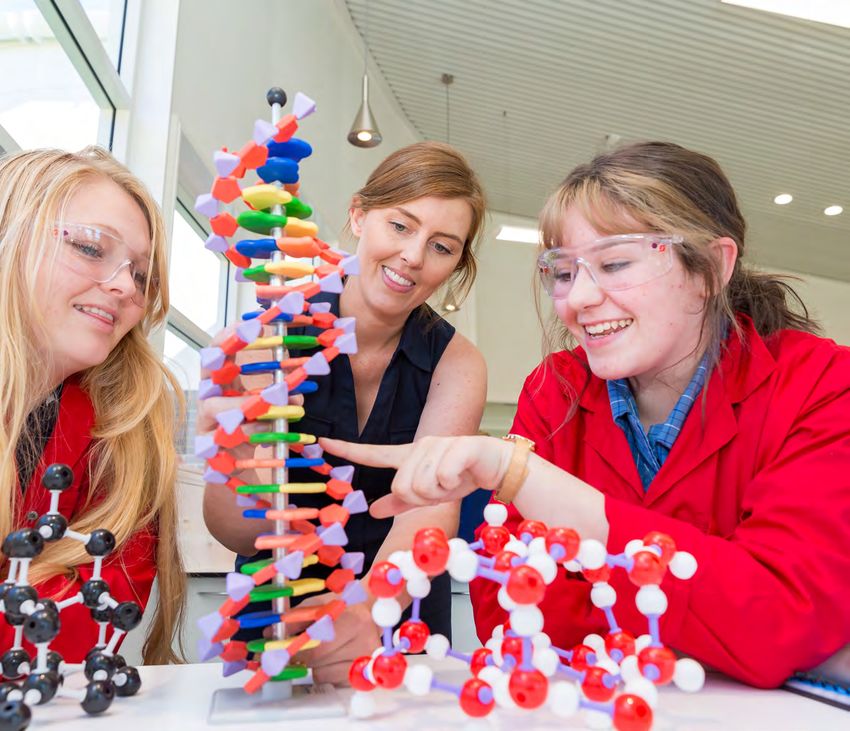
Science honours
We extend high level students in Science, Technology,
Science Engineering and Mathematics (STEM). Science
Honours is a program that challenges. It exposes
participants to careers and professionals within their
field of scientific interest, and to what’s involved in
working in those fields. Science Honours is not about
receiving high distinction certificates for national
competitions.
We incorporate the federally funded, award winning
initiative ‘In2 Science eMentoring’, working with multiple
universities to access current research at the forefront
of STEM right now. Students are mentored weekly by
university lecturers and career scientists.
Participation requires a significant commitment: students take on extra responsibility out of normal school hours.
• application and interview process
• industry and university mentors
• competitions, entry to Science Stories Lecture Series, targeted excursions and special events
Year 7 - 12
Leadership
In Term 4 your child can apply for a student leadership position for the following year. Each community has twelve
leaders, two from Years 7-12. We also have two School Captains in Year 12.
All year level Leaders join a training day, whilst Year 9-12s attend a leadership conference. Leaders work in teams to
achieve their specific team goals. College assemblies are driven by the Leaders: they all contribute to the running of
community days and events.
They also work in collaboration with other student
teams on bigger projects such as ‘Bully No Way’
Day, ‘RUOK’ Day, and CCW Day. CCW Day is our
highly anticipated annual whole school celebration
involving dressing up, a Mass, motivational speaker,
staff versus Year 12 soccer match and talent quest.
- 16 - - 16 -Year 7 - 12
Sustainability
Catholic College’s vision and mission includes Stewardship: committing to change how we source and use energy
and other resources. We have a Sustainability Team made up of students and staff passionate about reducing our
waste, energy and water use and conserving biodiversity.
The volunteer group ‘thinks global, acts local’, and has inspired our community to make significant changes. We now
have four waste streams to minimise our contribution to landfill, compost our food waste on site and use only reusable
cups and water bottles at school events.
Some initiatives your child can be part of include:
• waste audits and designing education campaigns
• promoting awareness of environmental issues in our community
• biodiversity field excursions and citizen science
• Zoos Victoria mobile phone recycling drive
• National Recycling Week clothes swap party
• nature photography and film competitions
Theatre
Our drama program caters for a range of interests and abilities. From experienced drama students extending their
skills, to those trying it out for the first time, all are encouraged to enrol. Students participate in individual, partner
and small-group activities focusing on developing their improvisation and performance skills.
Senior students create original ensemble pieces and solos which they present at our twice-yearly evening
performances. They develop collaborative and leadership skills through these theatrical experiences. Our annual
production is open to all students, and alternates between musical and non-musical shows. We encourage actors,
dancers and stage crew from all year levels to get involved.
This year our annual production is ‘Finding Jamie Ryan’, a play that comically captures the mishaps and absurdities
of school life. Students who are interviewed receive a free ticket to see the production in late August.
- 17 - - 17 -research enrichment programs
Year 7 - 12
Music
Music is an integral part of our College. Every student has the chance to play an instrument, join a choir or band.
Your child can be involved in class and in the rich co-curricular program at lunchtime and after school.
In Year 7-8, Music is an elective focusing on bands and vocals. In Year 9-10, students concentrate on both solo and
group performance, while VCE Music Performance, units 1-4 are offered in Year 11-12. Students can either focus
on solo or group (band) performance.
Bands, Ensembles, Choirs
Your child can join the music, theatre, vocal ensemble,
contemporary vocal ensemble, senior jazz combo, Year 10-
11 funk band, student-led rock bands or guitar ensemble.
There are also many opportunities to perform throughout
the year, including: the annual theatrical production,
concerts, eisteddfods, Open Mic, Arts Week, La Trobe
University Lecture Nights, The Vibe at Artspace, festivals,
assemblies, Wodonga Children’s Fair, Battle of the Bands,
masses, liturgies, Year 9 Big Gig, CCW Day and Kool
Schools recording project (Melbourne).
Luke Godfrey conducts the bands, Simone Worsnop the
choirs and Paul Gibbs VET Music.
Private instrumental lessons
Any student can access extra lessons, for an
additional fee. Lessons are available for:
• electric, bass or acoustic guitar
• piano / keyboard (classical / contemporary)
• wind instruments: flute and clarinet
• brass instruments: alto, tenor saxophone,
trumpet, trombone and French horn
• voice (classical / contemporary)
• drum kit / percussion
All instrumental teachers are fully qualified, highly experienced and have a Working With Children Check.
It is recommended lessons begin in Year 7, so children have the best chance of obtaining skills to pursue music
at senior school level. We encourage students to try different instruments, especially brass and woodwind. Some
instruments can be hired.
To arrange extra lessons, families need to complete and return an application form (Instrumental & Vocal Tutoring).
Unfortunately, we cannot begin lessons without parental consent: no form, no lessons!
- 18 - - 18 -Year 7 - 12
School Sports Victoria
We pursue excellence through School Sports Victoria (SSV) competitions. SSV is a statewide contest for metropolitan
and country schools, including Catholic, Independent and State schools.
We enter events based on student interest. Firstly, we compete at the local level (Upper Hume). Victors progress to
regional (Hume) and finally state (State Championships).
In 2019, we had nine sporting teams across all year levels and sports make it to State Championships. Amongst
these sports were netball, basketball, cricket, tennis and Australian Rules Football. We also sent strong swimming,
athletics and cross country teams in which we had individual state champions.
SSV sports include:
AFL Football Cross Country Soccer
Athletics Golf Swimming
Basketball Hockey Table Tennis
Cricket Netball Tennis
Separate competitions are held for clay target shooting, cycling, skiing, rugby, league tag and mountain bike riding.
College Carnivals
We hold three major intra-school carnivals each year for swimming, athletics and cross country. These carnivals are
important sporting and community events that showcase athletic ability and reward participation.
Students who are not competing are encouraged to support their peers, and do so proudly and loudly – usually by
dressing up in their community colours!
- 19 -Enrolling
Your Action plan
q Read this handbook
q Supply a copy of birth certificate (essential)
q Have a thorough understanding of the and baptism certificate (if applicable)
following policies and how they support our • Incomplete forms will not be accepted
College culture and community expectations:
• Supplying an enrolment agreement is NOT a
• Enrolment Policy, p20 guarantee of acceptance
• Parent Code of Conduct
• Student Responsibilities and Rights q Diarise the key dates on p22
• Student Management and Engagement q Attend an interview
• These and other policies can be accessed
on the website: https://ccw.vic.edu.au/our- • Tuesday 16 - Thursday 18 June
college/policies/ • Applicants receive notification to book an
interview using an online system
q Complete and lodge an enrolment • Applicants must be accompanied by one or
agreement by Monday 27 May both parents / guardians
• Parents to sign • No examples of school work are required
• Families receive notification via email early in
q Pay a non-refundable application fee at Term 3
time of lodgement
q If offered a place, begin the transition
• $50 St Francis of Assisi, St Monica’s, St
process outlined on p25
Augustine’s Primary
• $100 other schools
- 20 - - 20 -Enrolment policy
Catholic education is intrinsic to the mission of the Church. It is one means by which the Church fulfils its role in
assisting people to discover and embrace the fullness of life in Christ. Catholic schools offer a broad, comprehensive
curriculum imbued with an authentic Catholic understanding of Christ and his teaching, as well as a lived
appreciation of membership of the Catholic Church.
Parents and guardians, as the first educators of their children, enter into a partnership with the Catholic school to
promote and support their child’s education. Parents and guardians must assume a responsibility for maintaining
this partnership by supporting the school in furthering the spiritual and academic life of their children.
ENROLMENT CRITERIA
Catholic College Wodonga enrols students in Year 7 to 12. In order for a student to be considered for a place at
the College, an Enrolment Agreement must first be submitted by the Parent/Guardian of the child to the school.
The Executive Team will consider each application for Enrolment, where Parents/Guardians have accepted the
conditions outlined in the Enrolment Agreement and make a determination in line with the order of priority below:
a. The capacity of the College to accept students;
b. Whether a sibling of the child is currently a student of the school or attends a CEW School
c. Baptised Catholic children who are residents of the parish
d. Bapatised Catholic children who do not reside in the parish but are recognised as parishioners by the parish
priest
e. Baptised Catholic children from other parishes (for pastoral reasons)
f. children from non-Catholic Eastern churches who reside in the parish
g. children from non-Catholic Eastern churches who reside outside the parish
h. other Christian children who reside in the parish
i. other Christian children who reside outside the parish
j. non-Christian children who reside in the parish
k. non-Christian children who reside outside the parish
An offer will be made at the discretion of the Principal. If the need arises, the Principal may establish a waiting list
with priority order.
ENROLMENT AGREEMENT
Our Enrolment Agreement is made publicly available through the:
• Catholic College Website
• Catholic College Enrolment Handbook
- 21 - - 21 -Enrolling
Key dates 2020 | 2021
Enrolments open Collect at reception or at Open Day Mon 27 April
OPEN DAY
Self guided tours start 4.15pm.
Applications can be handed in. Tue 5 May
Information session 6-7pm.
Fee due upon lodgement: $50/100.
Applications close Email, post or hand delivered Mon 25 May
Online booking process issued Email and post Fri 29 May
Book interview online Open for one week only Fri 29 May - Fri 5 June
Horizon Showcase* All years Wed 10 June
Interviews Applicants and parents/guardians Tue 16 - Thur 18 June
Pathways Information Night Year 9-10 in 2021 Mon 20 July
VCAL | VCE Information Night Year 11-12 in 2021 Mon 27 July
Notification of enrolment status issued
Email July - Aug
(offer or pending)
Course Counselling Year 9-12 in 2021 Wed 5 Aug
Year 7 Arts Tech Expo * Year 7 in 2021 Fri 7 Aug
Subject selections finalised Year 9-12 in 2021 Wed 5 - Wed 12 Aug
Visits to primary schools Wellbeing and Curriculum staff Mon 24 - Fri 28 Aug
Production ‘Finding Jamie Ryan’ All years Thur 27 - Sat 29 Aug
Finance forms issued (online) Email Early Sept
Uniform fitting begins By appointment only, 9am-6pm Sept - Dec
Arts Exhibition * All years Tue 13 - Wed 14 Oct
Family Information Night Year 7 in 2021 Mon 19 Oct
Notification to access Parent Access All new students in 2021
Module (PAM) and complete online Late Oct
documentation Email with login/password
Textbook/resource lists issued Email/via PAM Mid Nov
Horizon Showcase * All years Mid Nov
Learning Mentors contact families All new students in 2021 Mid Nov - early Dec
CCW Transition Morning Invited Year 7s in 2021, 8.45am-10.20am Wed 18 Nov
Commencement Program Year 8-12 in 2021 Fri 20 Nov - Fri 4 Dec
Last day of school Year 8-11 in 2020 | Year 7 in 2020 Fri 4 | Tues 8 Dec
Orientation Day Year 7 in 2021 Tue 8 Dec
Catholic College office closes 12.30pm Wed 16 Dec
Textbook/resource home delivery Mon 4 - Fri 15 Jan
Catholic College office re-opens 8am Mon 18 Jan
Portable wireless device collection Attend 1 of 4 sessions: Arts Centre Late Jan
Term 1 commences 8.45am, new students go to Arts Centre Thu 28 Jan
Mass Year 7 in 2021, Sacred heart Church Early Feb
Optional * Dates subject to change
- 22 - - 22 -finance
Potentially, you are commencing a relationship with the College to last the next six years and possibly beyond. We
understand that for some families, school fees and the payment thereof, can be of concern, and we encourage you
from the outset to communicate with us. Our aim is to establish a relationship early on, so that each family feels
comfortable talking to us in regard to any finance related matter. Your key contacts are Tony Holt, Kim Bird and
Sandra Smith.
Contact details
Tony, our Business Manager, is on 02 6043 5513. Kim, our Accountant, is on 02 6043 5566. Sandra, our Finance
Assistant, is on 02 6043 5541. Voicemail is available on all phones, or email the team on finance@ccw.vic.edu.au.
Hours are 8.30am – 4.30pm Monday to Friday (including school holidays), although appointments outside these times
can easily be arranged.
School fees
Details for 2021 will be available on our website in Term 4, 2020 (October/November). Currently fees cover all
compulsory costs for the year including a portable wireless device, levies and camps.
2020 ALL INCLUSIVE TUITION FEE
Level Fee for 2nd child 3rd & subsequent child
1 child (20% discount) (50% discount)
Year 7 $5,360 $4,288 $2,680
Year 8 $5,360 $4,288 $2,680
Year 9 $5,810 $4,648 $2,905
Year 10 $5,810 $4,648 $2,905
Year 11 $5,880 $4,704 $2,940
Year 12 $5,880 $4,704 $2,940
Discounts, refunds, levies
• our sibling discount is currently 20% for the second child attending the College and 50% for the third and
subsequent child(ren)
• refunds do not apply to non-attendance at compulsory activities
• cost of optional tours/trips is not included e.g. Immersion trips to France and Japan, Condobolin,
snow skiing etc. Non-refundable deposits apply to some of these activities.
• a levy applies for Year 9-12 undertaking an elective Outdoor Education subject
- 23 -enrolling
Payments
We accept fees via Direct Debit or Credit Card deduction, and payment frequencies are weekly, fortnightly, monthly,
quarterly or annual. The Business Manager must approve any other payment method, and will only do so for special
circumstances.
Your Direct Debit Authority for 2021 will be ongoing throughout your time at the College. Each year that we send
your School Fee invoice, we will include details of your payment plan for the new school year, based on what your
plan was the prior year.
Amendments to payment plans can be discussed with Tony or Kim at any time. The payment period is from February
to November, but ongoing payments (over a full calendar year) can be set up where requested. Prepayment of 2021
fees is also an option and can be set up by contacting any Finance Team member.
Assistance
If you anticipate having difficulty paying your fees, please contact Tony Holt.
Our experience shows that by dealing with these concerns early, families experiencing financial hardship gain clarity
around fees and fee payments, and have their concerns put to ease.
Confidentiality
All discussions are strictly private and confidential and remain with the Finance team and Principal.
Portable Wireless Devices
While portable wireless devices supplied by the College are insured, there is an excess of $200 per repair for
non-warranty repairs for which families are responsible.
Similarly, replacement costs for power supplies (chargers) are on-charged to families at our supplier’s cost.
Broken and damaged protective shells are replaced at no cost to families.
- 24 - - 24 -ACCEPTING A PLACE
Notification of enrolment status
We will advise if your application has been accepted or is pending via email in July-August. Second round offers are
emailed August-September.
Transition process Terms 3 - 4
q Refer to the Enrolment Checklist provided in q Complete finance forms in September
the Enrolment pack and p22 of this
q Return bus forms by Friday 30 October
Handbook
q Attend transition events
q Expect regular communication via email to
PAM account q Note ICT protocols and portable wireless
device collection details
q Book a uniform fitting
Communication
From mid-Term 3 into Term 1 we are in regular contact about the transition process. As our primary communication
format is email, regularly check the in-box of the email address you supply on the enrolment agreement. Once you
have accepted a place for your child, we create a Parent Access Module (PAM) account for parents.
You will be contacted by the administration team, the year level Learning and Teaching leader, a Learning Mentor
and your Learning Community Leader. Some families will be contacted by the Wellbeing or Diverse Learning teams.
uniform fitting
Catholic Education Wodonga (CEW) represents St Augustine’s, St Francis of Assisi, St Monica’s and Catholiic
College Wodonga. Alinta Apparel is the exclusive supplier to our Wodonga Parish school community.
Wearing the uniform is compulsory. All items, other than shoes and socks, are to be purchased from the CEW
shop. You can lay-by new or purchase second-hand. Second-hand items depend on availability.
The shop is located behind the Sacred Heart Church, 283 Beechworth Road, in the Catholic Parish Hall, on the
corner of Beech and Rundle Streets Wodonga. Alternatively, order online via www.alintaapparel.com.au. When
registering, the ‘school’ to select is ‘Catholic Education Wodonga’.
We recommend booking a fitting appointment for September - December
Children are sized ‘up’ to factor in growth over summer. Waiting to obtain uniform items in January runs the
risk of less stock selection and significant waiting periods, as current families are updating in that month. It is
quicker to swap a size in January than do fittings.
Opening hours
Monday and Tuesday 8 - 10am, Wednesday and Thursday 2.30 - 5pm and Saturday 9am - noon.
Cherie Van Eyssen Area Manager
cew@alinta.com.au | 0481 294 698
- 25 -ACCEPTING A PLACE
arrange school transport
Bike Parking for bikes is located at Nganala, the Pathways (Year 9-10) campus in Bowman Court.
Car | Walk We have three drop off points: Bowman Court, Silva Drive and behind the Wodonga Leisure Centre in
Hedgerow Court. Senior students often park in this space.
Country and town bus
State Base Operator Service area Phone
VIC Mt Beauty Falls Creek Coaches Dederang, Mt Beauty 03 5754 4024
VIC Rutherglen Dysons Rutherglen *subject to SCAS approval 02 6056 3100
NSW Albury, Dysons and Martins Wodonga, Albury, Lavington and 02 6040 4400
Wodonga Thurgoona 02 6056 3100
Conveyance Allowance This is a form of financial assistance to help with the cost of transporting students to their
nearest appropriate denominational school.
Eligibility criteria Eligibility is determined by the Victorian Government, not the College. Students attending a non-
government school, i.e Catholic College, must:
• attend the nearest Catholic school appropriate to their year level
• live 4.8km or more by the shortest practicable route from the school
Families living near Beechworth, Rutherglen or Chiltern should check which is their closest school: our College or
Galen in Wangaratta. Use ‘bing maps’ as a reference. The final determination for qualification is made by the Victorian
Government through its Student Conveyance Allowance System (SCAS).
Eligible areas
• Wodonga Town (Dysons). For those who live 4.8km or more from the College
• Country Service (various bus lines). Allan Flats, Bandiana, Baranduda, Barnawartha, Bellbridge, Bethanga,
Bonegilla, Castle Creek Road area, Chiltern, Ebden, Gundowring, Indigo Valley, Kergunyah, Kiewa, Killara,
Osborne Flat, Talgarno, Tallangatta, Tangambalanga, Sandy Creek, Staghorn Flat and Yackandandah
Application forms and bus allocation
It is the responsibility of families to obtain, complete and lodge the appropriate forms for travel in Victoria.
Initial queries are to be directed to Catholic College, though Wodonga Senior Secondary College allocates seating.
Forms are available at College reception and need to be lodged at our school for validation by Alex McSwiney
by Friday 30 October. Families in NSW must lodge applications online via Transport NSW School Student
Transfer Scheme: https://apps.transport.nsw.gov.au/ssts/#/.
Failure to organise may result in your child being excluded from bus travel.
It is the parents’ responsibility to contact Jodi Morgan before the end of Term 4 2020 to ascertain
which bus their child has been allocated.
Alex McSwiney Administrator (CCW) 02 6043 5500
Jodi Morgan Regional Bus (Country) Coordinator (WSSC) 02 6043 7500
- 26 - - 26 -ICt & Portable wireless devices
To support learning and teaching, we have implemented a sophisticated network with wireless access in every learning
space. All students are supplied with a portable wireless device.
In October we host a Year 7 in 2021 Family Information Night. Among the topics covered are our terms and conditions
regarding portable wireless devices.
Portable wireless device collection
In January, new students, including Year 7s, collect their devices. We provide this service a few days before the school
term begins. Students and parents/guardians sign a User Agreement when the device is supplied. The deployment
process takes around an hour for students to complete.
Our current practice is to supply students with devices at the start of Year 7 and Year 10. Information, manuals,
policies and guidelines are on SIMON for students and on PAM for families.
See p24 for warranty and replacement notes.
Responsible digital citizenship
We value teaching children how to use ICT appropriately, without disadvantaging others. During personal learning time,
in class we cover: appropriate online etiquette, digital technology literacy, managing the technology, understanding
ethics and the law, knowing how to stay safe online, and the impact on health that too many hours of screen time can
have. This education also occurs in the Learning Mentor Program.
Service Centre
Our help desk is available Monday to Friday
8am - 4pm. If your child has difficulties with their
device, there are various sources available to
troubleshoot.
• email ictservices@ccw.vic.edu.au
• visit the ICT Service Centre, Duffy Centre,
main campus
• call 02 6043 5500
Attend transition events
Every visit your child makes to the College before Term 1 eases their experience on the first day and their overall
integration.
We encourage future Year 7s to attend the Family Information Evening, CCW Transition Morning, Orientation Day and
optional activities such as the Year 7 Arts Tech Expo.
We also recommend that every future student, regardless of year level, attends general events such as
the annual production and art exhibition. See p22 for key dates.
- 27 -E
IV O’Hagan
DR
VA
SIL
O’Hagan
Mercy
Plant
AQ04 AQ05 AQ09
AQ07 AQ15
AQ
08
AQ
10
AQ12 AQ14
AQ06 AQ11
AQ03 Aquinas
AQ19
AQ17 AQ16
AQ21
AQ20 AQ18
AQ02 AQ01
Catherine
McAuley Flynn
Arts Centre
Bishop
Grech
Egan Duffy Augustine
MAIN CAMPUS
BOWMAN
COURT
NGANALA Main Entrance
CAMPUS Bishop Grech - Administration
Aquinas - Science
Augustine - Year 7
Catherine McAuley - Arts, Food Technology
Duffy - Year 8
Egan - Year 8
Flynn - Languages
Mercy - Year 12
Nganala Nganala - Year 9, Music, Learning Diversity
O’Hagan - VCAL, VET, Technology
Diverse Learning - Nganala
ICT - Duffy
Learning Community Leaders - Bishop Grech
Self Regulation Space - Duffy, Nganala
Wellbeing - Bishop Grech
- 28 - - 28 -You can also read


