ENROLMENT PACK INFORMATION AND CHECKLIST
←
→
Page content transcription
If your browser does not render page correctly, please read the page content below
ENROLMENT PACK INFORMATION AND CHECKLIST

Welcome to Randwick Public School.
Please click on the link below to check if your address falls within our catchment before applying. Otherwise,
apply as ‘non-local area’. https://education.nsw.gov.au/school-finder/index
Please find below your checklist of the paperwork we require from you to enrol your child into Randwick
Public School. These documents can be located on our school website;
https://www.randwickpublicschool.com.au/enrolment/ or you can come in and collect an Enrolment
Information Pack from the school office.

PLEASE COMPLETE AND RETURN:
⃝ Application to Enrol Form
⃝ Student Profile + required /ASCIA/ASTHMA/other plans
⃝ Special Religious and Ethics Letter
⃝ ATE Authority to Enrol Form – For VISA holders only. Please contact the school if this applies to you.
Once the above forms have been completed, please bring them along to the school’s office with the
following original documents;
⃝ 3x Proof of address - Lease, Rates, Gas, Electricity or Water (utilities must be current)
⃝ Child’s Medicare Immunisation Records
⃝ Child’s Birth Certificate or Passport (we must sight originals) – if both parents are born overseas, we will
 request to see at least one parent passport or Australian Citizenship Certificate.

Once we have received ALL documents and the paperwork has been checked you will be contacted by the
school at a later date in regards to your child’s acceptance and transition to school session.

We look forward to supporting your child in 2021.

                                        randwick-p.school@det.nsw.edu.au
                 78 Avoca Street Randwick NSW 2031 Phone (02) 9398 6022 Fax (02) 9399 8907
KINDERGARTEN 2021 Key Dates
Key dates for 2020:
Transition to School Sessions
Once you have lodged your completed ‘Enrolment Pack” at our school office, you will receive an
acceptance email with a link and a code to select a time for your child’s ‘Transition to School’
session in the second half of 2020.
Transition sessions allow teachers to meet your child, and allows your child to get to know the
classroom environment before they start school the following year. While your child attends their
‘Transition to School’ session, you will be given a short presentation. You will also have the
opportunity to take part in a school tour and visit the Uniform Shop.
Non-local Area Application for Enrolment
Non-local Applications will need to be received by 4th September 2020 in order to be eligible
for consideration.
Kindergarten 2021 Parent Information Evening
Hear what you need to know in regards to your child attending Randwick Public School in 2021
at this informative presentation. It will be held at 6pm on Tuesday 10th November, 2020 in the
School Hall.
Key dates for 2021
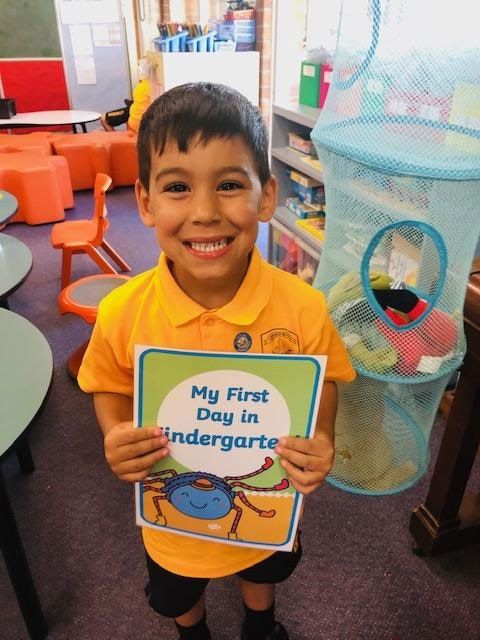
Tuesday 2nd February 2021 - Kindergarten’s First Day!
Please note: Your child will attend a half day at Randwick Public School, prior to the first day of
school for their Best Start Assessment. This morning/afternoon session will fall on either Thursday
28th, Friday 29th of January or Monday 1st February 2021. Your appointment day will be
advised in December 2020.
randwick-p.school@det.nsw.edu.au
78 Avoca Street Randwick NSW 2031 Phone (02) 9398 6022 Fax (02) 9399 8907Student Profile CONFIDENTIAL
The information you complete on this form will assist us to provide the best possible placement and support for your child both
prior to and on beginning school. Early intervention provides the best success to a child’s future progress. This will not affect
your enrolment.
1. Name of child________________________________________D.O.B. ____________________ M F
2. Name of Pre-School / Day Care Centre? (if attended) _______ _____________ __________________
Preschool Full time Part time-if so how many days x__________
Long Day Care Full time Part time-If so how many days x__________
Family Day Care Full time Part time-if so how many days x__________
Other formal/informal care e.g. relative, playgroup, nanny Part time Full time
3. Does your child have learning needs that should be taken into consideration to ensure a smooth transition to school
next year? Yes No. Please provide details __________________________________________________
_____________________________________________________________________________________________
_____________________________________________________________________________________________
4. Does your child have behavioural/ social needs that should be taken into consideration to ensure a smooth transition
to school next year? Yes No. Please provide details _________________________________________
_____________________________________________________________________________________________
_____________________________________________________________________________________________
5. Is another language spoken at home? Yes No. If Yes, Language spoken: ______________________________
6. Does your child have health needs (other than allergies or asthma as these should already be indicated on the DEC
enrolment form)? Yes No
7. If yes, please write details here: __________________________________________________________________
_____________________________________________________________________________________________
8. Has your child been referred to a health care professional? Yes No
If yes, please tick the box to indicate the type of health care professional?
Speech therapist
Optometrist
Occupational therapist
Paediatrician or other specialist medical service
Child Psychologist or psychiatrist
Audiologist
Other______________________________
9. Who referred your child? E.g. pre-school, doctor, other? _______________________________________________
10. What was the outcome of the assessment? E.g. Did your child receive any intervention from the health care
professional? Please write details in the space here: ___________________________________________________
_____________________________________________________________________________________________
_____________________________________________________________________________________________
11. Will you be supplying any other reports? E.g. speech, OT, psychologist reports. Yes No.
If yes, have you supplied it with your enrolment pack to the school office?
12. Would your child like to be placed in a classroom with a friend? What is their name? This is taken into consideration
only and not a guarantee. ________________________________________________________________________
Signature _____________________________________ Name____________________________________________
randwick-p.school@det.nsw.edu.au
78 Avoca Street Randwick NSW 2031 Phone (02) 9398 6022 Fax (02) 9399 8907Special Religious Education and Special Education in Ethics
Participation Letter
A feature of the public education system in NSW is the opportunity to provide time in class for education in
ethics, faith and morality from a religious or non-religious perspective at the choice of parents.
The school website (https://www.randwickpublicschool.com.au/) provides information on these options to support
parent/carer choice.
A parent/carer may at any time notify the school in writing that they wish to change their decision. Students will
continue the same arrangement as the previous year, unless a parent/carer has requested a change in writing.
For more information about Special Religious Education (SRE) and Special Education in Ethics (SEE), including the
list of approved providers, please visit: https://education.nsw.gov.au/teaching-and-
learning/curriculum/learning-across-the-curriculum/religion-and-ethics
If your preferred SRE or SEE option is not available please contact the approved provider. Students not
attending SRE or SEE are given supervised alternative meaningful activities.
The following options are available at Randwick Public School. Please choose one.
SRE Options
□ Catholic
□ Anglican
□ Greek Orthodox
□ Judaism
OR
□ Please check this box if you do not wish for your child to attend SRE. Your child will participate in alternative
meaningful activities.
SEE Option - If you have declined for your child to attend SRE your child may have the option to attend SEE. The
availability of SEE places is subject to the number of SEE volunteers available. The school will advise in 2020 the
scholastic years that will be offered SEE.
Student name: Class (if applicable):
Signature of parent/carer: Date:
randwick-p.school@det.nsw.edu.au
78 Avoca St Randwick NSW 2031 Phone (02) 9398 6022 Fax (02) 9399 8907AN INFORMATION BROCHURE FOR NEW ENROLMENTS
SCHOOL ESSENTIALS
Enrolment
Each public school has a local catchment area and students living in that area have a right to attend their
local school.
Enrolments in all grades are made through the Principal. Students are eligible to enrol in Kindergarten if
they turn five years old before 31 July in the year of entering school. Enrolments are taken from June to
September for enrolment in the following year.
School Hours
School days are Monday to Friday, with the exception of gazetted public holidays during term.
Classes commence 9:00am
Break 1 11:00- 11:40am
Break 2 1:40- 2:20pm
Dismissal 3:00pm *2.50-3pm for Kindergarten Term 1
Supervision is provided for 30 minutes prior to commencement of classes. Children are welcome to be
dropped at school and left to play and socialise from that time, once they have settled in and can
independently do so. Students must not remain in the school grounds outside supervised hours unless under
the direct supervision of a parent or caregiver.
Out of School Hours Care
The Randwick Out of School Hours Care Centre (ROOSH) is located at the Cottage in the school grounds.
The centre provides before and after school activities and vacation care programs for school-age children.
Before school care is provided from 7:30am and after school care until 6:00pm. School vacation care
operates from 7:30am - 6:00pm Monday - Friday.
Places in ROOSH are limited and demand always exceeds available spaces. If you would like to apply
for ROOSH it is important to contact the ROOSH office early. Families should also consider the many after
school activities conducted on school grounds as possible solutions. Information on these can be located on
the school website. Please note these change from time to time.
Fees and Voluntary Contributions
As a public school, Randwick has no compulsory fees, however, funds available to the school from
government sources are limited.
In keeping with Department of Education Policy the school therefore requests an annual voluntary
contribution from each family which is used for the purchase of educational equipment and supplies. The
contribution is currently set at $75 per year for the first child and $25 per year for each additional child
also attending the school. Payments can be made annually or per semester.
Parents also receive an invoice each semester for sport, programs and excursions which their child is
undertaking. This reduces administration for parents and the school rather than requesting payment on
randwick-p.school@det.nsw.edu.au
78 Avoca Street Randwick NSW 2031 Phone (02) 9398 6022 Fax (02) 9399 8907several occasions during term. This invoice may be paid in full at the beginning of each semester or by
instalment.
Where parents are experiencing financial hardship, there is a small amount available for supplementation.
Application for assistance should be made to the principal.
It is not necessary to buy basic school supplies such as notebooks, pens, pencils, and scissors in
Kindergarten, Year 1 and Year 2. This is supplied by the school. In Years 3-6, students are expected to
have their own stationery supplies and be responsible for them.
Uniform
All students are expected to wear school uniform on a daily basis.
Summer: Gold RPS polo-shirt, black shorts or skort, school dress, black socks, black shoes and broad
brimmed black school hat.
Winter: Black RPS Zip jacket, knit jumper or jacket, black pants, black skort, long sleeve gold RPS polo-
shirt, black socks or tights and black shoes.
Sports: Black school shorts or skort, gold polo-shirt, black socks and sports shoes.
Bag: RPS School bag.
The Uniform Shop opens on Thursday mornings 8.30 - 9:30am (during term time), or order online via
the Flexischools system for delivery to your child in their classroom- you can use this facility once your child
commences in 2021. The only items not available at the uniform shop are shoes, and the optional black
sports skirts.
Travel Passes
Application forms for student travel by bus or train to and from school are available from the school
office.
SCHOOL CURRICULUM AND OPPORTUNITIES
Key Learning Areas
The school provides a comprehensive and structured program of instruction in the key learning areas in
accordance with the requirements of the NSW Education Act 1990:
- English (reading, writing, spelling, speaking and listening)
- Mathematics (number and algebra, measurement and geometry, statistics and probability)
- Science & Technology
- Human Society and its Environment (HSIE) – History and Geography
- Creative Arts (music, visual arts, craft, drama and dance)
- Personal Development Health and Physical Education (PDHPE)
The curriculum requirements can be viewed at the NSW Board of Studies website (http://www.bosnsw-
k6.nsw.edu.au/).
Specialist Programs
2Bands & Strings
All students, K-6, are eligible to join the string program, while all year 3-6 students are eligible to join the
band program. Students are not required to read music or play an instrument to join, however, they must
demonstrate their commitment by attending weekly rehearsals and tutorials, as well as practising their
instruments at home.
The bands are an extra-curricular activity undertaken at family cost.
Technology in Education & STEM
There is a significant mobile technology program operating within the school. Students in Years K-2 have
access to class sets of iPads and students in Years 3-6 work in a 1:1 iPad environment.
The school is networked and internet access is available throughout the school. Students access this using
their Department of Education login.
Students also attend lessons in our dedicated STEM space in the newly constructed Beehive. These vary
depending on the grade. Lessons may involve coding, filming, robotics, 3D Printing and more.
Languages
All students study either Mandarin or Italian from Years 2 to 6. Mandarin, as a community language, is
offered as a subject for all native speakers from Year 2. Once a language is chosen, it is expected to be
studied to Year 6.
English as another Language or Dialect (EALD)
The school serves a multicultural community with many students from a language background other than
English. A specialist teacher provides EALD instruction for newly arrived and other EALD students from
Kindergarten to Year 6. The EALD teacher also works with teachers to support students in the classroom.
Learning Assistance Teacher (LaST)
The LaST program provides early intervention support and focuses on students in Years 1 and 2 who are
experiencing difficulties with learning. A specialist teacher is employed to plan individual educational
programs and parents are consulted before inclusion of their child in one of these programs.
Sport
K – 2 students participate in activities to develop the fundamental movement skills of rolling, balancing,
sliding, jogging, running, leaping, jumping, hopping, dodging, galloping, skipping, bouncing, throwing,
catching, kicking, striking.
Additionally, Kindergarten and Year 1 students are involved in Sport Skills lessons including Gymnastics
directed by trained specialists. Year 2 students also participate in a Swimming program led by the UNSW
Lifestyle Centre.
Year 3 – 6 sport is held on Fridays. Students participate either in inter-school competitions or in a range of
non-competitive sporting activities. Randwick is involved in inter-school competitions in a range of seasonal
sports. Trials are held at the beginning of Terms 1 and 2 to select students for these school teams. Students
not involved in school teams undertake different skills based sporting activities each term at school.
Swimming, Athletics and Cross Country Carnivals are held each year and are open to all students 8 years
and over. Students gaining places at these carnival events may be selected to represent the school at Zone
Carnivals. All K-2 Students attend a modified ‘Infants Athletics Carnival’ on school grounds.
These school carnivals are also House Competitions. The four sporting houses are Acacia (yellow), Banksia
(green), Boronia (blue) and Grevillea (red).Excursions
These occur throughout the year and are arranged by teachers to extend understanding of topics beyond
the classroom. Excursions range from short visits to places of interest in the local area or city to overnight
trips. Students in Years 4, 5 and 6 are involved in overnight excursions throughout the year.
All students are expected to participate in activities that are endorsed by the Principal. Parents are asked
to sign an electronic consent form prior to all excursions, unless already covered by the general local area
walking form signed by parents each year. Electronic forms arrive via the Caremonkey app.
Payment for overnight excursions can be made by instalments if necessary. If medication is to be
administered during excursions, a Request for Support at School of a Student’s Health Condition needs to be
completed by a parent.
Out of Hours Activities
Opportunities are available for students to participate in a range of extracurricular activities such as
school bands, Strings, the Australian Music School program, drama, choir, art, sport, chess, dance, language
and other tutoring services.
Not only do out of hours activities provide opportunities for children to broaden their experiences, but, as
they are conducted on school grounds they may help families meet out of school hours care requirements.
Activities vary from term to term, suit different age levels and are conducted out of school hours at parent
expense. Details are given in the school newsletters and are available at the school office or on the school
website. Please note these change from time to time..
Special Religious Education (SRE) and Ethics (SEE)
A feature of the public education system in NSW is the opportunity to provide time in class for education in
ethics, faith and morality from a religious or non-religious perspective at the choice of parents. SRE classes
include: Catholic, Judaism, Anglican & Greek Orthodox. If you do not wish for your child to attend SRE,
your child will participate in alternative meaningful activities (non-scripture).
If you have declined for your child to attend SRE your child may have the option to attend SEE. The
availability of SEE places is subject to the number of SEE volunteers available.
SCHOOL FACILITIES AND COMMUNITY
Library
Randwick has an enviable library with extensive resources for student use.
The Library is operated by a Teacher Librarian five days a week. All classes have weekly library access
during which information and location skills are taught and the reading of literature and book borrowing
are encouraged. Each Kindergarten student is issued with a library bag which must be used when
borrowing from the library throughout their time at Randwick PS.
The library is also open during some breaks throughout the week, when students can enjoy recreational
reading, borrow and return books, undertake research and play games.Playground The playground has active and passive recreation areas. The passive recreation areas are within and around the lunch seats, around the beehive and around the canteen. Running is discouraged in these areas. The rest of the playground is for active recreation where games are non-contact. Students may use the fixed equipment at Break 1 and Break 2 once they have settled in. Areas out of bounds for all students include the staff car park, any area where students cannot see the supervising teacher and all areas outside the school boundary. Canteen Our school canteen offers a healthy menu and online ordering through Flexischools. Since 2019 the Randwick School Canteen has been operated by an external provider, Anthony Catering. Orders can only be placed through Flexischools, and collected by students, once independent. Menus may change periodically and will be advertised in the newsletter and on the School Website. Student Banking Student Banking is operated through the Commonwealth Bank’s Dollarmite Account by parent volunteers. Signup days for banking early in Term 1, or starting kits for student accounts are available from the school office. Students bring their deposit books to school on Thursdays for processing and the books are returned to students in time for the next banking day. Communication Randwick Public School uses a range of strategies to keep parents informed of activities and issues affecting the school. The Skoolbag app is used to distribute our newsletter and other important correspondence as an efficient means of communication. It is essential that we have a current email address for your family, as our limited resources preclude us from posting to families. CareMonkey for Schools is a secure, mobile health and safety tool that gives Randwick teachers and carers instant access to important medical and emergency contact details. CareMonkey is also used to distribute and collect online permission notes for various events/excursions throughout the academic year. A link will be sent to your email address at the beginning of the school year, so you can create a profile for your child. Seesaw is a student-driven digital portfolio. Teachers can empower students to create, reflect, share, and collaborate. Students “show what they know” using photos, videos, drawings, text, PDFs, and links. Parents will receive instructions on how to view their child’s learning profile at the beginning of the year. Parent Participation Parents, family and carers are actively involved in a wide range of school programs and activities. The Parents’ and Citizens’ (P&C) Association and its parent-run subcommittees provide opportunities for parent participation in school and student issues. All parents can become members of the P&C by attending meetings. An executive committee is elected at the AGM in November each year. The P&C meets at 7pm on the third Monday of each month in the Staff Room. The agenda includes a period of general discussion where attendees can raise questions. There are also several parent-staff committees.
Other participatory activities include in class helpers, programs to assist students with reading and maths
(SARP and SAMP), book club administration and student banking.
Parents are encouraged to get actively involved in special school events held throughout the year which
may include performing arts nights, morning teas, Kindergarten Orientation and open days, sports
carnivals and Presentation Day.
The Fundraising Committee also organises a number of social events for families. In addition, a working
bee is held once each term on a Sunday so parents can help maintain and improve the school grounds.
Details are provided through the school newsletter.
There will be more information in the newsletters early in the school year on how you can become involved
in the many school programs and activities.

                                 SCHOOL WELFARE AND GOVERNANCE

Allergies
All staff are trained regularly in the management and treatment of Anaphylaxis in accordance with ASCIA
and DEC Health policies.
It is encouraged that students do not bring nuts or nut spread to school due to the large number of students
who are anaphylactic.

Principal and Executive Staff
                                                           Stage Supervisors/Assistant Principals
 Principal                         Susan Allen             Early Stage 1 (K)                 Marissa Crane
 Deputy Principals                 Rachael Chisholm        Stage 1 (Year 1-2)                Louise Manning
                                   Lauren Sten             Stage 2 (Year 3-4)                Alyce Robertson
                                                           Stage 3 (Year 5-6)                Quetzal Bell

These staff may be contacted via the office.
SCHOOL READINESS
Below is a list of skills you might like to do with your child in the
months leading up to Kindergarten. These skills may assist your child
to transition into school activities with more ease:
o Recognising their own containers, belongings or bags and
learning to open and hold them.
o Recognising and writing their own first name.
o Sitting upright and eating meals at set times, using table manners.
o Using the bathroom to go to the toilet and wash their hands
thoroughly.
o Fine motor skills including; holding a pencil to colour or trace,
using scissors and glue, building or constructing, zipping and
unzipping bags, dressing up toys, using cutlery, brushing their hair
and using a toothbrush.
o Gross motor skills including; walking, running, jumping, throwing, catching and kicking.
o Independently balancing, walking on lines, walking up and down steps and using a handrail.
o Listening to and following simple instructions and following basic routines. Getting kids to help out
with home jobs (such as hanging out the washing), is a great way to encourage listening to
instructions and following routines!
o Encouraging patience, and extended periods of independent activity.
o Taking turns with other children when playing games or using toys.
o Asking other children simple questions. Eg. “Can I play?” or “Can I please have a turn?”
o Speaking to adults to communicate their needs and feelings clearly. Eg. “Can I please have help
with…” or “Excuse me, I need a drink of water because I am thirsty”.
o Listening to you read stories and asking them questions about the stories you read them.You can also read


