EPO2day 2019 CII - Computer Implemented Inventions EPO practice and updates to the Guidelines - (EPO): e-learning centre
←
→
Page content transcription
If your browser does not render page correctly, please read the page content below
EPO2day 2019
CII – Computer Implemented Inventions
EPO practice and updates to the Guidelines

Yasemin Türkeli      Administrator, European Patent Office   11 April 2019

Presenting today

          Yasemin Türkeli (TR)
Administrator
Directorate Patent Procedures Management
EPO The Hague

At the EPO since 2003

MSc. Computer Engineering

Examiner in the fields of bioinformatics and administrative,
financial and commercial data processing

EQE

European Patent Office                                         2
CII – Computer Implemented Inventions

          Agenda
§ Patentability requirements
§ Mathematical methods (G-II, 3.3)
§ Artificial Intelligence and Machine Learning (G-II, 3.3.1)
§ Programs for computers (G-II, 3.6 and sub-sections)
§ Schemes, rules and methods for performing mental acts
  (G-II, 3.5.1)
§ Schemes, rules and methods for playing games (G-II, 3.5.2)
§ Schemes, rules and methods for doing business (G-II, 3.5.3)
§ Presentations of Information and GUIs (G-II, 3.7 and 3.7.1)

European Patent Office                                          3
Patentability: Consecutive legal requirements (G-VII,5.4)

Requirement                                    Test
1. Is there an invention within the            Technical character as a whole       § Does the claim define or use technical
   meaning of Art. 52(1)?                                                             means?

Eliminate abstract and intellectual subject-                                        § For a computer program claim, is there
matter                                                                                a further technical effect?

 2. Is the claimed subject matter novel        Problem-solution approach
 and inventive?                                                                     May be preceded by identification of
                                               § Select the closest prior art       technical features, selection is made with
                                                                                    a focus on them

     Base inventive step only on               § Identify distinguishing features
     features contributing to                                                       Features which are non-technical in
     technical character                       § Identify the technical effects     isolation may produce a technical effect in
                                                 of the distinguishing features     the context of the claim
         Correct identification of
         technical contribution of                                                  Non-technical features or effects may be
         features                              § Formulate the objective            used in the problem formulation as a
                                                 technical problem                  constraint

                                               § Decide on obviousness
European Patent Office                                                               4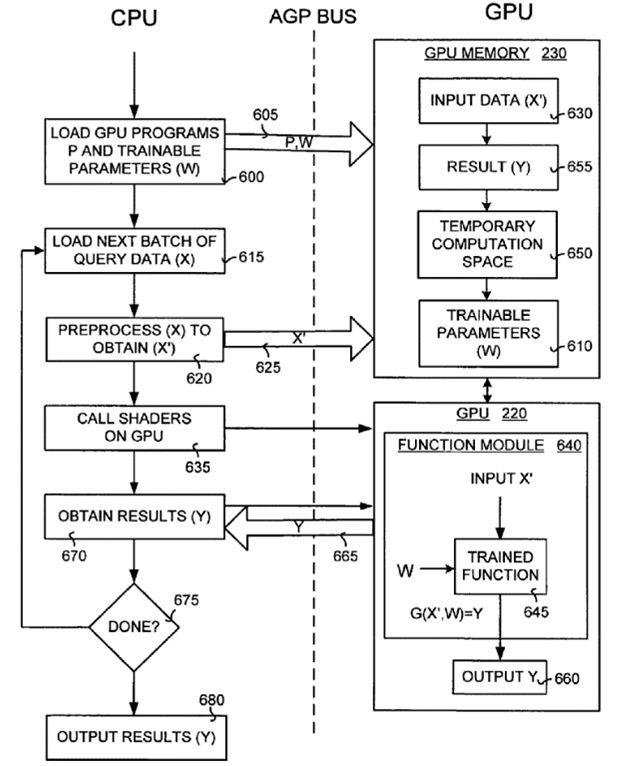
Which are the technical/non-technical features?

§ Technical features = features          Article 52 (2) EPC
                                         The following in particular shall not be regarded as inventions
  producing a technical effect serving
                                         within the meaning of paragraph 1:
  a technical purpose                    (a) discoveries, scientific theories and mathematical methods;
                                         (b) aesthetic creations;
§ The list of typical non-inventions     (c) schemes, rules and methods for performing mental acts, playing games
  in Art. 52(2) EPC covers subjects          or doing business, and programs for computers;
                                         (d) presentations of information.
  whose common feature is a lack
                                         Article 52 (3) EPC
  of technical character                 Paragraph 2 shall exclude the patentability of the subject-matter or activities
                                         referred to therein only to the extent to which a European patent application
§ The list is not exhaustive             or European patent relates to such subject-matter or activities as such.

However, the exclusions must be applied narrowly.
Art. 52(3) EPC prevents a broad scope of application of the exclusion.
} Features which do contribute to producing a technical effect in
  the context of the invention are deemed technical even if they
  relate to the list of Art. 52(2) EPC
European Patent Office                                                      5
CII – Computer Implemented Inventions

          Agenda
§ Introduction
§ Mathematical methods (G-II, 3.3)
§ Artificial Intelligence and Machine Learning (G-II, 3.3.1)
§ Programs for computers (G-II, 3.6 and sub-sections)
§ Schemes, rules and methods for performing mental acts
  (G-II, 3.5.1)
§ Schemes, rules and methods for playing games (G-II, 3.5.2)
§ Schemes, rules and methods for doing business (G-II, 3.5.3)
§ Presentations of Information and GUIs (G-II, 3.7 and 3.7.1)

European Patent Office                                          6
Mathematical methods
2x Contribution of a mathematical feature G-II, 3.3
y3
to technical character of the invention
Features of a mathematical nature can contribute to technical
character and thus inventive step in two dimensions:
Technical application Specific technical implementation
§ The method serves a § The design of the method specifically
specific technical purpose takes the internal functioning of a
§ Functional limitation (explicit or computer into account and result in
implicit) to a specific technical technical effects, e.g. improved
purpose as output with method processing speed
steps realising that output § Mathematical steps are specifically
adapted to exploit the underlying
§ Not a generic, pro forma purpose: hardware
• Controlling a technical system § No limitation to a technological field
• Controlling a robot arm needed
7
European Patent OfficeMathematical methods
G-II, 3.3
Examples of technical applications
§ A method for determining the number of passes
by an asphalt compaction machine required to
reach a desired material density by calculating the
parameters of the curve in a particular manner
§ A method for classifying records comprising
mathematical steps, the classified records being
used in a billing procedure
European Patent Office 8Mathematical methods
G-II, 3.3
Technical application: question
A cryptographic computation with masking operations Please tick
to protect the computation against power analysis þ yes ý no
Does the mathematical method contribute to the technical
character?
þ yes
European Patent Office 9Mathematical methods
G-II, 3.3
Specific technical implementation: Example
§ A modular reduction operation on T 1925/11
a polynomial
§ The equations used are
reformulated in terms of the
"word size w“ of the computer
(divisions by x(k+2w) and x(k-w))
European Patent Office 10CII – Computer Implemented Inventions
Agenda
§ Introduction
§ Mathematical methods (G-II, 3.3)
§ Artificial Intelligence and Machine Learning (G-II, 3.3.1)
§ Programs for computers (G-II, 3.6 and sub-sections)
§ Schemes, rules and methods for performing mental acts
(G-II, 3.5.1)
§ Schemes, rules and methods for playing games (G-II, 3.5.2)
§ Schemes, rules and methods for doing business (G-II, 3.5.3)
§ Presentations of Information and GUIs (G-II, 3.7 and 3.7.1)
European Patent Office 11Artificial Intelligence and Machine Learning
G-II, 3.3.1
Artificial Intelligence and Machine Learning
§ First Requirement – Art. 52(2) & (3) Art. 52(2) & (3)
• Algorithms for classification, clustering, regression, dimensionality
reduction are abstract mathematical methods. Fact that they are
trained does not change this.
• Terms like "machine" and "network" do not necessarily imply the
presence of technical means.
§ Second Requirement – Art. 54 & 56 Art. 54 & 56
• Same principles as G-II, 3.3 since AI/ML algorithms are of abstract
mathematical nature: AI and ML algorithms may contribute to
technical character in the two dimensions of technical application
and specific technical implementation
European Patent Office 12Artificial Intelligence and Machine Learning
G-II, 3.3.1
Dimension: Technical application
T 598/07
Use of
Neural Networks in
heart monitoring
apparatus for
identifying irregular
heartbeats
European Patent Office 13Artificial Intelligence and Machine Learning
G-II, 3.3.1
Dimension: Technical application
Enhanced T 1286/09
classifier for
classification of
digital images
based on expanded
training set
European Patent Office 14Artificial Intelligence and Machine Learning
G-II, 3.3.1
Dimension: Specific technical implementation
Performing
- preparatory
processing steps in
CPU and
- data-intensive
training steps in
specialised
hardware (GPU)
European Patent Office 15CII – Computer Implemented Inventions
Agenda
§ Introduction
§ Mathematical methods (G-II, 3.3)
§ Artificial Intelligence and Machine Learning (G-II, 3.3.1)
§ Programs for computers (G-II, 3.6 and sub-sections)
§ Schemes, rules and methods for performing mental acts
(G-II, 3.5.1)
§ Schemes, rules and methods for playing games (G-II, 3.5.2)
§ Schemes, rules and methods for doing business (G-II, 3.5.3)
§ Presentations of Information and GUIs (G-II, 3.7 and 3.7.1)
European Patent Office 16Programs for computers
G-II, 3.6
Technical character of a computer program
A computer program has a technical character if it produces G 3/08, T1173/97
a "further technical effect" when run on a computer:
A technical effect going beyond the normal physical interactions
between the program and the computer on which it is run
Circulation of electrical currents in the computer
is not sufficient
European Patent Office 17Programs for computers
G-II, 3.6
Examples of further technical effects
Technical Control of the Specific technical G-II, 3.6.1
method computer considerations
If the computer program If the computer program If the design of the
specifies a method controls the operation program is based on
which itself produces or functioning of the specific technical
a technical effect, e.g. computer, e.g. considerations of the
§ Controlling the anti-lock § Processor load internal functioning of
braking system balancing the computer, e.g.
§ Determining emissions § Memory management § Algorithms adapted to
by an X-ray device the underlying
§ Compilers or builders
architecture
§ Compressing video for processing code at
low level § Security algorithms
based on understanding
of the internal functions
European Patent Office 18Programs for computers
00101
10111
G-II, 3.6
01001
11101
01010
Information modelling
Information modelling is an intellectual activity G-II, 3.6.2
Non-technical § Defining a model and its components T 354/07
unless a § Management of the model during its life cycle
technical (versioning)
effect is
produced in
the context of
the invention Effects inherent to information models are
not technical effects (e.g. reusability,
platform-independence etc.)
§ Purposive use of the model to solve a specific
Technical technical problem
§ Features specifying how the model is stored
European Patent Office 19Programs for computers
A Activity of programming, programming languages G-II, 3.6
•
Writing code is an intellectual activity G-II, 3.6.2
Non-technical § Using naming conventions to facilitate T 1539/09
unless a understanding of the code
technical § Defining a programming language with a particular
effect is syntax
produced in
the context of Easing the intellectual effort of the programmer
the invention is not per se a technical effect
§ Programming constructs producing technical effects
which do not depend on how a human programmer
Technical uses the constructs
§ Features of a programming environment specifying
data input mechanism enabling user to enter text,
submit a command etc. (G-II, 3.7.1)
European Patent Office 20Programs for computers
G-II, 3.6
Data structures
G-II, 3.6.3
A computer-implemented data structure embodied on a medium
or as an electromagnetic carrier wave has a technical character
as a whole • Invention in the sense of Article 52(1) EPC
Functional data Cognitive data
Serve to control the operation Those data whose content and
of a device processing the data meaning are only relevant to
human users
§ Inherently reflect the § Do not normally contribute to
corresponding technical producing a technical effect
features of the device
§ Contribute to producing a
technical effect
European Patent Office 21Programs for computers
G-II, 3.6.3
Functional vs. cognitive data: question
An electronic message comprising: Please tick
þ yes ý no
§ content section, and
§ a header instructions which are automatically recognised
and processed by the receiving message system to
determine how the content is to be assembled and
presented to its final recipient
Functional data?
Header information with instructions þ yes
Information in the content section ý no
European Patent Office 22CII – Computer Implemented Inventions
Agenda
§ Introduction
§ Mathematical methods (G-II, 3.3)
§ Artificial Intelligence and Machine Learning (G-II, 3.3.1)
§ Programs for computers (G-II, 3.6 and sub-sections)
§ Schemes, rules and methods for performing mental acts
(G-II, 3.5.1)
§ Schemes, rules and methods for playing games (G-II, 3.5.2)
§ Schemes, rules and methods for doing business (G-II, 3.5.3)
§ Presentations of Information and GUIs (G-II, 3.7 and 3.7.1)
European Patent Office 23Schemes, rules and methods for performing
mental acts
G-II, 3.5.1
Mental acts
Instructions to the human mind on how to conduct cognitive,
conceptual or intellectual processes
Method claim encompasses
a purely mental realisation Mental act as such
of all method steps
Method claim specifies the
Not a mental act as such
use of technical means
European Patent Office 24Schemes, rules and methods for performing
mental acts
þ
G-II, 3.5.1
ý
Criteria and Pitfalls
Suitable questions Unsuitable questions
§ Does the claim exclude a § Does the claim encompass
purely mental realisation of all technical embodiments ?
method steps ? § Is the method so complex that
§ Does the claim specify the use it probably requires technical
of technical means ? means ?
§ Does the method provide a § Does the method involve
physical entity/product ? technical considerations ?
If any question is answered Even if answered
affirmatively, no objection affirmatively, the claim
under Art. 52(2)(c) and (3) could well fall under the
exclusion of Art. 52(2)(c).
European Patent Office 25Schemes, rules and methods for performing
mental acts
G-II, 3.5.1
Question
A method for designing a kitchen comprising : Please tick
§ obtaining a linear length of available onsite space þ yes ý no
using a laser distance meter;
§ selecting furniture objects of a given width in the
catalogue;
§ verifying that the sum of widths of the selected objects is
lower than the obtained linear length.
Would this method be excluded as a mental act as such?
ý no
European Patent Office 26CII – Computer Implemented Inventions
Agenda
§ Introduction
§ Mathematical methods (G-II, 3.3)
§ Artificial Intelligence and Machine Learning (G-II, 3.3.1)
§ Programs for computers (G-II, 3.6 and sub-sections)
§ Schemes, rules and methods for performing mental acts
(G-II, 3.5.1)
§ Schemes, rules and methods for playing games (G-II, 3.5.2)
§ Schemes, rules and methods for doing business (G-II, 3.5.3)
§ Presentations of Information and GUIs (G-II, 3.7 and 3.7.1)
European Patent Office 27Schemes, rules and methods for playing games
G-II, 3.5.2
Rules for playing games
Rules of traditional games, e.g. board games, card games,
skill games, as well as of gambling machines, video games
§ abstract or conceptual definitions of player conduct and how
game evolves in response to player actions, e.g. conditions
governing setup, progress, and success
§ perceived as rules by players
§ meaningful only in gaming context
Examples: rules of chess, sports, roulette and its pay-out
scheme, concept of dynamic falling-blocks-puzzle (Tetris),
tap-to-the-rhythm
European Patent Office 28Schemes, rules and methods for playing games
G-II, 3.5.2
§§
Assessment of technical effects – case law
Accepted Not accepted
as being technical as being technical
§ Security of game machines or § Surprise, suspense,
networked games entertainment value, appeal
§ Resolving technical constraints, § Fairness, balance, scoring,
e.g. bandwidth, field-of-view perceived difficulty, ease of
§ Technical efficiency and game play
effectiveness of implementation § Business benefits, e.g.
§ Technical mechanisms for advertisement or monetization
providing input to a machine schemes
§ Technical solution to rendering
a virtual world, e.g. photorealism
European Patent Office 29CII – Computer Implemented Inventions
Agenda
§ Introduction
§ Mathematical methods (G-II, 3.3)
§ Artificial Intelligence and Machine Learning (G-II, 3.3.1)
§ Programs for computers (G-II, 3.6 and sub-sections)
§ Schemes, rules and methods for performing mental acts
(G-II, 3.5.1)
§ Schemes, rules and methods for playing games (G-II, 3.5.2)
§ Schemes, rules and methods for doing business (G-II, 3.5.3)
§ Presentations of Information and GUIs (G-II, 3.7 and 3.7.1)
European Patent Office 30Schemes, rules and methods for doing business
G-II, 3.5.3
Examination under Article 56 EPC
§ In most business method cases, the features that contribute Article 56 EPC
to the technical character of the invention are limited to
those specifying a particular technical implementation
§ Features which specify a particular technical implementation
are not features of the business method and have to be
taken into account in the assessment of inventive step
European Patent Office 31Schemes, rules and methods for doing business
G-II, 3.5.3
Business/administrative methods
Non-technical elements in
Inventive step is not
objective technical problem
influenced by non-technical
as requirements given to the
elements
skilled person
How to implement in the
method of the closest prior
Objective technical problem
art the non-technical
requirements?
Business person:
§ can formulate purely business or administrative matters
§ cannot take any technical decisions or prescribe even
notorious technical means
European Patent Office 32Schemes, rules and methods for doing business
G-II, 3.5.3
Example of implementation choices
§ Distribution of eBooks can be done in two ways:
• by downloading the eBooks from the central server/ database
directly into the terminals real-time, or
• by downloading in advance the eBooks to the local terminal of the
shops
Central server
Shop 1
Shop 2 Database
with eBooks
Shop 3
technical, and have to be taken into account in the
assessment of inventive step
European Patent Office 33Schemes, rules and methods for doing business
Example of a requirement which is a business G-II, 3.5.3
method
§ A requirement that the eBooks offered to the customers are
different for each shop
Central server
Shop 1
Shop 2 Database
with eBooks
Shop 3
non-technical, and cannot support the presence of an
inventive step
European Patent Office 34CII – Computer Implemented Inventions
Agenda
§ Introduction
§ Mathematical methods (G-II, 3.3)
§ Artificial Intelligence and Machine Learning (G-II, 3.3.1)
§ Programs for computers (G-II, 3.6 and sub-sections)
§ Schemes, rules and methods for performing mental acts
(G-II, 3.5.1)
§ Schemes, rules and methods for playing games (G-II, 3.5.2)
§ Schemes, rules and methods for doing business (G-II, 3.5.3)
§ Presentations of Information and GUIs (G-II, 3.7 and 3.7.1)
European Patent Office 35Presentations of Information and GUIs
G-II, 3.7 and 3.7.1
Assessment of technical effects – general principles
§ A feature defining a presentation of information produces T 336/14 and T 1802/13
a technical effect if it
• credibly assists the user
• in performing a technical task
• by means of a continued and/or guided human-machine
interaction process
§ Assistance to perform the technical task should be
objectively, reliably and causally linked to the feature
§ Technical effect is not credibly achieved if depends on
subjective interests or preferences of the user
European Patent Office 36Presentations of Information and GUIs
G-II, 3.7 and 3.7.1
Credible technical effects?
§ Displaying an internal § Displaying
state prevailing in a specifications of
technical system a device or static
(dynamically changing) operating instructions
§ Displaying several images § A lucid diagram showing
side-by-side in low resolution properties of cars to assist the
and allowing selection and buyer in choosing a car to buy
display of an image at higher § Showing only urgent
resolution for efficient search notifications to minimise
and retrieval of stored images information overload and
§ Displaying a notification on the distraction (Urgency is based
computer screen near the user's on psychological factors)
current visual focus of attention
European Patent Office 37Presentations of Information and GUIs
G-II, 3.7 and 3.7.1
Is there a credible technical effect?
Displaying stress values for a building in a Please tick
colour coding instead of numerical values þ yes ý no
ý no
Displaying a stream of images wherein the parameters
for delay and change in the content between
successive images are computed based on physical
properties of human visual perception in order to
achieve a smooth transition
þ yes
European Patent Office 38Presentations of Information and GUIs
G-II, 3.7 and 3.7.1
GUIs, mechanisms for user input: technical
Means for facilitating user input such as by Move 4 times
§ entering text for 4 copies
§ making a selection
§ submitting a command
A graphical shortcut allowing the user to initiate printing and
setting the number of copies to be printed by a drag and
reciprocated movement of a "document icon" on a "printing icon"
Performance-oriented changes to the detection of input
Achieving faster or more accurate gesture recognition
Reducing the processing load of the device when carrying out
the recognition
European Patent Office 39EPC Guidelines on CIIs §§ Index for CIIs European Patent Office 40
Questions

                                                            Question & answer
                                                            session
          Questions

 now                     via chat to "All Panelists"

 later                   via mail è academy@epo.org

European Patent Office                                 41
You can also read


