EVIDENCE BRIEF Foraged Mushroom Consumption in Ontario - Public Health ...
←
→
Page content transcription
If your browser does not render page correctly, please read the page content below
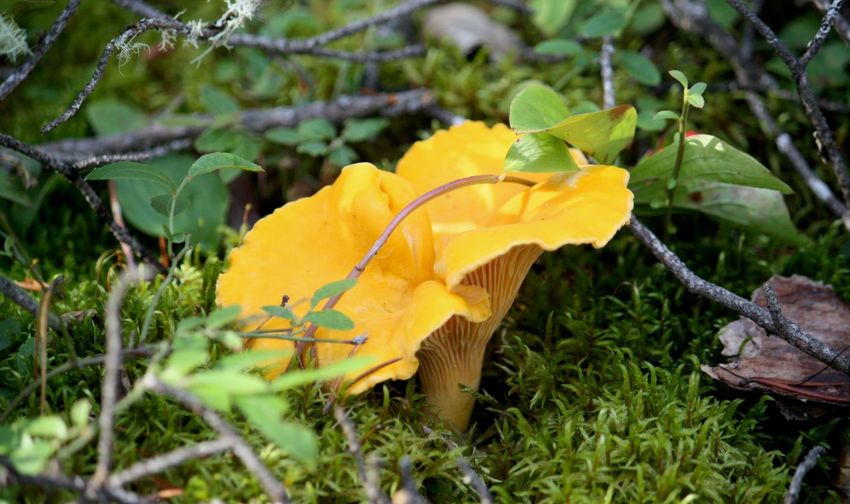
EVIDENCE BRIEF
Foraged Mushroom Consumption in Ontario
November 2019
Key Messages
Wild mushrooms are widespread in Ontario, and are harvested by individual hobbyists and
commercial enterprises for public consumption. Many species are poisonous. Health effects of
such species can range from mild to severe, including death. However, serious poisonings are
rare.
There are no simple tests to determine if a mushroom is poisonous. Safe consumption of wild
mushrooms and other wild foods requires they be correctly identified by knowledgeable
harvesters. Over a thousand calls were made to the Ontario Poison Centre (OPC) over a recent
5-year period that were mushroom-related, with at least 90 cases resulting in hospital
admission.
There are no reported cases of poisoning linked to commercial foraging. However, currently
there is no mechanism for licensing or accrediting wild mushroom foragers.
Evidence Brief: Foraged Mushroom Consumption in Ontario Wild mushrooms are found in Ontario’s farmers’ markets. Certain farmers’ market food vendors
are exempt from the Food Premises Regulation. However, assessments and inspections may be
carried out to ensure compliance with the Health Protection and Promotion Act.
Issue and Research Question
Foraging of wild mushrooms occurs in diverse communities, including some within Ontario. 1-3 Foraged
mushrooms may be sold in farmers’ markets, grocery stores, health food stores, restaurants, and online.
There are reported cases of adverse health outcomes from consuming foraged mushrooms.1 Public
health units in Ontario have requested advice from Public Health Ontario in response to concerns of
potential adverse health effects from consumption of wild foraged mushrooms being sold in their
regions.
This evidence brief examines the:
Practice of wild mushroom foraging in Ontario.
Potential health hazards of consuming foraged mushrooms.
Regulatory framework that may pertain to the sale of foraged mushrooms in Ontario.
Methods
A review of literature on mushroom poisoning in Canada was conducted using PubMed. The search was
limited to literature published in English from January 1, 1968 to August 30, 2018. The search terms
were: mushroom and (edible or forage* or wild) and (poison* or intox* or toxic* or death or hospital*
or health or injury or harm) and (Canada or Ont* or North America or United States). This search
resulted in 83 results. Titles and abstracts were screened for relevance to health effects from
consumption of foraged mushrooms, resulting in 19 results. Additional information was identified
through cited reference searching of full-text articles.
We performed an additional search of grey literature through Google. The search terms were edible OR
foraged OR wild mushrooms, Ontario, Canada, poison*, toxic*. The search was performed on
September 10, 2018, and the first 10 pages of results were reviewed.
Species that are known by Ontario mycologists to have caused poisonings were examined in biomedical
databases for geographically relevant case reports.
An unpublished checklist of over 650 mushroom species collected over more than 25 years by members
of the Mycological Society of Toronto at their annual Roy Cain Fall Foray was consulted (see recent
years’ lists at https://www.myctor.org/forays/cain/caincollections), as was Prof. George Barron’s
Mushrooms of Ontario and Eastern Canada.4
Evidence Brief: Evidence Brief: Foraged Mushroom Consumption in Ontario 2Lastly, we obtained data from the Ontario Poison Centre (OPC) for call data related to mushrooms over
the years 2013-2017, although it is recognized that a 5-year window may not capture the multi-year
variability typically seen in mushroom species abundance, and thus not fully reflect potential for
mushroom poisoning.
Main Findings
Wild Mushrooms in Ontario
Mushrooms are the spore-bearing fruiting bodies of fungi and consist of interwoven and fused hyphae.4
They arise from a network of absorptive hyphae embedded in soil or decaying organic matter such as
wood or animal dung. Many species form symbiotic relationships with tree roots where they establish
extensive networks of underground mycelium. These networks typically bear mushrooms on annual
cycles whose timing is species-dependent. However, many species fruit at far less frequent intervals,
subject to environmental factors such as seasonal weather trends, fires and other perturbations.4
There are estimated to be thousands of different species of mushrooms in Ontario.4 Some are found
throughout the province, while others are present only in specific regions. As many fungi have symbiotic
relationships with trees, the geographic distributions of mushrooms vary to a great extent on the
distribution of tree species. Paradoxically, forests with low tree diversity can exhibit high mushroom
diversity. Other factors that affect the diversity of mushroom species in the forest include the age of the
forest, soil type and climatological conditions, particularly precipitation.
The ‘ideal’ edible wild mushroom species for beginning foragers is easy to recognize, hard to misidentify,
has no toxic look-a-likes, is consumed without ill effects, and is readily available.4 The ability to recognize
an edible mushroom, and not mistake edible for poisonous, requires knowledge and experience. There
are no simple tests that yield accurate information on the toxicity of a mushroom4 despite myths to the
contrary5
Common Myths Used to Determine Mushroom Toxicity5
Poisonous mushrooms are brightly coloured whereas edible mushrooms are not.
Poisonous mushrooms blacken garlic/onion or tarnish silver cutlery when boiled together
whereas edible mushrooms do not.
All mushrooms that peel easily are edible.
The presence of insects or bite marks from animals indicate a mushroom is edible.
Soaking poisonous mushrooms in salt or boiling water will eliminate any toxicity.
A list of edible mushrooms sought by Ontario collectors is given in the Appendix, Table 1, and illustrates
that commonly sought wild mushrooms have look-a-likes that, when consumed, may cause adverse
health effects.
Evidence Brief: Evidence Brief: Foraged Mushroom Consumption in Ontario 3There is a wide variety of poisonous mushrooms in Ontario that may be mistaken for edible species; symptoms of poisoning vary depending on the type of mushroom.4 In general, symptoms include gastrointestinal symptoms, neurotoxicity, kidney toxicity, and liver toxicity. Some poisonings may be fatal. A selection of toxic mushrooms that grow in Ontario implicated in mistaken identity and subsequent poisoning is presented in the Appendix, Table 2. Mushroom Foraging in Ontario Foraging for wild mushrooms occurs across Canada, including Ontario.6,7 though the prevalence and extent is unknown. A number of groups offer amateurs the opportunity to learn about foraging. For example, Ontario Nature, a charitable organization that engages in nature conservation activities, offers a series of edible wild plant workshops in the fall in Thunder Bay, including one on wild mushrooms.8 These workshops are well attended and increasing in popularity.9 Inexperienced foragers are reported to be contacting well-established amateur naturalist societies, such as the Mycological Society of Toronto, for guidance on consumption of foraged mushrooms.9 Recent trends found in North American ‘foodie’ culture have served to popularize foraging as a facet of the ‘farm-to-table’ ideal, with certain municipalities raising alarms about the subsequent health hazard implications.10 Commercial-scale enterprises that forage, package and sell wild mushrooms also exist in Ontario.11 This suggests that foraging is well established and likely to be increasing in popularity. Health Hazards of Foraged Mushroom Consumption in Ontario There are limited data regarding the prevalence of cases of illness or death related to foraged wild mushroom ingestion in Ontario and in Canada. It was reported that in 1967, 183 cases of mushroom poisoning occurred in Canada, 11 of which required hospitalization. Seventy-five percent of all cases occurred in Ontario.12 From our literature search, this represents the most recent snapshot of mushroom poisoning cases in Canada. More recent data are available from the United States (US). Annually in the US, approximately 6,000 exposures to poisonous mushrooms are reported, most of which were associated with mild symptoms.13 A recent study in the US compiled data from the National Poison Data System (NPDS) and found over the years 1999-2016, an average of 7,428 ingestions per year were reported, representing about 0.2% of total calls, with stable incidence over that time period.3 An average of 3 deaths per year has occurred from foraged mushroom ingestions, with the majority of those identified (84.6%, 11/13) as being Amanita species.3 The authors note that these are due to misidentified species consumed by foragers.3 Data from the Ontario Poison Centre (OPC) on exposures to mushrooms were obtained regarding all mushroom-related calls for the years 2013-2017, of which an unknown proportion were from wild mushrooms.14 These data resemble those given in the NPDS study.3 The data reveal the following: Evidence Brief: Evidence Brief: Foraged Mushroom Consumption in Ontario 4
0.3% of all calls received over the 5-year
period were related to mushrooms
(1,043/362,536), similar to the proportion
found in the US.3
Figure 1 shows the distribution of cases by
age group in the 1,012 cases where age was
documented. The majority of cases (57%,
573/1,012) are younger than 12 years of
age, which likely reflects accidental
ingestions resulting in limited toxicity.15
Nearly a quarter of cases (23%, 237/1,012)
are within the age group of 12-30, which
may include individuals seeking psychedelic
mushrooms.3
Figure 1 Distribution of mushroom-
related calls by age group, 2013-2017
The remaining cases (20.0%, 202/1,012)
were over 30 years of age and may
comprise the bulk of the ‘foragers,’ as
suggested by authors describing similar US
data.3
Figure 2 shows the medical severity of
cases (168 cases out of 1,043 were lost to
follow up or deemed to not be mushroom-
related). The majority (81%, 712/875)
reported minimal to no clinical effect.
17.4% (152/875) were reported to have
moderate effects, and 1.4% (12/875) were
reported to have major effects. No deaths
were reported.
The majority of the critical care admissions
(73%, 16/22), non-critical care admissions
(70%, 33/47), and psychiatric admissions Figure 2 Distribution of mushroom-
(76.2%, 16/21) were male. The percentage related calls by medical severity, 2013-
of males in hospital admissions is consistent 2017
with the published data from several US
studies.3,15,16
Evidence Brief: Foraged Mushroom Consumption in OntarioA number of case reports of confirmed mushroom foraging-associated poisonings in Ontario were
identified:
In 2006 and 2014, Toronto Public Health published advisories in response to hospitalizations
resulting from consuming foraged Amanita bisporigera.17,18 In the 2006 advisory, details were
provided of a 44-year-old man requiring hospitalization for poisoning from consuming Amanita
bisporigera; the document also mentions a previous Ontario case of a fatal poisoning in a 62-
year-old female from wild mushroom consumption (Lepiota subincarnata) in 2003.17
In 2015, a case of Amanita bisporigera poisoning resulting in liver failure was reported in a
Canadian journal.19 In this instance, the mushroom was foraged in a Toronto park by a 55-year-
old immigrant with prior experience in wild mushroom collection.20 This scenario has been
reported in poisonings elsewhere15,21 and one report specifically attributed the mushroom being
mistaken for edible paddy straw mushrooms (Volvariella volvacea) that grow in Southeast
Asia.22
In other North American reports where severe poisonings have been documented and the culprit
species identified, Amanita spp. have represented the vast majority.1,3,22-33 Species of mushrooms
containing amatoxins, which includes Amanita, Galerina, and Lepiota, are responsible for the majority of
worldwide mushroom-related fatalities.1 The deadliest of these, Amanita phalloides, is an invasive
European species not yet known to occur in Ontario or Quebec (although it has been implicated in a
fatal poisoning in BC in 201633). Case reports of kidney failure resulting from ingestion of foraged
Cortinarius and Amanita species were reported in Alberta and British Columbia, respectively.21,23 Barron
recommends avoiding all species of Amanita given the severe risks that some species pose.4
Internationally, reports of severe and fatal mushroom poisonings have been increasing.2
Some poisonous species in Ontario resemble edible species that occur in other places; therefore,
poisonings by certain mushroom species may disproportionately affect individuals coming to Ontario
from areas where the edible species is foraged. In particular, orange Amanita species may be mistaken
for the edible Caesar’s mushroom found in southern Europe (Amanita caesarea), while poisonous
Amanita and Lepiota species found in Ontario may be mistaken for the paddy straw mushroom,
Volvariella volvacea or edible Macrolepiota species found in southeast Asia.
Regulation of Mushroom Foraging in Ontario
Food premises in Ontario are subject to Ontario Regulation 493/17 (Food Premises) and the Health
Protection and Promotion Act.34 For farmers’ markets, certain food vendors are exempt from the Food
Premises Regulation where “the majority of the persons operating the stalls or other food premises are
producers of farm products who are primarily selling or offering for sale their own products.”35 However,
assessments and inspections may be carried out to ensure compliance with the Health Protection and
Promotion Act.
The Ministry of Agriculture, Food and Rural Affairs regulates the sale of produce including edible fungi
under Ontario Regulation 119/11 under the Food Safety and Quality Act, 2001.36 Edible wild mushrooms
Evidence Brief: Evidence Brief: Foraged Mushroom Consumption in Ontario 6harvested for commercial purposes would be considered “edible fungi” and therefore included as
“produce” under this regulation. The onus is on the forager or seller to demonstrate compliance.
If a wild mushroom variety is inedible then it is not regulated under Ontario Regulation 119/11. Inedible
mushrooms would be regulated by Canada’s Food and Drug Act and Ontario’s Health Protection and
Promotion Act which prohibit the sale of food that contains poisonous or harmful substances or is unfit
for human consumption.37,38
There are no legislated standards for wild mushroom foraging, such as the licensing of foragers.
Individuals who purchase wild mushrooms are relying on the skill and competency of the forager for the
safety of the product. Generally, a small set of very easily identified mushrooms, most notably
chanterelles, edible boletes, honey mushrooms, morels, hen-of-the-woods, puffballs, and hedgehog
mushrooms make up most of the foraged mushrooms sold in Ontario. This ‘picker conservatism’ differs
sharply from market stall mushroom vendors in other regions such as Finland or inland China, who may
offer dozens of seldom-seen mushroom species.
Conclusions
The foraging of wild mushrooms is a common practice in many parts of the world. Demand for
wild mushrooms in settings such as farmers’ markets is likely to continue.
There is no simple test to reliably distinguish between edible and poisonous mushroom species,
and mistaking poisonous for edible mushrooms may result in adverse health effects.
Though the majority of all mushroom-related calls to the Ontario Poison Centre from 2013-2017
were deemed to have minimal to no clinical effect, there were at least 90 cases requiring
hospitalization, including intensive care. From all sources of information obtained, at least one
death and at least three severe poisonings (and as many as 10) related to foraged mushroom
consumption have occurred in Ontario within the last 20 years (James Scott, personal
communication, September 5, 2019). None of these were associated with purchased
mushrooms.
Foraged mushrooms in Ontario that are easy to recognize, hard to misidentify, and harvested by
a knowledgeable and competent forager are not likely to be poisonous. However, the extent to
which foragers (particularly commercial foragers) meet these criteria is unclear.
Case reports of severe harm in Ontario highlight the potential to mistake a poisonous
mushroom in Ontario for an edible variety that grows elsewhere. A nuanced communication
strategy may have greater effectiveness than messaging broadly condemning the collection and
consumption of wild mushrooms. The latter may alienate those at greatest risk.
The Food Premises Regulation regulates food premises that sell foraged mushrooms. However,
farmers’ market sellers may be exempt from this regulation, though compliance with the Health
Protection and Promotion Act is still required.
Evidence Brief: Foraged Mushroom Consumption in Ontario 7Implications for Practice
The scale and magnitude of the risk associated with consumption of foraged mushrooms is unclear;
however, documented cases of illness, supported by Canadian and US poison data, indicate that
poisonings do occur. Therefore, caution should be exercised when foraging or purchasing wild
mushrooms for consumption. Knowledgeable and experienced individuals can safely forage wild
mushrooms, particularly certain species that are more easily identified (e.g. chanterelles, edible boletes,
honey mushrooms, morels, etc.) in Ontario. If any concerns with mushroom identification arise, a
mycologist may be consulted. Targeted education to at-risk groups may decrease the incidence of future
poisonings.
Additional Resources
Field Guides:
1. Barron G. Mushrooms of Ontario and eastern Canada. Craig L, editor. Partners Publishing; 2016.
2. Miller OK. North American mushroom: A field guide to edible and inedible fungi. Falcon Guides;
2006.
3. Spahr D. Edible and medicinal mushrooms of New England and eastern Canada. North Atlantic
Books; 2009.
Grey literature articles on wild mushrooms in Ontario and Canada:
1. Groves JW. Edible and poisonous mushrooms of Canada [Internet]. Agriculture Canada. 1979
[cited 2018 Sep 4]. pp. 1–346. Available from:
http://publications.gc.ca/collections/collection_2013/aac-aafc/agrhist/A43-1112-1979-eng.pdf
[Note: Dr. Scott reports this document keys the deadly species, Lepiota subincarnata to Lepiota
cristata, which it reports is edible]
2. Mohammed GH. Non-timber forest products in Ontario: An overview. [Internet]. 1999 [cited
2018 Sep 4]. Available from: https://www.pmtech.ca/Pubs/OMNR-OFRI_NTFP_Report_145.pdf
Evidence Brief: Foraged Mushroom Consumption in Ontario 8Appendix
Table 1. Examples of edible wild mushrooms foraged in Ontario (provided for illustrative purposes, not intended for use in identification;
courtesy of Hutchison L, Scott J, and Summerbell R.)4,39
Edible Species Common name Ontario fruiting Habitat Other parts of the May be mistaken with
season world where gathered
Armillaria spp.* Honey mushroom Fall On wood or Widely sought, prized Deadly Galerina (Galerina
stumps in Central and Eastern autumnalis): deadly40
Europe
Boletus edulis King bolete or porcini Mid-summer to fall On the ground Widely sought, prized Some bolete species can
under conifers or in Central and Eastern cause gastrointestinal
in mixed woods Europe symptoms4
Calvatia gigantea Giant puffball Late summer to fall In fields, woods, Widely sought Button-stage of destroying
gardens, banks of angel (Amanita virosa):
streams deadly41
Cantharellus Chanterelle Mid-summer to fall On the ground in Widely sought, prized False chanterelle
cibarius woods in Central and Eastern (Hygrophoropsis aurantiaca):
Europe gastrointestinal symptoms;4
Jack O’Lantern (Omphalotus
olearius): poisonous42
Entoloma Hunter’s hearts Mid-summer to fall On or near rotting Entoloma abortivum Hunter’s hearts
abortivum wood in mixed
woods4
Fistulina hepatica Beefsteak fungus Late summer to fall On oak and other − Hapalopilus nidulans:
hardwoods poisonous
Evidence Brief: Evidence Brief: Foraged Mushroom Consumption in Ontario 9Edible Species Common name Ontario fruiting Habitat Other parts of the May be mistaken with
season world where gathered
Grifola frondosa Hen of the woods Mid-summer to fall On the ground in Southern Europe and Any somewhat similar species
mixed woods in East Asia are too leathery in texture for
southern Ontario consumption
Hydnum Hedgehog mushroom Mid-summer to fall On the ground in Southern and Central Bankera fuligineo-alba:
repandum mixed woods Europe inedible, not poisonous43
Lactarius Orange milk cap / Mid-summer to fall On ground under Southern, Central and Lactarius chrysorheus:
deliciosus Delicious Lactarius conifers Eastern Europe poisonous, severe
gastrointestinal symptoms4
Laetiporus Chicken of the woods Mid-summer to fall On standing Central Europe Cinnabar polypore
sulphureus moribund or dead (Pycnoporus cinnabarinus):
oak or other non-poisonous44; Hapalopilus
broadleaf trees nidulans: poisonous
Leccinum Orange bolete Mid-summer to fall On ground under − Some bolete species can
aurantiacum birch and poplar cause gastrointestinal
trees symptoms4
Lepista nuda Blewit Late summer to fall On ground in Western and Central Genus Cortinarius: variably
woods Europe poisonous45
Evidence Brief: Foraged Mushroom Consumption in Ontario 10Edible Species Common name Ontario fruiting Habitat Other parts of the May be mistaken with
season world where gathered
Macrolepita Parasol Mid-summer to early On the ground in Central- and Eastern Small-statured species in the
procera fall grassy areas and Europe and East Asia Lepiota subincarnata group
open woods (“Fatal Dapperling”): deadly;
and the green-spored
Chlorophyllum molybdites:
gastrointestinal symptoms
Marasmius Fairy ring mushroom Early summer to fall In grass and open − Leucocybe candicans, L.
oreades / Scotch bonnet areas connatum, Clitocybe rivulosa,
found in forests and forest
margin grasses: poisonous
Morchella elata Morels (black and Spring On the ground in Widely sought False morel (Gyromitra
and Morchella yellow) woods esculenta): poisonous,
esculenta potentially deadly4
Pleurotus Oyster mushroom Spring to early On dead longs, Widely sought Angel’s Wings (Pleurocybella
ostreatus summer stumps, and porrigens): generally regarded
standing trees as edible, questionable
toxicity46
Tricholoma Matsutake / pine Mid-summer to fall In 2-needle pine East Asia (especially Entoloma subsinuatum:
magnivelare mushroom barrens, pine and Japan and Korea) poisonous
spruce plantations
* Honey mushroom/Armillaria spp. has to be cooked to ensure it is safe.
Evidence Brief: Foraged Mushroom Consumption in Ontario 11Table 2. Examples of poisonous wild mushrooms in Ontario (provided for illustrative purposes, not
intended for use in identification; courtesy of Hutchison L, Scott J, and Summerbell R.)4
Species Common name Occurrence in Ontario Documented harm
Destroying angel Widespread, common
Amanita bisporigera, Verified cases in Ontario
Amanita virosa (OPC) including
hospitalization with
significant liver and
kidney damage17-19,45
Fly Agaric Widespread, very Many verified cases in
Amanita muscaria
common Ontario (OPC); Nausea
complex
and vomiting; may be
detoxified by parboiling
and eaten safely.
Probably less toxic than
red European
populations46
Lead poisoner Widespread Gastrointestinal
Entoloma spp.: E.
symptoms47
subsinuatum (E.
lividum), E.
rhodopolium, etc.
Fall Galerina / Funeral Southwestern region Amatoxin poisoning48
Galerina autumnalis
bell
Deadly Galerina Southwestern region, Amatoxin poisonin48
Galerina marginata
uncommon
False morel Widespread Many verified cases in
Gyromitra esculenta
Ontario; fatalities in
Europe4
Purple dye polypore Widespread, Suspected case in
Hapalopilus nidulans
uncommon eastern Ontario (OPC
2015); neurological and
gastrointestinal
symptoms, impaired
kidney function (purple
urine)
Fibre head Widespread, common Hospitalization with full
Inocybe risa or Inocybe
recovery of 14 cases in
fastigiata
USA49
Evidence Brief: Evidence Brief: Foraged Mushroom Consumption in Ontario 12Species Common name Occurrence in Ontario Documented harm
Fatal dapperling Southern region, Verified cases including
Lepiota subincarnata
uncommon several fatalities in
Ontario (OPC 2003, 2006
& 2010)50 and Illinois51
Jack o' lantern Widespread, common Many verified cases in
Omphalotus olearius
mushroom Ontario (OPC); nausea
and vomiting, no deaths
reported in North
America40
Haymaker’s mushroom Widespread, common Verified cases in Ontario
Panaeolina foenisecii
(OPC); mild poisoning if
any; some collections
may have traces of
psilocybin, despite
reports to the contrary.52
Evidence Brief: Foraged Mushroom Consumption in Ontario 13References
1. Jacobs J, Behren Von J, Kreutzer R. Serious mushroom poisonings in California requiring
hospital admission, 1990 through 1994. West J Med. 1996;165(5):283–8. Available from:
https://www.ncbi.nlm.nih.gov/pmc/articles/PMC1303844/
2. Diaz JH. Evolving global epidemiology, syndromic classification, general management, and
prevention of unknown mushroom poisonings. Crit Care Med. 2005;33(2):419–26.
3. Brandenburg WE, Ward KJ. Mushroom poisoning epidemiology in the United States.
Mycologia. 2018;110(4):637–41.
4. Barron G. Mushrooms of Ontario and Eastern Canada. Edmonton, AB: Partners Publishing;
2016.
5. Berger KJ, Guss DA. Mycotoxins revisited: part I. J Emerg Med. 2005;28(1):53–62.
6. Coppolino A. Foraging for food is a return to our ancestral roots. CBC News [Internet], 2016
Nov 5 [cited 2018 Sep 4]. Available from: https://www.cbc.ca/news/canada/kitchener-
waterloo/andrew-coppolino-foraging-mushrooms-1.3836744
7. CBC News. Foraging for fabulous forest fungi on Haida Gwaii. CBC News [Internet], 2016 Sep
22 [cited 2018 Sep 4]. Available from: https://www.cbc.ca/news/canada/british-
columbia/mushroom-picking-haida-gwaii-1.3774332
8. Ontario Nature. Forest and freshwater foods [Internet]. Toronto, ON: Ontario Nature [cited
2018 Oct 1]. Available from: https://ontarionature.org/programs/boreal/forest-and-
freshwater-foods/
9. Liberty C (Mycological Society of Toronto, Technical Director). Personal communication. 2018.
10. Bland A. Mushroom foraging: when the fun(gi) hunt gets out of hand. NPR [Internet], 2013
Dec 4 [cited 2018 Oct 1]. Available from:
https://www.npr.org/sections/thesalt/2013/12/03/248582278/mushroom-foraging-when-
the-fun-gi-hunt-gets-out-of-hand
11. Forbes Wild Foods. Wild mushrooms foraged by Forbes Wild Foods [Internet]. Toronto, ON:
Forbes Wild Foods; [cited 2018 Oct 1]. Available from: http://wildfoods.ca/wild-mushrooms/
12. Lough J, Kinnear DG. Mushroom poisoning in Canada: report of a fatal case. Can Med Assoc J.
1970;102(8):858–60. Available from:
https://www.ncbi.nlm.nih.gov/pmc/articles/PMC1946671/
13. Bronstein AC, Spyker DA, Cantilena LR, Green JL, Rumack BH, Giffin SL. 2008 annual report of
the American Association of Poison Control Centers’ National Poison Data System (NPDS):
26th annual report. Clin Toxicol (Phila). 2009;47(10):911–1084.
14. Thompson M (Ontario Poison Centre, Medical Director). Personal communication. 2018.
15. Barbee G, Berry-Cabán C, Barry J, Borys D, Ward J, Salyer S. Analysis of mushroom exposures
in Texas requiring hospitalization, 2005-2006. J Med Toxicol. 2009;5(2):59–62. Available from:
https://www.ncbi.nlm.nih.gov/pmc/articles/PMC3550325/
Evidence Brief: Foraged Mushroom Consumption in Ontario 1416. Kintziger KW, Mulay P, Watkins S, Schauben J, Weisman R, Lewis-Younger C, et al. Wild
mushroom exposures in Florida, 2003–2007. Public Health Rep. 2011;126(6):844–52.
Available from: https://www.ncbi.nlm.nih.gov/pmc/articles/PMC3185320/
17. Toronto Public Health. Health advisory issued on consuming wild mushrooms [Internet].
Toronto, ON: City of Toronto; 2006 Jul 21 [cited 2018 Sep 4]. Available from:
http://wx.toronto.ca/inter/it/newsrel.nsf/print/CC69DA229F4E946E852571B2007020C9?ope
ndocument
18. Toronto Public Health. Health warning issued on consuming wild mushrooms [Internet].
Toronto, ON: City of Toronto; August 27, 2014 [cited 2018 Sep 10]. pp. 1–2. Available from:
http://wx.toronto.ca/inter/it/newsrel.nsf/9a3dd5e2596d27af85256de400452b9b/ce8de5c07
4fc78a085257d4100582eb0?OpenDocument.
19. Stein CM, Wu PE, Scott JA, Weinerman AS. Fulminant hepatic failure following ingestion of
wild mushrooms. CMAJ. 2015;187(11):822–4. Available from:
http://www.cmaj.ca/content/187/11/822
20. Ubelacker S. If you forage for mushrooms, make sure you know what you’re picking. The
Globe and Mail [Internet], 2015 Jul 16 [updated 2018 May 15; cited 2018 Sep 10]. Available
from: https://www.theglobeandmail.com/life/health-and-fitness/health/if-you-forage-for-
mushrooms-make-sure-you-know-what-youre-picking/article25533961/
21. Leathem AM, Purssell RA, Chan VR, Kroeger PD. Renal failure caused by mushroom poisoning.
J Toxicol Clin Toxicol. 1997;35(1):67–75.
22. Madhok M. Amanita bisporgera. Ingestion and death from mistaken identity. Minn Med.
2007;90(9):48–50.
23. Raff E, Halloran PF, Kjellstrand CM. Renal failure after eating “magic” mushrooms. CMAJ.
1992;147(9):1339–41. Available from:
https://www.ncbi.nlm.nih.gov/pmc/articles/PMC1336442/
24. West PL, Lindgren J, Horowitz BZ. Amanita smithiana mushroom ingestion: a case of delayed
renal failure and literature review. J Med Toxicol. 2009;5(1):32–8. Available from:
https://www.ncbi.nlm.nih.gov/pmc/articles/PMC3550331/
25. Bonacini M, Shetler K, Yu I, Osorio RC, Osorio RW. Features of patients with severe hepatitis
due to mushroom poisoning and factors associated with outcome. Clin Gastroenterol
Hepatol. 2017;15(5):776–9.
26. Apperley S, Kroeger P, Kirchmair M, Kiaii M, Holmes DT, Garber I. Laboratory confirmation of
Amanita smithiana mushroom poisoning. Clin Toxicol (Phila). 2013;51(4):249–51.
27. Vo KT, Montgomery ME, Mitchell ST, Scheerlinck PH, Colby DK, Meier KH, et al. Amanita
phalloides mushroom poisonings - northern California, December 2016. MMWR Morb Mortal
Wkly Rep. 2017;66(21):549–53. Available from:
https://www.cdc.gov/mmwr/volumes/66/wr/mm6621a1.htm
28. Méndez-Navarro J, Ortiz-Olvera NX, Villegas-Ríos M, Méndez-Tovar LJ, Andersson KL,
Moreno-Alcantar R, et al. Hepatotoxicity from ingestion of wild mushrooms of the genus
Amanita section Phalloideae collected in Mexico City: two case reports. Ann Hepatol.
Evidence Brief: Foraged Mushroom Consumption in Ontario 152011;10(4):568–74. Available from:
https://www.sciencedirect.com/science/article/pii/S1665268119315297
29. Becker CE, Tong TG, Boerner U, Roe RL, Scott AT, MacQuarrie MB, et al. Diagnosis and
treatment of Amanita phalloides-type mushroom poisoning: use of thioctic acid. West J Med.
1976;125(2):100–9. Available from:
https://www.ncbi.nlm.nih.gov/pmc/articles/PMC1237216/
30. Rogart JN, Iyer A, Robert ME, Levy G, Strazzabosco M. Type I autoimmune hepatitis
presenting with acute liver failure in the setting of wild mushroom ingestion. J Clin
Gastroenterol. 2008;42(6):662–6. Available from:
https://www.ncbi.nlm.nih.gov/pmc/articles/PMC3762257/
31. Nordt SP, Manoguerra A, Clark RF. 5-Year analysis of mushroom exposures in California. West
J Med. 2000;173(5):314–7. Available from:
https://www.ncbi.nlm.nih.gov/pmc/articles/PMC1071149/
32. Klein AS, Hart J, Brems JJ, Goldstein L, Lewin K, Busuttil RW. Amanita poisoning: treatment
and the role of liver transplantation. Am J Med. 1989;86(2):187–93.
33. Johnson L. 3-year-old Victoria boy dies from poisonous “death cap” mushroom. CBC News
[Internet], 2016 Oct 12 [cited 2018 Sep 10]. Available from:
https://www.cbc.ca/news/canada/british-columbia/death-cap-mushroom-victoria-boy-
poisoned-1.3802245
34. Health Protection and Promotion Act, RSO 1990, c H.7. Available from:
https://www.ontario.ca/laws/statute/90h07
35. Food Premises, O Reg 493/17. Available from:
https://www.ontario.ca/laws/regulation/170493
36. Produce, Honey and Maple Products, O Reg 119/11. Available from:
https://www.ontario.ca/laws/regulation/110119.
37. Food and Drugs Act, RSC 1985, c F-27. Available from: http://laws-
lois.justice.gc.ca/eng/acts/f-27/index.html
38. Health Protection and Promotion Act, RSO 1990, c H.7. Available from:
https://www.ontario.ca/laws/statute/90h07
39. Hutchison L, Amended Scott J, Summerbell R. This list was provided by Professor Leonard
Hutchison (2016 & 2018 personal communications) who specializes in mycology and urban
forestry at Lakehead University, and cross referenced with Barron’s Mushrooms of Ontario
and Eastern Canada.4 The table was amended by Professors Richard Summerbell and James
Scott of the Dalla Lana School of Public Health, University of Toronto, both of whom regularly
identify poisonous mushrooms for the Ontario Poison Centre and serve as identification
authenticators for the Mycological Society of Toronto.
40. Volk T (University of Wisconsin Madison-La Crosse). Tom Volk’s fungus of the month for May
2003: this month’s fungus is Galerina autumnalis, the deadly Galerina [Internet]. Madison,
WI: Thomas J. Folk; 2003 [cited 2018 Sep 19]. Available from:
http://botit.botany.wisc.edu/toms_fungi/may2003.html
Evidence Brief: Foraged Mushroom Consumption in Ontario 1641. Fischer D. Giant, gem-studded and pear-shaped puffballs. Scientific names: Langermannia
gigantean, Lycoperdon perlatum, L. pyriforme, and others [Internet]. American Mushrooms;
2007 [cited 2018 Sep 19]. Available from: http://americanmushrooms.com/edibles3.htm
42. Masters EJ. Personal experience with jack o'lantern mushroom toxicity. Wilderness
Environmen Med. 2002;13(2):182-3.
43. Northern Bushcraft. Hedgehog mushroom: Hydnum repandum [Internet]. Northern
Bushcraft; [cited 2018 Sep 19]. Available from:
http://northernbushcraft.com/topic.php?name=hedgehog+mushroom®ion=on&ctgy=edi
ble_mushrooms
44. Northern Bushcraft. Chicken of the Woods: Laetiporus sulphureus [Internet]. Northern
Bushcraft; [cited 2018 Sep 19]. Available from:
http://northernbushcraft.com/topic.php?name=chicken+of+the+woods®ion=on&ctgy=edi
ble_mushrooms
45. The Mushroom Forager. ForageCast: a balm for the blewit blues [Internet]. The Mushroom
Forager; 2011 [cited 2018 Sep 19]. Available from:
http://themushroomforager.com/2011/09/20/foragecast-a-balm-for-the-blewit-blues/
46. Saviuc P, Danel V. New syndromes in mushroom poisoning. Toxicol Rev. 2006;25(3):199–209.
47. City of Toronto; Royal Ontario Museum; Mycological Society of Toronto. Mushrooms of
Toronto: a guide to their remarkable world. City of Toronto; 2015.
48. Moss MJ, Hendrickson RG. Toxicity of muscimol and ibotenic acid containing mushrooms
reported to a regional poison control center from 2002-2016. Clin Toxicol (Phila).
2019;57(2):99-103.
49. Ammirati JA, Traquair, JA, Horgen PA. Poisonous mushrooms of the northern United States
and Canada. Minneapolis, MN: University of Minnesota Press, 1986.
50. Horowitz BZ, Moss MJ. Amatoxin mushroom toxicity. In: StatPearls [Internet]. Treasure Island,
FL: StatPearls Publishing; 2018. Available from:
https://www.ncbi.nlm.nih.gov/books/NBK431052/
51. Lurie Y, Wasser SP, Taha M, Shehade H, Nijim J, Hoffmann Y, et al. Mushroom poisoning from
species of genus Inocybe (fiber head mushroom): a case series with exact species
identification. Clin Toxicol (Phila). 2009;47(6):562–5.
52. Archambault R. Intoxications fongiques. Le Mycologue. 2005:8-11.
53. Mottram AR, Lazio MP, Bryant SM. Lepiota subincarnata J.E. Lange induced fulminant hepatic
failure presenting with pancreatitis. J Med Toxicol. 2010;6(2):155-7. Available from:
https://link.springer.com/article/10.1007/s13181-010-0062-1
54. Cooles P. Abuse of the mushroom Panaeolus foenisecii. Br Med J. 1980;280(6212):446-7.
Evidence Brief: Foraged Mushroom Consumption in Ontario 17Specifications and Limitations of Evidence Brief The purpose of this Evidence Brief is to investigate a research question in a timely manner to help inform decision making. The Evidence Brief presents key findings, based on a systematic search of the best available evidence near the time of publication, as well as systematic screening and extraction of the data from that evidence. It does not report the same level of detail as a full systematic review. Every attempt has been made to incorporate the highest level of evidence on the topic. There may be relevant individual studies that are not included; however, it is important to consider at the time of use of this brief whether individual studies would alter the conclusions drawn from the document. Evidence Brief: Foraged Mushroom Consumption in Ontario 18
Authors
Vincent Spilchuk, Occupational Medicine Consultant, Environmental and Occupational Health, Public
Health Ontario
James Scott, Professor, Division of Occupational & Environmental Health, Dalla Lana School of Public
Health, University of Toronto
Richard Summerbell, Associate Professor, Division of Occupational & Environmental Health, Dalla Lana
School of Public Health, University of Toronto.
Michael Benusic, Public Health Resident Physician, Environmental and Occupational Health, Public
Health Ontario
Jin Hee Kim, Public Health Physician, Environmental and Occupational Health, Public health Ontario
Alexander Summers, Public Health Resident Physician, Environmental and Occupational Health, Public
Health Ontario
Cindy Shen, Public Health Resident Physician, Environmental and Occupational Health, Public Health
Ontario

Contributors
Rena Chung, Manager, Environmental and Occupational Health, Public Health Ontario
Naghmeh Parto, Senior Program Specialist, Environmental and Occupational Health, Public Health
Ontario
Leonard Hutchison, Associate Professor, Natural Resources Management, Lakehead University

Reviewer
Ray Copes, Chief, Environmental and Occupational Health, Public Health Ontario

Special Thanks
Dr. Margaret Thompson, Medical Director, Ontario Poison Centre
Chris Liberty, Technical Director, Mycological Society of Toronto
Ontario Ministry of Health
Ontario Ministry of Agriculture, Food and Rural Affairs

Citation
Ontario Agency for Health Protection and Promotion (Public Health Ontario). Foraged mushroom
consumption in Ontario. Toronto, ON: Queen's Printer for Ontario; 2019.

ISBN: 978-1-4868-3813-4 [PDF]

©Queen’s Printer for Ontario, 2019

Evidence Brief: Foraged Mushroom Consumption in Ontario                                            19
Disclaimer
This document was developed by Public Health Ontario (PHO). PHO provides scientific and technical
advice to Ontario’s government, public health organizations and health care providers. PHO’s work is
guided by the current best available evidence at the time of publication.

The application and use of this document is the responsibility of the user. PHO assumes no liability
resulting from any such application or use.

This document may be reproduced without permission for non-commercial purposes only and provided
that appropriate credit is given to PHO. No changes and/or modifications may be made to this document
without express written permission from PHO.

Public Health Ontario
Public Health Ontario is a Crown corporation dedicated to protecting and promoting the health of all
Ontarians and reducing inequities in health. Public Health Ontario links public health practitioners, front-
line health workers and researchers to the best scientific intelligence and knowledge from around the
world.
For more information about PHO, visit publichealthontario.ca.

Public Health Ontario acknowledges the financial support of the Ontario Government.

Evidence Brief: Foraged Mushroom Consumption in Ontario                                                  20
You can also read


