EXPERIENCE GRASSLANDS NATIONAL - PARK VISITOR GUIDE - Forest Communications
←
→
Page content transcription
If your browser does not render page correctly, please read the page content below

Grasslands            Parc national
National Park         des Prairies
parkscanada.gc.ca     parcscanada.gc.ca

Parc national           Grasslands
des Prairies            National Park
parcscanada.gc.ca       parkscanada.gc.ca

EXPERIENCE
GRASSLANDS
NATIONAL
PARK                VISITOR GUIDE
CONTACT INFORMATION
Website: www.pc.gc.ca/grasslands
Email: grasslands.info@pc.gc.ca

VISITOR CENTRE
West Block 1-306-298-2257
East Block 1-306-476-2018 (May–October)

Grasslands National Park
P.O. Box 150
Val Marie, Sask. S0N 2T0

EMERGENCY SERVICES
9-1-1: Police, Fire, Ambulance
(Limited cell coverage)

Parks Canada Dispatch: 1-877-852-3100

RCMP – West Block 1-306-625-6400 Ponteix 24 hrs.
RCMP – East Block 1-306-642-7110 Assiniboia 24 hrs.
WELCOME
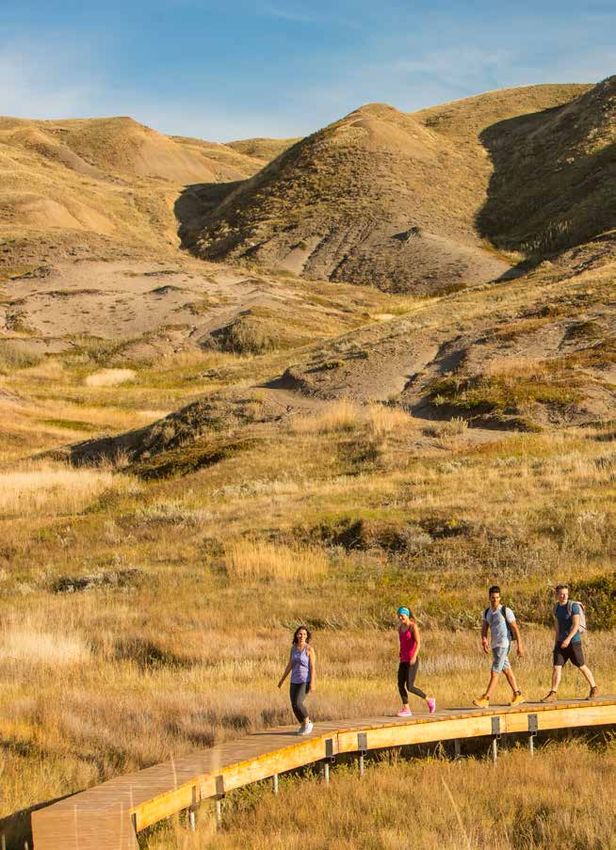
      Experience the solitude of the wide-open plain as the prairie
      wind ripples a sea of grasses beneath the clearblue sky.

      EXPLORE TWO UNIQUE GEOGRAPHIC LOCATIONS:
      West Block – Connect with national treasures and see some of the rarest
      wildlife in Canada as you explore the West Block’s Frenchman River Valley.
      Catch a glimpse of a Short-horned Lizard or Plains Bison and spy on the
      comical Black-tailed Prairie Dogs.
      East Block – Hike the breathtaking badlands, discover the astonishing
      dinosaur bones exposed in the eroding layers of earth.

      DIVERSE
      The grasslands that surround you are situated at the northern tip of
      North America’s mixed-grass prairie. It is unique in Canada bringing
      with it many uncommon plants and animals.

      RESILIENT
      Once the grassland is broken by the plough, it takes many years and
      a nearby seed source for the native plants to return. If the protective
      grass, moss and lichen ground cover is removed, the fertile soil is
      soon blown away by the strong prairie wind.

      EVOLVING
      Less than one quarter of Canada’s original mixed-grass prairie remains in
      its natural state. The park and area is one of the largest and least disturbed
      remaining pockets of native prairie in North America.
      Grasslands National Park is the only park in Canada to represent the
      Prairie Grasslands Natural Region.

                                                              VISITOR GUIDE • 3
YOUR JOURNEY

BEGINS HERE…
Check out the top 5 must do’s

  3) Hike the self-guided trail to one of the highest and most striking
      viewpoints in the park – 70 Mile Butte.

4 • G R A S SL ANDS NAT IO NAL PARK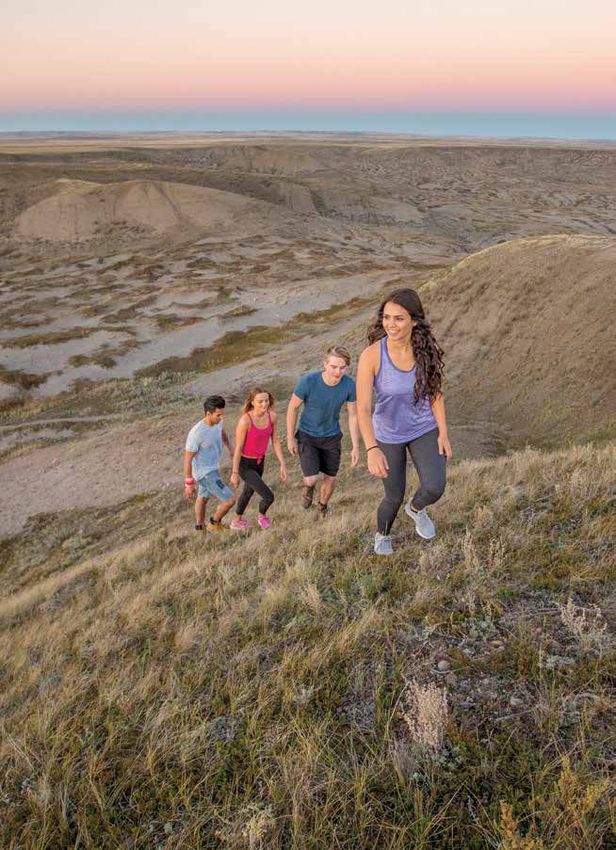
1) Go on an adventure and take        2) Watch the night sky come alive
    the Ecotour Scenic Drive – and         from the best seats in the house
    view some of the rarest wildlife       – your tent in the backcountry
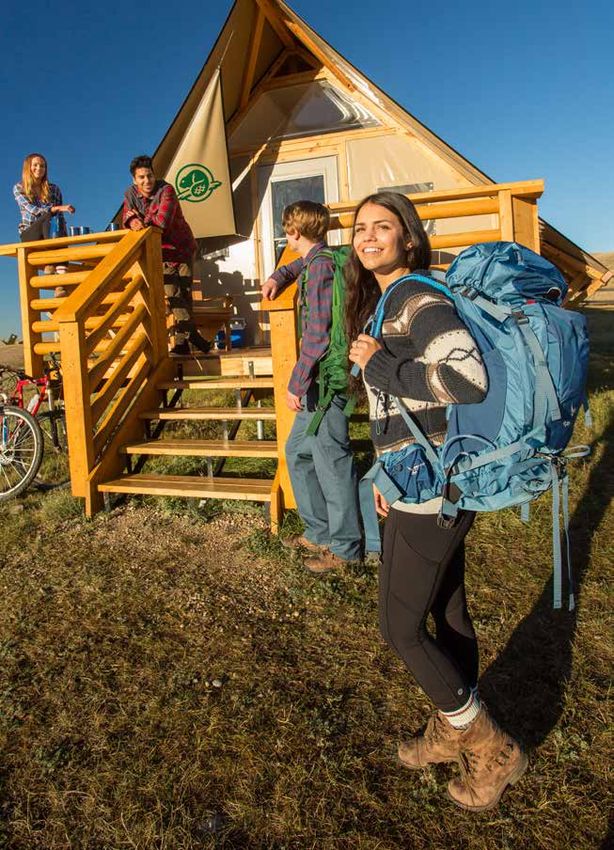
    in Canada.                             or the deck of your oTENTik.
                                           Simply breathtaking.

4) Join a guided interpretive         5) Explore the Badlands in the
    program and experience                 Valley of 1000 devils or check
    the stories that capture the           out the Borderlands Lookout
    character of this amazing land.        on the Back country loop.

                                                                            VISITOR GUIDE • 5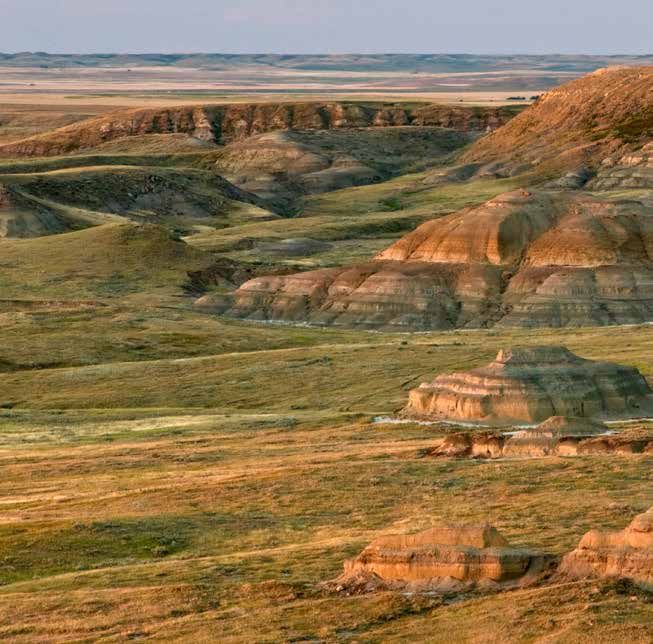
HOW TO HAVE A

SAFE
ADVENTURE!

Grasslands National Park is a prairie wilderness                      PRAIRIE DOG VISITS
environment with few services. Be prepared! Your safety               • Keep pets away from Prairie Dog towns – for
                                                                        their safety and yours
depends on awareness of the lack of water and shade,
                                                                      • Fleas from wild rodents such as Prairie Dogs
wild animals such as Bison and rattlesnakes, prairie                    may transmit diseases such as sylvatic plague
wildfires and storms, and being able to find your way.                • Tuck pants into socks and use insect repellent
                                                                        with DEET
PRIOR TO ENTERING THE PARK, OBSERVE THE FOLLOWING                     • Beware of Black Widow spiders and fleas,
FOR AN ENJOYABLE VISIT:                                                 especially in prairie dog burrows

• Bring 2-3 litres of water/person/day – potable water is available   • Don’t handle dead wildlife! If possible,
  at the Frenchman Valley and Rock Creek Campgrounds                    report to park staff

• Carry a first aid kit and cell phone, coverage is limited
• Roads may become impassable when wet

6 • G R A S SL ANDS NAT IO NAL PARK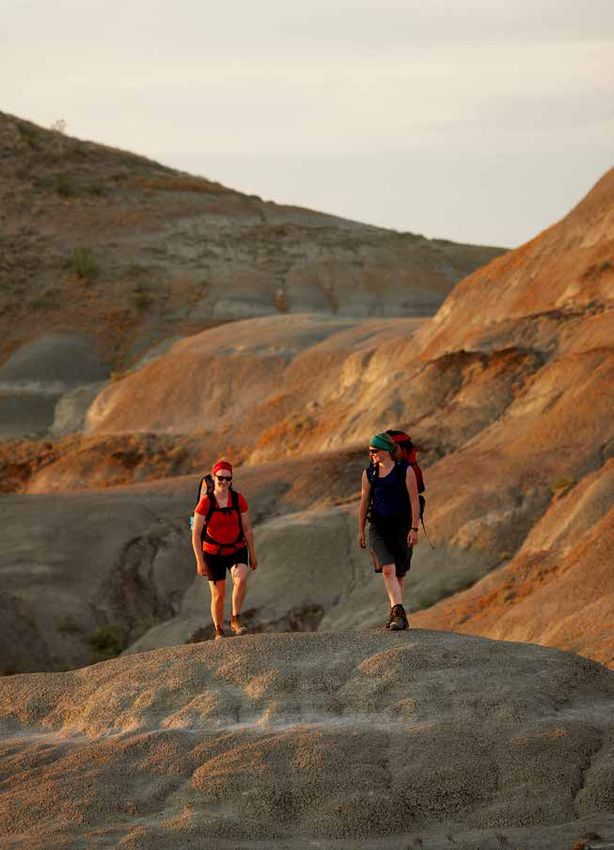
BISONS
                                         • Remember that Bison
                                           are wild animals. Your
                                           best protection is
                                           to maintain a
                                           safe distance of
                                           100 metres or more
FINDING YOUR WAY                           (length of a football
                                           field). Getting too
• Tell someone your plans and
                                           close is wildlife
  place the backcountry camping
                                           harassment at
  permit on the dashboard of
                                           the least, and life
  your vehicle.
                                           threatening at the most
• Inquire with staff at Visitor Center
                                         • If encountering Bison
  for up to date information and
                                           during your drive, stay
  navigation tools (e.g. maps,
                                           in your vehicle, drive slow
  compass, GPS and batteries)
                                           and do not honk
• Pause frequently to be aware                                                     WATCH FOR THESE SIGNS
                                         • Use caution when cycling,
  of your surroundings                                                             OF BISON AGGRESSION:
                                           horseback riding or hiking
• If lost or disoriented, stay put,        (especially with pets)
  stay calm and remain visible                                                   Shaking their head      Loud snorting
                                         • Remember that Bison are
• Find shelter if the weather turns        more aggressive during                Pawing                  Raising the tail
  bad or if night falls                    calving (May) and rutting             Short charges or
                                           (mid-July–August)                     running toward you

                                                                                    QUICKSAND
                                                                                    • Beware of quicksand in the
                                                                                       East Block – typically, they are
WEATHER                                                                                identified with signs
AND WILDFIRES
• Be prepared for sudden weather
                                         RATTLESNAKES
  changes such as strong winds
  and electrical storms. Lightning       • Wear over-the-ankle footwear and
  frequently ignites grass fires –         long pants to protect against bites
  avoid high ground and barbed           • Watch where you walk and keep
  wire fences                              children close – you may not
• Report sightings of smoke                hear the rattle
  or flames by calling 911 or            • Stay calm and slowly move away
  Parks Canada Dispatch –                  if you see or hear a rattlesnake
  1-877-852-3100
                                         • Know that snakes will only strike
• Grass fires travel quickly,              when threatened or cornered                IF BITTEN:
  be prepared to evacuate
                                         • Consider borrowing snake gaiters         Stay calm and            Cleanse the
• If fire traps you, head for low          at the Visitor Centre for your           restrict movement        wound, keep
  vegetation areas (e.g. gravel            personal comfort                                                  limb below heart
  roads, Prairie Dog colonies)                                                      Call 911 and seek
                                         Contact the Visitor Centre regarding                                level and do not
  or burned areas                                                                   medical attention
                                         snake hibernaculum restrictions            immediately              drink fluids

                                                                                                    VISITOR GUIDE • 7
SPECIAL EVENTS:
GRASSLANDER CLASSIC
(WEST BLOCK, JULY)
Spend the day kayaking the heart
of the Frenchman River, then tour
the Bison Handling Facility all
before riding on a wagon to hear
stories of the open range. Try
your hand at archery and rally
your team to play in the ball
hockey tournament. Join in the
excitement at the kids activity
pavilion and dance into the
evening at the outdoor concert.

ASTRONOMY: BEYOND THE
BIG DIPPER (WEST & EAST
BLOCK, MAY, JULY & AUGUST)

                                      EXPLORE
The new moon opens the door
to the darkest Dark Sky Preserve.
Join us as we unfold the mysteries
within the rich darkness we
actively protect.

                                      AND

                                      DISCOVER
BADLANDS BLAST
(EAST BLOCK, AUGUST)
Wagon rides, kids activities,
and fossil experts share their
adventures. Dine and dance
at the Rock Creek Hoedown.
Bring your instrument and jam
with the locals.                      ECOTOUR SCENIC DRIVE:
                                      Pick up a self-guided brochure from the Visitor Centre, and embark
                                      on your tour through the West Block to view rare wildlife and
FOSSIL FEVER                          breathtaking landscapes.
(EAST BLOCK, AUGUST)
Always wanted to dig into             HIKING:
the past? Join the Royal              Select a trail experience that’s right for you – from leisurely strolls to
Saskatchewan Museum as                awesome back country experiences.
they uncover the ancient secrets.
You can be part of the dig, a         GEOCACHING:
palaeontologist for the day.          Embark on a self-guided trip to experience some of the park’s most
Come enjoy the ‘fossil talks’         interesting cultural and natural hotspots!
each evening.
                                      KAYAKING:
                                      Launch at the Belza Bridge and explore the Frenchman River.
                                      Don’t have a kayak? Give a local outfitter a call.

8 • G R A S SL ANDS NAT IO NAL PARK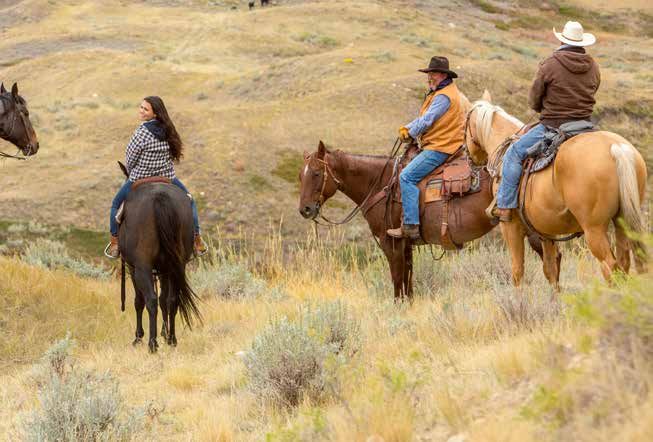
HORSEBACK RIDING:
                                                   Bring your equine companion and explore the prairie
                                                   landscape on horseback! Equestrian camping available
                                                   in both blocks.

                                                   CYCLING:
                                                   A prairie bike ride has its challenges, and its rewards.
                                                   Travel the Ecotour road or try a prairie trail. Check with
                                                   campground staff about bicycle rentals.

                                                   JUST FOR KIDS:
                                                   Pick up your Xplorers booklet at the Visitor Centre. Complete
                                                   the fun activities and puzzles and earn a cool souvenir! Also,
                                                   be sure to ask about our Junior Naturalist backpacks, and
                                                   kids programs this summer.

                                                   OUTFITTER ADVENTURES:
                                                   Many great guided outfitter experiences available in
                                                   the area, including: horseback, kayaking, hiking, art,
                                                   photography and yoga.

                                                   SEEK OUT THE RED CHAIRS:
                                                   Parks Canada started the “Red Chair Experience,” placing
                                                   red Adirondack chairs in scenic locations throughout the
                                                   national parks and encouraging visitors to seek them
                                                   out and share their experience. Grasslands National Park
                                                   has 3 locations in the West and East blocks. Be sure to
                                                   #sharethechair.
                                                   Ask for an ‘Activity Guide’ for more information on our
                                                   interpretive programs.

DID YOU KNOW? The park offers outdoor education programs for schools groups and other organizations.

                                                                                         VISITOR GUIDE • 9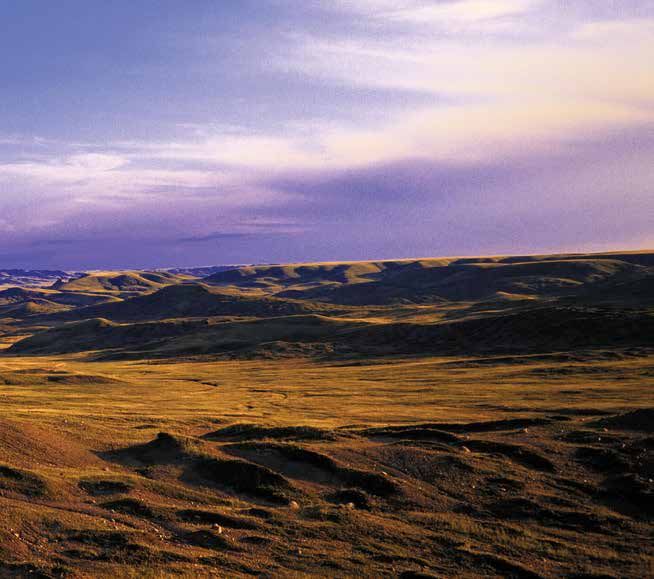
THE

PRAIRIE
PEOPLE
INDIGENOUS PEOPLE                          In the late 1880’s, after the Battle of
For centuries, the prairies were the       Little Big Horn against the American        The Métis
domain of Indigenous Peoples who           Cavalry, Sitting Bull and 4000 Lakota
had linked their lives to the migrations   Sioux sought sanctuary here.
of bison. One after the other, they        Sitting Bull camped on five different
                                                                                     From 1850 to 1880, as the fur trade
came – Gros Ventre, Assiniboine, Cree,     waterways in what now is the park:
                                                                                     moved westward, the Métis hunted
Blackfoot and Sioux. They left behind      Breed Creek, the Frenchman River,
                                                                                     not only for themselves but they
bison drive lanes, arrow heads, and        Medicine Lodge Creek (Wetherall),
                                                                                     supplied the new demand of trading
tipi rings for you to see.                 Horse Creek and Rock Creek.
                                                                                     posts setting up in the region. In
                                                                                     Medicine Lodge Creek (Wetherall),
                                                                                     remnants of an old traders trail still
DID YOU KNOW? There are over 12,000 tipi rings found                                 exits. In the early morning if the sun
in the park.                                                                         glints off the grass just right, a series
                                                                                     of parallel ruts can still be seen.

10 • GR A SSL ANDS NAT IO NAL PARK
Indigenous People
Ranchers
RANCHERS The rolling grasslands that stretched
By the late 1800’s, cattle replaced into the horizon was divided up into
bison creating a different way of life huge ranching companies such as
on the prairies. The government “N-N”, the “76 Ranch”, and the
passed leasehold legislation to “Turkey Track”, grazing thousands
promote ranching in the west. of cattle on the “range”. However,
a succession of harsh winters, the
massive die-off of cattle in 1906-07
and the Homesteaders Act in 1908
DID YOU KNOW? contributed to the loss of the open
The park has thousands of range. Cattle were fenced and the glory
archaeological sites and is one days of the open range were gone.
of the largest concentrations of
undisturbed pre-contact cultural HOMESTEADERS
resources in Canada. Pioneers were enticed by government
to “tame the west” and “break the
The Métis are descendants of
land”. However, poor soils, rough
Indigenous People and European
topography and a hot, dry climate
and Euro-Canadian fur traders who
spelled disaster. After only a few years,
worked in the fur trade era (circa
many homesteaders picked up and
1670-1850). They are their own
left; their signature remains on the
distinct nation of people with their
prairie to this day. The ranchers
own inherent Indigenous rights.
and homesteaders, who stayed,
combined ranching and farming
with western hospitality to create
our local prairie communities.
DID YOU KNOW?
Will James, legendary artist and
novelist lived life as a cowboy right
here, where he homesteaded and
Homesteaders worked on the 76 Ranch.
V I S I T O R G U I D E • 11GEOLOGY AND PALAEONTOLOGY The geology and palaeontology of Grasslands prehistoric world 60 to 80 million years ago! The National Park and surrounding area tell a story East Block is one of a handful of places around of fascinating land formations and fossils. The the world that reveals the Cretaceous-Paleogene diverse landforms are windows into geological time. Boundary – evidence bearing witness to a world Whether it is a prehistoric triceratops skull from the changing event. The revealing landscape of the Badlands or an iridescent clamshell gleaming in the Badlands led to the first recorded find of dinosaur Frenchman River Valley, discoveries of fossilized remains in western Canada in 1874. land and sea creatures stand as testimony to the 12 • GR A SSL ANDS NAT IO NAL PARK
WHAT IS THE CRETACEOUS-
                                                                   PALEOGENE BOUNDARY?
                                                                   A thin, white, chalky layerin the soil, separating
                                                                   age of dinosaurs from mammals. Below the line
                                                                   dinosaur fossils are found, above the line are
                                                                   mammal fossils.

                                                                 Vertebrae fossil.

Inoceramus shell fossils from the last intercontinental seaway
                                                                   DID YOU KNOW?
70-80 million years ago.                                           The East Block Badlands are one of the richest
                                                                   resources for dinosaur fossils in Canada.

                                                                                            V I S I T O R G U I D E • 13
EAST
EAST BLOCK TRAILS
1. Zahursky Ridge Trail-Route 4. Butte Creek/Red
Choose high ground with horizon
stretching views of the badlands,
Buttes Route
Curlews, Swift Fox or
BLOCK
or delve to the intimacy of the Sage-Grouse may be one of
valley bottom. This route delights
either way.
your surprises along the way.
Navigating a creek crossing and
LEGEND
Moderate terrain – 11 km loop rough topography will be worth Visitor Centre
(two options for return) the rewarding view at the end.
Difficult terrain – 16 km Private residence
Start: Rock Creek Day Use Area out-and-back Park operations
Information kiosk
Start: Rock Creek Day Use Area,
2. Rim Walk Trail across the Rock Creek bridge Viewpoint
Looking for a short, sunset walk?
Grab your coffee, your kids and Present holdings
leave the Rock Creek Day Use 5. Valley of 1000 Devils Route Lands in transition –
Area to the rim overlooking Breathtaking views and acres contact Visitor Centre for
the valley. of hoodoos. Who Knew? permission and updates
Easy terrain – 2.5 km loop Difficult terrain – 12 km
Proposed park boundaries
out-and-back
Start: access at hill top above Paved road
Rock Creek Day Use Area Start: Rock Creek Day Use Area, Gravel road
across the Rock Creek Bridge
Dirt road
3. Rock Creek Trail
Immerse yourself in a 360’ view 6. Creek to Peak Trail Trails
of native grasslands. With playful Stroll along Rock Creek and wind Routes
swallows close by, disappear into your way up the coulee enjoying
the prairie of days gone by. Enjoy Mother Nature’s seasonal attire. International Boundary
the story along the way on this Easy Terrain – 1.3 km
new trail. out-and-back
Easy terrain – 1.5 km loop
Start: Rock Creek Day Use Area,
Start: Rock Creek Day Use Area, South along the creek DID YOU KNOW?
across the Rock Creek bridge That the park has grazing agreements
with ranchers that manage lands
within the proposed park boundaries?
The agreements allow these ranchers
to bring cattle to graze on park
TRAIL lands, improving park Sage Grouse
A defined trail experience identified by one of the following: habitat. Parks Canada, ranchers
• built trail with hardened surface and Sage Grouse – all winners in
• mowed prairie outlining the trail this arrangement.
• yellow markers may be present
ROUTE
An undefined experience characterized by one of the following:
• no defined trail or path
• requires route finding skills (i.e. ability to read compass,
read map and understand written instructions)
• hiking route guide available for loan at the Visitor Centre
14 • GR A SSL ANDS NAT IO NAL PARKGlentworth
18
Mankota Ferland
Swift McCord
Current
Fir Mountain
Kiosk
& Wood Mountain
1
Kiosk
Wood Mountain
Regional Park
REGIONAL MAP
Kiosk
4
Val Marie
Kiosk
West Block
East Block
18
4
MIL ES
0 1 2 5
2
01 3 5 10 15
KIL OMETRES
SASK AT CH E WAN
MONTAN A
ROCK CREEK
CAMPGROUND AND DAY USE AREA
31 32
29
30
19
17
20
14
24
12 18
10
2 8
4 6 16
21
15
13 23
11
1 3 5 7 9
Ro 22
ck
Cr 25 26
ee 27 28
k
Entrance Road
V I S I T O R G U I D E • 15BADLANDS VIEWPOINTS
18
4
3
He
llf
ire
Cr
6
ee
Water 2
k
Drop
1 Rock Creek
5
Entrance
Valley of
1000 Devils
1
East Block
Boundary
Red Chairs
Red Chairs
k
Zahursky Point
ee
Cr
ck
Ro
Red Chairs
Poverty Ridge
Operations
2
Badlands Viewpoint
Entrance
Canada
United StatesECOTOUR SCENIC DRIVE Mankota 67 Km
121 Km
East Block 169 Km
Swift Current
18
Val Marie
4
70 Mile Butte 1
Access
3 10 2
1 9
6 3
4
5 4
Two Trees Two
Access Trees Larson
5
Red 6
Chairs 7
7
Belza
Broken
11 Hills 12
Rosefield Grid Road
Fr e
nc
hm
Three Sisters n
a
Riv
Access
WEST
s s
ce
Ac
BLOCK
te
va
Pri
The West Block Visitor Centre is located in Val Marie, Saskatchewan
at the junction of Hwy #4 and Centre Street, and the East Block
Visitor Centre is located at the Rock Creek campground.
For more information on operating hours and dates, please visit the
Grasslands National Park website at parkscanada.gc.ca/grasslands.
The Park itself is always open.
Monchy
Compressor
Station
17 • GR A SSL ANDS NAT IO NAL PARKMankota
26 Km
k
ee
Cr
Otter Basin Back
op
d
Country Launch
ee
Lo
Br
try
g
Bi
un
Co
ck
Ba
8
le Br e e d C r eek
Litt
ver
Dixon Y
Molestead Back
Country Launch Borderlands Lookout
Canada Red Chairs
United States
V I S I T O R G U I D E • 18WEST BLOCK TRAILS
1. Top Dogtown Trail 7. Broken Hills Trail
Listen to the rare Black-tailed Hike through undulating
Prairie Dog’s ‘bark’ as you cross and dramatic prairie.
LEGEND a colony to a superb viewpoint. Difficult terrain – 11.2 km loop
Easy Terrain – .74 km loop
Visitor Centre
Start: Ecotour Road at Belza
Old corrals Start: Ecotour Road Stop #2 Day Use Area
Private residence
Frenchman Valley Campground 2. Larson Interpretive Trail 8. Otter Basin Route
Discover the story of one cowboy This challenging hike will meet
Bison compound
and his family who built a your desires of back country
Information kiosk ranch that one day became wilderness and spectacular views.
Prairie dog colony
a national park. Difficult terrain – 15.3 km loop
Easy terrain – 1.4 km loop
Trailhead markers Start: Back Country Loop
Ecotour stop Start: Ecotour Road Stop # 6
Kayak launch 9. Timbergulch Route
3. Eagle Butte Loop Trail Experience the essence of land
Present holdings
Enjoy the common and rare and sky. This is truly a hike of
Lands in transition flowers, the intriguing geology open vistas.
Paved road and surprising views. Difficult terrain – 16.8 km loop
Moderate terrain – 2.1 km loop
Gravel road
Start: Ecotour Road Stop #3
Dirt road Start: 70 Mile Butte Access Road
Bison fence 10. Bearpaw Sea Trail
Prairie trail 4. Riverwalk Trail Rise and fall with the ‘coulees’
Witness wildlife and explore the while embracing the Frenchman
Trails
banks of the Frenchman River. River Valley.
Routes Easy terrain – 3.3 km loop Difficult terrain – 9.6 km one way
Ecotour Scenic Drive
Start: Two Trees Trail Access at Start: Ecotour Road Stop # 3 *
Back Country Loop Two Trees Day Use Area vehicle shuttle required
5. Two Trees Trail 11. Three Sisters Route
Enjoy rolling hills and a scenic Travel an old trail and view the
DID YOU KNOW? Frenchman River Valley view. striking hills of the Three Sisters.
Moderate terrain – 4 km loop Moderate terrain – 4 km one way
That signs can be one of the most
important services for visitors to safely Start: Two Trees Trail Access at Start: Three Sisters Access
and enjoyably navigate the park, yet Two Trees Day Use Area
can also impact the scenery due to
our open landscape? Along your drive, 12. Tipi Ridge Trail
take notice where we have hidden a 6. 70 Mile Butte Trail Discover tipi rings as you travel
road sign in a low spot with a hill as Conquer one of the highest along the ridge overlooking the
backdrop, or unconventionally placed points in the park. The view is Frenchman Valley.
it on the left side to protect the long worth the climb. Moderate terrain – 2 km loop
views and prairie view scapes. Difficult terrain – 4.1 km loop
Start: Belza Day Use Area
Start: 70 Mile Butte Access Road
V I S I T O R G U I D E • 17FRENCHMAN VALLEY
HUB
DID YOU KNOW?
That during the design of the Campground, our archaeologist helped identify
tipi rings and other artifacts existing in the proposed campground area?
We ensured that any development avoided disturbing these special features.
This way, we can have modern campers respectfully sharing the same space
as campers from many generations ago.
Tipi Ridge Trail
Red
Chairs
Belza
Day Use Area
12
Belza
Val Marie Trail
Frenchman Valley
7 Campground
Broken Hills
Trail
Overflow Camping
Equestrian
Camping
Ecotour Road
RV Dump
20 • GR A SSL ANDS NAT IO NAL PARKLEGEND
oTENTiks, 20 amp
Coulee Centre
Electrical sites, 50 amp
(all sites equipped with 20, 30 amp)
Grey water
Handicap access
Information kiosks
Parking
Potable water
Public washrooms
RV dump
Telephone
Viewpoint
Waste bins
WiFi
Trails
Routes
Fence
Gates - pedestrian
oad
Belza
our R
Ecot
Overflow Camping
FRENCHMAN VALLEY
CAMPGROUND
V I S I T O R G U I D E • 21CHOOSE YOUR CAMPING EXPERIENCE Camping is one of the best ways to enjoy all the park has to offer. Whether pulling a trailer, stuffing a tent into your backpack, or simply arriving to the convenience of a ready-to-use tipi or oTENTik, Grasslands has your experience covered. 22 • GR A SSL ANDS NAT IO NAL PARK
FRENCHMAN VALLEY
CAMPGROUND-WEST BLOCK
With a view of the Frenchman River, rolling hills, tipi rings
and roaming bison, the perfect destination for your front
country experience. 32 km SE of Val Marie.
• 20 tent/RV electric campsites (20,30,50 amp)
• 4 oTENTik units
• Picnic tables, fire pits, vault toilets, potable water, RV sani dump,   DID YOU KNOW?
  and Wi-Fi                                                               The location for both campgrounds were
• Coulee Centre cook shelter                                              former homestead sites? You won’t recognise
                                                                          it now, but there were once cows, corrals,
• Overflow sites available                                                sheds, hay fields and other livestock at
                                                                          these places. We chose these places to
ROCK CREEK                                                                avoid development on native prairie.
CAMPGROUND-EAST BLOCK
Amazing skies day and night, the leopard frogs’ symphony
at dusk, and the Meadowlarks’ serenade at dawn. 29km SW                   Conditions vary year-round, but plan for
of Wood Mountain.                                                         fire bans in summer. Contact Visitor Centre
                                                                          for details.
• NEW Campground
                                                                          Keep vehicle and RV/trailer on the gravel
• 24 tent/RV electric campsites (all 50amp)                               part of your campsite.
• 8 oTENTiks                                                              Keep campsites clean and attend
• Picnic tables, fire pits, vault toilet, potable water,                  campfires at all times.
  RV sani dump, and Wi-fi                                                 Check in 2:00pm, check out 11:00 am.
• Summer kitchen                                                          Store food in a vehicle or RV when
• Tipis                                                                   not in use.

                                                                                              V I S I T O R G U I D E • 23
oTENTik CAMPING
Share moments and create new memories in this spacious blend
of a tent and an A-frame cabin equipped with beds and furniture.
• In each oTENTik: Table and seating, heater, lantern, electricity,
sleeping area for up to 6 people
• On each site: Barbeque, firepit, picnic tables and
Adirondack chairs
• Don’t forget to bring your own bedding and cooking supplies
• 2-Pet Friendly, and 1-Wheel Chair accessible unit
• Check-in 3:00pm, check out 11:00am
• No smoking or cooking permitted inside the units
BACK COUNTRY
CAMPING
Drop your pack following an
exhilarating hike. Pitch a tent where
no one has camped before – well,
maybe not for a thousand years! The
park is yours to explore when Back
Country Camping. See map for ideas
– you get to pick the location.
• No open fires at any time
• You must check in at the Visitor
Centre, or kiosk upon arrival
• Staff will provide information
TIPI CAMPING on designated Back
• Vault toilet Country parking
Go back in time and enjoy the rustic
nature of a tipi camping experience. • Sleeps 5-6 people • Camp out of view from roads
and trails – a minimum of 1 km
West Block – Two Trees Day Use Area • Camping pad included
13 km south of Val Marie (no potable • Conditions vary year-round, but
• Cots and lantern available to rent plan for fire bans in the summer,
water available)
• Adirondack chairs which may also include camp
East Block – Located in the Rock stove restrictions
Creek Campground • Shared firepit and barbeque
• Leave no trace of your visit
24 • GR A SSL ANDS NAT IO NAL PARKHORSE
USERS
• Horses, while hobbled, tethered or corralled may graze in the park.
Avoid grazing Crested Wheatgrass after May 31st to avoid the
spread of this non-native plant species.
EQUESTRIAN CAMPING • Dispose of horse manure at on-site receptacles.
After a day of miles of open riding, settle in • Bagged cubes, pellets and rolled or steamed oats are the
for the evening while your trusted companion preferred feed. Weed free hay is permitted in equestrian
rests nearby. camping areas.
West Block – South of the Belza Day • Please respect private landowners around the park and remain
Use Area. on park owned lands.
East Block – Rock Creek Campground • Caution! Extreme dry conditions and horseshoes can be a bad
combination. Sparks may result from a horse clipping a rock
• Horsepens
with their shoes.
• Water trough
• Watch where you ride. Many prairie species, including
• Manure receptacle rattlesnakes, are well camouflaged.
• Vault toilet
• Shared fire pit
• First come, first served CAMPING RESERVATIONS:
• Check in at Visitor Centres or at the Reservation.pc.gc.ca or 1-877-737-3783
Frenchman Valley Coulee Centre Applies to all Campgrounds, oTENTiks, Tipis, and West Block Back
Country Camping.
In the event the campgrounds are full, unserviced overflow camping
is available by self-registration.
For East Block Back Country camping, reserve at 1-306-476-2018
V I S I T O R G U I D E • 25GRASSLANDS
NATIONAL PARK
A LEADER AND CONTRIBUTOR TO THE
RECOVERY OF CANADIAN SPECIES AT RISK
Visitors from around the world come to RETURN OF THE PLAINS BISON THE PLAINS BISON NOW
Grasslands National Park in southern In December 2005, after a 120-year absence, Plains Bison
were brought back to the park.
Saskatchewan to see the who’s who of prairie
They came from Elk Island National Park’s well-established
species at risk: Burrowing Owls, Greater herd. Now, a herd of approximately 350 animals is once
Sage-Grouse and the crowd pleasing colonies again at home on the wild open prairie.
of Prairie Dogs, just to name a few. The park Bison or Buffalo? So what is the difference? Simply put, the
correct term for the largest land mammal in North America
is home to over 20 species at risk. is Bison. Bison may resemble their relatives but they are
different species than that of the Asian water Buffalo and
African Buffalo that live in Southeast Asia and Africa. There
are three distinct sub-species of Bison in the world today.
European Bison live in Poland and portions of the former
Soviet Union. Plains and Wood Bison are exclusive to North
America. The park is home to the Plains Bison.
26 • GR A SSL ANDS NAT IO NAL PARKIN DANGER
TODAY
Extinct: A species that no
longer exists.
Extirpated: A species no longer
existing in the wild in Canada, but
occurring elsewhere.
• Black-footed Ferret
Endangered: A species facing
imminent extirpation or extinction.
• Burrowing Owl
• Greater Sage-Grouse
• Greater Short-horned Lizard
• Little Brown Myotis
Threatened: A species likely to
become endangered if limiting
factors are not reversed.
• Loggerhead Shrike
• Sprague’s Pipit
• Ferruginous Hawk
• Eastern Yellow-bellied Racer
• Swift Fox
• Chestnut-collared Longspur
• Common Nighthawk
• Black-tailed Prairie Dog
• Plains Bison
• Mountain sucker
• Barn Swallow
Special Concern: A species
of special concern because of
PROTECT YOUR NATIONAL PARK characteristics that are particularly
• Keep vehicles on designated roads and pull-offs sensitive to human activities or
natural events.
• Leave natural and cultural objects undisturbed for others to
discover and enjoy • Long-billed Curlew
• Give wildlife their space and respect. • Northern Leopard Frog
• Do not approach or feed wildlife! Plague is present in our prairie • Short-eared Owl
dog and squirrel populations. Do Not Feed! • Prairie Rattlesnake
• All terrain vehicles and snowmobiles are not allowed in the park • Baird’s Sparrow
• Keep pets on a leash and off the Prairie Dog colonies
• Report any concerns or unlawful activities to Parks Canada staff or RCMP
V I S I T O R G U I D E • 27WILDLIFE WONDERS
CHECK OUT EASY ID TIPS CLUES WHERE TO VIEW GNP FACTOID!
Plains Bison Male or female? Look Ecotour Road after Bison were absent
at the horns for size a prescribed burn; from this landscape
and shape. Bulls grow they are attracted for over 120 years.
larger, more robust to the green, tender As of 2005, Bison
horns and ‘horn buds’ grass shoots. roam free in the
are visible on the West Block of GNP.
male calf within the
month they are born.
Black-tailed They are easily Sneak a peek at the The West Block and
Prairie Dog distinguished from the Prairie Dogs through neighbouring lands
Richardson’s Ground the telescopes at are the only places
Squirrel “gopher” Stop 2 and Stop 7 in Canada where
as the Prairie Dogs on Ecotour Road. Black-tailed Prairie
are twice the size. Dogs exist in their
Prairie Dogs are natural habitat.
ALSO highly…social
critters and live in
extensive communal
‘dog towns’.
Prairie Rattlesnake They have a wide, Within 100 square In 2011, historic
flat triangular shaped kms of the Frenchman moisture conditions
head and a rattle River Valley. Slumping created flooding
on their tail. Female hillsides provide ideal and slumping in the
colouring is a light locations for winter Frenchman River
olive green and males hibernation dens. Valley and buried
are pale gold; both They gather at these one of the largest
have dark blotches areas in September rattlesnake dens in
on their back. for the winter, the park. The same
and emerge from type of natural
hibernation in spring. phenomenon that
created these
slumping formations
destroyed it!
Burrowing Owl Burrowing Owls are At dawn and dusk GNP Burrowing Owls
comical birds that from Ecotour Road arrive in early May
appear to look like within the Prairie Dog and head south to
a short, fat owl on towns. Mexico and Texas
stilts. They can be in early October to
mistaken for a gopher spend the winter.
due to their size and
that they perch on
abandoned gopher
holes and Prairie
Dog burrows.
28 • GR A SSL ANDS NAT IO NAL PARKA PRAIRIE 1 2 3
IN BLOOM...
Witness a succession of vibrant
colours and sweet aromas.
Crocus, prairie onion, cinquefoil,
rose, cactus, vetch, locoweed,
violets, asters, fleabanes,
goosefoot, and buttercup
to name a few! June is the 4 5 6
peak season.
1: Dotted Blazing Star
2: Pin Cushion Cactus,
3: Prickly Pear Cactus
4: Three Flowered Aven
5: Smooth Blue Beardtongue
6: Gumbo evening primrose
CHECK OUT EASY ID TIPS CLUES WHERE TO VIEW GNP FACTOID!
Pronghorn Antelope Male and female In the open Less than 300
pronghorns have grasslands browsing antelope survived
the only forked sage bush, grease the harsh winter of
horns in the world. wood and cactus in 1926! Today, antelope
Pronghorn are much the valley bottoms. are once again a
faster than deer; they common sight in
Fences: Pronghorns
can endure speeds of go under and deer the grasslands.
100 km per hour to jump over!
escape Coyotes.
Mule Deer Mule deer have At dawn and dusk South-west
large ‘mule-like’ they emerge from Saskatchewan is
ears and are easily sheltered coulees to well-known for
distinguished by their feed on shrubs and producing magnificent
white rump patch and grasses. Snowberry mule-deer with
short black-tipped tail. bushes are large beautiful antlers.
Mule deer are often nicknamed ‘buck Perhaps, it is the
spotted bouncing on brush’ as it makes sun-cured native
four limbs up and for excellent shelter grasses that provide
down hill sides. for ‘bucks’ to bed the nutritional edge!
down in.
White-Tailed Deer ‘White-tailed’ refers Grain and hay fields Did White-tailed
to the white underside neighbouring the park deer occur in SW
of the flag-like tail, lands. In the winter Saskatchewan prior
which waves when time, you can over see to farm settlement?
they are alarmed. over 100 deer feeding It is uncertain,
in one hayfield. however, populations
have risen due
to agricultural
development.
V I S I T O R G U I D E • 29CHECK OUT EASY ID TIPS CLUES WHERE TO VIEW GNP FACTOID!
Greater Short-horned Short-horned Lizards In Badland habitat. Short-horned Lizards
Lizard do not resemble Bearpaw shale slopes are very difficult to
any other reptile or in the Frenchman see as they are
amphibian in the park. Valley and the very small and
They look prehistoric, lower reaches their camouflage
as they are a living of Rock Creek. is superior. Usually,
remnant from the you can only spot
August is the best
days of the dinosaurs! them if they move!
time to view them as
In winter, the lizards
the young of the year
will bury themselves
have been born, and
under about 10 cm
they are temporarily
of loose soil on south
more abundant.
facing slopes.
Coyotes These medium sized Coyotes are native Coyotes are territorial
‘song-dogs’ can be to the prairie, but and will kill red and
identified by their can be seen in both swift foxes. Foxes are
iconic howl and prairie and non-prairie viewed as competitors
high-pitched bark. environments. for hunting gophers,
Since the extirpation rabbits and mice.
of the prairie wolf, the
Coyote is ‘top-dog’ on
the prairie!
Ferruginous Hawk It is the largest hawk Look for 3 habitat Before the 1900s,
in North America. requirements: native nests were often
Ferruginous Hawks grass, gophers and constructed with
usually have full high elevated nest Bison bones and
white breast and belly areas, i.e. steep lined with fur and
with rust coloured cliff sides. Bison dung. Nests
legs. It sometimes today are made of
is mistaken for the dried sticks, lined
Golden Eagle. with bark and
cow dung.
Greater Sage-Grouse Greater Sage-Grouse Sage brush flats The historical range
or Sharp-tailed in the Frenchman of Sage-Grouse has
Grouse? Sage-Grouse Valley and Rock been reduced by 94%
are very rare in Creek tributaries. in prairie Canada.
Canada and
This is one of the
Sharp-tailed Grouse
few places in
are comparably
Canada you may be
common. Sage-
fortunate to see this
Grouse only exist
endangered bird.
in large tracts of
sagebrush habitat.
DID YOU KNOW?
That some of our road signs in the park have anti-perching devices on top of the posts? (Look for these as you travel.) This
is done to protect the Sage Grouse so that raptors don’t use the signs as perches to hunt this very endangered species!
30 • GR A SSL ANDS NAT IO NAL PARKA BIRDERS
PARADISE 1 2 3
The grasslands bird
community is in steep
decline in North America.
Here, visitors can ‘check the
list’ (copy available at the
4 5 6
visitor centre) for the unusual
as well as ‘iconic’. Enjoy the
Sprague’s pipit’s swirling trill,
the horned lark’s twinkle,
the grasshopper sparrow’s rasp
and of course the meadowlark’s
welcoming gurgle. 1: Golden Eagle 3: Meadow Lark 5: Greater Sage Grouse
2: Loggerhead shrike 4: Long billed curlew 6: Rock wren
NATIVE PRAIRIE GRASSES
Grasslands National Park is a part of a larger vegetation zone known as the mixed grass prairie ecosystem that extends
throughout the Great Plains of Canada and the United States. The term ‘mixed grass’ refers to the fact that no single
plant species dominates the prairie and that there is a mixture of medium sized and short grasses. There are 70 plant
species below your feet.
1. June Grass
2. Blue Grama
Grass
3. Needle-and-
thread Grass
4. Western
Wheatgrass
1 2 3 4
V I S I T O R G U I D E • 31WORKING WITH
OUR
COMMUNITIES
Prairie Wind & Silver Sage – Friends The Rodeo and Ranch Museum is Wood Mountain Historical Society –
of Grasslands located at the historic located in the Wood Mountain Regional Rodeo and Ranch Museum
Little Brick Schoolhouse is a volunteer, Park near the East Block of Grasslands 1-306-266-4953 (seasonal)
non-profit organization based in National Park. woodmountain.ca/RodRanc.html
Val Marie, Saskatchewan. • Museum activities and group tours
• Eco-museum • Museum featuring ranching, rodeo, Wood Mountain Regional Park
• Art gallery featuring local artists and homesteading artefacts
1-306-266-4249
• Gift shop • Metis Adobe house and woodmountainpark.ca
Heritage house
• Espresso bar
• Archive and extensive
• Wireless internet access
photograph collection
1-306-298-4910
• Bookstore featuring books
www.pwss.org
by local authors
32 • GR A SSL ANDS NAT IO NAL PARKVISITOR CENTRE West Block Visitor Centre is located in Val Marie,
Saskatchewan at the junction of Hwy #4 and Centre Street.
The Visitor Centres will make your trip most memorable,
as friendly, knowledgeable staff provide up-to-date East Block Visitor Centre is located at the Rock Creek
information on park programs, camping opportunities, campground.
maps, road conditions, weather safety and more. For more information on operating hours and dates,
The Centres exhibit significant prairie stories: grassland please visit our website at parkscanada.gc.ca/grasslands.
ecosystems, endangered species, human history, The park itself is always open.
palaeontology and geology.
V I S I T O R G U I D E • 33Grasslands Parc national
National Park des Prairies
parkscanada.gc.ca parcscanada.gc.ca
Parc national Grasslands
des Prairies National Park
parcscanada.gc.ca parkscanada.gc.ca
GRASSLANDS NATIONAL PARK
www.parkscanada.gc.ca/grasslands
grasslands.info@pc.gc.ca
306.298.2257 (West Block Visitor Centre)
306.476.2018 (East Block Visitor Centre)You can also read


