Exploring Suppliers' Approaches toward Workplace Safety Compliance in the Global Garment Sector: From Bangladesh Perspective
←
→
Page content transcription
If your browser does not render page correctly, please read the page content below
$
         £ ¥€
                social sciences
Article
Exploring Suppliers’ Approaches toward Workplace Safety
Compliance in the Global Garment Sector: From Bangladesh
Perspective
Md Sultan Mahmood *, Nilima Haque Ruma, Toufiq Ahmed                                and Yukari Nagai *

                                          School of Knowledge Science, Japan Advanced Institute of Science and Technology, Nomi,
                                          Ishikawa 9231292, Japan; ruma18@jaist.ac.jp (N.H.R.); Toufiq30.ku.jp@gmail.com (T.A.)
                                          * Correspondence: sultan@jaist.ac.jp (M.S.M.); ynagai@jaist.ac.jp (Y.N.)

                                          Abstract: The readymade garment (RMG) sector is one of the main drivers of the Bangladesh economy
                                          with over 4 million employed. In the 2013 Rana Plaza accident aftermath, the implementation of
                                          workplace safety compliance (WSC) became imperative. The paper investigated the WSC initiatives
                                          implemented by the RMG sector to overcome safety challenges and their effectiveness for a safe
                                          and healthy workplace. We employed a multi-case study research strategy over three Bangladeshi
                                          garment manufacturers to resolve these queries. The result revealed that the manufacturers joined
                                          in the safety governance programs to protect workers’ health safety rights immediately after the
                                          accidents. They participated in inspections and remediations programs over structural, electrical,
                                          and fire protection as a priority. Moreover, several other human rights conventions, national labor

                                   laws and, buyer code of conduct were also adopted as regulatory and voluntary initiatives to settle
                                          workers’ health rights and social needs. The WSC enforcement empowered workers to bargain their
Citation: Mahmood, Md Sultan,
Nilima Haque Ruma, Toufiq Ahmed,
                                          rights toward a safe workplace and made them responsible for responding during an emergency.
and Yukari Nagai. 2021. Exploring         Finally, the paper argues that the WSC in the RMG sector nowadays covers a wide range of initiatives
Suppliers’ Approaches toward              in three broad areas: physical environment safety, workers’ health issues, and workers’ rights.
Workplace Safety Compliance in the
Global Garment Sector: From               Keywords: sustainability; workplace safety; occupational health; social compliance; Rana Plaza
Bangladesh Perspective. Social            collapsed; readymade garment industry; workplace regulation
Sciences 10: 90. https://doi.org/
10.3390/socsci10030090

Academic Editor: Nigel Parton             1. Introduction
                                               Workplace safety compliance (WSC) often denotes the implementation of occupational
Received: 30 December 2020
                                          health and safety (OHS) or health, safety, and wellbeing (HSW) regulations in the work
Accepted: 25 February 2021
Published: 3 March 2021
                                          environment. It is very significant for a successful business strategy because the HSW of
                                          the employees must carry importance to corporate policy. A good set of WSC policies and
Publisher’s Note: MDPI stays neutral
                                          practices can bring secondary benefit to firms by protecting coworkers, family members,
with regard to jurisdictional claims in
                                          customers, suppliers, and nearby communities (Robson et al. 2016). Dr. Maria Neria,
published maps and institutional affil-
                                          director of the World Health Organization (WHO), stated that business growth would
iations.                                  rely on workers’ better health (World Health Organization 2010). The unsafe workplace
                                          often causes workers’ health suffering such as skin irritation, headaches, fatigue, or stress.
                                          Nonetheless, safe work conditions and care for workers’ health can refrain them from
                                          leaving jobs (Huq et al. 2014). A body of OHS literature claimed the benefits of a safe and
                                          healthy workplace (SHW) culture positively influence the workers’ physical and mental
Copyright: © 2021 by the authors.
Licensee MDPI, Basel, Switzerland.
                                          health and their efficiencies, which subsequently impact the overall productivity of a firm
This article is an open access article
                                          (Morillas et al. 2013; Robson et al. 2016; Harvard T.H. CHAN School of Public Health 2019;
distributed under the terms and
                                          Harvey and Gavigan 2014).
conditions of the Creative Commons             The nature of the global garment sector (GGS) is complex and always experiences
Attribution (CC BY) license (https://     quick changes concerning marketers’ desires. The fashion companies and consumers’
creativecommons.org/licenses/by/          fashion appetite in the global north are speeding pressures on the global south factories
4.0/).                                    concerning quickened production changes, tight lead times, overworks, and low-cost

Soc. Sci. 2021, 10, 90. https://doi.org/10.3390/socsci10030090                                               https://www.mdpi.com/journal/socsci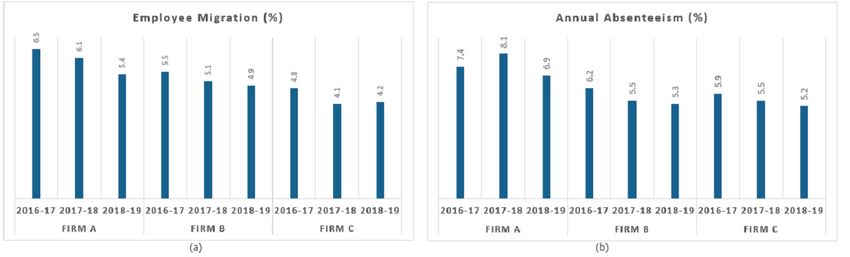
Soc. Sci. 2021, 10, 90                                                                                          2 of 31

                         manufacturing (Taplin 2014). These pressures of the global market often exercise upon
                         the workers in job insecurity, prolonged working hours, and poor health safety (Greet
                         De and Prentice 2017). The long-neglected workplace health manifested two equally
                         alarming directions, such as massive workplace disasters causing injuries and fatalities
                         on the one hand and routine violations of employees’ everyday health rights on the other
                         (Prentice et al. 2018). The global south factories always grip attention due to unsafe and
                         poor work conditions regarding building and fire (B&F) safety and worker’s health issues
                         (Ashraf and Prentice 2019).
                               In the last one and half-decades, the developing countries’ suppliers experienced
                         many workplace catastrophes that cost massive deaths and injuries. The Spectrum Sweater
                         factory collapse in Bangladesh in 2005 led to 64 deaths and 80 injuries (BBC 2005). The
                         two mammoth fire accidents, the Ali enterprise fire of Pakistan and the Tazreen factory
                         fire of Bangladesh occurred in 2012. Both fire accidents killed 300 workers in Pakistan
                         and 120 workers in Bangladesh (Nawaz et al. 2019; Greet De and Prentice 2017). Finally,
                         the deadliest workplace accident, the Rana Plaza collapse, took place also in Bangladesh
                         on 26 April 2013, which killed over 1100 and severely injured a hundred more people
                         (Paul and Rocha 2017). The media investigations and academic scholars stated that the
                         mishaps were repeated in the GGS due to substandard B&F safety standards, inadequate
                         construction inspections and maintenance, and weak workplace regulations.

                         1.1. Background of the Research
                               The garment sector is one of the economic propellers of Bangladesh, as it contributes
                         above 80 percent of the total exports over the last few decades and has provided over
                         4 million jobs to the rural people of the country (BKMEA 2018). This sector brought
                         remarkable changes in living standards and empowerment of underprivileged women
                         (Heath and Mobarak 2015). Simultaneously, the sector has been suffering from wide-
                         ranging allegations toward legal and ethical compliance issues since its beginning (Nas-
                         rullah and Rahim 2014). The two worst industrial accidents, the Tazreen fire and the
                         Rana Plaza collapse, depicted the inhumane work conditions and workers’ health rights
                         violations worldwide. These accidents stimulated the global buyers, retailers, trade unions,
                         and state regulators to reconsider the WSC of the Bangladeshi RMG sector (Labowitz and
                         Baumann-Pauly 2014; Ashraf and Prentice 2019). Three significant plans, including Accord
                         on fire and building safety (Accord), Alliance for Bangladesh Worker Safety (Alliance), the
                         National Tripartite Plan of Action (NTPA) on Fire Safety and Structural Integrity, began
                         to implement the factory safety assessment and remediations throughout the Bangladesh
                         RMG sector (Labowitz and Baumann-Pauly 2014; Ansary and Barua 2015).
                               As illustrated above, the pursuit of WSC in the GGS became inescapable after the
                         deadliest disaster in 2013. Accident aftermath, the workplace regulations, and its long-
                         term practices in the GGS sector have been a growing consideration both in practical and
                         academic fields. The past research works asserted that the garment sector, in recent years,
                         brought radical improvements over constructions and building safety, fire equipment,
                         and code of practices for its beneficiaries: workers, shareholders, communities, and cus-
                         tomers (Chen 2019; Barrett et al. 2018; Barua and Ansary 2017; Wadud and Huda 2017).
                         Moreover, public and private interventions on workplace safety programs (WSP) forced
                         factories to strictly administer and scrutinize WSC through the lens of legal and regulatory
                         requirements (Ashraf 2017; Sinkovics et al. 2016).
                               To date, a few studies have seen workplace safety compliance issues that are over-
                         generalized and do not provide scalable measures from the manufacturers’ perspective.
                         More empirical investigations require to address the garment suppliers’ approaches on
                         the workplace compliance challenges to sustain in the competitive markets. Abundant
                         literature in OHS or workplace H&S focused on limited variables of ethical and social
                         compliance practices: work conditions, working hours, low wages, weak governance, ab-
                         sence of association, unions, poor ergonomic design that affect firm’s productivity, workers’
Soc. Sci. 2021, 10, 90 3 of 31
efficiencies, and growth (Morillas et al. 2013; Harvey and Gavigan 2014; Tebyetekerwa et al.
2017; Sorensen et al. 2019; Manu et al. 2018).
Additionally, numerous studies shed light on workplace disasters and their further
consequences concerning regulatory reforms in the global supply chain (Labowitz and
Baumann-Pauly 2014; Taplin 2014; Jacobs and Singhal 2017), enforceable governance
programs (Salminen 2018), labor codes, and OHS rights reforms (Prentice et al. 2018; Greet
De and Prentice 2017), human rights violations (Siddiqui and Uddin 2016; Aruna 2019)
and workers’ compensations and justices (Siddiqi 2015) after Rana Plaza disaster. Several
studies have depicted the safety compliance issue of the garment sector from corporate
social responsibility (CSR) and social sustainability context (Sinkovics et al. 2016; Haque
and Azmat 2015; Huq et al. 2014; Akbar and Ahsan 2019). Again, a few studies have
focused on the building and fire assessment and Accord’s intervention toward workplace
safety (Barua and Ansary 2017; Wadud and Huda 2017). In-depth analysis of WSC and its
implementation to improve safe and healthy workplace from suppliers’ perspective are
still inadequate. This paper endeavored to fix this gap by exploring garment suppliers’
approaches toward WSC from the Bangladesh context.
1.2. Research Aim and Questions
This paper aims to explore the suppliers’ approaches to WSC in the Rana Plaza
aftermath. By doing so, we put a few queries to achieve the paper’s aim.
(RQ1) What measures do the garment manufacturers implement to combat safety
challenges?
(RQ2) How does the Accord’s workplace safety program affect the WSC implementa-
tion?
(RQ3) How effective the WSC to devise an SHW culture?
The study adopted a case study research strategy on the three Bangladeshi garment
suppliers, who are the key competitors of the GGS, to reveal the above queries.
The paper makes four significant contributions to social science research. First, it
emphasizes lead suppliers’ perceptions in implementing WSC in the production facilities
of the developing country’s garment sector, which are yet less investigated areas. Second,
it renders insights into the realities of implementing WSC in the context of the labor-
intensive garment sector of Bangladesh. Third, the investigations included the views of
the experienced management and non-management employees concerning the benefits of
WSC. Finally, the paper delivered lead manufacturers’ experiences on the SHW model that
are scalable and transferable to the RMG sector and fellow industries. The prior studies
often failed to address the above issues.
The rest of this paper is arranged as follows. Section 2 disclosed how unsafe work
conditions shed light over the years in the Bangladeshi garment sector. We explained
the methods and materials in Section 3 on how case companies were identified and the
instrument of data collection and analysis procedures. The results of the significant research
aim are discussed in Section 4, answering all research queries. In Section 5, the authors
highlighted the scientific contributions that offered a new avenue for future research.
Finally, we added concluding remarks and several constraints of this paper that open the
space for future improvement in a broader context.
2. A Brief History of Workplace Safety Compliance in Bangladesh
Bangladesh sanctioned ILO’s seven out of eight fundamental conventions on labor
rights, but occupational health safety (OHS) did not include. According to the Bangladesh
Institute of Labor Studies, the primary laws related to the OHS of Bangladesh are the
Bangladesh Labour Act (BLA) 2006. This legal framework on OHS implies mainly to the
workers of industries. However, it does not cover all occupations of the country (BILS 2015).
Moreover, many other laws and regulations also have some provisions related to WSC ap-
plicable to export-oriented industries and their workers due to the rapid access to the world
markets. Significantly, the trade scheme, the Generalized Scheme of Preferences (GSP),Soc. Sci. 2021, 10, 90 4 of 31
of the European Union has some provisions for acceptable work conditions concerning
labor and human rights, minimum wages, working hours, environmental protection, and
OHS (European Commission 2020). The garment sector must comply with these provisions
and ILO Core Conventions regarding labor codes and working conditions to access the
duty-free export markets of Europe and the USA.
Almost literature argued that manufacturers often overlooked the labor codes and
human rights practices that positively influence the SHW (Prentice et al. 2018; Siddiqui
and Uddin 2016; Sinkovics et al. 2016; Schüßler et al. 2019). Many other studies claimed the
manufacturers’ ignorance of legal compliance and ethical business practices lead to work-
place accidents (Siddiqi 2015; Taplin 2014; Hasan Ashraf 2017). Moreover, many external
factors, such as weak state monitoring, lack of enforcement mechanism, inadequate labor
inspectors, and the pursuit of profit by both western retailers, also influenced accidents
and occupational health issues in production sites (Labowitz and Baumann-Pauly 2014;
Taplin 2014; Greet De and Prentice 2017). The literature and media analyses disclosed
many accidents in the RMG sector caused by both internal and external factors. Table 1
shows the workplace accidents from 2005 to the date that resulted in numerous injuries
and fatalities. The estimated fatalities in the three different periods are above 1500. The
total deaths and physical injuries during 2012–2013 were five to six times higher than the
other two periods because of two devastating accidents.
Table 1. Workplace Fatalities and Injuries in export-oriented Garment Industry of Bangladesh.
No. of No. of No. of
Years Reason of Incidents Major Workplace Accidents
Occurrences Fatalities Injuries
2005–2011 N/D 219 324 Fire and the building collapsed Spectrum Garment Collapse (2005)
Tazreen Fashion Fire and Rana
2012–2013 63 1268 3269 Fire and building collapsed
Plaza Collapse
2014–till 114 32 235 Fire and boiler explosion Multifabs Ltd. Boiler explosion
Note: N/D—No data; (Source: Emily 2013; Paul and Rocha 2017; ILO 2017; Solidarity Center 2019).
These accidents occurred after several intervals and stimulated to raise awareness
of the social and ethical issues concerning safety, workers’ health, and wellbeing issues
(Sinkovics et al. 2016; Dana 2019; Jacobs and Singhal 2017). The Rana Plaza collapse
emerged as a wake-up call for the poor work conditions faced by workers in the global
garment production network (ILO 2017).
The three regulatory bodies emerged in the following months of the Rana Plaza
accident in 2013. The Accord by European clothing retailers, Alliance by the United States
of America and Canadian fashion companies, and the NTPA on Fire Safety and Structural
Integrity by the Bangladeshi Government was formed to push garment factories conducting
safety assessments and remediations. Both Accord and Alliance launched individually as a
five-year legally independent binding regulator, backed up by global brands, trade unions,
and international labor authority (Salminen 2018; Serajul 2019).
The Accord’s experts did initial inspections and supervised the constructions’ reme-
diations. They forced factories to settle the underlying issues of SEF safety from which
their member’s buyers source the garments (Jacobs and Singhal 2017; RCC 2015). Accord
also emphasized a social compliant mechanism for protecting the workers’ OHS rights by
creating safety committees (SC) and a safety training program (STP). The promotion of
rights to Freedom of Associations, collective bargaining, and anti-discrimination training
empowered workers to refuse unsafe work conditions. Again, the NTPA established the
Remediation Coordination Cell (RCC) as an individual department that executed the SEF
inspections and repairs of the Accord/Alliance excluded garment factories (RCC 2015).
In the Rana Plaza aftermath, the private initiatives, Accord/Alliance, have completed
initial inspections above 50 percent of the total garment factories before expirations (DIFE
2019). The Accord handed over the remaining factories to the Government of Bangladesh.
The Bangladesh Garment Manufacturers and Exporters Association (BGMEA) launched theSoc. Sci. 2021, 10, 90 5 of 31
RMG Sustainability Council (RSC), a tripartite agreement with RCC and Accord/Alliance
that acted as a single safety monitoring body of the garment sector (The Daily Star 2019).
The RSC put pressure on manufacturers, which already progressed remediations under the
private and public programs. Table 2 shows all three plans did initial safety assessment
only 3900 out of 4621 factories (as per the BGMEA member list). However, Labowitz
and Baumann-Pauly (2015) estimated around 7179 factories, including direct and indirect
contractors of garment productions, processing, and exports.
Table 2. Building and fire (B&F) safety status of the readymade garment (RMG) by three regulators as of August 2018.
B&F Safety Status Accord Alliance NTPA
Inspected 2139 672 * 1549
CAP received 1607 672 1549
Remediations starts 1572 509 809
above 80 percent remediated 442 400 218
above 50 percent 1130 N/D 422
No longer covered/suspended/out of scope 488 ** 163 39
* Note—472 factories out of 672 are also standard in the Accord list; ** Accord handed over 346 factories to NTPA. The rest 142 are
non-compliant that terminated business relationships with signatory companies; (Source: Data compiled from from Accord 2019 (as cited
in Labowitz and Baumann-Pauly 2014; Ashraf and Prentice 2019; Ansary and Barua 2015), Alliance 2019 (ibid.), DIFE 2019).
By 2019, roughly 1000 factories completed above 80 percent remediation, and around
1500 achieved 50 percent (Table 2) under all three regulators (DIFE 2019). After the expi-
ration of the private regulators, the RSC committed with global brands to continue the
residual tasks of WSP. The body took over Accord Building Standard, together with all Ac-
cord safety protocols and procedures(DIFE 2019). Currently, inspections and remediation
are continuing of all Accord-covered factories against this Building Standard.
Besides WSP, the Ministry of Labor and Employment of Bangladesh also amended
the national labor laws of BLA 2006 in 2013 (Abdullah and Mahfuz 2017; BILS 2015)
that included many requirements related to OHS. The amendments focused on health
and hygiene (H&H) provisions, the National Council for Industrial Health and Safety,
the mechanisms to solve industrial disputes, labor court, compensation for injury and
accidents in the workplace, maternity benefits, factory inspectorate, and safety committee
(Government of Bangladesh 2015). Moreover, a range of H&H requirements included in
sections 51 to 60 of the BLA 2006 emphasized cleanliness, ventilation and temperature,
dust and fume, disposal of wastes and effluents, artificial humidification, overcrowding,
lighting, drinkable water, toilets and washrooms, and dustbin and spittoon (Government
of Bangladesh 2015). The acts encouraged employers and workers to make joint efforts to
reduce workplace hazards and potential risks by complying with legal provisions.
3. Methods and Materials
The paper is one of the key parts of the author’s Ph.D. research project on the devel-
oping country’s garment sector. The research project employed an exploratory case study
on the infancy of sustainability research in the context of the Bangladeshi RMG sector.
The enabler of safe workplace culture by manufacturers is an essential query of the major
research project. Therefore, the current paper used an amount of data from the Ph.D. thesis.
The Bangladeshi RMG industry is crucial to consider as a research context for many
reasons. Firstly, the sector is the heart of the national exports and employment generations
for underprivileged people, especially women (Heath and Mobarak 2015). Second, the
sector often draws attention from global stakeholders because of corporate greed, workers’
rights violations, inadequate labor code enforcement, underpaid, unsafe, and unhygienic
work conditions (Istiak Ahmed Inam 2019; Prentice et al. 2018). Third, the increased pres-
sures from direct stakeholders such as apparel buyers and employees regarding workplace
compliance after the deadly accidents (Sinkovics et al. 2016; Labowitz and Baumann-Pauly
2014). Finally, the sector transitioned to factory safety assessment through public andSoc. Sci. 2021, 10, 90 6 of 31
private regulatory governance programs (Accord/Alliance or NTPA). The above reasons
offer a rich and dynamic setting for empirical investigations to the researcher.
3.1. Qualitative Case Study as a Research Strategy
The exploratory case study was also chosen as a key method in many previous studies
of garment manufacturer’s social responsibility, workplace safety, and workers’ health in
developing country perspectives (Sinkovics et al. 2016; Huq et al. 2014; Haque and Azmat
2015). The researcher designed a case study based on qualitative data to investigate the
garment suppliers’ initiatives that developed throughout the manufacturing supply chain.
The key feature of the qualitative data focuses on the naturally occurring and ordinary
events in a practical setting (Miles and Huberman 1994). As Yin (2009) suggested, the
case study research investigates the details about the studied phenomena and offers the
respondents insights about the aspects in a practical setting. The majority of the case
research strategy is based on a single case to exploring newly developed topics.
In this paper, we followed a multi-case study approach for selecting three manufactur-
ers from the Bangladeshi RMG sector because of the degree of elaboration and replication
among the cases. Eisenhardt and Graebner (2007) mentioned multiple cases to enable a
broader exploration of research questions and theoretical elaboration. The conclusions
obtained from multi-cases become more potent than those coming from a single-case alone
(Yin 2009). Therefore, the paper considered several precautionary measures selecting the
three manufacturers by ensuring research quality and consistency. First, all three firms
assemble similar products and capable of managing all parts within in-house facilities. Sec-
ond, as a lead supplier of western clothing brands, all three firms agreed on the workplace
safety assessment and remediation. Finally, all case manufacturers are accredited by either
the Business Social Compliance Initiative (BSCI) or Supplier Ethical Data Exchange (SeDex)
audit requirements (see ‘Notes’ in Appendix B).
From the researcher’s personal experiences and relationship with garment manu-
facturers, the principal investigator contacted 12 garment suppliers of Bangladesh. Case
selection from personal interaction often helps to gain random access to the sites and to
contact respondents freely. The researcher sent individual mail with an invitation letter
to all twelve suppliers and requested them to participate in the academic research. The
letter was explained the researcher’s intents, research protocol regarding data collection,
analysis, and presentation techniques. Only five manufacturers accepted the researcher’s
request and cooperated to access the sites with several restrictions based on case firms’
corporate policy.
First, an official agreement between the research institution and case organizations.
Second, employing a person as responsible to whom the researcher must contact before
entering into facilities. Third, all respondents would be contacted through the responsible
persons. Fourth, all interviews of the non-management employees must be taken in front of
the responsible person. Fifth, one responsible person always give accompaniment during
visit all facilities. Sixth, the interview schedules must be informed earlier through email
or phone and should not hamper the respondent’s assigned jobs. Finally, the interviews
could be recorded with participant’s consent and the results of the research must maintain
company privacy. However, we had to remove two case companies considering the fourth
and fifth conditions. Therefore, three manufacturers were selected as case organizations.
3.2. Data Collection
The study used a data triangulation technique to gather case study data from various
sources. Denzin and Lincoln (2017) suggested that data triangulation would amass the
data and information from different sources at different times, places, and persons. The
study gathered subjective standpoints from various respondents’ categories (see Table 3)
through the semi-structured interviews from the three case manufacturers. Respondents
from different backgrounds helped us to reach the diversified information from various
angles. We conducted in-depth interviews on the 12 respondents from managementSoc. Sci. 2021, 10, 90 7 of 31
and non-management employees through purposive sampling (Bryman 2012). The case
study research often reckons with purposive sampling to reach the targeted respondents
who possess sufficient knowledge about the topics and participate in decision making
(Saunders et al. 2016).
Table 3. The Profile of Respondents.
Category of Respondents
Respondent Coding
Designation and Job Category Educational Background Year of Experience
Int.1_C Senior Manager, Compliance and CSR MBA 12
Int.2_B Chief Operating Officer, Factory Operation M. Com 18
Int.3_C Manager Sustainability MBA 13
Int.4_A Director, Production Bachelor 16
Int.5_A Manager, Compliance MBA 14
Int.6_A Director, Technical and Maintenance Bachelor 22
Int.7_C Doctor, Medical Center MBBS 8
Int.8_B Senior Manager, Marketing MBA 15
Int.9_B Line Chief, Production (Sewing) Secondary School 11
Int.10_A Supervisor, Production (Fabric) Secondary School 7
Int.11_A Cutting Operator, Production Primary School 6
Int.12_C Asst. Sewing Operator, Production Primary School 4
Note—MBA—Master of Business Administration; M.Com.—Master of Commerce, MBBS—Medicine, and Bachelor of Surgery.
In the study, we interviewed 8 top management employees from case organizations
who aware of the study contents and able to provide sufficient information (Table 3).
Moreover, we also took four non-management interviews, although we expected at least
six participants from non-management. We encountered several hurdles concerning data
collection from management and non-management employees. First, although we had an
agreement, sometimes top management would restrict random access to facilities. Second,
management respondents were in a hurry and it was challenging to cover the interview
without interruption. Third, participants from non-management often felt shy and afraid
of sharing information freely. However, to cope with these challenges, the researchers
prepared flexible interview schedules considering times and location. The field data were
gathered from respondents in the two different time frames of September–October 2018
and May–June 2019.
From the demographic profile of the respondent, almost all management respondents
vastly experience in the garment sector. The minimum qualification of the management
employees is a bachelor’s degree, and all non-management employees have less than
ten years of schooling. The management employee’s interviews lasted 60 to 70 min and
40 to 50 min for non-management employees. Almost all discussions during interviews
were in the local language (Bangla) and recorded eleven interviews with the consent of
participants.
Additionally, the study considered a structured observation (Bryman 2012; Hancock
and Algozzine 2006) to gather data through the systematic viewing of the production
sites. We took observation notes visiting manufacturers’ facilities, including production
floors, corporate offices, cafeteria, medical center, and childcare unit. Finally, we focused
the document reviews on verifying our understanding of the respondents’ feedback. We
critically reviewed the internal documents of the company, such as business profiles, audit
reports, and the medical center’s registry, to get more concrete information. Moreover, some
documents related to inspection reports, complaints records, and recognition letters were
gathered from external sources. Both documents review helped us aggregate all numeric
data regarding companies’ financial information, employment size, absenteeism, migra-
tion rates, and workers’ grievances. We endeavored to minimize social desirability bias
(Woodside 2010; Bryman 2012) by pledging interviewees that the study results would be
aggregated form. All personal data and company information would remain anonymous.and the medical center’s registry, to get more concrete information. Moreover, some doc-
uments related to inspection reports, complaints records, and recognition letters were
gathered from external sources. Both documents review helped us aggregate all numeric
data regarding companies’ financial information, employment size, absenteeism, migra-
Soc. Sci. 2021, 10, 90 tion rates, and workers’ grievances. We endeavored to minimize social desirability bias 8 of 31
(Woodside 2010; Bryman 2012) by pledging interviewees that the study results would be
aggregated form. All personal data and company information would remain anonymous.
3.3. Data Analysis
3.3. Data Analysis
The gathered Thecase
gathered
study case
datastudy
fromdata from purposive
purposive samplingsampling are not statistically
are not statistically repre- representa-
tive (Saunders
sentative (Saunders et al. 2016).
et al. 2016). The qualitative
The qualitative data case
data from fromstudies
case studies were analyzed
were analyzed fol- following
lowing the interactive model (Miles and Huberman 1994). The analyses consist of the par-parallel flow
the interactive model (Miles and Huberman 1994). The analyses consist of the
activities
allel flow activities ofof the
the data
data reduction,data
reduction, datadisplay,
display,conclusion
conclusiondrawing,
drawing,andandverifying
verifying (shown in
(shown in Figure 1). At the first step, the data reduction occurred by summarizingand
Figure 1). At the first step, the data reduction occurred by summarizing andsimplifying
the interview data, observation notes, and firms’ internal
simplifying the interview data, observation notes, and firms’ internal documents. We documents. We mainly focused
on the
mainly focused on essential parts
the essential of these
parts sources
of these of data
sources related
of data to the
related study
to the purpose.
study purpose. The selective
data were further displayed through a tabular form,
The selective data were further displayed through a tabular form, which Miles andwhich Miles and Huberman (1994)
referred to as matrices. The third set of activities was drawing
Huberman (1994) referred to as matrices. The third set of activities was drawing conclu- conclusions and verification
of the selected
sions and verification dataselected
of the followingdatathefollowing
data display. The researchers
the data display. Thesearched the relationship,
researchers
patterns, and key categories in the existing data to conclude and
searched the relationship, patterns, and key categories in the existing data to conclude and parallelly compared the
ties among the datasets.
parallelly compared the ties among the datasets.
Figure 1. Data Analysis process using an interactive model.
Figure 1. Data Analysis process using an interactive model.
The chosen The datachosen
from interviews were entered
data from interviews wereinto the appropriate
entered rows and
into the appropriate col-
rows and columns
umns cells in
cells in the spreadsheet (MS Excel) to segregate the patterns, keywords, andkey
the spreadsheet (MS Excel) to segregate the patterns, keywords, and key comments.
Further, this step was to relate with observation notes and document summaries. Following
data display, the researchers carefully cross-checked the numeric data with companies’
internal documents produced from interviews. Saunders et al. (2016) argued that data
display and analysis offered a set of procedures to the researchers analyzing qualitative
data. To ensure internal validity, these three sets of activities adhere to distinguish the
whole data analysis process. It is an iterative process (Miles and Huberman 1994; Hancock
and Algozzine 2006), and the three steps come into figure consecutively follow each other
(see Figure 1).
The study combined the deductive and inductive fashion to interpret the case study
and interview data to create new perspectives and understanding. For instance, Saun-
ders et al. (2016) also noticed that the data display and analysis favored an inductive
strategy to analyze the qualitative data and compatible with a deductive approach. How-
ever, the study interpretation compared the results with previous works to ensure the
degree of the external validity of the analysis (Yin 2009). The reproduction of the findings
examining the existing literature is pertinent to increase the reliability of this study.
4. Study Result Analysis
4.1. Case Introduction
All three firms are 100 percent export-oriented composite knitwear manufacturing
companies. Firm A is the new generation manufacturer established in 2007 and started
commercial operations in the following years. In contrast, the other two firms C and B
began their journey as a private limited company in 1987 and 1998. The two firms areSoc. Sci. 2021, 10, 90 9 of 31
located at the two crucial industrial zones of the Tongi and Mawna in Gazipur district and
another at Fatullah in Narayangonj district. Both firms A and C have three sister-concern
under the parent companies, and case B has two more sister-concern companies under the
same group.
All three firms have some similarities and differences concerning ownership struc-
ture, employee size, production capacities, annual turnovers, potential clients, and other
capabilities. (see the detailed summary in Appendix A Table A1). All three cases belong
to the large category in terms of manufacturing operations. The three firms divided their
operational activities into Account and finance, supply chain, marketing and merchan-
dising, production, human resources and administration, and research and development
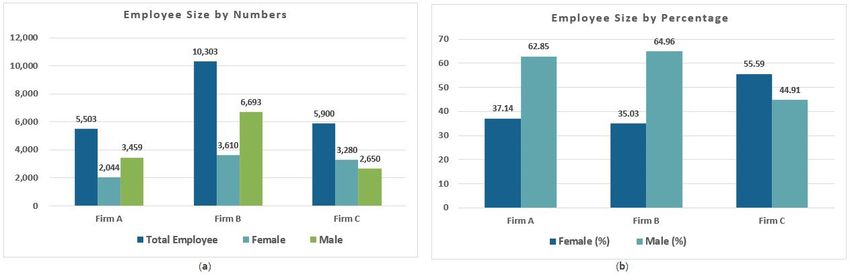
departments. Figure 2a presented the employment size of three firms. The total employees
of firm B were two times greater than the others. The female employees’ percentage of
firms A and B are less than 40 percent (shown in Figure 2b), which is significantly 10
Soc. Sci. 2021, 10, x FOR PEER REVIEW lower
of 34
than the industry average of 75 percent.
Figure 2.
Figure (a) The
2. (a) The total
total male
male and
and female
female employees
employees of three firms; (b) the ratio of male and female employees.
Allathree
As manufacturers
massive manufacturing haveoperation,
adequate allproduction
three firmscapacity,
releasewith an average
a substantial of 80
amount
to 120 garment assembling lines (GAL). For firm A and B, each GAL consists
of emission, wastewaters, chemical, and solid wastes that impact the internal and external of 15 to 20
sewing machines and an average of 18 to 25 sewing operators based
environment. All three firms have some similarities concerning production processes,on several factors.
In contrast,
shipping firm C designed
destinations, type of above
buyer60contact,
percent auditing,
GAL for critical garment stitching
and accountability with an
requirements
average
with theirofgarment
25 to 30 buyers.
machines anddo
They 35business
to 40 labors.
directly with buyers, and they must approve
for BSCI by Foreign Trade Agreement (FTA) asthree
As a massive manufacturing operation, all firms release
an exporter to thea European
substantialmarket.
amountAs of
emission, wastewaters, chemical, and solid wastes that impact the internal
per social compliance audit results, both firms B and C listed as Rating-A suppliers, and and external
environment.
they All three
valued western firms companies
fashion have some as similarities
potential concerning production
business partners. The processes,
manufac-
shipping destinations, type of buyer contact, auditing, and accountability
turer’s relationship with western buyers is more extended periods contrasting requirements
with
with their garment buyers. They
Sinkovics et al. (2016) studied firms. do business directly with buyers, and they must approve
for BSCI by Foreign Trade Agreement (FTA) as an exporter to the European market. As
All three firms’ yearly sales quantities and values have been gradually increasing
per social compliance audit results, both firms B and C listed as Rating-A suppliers, and
during the last three years, shown in Figure 3a. Nevertheless, the average prices of all
they valued western fashion companies as potential business partners. The manufacturer’s
three firms gradually decreased in FY 2018-19 than in the past years. The growth rates of
relationship with western buyers is more extended periods contrasting with Sinkovics et al.
firm A and C showed in Figure 3b, are nearly double in FY2018-19 than the previous year.
(2016) studied firms.
However, firm B experienced a slight decrease during the same period. The annual pro-
All three firms’ yearly sales quantities and values have been gradually increasing
duction capacities of case B are twice that of firm C and almost one-third more than case
during the last three years, shown in Figure 3a. Nevertheless, the average prices of all
firm A (shown in Appendix A Table A1). However, the average production process loss
three firms gradually decreased in FY 2018-19 than in the past years. The growth rates
of firm B is significantly less than the other two firms A and C, which means the firm is
of firm A and C showed in Figure 3b, are nearly double in FY2018-19 than the previous
more efficiently use its capacities.
year. However, firm B experienced a slight decrease during the same period. The annual
production capacities of case B are twice that of firm C and almost one-third more than
case firm A (shown in Appendix A Table A1). However, the average production process
loss of firm B is significantly less than the other two firms A and C, which means the firm
is more efficiently use its capacities.three firms gradually decreased in FY 2018-19 than in the past years. The growth rates of
firm A and C showed in Figure 3b, are nearly double in FY2018-19 than the previous year.
However, firm B experienced a slight decrease during the same period. The annual pro-
duction capacities of case B are twice that of firm C and almost one-third more than case
Soc. Sci. 2021, 10, 90 firm A (shown in Appendix A Table A1). However, the average production process loss
10 of 31
of firm B is significantly less than the other two firms A and C, which means the firm is
more efficiently use its capacities.
and values;
Figure 3. (a) The annual turnovers in sales volume and values; (b)
(b) The
The annual
annual growth
growth rates
rates in
in sales
sales value.
value.
The
The firms
firmsmet metseveral
severalaudit
auditstandards
standardsof BSCI, SeDex,
of BSCI, ISO, and
SeDex, ISO,OEKO-TEX
and OEKO-TEX (see ‘Notes’
(see
in Appendix B), concerning the social and environmental pillars.
‘Notes’ in Appendix B), concerning the social and environmental pillars. Case C was Case C was awarded the
Soc. Sci. 2021, 10, x FOR PEER REVIEW
Leadership in Energy and Environmental Design (Gold Category) in 2016 for green 11 of 34
factory
awarded the Leadership in Energy and Environmental Design (Gold Category) in 2016
building
for green(GFB).
factoryThis award(GFB).
building certified
Thisfirm meeting
award the requirements
certified firm meetingfor theenergy, water, and
requirements for
waste management efficiency. Both cases A and B adopted the OEKO-TEX
energy, water, and waste management efficiency. Both cases A and B adopted the OEKO- STeP and Higg’s
Facility
TEX STeP Environment
and Higg’s Module, respectively, to
Facility Environment reducerespectively,
Module, emissions and to wastes
reduce from facilities’
emissions and
operations. All three firms integrated digital technologies with the building
wastes from facilities’ operations. All three firms integrated digital technologies with the management
system
building (BMS) to controlsystem
management and measure
(BMS) environmental
to control and quality
measure (air, temperature, quality
environmental and carbon
(air,
emissions).
temperature, and carbon emissions).
All
All firms
firmsare
arestill
stillstruggling
strugglingtotoreduce
reduce absent
absentrates below
rates below5 percent,
5 percent, shown
shown in Figure 4b.
in Figure
Still, the job migration rates of case A shown in Figure 4a are higher than
4b. Still, the job migration rates of case A shown in Figure 4a are higher than the others. the others. Firms
B and C
Firms B documented
and C documented employees’ absent absent
employees’ rates ofrates
5.3 and 5.2and
of 5.3 percent, respectively,
5.2 percent, which
respectively,
are the lowest in 2019. However, the job migration rate of these two firms B and C, reduced
which are the lowest in 2019. However, the job migration rate of these two firms B and C,
to 4.9 and 4.2, respectively, in 2019, which is acceptable rates by manufacturers. In contrast,
reduced to 4.9 and 4.2, respectively, in 2019, which is acceptable rates by manufacturers.
firm A is experiencing higher absent rates and employee migrations for the last three,
In contrast, firm A is experiencing higher absent rates and employee migrations for the
comparing the other two firms shown in Figure 4a,b. However, it is gradually improving
last three, comparing the other two firms shown in Figure 4a,b. However, it is gradually
the annual rates of both categories in 2019 considering the past three years.
improving the annual rates of both categories in 2019 considering the past three years.
Figure 4.
Figure 4. (a)
(a) The
The job
job migration
migration rates;
rates; and
and (b)
(b) the
the annual
annual absenteeism
absenteeism rates
ratesof
ofthree
threecase
casefirms.
firms.
4.2. Workplace
4.2. Workplace Safety
Safety Compliance
Compliance (WSC)
(WSC) Initiatives
Initiatives toward
toward SHW
SHW byby Case
Case Firms
Firms (RQ1)
(RQ1)
The case
The case firms
firms took
took several
several core
core initiatives
initiatives (CIs)
(CIs) that
that can
can be
be categorized
categorized under
under three
three
key areas: physical environment safety (PES), occupational health (OH),
key areas: physical environment safety (PES), occupational health (OH), and workers’ and workers’
rights (WRs).
rights (WRs). The
The case
case firms
firms aimed
aimed toto tackle
tackle work-related
work-related accidents
accidents and
and health
health hazards
hazards
by implementing, monitoring, and practicing a range of enabling measures
by implementing, monitoring, and practicing a range of enabling measures (EMs) that (EMs) that are
are
described in following sections.
described in following sections.
4.2.1. Physical Environment Safety (PES) Practice
The garment suppliers focused on PES as a priority. They joined the private govern-
ance program to commence the mammoth tasks of factory safety inspections and remedi-
ations. Subsequently, they evolved the chemical safety Management (CSM), and efficient
safety management (ESM) to improve the PES, presented in Table 4. The firms executed
various EMs to enhance PES. The implementation approaches of these measures variedSoc. Sci. 2021, 10, 90 11 of 31
4.2.1. Physical Environment Safety (PES) Practice
The garment suppliers focused on PES as a priority. They joined the private gov-
ernance program to commence the mammoth tasks of factory safety inspections and
remediations. Subsequently, they evolved the chemical safety Management (CSM), and
efficient safety management (ESM) to improve the PES, presented in Table 4. The firms
executed various EMs to enhance PES. The implementation approaches of these measures
varied concerning firms’ financial, operational, and managerial capacities.
Table 4. Physical Environment Safety (PES) initiatives toward workplace safety compliance (WSC).
CIs EMs Case A Case B Case C
Conducted Structural Safety Inspections and Remediation # # #
B&F safety Conducted Electrical and Fire Safety Repairing # # #
Boiler safety inspection by Third Party × × 4
Implementation of the National and International Chemical Regulation (Such
# # #
as RSL or MRSL)
Accredited Laboratory facility for chemical assessment and identifying
CSM # # #
hazardous substance
Implementing Chemical Management System (such as MSD, PPE) 4 # 4
Safe disposing policy (Hazardous and Non-hazardous) 4 # #
Implementing periodic training on CSM 4 # #
Installed adequate fire and electrical safety apparatus as per Accord’s CAPs # # #
Sufficient supply of Personal Protective Equipment (PPE) and First Aid Boxes # # #
ESM
Safety Communications System (Announcement, Maps, and illuminated Signs) 4 # #
Safety Personnel and Training # # #
Note: #—Yes, ×—No; and 4—Action to be taken.
Building and Fire (B&F) Safety Initiatives
The first regulatory initiative of the three firms regarding B&F safety commenced after
formal agreement with Accord’s initial safety inspections (ISI) over structural, electrical,
and fire (SEF). Among the three case organizations, firm C joined in WSP following months
after the Accord launched in May 2013. The ISI of the firms identified many safety risks over
SEF issues shown in Table 5. The table shows that the number of production constructions
belongs to firm A is twice that of the other two firms.
Table 5. Accord’s findings over Structural, Electricity, and Fire initial inspections.
Initial Inspection Total Audited Production Number of Hazards Detected Remediation
Case
Date Constructions Structural Fire Electrical Completion Date
Case A 16 April 2014 19 47 112 141 21 Aug 2019
Case B 30 Aug 2014 10 19 135 98 8 Aug 2019
Case C 26 Sept 2013 11 15 105 208 6 March 2019
Source: Fieldwork 2018–19 (Data compilation from of Accord CAPs of the case companies).
Firm A identified several structural threats in each production construction, almost
1.5 times more than the other two firms. In contrast, firm B encountered immense fire
safety risks with an average of 13.5 per building, much higher than firm A and C. Again,
firm C encountered an average of 18.91 electrical issues in each building, which has led to
worsening conditions comparing the other two firms. The ISI revealed many safety gaps,
including the inconsistency between architectural drawings and physical constructions,
load plan management, addition and alterations, weak material strength, inadequate emer-
gency escapes, insufficient electrical systems, and lack of fire equipment (see Appendix A
Table A2 for more details).
All three firms conducted a detailed engineering assessment (DEA) over structural
constructions following the Bangladesh national building codes (BNBC) of 2006. TheSoc. Sci. 2021, 10, 90 12 of 31
Accord’s structural expert and factories’ safety engineers reviewed the DEA and approved
it with the corrective action plans (CAPs) before remediations. All three firms began the
step-by-step repairing and settled many issues over SEF (Appendix A Table A2) that took a
period of 4 to 6 years to complete. One interviewee (Int. 1_C) from top management stated
that customers’ brand reputation and employees’ health are a top priority for considering
mammoth safety remediation. However, no financial supports received from our business
partners. He further phrased, “Accord forced us to do many unnecessary changes and install
costly equipment in the series of follow-up inspections and verification”.
Regarding remediations progresses, both case firms A and C completed 95 percent
retrofitting tasks, and the other firm completed 100 percent as of May 2019 (Appendix A
Table A2). Accord’s experts verified each correction through follow-up inspections during
the remediation periods and listed it as Accord approved factory. The RSC verified the
remaining corrections of firms A and C after the Accord expires.
Although the three case firms undertook factory safety inspections and remediations,
they excluded boiler room safety assessments. The manufacturing operations of all three
firms heavily rely on a steam boiler for fabric production such as dyeing, drying, and
heating. The weak monitoring in boiler safety leads to workplace accidents or even fatal
accidents in the work environment. The RMG sector experienced many fire accidents due
to boiler explosions shown in Table 1. In recent years, the case firms started the boiler safety
inspections by internal experts who obtained 2nd class operator certificates. However they
did not award any third-party certification under regulatory safety program.
Chemical Safety Management (CSM) Initiatives
All case firms referred to the chemical preparation and application for fabric process-
ing stages, often exposure to human health that causes skin irritation and injuries. Table 4
illustrated several measures adopted by manufacturers for managing chemical substances
safely. Broadly, they implemented two critical practices for CSM. First, the regulatory
guidelines prevent hazards throughout the production processes, such as inventory, labo-
ratory testing, usage, and disposal. Second, they formed Standard Operating Procedures
(SOP) to reduce chemical use and dispose of the following international management
standards, such as Restricted Substance Lists (RSL) or Manufacturing Restricted Substance
Lists (MRSL). Moreover, all firms comply with European Chemical Regulations such as
REACH (Registration, Evaluation, Authorization, and Restriction of Chemicals) test to
export garments in the European region.
Case A follows the guidelines of the OEKO-TEX MRSL. In contrast, the other two firms
develop the ZDHC MRSL. Following SOP, three firms maintain some similar practices,
such as frequent bleaching and antibacterial cleaning in the fabric processing unit to avoid
chemical hazards. Moreover, they comply with material safety data sheets, usage of
safety wears, goggles, face shields, and gloves as personal protective equipment (PPE)
during chemical handling. However, the SOP varies based on the manufacturers’ aim
and objectives to practice international standards. Firm A devised the global management
standards of OEKO-TEX 100 to improve chemical inventory, usage, and waste management.
In partnership with the ZDHC MRSL program, firms B and C maintain careful assessments,
test the hazardous parameter, Material Safety Data (MSD) sheet, and on-job training during
using and disposing of chemicals. One interviewee (Int.2_B) of case B stated that textile
processing is chemical-intensive, which discharged hazardous substances into water bodies.
The firm is focusing on the use of green chemicals concerning environmental damage and
health safety for workers, customers, and local communities. The respondent asserted
collaborative actions by the public and private partnership to manage the industrial wastes.
Efficient Safety Management (ESM) Initiatives
All three firms introduced many reasonably practical measures enhancing efficient
safety management (ESM). Firstly, the firms upgraded fire safety apparatus (FSA) and
structural modifications to elevate the electrical and fire protection system. The studySoc. Sci. 2021, 10, 90 13 of 31
identified that all three firms arranged more or less 30 types of FSA within factory premises
(see Appendix A Table A3). Secondly, all employees complied with the correct use of PPE
and caring themselves from physical threats while working. The study found the firms
emphasized using masks, needle guards, goggles, ear plugs and gloves to the fabric cutting,
sewing, dyeing, and printing workers. The firm kept a first aid box on each work-floor to
take immediate primary treatment concerning physical injury of cut, burn, or wounded
during machine operation.
Third, three firms improved the safety communication system to send messages re-
garding dangers by central announcement devices, dong bell, and warning signs. Moreover,
all firms also rectified the emergency exits, visual maps, and illuminated signs for an easy
escape from factories’ buildings. Fourth is empowering the safety personnel (SP) by proper
safety training and drills. The SP consist of firefighters, rescue and first aid team. All three
firms confirmed that they would engage an average of 5 to 6 percent of the total employees
as SP. The SP from each floor is also responsible for evacuating workspaces as soon as the
accident announcement.
In cooperation with Accord, all three firms provided practical education through
a safety training program (STP) that included the correct usage of the PPE, first aid,
safety communication system, and the quick escape plan. Case A and C arranged several
internal workshops, drills, and training for workers to raise their responsibilities concerning
emergency communications, the usage of safety equipment, and personal care while danger
approaching. Besides STP, firm B organized several kinds of training by external experts
and internal engineering teams to educate employees on responding in an emergency. The
respondent (Int.8_B) of firm B stated, “the training and drills help employees to get practical
ideas on how to respond in an emergency during any work-related accidents. The company gathers
and analyzes workers’ response rate for further actions on improving employees’ feedback concerning
real incidents”.
4.2.2. Occupational Health (OH) Practices
The case organizations emphasized OH practices through implementing health and
hygiene (H&H) measures, hazards and risks assessment (HRA), and healthcare manage-
ment (HCM). These firms enabled various OH measures respecting legal provisions and
voluntary initiatives, as shown in Table 6.
Table 6. The Occupational Health (OH) practices toward WSC.
CIs EMs Case A Case B Case C
Performing daily sweeping and washing # # #
Installing artificial tools to control temperature and humidity # # #
Sufficient lighting arrangement for improving visibility # # #
H&H Wastes and effluents treatment to reduce the negative impact of operations # # #
initiatives Reduced over-crowding to improve free movements × # 4
Pure drinking water arrangement # # #
Separate washroom and toilet for male and female # # #
Environmental monitoring and assessment to control indoor air quality # # #
Implementing hazards investigations and recording # # #
Implementing the culture of “identifying the sources of hazards” at worksites # # #
HRA
Providing periodic training on hazards and risks assessment × # 4
initiatives
Monitoring potential risks in advance and proactive actions for elimination 4 # #
Periodic Third-Party Audits # # #
Access to primary healthcare benefits; # # #
HCM Reproductive health benefits # # #
initiatives Access to childcare facilities # # #
Worker’s Health Insurance × 4 4
Note:#—Yes, ×—No; and 4—Action to be taken.Soc. Sci. 2021, 10, 90 14 of 31
Health and Hygiene (H&H) Initiatives
A set of H&H practices were complied with by the three firms respecting the national
laws of BLA 2006, labor regulations of BLR 2015 and integrated with other global social
compliance standards. Table 6 represents many H&H measures practiced by all three
manufacturers to prevent frequent physical hazards and workplace accidents. These firms
addressed the most health- and ergonomic-related hazards: slip and fall, burn and cuts,
suffocation, awkward posture, and musculoskeletal pain. They identified that inadequate
cleaning, poor air circulation, visibility, confined space, and wild temperature instigated
these hazards. Almost all respondents echoed that the probability of the slip and fall would
occur at fabric processing, printing, and laundry section due to wet and slippery floors.
Three firms comply with daily housekeeping to keep clean the production floors, staircases,
shared spaces, restrooms, and canteen areas. Most notably, fabric dust, debris, chemical dirt,
and hazardous fume are the most common health hazards to workers. Therefore, all firms
conduct regular vacuum cleaning and sweeping as preventive measures. The production
director (Int.4_A) of firm A stated that poor housekeeping often led to workplace accidents
of slips and fell as well as ill-health issues. Our company emphasized daily cleanliness
with anti-septic detergents in all work floors, toilets, and washrooms.
The case firms B and C firstly modified the work-floor layouts, ventilation, and lighting
system as per Accord’s corrective actions to increase visibility, ventilation, and humidity
control at production sites. Moreover, they implemented the GFB standards following
the United States Green Building Codes (USGBC). Both firms focused on light pollution
reduction, the maximum use of natural light, increased ventilation, monitoring indoor
air quality, moisture, and temperatures. Firm A, on the other hand, installed exhausted
fans, cooling pads, and adequate LED lights on each building to improve inside workroom
temperatures and air quality and visibility.
All firms have internal audits on the durable materials and waste streams under solid
waste management programs. Firm A committed to environmental quality management
to reduce the negative impacts following the national environment acts and OEKO-Tex
STeP standards (See ‘Notes’ in Appendix B). The interviewee (Int.5_A) of firm A was
clarified that the firm adopted the national laws and regulations to embed the health and
hygiene practices with corporate culture. Moreover, they integrated international standards
of cleaner production assessment to increase resource efficiency by reducing hazardous
wastes and gases from factory operations. On the contrary, the other two firms have EMS
following ISO 14001 standards to control and manage solid wastes and wastewater. They
perform material quality assessments during inventories and monitor material flows to
prevent the waste stream.
Regarding rights to access pure drinking water, all firms arranged filtered drinking
water connections in each workroom. Moreover, they made separate washrooms and toilets
for male and female employees. Again, three firms placed numerous portable dustbins and
sand-filled buckets to keep the workroom and common spaces maintain a neat and tidy
environment. Moreover, firm B circulated numbers of colored posters requesting workers
to follow the etiquette to avoid throwing spits and dirt here and there.
Hazards and Risk Assessment (HRA) Initiatives
The three firms devised the different HRA measures shown in Table 6 in preventing
the sources of hazards and probable risks at work locations. In cooperation with Accord, the
firms developed the HRA method to detect the sources of SEF risks, ergonomic, chemical,
mechanical, and biological hazards. Firm A addressed working in fabric processing, rotary
printing, and laundry units as the most hazardous locations because of excessive heats,
sound, chemical dust, waste, and heavy machinery operations that adverse to workers’
health. Firm C identified the workers handling chemical solutions in fabric processing
and printing as more vulnerable to ergonomic hazards. The firm applied periodic training,
monitoring potential threats, and analysis of work-related risks as proactive measures.
In contrast, Firm B focused on regular maintenance works on the boiler, gas generators,You can also read


