EYFS Profile 2018 understanding and using the profile to support accurate and effective assessment of children in the EYFS - Essex Schools InfoLink
←
→
Page content transcription
If your browser does not render page correctly, please read the page content below
EYFS Profile 2018
  understanding and using the
profile to support accurate and
effective assessment of children
           in the EYFS.
               Part 2

A training course for teachers new to the EYFS
Karen Musgrove
Karen Thompson

         Moderation 2018 KT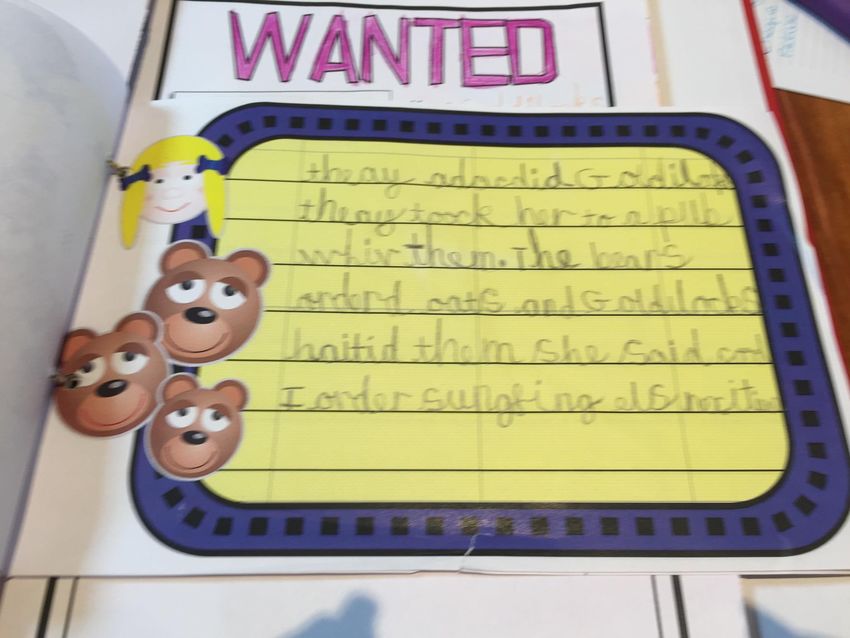
Plan for the day

9.30                   Assessment Updates
                       Recapping of the statutory
                       requirements, moderation and
                       assessment procedures linked to the
                       EYFS 2018.
                       Looking at materials to support ELGs 9
                       and 10
10.45                  Coffee break

11.00                  Opportunity to share learning journeys
12.00                  Questions. Finish

              Moderation 2018 KT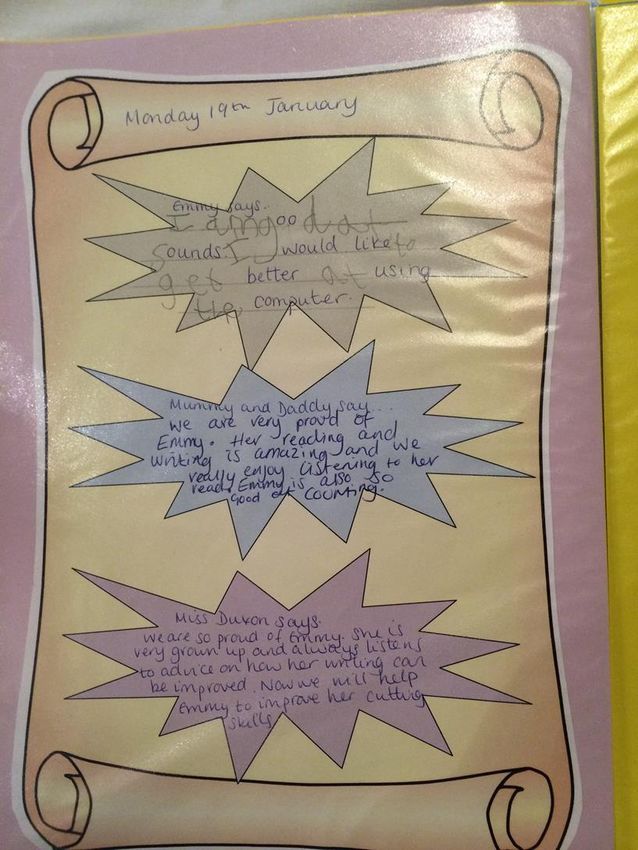
All
                     documents
                       can be
                     found here

Moderation 2018 KT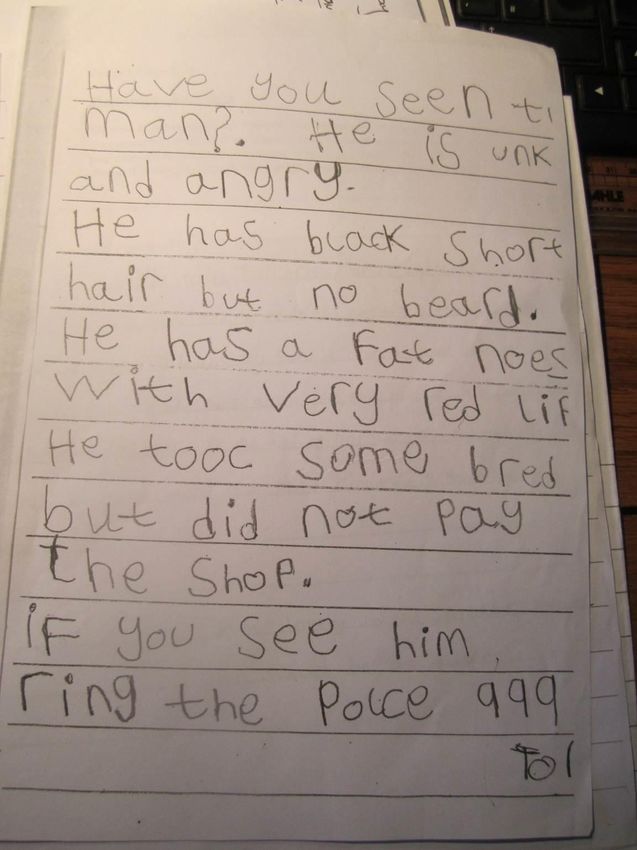
School Readiness: Successful
              transition processes are key to
              ensuring that children are ready for
              school. My Transition to School
              Passport and the Starting School
              Poster are useful resources you
              may wish to use.

Moderation 2018 KT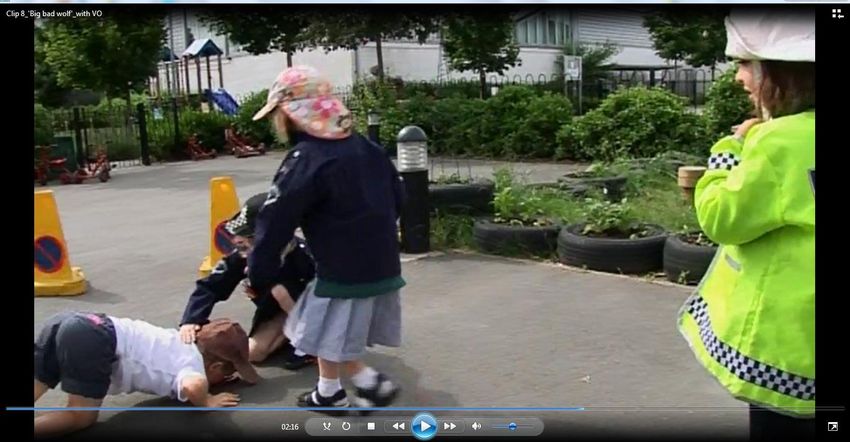
Updates
The government published on the 14th September its
plans to create a stable and proportionate primary
assessment system for the long-term.
The reforms will:
• improve the way that writing is assessed, so that
   teachers have more scope to use their professional
   judgment when assessing pupil performance

• introduce a new assessment at the start of reception
  from September 2020 to act as the start point for
  measuring progress, so we can give schools credit for
  the progress they help pupils make in reception, year
  one and year two

                       Moderation 2018 KT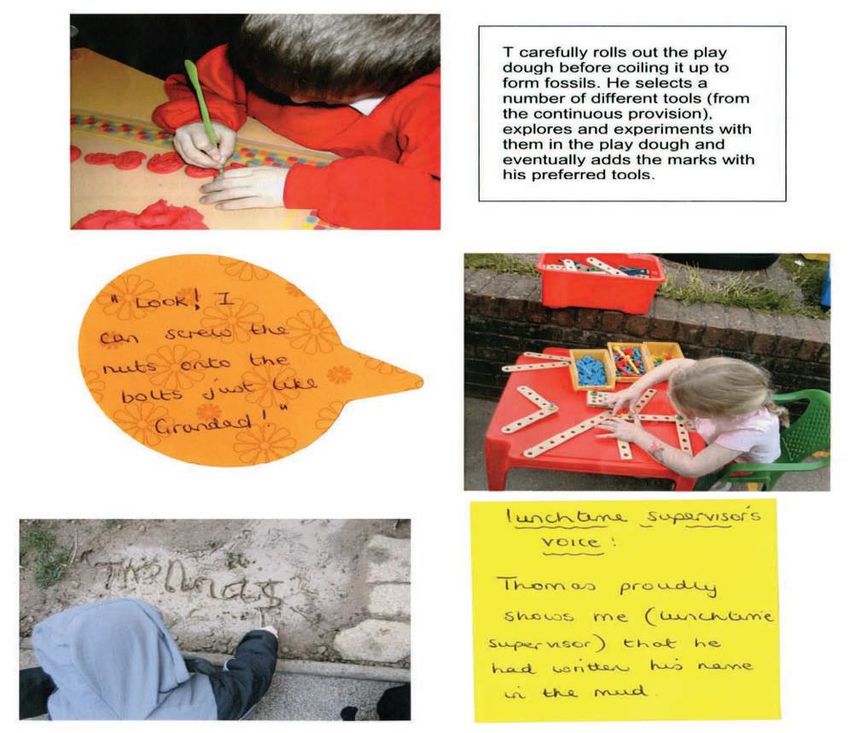
• remove the statutory status of end-of-key stage 1 assessments at
  the earliest possible point, from the 2022 to 2023 academic year,
  once the reception baseline is fully established

• improve the early years foundation stage profile, including revising
  the Early Learning Goals to make them clearer and align them
  more closely with teaching in key stage 1

• reduce burdens for teachers by removing the requirement to carry
  out statutory teacher assessments in English reading and
  mathematics at the end of key stage 2 from the 2018 to 2019
  academic year onwards

• introduce an online multiplication tables check, to be taken by
  pupils at the end of year 4, from the 2019 to 2020 academic year
  onwards

                             Moderation 2018 KT
Documents that you should be
       familiar with

           Moderation 2018 KT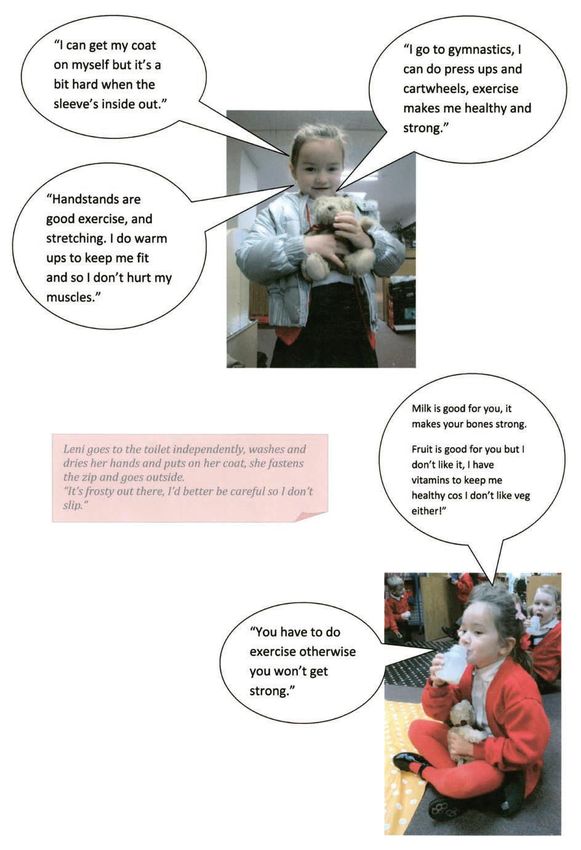
EYFS Moderation 2018                                           Key
                                                             messages
• EYFS assessment and reporting arrangements
 was published October 2017
• 2018 Early Years Foundation Stage Profile Update and Information
• The Department for Education (DfE) has confirmed that the EYFS profile
   remains statutory
• The EYFS assessment and reporting arrangements (ARA) for 2018 was
   updated in October 2017 to provide further clarification for EYFS
   providers and local authorities.
• The Early Years Foundation Stage Profile 2018 Handbook is now
   available to download. The handbook contains detailed information
   about the background and purpose of the profile. It also explains how
   practitioners should complete the profile. Headteachers and other
   managers of early years provision should make sure those involved in
   assessing the EYFS have a thorough understanding of the handbook

                              Moderation 2018 KT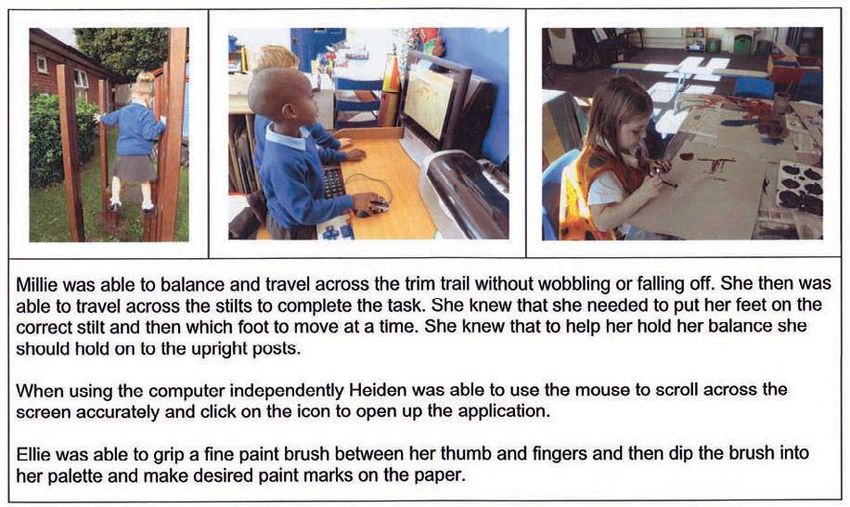
New

   2.3 EYFS assessment processes                      (page 15)

• Practitioners may refer to the exemplification materials.
  These illustrate the standard expected for each ELG at the end
  of the EYFS. If practitioners are confident in their
  judgements, there is no requirement to refer to the
  exemplification material.

                          Moderation 2018 KT
2.4 Evidence and documentation of
            the EYFS profile
• Evidence should come from day-to-day activity in the
  classroom and can be drawn from a variety of sources. The
  type of evidence will vary from setting to setting, class to
  class, and even child to child. The form of evidence
  supporting a practitioner judgement is entirely up to the
  practitioner. Practitioners should avoid excessive evidence
  gathering.

• When evidence does need to be recorded, this should follow
  the principles and recommendations outlined in the
  independent report: Eliminating unnecessary workload
  associated with data management.
                          Moderation 2018 KT
EYFS Moderation 2018
• LAs must ensure that all providers are visited
regularly as part of a cycle of moderation visits.
They must be notified of whether the EYFS profile
assessment is being carried out in accordance
with requirements. 25% of settings must receive
a moderation visit each year.
• The 2018 ARA states that LAs have a statutory
duty to ensure the accuracy and consistency of
the assessments made by early years providers
in their area.
Moderation 2018 KTIn addition to planned visits to all
settings on a 4-year cycle, moderation
visits/support may be triggered by:
• presence of newly qualified teachers and practitioners new to the EYFS
• requests from the headteacher or manager
• new senior leadership team
• Ofsted concern
• settings with an EYFS cohort for the first time
• concerns identified by the school improvement partner or LA personnel
• data anomalies
• unusual patterns of attainment
• date and / or outcome of last external moderation visit
• non-attendance at training events
• concern relating to the 2016 to 2017 assessment cycle, including
maladministration
Moderation 2018 KTRecapping of the statutory
requirements, moderation
and assessment procedures
linked to the EYFS 2018.
Moderation 2018 KTStatutory Framework for the Early
Years Foundation Stage
The Early Years Foundation Stage (EYFS) sets the
standards that all early years providers must
meet to ensure that children learn and develop
well and are kept healthy and safe.
It promotes teaching and learning to ensure
children’s ‘school readiness’ and gives children
the broad range of knowledge and skills that
provide the right foundation for good future
progress through school and life.
This non-statutory guidance material supports practitioners
in implementing the statutory requirements of the EYFS.
Moderation 2018 KTStatutory Framework for the Early Years
Foundation Stage
• In the final term of the year in which the child
reaches age five, and no later than 30 June in that
term, the EYFS Profile must be completed for each
child.
• The Profile provides parents and carers,
practitioners and teachers with a well-rounded
picture of a child’s knowledge, understanding and
abilities, their progress against expected levels,
This year and their readiness for Year 1.
21st
• The Profile must reflect: on-going observation; all
June relevant records held by the setting; discussions
with parents and carers, and any other adults
whom the teacher, parent or carer judges can
offer a useful contribution.
page 11
Moderation 2018 KTImportant
Page 11
How do you ensure this in your setting?
Challenges/barriers/resolutions/solutions
Moderation 2018 KTIncreasing opportunities for home
school links
ELG 15 Page 6
ELG11 page 5
Moderation 2018 KTELG 14 page 11
‘Practitioners must be alert to the
general diversity of children’s interests,
needs and inclinations’.
ELG 17 page 3
2018 Early Years Foundation Stage Profile Handbook
Moderation 2018 KTDo you invite parents and carers in to your classroom?
There are lots of ideas that we have come across.
What do you do?
Moderation 2018 KTAnd more ideas…
Green marker pens for parents to highlight
and respond to children in their learning
journals
Chatter Boxes/welcome boxes
‘CD tree’
Cheque book
Questionnaire with exemplification material
Proud cloud
Leaves
Speech bubbles
All about me
Class Bear/Magic wand/ Molly Maths
Moderation 2018 KTBringing parents in to the class
Family Friday
Workshops/ craft sessions
Fresh Air Friday
Friendly Friday
Mucky Monday
Magic Mondays- half termly
Wellie Wednesday
Thinking Thursday – Big
thinkers , small thinkers
Feedback Friday
Breakfast mornings
Cake Cafe
Dads mornings/ Grandparents
session
You and Me session
Moderation 2018 KTModeration 2018 KT
Moderation 2018 KT
Moderation 2018 KT
Increasing opportunities to gather
     information linked to literacy and
           numeracy from home
•   TLC
•   Naughty Bus literacy activities
•   Where’s Lenny?
•   Superhero mask
•   Measuring challenge
•   Laura’s Star- positional language

Effective Home Learning=School Ready Child
                          Moderation 2018 KT
Moderation 2018 KT
Heading here
•   First column bullet here              •   Second column bullet here

                               Moderation 2018 KT
Examples: Subtitle here Moderation 2018 KT
Inclusion and the EYFS profile
  Overview
  The early years foundation stage (EYFS) profile is an inclusive
  assessment, capable of capturing a wide range of children’s learning
  and development outcomes. It may be challenging for practitioners to
  observe and assess some children. This challenge applies both to:
 • understanding how some children might demonstrate attainment at
    the level expected at the end of the EYFS
 • how to capture the attainment of children whose development is
    judged to be at the ‘emerging’ level
 • Practitioners must address this challenge in order for children’s
    attainment to be accurately judged and recorded.

Read 2018 Early Years Foundation Stage
Profile Handbook
                              Moderation 2018 KT
Taking account of the needs of
individual children
• Reaching accurate assessments using the EYFS profile requires
practitioners to enable all children to reach their full potential.
Consequently, you must be alert to the general diversity of
children’s interests, needs and inclinations.
• For instance, there may be children who are at an earlier stage of
development than others in the cohort; some may have summer
birthdays. These children may be highly active and more likely to
demonstrate what they know, understand and can do in situations
which are sympathetic to this inclination. This will often be
outdoors.
• Practitioners should reflect on their observations and ensure that
the provision enables all children, to demonstrate attainment in
ways that are motivating to them. This should be regardless of their
stage of development or interests, needs and inclinations.
• 2017 EYFS Profile Handbook
Moderation 2018 KTChildren with special educational needs
and disability
• Special educational needs and disability (SEND)
includes physical, emotional, sensory and learning
needs. Settings will develop additional relationships
with other professionals when working with children
with SEND.
• It is vital that communication between all
professionals and the child’s parent is strong so that
practitioners can get a clear picture of the child’s
learning and development.
Moderation 2018 KTChildren with special educational
needs and disability (cont.)
• Observational assessment is the most effective way of
making judgements about all children’s learning and
development.
• P scales shouldn’t be used for assessing children in the EYFS;
they are an assessment tool designed for use at KS1.
Page 18- 2018 EYFS Profile Handbook
Moderation 2018 KT• Depending on their special educational need,
children will demonstrate learning and development
in different ways. Practitioners observing a child
involved in day to day activities must be alert to the
child demonstrating attainment in a variety of ways,
including eye pointing, use of symbols or signs. With
the exception of ELG03 Speaking, where the EYFS
profile contains the word ‘talks’ or ‘speaks’ children
can use their established or preferred mode of
communication.
Adaptations include:
• mobility aids
• magnification
• adapted ICT and equipment
Moderation 2018 KTChildren with special educational needs
and disability
If a child’s learning and development does not yet
meet the description of the level expected at the end
of the EYFS for an individual ELG, you should record
the outcome as ‘emerging’. You should also record
details of any specific assessment and provision in
place for the child.
This will be used in discussions with parents so that
they have a clear understanding of their child’s
development and any additional support which will be
offered.
Moderation 2018 KTChildren for whom English is not their
home language
The communication skills pupils for whom English is not
their home language will vary. However, learning English
as an additional language (EAL) is not a special
educational need.
Pupils will be at different stages of learning English and
one or more other languages.
Practitioners need to find out as much as they can
about a pupil’s prior language experience and any
education they have received elsewhere. Parents as
the first educators are an important source of information.
2018 EYFS Handbook
Moderation 2018 KTChildren for whom English is not
their home language (Cont.)
Within the EYFS profile, the early learning goals
(ELGs) for communication and language and for
literacy must be assessed in relation to the child’s
competency in English. The remaining ELGs may
be assessed in the context of any language –
including the child’s home language and English.
This has implications for provision.
Page 16 2018 EYFS Profile Handbook
Moderation 2018 KTPurpose of moderation
The purpose of moderation is to:
• secure the consistency and accuracy of
judgements made by different practitioners;
• reassure practitioners that their judgements are
accurate, valid and consistent with national
standards; and
• assure moderators that an acceptable level of
accuracy and validity has been achieved for
assessments recorded and reported by the settings
for which they have responsibility.
2018 Early Years Foundation Stage Profile Handbook
Moderation 2018 KTModeration Process for 2018
A percentage of schools will be
invited to attend training focussing
on the principles, procedures and
processes of completing the EYFS
Profile. The training should include
the opportunity for agreement
trialling by practitioners.
25% 0f settings will receive a visit,
on arrival to the school the
practitioner provides the moderator
with a list of the EYFS Profile interim
outcomes for each child.
The moderator selects five
complete profiles across the range
of attainment (emerging, expected
and exceeding). These will form the
basis of the moderation dialogue.
Moderation 2018 KTModeration Visit
• The moderator must ensure that within the
constraints of the range of attainment available,
practitioner judgements for all 17 ELGs are
moderated. The moderator is unlikely to scrutinise
all 17 ELGs for all five children, but will ensure that
judgements are moderated from each of the three
outcome bands (emerging, expected and exceeding).
Moderation 2018 KTThis table needs
completing prior
to the moderator
arriving
Moderation 2018 KTTraining Activity:
The importance of near
Moderation 2018 misses
KTNear Misses in the EYFS Profile
What do we mean by ‘near
miss’ pupils?
Those pupils achieving
expected or exceeding in 11 of
the 12 Early Learning Goals
required for a Good Level of
Development (GLD)
Moderation 2018 KTWhy are Near
Miss Children
Important?
• GLD (Good Level of
Development) Government
measure of school readiness-
EYFS Statutory Document.
• We want all children to be
school ready.
• Schools are increasing being
held to an account.
• Ofsted will make a comparison
of your school against national
outcomes.
Moderation 2018 KT• The number of ‘near miss’ pupils (those achieving at least
expected in 11 if the 12 Learning Goals required to achieve
GLD) has reduced significantly from 1309 in 2013 to 409
such pupils in 2017. 244 (60%) of these pupils were ‘emerging’
solely in Writing. Of these 244, 165 were boys.
• 206 schools had a least one near miss pupil. 22 schools had
at least 10% of their pupils being classed as a near miss.
• Whilst likely to be comparable to national patterns, 82% of
Autumn born pupils achieved GLD compared to 64% of
summer born.
Moderation 2018 KTInterestingly:
ELG Number of ‘near misses’
2013 2014 2015 2016 2017
L&A 33 15 21 9 5
U 14 10 8 7 3
S 78 46 34 19 21
M&H 58 35 24 17 8
H & SC 21 17 11 6 3
SC & SA 58 27 23 14 8
MF & B 85 40 32 27 15
MR 57 27 23 14 8
R 33 21 26 27 15
W 582 468 366 271 244
N 231 150 83 67 79
SSM 59 15 15 10 0
TOTAL 1309 871 659 485 409
In order to achieve a Good Level of Development, pupils have to be at
the ‘expected’ or ‘exceeding’ level in all 12 Learning Goals within the
Prime Areas of Learning (Communication & Language, Physical
Development, Personal, Social & Emotional Development) plus Literacy
and Mathematics. The table above shows the number of pupils who were
at least expected in 11 goals but were ‘emerging’ in just one.
Moderation 2018 KTPrinciples of EYFS profile assessments
2018 Early Years Foundation Stage Profile Handbook
• Reliable and accurate assessment at the end of the EYFS is
underpinned by the following principles:
• reliable and accurate assessment is based primarily on the
practitioner’s knowledge of the child. Knowledge is gained
predominantly from observation and interaction in a range of daily
activities and events.
• responsible pedagogy must be in place so that the provision
enables each child to demonstrate their learning and development
fully.
• embedded learning is identified by assessing what a child can do
consistently and independently in a range of everyday situations.
• an effective assessment presents an holistic view of a child’s
learning and development.
• accurate assessments take account of contributions from a range
of perspectives including the child, their parents and other
relevant adults.
Moderation 2018 KTObservational assessment
2018 Early Years Foundation Stage Profile Handbook
Observational assessment involves reaching an
understanding of children’s learning by
watching, listening and interacting as they
engage in everyday activities, events and
experiences, and demonstrate their specific
knowledge, skills and understanding.
It is the most reliable way of building up an
accurate picture of children’s development and
learning, especially where the attainment
demonstrated is not dependent on overt adult
support.
Observational assessment is key to
understanding what children really know and
can do.
Some observations will be planned but some
may be a spontaneous capture of an important
moment. It is likely that observations of
everyday activities will provide evidence of
attainment in more than one area of learning.
Moderation 2018 KTResponsible pedagogy
Children must have
access to a rich learning
environment which
provides them with the
opportunities and
conditions in which to
flourish in all aspects of
their development.
Moderation 2018 KTCharacteristics of Effective Learning
• Describe factors which play a central role in
a pupil’s learning and in becoming an
effective learner. They are vital elements of
support for the transition process from EYFS
to year 1.
• They run through and underpin all 7 areas of
learning and development. They represent
processes rather than outcomes.
• Information about the pupil’s characteristics
of effective learning gives year 1 teachers
vital background and context about their
next stage of development and future
learning needs.
EYFS Handbook
Moderation 2018 KTEvidencing Judgements
2018 EYFS Assessment and reporting arrangements
Practitioners and EYFS Profile moderators should be
aware that the definition of evidence is any material,
knowledge of the child, anecdotal incident or result of
observation or information from additional sources
that supports the overall picture of a child’s
development. There is no requirement that it should
be formally recorded or documented; the extent to
which the practitioner chooses to record information
will depend on individual preference. Paperwork
should be kept to the minimum that practitioners
require to illustrate, support and recall their
knowledge of the child’s attainment.
Moderation 2018 KTAssessment Guidance
The materials are split into each of
the 17 EYFS Profile early
learning goals (ELGs). They
include a variety of different
types of evidence of children's
learning, to show the wide
range of ways that information
can be gathered to support EYFS
Profile judgements.
Search DfE website: EYFS Profile
exemplification materials
Moderation 2018 KTHow to use the exemplification
• Practitioners MUST:
• make a best-fit judgement for each ELG using the
description of learning and development expected at the
end of the EYFS.
• Take a holistic view of each ELG descriptor.
• Each ELG is exemplified at the ‘expected’ level and the set as
a whole illustrates the ‘expected’ descriptor.
• No one piece of evidence meets the ELG as a standalone
item, together they illustrate the pitch and breadth of a
particular ‘expected’ level of learning and development.
2018 Early Years Foundation Stage Profile Handbook
Moderation 2018 KTAgreement Trialling
Please work in pairs to decide
whether the evidence in the following
scenarios describe children that could
be working at:
Emerging? Please remember that
these are one off pieces
Expected? of evidence to support
Or judgements and could
not be used to say that
Exceeding? an individual is at that
level
Moderation 2018 KTELG 4 Moving and Handling
Children show good control and co-ordination
in large and small movements. They move
confidently in a range of ways, safely
negotiating space. They handle equipment
and tools effectively, including pencils for
writing.
Moderation 2018 KTELG 4 Moving and Handling Scenarios
Scenarios linked to ELG 4 Evidence to support judgements
Scenario 1 When using the computer independently Tim was able
to use the mouse to scroll across the screen accurately
and click on the icon to open up the application.
Scenario 2 Amelia shows very limited spatial awareness in the
outdoor setting and will often accidently bump into her
peers. She is beginning to use a variety of tools
effectively with some support.
Scenario 3 Charlie can hop confidently and skip in time to music.
He can hold paper in position and use his preferred
hand for writing, using a correct pencil grip. He is
beginning to be able to write on lines and control his
letter size.
Scenario 4 Thomas carefully rolls out the play dough before coiling
it up to form fossils. He selects a number of different
tools (from the continuous provision), explores and
experiments with them in the play dough and eventually
adds the marks with his preferred tools.
Moderation 2018 KTELG 5 Health and Self-care
Children know the importance for good health
of physical exercise, and a healthy diet, and
talk about ways to keep healthy and safe. They
manage their own basic hygiene and
personal needs successfully, including
dressing and going to the toilet Independently.
Moderation 2018 KTELG 5 Health and Self-Care
Scenarios linked to ELG 5 Evidence to support judgements
Scenario 1
Scenario 2
Scenario 3 Lewis needs some support to undress and dress for PE although his
understanding of what order his clothes go on is improving. He is now
better at managing his own personal hygiene, although when he is tired
towards the end of the day accidents may happen.
Scenario 4 Josh knows about, and can make healthy choices in
relation to, healthy eating and exercise, he will
readily discuss the importance of eating 5 a day
vegetables and fruit. He can dress and undress
independently, and is usually the first one ready after
our time to move sessions, he can successfully
Moderation 2018 KT
manage tying his laces on his shoes.Video-The Show Jumping
Creative
Development
with Paige is
another
excellent video
to share with
pupils
Goggle: ‘A Trap for Baddies’
Moderation 2018 KTNew Key Publications
Moderation 2018 KTModeration 2018 KT
Opportunity to share Learning
     Journeys/Journals

            Moderation 2018 KT
Ideas to
support
assessment
Moderation 2018 KTModeration 2018 KT
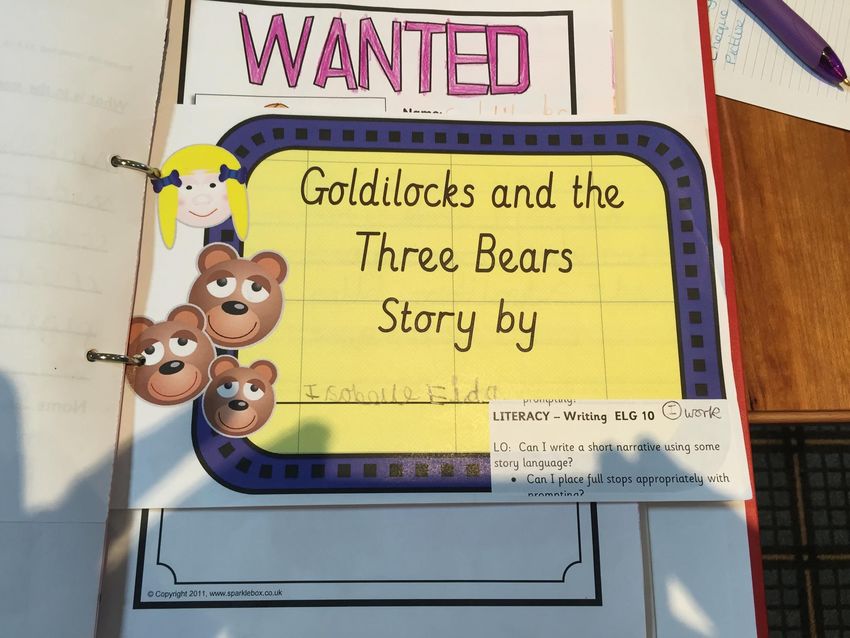
ELG 10 Writing
ELG 10 is one of the hardest ELGs to achieve at the
expected, we would like to quickly share some
examples and some ideas to promote opportunities to
write independently

                    Moderation 2018 KT
ELG 10 Writing
What
opportunities do
you provide in
your setting to
inspire children to
write?
Moderation 2018 KTEmerging, expected or exceeding?
Moderation 2018 KTEmerging,
expected
or
exceeding?
Moderation 2018 KTExceeding Examples of writing
Moderated in moderation meetings or on visits.
Moderation 2018 KTWell Jack was on his way
he met a lady…
Moderation 2018 KT…he was shockt to it in fact he was so sockt
that he climb
Moderation 2018 KTEmerging,
expected or
exceeding?
Moderation 2018 KTModeration 2018 KT
Moderation 2018 KT
Moderation 2018 KT
What do we do in school to
      promote writing?
Give them opportunities to write
Labelling pictures / models
Writing about their picture
Guided writing sessions
Modelling writing
Blend the word then segment it

               Moderation 2018 KT
Important!
• Handwriting- forming the letters the
correct way round. ‘b, d, e, g
• Capital letters and full stops?????
Moderation 2018 KTAs in all
things motivation is
the key. If children aren’t
motivated to write then they
won’t.
Often things that we think
are a great idea as a writing
inspiration don’t catch children’s
imagination and therefore they
are not bothered
Moderation 2018 KTUseful websites http://www.ictgames.com/looCoverWriteCheck/LCWC _demo/index.html Moderation 2018 KT
http://www.arcademics.com/games/kitten-hop/kitten-
hop.html              Moderation 2018 KT
Moderation 2018 KT
Useful Phonics Websites for Parents

http://www.phonicsplay.co.uk/ParentsMenu.h
tm
• a selection of interactive games for all phonic
  phases. Mostly simple games.
www.ictgames.com/literacy.html
• a great selection of games that link well with
  games in Letters and Sounds.
               ‘Loo Cover Write
               Check’
                     Moderation 2018 KT
Useful Phonics Websites for Parents
http://www.letters-and-sounds.com/
printable resources for each of the Letters and Sounds phonic
phases, also links to games aligned with each phase.
http://www.ngfl-cymru.org.uk/vtc/ngfl/ngfl-flash/alphabet-
eng/alphabet.htm
Letter names come up in alphabetical order
http://www.bbc.co.uk/schools/wordsandpictures/index.sht
ml
Activities for all phases
Moderation 2018 KTOver to you
Are there any
questions that
you would like
to ask?
Moderation 2018 KTYou can also read


