FACEBOOK GUIDE FOR EDUCATORS - A tool for teaching and learning
←
→
Page content transcription
If your browser does not render page correctly, please read the page content below

FACEBOOK
GUIDE FOR
EDUCATORS
A tool for teaching and learning

Contents                                                                            2
                                                                                    2
              cebook?
What is Fa                                                                          2
                e do this?
Why did w                                                                               3
                  e learn?
What did w                             for?                                             3
        is t h is  g u ide written
 Who                                 e                                                  4
                 r o te this guid                                    g
 Ho w    w e  w
                                     e a c h in g a nd learnin                              6
                                  rt
                  as a tool fo                          he classro
                                                                       om
 Facebook                                a r o u n d  t                                     8
                                   and
    s e s f o r F acebook in                           in g t on College
  U                                    rld –   W  e ll                                      10
          b o o  k in  t he real wo                             a u tical Scho
                                                                               ol
  Face                                        – Lon   d o n   N
                 k  in  t h e r eal world
   Faceboo

      Appendix                                   k                                              13
                 a r t e d w   it h Faceboo
      Getting st                                      fety
                       o o ls , p r iv acy and sa
          – useful t                                     ool                                     16
                           c e  b o o k a t your sch
                    g Fa                                             ?
       Introducin                           t h e p r o c ess easier                             17
                           help make
           – what can
                    dgements
        Acknowle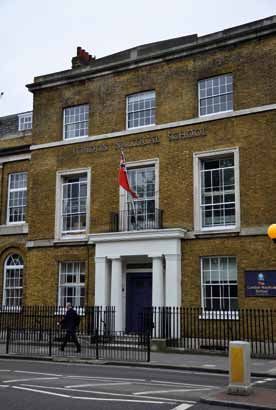
What is                                                          What did
Facebook?                                                        we learn?
Facebook is a social utility that connects us with the           In our view, Facebook is a vital tool for teaching and
people, brands and organizations we care about.                  learning in the 21st century and for making education
Founded in 2004, it has quickly become one of the most           more social. It is already being widely used in colleges
used and visited platforms for people of all ages to             and universities across the UK and globally, but it has
communicate and connect with friends and others who              the potential to be a game changer for teachers, schools
work, study and live around them.                                and the classroom. It is a ‘Swiss Army Knife’ of tools to
                                                                 unlock learning for young people within and beyond
By May 2013 there were 1.1bn people using Facebook               the classroom. Facebook’s community of 1.1bn users
around the world, helping to make it a tool rich with            give it unparalleled power as a tool for research and
potential for learning.                                          collaboration between students and young people and,
                                                                 given rapid changes in technology and e-learning,
Facebook’s mission is to make the world more open and            Facebook is in an excellent position to support the way
connected. It is in this spirit that Facebook has been           young people, teachers and other educators collaborate,
working with schools, colleges and universities to better        access and curate new learning. Facebook tools such as
understand how the service can be used in and out of             Timeline, Groups and Graph Search have the potential to
classrooms as a tool for learning, and harness its potential     revolutionise the way homework is planned, completed
to improve learning outcomes for young people.                   and reported on – it’s Homework 2.0. It can also be a great
                                                                 tool for teachers’ professional development, providing
                                                                 a safe space for teachers to share their expertise and
                                                                 professional practice within and beyond the walls of

Why did we
                                                                 the classroom.

                                                                 The teachers and students within the case study section

do this?                                                         of this report did face challenges in getting started: –
                                                                 opening up access to Facebook within their schools;
                                                                 creating a culture of trust amongst the students about
                                                                 using their native communication tool for learning,
This Facebook Guide for Educators builds on the                  testing; and pushing the boundaries of existing tools
organisation’s growing portfolio of work in the education        and also thinking creatively about how Facebook can be
arena in the UK and globally including:                          used in and outside of the classroom. But the ability of
                                                                 these and other innovative teachers and young people to
•	Partnering with the charity Apps for Good to develop         think outside of the box and use Facebook as everything
    an open source educational programme that will               from a method of reviewing and submitting homework,
    enable schools to teach young people how to design           to making a Timeline of the Cold War, to posting videos
    and develop their own social applications.                   and rich media on Dolly the Sheep while studying DNA!
•	Work with the Gates Foundation to run an                      – highlight the huge potential of Facebook as a tool for
   Education Hack in London and the US. A group of               teaching and learning. The impact on the teachers and
   leading developers were challenged to build social            their professional practice is also highly significant – in
   applications to assist learning and development.              our small example alone it has radically changed the way
                                                                 the teachers think about their planning and delivery in
•	The creation of a US Facebook for Educators guide             the classroom and created a new dialogue with students
   that highlighted some practical ways the service could        that starts from the digital world they inhabit.
   be used in and around the classroom.
•	Commissioning a project and this guide from The
   Education Foundation, the UK’s education think tank,
   to explore the use of Facebook as a tool for digital and
   social learning in two schools in England, details of which
   are included in the case study section of this report.

 2      FACEBOOK GUIDE FOR EDUCATORS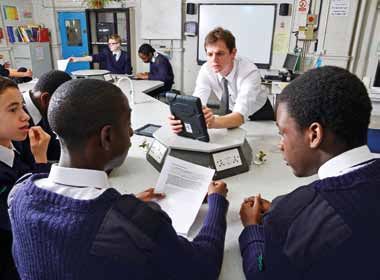
Who is this guide                                           How we wrote
written for?                                                this guide
The guide is aimed at educators working with young          We were commissioned to work collaboratively with
people within schools, colleges, universities, work based   Facebook and an expert group of teachers and educators
learning, formal and informal learning settings. It looks   to develop this guide.
at the way in which Facebook can be used as a tool to:
                                                            In early 2013 we convened this group to share the vision
•	Support subject teaching across the curriculum
                                                            for the guide and explore how best to produce a resource
•	Support out of school hours learning                     that was both practical and helpful to busy educators with
                                                            examples of how Facebook was being used in the UK.
•	Encourage informal social learning
•	Enable easy communication between students,              We also set out to road test these ideas with schools,
   teachers and parents                                     explore their journey in using Facebook and test Facebook’s
                                                            capabilities as a resource for teaching and learning.
•	Support the development of digital citizenship skills
                                                            In an intensive few months, two schools, Wellington
The guide aims to be practical and hands on, but is not     College and the London Nautical School, were selected
exhaustive. Innovative uses of Facebook are being           as test beds for our ideas. We brought students to
developed all of the time and as such we have created       Facebook’s London office for an immersive workshop
a Facebook for Educators Page run by educators for          on the use of Facebook tools and to gather the views of
educators, to share their experiences and                   teachers and students first hand on its application in two
recommendations across the UK and beyond.                   different subject areas: History and Biology.

To like the page, and join the conversation visit           The subsequent weeks were spent working with the
www.facebook.com/educationfoundationuk                      teachers and students to bring Facebook to life in their
                                                            settings and to produce the case studies shown on
                                                            pages 8 to 11 of this guide. To avoid the ‘tyranny of best
                                                            practice’, the examples are raw and uncut and show
                                                            the real journey that each school has been on to embed
                                                            Facebook in its work and the positive difference it has
                                                            made to the learning experience of teachers and students.

                                                            There are photos and video case studies of the two schools’
                                                            experiences on the Education Foundation Facebook Page
                                                            at www.facebook.com/educationfoundationuk

                                                               FACEBOOK GUIDE FOR EDUCATORS                 3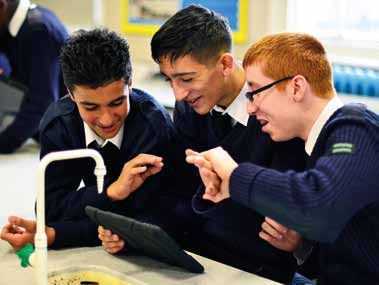
Facebook as a                                                    As a result of our work on this project, we see Facebook
                                                                 as a vital tool for teaching and learning in the 21st

tool for teaching
                                                                 century and for making education more social. It is an
                                                                 essential ‘toolbox for educators’ in schools, colleges,
                                                                 universities and other learning settings to open up,

and learning                                                     inspire and catalyse young people’s learning. From
                                                                 transforming the teaching of subjects across the
                                                                 curriculum within the classroom, to the huge potential
                                                                 for using Facebook for non-formal and out of school
Education systems around the world are undergoing                hours learning in breakfast clubs, lunchtime, after school,
a revolution in teaching and learning, with the advent           weekend and holiday activities; from young people
and maturity of new technology driving new forms of              ‘liking’ each other’s work on a Facebook Page or Group,
engagement between students, teachers and the wider              to young people making, creating and curating their
world, powered by the web. Digital and social learning           own content and learning; to the ways in which social
often starts from the perspective of where young people          networks can be harnessed to engage young people in
are accessing knowledge and learning for themselves.             informal learning in youth and community settings.
That learning is typically interactive, student centred,
collaborative and on demand. It is often outside of school       Ideas from our research, expert groups and case studies
hours, in non-formal settings and increasingly peer to           are shown in the following table but the inspiration
peer via their own friends and networks. Teaching and            from students, teachers, lecturers and educators keeps
learning is and will become much more social.                    on growing and we signpost you to some excellence
                                                                 resources online to give you inspiration:
Young people today also have the ability to communicate
with anyone in the world using a variety of digital platforms,
increasingly through mobile as well as static devices.
These tools enable millions to connect with each other             Quick links
and for information to be shared in an unprecedented
way. Questions have been raised about how we best                  Social Media for Schools Guide, Matt Britland,
prepare young people for a digital world and the need for          Guardian Teacher Network
digital literacy and skills for future jobs and prosperity.        www.guardian.co.uk/teacher-network/2012/
What we believe is that giving young people access to
                                                                   jul/26/social-media-teacher-guide
digital platforms in schools, colleges and other learning
environments provides them with essential core skills that
will enable them to navigate their future digital world and        Mashable: Teachers Guide to Facebook
enable them to be positive digital citizens.                       mashable.com/2012/10/29/facebook-for-
                                                                   teachers/
This revolution coincides with the exponential growth and
access to smartphones and mobile devices that allow access         50 reasons to invite Facebook into
to information in real time, at young people’s fingertips.         your classroom
Allied to this, cheap and free online platforms are being used     www.onlinecollege.org/2011/07/18/50-reasons-
by teachers and students to create and share knowledge
                                                                   to-invite-facebook-into-your-classroom/
and learning inside and outside of the classroom and at
home via virtual learning environments. Plus the new
phenomenon of MOOCs (Massive Open Online courses)                  The Why and How of Using Facebook
such as the EdX, Khan Academy, Udacity and Futurelearn             For Educators
and Mozilla’s Open Badges have started to change the               http://theedublogger.com/2011/05/11/
way higher education and indeed learning is accessed,              the-why-and-how-of-using-facebook-for-
used and accredited. It is in this rapidly changing landscape      educators-no-need-to-be-friends-at-all/
that Facebook’s work on the use of its platform as a tool
for teaching and learning can be placed.

     “The advent of mobile will have a big impact on the structure of education - no walls to your classroom.
     This is where we have got to go as teachers…we need to make the learning experience tie in with what will be
     normal for students. Mobile technologies will eventually be used freely within classrooms and I can see three
     possible uses: information exchange; crowdsourcing and challenge. How do we get to that stage with young
     people and is this the best way to start that?”

     John Taylor, Deputy Headteacher, London Nautical School

 4       FACEBOOK GUIDE FOR EDUCATORS
Facebook in teaching and learning
  Formal learning                             Non-formal and out of school           Wider applications
                                              hours learning

  Creating a Timeline or Facebook             Organising a sports team or after      A communication tool and
  Group to support the teaching of            school club                            ‘broadcast account’ with parents,
  any curriculum subject                                                             carers and the community

                                              Pastoral care - making new pupils
  Creating a space and platform for           feel at home at school or college      Enabling language students to
  homework and revision resources                                                    converse with exchange partners
                                                                                     overseas
                                              Creating and designing digital
  Running debates on topical issues           making activities including
  and hot issues in the media                 App creation                           Engaging hard to reach learners
                                                                                     in school/college and through
                                                                                     online learning
  Peer tutoring and support                   Organising TeachMeets or other
                                              CPD activities
                                                                                     Providing inspiration in life skills
  A research tool to post, share                                                     and enrichment subjects
  ideas, videos and resources                 Informal support from friends
                                              (likes) for projects and other
                                              activities                             Teaching digital skills for young
  Creating Groups in schools to                                                      people and adults
  make life easier for teachers
  and staff                                   Uploading social and video
                                              podcasts to students/peers             Engaging young people in youth
                                                                                     and community settings

                                              Creating private Groups for
                                              teachers across a faculty or           Enabling students to socialise and
                                              federation of schools/ colleges /      make friends
                                              universities

Visit www.facebook.com/educationfoundationuk to download this as a pdf.

  We need to explain to teachers what Facebook and                  “Schools are beginning to use Facebook Groups to
  ‘social’ could do - it’s about kids creating and curating -       communicate with students. This is a very powerful
  the social aspect rather than central control. It isn’t           tool for sharing information and collaborating with
  a bulletin board. The kids take it more seriously… It is          students from a safe distance. Facebook Groups do
  exciting when kids start talking to each other, for               not require members to be friends with each other.
  example over a summer project. Students are already               Members of the Groups can exchange files, links,
  helping each other – Another key teacher question                 information, polls and videos very quickly. Anytime
  is ‘How do I reach the ‘hard to reach?’ With Facebook             someone contributes to the group its member will
  Groups you can see how many people have seen                      receive a notification. If you have the Facebook
  something and get students to post something and get              smartphone app these can be pushed to your device.
  it liked by a teacher or their peers. It’s really powerful.”      Facebook Pages can also be used to create a central
                                                                    Page for students and teachers to share information”
  Debbie Forster,
  COO, Apps for Good and former headteacher                         Matt Britland,
                                                                    Head of ICT at Kingston Grammar School

                                                                     FACEBOOK GUIDE FOR EDUCATORS                 5
Uses for Facebook                                                     Using Facebook Groups to share

in and around
                                                                      knowledge among students
                                                                      Maraim Masoud, University of Southampton

the classroom                                                         Maraim is a final year MEng Computer Science
                                                                      student working on the DigiChamps project at the
                                                                      University of Southampton. The project provides
                                                                      support to university academics and students.
Create a space for revision resources
                                                                      “Students use Facebook Groups and pages as an
Facebook Groups can be quickly created, with their access             easy way to get quick responses to questions. It
easily limited only to a form or year group. Pupils can               is like mass media but in a bidirectional way. You
be invited by email. Files can be uploaded by the Group               can hear many and many can hear you. As I am a
administrator, who can also begin debates using an inbuilt            student, from a student perspective, Facebook
polling feature. Pupils can be directed to the Group where            works as a hub for contacting my course mates.
they can easily access a set of resources for a specific subject,     We have a Facebook Group for our course/year
share links to resources and discuss revision assignments.            where we all post questions about coursework
Groups are quickly accessible to pupils from their mobile             and whoever knows, replies with information that
devices from any location. Groups can be set up so they               helps many in a very practical and efficient way.”
are invisible to non-members. When a teacher adds a
new file, question or post they are able to see how many
Group members have seen and read the item.

  Using Facebook pages to support revision                          Set homework tasks
  and homework in Key Stage 4 History                               Facebook Groups are accessible on mobile devices
  Ruth Kerfoot, Chorlton High School                                enabling pupils to quickly access homework assignments.
                                                                    If pupils miss a lesson or revision session, a clear set
  Chorlton High School uses Facebook to help                        of homework tasks with supplementary resources can
  students with their revision, and keep students                   quickly be added by their teacher to a subject or class
  informed about key exam dates. Ruth Kerfoot                       Facebook Group. The group format enables a class group
  manages the planning and delivery of history in                   to discuss tasks among themselves, enabling pupils to
  the school for students aged 11-16.                               collaborate and learn from each other. Pupils can easily
                                                                    post links to useful resources into the Group – meaning
  “I use Facebook pages to assist my students with                  once exam periods arrive they have an easily accessible
  their revision…I create events on Facebook for                    record or research resources and revision aids. Polling
  the exams, so that if students forget when they                   tools built into Facebook Groups enable a teacher to set
  are they can check on their phone in a matter of                  up a series of questions or debates for a Group of pupils.
  seconds. I post a revision timetable as a picture
  on dedicated subject pages so that students
  know what they should be revising and when,
  and I also post weekly reminders of what topic
                                                                      Facebook making life easier for teachers
  they should be revising.                                            Matt Britland, Kingston Grammar School

  “I also upload notes and diagrams to DropBox                        Matt is Head of ICT and a contributor to the
  and then link directly from Facebook. This means                    Guardian Education blog.
  students don’t have to go looking for materials -
  they are already there in one place and viewable                    “I keep a track of every single Group that’s run
  on their phones.”                                                   by the school and I think we’ve got sixteen or
                                                                      seventeen Groups going now. A lot of the more
                                                                      experienced members of staff are the members
                                                                      of staff who are really keen to get involved; it
                                                                      actually makes their lives a little easier. I have
Organise a sports team                                                also set it up so students and teachers are not
Facebook Groups can be used to help sports teams or
                                                                      friends on Facebook. They communicate through
school societies – from the cast of a play to a choir –               the Group. It is possible by creating closed Groups
organize their activity. An inbuilt events tool enables               and emailing the students the link. They can then
a teacher leading an activity to share a series of                    request to join it and the teacher can approve.
forthcoming events or fixtures. The teacher is then able              There is always that professional distance.”
to see which pupils will attend and can send further
messages to confirmed attendees. For sports teams,
teachers can post directions or map links into the Group,
then answer questions from team members if needed.

 6      FACEBOOK GUIDE FOR EDUCATORS
Communicate with parents                                      Enable language students to speak
                                                              to exchange partners overseas
You can use Facebook Groups to communicate with a set
of parents when face-to-face meetings aren’t necessary        Before setting off on a foreign exchange trip set up a
– for example, to share information about an upcoming         Facebook Group for all the staff and students. This will
school trip. You can invite parents to join the Facebook      enable students to get to know each other before the
Group via email – and you have full control over whether      trip begins and provides an opportunity to practice the
students also have access or not. The Group acts as a         language too – for example, you could agree a policy
central hub for information – so using the example of a       where foreign students only post in their language and
school trip, you can use it to share relevant staff contact   your students only post in English, so they learn from
details, itineraries and maps. You can even use it to keep    each other. After the trip itself, students might want to
parents updated during the trip itself, for example by        add each other as friends and again agree to alternate
posting photos. As an administrator of the Group, you         their communication between languages.
can keep track of how many parents have seen and read
certain items.

Use Facebook Pages to enable Group                              Using Facebook to make friends
project work                                                    Maria Barrett, LIPA

Setting up Facebook Pages can be a dynamic and                  Maria is a senior lecturer at Liverpool Institute
interesting way for students to present project or Group        of Performing Arts. The Institute uses Facebook
work. You can post news, photos, videos, comments,              Groups to bring together incoming students, as
competitions, and information relevant to your page.            well as enabling networking with alumni.
And at the heart of every Facebook Page is a Timeline,
showing all that page’s activity over recent days, months       “What’s fantastic about that is that students have
and years. Students can set up a Page relevant to their         used it in a whole range of ways, in those early
project – for example, a history of the Second World            stages they used it first of all this year to arrange
War – and then post relevant images and articles to             lunch, so on the first day they were all going to be
the Timeline, pinned to dates when those major events           in Liverpool, they had lunch together, and what’s
occurred. As they add more information, so they’ll build a      lovely is that is that they felt like they knew each
comprehensive Timeline of the era they are studying.            other before they started, they knew who each
                                                                other was, what their interests were and where
                                                                they came from.”
  Using a Facebook Page to inspire in life
  skills subjects
  Martin O’Brien, Kingston College
                                                              Set events for exams and
  Martin works as the programme leader for                    essay deadlines
  Service Industries (Travel & Tourism and Public
  Services) at Kingston College. He uses a Page to            To ensure your students don’t miss an upcoming exam
  stay in touch with his students, ensuring they’re           or essay deadline, you can set up an event on Facebook.
  up-to date with the latest course developments,             Invite all the relevant students to that event – they’ll
  and to improve students’ learning by sharing                receive a notification of the invitation and then when
  interesting stimuli.                                        they accept, or join the event, they’ll receive alerts when
                                                              you or other members post information or update the
  ‘I use a Facebook Page primarily to give students           event details.
  information about the course, such as assignments,
  hand in dates and trips. I also use the Page to
  engage the students and encourage them to read              Collaborate with and learn from
  around the subject, by sharing industry relevant
  articles or photos from exciting lessons and
                                                              other teachers
  students doing adventurous activities.
                                                              Facebook Groups can be a useful way to share resources
  I have found the Page to be a great resource                and advice with other teachers in a private, closed
  for interacting with my students, as it’s easy to           environment. Updates from the Group will appear in your
  use, information is easily accessible, and above            Newsfeed – but they can be set up so they’re invisible to
  all students are comfortable with the platform.             non-members, meaning whatever you post is only shared
  I’d recommend teachers use Facebook in the                  with other members.
  classroom, especially in life skills subjects like
  mine, where sharing inspirational content is a
  great motivator for students.”

                                                                 FACEBOOK GUIDE FOR EDUCATORS                 7
Facebook in                                                   So, as an initial step towards the collaborative process of
                                                              creating their own Page, the class set up a Wellington College

the real world
                                                              Cold War Group which teachers and students could use to
                                                              communicate privately with each other and share ideas.
                                                              Back at base, it took longer than envisaged to get underway

– Wellington                                                  as there was a block on Facebook’s use within school time
                                                              and further teething problems involving gremlins in the
                                                              school system. The teachers worked with their ICT team to

College                                                       find a way around these challenges though, in particular
                                                              by using a guest log on to get round the block on Facebook.

                                                              Then they found the Group which the class had already
About the school                                              set up was a useful starting point, as used it to share the
                                                              College’s own e-textbook along with a chronological table
Wellington College, built as a national monument to the       of all the events they aimed to cover (from the Yalta
Duke of Wellington, was founded in 1859 and is located        Conference to the Cuban Missile Crisis). The Group’s admins
in the village of Crowthorne, Berkshire. It is a one of the   – the teachers – had full control of the membership so
world’s top co-ed boarding and day independent schools        could keep an eye on which students had joined up.
and currently has just over 1,000 pupils aged between
13 and 18. Wellington is a pioneer of innovation and          They ran two sessions per week from 5pm to 5.45pm, with
new thinking, offering Well-being and Mandarin in the         students also working on it independently. Soon they
curriculum, sponsoring Wellington Academy in Wiltshire        were ready to start using Timeline to tell the history of
and running the Festival of Education. It offers the          the Cold War, which required them to set up a Page.
International Baccalaureate’s Middle Years Programme
and Diploma Programmes, as well as GCSE/IGCSE and             Unlike Groups, Pages are public on Facebook but to the
A Level. Wellington also has two schools in China,            teacher’s delight, pupils were happy to ‘like’ the Page
Wellington Tianjin and Wellington Shanghai.                   without them having to promote it!

                                                              Their first step was to transfer all the events from the
                                                              chronological table onto Timeline, and then they started
Teaching the Cold War – our                                   to build on them by adding more detailed information,
Facebook journey                                              images and links to other useful sites. The page began to
                                                              fill out nicely and as pupils learned more about the topic
The school selected 13 students in Fourth Form (Year 10)      it started to open out. It also proved to be immensely
who study a mixture of IGCSE and IB MYP History, with a       useful for extension – one pupil had a particular interest
chosen topic of the Cold War from 1945 to 1962.               in Romania, and another in the Berlin Wall, so this
                                                              allowed them to go beyond the scheme of work and add
The class visited Facebook’s London office for an immersion   to the Page as they wished.
session in April 2013 where the students and teachers
discussed the implications of using Facebook at school
and the settings they could activate to keep their personal
and professional (or educational) use of Facebook separate.

The session sparked a lot of excellent ideas about how
Facebook could be used as a research tool for their Cold
War project, as well as its potential in other subjects and
cross curricular applications.

The class then looked at how best to use Timeline for their
project, inspired by the successful Tower of London Page.

 8      FACEBOOK GUIDE FOR EDUCATORS
The final result – the Wellington History College Department
Page (www.facebook.com/educationfoundationuk#!/pages/
Wellington-College-History-Department/483441971728348)
– is very impressive and proved to be a really useful
tool in preparing for their end of year exam. For example,
their first exam question always addresses chronology,
meaning the Timeline is directly applicable as a revision aid.
The subsequent questions tackle impact and causation
and, again, the Timeline exercise proved extremely useful
for pupils as they couldn’t structure answers based on
cause/event/consequence with kinesthetic learners
especially benefitting from the layout of the page. It
also proved to be a genuinely collaborative experience,
with pupils working in pairs and discussing progress and
structure in wider groups in the timetabled sessions.
The creation of the Facebook Timeline for the Cold War
has been seen as hugely helpful and is now an actively
used and integral part of the teaching of the subject
at Wellington. In the past, a lot of the information had
been shared as a pack of physical resources or on cards,
but now teachers and students can interactively ‘walk
through’ an event and understand its relation to others
within the same time frame.
“The experience was positive
throughout. Pupils really enjoyed
using it as a learning platform and
the end product showed that it was
an excellent tool for teaching and
research. There is real value to be had
here, and it is a great way to get pupils
using social media in an exciting way”
Robin MacPherson, Head of History at Wellington College
FACEBOOK GUIDE FOR EDUCATORS 9Facebook in The project started to come alive through the use of
Facebook as a ‘scrapbook’ and a tool to post video
the real world –
content created by the students. These included a video
on Dolly the sheep, a Question Time-style documentary
debating the pros, cons and ethics of cloning and a ‘Who
London Nautical Wants to be a Millionaire’ show where all the questions
related to DNA and the topic being studied. From here
students then began sharing ideas and commenting
School on each other’s work, to critique and peer assess one
another, through liking and commenting to show
support and discuss ideas.
About the School As the third and final step, the boys organised the work
they had submitted to the Timeline into chronological
The London Nautical School, a comprehensive secondary order, using the site to understand the preliminaries and
school for boys, was founded in 1915, following the official repercussions of each event.
report into the loss of the Titanic. The school serves a
whole London catchment and has 694 students, with Ben Ford identified Facebook as a motivating tool for
a mixed 6th form, and is situated on the south bank of students and for those who are kinesthetic learners.
the River Thames, in between Blackfriars Bridge and It is also perceived as a great ‘toolbox’ for opening up
Waterloo Bridge. lessons and ideas to a much wider audience and also
for the students to comment on the progress amongst
their peers. A key point for him was the need for greater
science communication as a key part of teaching of the
Teaching DNA and Cloning – subject and how Facebook can provide the ideal medium
our Facebook journey for this.
The school took 26 students from a Year 9 science class to There have been issues throughout the project around
visit Facebook HQ for an immersion session. After a lively peer pressure in the form of reluctance of some students
brainstorm, the students and teachers came up with a to show that they are doing school-based work on their
wide range of ideas about how Facebook can be used to social pages on Facebook. It’s not cool to show an interest
support their work in Biology – in particular on DNA and in DNA and cloning! But the students enthusiasm for using
cloning, including using it to comment on each other’s this as a tool to help support their homework, research
homework and as a tool for researching subjects. and collaborative work has been exceptionally high.
Once back at school, a private Facebook Group was After the project completed, Ben was still keen to explore
created by Science teacher Ben Ford, who also arranged other ways of using Facebook interactively with students
to unblock access for the students to use for the project. – including a planned visit to Kings College to see the
This was relatively straightforward to do in lesson time place where DNA had been discovered and to take video
and eventually students became more confident to post and record interviews with current professors and
and share information using Facebook as their main academics working in the field. Discussions were also
mode of communication. taking place about extending the use of Facebook across
the school to other curriculum subjects and application
A set of Facebook Pages were created by students on the such as in enrichment activities, for intensive work
history of cloning, history of DNA as well as a group set with other groups that students themselves ran and
up to debate the ethics of genetics. The class was also in supporting teachers’ professional development via
given iPads to research events and to put together videos closed and open Groups and Pages.
or other content where they could openly discuss both
sides of the debate around cloning to then post up on the
Facebook Timeline. “Facebook is a valuable resource in
It was the first time they had used iPads for video content the teacher’s toolkit which can be
and its use as a research tool enabled rich and interactive employed in the classroom to engage
content to be curated and used for the project.
ever more tech savvy students. The
experience has been enjoyable for
myself and my class as we interacted
in a fresh, new environment”
Ben Ford, Science teacher, London Nautical School
10 FACEBOOK GUIDE FOR EDUCATORSFACEBOOK GUIDE FOR EDUCATORS 11
APPENDIX

12   FACEBOOK GUIDE FOR EDUCATORS
Getting started                                                You can interact with parents, students and colleagues
                                                               via your Page or Group by calling it something like

with Facebook
                                                               ‘Mr Blogg’s Drama Year 11 drama class’ and encouraging
                                                               people to sign up verbally or via email.

                                                               To set up a Page visit: www.facebook.com/pages/create/
This simple guide can be downloaded from
www.facebook.com/educationfoundationuk
                                                               To set up a Group go to the Groups section on your sidebar
                                                               and click on Add Group.

Who can join Facebook?
Anyone aged 13 or over can join Facebook. Perhaps
                                                               Useful privacy tools
contrary to what you may think, Facebook isn’t just a
                                                               Facebook provide a number of privacy tools to make it
place for young people. 33 million people use Facebook in
                                                               easy to control the information you share with different
the UK, and people of all ages and backgrounds visit the
                                                               groups of people.
site every day. Facebook is and always will be free to join.

Facebook’s real name culture                                   The composer
                                                               Your privacy starts with you – and the audiences you choose
If you are new to Facebook you may be unaware that
                                                               to share information with. Whenever you add a post, photo
everyone using the service must do so using their real
                                                               or link and share it on Facebook, you will see the composer:
identity. From the beginning this has been at the core of
Facebook’s mission so that people can have authentic
interactions online. People treat each other better when
they are using their real identity and they are surrounded
by the people they know and care about.

Personal and professional
There are a wide range of powerful privacy tools that,
alongside Facebook products like Groups and Pages,
enable teachers and educators to quickly make different        Click on the drop down menu next to ‘post’ and you can
parts of their lives visible to different people. It’s         select the audience who will see the content:
important that as part of using your authentic identity
on Facebook, you only have one profile.

Before you start using Facebook in the classroom you
may want to take a little time to check your privacy
settings to ensure that you feel comfortable with what
you are sharing with people from school.

Creating Pages and Groups

You can use Facebook as a communications hub in
several ways. For most teachers and educators, pages
and Groups will be the two key tools.

A Page is public, which means that anyone can view it.
Anyone can like a Page on Facebook, and students who           Simply select the audience you wish to share with. Choosing
do will see updates in their News Feed.                        ‘custom’ gives you lots of flexibility – you can, for example,
                                                               choose to share the post with certain lists of friends, or
Groups enable you to communicate to a smaller                  avoid sharing the post with a specific list of people.
audience and allow you to limit membership to only
those you approve.                                             In practice, this means you can send a status update about
                                                               a sports result to a Group of friends on Saturday afternoon,
Using a Page or a Group is a great way to use social media     a message asking people to come to a barbeque to a list
with your students without blurring the line between           of your family members on Sunday, and an informative
your professional and personal lives.                          article to your colleagues on Monday.

                                                                  FACEBOOK GUIDE FOR EDUCATORS                   13
Using lists To use activity log to quickly check, for example, who can
see photos of you, click ‘photos’ in the left hand column:
To learn how to set up lists, please visit
www.facebook.com/help or search the Help Centre
at www.facebook.com/help for ‘How do I use lists to
organize my friends?’.
The ‘view as’ button
Use the ‘View as’ button on your Timeline to see what
your Timeline looks like to different people – from people
who aren’t your friends to friends.
To use this tool, go to your Timeline and click the button
that looks like a cog. This is on the right below your cover
photo. This will open up a drop down menu. Just click
‘View As…’ and choose how you would like to preview
what your profile looks like to other people – from friends
to colleagues or pupils and members of the public.
Click ‘photos of you’ to see a list of photos added to
Facebook by you and your friends. If a friend has added
them to Facebook you may wish to better understand
who can see them. You can do this using the audience
indicators at the right hand side of each image. Hover
over this button and a popup will appear detailing which
audiences the image has been shared with.
Your activity log – control who can
see your information, posts and
content from one page
Your activity log is one place where you can see all the
information you choose to add to Facebook, and all the
information your friends add to Facebook that relates Of course, if you are unhappy with the audience that
to you. a photo you have been tagged in then you can always
untag yourself from the photo or change the audience
This tool enables you on a post by post basis to control via your activity log.
who can see the information you add and the posts and
photos you are tagged in by friends To untag yourself from an image, simply hover on the
audience button again, scroll down and click ‘Remove Tag’:
To access your activity log, click the button on the right
hand side of your cover photo:
14 FACEBOOK GUIDE FOR EDUCATORSIf you have posted something on Facebook, you can use Solving problems
activity log to select the audience that can see the image.
Select ‘your posts’ or ‘your photos from the left hand menu, Facebook community standards
then hover over the audience button by the post. A pop
up will display the audience that can see the content: Facebook has a clear set of rules that everyone agrees to
abide by when they join Facebook. These can be read at
www.facebook.com/policies
Reporting inappropriate content or
behaviour
Facebook has an extensive reporting system giving you
Simply click on the audience button and select an
control over the content you see across the site. If you come
audience to change the visibility of the content:
across content or behaviour that makes you, colleagues
or your pupils uncomfortable, use the reporting tools
next to the content to report it to Facebook.
Facebook works closely with the UK Safer Internet Centre,
CEOP, the police and safety experts to help protect people
from harm.
You can learn more about the work of the UK Safer Internet
Centre here: www.saferinternet.org.uk/about
Once you have reported the issue to Facebook it will be
reviewed by a highly trained member of Facebook’s User
Operations team.
Timeline review You can check in on the status of a report you have made
in the Reporting Dashboard. You can find this in your
With activity log you have full control of the visibility of account settings area:
your information. If you have large numbers of friends
you may wish to pre-approve the appearance of posts
and photos on your Timeline. You can do this using the
Timeline review tool.
Turning on Timeline review simply ensures you receive a
notification when you are tagged in a post. You can then
visit the Timeline review area in your activity log to add
the post to your Timeline if you wish or hide the post:
Blocking other people
To turn on Timeline Review, visit your activity log, select You and your students can also block another person
‘Timeline Review’ from the left hand column, click the from finding you in a search, viewing your profile, or
settings cog at the top right and follow the instructions sending you a message. To block someone on Facebook,
in the pop up: visit their Timeline, press the ‘cog’ button on the right
hand side of their cover photo then choose ‘Report/Block’
from the drop down menu.
FACEBOOK GUIDE FOR EDUCATORS 15Introducing Facebook at your
school – what can help make
the process easier?
Every institution is different, and we have found an
openness towards digital technologies in the schools
we have worked with. In our conversations with teachers
and school, they have learned a great deal about how
best to go about introducing a new platform such as
Facebook. You may find the below tips useful:
• G
et leaders on board - Get your headteacher, senior
leaders and governors to understand the benefits for
learning, engagement and communication
• T alk to ICT - identify and unblock Facebook access
restrictions for teachers first so you can test ideas and
projects with colleagues
•
Start simple – experiment with the use of a
Facebook Page or Group where you can test the tools
and technology
• Privacy - if you are working directly with students
- adjust your own privacy and security settings on
Facebook and get them to do the same
• S
tart outside the classroom - Consider starting to use
Facebook in an out of school hours learning activity
like a sports team or drama Group
• Test ideas – use fellow staff members and pupils
to explore what works and doesn’t work to develop
and test your ideas across subjects to extend the
reach of the initial project, informally test and
evaluate its impact
• S
hare your ideas - use the Page we have created
at www.facebook.com/educationfoundationuk to
help us to build a community of expertise in using
these tools.
16 FACEBOOK GUIDE FOR EDUCATORSAcknowledgements
The authors of the guide Ian Fordham and
Ty Goddard, Co-founders of The Education
Foundation, would like to thank the Facebook UK
team for commissioning this guide. We would like
to acknowledge and recognise the considerable
efforts of Robin McPherson, Maggie Chodak,
Dr Anthony Seldon and Dr David James from
Wellington College and John Taylor, Benjamin Ford
and Hyder Dastagir from London Nautical School,
plus the students from both schools for their
efforts in sharing their learning for the research
and case studies produced in the guide.
We would also like to thank members of the expert
group – Lee Hazzard, Jonathan Molver, Debbie Forster
and Lizzie Deane – for their time and expertise in
shaping and commenting on the guide to ensure it
reflects the needs of educators working in the field.
We also thank the many contributors to case
studies who have started to use Facebook as a tool
for teaching and learning across the sectors:
Wellington College
London Nautical School
Matt Britland, Kingston Grammar School
Ruth Kerfloot, Chorlton High School
Maraim Masoud, University of Southampton
Martin O’Brien, Kingston College
Maria Barrett, Liverpool Institute of Performing Arts
FACEBOOK GUIDE FOR EDUCATORS 17©The Education Foundation 2013 The Education Foundation HQ Hub Westminster 1st Floor New Zealand House 80 Haymarket London SW1Y 4TE info@ednfoundation.org www.ednfoundation.org www.facebook.com/educationfoundationuk
You can also read


