First Quarter 2019 Washington Update - Robert M. Kaplan, CFP, CPC, QPA Director of Technical Education American Retirement Association ...
←
→
Page content transcription
If your browser does not render page correctly, please read the page content below
First Quarter 2019
 Washington Update

Robert M. Kaplan, CFP, CPC, QPA
 Director of Technical Education
American Retirement Association
  bkaplan@usaretirement.org
                                   1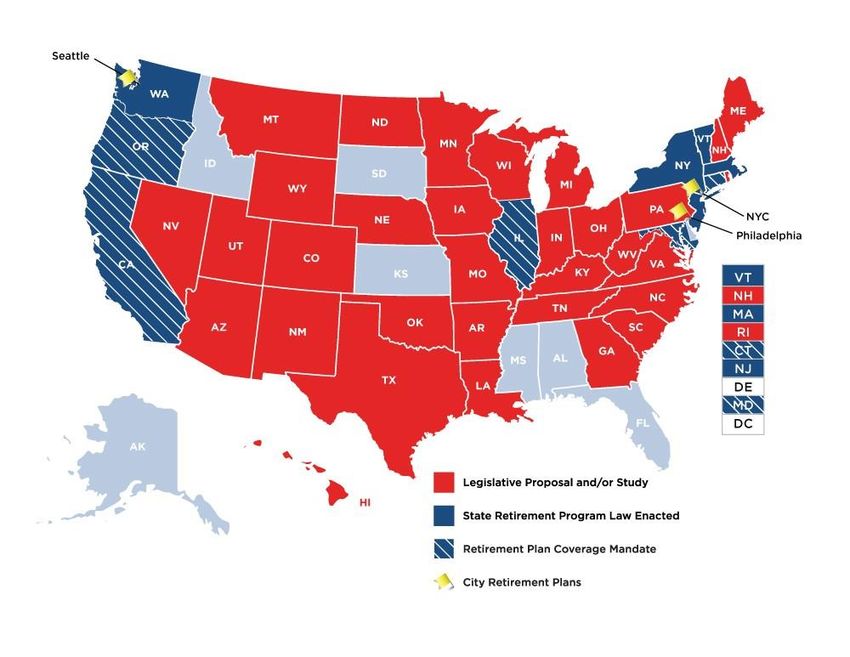
Agenda

•   New Congress – Committee Leadership
•   DoL COLAs for Penalties
•   DoL – Input on Auto Portability
•   Treasury Priority Plan
•   Proposed Regulations – Hardship Withdrawals
•   Safe Harbor 402(f) Updated
•   ARA Letter on Electronic Disclosure
•   Pending Bills in Congress

                                                  2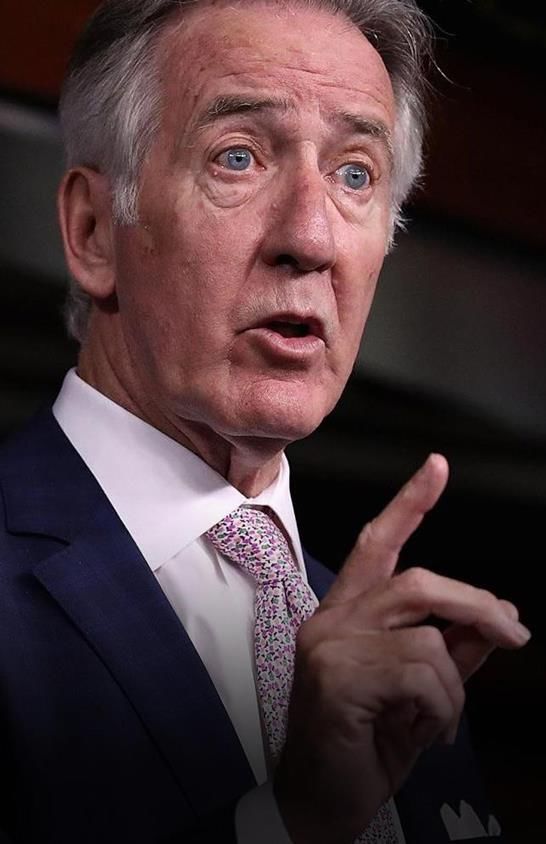
Committee Leadership
• Richie Neal (D-MA, 1st) - Chair of the House
  Ways and Means Committee

• Mr. Neal became Chairman in the 116th
  Congress which began in January
   • Remember that all bills introduced in prior
     Congress would have to be reintroduced

• As Chairman, he will be able to control the
  Committee’s agenda.

• Retirement policy has always been a high
  priority
   • Late last year he introduced the Automatic
     Retirement Plan Act

                                                   3
2019 DoL COLAs for Penalties
• Form 5500 from $2,140 to $2,194

• Auto Contribution Notice – from $1,693 to
  $1,736

• Blackout or diversification notice – from
  $136 to $139

• Recordkeeping or Reporting for
  participants ERISA 209(b) – from $29 to
  $30

                                              4
DoL – Input on Auto Portability

• December 21st – ARA wrote a comment letter supporting this
  proposed exemption

   • 401(k) savings transferred to IRA (automatically) when sever
     employment or plan terminated

   • IRA would automatically transfer to 401(k) of new employer when
     participant gets a new job

   • Estimated increase of retirement savings by $1.5 trillion by preventing
     leakage

                                                                               5
Treasury – Priority Plan for 2018-2019

• Guidance on extended rollover period for qualified plan loan
  offsets
• Updating ESOP rules
• Regulations on RMD life expectancy and distribution tables
• Timing of amendments to 403(b) plans
• Universal availability requirement under 403(b)
• RMD use of lump sum payments to replace lifetime income
  being received by retirees
• Hardship regulations (Proposed were released)
• Missing participants

                                                                 6
Hardship Rule Changes
• IRS Guidance – Proposed Regulations
  released November 14th
  – 60 day comment period
  – January 14th – ARA commented
    • Major issue is whether we can rely on them

                                                   7
Hardship Rule Changes
• Added “primary beneficiary..” as individual who
  qualifies for medical, educational or funeral expenses

• Clarified that the home casualty reason does not
  have to be in a federally declared disaster area (this
  was an unintended consequence of TCJA 2017) – can
  be applied retroactively to 2018

                                                           8
Hardship Rule Changes
• Added a new item to the list of reasons –
  expenses occurred as a result of certain
  federally declared disasters (the type the
  IRS and Congress have previously given
  relief for such as hurricanes, floods,
  wildfires, etc.)

                                               9
Hardship Rule Changes
• Suspension of elective deferrals or after-
  tax contributions no longer required
  – Can wait until 2020 to implement
  – Also added an optional transition rule that would
    allow a suspension that started to be lifted as of
    the first day of the 2019 plan year

                                                         10
Hardship Rule Changes
• Eliminates the requirement to take all
available plan loans prior to the hardship
– Note: the rule change is only for loans and NOT all other
available distributions
– Plan may voluntarily retain this provision
• Eliminates the facts and circumstances
methodology and now there is ONE general
standard for determination (see next slide)
11Hardship Rule Changes
• General standard
– Hardship may not exceed amount of need adjusted for
anticipated taxes and penalties
– Must have obtained all other available distributions under
the employer’s plans (but remember not loans)
– Employee must represent that he or she has insufficient
cash or liquid assets to satisfy financial need
• Employer may rely on this representation unless they have
knowledge to the contrary
• This provision effective in 2020
12Hardship Rule Changes
• Sources for hardship expanded
– Elective deferrals PLUS earnings
– QNECs, QMACS, Safe harbors, QACA – all of these
plus earnings
– Generally, effective after 2018 PY
– Note that plans may limit the sources for hardship
availability
13Hardship Rule Changes
• §403(b) arrangements
– Income attributable to elective deferrals are still
not eligible for hardship – this needs a technical
correction in the law
– QNECs and QMACs in custodial accounts are
ineligible for hardship
– QNECs and QMACs that are not in custodial
accounts are eligible for hardship
14Hardship Rule Changes
• Timing
– Generally can be relied upon currently
– The employee representation standard applies to
distributions made on or after January 1, 2020
– The updated list of reasons may be relied upon
any date as early as January 1 ,2018
• This may help with confusion that occurred due to the
need to be in a federally declared disaster area
15Hardship Rule Changes
• Plan Amendments
– IDPs – the end of second year after the issuance of
the Required Amendments list
– Pre-approved plans – ????
16Hardship Rule Changes
• What do we need to do at this point
– Update administrative systems
– Communicate rules to Plan Administrators
– Communicate rules to plan participants
– Re-train our employees on new rules
– Adopt the interim amendment
– Track administrative practices during the
transition period so can update document later or
be prepared in case of future audit
17Notice Updated
Updated 402(f) Special Tax Notice
– IRS Notice 2018-74
• Appendix A – Pre-tax funds
• Appendix B – Roth funds
• Incorporates loan offset rules
• Also has language that rollover time frames may be
extended due to declared disasters
• Other changes that impact federal retirees and
government employees (expansion of exemption from
10% penalty)
18Speaking of Updates
IRS updated its “Fix-it” guide on their website for Participant
Loans that do not conform with the plan document or §72(p)
https://www.irs.gov/retirement-plans/401k-plan-fix-it-guide-
participant-loans-do-not-conform-to-the-requirements-of-
the-plan-document-and-irc-section-72p
No new rules BUT this is a great tool to show plan sponsors
or administrators
19ARA Letter on Electronic Disclosure
To DoL – December 12th
– Trump 8/31 Executive Order mentioned making
disclosures more understandable and useful
– ARA suggested electronic disclosure as a default
• Paper would be allowable if elected by employee
– Enhance effectiveness (particularly to special needs or non-English
speaking participants)
– Significant cost savings
– Reduce environmental impact
– Simplify content – shorter and more pointed
– Reduce number of notices
• Eliminate redundant and ineffective notices
• Coordinate timing
• Permit combining of notices
20RESA Resurrected
Reintroduced in House by Kind (D-WI) and Kelly (R-
PA)
Many retirement plan enhancements including..
– Unrelated employers adopting MEPs
– Initial plan adoption to due date of tax return
– Greater flexibility in Safe Harbor 401(k) plan
design
– Tax credit increase for adopting a small plan and
additional credit for adopting auto enroll
21Pending Bill in Congress
Rehabilitation for Multiemployer Pensions Act
– Introduced by Richard Neal (D- MA) in January
– Would establish Pension Rehabilitation
Administration (PRA)
– Not a bailout
– Agency issues bonds to raise funds for plans and
plans must pay back PRA loans
22Pending Bill in Congress
SIMPLE Plan Modernization Act
– Introduced by Collins(R- ME) and Warner (D-VA)
last week
– Increase SIMPLE limits
• Deferrals from $13,000 to $16,000
• Catch-up from $3,000 to $4,500
• Allow higher limits for plans with 26-100 employees but
only if they increased employer contribution by 1
percentage point
– Directs Treasury to study the use of SIMPLE Plans
and report to Congress with recommendations
23Pending Bill in Congress
Retirement Security Act
– Introduced by Collins(R- ME) and Hassan (D-NH)
last week
– MEPs
• No nexus needed to join MEP
• Eliminate “one bad apple rule”
– Direct Treasury to simplify, clarify and consolidate
notices
– Simplify compliance for small businesses that
provide match up to 10% of pay
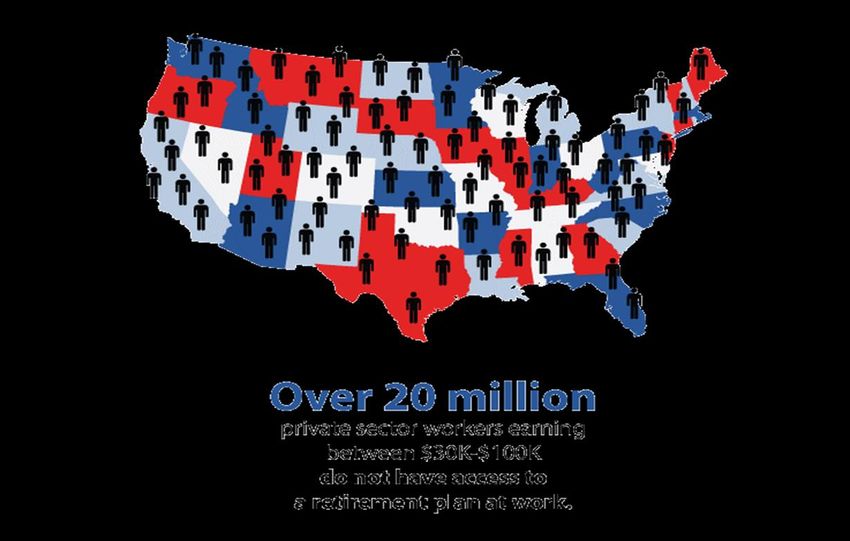
24PLAN COVERAGE CHALLENGE Source: unpublished Employee Benefit Research Institute estimates from 2013 Current Population Survey
STATE LEGISLATIVE ACTIVITY
Nevada Propose Regulations
• Fiduciary standard proposed by the State of Nevada
• ARA will comment (comments due by March 1st
• No ERISA exemption
    •   If challenged will the preemption issue arise
    •   Defines fiduciary obligations to a client as:
           • Provides investment advice
           • Performs discretionary trading
           • Maintains assets under management
           • Acts in fiduciary capacity toward client
           • Discloses fees or gains
           • Through completion of any contract
           • And through the term of the engagement of services

• Stay tuned
Questions?
Join me for the Second Quarter 2019 Washington Update on
May 22, 2019You can also read


