Fiscal Stability Commission Presentation - Catherine Smith, Commissioner Connecticut Department of Economic and Community Development - Cga.ct.gov
←
→
Page content transcription
If your browser does not render page correctly, please read the page content below
Fiscal Stability Commission Presentation

Catherine Smith, Commissioner
Connecticut Department of Economic and Community Development

January 8, 2018
                                                               1
Presentation Overview

      § Strategy
        - Build on Strengths
        - Address Gaps

      § Financial Assistance
        - Competitive Landscape
        - Non-Financial
        - State Return on Investment

      § Recommendations

                                       2
DECD’s Economic
   Strategy

                  3
Economic Development Strategy
§ Build on our strengths
  (talent, location, quality of life)
§ Focus on innovation and key
  business sectors to stimulate
  biz development, including
  offshore recruitment
§ Focus on talent development
§ Streamline governmental
  processes/regulation
§ Address infrastructure issues
§ Collaborate with key partners
  to improve business climate
                                        4
Connecticut Strengths: At the Center of it All

                                                                           ME

                                                             VT
                                                                    NH
                                                     NY            MA
                                                                   CT

                                               PA             NJ

                                                    MD       DE

                                                                   DC

                                                    Sources: U.S. Census Bureau and U.S. Bureau of

    Excellent transportation to region and international locations
                                                    Economic Analysis, 2013; CERC

                                                                                                 5
Connecticut Strengths: Workforce

                             Not only is our workforce highly educated, it’s
                             highly industrious – ranking #5 in the U.S. for
                                              productivity

                             Productivity is the spirit that drives Connecticut business.
                              In terms of gross domestic product, Connecticut ranks
                                higher than several major countries in productivity.

        2
   #2 Ranking for economic
        output per job

                                                                                            6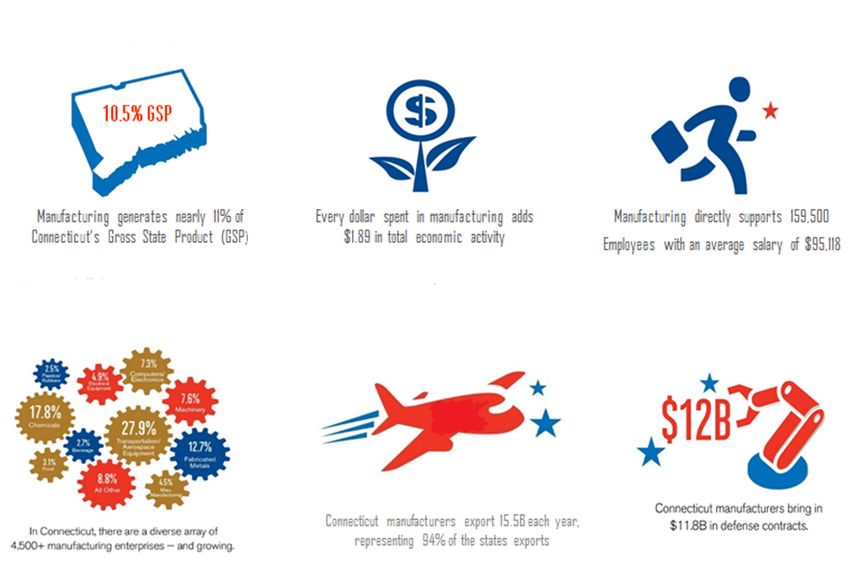
Connecticut Strengths:
World-Class Educational Institutions
                  CT boasts 40 colleges
                     and universities,
                     ranging from Ivy
                  League to community
                  colleges to world-class
                   research institutions
                    turning out highly
                  educated workers and
                      entrepreneurs

                The State of Connecticut is investing   Source: U.S. News and World Report , 2014

                     significantly in education
                                                                                                7
Connecticut Emerging Strength:
A Center of Innovation

    #10 in states ready for growth in the “New Economy”
    Connecticut offers the kind of environment that is particularly conducive to
    growth for companies that are capitalizing on the latest global economic trends.

                                                        Sources: US Census Bureau and US Bureau of Economic Analysis, 2013;
                                                Information Technology and Innovation Foundation, new Economy Index, 2014;
                                                                                      US Patent and Trademark Office, 2013;
                                                                                    Brookings Institute; Calculations by CERC

                                                                                                                           8
Focus on Key Industry Sectors will Drive our Economy

  Insurance/        Advanced
   Financial                           Bioscience
                   Manufacturing
   Services

                    Technology
Digital Media       (Green, Fintech,    Tourism
                        Biotech)

                                                       9
Manufacturing Strategy:
    Deeper Dive

                          10
Advanced Manufacturing: State of the Industry
Manufacturing generates nearly Every dollar spent in Manufacturing directly supports
11% of Connecticut’s Gross State manufacturing adds $1.89 in 159,500 employees with an
Product (GSP) total economic activity average salary of $95,118
In Connecticut, there are a diverse Connecticut manufacturers export Connecticut manufacturers
array of 4,500+ manufacturing $15.5 billion each year, representing bring in $11.8 billion in defense
enterprises – and growing 94% of the states exports contracts
11Highly Skilled & Productive Workforce
§ The talent here is highly skilled, very
Massachusetts
productive, and densely populated with
the second highest concentration of
aerospace workers in the US
§ Worker productivity is nearly 20%
higher than national average
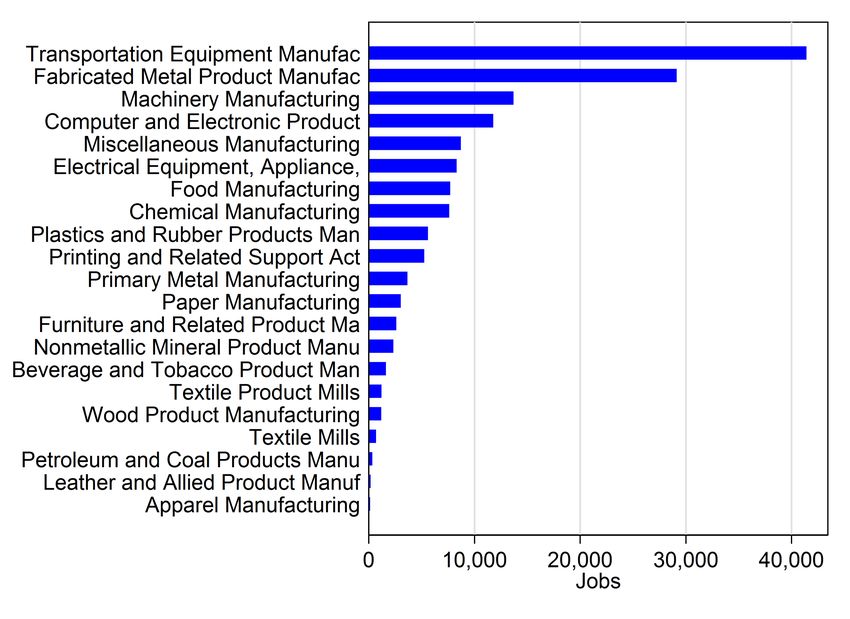
§ 159,000 manufacturing jobs in the state Manufacturing employment - 2016
§ 4,040 machinists in Hartford County
§ CT manufacturing workers earn 50%
more ($79,456) compared to the
national average of $52,915, making it
an expensive but valuable workforce
12Major Advanced Manufacturing Companies
State is home to an exceptional
combination of Original Equipment Manufacturing companies (OEMs)
§ UTC/ Pratt and Whitney: Headquartered in the state since 1925 with all
corporate, R&D, and some manufacturing
§ Electric Boat: Based in CT for 106 years. Ramping up to meet the demand of 2
or perhaps 3 submarines per year; designing the replacement for the Ohio
class (Columbia)
§ Lockheed Martin/Sikorsky: Home of the inventor, Igor Sikorsky, the CT plant
has been HQ for the helicopter company since inception (85 years); primary
government manufacturing plant
13Strategy for Growing Advanced Manufacturing
§ Focus on strongest parts of the ecosystem: Aerospace and
Shipbuilding
§ Secure long-term relationships with the OEMs:
§ UTC agreement of 2014
§ Ongoing support for Electric Boat
§ Lockheed Martin/Sikorsky, 2016
§ Ensure a strong and vibrant supply chain
§ Build capacity in the universities, colleges and
not-for-profits to support robust talent growth
and innovation support
14Support and Strengthen Supply Chain
Keeping innovation and suppliers close to the OEMs
§ Manufacturing Innovation Fund
- Assists smaller manufacturers in making innovative and strategic
investments
- Focuses on talent development to meet the growth
expectations in aerospace and medical devices
- Programs: voucher, apprenticeship, incumbent
worker training
§ Manufacturing Assistance Act/Small Business Express
(loans, forgivable loans, grants, tax credits) to support expansion
§ Investments in Training and Education At UConn, Community
Colleges, Tech Schools and increasingly at comprehensive high
schools to develop the next generation of talent
15Created the $75 Million Manufacturing Innovation
Fund (MIF) to Support this Industry
§ 879 smaller manufacturers assisted in making
innovative and strategic investments
§ $47 million has been invested since 2014
§ Focusing on:
- talent development
- supply chain health/growth
- innovation & technology
- energy efficiency www.advancingmanufacturingct.com
16MIF – Talent Development
§ Incumbent Worker Training (IWT) - matching up to $50,000 per employer to train
incumbent workers in the appropriate skills to meet current and emerging market needs
– MIF Investment $10.5 million
– Total Commitments to date $7.3 million
– # of Companies 306
– Jobs to be created/retained 3,939
– Workers trained 7,072
– Workers receiving an upgrade in position 22%
– Companies reported an upgrade in skills 78%
– Companies expecting productivity increases 58%
§ Pre-Apprentice and Apprentice: provides competency based learning for
apprentices for on-the-job learning and related classroom instruction. Maximum funding
is $9,500 per apprentice for year one and $9,250 for year two for the sponsoring
company.
– MIF Investment $7.8 million
– Total Commitments to date $4 million
– # of Companies 20
– # of Registered Apprentices 295
– # of Registered Pre-Apprentices 36
– # of Related Instruction Providers 10
17MIF – Young Talent Development
§ Young Manufacturers Academy - students learn what goes into producing
products in workshops using lean manufacturing, engineering design, and high-tech
industry software
– Total Commitments 2016 $250,000
– Industry/Education Partners Engaged (FY 16) 15
– Students Trained 142
– Program Sites 8
§ CT Dream It. Do It. initiative - campaign to create a positive
image of today’s manufacturing to support the future workforce pipeline
– Total Commitments in 2016 $266,523
– # of Students (FY 16) 1,732
– # of Schools Represented 62
– # of Towns Represented 33
– # of Related Instruction Providers 10
18MIF - Supply Chain Health/Growth
& Energy Efficiency
§ Supply Chain Health/Growth - Voucher Program:
Vouchers, ranging from $5,000 to $50,000, for the purchase of specialized expertise
that will help improve operations (e.g., equipment purchase, LEAN, compliance)
– MIF Investment $15 million
– Total Commitments to date $14.4 million
– # of Companies 436
– Jobs to be created/retained 749 (643 full time) (106 part time)
– Total Value of Projects $55 million
– Applicants to Distressed Communities 28%
– Gross Margin improvement 2.2%
– Products Exported Increase 1.2%
§ Energy Efficiency – Energy on the Line:
Fully finances the upgrading of a manufacturing facility’s energy efficiency, through the
C-Pace Program
– MIF Investment $800,000
– Total Commitments to date $248,530
– # of Companies 10
– Total Value of Projects Initiated $4,086,953
19MIF - Innovation & Technology
§ Advanced Composites
- MIF Investment $5,000,000
- Total Commitments to date $2,900,000
- # of Companies 2
§ High Rate Additive Manufacturing Machining
- MIF Investment $600,000
- Total Commitments to date $440,000
§ RADE 2 Manufacturing Innovation
- MIF Investment $450,000
- # of Companies 68
- Project implemented 28
- Equipment Hours 1,805
- Types of Projects: 3D, x-ray scans
20In addition - DECD Financial Assistance for
Business Growth in Manufacturing
Program # of Companies DECD $ Jobs Retained Jobs Created Total Jobs C&R
Small Business
423 $80,165,351 8,222 2007 10,229
Express
MAA 81 $225,004,689 19,636 4,289 23,925
First Five 4 $109,100,000 2,317 1,008 3,325
TOTAL 508 $414,270,040 30,175 7,304 37,479
§ DECD financial assistance programs have aided over 500 companies as they invest and grow their
businesses – about 20% of EXP and about 45% of MAA funding.
Export Support
§ Also provide Export assistance through partnership with the federal STEP grant. 404 eligible small CT
businesses have participated. STEP may be used for a variety of export activities including trade shows,
trade missions, marketing and internationalization, U.S. Department of Commerce services (Gold Key,
International Partner Search, International Company Profile), export training opportunities, and export B2B
matchmaking.
- CT has spent $1.05 million in federal funds for STEP approved export activities.
- CT companies receiving STEP assistance report anticipated export sales from various events including:
• Hannover Messe: $ 5,469,000
• Medica: $1,950,000
• General Assistance Export Fund: $90,032,146
§ The Farnborough and Paris Air Shows - Since 2006, $422 million is reported as anticipated sales by the
sub-exhibitors in our booth
21Education Investments Focused on Manufacturing
Connecticut Technical High School System
§ Academia, i.e. UCONN, Board of (CHTSS)
Manufacturing Cluster Program Students
Regents for Higher Education, May-17
Connecticut Conference of Mechanical Design & Engineering
Independent colleges, CT Technical Technology Students 505
High School System are critical to Precision Machining students 803
Welding & Metal Fabrication students 90
building the workforce of the future
Automated Manufacturing students 47
Mechatronics students 89
§ Community Colleges have more 1534
than doubled the output of
Connecticut Community Colleges:
manufacturing graduates in the Manufacturing Education Program Students
past 5 years
2016 2011
Asnuntuck 388 154
Housatonic 116 55
§ Tech schools are producing
Manchester 15
hundreds of potential manufacturing Middlesex 82
workers during the day, and training Naugatuck 109 57
in their facilities at night Quinebaug 36 52
Three Rivers 43
Totals 789 318
22In Addition -- UCONN is Training More Students
and Investing with Industry
§ UConn School of Engineering has increased enrollment by 70%
§ Tech Park brings industry together to do R&D as indicated below
Industry Partner Center Investment
ThermoFisher Scientific Thermo Fisher Scientific Center of Excellence $25 Million
Eversource Energy Eversource Energy Center $9 Million
General Electric GE Advanced Technology Initiative $7.5 Million
United Technologies UTC Institute for Advanced Systems $10 Million
Engineering
Pratt & Whitney Additive Manufacturing Innovation Center in $7.5 Million
partnership with Pratt & Whitney
Fraunhofer USA Fraunhofer Center for Energy Innovation $7.2 Million
COMCAST COMCAST Center for Security Innovation $6 Million
Synchrony Financial Synchrony Financial Center of Excellence in $2.2 Million
Cybersecurity
23In Addition: Ecosystem Partners Add
Significant Value
§ Aerospace Components Manufacturers (ACM): ACM is a
regional network of 114 CT and southwestern MA-based aerospace
companies. Works with regional, national and international experts
to ensure continuous improvement of members’ products
§ Other Business and Manufacturing Associations:
– CCAT
– CONNStep
– New Haven Manufacturers Association
– Smaller Manufacturers Association of CT
– Connecticut Tooling and Machining Association
– Eastern Advanced Manufacturing Alliance
– CBIA
– Metal Manufacturers' Education and Training
Alliance (METAL)
24Our Manufacturing Strategy is Working …
…But continued investment will be critical to
sustained job growth
§ Jobs on the increase after 25 years of
decline:
- EB hiring 4,000+ in 15 years
- Pratt & Whitney hiring as many as 8,000
in next decade
- Sikorsky growing jobs to 8,000 and
increasing investment in supply chain
- ACM members hired over 1,000 in 2017
§ CT designated as an Investing in
Manufacturing Communities Partnership
(IMCP) for aerospace and shipbuilding
§ Cross-New England Aerospace and
Defense Cluster underway
25#1 in insurance
#1 in the U.S. in
employees across
insurance payroll
the U.S.
Financial Services &
Insurance Strategy:
Deeper Dive
26Insurance & Financial: State of the Industry
8.7% GSP
The Insurance sector generates The Insurance Industry supports For every new job the insurance
nearly 9% of Connecticut's 58,705 employees with an industry adds, 1.92 jobs are
Gross State Product (GSP) average wage of more than added to the Connecticut
$85,466 economy
10.8% GSP 2
Connecticut ranks #3 in The Financial sector generates Connecticut ranks #2 in the
the world in U.S. equity nearly 11% of Connecticut's world for large hedge funds,
assets under management Gross State Product (GSP) managing $1 billion or more
27Insurance Business Environment
§ Key strength of the state is the depth of talent in insurance with
strengths in legal, accounting, actuarial and data analytics
§ M&A activity over the past 20 years has reduced the number of firms
headquartered in the state and number of employed in insurance
has declined slightly since the great recession
§ Need to ensure other large insurers remain in the state and support
their innovation and data analytic needs
§ Continued excellence in the Insurance Department (which regulates
companies domiciled here) helps make CT a good place to situate
an insurance entity
28The Insurance and Financial Services Cluster
Connecticut’s Insurance and Financial Services Cluster (IFS) based in Hartford
§ Established in 2003
§ Designed to foster collaboration between business, academia and state government
§ Comprised of 32 companies in Connecticut’s insurance and financial service sectors
Cluster strategy is based upon work already begun by IFS
29IFS Cluster Strategy has invested in Talent
Development
A one-week camp that provides students May 2017, CT IFS launched the inaugural
the opportunity to learn about the actuarial Banking Boot Camp with four bank sponsors and
profession inside a local company. partners the Connecticut Department of Banking
and Connecticut Bankers Association.
High School, Inc.
A public, college preparatory school for
high school students, grades 9-12, who are
interested in pursuing careers in the
insurance and financial services
industries.
30Investment Fund Industry is Growing in CT
Connecticut is home to over 400 private investment funds, managing over
$750 billion in assets
Key Stats Investor Universes
Connecticut U.S.
No. of Hedge Fund Investors 102 3,271
214 984 102 Average Allocation to Hedge Funds
Number of Hedge Number of Number of Hedge (As a % of AUM) 12.80% 14.60%
Fund Managers Hedge Funds Fund Investors Average No. of Hedge Funds in Portfolio 22-24 11-12
Average AUM $5.7bn $7.4bn
Typical Investment Size $18-36mn $14-38mn
Connecticut-Based Hedge Fund Strategy Preferences of Connecticut-
Investors by Type Based Hedge Fund Investors
High School, Inc.
31Recent Cluster Activity is Focused on Innovation
and Fintech
An accelerator which will focus Connecticut Innovations $5 million
on leveraging existing and program designed to attract new
Co-working space with a
emerging technology ventures to the state from across
focus on nurturing small
• To change delivery of the globe with a focus on
businesses, start-ups,
insurance products
innovators, and
§ To improve claims § Fintech
entrepreneurs in the greater
management § Insurtech
Hartford area. High School,
§ Managing regulatory § Digital Health Inc.
Insurtech will be located
requirements § Internet of Things
here
§ For innovating new insurance
products In addition to funding, winners will
§ To help insureds proactively obtain access to a critical network
reduce risk of customers, investors, mentors
§ To increase the speed and and talent.
scale of the industry
32Other Strategic Investments to
Build Upon Strengths
33Strategic
Build Northeast
Talent U.S.High
in Expected Location
Growth Clusters
Strategy Goal Selected Outcomes
Massachusetts
§ Next Generation CT–targeted $1 billion
Increase investment in STEM disciplines at UConn
STEM § 2011 Jobs Bills authorized $20M to expand
existing and develop new manufacturing
Education programs in community colleges; Federal grant
of $30 million used to upgrade 3 more schools
§ “300 Jobs, 300 Days” at Community Colleges
pairing graduates with manufacturing jobs.
Exceeded goal!!!!
Add § Manufacturing Innovation Fund programs aimed
Manufacturing at developing future pipeline of talent serves
879 companies
Talent
§ Launched Tech Talent Fund to enhance tech
talent
§ CT public schools have doubled Computer
Science graduates in last few years 34Strategic
Talent Northeast U.S.
Development, Con’tLocation
Strategy Goal Outcomes Massachusetts
§ CTNext’s programs (Technology Talent Bridge,
Innovation Places, Entrepreneur Learner’s Permit,
Entrepreneurs-in-Residence, accelerators and co-
working spaces) have supported more than 1,900
Entrepreneurial members and entrepreneurs
Talent § CTNext entrepreneur support system provides access
to talent, space, expertise, services, and capital.
Recent projects:
− Innovation Places – An effort to weave together
entrepreneurship support and relationship-building with
physical planning and development
− Entrepreneur Learner’s Permit - Encourages
entrepreneurship and job growth in our state
− Tech Talent Bridge – Helps companies connect with students
in tech fields
35Strategic Innovation
Fostering Northeast U.S. Location
in Universities/Urban Hubs
Strategy Goal Selected Outcomes
Massachusetts
§ Dramatically increased engineers/engineering faculty at
More R&D UConn; number of students up 70%
§ $1.5B construction investment in Next Generation CT at
Capacity at UConn to build new classrooms/labs and buy new
UConn equipment
§ Connecticut Innovations completed nearly 120 early
stage company deals in fiscal year 2017, with $38.4
million of investment
Expand CI’s
Investment § Connecticut Bioscience Innovation Fund provides funds
to early stage companies, and nonprofits building
Capacity commercialization infrastructure. Since inception and
through June 30, 2017, the fund has invested
approximately $24 million in companies and projects
36Infrastructure Investments Started, but More to
Strategic Northeast U.S. Location
be Done
Strategy Goal Selected Outcomes
Massachusetts
§ Comprehensive Energy Strategy (strategy for all residential,
commercial, and industrial energy issues) was introduced by
Comprehensive Malloy administration in 2015.
§ In collaboration with New England States, it intended to help
Energy state have cleaner, less costly and more consistent access to
energy.
Policy § Progress has been stymied by changes in administration in other
states and other issues.
___________________________________________________
§ CT Green Bank (CGB) provides low-cost financing programs to
support efficiency and renewable energy, including C-PACE and
Energy on the Line.
- Full financing of solar, fuel cells or other alternatives to help reduce
cost of energy in the state
- In 6 year history, CGB has installed more than 230 MW of clean
renewable energy systems, helping reduce carbon by 3.7M tons (the
equivalent of 37,000 cars); created almost 13,000 jobs; and leveraged
$900 million private sector funds.
- Harvard 2017 Innovations in American Government Award
- Recent budget crippled funding by cutting 50% 37Infrastructure Investments Started, but More to
Strategic Northeast U.S. Location
be Done
Strategy Goal Selected Outcomes
Massachusetts
§ State has funded development in cities and towns
along MetroNorth and new light rail from New
Haven-Springfield to develop retail, housing and
other transit-oriented development
§ Governor’s Let’sGoCT outlines a 30-year
transportation upgrade which includes bridges,
Improve design work for widening I-95 between Stamford
and Bridgeport, and New Haven line improvements
Infrastructure
§ Lock box for transportation finally approved
§ However, little funding has been provided and
Special Transportation Fund is running out of
funding
§ Transportation cited as critical to many businesses.
§ While high in overall access to broadband, CT must
continue to invest in fast connectivity
38Other Areas
Strategic for Future
Northeast U.S. Development/Investment
Location
Strategy Goal Selected Outcomes
Massachusetts
§ Due to exit of high profile companies and fiscal stability concerns,
the state suffers from a poor reputation for business growth.
Business § Limited funding exists for marketing (2107 includes $6.4 million of
which 80+% is allocated to tourism, leaving $1 million for economic
Climate development outreach).
§ State has reduced regulation (over 1000 pages of regulation
eliminated) and permitting processes (agencies have “leaned” their
processes), but still perceived as being difficult to do business.
§ Population growth has stalled (up 500 last year with over 10,000
departures in prior 3 years); misperception on where change is
occurring
Ease of • Over 5 years, the proportion of 20 somethings increased more than any
Doing •
other state, up from 12.5% to 13.1%
Percentage of families living below poverty level fell from 8% to 6.8%
Business •
(nationwide is about 10%)
Share of households making at least $200,000 rose from 10.3% to
11.1%
§ High costs remain an issue: Higher cost of talent not always seen as
higher value.
39DECD’s Business Support
and Incentives
40DECD Toolbox
Strategic Northeast U.S. Location
Financial support for: Tax Abatements for:
§ Growth § Targeted Cities
§ Capital Investment Tax § Growth
§ Tailor-made Financing Incentives § Capital Investment
• Loans • Credits
• Forgivable Loans • Abatements
• Grants
Technical Assistance
• Expertise
• Research
• Partnerships
Technical Assistance for:
§ Innovation support
§ Introductions and partnerships
§ R&D
§ Mentoring 41Strategic
Use Northeast
of Incentives U.S. to
is Tied Location
Strategy
§ For larger companies, focused on
- Key business sectors
- Out of state recruitment
- Offshore Foreign Direct Investment
(targeted in selected countries)
§ Tailor each transaction (within statutory requirements) to
meet specific business needs
§ For small business: goal is to ensure companies – with a
focus on our “Main Street” businesses – have access to
growth capital, partnering with banks
§ EXP is more standardized, but still underwritten
42Small Business
Strategic Express
Northeast U.S. Program
Location (EXP)
Matching grants of up to $100,000, or loans/forgivable loans
in amounts up to $300,000
§ To date, 1,874 companies have been provided more than $304 million
in financial assistance to create 7,727 jobs and retain 20,558
§ All industries are represented – including manufacturing, healthcare and
bioscience, business and financial services, construction, and main
street retail
§ Volume has slowed as bank activity
has increased
§ Emphasizing partnership with banks
§ Renewed focus opportunities:
- Minority Business Owners
- Incorporating arts into projects
- Leveraging EXP to attract innovative
and tech companies from out of state
43Strategic Northeast
Manufacturing U.S. Location
Assistance Act (MAA)
Provides milestone-driven loans and grants for mid to large-
sized companies growing jobs and building their business in CT
• Since 2011, MAA has assisted 156 companies with over $413 million in
assistance in exchange to retain 39,318 jobs and pledge to create 8,408
in the state’s largest urban centers, suburban towns, and small rural
communities.
44First Five Plus
§ Encourages business expansion, BUILDING STRONG PARTNERSHIPS
relocation and job creation for large-
scale companies that create 200 jobs
within 2 years or invest $25M and
create 200 jobs within 5 years
§ Success to date:
– 15 projects to date
– Provided $321M in direct state
assistance, leveraging $1.7B
– 13,526 jobs to be retained and 5,674 to
9,280 jobs to be created
Minimum Job Growth Minimum New Tax Revenue to the State (in '000s)
7,477 $60,000
8,000 7,361 7,383
6,871 7,259 $49,201
7,000 6,385 Statutorily $50,000 $44,099
5,825 Required
$0
$0
$0
6,000 5,265 $40,406
$14,600
$39,409
$0
$0
$40,000
$11,171
Jobs : $32,405 $36,875
4,668 4,758
$6,171
5,000 5,874
$32,182
$27,565
3,757 $30,000
$6,012
$10,020
4,000 3,280 $22,841
$45,475
$45,333
$45,299
$10,020
$43,745
2,638 $18,304
$41,526
$39,409
3,000 $20,000
$36,875
$10,020
$34,602
$34,235
$32,928
1,966
$8,285 $10,020
$26,393
2,000 1,294 $22,162
$17,545
$10,000
$12,821
1,000
$0
- 2012 2013 2014 2015 2016 2017 2018 2019 2020 2021 2022 2023 2024 2025 2026
New Income Tax New Sales & Use Tax
Actual Projected Calculations done based on companies meeting their minimum job requirements
45Strategic
Tax Northeast U.S. Location
Incentives
Enterprise Zones
Tax Abatements
§ 5-year, up to 80% on
property taxes
§ 25% credit of state corporate
taxes attributable to
participation in a certified
project
____________________
Tax Credits
§ Urban and Industrial Sites
Reinvestment Tax Credit
§ Angel Investor Tax Credit
Tax Exemptions
§ Sales and Use Tax
§ Manufacturing Property
§ Corporate Sales
46Stewards of Taxpayer Funds
§ DECD assistance packages require an ROI analysis as we view
ourselves as stewards of taxpayer funds
§ We evaluate both the direct and indirect cost and benefits of
the programs on a deal by deal basis
§ The primary industry model, REMI, uses experience from over
40 years of economic outcomes to model expected future
results of investments and growth in specific industries
§ Inputs: state assistance; company’s investment; new employment;
industry sector impacted
§ Outputs: expected impact on state revenue, GDP, annual loss/gain
§ Overall our portfolio is creating value:
‒ 1,816 companies are growing 18,012 jobs with 72,799 jobs retained
‒ Creating 107% of the expected jobs
‒ Leveraging $2.7 billion
‒ Delivering on commitments
47DECD Investment Analysis
§ DECD requires a positive ROI on direct company returns
§ Our ROI is generated on new income, sales and use taxes and interest
payments; minimum acceptable return is the principle plus our cost of
capital
Company Name: Sample
Project Location: Anytown, CT Jobs Project Type
Project Manager: Retained 100 Retention
Prepared By: Mark Prisloe Created 25 Expansion x
Date: 2/4/2015 Total 125 Relocation
Total Project Costs: $10MM
ESTIMATED DIRECT IMPACT
YR 1 YR 2 YR 3 YR 4 YR 5 YR 6 YR 7 YR 8 YR 9 YR 10
COSTS TO CT ($000's):
1. STATE INVESTMENT (DECD,CII,DOH)
2. OTHER STATE INVESTMENT (i.e. DEEP,DOL)
3. COST OF FUNDS (cost to bond, P&I, link to line 24 in "Incentives" tab)
(136) (136) (136) (136) (136) (136) (136) (136) (136) (136)
4. COST OF TAX ABATEMENTS/CREDITS
ESTIMATED RETURNS/BENEFITS TO CT:
1. CORPORATE TAXES
2. PAYROLL TAXES (link this to line 43 in "Wage & Comp Bill Adj" tab) 169 181 194 208 219 229 241 253 267 282
3. SALES TAXES (project & end user) 635
4. PMTS OF P &/or I ON LOAN (based on loan terms) 223 223 111 111 111 111 111 111 111 111
5. FEES PAID TO DEPARTMENT n/a n/a n/a n/a n/a n/a n/a n/a n/a n/a
CONSTRUCTION RELATED BENEFITS:
1. SALES TAXES n/a n/a n/a n/a n/a n/a n/a n/a n/a n/a
2. PAYROLL TAXES n/a n/a n/a n/a n/a n/a n/a n/a n/a n/a
DIRECT RETURNS TO CT 1,026 404 305 319 330 340 352 364 378 393
NET CASH FLOWS 890 267 168 183 193 204 216 228 241 257
CUM CASH FLOW (2,729) (1,702) (1,298) (993) (674) (344) (4) 348 712 1,090 1,483
CONCLUSIONS OF ANALYSIS:
PAYBACK PERIOD (YRS): 6.02 YEARS
NET PRESENT VALUE ($000's) $ 2,485
48Why Provide Financial Incentives?
Why “pick winners”?
§ We compete everyday with other states for company retention,
expansion and job growth
- Connecticut companies are approached regularly by states who
commission reps to lure businesses to their state; we must compete and
use incentives to retain and support company growth in Connecticut
- Site Finders set up competitive bidding processes between states for new
company expansions
§ Investing with companies makes sense if it keeps them growing in the
state AND if we can get a positive ROI
§ We are focused on international recruitment (foreign direct investment)
and incentives can help defray the cost of their move
§ Disciplined approach is required – i.e. walk away from transactions that
don’t pencil
49McKinsey’s Preliminary Data for Incentives Deals
for 2017
1 Different types of incentives include: tax, grant subsidy, loan/credit, non-financial, other/not-specified
SOURCE: IncentivesMonitor – WAVETEQ (www.IncetivesMonitor.com)
50Other Selected Metrics we Track
See DECD AnnualSee
Report
DECDfor
Annual
more Report
details for more details
Data from CT DOL & Bureau of Economic Analysis
51Questions?
CATHERINE SMITH
Commissioner
Connecticut Department of Economic &
Community Development
T: 860.500.2310
C: 860.801.4254
catherine.smith@ct.gov
52You can also read


