Adaptive High-Level Strategy Learning in StarCraft
←
→
Page content transcription
If your browser does not render page correctly, please read the page content below
SBC - Proceedings of SBGames 2013                                                                  Computing Track – Full Papers

 Adaptive High-Level Strategy Learning in StarCraft

                             Jiéverson Maissiat                                      Felipe Meneguzzi
                         Faculdade de Informática                                Faculdade de Informática
                      Pontifı́cia Universidade Católica                       Pontifı́cia Universidade Católica
                      do Rio Grande do Sul (PUCRS)                             do Rio Grande do Sul (PUCRS)
                       Email: contact@jieverson.com                           Email: felipe.meneguzzi@pucrs.br

    Abstract—Reinforcement learning (RL) is a technique to com-        kinds of environments (II-A), some concepts of machine
pute an optimal policy in stochastic settings whereby, actions from    learning (II-B) and reinforcement learning (II-C); in Section III
an initial policy are simulated (or directly executed) and the value   we explain the StarCraft game domain, and in Section IV we
of a state is updated based on the immediate rewards obtained          describe our solution. Finally, we demonstrate the effectiveness
as the policy is executed. Existing efforts model opponents in         of our algorithms through empirical experiments and results in
competitive games as elements of a stochastic environment and
use RL to learn policies against such opponents. In this setting,
                                                                       Section V.
the rate of change for state values monotonically decreases over
time, as learning converges. Although this modeling assumes that
the opponent strategy is static over time, such an assumption is                             II.   BACKGROUND
too strong when human opponents are possible. Consequently, in
this paper, we develop a meta-level RL mechanism that detects          A. Environments
when an opponent changes strategy and allows the state-values              In the context of multi-agent systems, the environment is
to “deconverge” in order to learn how to play against a different
strategy. We validate this approach empirically for high-level
                                                                       the world in which agents act. The design of an agent-based
strategy selection in the Starcraft: Brood War game.                   system must take into consideration the environment in which
                                                                       the agents are expected to act, since it determines which AI
                                                                       techniques are needed for the resulting agents to accomplish
                      I.   I NTRODUCTION                               their design goals. Environments are often classified according
    Reinforcement learning is a technique often used to gener-         to the following attributes [12]: observability, determinism,
ate an optimal (or near-optimal) agent in a stochastic environ-        dynamicity, discreteness, and the number of agents.
ment in the absence of knowledge about the reward function
of this environment and the transition function [9]. A number               The first way to classify an environment is related to its
of algorithms and strategies for reinforcement learning have           observability. An environment can be unobservable, partially
been proposed in the literature [15], [7], which have shown to         observable, or fully observable. For example, the real world
be effective at learning policies in such environments. Some           is partially observable, since each person can only perceive
of these algorithms have been applied to the problem of                what is around his or herself, and usually only artificial
playing computer games from the point of view of a regular             environments are fully observable. The second way to classify
player with promising results [17], [10]. However, traditional         an environment, is about its determinism. In general, an
reinforcement learning often assumes that the environment              environment can be classified as stochastic or deterministic. In
remains static throughout the learning process so that when            deterministic environments, an agent that performs an action
the learning algorithm converges. Under the assumption that            a in a state s always result in a transition to the same state s0 ,
the environment remains static over time, when the algorithm           no matter how many times the process is repeated, whereas
converges, the optimal policy has been computed, and no                in stochastic environments there can be multiple possible
more learning is necessary. Therefore, a key element of RL             resulting states s0 , each of which has a specific transition
algorithms in static environments is a learning-rate parameter         probability. The third way to classify an environment is about
that is expected to decrease monotonically until the learning          its dynamics. Static environments do not change their transition
converges. However, this assumption is clearly too strong when         dynamics over time, while dynamic environments may change
part of the environment being modeled includes an opponent             their transition function over time. Moreover an environment
player that can adapt its strategy over time. In this paper,           can be classified as continuous or discrete. Discrete envi-
we apply the concept of meta-level reasoning [4], [19] to              ronments have a countable number of possible states, while
reinforcement learning [14] and allow an agent to react to             continuous environments have an infinite number of states.
changes of strategy by the opponent. Our technique relies on           A good example of discrete environment is a chessboard,
using another reinforcement learning component to vary the             while a good example of continuous environment is a real-
learning rate as negative rewards are obtained after the policy        world football pitch. Finally, environments are classified by
converges, allowing our player agent to deal with changes in           the number of agents acting concurrently, as either single-
the environment induced by changing strategies of competing            agent or multi-agent. In single-agent environments, the agent
players.                                                               operates by itself in the system (no other agent modifies the
                                                                       environment concurrently) while in multi-agent environments
    This paper is organized as follows: in Section II we review        agents can act simultaneously, competing or cooperating with
the main concepts used in required for this paper: the different       each other. A crossword game is a single-agent environment

     XII SBGames – São Paulo – SP – Brazil, October 16th - 18th, 2013                                                                17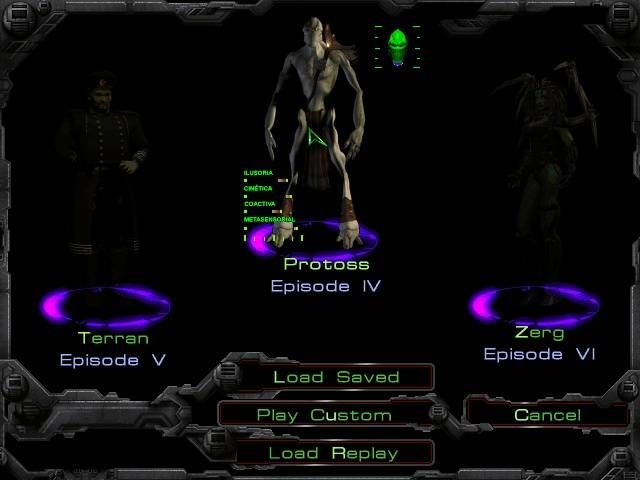
SBC - Proceedings of SBGames 2013                                                                        Computing Track – Full Papers

whereas a chess game is a multi-agent environment, where two                                            WŽƐŝƚŝǀĞ&ĞĞĚďĂĐŬ
agents take turns acting in a competitive setting.
                                                                                       ŐĞŶƚ
B. Machine Learning
    An agent is said to be learning if it improves its perfor-
mance after observing the world around it [12]. Common is-
sues in the use of learning in computer games include questions                                         džĞĐƵƚĞĂŶĂĐƚŝŽŶ
such as whether to use learning at all, or wether or not insert          >ĞĂƌŶ
improvement directly into the agent code if it is possible to            ĨƌŽŵƚŚĞ                                                 ŶǀŝƌŽŶŵĞŶƚ
improve the performance of an agent. Russell and Norvig [12]             ĨĞĞĚďĂĐŬ
state that it is not always possible or desirable, to directly
code improvements into an agent’s behavior for a number of
reasons. First, in most environments, it is difficult to enumerate                                    EĞŐĂƚŝǀĞ&ĞĞĚďĂĐŬ
all situations an agent may find itself in. Furthermore, in
dynamic environments, it is often impossible to predict all the
changes over time. And finally, the programmer often has no
                                                                       Fig. 1.   Model to describe the process of reinforcement learning.
idea of an algorithmic solution to the problem.
    Thus, in order to create computer programs that change
behavior with experience, learning algorithms are employed.            reinforcement learning to improve its policy. By changing its
There are three main methods of learning, depending on the             policy in response to learned values, an RL agent might start
feedback available to the agent. In supervised learning, the           exploring different parts of the environment. Nevertheless, the
agent approximates a function of input/output from observed            initial policy still biases the agent to visit certain parts of the
examples. In unsupervised learning, the agent learns patterns          environment [12], so an agent needs to have a policy to balance
of information without knowledge of the expected classifica-           the use of recently acquired knowledge about visited states
tion. In reinforcement learning, the agent learns optimal behav-       with the exploration of unknown states in order to approximate
ior by acting on the environment and observing/experiencing            the optimal values [6].
rewards and punishments for its actions. In this paper, we focus           1) Q-Learning: Depending on the assumptions about the
in reinforcement learning technique.                                   agent knowledge prior to learning, different algorithms are
                                                                       used. When the rewards and the transitions are unknown, one
C. Reinforcement Learning                                              of the most popular reinforcement learning techniques is Q-
    When an agent carries out an unknown task for the first            learning. This method updates the value of a pair of state and
time, it does not know exactly whether it is making good or bad        action — named state-action pair, Q(s, a) — after each action
decisions. Over time, the agent makes a mixture of optimal,            performed using the immediately reward. When an action a is
near optimal, or completely suboptimal decisions. By making            taken at a state s, the value of state-action pair, or Q-value, is
these decisions and analyzing the results of each action, it can       updated using the following adjustment function [1].
learn the best actions at each state in the environment, and           Q(s, a) ← Q(s, a) + α[r + γmaxa0 ∈A(s0 ) Q(s0 , a0 ) − Q(s, a)]
eventually discover what the best action for each state is.
    Reinforcement learning (RL) is a learning technique for                Where,
agents acting in a stochastic, dynamic and partially observable
environments, observing the reached states and the received                •      s represents the current state of the world;
rewards at each step [16]. Figure 1 illustrates the basic process          •      a represents the action chosen by the agent;
of reinforcement learning, where the agent performs actions,
and learns from their feedback. An RL agent is assumed to se-              •      Q(s, a) represents the value obtained the last time
lect actions following a mapping of each possible environment                     action a was executed at state s. This value is often
state to an action. This mapping of states to actions is called a                 called Q-value.
policy, and reinforcement learning algorithms aim to find the              •      r represents the reward obtained after performing
optimal policy for an agent, that is, a policy that ensure long                   action a in state s;
term optimal rewards for each state.
                                                                           •      s0 represents the state reached after performing action
    RL techniques are divided into two types, depending on                        a in state s;
whether the agent changes acts on the knowledge gained
during policy execution [12]. In passive RL, the agent simply              •      a0 ∈ A(s0 ) represents a possible action from state s0 ;
executes a policy using the rewards obtained to update the                 •      maxa0 ∈A(s0 ) Q(s0 , a0 ) represents the maximum Q-
value (long term reward) of each state, whereas in active RL,
                                                                                  value that can be obtained from the state s0 , inde-
the agent uses the new values to change its policy on every
                                                                                  pendently of the action chosen;
iteration of the learning algorithm. A passive agent has fixed
policy: at state s, the agent always performs the same action              •      α is the learning-rate, which determines the weight of
a. Its mission is to learn how good its policy is − to learn                      new information over what the agent already knows —
the utility of it. An active agent has to decide what actions                     a factor of 0 prevents the agent from learning anything
to take in each state: it uses the information obtained by                        (by keeping the Q-value identical to its previous value)

    XII SBGames – São Paulo – SP – Brazil, October 16th - 18th, 2013                                                                        18
SBC - Proceedings of SBGames 2013 Computing Track – Full Papers
whereas a factor of 1 makes the agent consider all the agent (object-level), which responds with a new action, and
newly obtained information; so the cycle continues. This reasoning cycle is illustrated in
Figure 2 [4].
• γ is the discount factor, which determines the im-
portance of future rewards — a factor of 0 makes
the agent opportunistic [14] by considering only the
current reward, while a factor of 1 makes the agent 'ƌŽƵŶĚ>ĞǀĞů
džĞĐƵƚŝŽŶ
consider future rewards, seeking to increase their long-
term rewards;
Once the Q-values are computed, an agent can extract the WĞƌĐĞƉƚŝŽŶ ĐƚŝŽŶ^ĞůĞĐƚŝŽŶ
best policy known so far (π ≈ ) by selecting the actions that
yield the highest expected rewards using the following rule:
π ≈ (s) = arg max Q(s, a)
a KďũĞĐƚ>ĞǀĞů ZĞĂƐŽŶŝŶŐ
In dynamic environments, Q-learning does not guarantee
convergence to the optimal policy. This occurs because the Fig. 2. Common cycle of perception and actions choice.
environment is always changing and demanding that the agent
adapts to new transition and reward functions. However, Q- Meta-reasoning or meta-level reasoning is the process of
learning has been proven efficient in stochastic environments explicitly reasoning about this reasoning cycle. It consists of
even without convergence [13], [18], [1]. In multi-agent sys- both the control, and monitoring of the object-level reasoning,
tems where the learning agent models the behavior of all allowing an agent to adapt the reasoning cycle over time, as
other agents as a stochastic environment (an MDP), Q-learning illustrated in Figure 3. This new cycle represents a high level
provides the optimal solution when these other agents – or reflection about its own reasoning cycle.
players in the case of human agents in computer games — do
not change their policy choice.
2) Exploration Policy: So far, we have considered active 'ƌŽƵŶĚ>ĞǀĞů
džĞĐƵƚŝŽŶ
RL agents that simply use the knowledge obtained so far to
compute an optimal policy. However, as we saw before, the
initial policy biases the parts of the state-space through which
an agent eventually explores, possibly leading the learning WĞƌĐĞƉƚŝŽŶ ĐƚŝŽŶ^ĞůĞĐƚŝŽŶ
algorithm to converge on a policy that is optimal for the states
visited so far, but not optimal overall (a local maximum).
Therefore, active RL algorithms must include some mechanism
to allow an agent to choose different actions from those KďũĞĐƚ>ĞǀĞů ZĞĂƐŽŶŝŶŐ
computed with incomplete knowledge of the state-space. Such
a mechanism must seek to balance exploration of unknown
states and exploitation of the currently available knowledge, DŽŶŝƚŽƌŝŶŐ ŽŶƚƌŽů
allowing the agent both to take advantage of actions he knows
are optimal, and exploring new actions [1].
In this paper we use an exploration mechanism known as DĞƚĂ>ĞǀĞů DĞƚĂͲZĞĂƐŽŶŝŶŐ
-greedy [11]. This mechanism has a probability to select a
random action, and a probability 1 − to select the optimal
action known so far — which has the highest Q-value. In order Fig. 3. Adding meta-level reasoning to the common cycle of perception and
choice of actions.
to make this selection we define a probability vector over the
action set of the agent for each state, and use this probability
When meta-level reasoning is applied to learning algo-
vector to bias the choice of actions towards unexplored states.
rithms, this gives rise to a new term: meta-learning [14], [5].
In the probability vector x = (x1 , x2 , ..., xn ), the probability
Meta-learning represents the concept of learning to learn, and
xi to choose the action i is given by:
the meta-learning level is generally responsible for controlling
(1 − ) + (/n), if Q of i is the highest the parameters of the learning level. While learning at the
xi = object-level is responsible for accumulating experience about
/n, otherwise
some task (e.g, take decisions in a game, medical diagnosis,
where n is the number of actions in the set. fraud detection, etc.), learning at the meta-level is responsible
for accumulating experience about learning algorithm itself. If
D. Meta-Level Reasoning learning at object-level is not succeeding in improving or main-
taining performance, the meta-level learner takes the responsi-
Traditionally, reasoning is modeled as a decision cycle, in bility to adapt the object-level, in order to make it succeed. In
which the agent perceives environmental stimulus and responds other words, meta-learning helps solve important problems in
to it with an appropriate action. The result of the actions the application of machine learning algorithms [20], especially
performed in the environment (ground-level) is perceived by in dynamic environments.
XII SBGames – São Paulo – SP – Brazil, October 16th - 18th, 2013 19SBC - Proceedings of SBGames 2013 Computing Track – Full Papers
III. S TAR C RAFT
Real-time strategy (RTS) games are computer games in
which multiple players control teams of characters and re-
sources over complex simulated worlds where their actions
occur simultaneously (so there is no turn-taking between
players). Players often compete over limited resources in order
to strengthen their team and win the match. As such RTS
games are an interesting field for the AI, because the state
space is huge, actions are concurrent, and part of the game
state is hidden from each player. Game-play involves both the
ability to manage each unit individually micro-management,
and a high-level strategy for building construction and resource
gathering (macro-management).
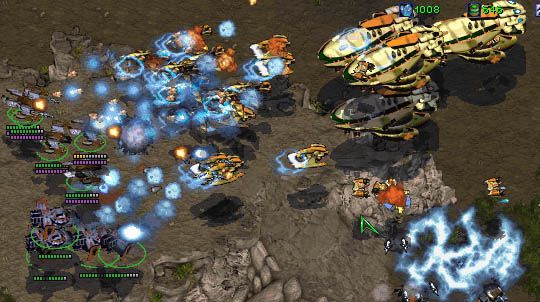
Fig. 5. StarCraft: Brood War − Batttle Scene.
StarCraft is an RTS created by Blizzard Entertainment,
Inc.1 . In this game, a player chooses between three different
races to play (illustrated in Figure 4), each of which having IV. M ETA -L EVEL R EINFORCEMENT L EARNING
different units, buildings and capabilities, and uses these re-
sources to battle other players, as shown in Figure 5. The A. Parameter Control
As we have seen in Section II-C, the parameters used in the
update rule of reinforcement learning influence how the state
values are computed, and ultimately how a policy is generated.
Therefore, the choice of the parameters in reinforcement
learning — such as α and γ — can be crucial to success
in learning [14]. Consequently, there are different strategies to
control and adjust these parameters.
When an agent does not know much about the environment,
it needs to explore the environment with a high learning-rate
to be able to quickly learn the actual values of each state.
However, a high learning-rate can either prevent the algorithm
from converging, or lead to inaccuracies in the computed value
of each state (e.g. a local maximum). For this reason, after the
agent learns something about the environment, it should begin
to modulate its learning-rate to ensure that either the state
values converge, or that the agent overcomes local maxima.
Consequently, maintaining a high learning-rate hampers the
convergence of the Q-value, and Q-learning implementations
often use a decreasing function for α as the policy is being
refined. A typical way [14] to vary the α-value, is to start
Fig. 4. StarCraft: Brood War − Race selection screen. interactions with a value close to 1, and then decrease it
over time toward 0. However, this approach is not effective
game consists on managing resources and building an army of for dynamic environments, since a drastic change in the
different units to compete against the armies built by opposing environment with a learning-rate close to 0 prevents the agent
players. Units in the game are created from structures, and from learning the optimal policy in the changed environment.
there are prerequisites for building other units and structures.
Consequently, one key aspect of the game is the order in which B. Meta-Level Reasoning on Reinforcement Learning
buildings and units are built, and good players have strategies
to build them so that specific units are available at specific The objective of meta-level reasoning is to improve the
times for attack and defense moves. These building strategies quality of decision making by explicitly reasoning about the
are called build orders or BOs. Strong BOs can put a player in a parameters of the decision-making process and deciding how
good position for the rest of the match. BOs usually need to be to change these parameters in response to the agent’s perfor-
improvised from the first contact with the enemy units, since mance. Consequently, an agent needs to obtain information
the actions become more dependent on knowledge obtained about its own reasoning process to reason effectively at the
about the units and buildings available to the opponent [8], meta-level. In this paper, we consider the following processes
[3]. used by our learning agent at each level of reasoning, and
illustrate these levels in Figure 6:
1 StarCraft website in Blizzard Entertainment, Inc. http://us.blizzard.com/ • ground-level refers to the implementation of actions
pt-br/games/sc/ according to the MDP’s policy;
XII SBGames – São Paulo – SP – Brazil, October 16th - 18th, 2013 20SBC - Proceedings of SBGames 2013 Computing Track – Full Papers
• object-level refers to learning the parameters of the α decreases with positive rewards. We use a small constant
MDP and the policy itself; learning-rate of 0.05 for the meta-level update rule and bound
it between 0 and 1 (Lines 2–7) to ensure it remains a consistent
• meta-level refers to manipulating the learning param-
learning-rate value for Q-learning. Such a small learning-rate
eters used in object-level;
at the meta-level aims to ensure that while we are constantly
updating the object-level learning-rate, we avoid high varia-
tions. Finally, in Line 8 we use the standard update rule for
ĐƚŝŽŶƐ
džĞĐƵƚŝŽŶ
džĞĐƵƚŝŽŶ Q-learning, using the adapted learning-rate. As the algorithm is
nothing but a sequence of mathematical operations, it is really
efficient when it comes to time. Thus, it is able to execute in
WĞƌĐĞƉƚŝŽŶ ĐƚŝŽŶ^ĞůĞĐƚŝŽŶ few clock cycles and could be utilized in real-time after each
action execution.
Since we are modifying the learning-rate based on the
feedback obtained by the agent, and increasing it when the
>ĞĂƌŶŝŶŐ ZĞĂƐŽŶŝŶŐ
agent detects that its knowledge is no longer up to date, we
can also use this value to guide the exploration policy. Thus, we
also modify the −greedy action selection algorithm. Instead
DŽŶŝƚŽƌŝŶŐ ŽŶƚƌŽů of keeping the exploitation-rate (−value) constant, we apply
the same meta-level reasoning to the −value, increasing the
exploration rate, whenever we find that the agent must increase
its learning-rate — the more the agent wants to learn, the more
WĂƌĂŵĞƚĞƌŽŶƚƌŽů DĞƚĂͲZĞĂƐŽŶŝŶŐ
it wants to explore; if there is nothing to learn, there is nothing
to explore. To accomplish this, we define the exploitation-rate
Fig. 6. Modeling the meta-level reasoning in reinforcement learning. as been always equal to the learning-rate:
=α
Our approach to meta-level reasoning consists of varying
the learning-rate (known as α−value) to allow an agent to han- V. E XPERIMENTS AND R ESULTS
dle dynamic environments. More concretely, at the meta-level,
we apply RL to learn the α−value used as the learning-rate at In this section, we detail our implementation of meta-
the object-level RL. In other words, we apply reinforcement level reinforcement learning and its integration to the Starcraft
learning to control the parameters of reinforcement learning. game, followed by our experiments and their results.
The difference between RL applied at the meta-level and
RL applied at the object-level is that, at the object-level, we A. Interacting with StarCraft
learn Q-value for the action-state pair, increasing it when The first challenge in implementing the algorithm is the
we have positive feedback and decreasing it when we have integration of our learning algorithm to the proprietary code
negative feedback. Conversely, at the meta-level, what we from Starcraft, since we cannot directly modify its code and
learn in the α-value, by decreasing it when we have positive need external tools to do this. In the case of StarCraft, commu-
feedback and increasing it when we have negative feedback — nity members developed the BWAPI, which allows us to inject
that is, making mistakes means we need to learn at a faster rate. code into the existing game binaries. The BWAPI (Brood War
Our approach to meta-level reinforcement learning is shown in Application Programming Interface)2 enables the creation and
Algorithm 1. injection of artificial intelligence code into StarCraft. BWAPI
was initially developed in C++, and later ported to other
Algorithm 1 Meta-Level Reinforcement Learning languages like Java, C# and Python, and divides StarCraft in
Require: s, a, R 4 basic types of object:
1: α ← α − (0.05 ∗ R)
• Game: manages information about the current game
being played, including the position of known units,
2: if α < 0 then
location of resources, etc.;
3: α←0
4: end if • Player: manages the information available to a player,
5: if α > 1 then such as: available resources, buildings and controllable
6: α←1 units;
7: end if
• Unit: represents a piece in the game, either mineral,
8: Q(s, a) ← Q(s, a) + (α ∗ R) construction or combat unit;
• Bullet: represents a projectile fired from a ranged unit;
The meta-level reinforcement learning algorithm requires Since the emergence of BWAPI in 2009, StarCraft has
the same parameters as Q-learning: a state s, an action a drawn the attention of researchers and an active community
and a reward R. In Line 1 we apply the RL update rule for
the α-value used for the object-level Q-learning algorithm. At 2 An API to interact with StarCraft: BroodWar http://code.google.com/p/
this point, we are learning the learning-rate, and as we saw, bwapi/
XII SBGames – São Paulo – SP – Brazil, October 16th - 18th, 2013 21SBC - Proceedings of SBGames 2013 Computing Track – Full Papers
of bot programming has emerged [2]. For our implementation, half of the Marines by Firebats — a unit equipped
we modified the open source bot BTHAI [8], adding a high- with flamethrowers that is especially strong against
level strategy learning component to it3 . Figure 7 shows a non-organic units such as aircrafts, tanks and most of
screenshot of a game where one of the players is controlled Protoss’ units.
by BTHAI, notice the additional information overlaid on the
game interface. • Terran Push: consists of creating approximately five
Siege Tanks and a large group of Marines, and moving
these units together through the map in stages, stop-
ping at regular intervals to regroup. Given the long
range of the Tank’s weapons, opponents will often not
perceive their approach until their units are under fire,
however, this setup is vulnerable to air counterattack
units.
After each game, the agent observes the end result (victory
or defeat), and uses this feedback to learn the best strategy.
If the game is played again, the learning continues, so we
can choose the strategy with the highest value for the current
situation. If the agent perceives, at any time, that the strategy
ceases to be effective — because of a change in the opponent’s
strategy, map type, race or other factors — the agent is able to
quickly readapt to the new conditions, choosing a new strategy.
C. Experiments with StarCraft
To demonstrate the applicability of our approach we have
designed an experiment whereby a number of games are played
against a single opponent that can play using different AI bot
Fig. 7. BTHAI bot playing StarCraft: Brood War. strategies. We seek to determine if our learning methods can
adapt its policy when the AI bot changes. Each game was
B. A Reinforcement Learning Approach for StarCraft played in a small two-player map (Fading Realm) using the
maximum game speed (since all players were automated). The
Following the approach used by [1], our approach focuses game was configured to start another match as soon as the
on learning the best high-level strategy to use against an current one ends. For the experiment, all the Q-values are
opponent. We assume here that the agent will only play as initialized to 0, and the learning-rate (α) is initialized to 0.5.
Terran, and will be able to choose any one of the following Our experiment consisted of playing the game a total of 138
strategies: matches where one of the players is controlled by an imple-
mentation of our meta-learning agent. In the first 55 matches,
• Marine Rush: is a very simple Terran strategy that the opponent have played a fixed Terrain policy provided by
relies on quickly creating a specific number of workers the game and in subsequent matches, we have changed the
(just enough to maintain the army) and then spending opponent policy to the fixed Protoss policy provided by the
all the acquired resources on the creation of Marines game. It is worth noting that our method used very little
(the cheapest Terran battle unit) and making an early computation time–it runs in real time, using accelerated game
attack with a large amount of units. speed (for matches between two bots).
• Wraith Harass: is similar, but slightly improved, Ma-
rine rush that consists of adding a mixture of 2–
sŝĐƚŽƌŝĞƐĂŶĚĞĨĞĂƚƐ
5 Wraiths (a relatively expensive flying unit) to the
group of Marines. The Wraith’s mission is to attack DĂƌŝŶĞZƵƐŚ
the opponent from a safe distance, and when any of
the Wraiths are in danger, use some Marines to protect dĞƌƌĂŶĞĨĞŶƐŝǀĞ
it. Unlike the Marine Rush, this strategy requires dĞƌƌĂŶWƵƐŚ
strong micromanagement, making it more difficult to dĞƌƌĂŶĞĨĞŶƐŝǀĞ&
perform.
tƌĂŝƚŚ,ĂƌĂƐƐ
• Terran Defensive: consists of playing defensively and
dKd>
waiting for the opponent to attack before counterat-
tacking. Combat units used in this strategy are Marines Ϭ ϮϬ ϰϬ ϲϬ ϴϬ ϭϬϬ ϭϮϬ ϭϰϬ ϭϲϬ
and Medics (a support unit that can heal biological ĞĨĞĂƚƐ sŝĐƚŽƌŝĞƐ 'ĂŵĞƐWůĂLJĞĚ
units), usually defended by a rearguard of Siege Tanks.
• Terran Defensive FB: is slightly modified version of
the Terran Defensive strategy, which replaces up to Fig. 8. Comparison between the number of victories and defeats of each
3 The
strategy.
source code can be fount at: https://github.com/jieverson/BTHAIMOD
XII SBGames – São Paulo – SP – Brazil, October 16th - 18th, 2013 22SBC - Proceedings of SBGames 2013 Computing Track – Full Papers
tŝŶͲZĂƚĞŽŵƉĂƌŝƐŽŶ the Terrain Defensive FB strategy stood out from the others,
although the basic Terrain Defensive strategy has shown to
DĂƌŝŶĞZƵƐŚ
yield good results too. Wraith Harass and Marine Rush seem
to lose to the second opponent policy, and Terrain Push shows
dĞƌƌĂŶĞĨĞŶƐŝǀĞ
remain the worst strategy.
dĞƌƌĂŶWƵƐŚ
dĞƌƌĂŶĞĨĞŶƐŝǀĞ&
tƌĂŝƚŚ,ĂƌĂƐƐ
,ŝŐŚͲůĞǀĞů^ƚƌĂƚĞŐŝĞƐ
ϱ
dKd>
ϰ
Ϭй ϮϬй ϰϬй ϲϬй ϴϬй ϭϬϬй ϯ
sŝĐƚŽƌŝĞƐ ĞĨĞĂƚƐ Ϯ
ĞƵ ϭ
ůĂ
sϬ
Y Ϭ ϲ Ϯ ϴ ϰ Ϭ ϲ Ϯ ϴ ϰ Ϭ ϲ Ϯ ϴ ϰ Ϭ ϲ Ϯ ϴ ϰ Ϭ ϲ Ϯ ϴ
ϭ ϭ Ϯ ϯ ϯ ϰ ϰ ϱ ϲ ϲ ϳ ϳ ϴ ϵ ϵ Ϭ Ϭ ϭ Ϯ Ϯ ϯ ϯ
Ͳϭ ϭ ϭ ϭ ϭ ϭ ϭ ϭ
Fig. 9. Graphic that presents a comparation between the win rate of each
ͲϮ
strategy.
Ͳϯ
Ͳϰ
džĞĐƵƚŝŽŶƐ
The results obtained are illustrated in the graph of Figure 8
and Figure 9, which shows that our meta-learning agent tƌĂŝƚŚ,ĂƌĂƐƐ dĞƌƌĂŶĞĨĞŶƐŝǀĞ& dĞƌƌĂŶWƵƐŚ
consistently outperforms fixed opponents. Moreover, we can dĞƌƌĂŶĞĨĞŶƐŝǀĞ DĂƌŝŶĞZƵƐŚ
see that the agent quickly learns the best strategy to win against
a fixed policy opponent when its strategy changes. As it learns,
its learning-rate should tend to decrease towards 0, which
means that the agent has nothing to learn. After the change Fig. 11. Strategies Q-Value over time.
in opponent policy (at game execution 55), we expected the
learning-rate to increase, denoting that the agent is starting to
learn again, which was indeed the case, as illustrated by the VI. C ONCLUSION
graph of Figure 10. The learning rate should remain above 0
until the RL algorithm converges to the optimal policy, and In this paper we have developed a reinforcement learning
then start decreasing towards 0. We note that, although the mechanism for high-level strategies in RTS games that is able
learning-rate may vary between 0 and 1, it has never gone to cope with the opponent abruptly changing its play style.
beyond 0.7 in the executions we performed. To accomplish this, we have applied meta-level reasoning
techniques over the already known RL strategies, so that we
learn how to vary the parameters of reinforcement learning
>ĞĂƌŶŝŶŐͲƌĂƚĞ allowing the algorithm to “de-converge” when necessary. The
Ϭ͕ϳ aim of our technique is to learn when the agent needs to learn
Ϭ͕ϲ
faster or slower. Although we have obtained promising initial
results, our approach was applied just for high-level strategies,
Ğ
Ϭ͕ϱ
and the results were collected using only the strategies built
Ƶ
ů
Ă
ǀ Ϭ͕ϰ
into the BTHAI library for Starcraft control. To our knowledge,
Ğ
ƚ ours is the first approach to mix meta-level reasoning and rein-
Ă
ƌͲ
Ő
Ϭ͕ϯ
forcement learning that applies RL to control the parameters of
ŝŶ RL. The results have shown that this meta-level strategy can be
Ŷ
ƌ Ϭ͕Ϯ
Ă
Ğ
> a good solution to find high-level strategies. The meta-learning
Ϭ͕ϭ
algorithm we developed is not restricted to StarCraft and can
Ϭ
be used in any game in which the choice of different strategies
Ϭ ϲ Ϯ ϴ ϰ Ϭ ϲ Ϯ ϴ ϰ Ϭ ϲ Ϯ ϴ ϰ Ϭ ϲ Ϯ ϴ ϰ Ϭ ϲ Ϯ ϴ may result in different outcomes (victory or defeat), based on
ϭ ϭ Ϯ ϯ ϯ ϰ ϰ ϱ ϲ ϲ ϳ ϳ ϴ ϵ ϵ Ϭ Ϭ ϭ Ϯ Ϯ ϯ ϯ
ϭ ϭ ϭ ϭ ϭ ϭ ϭ
ͲϬ͕ϭ
džĞĐƵƚŝŽŶƐ the play style of the opponent. In the future, we aim to apply
this approach to low-level strategies, such as learning detailed
build orders or to micro-manage battles. Given our initial
results, we believe that meta-level reinforcement learning is
Fig. 10. Learning-rate variation over time. a useful technique in game AI control that can be used on
other games, at least at a strategic level.
Finally, the graphic in Figure 11 illustrates the variation
of the strategies Q-values over each game execution. We can
see that the Wraith Harass strategy was optimal against the ACKNOWLEDGMENT
first opponent policy, while the Terrain Push has proven to
be the worst. When the opponent changes its policy, we can The authors would like to thank the members of the BTHAI
see the Q-value of Wraith Harass decreases, resulting in an and BWAPI groups for making available and documenting the
increase in exploration. After the execution 85, we notice that tools that made this work possible.
XII SBGames – São Paulo – SP – Brazil, October 16th - 18th, 2013 23SBC - Proceedings of SBGames 2013 Computing Track – Full Papers
R EFERENCES [11] E. Rodrigues Gomes and R. Kowalczyk. Dynamic analysis of multia-
gent q-learning with ε-greedy exploration. In Proceedings of the 26th
[1] C. Amato and G. Shani. High-level reinforcement learning in strat- Annual International Conference on Machine Learning, pages 369–376.
egy games. In Proceedings of the 9th International Conference on ACM, 2009.
Autonomous Agents and Multiagent Systems, pages 75–82, 2010. [12] S. Russell and P. Norvig. Artificial Intelligence: A Modern Approach,
[2] M. Buro and D. Churchill. Real-time strategy game competitions. AI volume 2. Prentice Hall, 2009.
Magazine, 33(3):106–108, 2012. [13] T. Sandholm and R. Crites. Multiagent reinforcement learning in the
[3] D. Churchill and M. Buro. Build order optimization in starcraft. iterated prisoner’s dilemma. Biosystems, 37(1-2):147–166, 1996.
In Proceedings of the Seventh Annual AAAI Conference on Artificial [14] N. Schweighofer and K. Doya. Meta-learning in reinforcement learning.
Intelligence and Interactive Digital Entertainment, pages 14–19, 2011. Neural Networks, 16(1):5–9, 2003.
[4] M. T. Cox and A. Raja. Metareasoning: A manifesto. In Proceedings [15] P. Stone, R. Sutton, and G. Kuhlmann. Reinforcement learning for
of AAAI 2008 Workshop on Metareasoning: Thinking about Thinking, robocup soccer keepaway. Adaptive Behavior, 13(3):165–188, 2005.
pages 106–112, 2008. [16] R. Sutton and A. Barto. Reinforcement learning: An introduction,
[5] K. Doya. Metalearning and neuromodulation. Neural Networks, volume 1. Cambridge Univ Press, 1998.
15(4):495–506, 2002. [17] M. Taylor. Teaching reinforcement learning with mario: An argument
[6] I. Ghory. Reinforcement learning in board games. Technical Report and case study. In Proceedings of the Second Symposium on Educa-
CSTR-04-004, University of Bristol, 2004. tional Advances in Artifical Intelligence, pages 1737–1742, 2011.
[7] T. Graepel, R. Herbrich, and J. Gold. Learning to fight. In Proceed- [18] G. Tesauro and J. O. Kephart. Pricing in agent economies using
ings of the International Conference on Computer Games: Artificial multi-agent q-learning. Autonomous Agents and Multi-Agent Systems,
Intelligence, Design and Education, pages 193–200, 2004. 5(3):289–304, 2002.
[8] J. Hagelbäck. Potential-field based navigation in starcraft. In Proceed- [19] P. Ulam, J. Jones, and A. K. Goel. Combining model-based meta-
ings of the 2012 IEEE Conference on Computational Intelligence and reasoning and reinforcement learning for adapting game-playing agents.
Games (CIG), pages 388–393. IEEE, 2012. In Proceedings of the Fourth AAAI Conference on AI in Interactive
Digital Environment, 2008.
[9] L. Kaelbling, M. Littman, and A. Moore. Reinforcement learning: A
survey. Arxiv preprint cs/9605103, 4:237–285, 1996. [20] R. Vilalta, C. G. Giraud-Carrier, P. Brazdil, and C. Soares. Using meta-
learning to support data mining. International Journal of Computer
[10] S. Mohan and J. E. Laird. Relational reinforcement learning in infinite Science & Applications, 1(1):31–45, 2004.
mario. In Proceedings of the Twenty-Fourth AAAI Conference on
Artificial Intelligence, pages 1953–1954, 2010.
XII SBGames – São Paulo – SP – Brazil, October 16th - 18th, 2013 24You can also read


