Focus Environmental innovators hit the spotlight - N 3 / 2010 - innovation.public.lu
←
→
Page content transcription
If your browser does not render page correctly, please read the page content below
focus
on Research & Innovation in Luxembourg
                                                                   N° 3 / 2010

Environmental innovators
hit the spotlight

Building on a strong tradition of innovation   Luxembourg: an inspired career move
Pages 5 - 7                                    Pages 42 - 43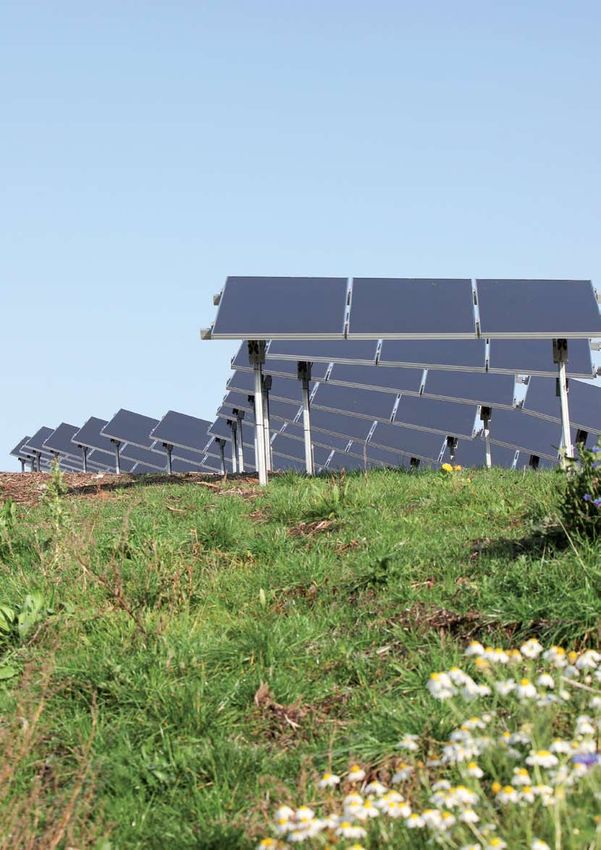
Ever thought of
                Ever thought of doing
                         doing business in
                                business in Luxembourg?
ess in Luxembourg

                                                                                                          Whether you are a young start-up company,
                                                                                                          an experienced player or just in search of
                                                                                                          new markets, the "Espace Entreprises" of
                                                                                                          the Luxembourg Chamber of Commerce
                                                                                                          puts its human and informational resources
                                                                                                          at your disposal by providing free service,
                                                                                                          individual advice and information.

                                                                                                          Whether in legal, administrative, economic
                                                                                                          and social fields or within the context of the
                                                                                                          creation, takeover or transfer of a company,
                                                                                                          Espace Entreprises fully assists people
                                                                                                          who, through their initiative, contribute to
                                                                                                          the expansion of Luxembourg’s economy.
millenium

                                                                                           Your partner for success

            Espace Entreprises 7, rue Alcide de Gasperi L- 2981 Luxembourg Tel.: + 352 42 39 39 - 330 Fax: + 352 43 83 26 entreprises@cc.lu www.cc.lu
EDITORIAL

editorial                                                      Blitz Agency

The Grand Duchy of Luxembourg is renowned
for its tradition of economic performance and
stability – a tradition which it has excellent
potential to uphold, despite the current economic
crisis. The country’s level of competitiveness was
ranked 12th in the Global Competitiveness Index
2009 published by the International Institute for
Management Development (IMD).
                                                                              Serge Allegrezza, Head of the Directorate-General for Competitiveness,
Innovation, research and development (R&D)                                    Research and Innovation, Ministry of the Economy and Foreign Trade
are key drivers to ensure the long-term sustain-
ability of this f irst-rate performance. They must     University of Luxembourg, which aims to put
be placed f irmly at the heart of the policies that    the country on the map in terms of high-quality
will consolidate Luxembourg’s competitiveness          research in secure ICT systems and services. It
and help the country to weather the current glo-       also illustrates the programmes put in place to
bal economic downturn successfully. The Grand          encourage high-level researchers to establish
Duchy continues to build on solid foundations,         activities in the Grand Duchy.
with a high proportion of small and medium-
sized enterprises (SMEs) introducing new inno-         The 25th anniversary of Luxinnovation, the
vation on the market, a well-developed sector          National Agency for Innovation and Research,
of knowledge-intensive services and a highly           provided an opportunity to review the devel-
competitive legal framework for intellectual           opment of the national innovation system in
property. The new law on R&D and innovation            Luxembourg since the mid-1980s. From having
support adopted in 2009 marks another step             virtually no public research two-and-a-half
forward in the government’s drive to put in place      decades ago, the country has succeeded in
effective measures to stimulate innovation in          establishing an extensive public research
the business sector and reinforce the collabora-       sector and comprehensive support for private
tion with public research institutions.                businesses – a remarkable journey, which holds
                                                       much promise for the future.
In order to diversify Luxembourg’s economy
and to develop centres of scientif ic excellence
of high international standing, the government
has identif ied several technological key sectors
which it will prioritise during the next few years.
Environmental technologies is one of them. This
third issue of FOCUS on Research and Innovation
                                                       Serge Allegrezza
in Luxembourg highlights companies as well as
                                                       Head of the Directorate-General for Competitiveness,
research organisations that derive their competi-
                                                       Research and Innovation at the Ministry of the
tive edge from eco-friendly innovation. Moreover,      Economy and Foreign Trade
the Grand Duchy is investing heavily in the public
research sector in order to build scientif ic excel-
lence. This number of FOCUS presents a range
of examples, such as the new Interdisciplinary
Centre for Security, Reliability and Trust at the

                                                                                                                                                       Focus 3 – 2010 I 3
TABle of CONTENTs

                                    Table of contents
                                    Keynote interview
                                    Building on a strong tradition of innovation
                                    Interview with Mr Michel Wurth, ArcelorMittal                                                                05

                                    News from innovative Luxembourg                                                                              08

                                    Environmental technologies
                                    Environmental innovators hit the spotlight                                                                    11
                                    Empowering eco-technologies                                                                                   12
                                    Innovative technologies for sustainable steelmaking                                                          14
                                    Financing opportunities for eco-innovation                                                                   16
                                    Turning nature into power                                                                                     17
                                    A breakthrough for solar energy                                                                              18
                                    For a lower carbon footprint ... globally                                                                    20
                                    Eco-experts at your service                                                                                  22

                                    Innovative spaces
                                    Making innovative strides towards the next decade                                                            24

                                    Entrepreneurship and innovation
                                    Entrepreneurship and innovation news                                                                         29
                                    Energy eff iciency for a well-aired lift                                                                     32
                                    Imagine. Create. Innovate.                                                                                   34

                                    Public research
                                    An ambitious agenda for CRP Henri Tudor                                                                      38
                                    Building IT networks and services that will never let you down                                               40
                                    Luxembourg: an inspired career move                                                                          42
                                    The thrill of pure science                                                                                   44

                                    Did you know it’s from Luxembourg?
                                    Reaching for the sky: Luxembourg’s contribution to the world’s tallest tower                                 46

                                    Five questions for …
                                    Mr Claude Steinmetz, Managing Director of Luxlait                                                            48

                                    The RDI directory                                                                                            50

FOCUS on Research and Innovation in               Graphic design and layout                    Reproduction is authorised, provided the source
Luxembourg is published by                        Alternatives Communication                   and copyright are acknowledged.
Luxinnovation GIE
National Agency for Innovation and Research       Cover                                        The publisher has tried to ensure all information
                                                  Boshua                                       is accurate but cannot be held responsible
Director of publication                                                                        for the use which might be made of the
Gilles Schlesser                                  Printed in 15,000 copies                     information, for omissions or for any mistakes
Editor-in-chief                                                                                which might appear.
Lena Mårtensson                                   Sponsored by
                                                  Luxembourg Ministry of the Economy           © 2010 Luxinnovation GIE
lena.martensson@luxinnovation.lu
                                                  and Foreign Trade                            This publication is cof inanced by the European
Journalists
                                                  Luxembourg Chamber of Commerce               Regional Development Fund.
Susan Alexander, Stephen Evans, Mike Gordon,
Frederick Gordts, Mandy Tamlyn                    National Research Fund

Copy-editing                                      For a free subscription, please contact
Frauke Hertel                                     info@luxinnovation.lu

4 I Focus 3 – 2010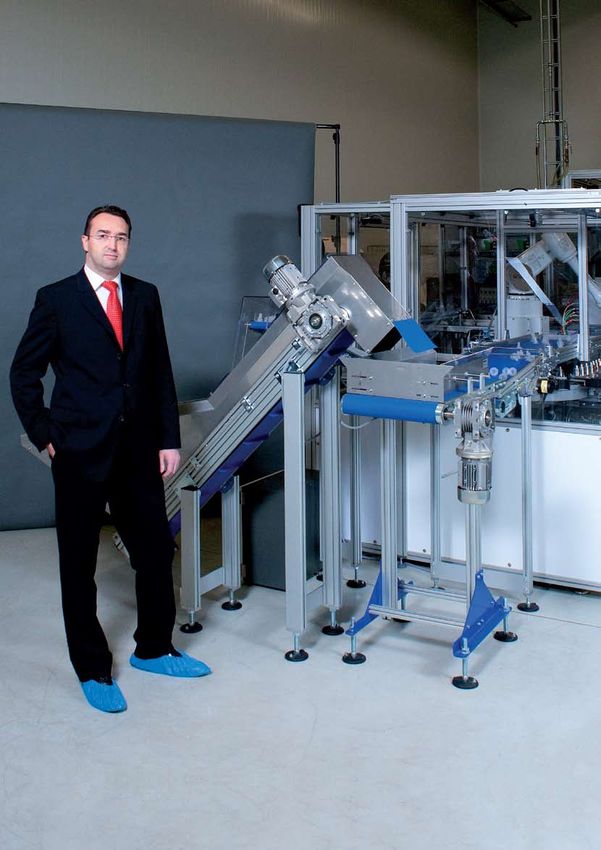
KEYNOTE INTERVIEW

Blitz Agency
                                                                               Michel Wurth, Member of the Group Management Board, ArcelorMittal

Building on a strong tradition
of innovation
                                    That world steel industry leader ArcelorMittal has its global headquarters in Luxembourg
                                    City is one of the Grand Duchy’s principal economic claims to fame. The country plays a
                                    signif icant role in the company’s commitment to product excellence, hosting one of the
group’s major R&D centres. The Luxembourger Michel Wurth is a member of the Group Management Board, with, amongst
other duties, responsibility for global product development and R&D. FOCUS spoke to him about this and the work he does
to support entrepreneurship and innovation in his home country.

With around 287,000 employees in more than           Outward-looking flexibility
60 countries, ArcelorMittal is the largest steel     For many, steel production remains the soul
company in the world. Total output amounted
                                                     of Luxembourg’s economy. Not only was it
to 103 million tons of steel in 2008, almost three
                                                     the bedrock of the country’s economy until
times more than the second largest company.
                                                     the mid-1970s when it provided 30% of total
The company was formed in 2006 following the
                                                     national value added and 16% of employ-
merger of the former industry numbers one and
                                                     ment, but it was the vehicle for the country
two Mittal Steel and Arcelor. Arcelor was created
                                                     to display its unique talents, particularly its
in 2001 from the partnership of Luxembourg’s
Arbed, Spain’s Aceralia and France’s Usinor.         outward-looking flexibility. So when the
                                                     steel crisis hit, the country was quick to pull
“Today’s customer often does not only require        together to rationalise and change strategy,
a standard product, but appreciates the service      moving into higher value-added production.
that goes along with it,” notes Michel Wurth. “I     Today, output is centred on three electric-arc
think that this will increasingly become a prior-    furnace mini-mills which focus on high-end
ity.” As the global economy has become more          niche products.
sophisticated over recent years, businesses have
had to f ind new ways to add value, a challenge      The industry, like the country, has an instinc-
Luxembourg’s steel industry began to address         tive vocation to embrace globalisation. For
over three decades ago. The result is one of the     example, the leading national company Arbed
most sophisticated steel production centres in       was investing in Brazil in the 1920s and Korea
the world.                                           in the 1970s. In short, Luxembourg has for

                                                                                                                            Focus 3 – 2010 I 5
KEYNOTE INTERVIEW

                                                                           speciality products. He claims worldwide market
                                                                           leadership in areas such as “sheet piling” and
                                                                           “very heavy sections”, with work ongoing regard-
                                                                           ing f ire engineering, earthquake resistance and
                                                                           concrete-steel composite construction as well
                                                                           as predesign and cost estimation software. As
                                                                           an example he highlights the award-winning
                                                                           “Angelina” beam, through which pipes and
                                                                           cabling can be laid, “thus reducing the height of
                                                                           the whole building, so cutting construction and
                                                                           energy costs.” The Dudelange production site
                                                                           in the south of Luxembourg, he says, “is also at
                                                                           the forefront of innovation, for example, with
                                                                           its Aluzinc product which has many applications,
                                                                           particularly in construction for cladding, roof ing,
                                                                           f irebreak solutions, etc.”

                                                                           Central environmental concerns
                                                                           Heavy industry is particularly sensitive to client
                                                                           demands for sustainability, and Luxembourg
                                                                           plays its part here too. Steel in this country is
                                                                           made in modern electric-arc furnaces that process
                                                                           scrap metal. “This makes the region one of
                                                                           the biggest recyclers of steel in Europe,” notes
                                                                           Mr Wurth, and this practical experience is used
                                                                           in the local R&D effort too. “They are mainly
                                                                           in the framework of intelligent production,
                                                                           i.e. modelling, understanding of processes,
Boshua
                                                                           measuring and automation with the aim of
                                                                           improving costs, energy consumption, emissions
                                                                           and material yield,” Mr Wurth explains.
                     decades been a by-word for future-oriented
                     steel production; whether as an independent
                                                                           He highlights the demonstration projects on
                     national champion or as the headquarters of an
                                                                           blast furnaces for top gas recycling as well
                     ambitious multinational corporation.                  as carbon capture and storage technologies
                                                                           planned to be built in eastern Germany and
                     Innovation nexus
                     This flair for innovation has helped Luxembourg’s
                     reputation within the industry. The steel giant’s
                     worldwide R&D organisation is managed from
                     the Grand Duchy, and one of the company’s 15
                     global research centres is based in Esch-sur-
                     Alzette. “The Esch research centre focuses on
                     niche products,” notes Mr Wurth. “Although
                     there is a staff of just 37 people, it takes advan-
                     tage of know-how from other labs.” The team
                     often works closely with the group’s biggest
                     research centre, which is just 40 km across the
                     French border in Maizières-les-Metz. The centre
                     in nearby Liège, Belgium, is also a frequent part-
                                                                                                                                  Boshua

                     ner. The work of these laboratories is organised
                     on a global basis, with the Esch plant having
                     intra-group customers on every continent where        nearby Florange in France. “Steel as a material
                     the group has a presence.                             is exceptionally sustainable,” he adds, claiming
                                                                           an 85% global recycling rate. To complete
                     Work in these centres ranges across many prod-        the picture, he points to technological
                     ucts and techniques, but Mr Wurth says the            advancements such as lighter, more fuel-eff icient
                     main focus for market development is on local         cars and more effective wind turbines.

6 I Focus 3 – 2010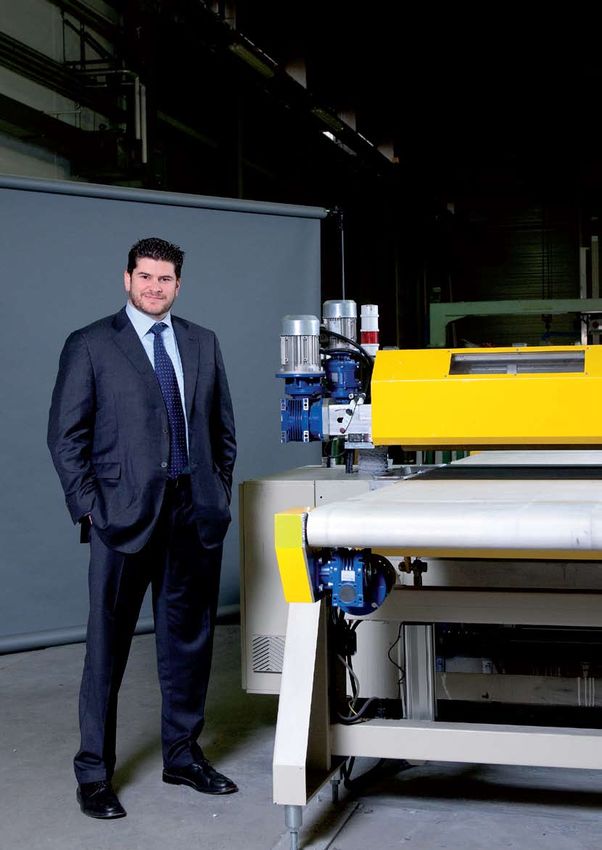
KEYNOTE INTERVIEW

Rebounding from the crisis
It is this innovative mindset that Mr Wurth
hopes Luxembourg’s manufacturing sector will
embrace. Finance is now dominant, but as presi-
dent of the Chamber of Commerce he supports
the drive towards sustained economic diversity.
He is convinced that Luxembourg has to become
“the benchmark in terms of productivity” whilst
also continuing to seek out “high-quality speci-
alities and niche products with a very high added
value.”

Key to this is the fostering of innovation, a con-
cept he feels needs to be addressed from all sides.
“I’m not just thinking about new products,” he
comments, “but also about innovation in terms
of customer service and customer-supported
R&D activities.” Thanks to the fresh thinking of
Arbed, Arcelor and today ArcelorMittal, he says,
new technologies have continued to sell well
even during the worst months of the downturn.
“Much as I prefer times of growth and prof it-
ability, every downturn is a valuable learning
experience,” is Mr Wurth’s opinion. He feels the
survivors will be better equipped to face the
future, particularly in terms of cost control and
competitiveness.

More to achieve
                                                                   Boshua

“Luxembourg is an attractive place for inno-
vation,” comments Mr Wurth, highlighting
the tax regime as being particularly impor-
tant amongst the range of incentives on offer.
“I think research policy is most successful when      Michel Wurth
it enables a strong partnership between pub-
                                                      Michel Wurth is a member of the ArcelorMittal
lic research institutes, the University and the
                                                      Group Management Board, with responsi-
private sector,” he adds. And therefore, he wel-
                                                      bility for Flat Europe, Distribution Solutions,
comes the research, development and innova-
                                                      Product Development and R&D, and Global
tion promotion law passed in June 2009. “To           Customers. After joining Arbed in 1979, the
develop this public-private relationship further,     Luxembourger rose to become vice president
we need more work on policies, from education         of Arbed in 1998, maintaining that position
to tax, to encourage venture capital and entre-       with successor f irm Arcelor. Mr Wurth also
preneurship and keep our country open to the          plays an important role within the wider
best researchers.”                                    economy of Luxembourg as president of
                                                      the country’s Chamber of Commerce since
He is particularly excited by the Integrated          2004 and vice president of FEDIL – Business
BioBank of Luxembourg project, which has              Federation Luxembourg. In addition, he is
received substantial public backing. Similarly, he    president of the board of directors of steel
thinks the potential for the planned Esch-Belval      industry supplier Paul Wurth S.A. and vice
City of Sciences will be important, as it will        chairman of the Luxembourg Red Cross.
bring together all facets of the research effort.
Mr Wurth has been closely involved in this project
as Belval once hosted six Arbed blast furnaces.
He concedes there is a danger of creating an          ArcelorMittal
“ivory tower”, but feels this can be avoided          + 352 47 92 1
                                                      contact@arcelormittal.com
through private sector involvement, particularly      www.arcelormittal.com
through Luxinnovation.

                                                                                                             Focus 3 – 2010 I 7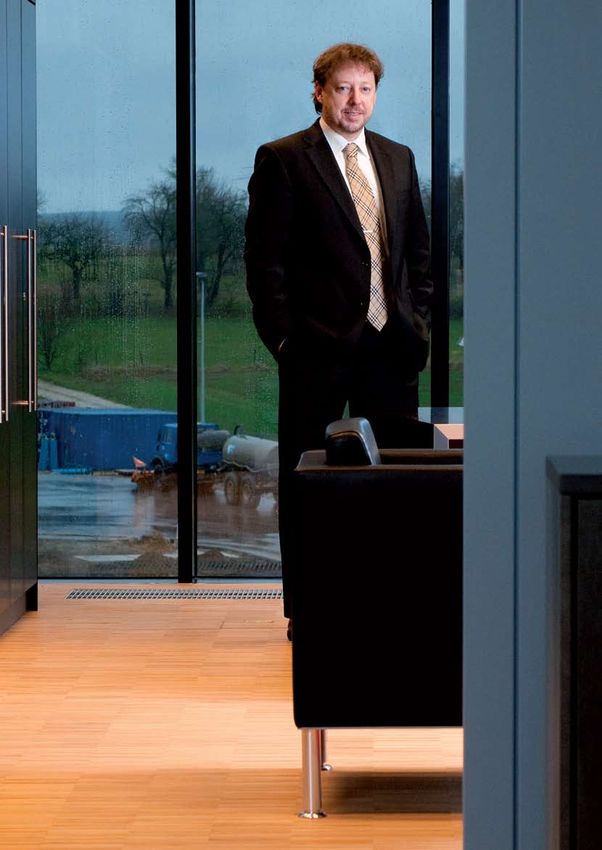
News from innovative Luxembourg

                                                                                                                Increased f inancial support for
                                                                                                                innovation and R&D in Luxembourg
                                                                                                                A law providing a new framework for f inancial
                                                                                                                support to companies undertaking R&D and in-
                                                                                                                novation processes came into force in July 2009,
                                                                                                                replacing the one from 1993. It is especially de-
                                                                                                                signed to meet the needs of SMEs and start-ups.

                        News                                                                                    While previous support was reserved for R&D
                                                                                                                projects, the upgraded legal framework of-
                                                                                                                fers f inancial support for f irms carrying out a
                                                                                                                comprehensive range of innovation activities.
                        A renowned director for the                                                             It offers incentives that include R&D projects
                        University of Luxembourg’s Centre                                                       and programmes, technical feasibility studies,
                                                                                                                protection of technical industrial property, sup-
                        for Systems Biomedicine                                                                 port to young innovative enterprises, innova-
                        “Putting Luxembourg on the international map                                            tion advice and support, secondment of highly
                        of biology and genome research” is the vision of                                        qualif ied personnel, process and organisational
                        Dr Rudi Balling, new head of the University of                                          innovation in services, and innovation clusters.
                        Luxembourg’s Centre for Systems Biomedicine                                             It thus conf irms Luxembourg’s f irm intention of
                        (LCSB).                                                                                 supporting innovation efforts.

                                                                                                                 www.innovation.public.lu/loi_rdi

                                                                                                                A cluster for logistics
                                                                                                                To strengthen Luxembourg’s position as an inter-
                                                                                                                national logistics centre, a cluster for logistics has
                                                                                                                been formed with the support of the Ministry of the
                                                                                                                Economy and Foreign Trade. The seven founding
                                                                                   © University of Luxembourg

                                                                                                                members are the Chamber of Commerce, FEDIL –
                                                                                                                Business Federation Luxembourg, Luxinnovation,
                                                                                                                Luxembourg Confederation of Commerce (clc),
                                                                                                                the Maritime Cluster, Public Research Centre
                                                                                                                Henri Tudor and the University of Luxembourg.
                                                    Rudi Balling, Director, LCSB
                                                                                                                The cluster’s scope will include not only logis-
                                                                                                                tics companies but also businesses that use
                        The LCSB is key to a major government initiative
                                                                                                                logistics.
                        to develop Luxembourg as a centre of excellence
                        in molecular and personalised medicine. With a
                                                                                                                The cluster’s working groups include: Education
                        mission that includes analysing mechanisms of
                                                                                                                and Training, Innovation and Project Development,
                        disease pathogenesis, identifying new drug tar-
                                                                                                                Infrastructure, Legal and Regulatory Framework.
                        gets and increasing the eff icacy and safety of
                                                                                                                The cluster, which has recently launched its
                        new preventative and therapeutic strategies, the
                                                                                                                own website, participated in the Logistics
                        interdisciplinary LCSB envisions units in experi-
                                                                                                                Management Forum in Luxembourg in 2009 as
                        mental biology, theoretical and computational
                                                                                                                well as in 2010.
                        biology and the development of the technical
                        platforms that support such research.

                        Dr Balling joined the centre in September 2009
                        from the Helmholtz Centre of Infection Research
                        in Braunschweig. The facility itself is under de-
                        velopment as part of the new university campus
                        in Belval.

                          www.lcsb.lu                                                                            www.clusterforlogistics.lu

8 I Focus 3 – 2010
News from innovative Luxembourg

New Plastipak R&D centre in
Bascharage
Plastipak, along with its local subsidiary
LuxPET S.A., has announced the opening of
its Plastipak Europe Packaging Development
centre in Bascharage. The € 5 million R&D
facility will serve as Plastipak’s European R&D
presence and will launch with 10 researchers
working on projects to create new designs, im-
prove manufacturing processes and develop new
materials and alternative technologies to give
Plastipak a competitive edge in the marketplace.

Plastipak is a world leader in the PET (polyethyl-
ene terephthalate) injection-moulded technol-                                                                                    © Goodyear

ogy that is used to produce beverage, food and
other liquid containers. With LuxPET’s expertise
in food-approved recycled materials, it is also      Name change at Goodyear
launching a recycling centre in Luxembourg.          emphasises commitment to
These projects will create 40 new jobs in
Luxembourg over the next 3 years.                    innovation
                                                     In September 2009, Goodyear changed the
 www.plastipak.lu                                    name of its research facility in Colmar-Berg to
                                                     Goodyear Innovation Center* Luxembourg, or
                                                     GIC*L. The name change symbolises the centre’s
                                                     global and multifunctional character, as well as
                                                     its openness to collaboration with external tech-
                                                     nology sources. These include the University of
                                                     Luxembourg and the two public research centres
                                                     Gabriel Lippmann and Henri Tudor.

                                                     With a staff of more than 900 engineers, scien-
                                                     tists and technicians, GIC*L develops auto, truck
                                                     and farm tyres for the African, Asian, Australian
                                                     and European markets. It is Goodyear’s largest
                                                     research centre outside of the US. GIC*L’s re-
                                                     search focuses on engineering and testing new
                                                     products in environments that range from the
                                                     lab to its outdoor track to the road. The number
                                                     of kilometres logged in such testing is equiva-
                                                     lent to more than 10 trips around the world
                                                     each day.

                                                      www.goodyear.com

                                                                                                                 Focus 3 – 2010 I 9
News from innovative Luxembourg

                                                                               Boshua
                                                                                        First results from the University
                                                                                        of Luxembourg’s Photovoltaics
                                                                                        Laboratory
                                                                                        The f irst thin-f ilm solar cells have been produced
                                                                                        at the University of Luxembourg’s Photovoltaics
                                                                                        Laboratory, the outcome of a public-private part-
                        Guide to public research in                                     nership between the University and TDK, Japan.
                        Luxembourg published                                            Thin-f ilm solar cells are next-generation cells
                                                                                        that are signif icantly less expensive to produce
                        Luxinnovation, Luxembourg’s National Agency                     than the photovoltaic modules currently in pro-
                        for Innovation and Research, has produced a                     duction. These are the f irst cells produced by the
                        new publication that describes the extensive                    laboratory and have already reached competi-
                        range of capabilities of the Grand Duchy’s pub-                 tive eff iciencies.
                        lic research organisations. Titled Public Research
                        in Luxembourg – Discover the competences and
                        know-how of public research organisations, it

                                                                                                                                               © University of Luxembourg
                        aims to encourage public-private sector part-
                        nerships as well as collaborations with other re-
                        search organisations. It is available free of charge
                        from Luxinnovation.

                          Luxinnovation GIE
                          + 352 43 62 63 1
                          info@luxinnovation.lu
                          www.luxinnovation.lu
                          (see “Newsletter and Publications” to download
                          the guide)

                        New promotional f ilms: Is it true                              The new cells use a semiconductor made of cop-
                        what they say about Luxembourg?                                 per, indium, gallium and selenium (CIGS) and
                        To counteract stereotyped ideas and present                     have reached an eff iciency of 12%. University of
                        Luxembourg the way many inhabitants, visitors                   Luxembourg researchers, headed by Dr Susanne
                        and investors experience the country today, 10                  Siebentritt, have also produced a second cell that
                        short promotional f ilms have been released                     does not contain the costly material indium, but
                        under the joint heading Is it true what they say                uses a lower-cost galvanic process. This cell has
                        about Luxembourg?                                               reached an eff iciency of 3.2%, close to the 3.4%
                                                                                        world record.
                        Covering aspects such as business, investment
                        and f inance as well as holidays and wine, this gov-             http://physics.uni.lu/photovoltaics_lpv
                        ernment-supported initiative invites viewers to
                        f ind out why the Grand Duchy is worth a visit, an
                        extended stay or a long-term investment. To view
                        the f ilms, please visit the initiative’s website.

                          www.promoteluxembourg.com

10 I Focus 3 – 2010
Environmental technologies
Environmental innovators
hit the spotlight
Luxembourg is best known as a f inancial centre, but the country also boasts a
thriving eco-technologies sector. This area of activity may, as yet, be less visible
than other sectors of the Grand Duchy’s economy, but it is growing fast. Actively
supported by the government, the sector already features a wide variety of new companies specialising in areas ranging
from solar panels to biogas plants and energy conservation – to name but three examples presented in this section. Other,
more established players are also involved, such as steel industry supplier Paul Wurth with its increasingly eco-eff icient
technologies. The country’s public research centres are at hand to support the sector with vital R&D input.
Boshua
Focus 3 – 2010 I 11Environmental technologies
Empowering eco-technologies
Concern for the environment is triggering a sharp rise in the demand for eco-friendlier products and processes. Cleaner
technologies are urgently needed to conserve energy and resources, curb pollution and avoid waste. Imagination, dedica-
tion and know-how will be required to meet this challenge, together with a blend of research excellence and entrepre-
neurial spirit which Luxembourg is fostering assiduously. The Grand Duchy is actively supporting the eco-technologies
sector – as a way of contributing to greater sustainability, but also as a means of diversifying its economy.
“Eco-technologies play an important role in help-
ing us to tackle environmental challenges,” says
Jeannot Krecké, Minister of the Economy and
Foreign Trade. “It is vital that Luxembourg posi-
tions itself clearly in that market and encourages
companies to seize the opportunities at hand.”
… backed by an ambitious action plan
To accomplish this, the government has devel-
oped an action plan to promote eco-technolo-
gies, endeavouring to make economic develop-
ment compatible with environmental protection.
The plan, which was adopted in January 2009,
“intends simultaneously to accelerate the use
of eco-technology products in all sectors of the
economy and to increase Luxembourg’s pro-
duction of eco-technology,” Minister Krecké
explains. The government has also doubled aid
schemes supporting research and development
in the environmental technologies f ield, allocat-
ing a budget of € 5 million in 2009.
Simone Polfer, Deputy Director of the Board of
Economic Development, which is part of the
Ministry of the Economy and Foreign Trade,
notes that the plan seeks “to increase the
Boshua
competitiveness of Luxembourg’s economy by
Eco-technologies involve f inding ways of re- lowering energy costs and resource consumption,
ducing the environmental impact of processes, and to develop the eco-technologies sector as
products and services. Whether it is by f inding a a driver of sustainable economic growth and
more energy-eff icient process, a way to address employment.” She adds that there is a parallel
environmental problems or a replacement for goal of “improving the population’s quality of
an excessively polluting production method, the life by reducing pollution”.
scope is very wide. Luxembourg’s Ministry of the
Economy and Foreign Trade sees considerable The action plan was formulated by a working
economic prospects in this area. group formed by the Ministry of the Economy and
Foreign Trade, collaborating with Luxinnovation,
A sound business case … the University of Luxembourg and Public
Recent estimates put the world market for en- Research Centre Henri Tudor’s Environmental
vironmental technologies or related services at Technology Resource Centre. Operationally,
about € 1 trillion. In the European Union alone, says Ms Polfer, “the participants are at the early
this industry is valued at more than € 60 billion, stages of the process, which seeks to engage all
amounting to 2.2% of GDP, and has created as public and private players in an interdisciplinary
many as 3.5 million jobs. Three quarters of these process” and promote “new cooperation
jobs are in labour-intensive sectors such as eco- between towns, local governments, ministries
construction or solid waste management. and related institutions”.
12 I Focus 3 – 2010Environmental technologies
The plan goes beyond reinforcing Luxembourg’s
eco-technologies sector, seeking to accelerate
the use and acceptance of environmental
technologies by “encouraging already established
Blitz Agency
companies in the traditional sectors of the
economy to move into these new markets,”
Ms Polfer remarks. It also seeks to “promote
the adoption of environmental technologies
and encourage innovation and research in this
area”. The ministry has, for example, announced
f inancial support for companies using
external expertise to help them improve their
environmental performance.
Creating momentum
One of the plan’s key elements is to bring the ac-
tors together in a “cluster” of businesses and re-
search organisations in the eco-technology and
sustainable development f ield, called the EcoDev
cluster for short, which was off icially launched
in February 2009. The notion of a cluster
has emerged as a way for businesses in close
proximity to increase their success by actively Jeannot Krecké, Minister of the Economy and Foreign Trade
working in the interests of the group as a whole.
in areas where there are about 30 or more
“The cluster creates a network for people ac- active players. These include renewable energy,
tive in the different parts of the sector,” explains especially from biomass, as well as eco-construc-
Laurent Magi of Luxinnovation, who is responsi- tion and energy management.
ble for developing the cluster. “It aims to bring
the different players together, to put them in Eco-design has become one of the main elements
contact with each other and offer them com- of the eco-technologies action plan. In this con-
mon services.” text, Minister Krecké has announced f inancial
support for coaching in the eco-design area: “We
Dr Magi identif ied several hundred players ac- are supporting eco-design to help Luxembourg’s
tive in this sector in Luxembourg, most of which strategic positioning, for the competitiveness of
are companies. Interviews with leaders of 50 of our companies tomorrow and to transfer techni-
these helped to pinpoint their concerns and ex- cal know-how from our public research centres
plore which services would enable them to boost to our businesses.”
their offer.
The minister is pleased with the progress made
The EcoDev cluster encourages cooperation in the implementation of the eco-technologies
between companies and public and private action plan. “The momentum is building up,”
research centres, seeking common interests he says. While he considers many of the eco-
and developing cooperative relations, explains technology companies in Luxembourg to be
Dr Magi. The cluster concept is intended to in- successful, he feels that further action is need-
crease participants’ competitiveness by spread- ed: “We need to strengthen their market pres-
ing know-how and best practices, simplifying ence and actively promote their products and
access to research facilities, f inding synergies services.”
between small and larger companies, and car-
rying out joint projects where the risks (and the
Ministry of the Economy and Foreign Trade
costs) are shared. + 352 24 78 41 28
innovation@eco.public.lu
www.eco.public.lu
A very active sector
Luxembourg’s existing eco-technologies sector Luxinnovation GIE
covers a wide range of companies involved in a + 352 43 62 63 1
info@luxinnovation.lu
variety of areas. In order to reach critical mass,
www.luxinnovation.lu
Dr Magi says, the cluster will start working
Focus 3 – 2010 I 13Environmental technologies
Blitz Agency
Marc Solvi, Chief Executive Officer, Paul Wurth
Innovative technologies
for sustainable steelmaking Environmental issues have raced up the agenda of
steel producers in recent years. As a leading technol-
ogy supplier, the Paul Wurth Group f inds itself at the
heart of these considerations. “We are improving all our products and processes with a view to environmental issues, and only
those companies which follow this trend will survive,” is the stark assessment of Chief Executive Off icer Marc Solvi. FOCUS
spoke to him about how his Luxembourg-based company is using its commitment to innovation to take these challenges in its
stride.
Marc Solvi is convinced that the environment The group has proved its long-standing commit-
will be a decisive issue for the metals industries ment to “green” steel production when it began
over the coming decades. He sees two related work over a decade ago in Luxembourg on its
“mega-trends”: energy eff iciency and more Primus system, which recovers iron and zinc from
general environmental protection. Consumers iron- and steelmaking residue. The f irst commer-
are demanding more products and infrastruc- cial deployment of Primus took place success-
ture made from metal, but they also want these fully in 2009 in Taiwan, but otherwise the eco-
green considerations taken into account. In nomic slowdown has led to the postponement
Mr Solvi’s experience, everyone wants to benef it of many environmental projects. Despite these
from the most eff icient, latest developments. diff iculties, the group is convinced of the long-
term potential. Furthermore, since 1998 Paul
Long-standing commitment Wurth Umwelttechnik in Essen, Germany, has
Paul Wurth’s commitment to innovation has been operating as a centre for the development
allowed it to make the necessary changes that of environmental protection technologies for
give its clients “greener” options. Founded in the metals industry.
1870 to service the local steel industry, it is now a
global business driven by its exports of high-end Of note in this context is also Paul Wurth’s con-
services and knowledge. Although two thirds tinuing involvement in the ULCOS (Ultra-Low
of the workforce operate outside the country, CO2 Steelmaking) and Hisarna (project extension
Luxembourg maintains a central role coordinat- to direct reduction) European R&D programmes,
ing technological development and maintaining which aim to minimise CO2 emissions in the pro-
the company’s core values. duction of pig iron.
14 I Focus 3 – 2010Environmental technologies
Innovate or die processes, with each needing to be tailor-made
Luxembourg plays a vital double role at the to suit local surroundings. The group’s know-
heart of the Paul Wurth Group. The research and ledge of the business is reinforced by its close
development work here creates and ref ines the relationship with ArcelorMittal, which owns
processes, systems and hardware that constitute nearly half the group’s capital.
their product range. Thus the headquarters have
become the repository of the f irm’s core values,
which are founded on a culture of innovation and
© Paul Wurth
client support.
“If we do not innovate, we will not survive,” is
Marc Solvi’s raw assessment of the necessary
strategy for his company. Given the nature of
the global market he feels that the group has
no choice but to develop high-end products and
services, as it cannot hope to compete with the
lower-cost producers. “It is essential to keep
renewing our offering: if we do not make pa-
tents, we do not make prof its,” he insists. On
average, around a quarter of annual prof its are
reinvested into research and development; in
2009 this amounted to about € 10 million. Blast furnace no. 8 at ThyssenKrupp Steel, Duisburg-Hamborn, Germany,
built by Paul Wurth integrating the most advanced technologies for
environmental protection
Deep client understanding
“We engage in applied research to support Fount of knowledge
specif ic needs,” Mr Solvi underlines, adding that
The process by which this knowledge and spirit
this work requires a large degree of humility as
of innovation are managed and transmitted is
failure is more common than success. In gen-
a key process. Experienced management brings
eral, Paul Wurth puts most effort into improv-
this awareness when subsidiaries are created,
ing the existing offering, whether in terms of
and there is a similar process when businesses
quality or maintenance. Specif ic problems are
identif ied and addressed, with solutions sought are purchased.
in the company’s laboratories. “Everything that
works during testing does not necessarily trans- So whether it is the innovative exploration of
late directly into the demanding work of produc- new products and processes or different mar-
tion,” Mr Solvi notes, “so this is why we need a kets, Paul Wurth is an exemplary role model for
close relationship with our clients.” all Luxembourg’s businesses. Mr Solvi salutes
the government’s efforts in building a research
Most of the research is conducted in Luxembourg university in Luxembourg, hoping others will use
by a team of 30 engineers, out of total staff in this resource to help generate the high value-
the home country of 520 people. The Paul Wurth adding businesses the country needs.
Group, where two thirds of employees are engi-
neers, has a further 1,100 staff dotted around the
world who develop these technological advances Paul Wurth S.A.
and put them into practice. For example, in spe- The Paul Wurth Group is an internationally renowned engineering company sup-
cialist competence centres in places like Italy and plying the global metals industry, principally the iron, steel and non-ferrous met-
Germany, and further operations in key markets als sector. Since it was founded in Luxembourg in 1870, it has built a portfolio of
such as the 130 people in Brazil and 100 each in around 650 patented inventions related to the design and supply of complete
China and India. “We are thankful we are active plants, systems and processes as well as specialised equipment. These range
throughout Asia, as the European market is very from blast furnaces to coke-making plants to “direct reduction” plants, with each
tough at the moment,” Mr Solvi remarks. “China, ready to be equipped with environmental protection technologies. The group
India, Indonesia, Vietnam all need steel for their has also developed expertise in construction and project management.
infrastructure to grow and are all important
markets, but even so orders are heavily down this
year compared to an exceptional year in 2008.”
Paul Wurth S.A.
+ 352 49 70 1
Work is carried out hand in hand with the clients paulwurth@paulwurth.com
to achieve the required solutions. Mr Solvi insists www.paulwurth.com
that there are no one-size-f its-all products and
Focus 3 – 2010 I 15Environmental technologies
Blitz Agency
Financing opportunities
for eco-innovation
For a few years now, an
attractive source of capi-
tal has been available in
Luxembourg to companies developing eco-technologies or active in the f ield
of renewable energy, in the form of private f inancial instruments. Raymond
Schadeck, a business leader with a long-standing passion for eco-technologies,
tells FOCUS about the possibilities.
Raymond Schadeck, former Chief Executive Off icer,
Ernst & Young Luxembourg
“Luxembourg should be a precursor of environ- disclosure and transparency; they are also highly
mental technologies, and the country is already tax eff icient. “Combined with the Luxembourg
well advanced,” says Mr Schadeck, the former Chief know-how and experience in the f inancial sec-
Executive Off icer of Ernst & Young Luxembourg, tor, only very few other countries can offer such
who is also member of the plenary assembly of the advantages. This further means that innovative
Grand Duchy’s Chamber of Commerce and of the eco-technology companies based in Luxembourg
Board of FEDIL – Business Federation Luxembourg. have an advantage, as it is only natural for inves-
SICAR tors to come and look at what the local market
As early as 1993, Mr Schadeck and his colleagues
Investment company in risk had already outlined a vision for Luxembourg as a has to offer,” Mr Schadeck remarks.
capital. A vehicle restricted
front runner in the eco-friendly sector. “Currently,
to investment in risk capital
almost every country wants to be a trendsetter in As a SICAR is not subject to investment diversif i-
by well-informed investors.
No diversif ication rules or the eco-technologies sector, but Luxembourg is cation criteria, it may limit its investment to one
investment limits apply. The one of the few which can also offer the funding,” or two companies only, making it very attractive
minimum capital amounts he explains. “Our f inancial sector is strong, is run to investee companies and allowing flexible, cus-
to € 1 million. A large treaty professionally and has advanced f inancial instru- tomised structuring.
network pre-empts double ments and products at its disposal.”
taxation. More than 1,200 such alternative investment vehi-
Luxembourg, the second largest investment fund cles have been set up in the past years, with many
SIF centre in the world, launched two innovative investing between € 100 million and € 500 million
Specialised Investment Fund. structures in 2004 and 2007: the SICAR and the in innovative companies. “Even if only a small per-
This instrument is similar to SIF. Both are on-shore vehicles reserved for well- centage of this money goes to Luxembourg target
the SICAR, but available for informed investors. They are commonly used by companies, there is a lot of money to be invested.
all asset classes including private equity f irms or other strategic investors In addition to a good government strategy, gov-
derivatives, real estate, hedge to invest in high-risk sectors such as clean tech- ernment support schemes, excellent research and
funds and private equity with nologies or eco-technologies – and thus, more development facilities, this really gives top-notch
a diversif ication requirement, opportunities to ecology and technology compa-
specif ically, in established companies or start-ups
and involves a minimum nies here,” Mr Schadeck concludes.
capital of € 1.25 million.
specialising in renewable energy and environmen-
tally aware technology.
Ernst & Young Luxembourg
SICARs and SIFs are lightly regulated vehicles, + 352 42 12 41
therefore striking the right balance between ernst.young@lu.ey.com
www.ey.com/lu
investor protection and flexibility as well as
16 I Focus 3 – 2010Environmental technologies
Turning nature into power
It might not be immediately obvious, but new energy sources
can be found everywhere in nature. For almost 10 years now, the
Luxembourg engineering f irm L.e.e. has been building agricultural
and industrial biogas plants to convert biomass into biogas, pro-
ducing power and heat. This is an environmentally friendly and
carbon-neutral technology, and farmers, towns and enterprises
are already benef iting from it.
L.e.e. was established in 2000 in the town of
Junglinster, to the north of the capital. The f irm’s
name, an acronym based on the Luxembourgish
for farming, energy and environment, clearly
reflects its philosophy: farms generate plenty
of biomass, organic material from plants or ani-
mals, which can easily be converted into energy.
A sound business proposition, as the f irm’s
annual turnover growth of about 15% would
tend to prove.
The company currently employs 13 people,
mainly engineers, and is actually a spin-off
of the EU project LSDN (Local Sustainable
Development Network). LSDN enabled cities in
Blitz Agency
Austria, Germany, Luxembourg and Spain to cre-
ate a network for sustainable development on
a local basis, focusing on the energetic use of
biomass. Jean Schummer, Managing Director, L.e.e.
Boshua
In a biogas plant, liquid manure, energy crops,
grass silage and/or dung are fermented together
with organic waste in anaerobic conditions (with-
out air), producing biogas. Biogas is a methane-
rich gas very close to natural gas. These “wet”
biomass plants drive heat and power units with
thousands of kilowatts of output, which can be
supplied to the grid or used locally. The heat pro-
duced in Redange is piped to the local swimming
pool, school and sports centre.
The solid residue from the process is used as
a fertiliser in agriculture. Biogas can also be
Biogas installations injected into the natural gas network or used as
The engineers at L.e.e. design so-called biogas a fuel for public buses running on natural gas. “As
plants or installations, independently of specif ic biogas plants are quite expensive, many farmers
equipment suppliers. “Our core competence is in work together to create a cooperative. Biomass
the f ields of planning, development, construc- can be supplied in trucks from up to about 10 km
tion and support for agricultural and industrial around. Anything further away means the instal-
biogas plants,” says Jean Schummer, the man- lation would not be carbon neutral, making it not
aging director. “We started with a cooperative interesting,” says Thorsten Kläs, the commercial
biogas plant in Redange, a town in a water pro- director at L.e.e. “Depending on the country,
tection region near the Belgian border, in the farmers can get up to 50% of the total plant’s
framework of LSDN,” he adds. cost back in subsidies from the government.”
Focus 3 – 2010 I 17Environmental technologies
From wet to dry biomass
“L.e.e. has already worked on about 100 biogas
plants since 2000, for instance in Luxembourg,
Belgium, Germany, Turkey, Canada and China,”
according to Mr Kläs. “In Turkey, for example,
we designed a biogas plant processing 150,000
tonnes of organic household waste per year. Our
plant outputs heat and power and has 5,600 kW
of installed electrical power, with an annual
electricity production of about 47 million kWh –
which is enough to supply 15,000 households.”
L.e.e. is already looking to the future as it is now
engineering and designing combined energy
plants where wet and solid biomass are used.
One such project involves a combustion unit
of 3 MW thermal power where wood chips are
burned, combined with a biogas plant of 1 MW
electrical power able to use agricultural biomass,
such as manure and energy crops, to produce
the heat required by an industrial estate and
the neighbouring residential area. Heat pipes
are being installed to connect all businesses and
homes. Once completed, this installation will
save about 1 million litres of domestic fuel oil.
A breakthrough
for solar energy
Boshua
Solar power is ahead of many other eco-
technologies as it has been in use for a
relatively long time. New installations are
under way the world over, for both indi-
vidual and corporate use. SOLARtec, a small
f irm specialised in the large-scale installa-
tion of solar panels, has also developed an
independent power system together with
a container which accumulates and distrib-
utes the electricity produced by these solar
panels. This innovative project has obvious
environmental benef its and also supports
communities in developing countries.
“This is just the tip of the iceberg. The potential
for biogas plants is enormous, both environmen- SOLARtec was founded in 2001. It already em-
tally and commercially. The EU has also set itself ploys 16 people and has a projected turnover of
the target of increasing the share of renewable € 7.5 million in 2009. Unlike most other instal-
energy to 20% by 2020, so the relatively short- lers of solar panels, SOLARtec conducts extensive
term market potential in Europe alone is huge,” R&D activities in-house, identifying and combin-
Mr Kläs concludes. ing the best components and engineering in-
novative management technologies from the
ground up.
L.e.e.
+ 352 26 78 34 1
klaes@lee.lu The company started by installing solar panels
www.lee.lu on buildings in the Greater Region but soon
graduated to much larger projects. It installed
18 I Focus 3 – 2010Environmental technologies
Boshua
independent power systems. These consist of
solar panels connected to a container which
houses a complete energy management system,
including a huge battery system. The container
accumulates, converts, distributes, manages and
controls the electrical energy produced by the
solar panels and is completely manufactured in
Luxembourg.
Through a grid designed and installed by
SOLARtec, the electricity then flows to homes,
off ices, hospitals and anything else needing
power. “SOLARtec has already installed several
of these energy containers in Africa,” explains
project manager Marianne Schnell. “One of
them provides power to about 1,000 to 1,500
more than 2,300 photovoltaic panels with peak
inhabitants of a village in Tanzania, with its hos-
capacity of nearly 400 kWh on the roof of the
pital, its school, its kindergarten and its convent.
European Court of Justice in Luxembourg. In
These projects are very important to developing
France, the company has handled the construc-
countries, because many villages are off the grid
tion of several roofs with integrated solar panels,
or the grid is unreliable.”
mainly for large farms. The fact that the solar
panels actually form the roof itself enables the
The energy container includes a backup system
farmers to make further savings.
and even air conditioning (also powered by the
solar panels) to keep the batteries cool, which
Hundreds of references greatly increases their lifespan. “These contain-
“The engineers of SOLARtec have already carried ers have three to f ive days of autonomy in case
out more than 300 installations, from small- the sun does not provide enough energy. This
scale ones to huge projects,” says Jean-Marie independent power system runs for many years
Mathgen, the director. “Our latest large project without any maintenance from us; everything
is the open-land installation of more than 6,400 can easily be handled by the local residents. We
solar panels on an ancient rubbish dump in also monitor all of our energy containers from
Wittlich, just across the border in Germany.” our headquarters in Luxembourg as the systems
This installation can deliver up to 5,000 kWh can be accessed remotely over satellite or the
of electricity per day (under ideal conditions mobile network,” adds Jürgen Schopp, the tech-
in summer), towards an annual total of some nical director.
800,000 kWh (based on expected average out-
put for the whole year). This amounts to the total A sunny future
energy consumption of about 220 families. “For
“The market shows a huge potential for solar en-
roof installations, our know-how and technique
ergy,” Mr Mathgen says, “but in Europe we still
allow our installations to yield 10 to 15% more
depend on government programmes for many of
power than traditional solar panel installations
our orders.” When a national government intro-
and require 30 to 50% fewer holes in the roof ing,”
duces or increases subsidies in order to promote
Mr Mathgen adds.
the installation of solar panels, there is a huge
spike in demand. “Fortunately, as we are located SOLARtec
Independent power systems in Luxembourg, we have the opportunity to tap + 352 33 00 23
info@solartec.lu
In addition to the network supply installations neighbouring markets, like Belgium, France and www.solartec.lu
using solar panels, SOLARtec has also developed Germany.”
Focus 3 – 2010 I 19Environmental technologies
Boshua
For a lower carbon footprint ... globally
Reducing carbon footprints is the goal of many, if not all, companies in the eco-technologies sector. Rotarex, a market leader
in industrial valves, is helping to push this drive forward for automotive applications. In its Luxembourg headquarters, the
company has already developed a comprehensive range of products enabling engines to run on compressed natural gas or
liquef ied petroleum gas, thereby reducing carbon emissions by up to 30%. Rotarex is also working on hydrogen technol-
ogy both for internal combustion engines and fuel cells – leading-edge innovation paving the way for tomorrow’s zero-
emissions vehicles.
Rotarex Group was established in 1922 in Lintgen, petroleum gas (LPG) and hydrogen. “The techni-
a town to the north of Luxembourg’s capital city. cal knowledge of other activity sectors within
It currently employs no less than 1,100 people the Rotarex Group is an invaluable resource; we
worldwide, with 10 factories and 4 R&D labora- draw on it on a daily basis to develop new prod-
tories located as far away as Brazil, China and ucts for the automotive industry,” says Director
the United States. More than 400 people work and Deputy CEO Philippe Schmitz. “More than
at the headquarters in Luxembourg, of which 50 10% of our sales are now in the automotive
are engineers. area, making it one of our key activities, and this
mainly because of our innovative and unparal-
Liquef ied leled R&D.” Initially, Rotarex Automotive focused
The company – originally called Ceodeux, which
petroleum gas (LPG) exclusively on valves, regulators and f ittings for
is a mixture of hydrocarbon
is still the name of one of the group’s divi-
sions – started with the manufacturing of carbon compressed natural gas (CNG) installations in
gases used as a fuel in heating
appliances and vehicles. dioxide for the local market. In the 1930s, devel- vehicles, but the company soon started design-
opment and manufacturing of valves for indus- ing and selling entire conversion kits.
Compressed trial gases and f ire suppression began, and later
valves for cylinders and carburation were added. “Rotarex does not only produce these kits, but also
natural gas (CNG) develops and extensively tests them in-house
is a fossil fuel substitute The group as a whole reported a turnover of € 138
for petrol or diesel which is million and prof its of about € 7 million for 2008. on certif ied engine test benches at the R&D de-
compressed to less than 1% of partment’s headquarters in Luxembourg,” says
its standard volume. CNG is Michel Antoine of the company’s intellectual
also much safer in the event of Compressed natural gas property department. The conversion kits are
a spill as it disperses quickly. Rotarex Automotive was established in 2000 in genuine fuel management systems, allowing
order to engineer and commercialise alternative most vehicles to run on natural gas instead of
fuel applications such as natural gas, liquef ied petrol.
20 I Focus 3 – 2010Environmental technologies
Industrial innovation award
Rotarex develops and produces the valves, f ilters
and sensors needed for these systems and has
also designed the required electronic control unit
(ECU), which must be programmed for the specif ic
Blitz Agency
type of engine in order to manage all components
of the system and to ensure that the vehicle runs
smoothly. Masterpiece of these kits is the CNG reg-
ulator. Marketed as Sirius, this uniquely designed
product does not involve a water-cycle process for
heating, unlike the competition, and thus makes
the system much more compact and safer. The
Sirius even came second in the 2006 edition of
the industrial innovation awards organised by
FEDIL – Business Federation Luxembourg. Rotarex
obtained support from the Luxembourg govern-
ment for this and other eco-friendly projects.
Asia and America
Rotarex Automotive products are mainly sold
in Asia, in countries such as China, India and
Malaysia, as well as in Brazil and the United
States. “The potential is huge, as many other
countries will promote this technology in the Philippe Schmitz, Director and Deputy CEO, Rotarex (left)
near future and provide subsidies to users, both Michel Antoine, Intellectual Property Department, Rotarex (right)
private individuals and companies. Moreover,
the amount of untapped natural gas under the -253 °C to become liquid and thus permit storage
soil is enormous, in fact immeasurable, making of suff icient amounts in a vehicle, but needs to
it even more promising,” Mr Schmitz explains. be warmed up for combustion in the engine.
And, in fact, a number of Asian countries actu-
ally require their inhabitants to use natural gas “We developed equipment for liquid hydrogen
as it is a natural resource available in the country, management systems in-house in Luxembourg
boosting the demand for conversion kits, valves, and worked under the authority of BMW to
regulators and f ittings – and thus adding mo- equip about 300 BMW 7-series cars with a
mentum to this eco-technology. hydrogen tank, valves and other components,”
Mr Schmitz says. The valves Rotarex engineered
In Asia, Rotarex also sells conversion kits for small take care of f illing, tapping and warming up
vehicles such as scooters and tricycles, popular the liquid hydrogen to ultimately deliver it to the
means of transport in countries like China and engine.
India. Some kits can be outf itted for bi-fuel, allow-
ing natural gas, in compressed or liquid form, to be In addition, a number of security valves are in
combined with petrol in the same vehicle. In the place as well. Instead of emitting carbon dioxide,
United States, Rotarex markets a power fuel kit vehicles running on liquid hydrogen only emit
specif ically conceived for SUVs and other trucks steam. “BMW uses these cars to show the world
with engines of up to 300 kW. Naturally, the suc- that liquid hydrogen is a viable and clean alterna-
cess of this technology relies on the availability of tive to gasoline or fuel, and we are very proud to
compressed natural gas in service stations. be part of this,” Mr Schmitz adds. Cars using this
technology combined with an internal combus-
tion engine run exactly the same way as cars pow-
Towards zero emissions ered by petrol, so there is no performance decline.
Rotarex is determined to upgrade its products
and technologies on an ongoing basis, and the Rotarex is also pursuing another promising line of
company is already investing in systems which R&D: hydrogen fuel cell systems combined with
will be even more environmentally friendly: en- an electric motor. Currently held back, in part, by
gines running on hydrogen gas. This technology the lack of f illing stations, hydrogen technology Rotarex S.A.
reduces carbon emissions to almost zero. One of may well revolutionise the automotive sector in + 352 32 78 32 1
info@rotarex.com
the challenges, in terms of R&D, lies in the fact the near future. Rotarex will, without doubt, play
www.rotarex.com
that hydrogen must be cooled down to less than a major role in this process.
Focus 3 – 2010 I 21You can also read


