Formulary and Prescribing Guidelines - SECTION 20: ANTENATAL AND POSTNATAL PRESCRIBING - EPUT
←
→
Page content transcription
If your browser does not render page correctly, please read the page content below

SECTION 20: ANTENATAL AND POSTNATAL PRESCRIBING

Formulary and
Prescribing Guidelines
20.1 Introduction
This guidance is intended only as a quick-reference guide and must be used in
conjunction with other resources when making treatment decisions. Refer to NICE
CG192 Antenatal and postnatal mental health: Clinical management and service
guidance1 and other specific guidelines where appropriate, for example the UKTIS UK
Teratology Information Service (www.medicinesinpregnancy.org), and the BAP consensus
guidance on the use of psychotropic medication preconception, in pregnancy and postpartum9.
Psychiatric disorders are more common in women at the reproductive age. In addition to
morbidity, psychiatric illness during pregnancy is an independent risk factor for congenital
malformations and perinatal mortality. Mood disorders increase the risk of pre-term
delivery. The safety of psychotropic drugs in pregnancy cannot be clearly established due
to lack of research and clinical trials in this specialist group. Lifestyle factors including
smoking, alcohol abuse and poor eating habits can affect the outcome of a pregnancy.
Concurrent use of psychotropic drugs during pregnancy can be associated with congenital
malformation, long term neurodevelopmental problems and/or neonatal withdrawal
symptoms depending on the agent. Most psychotropic drugs are excreted in the breast
milk to some extent. It is therefore imperative, the prescriber evaluates the risks and
benefits associated with all available treatments and discusses them with the service user
before a treatment decision is made.
In all women of child bearing potential
Always discuss the possibility of pregnancy. Unplanned pregnancies are more common
in women with psychiatric disorders. Refer to Appendix 1
Do not offer drugs that are contra-indicated during pregnancy in women of reproductive
age (especially valproate and carbamazepine – risk of birth defect 2-3 times higher). If
these drugs are prescribed, women should be made fully aware of their teratogenic
properties even if not planning a pregnancy. The GP should be contacted to provide
appropriate contraceptive advice and the need for using folic acid supplements when
necessary.
For valproate refer to specific guidance published by MHRA, see section 20.8 below.
20.2 General principles of prescribing in pregnancy
20.2.1 Newly diagnosed mental health condition
Discuss changes in risk: benefit ratio of pharmacological interventions as a
result of pregnancy. Try to avoid all drugs in the first trimester (when major
organs are being formed) unless potential benefits outweigh perceived risks.
Psychological interventions should be offered
If psychological treatments prove ineffective, use an established drug at the
lowest effective dose based on the most up to date information.
20.2.2 Service user using psychotropic drug(s) planning a pregnancy
2
Approved by Medicines Management Group May 2021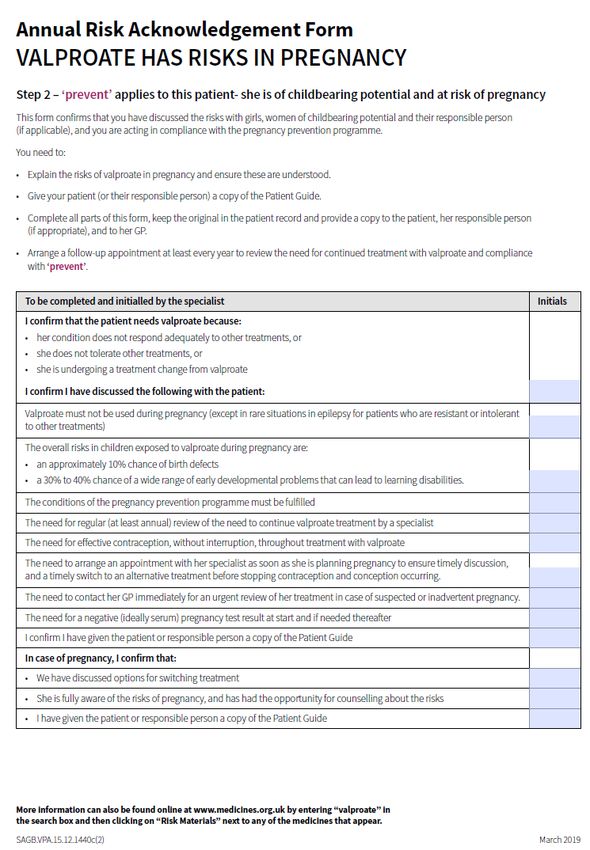
Consideration should be given to discontinuing treatment if the woman is well
and at low risk of relapse. The risk of relapse however, always needs to be
considered especially if the treatment is stopped abruptly.
Discontinuation of treatment in women with a SMI (serious mental illness)
and at a high risk of relapse is unwise. Consideration should be given to
switching to a lower risk drug at the lowest effective dose. This should be
carefully planned and the prescriber should be aware that switching agents
may increase the risk of relapse.
20.2.3 Service user using psychotropic drug(s) has unplanned pregnancy
Abrupt discontinuation of treatment post-conception for women with a SMI
and at a high risk of relapse should not be recommended; relapse may
ultimately be more harmful to the mother and child than established drug
therapy.
Consider remaining with current (effective) medication rather than switching,
to minimise the number of drugs to which the foetus is exposed.
Women on several medications need to have a plan to minimise the number
of prescribed medications.
Seek advice from a specialist perinatal mental health service (e.g. EPUT
Perinatal Mental Health Service) or refer to the latest edition of the Maudsley
Prescribing Guidelines if there is uncertainty about the risks associated with
specific drugs
All decisions should be documented.
20.3 General principles of prescribing psychotropic drugs in breast-feeding
In each case, the benefits of breastfeeding to the mother and infant must be
weighed against the risk of drug exposure in the infant
Premature infants and infants with renal, hepatic, cardiac, or neurological
impairment are at a greater risk from exposure to drugs
Infants should be monitored more intensively for adverse effects to drugs.
Feeding patterns, growth and development should also be monitored
It is usually inappropriate to withhold treatment to allow breastfeeding where
there is a high risk of relapse. Treatment of maternal illness is the highest
priority
Timing feeds to avoid peak drug levels in breast milk or expressed milk may
reduce associated risks
Women with bipolar disorder who are taking psychotropic medication and
wish to breastfeed should be offered a prophylactic (antipsychotic) agent that
can be used when breastfeeding
NICE recommends that reference should be made to the UK Drugs in
Lactation Advisory Service, and a specialist perinatal mental health service (e.g.
3
Approved by Medicines Management Group May 2021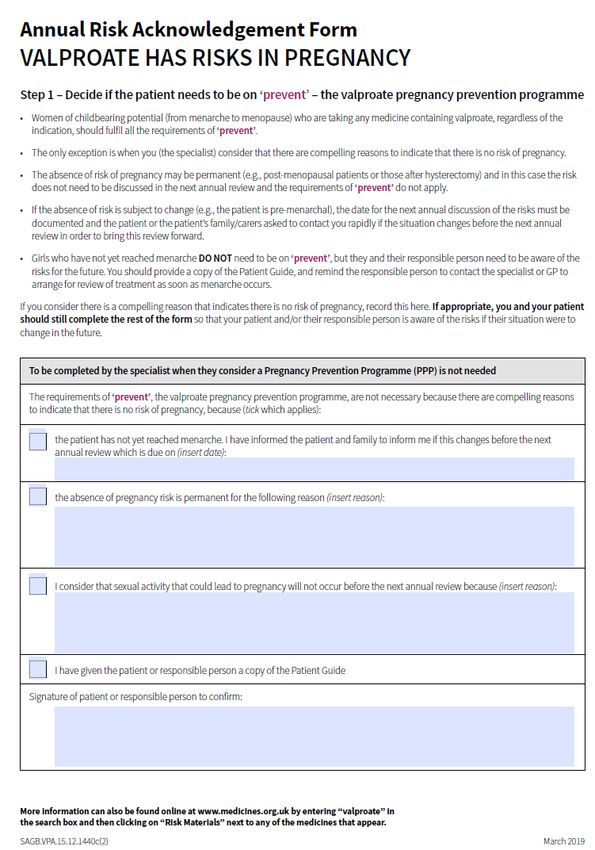
EPUT Perinatal Mental Health Service) for information on the use of specific
drugs in breastfeeding.
20.4 Rapid tranquillisation
When choosing an agent for rapid tranquillisation in a pregnant woman, an antipsychotic
or a benzodiazepine with a short half-life should be considered if non pharmacological, de-
escalation techniques fail. If an antipsychotic is used, it should be at the minimum
effective dose because of extrapyramidal symptoms. If a benzodiazepine is used, the
risks of floppy baby syndrome should be taken into account.
20.5 Antipsychotics
20.5.1 Risks to consider
Placental passage of antipsychotics is incomplete but varies between drugs.
Four antipsychotics have been studied5: higher rates were found for
Olanzapine, then Haloperidol, then Risperidone and the least was
Quetiapine.
Raised prolactin levels with some antipsychotics (amisulpride, risperidone,
sulpiride, phenothiazines and butyrophenones). Consider a prolactin sparing
antipsychotic e.g. Aripiprazole
Gestational diabetes and weight gain with all atypical antipsychotics
especially olanzapine. Offer advice about diet and monitor for excessive
weight gain.
Agranulocytosis in the foetus (theoretical) and breastfed infant with clozapine
A recent Europe-wide review3 has concluded there is a risk of EPSE or
withdrawal symptoms (or both) in newborns after maternal use of
antipsychotics during the 3rd trimester.
20.5.2 Actions to take
Offer information leaflets on use of the specific drug in pregnancy, from the
UK Teratology Information Service, available at
www.medicinesinpregnancy.org, and from the Choice and Medication
website www.choiceandmedication.org/eput
Older, first-generation antipsychotics are generally considered to have
minimal risk of teratogenicity
Advise women taking antipsychotics who are planning a pregnancy that
raised prolactin levels reduce the chances of conception. If there are side
effects and levels are raised consider an alternative drug
Doses prescribed should be kept as low as possible whilst still achieving a
clinical response
4
Approved by Medicines Management Group May 2021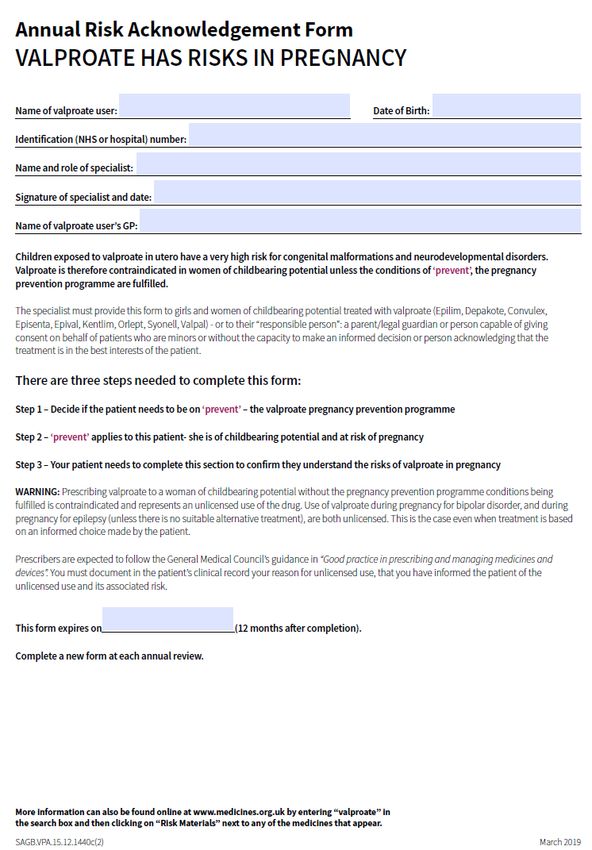
Do not offer depot antipsychotics to a woman who is planning a pregnancy,
pregnant or considering breast feeding unless responding well to a depot and
has a previous history of non-adherence of oral medication.
If pregnant women develop mania while taking prophylactic medication,
prescribers should:
o Check the dose and adherence
o Increase the dose of the antipsychotic (switch to, if she is not taking
one)
o If there is no response to changes in dose or drug and the patient has
severe mania, consider the use of ECT
If prescribing olanzapine, consider risk factors for gestational diabetes and
weight gain, including family history, existing weight and ethnicity.
Close monitoring of the baby in the neonatal period may be needed as
antipsychotic discontinuation symptoms/EPSE can occur in the neonate (e.g.
crying, agitation, hypertonia, hypotonia, tremor, somnolence, and respiratory
distress). Refer to advice from UKTIS on the risk for specific drugs.
Certain drugs like chlorpromazine increase the risk of cholestasis and
pruritus in pregnancy. If patient has had cholestasis/pruritus in previous
pregnancies, be cautious whilst prescribing such drugs.
Do not routinely prescribe:
o Clozapine to women who are pregnant or breastfeeding. NICE
recommends that pregnant women should be switched from clozapine
to another antipsychotic
o Anticholinergic drugs for extrapyramidal side effects of antipsychotics,
except for short-term use. Instead adjust dose and timing of the
antipsychotic or switch to another drug to avoid side effects
20.6 Antidepressants
20.6.1 Risks to consider
More than 1 in 10 women experience depression at some point during
pregnancy4.
Relapse rates are higher in those with a history of depression who
discontinue medication.
Antidepressants should be considered for women with mild depression
during pregnancy if they have a history of severe depression and they
decline, or their symptoms do not respond to psychological treatments. 4
SSRI with lowest known risk during pregnancy is Fluoxetine. However, if the
patient is prescribed another SSRI, it is often prudent to continue the same
5
Approved by Medicines Management Group May 2021SSRI (except paroxetine) to avoid risk of relapse. The risk of intrauterine
growth retardation (although low) is greater in untreated major depression
than with drugs like fluoxetine, hence it is advisable to continue the
antidepressant in major depression.
Foetal heart defects are noted when paroxetine taken in the first trimester.
Persistent pulmonary hypertension in the neonate is noted when SSRIs are
taken after 20 weeks’ gestation.
High blood pressure with venlafaxine at high doses noted, together with
higher toxicity in overdose compared to SSRIs and some TCAs.
There is emerging data about the relationship between SSRIs and Autistic
Spectrum Disorder 6, but further research is needed to specifically assess the
risk associated with antidepressant types and dosages during pregnancy.
Withdrawal or toxicity in the neonate with all antidepressants, in particular
paroxetine and venlafaxine (usually mild and self-limiting).
There is no evidence to suggest that ECT causes harm to either the mother
or foetus during pregnancy although general anesthesia is not without risks
Highest levels in breast milk are noted with citalopram and fluoxetine
Lower levels in breast milk are noted with imipramine, nortriptyline and
sertraline
A cohort study4 found women exposed to SSRIs at delivery had a higher risk
of postpartum haemorrhage, RR=1.47. The risk of postpartum haemorrhage
at delivery was also raised in women who had recently been exposed to
SSRIs (RR=1.19)
The MHRA 13 has published reports of a small increased risk of postpartum
haemorrhage with SSRI/SNRI antidepressant medicines, when used in the
month before delivery. Advice for healthcare professionals:
SSRIs and SNRIs are known to increase the bleeding risk;
observational data suggest that the use of some antidepressants in
the last month before delivery may increase the risk of postpartum
haemorrhage
continue to consider the benefits and risks for use of antidepressants
during pregnancy, and the risks of untreated depression in pregnancy
healthcare professionals, including midwives, should continue to
enquire about the use of antidepressant medicines, particularly in
women in the later stages of pregnancy
consider the findings of the review in the context of individual patient
risk factors for bleeding or thrombotic events
6
Approved by Medicines Management Group May 2021 do not stop anticoagulant medication in women at high risk of
thrombotic events in reaction to these data but be aware of the risk
identified
report any suspected adverse reactions associated with medicines
taken during pregnancy via the Yellow Card Scheme
20.6.2 Actions to take
Offer information leaflets on use of the specific drug in pregnancy, from the
UK Teratology Information Service, available at
www.medicinesinpregnancy.org , and from the Choice and Medication
website www.choiceandmedication.org/eput
Patients who are already receiving antidepressants and are at high risk of
relapse are best maintained on antidepressants during and after pregnancy
Advise a woman taking paroxetine who is planning a pregnancy or has an
unplanned pregnancy to stop the drug (due to the risk of cardiovascular
malformations of the foetus)
If a woman planning a pregnancy becomes depressed after stopping
prophylactic medication, psychological therapies (CBT) should be considered
in preference to an antidepressant drug
Women who are prescribed an antidepressant during pregnancy should be
advised of the potential adverse effects on the neonate
20.7 Lithium
20.7.1 Risks to consider
Foetal heart defects (risk raised from 8 in 1000 to around 60 in 1000)
Ebstein’s anomaly (risk raised from 1 in 20 000 to around 10 in 20 000)
In the third trimester, the use of lithium may be problematic because of
changing pharmacokinetics (total body water increases). An increasing dose
of lithium is required to maintain the drug level during pregnancy, however
the requirements return abruptly to pre-pregnancy levels immediately after
delivery
Neonatal goitre, hypotonia, lethargy, and cardiac arrhythmia can occur
High levels in breast milk
20.7.2 Actions to take
Offer information leaflets on use of the specific drug in pregnancy, from the
UK Teratology Information Service, available at
7
Approved by Medicines Management Group May 2021www.medicinesinpregnancy.org , and from the Choice and Medication
website www.choiceandmedication.org/eput
Do not offer lithium to women who are planning a pregnancy or are pregnant
unless antipsychotic medication has not been effective.
A woman planning a pregnancy taking lithium who is well and not at risk of
relapse, should be advised to stop the drug. The risk of developing fetal heart
malformations when lithium is taken in the first trimester should be explained
along with an explanation that there may be high levels of lithium in breast
milk with a risk of toxicity for the baby.
Women taking lithium should deliver in hospital and be monitored during
labour by the obstetric team. Monitoring should include fluid balance
because of the increased risk of dehydration and the subsequent risk of
lithium toxicity (in prolonged labour it may be appropriate to check serum
lithium levels)
If a woman maintained on lithium is at high risk of manic relapse in the
immediate postnatal period, augmenting treatment with an antipsychotic
should be considered
If a woman taking lithium becomes pregnant:
o If the pregnancy is confirmed in the first trimester, and the woman is
well and not at high risk of relapse, stop the drug gradually over four
weeks. Explain that this may not remove the risk of cardiac defects in
the foetus and that there is a risk of relapse especially in the postnatal
period, if she has bipolar disorder.
If she is not well or is at high risk of relapse, consider:
o Switching gradually to an antipsychotic, or
o Stopping lithium and restarting it in the second trimester if the woman
is not planning to breastfeed and her symptoms have responded
better to lithium than to other drugs in the past, or
o Continuing with lithium if she is at high risk of relapse and an
antipsychotic is unlikely to be effective.
If a woman continues taking lithium during pregnancy:
o High-resolution ultrasound and echocardiography should be
performed at 6 and 18 weeks of gestation
o Check serum levels every four weeks, then weekly from the 36th week,
and less than 24 hours after childbirth. Adjust the dose to keep serum
levels towards the lower end of the therapeutic range
o Ensure adequate fluid intake is maintained
8
Approved by Medicines Management Group May 2021o Lithium should be stopped during labour and plasma levels checked
12 hours after the last dose.
20.8 Valproate12
20.8.1 Risks to consider
Valproate should not be prescribed for women of child bearing potential or in
pregnancy.
Neural tube defects (spina bifida and anencephaly; risk raised from around 6
in 10000 to 100-200 in 10000)
Delay on the child’s intellectual development
Polycystic ovary syndrome in women younger than 18 years
Publications on association between foetal valproate exposure and
neurodevelopment delay of autistic spectrum disorder have promoted a re-
evaluation of the benefits and risks. See latest MHRA drug safety updates
and BNF.
20.8.2 Actions to take
Valproate medicines must not be used in women or girls of childbearing potential
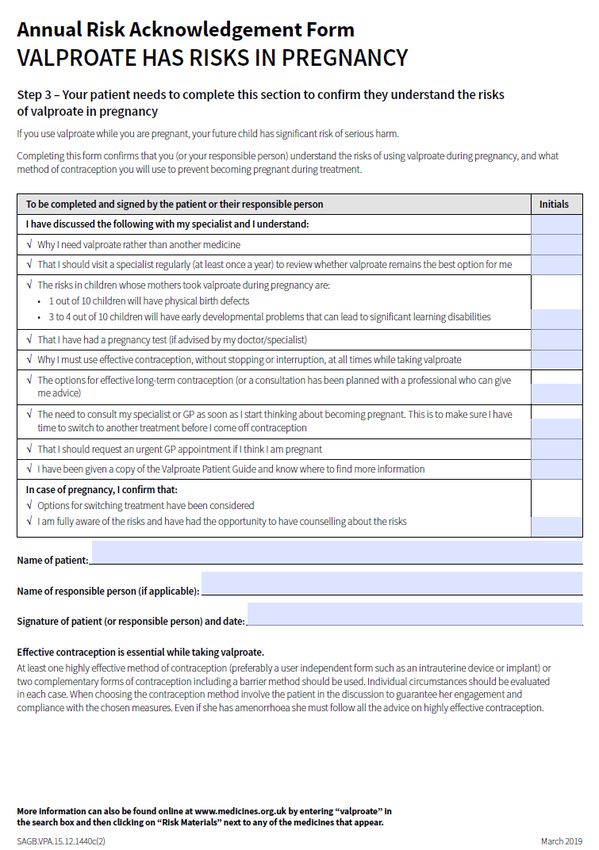
unless a Pregnancy Prevention Programme is in place10 and the conditions met, and
only if other treatments are ineffective or not tolerated, as judged by an experienced
specialist. Ensure all women and girls (and their parent, caregiver, or responsible
person, if necessary) are fully informed of the risks and the need to avoid exposure to
valproate medicines in pregnancy. Specialists must book in review appointments at
least annually with women and girls under the Pregnancy Prevention Programme,
check they are on highly effective contraception (taken without interruption), and re-
evaluate treatment as necessary; explain clearly the conditions as outlined in the
supporting materials (the “toolkit”)11 ;provide a “Patient Guide”11 to girls (of any age)
and women of childbearing potential (or their parent/caregiver/responsible person) who
are started on or are continuing to use valproate medicines; and complete and sign the
Annual Risk Acknowledgement Form (Appendix 2)—a copy of the form must be filed in
the patient’s record, a copy given to the patient or patient/caregiver/responsible person,
and a copy sent to their GP.
As with all teratogenic medicines, pregnancy should be excluded before initiation on
valproate medicines, with a negative plasma pregnancy test, confirmed by a healthcare
professional. Women and girls of childbearing potential must use highly effective
contraception if they are able to become pregnant (see guidance from Faculty of
Sexual and Reproductive Health [FSRH] https://www.fsrh.org/news/fsrh-ceu-statement-
on-contraception-for-women-using-known/). Methods of contraception considered
‘highly effective’ in this context include the long-acting reversible contraceptives
(LARC): copper intrauterine device (Cu-IUD), levonorgestrel intrauterine system (LNG-
IUS), and progestogen-only implant (IMP), and male and female sterilisation, all of
which have a failure rate of less than 1% with typical use (see guidance from FSRH for
more about user-independent methods and failure rates). If a user-independent form is
not used, two complementary forms of contraception including a barrier method should
be used and regular pregnancy testing considered. Individual circumstances should be,
9
Approved by Medicines Management Group May 2021in each case, evaluated when choosing the contraception method, involving the patient
in the discussion to guarantee her engagement and compliance with the chosen
measures.10
In particular, do not prescribe to women younger than 18 years (increased risk of
unplanned pregnancy in this group).
If the patient becomes pregnant on valproate, consideration should be given to
tapering the valproate down carefully, while introducing suitable alternative drug
treatment.
If there is no alternative to valproate, a second opinion should be sought by another
consultant employed by the Trust. If both agree that valproate should be prescribed;
the lowest possible dose limited to a maximum of 1 gram per day, in divided doses and
in the slow-release form should be used. In addition prescribe folic acid 5mg daily.
Specialist prenatal monitoring should be instigated to detect possible occurrence of
neural tube defects or other malformations when valproate has been used.
20.9 Carbamazepine
20.9.1 Risks to consider
Neural tube defects (risk raised from 6 in 10000 to around 20-50 in 10000)
and other major foetal malformations including gastrointestinal tract problems
and cardiac abnormalities
20.9.2 Actions to take
Advise a woman taking carbamazepine that is planning a pregnancy or has
an unplanned pregnancy to stop taking the drug. Consider an alternative
drug such as an antipsychotic
Folic acid should be prescribed before and during pregnancy7
Offer information leaflets on use of the specific drug in pregnancy, from the
UK Teratology Information Service, available at
www.medicinesinpregnancy.org, and from the Choice and Medication
website www.choiceandmedication.org/eput
Do not routinely prescribe carbamazepine for pregnant women
Use of carbamazepine in the third trimester may necessitate maternal
Vitamin K.
20.10 Lamotrigine
20.10.1 Risks to consider
Cleft lip (risk estimated at nearly 9 in 1000)
Dermatological problems (notably Stevens-Johnson syndrome) in the infant if
taken while breastfeeding.
10
Approved by Medicines Management Group May 2021 There is emerging data about cardiac anomalies associated with
Lamotrigine, which requires further research. 8
20.10.2 Actions to take
Advise a woman taking lamotrigine that is planning a pregnancy or has an
unplanned pregnancy to stop taking the drug. Consider an alternative drug
such as an antipsychotic.
Offer information leaflets on use of the specific drug in pregnancy, from the
UK Teratology Information Service, available at
www.medicinesinpregnancy.org, and from the Choice and Medication
website www.choiceandmedication.org/eput
Do not routinely prescribe lamotrigine for pregnant women
Do not routinely prescribe lamotrigine for women who are breastfeeding
20.11 Benzodiazepines
20.11.1 Risks to consider
Cleft palate and other foetal malformations.
Floppy baby syndrome in the neonate.
20.11.2 Actions to take
Do not routinely offer to pregnant women, except for short-term treatment of
severe anxiety and agitation.
Consider gradually stopping in women who are planning a pregnancy,
pregnant or considering breastfeeding.
Promethazine has been used in hyperemesis gravidarum and appears not
to be teratogenic,
NICE recommends the use of low-dose chlorpromazine or amitriptyline for
sedation and anxiety
Offer information leaflets on use of the specific drug in pregnancy, from the
UK Teratology Information Service, available at
www.medicinesinpregnancy.org, and from the Choice and Medication
website www.choiceandmedication.org/eput
20.12 Methadone
Methadone at a stable dose can be used in pregnancy without any additional risk to the
development of the foetus. Abrupt withdrawal can be dangerous.
Information relating to the usage of methadone should be shared with the maternity
team and the possibility of neonatal withdrawal syndrome explained to the mother.
See Formulary and Prescribing Guideline Section 10 for further information
11
Approved by Medicines Management Group May 2021 Offer information leaflets on use of the specific drug in pregnancy, from the Choice and
Medication website www.choiceandmedication.org/eput
20.13 Electroconvulsive therapy
In resistant depression, NICE recommend that ECT is used before/instead of drug
combinations
For acute mania in pregnancy use an antipsychotic and if ineffective consider ECT
20.13 Summary
Recommended during Recommended during
Class of Drug Other options
Pregnancy Breastfeeding
Quetiapine is first choice.
Experience with
Antipsychotics Sulpiride, Olanzapine
Chlorpromazine,
Haloperidol, Trifluoperazine
Sertraline is first choice. CBT for moderate
Antidepressants Nortriptyline, Amitriptyline Paroxetine, Sertraline depression, ECT for
Imipramine. resistant depression
Mood stabilising Mood Stabilising ECT for resistant
Mood Stabilisers
antipsychotics antipsychotics /acute mania
Lorazepam for anxiety and
Sedatives Quetiapine, Promethazine
Zolpidem for sleep
References
1. NICE CG 192, December 2014, updated April 2018. Antenatal and Postnatal Mental
Health: Clinical Management and Service Guideline.
2. South London & Maudsley NHS Foundation Trust Prescribing Guidelines 12th edition,
Wiley Blackwell 2015
3. Antipsychotics: risk of extrapyramidal effects or withdrawal symptoms in newborns
MHRA drug safety update, vol.5 issue 2, September 2011 https://www.gov.uk/drug-
safety-update/antipsychotics-risk-of-extrapyramidal-effects-or-withdrawal-symptoms-
in-newborns
4. NICE eyes on evidence, Antidepressant use late in pregnancy and risk of postpartum
hemorrhage – April 2014
5. Atypical antipsychotic administration during late pregnancy: placental passage and obstetrical
outcomes. Am J Psychiatry. 2007 Aug; 164(8):1214 - 20.
https://www.ncbi.nlm.nih.gov/pubmed/17671284
6. Antidepressant Use During Pregnancy and the Risk of Autism Spectrum Disorder in Children.
JAMA Pediatr. February 2016; 170(2):117 - 24.
https://www.ncbi.nlm.nih.gov/pubmed/26660917
12
Approved by Medicines Management Group May 20217. Summary of Product Characteristics, Carbamazepine (Carbagen 100mg tablets, 02-Nov-
2016, Generics UK T/A Mylan). http://www.medicines.org.uk/emc/medicine/32510
Accessed 9/11/2017.
8. Teratogenic and other considerations in the selection of antiepileptic drugs in girls and women.
https://www.ean.org/amsterdam2017/fileadmin/user_upload/TC07_03_Tomson.pdf Accessed
9/11/2017.
9. British Association for Psychopharmacology consensus guidance on the use of psychotropic
medication preconception, in pregnancy and postpartum 2017.
https://www.bap.org.uk/docdetails.php?docID=102 Accessed 9/11/2017.
10. Drug Safety Update. Valproate medicines (Epilim▼, Depakote▼): contraindicated in women
and girls of childbearing potential unless conditions of Pregnancy Prevention Programme are
met. Medicines and Healthcare products Regulatory Agency. Published 24 April 2018.
Accessed 23/5/2018. https://www.gov.uk/drug-safety-update/valproate-medicines-epilim-
depakote-contraindicated-in-women-and-girls-of-childbearing-potential-unless-conditions-of-
pregnancy-prevention-programme-are-met
11. Guidance. Valproate use by women and girls. Information about the risks of taking valproate
medicines during pregnancy. Toolkit. Medicines and Healthcare products Regulatory Agency.
Last updated 9 April 2019. Accessed 23/5/2019.https://www.gov.uk/guidance/valproate-use-by-
women-and-girls
12. Summary of Product Characteristics, Sodium valproate (Epilim 200 gastro-resistant tablets),
Sanofi, 16/5/2018. Accessed 23/5/2018.
13. SSRI/SNRI antidepressant medicines: small increased risk of postpartum haemorrhage when
used in the month before delivery. Drug Safety Update volume 14, issue 6: January 2021: 5.
Accessed 29/4/2021.
13
Approved by Medicines Management Group May 2021Appendix 1
Aide Memoire to assist in accurate record keeping – Things to consider when
treating women of Childbearing age
1. Has the possibility of an unplanned pregnancy been discussed?
2. Already taking carbamazepine or in exceptional circumstances valproate: have the
risks of birth defects been discussed even if not pregnant? Use the Patient
Guide in the valproate toolkit.
3. If the service user becomes pregnant has a risk/benefit assessment of prescribed
medicines been carried out and documented?
4. If Paroxetine is prescribed: has the risk of foetal withdrawal/ cardiac defects been
discussed even if the service user is not pregnant?
5. If Lithium is prescribed: has the risk of foetal cardiac defects been discussed?
6. If Valproate is prescribed: Have the risks of neural tube defects/ delayed intellectual
development been discussed? Use the Patient Guide in the valproate toolkit.
7. If carbamazepine is prescribed: Have the risks of neural tube defects / GI problems
been discussed?
8. If Lamotrigine is prescribed: Have the risks of cleft lip/ dermatological problems
been discussed?
9. If a benzodiazepine is prescribed: have the risks of cleft palate and floppy baby
syndrome been discussed
10. Have all decisions been documented?Section 20. Antenatal & Postnatal
Appendix 2
15Section 20. Antenatal & Postnatal
16Section 20. Antenatal & Postnatal
17Section 20. Antenatal & Postnatal
18You can also read


