Four Seasons - Allergy UK
←
→
Page content transcription
If your browser does not render page correctly, please read the page content below
Four Seasons

Managing your asthma
and your allergic rhinitis
throughout the seasons

The content of this booklet was developed by Allergy UK, with assistance from The Asthma
Society of Canada. Allergy UK retained final editorial control. The production, printing and
distribution of the booklet was funded by a grant from MSD. MSD is also distributing copies
of the booklet.

Contents

                               Four Seasons is packed
Foreword                   1   full of useful information
                               about asthma and

About this booklet         2   allergic rhinitis with
                               useful tips on minimising
                               your exposure to
Asthma and                     allergens and a symptom
allergic rhinitis          6
                               diary to enable you to
                               record and monitor your
Managing your asthma           symptoms.
and allergic rhinitis
throughout the seasons:

Spring                    10

Summer                    12

Autumn                    14

Winter                    16

Treatment options         18

Symptom Diary             21

Further information       28
Foreword

If you are an asthma sufferer but find that you are getting cold like symptoms
throughout the year, it may be that you are also suffering from allergic rhinitis.

Seasonal allergic rhinitis or hayfever affects sufferers throughout the summer months,
mostly between May and August when the grass pollen levels are at their highest.
However, other airborne allergens such as tree pollens or weeds can cause the same
symptoms, extending the season from as early as February through to October.

If you are unlucky enough to have hayfever like symptoms all year round, you may be
reacting to other common substances that we find in the home, allergens like house
dust mites, pet allergens or mould spores can be responsible for perennial rhinitis,
causing people to think that they have a cold all year round. This can affect both your
quality of life and your day-to-day activities.

                                 Research has shown that allergic rhinitis and asthma
                                 are closely linked and for some people, allergic rhinitis,
                                 if not well managed, may cause asthma symptoms to
                                 worsen. It is now recognised that allergic rhinitis is
                                 present in up to 80% of asthma sufferers* and most
                                 clinical studies now recommend an integrated
                                 approach to treating these conditions.

                                 There are however, many things that you can do to
                                 help reduce your exposure to allergens. This can have
                                 a positive effect on your asthma and allergic rhinitis,
                                 and may even reduce the amount of drugs that you
                                 need to take.

Four Seasons has been produced to help you better understand the relationship
between allergens and allergic rhinitis and the impact that they can have on your
asthma. It includes a handy guide on what allergens to look for and when, and useful
tips on how to reduce their effects. By understanding your response to certain
allergens, we hope that you can reduce your symptoms and enjoy a fuller, healthier life.

Lindsey McManus
Executive Director, Allergy & Services

*Bourdin A. Vachier I. and Chanez P. (2009) Upper airway.1: Allergic rhinitis and
asthma; united disease through epithelial cells. Thorax 64 pp999-1004

                                                                                              1
About this booklet

    Four Seasons aims to help you
    understand how to manage the
    symptoms of both your asthma
    and allergic rhinitis together in
                                                  This booklet is designed
    order to help stay healthy and                to give you an overview
     enjoy daily activities more.                 of what allergens you
                                                  may be affected by and
    what times of the year exposure to these allergens may be highest. It
    is designed to be a quick-reference tool that you can use throughout
    the year to find out more about what might be causing your
    allergic rhinitis symptoms and exacerbating your asthma.

    To help you in doing this, a symptom diary has
    been included at the back of the booklet where
    you can track when and how often you
    experience allergic rhinitis and asthma symptoms.
    By monitoring both types of symptoms, you may
    start to see similarities and draw comparisons
    between the two conditions to help you manage
    them better.

    A peak flow chart has also been included on which you can
    log your peak flow measurement on a regular basis and, over time,
    see whether there may be a pattern between when your peak flow
    worsens and when you experience allergic rhinitis symptoms.

    The symptoms of allergic rhinitis are the typical hayfever symptoms
    of a runny nose, sneezing, watery and itchy eyes, and a feeling of
    congestion, regardless of the allergen type causing the reaction. As
    allergic rhinitis and asthma frequently co-exist, appropriate treatment
    of allergic rhinitis may reduce your asthma symptoms.

2
Asthma patient’s allergy self-assessment

             If you answer YES to the first question plus one other, you may
             have allergic rhinitis and may consider discussing this with your
             doctor or practice nurse, who might be able to help you find an
             appropriate treatment.

    During the last year have you experienced
1   symptoms such as nasal congestion, itching nose,
                                                                                 YES
                                                                                 NO
    watery eyes, sneezing or runny nose during the day?

    During the last year have you experienced these
2   symptoms at night, such that they make it difficult to
                                                                                 YES
                                                                                 NO
    fall asleep or awaken you?

    Do you experience these symptoms more than one                               YES
3   day per week?                                                                NO

    Do these symptoms affect your job, home activities,                          YES
4   school work or family activities in a negative way?                          NO

    Do you find that your asthma tends to get worse
5   when these symptoms occur?
                                                                                 YES
                                                                                 NO

                                                                                   3
About this booklet

        We have already highlighted the three most common allergens; pollen, mould spores
        and dust mites. Whilst all three peak at certain times of the year, they may be present
        all year round as perennial allergic rhinitis and can therefore be problematic for those
        who are susceptible to them.

        The following diagram depicts when the levels of one of these allergens, pollen, is at
        its highest:

        Pollen levels throughout the year

                      Jan     Feb      Mar      Apr     May         Jun   Jul     Aug      Sep

           Hazel
            Yew
             Elm
           Alder
          Willow
             Ash
          Poplar
           Birch
             Oak
            Pine
           Grass
    Oil seed rape
           Plane
           Dock
           Nettle
            Lime
         Plantain
        Mugwort

                                    Peak period of pollen release                  Pollen season

4
Useful tips
                                       Check the pollen count on a daily basis if
To help you reduce the
                                       available. During the hayfever season, weather
effects of allergens
                                       reports on TV, radio and in the newspapers
throughout the seasons, here
                                       provide the latest pollen levels daily
are some useful tips from
Allergy Nurse Consultant,              Keep doors and windows closed when pollen
Maureen Jenkins.                       counts are at their highest, i.e. in the early
                                       morning and early evening

                                       Use a damp cloth or a microfibre ‘e-cloth’
                                       when cleaning to avoid disturbing dust and
                                       causing it to disperse into the air

                                       Wash all bedding at high temperatures.
                                       Wash bedding weekly in a hot cycle
                                       (55-60ºC)

                                       Do not dry clothes outdoors during high pollen
                                       times, especially during the early morning and
                                       evening
  In addition to this booklet,
  Allergy UK is offering a new,        Do not dry clothes indoors as moisture and
  web-based service providing          humidity can cause mould spores to form.
  up-to-the-minute information         Avoid using ‘plug-in’ air fresheners as the
  and advice on living with allergic   fumes emitted from such appliances may
  rhinitis and asthma throughout       irritate the airways of those sensitive to them
  the year. To sign-up to this free
  e-alert service, include your        Shower or bath before going to bed to remove
  details on the survey when           excess pollen from hair and your body
  responding. More information         Soft toys can harbour dust mites. Wash at
  can be found at                      high temperatures or place in the freezer for
  www.allergyuk.org.                   24 hours and then wash. Check washing
                                       instructions beforehand

                                                                                         5
Asthma and allergic rhinitis – a balancing act

    Did you know?

    Surveys of patients have revealed that over 40%
    of patients who have asthma say they have allergic
    rhinitis symptoms. Symptoms may be severe enough
    to have an effect on their quality of life. Both are
    conditions that affect the body’s airways.

    Both asthma and allergic rhinitis can be caused
    by exposure to allergens and the two conditions
    frequently co-exist. Several domestic and outdoor
    allergens are known to trigger asthma and allergic
    rhinitis. It has been found that allergic rhinitis may
    make asthma worse and that it may also be a risk
    factor in the development of asthma.

    Asthma and allergic rhinitis both affect the respiratory
    system. Asthma occurs in the lower part, i.e. the
    bronchial tubes in the lung, whilst allergic rhinitis is a
    condition of the upper part, namely the sinuses and
    nasal passages. Put simply, both asthma and allergic
    rhinitis are conditions that occur in different parts of
    a single respiratory system and some consider as
    manifestations of one respiratory condition.

                                                             More information about
                                                             treatment options is provided
                                                             on page 18 of the booklet.

6
The respiratory system

Sinuses and
       nasal
   passages

     Mouth

  Windpipe
  (trachea)

                         Lungs

                         Airways
                         (Bronchial
                         tubes)

                         Airsacs
                         (Alveoli)

                                     7
Asthma and allergic rhinitis – a balancing act

    About asthma

    What is it?
    Asthma is a complex condition that affects the airways, the small tubes that carry air in
    and out of the lungs. Asthma causes the lower airways to tighten making it difficult for
    air to travel freely. Inflammation of the lining of these airways may also cause an
    increase in the production of mucus, making the obstruction worse; the cough that
    may develop is an attempt to clear the airways. All of these changes make breathing
    difficult and sometimes cause a feeling of not getting enough air into the lungs.

    What are the symptoms?
    Common symptoms include cough, shortness of breath, wheezing, chest
    tightness and excess mucus production. It is important to remember that
    symptoms can vary between individuals and if you experience these
    symptoms you should seek medical advice.

    What causes it?
    Asthma is a complex disease with many contributing factors:
    • Asthma can be hereditary
    • Changes in how we live our lives, for example our diet, lifestyle, cleanliness and
       housing may have contributed to the rise in asthma over the last few decades
    • An increase in urbanisation and subsequent pollution
    • Smoking is a significant risk factor for asthma in adults and smoking during
       pregnancy is a significant risk factor for the development of asthma in children
    • Severe respiratory infection with respiratory synctial virus may be a risk factor for the
      development of asthma in later life

8
About allergic rhinitis
What is it?
There are a number of common Allergic rhinitis is an immune response or
allergic and non-allergic triggers that allergic reaction triggered by certain
can provoke asthma symptoms, allergens which are normally harmless to
many of which you are probably most individuals. Among sensitive
already aware of. Allergic triggers individuals, when pollen is inhaled the
include house dust mites, animal immune system is triggered causing the
allergens, mould and pollen whilst release of substances within the body that
non-allergic triggers include exercise, may cause symptoms, particularly in the
viruses (i.e. colds or flu), cold air and nose and sinuses.
indoor gas pollutants of which
cigarette smoke is a major source.
Both forms of trigger can have an What are the symptoms?
effect on your asthma and how it Symptoms include a runny nose,
makes you feel. blocked nose, sneezing and nasal
itching.
There are numerous ways in which
you can reduce your exposure to
allergens and these can be found in What causes it?
the seasons sections of the booklet. As with asthma, it is not known what
causes it and why some people are more
susceptible to allergens than others.
A sensitive person's immune system
recognises allergens as foreign and so
produces a special type of antibody (IgE)
to recognise the invading substance.
This causes other blood cells to release
chemical substances (including
histamine) which together cause the
symptoms of an allergic reaction.
9Managing your asthma and your allergic rhinitis throughout
Spring
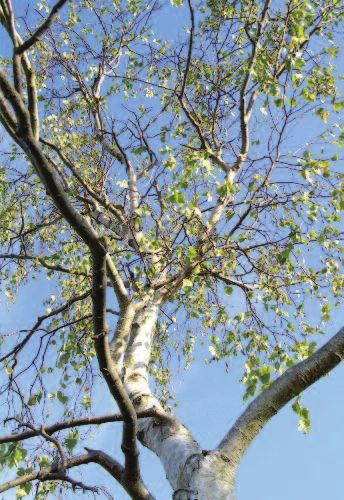
Birch trees have
a main pollen
season during
April and May.
Approximately
25% of hayfever
sufferers are
allergic to birch.
Pollen is in abundance during springtime.
When breathed in through the nose by
susceptible individuals, pollen may trigger
asthma and allergic rhinitis symptoms.
Birch trees including alder and hazel all
release pollen during the spring season
and can contribute to exacerbations of
symptoms. Pollen from birch trees affects
about 25% of allergic rhinitis patients and
is usually between April and May. The
season can last for around four weeks
and pollen counts from this variety of tree
will be highest on
Did you k
now...? warm, dry days
Pollen rises in
the air and with a mild wind
falls in the ea
rly evening in areas
resulting in th populated by
e highest po
levels at this llen
time o birch trees.
f day.
10the seasons
Springtime is
when flowers start
to bloom resulting
in pollen – try to
keep pollen levels
down in the home
by keeping plants
outside or keep
low-allergen plants
such as honey-
suckle or rose.
Birch tree pollen also cross-reacts with other
members of the birch family including alder and
Trigger tips
from Allergy Nurse Consultant,
hazel, which flower earlier in the spring.
Maureen Jenkins
Pollen from flowers is an added risk as many During the hayfever season,
varieties of flower bloom during the spring months. check the pollen count on a
If spring is your peak allergy season, opposite are daily basis
some tips from Allergy Nurse Maureen Jenkins to
Wear sunglasses when pollen
help minimise the effects of spring allergens.
counts are at their highest
Try to keep windows and
doors closed in the early
morning and early evening to
avoid pollen entering and
travelling through the house
‘The Pollen Gang’
11Managing your asthma and your allergic rhinitis throughout
Summer
Avoid mowing the
lawn yourself as
this can cause
grass pollen
levels to increase
as a result of
disturbance.
The summer season remains a patients affected by grass pollen, it may
problematic time for many asthma and be helpful to check the pollen count
allergic rhinitis patients as grass pollen regularly. This can provide an indication
takes over from tree pollen as the prime of when you may be affected and enable
culprit. The grass pollen season starts in you to take precautionary measures.
early May and continues to mid-August.
With around 90% of allergic rhinitis Other types of pollen that emerge in the
summer months include nettle, which is
typically released in July, and other weed
pollens, which are most common in
August. Mould spores are also released
during the summer months as a result
of harvesting.
During the summer, we are also more
likely to take advantage of the warm
weather and long nights by spending
more time outside and many of us take
more exercise. Exercise is a common
12the seasons
Shower or bath
before bedtime
to avoid
transferring
pollen to bed
linens.
w...?
Did you kno t the
er are no
Spring and summ
year when
only times of the
your allergic Trigger tips
pollen can affect
a – tree from Allergy Nurse Consultant,
rhinitis and asthm Maureen Jenkins
hazel and
varieties such as
pollen outside
alder may release
Change your clothing when returning
on.
the hayfever seas
home as pollen clings to hair and
clothing and shower or bath before
going to bed to avoid pollen
non-allergic trigger for asthma so it is transferring to your bedsheets
important to remember to carry your
Pesticides, as with chemical-based
medication with you at all times.
cleaning products, may irritate the
airways of some people
However, living with asthma and allergic
rhinitis should not affect your ability to enjoy Be aware that exercising can
the great outdoors and on the opposite exacerbate your asthma symptoms
page there are simple steps recommended so always carry your reliever
by Allergy Nurse Maureen Jenkins that can medication
help reduce your symptoms during this
time of year.
13Managing your asthma and your allergic rhinitis throughout
Autumn
Moulds are
abundant in the
autumn, particularly
when moisture
builds up. Keep the
garden free from
fallen leaves to limit
mould growth.
to keep the humidity levels in the home as
low as possible.
Airborne mould spores increase during
damp weather, especially in autumn.
Mould spores have been linked with
exacerbating asthma symptoms. Fungal
spores can be found both outside and
inside the home. Outside, woodland
Autumn is a good time to assess the areas, forests and gardens can harbour
outside and inside of your home for any certain types of fungi whilst inside, some
places where there is moisture. Check the varieties can be found in house dust, on
roof, floors and walls for signs of damp. ripe fruit and house plant soil.
Start with the roof and check around door
and window frames to ensure they are Mould and fungal spores are difficult to
properly sealed. Moisture levels affect the see and often invisible to the naked eye,
number of mould spores and dust mites in which makes avoiding exposure difficult.
the home which may affect asthma and Being mindful of when you experience
allergic rhinitis symptoms so it is important allergic rhinitis and asthma symptoms
14the seasons
In autumn the
central heating is
turned back on
and windows are
closed as the
weather becomes
cooler. Keep an
even temperature
in the house and
some airflow to
reduce humidity
and minimise
levels of mould
Trigger tips
and dust mites.
from Allergy Nurse Consultant,
Maureen Jenkins
and what Keep internal doors shut when cooking
environment you or showering to reduce moisture passing
are in may help through the house
you in identifying
Use an extractor fan to minimise steam
the cause of your
in the bathroom
reaction. For example, if you experience
symptoms outside your own home, which Check for any water leaks under sinks,
then go away when you leave that refrigerator, dishwasher, washing
particular place, this may indicate the machine, as well as around the toilet,
presence of dust mites, mould spores or bathtub, shower and hot water tank
animals that are triggering your symptoms. Keep the garden clear of fallen leaves
and other debris
If autumn is the season when you are
Choose the closed type of composter
most likely to experience symptoms,
and keep away from the house as these
here are some useful tips recommended
can harbour fungi
by Allergy Nurse Maureen Jenkins.
15Managing your asthma and your allergic rhinitis throughout
Winter
Cold air can trigger
asthma symptoms
so before heading
outside, consider
taking preventive
medication to help
relieve symptoms.
During the winter time, dust
mites and mould remain key
triggers for asthma and
allergic rhinitis but pollen from
hazel, willow and alder trees
may also cause problems in
February and March.
If you have an artificial
Christmas tree, wipe this
down with a damp cloth as
dust may have gathered
while it has been stored. It is
also advisable to wipe down
any ornaments that you
have brought out from
storage especially for
Christmas as these are also
likely to be dusty. Dust mite
16the seasons
You can employ
extensive
allergen-
avoidance
measures which
may help to
reduce the level
of dust mites in
your home.
Allergy UK’s
website provides
comprehensive
information on Trigger tips
how to do this. from Allergy Nurse Consultant,
Maureen Jenkins
Burning candles gives off soot which can
act as a trigger so use them for decoration
only. If you must burn candles, use the
unscented variety to reduce the impact and
use a damp cloth to extinguish the flame to
minimise soot emission
Wash bed sheets and other bed linen on a
weekly basis on a hot cycle (between 55
and 60oC)
Store decorations in sealed containers to
avoid dust contamination
17Treatment options for asthma and allergic rhinitis
Managing symptoms of asthma and
allergic rhinitis can be a real task for
people who suffer from both. While
Treating asthma there is no cure for asthma or
allergies like allergic rhinitis, there
There are predominantly two main types are treatments available that can
of asthma treatment using either reliever effectively control symptoms. An
treatments and/or preventer treatments overview of these treatments is
detailed below.
Relievers
A reliever treatment is typically taken during an asthma attack to provide immediate,
effective relief of asthma symptoms. It relaxes the muscles around the airways
making it easier for air to pass through the airways and in and out of the lungs.
Most commonly these are known as bronchodilators, i.e. they dilate the air
passages to the lungs, and include short-acting beta-2 agonists and
anti-cholinergics. The preferred method of delivery of these drugs is via an inhaler,
although alternative tablet and syrup forms also exist.
Preventers
Preventer treatments should be taken regularly to give long-term control of asthma
symptoms. They are used to calm inflammation in the airways and make them less
likely to react to asthma triggers, aiming to prevent an asthma attack. The most
common preventive therapy is inhaled corticosteroids (ICS). However other add on
options such as long-acting beta-2 agonists, theophyllines and leukotriene receptor
antagonists (anti-leukotrienes) are alternative recommendations.
The treatment options are often used in combination to suit the individual’s needs
and specific symptoms. Therefore it is not uncommon to have both relievers and
preventers as part of your specific asthma treatments and these may vary if your
circumstances change.
18Treating allergic rhinitis
Treatment of allergic rhinitis depends
on both the classification of severity
and the individual’s symptoms
Anti-histamines
Anti-histamines (taken orally or via a nasal spray or eye
drops) aim to provide relief of symptoms by lessening
the effects of histamine which is one of the chemicals
released by the body during an allergic reaction. They
will reduce symptoms such as sneezing, runny nose,
watery eyes (used locally) and itchy throats. New
treatments are designed to reduce drowsiness but there
may be some interaction with other medicines and foods.
Take advice on their use from your doctor or pharmacist.
Preventer treatments
These aim to prevent symptoms developing by suppressing the allergic reaction. With
seasonal allergic rhinitis (hayfever) you need to begin taking them several weeks before
the ‘high season’ for your particular allergic reaction. These preventive treatments are
available orally or via eye drops and nasal sprays. Some preventer medications contain
corticosteriods which help reduce inflammation due to allergic
reactions. If you need to take these long term you’ll need to
discuss this with your doctor.
Decongestants
These can help relieve a blocked nose, however use is
recommended for a limited period only and for a maximum
of one week. They are commonly nasal sprays but can also
be administered orally.
19Treatment options for asthma and allergic rhinitis
Treating asthma and
seasonal allergic rhinitis
together
According to an international group of specialists A symptom diary is a
known as Allergic Rhinitis and its Impact on really useful way to build
Asthma (ARIA), all guidelines of asthma and up a picture of your
allergic rhinitis suggest that allergen avoidance experience of living with
should be part of a management strategy. asthma and allergic
rhinitis. Hopefully, you
Some medications, including glucocorticosteroids will be able to get a
and anti-leukotrienes, are effective against both better idea of when you
allergic rhinitis and asthma symptoms. People with might suffer from
both allergic rhinitis and asthma may be exacerbated asthma and
prescribed both intranasal and inhaled allergic rhinitis enabling
glucocorticosteroids, if appropriate. Additive side you to help take
effects may be a concern with dual administration. precautionary measures.
It is reasonable to monitor growth of children It may also be helpful to
receiving long term treatment with intranasal take your symptom diary
glucocorticosteroids although recent studies have along to your next
shown normal growth rates in children treated with asthma/allergic rhinitis
newer intranasal corticosteroids. Anti-leukotrienes review with your doctor
block the action of inflammatory chemicals called or nurse as they may be
leukotrienes, which can lead to inflammation in able to offer advice on
both upper and lower airways. Anti-leukotrienes improving your
are a class of medication for the treatment of symptoms.
asthma patients with seasonal allergic rhinitis and
have been shown to be effective in improving both
asthma and allergic rhinitis.
Talk to your doctor, nurse or pharmacist about
your symptoms to identify which treatment, if any,
is most suitable for you.
20Symptom diary
How to fill in your asthma
and allergic rhinitis
symptom diaries
Use the charts on the next two pages to
record when and how often you experience
symptoms. Whenever you have an attack,
mark this in the box next to the appropriate
date in the month. If you have more than
one reaction during the day, write this Common triggers
number in the box. At the end of the month,
add up the number of reactions you January Hazel tree pollen
experienced and make a note of the total. February Alder tree pollen
By doing this regularly, you should start to
March Elm pollen
see a pattern emerge which will help you
April Birch pollen
to identify your peak seasons.
May Oak pollen
June Grass pollen
You may also find it useful to keep a note
of what symptoms you experienced. July Nettle pollen
August Weed pollen
How to fill in your SeptemberCladosporium
peak flow chart mould
Take your peak flow by blowing into your October Basidiospore fungus
meter first thing in the morning and first November Aspergillus
thing in the evening before your treatment. fumigatus fungus
Take your peak flow three times and record December Dust mites
the best score by marking a cross on the
chart. The peak flow chart overleaf allows
you to record readings for every other day
in each month.
21Symptom diary
Asthma symptom diary
Each time you have a reaction, make a note of when and how many in the
appropriate box.
1
2
3
4
5
6
7
8
9
10
11
12
13
14
15
16
17
18
19
20
21
22
23
24
25
26
27
28
29
30
31
Jan Feb Mar Apr May Jun Jul Aug Sep Oct Nov Dec
Total
22Allergic rhinitis symptom diary
Each time you have a reaction, make a note of when and how many in the
appropriate box.
1
2
3
4
5
6
7
8
9
10
11
12
13
14
15
16
17
18
19
20
21
22
23
24
25
26
27
28
29
30
31
Jan Feb Mar Apr May Jun Jul Aug Sep Oct Nov Dec
Total
23Symptom diary
Peak flow chart January - March
600
550
500
450
400
350
300
250
200
150
100
Day 1 3 5 7 9 11 13 15 1719 21 23 25 27 29 31 1 3 5 7 9 11 13 15 1719 21 23 25 27 29 31 1 3 5 7 9 11 13 15 1719 21 23 25 27 29 31
January February March
24Peak flow chart April - June
600
550
500
450
400
350
300
250
200
150
100
Day 1 3 5 7 9 11 13 15 1719 21 23 25 27 29 31 1 3 5 7 9 11 13 15 1719 21 23 25 27 29 31 1 3 5 7 9 11 13 15 1719 21 23 25 27 29 31
April May June
25Symptom diary
Peak flow chart July - September
600
550
500
450
400
350
300
250
200
150
100
Day 1 3 5 7 9 11 13 15 1719 21 23 25 27 29 31 1 3 5 7 9 11 13 15 1719 21 23 25 27 29 31 1 3 5 7 9 11 13 15 1719 21 23 25 27 29 31
July August September
26Peak flow chart October - December
600
550
500
450
400
350
300
250
200
150
100
Day 1 3 5 7 9 11 13 15 1719 21 23 25 27 29 31 1 3 5 7 9 11 13 15 1719 21 23 25 27 29 31 1 3 5 7 9 11 13 15 1719 21 23 25 27 29 31
October November December
27Further information
Useful websites
Asthma symptoms For additional information about
Coughing – including a cough that asthma and allergic rhinitis, you may
wish to visit these websites:
keeps you up at night
Wheezing Allergy UK
Chest tightness www.allergyuk.org
Breathlessness
Asthma UK
www.asthmauk.org.uk
Asthma Society of Canada
www.4seasonsofasthma.ca
Allergic rhinitis symptoms American Lung Association
Runny nose www.lungusa.org
Sneezing
Itchy, watery eyes
Acknowledgements
Feeling of congestion Brian Platt Cartoons
www.brianplatt-cartoons.co.uk
28Four Seasons
Managing your asthma
and your allergic rhinitis
throughout the seasons
EA04 SGA 13013 GB11You can also read


