FP Foresight Global Real Infrastructure Fund (GRIF) Investor Presentation - Foresight Group
←
→
Page content transcription
If your browser does not render page correctly, please read the page content below

FP Foresight Global Real
Infrastructure Fund (GRIF)

Investor Presentation

July 2019
Important Information

This financial promotion is issued and approved by Foresight Group LLP, which is authorised and regulated by
the Financial Conduct Authority (FCA). Foresight Group LLP is the investment manager of the FP Foresight
Global Real Infrastructure Fund (GRIF) and the Authorised Corporate Director (ACD) is FundRock Partners
Limited. This presentation is directed only at financial intermediaries and financial institutions that are
authorised and regulated by the FCA. Please ignore and delete this presentation if you are not a UK
authorised financial intermediary or financial institution.

There are a number of risks connected to an investment in GRIF and the opportunity described in this
presentation is not suitable for all investors. Risk are explained in the Fund Prospectus. We recommend
investors seek professional advice before deciding to invest. Investors must read the Fund Prospectus and
Key Investor Information Document before making an investment decision.

Past performance is not a reliable indicator of future performance and may not be repeated. Capital at risk.
Contents

 1.   Foresight Group Overview

 2.   Investment Philosophy: Real Infrastructure

 3.   Investment Strategy and Process

 4.   The Portfolio

                                                   3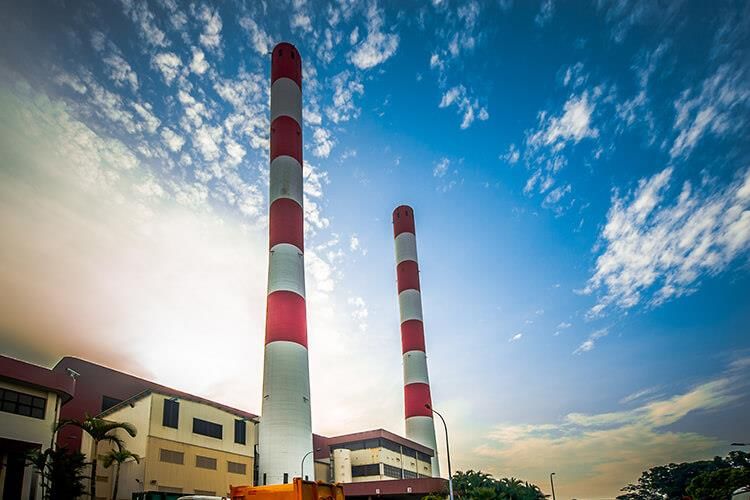
Introducing Foresight Group
Foresight Group is a global infrastructure and renewable energy investment manager with
£4bn Assets Under Management.

     35 year                             £4.0bn                                10
                                                                             offices
       investment                        assets under
      track record                       management                        215 staff globally

        90+                                  28                             1.6GW+
      investment                         institutional                     renewable energy
     professionals                      and retail funds                      generation

                                                                                                4
Foresight Capital Management
Foresight launched an income fund in December 2017 to address the real infrastructure gap in
the OEIC market.
The FP Foresight UK Infrastructure Income Fund          UK Fund Overview
Fund Flyer
                                                                                  FP Foresight UK
                                                                                   Infrastructure
                                                                                    Income Fund

                                                 Target Investment
                                                 Company Holding         TRIG   HICL           INPP   NESF
                                                 Level

                                                 2,000+ Infrastructure
                                                 Asset

                                                                                                             5
FP Foresight UK Infrastructure Income Fund (FIIF)
vs FTSE All-Share
        Cumulative Total Return1
        %
   25

   20

   15

   10

    5

    0

   -5

  -10
   Dec/2017                         Mar/2018                            Jun/2018                      Sep/2018                Dec/2018                    Mar/2019                 Jun/2019
                                                                       FP Foresight UK Infrastructure Income Fund                  FTSE All-Share Index

                                                                                                                        One Year Sharpe     CumulativeTotal     DT Risk
                                                 30 Day Vol       90 Day Vol        180 Day Vol 360 Day Vol      Beta        Ratio             Return           Rating2   KIID Rating3 FE Risk Scores
FP Foresight UK Infrastructure Income
Fund                                                 5.79             4.36             4.29        4.50          0.20        2.76               22.20                4         4              44
FTSE ALL SHARE                                       8.98             9.19            11.82       11.93          1.00        N/A                 6.95            N/A         N/A              N/A
 Source: 1) Bloomberg Data
 Notes: 2) DT Risk Rating is a score out of 10 3) KIID Rating is a score out of 7
                                                                                                                                                                                                    6
Contents

 1.   Foresight Group Overview

 2.   Investment Philosophy: Real Infrastructure

 3.   Investment Strategy and Process

 4.   The Portfolio

                                                   7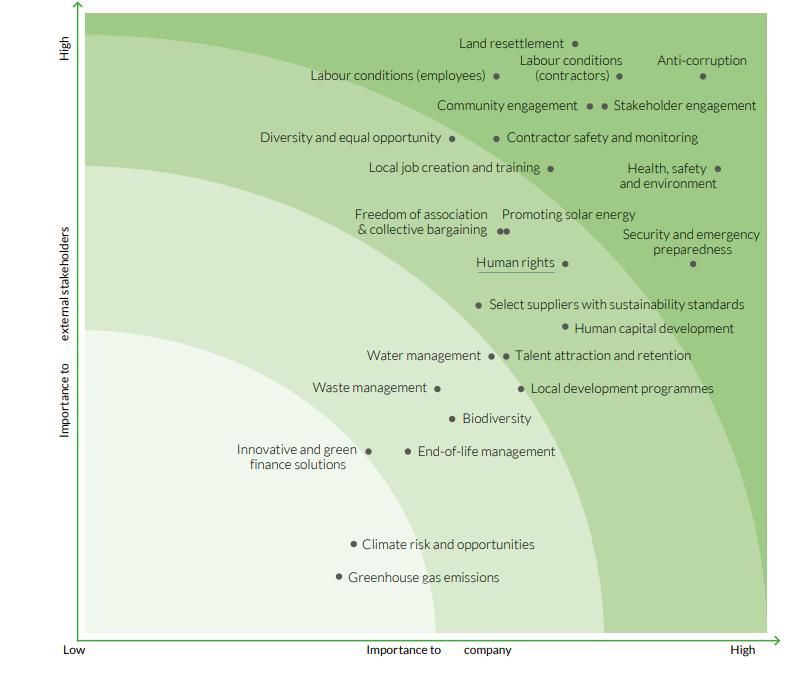
The Investment Team
The fund is managed by a team of infrastructure investment specialists and material
investment decisions are approved by the fund’s investment committee.

                               Fund Managers                                                                                   Investment Committee

     Nick Scullion              Mark Brennan                 Carly Magee                  David Hughes              Bernard Fairman                 Nigel Aitchison             Philip Stephens

      Lead Fund                  Co-Manager                  Co-Manager                 Chief Investment             Chairman and                      Head of                    Independent
       Manager                                                                               Officer                Founding Partner                Infrastructure                  Director

Nick is the Lead Fund       Mark is a Senior            Carly joined Foresight        David joined Foresight in   Bernard Formed Foresight      Nigel Aitchison joined       Philip retired from the City
Manager responsible for     Investment Manager at       Group in 2014 and is a        2004 and is a member of     Group in 1984. He has         Foresight Group in 2009      after nearly 40 years
investment decisions. He    Foresight Group. He is      Partner based in the          the firm's Executive        managed multiple              and is a Partner and Head    working in UK Corporate
is the Head of Foresight    also the Lead Manager of    London office. She has        Committee and has over      portfolios through to IPO     of Infrastructure based in   Finance for various
Capital Management and      the FP Foresight UK         over 11 years of              40 years of investment      or trade sale. Responsible    the London office. A         financial institutions
is responsible for fund     Infrastructure Income       infrastructure investment     experience having started   for strategic direction and   member of the firm's         including Lazard, Chase
management and growth       Fund. Mark joined           experience. Carly is          his career in 1974 at 3i    management of Foresight       Executive Committee, he      Manhattan and UBS
of Foresight's open-ended   Foresight Group in 2017.    responsible for raising and   where he was responsible    through organic growth        has over 30 years of         where he was head of UK
fund business. He joined    Prior to which, he held a   deploying capital in the      for advising public and     and acquisition to leading    experience covering          Corporate Finance. Since
Foresight Group in 2017     range of roles within the   energy infrastructure         private companies on        positions in the VCT and      specific areas such as       2002 he has served on the
and has nine years of       alternative investments     sector across Europe and      corporate strategy,         UK environmental              waste management,            boards of many
experience in fund          space, including as a       Australia with a focus on     acquisitions, disposals,    infrastructure markets.       project finance and fund     companies as a non-
management, capital         private equity fund-of-     solar, wind and bioenergy     mergers and capital                                       management.                  executive Director mostly
markets and corporate       funds investor at SL        projects.                     raising.                                                                               as Chairman.
finance.                    Capital Partners.

                                                                                                                                                                                                        8
Five Key Reasons to Invest in the FP Foresight
Global Real Infrastructure Fund
The Fund is actively managed by the award winning Foresight Capital Management team and
invests in the publicly traded shares of companies that own or operate real infrastructure or
renewable energy assets anywhere in the world. The Fund targets an annual return in excess of
CPI+3% over any five year period.

      Global Infrastructure Specialists
  1   Foresight Group has been investing in infrastructure for decades and has transacted in billions of pounds of private and public infrastructure
      investments. The Foresight Capital Management team responsible for open-ended infrastructure funds won ‘Fund Manager of the Year’ at the
      2018 PLC awards.

      Real Infrastructure
  2   The investment proposition is truly unique, the Fund invests exclusively companies that own or operate real infrastructure anywhere in the world
      while avoiding traditional cyclical equities that make up the portfolio of many ‘equity infrastructure’ funds.

      Low Correlation to Equities
  3   Real infrastructure asset owning companies typically have low correlation to equity markets due to highly visible and forecastable cashflows
      driving a steady return throughout the market cycles.

      Lower Volatility than Equities and Alternatives
  4   The underlying assets that the Fund’s portfolio companies own are long-term, often government contracted, inflation linked real assets that are
      typically less volatile than investments in standard equities.

      True ESG
  5   We will only invest in a companies that the investment team believes deliver a net social or environmental benefit and meets the ten principles of
      the United Nations Global Compact.

                                                                                                                                                           9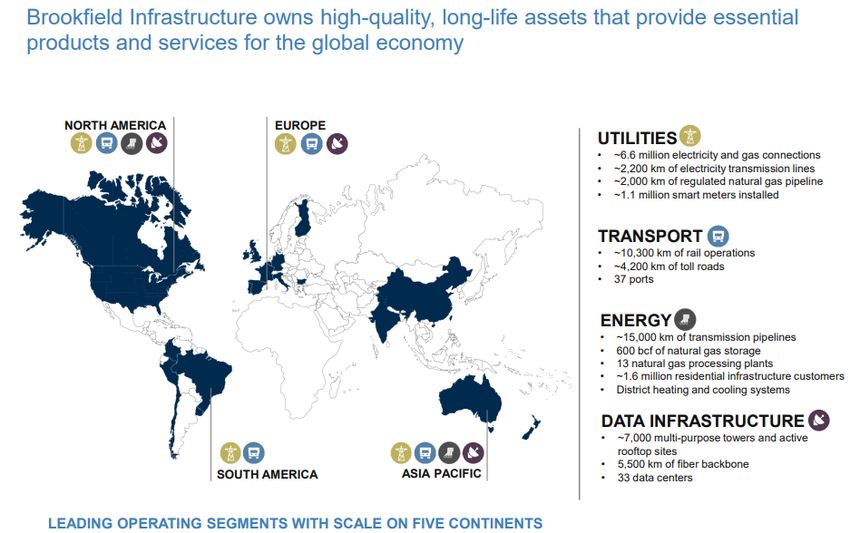
Why Global Real Infrastructure for Diversification
and Attractive Risk Adjusted Returns?
Infrastructure asset owning companies around the world are well placed to deliver attractive
returns to investors as they provide essential services that allow the global economy to
function. Further, they are well positioned to benefit from structural changes in both
developed and emerging markets.
Investment Thesis
▪ The global economy is changing. Economies are developing at the fastest pace in history and changes to demographics around the world are driving the
  need for more infrastructure than ever before.
▪ The transition to a global green economy is increasingly urgent and the renewable energy industry is seeing unprecedented level of demand and
  awareness. Real infrastructure assets benefit from attractive characteristics: inflation linkage, long-dated revenue streams, government and public sector
  counterparties, high barriers to entry and stable, predictable demand.
▪ Through global exposure, investors can access a highly diversified pool of infrastructure assets that display these characteristics but are unavailable in UK
  listed markets.
▪ Examples of highly attractive global infrastructure assets include large scale hydroelectric and geothermal generation, Government and medical facilities
  and diversified renewable energy generation across emerging markets.

                                                                                                                                                              10
FP Foresight Global Real Infra Fund
Investment objective: The fund aims to grow, over any 5 year period, by more than 3% per annum above the rate of UK inflation (as measured by the UK
Consumer Prices Index). There is no guarantee that the fund will achieve a positive return over this, or any other, period and you
may not get back the original amount you invested.
Investment policy: The fund will invest directly in the shares of companies (including listed Investment Trusts, Real Estate Investment Trusts (REITs),
ETFs and other investment company structures depending on the relevant jurisdictions) or units of Master Limited Partnerships
that, in each case, are publicly traded (listed) on stock exchanges in developed markets (meaning North America, Western Europe
and Asia Pacific); and that own or operate real infrastructure or renewable energy assets anywhere in the world. Such
companies’ revenue streams are typically directly or indirectly supported by long term government or public sector contracts and
government supported initiatives.
The companies that the fund invests in will typically own or operate assets in the following infrastructure subsectors: renewable
energy generation (e.g. offshore wind, onshore wind, solar energy, and hydro-electricity), core economic infrastructure (e.g.
schools, hospitals and transport) and property with infrastructure characteristics (e.g. social housing and medical facilities).
No more than 50% of the fund by value will be invested in shares that have a primary listing in a single country. The fund may also
invest in cash for liquidity and cash flow purposes and to pay fund expenses and redemptions. The fund may invest in certain
financial contracts (derivatives or forward transactions) for efficient portfolio management (including hedging). The investment
manager aims to manage the fund in a manner that maintains the fund’s eligibility for ISAs.
Sustainability considerations play an important role in the investment manager’s stock selection process. The fund will only
invest in the shares of a company if the investment manager in its discretion considers that the company delivers a net social or
environmental benefit. In determining whether a company delivers a net social or environmental gain, the investment manager will
assess company shares based on the ten principles of the United Nations Global Compact for business which cover areas including
human rights, labour rights, environmental safeguards and combating bribery and corruption (“Sustainable Investment
Strategies”). The investment manager will regularly monitor the companies in which the fund invests, against the Sustainability
Investment Criteria. If it is the investment manager’s opinion that an investee company no longer meets the Sustainable
Investment Criteria, the investment manager will not make any further investments in the company and will seek to realise in an
orderly fashion, its investment in such a company.
Benchmark
The fund aims to grow, over any 5 year period, by more than 3% per annum above the rate of UK inflation (as measured by the UK
Consumer Prices Index). The UK Consumer Prices Index is therefore a target benchmark against which the performance of the fund
has been set (“Target Benchmark”). The Target Benchmark was chosen by the investment manager because the fund will invest in
investments that are inflation-linked (infrastructure and renewable energy assets are typically inflation-linked as a result of
benefitting from government or public sector subsidies, concessions or service provision contracts which are themselves normally
inflation- linked). Investors may use the fund’s performance against the Target Benchmark to assess the risks of investing in the
fund. 11FP Foresight Global Real Infrastructure Fund
▪ Targeting attractive risk adjusted returns by investing in a global portfolio of infrastructure and
Strategy Objective
renewable asset owning investment companies.
▪ The fund aims to grow, over any 5 year period, by more than 3% per annum above the rate of
Performance Objective
UK inflation (as measured by the Consumer Price Index).
▪ Global ‘Real’ Infrastructure, including global infrastructure investment trusts such as Boralex,
Brookfield Infrastructure Partners and Encavis.
Investment Universe ▪ Explicit exclusion of cyclical equities active in the broader infrastructure landscape that do not
exhibit infrastructure characteristics of long-dated, index linked, government backed cash-
flows.
▪ An infrastructure perspective to equity investing rather than an equity perspective to
Investment Style
infrastructure investing.
Investment Basis ▪ Long-only
Number of Stocks ▪ 25-35 listed owners and operators of real infrastructure assets
▪ GBP Unhedged Class A launch June 2019
Currency Management
▪ Hedged classes pending investor demand
Inception ▪ 3 June 2019
12Infrastructure characteristics
Infrastructure are attractive asset classes as they are characterised by stable and predictable
demand, high barriers to entry and long term contracted revenue streams.
Infrastructure Characteristics:
Stable and predictable Infrastructure assets tend to have constant demand because they provide critical services for daily
demand living. This makes them relatively consistent and insensitive to economic and market cycles.
Infrastructure assets are typically large physical assets that take substantial time and investment to
High barriers to entry develop and maintain. The capital-intensive nature of infrastructure assets creates a barrier to entry
that results in limited numbers of competitors and sometimes effectively monopolistic conditions.
A high proportion of infrastructure investments’ revenues come from long term contracts that are
Long term contracted
often linked to inflation and interest rates rises. The counterparties for these revenue streams are
revenues
normally government and often revenue streams are protected to some extent by government
policy.
Examples
13‘Real’ Vs ‘Fake’ Infrastructure
‘Fake’ infrastructure is defined as assets or companies analogous to the infrastructure sector,
providing goods and services for example, but that may not provide investors with the fundamental
characteristics of the underlying project-level cash flows.
▪ ‘Fake’ infrastructure can be defined as assets or companies
‘Fake’ Infrastructure analogous to the infrastructure sector, providing goods and
services for example, but that may not provide investors
with the fundamental characteristics of the underlying
project-level cash flows.
‘Real’ Infrastructure ▪ Does a listed utility company, or a provider of operational
and maintenance services to transport infrastructure really
count as ‘infrastructure’?
▪ Examples of ‘fake’ infrastructure include Carillion, National
Grid and Vodafone.
14Risks to Consider
For the full set of risk warnings, please refer to the fund prospectus which can be found on
either the Foresight Group and FundRock Partners website.
▪ Infrastructure companies may be subject to a variety of factors that may adversely affect their business or
operations, including high interest costs in connection with capital construction programmes, high leverage,
Infrastructure
costs associated with environmental and other regulations, the effects of economic slowdown, surplus
Company Risk
capacity, increased competition from other providers of services, uncertainties concerning the availability of
fuel at reasonable prices, the effects of energy conservation policies and other factors.
▪ The investments of the Company are subject to normal market fluctuations and other risks inherent in
investing in securities. There can be no assurance that any appreciation in the value of investments will
occur. The value of investments and the income derived from them may fall as well as rise and investors
Market Risk
may not recoup the original amount they invest in the Company.
▪ There is no certainty that the investment objective of any Fund will actually be achieved and no warranty or
representation is given to this effect. Past performance is no guide to the future.
▪ Where a Fund has exposure to alternative asset classes there is a risk that the price at which an asset is
Liquidity Risk valued may not be realisable in the event of sale.
▪ This could be due to a mis-estimation of the asset’s value or due to a lack of liquidity in the relevant market.
▪ Currency fluctuations may adversely affect the value of a Fund’s investments and, depending on an
Currency Risk
investor’s currency of reference, currency fluctuations may adversely affect the value of the investment
15Contents
1. Foresight Group Overview
2. Investment Philosophy: Real Infrastructure
3. Investment Strategy and Process
4. The Portfolio
16FP Foresight Global Real Infra Fund (GRIF)
A target screening exercise identified 91 appropriate listed renewable and infrastructure real
asset owning companies from a global universe of 5,700 companies.
Infrastructure All listed companies that are involved in renewable energy and infrastructure were downloaded
and Renewable from 28 stock exchanges and 3 financial reporting service providers. This returned 5,700 5,700
Universe companies.
Infrastructure
All listed companies that were not real renewable energy or infrastructure asset owners and operators 1,026
Asset Owners
were removed (e.g. solar PV production companies or utility companies). This left 1,026 companies.
and Operators
All investment companies that were not investing into private renewable energy and infrastructure
Company physical assets were removed (e.g. ETFs and equity funds). Companies that did not fit the desired 146
Structure structure were removed (e.g. open ended fund). Further, all companies that failed to supply sufficiently
detailed Bloomberg information were removed. This left 146 companies.
Market 102
All companies that had a market capitalisation 35% were removed. This left 91 companies.
17The Investment Universe
The 91 listed renewable and infrastructure investment companies have a combined
market cap of £198bn and represent an excellent access point into ‘real’
infrastructure.
Cumulative Market Capitalisation of Global Listed Renewable and Cumulative Number of Global Listed Renewable and Infrastructure
Infrastructure Investment Companies1 Investment Companies1
GBP, billions # Companies
+146%
91 91
200
82
79
68
150
51 51
57 47
46
47 38
100 42
37 32
30
27
50 26
40 40
33 35
30
25
15 17
11
0
2010 2011 2012 2013 2014 2015 2016 2017 2018 2010 2011 2012 2013 2014 2015 2016 2017 2018
Infrastructure Renewable
▪ The market capitalisation of the sector has grown from £45bn in 2010 ▪ Renewable and infrastructure investment companies have grown in
to over £198bn in 2018. number by 146% since 2010.
▪ Since 2010, the renewable market has grown by £41bn and the
infrastructure market by £111bn.
Source: 1) Bloomberg data
18Sustainable Investment Strategies
UN Global Compact
By incorporating Global Compact principles into strategies and establishing a culture of
integrity, companies are not only upholding their basic responsibilities to people and planet,
but also setting the stage for long-term success.
1. Businesses should support and respect the protection of internationally proclaimed human rights; and
Human Rights 2. Business should ensure they are not complicit in human rights abuses.
3. Businesses should uphold freedom of association and the effective recognition of the right to collective bargaining;
4. The elimination of all forms of forced and compulsory labour;
Labour
5. The effective abolition of child labour; and
6. The elimination of discrimination in respect of employment and occupation.
7. Businesses should support a precautionary approach to environmental challenges;
Environment 8. Undertake initiatives to promote greater environmental responsibility; and
9. Encourage the development and diffusion of environmentally friendly technologies
Anti-Corruption 10. Businesses should work against corruption in all its forms, including extortion and bribery
19Contents
1. Foresight Group Overview
2. Investment Philosophy: Real Infrastructure
3. Investment Strategy and Process
4. The Portfolio
20June 2019 Performance
Cumulative Total Return1
%
3.5
3
2.5
2
1.5
1
0.5
0
Jun/2019
FP Foresight UK Infrastructure Income Fund
20 Day Vol 90 Day Vol 180 Day Vol Beta One Year Sharpe Ratio Cumulative Total Return KIID Rating3
FP Foresight Global Real Infrastructure Fund 6.58 PENDING PENDING 0.60 PENDING 3.07 5
Source: 1) Bloomberg Data
21Portfolio Geographic Breakdown
Portfolio by company domicile Portfolio by asset location
4.75% 3.8%
1.00% 4.9%
5.50%
5.50% 27.00%
11.8%
31.6%
6.00%
9.50% 15.6%
10.75%
25.50%
31.3%
CANADA UNITED KINGDOM NORWAY North America Asia
UNITED STATES SINGAPORE GERMANY Europe South America
NEW ZEALAND IRELAND LUXEMBOURG Australia/Oceania Africa
22Portfolio Sectors and Assets
Portfolio by sector Underlying asset split
5.50% 2.2%
6.50% 3.2% 2.5% 1.1%
3.8% 20.3%
4.2%
14.50%
5.8%
46.30%
8.6% 15.2%
28.30% 12.2%
14.0%
Renewables Government Property Wind Other
Core Infrastructure Cash Transmission and gas distribution Waste and Water
Medical Property Healthcare infrastructure Government Buildings
Solar Energy Other Energy
Transport and logistics Digital Infrastructure
Hydro-electric energy Research Labs/Manufacturing/ Storage
23Global Real Infrastructure Fund
The Fund’s diversified approach is highlighted in its top 10 holdings which show seven different
listing locations and encompass three different infrastructure asset sub-sectors.
Company Listing Location Sector Target Allocation1
Brookfield Infrastructure Partners Canada Core-Infrastructure 9.50%
Easterly Government Properties United States Government Property 6.50%
Greencoat Renewables Ireland Renewables 6.00%
Keppel Infrastructure Trust Singapore Core-Infrastructure 5.50%
Infratil Ltd New Zealand Core-Infrastructure 5.50%
Scatec Solar Norway Renewables 5.50%
Encavis AG Germany Renewables 4.75%
Brookfield Renewable Partners Canada Renewables 4.75%
Boralex Inc. Canada Renewables 4.75%
Hannon Armstrong Sustainable
United States Renewables 4.50%
Infrastructure
1 The target allocation for the launch portfolio was signed off on the 20 May (in advance of the 3 June launch date). This allocation is expected to be the basis for investment at launch but is subject to change. 24Case Study: Portfolio Company Profile
Brookfield Infrastructure Partners
Example Portfolio Company and Assets - Brookfield Infrastructure Partners
25Case Study: Portfolio Company Profile
Healthcare Trust of America (HTA)
HTA focuses on acquiring medical office buildings that are core-critical to the delivery of
healthcare and are located on campuses of hospitals, around university and academic
medical centre campuses. Commentary1:
▪ HTA’s investments are targeted in 20-25 key markets that are
attractively positioned as a result of academic university
concentrations, highly educated population, above average wages
and strong economic growth, low unemployment and other unique
characteristics that make them economic hubs for the future.
▪ Ageing demographics and an increasing shift to outpatient services
are driving strong medical office demand.
▪ HTA have achieved scale in 17 markets with greater than 500,000
square feet and 9 markets with over 1 million square feet; in each
market they service their healthcare providers through their
institutional full-service operational platform including property
management, leasing, and development services.
▪ The above has driven strong tenant and health system relationships,
and strategic partnerships that result in high levels of tenant
retention, rental growth, and long-term value creation across the
portfolio.
431 Medical Office Buildings (MOBs), 23.2 million square feet of
Portfolio Summary
property, $6.8 billion invested into healthcare real estate.
Asset Type Healthcare real estate.
Major US health insurance companies supported by US government
Ultimate Counterparty
initiatives.
Customer Type Blue-chip healthcare providers.
Medical Office is one of the most attractive sectors in real estate,
Certainty Of Revenue
providing steady and dependable returns throughout the full cycle.
Contract Type Long-term leases to healthcare providers.
Source: 1) Healthcare Trust of America 26Case Study: Asset Analysis
Isagen
Acquired in 2016 from the Colombian government, Isagen owns and operates a renewable
energy portfolio consisting of 3,032 MW of hydroelectric generating capacity and a 3,800 MW
development portfolio in Colombia. Commentary1:
▪ Market leader with a premier generation portfolio. Isagen is the
third-largest power generation company. The portfolio comprises of
six hydroelectric plants, and includes the country’s largest operating
hydro power generating facility and largest hydro-based reservoir
by volume. Average annual generation accounts, on average, for
approximately 20% of Colombia’s annual production.
▪ Strong operating track record. Isagen has high-quality and modern
generating facilities with an average facility age of 18 years. The
company’s management team possess extensive experience in
operating electricity businesses and a comprehensive knowledge of
the Colombian energy market.
▪ Attractive economy and electricity sector. Colombia is one of the
strongest and most stable economies in South America with a
population of approximately 48 million. Hydroelectricity is integral to
the country’s supply mix, accounting for 70% of installed capacity.
Asset Owned By Brookfield Renewable Partners.
Asset Type Hydroelectric power.
Ultimate Counterparty Colombian Government.
Approximately 80% of Isagen’s energy sales are derived from contracts
Customer Type
with a broad base of large commercial and industrial customers and
distribution companies.
Certainty Of Revenue Isagen benefits from a fixed stream of reliability and capacity payments.
Inflation linked with over 15% of the contracts now on five to ten-year
Contract Type
terms.
Source: 1) Brookfield Renewable
27Case Study: Asset Analysis
Phoenix, Az
HTA invests in medical office buildings that are core-critical and a key part of the integrated
delivery of healthcare. To ensure these properties will increase in value over time, these
properties are in community-core locations. Commentary1:
▪ Phoenix is one of the fastest growing, large cities in the United
States. It benefits from a temperate climate, low cost of living, and
business friendly regulatory environment that should continue to
attract new businesses and residents.
▪ The expected growth in the Phoenix area and its senior friendly
infrastructure make it an attractive market for healthcare services.
▪ With a total investment of $267.8 million, the majority of HTA’s
Phoenix portfolio is primarily in Phoenix’s West Valley, including
Goodyear, Glendale, and the retirement destination of Sun City.
▪ HTA also recently acquired four medical office buildings through the
purchase of the Dignity Medical Office portfolio.
▪ This portfolio includes the McAuley Medical Center, a nine-story
168,307 square feet Medical Office Building (MOB), located on the
campus of Dignity Health’s nationally recognized St. Joseph’s
Hospital and Medical Center. As one of the only Class A medical
office buildings in Downtown Phoenix and its on-campus location,
McAuley Medical Center has had consistently high occupancy rates.
Asset Owned By Healthcare Trust of America.
Asset Type Healthcare real estate.
Ultimate Counterparty Banner Health (major health insurer)
Customer Type Blue-chip healthcare providers.
Medical Office is one of the most attractive sectors in real estate,
Certainty Of Revenue
providing steady and dependable returns throughout the full cycle.
Contract Type Long-term lease to insurance providers.
Source: 1) Healthcare Trust of America
28Case Study: Asset Analysis
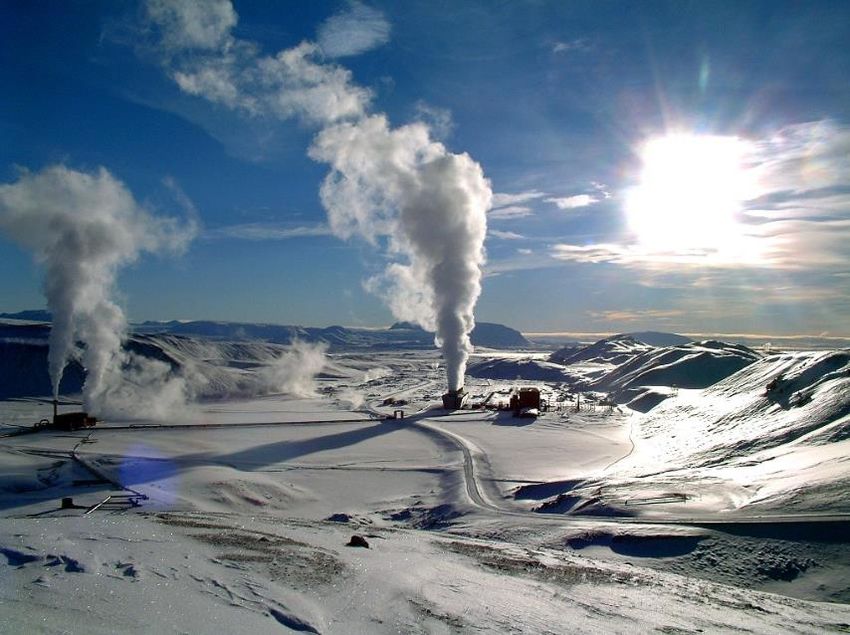
Svartsengi geothermal plant
In 2017, Innergex meaningfully diversified their asset portfolio in terms of geography and
energy source by acquiring two Icelandic geothermal power facilities.
Commentary1:
▪ The Svartsengi geothermal power plant is located in the municipality
of Grindavík at the southwestern tip of Iceland, approximately 45 km
from Iceland’s capital, Reykjavik. The Svartsengi plant was the first
geothermal power plant in the world to combine generation of
electricity and production of hot water for district heating.
▪ The total installed electricity production capacity of the Svartsengi
Power Plant is 74 MW. The plant also generates 190 MW thermal
capacity for district heating, supplying heat to the Reykjanes
peninsula and thousands of households.
▪ Michel Letellier, President and CEO of Innergex highlighted that the
acquisition showed “another significant step forward in Innergex’s
international expansion, which should be beneficial for
shareholders”.
Asset Owned By Innergex Renewable Energy.
Asset Type Geothermal energy.
Ultimate Counterparty State-owned utility.
Customer Type State-owned utility provider.
Certainty Of Revenue The long-term contract with Norðurál expires in 2026.
HS Orka hf. sells power to a number of commercial and retail
customers including power sold under long-term PPAs with
Contract Type
Landsvirkjun (state-owned utlity provider, Norðurál and Advania ehf
(major Icelandic corporations).
Source: 1) Innergex 29Case Study: Asset Analysis
Ukrainian Solar Power
Scatec Solar entered the Ukraine market in 2017 and is currently developing a significant
project portfolio in the country with 77 MW under construction.
Commentary1:
▪ Ukraine’s target is to generate 11% of its energy from renewable sources by
2020 in an effort towards more autonomy and less coal intensive production.
▪ Since 2014, a feed-in-tariff programme was launched and more than 1GW of
solar capacity have been installed since then.
▪ Scatec is currently constructing two solar power plants with commercial
operations expected to begin in 2019.
▪ Rengy, Ukraine, 47 MW: The Rengy project, situated in the Mykolaiv region in
the South of Ukraine, is being built in partnership with Rengy Development
Group. The project will be realised under the country’s 10 years Feed-in-Tariff
scheme and the plants are expected to deliver power also beyond the Feed-in –
tariff period. The project will power 15,000 homes and offset 51,000 tons of
CO2 emissions.
▪ Kamianka, Ukraine, 30 MW: The Kamianka project is located in the Cherkasy
region in central Ukraine. The project is developed, constructed and operated
by Scatec Solar. As with the Rengy project, the project will be realized under the
country’s 10 years Feed-in-Tariff scheme. The plant will power 11,000
households and offset 34,000 tons of CO2 emissions.
Asset Owned By Scatec Solar.
Solar power plants:
Asset Type ▪ Rengy (47 MW)
▪ Kamkianka (30 MW)
Ultimate Counterparty Ukrainian government.
Customer Type State owned electricity providers underwritten by the Ukrainian government.
The feed-in tariff scheme for electricity generated from renewable energy
Certainty Of Revenue
sources will be open until 1st of January 2030.
Contract Type Feed-in-tariff subsidy.
Source: 1) Scatec Solar
30Case Study: Asset Analysis
Solar power, South Africa
Scatec Solar entered the South African market in 2010. Operating four solar power plants
including 190 MW in operation and 258 MW under construction Scatec Solar is a leading solar
player in the country. Commentary1:
▪ The Renewable Energy Independent Power Producer Program (REIPPP) was
launched by the Government in 2011. To date, close to 9 GW of renewable
energy has been procured by the Government, of which 1.5 GW is solar. The
country aims to install more than 8 GW of solar by 2030.
▪ Scatec’s Kalkbult plant, situated in the Northern Cape region, is one of the
largest solar plants in Africa.
▪ The plant boasts an exceptional production record contributing to regional
growth and portfolio performance.
▪ Acquiring its grid connection in 2013, the plant powers 35,000 households and
has offset 137,000 tons of CO2 emissions.
▪ Scatec’s entire South African solar portfolio powers 206,000 households and
has offset 995,000 tons of CO2 emissions.
Asset Owned By Scatec Solar.
Solar power plants
▪ Upington (258 MW)
Asset Type ▪ Kalkbult (75 MW)
▪ Dreunberg (75 MW)
▪ Linde (40 MW)
Ultimate Counterparty South African Government.
Customer Type Utility providers underwritten by the South African government.
A ceiling tariff level is established for each technology in the auctions. Winning
Certainty Of Revenue
bidders sign PPAs, which are guaranteed for a period of 20 years.
Contract Type Public Procurement Programme.
Source: 1) Scatec Solar 31Case Study: Asset Analysis
FEMA storage facility
Easterly Government Properties focus on the acquisition, development and management of
class A commercial properties that are leased to US government agencies that serve essential
US government functions. Commentary1:
▪ Built in 2018, this 210,373 square feet state-of-the-art warehouse facility is
leased to the Federal Emergency Management Agency (FEMA).
▪ As part of FEMA’s mission to deliver immediate, on-the-ground response in
moments of disaster, FEMA maintains eight distribution centers within the
United States for emergency response preparedness. FEMA – Tracy is one of
these eight regional distributions centers located strategically throughout the
country.
▪ In 2018, Easterly assumed all redevelopment activities and later in 2018
commenced a 20-year non-cancelable lease with the General Services
Administration (GSA) on this mission critical facility.
▪ The FEMA – Tracy property is a single-story warehouse that sits on just over 19
acres of land and includes a blend of office, warehouse, and refrigerated space
for full-time cold storage.
▪ FEMA – Tracy will further enable FEMA to serve the mission critical function of
providing much needed supplies and support to U.S. citizens faced with
disaster.
Asset Owned By Easterly Government Properties.
Asset Type State-of-the-art warehouse facility for disaster preparedness.
Ultimate Counterparty United States government.
Customer Type US government agency.
Certainty Of Revenue Long-term leases provide steady and dependable returns throughout the cycle.
Contract Type 20-year noncancelable lease.
Source: 1) Easterly Government Properties
32Case Study: Asset Analysis
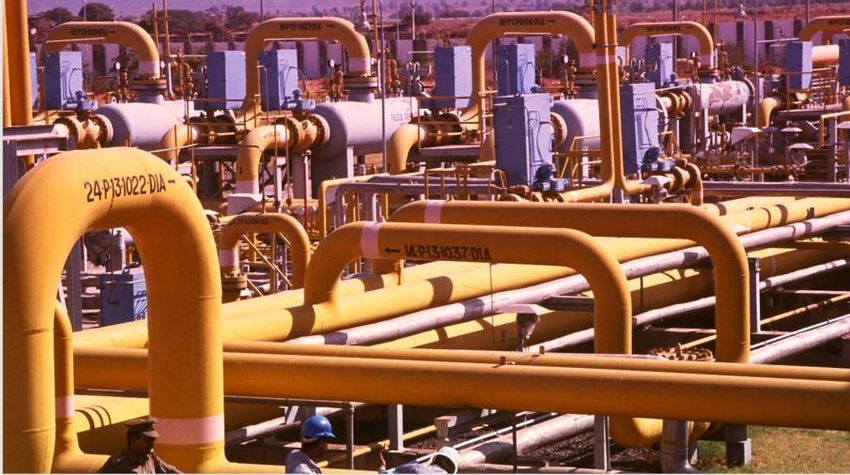
Indian Natural Gas Transmission
Brookfield Infrastructure Partners L.P. is one of the largest owners and operators of critical and
diverse global infrastructure networks which facilitate the movement and storage of energy,
water, freight, passengers and data. Commentary1:
▪ Spanning five countries and four continents, Brookfield’s utilities portfolio
benefits from steady, inflation linked cash flows.
▪ The portfolio encompasses 6.6 million electricity and gas connections,
2,000 kms of regulated natural gas pipeline and 2,200 km of electricity
transmission lines.
▪ Brookfield recently completed its largest-ever transaction in India by
acquiring a 1,500 km natural gas pipeline for $2 billion.
▪ The share of natural gas in India’s energy mix is set to rise from 11% in 2010
to 20% by 2025. The pipeline connects the natural gas reserves of the KG
Basin, off India’s east coast, with fast-growing regions in the west of the
country.
▪ Brookfield has entered into a 20-year agreement with Mumbai-based
conglomerate Reliance Industries to reserve 33 mmscmd (million metric
standard cubic metres per day).
Asset Owned By Brookfield Infrastructure Partners.
Asset Type Natural gas transmission.
Ultimate Counterparty Major Indian conglomerate holding company (Reliance Industries Limited)
Customer Type Blue-chip Indian corporation
Certainty Of Revenue Stable, secure cash flows from a 20 year take-or-pay contract.
Contract Type 20 year take-or-pay contract.
Source: 1) Brookfield Infrastructure Partners
33Case Study: Asset Analysis
Senoko Waste-to-Energy Plant
Keppel Infrastructure Trust (KIT) aims to provide investment into infrastructure assets located
in jurisdictions with well-developed legal frameworks that support infrastructure investment.
Commentary1:
▪ Fulfilling a concession of 2,310 tonnes/day of waste incineration Senoko
Waste-to-Energy Plant (Senoko WTE Plant) is the third waste incineration
plant built in Singapore and is one of four incineration plants currently
operating. It was commissioned in 1992 with a land area of 7.5 ha.
▪ Senoko WTE Plant is equipped with six incinerator-boiler units with two
condensing turbine-generators offering a power generation capacity of 2 x
28 MW. Waste incineration is carried out at the plant 24 hours a day
throughout the year.
▪ The plant underwent an upgrade in June 2012, which was completed
within the contracted timeframe and budget, and with an accident-free
safety record.
▪ In 2014, KIT entered into an agreement with NEA to progressively increase
the contracted incineration capacity of the plant by up to 10% from 2,100
tonnes per day to 2,310 tonnes between July 2015 and September 2016.
The capacity payments from NEA were correspondingly increased with the
completion of each incineration unit upgrade.
Asset Owned By Keppel Infrastructure Trust.
Asset Type Waste-to-Energy plant.
Ultimate Counterparty Singaporean government.
Customer Type NEA, Singapore’s National Environment Agency.
Certainty Of Revenue Stable, secure cash flows from a 15 year contract.
Contract Type 15 year contract until 2024.
Source: 1) Keppel Infrastructure Trust
34ESG Case Study
Scatec – UN Global Compact
In June 2018, Scatec Solar became a signatory of the UN Global Compact and affirmed its
support to the Ten Principles of the Global Compact on human rights, labour, environment and
anti-corruption.
Commentary:
▪ Scatec are committed to making the UN Global Compact and its principles
part of the strategy, culture and day-to-day operations of the company.
▪ Scatec seek to engage in collaborative projects which advance the broader
development goals of the United Nations, particularly the Sustainable
Development Goals.
▪ Sustainability is an integral part of the organization and is embedded in all
business units. The sustainability team in each country consists of both
corporate support teams and specialists as well as fieldworkers who report
to the global headquarters.
▪ Recognizing that a key requirement for participation in the UN Global
Compact is the annual submission of a Communication on Progress (COP)
the company has committed to reporting on progress annually according to
the UN Global Compact COP policy.
▪ This public accountability and transparency includes:
▪ A statement signed by the CEO expressing continued support for
the UN Global Compact and renewing their ongoing commitment
to the initiative.
▪ A description of practical solutions that Scatec has taken to
implement the UN Global Compact principles on human rights,
labour, environment and anti-corruption.
▪ A measurement of outcomes quantifying the degree to which
targets and performance indicators were met.
35ESG Case Study
Scatec – UN Global Compact
Scatec’s core mission is do deliver competitive and sustainable solar energy globally, to protect
the environment and to improve quality of life though innovative integration of reliable
technology.
Commentary1:
▪ Scatec’s material sustainability priorities are
selected based on two sources; stakeholder
expectations and internal strategic priorities.
Stakeholder expectations are mapped through
formal interviews, and in dialogue with local
stakeholders as part of daily business on the
ground. Internal priorities are mapped through a
sustainability survey.
▪ Topics of high external and internal importance
receive the highest degree of management
attention. For such topics, clear goals are
established, monitored regularly, and reported
externally.
▪ The matrix attached serves as the basis for their
corporate sustainability framework and
reporting.
▪ Scatec’s core mission is supported by its three
sustainability pillars:
1. Managing social and environmental
impacts.
2. Being a trusted business partner.
3. Contributing to local value creation.
Source: 1) Scatec Solar Sustainability Report
36ESG Case Study
Scatec – UN Global Compact
Respecting and supporting human rights remains one of the most challenging areas of
corporate sustainability. Businesses now realise their legal, moral and commercial need to
support human rights within their activities and business relationships.
Human Rights Checklist1 Measure2
Scatec commits to respect human rights and recognise their
responsibility of avoiding the infringement of rights wherever they
Human rights code operate. A key target of Scatec’s for 2019 is to develop a corporate
policy on human rights in line with the Universal Declaration of Human
Rights.
Scatec’s project activities are conducted in accordance with local laws,
Impact Assessment corporate Company policies and requirements defined by the IFC’s
performance standards for specific areas of impact on human rights.
Meaningful consultations with affected communities and other
stakeholders on a regular basis and a well-functioning grievance
Complaint Mechanism mechanism that local communities trust are the main tools used for
continuous review of risks and for development of appropriate
mitigating actions.
Approximately 60% of security personnel contracted by Scatec Solar
globally have been trained in principles related to human rights. Scatec
Employee Training and Awareness is looking to integrate human rights aspects into the standardized
training for all our managers, community liaison officers, and security
personnel globally.
Stakeholder dialogue is of the utmost importance to Scatec. In addition
to regular and continuous dialogue with local stakeholders, they see
Multi-Stakeholder Dialogue
increasing expectations from investor communities and project
partners.
Source: 1) UN Global Compact Guide to Corporate Sustainability
2) Scatec Solar Sustainability Report
37ESG Case Study
Scatec – UN Global Compact
Decent working conditions are far from assured in today’s global business community. By
promoting decent work and inclusive employment opportunities, business also plays a key role
in advancing societal priorities.
Human Rights Checklist1 Measure2
Providing safe and healthy working environments for their employees
and sub-contractors and protecting labour rights are identified as the
Safe Working Conditions
most material topics for Scatec. Scatec have accrued 6.3 million work
hours with no serious injuries across ten projects in eight countries.
Scatec sees labour management as a priority area for all projects. By
developing management plans for labour recruitment, training and
Employee Training and Awareness accommodation and by conducting regular inspections, Scatec’s goal is
to ensure continuous compliance with IFC’s Performance Standards and
to avoid any practice harmful to workers’ rights.
The Company’s Global HR policy and related procedures are applicable
to all employees, emphasising fair salary levels. In countries where
Collective Bargaining
labour unions and rights are not effectively enforced, Scatec aim to find
mechanisms for workers to express their grievances and protect rights.
Scatec’s total global workforce is represented by 32 different
nationalities. In 2018, Scatec increased female representation at
Equal Opportunity
executive management level by 14%. The 2018 target of increasing the
global number of female employees by 10% was exceeded.
Source: 1) UN Global Compact Guide to Corporate Sustainability
2) Scatec Solar Sustainability Report
38ESG Case Study
Scatec – UN Global Compact
The Global Compact asks businesses to address environmental risks and opportunities and
have major sustainable initiatives in the areas of climate, water and food. The Compact’s
signatories are preparing for a more sustainable future and becoming part of the solution.
Environment Checklist1 Measure2
The development of solar projects has environmental and social
impacts. In alignment with Scatec Solar’s policies, requirements of local
Risk and Impact Assessment legislation, and their commitment to international standards and best
practices, they endeavour to minimise their negative impacts and to
maximize local benefits in positive dialogue with project stakeholders.
Water is a scarce resource in many areas and is an important aspect of
Scatec’s environmental management. Water conservation awareness,
minimizing water use for dust suppression by maintaining road
Water Footprinting
conditions, and monthly monitoring for identifying causes of abnormal
volumes are among the management considerations implemented at all
our plants.
All of Scatec’s projects have regular Environmental and Social
monitoring and reporting procedures in place. Important monitoring
Monitor and Evaluate Performance measures include: regular site inspections, environmental and social
internal and external audits, project reports reviewed in biweekly
management meetings and monthly Board of Directors meetings.
By providing clean electricity, Scatec’s plants contribute to reducing
greenhouse gas emissions in every country they operate. In 2018,
Report Emissions Scatec started preparations to report to the Carbon Disclosure Project
(a global disclosure system to manage environmental impacts) with a
timeline of completion by May 2019.
Source: 1) UN Global Compact Guide to Corporate Sustainability
2) Scatec Solar Sustainability Report 39ESG Case Study
Scatec – UN Global Compact
Corruption represents a major hinderance to advancing societies, with a disproportionate
impact on poor communities. Corruption raises transaction costs, undermines fair competition,
distorts development priorities, and impedes long-term investment. Companies need robust
anti-corruption measures as part of their corporate sustainability strategy.
Corruption Checklist1 Measure2
Zero-tolerance Policy Scatec maintain a zero-tolerance principle for bribery and corruption.
A whistleblower function is available to all employees, suppliers,
partners, and clients of the company. The mechanism includes a hotline
Anonymous Hotline For Reporting Corruption
available 24/7 operated a neutral third party. All whistleblowers have
the option to be anonymous.
Scatec provide mandatory anti-corruption training for all employees. In
Employee Training and Awareness addition, they offer specific anti-corruption and integrity due-diligence
training for particularly exposed business units.
All operations, including projects and business partners of Scatec Solar,
Monitor and Evaluate Performance
were assessed for risks related to corruption in 2018.
Source: 1) UN Global Compact Guide to Corporate Sustainability
2) Scatec Solar Sustainability Report
40FP Foresight Global Real Infrastructure Fund
Key Features
Fund Name: FP Foresight Global Real Infrastructure Fund
Fund Structure: A sub-fund of FP Foresight OEIC, a UK open-ended investment company (“OEIC”)
Regulatory Status: FCA Authorised UCITS
IA Sector: Global
Unit Type: Income & Accumulation
Currency: GBP (unhedged)
Lump Sum: £1,000 + subsequent increments of £500
Minimum Investment:
Regular Savings: £100 per month
Ongoing Charge: 0.85%
Transaction Costs: Please refer to your platform or the latest fund EMT
Fund Price At Launch: 100p
Expected Return: More than UK CPI+3% per annum over any five year period
Income: Quarterly from 31 October 2018 (Jan, Apr, Jul, Oct)
Distributions:
Accumulation: Reinvested
Authorised Corporate Director (ACD): FundRock Partners Limited
Investment Manager and Distributor: Foresight Group
Launch Date: 3rd June 2019
Final Accounting Date: 31st May
Interim Accounting Dates: Last day of February; 31st August; and 30th November
41You can also read


