From Ebola to COVID-19: emergency preparedness and response plans and actions in Lagos, Nigeria - Globalization and Health
←
→
Page content transcription
If your browser does not render page correctly, please read the page content below
Abayomi et al. Globalization and Health    (2021) 17:79
https://doi.org/10.1186/s12992-021-00728-x

 COMMENTARY                                                                                                                                            Open Access

From Ebola to COVID-19: emergency
preparedness and response plans and
actions in Lagos, Nigeria
Akin Abayomi1,2, Mobolanle R. Balogun3* , Munir Bankole1, Aduragbemi Banke-Thomas4, Bamidele Mutiu1,
John Olawepo5, Morakinyo Senjobi1, Oluwakemi Odukoya3, Lanre Aladetuyi1, Chioma Ejekam6, Akinsanya Folarin1,
Madonna Emmanuel3, Funke Amodu1, Adesoji Ologun1, Abosede Olusanya1, Moses Bakare1, Abiodun Alabi1,
Ismail Abdus-Salam1,2, Eniola Erinosho1, Abimbola Bowale1, Sunday Omilabu1,3, Babatunde Saka2,7,
Akin Osibogun2,3, Ololade Wright2, Jide Idris1 and Folasade Ogunsola3

  Abstract
  Background: Lagos state is the industrial nerve centre of Nigeria and was the epicentre of the 2014 Ebola outbreak
  in Nigeria as it is now for the current Coronavirus Disease (COVID-19) outbreak. This paper describes how the
  lessons learned from the Ebola outbreak in 2014 informed the emergency preparedness of the State ahead of the
  COVID-19 outbreak and guided response.
  Discussion: Following the Ebola outbreak in 2014, the Lagos State government provided governance by
  developing a policy on emergency preparedness and biosecurity and provided oversight and coordination of
  emergency preparedness strategies. Capacities for emergency response were strengthened by training key staff,
  developing a robust surveillance system, and setting up a Biosafety Level 3 laboratory and biobank. Resource
  provision, in terms of finances and trained personnel for emergencies was prioritized by the government. With the
  onset of COVID-19, Lagos state was able to respond promptly to the outbreak using the centralized Incident
  Command Structure and the key activities of the Emergency Operations Centre. Contributory to effective response
  were partnerships with the private sectors, community engagement and political commitment.
  Conclusion: Using the lessons learned from the 2014 Ebola outbreak, Lagos State had gradually prepared its
  healthcare system for a pandemic such as COVID-19. The State needs to continue to expand its preparedness to be
  more resilient and future proof to respond to disease outbreaks. Looking beyond intra-state gains, lessons and
  identified best practices from the past and present should be shared with other states and countries.
  Keywords: COVID-19, Disease outbreak, Emergency preparedness, Epidemic response, Nigeria

* Correspondence: mbalogun@cmul.edu.ng
3
 College of Medicine University of Lagos, Idi-Araba, Lagos, Nigeria
Full list of author information is available at the end of the article

                                           © The Author(s). 2021 Open Access This article is licensed under a Creative Commons Attribution 4.0 International License,
                                           which permits use, sharing, adaptation, distribution and reproduction in any medium or format, as long as you give
                                           appropriate credit to the original author(s) and the source, provide a link to the Creative Commons licence, and indicate if
                                           changes were made. The images or other third party material in this article are included in the article's Creative Commons
                                           licence, unless indicated otherwise in a credit line to the material. If material is not included in the article's Creative Commons
                                           licence and your intended use is not permitted by statutory regulation or exceeds the permitted use, you will need to obtain
                                           permission directly from the copyright holder. To view a copy of this licence, visit http://creativecommons.org/licenses/by/4.0/.
                                           The Creative Commons Public Domain Dedication waiver (http://creativecommons.org/publicdomain/zero/1.0/) applies to the
                                           data made available in this article, unless otherwise stated in a credit line to the data.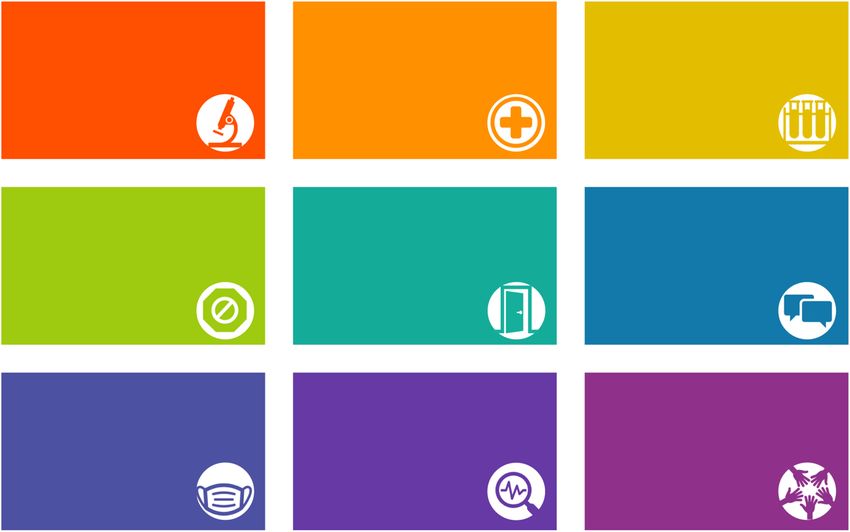
Abayomi et al. Globalization and Health   (2021) 17:79                                                          Page 2 of 10

Background                                                    systems developed by governments, response and recov-
Since the beginning of the twentieth century, there have      ery organizations, communities and individuals to effect-
been some notable pandemics including the 1918 ‘Span-         ively anticipate, respond to, and recover from the
ish’ Flu caused by an influenza A(H1N1) virus, 1957 in-       impacts of likely, imminent, emerging, or current emer-
fluenza A (H2N2) virus, 1968 influenza A (H3N2) virus,        gencies” [17]. This article describes the efforts of Lagos
2002 Severe Acute Respiratory Syndrome (SARS) caused          State in developing a preparedness and response plan
by SARS coronavirus, and the 2009 Swine Flu caused by         based on lessons learnt from the 2014 EVD outbreak
an influenza A(H1N1) virus [1, 2]. While not declared a       and the deployment of this plan ahead of the COVID-19
pandemic in itself, the West African Ebola Virus Disease      outbreak in the state. The article then critically analyses
(EVD) epidemic between 2013 and 2016 was an out-              this plan and the corresponding response using the
break with huge regional significance, claiming an esti-      WHO’s Strategic Framework for Emergency Prepared-
mated 11,300 lives in total [3]. In December 2019, the        ness which highlights governance, capacities, and re-
Coronavirus disease (COVID-19) caused by infection            sources as the elements of emergency preparedness [16].
with the Severe Acute Respiratory Syndrome Corona-
virus 2 (SARS-CoV-2) emerged in Wuhan city, China,
                                                              Lagos State’s implementation approach for
and since then there has been a global spread of the dis-
                                                              emergency preparedness
ease to pandemic proportions [4]. The first documented
                                                              This section maps the key events that occurred between
case of COVID-19 in Africa was reported on 14th Feb-
                                                              the emergence of EVD and that of COVID-19 along
ruary, 2020 in Egypt, followed by Algeria on 25th Febru-
                                                              with implementation actions of the Lagos State Govern-
ary, 2020, and Nigeria on 27th February, 2020 [5, 6].
                                                              ment during this period (Fig. 1). The section describes
This first case in Nigeria was an Italian citizen who flew
                                                              these actions in line with the three key elements of
into the commercial city of Lagos from Milan. By 11th
                                                              emergency preparedness, as recognized (governance,
March 2020, the World Health Organization (WHO)
                                                              capacities, and resources) along with their sub-
had declared the COVID-19 outbreak a pandemic [7].
                                                              components [16].
Now, it is well established that the disease is transmitted
via respiratory droplets and close prolonged personal
contact with infected persons or surfaces with the virus      Governance
[8]. As of 5th July 2021, over 183 million cases had been     a. Policies and legislation that integrate emergency
confirmed, including almost four million deaths globally.     preparedness
The African continent accounts for 2.3% of confirmed          Following the EVD outbreak in 2014, there was a clear
COVID-19 cases and about 2.5% of deaths reported              need for Lagos state to develop a preparedness plan to
worldwide [9].                                                be activated in the instance of any future outbreaks. A
   Lagos state, located in the southwestern region of         committee named State Ebola Viral Disease Research
Nigeria and the industrial nerve centre of the country,       Initiative (SEVDRI) was established in November 2014.
has been the epicentre of the COVID-19 pandemic in            SEVDRI was mandated to conceptualise an emergency
the country, similarly as it was for the EVD outbreak in      preparedness framework aimed at increasing the State’s
2014 [10, 11]. With a population of about 21 million, it      resilience and capacity to respond to biological and
is classed as a megacity and has the highest population       other public health threats. The committee working as
density in Africa [12, 13]. Lagos was the entry point of      technical partner with Global Emerging Pathogen Treat-
the index case of EVD and thus there were already con-        ment (GET) Consortium, an international collaboration
cerns about the entry of COVID-19 into Lagos before it        developed during the EVD outbreak to ensure that sub-
was declared a pandemic and the State’s capacity for re-      Saharan Africa was prepared for any public health emer-
sponse [14]. Measures to manage the outbreak of a novel       gency of international concern by providing strategic
disease such as COVID-19 are reliant on a State’s exist-      recommendations and establishing infrastructure and re-
ing operational readiness and capacities to prevent, de-      search capacity [18], concluded that in addition to ro-
tect and respond to public health emergencies [15].           bust public health and surveillance systems, there was a
   As has already been well established, many of the          need for policies and guidelines specific to biobanking
emerging epidemic and pandemic threats that confront          and biosecurity in Lagos State. On the one hand, bio-
humanity have a zoonotic origin [16]. The timing of           banking refers to the collection of biological material
these threats might be difficult to predict but their emer-   and the associated data and information stored in an or-
gence at some point in time is guaranteed. As such, any       ganized system for a population and is critical to gain
plans to mitigate such threats need to be robust and          better understanding of emerging and their pathogens
‘ready-to-go’. The WHO defines emergency prepared-            [19, 20]. On the other hand, biosecurity is a strategic
ness as “the knowledge, capacities and organizational         and integrated approach to analyse and manage relevant
Abayomi et al. Globalization and Health (2021) 17:79 Page 3 of 10 Fig. 1 Timeline of Lagos State’s epidemic preparedness following the 2014 EVD outbreak risks to human, animal and plant life and health and as- and biosecurity in Lagos State with respect to prepared- sociated risks for the environment [21]. ness and rapid response, referred to as the Lagos State A rapid review of the extant laws, policies, and regula- Biosecurity and Biothreat reduction road map; and (c) tions in the state was therefore conducted. The review establish the Lagos State Biosecurity and Biobanking was interested in any law or policy concerning the do- Governance Council (LSBBGC), an entity mandated to mestication of elements by virtue of Nigeria being signa- constitute itself with diverse range of expertise whose tory or aligned with the International Health Regulations sole responsibility is to assist the state to protect its bio- [IHR (2005)], Practices of Veterinary Services, the Bio- logical space to ensure that it is healthy whilst also en- logical Weapons Convention, the United Nations Secur- suring that knowledge that is derivable from it is ity Council resolution 1540 and the Global Health sovereign and protected. This LSBBGC was set up to fa- Security Agenda. This task was approached with the cilitate a scale-up of emergency preparedness against mindset to propose and request amendments to current emerging infectious diseases [22]. The 12-member com- legislative acts relevant to biosecurity, if applicable, and mittee includes experts in bio-banking, biosecurity, mo- to guide the development of a standalone emergency lecular biology, public health, ethics, security, law, preparedness, biosecurity and biobanking bill. The re- anthropology, environment, agriculture and representa- view showed that at the time there were no current pol- tives of the civil society [22]. icies or legislation that could support emergency Furthermore, the B4 committee drew up a draft policy preparedness, biobanking or the threats that modern on emergency preparedness, biobanking and biosecurity biotechnology pose to global health security such as the which went through several stakeholder engagements development, production, stockpiling, or use of bio- and was reviewed and validated by the LSBBGC and the logical weapons. relevant stakeholder ministries. This process was facili- Subsequently, SEVDRI metamorphosed into Biosafety, tated by the GET Consortium, an African-led multidis- Biobanking, Biosecurity and Biocontainment (B4) com- ciplinary team of experts who are consultants to the mittee with an expanded and multi-pronged approach Lagos State Government (LASG) on Biosecurity issues to: (a) work with the Lagos State legislature to identify [18]. The policy built on existing State public health in- gaps in legislation relating to emergency preparedness, frastructure such as the Lagos State Emergency Manage- biobanking and biosecurity in the state; (b) establish a ment Agency, Lagos State Ambulance Service, Lagos framework and strategy for implementing biobanking State Waste Management Authority, Lagos Mainland
Abayomi et al. Globalization and Health     (2021) 17:79                                                     Page 4 of 10

Infectious Disease Hospital (IDH), State Environmental       environmentally friendly [25, 26]. The biobank has a
Health Monitoring Unit and the Integrated Disease Sur-       staff strength of 12 people including an infectious dis-
veillance and Response (IDSR) system at both the State       ease specialist (virologist), a director, a quality assur-
and Local Government levels for routine surveillance         ance manager, information technology (IT) staff, and
and notification. Lagos State completed the five-year        a risk assessment officer. These staff make up the
Biosecurity policy and roadmap in 2018 (Fig. 1). The         core of the Biobanking and Biosecurity Team (BBT),
revamped policy also leveraged experience garnered in        which is technically supported by the GET Consor-
tackling previous emergencies and epidemics [23]. For        tium [18].
example, during the 2014 EVD outbreak, the state had           Advocacy continued following the 2014 EVD outbreak
set up its Emergency Operations Centre (EOC) which           and significant investments were made in rapidly institu-
had six units focused on epidemiology and surveillance,      tionalising emerging infection, prevention, and control
communication and social mobilisation, case manage-          procedures including the establishment of standard op-
ment and infection prevention control (IPC), laboratory      erating procedures on the use of Personal Protective
services, point of entry (port health), and management       Equipment (PPE), activation of collaboration protocols
and coordination [24]. These six units were subsequently     with the Federal Ministry of Health’s Port Health Ser-
expanded to nine units, making case management a sep-        vices for screening persons arriving in Lagos via its land,
arate unit from IPC and adding logistics and supply (in-     sea, and air borders. The state’s Ministry of Health also
cluding deployment of PPEs) as well as research (Fig. 2).    designated the IDH as the referral facility for suspected
                                                             or confirmed cases of any emerging infectious disease.
b. Plans for emergency preparedness, response and            In addition, the government directed all public health fa-
recovery                                                     cilities to set up a dedicated isolation ward for suspected
The EVD research committee that was set up during            cases of Ebola and Lassa fever (the infectious disease of
the EVD response was integrated into the B4 commit-          concern at the time), and to provide healthcare workers
tee with the responsibility of overseeing the establish-     with a buffer stock of PPE [23].
ment of the emergency preparedness infrastructure,
the Biosafety Level 3 (BSL-3) laboratory and the bio-
bank facility, now referred to as the Lagos State Bio-       c. Coordination mechanisms
bank (Fig. 1). The establishment of the biobank was          The LSBBGC was tasked with providing oversight and
supported by the LASG and the Government of                  coordination of the different strategies for biosecurity.
Canada. As a unit, it has the only functional BSL-3          This council has decision-making responsibilities for
laboratory in Nigeria and it is the only energy mix          both technical and governance issues throughout the
hybrid biobank in West Africa, with its use of solar         process of advancing the emergency preparedness and
power as its primary source of energy deemed to be           biosecurity program. The council went through a year-

 Fig. 2 Units of Lagos State’s Emergency Operations Centre
Abayomi et al. Globalization and Health (2021) 17:79 Page 5 of 10
long orientation in 2018. This was seen as a critical ac- b. Surveillance, early warning and information
tivity and a key pillar to the long-term success of the management
Lagos State emergency preparedness and biosecurity In 2014, the Nigeria Centre for Disease Control (NCDC)
framework. and the Lagos State Ministry of Health (LSMOH) estab-
The LASG via the Directorate of Epidemiology, Biose- lished an Incident Management Centre (IMC) in Lagos
curity and Global Health, inaugurated the Epidemic Pre- State. This IMC was the implementing arm of the na-
paredness and Response (EPR) committees and Rapid tional response to EVD and was renamed as the Na-
Response Teams (RRT) in each local government area tional EOC in the same year. The EOC took an incident
(LGA) of the state. The EPR committee in each LGA management approach to identify and rapidly respond
was given the mandate to develop and oversee the im- to threats of disease outbreaks [10]. It is a central point
plementation of emergency preparedness strategies, ac- of assembly and coordination for response activities dur-
tion plans and procedures [27]. This committee ing public health events [17]. The EOC in Lagos State
consisted of the LGA health team and the manager of was the forerunner of the 20 EOCs in Nigeria as of year
the local government council. The LGA health team in- 2019 [23].
cluded the Medical Officer of Health, apex chief nursing Additionally, a more robust surveillance system was
office, apex community health officer, apex monitoring developed where each LGA has DSNOs who meet every
and evaluation officer and assistant, disease surveillance month to report on surveillance activities in their LGAs.
and notification officer (DSNO) and assistant, and the These meetings, funded by the LASG and supported by
local immunisation officer. the WHO, also provided an opportunity to discuss the
The RRT is a technical and multi-disciplinary team challenges with the surveillance and reporting systems.
that is readily available for quick mobilisation and de-
ployment in cases of emergencies in line with guidelines c. Access to diagnostic services during emergencies
of the Federal Ministry of Health [27]. In each LGA, The LASG pioneered laboratory biosecurity efforts in
members of the team included the LGA chairman, the Nigeria by being the first state in the country to design
head of the community development committee, one and construct a BSL-3 laboratory. This lab has the cap-
divisional police officer, the head of the neighbourhood acity to run 1500 PCR tests daily and is building genom-
security commission, the head of works and housing, ics and bioinformatics capacity [32].
and all members of the LGA health team.
Resources
Capacities a. Financial resources for emergency preparedness and
a. Assessments of risks and capacities to determine contingency funding for response
priorities for emergency preparedness The state has adequately funded both the emergency
Following the successful management of the 2014 preparedness activities and the biobanking agenda. This
EVD outbreak, LASG commenced the process of in- funding has supported several capacity building sessions,
creasing its capacity to manage and contain future infrastructural upgrades, regular meetings, and a strong
biosecurity threats. Between 2015 and 2020, LASG in surveillance and reporting structure. Funding for pre-
collaboration with GET consortium, convened five paredness efforts was also sourced from foreign govern-
biosecurity conferences across the sub-region of West ments and agencies. For example, the biobank which
Africa and trained its key staff in biosecurity and bio- was delivered through a partnership between LASG and
threat reduction (Fig. 1) [28]. the Canadian government, through its Global Partner-
The LSBBGC and the BBT also set out to ensure that ship Program (GPP), which contributed to the US$4.5
the Lagos State biobank met international standards. million project [33].
This was achieved by benchmarking the Lagos State bio-
bank with the biobank in the University of Stellenbosch, b. Dedicated, trained and equipped human resources for
South Africa, using all the governance mechanisms emergencies
already established by collaborating consortia on genom- Since the 2014 EVD outbreak, several LSMOH staff have
ics and bioinformatics: H3Africa, B3Africa and GET attended workshops and certification trainings on emer-
Consortia [29, 30]. gency preparedness, biosafety, biosecurity, infection pre-
Additionally, a risk assessment plan was developed vention and control, data governance, and sample
using a One Health approach [23, 31]. Supported by the governance. These trainings were conducted by GET
WHO, the emergency preparedness team carried out Consortium, WHO, Public Health England, South Afri-
routine risk assessment by checking for microbiological can National Biodiversity Institute, Stellenbosch Univer-
organisms in water bodies. sity, and Western Cape University.Abayomi et al. Globalization and Health (2021) 17:79 Page 6 of 10
Outcome of Lagos’ emergency preparedness plan continuously interrogate the entire response direction
in the wake of COVID-19 and provide continuous guidance to the State on process
COVID-19 response plan improvement. The Think Tank facilitates timely decision
Lagos State articulated a COVID-19 Response Plan in making, dissemination of information to the govern-
June 2020 that identified and described the systems, ac- ment, the media, interest groups involved in the public
tivities, resources, and timelines required to combat the policy process as well as the public. It is a dynamic team
COVID-19 pandemic at the State and LGAs. The re- which includes experts in governance, research, health
sponse plan builds on the existing capacities created by management information systems, donor engagement,
the responses to recent outbreaks in the State, taking technical assistance, infection prevention and control,
into account lessons learnt from those previous out- psychosocial interventions, public relations, and commu-
breaks while not being oblivious to the peculiarity of the nications. The guidance they provide are in broad areas
current threat. of coordination and project management, strategy, clin-
The COVID-19 response plan is being implemented ical governance, research, communication, and logistics.
by the EOC. Four weeks before the index case, Lagos
state set-up an Incident Command System (ICS), the Response activities
body responsible for defining the strategic direction of Mobilisation of resources and responses was made easier
the State’s response to the COVID-19 pandemic. The because of the ICS was already in place before the first
ICS is led by the Governor of Lagos State who serves as case of COVID-19 in Lagos/Nigeria. For instance, the
the Incident Commander, assisted by the state’s Com- diagnosis of the first COVID-19 case in Lagos/Nigeria
missioner for Health. The EOC is actively supported by was made within six hours of arrival at IDH compared
local (NCDC) and international partners (WHO) who to three days to make the diagnosis of the first EVD case
assist the operational pillars with their experience and in 2014 [28]. This first case was a 44-year-old man who
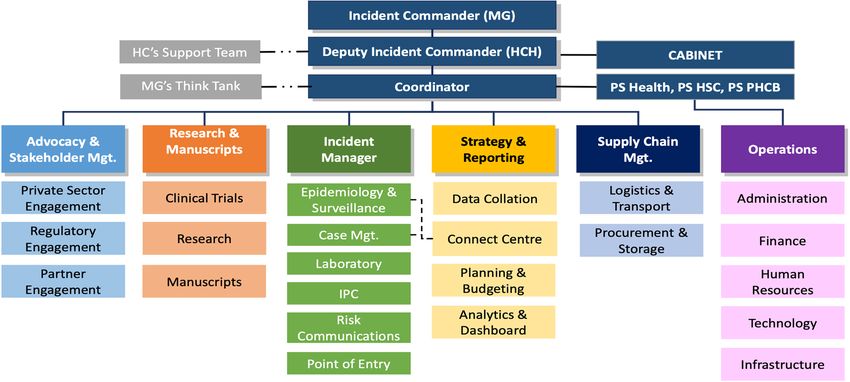
capacity. The ICS is organized into six thematic areas: flew into Lagos 24th February 2020 on a Turkish Airline
Advocacy and stakeholder management; Research and flight from Milan. The man stayed at a hotel near the
manuscripts; Incident Manager; Strategy and reporting; airport the night he arrived and was driven to his work-
Supply chain management and Operations (Fig. 3) [21]. place at Ewekoro, Ogun state, which shares a boundary
with Lagos state, the day after. He felt ill after two days
Role of the think tank of the Lagos state incidence and reported at a clinic [34].
command system The EOC was activated immediately at the State and
As part of response to COVID-19, the Governor and In- at LGA levels, to ensure the grassroots penetration of all
cident Commander created a COVID-19 Think Tank activities being carried out in response to the threat. All
(Fig. 3). This was a human resource strategy involving a the activities were in alignment with guidelines issued by
multidisciplinary team of subject matter experts who the National Centre for Disease Control (NCDC). These
Fig. 3 Structure of the Lagos State Incidence command systemAbayomi et al. Globalization and Health (2021) 17:79 Page 7 of 10
measures along with outcomes achieved between Febru- infection. Also, public and private health facilities
ary and May 2020 are presented below: have been assessed across the state for COVID-19
preparedness. During the period, 2972 personnel
i. Point of entry: there were screening of passengers were trained (694 non-clinical, 2278 clinical) on
at the airports, seaports, and land borders using IPC protocols.
temperature checks and enquiry about COVID-19 v. Logistics: A supply chain strategy was developed,
symptoms; infection prevention and control training which outlined the flow of commodity and
for point of entry staff of distribution of IEC mate- information, warehousing and distribution
rials to staff, stakeholders, and passengers. arrangement, Human resource as well as steps for
ii. Risk communication: this included sensitization emergency procurement. Also, a data management
meetings with the private sector, religious plan was developed to inform decision making on
organizations, stakeholders in the educational the replenishment and procurement of critical and
sector, informal sector, and government agencies & essential commodities for the COVID-19 response.
parastatals. In addition, several trainings and Furthermore, the Logistics Management Informa-
capacity building were carried out. The trainings tion System, Combined Daily Stock Status Dash-
were targeted at market men and women, youth board, Emergency Procurement Process and
organisations, social mobilization committees, ward COVID-19 supply chain were developed.
health committees, head teachers and principals, vi. Laboratory services: The State enhanced its capacity
community-based organisations, artisans, faith- to provide laboratory support for the diagnosis of
based organisations and traditional birth attendants. COVID-19 by improving the testing capacity of its
Between February and May 2020, focus group dis- laboratories from 180 samples at the beginning of
cussions (FGDs) were held across the 376 wards in the outbreak to 2000 samples a day across six la-
the state with ten representatives in each ward. The boratories including Lagos State Biobank and
result of the FGDs was used to refine the content of 54gene laboratory three months later. In particular,
the various risk communication messages that had the Lagos State Biobank, a BSL-3 Laboratory, which
been produced. Market and motor park was activated for COVID-19 testing in April 2020
sensitization events were held in 125 markets and [32], became pivotal to COVID-19 diagnosis in the
25 motor parks across 20 LGAs and 37 LCDAs. state being responsible for 60% PCR-testing for
There were also several press appearances on major COVID-19 diagnosis. Additional human resources
television stations in local languages. were recruited and trained to support the activities
iii. Surveillance and epidemiology: Four hundred of the laboratories across the State, ensuring that
DSNOs were trained on case definition, active they can provide 24-h services. Also, standard oper-
surveillance, contact tracing, case investigation and ating procedures and job aid were developed to
other reporting tools. Also, contacts of confirmed standardise procedures across all laboratories in the
cases were traced, identified, and monitored for the State.
period of the longest known incubation period of vii. Case management: The political support and
the virus. Active case search for COVID-19 was leadership from the government resulted in a
done across the whole state in which samples were favourable climate for public–private partnership
collected from community residents that fit the case with some banks and private organizations, which
definition for suspected cases and 24 LGA walk-in led to the construction and equipping of isolation
sample collection sites were set up across the state centres in a short amount of time as well as supply
to scale-up testing for COVID-19. During the and distribution of personal protective equipment
period, 22,000 passengers onboard a flight with a to health facilities [28]. In doing this, the state was
COVID-19 confirmed case and 432 returnees were able to increase the number of its isolation centres
followed up across the State. Also, 3,200 persons from one to six and from 115 beds at the IDH to a
who are contacts of confirmed cases were traced, total of 590 beds.
identified and monitored for the period of the lon-
gest known incubation period of the virus. In Budget to achieve these measures were drawn quar-
addition, 241 health workers were identified and in- terly to cater for the uncertainty associated with the
vestigated for exposure to COVID-19. ever-changing COVID-19 pandemic. For the second
iv. IPC: Sixteen IPC SOPs and guidelines developed quarter (May–July 2020), a budget of N10.8 billion
and disseminated to relevant stakeholders. Clinical (US$28.7 million) was estimated to actualise this inci-
and non-clinical personnel were trained on IPC dent action plan. The major costs were allocated tor case
protocols and tracked for health care workers management (N5.1 billion (US$13.3 million)), laboratoryAbayomi et al. Globalization and Health (2021) 17:79 Page 8 of 10
services (N1.6 billion (US$4.2 million)) and human re- this was the coming together of private sector collabora-
sources (N1.5 billion (US$4.0 million)) [28]. tors to form the Coalition Against COVID-19
(CACOVID) which is providing financing for immediate
Appraising implementation of the state’s purchase of medical supplies and the creation of isola-
emergency preparedness and response tion centres for patient care. For instance, one of the pri-
As of 17th May 2021, Lagos has reported 58,713 labora- vate sector collaborators was a financial institution,
tory confirmed cases of COVID-19, 56,990 have been which worked quickly to transform a stadium into a
discharged and 439 patients have died [11]. Modelled es- 110-bed isolation centre within five days in partnership
timates showed that without robust response measures, with Lagos State [47]. This is a huge strength for robust
significantly large number of cases and deaths should response, as shown in China where strengthening of do-
have been expected in Lagos and Nigeria [35–37]. This mestic linkages was deemed key in responding to the
would have had grave consequences on an already over- pandemic [38]. A systematic review on health security
whelmed health system, as has been reported for many capacities of 182 countries clearly showed that countries
parts of Africa [38, 39]. Some of the response measures vary widely in terms of their capacity to prevent, detect
that appear to have worked in stemming this tide in- and respond to outbreaks [15]. While governments in
clude strict lockdowns, social distancing, including bans high income countries have the financial mettle to fund
on social and religious gatherings and restrictions of such capital-intensive structures, LMIC governments are
intra- and inter-state movements [40]. Many countries not in such strong positions. Therefore, private sector
in sub-Saharan Africa were swift in deploying similar re- support is indeed invaluable. Similar to Nigeria, Uganda,
sponse measures with similar successes although testing South Africa and Ghana were able to manufacture low-
capacities remain inadequate in the region [41]. cost ventilators through public private partnerships.
The fact that the EOC was in place in Lagos State be- Senegal’s cheap and rapid COVID-19 diagnostic test was
fore the pandemic started helped to get an advance party also enabled by the private sector [41].
started as the virus reached Lagos. For example, the Kapata and colleagues iterated that African countries
management of the index case was immediately able to are on heightened alert to detect and isolate cases of
commence at the IDH after laboratory confirmation and COVID-19 as substantial progress has been made since
contact tracing commenced immediately [42]. Similar the 2014 EVD outbreak with lessons learnt from previ-
capacity for early diagnosis, swift isolation of cases and ous and ongoing outbreaks in addition to significant in-
prompt contact tracing were strong points of the 2014 vestments into surveillance and preparedness [6]. Lagos
EVD outbreak response that led to only eight mortalities State recognised the risk and initiated planning for
in Nigeria [10, 24]. At the time, the WHO described COVID-19. While some of its preparedness were framed
Nigeria’s response as a “spectacular success story”, as the based on lessons and experiences of the 2014 EVD out-
total number of cases remained 19, with seven deaths break, many were still being learnt on-the-go during the
[43]. However, with COVID-19, the entirety of the EOC ongoing pandemic. The establishment of Incident Com-
was not in place and many members were just only mand Centre for outbreak preparedness and response
commissioned when the outbreak reached Lagos. Critic- activities has enabled the state to gather intelligence re-
ally, community and religious leaders were only brought ports daily as well as identify impending public health
on board after the committee had been established. It is threats and ensure that outbreak responses are well co-
established that community and religious leaders are ordinated and controlled [48]. For the 2014 EVD out-
huge influencers during outbreaks and play a pivotal role break, the success recorded in its control were attributed
in the whole-of-society pandemic readiness that the to the incident management approach with significant
WHO recommends for national responses [44, 45]. support provided by the private sector and international
Health worker preparedness for COVID-19 in Lagos community [24]. However, with all countries including
focused on capacity building. However, since the onset donor countries facing significant challenges of their
of the outbreak, health workers have faced several chal- own with COVID-19, the international community was
lenges including burnout from overwhelming workload, understandably not particularly a huge contributor in
with some advocating for inclusion of coping strategies the middle of the crisis. Indeed, private sector and per-
for optimizing mental health to be included in training sonal philanthropic donations became important sources
activities [46]. This is an area that could be improved to of funding for health facilities during the pandemic [49].
ensure that frontline health workers are able to best pro- A key part of the strategy that has been added now is
vide the care that patients need in such crisis. research. This has allowed for more targeted under-
By partnering with private sector, Lagos was able to standing of the pandemic and expansion of innovation
minimize some of the cost that would have been in- in responding to it. For example, a survey of the symp-
curred in responding to the outbreak. A key example of toms and signs of the first 2,184 PCR-confirmedAbayomi et al. Globalization and Health (2021) 17:79 Page 9 of 10
COVID-19 patients [50], provided evidence that shaped Declarations
training of health workers on identification of COVID-
Ethics approval and consent to participate
19 cases. Not applicable.
Consent for publication
Conclusion Not applicable.
As with the 2014 EVD outbreak, many anticipated as
“urban apocalypse” with COVID-19 infiltrating the Competing interests
Lagos megacity [43]. This did not happen then and is All authors have been involved at different times in the emergency
yet to happen with the ongoing pandemic. Indeed, pre- preparedness and response activities of Lagos State.
paredness is a continuous process in which action, fund- Author details
ing, partnerships, and political commitment at all levels 1
Lagos State Ministry of Health/Lagos Incident Management Command
must be sustained. It relies on all stakeholders working System, Lagos, Nigeria. 2Lagos State Biosafety and Biosecurity Governing
Council, Lagos, Nigeria. 3College of Medicine University of Lagos, Idi-Araba,
together effectively to plan, invest in, and implement pri- Lagos, Nigeria. 4LSE Health, London School of Economics and Political
ority actions. Like other geographical entities that have Science, London, UK. 5School of Public Health, University of Nevada, Las
had devastating outbreaks, Lagos State harnessed lessons Vegas, USA. 6Bloom Public Health, Lagos, Nigeria. 7Global Emerging
Pathogens Treatment Consortium, Lagos, Nigeria.
learned from the 2014 EVD outbreak, in what has been
referred to by some authors as the ‘Ebola legacy’ [51]. Received: 9 December 2020 Accepted: 28 June 2021
More importantly, many systems were already in place
to tackle any outbreaks that occurred post-2014. The
state’s response has also benefitted from strong leader- References
1. WHO. Past pandemics. Pandemic influenza; 2020. https://www.euro.who.int/
ship, robust collaborations with national and inter- en/health-topics/communicable-diseases/influenza/pandemic-influenza/pa
national partners, new partnerships with private sector st-pandemics. Accessed 17 June 2020.
and generous donations of altruistic individuals. How- 2. LeDuc JW, Barry MA. SARS, the first pandemic of the 21st century. Emerg
Infect Dis. 2004;10(11):e26–e26.
ever, the state needs to continue to expand its prepared- 3. Centers for Disease Control and Prevention. 2014–2016 Ebola Outbreak in
ness to be more resilient and future proof to respond to West Africa. Ebola (Ebola Virus Disease); 2016. https://www.cdc.gov/vhf/
outbreaks like COVID-19, as it is clear that this is in- ebola/history/2014-2016-outbreak/index.html. Accessed 17 June 2020.
4. Wu Z, McGoogan JM. Characteristics of and important lessons from the
deed the “new normal” for health systems. Looking be- Coronavirus Disease 2019 (COVID-19) outbreak in China. JAMA. 2020;323(13):
yond intra-state gains, lessons and identified best 1239.
practices from the past and present should be shared 5. WHO. COVID-19 in the WHO African Region. Coronavirus (COVID-19); 2020.
https://www.afro.who.int/health-topics/coronavirus-covid-19. Accessed 17
with other states and countries. June 2020.
6. Kapata N, Ihekweazu C, Ntoumi F, Raji T, Chanda-Kapata P, Mwaba P, et al. Is
Abbreviations Africa prepared for tackling the COVID-19 (SARS-CoV-2) epidemic. Lessons
EVD: Ebola Virus Disease; LASG: Lagos State Government; LSMOH: Lagos from past outbreaks, ongoing pan-African public health efforts, and
State Ministry of Health; LSBGC: Lagos State Biosecurity and Biobanking implications for the future. Int J Infect Dis. 2020;93:233–6.
Governance Council; GET: Global Emerging Pathogens Treatment; 7. WHO. WHO Director-General’s opening remarks at the media briefing on
BSL: Biosafety laboratory; BBT: Biobanking and Biosecurity Team; COVID-19—11 March 2020. Speeches; 2020. https://www.who.int/dg/
EPR: Epidemic Preparedness and Response; RRT: Rapid Response Team; speeches/detail/who-director-general-s-opening-remarks-at-the-media-
LGA: Local Government Area; DSNO: Disease Surveillance and Notification briefing-on-covid-19---11-march-2020. Accessed 28 Aug 2020.
Officer; IMC: Incident Management Centre; EOC: Emergency Operations 8. WHO. Coronavirus disease 2019 (COVID-19) Situation Report—73. Geneva;
Centre; ICS: Incident Command System 2020. https://www.who.int/docs/default-source/coronaviruse/situation-
reports/20200402-sitrep-73-covid-19.pdf?sfvrsn=5ae25bc7_6. Accessed 6 July
2021.
Acknowledgements 9. WHO. WHO Coronavirus Disease (COVID-19) dashboard; 2020. https://covid1
Not applicable. 9.who.int/. Accessed 22 Jan 2021.
10. Shuaib F, Gunnala R, Musa EO, Mahoney FJ, Oguntimehin O, Nguku PM,
et al. Ebola virus disease outbreak—Nigeria, July–September 2014. MMWR
Authors’ contributions Morb Mortal Wkly Rep. 2014;63(39):867–72.
AA, JI, FO conceptualised the study; AA, JI, FO, MRB, MB, AB-T, BM, MS, LA, 11. NCDC. Confirmed Cases by State. Abuja; 2020. https://covid19.ncdc.gov.ng/.
AF, FA, AO, MB, AA, IA, EE, AB, SO, BS, AO, AO, OW contributed to literature Accessed 6 July 2021.
review and generation of information for this study; MRB, AB-T, JO, OO, CE, 12. Lagos Bureau of Statistics. Lagos State Government: Digest of Statistics.
ME contributed to manuscript development and writing; AA and FO Lagos: Lagos Bureau of Statistics; 2013.
reviewed the manuscript. All the authors read and approved the final 13. United Nations. World Urbanization Prospects: The 2018 Revision. New York:
manuscript. United Nations; 2019. Report No.: ST/ESA/SER.A/420. https://population.un.
org/wup/Publications/Files/WUP2018-Report.pdf. Accessed 6 July 2021.
Funding 14. NCDC. First case of Coronavirus Disease confirmed in Nigeria. News; 2020.
Funding for this study was provided by the Government of Lagos State https://ncdc.gov.ng/news/227/first-case-of-corona-virus-disease-confirmed-
through its COVID-19 Outbreak Response and Countermeasure. in-nigeria. Accessed 16 May 2021.
15. Kandel N, Chungong S, Omaar A, Xing J. Health security capacities in the
context of COVID-19 outbreak: an analysis of International Health
Availability of data and materials Regulations annual report data from 182 countries. Lancet (London,
Not applicable. England). 2020;395(10229):1047–53.Abayomi et al. Globalization and Health (2021) 17:79 Page 10 of 10
16. WHO. A strategic framework for emergency preparedness. Geneva: World 40. Ajisegiri W, Odusanya O, Joshi R. COVID-19 outbreak situation in Nigeria and
Health Organization; 2017. p. 1–29. https://apps.who.int/iris/bitstream/ha the need for effective engagement of community health workers for
ndle/10665/254883/9789241511827-eng.pdf?sequence=1. Accessed 6 July epidemic response. Glob Biosecur. 2020;2(1). https://doi.org/10.31646/gbio.
2021. 69.
17. WHO. Framework for a public health emergency operations centre. Geneva: 41. Osseni IA, Osseni IA. COVID-19 pandemic in sub-Saharan Africa: preparedness,
World Health Organization; 2015. p. 1–80. https://apps.who.int/iris/bitstrea response, and hidden potentials. Trop Med Health. 2020;48(1):1–3.
m/handle/10665/196135/9789241565134_eng.pdf?sequence=1. Accessed 6 42. Nigeria Centre for Disease Control. First case of Corona Virus disease
July 2021. confirmed in Nigeria. 2020. https://ncdc.gov.ng/news/227/first-case-of-
18. GET Consortium. Global Emerging Pathogens Treatment Consortium; 2019. corona-virus-disease-confirmed-in-nigeria. Accessed 28 June 2020.
https://www.getafrica.org/global-emerging-pathogens-treatment- 43. WHO. Successful Ebola responses in Nigeria, Senegal and Mali. Emergencies
consortium/. Accessed 6 July 2021. preparedness, response; 2015. https://www.who.int/csr/disease/ebola/one-
19. Shaw DM, Elger BS, Colledge F. What is a biobank? Differing definitions year-report/nigeria/en/. Accessed 17 May 2021.
among biobank stakeholders. Clin Genet. 2014;85(3):223–7. 44. World Health Organization. Whole-of-society pandemic readiness: WHO
20. Hewitt R, Watson P. Defining biobank. Biopreserv Biobank. 2013;11(5):309–15. guidelines for pandemic preparedness and response in the nonhealth
21. Rappert B. The definitions, uses, and implications of biosecurity. In: sector. Geneva; 2009. https://www.who.int/influenza/preparedness/pa
Biosecurity. London: Palgrave Macmillan; 2009. p. 1–21. https://link.springer. ndemic/2009-0808_wos_pandemic_readiness_final.pdf. Accessed 6 July
com/chapter/10.1057/9780230245730_1. Accessed 17 May 2021 2021.
22. Lagos State Government. LASG scales up preparedness for emergency 45. International Committee for the Red Cross. Religious and community
infectious diseases. News; 2021. https://lagosstate.gov.ng/blog/2019/10/01/ leaders play pivotal role in relaying critical information on COVID-19;
lasg-scales-up-preparedness-for-emergency-infectious-diseases/. Accessed 2020. https://www.icrc.org/en/document/religious-and-community-lea
16 May 2021 ders-play-pivotal-role-relaying-critical-information-covid-19. Accessed 28
23. Idris J, Fagbenro A. Lagos the Mega-City: a report on how the metropolis June 2020.
handled an outbreak of the Ebola epidemic. In: Socio-cultural dimensions of 46. Semaan A, Audet C, Huysmans E, Afolabi B, Assarag B, Banke-Thomas A,
emerging infectious diseases in Africa. Cham: Springer International et al. Voices from the frontline: findings from a thematic analysis of a rapid
Publishing; 2019. p. 281–98. online global survey of maternal and newborn health professionals facing
24. Otu A, Ameh S, Osifo-Dawodu E, Alade E, Ekuri S, Idris J. An account of the the COVID-19 pandemic. BMJ Glob Health. 2020;5(6):e002967.
Ebola virus disease outbreak in Nigeria: implications and lessons learnt. BMC 47. Hruby A. African private sector mobilizes COVID-19 response. Atlantic
Public Health. 2017;18(1):3. Council. 2020. https://www.atlanticcouncil.org/blogs/africasource/african-
25. APO. Coronavirus—Nigeria: the Lagos state biosafety level-3 laboratory private-sector-mobilizes-covid-19-response/. Accessed 28 June 2020.
activated for COVID-19 testing. AfricaNews; 2020. https://www.africanews. 48. Mustapha J, Adedokun K, Nasir I. Public health preparedness towards
com/2020/04/05/coronavirus-nigeria-the-lagos-state-biosafety-level-3-labora COVID-19 outbreak in Nigeria. Asian Pac J Trop Med. 2020;13(5):197.
tory-activated-for-covid-19-testing//. Accessed 17 June 2020. 49. Banke-Thomas A, Makwe CC, Balogun M, Afolabi BB, Alex-Nwangwu TA,
26. GET Consortium. Lagos State Biobank; 2018. https://www.getafrica.org/a Ameh CA. Utilization cost of maternity services for childbirth among
ctivities/lagos-state-biobank/. Accessed 17 May 2021. pregnant women with coronavirus disease 2019 in Nigeria’s epicenter. Int J
27. FMOH. Technical guidelines for integrated disease surveillance and Gynecol Obstet. 2021;152(2):242–8.
response in Nigeria. Third. Abuja; 2019. p. 1–616. https://ncdc.gov.ng/ 50. Abayomi A, Odukoya O, Osibogun A, Wright O, Adebayo B, Balogun M, et al.
themes/common/docs/protocols/242_1601639437.pdf. Accessed 6 July Presenting symptoms and predictors of poor outcomes among 2184 patients
2021. with COVID-19 in Lagos State. Niger Int J Infect Dis. 2021;102:226–32.
28. LSMOH. Lagos state incident command system incident action plan. Ikeja; 51. Chua AQ, Alknawy B, Grant B, Legido-Quigley H, Lee WC, Leung GM, et al.
2020. Report No.: May 2020. How the lessons of previous epidemics helped successful countries fight
29. H3Africa. Human, heredity & health in Africa Initiative. https://h3africa.org/ covid-19. BMJ. 2021. https://doi.org/10.1136/bmj.n486.
index.php/about/. Accessed 16 May 2021.
30. GET Consortium. Bridging Bio-banking and Bio-medical research across Publisher’s Note
Europe and Africa. Our Blog; 2019. https://www.getafrica.org/activities/our- Springer Nature remains neutral with regard to jurisdictional claims in
blog/b3-africa/. Accessed 16 May 2021. published maps and institutional affiliations.
31. Lagos State Government. Lagos to adopt one health model to tackle
biological threats. News; 2019. https://lagosstate.gov.ng/blog/2019/05/14/la
gos-to-adopt-one-health-model-to-tackle-biological-threats/. Accessed 16
May 2021.
32. NCDC. National strategy to scale up access to Coronavirus Disease testing
in Nigeria. Abuja; 2020. http://covid19.ncdc.gov.ng/media/files/COVID1
9TestingStrategy_2ZWBQwh.pdf. Accessed 6 July 2021.
33. DRASA Health Trust. Lagos gets prepared with a state of the art biobank.
News & Blog; 2018. https://www.drasatrust.org/lagos-state-biobank/.
Accessed 17 May 2021.
34. Adepoju P. Nigeria responds to COVID-19; first case detected in sub-Saharan
Africa. Nat Med NLM (Medline). 2020;26:444–8.
35. van Zandvoort K, Jarvis CI, Pearson CAB, Davies NG, Nightingale ES, Munday
JD, et al. Response strategies for COVID-19 epidemics in African settings: a
mathematical modelling study. BMC Med. 2020;18(1):1–19.
36. Ogundokun RO, Lukman AF, Kibria GBM, Awotunde JB, Aladeitan BB.
Predictive modelling of COVID-19 confirmed cases in Nigeria. Infect Dis
Model. 2020;5:543–8.
37. Iboi EA, Sharomi O, Ngonghala CN, Gumel AB. Mathematical modeling and
analysis of COVID-19 pandemic in Nigeria. Math Biosci Eng. 2020;17(6):7192–
220.
38. Chersich MF, Gray G, Fairlie L, Eichbaum Q, Mayhew S, Allwood B, et al.
COVID-19 in Africa: care and protection for frontline healthcare workers.
Glob Health. 2020;16(1):46.
39. Lucero-Prisno DE, Adebisi YA, Lin X. Current efforts and challenges facing
responses to 2019-nCoV in Africa. Glob Health Res Policy. 2020;5(1):21.You can also read


