Game Based Assessments - Are they really the future? STEN10 Prepared by: Association for Business ...
←
→
Page content transcription
If your browser does not render page correctly, please read the page content below
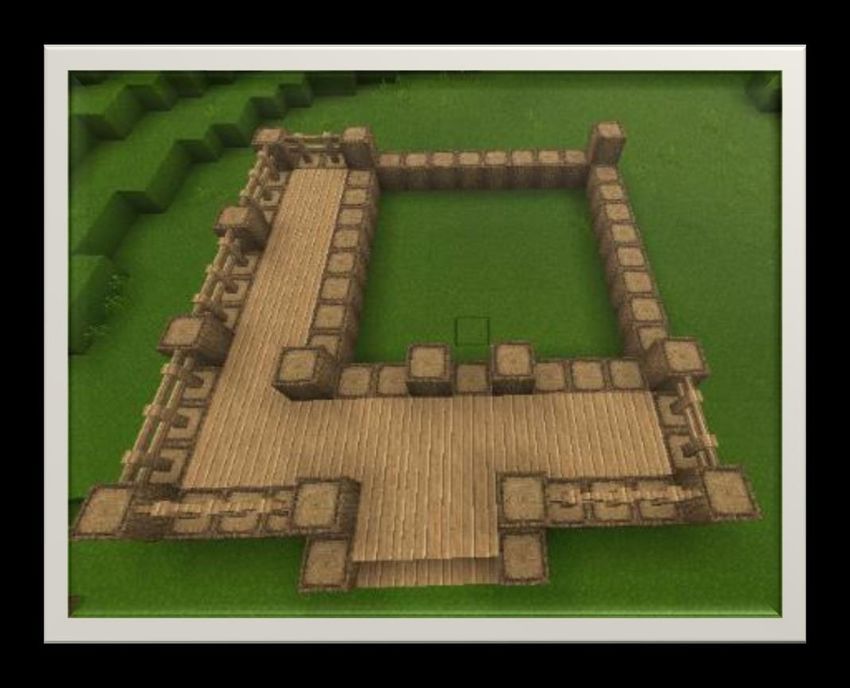
Game Based
Assessments
Are they really the future?
12 May, 2019

Prepared by:

STEN10
Ben Williams
Business Psychologist

Kings Head House, 15 London End,
Beaconsfield HP9 2HN
                                   In association with
   +44 (0)1494 412 861
   +44 (0)7939 156 708
   ben@sten10.com/amy@sten10.com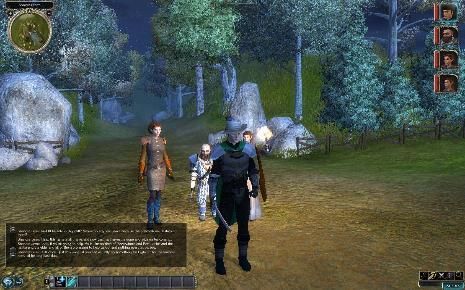
Who I am

           •   Chartered Psychologist

           •   Managing Director of Sten10 Ltd. / Chair of ABP

           •   Publisher-independent

           •   (Was an) avid gamer

                                                                 2
Agenda
LEVEL 1 - Introduction to Game Based Assessment

   •    Key parameters of a GBA
   •    Four types of GBA

LEVEL 2 - Evidence Base

   •    Types of Evidence
   •    Reliability / Validity / Adverse impact / Engagement

LEVEL 3 - Conclusions

                                                               3
Level 1
Introduction
   to GBA

Key Parameters of a GBA
• Nature: Gamification vs. Game Based Assessment
• Type: Custom-built vs. pre-existing vs. gamified traditional vs. VR
• Measures: performance, behavioural choice and / or ‘meta-data’ to assess:

    • Abilities:
        • Cognitive processing speed
        • Attention span
        • Working memory
        • V, N, A reasoning

    • Personality traits:
        • Persistence
        • Risk propensity
        • Emotional Intelligence

    • ‘Role-Fit’ – A.I. % match

                                                                              5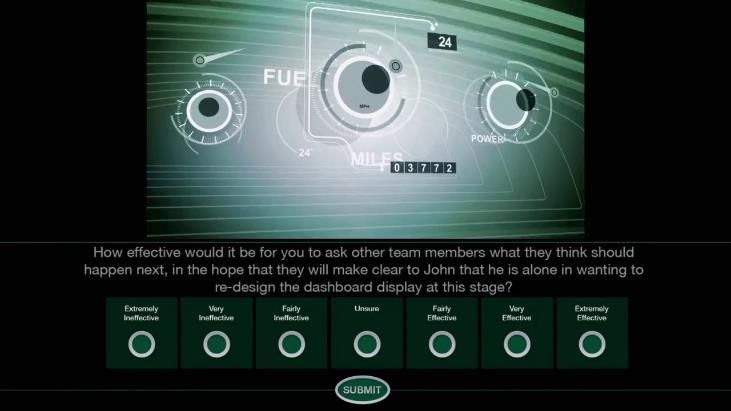
Gamification in Recruitment

                              6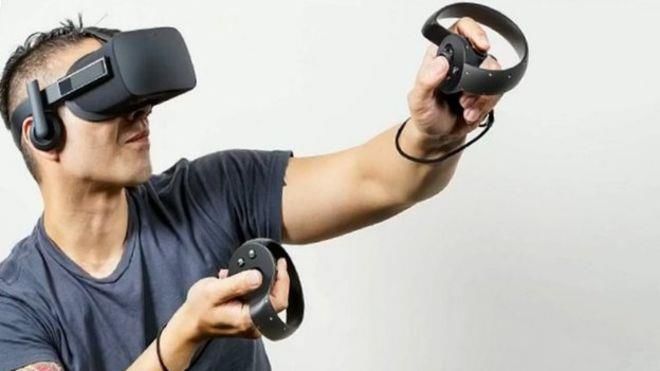
Types of GBA
1. Custom-Built GBA’s

                        7
Arctic
Shores

         8
Knack

        9
HireVue (formerly MindX)

                           10
Quest
11Revelian
12Pymetrics
13Types of GBA
2. Pre-existing
14‘Pre-Existing’ Games
15Types of GBA
3. Tailored Traditional
16Gamified Assessments (Not ‘Games’?)
17Types of GBA
4. Virtual Worlds, Virtual Reality
1819
Level 2
Evidence
  Base
The Challenges
The challenges of establishing psychometric properties:

•   A New Market - GBA Test publishers are quite young
    meaning evidence of predictive power is limited by necessity

•   Generalisations about the evidence base are difficult
    compared to ‘traditional’ psychometrics due to the variety of
    design

•   Objectivity - Investigating GBAs objectively is problematic
    as commercial IP is tied up in the algorithms used. Also,
    most research being funded and facilitated by the publishers
    themselves

•   Common method variance – using GBAs changes the way
    constructs are measured (construct validity)

•   Complex – not only raw score but thousands of meta-data
    points are measured

                                                                    21
Reliability and Validity
22Consistency
over time
Reliability
Sources of
Internal
measurement
error consistency
23Consistency
(All from test GBA test publishers)
Internal consistency
• 0.6 – 0.9 (n = 6,000)
• 0.51 – 0.96 (n = < 100)
• 0.84 (n = 500)
(n.b. typical vs maximum ideal values)
Consistency over time
• 0.57 – 0.82 test-retest
Parallel form
• 0.44 – 0.79 for subtests
• >0.9 for app version vs laptop version
24Sources of Measurement Error
Length of assessment
• Greater engagement: longer assessment: better reliability? (Riley, 2015)
Distortion
• GBA assesses behaviour directly, not through self report: more resistant
to distortion? (Landers, 2015) Scores modified on self-report PQs for
extraversion and agreeableness, but unable to in a GBA (Montefiori,
2016)
Irrelevant Factors
• Potential reliance on irrelevant factors such as hand-eye co-ordination.
Highly interactive games may create unnecessary cognitive load.
(Zapata-Rivera & Bauer, 2012)
25Face /
Engagement
Validity
Criterion Construct
26Intention
Anxiety to accept
job
Perception
Enjoyment
of fairness
Gaming
Technology
Expertise
Face Validity / Engagement
- Selected studies
27Intention
to accept
job Intention to accept job offer
Animated characters = positive attitude towards hiring
company, stronger intention to accept a job offer (e.g.
Motowidlo et al., 1990; Richman-Hirsch et al., 2000;
Bruk-Lee et al., 2012)
Face Validity / Engagement
- Selected studies
28Enjoyment
+ve
• A test publisher found 94.3% of ppts (N = 1747)
reported enjoyed playing a GBA
• Another test publisher found 90% of candidates feel
that GBAs are the same or better than traditional
assessments
Enjoyment
-ve
• Candidates value ease of use and usability more
than enjoyment. Most candidates would prefer job
relevant test (e.g. work sample) over fun games.
(Laumer et al. 2012)
Enjoyment mediated by individual differences:
• Oostrom et al (2011): candidate perceptions
positively correlated with personality traits of
Openness and Agreeableness
Face Validity / Engagement
- Selected studies
29Gaming Expertise
Intention
Anxiety to accept A test publisher (2014) found 80% ‘enjoyed’
gamified learning tool BUT ‘hard-core gamers’
job disengaged. Millennials most likely to logon, but
quickest to drop out. Also found males more likely
to engage with the game
‘fairness’ Enjoyment
Enjoyment
Technology
Preuss (2017) found that 60% of candidates prefer
Gaming
Gaming using Gamified SJT over a traditional SJT.
Technology
Expertise
Expertise
However, technological difficulties for some
candidates resulted in lower perception of gamified
SJT
Face Validity / Engagement
- Selected studies
30Perception of ‘fairness’
• A quarter of candidates believe completing an
assessment on a mobile device would provide a ‘fair’
testing experience (Fursman & Tuzinski, 2015)
Anxiety • Landers (2017) found test takers consider GBA ‘fairer’
than general cognitive ability tests
• Different publisher’s manual showed 40% saw it as
more fair, 40% less fair
Perception
of fairness
Anxiety
• 74% (n=200) felt less anxiety for GBA, 89% enjoyed
the selection process, 81% felt more excited about the
prospect of working for the firm (test publisher
research)
• Geimer et al (2015) found Candidates experienced
higher levels of anxiety when feedback is given in
game
Face Validity / Engagement
- Selected studies
31Construct Validity
-Selected research
Big Five Personality
Van Lankveld (2011) 275 individual metrics in
‘Neverwinter Nights’ and found 1,375
correlations with Big 5 traits. However, some
of these could be spurious. (n.b. n=44)
Short et al (2017) found no links to Big 5
using World of Warcraft. Fairly consistent
support for preference for virtual teamwork
and technology readiness.
32Construct Validity
-Selected research
Working Memory/Fluid Intelligence
Baniqued et al (2013) found performance
on games that required working memory
and reasoning significantly correlated with
performance on working memory and fluid
intelligence tasks.
33Construct Validity
-Selected research
Correlations with established
measures of same
constructs:
Test provider 1*: 0.24 to 0.44
Test provider 2*: 0.2 to 0.26
Test provider 3*: 0.3 to 0.54
34Construct Validity cont.
Figure 1 below for results. Personality constructs were found to be
partly similar. There were varying results for cognitive abilities
(divergent – different, convergent – similar).
35Criterion Validity
- Selected Research
Landers (2017) aimed to validate a cognitive ability GBA through comparison with a traditional
test battery and found:
• The game predicted ‘grade point average’ outcome measure better than 15 separate
Spearman’s g measures (Spearman’s g provided no ‘unique’ prediction).
--------------------------------------------------------------------------------------------------------------------
Other case studies from GBA publishers:
• Prediction of selection success for air traffic controllers (2017). Significant difference between
successful and unsuccessful applicants’ mean scores on GBA (p>.001)
• Overall AC pass rate in 2016 = 24% Now in 2017 = 40% (60% for some Business Areas)
• Hi / low manager rating versus GBA performance: 0.019 sig.
• Global Tech Co.: Quality of Hire survey: .162 and .220
• Prediction of competency scores in AC for sales roles ranged between .135 to .347.
• Prediction of competency performance at a retail company – Multiple R .539
• High performance contact centre agents made 66% more bookings in value than the lowest
performers, 10% more calls in a month on average
36Adverse Impact
Case study 1 (2016): 5,000+ participants, no adverse impact for:
Age, Gender, Ethnicity, Disability (after WM adjustment for dyslexia),
Gaming experience, Handedness, Screen size
Case Study 2 (2017): 1,054 candidates, no adverse impact for:
Age, Gender, Race
Case Study 3 (2016): 155 participants, no gender differences on:
“cognitive style”, “information processing competencies”
Case Study 4 (2018): No gender differences on personality responses
BUT, SHOULD there be group differences to reflect what we know
about human nature?
37Level 3 Conclusions
Summary

 ‘The practice of gamification has far outpaced researcher understanding of
              its processes and methods’ (Landers et al, 2015).

• Relative lack of peer-reviewed, academic (non-vendor-led) research.

• Of the evidence there is, reliability (internal consistency and over time),
  engagement and adverse impact data looks promising. Construct validity
  and parallel form reliability is positive, with caveats. Validity on later-
  assessment stages and on the job looks good, although more academic-
  led research would be beneficial.

                                                                                39
Thank you!
Any Questions?
40You can also read


