GCSE OPTIONS 2021 - Dubai English Speaking College - Dubai English Speaking School
←
→
Page content transcription
If your browser does not render page correctly, please read the page content below

Dubai English Speaking College

   GCSE OPTIONS
       2021

                        Dare Excel Share Create
The Key Stage 4 Curriculum 2021

Contents
Introduction                                                        3
Advice                                                              4
The Common Core - Information about Compulsory Subjects             5
    English Language                                                6
    English Literature                                              7
    G.R.O.W (Getting Ready for the Outside World)                   8
    Mathematics                                                     9
    Core Physical Education                                        10
    Science                                                        11
    Social Studies                                                 12
Information about Optional Subjects                                13
    Arabic                                                         14
    Art & Design                                                   15
    Business Studies                                               16
    Computer Science                                               17
    Dance                                                          18
    Design & Technology                                            19
    Drama                                                          20
    Economics                                                      21
    Food Preparation and Nutrition                                 22
    French and Spanish                                             23
    Geography                                                      24
    History                                                        25
    ICT                                                            26
    Media Studies                                                  27
    Music                                                          28
    Physical Education                                             29
    Psychology                                                     30

                                        2                 Dare Excel Share Create
Introduction to the Curriculum
The Key Stage 4 Curriculum 2021 - 2023
Here at DESC, we understand learning between the ages of 14 and 19 is significant in preparing them for
life and work. When students start Year 10 they enter Key Stage 4 of the National Curriculum. These
years are very important and, with the help and support of both home and school, students can achieve
their full potential.

Careful thought is required to ensure that each student follows a course which best suits his or her
needs. Students are encouraged to study a broad and balanced curriculum and, our Key Stage 4
Curriculum has been structured accordingly to achieve this aim. The KS4 Curriculum not only mirrors
some of the statutory requirements in the UK, but also offers students a choice of option subjects to
select from.

The UK law requires that all students study the following:-
    ◼   English (including English Literature) = 2 GCSEs
    ◼   Mathematics = 1 GCSE
    ◼   Double Award Science “Trilogy”= 2 GCSEs or Separate Sciences = 3 GCSEs
    ◼   Core PE (non-GCSE, not examined)
    ◼   Some statutory elements of PSHE (non-GCSE, not examined)

The English Baccalaureate (EBacc) is a school performance measure used in the UK. Although at DESC,
we are not required to enforce the EBacc on students, you might like to bear in mind the restrictions on
choices within the UK. As well as taking the Core subjects (English, Maths, Science), students are also
required to choose History or Geography and a Foreign Language.

Dubai English Speaking College requires:-
All students study the above in line with UK statutory requirements and will select four further subjects,
making a total of nine or ten GCSE subjects altogether.

Muslim students follow the Islamic Education course as part of the ‘Common Core,’ whereas non-Muslim
students will follow the “Getting Ready for the Outside World” course. The two subjects are timetabled
at the same time, with the remaining time for Islamic Education coming from one 25 minute morning
lesson.

Students who have registered at the school using an Arab passport are required by UAE law to study
the Ministry of Education Arabic course, known as Arabic A, for three hours per week. Arab students
will need to choose Ministry Arabic in place of one of their other choices.

All GCSE courses will be graded 9-1, rather than using letter grades.

                                                     3                         Dare Excel Share Create
Advice
Advice for Students

Do choose a subject if:-

◼   You are successful at it
◼   You enjoy it
◼   This subject may help you to achieve your career plans

Do not choose a subject if:-

◼   The subject looks an easy option - all GCSE courses have a similar level of difficulty.
◼   You want to do it because your friend is also doing the subject. He or she may have different
    abilities and different career plans. They may also be in a different group to you.
◼   You like the teacher you have this year. It is quite possible that you will have a different teacher
    next year.

For some subjects, it is possible to study them at A level, even if you do not choose them at GCSE.
These are: Business Studies, Economics, Media Studies, Psychology, Drama, Physical Education and Infor-
mation Technology. A number of BTEC subjects are also offered in Sixth Form which do not require
GCSEs.

Looking ahead to A level choices and beyond, some subjects are called ‘facilitating subjects’ if they are
more frequently required for entry to degree courses at University. Choosing these courses gives you a
wide range of options for University. These subjects include the Core subjects (Sciences, English and
Maths) as well as Geography, History and Languages. Students in Year 11 choosing their A levels who do
not have a clear idea of what they want to study at University are advised to choose two facilitating
subjects so that they have a wide range of degree courses to choose from.

Many future careers will be unaffected by GCSE subject choices, but applicants to Law degrees need to
have History or English Language or Literature A levels. If you have a particular career/course/
University in mind, it would be worth looking online to double-check entry requirements, or speaking to
Mr Burke or Ms Vitoratos for guidance.

You are fortunate to be surrounded by an extensive support network including parents, older siblings
and friends, a form tutor, subject teachers, a G.R.O.W. teacher, a Head/Deputy Head of House, as well
as Senior Teachers.

We all want to help you make the right choice, so please involve us in your decision!

                                                       4                           Dare Excel Share Create
The Common Core
   Information about
  Compulsory Subjects

           5        Dare Excel Share Create
English Language
KEY FACTS               What are the benefits of studying English Language?
                        Enjoyment and a love of language and literature are fundamental to the planning
This is a compulsory
subject for all GCSE    and delivery of our curriculum, coupling a skills-based approach with dynamic and
students.               engaging content.

Examining Board:        Communication skills are vital! Being able to speak, listen, read and write are the
                        cornerstones of building personal relationships and being successful in all aspects
AQA                     of life.
Syllabus/Code:
English Language 8700   What will students have the opportunity to study?

                        Reading
                        Students will read, understand and analyse texts from the 19th, 20th and 21st
                        centuries with a focus on:

                        ◼    Critical reading comprehension
                        ◼    Summary and synthesis
                        ◼    Evaluation of writers’ choices
                        ◼    Critical comparison

                        Writing
                        Students will aim to write clearly, coherently and accurately, using a range of
                        vocabulary and sentence structures in order to write for impact.

                        How will students be assessed in GCSE English?

                                                              Assessment
                            Unit         Title            Mode & Weighting        Time            Focus
                                                                                                 Literary
                                    Explorations in                                              Fiction
                             1     Creative Reading           Exam – 50%          1 hr 45      Descriptive/
                                     and Writing                                                Narrative
                                                                                                 Writing
                                                                                                 1 Non-
                                                                                                 Fiction
                                    Writers’ View-                                              1 Literary
                             2        points and              Exam – 50%          1 hr 45      Non-Fiction
                                     Perspectives
                                                                                                Writing to
                                                                                                persuade

                                          FOR FURTHER INFORMATION PLEASE CONTACT:
                                                     Mrs Abbott, Director of English

                                                 6                           Dare Excel Share Create
English Literature
Key Facts                 What are the benefits of studying English Literature?
                          The English Department concentrates on embedding a love of English and
This is a compulsory
subject for all GCSE      creating a safe environment for all students to speak, listen, read, write and
students.                 think.

Examining Board:          Students are encouraged to read a wide range of classic literature alongside
                          reading widely and often. The course will develop their ability to critically
AQA                       evaluate works of literature in depth in order to appreciate the power of English
                          Literary heritage.
Syllabus/Code:
English Literature 8702
                          What will students have the opportunity to study?
                          Reading

                          ◼   Students will study a range of prose, poetry and drama with a focus on:
                          ◼   Literal and inferential comprehension
                          ◼   Critical reading
                          ◼   Evaluation of writers’ choices
                          ◼   Critical comparison and contrast
                          ◼   Analysing structural features and using literary and linguistic terminology

                          Writing
                          Students will write effectively and analytically about literature, producing clear
                          and coherent text; using Standard English.

                          How will students be assessed in GCSE English Literature?

                                                               Assessment
                              Unit                  Title              Mode & Weighting            Time

                               1      Shakespeare and 19th Century           Exam – 40%           1 hr 45
                                                 Novel

                               2         Modern Texts and Poetry             Exam – 60%           2 hr 15

                          What can students do next?
                          Success at GCSE English Literature is an excellent foundation for studying English
                          Literature at A level.

                          It is also an indication to employers that students are able to understand how
                          language can convey meaning.

                                           FOR FURTHER INFORMATION PLEASE CONTACT:
                                                    Mrs Abbott, Director of English

                                                7                              Dare Excel Share Create
G.R.O.W. (Getting Ready for the Outside World)

KEY FACTS                    GROW (Getting Ready for the Outside World) is a carefully tailored,
                             developmental programme of learning through which students acquire the
Non-Examined                 knowledge, understanding and skills they need to manage their lives now and in
                             their future. As part of the school approach, GROW lessons help our students
This is a compulsory         develop the qualities and attributes needed to thrive as individuals and members
subject for all non-Muslim   of society. The programme contributes to personal development by helping
GCSE students.               students to build their personal identities, confidence, self-esteem, resilience,
                             manage risk, make informed choices and understand what influences their
                             decisions.

                             It enables them to recognise, accept and shape their identities, to understand and
                             accommodate difference and change, to manage emotions and to communicate
                             constructively in a variety of settings. Developing an understanding of themselves,
                             empathy and the ability to work with others will help students to form and
                             maintain good relationships, develop the essential skills for future employability
                             and better enjoy and manage their lives.

                             What will students have the opportunity to study?
                             GROW is a non-examined subject which covers topics such as:-

                             ◼   Body Image
                             ◼   Healthy Eating, Active Living, Sleep and Mental Health
                             ◼   Building Healthy Relationships
                             ◼   Stress
                             ◼   Bullying
                             ◼   Group Dynamics
                             ◼   Resolving Conflict
                             ◼   Values and Virtues
                             ◼   Self-Confidence

                             The ultimate aim of the subject is to help students understand topical issues and
                             provide a platform for them to develop and express their own opinions about their
                             changing world. The most important place to start is with the individual. It is a
                             vital process for students to know who they are and what their role is in the
                             various societies in which they operate (home, school and their community).

                             GROW enables students to become effective learners, allowing them to develop
                             life-long learning and thinking skills. It supports them as they move from child-
                             hood through to adolescence, encouraging them to become confident,
                             independent, resilient young people and effective global citizens.

                             GROW helps students to:-
                             ◼   Acquire knowledge and understanding of themselves, others and the world
                                 they live in
                             ◼   Make informed choices
                             ◼   Understand and manage their emotions
                             ◼   Become morally and socially responsible
                             ◼   Take on a range of roles and relationships
                             ◼   Value themselves and respect others
                             ◼   Contribute to their community
                             ◼   Appreciate difference and diversity
                             ◼   Safeguard the environment
                             ◼   Plan and prepare for their future

                                             FOR FURTHER INFORMATION PLEASE CONTACT:
                                                        Ms Walsh, Head of GROW

                                                  8                              Dare Excel Share Create
Mathematics
KEY FACTS              What are the benefits of studying Mathematics?
                       Aside from the obvious reasons of love of, and interest in the subject,
This is a compulsory   Mathematics is one of the most powerful tools for analysis and problem solving
subject for all GCSE
                       known to mankind.
students.
Examining Board:       It is vital for students to study Mathematics for the following reasons:

Edexcel                ◼       To develop logical and creative thinking processes in order to improve problem
                               solving ability
                       ◼       To increase the capacity of their brain through vigorous efforts to solve
Syllabus/Code:                 problems and overcome difficulties in understanding
Mathematics 1MA1       ◼       To pick up the mathematical skills necessary for everyday life
                       ◼       To develop a skills base for further study of mathematics or for a career
                               involving higher level mathematics
                       ◼       To obtain qualifications which are vital for certain careers or further study

                       What will students have the opportunity to study?
                       At Dubai English Speaking College we offer a two year GCSE course which runs
                       through Year 10 and 11. Students will be entered for the relevant examinations at
                       the end of Year 11.

                       How will students be assessed in GCSE Mathematics?
                       There are two tiers of entry - Foundation (F) (Grades 1 to 5, equivalent to Grade G
                       to B) and Higher (H) (Grades 4 to 9, equivalent to Grade D to A*). Both entry lev-
                       els are assessed by three examinations, one non-calculator paper and two calcu-
                       lator papers. These examinations have equal weighting towards the final award.
                       The content covered on these papers will comprise a mixture of the         following
                       topics:

                       ◼        Number
                       ◼        Algebra
                       ◼        Ratio, Proportion and rates of change
                       ◼        Geometry and Measure
                       ◼        Statistics and Probability

                       There is no coursework for GCSE Mathematics.

                                    Unit Title          Mode of Assessment     Weighting          Time

                                     GCSE
                                                                                  1               1 hour
                           1     Mathematics                Examination            /3           30 minutes
                                 Non-calculator

                                      GCSE
                                                                                  1               1 hour
                           2      Mathematics               Examination            /3           30 minutes
                                   Calculator

                                      GCSE
                                                                                  1               1 hour
                           3      Mathematics               Examination            /3           30 minutes
                                   Calculator

                                            FOR FURTHER INFORMATION PLEASE CONTACT:
                                                      Ms Davies, Head of Mathematics

                                                  9                           Dare Excel Share Create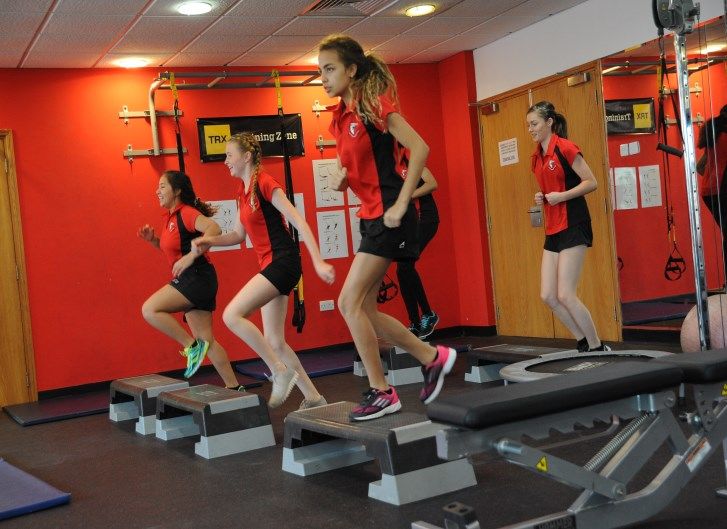
Core Physical Education
KEY FACTS                   What are the benefits of studying Physical Education?
Non-examined
                            During core Physical Education students will develop physically, intellectually,
This is a compulsory        emotionally and socially through physical activity. It is the aim of the
subject for all Key Stage   department that students will have the knowledge, skills, confidence and
4 students.                 motivation to pursue physical activities in the future.

                            What will students have the opportunity to study?

                            During Key Stage 4, students will be expected to tackle more complex and
                            demanding activities with increasing independence.

                            Students will have the chance to involve themselves in activities that focus on
                            competition, performance, team and individual work and health and fitness.
                            Students will also be expected to take on the roles of coach, leader and official,
                            as well as performer.

                            Students will participate in a number of activities during Core PE including:
                            Volleyball, Swimming, Netball, Football, Rugby, Badminton, Athletics, Rounders,
                            Basketball, Water polo, Fitness training and Aerobics.

                                           FOR FURTHER INFORMATION PLEASE CONTACT:
                                                    Mr Randall, Director of Sport

                                               10                              Dare Excel Share Create
Science
KEY FACTS What are the benefits of studying Science?
This is a compulsory All students at DESC begin their GCSE journey in Science in Year 9. This is a core
subject for all GCSE subject and has strong emphasis on scientific literacy. Science is able to inform
students. problem solving and decision making in many areas of life. Many of the major
challenges and opportunities that confront our world need to be approached
Examining Board: from a scientific perspective, taking into account social and ethical
AQA considerations.
What will students have the opportunity to study?
In Term 1 of Year 10, teachers will advise students which pathway is best for
them to continue with in Science.
GCSE Combined Science/ Trilogy
This course covers all three Sciences. It is a course designed to fully prepare
students for the basic concepts required to continue onto A level. There are 16
required practical tasks covered across the 3 subjects. The slight reduction in
content in this course allows students the time to fully develop and apply the
knowledge gained in the subjects. Students gain two GCSE grades, an average of
marks across the three subjects.
Separate Sciences in Biology, Chemistry and Physics.
A small number of students in the cohort will take the pathway that leads to
three GCSE grades in Science. Students recommended for this course will have
shown high marks across Year 9 and 10 content. They will already be able to
apply their knowledge to unfamiliar situations. Students will have demonstrated
that they are able to cope with the workload across all of their other subjects.
This course has a higher volume of content in comparison to the Combined
course.
Length of Marks for
Number of
Unit Title each each
assessments
exam exam
6 written assessments
Trilogy/Combined
at the end of Year 11, 1hr
1 Science– 2 GCSE 70
2 Biology, 2 15mins
grades
Chemistry, 2 Physics
Biology – 2 Written assessments 1hr
2 100
Separate Science at the end of Year 11 45mins
Chemistry– 2 Written assessments 1hr
3 100
Separate Science at the end of Year 11 45mins
Physics– 2 Written assessments 1hr
4 100
Separate Science at the end of Year 11 45mins
FOR FURTHER INFORMATION PLEASE CONTACT:
Ms White, Director of Science
11 Dare Excel Share CreateSocial Studies
KEY FACTS Introduction
Internally Assessed
Social Studies follows a diverse and engaging curriculum set by the UAE Ministry
Compulsory subject for of Education that gives schools flexibility in the subject’s delivery. All students in
all students up to Year 10 Year 10 are timetabled an hourly lesson per week covering four key topic areas in
a year - History, Geography, National Education and Economics - with a focus on
promoting a holistic knowledge of the UAE, Asia and Africa.
What are the benefits of studying Social Studies?
At DESC our vision is to get to the heart of the question ‘Where have we come
from and where are we going to?’. We view the subject as a vehicle for
developing real depth of understanding in the past, present and future of the
Arabian Peninsula and neighbouring countries and continents. We believe it to be
crucial that students, as future leaders and shapers of our country’s future, are
able to appreciate the extraordinary circumstances that have taken place in and
around the UAE for them, and their family, to be here today.
What will students have the opportunity to study?
In a single year, students might go from exploring Asia’s earl civilizations and pre-
Islamic history,to the expansion of global empires, to the founding of the UAE and
the current geo-political situation of the GCC. Students will be encouraged to
be ambitious, discursive and collaborative in their approach to learning.
Assessment is an important part of the Social Studies curriculum. The assessments
have been designed to accelerate the development of skills required in other
Humanities subjects with students being taught to write clearly, concisely and
critically.
FOR FURTHER INFORMATION PLEASE CONTACT:
Mr Thompson, Head of UAE Social Studies
12 Dare Excel Share CreateInformation about
Optional Subjects
13 Dare Excel Share CreateArabic
KEY FACTS What are the benefits of studying Arabic?
Studying Arabic will give students the opportunity to learn how to communicate in
Qualification type: Arabic in Dubai, the UAE and the other Arabic speaking countries. They will learn
more about Arabic civilisation and culture. Choosing GCSE Arabic will provide
General Certificate of students with the chance to develop their language skills and improve their skills
Secondary Education (GCSE) of memorisation and speed reading.
Level:
What will students have the opportunity to study?
Level 1/2
Accreditation status: The Pearson Edexcel Level 1/Level 2 GCSE (9 – 1 ) in Arabic allows students to
develop their ability to communicate with Arabic native speakers in both speech
Accredited and writing. Students will study across a variety of contexts relevant to their age
and interests and will also develop a greater awareness of the culture of Arabic-
speaking communities and countries.
Subject:
Arabic
Specification codes:
1AA0
Availability:
UK and international
FOR FURTHER INFORMATION PLEASE CONTACT:
Ms Atassi, Head of Arabic B
14 Dare Excel Share CreateArt and Design
KEY FACTS What are the benefits of studying GCSE Art and Design?
GCSE Art and Design is about having an adventurous and enquiring approach and
Examining Board:
developing the skills to express it. Students will develop an understanding of
Edexcel past and contemporary Art and Design and will be able to produce a personal
response embracing a range of ideas. It is an opportunity to develop their skills,
Syllabus/Code: both formally and creatively. Students will learn how to make meaningful and
Art and Design 1FA0 appropriate creative decisions based on problem solving. Art and Design GCSE
utilises all elements of the “Four to Grow” skills set at DESC. Above all, studying
art develops skills in time management, organisation and independence; all key
skills vital to future success.
What will students have the opportunity to study?
Students will develop a working knowledge of the materials, practices and
technology of Art and Design. They will learn the skills needed to investigate,
analyse and experiment using Art and Design media. They will develop their
imaginative powers and the skills necessary to express their own ideas, feelings
and meanings. Students will gain an understanding of the language and
conventions of Art and Design and the place of Art and Design in history and
society. During Year 10, students will be introduced to sketchbook-keeping, a
range of drawing and painting media, as well as printmaking and sculpture.
These skills will then be utilised in a more independent manner for the duration
of Year 11.
How will students be assessed in GCSE Art and Design?
Every piece of work produced from day one, in lessons and for homework, can
potentially count towards the final personal portfolio mark. However, in real
terms, most of the personal portfolio is selected from the main unit completed in
the first term of Year 11.The work generated by students will follow a variety of
themes; all work will be produced in both sketchbooks and to a large scale, in
two and three dimensions. All work must include research, supporting studies and
the details showing the development of their ideas leading to final outcomes –
usually large scale pieces of work. Work will be assessed throughout the two
years in relation to the EDEXCEL assessment objectives (Develop, Refine, Record
and Present) to give our students an understanding of their ongoing attainment.
Large scale work and supportive book work is marked holistically. Students will
present their work for both units in an exhibition at the end of Year 11; this is
what the moderator from the UK will see and assess.
Unit Title Mode of Assessment Weighting Time
September in
Year 10 to
Personal Internally set, assessed
January in Year 11
Portfolio and standardised. 60%
Preparation period
1FA0/01 Externally moderated
followed by a 10 hour
mock examination
From January in
Externally Externally set, Year 11
set internally assessed Preparation period
40%
Assignment and externally followed by
1FA0/02 moderated examination - 10 hours
over 2 days
FOR FURTHER INFORMATION PLEASE CONTACT:
Ms Hall, Director of Art and Design
15 Dare Excel Share CreateBusiness Studies
KEY FACTS What are the benefits of studying GCSE Business Studies?
Business Studies is a practical subject related to the real world. As an employee
Examining Board:
or an entrepreneur, an understanding of business is hugely beneficial.
AQA
The aim of GCSE Business Studies is to provide the study of business through class
Syllabus/Code: work which provides students with a sound basis for progression to Advanced
Business Studies 8132 Levels in Business Studies and Economics. To develop students or employees who
have a sound understanding of business and who have the ability to use
knowledge, skills and understanding appropriately in the context of the UK and
European markets. Finally, Business Studies increases awareness and consideration
of the moral, social, ethical and cultural issues within a business environment.
What will students have the opportunity to study?
Students will be required to demonstrate specific knowledge and critical
understanding of:-
◼ The issues associated with setting up, and the operation of a business
◼ Marketing, finance, human resources and operations management
◼ How and why businesses grow; including organisational development and
legal structures
How will students be assessed in GCSE Business Studies?
Real life Case Studies are an important element in the teaching of Business
Studies and emphasis is placed on students developing the ability to apply their
business knowledge and make reasoned judgments regarding business decisions.
Paper Mode of Assessment Weighting Time
Influences of
operations Final
1 and HRM on Examination 50% 1 hour 45 Mins
business (90 Marks)
activity
Influences of
marketing Final
2 and finance Examination 50% 1 hour 45 Mins
on business (90 Marks)
activity
Each Examination paper contains the following types of questions:
◼ Section A has multiple choice questions and short answer questions worth 20
marks.
◼ Section B has one case study/data response stimuli with questions worth
approximately 34 marks.
◼ Section C has one case study/data response stimuli with questions worth
approximately 36 marks.
FOR FURTHER INFORMATION PLEASE CONTACT:
Mr Davies, Head of Business Studies
16 Dare Excel Share CreateComputer Science
KEY FACTS What are the benefits of studying IGCSE Computer Science?
In the ever-changing, fast paced, technology-driven world that we currently live in,
Examining Board:
much of the future lies in the hands of tomorrow’s Computer Scientists. The IGCSE
Cambridge Computer Science course immerses students into the technical world of computers.
Students will explore a range of programming languages and learn the fundamentals
Syllabus/ Code: of writing computer code. Computer Science underpins many other subjects such as
0984 the Sciences, Mathematics and Engineering. Students will gain lifelong skills in
computational thinking, logical reasoning, innovation and problem solving. Instead
of just being users of technology, the Computer Science course offers students the
opportunity to become developers of technology.
What will students have the opportunity to study?
The specification includes a balance between Computer Science theory and
practical programming skills.
The theoretical side includes:
◼ Emerging Technologies
◼ Computer Hardware
◼ Networking
◼ Binary, Denary and Hexadecimal Number Systems
◼ Logic Circuits
◼ Emerging Technologies
◼ The Internet
◼ Cyber Security
◼ Computer Ethics
The practical element includes:
◼ Building Computers
◼ Writing Algorithms
◼ Coding in Python, HTML and CSS
◼ Using Industry Standard Software
Students will have the opportunity to develop the following skills
throughout the course:-
◼ Computational Thinking
◼ Programming
◼ Problem Solving
◼ Perseverance
◼ Creativity
◼ Innovation
◼ Project Management
How will students be assessed in IGCSE Computer Science?
Unit Title Mode of Assessment Weighting Time
CS Theory Paper 1 Examination 60% 1 Hour 45 minutes
Programming Paper 2 Examination 40% 1 Hour 45 minutes
What can the students do next?
◼ An A level Computer Science followed by a range of university qualifications.
◼ Opportunities within the CS industry are varied, endless and continually
evolving.
FOR FURTHER INFORMATION PLEASE CONTACT:
Mr Rawat, Head of ICT and Computer Science
17 Dare Excel Share CreateDance
KEY FACTS What are the benefits of studying GCSE Dance?
Examining Board: GCSE Dance is a powerful and expressive subject which encourages students to
AQA
develop their creative, physical, emotional and intellectual capacity. As an art
Syllabus Code: 8236 form, Dance requires students to have determination and employ key skills such as
problem solving, leadership and creativity. Students are encouraged to interpret
society and communicate non-verbally and in an aesthetically pleasing way.
The course also supports students as they choreograph dances based upon a
variety of cultural and symbolic events. Students develop an appreciation of
dance as a natural form of human expression, whether they arrive at GCSE with
formal training or less formal previous experiences. The course will establish an
understanding of dance as a performer, choreographer and critic alike.
What will students have the opportunity to study?
Performance — Students will perform two solo set phrases in Contemporary Dance
style. Students will also perform a duet/trio in any style of dance they choose.
Choreography — Students will choreograph a solo or group dance based on a
stimulus sent by the exam board. This can also be in any style of dance they
choose.
Dance Appreciation — Students will sit a 1 hour 30 minutes written exam.
Section A: Questions about their knowledge and understanding of choreographic
processes.
Section B: Critical appreciation of own work.
Section C: Students will study six professional dance works titled ‘The
Anthology’ and answer questions relating to these. Students will explore each
work practically to understand how themes, motifs and stimuli can be portrayed
through movement. Works will cover a range of styles including ballet, urban,
contemporary, inclusive dance, dance for camera and cultural dance.
Finally, students will gain an in-depth knowledge of transferable skills that link
with a variety of core subjects such as health, fitness, focus, commitment and
leadership.
Title Mode of Assessment Weighting Time
Component 1:
Internally Marked Over the two
Performance and 60%
Externally Moderated year course
Choreography
Written 1 hours
Externally Assessed 40%
Examination 30 minutes
FOR FURTHER INFORMATION PLEASE CONTACT:
Ms Neate, Teacher of Dance
18 Dare Excel Share CreateDesign & Technology
KEY FACTS What are the benefits of studying GCSE Design & Technology?
GCSE Design and Technology will prepare students to participate confidently and
Examining Board:
AQA successfully in an increasingly technological world. Students will gain awareness and
learn from wider influences on Design and Technology including historical, social,
Syllabus/Code: cultural, environmental and economic factors. Students will have the opportunity to
GCSE Design & work creatively when designing and making and apply technical and practical
Technology/8552 expertise. Our GCSE allows students to study core technical, designing and making
principles, including a broad range of design processes, materials techniques and
equipment. They will also have the opportunity to study specialist technical
principles in greater depth. For DESC students, this will be Paper and Board.
What will students have the opportunity to study?
◼ Actively engage in the processes of Design and Technology to develop as
effective and independent learners
◼ Make decisions, consider sustainability and combine skills with knowledge and
understanding in order to design and make quality products
◼ Explore ways in which aesthetic, technical, economic, environmental,
ethical and social dimensions interact to shape designing and making
◼ Analyse existing products and produce practical solutions to needs, wants and
opportunities, recognising their impact on the quality of life
◼ Develop decision-making skills through individual and collaborative working
◼ Understand that designing and making reflect and influence cultures and
societies, and that products have an impact on lifestyle
How will students be assessed in GCSE Design and Technology?
The exams and non-exam assessment will measure how students have
achieved the following assessment objectives:
◼ AO1 (10%): Identify, investigate and outline design possibilities to address
needs and wants.
◼ AO2 (30%): Design and make prototypes that are fit for purpose.
◼ AO3 (20%): Analyse and evaluate:
- design decisions and outcomes, including for prototypes made by
themselves and others
- wider issues in Design and Technology.
◼ AO4 (40%): Demonstrate and apply knowledge and understanding of:
- technical principles
- designing and making principles
50% Non examined assessment: 100 marks
Work will be marked by teachers and moderated by AQA . The NEA project in its
entirety should take a maximum of 30–35 hours to complete and consist of a
prototype and a concise portfolio of approximately 20 pages of A3 paper,
equivalent A4 paper or the digital equivalent.
50% Written exam: 100 marks
Students will sit a 2 hour exam.
Section A
Core technical principles (20 marks)
Section B
Specialist technical principles (30 marks)
Section C
Designing and making principles (50 marks)
FOR FURTHER INFORMATION PLEASE CONTACT:
Ms Bishop, Head of Design and Technology
19 Dare Excel Share CreateDrama
KEY FACTS What are the benefits of studying IGCSE Drama?
Examining Board: The IGCSE Drama course provides students with a dynamic learning environment. In
Year 10, it is structured as a foundation year where students experience all aspects of
Cambridge the course in order to give them the necessary skills for their assessments, which take
place at the end of the year and in Year 11. Drama suits students who enjoy working
practically and collaboratively with others. Students are given the opportunity to
Syllabus/ Code:
develop their team, leadership and communication skills as well as working creatively
Drama IGCSE 0411 to develop original theatre. Students will gain an understanding of the different roles
which exist within the theatre from acting and directing to designing and they will be
given the opportunity to develop skills in all of these areas. Students will explore a
wide range of practical work including a range of contemporary scripts and
practitioners which will influence their own devised work.
What will students have the opportunity to study?
As a student you will:-
◼ Develop performance skills, both individually and in groups
◼ Gain an understanding of the role of actor, director and designer in creating a
piece of theatre
◼ Consider ways in which ideas and feelings can be communicated to an audience
◼ Discover the performance possibilities of plays and other dramatic stimuli
◼ Devise dramatic material of your own.
Students will be expected to attend after-school rehearsals to develop performance
work.
How will students be assessed in IGCSE Drama?
The course is essentially practical in nature. The practical examination accounts for
60% of the final grade. There is also a written examination which focuses on directing,
designing and acting for the theatre.
Title Mode of Assessment Weighting Time
Coursework May -
Monologue Internally Assessed February
60%
Group devised piece Externally moderated class and
Group scripted piece homework
Written 2 hours
Externally Assessed 40%
Examination 30 minutes
What can students do next?
IGCSE Drama is the ideal preparation for A level Drama and Theatre Studies. Those
students not wishing to pursue beyond IGCSE will gain many transferable skills which
will help in any future career, especially choices which involve communication,
collaboration and leadership.
FOR FURTHER INFORMATION PLEASE CONTACT:
Ms Kelly, Director of Performing Arts
20 Dare Excel Share CreateEconomics
Key Facts What are the benefits of studying CIE IGCSE Economics?
The IGCSE Economics course equips students with the basic tools to help them
Examining Board: understand their place in, and contribution to, the local, national and global
CIE IGCSE economy as consumers, workers and citizens. It develops the students’
understanding of economic concepts and theories. Students will investigate a
Syllabus/Code: range of contemporary economic issues and analyse the evidence from different
Economics (0455) perspectives. The course provides students with a foundation for further study at
A level Economics and encourages a better understanding of the world in which
students live, and helps them play an active part in the decision-making process
What will students have the opportunity to study?
The Cambridge IGCSE Economics syllabus develops an understanding of economic
terminology, principles and basic economic theory. Students study the economics
of developed and developing nations and how these interrelate. They also learn to
handle simple data and undertake economic analysis, evaluate information and
discriminate between facts and value judgements in economic issues.
Further reading on the UK, EU and worldwide economic issues is an important part
of the subject. Therefore, emphasis is placed on students keeping up to date with
economic events through reading books, newspapers and watching the news. This
will help students apply their understanding of theory to reach reasoned
conclusions.
How will students be assessed in IGCSE Economics?
Paper Mode of Assessment Weighting Time
Multiple Choice
1 Paper 1 Candidates answer 30 30% 45 minutes
multiple choice questions.
(30 marks)
Structured Questions
Candidates answer one
compulsory question, which
2 Paper 2 requires them to interpret 70% 2 hours
and analyse previously un- 15 minutes
seen data relevant to a real
economic situation, and
three optional questions
from a choice of six.
(90 marks)
FOR FURTHER INFORMATION PLEASE CONTACT:
Mr Hobday, Head of Economics
21 Dare Excel Share CreateFood Preparation and Nutrition
KEY FACTS What are the benefits of studying GCSE Food Preparation and
Examining Board: Nutrition?
AQA This is an exciting and creative course which focuses on practical cooking skills and
ensures students develop a thorough understanding of nutrition, food provenance
Syllabus/Code: and working characteristics of food materials. At it’s heart, this qualification focuses
GCSE Food Preparation and on nurturing students’ practical cookery skills to give students a strong
Nutrition 8585 understanding of nutrition whilst reinforcing the theoretical elements of the course
required to complete NEA assessments.
What will students have the opportunity to study?
Food preparation skills are integrated into 5 core topics:
◼ Food, nutrition and health
◼ Food Science
◼ Food Safety
◼ Food Choice
◼ Food Provenance
How will students be assessed in GCSE Food Preparation and
Nutrition?
The exam and two non-exam assessments (NEA) will measure how students have
achieved the following assessment objectives.
◼ AO1: Demonstrate knowledge and understanding of nutrition, food, cooking and
preparation.
◼ AO2: Apply knowledge and understanding of nutrition, food, cooking and
preparation.
◼ AO3: Plan, prepare, cook and present dishes, combining appropriate
techniques.
◼ AO4: Analyse and evaluate different aspects of nutrition, food, cooking and
preparation including food made by themselves and others.
Paper 1 NEA Weight
AO 1 20% 0% 20%
AO 2 20% 10% 30%
AO 3 0% 30% 30%
AO 4 10% 10% 20%
Total 50% 50% 100%
FOR FURTHER INFORMATION PLEASE CONTACT:
Ms Barber, Head of Food Preparation and Nutrition
22 Dare Excel Share CreateFrench and Spanish
KEY FACTS What are the benefits of studying GCSE French and/or Spanish?
Improved communications, greater opportunities for travel and the increasingly
Examining Board:
multilingual and multicultural composition of our society mean that distance and
AQA national frontiers are no longer a barrier to contact with a rich diversity of people
from different cultural backgrounds. As well as contributing to students’
Syllabus/Code: development as citizens, Modern Foreign Languages have the potential to enrich
their lives. They develop students’ understanding and appreciation of different
French 8658 countries, cultures, people and communities, making students aware that they are
or
Spanish 8698 citizens of the world, especially in a multicultural city like Dubai. They lay the
foundations for the study of other languages later in life, to be used for pleasure
or for work.
Being able to communicate in a foreign language can broaden the range and
variety of accessible careers, improving employability and facilitating personal
mobility. While only a few jobs require specialist expertise in other languages,
foreign language skills are desirable and useful in a wide range of careers at
different levels. As well as increasing employability, they can really enhance
career opportunities and variety. People with foreign language skills tend to have
good communication skills, which enhance their employment prospects.
What will students have the opportunity to study?
The GCSE in either French or Spanish builds on the work covered in Key Stage 3 in
the four skill areas of listening, speaking, reading and writing. Three themes are
covered: Identity and culture, local national international and global areas of
interest and current and future study and employment.
It is hoped that an exchange programme or a residential visit will be arranged to
provide an opportunity for students to experience at first hand the language and
culture of their chosen specialism.
How will students be assessed in GCSE French and Spanish?
Unit
Mode of Assessment Weighting Time
Title
Final Examination Foundation: (F): 35 mins
1 Listening 25%
(May/June 2022) Higher: (H): 45 mins
Final Examination F: 7-9 mins
2 Speaking 25%
(April/May 2022) H: 10-12 mins
Final Examination F: 45 mins
3 Reading 25%
(May/June 2022) H: 60 mins
Final Examination F: 60 mins
4 Writing 25%
(May/June 2022) H: 75 mins
FOR FURTHER INFORMATION PLEASE CONTACT:
Mr Delattre, Head of French or
Mr Bradley, Head of Spanish
23 Dare Excel Share CreateGeography
KEY FACTS What are the benefits of studying GCSE Geography?
When a geographer stands on top of the mountain, they see the landscape stretching
Examining Board: out before them and the view sharpens into focus. They see the rock type below the
Edexcel surface by the way it affects the land use above it. The geographer detects how the
landscape has been used over the generations and how this has left its mark on the
Syllabus/Code: land. Geographers draw on other disciplines such as biology, chemistry, maths
and, even history to make conclusions about the world, but they go further than
Geography A /GE01 simply bringing them together. They do something unique in using these as tools to
examine the relationships between seemingly separate disciplines to make sense of
what they see. This is what we mean by “thinking like a geographer”. The world can
be a confusing place but geography helps students to make sense of it. How else can
we understand the debates over inequality within and between countries? How can
we see the impact of our actions on the environment? Or how can we really
understand how energy resources should best be managed? A geographical education
is important because it takes all that humans have discovered about the planet we
call home and passes it on to the next generation and then challenges them to add to
this body of knowledge themselves. Geography is their inheritance as well as their
instruction manual.
What will students have the opportunity to study?
Students will examine many of the major contemporary themes facing the world,
including environmental, economic, social and political issues. The course will allow
students to make informed judgments about many of the geographical issues that are
facing the world today. They will be encouraged to make decisions about complex
issues using a variety of sources.
Students will be required to handle data using ICT, as well as written sources. They
will collect data during fieldtrips within Dubai, as well as rural areas within the
Emirate. They will then present and evaluate their findings. They will develop their
overall Geographical skills, organise themselves within groups, as well as work
independently.
The main 3 units of work that will be covered include:
Unit 1: The Changing Landscape of the UK; Rivers; Coasts; Weather Hazards and
Climate Change; and Ecosystems, Biodiversity and Management
Unit 2: Changing Cities; Global Development; and Resource Management
Unit 3: Rural (Rivers) and Urban (Changing Cities) Fieldwork; and UK Challenges
How will students be assessed in GCSE Geography?
Unit Title Mode of Assessment Weighting Time
The Physical 1 hour
1 Examination 37.5%
Environment 30 minutes
The Human 1 hour
2 Examination 37.5%
Environment 30 minutes
Geographical
Investigations: 1 hour
3 Examination 25%
Fieldwork and UK 30 minutes
Challenges
FOR FURTHER INFORMATION PLEASE CONTACT:
Ms Lee, Head of Geography
24 Dare Excel Share CreateHistory
KEY FACTS What are the benefits of studying GCSE History?
History encourages an understanding of how our present world has been shaped
Examining Board:
by past events and of the key stages in the development of human civilisation.
Edexcel GCSE History develops a wealth of important skills such as identifying and
evaluating sources, discursive writing, developing and presenting arguments and
Syllabus/Code: communicating ideas. Top universities such as Oxford and Cambridge see it as one
1HI0 of the most valuable and academically rigorous subjects. It prepares students for a
range of careers including journalism, law, Business, academia, teaching and
research. History is an umbrella discipline through which students encounter
many other disciplines: Economics, Geography, Ethics, Political Philosophy,
Psychology and Art. That is why historians always do so well in general knowledge
quizzes! The study of History can enrich in other ways: by fostering
empathy, kindling the imagination, encouraging the development of judgments
and giving perhaps more scope for debate than any other school subject. It is
intellectually rewarding but it is also exciting!
What will students have the opportunity to study?
Students will study the following during their history course:
Year 10
◼ Crime and punishment in Britain, c1000–present and Whitechapel, c1870-
c1900: crime, policing and the inner city
◼ Weimar and Nazi Germany, 1918-39
Year 11
◼ Superpower relations and the Cold War, 1941–91
◼ Early Elizabethan England, 1555-88
How will students be assessed in GCSE History?
Paper Content How much Exam
is it worth? timing
Crime and punishment in Britain, c1000–
1 hour
1 present and Whitechapel, c1870-c1900: 30%
15 minutes
crime, policing and the inner city
Period Study (20%): Superpower relations
and the Cold War, 1941–91 1 hour
2 40%
45 minutes
Early Elizabethan England, 1555-88
1 hour
3 Weimar and Nazi Germany, 1918–39 30%
20 minutes
What makes History so important?
◼ It has never been so crucial for us to understand the world in which we live.
Political uncertainty over Brexit, the shifting political landscape towards
populism and alternative ideologies demonstrates that learning about the past
is central to how we will act as societies in the future.
◼ GCSE History is held in enormously high regard by higher education institutions
and employers alike.
FOR FURTHER INFORMATION PLEASE CONTACT:
Mr Roberts, Head of History
25 Dare Excel Share CreateICT
KEY FACTS What are the benefits of studying IGCSE ICT?
The IGCSE ICT course gives students the opportunity to examine a range of past,
Examining Board: current and future technologies along with their impact on our everyday lives. ICT
Cambridge has and will continue to have a huge impact on the future of Business,
Education, Healthcare, Leisure, Politics and the Environment. Alongside develop-
Syllabus Code: ing students knowledge and understanding of ICT, the IGCSE ICT course develops
students practical ICT skills with students exploring a range of up to date, industry
0983
standard software. The course allows students to develop a range of ICT skills that
are valuable in other subjects and future employment.
What will students have the opportunity to study?
This new and innovative IGCSE course is a hands on and engaging course. It allows
students to learn new skills and maintain an interest in this ever-changing and
evolving subject. It will build on young people’s knowledge and use of digital
devices and explores how technology impacts on every aspect of the world that we
live in. Students who take this course will understand the benefits of using
technology and know how to use ICT safely, conscientiously and responsibly. The
course comprises of one theoretical examination and one practical controlled
assessment.
During the ICT course, students will study the following areas:-
◼ Digital Citizenship
◼ Digital Devices
◼ Connectivity
◼ Operating Online
◼ IT and the Law
◼ Practical Software Skills
◼ Data Security and Ethics
◼ ICT in Business, Healthcare, Government, Politics and the Environment
Students will have the opportunity to develop the following skills
throughout the course:-
◼ Critical Thinking
◼ Problem Solving
◼ Communication
◼ Interpersonal and Intrapersonal Skillsk
◼ Innovation
◼ E-Commerce
◼ Collaboration
◼ Marketing
◼ Self Regulation and Self Evaluation
How will students be assessed in GCSE ICT?
Unit Title Mode of Assessment Weighting Time
P1: Theory Written Paper 40% 2 hrs
P2: Practical Document Production 30% 2 hrs 30 mins
P3: Practical Web Design 30% 2 hrs 30 mins
What can students do next?
An A level IT followed by a range of university qualifications. The course
compliments a range of other subjects and careers paths including Media,
Business, Psychology, Finance, Engineering and Law to name a few.
FOR FURTHER INFORMATION PLEASE CONTACT:
Mr Rawat, Head of ICT and Computer Science
26 Dare Excel Share CreateMedia Studies
KEY FACTS What are the benefits of studying GCSE Media Studies?
Do you ever question what you read online? Do you trust newspapers and magazines? To
Examining Board: what extent is your life controlled by social networking? How do messages in the media
AQA impact on society? Media is everywhere, influencing and shaping our perceptions,
attitudes, desires and behaviour.
Syllabus/Code:
This dynamic course is designed to make learning interesting, challenging, creative and
Media Studies 8572 fun. It offers students the opportunity to study all aspects of the Media (print,
broadcasting and e-media) that are of key importance to their understanding and
experiences of the world.
What will students have the opportunity to study?
◼ Practical production work which integrates media theories and concepts
◼ Assignments for real audiences and uses
◼ The chance to study across a range of different media
◼ Opportunities to learn about real media products and industries
◼ Extensive and meaningful coverage of media theory and practice
Course content:
Students will explore all of the different media forms (advertising, music, video,
film, TV, radio, online, news, gaming, magazines and newspapers) in order to
understand the key concepts in media:
Media Language: how meaning is created in media products using techniques such as
camerawork, editing, sound, costume, lighting etc and setting.
Media Industries: the companies that produce and distribute our media. Who are they?
Who owns them? Why does this matter? We will also explore issues such as censorship
and regulation and the impact of new technologies on the industry.
Media Audiences: how do these industries target audiences and how are these
audiences affected by the media?
Media Representations: how are people, places and events represented in the media?
How close to reality is it? What role do stereotypes play? Students will then use this
knowledge to explore media texts from a variety of media texts and platforms.
Students will also have the opportunity to develop their skills in filming, photography,
photo and video editing, graphics and page design.
It is required that students opting for Media Studies GCSE have access to a laptop for
the completion of the Non Exam Assessment.
How will students be assessed in GCSE Media Studies?
Unit Title Mode of Assessment Weighting Time
Examination 1 hour
1 Paper 1 35 %
84 marks 30 minutes
Examination 1 hour
2 Paper 2 35 %
84 marks 30 minutes
Non-exam Coursework production
3 30% N/A
assessment 60 marks
FOR FURTHER INFORMATION PLEASE CONTACT:
Ms Vernon-Ward, Head of Media Studies
27 Dare Excel Share CreateMusic
KEY FACTS What are the benefits of studying GCSE Music?
If students enjoy listening to all kinds of music, composing and arranging music,
Examining Board: performing solos or working with others in singing groups or bands and learning
Edexcel about Music Technology (e.g. sequencing), then this could be the subject to choose.
Syllabus/Code:
Music 1MU0 What will students have the opportunity to study?
Through both individual instrumental and class lessons, and by participating in extra
-curricular musical activities, students will improve in the key areas that they have
already studied in Key Stage 3: performing, composing and listening to different
types of music from club dance remix, musicals and African drumming to the music
of Handel and Mozart.
Learning music develops students’ critical skills: their ability to listen, to appreciate
a wide variety of music, and to make judgments about musical quality. It also
increases self-discipline, creativity, aesthetic sensitivity and fulfillment. GCSE
Music is about making and listening to music. It covers performing, both
individually and with others, and composing and listening to a wide variety of styles.
How will students be assessed in GCSE Music?
It is expected that students are already learning an instrument and receiving regular
tuition in their chosen discipline. An equivalent of ABRSM/Trinity Grade 4 standard
is required to embark upon this course.
Unit Title Mode of Assessment Weighting Time
Min. 4
1 Performance Internally Assessed 30%
minutes
Controlled Min. 3
2 Composition 30%
Assessment minutes
Listening Paper -
AOS 1 Instrumental
Music, AOS 2 Vocal External 1 hour
3 Music, AOS 3 Music 40%
for Stage and Assessment 45 minutes
Screen, AOS 4
Fusions
FOR FURTHER INFORMATION PLEASE CONTACT:
Ms Weighell, Head of Music
28 Dare Excel Share CreatePhysical Education
KEY FACTS What are the benefits of studying GCSE Physical Education?
The course builds on the knowledge, understanding and skills established in Key
Examining Board:
Stage 3 Physical Education. It provides students with exciting opportunities to be
Edexcel involved in a number of different physical activities, promoting an active and
healthy lifestyle.
Syllabus/Code:
What will students have the opportunity to study?
Physical Education (1PE0)
The course is structured as follows:
◼ The theory element is split into six topics. These are as follows:
Applied anatomy and physiology, movement analysis, physical training, use of
data, health fitness and well-being, sport psychology, socio-cultural influences
and use of data.
◼ The practical element assesses performance in three sports. The three sports
must include one team activity and one individual activity, from the list
published by the DFE. Students may also showcase out of school activities by
providing video evidence.
Students will be expected to have a keen interest in a number of activities and
practise outside of lesson time to improve their attainment.
How will students be assessed in GCSE Physical Education?
Unit Title Mode of Assessment Weighting Time
Controlled
1 Practical 30%
Assessment
2 exam papers
Final Paper 1:
60%
Examinations 1 hour 45 mins
2 Theory
Coursework (Personal
10%
Exercise Programme) Paper 2: 1 hour
15 mins
What can students do next?
A good grade at GCSE will help students to study A Level Physical Education/
BTEC Sport. The course develops the transferable skills and key skills that
employers are looking for and can lead to a wide variety of employment
opportunities. This can include further training in such areas as recreational
management, leisure activities, coaching, officiating, the fitness industry, the
Armed Forces and the Civil Service.
Students may also wish to follow this course for its own sake because they are
interested in fitness and health, and enjoy being physically active.
FOR FURTHER INFORMATION PLEASE CONTACT:
Ms Stollery, Head of Physical Education
29 Dare Excel Share CreatePsychology
What are the benefits of studying GCSE Psychology?
KET FACTS Psychology is the science of the mind; the study of, among other things, how our
thought processes work, why we behave the way we do and how we learn. This
Examining Board:
course will help students to better understand both themselves and others, and
AQA provides a great introduction for those interested in studying Psychology at a
higher level.
Syllabus/Code:
Psychology 8182 The course is designed to encourage students to engage in the process of
psychological enquiry to develop as effective and independent learners, as
critical and reflective thinkers with enquiring minds. Throughout the course
students will develop an awareness of why Psychology matters, acquiring
knowledge and understanding of how Psychology works and its essential role in
society.
Students will also develop an understanding of the relationship between
Psychology and social, cultural, scientific and contemporary issues contributing
to individual, social and cultural diversity.
What will students have the opportunity to study?
Year 10 - Cognition & Behaviour
◼ Memory
◼ Perception
◼ Development
◼ Research Methods
Year 11 - Social Context & Behaviour
◼ Social Influence
◼ Language, Thought & Communication
◼ Brain & Neuropsychology
◼ Psychological Problems
How will students be assessed in GCSE Psychology?
Unit Title Mode of Assessment Weighting Time
Cognition & Examination 1 hour
1 50%
Behaviour 100 marks 45 minutes
Social Context & Examination 1 hour
2 50%
Behaviour 100 marks 45 minutes
FOR FURTHER INFORMATION PLEASE CONTACT:
Ms Kennedy, Head of Psychology
30 Dare Excel Share CreateYou can also read


