Gender Equality Strategy: UNDP Rwanda (2019-2022)
←
→
Page content transcription
If your browser does not render page correctly, please read the page content below
Gender Equality Strategy:
UNDP Rwanda (2019-2022)

                      © Alice Kayibanda

            1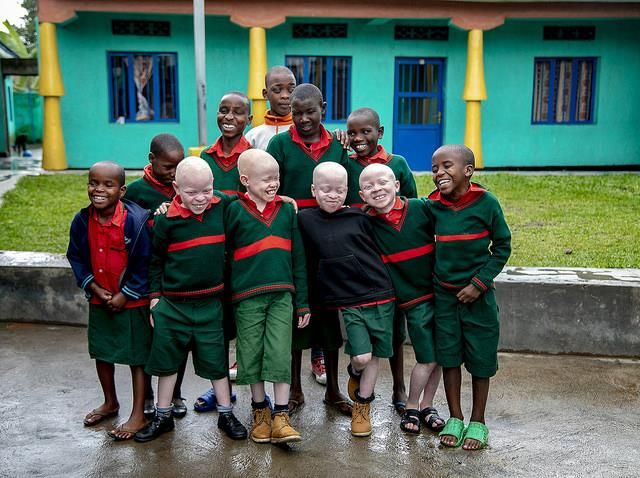
Executive Summary

Subject
There is no single understanding of gender equality and women’s empowerment. The meaning,
implication and reality of these terms can change throughout different languages, cultures, and
time periods.
This Strategy is a product of UNDP Rwanda’s stance on gender equality and women’s
empowerment. Through collaboration with government, national actors, local and foreign
entities, and others, our Country Office (CO) continues to work toward the goals relevant to
Rwandan women and men.
Mission
UNDP Rwanda’s mission begins with the simple belief in the fundamental equality of all people.
The CO pledges to continue creating and implementing policies and programmes which support
the development of all Rwandans, with increased attention to leaving no one behind.
As such, the CO will ensure that gender is mainstreamed into all development projects so that
the unique concerns of girls and women, boys and men, are accounted for and addressed.
Method
This report is based on six main sections. Section I identifies the country and CO context in
terms of women’s development and empowerment. Section II states the four objectives that
have been identified as relevant avenues for continued progress in gender equality and
women’s empowerment. This section also pinpoints several potential challenges to
implementing these objectives and proposes strategies to mitigate the risks. Section III to
Section VI provide an overview of each objective, including strategic entry points to facilitate
their full realization.
Recommendations
This Strategy makes the following recommendations:
1.      Ensure that senior management is fully aware and committed to the implementation of
        the objectives, including the dissemination of the Strategy to the CO staff and ensuring
        appropriate monitoring and evaluation of all actions to promote gender equality in our
        work and programmes.
2.      Mobilize the Communications Unit to increase awareness of the Strategy, including
        publishing the Strategy to UNDP Rwanda’s website.
3.      Translate the Strategy into both French and Kinyarwanda so that it is accessible to all
        staff and interested parties in Rwanda.
4.      Require unit heads to meet with their staff within a month of the completion of the
        Strategy to discuss: (i) how they can incorporate the objectives into their work, (ii) how
        the potential challenges may effect their work, and (iii) how they will engage with the
        strategic entry points relevant to their mandate.
5.      Conduct an annual review of each unit’s progress in terms of incorporating the
        objectives into their policies and programmes. Highlight strengthens, weaknesses and
        possible ways forward.

                                                2
Table of Contents

Executive Summary 2
Foreword         4
I. Introduction 5
Country Context .............................................................................................................................. 5
Rwanda CO Level ............................................................................................................................ 8
II. Strategic Outline 9
Gender Equality Objectives........................................................................................................... 10
Potential Challenges & Strategies ................................................................................................. 10
III. Objective 1: Gender Mainstreaming                          11
Strategic entry points .................................................................................................................... 13
IV. Objective 2: Structural Barriers 13
Strategic entry points .................................................................................................................... 15
V. Objective 3: Intersectionality                   16
Strategic entry points .................................................................................................................... 17
VI. Objective 4: Boys & Men 18
Strategic entry points .................................................................................................................... 19
VII. Conclusion ............................................................................................................................... 21
Terminology 21
Appendix A 23

Written by: Zara Raquel Albert, Junior Professional Consultant
Edited and approved by: Stephen Rodriques, UNDP Resident Representative
Photos by: Alice Kayibanda, Executive Associate to UNDP Resident Representative

Copyright © December 2018

United Nations Development Programme
Rwanda Country Office
4 KN 67 St, Kigali, Rwanda

                                                                        3
Foreword

Dear reader,

Thank you for your interest in UNDP Rwanda’s latest Gender Equality Strategy! Gender equality and women’s
empowerment is one of the top priorities for the United Nations both here in Rwanda and across the world. This
document is an expression of our commitment and ambitions as we seek to ensure that the principle of gender
equality guides and informs all the Country Office’s programmes and operations over the next three years.

As a team, we believe in the fundamental right of every woman, man, boy and girl to be treated equally, and to
have equal opportunities to realize their full potential and contribute to the development of their communities
and their country. We know, as well, that countries and communities develop faster when the talents of men and
women are harnessed equally. As such, it has been a great honor for me to lead the UNDP Rwanda team which is
determined and steadfast in its resolve to achieve the gender equality and women’s empowerment objectives set
forth in this Strategy.

Since our last Strategy in 2014, UNDP Rwanda has made considerable progress and seen great accomplishments.
The five objectives set forth in the previous Strategy helped our Country Office to prioritize certain gender equality
objectives and improve the way we do business. We have invested significantly in enhancing staff capacity to
prioritize gender equality in their work (objective 3) and, as a result, gender mainstreaming has become an
increasingly prevalent aspect of all our programmes (objective 1). Resources have been mobilized for gender
mainstreaming (objective 2) and partnerships that support gender equality and women’s empowerment have
been forged and strengthened (objective 4). Lastly, the Country Office has put in place systems to ensure
accountability for implementing and monitoring gender equality initiatives (objective 5). Our collective efforts
culminated in UNDP Rwanda becoming one of only 6 UNDP offices globally to receive a GOLD Gender Seal
Certification in 2017. You can learn more about the concrete programmes we have implemented on gender
equality from the UNDP Rwanda website.

What we have accomplished on gender equality and women’s empowerment is a result of many factors. First,
none of this would be possible without the outstanding staff here in the Country Office that dedicate large
portions of their lives to the betterment of humanity. We could not have achieved as much as we did in promoting
gender equality if this was not both a personal and professional commitment by our management and staff.
Second, a big ‘thank you’ is owed to our national and international partners, including government entities,
donors, other UN agencies, private sector companies, grassroots organizations, and others with whom we have
been working to promote gender equality. Rwanda is a global leader on gender equality, and our work has been
anchored in the high levels of political will we have seen in the government, and in the supportive atmosphere we
have found in both the private and non-profit sectors. Third, we are grateful to the wonderful citizens of Rwanda:
you are our inspiration and our ‘raison d'être’. Every day we come to work in hopes of playing a part in improving
the lives of people all over this country.

Girls and women around the globe are declaring “times up” to the patriarchal norms and misogyny that
accompany gender inequality. As fellow human beings, each and every one of us should be supporting this
movement. In conclusion, I wish to reiterate our UN Secretary General’s statement that the time for gender
equality and women’s empowerment is NOW. UNDP Rwanda fully intends to be at the forefront of this cause.

                                           Stephen Rodriques
                                       UNDP Resident Representative

                                                          4
I. Introduction                                      commitment towards gender equality is
Gender equality has long been established            one of the reasons Rwanda has experienced
as a human right and essential component             increasing economic, political and social
of sustainable development.                          success1.

The promotion of gender equality and the             Both the management and staff of UNDP
empowerment of women and girls is central            Rwanda are fully committed to the principle
to the mandate of the UNDP and intrinsic to          of Gender Equality and support Rwanda’s
its development approach.                            vision of a society in which both women
                                                     and men can realize their full potential and
Gender     equality  is    considered  a             contribute to Rwanda’s continued progress.
development goal in its own right.                   Through this strategy, a three-year course
However, gender also intersects with a               of action is developed to guide UNDP’s
variety of other social factors and must             work on helping to identify and eliminate all
therefore be considered within larger                forms of sex and gender discrimination in
frameworks.                                          Rwanda.

The UN Declaration of Human Rights affirms           Country Context
that there are certain inalienable human             Since the devastating 1994 Genocide
rights that are intrinsic to all people. Among       against the Tutsi, Rwanda has emerged as
them is the right to equal treatment,                an impressive story of transformation in
regardless of sex. UNDP                              Africa. Guided by successive national
Rwanda affirms that the                                                  medium-term       plans
sex a person is born with                                                and      comprehensive
should have no impact                                                    policy reforms over the
on the rights and                                                        last two decades, the
freedoms to which they                                                   country has achieved
are entitled.                                                            remarkable
                                                                         socioeconomic
Gender equality has often been viewed as a           progress. Among many other areas, this has
“woman’s issue.” In reality, gender equality         been demonstrated by a more than three-
has as much to do with men as it does with           fold increase in per capita gross domestic
women. True gender equality must be a                product (from $206 in 2002 to $729 in
partnership between all people, with boys            2016) and major advances in health,
and men playing an important role in its             education, social protection, unity and
realization.                                         reconciliation.

The role of boys and men in achieving                Rwanda has, equally, become a pioneer and
gender equality has been highlighted in the          a role model for its dedication to, and
UNWomen-led HeforShe campaign. The                   progress made on gender equality and
President of Rwanda, H.E. Paul Kagame, is            women’s empowerment. In fact, Rwanda is
one of 10 Heads of State who are Global              one of the global leaders in gender equality
Impact Champions for this movement.
Strong high-level political leadership and           1 https://www.heforshe.org/en/node/78
                                                 5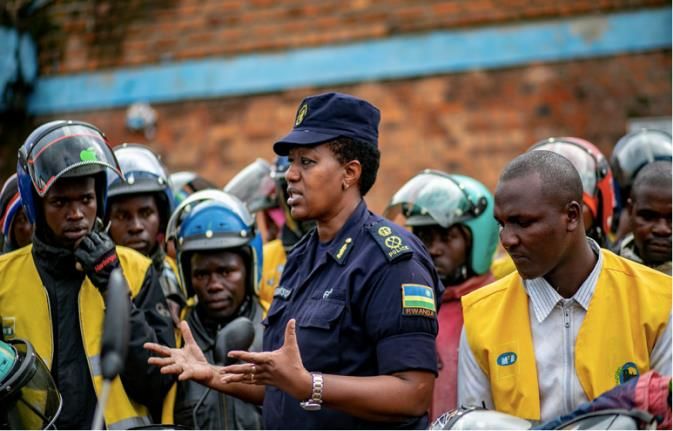
progress. In 2017, the World Economic
Forum ranked Rwanda as the fourth best                     Economically, Rwandan women’s labor
country in closing gender gaps, 2 behind                   force participation rate is one of the highest
only Iceland, Finland, and Norway.3                        in the world (86%). Furthermore, the wage
                                                           gap between women and men is lower in
Strong political commitment in Rwanda has                  Rwanda than in many industrialized
resulted in significant positive strides in the            counties (88 cents per dollar3).
promotion of gender equality and women’s
empowerment.         In     fact,     women’s              In addition, many women benefit from paid
representation in decision-making positions                maternity leave (as much as three months
makes Rwanda the world leader in terms of                  per birth3), making labor force participation
women in Parliament (62% after the 2018                    increasingly feasible for women who are
Parliamentary elections).                                  considering motherhood.

Rwanda’s political will to promote gender           Despite these and many other progressive
equality is also visible through its                strides, Rwanda is still struggling to meet its
commitment to at least 13 regional and              development goals. From 1971 to today,
international                                                                Rwanda             has
                             “Gender equality in every sector is not
conventions          and                                                     consistently      been
protocols on gender a favor, it is your right. It is the way it              ranked as one of the
equality and women’s                                                         47 least developed
                             should be. The right to equality is not
empowerment          and                                                     countries    in     the
numerous legislative and something that can be given or taken.”              world. 7 As such, the
                , .
policy reforms.4 5                                                           country needs to
                                                       -H.E. Paul Kagame
                                                                             accelerate
In education, gender                                                         development in a
parity has been achieved at the primary and         number of areas, including: gross national
secondary school enrollment levels, where           income, infant and maternal mortality, food
85% of girls and 84% of boys attend                 security, school enrollment, adult literacy,
school.6                                            economic         resiliency,    and     disaster
                                                    management8.

                                                           The data also show that female-headed
2 The global Gender Gap Report aims to capture             households are more likely to live in
how far countries have (or have not) come in closing
                                                           poverty and experience higher rates of
the gender inequality gap. This is a measure of
progress, not absolute development.                        unemployment than those headed by
3http://www3.weforum.org/docs/WEF_GG                       males.6     However,     female-headed
GR_2017.pdf
4 A full list can be found in Appendix A.
                                                           n%20and%20Housing%20Census_Gender.p
5 UNDAP Gender Mainstreaming Strategy
                                                           df
2018-2023. (2018). United Nations Country
                                                           7 https://www.un.org/development/desa/dpad/wp-
Team – Rwanda. [Internal Document].                        content/uploads/sites/45/publication/ldc_list.pdf
6http://www.lmis.gov.rw/scripts/publicatio                 8 https://www.un.org/development/desa/dpad/wp-
n/reports/Fourth%20Rwanda%20Populatio                      content/uploads/sites/45/LDC_Profile_Rwanda.pdf

                                                       6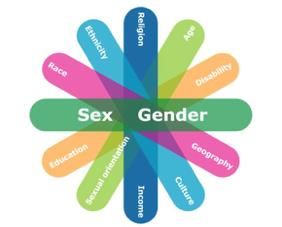
households are also more likely to                        engaged in the paid labor market.11 This
represent single parent households, making                “double burden” creates the risk of women
this comparison flawed.                                   burning out and being forced to choose
Though increasingly higher than
previous years, Rwandan’s life
expectancy at birth (66.6 years of
age9) still lags behind the global
average (72 years of age10). As in
most countries, women’s life
expectancy (68.4 years of age) is
higher than men’s (64.6 years of
age)9.

Women’s literacy rates are lower
than men’s (65% as compared to
72%6). This further constrains
women and girl’s already limited
opportunities   in   terms    of

accessing resources, creating and Kabaya Green Village in Ngororero – constructed to accommodate 11 families
                                     that were affected by disasters. © Alice Kayibanda
managing small businesses and
participating in decision-making processes.             between having a family or a career.
Among other things, high illiteracy rates
between both genders limits awareness of                Gender-based violence among women and
existing gender-sensitive laws.                         girls remains widely prevalent, tolerated,
                                                        and under-reported. It is estimated that at
Women are still responsible for the majority            least two in five girls (41.2%) will have
of unpaid housework and childcare. This                 experienced physical violence by the age of
remains true even if                                                               1512—with much of the
they           attended                                                            violence committed by
university     or    are “Those who love peace must male family members or
                            learn       to         organize               as husbands.
                              effectively as those who love
                              war.”                                                These issues of gender
                                                         -Martin Luther King Jr.   inequality   can    be

                                                          11Habimana, O. 2017. Gender differences
9                                                         in time allocation: Evidence from Rwanda.
http://www.statistics.gov.rw/publication/lif              Turin School of Development Working
e-expectancy-birth-rwandan-women-                         Paper No. 8. International Training Centre
increase-35-years-2020                                    of the ILO, Turin, Italy.
10http://www.who.int/gho/mortality_burd                   12 http://www.rw.one.un.org/press-
en_disease/life_tables/situation_trends/en                center/success-story/partnership-end-gender-based-
/                                                         violence

                                                     7
viewed as a manifestation of patriarchal eight country offices14 in the world to hold
norms, outdated laws and inadequate a Gold Certification. This Certification
protection of victims. Women, in demonstrates the staff’s knowledge of
comparison to men, have been devalued, gender-equality, their ability to disseminate
disempowered and left unable to make this knowledge through projects and plans,
their own life choices. Unequal power and readiness to collaborate with a variety
relations between men and women of partners to further gender equality. The
undermine and diminish the social, UNDP CO is striving to meet all the
economic and political contributions of the benchmarks necessary for continued Gold
latter to the development of themselves, Certification and to provide effective
their families, their communities, and the service and support to its partners and
nation. stakeholders in promoting gender equality
and women’s empowerment.
The UNDP recognizes that gender equality
is an important issue in its own right, but In the office, gender parity has been
also an issue that affects other achieved among staff. According to the
development concerns. In fact, gender has 2018 organigram, 49% of staff are women
been marked as one of three cross-cutting (26/53), including 50% at the level of senior
issues affecting all the development goals management (1/2). This is an improvement
outlined in Rwanda’s Vision 2020.13 from 2017, when 47% of UNDP Rwanda
staff were women. One area that remains
To this effect, UNDP Rwanda’s approach to of concern is gender parity among UNDP
gender equality is two-fold. First, UNDP drivers, as only 20% of drivers are women
Rwanda supports the development of (1/5).
gender-specific policies and programmes
that serve to empower girls and women. The equal representation of women at all
Second, gender concerns are to be levels of seniority is important to the UNDP.
mainstreamed into all UNDP policies and However, in addition to representation, it is
programmes. important for women to feel comfortable
speaking up, and it is important that their
Rwanda CO Level voices be heard. The CO’s senior
management and supervisors are thus
In 2017, the UNDP Country Office (CO) making a concerted effort to ask for the
achieved Gold Seal Certification for its opinions of female colleagues and provide a
extensive work in gender equality and safe and inviting space for them at
women’s empowerment. Increasing the meetings.
effectiveness of the CO’s gender-related
work was a goal highlighted in the previous Furthermore, all senior management have
CO Strategy. Today, UNDP Rwanda is one of gender results incorporated into their
2017/18 Performance Management and
Development (PMDs), illustrating their
13https://www.sida.se/globalassets/global/
countries-and- 14Cuba, Dominican Republic, DRC, Ivory Coast,
regions/africa/rwanda/d402331a.pdf Moldova, Montenegro and Uganda
8commitment to gender mainstreaming. The Gender Equality Strategy for UNDP
Staff are trained in gender mainstreaming Rwanda (2018-2021) responds to the
and aware of its importance and necessity. objectives and recommendations of the
Some staff also have gender concerns as aforementioned Corporate UNDP Strategy.
part of their PMDs. It also responds to Signature Solution 6,
which focuses attention on the
However, staff understanding of gender Mission Statement
mainstreaming is not uniform, and some
staff have limited knowledge of these UNDP Rwanda’s mission begins with the
issues. The CO believes that staff’s gender simple belief in the fundamental
capacities must be enhanced to enable equality of all people.
them to understand gender from a more
comprehensive and holistic perspective, The CO will create policies and
ultimately improving their ability to programmes which support the
mainstream gender concerns into their development of all Rwandans, with
work. increased attention to leaving no one
II. Strategic Outline behind.
The Corporate UNDP Gender Equality
Strategy (2018-2021) has come at a pivotal Gender will be mainstreamed into all
time in history. In the face of emerging development projects so that the
challenges impacting already marginalized unique concerns and experiences of
populations, the rise of movements such as girls and women; boys and men, are
“MeToo”, “TimesUp”, and countless accounted for and addressed.
international sister functions15 have shown
a surge in political will to address issues of fundamental structural barriers that inhibit
gender inequality and the disempowerment gender equality.
of women. Diverse groups of women across
the world have been speaking up and acting Above all, this Strategy is meant to provide
against gender-based violence, in particular the CO with renewed vigor and direction to
sexual harassment and assault from men in pursue gender equality in Rwanda. UNDP
positions of power.16 Rwanda believes in the fundamental
equality of all humans. Gender equality is
simply about improving the lives of women
15 These hashtags have been documented and men; girls and boys. Amidst the
in at least 85 countries. There are also busyness of our work, we must never forget
countless sister movements, such as the that real people, with families, hopes and
#MyStealthyFreedom in Iran, inherent importance, must be at the heart
#NudePhotoRevolution in Egypt, Chile’s of all we do.
Mujeres en Marcha, and the international
Woman’s March. With the progress of humanity in our minds,
16 the current Strategy provides four (4)
https://www.foreignaffairs.com/articles/20 gender equality objectives to guide the CO
18-03-06/how-metoo-became-global- in its development efforts.
movement
9Gender Equality Objectives Strategy 1b: Provide technical assistance to
partners that are experiencing challenges in
The following objectives have been mainstreaming gender into their work;
identified by the Rwandan CO as pertinent reconsider partnerships with entities that
ways forward for continued progress in
gender equality:
1. Ensure all programmes
effectively mainstream gender
equality and women’s
empowerment, including
programmes involving
management and response to
environmental crises.
2. Concentrate efforts on
programmes that address
structural barriers to women’s are not consistently promoting or
economic empowerment. committed to gender mainstreaming.
3. Increase capacity for a holistic
understanding of gender that Rwinkuba Village: built in 2016 by REMA and UNDP to support ecosystem
considers the impact and rehabilitation and protection for pro-poor Green Growth © Alice
Kayibanda
importance of an array of cross-
cutting issues. Challenge 2a: Inconsistent collection of
updated and thoroughly-researched
4. Focus increased attention on gender- disaggregated data.
engaging men and boys in Strategy 2b: Ensure that data collection
supporting gender equality advocacy personnel and agencies are aware of their
and action, particularly in regards to responsibility to collect gender-
gender-based violence. disaggregated data. If such data is not
Potential Challenges & Strategies available, consider supporting new data
collection and/or advocate for partners to
UNDP Rwanda foresees several potential
develop systems and tools to collect this
risks to the implementation of its work on
data.
gender equality and the above-mentioned
Challenge 3a: Limited or basic
objectives. The following require particular
understanding of gender mainstreaming
attention:
among CO staff and as such, inconsistent
Challenge 1a: Difficulty in negotiating terms
gender mainstreaming in projects and
with Implementing Partners, with some
programmes.
partners having limited capacity for
mainstreaming gender in their
Strategy 3b: Conduct yearly or bi-yearly
programmes/projects.
training on gender mainstreaming and
10incorporate gender results into all staff’s Strategy 7b: Revitalize partnership between
PMDs. UNDP and UN Women. Invite a UN Women
focal person and a representative from
Challenge 4a: Limited resources available to each CO unit to UNDP Gender Seal
recruit gender equality staff (such as a meetings. Find innovative ways to increase
gender specialist17) or for investment in partnerships with relevant stakeholders.
learning sessions related to gender. Challenge 8a: While gender parity has been
Strategy 4b: Explore other cost-effective largely achieved in the CO, there may
ways to increase knowledge. Provide staff remain barriers to women’s equitable
with re-fresher training from material that professional participation in all aspects of
is already created. Provide additional the CO’s work.
training to one or two staff members for Strategy 8b: Encourage staff and senior
them to become gender equality focal management (male and female) to have
points for the office. Give priority to interns honest conversations regarding barriers to
with expertise in gender analysis. participation and brainstorm tangible
Challenge 5a: Resource constraints may solutions with them.
result in inadequate and unsystematic III. Objective 1: Gender Mainstreaming
tracking and communication of the COs
work on gender equality. Objective 1
Strategy 5b: Implement a policy whereby
each unit is responsible for working with Ensure all programmes effectively
the Communications Unit to produce short mainstream gender equality and
stories and communication pieces on their women’s empowerment, including
major gender equality accomplishments. programmes involving management and
Challenge 6a: Few CO programmes focus on response to environmental crises.
men’s role and responsibility to promote
gender equality. To fully integrate gender in UNDP’s work,
Strategy 6b: When working on gender- and to achieve the goals outlined in the
related issues, highlight the impact of men’s Corporate Strategy, gender mainstreaming
(in)actions on women’s equality. Increase must be implemented at the programme
awareness on the link between women’s level. Programmes that effectively
disempowerment and unequal power mainstream gender fully account for,
relations that unfairly benefit men. Further monitor and record gender-sensitive
emphasize the ways that some gender outcomes in their implementation.
norms can also disempower men. Leverage In addition to UNDP Rwanda’s commitment
UN Women’s HeforShe campaign. to gender mainstreaming in all
Challenge 7a: Knowledge from UN Women programmes, Objective 1 highlights the
is not fully utilized and there is insufficient importance of increasing focus on
internal collaboration between the COs programmes that address the management
various units in terms of gender equality of, and response to environmental crises.
programmes and policies. Signature Solution 6 describes the
importance of improving gender-responsive
strategies in crisis. Fostering resilience to
17 As of now, the office relies on Junior Professional
Consultants under the UNDP/UNAC partnership.
shocks has been identified as one of the
11strategic entry points to address the above- women may have additional physical and
mentioned priority.
According to the UNDP Country Programme Hillside Hope
Document, 18 Rwanda is highly prone to
environmental disasters. These include People who are visually impaired face many
landslides, floods and lightning in the structural barriers in life due to societies’
northwestern areas and droughts in the preconceptions on disability and a failure to
eastern areas. Under the umbrella of accommodate differences. Such barriers include
environmental crisis management, it is access to education, employment and resources
imperative to address women’s specific such as food and housing.
needs.
In June 2017, Hillside Hope and UNDP Rwanda
signed a grant to support the Blessing School for the
Did you know… Visually Impaired (BSVI). Support includes training of
teachers to ensure that children with visual
Biological differences & gender impairments are not left behind.
norms can affect survival during a
crisis. The BSVI currently has 16 students, 3 teachers and 1
caretaker. The school aims to empower visually
Four times as many women than impaired children through education. The ultimate
men were killed in Indonesia, Sri goal is to help these children fulfill their potential in
Lanka, and India during the 2004 life and to leave no one behind in the quest for
tsunami. This was due in part sustainable human development.
because women stayed behind to
look after the more vulnerable,
and because men were taught how
to swim and climb trees at young
ages, while women were not.
In a crisis, women are more vulnerable due
to several factors that cross-cut with
gender. 19 , 20 First, physical and sexual
violence against women is statistically
higher during conflict and disaster. Second,
18 UNDP, UNPF & UNOPS (2018). Draft
country programme document for Rwanda
(2018-2023). [unpublished document].
19http://blogs.worldbank.org/sustainableci medical needs, including those resulting
ties/why-engaging-women-and-children- from menstruation, pregnancy, or
disaster-risk-management-matters-and- breastfeeding. Third, women are generally
how-it-makes-difference the primary caretakers for babies, youth,
20https://www.ifrc.org/Global/Documents/ the elderly and people with disabilities,
Secretariat/201511/1297700_GBV_in_Disas limiting their ability to flee from disaster
ters_EN_LR2.pdf quickly. Fourth, the social standing of
12women may result in them being unaware 7. Ensure the continued commitment
of an impending disaster or unable to make and active engagement of the
the decision to evacuate. gender focal team.
It is equally as important to note that 8. Enhance local technical capacity for
marginalized men are at an increased risk risk assessment and contingency
during crisis. For instance, men with mental planning with a gender lens.
or physical disabilities or young boys may 9. Increase quality and availability of
also experience heightened vulnerability timely meteorological data.
during an environmental disaster. In 10. Encourage enforcement of
addition, poor and rural Rwandans may environmental regulations and
experience increased vulnerability. 21 As mainstream environmental concerns
such, crisis management programmes and in economic sectors.
operations must take them into account. Through the implementation of Objective 1,
Strategic entry points all the CO’s programmes will properly
To realize the targets that are a part of this mainstream gender, with a special focus on
over-arching objective, the CO must environmental crisis management.
undertake the following programme-related IV. Objective 2: Structural Barriers
activities:
1. Ensure continued alignment of the Objective 2
gender marker with current gender
seal requirements. Concentrate efforts on programmes
that address structural barriers to
2. Allocate sufficient budget for the
women’s economic empowerment.
design, implementation and
recording of gender equality
initiatives. Objective 2 focuses on UNDP’s role as a
3. Increase awareness of the proactive actor for positive change and not
importance of collecting gender- simply as an organization that responds to
disaggregated data and dis- crises. By taking a proactive role, the CO has
aggregation of existing indicators. the opportunity to facilitate alternative
4. Develop programmes that focus on ways of thinking and acting.
issues that cross-cut with gender The Corporate Strategy lists Signature
(e.g. young girls or women with Solution 6 as a guiding force for gender
disabilities). equality initiatives. Within Signature
5. Increase commitment to Solution 6, the removal of structural
programmes which highlight the barriers that prevent women from reaching
role of boys and men in gender their full economic potential is of concern.
equality initiatives. Furthermore, the Country Programme
6. Provide sufficient gender-related Document states that the UNDP must pay
training for programme managers. special attention to women’s employment
strategies. Lastly, improving women’s
21 UNDP, UNPF & UNOPS (2018). Draft economic opportunities is one of three
country programme document for Rwanda
(2018-2023). [unpublished document].
13commitments set forth by President credit from banks, micro-financing and
Kagame in the HeforShe campaign.22 other income-supplement sources. These
Structural barriers to economic freedom are barriers contribute to women being boxed
multi-faceted. Institutional, societal, into traditionally defined roles and a cycle
political and legal policies and practices can of poverty and dependence.24
all be responsible for the perpetuation of With these factors in mind, UNDP Rwanda
economic gender inequality. UNDP Rwanda aims to increase economic opportunities for
is concerned with one of the most palpable all Rwandans, with an emphasis on
barriers to women’s economic increasing income and job creation
empowerment: their disproportionately low opportunities for women and men, and
representation and unequal treatment promoting gender equality at the workplace
within paid labor sectors. and in working conditions.
Several key factors must be considered UNDP Rwanda CO currently supports two
when discussing structural barriers to flagship programmes with huge potential to
women’s economic empowerment. First, improve job creation, enhance incomes,
women in Rwanda experience higher rates and create equal conditions for women and
of unemployment (17.5%) than men men in the workplace. These are the
(16.1%). Gender Seal in the Private Sector
Second, occupational segregation is programme and the YouthConnekt
prevalent in Rwanda, in which a higher initiative.
proportion of women work in agriculture The Gender Equality Seal (GES) initiative in
and men are concentrated in the industry Rwanda was launched in November 2017.
and service sectors. 23 In addition, the Implementing partners were ONE UN,
Governance Unit within the CO cites that UNDP and UNWOMEN, partnering with the
women are almost twice as likely to be Gender Monitoring Office and the Private
outside the formal labor sector as men. Sector Federation. This initiative focuses on
Once women are engaged in formal six critical areas towards elimination of
employment, they are paid less than men in gender inequalities in the workplace: (1)
comparable employment. This gender pay eliminate gender-based violence, (2)
gap in Rwanda is higher than the global improve work-life balance, (3) reduce
average, at 27% (in comparison to 23%). occupational segregation, (4) eradicate
This indicates that women who are working sexual harassment, and (5) promote
in Rwanda earn an average of 27% less than inclusive, non-sexist communication.
their male counterparts (73 cents per This year, the implementation of the GES
dollar). programme is accelerating. In addition to
Cultural and legal barriers have also the 35 companies that expressed their
resulted in women having less access to commitment to the GES, several
government institutions have accepted to
22 https://www.heforshe.org/en/node/78 be a part of this initiative. Specifically, the
23 The Gender Equality Seal Certification Rwanda Governance Board, the Ministry of
Programme for the Private Sector in
Rwanda. Gender Monitoring Office, Private 24 UNDP Rwanda (2016). Briefing Note
Sector Federation, One UN Rwanda. Interview Girls in ICT for the preparation of
[Internal document]. Miss Geek 2016. [Internal document].
14Trade and Industry, and the Ministry of
Public Service and Labour.
In 2012, UNDP launched the YouthConnekt
Bootcamp as a component of its Youth and
Women’s Empowerment Programme. The
Bootcamp is geared at helping young
entrepreneurs increase access to finance
and business training in order to start or
expand businesses and create new jobs. So
far, 630 young entrepreneurs have received
training. Over the last six years, these
entrepreneurs have created 8309 women and their working conditions
temporary and permanent jobs. UNDP
Rwandan National Police © Alice Kayibanda
plans to scale up the Bootcamp, with the
goal of creating 2500 jobs for youth every (i.e. gender-disaggregated data).
year. 4. Facilitate gender sensitivity training
In line with Gender Seal benchmark 6.1, the for implementing partners,
Gender Seal in the Private Sector beneficiaries, etc. with emphasis on
programme and the YouthConnekt questioning traditional gender roles
Bootcamp initiative have facilitated and stereotypes.
partnerships between UNDP, other UN 5. Advertise UNDP initiatives and
agencies and national actors. programmes in places where young
Taking the experience of these two women are likely to be present.
initiatives as starting points, several lessons Teach beneficiaries the importance
can be extracted for future work on of seeking women and girls’
women’s economic empowerment within participation.
Rwanda. 6. Address possible barriers to women
Strategic entry points and girls participating in initiatives
To tackle structural barriers to women’s fair and programmes that aim to
and equal treatment in the paid workforce, increase their economic
UNDP Rwanda commits to working towards opportunities.
the following: 1. E.g. Create promotional
1. Increase the participation of (young) material for girls to show
women in programmes dedicated to their parents that explains
female economic empowerment. the importance of women’s
2. Promote positive hiring practices economic empowerment.
(i.e. employment equity) that aim to 2. E.g. Allow mothers to bring
increase the proportion of women in their babies and young
the workforce and reduce children to workshops.
occupational segregation. 1. Expand goal of gender equality in
3. Monitor the effects of UNDP the workforce by taking a cross-
programmes and initiatives on the cutting approach. This will mean
hiring and promotion of girls and considering the experiences of men
and women from different
15backgrounds and with different gender inequality will consider the
privileges/disadvantages. differential impacts of many cross-cutting
1. Conduct training on the identities in addition to gender.
benefits of employing a Importantly, one must understand how
diversity of women and men, gender inequality is not a separate issue
including people who are
Intersectional Analysis of Literacy Rates
young, elderly, disabled, etc.
1. Increase collaboration and
knowledge sharing between UNDP
A gender analysis of literacy rates in Rwanda shows
and other UN agencies, particularly
that women are more likely to be illiterate than men
UNFPA and UN Women.
(65% for women; 72% for men). An intersectional
Focusing on women’s economic analysis of literacy rates in Rwanda might compare
empowerment, UNDP Rwanda aims to literacy between rural women and men and urban
increase initiatives that target structural women and men. Such an analysis would reveal that
barriers. literacy rates are higher in urban areas (82% for
V. Objective 3: Intersectionality women; 83% for men) than in rural areas (61% for
women; 70% for males).
Objective 3
This analysis shows that in comparison to their male
Increase capacity for a holistic counterparts, both urban and rural women are less
understanding of gender that considers likely to be literate. However, this analysis also shows
the impact and importance of an array that urban women are 12% more likely to be literate
of cross-cutting issues. than rural men. As such, programmes based on
improving literacy rates should account for numerous
intersecting identities, two of which could be gender
Promoting inclusive development is a core and geographical location, to best determine where
part of the UNDP mandate. Achieving there are gaps in development.
inclusive development, however, requires
an understanding of the complex
interrelationships that exist between
gender and other social and economic
variables. As such, Objective 3 of the
current Strategy promotes intersectional
approaches to gender equality.
Simply put, intersectionality is a theory
used to examine the overlap of an
individual’s various social identities.
Intersectionality acknowledges that we
cannot address gender issues separately
from issues involving race, disability, faith,
sexual orientation etc. because we
encompass all our multiple identities at
once. As such, a holistic understanding of
16from all other forms of inequality. Rather, 5. Race
gender inequality is connected to all other 6. Religion
forms of discrimination a person may 7. Socioeconomic status
face.25 8. Age
For instance, women of different 9. Disability (mental and physical)
backgrounds may experience both gender
inequality and other forms of inequality at UNDP Rwanda has begun analysis of the
the same time. For example, a woman who intersection of age and disability with
is visually impaired may experience gender gender. Examples of this can be seen in the
inequality in tandem with ableism CO’s attention to youth employment
(discrimination based on ability). Since her through YouthConnekt or its work with
experience cannot be divided, fighting children with visual impairments.
gender inequality for this woman will also
mean fighting against policies and norms Strategic entry points
that discriminate against the blind. It is To expand its gender mainstreaming
therefore important for the CO to assess process, UNDP Rwanda commits to the
compounding inequalities. following changes in business practice:
UNDP Rwanda commits to taking an 1. Require all senior managers to
intersectional approach to development attend a session(s) on a holistic
programmes. Training provided to staff on understanding of gender issues.
gender mainstreaming will incorporate a 2. Have senior management encourage
definition and examples of intersectionality. discussions on intersectionality and
When considering the impacts of a holistic gender mainstreaming with
programme on women and men, staff will staff.
be expected to move beyond a one- 3. Modify gender training for CO staff
dimensional view of gender. Instead, to emphasize its cross-cutting
gendered impacts will be examined through nature.
an intersectional lens that accounts for
differences in experience depending on 4. Identify the projects and
other aspects of a person’s identity. programmes that have the weakest
In keeping with an intersectional gender mainstreaming components
understanding of gender, the 2018-2023 and brainstorm ways in which
Corporate Strategy listed the following gender cross-cuts with the main
identities as crosscutting with gender: issue at hand.
1. Ethnicity 5. Foster partnerships and
2. Geographic location (e.g. rural / collaboration between UNDP, other
urban) UN agencies and civil society
3. Identity (e.g. gender and sexual) organizations in the quest for
4. Migration/refugee status human rights.
6. Conduct gender equality awareness
25 http://www.endvawnow.org/en/articles/306- seminars both at UN conferences
ensuring-gender-responsiveness.html and outside events.
177. Increase the intersectional nature of abuse, denial of property rights, verbal
the CO’s promotional material. abuse, psychological harassment, human
trafficking, genital mutilation, sexual
With this cross-sectional approach in assault, and murder.26
addressing differential impacts to Unfortunately, GBV has long been thought
development initiatives, it is hypothesized of as a “normal” part of male to female
that additional programmes will be able to dynamics and as a family issue for which the
clearly address gender equality gaps whilst state need not intervene.27 Legally, GBV
also improving upon gender mainstreaming survivors are under-protected. In fact, over
in a variety of UNDP projects. half (56%) of victims do not seek help from
any source, and only 7% seek help from the
VI. Objective 4: Boys & Men police.28
Taking an intersectional approach to GBV,
Objective 4 we realize that not all women are equally as
likely to experience trauma. Evidence
Focus increased attention on engaging suggests that certain characteristics may
men and boys in supporting gender increase vulnerability to violence. For
equality advocacy and action, particularly instance, social realities such as sexual
regarding gender-based violence. orientation, disability status or ethnicity,
and contextual factors such as humanitarian
crises can raise the risk of violence. Men
Objective 4 emphasizes the importance of who exhibit female characteristics, or trans
engaging boys and men in the fight for women, are also more likely to experience
gender equality. Not only is this imperative GBV.29
for the empowerment of girls and women,
but this approach also offers important
benefits for boys and men.
The previous UNDP CO Strategy stated that
Rwanda remains a highly patriarchal
society. Patriarchy is a system in which men
hold the majority of power and control. As
discussed in the previous section, there are
26 The Gender Equality Seal Certification
multiple identities that intersect with Programme for the Private Sector in
gender which may strengthen or weaken a Rwanda. Gender Monitoring Office, Private
person’s power. As such, patriarchy is a
Sector Federation, One UN Rwanda.
complex system that is not solely based on
[Internal document].
gender.
27https://www.refworld.org/docid/527b55
One of the key ways that boys and men 984.html
must be engaged is in the eradication of 28 UNDAP Gender Mainstreaming Strategy
gender-based violence (GBV). GBV refers to
2018-2023. (2018). United Nations Country
the harm inflicted upon a person based on a Team – Rwanda. [Internal Document].
normative understanding of their gender.
29 http://www.unwomen.org/en/what-we-
This harm can include acts such as early and do/ending-violence-against-women/facts-
forced marriage, marital rape, physical and-figures
18the key ways to fight against GBV is to
Due to women’s globally underprivileged challenge what is considered the role of
status, GBV is typically inflicted by boys and men and women. Furthermore, the
men, towards girls and women. As such, the devaluation that is frequently given to
previous CO Strategy reflected upon the “women’s roles” must be questioned.
fact that GBV needs to be a “man’s issue”,
with boys and men taking a lead in its Strategic entry points
eradication. The UN campaign HeforShe The CO has identified the following strategic
highlights the importance of boys and men entry points for the mobilization of boys
acknowledging violence against women and and men in gender equality, including the
taking a stand against GBV. Eradicating GBV eradication of GBV. In order to meet these
is also one of the three commitments that goals, UNDP Rwanda must increase
President Kagame made as an impact partnerships between the CO and Rwanda
champion.30 National Police, Rwanda Correctional
Service, Rwanda Bar Association, CSOs,
High incidences of GBV can be attributed to United Nations Entity for Gender Equality,
social norms, mind-sets and cultural and UN-Women.
understandings that condone GBV in all 1. Hold workshops and learning
spheres of life, including the home, sessions that counter patriarchal
community and workplace.31 thinking (e.g. roles for men and
Since GBV is built upon the intolerance of women, how “real men” behave,
non-normative gender expressions, one of etc.).
2. Perform an audit of the legal help
30 https://www.heforshe.org/en/node/78 available to survivors of GBV.
31 UNDAP Gender Mainstreaming Strategy Identify gaps in policy or reporting
2018-2023. (2018). United Nations Country mechanisms.
Team – Rwanda. [Internal Document].
193. Focus attention on encouraging
survivors of GBV to seek legal help.
4. Provide training on sexual consent,
concentrating on men’s
responsibility to eliminate sexual
coercion.
5. Work with relevant stakeholders
(e.g. police and courts) to have a
comprehensive, transparent, client-
first space for survivors to come
forward.
6. At the CO level, create an inclusive
and gender-neutral “parental leave”
(merging maternal and paternal
leave). Promote this amongst UNDP
partners as well.32
7. Continue emphasizing work-life
balance for staff. Allowing and
encouraging staff to use alternative
work arrangements is key for job
retention and satisfaction, especially
for female staff.
8. Work to increase the representation
of women in all jobs, senior
positions and decision-making
bodies. Ensure that women’s voices
are heard and respected, since
representation alone is not enough.
Through the implementation of Objective 4,
the CO aims to concentrate efforts on the
mobilization of boys and men to further
gender equality and eradicate GBV.
32 While women may need more time at home during
pregnancy and after birth, the policy should support men
taking care of their babies, with ample leave time. This will
also support adoptive parents and same-sex parents.
20VII. Conclusion
Gender equality is a fundamental human gender equality and also for development
right and also a key indicator of a nation’s projects to debunk the notion that gender
progress and development. Here in UNDP equality is a “woman’s issue”.
Rwanda, the CO renews its commit to These objectives are intended to inspire
working towards equality in rights and staff in the CO, guide their development
opportunities for women and men. efforts and expand their existing notions of
This Strategy has identified four objectives gender equality and women’s
for the UNDP CO to strive towards over the empowerment. Strategic entry points for
next three years. Objective 1 described the each objective provide tangible avenues for
importance of effectively mainstreaming implementation.
gender in all programmes so that they fully To facilitate the implementation of these
promote gender-sensitive outcomes. In objectives, each section listed strategic
addition, objective 1 focused on increasing entry points specific to the corresponding
gender mainstreaming in programmes objective. It has been recommended that
related to environmental crisis each unit head discuss with their staff how
management and response. the unit can engage with the entry points.
Objective 2 addressed structural barriers to The goals set forth in this Strategy are
women’s economic development. Here, the ambitious. It is only through true
CO aims to take a proactive approach to collaboration in our CO and with our
facilitating innovative solutions to the partners that we will be able to fully realize
structural economic barriers that women them. By publishing this Strategy, we wish
face today in Rwanda. to encourage its readers to strengthen their
Objective 3 explored the intersectional commitment to equality in all it’s forms so
nature of gender equality. It aimed to that we may all live more joyful, peaceful
increase the CO’s capacity to consider the and meaningful lives.
impact and importance of an array of issues
on gender. Under this objective gender is
considered both a standalone issue and an
integral aspect of all development projects.
Objective 4 centered on increasing the
active engagement of boys and men in
gender equality advocacy and action. The
objective is to both facilitate and encourage
adequate platforms for men to champion
Terminology
Gender
Refers to the social attributes, opportunities and relationships associated with being a boy/man
or girl/women.
Gender Equality
Refers to the equal rights, responsibilities and opportunities of women and men.
21Gender Mainstreaming
Refers to the process of assessing the implication for women and men of any planned action,
including legislation, policies or programmes, in all areas and at all levels.
Women’s Empowerment
Related to gender equality but distinct from it, women’s empowerment has five components:
(1) women’s sense of self-worth; (2) their right to have and to determine choices; (3) their right
to have access to opportunities and resources; (4) their right to have the power to control their
own lives, both within and outside the home; and (5) their ability to influence the direction of
social change to create a more just social and economic order, nationally and internationally.
Women’s Rights
The full and equal participation of women in political, civil, economic, social and cultural life, at
the national, regional and international levels, and the eradication of all forms of discrimination
on grounds of sex.
22Appendix A
Non-exhaustive list of regional and international conventions and protocols on gender equality
and women’s empowerment, as cited in UNDAP Gender Mainstreaming Strategy (2018-2023):
1. The Universal Declaration of Human Rights
2. The Convention on Civil and Political Rights
3. The Convention on the Elimination of All Forms of Discrimination against Women
(CEDAW)
4. The Beijing Declaration and Platform for Action
5. The Convention on Consent to Marriage, Minimum Age for Marriage and Registration of
Marriages
6. The Convention on the Political Rights of Women
7. The Optional Protocol to Prevent, Suppress and Punish Trafficking in Persons, especially
Women and Children supplementing the Convention Against Transnational Organized
Crime, the UN Resolution 61/144 on Trafficking in Women and Girls
8. The Convention on Married Women’s Nationality
9. The Declaration on the Elimination of Violence Against Women
10. The UN Resolution 61/144 on the Intensification of Efforts to Eliminate all forms of
Violence Against Women
11. The UN Resolution on Eliminating Rape and other Forms of Sexual Violence in all their
Manifestations including in Conflict and Related Situations
12. The Optional Protocol to the African Charter of Human and People’s Rights to Women’s
Rights in Africa
13. The Kigali International Conference Declaration (KICD) on the role of security organs in
ending Violence against women and girls (VAWG) which has now been institutionalized
into a continental mechanism with a permanent Secretariat in Kigali, and has been
endorsed by over 20 African countries
Non-exhaustive list of legislative and policy reforms undertaken by the Government of Rwanda,
as cited in UNDAP Gender Mainstreaming Strategy (2018-2023):
1. Law No. 32/2016 of 28 August 2016 governing persons and the family, which repeals
several provisions discriminatory against women
2. Law No. 27/2016 of 08 July 2016 governing matrimonial regimes, donations and
successions, which explicitly prohibits discrimination between male and female children
in successions
3. Organic Law No. 12/2013/OL of 12 September 2013 on State finances and property,
which enforces accountability measures for gender-sensitive resource allocation across
all sectors, programmes and projects through gender budget statements
4. Organic Law No. 10/20/2013/OL of 11 July 2013 governing political parties and
politicians, which prohibits any form of discrimination based on gender, sex, race and
religion in political parties
5. Law No. 43/2013 of 16 June 2013 governing land in Rwanda, which prohibits
discrimination based on sex in relation to access to land
236. Organic Law No. 01/2012/OL of 2 May 2012 instituting the Penal Code, which prohibits
the sale of children, child prostitution and child pornography
7. Law No. 54/2011 of 14 December 2011 relating to the rights and the protection of the
child, which provides for the same responsibilities for child protection by both parents
8. Organic Law No. 02/2011/OL of 27 July 2011 governing the organization of education,
which provides that the education of the citizen shall not be characterized by any form
of discrimination
9. Law No. 27/2010 of 19 June 2010 relating to elections, which requires that at least 30
per cent of candidates for parliamentary elections on the lists of political parties be
women
10. National Gender Strategic Plan (2016-2020)
11. National Implementation Plan of the Beijing Declaration and Platform for Action (2012-
2017)
12. National Policy against Gender-based Violence (2011) and its Strategic Plan (2011-2016)
13. National Gender Policy (2010)
24You can also read


