Genetic Diversity, conservation and crop wild relatives (CWR) - Progress and Perspectives: Ireland
←
→
Page content transcription
If your browser does not render page correctly, please read the page content below
Genetic Diversity,
       conservation and crop wild
       relatives (CWR)

                                          Progress and
                                          Perspectives: Ireland

     Dr Susanne Barth, Senior Research Officer

1   Public Hearing, 7th of December 2017, Committee on Agriculture and Rural Development, European Parliament
Crop Wild Relatives
CWRs have contributed many useful genes to crop plants. Modern
varieties of most major crops contain genes from their wild
relatives.
CWRs are an important resource for maintaining sustainable agro-
ecosystems into the future.
Ireland (FAO, 1995):
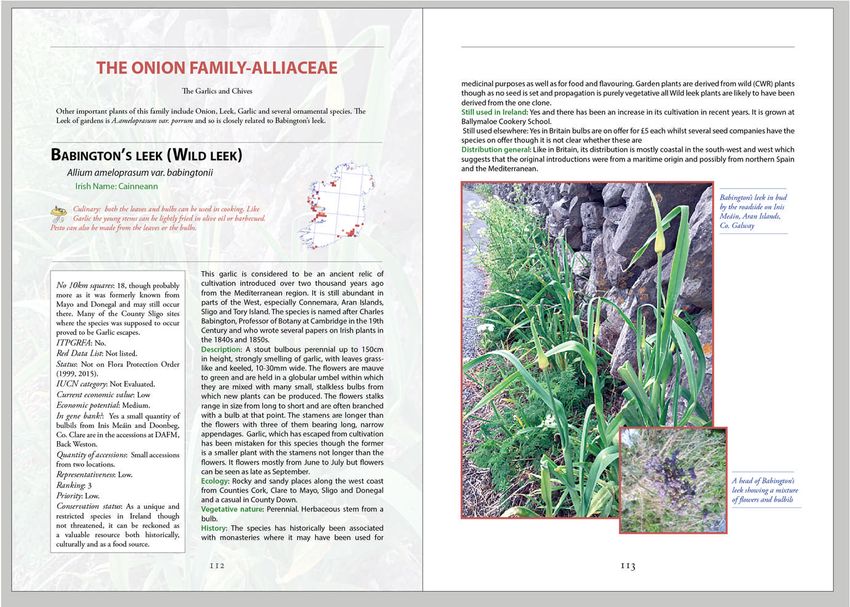
Indigenous plant genotypes unique Image courtesy: Irish Seed Savers
to Ireland may exist due to its isolation and westerly location to
mainland Europe. Little is known of the plant genetic resources
that exist in Ireland, particularly with regard to indigenous species
in the wild.
Anonymous (1995) Ireland: Country report to the FAO International Technical Conference on Plant Genetic
Resources (Leipzig 1996). Department of Agriculture, Food and Forestry, Dublin
2 Public Hearing, 7th of December 2017, Committee on Agriculture and Rural Development, European Parliament
CWR status in numbers - Ireland
Department of Agriculture, Food & the Marine responsible for the
coordination and promotion of measures for the conservation and
utilisation of genetic resources for food and agriculture.
Department is supported by a national Advisory Committee on
Genetic Resources for Food and Agriculture.
181 Crop Wild Relative species recorded in Ireland (Curtis, 2009).
102 known (ITPGRFA) Annex 1 Crop Wild Relative plant genera
and species in Ireland.
Annex 1 species are considered as a priority for conservation.
Curtis, T. 2009. Final Report on the Project: The production of a priority list of crop wild relatives for
Ireland. Irish Department of Agriculture.
Annex 1 compiled by ‘The International Treaty on Plant Genetic Resources for Food and Agriculture’
(ITPGRFA)
3 Public Hearing, 7th of December 2017, Committee on Agriculture and Rural Development, European Parliament
Crop Wild Relative Ex-Situ
Conservation Initiatives - Ireland
Department of Agriculture (DAFM) seed bank facility in
Backweston, focusing mainly on Irish crops, crop wild
relatives and landraces.
DAFM Tops Potato Centre in County Donegal: > 400 unique
varieties of potato held in both in vitro and in situ.
Teagasc: perennial ryegrass & white clover, potatoes
Trinity College Dublin Botanic Gardens: Threatened Irish
Plant Genebank
NGOs: Image courtesy: Irish Seed Savers
- Irish Seed Savers Association (ISSA) Co. Clare
- Genetic Heritage Ireland (GHI)
4 Public Hearing, 7th of December 2017, Committee on Agriculture and Rural Development, European Parliament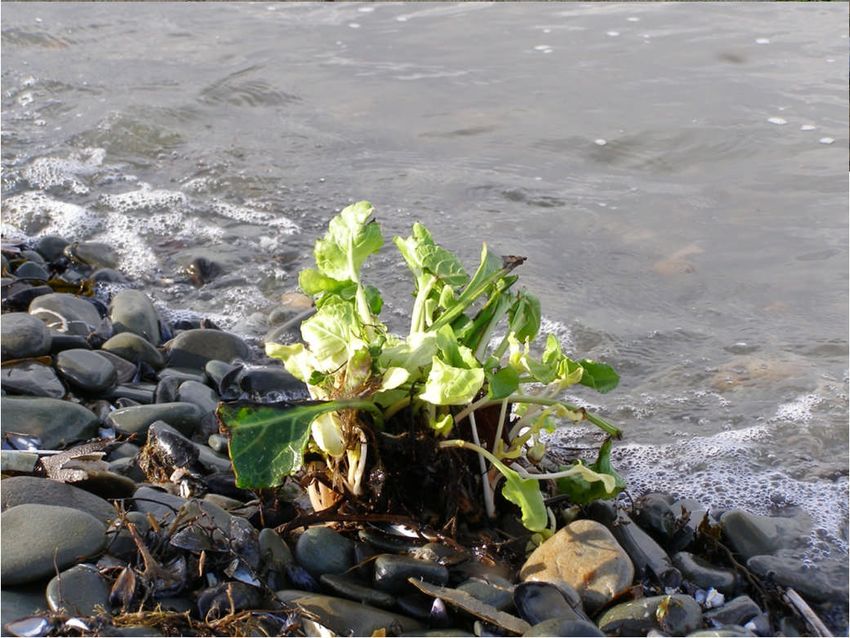
Documentation: National Crop
Wild Relative Database
The National Crop Wild Relative database held by National
Biodiversity Data Centre in Waterford, established 2010.
Primary data sources:
Data on the distribution of 55 CWR Annex I:
(1) the National Vegetation Database
(2) National Herbarium Glasnevin
(3) National Parks and Wildlife Service Threatened species database
CWR data collected by Genetic Heritage Ireland 2009-2010.
Data collected by National Biodiversity Data Centre during DAFM funded
projects 2011 - 2013: Recording of native crop wild relative species from
key underrecorded areas.
Data from all other relevant plant data sets held by the Data Centre
incorporated (Botanical Society of the British Isles).
5 Public Hearing, 7th of December 2017, Committee on Agriculture and Rural Development, European Parliament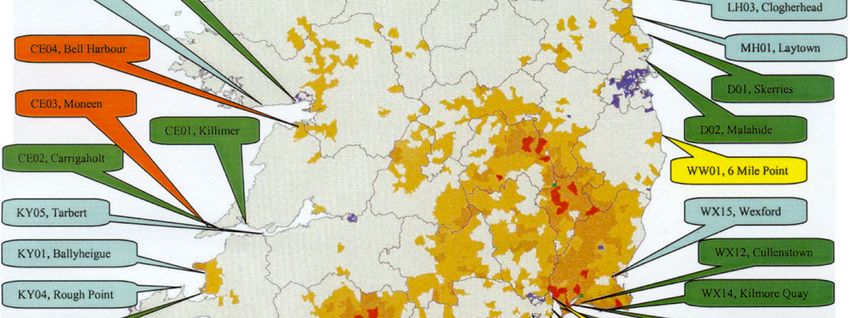
Documentation & Outreach:
     Raising public awareness

                                                                                                                ‘The Heritage Wild
                                                                                                                Food and Crop Plants
                                                                                                                of Ireland’
                                                                                                                (Crop Wild Relatives)

                                                                                                                Tom Curtis and
                                                                                                                Paul Whelan,
                                                                                                                to appear spring 2018
                                                                                                                Cork University Press

6   Public Hearing, 7th of December 2017, Committee on Agriculture and Rural Development, European Parliament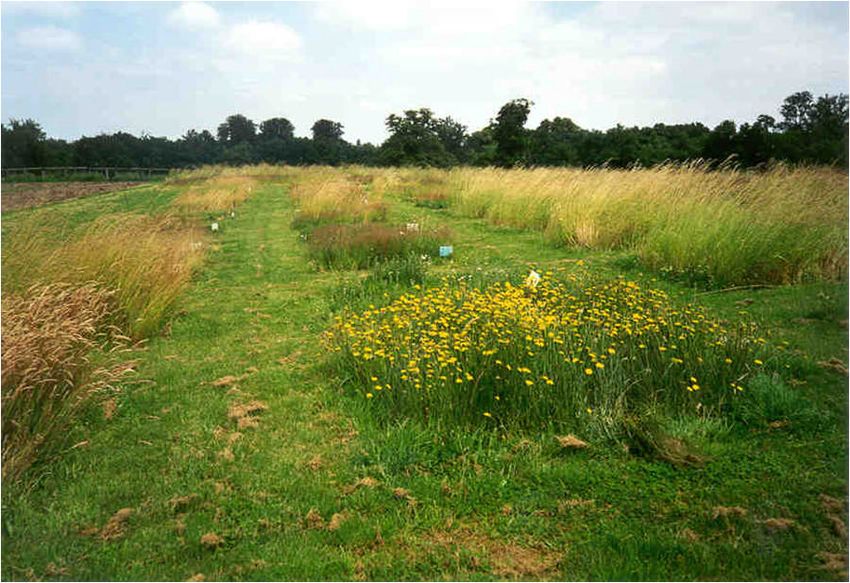
Documentation & Utilisation:
Other public outreach documentations:
- Potatoes (Choiseul et al 2008)
- Heritage Apples (Hennerty 2014)
Scientific documentation: Perennial ryegrass (Lolium perenne L.)
Barth S, McGrath S, Arojju SK & Hodkinson TR (2015) An Irish perennial ryegrass genetic resources
collection clearly divides into two major gene pools. Plant Genetic Resources: Characterization and
Utilization doi:10.1017/S1479262115000611
7 Public Hearing, 7th of December 2017, Committee on Agriculture and Rural Development, European Parliament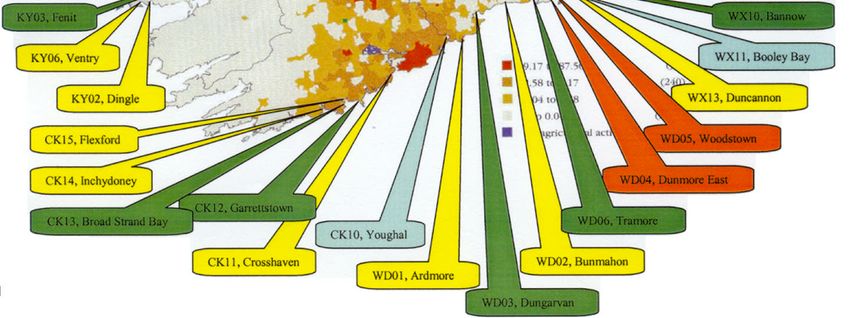
In situ conservation,
the challenge
In situ conservation well underway for apples
(NGO held) and potatoes (DAFM & Teagasc)
Images courtesy: Irish Seed Savers
In situ conservation completely lagging behind or
non-existent in many important species like forages
Hindrances:
More complicated pollination biology of some species
(outcrossing species and or pollinators required)
Minimum number of plants per population required (effective
population size N)
Often landscape approach required, e.g. forages
No suitable long term initiatives/instruments available
Threats to habitats
8 Public Hearing, 7th of December 2017, Committee on Agriculture and Rural Development, European Parliament
Threats to Crop Wild Relatives

                                                      Photos courtesy D. Grogan DAFM

                                  population pressure, habitat loss, alteration and
                                  fragmentation, genetic and environmental
                                  pollution, alien and invasive species, changes in
                                  land management, grazing pressure, climate
                                  change and lack of coordination, commitment
                                  and financial support to genetic conservation…

• Coastal erosion
9   Teagasc Presentation Footer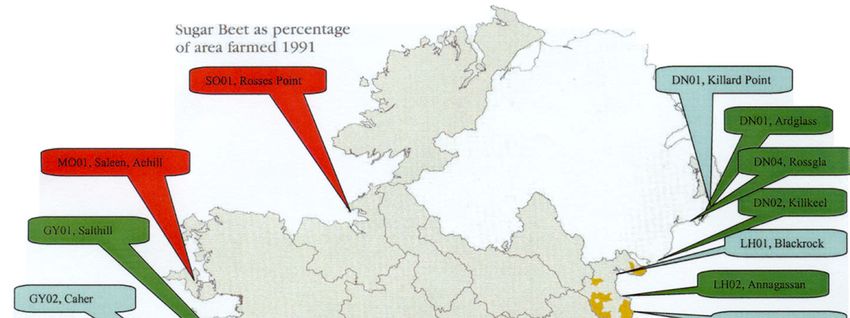
Maritime
Beet:
Irish in-situ
resources
2002-2007

                                                                                                                 Image courtesy D.
10   Public Hearing, 7th of December 2017, Committee on Agriculture and Rural Development, European Parliament
                                                                                                                 Grogan DAFM
Threat status – example wild
beta
2002-2007 surveyed populations in general better than the 1987
surveyed populations.
On the east, south and southwest coasts, the majority of in-situ
populations were not under any immediate threat of destruction.
On the west coast, north of Galway Bay, no plants were found at two
locations, Achill Island, and Ross’s Point.
Evidence of the negative impact of coastal erosion and human activity on
habitat was evident at all sites.
A number of sites should be designated as areas of scientific interest,
and maritime beet included as a plant of interest on information guides at
such sites.
Relevant local authorities were contacted and made aware of these
CWR resources in their areas.
11 Public Hearing, 7th of December 2017, Committee on Agriculture and Rural Development, European ParliamentIn situ conservation – ways
forward, forages & herbs (forbs)
Landscape approach needed to
capture specific habitats for
species
Need to cultivate land to preserve
species in situ
Need to develop concepts Photo courtesy J. Finn Teagasc
Collaborative European research required
National Parks and Wildlife Service areas?
Creation of long term conserved agricultural conservation areas
managed by farmers: Long term instruments in CAP?
Positive examples in Switzerland & Norway
12 Public Hearing, 7th of December 2017, Committee on Agriculture and Rural Development, European ParliamentBenefits grassland mixtures:
Aboveground biomass declines with loss
of plant species richness
1400
Aboveground biomass (g/m )
2
1200
1000
800
600
400
200
0
0 5 10 15 20 25 30 35
Species diversity
On average, each halving of richness reduced biomass by 80 g m-2 and loss of resource
use13efficiency (Hector et al., Science, 1999). Semi-natural grassland species, no fertiliser
Teagasc Presentation Footer
added.Summary & conclusion
Several ex situ conservation collections available, but for most
CWR species small numbers only
Ex situ conservation expensive: mainly labour for regeneration,
quality control of seed and characterisation of stored materials
Forage and potato collection in safety duplicate in Svalbard
Documentation for CWRs well underway, but needs continued
updating and networking with other countries and initiatives
Good outreach activities initiated
In situ conservation strategies lagging behind
In situ conservation effective to conserve CWRs of multiple
species under traditional agricultural practices
Monitoring of in situ conservation strategies required (especially for
threatened species)
Concepts & instruments for in situ conservation of CWR to be
developed.
14 Public Hearing, 7th of December 2017, Committee on Agriculture and Rural Development, European ParliamentAcknowledgements
Funding source
‘Conservation of Genetic Resources for Food and Agriculture’
Annual budget of ca Euro 50 000 across plant, insect and
animal genetic resources.
Consultation
Dr. Úna FitzPatrick National Biodiversity Data Centre
Mr Dermot Grogan DAFM
Dr John Finn Teagasc
Mr Cara Mac Aodháin DAFM
15 Public Hearing, 7th of December 2017, Committee on Agriculture and Rural Development, European ParliamentYou can also read


