GIGANTE SALMON COMPANY PRESENTATION JULY 2021
←
→
Page content transcription
If your browser does not render page correctly, please read the page content below
STRICTLY PRIVATE AND CONFIDENTIAL

                                    GIGANTE SALMON
                                     COMPANY PRESENTATION
                                           JULY 2021

                                                                     Private and Confidential

STRICTLY PRIVATE AND CONFIDENTIAL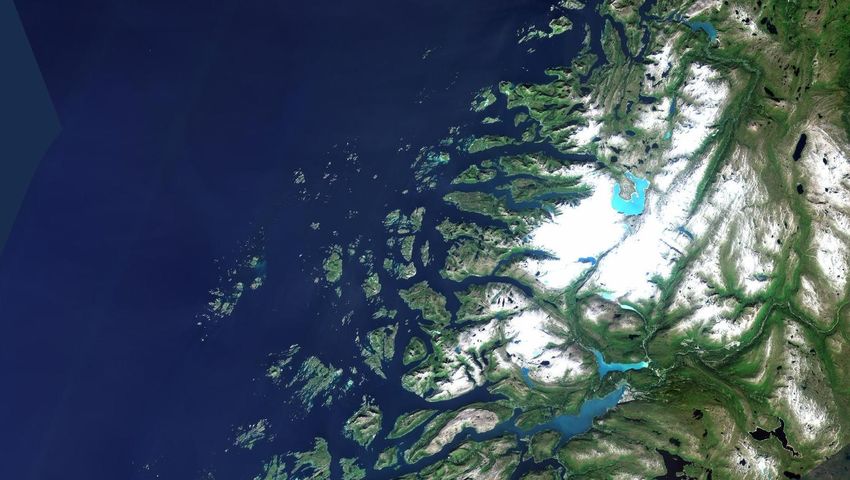
CONTENTS

1. INTRODUCTION

2. MARKET OVERVIEW

3. PROJECT OVERVIEW

4. FINANCIAL INFORMATION

5. RISK FACTORS
Important information and disclaimer
THIS DOCUMENT IS NOT FOR RELEASE, PUBLICATION OR DISTRIBUTION, IN WHOLE OR   PROJECTIONS OF THE COMPANY OR ASSUMPTIONS BASED ON INFORMATION
IN PART, DIRECTLY OR INDIRECTLY, IN OR INTO OR FROM THE UNITED STATES OF     AVAILABLE TO THE COMPANY. SUCH FORWARD-LOOKING INFORMATION AND
AMERICA, AUSTRALIA, CANADA, JAPAN, HONG KONG OR SOUTH AFRICA OR TO ANY       STATEMENTS ARE SOLELY OPINIONS AND FORECASTS WHICH REFLECT CURRENT
RESIDENT THEREOF OR ANY OTHER JURISDICTION WHERE SUCH DISTRIBUTION IS        VIEWS WITH RESPECT TO FUTURE EVENTS AND ARE SUBJECT TO RISKS, UNCERTAINTIES
UNLAWFUL. THIS DOCUMENT IS NOT AN OFFER OR AN INVITATION TO BUY OR SELL      AND ASSUMPTIONS. NONE OF THE COMPANY OR ANY OF ITS REPRESENTATIVES
SECURITIES.                                                                  PROVIDES ANY ASSURANCE THAT THE ASSUMPTIONS UNDERLYING SUCH FORWARD-
                                                                             LOOKING STATEMENTS ARE FREE FROM ERRORS, NOR DO ANY OF THEM ACCEPT ANY
ABOUT THIS PRESENTATION
                                                                             RESPONSIBILITY FOR THE FUTURE ACCURACY OF THE OPINIONS EXPRESSED IN THIS
                                                                             PRESENTATION.
THIS PRESENTATION (THE “PRESENTATION") HAS BEEN PRODUCED BY GIGANTE
SALMON AS (“GIGANTE SALMON” OR THE “COMPANY”) FOR INFORMATION PURPOSES
ONLY AND DOES NOT IN ITSELF CONSTITUTE AN OFFER TO SELL OR A SOLICITATION OF NO REPRESENTATION OR WARRANTY
AN OFFER TO BUY ANY FINANCIAL INSTRUMENTS. BY ATTENDING A MEETING WHERE
THIS PRESENTATION IS PRESENTED, OR BY READING THIS PRESENTATION, YOU (THE THE INFORMATION CONTAINED IN THIS PRESENTATION IS FURNISHED BY THE COMPANY
“RECIPIENT”) AGREE TO BE BOUND BY THE FOLLOWING TERMS, CONDITIONS AND AND HAS NOT BEEN INDEPENDENTLY VERIFIED. NO REPRESENTATION OR WARRANTY
LIMITATIONS.
                                                                             (EXPRESS OR IMPLIED) IS MADE AS TO THE ACCURACY OR COMPLETENESS OF ANY
                                                                             INFORMATION CONTAINED HEREIN. NONE OF THE COMPANY, ANY REPRESENTATIVE
NEITHER THE DELIVERY OF THIS PRESENTATION NOR ANY FURTHER DISCUSSIONS WITH
                                                                             ACTING ON BEHALF OF THE COMPANY, OR ANY OF ITS RESPECTIVE PARENT OR
THE RECIPIENT OR ANY OTHER PERSON SHALL, UNDER ANY CIRCUMSTANCES, CREATE
                                                                             SUBSIDIARY UNDERTAKINGS OR ANY SUCH PERSON’S DIRECTORS, OFFICERS,
ANY IMPLICATION THAT THERE HAS BEEN NO CHANGE IN THE AFFAIRS OF THE
                                                                             EMPLOYEES, ADVISORS OR REPRESENTATIVES (COLLECTIVELY THE
COMPANY SINCE THE DATE OF THIS PRESENTATION. THE COMPANY DOES NOT
                                                                             “REPRESENTATIVES”) SHALL HAVE ANY LIABILITY WHATSOEVER ARISING DIRECTLY OR
UNDERTAKE ANY OBLIGATION TO REVIEW OR CONFIRM, OR TO RELEASE PUBLICLY OR
                                                                             INDIRECTLY FROM THE USE OF THIS PRESENTATION OR OTHERWISE ARISING IN
OTHERWISE TO THE RECIPIENT OR ANY OTHER PERSON, ANY REVISIONS TO THE
                                                                             CONNECTION THEREWITH, INCLUDING BUT NOT LIMITED TO ANY LIABILITY FOR ERRORS,
INFORMATION CONTAINED IN THIS PRESENTATION TO REFLECT EVENTS THAT OCCUR
                                                                             INACCURACIES, OMISSIONS OR MISLEADING STATEMENTS IN THIS PRESENTATION. THE
OR CIRCUMSTANCES THAT ARISE AFTER THE DATE OF THIS PRESENTATION. THE
                                                                             RECIPIENT ACKNOWLEDGES THAT IT WILL BE SOLELY RESPONSIBLE FOR ITS OWN
COMPANY DOES NOT INTEND TO UPDATE THE INFORMATION AFTER ITS DISTRIBUTION,
                                                                             ASSESSMENT OF THE COMPANY’S BUSINESS AND THE MARKET, THE MARKET POSITION
EVEN IN THE EVENT THE INFORMATION BECOMES MATERIALLY INACCURATE.
                                                                             AND CREDIT WORTHINESS OF THE COMPANY. THE RECIPIENT WILL BE REQUIRED TO
                                                                             CONDUCT ITS OWN ANALYSIS AND ACCEPTS THAT IT WILL BE SOLELY RESPONSIBLE
FORWARD LOOKING INFORMATION AND STATEMENTS                                   FOR FORMING ITS OWN VIEW OF THE POTENTIAL FUTURE PERFORMANCE OF THE
                                                                             COMPANY, ITS BUSINESS AND THE SHARES. THE CONTENT OF THIS PRESENTATION IS
THIS PRESENTATION INCLUDES AND IS BASED ON, AMONG OTHER THINGS, FORWARD-     NOT TO BE CONSTRUED AS LEGAL, CREDIT, BUSINESS, INVESTMENT OR TAX ADVICE.
LOOKING INFORMATION AND STATEMENTS. SUCH FORWARD-LOOKING INFORMATION         THE RECIPIENT SHOULD CONSULT WITH ITS OWN LEGAL, CREDIT, BUSINESS,
AND STATEMENTS ARE BASED ON THE CURRENT EXPECTATIONS, ESTIMATES AND          INVESTMENT AND TAX ADVISERS AS TO LEGAL, CREDIT, BUSINESS, INVESTMENT AND
                                                                             TAX ADVICE.

                                                                                                                                                            3
01

INTRODUCTION

01 Introduction

Current progress and milestones
     ✓ The Ministry of Fisheries   ✓ Entered into a lease       ✓ Plan and impact            ✓ Rødøy approves final        ✓ The Norwegian Food
        repealed the requirement     agreement with an option     assessment together with     zoning plan for industry,     Safety Authority gives its
        for a license for land-      to purchase Indre Lille      Rødøy municipality           land based aquaculture.       permit for a production of
        based aquaculture            Rosøya in Rødøy              started.                                                   20,000 tons of salmon,
        facilities in Norway.        municipality.              ✓ Plan approved by Rødøy                                     with 13,731 tons MAB.
     ✓ Gigante Havbruk AS                                         by end of the year.                                        For the first 24 months,
        («Gigante Havbruk»)                                                                                                  the license is limited to
        started the planning to                                                                                              3,600 tons MAB.
        realise a land based                                                                                               ✓ Discharge permit
        aquaculture facility.                                                                                                granted.
                                                                                                                           ✓ Final aquaculture license
                                                                                                                             approved.
                                                                                                                           ✓ Equity capital raise
                                                                                                                             MNOK 65

                  2016                       2017                         2018                         2019                             2020

                                                                                                                                                          5
01 Introduction

At a glance
 Gigante Salmon…                                                          …a part of the Gigante Havbruk group
 ▪   Gigante Salmon is a part of the Gigante Havbruk group, which is a
     major player in the Norwegian aqua culture industry.
 ▪   Gigante Salmon will employ the management team and lead the
     project. In addition to the shares of Gigante Salmon Rødøy AS, the
     company owns a second island that has been acquired for future          Revenue1: 603 NOKm            EBIT1: 170 NOKm
     development of a potential second production site.
 ▪   Construction on Lille Indre Rosøya is scheduled to start in the
     second half of 2021 and planned production start is in 2023.
 ▪   The planned facility will consist of three pools with a total
     production capacity of approx. 16,000 tons.
                                                                                   FTE: 63              Production: 10,000 tons

 Projected harvest volumes HOG (tons)                                     Favorable location on the Helgeland coast

                                                               16,000

                                             7,000
                           5,000

             900

            2024           2025              2026               2027
1 Annual   accounts 2019
                                                                                                                                  6
01 Introduction

Investment highlights
1
                    ▪ Main owner and project initiator with extensive experience in the Norwegian aquaculture industry.
     EXPERIENCE     ▪ Gigante Havbruk group has 30 years of experience of successful salmon farming.
                    ▪ The group is present in the whole value chain from broodstock to export and Gigante Salmon will have access to necessary know-how.

2
                    ▪ The design of the production site and processes builds on technology proven in conventional sea-based aquaculture.
    TECHNOLOGY      ▪ The concept has been dilligently designed to minimize technological risk.
                    ▪ The site has been designed to optimise both fish welfare and economic efficiency.

3
                    ▪ Extensive work has been put into finding the most suitable location for realising the project.
       CAPITAL      ▪ The production site has been carefully selected to provide a cost efficient facility, with a high level of flexibility and low CAPEX levels.
    EXPENDITURES    ▪ The Rødøy site enables Gigante Salmon to construct a land-based salmon farming site with industry leading capital expenditures per kilo
                        produced salmon.

4
                    ▪ The demand for salmon expected to stay strong due to increased focus on sustainability and health.
    PROFITABILITY   ▪ No sea lice, efficient feed utilization, large capacity with intensive production and biomass optimization gives favorable costs per kg HOG.
                    ▪ High expected profit margins creates resilience to market price fluctuations.

5
                    • The company will produce high quality food with a sustainable environmental footprint and creating valuable rural jobs.
    SUSTAINABLE
                    • Land based production allows for control of water quality parameters and emissions.
    PRODUCTION      • Sludge from the operations will be separated off and utilised for fertilizer production.

6
                    ▪ Financing for construction phase granted. Refer to slide 42 for details.
     FUNDING IN     ▪ Long term financing granted.
       PLACE        ▪ Overdraft facility for working capital granted.
                    ▪ Leasing financing for work barge and machinery granted

                                                                                                                                                                     7
02

MARKET OVERVIEW
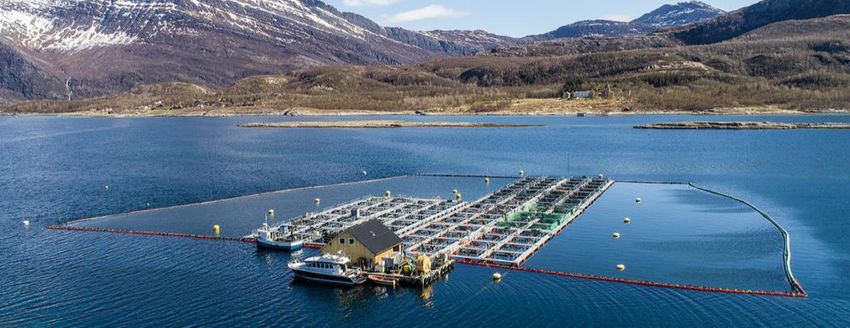
02 Market overview

Increasing demand for healthy protein sources
 Comments                                    Population growth                                                               Global fish consumption per capita
 ▪ A growing global population will          billion                                                                         kg

     increase the global demand for                                                                                                                                    20.6
                                                                                                                                                                                            21.4
                                                                                                               10.9
     proteins.                                                                                    9.7
                                                                                       8.5                                                           15.8
                                                                           7.8

                                                                6.1
                                                                                                                                    9.9
 ▪ Health benefits and limitations in             5.3

     traditional meat production is
     expected to increase fish
     consumption per capita. Global
                                                  1990         2000       2020         2030      2050          2100                 1960             2000             2019                  2029
     fisheries are to a large extent fully
     exploited, meaning that the supply      Resource-efficient production                                                   Climate friendly production
     of wild fish has limited potential to                                                                                   1000
     meet the growing demand for             60          56                                                           12.0   20                                                                    70.0

     marine protein.                         50                                                                       10.0                                                           15.4          60.0
                                                                        39                                                   15
                                                                                                                                                                                                   50.0
                                             40                                                                       8.0
                                                                                                        8.0                                                                                        40.0
                                             30                                                                       6.0    10
 ▪ Environmental issues are                  20
                                                                                        19
                                                                                                                      4.0
                                                                                                                                                                     6.0
                                                                                                                                                                                     39.0          30.0
                                                                                                                                                      4.3                                          20.0
     increasingly influencing peoples        10
                                                                                        3.9              7            2.0
                                                                                                                              5
                                                                                                                                      2.0
                                                                                                                                                                                                   10.0
                                                                         1.9
     dietary choices. Increased fish          0
                                                         1.3
                                                                                                                      0.0    0              7.9              6.2     12.2
                                                                                                                                                                                                   0.0

     consumption will contribute to                    Salmon         Poultry          Pork             Beef                        Salmon         Poultry           Pork            Beef

                                                                                                                                      Litre water / kg edible meat          kg CO2 / kg edible meat
     reducing global emissions.                           Edible Meat per 100 kg fed          Feed conversion ratio

Source: Salmon farming industry handbook
                                                                                                                                                                                                          9
02 Market overview
Significant growth potential for Atlantic Salmon in most
geografical markets
Market size Consumption per capita
600 9
8.2
8
500
7
6.3
6.1
400 6
Market size tons (1000)
Kg WFE per capita
5
4.8
300
4
3.4 3.3
200 3
2.7 Average
2.6 2.6
2.5
2.4 consumption
2
1.7 1.8 1.8
100 1.4
1.3
0.9 1
0.8
0.5 0.6 0.6
0.4 0.3
0.1
0 0
France
Germany
USA
South Korea
Vietnam
Italy
Taiwan
Canada
Belgium
Israel
Thailand
Chile
Spain
Brazil
Poland
Finland
Japan
Norway
UK
China/Hong Kong
Australia
Sweden
Netherlands
Russia
Sources: Kontali
1002 Market overview
Stagnating growth in traditional farming
Global Atlantic salmon supply (1000 tons GWT) Comments
3000
CAGR +3% ▪ The supply of Atlantic
salmon has increased by
CAGR +7% 7% p.a. from 2010 to 2019.
2500
▪ Due to biological and
regulatory constraints it is
2000
expected that the annual
growth rate going forward
will be reduced to 3%.
1500
▪ The increased production
1000 volume necessary to meet
increased demand needs
to come from new
500 production methods.
0
2010 2011 2012 2013 2014 2015 2016 2017 2018 2019 2020E 2021E 2022E 2023E
Sources: Kontali
1102 Market overview
Challenges in traditional fish farming
▪ Traditional open pen fish farming is constrained by availability of suitable locations.
Limited locations ▪ Area needs of new aquaculture sites creates potential conflicts with established users.
▪ New locations need adequate spacing from existing fish farms to reduce risk of spread of diseases and parasites.
▪ Water potentially carrying parasites and harmful microbes enter open pens without treatment creating vulnerability.
▪ Sea lice larvae spread between aquaculture locations and multiply quickly in pens, threatening fish welfare and resulting in
substantial treatment costs.
Sea Lice & Diseases ▪ Sea lice treatments stresses the fish and some delicing methods may be forbidden due to animal welfare concerns although
alternative treatments are not clear.
▪ High concentrations of sea lice may force fish farmers to slaughter fish early and to rotate fish farming locations to prevent build
up.
▪ Fish waste and uneaten feed is emitted to surroundings without collection or treatment.
Emissions ▪ Chemicals and medicine used for treatment of disease or parasites are emitted into local waters affecting wild sea life.
▪ Parasitic sea lice from open pen farms spreads to and threaten wild salmon populations.
▪ Farmed fish escaping from net pens can occur in extreme weather or if nets are damaged during maintenance or handling of
fish.
Escapes ▪ Escaped salmon have been shown to enter rivers during spawning season disturbing the eggs of wild salmon and
interbreeding.
▪ Interbreeding with wild salmon populations pollutes the gene pool of the salmon populations indigenous to its particular
waterways.
1203 PROJECT OVERVIEW
03 Project overview

Project summary

          16,000            ~31 NOK                     24            ~71 NOK          ~24 NOK
     tons HOG per year   production cost per kg   months production   capex/kg HOG     capex/kg HOG
                                 HOG                   cycle          1/3 production   full production

                                                                                                         14
03 Project overview
Gigante Salmon’s innovative production concept helps to increase
area efficiency and reduce emissions and diseases
SOCIAL
Lasting Righteous
NO SEA LICE NO ESCAPES
Sustainability
The water is collected under No escapes that could affect the
the lice larva’s habitat wild salmon population ENVIRONMENT ECONOMY
Viable
Objective
▪ Good fish welfare
PURIFICATION JOBS ▪ Social responsibility
Collected waste can be included Contributes to new green jobs in ▪ Creating a climate footprint as small as possible
in the circular economy rural areas
The biggest challenges associated with traditional salmon farming are sea lice and escapes
1503 Project overview
Gigante Havbruk is the project initiator and will own the majority of
the shares after the placement
About Gigante Havbruk group Financial performance
▪ Gigante Havbruk group was established in 1988 by Kjell Lorentsen. 700 37.7 % 40.0 %
606 603
600 35.0 %
555
▪ From humble beginnings, the group now has a fully integrated value 500
28.2 % 28.2 % 30.0 %
chain and annual revenues of 600 NOKm. 24.1 %
25.0 %
400 20.5 %
331
20.0 %
290
300
▪ The group is located in the Norwegian municipalities Meløy, 15.0 %
Gildeskål, Rødøy and Bodø. 200 171 170
125 10.0 %
114
100 70
5.0 %
▪ Gigante Havbruk group operates 7 licenses for salmon and co-
0 0.0 %
operates 4 further licences for salmon. 2015 2016 2017 2018 2019
Revenue EBIT EBIT %
Product and service offering
BREEDING SMOLT FARMING HARVEST PROCESSING SALES/EXPORT
1603 Project overview
Gigante Havbruk consists of four main segments
Corporate structure Comments
▪ Gigante Havbruk AS is owned by the
families Lorentsen and Storholm.
Fam. Lorentsen Fam. Storholm
▪ Gildeskål Forskningsstasjon AS
80% 20% («GIFAS») is the group’s main
Gigante Havbruk AS aquaculture operation. The company
also conducts small and large scale
commercial research projects.
100% 35% 51% 100%
▪ Salten Aqua AS («Salten Aqua»)
Gigante Salmon
GIFAS Salten Aqua AS KapNord AS produces the salmon from roe to
AS
international markets.
▪ R&D ▪ Broodstock ▪ Smolt
▪ Aqua culture ▪ Smolt ▪ R&D ▪ KapNord AS («KapNord») provides
▪ Salmon Center ▪ Harvest ▪ Aquaculture smolt, land based competence, fish
Gildeskål health and environmental services.
▪ Processing ▪ Land based
▪ Sales
▪ Gigante Havbruk AS owns 60.86% of the
shares in Gigante Salmon AS following
the completed private placement.
1703 Project overview
Gigante Havbruk group has a fully integrated value chain
BROODSTOCK ROE FRY SMOLT
2 MONTHS 6 MONTHS 7 MONTHS
WELLBOAT TRANSPORT - Smolt is pumped straight from well boat into raceways
PRODUCTION FREIGHT HARVEST SALES/EXPORT
14-24 MONTHS
Resources and expertise
1803 Project overview
All key agreements are in place
# Agreement Counterparty Ownership
Management Gigante Havbruk AS owns 35% of the shares in Salten Aqua AS, directly and
1 Salten Aqua AS
agreement indirectly.
Gigante Havbruk AS owns 51% of the shares in Grytåga Settefisk AS, directly and
2 Smolt agreement Grytåga Settefisk AS
indirectly.
Gigante Havbruk AS owns 28% of the shares in Salten N950 AS, directly and
3 Slaughter agreement Salten N950 AS
indirectly.
Research
4 GIFAS Gigante Havbruk AS owns 100% of the shares in GIFAS.
Agreement
Other relevant agreements with related parties are assessed continuously as needed
1903 Project overview
GIFAS provides years of aquaculture experience and reasearch and
development capabilities
About GIFAS Financial performance
▪ GIFAS is headquartered in Sund, in the middle of Gildeskål 700 50.0 %
municipality. The company currently has two departments: a 600
596 591
547
40.5 %
research station on Langholmen outside Inndyr and an ordinary 40.0 %
500
part for salmon farming.
31.3 %
29.5 % 30.0 %
400
26.2 % 327
▪ The localities extend from Røssøya in Gildeskål to Hallsteinhamn in 282 22.4 %
300
Festvåg. The company offers customers research services in 20.0 %
185
addition to salmon farming. 200 176
132 122
10.0 %
100 74
▪ As a research station, GIFAS' staff has unique expertise, which
0 0.0 %
contributes to developing the industry in a positive direction. 2015 2016 2017 2018 2019
Revenue EBIT EBIT %
Product and service offering
AQUACULTURE RESEARCH AND DEVELOPMENT
2003 Project overview
Salten Aqua will provide both administrative and operational
resources
About Salten Aqua Financial performance
▪ Salten Aqua is owned by Gigante Havbruk, Edelfisk and Wenberg 1,800
1,612
5.0 %
Fiskeoppdrett. 1,600
1,430
1,400 4.0 %
1,300
1,233
1,200
▪ Salten Aqua gives the owners and subsidiaries a common platform 1,015 3.0 %
1,000 2.9 %
to reach the outside world. 2.7 %
2.4 %
800
2.0 %
600 1.8 %
▪ The Salten Aqua grouping handles the salmon from roe grain, to 1.4 %
400 1.0 %
processed product shipped to customers locally, nationally and
200
internationally. 27 31 41 22 22
0 0.0 %
2015 2016 2017 2018 2019
Revenue EBIT EBIT %
Product and service offering
BREEDING SMOLT SLAUGHTER PROCESSING SALES EXPORT
2103 Project overview
Smolt and fish health capabilities will be sourced from KapNord
About KapNord Financial performance
▪ KapNord is a company that invests primarily in aquaculture in 450 14.0 %
399
Northern Norway. 400
12.0 %
358
11.5 %
350
10.0 %
▪ The company owns: 300 9.1 %
▪ Grytåga Settefisk – has built a hatchery for salmon and trout in Grytåga, 250 8.0 %
at the entrance to Vefsnfjorden. 200 6.0 %
150
▪ Fishbase Group – produces lumpfish and juveniles of salmon, trout and 4.0 %
cod. 100
46 2.0 %
50 32
▪ LetSea – Provides research and services related to fish health and the 0 0.0 %
environment on salmon and other maine species. 2018 2019
Revenue EBIT EBIT %
Product and service offering
GRYTÅGA SETTEFISK FISHBASE GROUP LETSEA
SMOLT RESEARCH, FISH HEALTH, ENVIRONMENT
2203 Project overview
The land based facility will be constructed on Lille Indre
Rosøya on the Helgeland coast
1
Lille Indre Rosøya
1
Rødøy
Mo i Rana
2303 Project overview
A carefully selected location …
Why the chosen location?
✓ Environmentally assessed in the best category by AkvaPlan Niva.
✓ Centrally placed between hatchery and slaughterhouse.
✓ Over 5 km to nearest fish farm and no need for treatment of intake water.
✓ The island is conveniently designed with low and flat areas which leads to lower
construction costs.
✓ The long narrow island provides short inlet and outlet pipes.
✓ The water around the island satisfies the depth requirements for the intake pipes
and flow mapping does not reveal any danger of effluent being mixed with intake
water.
✓ Strong current around the island ensures that organic load will not accumulate
around the discharge points.
“Based on the assessment criteria in NS 9410: 2016, it is documented that
the site at the time of the test received condition [1 - Very Good]. A total of
40 grab cuts were made with the Van Veen grab (0.1 m2), distributed over
20 stations. All stations received a grade of [1 - Very good]”
2403 Project overview
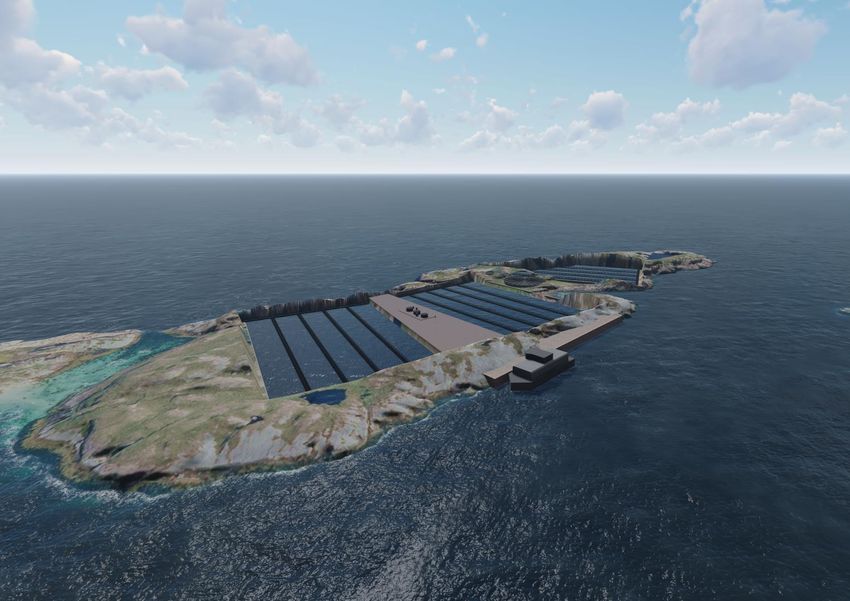
… makes it possible to bring the sea on land
Comments
▪ The facility will consist of three large pools.
▪ Five raceways are established in each pool.
The raceway setup can be modified
according to changes in futures needs.
▪ The water is pumped into the end of each
raceway and out the other end.
▪ Each raceway has a partition and
arrangements to circulate water and create
optimal currents.
▪ The water intake is secured with an electric
net, flashing lights and ultrasound.
▪ At the bottom of each raceway, there is a
commercially tested sludge removal system.
Intermediate storage is established in
separate tank.
▪ The plant is operated from a commercial
feed/work barge.
▪ Oxygen will be produced at the facility.
Alternatively, supply of liquid oxygen will be
considered.
A commercial cage with a circumference of 120 meters to illustrate dimensions
2503 Project overview
The facility will be a land based flow-through system with a
conventional operational setup
Pool and raceways Current control
▪ 5 raceways installed in each pool: ▪ Each raceway is split with a partition and
▪ 5x9,000m3 = 45,000m3 mixers to create optimal water dynamics for
aquaculture.
▪ Dimensions per raceway:
▪ Width: 15 m.
▪ Dybde: 5 m.
▪ Length: 120 m.
Work barge Sludge collection
▪ Uses a conventional operational setup with a ▪ Grates and a sludge collection system are
work barge. mounted at the bottom of each raceway to
keep the water clear.
▪ Employees will live on the barge.
▪ Ratio in raceway: 1% sludge, 99% water.
▪ The production is monitored and remotely
controlled. ▪ Separation tank: 10% sludge, 90% water.
Water intake
▪ Water intake from 20 meters depth with drains
on the other side of the island.
▪ The system uses two pumps for safety and a
O2 system for each raceway All dimensioning parameters for water chemistry and
▪ Water replacement time: 30.0-40.9 minutes
dynamics have been carried out together with external
consultants.
2603 Project overview
Pools designed with flexibility to adjust to regulatory
changes
The pools will be excavated down to an elevation of -7 meters.
In the event of a change in the regulations, water may be moved in and out of the facility without lifting the water.
This will both increase total pool volume and lower operating costs by approx. 2/3.
2703 Project overview
Gigante Salmon expects low CAPEX and production cost
Risk Gigante Salmon RAS technology Traditional farming
Technology ▪ Flow-through of fresh sea water ▪ Recycled sea water ▪ Open pens
▪ Low degree of new technology implementation ▪ High degree of new technology implementation ▪ Well established production method
Sea lice ▪ Water intake is below depths inhabited by sea ▪ No sea lice ▪ Sea lice enters from surface water and
lice proliferate in pens. Sea lice is a substantial
issue both economically and for fish welfare
Water Quality ▪ Continuous replacement of water ▪ Closed system allows for control with ▪ Water continuously replaced by surrounding
▪ Location far from existing aquaculture temperature and chemical water quality sea water. Low risk, but no possibility to control
minimizes contamination risks parameters. water quality parameters
▪ Raceways provide controlled waterflow and ▪ Dependency on biofilters create risk for sudden
easy separation of waste changes in levels of chemical compounds and
▪ Supplemental oxygenation long term build up of pathogens
▪ No dependency on biofilters ▪ High dependency of oxygen supplementation
Environment ▪ Sludge is collected and separated off for ▪ Sludge is collected and separated off for ▪ Little control over emissions of fodder and fish
fertilizer production repurposing waste to nature
▪ Fish can not escape ▪ Fish can not escape
▪ No need for chemical treatment for sea lice ▪ Emissions of harmful chemicals from some sea
lice control methods
▪ Potential escapes if pens are damaged by
weather or handling
Energy Energy cost estimated at NOK 3-4/kg HOG Energy cost strongly dependent on location and Low energy consumption
water source.
Investment NOK 24/kg HOG yearly production at full Dependent on project. Typically NOK 120-200/kg Comparable purchase capex of license + site
production HOG capex 150-200 NOK/kg
Production cost NOK 31/kg HOG at full production. NOK 37-45/kg HOG Average production cost 43/kg HOG
NOK 38/kg HOG at phase 1
2803 Project overview
Team with extensive construction and aquaculture
experience
HELGE EGIL WÅGØ ALBERTSEN RUNE JOHANSEN
CEO CFO
▪ Extensive experience with project management in building ▪ Worked as CFO in Salten Aqua and has through the
and construction. administration agreement with Gigante group gained in-
dept knowledge of the Gigante companies and their
▪ Former project director in Avinor. Responsible for the
projects.
development of the new airport in Bodø.
▪ Experience from Statoil/Equinor.
▪ Experience from Insula AS and Equinor ASA.
▪ Starting the position as CEO 1 August 2021.
▪ MSc from Handelshøgskolen i Bodø.
KEY COMPETENCE SOURCED FROM GIGANTE HAVBRUK GROUP
ASBJØRN HAGEN MONICA BRUNSVIK
Quality and environmental manager HR director
▪ Environmental manager in Salten Aqua. ▪ HR-director in Salten Aqua.
▪ Has extensive experience in research and inspection. ▪ Former HR-director in ISS Facility Services AS.
PICTURE ARVE MOEN STORHOLM PICTURE KJELL ARILD LORENTSEN
Project manager Interim COO
▪ Currently holds the position as project manager for ▪ Project initiator and main owner.
Gigante Havbruk Group.
▪ Extensive experience from establishing and developing
▪ Former area manager in GIFAS. aquaculture businesses.
▪ BSc. Aquaculture operations and management. ▪ Detailed knowledge of the project from birth phase on
through detailed planning and contract structuring.
2903 Project overview
Board of Directors
EIRIK SØRGÅRD KJELL ARILD LORENTSEN
Chairman of the board Board member
▪ CEO KapNord AS. ▪ Founder and CEO of Gigante Group.
▪ Broad experience from marine sector, oil & gas, IT and ▪ Has held leading positions in the fishery and
finance. aquaculture industry since the 70’s.
▪ Currently holds board positions in several companies in ▪ Former captain on the fishing boat Selvåg Senior.
the marine sector.
▪ 6.5 years education in fishery and fishery economics.
KRISTIN INGEBRIGTSEN AVAILABLE POSITION
Board member Board member
▪ Advisor in SpareBank 1 Nord-Norge.
▪ Former HR and Strategy/market director in North
Energy ASA.
▪ Long experience from VC asset management.
✓Board position(s) available for key investor(s)
3003 Project overview
The completed private placement of MNOK 222 will be
used to fund construction and commercialization1
1 2 3
Construction phase Production first batch Sales/export
2021 - 2023 2023 - 2025 2024 - 2025
3 1
2
▪ Acquistion of Lille Indre Rosøya finalised. ▪ 1,100,000 smolt to be released into pool 1 in ▪ Salten Aqua’s sales and export company,
August 2023. The fish stays in pool 1 for 11 Polar Quality AS, will assist with sales/export.
▪ Excavation work and land preparation to start
months. First fish ready for sale expected in October
August 21, and will be carried out by Gabbro
2024.
Nor AS. ▪ When the fish is approx. 1.4 kg it is moved to
▪ Stone to be transported continuously. pool number 2 and 3 for further growth. ▪ The company plans to optimize production to
Expected to be sold for NOK 65m. ▪ First batch of slaughter-ready salmon take advantage of seasonal price fluctuations
expected after 14 months. and premiums on larger fish.
▪ Work barge to be acquired start of 2022.
▪ Piping installation to start beginning of 2022.
▪ The slaughter is carried out continuously with
the last batch in July (24 months).
▪ Final installation phase second half of 2022.
Note: 1. The project is considered fully funded as the company received gross proceeds exceeding NOK 192 million through the completed private placement. The additional NOK 30 million that were
raised will be used as an additional cash buffer. 3103 Project overview
Timeline towards 16,000 tons of yearly production
2021 2022 2023 2024 2025 2026 2027
Pilot raceway – optimisation velocity, exchange,
Pilot phase
purification
Startup constructon on Lille Indre Rosøya
Construction
Testing
Startup production – 1.1 mill smolt
Slaughter 5,300
tons HOG
Phase 1
Startup production – 1.1 mill smolt
Slaughter 5,300
tons HOG
Full production – 3.3 mill smolt
Slaugther 16,000
tons HOG
Full production
Full production – 3.3 mill smolt
Slaughter
3204 FINANCIAL INFORMATION
04 Financial information

Low CAPEX due to an efficient location acquired at a low
price
  #   Description                                    Budget (MNOK)   Comments

  1   Acquisition Lille Indre Rosøya                      1.0        Acquisition complete

  2   Stone excavation and land preparation              62.0        Estimated volume 468.000 m3. Agreement with Gabbro Nor AS

  3   Establish dock                                     15.0        Budget price from Moldjord AS

  4   Transportation stone                               36.0        Budget price from Polartugs at Dønna

  5   Concrete walls around pools                        18.0        Budget price prepared by Sweco

  6   Work/feed barge                                    40.0        Based on similiar acquisition in 2020 + NOK 10m in equipment, transport etc

  7   O2 system with generator (12 stk a NOK 1,7m)       21.0        Budget price from Nippon Gas. Liquid O2 system under consideration.

  8   30 pumps/ generators / current controller          39.0        Budget price obtained by Arvid Fossum

  9   Walkways                                           20.0        Budget price from Polarplast

 10   Raceways                                           14.0        Quote from supplier for pilot

 11   Cleaning systems                                   31.0        Budget price from Mivanor

 12   Engineering and testing                            23.0        Detailed design of facilities with equipment. Testing costs pilot

 13   Interest construction financing                    11.0        According to bank agreement

 14   Raceway frames and bottom                          10.0        Based on pilot experience

 15   Automation (oxygen, pumps, current control)         5.0        Based on experience from other construction projects

 16   Electrical                                          6.5        Engineering to begin autumn 2021

 17   Personnel cost                                     12.0        Current personnel + staffing until start of operation

 18   Water and sewage pipes                             18.0        Engineering to begin autumn 2021

 19   Shore power                                        18.0        Estimate based on other projects

 20   Unforeseen                                         44.5        Estimate 10% to account for unforeseen costs/items and risk

      TOTAL CAPITAL EXPENDITURES                         445.0

 21   Sale of extracted stone                            -65.0

      NET CAPITAL EXPENDITURES AFTER SALE OF STONE       380.0

                                                                                                                                                   34
04 Financial information
Gigante Salmon has construction financing and overdraft
facility from SpareBank 1 Nord-Norge in place
▪ Construction loan: NOK 204,000,000 – term approx. 12 months to be
converted to a long term loan: NOK 204,000,000 – Term 1+7 years upon
Granted financing: completion of construction.
▪ Overdraft facility: NOK 90,000,000 – Yearly renewal
Borrower: ▪ Gigante Salmon Rødøy AS
Lender bank: ▪ Sparebank 1 Nord-Norge
Guarantor: ▪ GIEK for 50 % of construction loan and 50 % of long term loan
▪ Mortgage land no. 74, title no. 7, Municipality of Rødøy ▪ Aquaculture licenses
▪ Operating assets ▪ All shares in Gigante Salmon Rødøy AS
Collateral: ▪ Livestock ▪ Insurance claims
▪ Receivables and inventory ▪ Bank accounts
▪ New share equity of min. NOK 192,000,000 ▪ Contracts, permits, insurances submitted
▪ Cash deposit NOK 65,000,000 as buffer for investment overruns. ▪ Contractors security arrangements established
▪ Investment overruns above buffer amount to be guaranteed for by ▪ Leasing agreement for work/feed barge established with
Conditions Precedants Gigante Havbruk AS Sparebank 1 Finans
▪ Payment and progress plan with milestones approved by bank ▪ Guarantee from GIEK established
▪ Construction inspector appointed ▪ Equity invested before draw down on construction loan
▪ Min. equity ratio 35%
▪ Drawn amount on overdraft max. 60% of biomass & receivables
▪ Working capital > 0
Covenants ▪ Negative pledge
▪ Cross default
▪ Gigante Havbruk AS to remain ownership of > 50% of Gigante Salmon
Rødøy AS (directly or indirectly)
Construction loan:
▪ Interest NIBOR + 3.10%
Overdraft facility:
▪ Quarterly fee: 0.30% of limit
• Interest NIBOR + 2.95%
▪ Commitment fee: 0.35% of margin from accept to opening
Pricing: ▪ Establishment fee: NOK 450,000
• Quarterly fee: 0.20% of limit
• Commitment fee: 0.35% of margin from accept to opening
• Establishment fee: NOK 50,000
Long Term loan:
• Interest NIBOR + 2.95%
3504 Financial information
Cost levels below traditional salmon farming
Estimated operating costs per kg HOG Comments
NOK ▪ Supplier agreement with Grytåga Settefisk
(group comapny) for delivery of smolt.
50
Lower cost per kg relative to traditional
45
farming due to use of 100g smolt and a
43
higher expected average slaughter
40 weight.
38
10.1
35
▪ Feed costs reduced compared to
9.9 31
4.2 traditional farming due to less feed waste
30
in raceways relative to open pens.
6.8 2.9
25 4.1
3.6
3.2 4.1 0.2 ▪ Personnel cost significantly lower relative
20 1.1
2.2 0.7 to traditional farming due to compact
0.2 0.2
layout and intensive production.
15
17.6
10 15.5 15.8 ▪ Logistics and slaughter costs corresponds
to traditional salmon farming in cages.
5
4.6
2.4 2.4
0
Phase 1 Full prod. Traditional
Smolt Feed Insurance Personnel Depreciation Slaughter inc. freight Other opex
1Fiskeridirektoratet
3604 Financial information
Atlantic salmon – Historical price development
Fish Pool Index NOK/kg Atlantic salmon, head on gutted (HOG) Comments
90 ▪ According to the Fish Pool
Index (FPI), the average
80 salmon price between
January 2018 and April
70
2021 has been 58 NOK/kg.
Lower and upper quartile
60 Avg. 58.0
ranging between 50.1
NOK/kg and 65.4 NOK/kg.
50
40
30
20
10
0
1
2018 2019 2020 2021
2018 2019 2020 2021
Source: Fishpool.eu
3704 Financial information
Production, capacity and sensitivity
Phase 1 Full production EBIT Sensitivity (MNOK)
Harvest tons (1000) HOG
Smolt released 1,100,000 3,300,000 5 8 10 13 16
38 100 160 200 260 320
36 110 176 220 286 352
Cost / kg
Harvest (tons, WFE) 6,350 19,050
34 120 192 240 312 384
32 130 208 260 338 416
30 140 224 280 364 448
Harvest (tons, HOG) 5,334 16,002
*Assumed average sales price : NOK 58 per kg.
Comments
Utilisation MAB 0.5x 1.4x
▪ The first generation will be limited to 1/3 of
licensed MAB due to clauses in granted
licences.
Prod. cost
37.5 31.1
NOK/kg HOG
▪ From year 3 production can be increased to
full capacity.
CAPEX/kg HOG 71 24
3805 RISK FACTORS
05 Risk Factors

Risk factors
1 RISK FACTORS                                                                                       1.1 Risk related to the business and industry in which the Group operates

Investing in the Shares involves inherent risks. Before making an investment decision, investors     Risk relating to the Group's ability to meet its objectives
should carefully consider the risk factors and all information contained in this Investor
Presentation, including the Financial Information and related notes. The risks and uncertainties     The Group is in an ongoing developing process and is still in the preoperational phase. The
described in this Section 1 ("Risk factors") are the principal known risks and uncertainties faced   Group has limited operating history and implementing its strategy will require Management to
by the Group as of the date hereof that the Company believes are the material risks relevant to      make complex judgments. Hence, no assurance can be given that the Group will achieve its
an investment in the Shares. An investment in the Shares is suitable only for investors who          objectives or other anticipated benefits. Further, risks relating to the successful implementation
understand the risks associated with this type of investment and who can afford a loss of all or     of the Group’s strategies may be increased by external factors, such as downturn in salmon
part of their investment. The absence of a negative past experience associated with a given risk     prices, increased competition, unexpected changes in applicable regulations or the
factor does not mean that the risks and uncertainties described herein should not be considered      materialisation of any of the risk factors mentioned herein, which may require Management's
prior to making an investment decision.                                                              focus and resources, and which could in turn imply failure or delay in the successful adoption of
                                                                                                     the Group’s business strategy. Failure to implement the Group’s business strategy could have a
If any of the risks were to materialize, individually or together with other circumstances, it could material adverse effect on the Group's results, financial condition, cash flow and prospects.
have a material and adverse effect on the Group and/or its business, financial condition, results
of operations, cash flow and/or prospects, which may cause a decline in the value of the Shares The Group is subject to risks that are inherent to significant construction projects
that could result in a loss of all or part of any investment in the Shares. The risks and
uncertainties described below are not the only risks the Group may face. Additional risks and There are numerous risks associated with construction of the Group’s facility at Lille Indre
uncertainties that the Company currently believes are immaterial, or that are currently not Rosøya (the “Rosøy Facility”), including delays, cost overruns, shortages or delays in equipment,
known to the Company, may also have a material adverse effect on the Group's business, materials or skilled labour; failure of the equipment to meet quality and/or performance
financial condition, results of operations and cash flow. The order in which the risks are standards, inability to obtain required permits and approvals, unanticipated cost increases,
presented below is not intended to provide an indication of the likelihood of their occurrence nor design or engineering changes, labour disputes or any events of force majeure, all of which
of their severity or significance.                                                                   individually or in the aggregate may cause delays or cost overruns. Significant cost overruns or
                                                                                                     delays could have a material adverse effect on the Group’s business, results of operations, cash
The risk factors described in this Section 1 ("Risk factors") are sorted into a limited number flows, financial condition and/or prospects. The construction project is also dependent on
categories, where the Company has sought to place each individual risk factor in the most external financing, under which the Group is required to fulfil a number of conditions, including
appropriate category based on the nature of the risk it represents. This does not mean that the raising an additional NOK 192,000,000 in equity before the construction loan can be drawn on.
remaining risk factors are ranked in order of their materiality or comprehensibility, and the fact The loan agreements also contains a change of control that is triggered if Gigante Havbruk AS
that a risk factor is not mentioned first in its category does not in any way suggest that the risk no longer controls, directly or indirectly, Gigante Salmon Rødøy AS.
factor is less important when taking an informed investment decision. The risks mentioned
herein could materialize individually or cumulatively.

The information in this Section 1 ("Risk factors") is as of the date of this Information Document.

                                                                                                                                                                                                      40
05 Risk Factors
Risk factors
The Group may not have sufficient insurance coverage to cover any damage to the Rosøy Risks related to existing and increasing competition in the farmed salmon market
Facility, during and after the construction has completed
The market for farmed salmon in general is global and highly competitive, and the Group will
The Rosøy Facility is subject to risk for damage during the construction work, and even after face strong competition from both domestic and international players within the farmed salmon
completion of the construction the Rosøy Facility may be damaged and/or subject to downtime market. If the Group is unable to compete efficiently, e.g. due to overcapacity, consolidation,
which may limit or slow down the construction and/or the production (as the case may be), and increased competition and price pressure in the market, this may have a material adverse effect
be costly to repair. The Group may not have sufficient insurance coverage for such damages on the business, financial condition, results of operations or cash flow of the Group.
and/or downtime, which could subject the Group to significant costs which in turn could have a
material adverse effect on the Group’s financial position and results. The Group’s operations are expected to be subject to several biological risks which could
have a negative impact on the Group’s future profitability and cash flows
While the Group has confirmed that it will obtain project insurance prior to the commencement
of the construction of the Rosøy Facility, there is no guarantee that the insurance will sufficiently Upon commencement of operations of the Rosøy Facility (in part or in whole), the Group will be
cover any damage to the Rosøy Facility brought about by the forces of nature. exposed to biological risks, such as for instance oxygen depletion, diseases, viruses, bacteria,
parasites, algae blooms, jelly fish and other contaminants, which may have adverse effects on
Land based salmon farming is a new industry subject to inherent risks fish survival, health, growth and welfare and result in reduced harvest weight and volume,
downgrading of products and claims from customers. An outbreak of a significant or severe
Land based salmon farming is a fairly new industry and, as a consequence, experience with land disease represents a cost for the Group through e.g. direct loss of fish, loss of biomass growth,
based salmon farming has been developing rapidly due to practical implementation of research accelerated harvesting and poorer quality on the harvested fish and may also be followed by a
taking place in several different companies. The Group seeks to benefit from the fish farming subsequent period of reduced production capacity and loss of income. The most severe
knowledge built up from traditional salmon farming, even though realizing that land-based fish diseases may require culling and disposal of the entire stock, disinfection of the farm and a long
farming has its own challenges such as limited numbers of independent water systems, subsequent fallow period as preventative measures to stop the disease from spreading. Market
management of gas injection (such as oxygen) and gas stripping (such as carbon dioxide) and access could be impeded by strict border controls, not only for salmon from the infected farm,
dependency on constant, uninterrupted electrical power. As such, there are still major biological but also for products originating from a wider geographical area surrounding the site of an
challenges to overcome prior to establishing a fully predictable production cycle. This will impact outbreak. Continued disease problems may also attract negative media attention and public
the success of the Group. concerns. Salmon farming has historically experienced several episodes with extensive disease
problems and no assurance can be given that this will not also happen in the future. Epidemic
As the concept of land based salmon farming is relatively new and still in the development outbreaks of diseases may have a material adverse effect on the business, financial condition,
phase, there is no guarantee that it will be competitive with traditional salmon farming. In results of operations or cash flow of the Group.
addition to the inherent risks involved due to the Group being in a development phase in a new
industry, such as risks related to faults in production, operations, maintenance, faults in the As the Group will not have any stable income until 2024, the Group is disproportionality more
Group’s technology, etc., there is also a risk that the Group's commercialisation strategy is found exposed to biological risks compared to its peers in the land-based salmon industry that have
limiting, and that other players in the industry are able to commercialise at a more rapid pace more sources of revenue and thus better financial prerequisites of dealing with a biological risk
than the Group, which may in turn have material adverse effects on the Group's results, financial materializing.
condition, cash flow and prospects.
4105 Risk Factors
Risk factors
Aquaculture is vulnerable to errors in technology, production equipment and transportation, processing and sale of fish products, the Group must to a significant extent rely
maintenance routines upon its counterparties, and their contracting parties, to fulfil their contractual obligations
towards the Group. Should any supplier and transporter, processor or vendor of fish products,
Aquaculture as an industry is vulnerable to errors in technology, production equipment and or their third-parties, fail to deliver according to contract, the Group may be at risk of suffering
maintenance routines. Such errors could cause damage to production and biomass, which will significant reputational damage, which may lead to impaired relationships with buyers and other
become the Group's most valuable assets, and as such be detrimental to the Group's future important business connections. Furthermore, breach of contract by counterparties may i.e. also
business and to the value of the Group as a whole. Hence, it is imperative that the Group ensure expose the Group to risk of disputes and legal proceedings arising from contractual liability, as
that it is able to implement routines and safety measures to protect its production line and well as a reduction of revenues.
develop its biomass. The Group will partly be reliant on third-party suppliers of technical
production equipment and sufficient maintenance routines for its production facilities. Despite The Group’s operation will be dependent on the quality and availability of salmon smolt,
the security and maintenance measures in place, the Group's facilities and systems, and those and there are risks related to the transportation of such smolt
of its third-party service providers, may be vulnerable to technical errors, limits in capacity,
breaches in routines, lack of surveillance, acts of vandalism, human errors or other similar The Group’s operation will be dependent on the quality and availability of salmon smolt. Smolt
events. may perish when being transported to production facilities and, although mortality related
transportation of smolt is normal, a higher mortality rate could have a severe effect on the
Cybersecurity risks could adversely affect and disrupt the Group's future business and Group’s business. Further, the quality of smolts impacts the volume and quality of the harvested
operations fish. Poor quality or small smolts may cause slow growth, reduced health, increased mortality,
deformities, or inferior end products, which in turn may have a material adverse effect on the
Threats to network and data security are increasingly diverse and sophisticated and the Group's Group’s results, financial condition, cash flow and prospects.
servers, computer systems and those of third parties that it uses in its operations are vulnerable
to cybersecurity risks, For example, the Group's future operations will depend on the Production related disorders may negatively affect the Group
maintenance and monitoring of its general operations, production facilities and biomass, and
such maintenance and monitoring depend to a large extent on uninterrupted performance of IT As the aquaculture industry has intensified production levels, the biological limits for how fast
systems. Implementing and maintaining sufficient surveillance is critical for growth and wellbeing fish can grow have also been challenged. As with all other forms of intensive food production, a
of biomass. Any cyber-attack or other security breach could jeopardize the performance of IT number of production-related disorders may arise, i.e. disorders caused by intensive farming
systems, leading to a disruption or tampering of the systems and, potentially, the loss of methods. As a rule, such disorders appear infrequently, are multi factorial, and with variable
biomass. Any cyber-attack that attempts to disrupt system service or otherwise access IT severity.
systems of the Group or those of third parties which the Group uses or will use, if successful,
could adversely affect the Group's future business, financial condition and operating results and The most important production-related disorders relate to physical deformities and cataracts,
be expensive to remedy. which may lead to financial loss in the form of reduced growth and fish health, reduced quality
on harvesting, and damage to the overall reputation of the industry, which in turn may have a
Risks arising from the Group’s contractual relationships with suppliers and transporters, material adverse effect on the Group's results, financial condition, cash flow and prospects.
processors and vendors of fish products
In connection with development of the Group’s fish farms and, upon commencement of
4205 Risk Factors
Risk factors
Risks related to feed costs and supply management. Any loss of the services of key management or future key employees, particularly
to competitors, or the inability to attract and retain highly skilled personnel could have a material
Feed costs are expected to account for a significant portion of the Group's total production adverse effect on the Group's business, results of operation, cash flow, financial condition and/or
costs, and an increase in feed prices could thus have a major impact on the Group's future prospects.
profitability. The feed industry is characterized by large global suppliers operating under cost
plus contracts, and feed prices are accordingly directly linked to the global markets for fishmeal, Risks related to power sources for the production facilities
vegetable meal, animal proteins and fish/vegetable/animal oils which are the main ingredients in
fish feed. Increases in the prices of these raw materials will accordingly result in an increase in The Group's future development and growth is dependent on it being able to obtain access to
feed prices. The Group may not be able to pass on increased feed costs to its customers in the the necessary onshore power outlets. The Rosøy Facility will at first, for a limited period of time,
future. Due to the long production cycle for farmed salmon, there may be a significant time lag be dependent on power generated from on-site fossil fuel generators, but is required to establish
between changes in feed prices and corresponding changes in the prices of farmed salmon and a connection with the power grid on the mainland. No assurance can be given that such outlets
finished products to customers. As the main feed suppliers normally enter into fixed contracts will be available continuously and without risk. The Group's power outlets and access thereto
and adapt their production volumes to prevailing supply commitments, there is limited excess of may be subject to risks, including denial of authority approval for connection, power shortages
fish feed available in the market. If one or more of the feed contracts the Group may enter into in or failure or delays in equipment or maintenance. If the Group's power sources fail, or if the
the future were to be terminated on short notice prior to their respective expiration dates, the Group is unable to obtain access to necessary power sources in the future, this could have a
Group could not be able to find alternative suppliers in the market. Shortage in feed supply may material adverse effect on the Group's business, results of operations, cash flow, financial
lead to starving fish, accelerated harvesting, loss of biomass and reduced income. condition and/or prospects.
Risks related to food safety and health concerns Risks related to contractual default by future counterparties
Food safety issues and perceived health concerns may in the future have a negative impact on Lack of payments from future customers/clients may impair the Group's future liquidity. The
demand for the products of the Group. It will be of critical importance to the Group that its future concentration of the Group's future customers may impact the Group's overall exposure to credit
products are perceived as safe and healthy in all relevant markets. The food industry in general risk as customers may be similarly affected by prolonged changes in economic and industry
experiences increased customer awareness with respect to food safety and product quality, conditions.
information, and traceability. If the Group should fail to meet new and existing market or
governmental requirements, this may reduce the demand for its products which, in turn, may
have a material adverse effect on the Group.
The Group's development and prospects are dependent upon the continued services and
performance of its key personnel
The Group's key employees are important to the development and prospects of the Company.
Further, the Group's performance is to a large extent dependent on highly qualified personnel
and management. Currently, the only employees in the Group is the key management. Moving
forward, the Group's continued ability to compete effectively and implement its strategy depends
on its ability to attract new and well qualified employees and retain and motivate existing
4305 Risk Factors
Risk factors
If the Group is not able to attract and retain customers and commercial partners, this cyclical pattern based on the balance between total supply and demand. No assurance can be
could adversely impact the Group's business and financial position given that the demand for farmed salmon will not decrease in the future.
The Group's commercial success depends on entering into agreements with customers, Further, farmed salmon is more generally sold as a fresh commodity with limitation on the time
distribution, marketing, sales and other agreements with third parties on commercially available between harvesting and consumption. Short-term overproduction may therefore result
favourable terms. If the Group does not succeed in attracting and retaining new customers, this in very low prices obtained in the market. The entrants of new producing geographical areas or
could have a material adverse effect on the Company's results, financial condition, cash flow and the issuance of new production licenses could result in a general overproduction in the industry.
prospects. Short term or long term decreases in the price of farmed salmon may have a material adverse
effect on the business, financial condition, prospects, results of operations or cash flow of the
The Group's business depends on clients goodwill, reputation and on maintaining good Group.
relationship with clients, partners, suppliers, employees, authorities and end-consumers. The
Company is exposed to the risk that negative publicity may arise from activities of legislators, Fluctuations in the global economy have the potential to adversely impact the Group's
pressure groups and the media, for instance that fish and other commodities are being bred financial position and its business
only to generate profit, which may tarnish the industry's reputation in the market. Loss of
certification may furthermore lead to reputational risks. Negative reputational publicity may arise The Group is exposed to fluctuations in the global economy in general, including with regards to
from a broad variety of causes, including incidents and occurrences outside the Company's the spending of end consumers, which could result in a higher demand for low cost alternatives
control. No assurance can be given that such incidents will not occur in the future, which may and thus difficulties for the Group in selling its product, which could in turn have a material
cause negative publicity about the operations of the Company, which in turn could have a adverse effect on the Group’s business, results of operations, cash flow, financial condition
material adverse effect on the Company. Negative publicity could further jeopardize the and/or prospects.
Company's relationships with customers, suppliers and local, regional or national authorities, or
diminish the Company's attractiveness as a potential investment opportunity. In addition, Risk related to activism
negative publicity could cause any customers of the Company to purchase products from the
Company's competitors, i.e. decrease the demand for the Company's products in the future. Any Certain global environmental organisations aim to eradicate salmon farming. Therefore, salmon
circumstances that publicly damage the Company's goodwill, injure the Company's reputation or farming companies such as the Group may be targets for activism of various kinds such as
damage the Company's business relationships, may lead to a broader adverse effect in addition spread of information, sabotage etc. with the aim to cause reputational damage or damage to
to any monetary liability arising directly from the damaging events by way of loss of business, production facilities, which in turn could have an adverse impact on the Group's business and
goodwill, clients, partners and employees. financial position.
Fluctuations in salmon prices could have an adverse impact on the Group's business and Certain environmental organisations have already criticised the Group's planned aquaculture
its financial position operations, and at least one organisation has submitted protests to Gildeskål municipality in
connection with the Company's application for planning permission. Furthermore, although the
The Group’s financial position and future prospect are dependent on the price of farmed aquaculture permit was granted, it should be noted that the county governor in Nordland county
salmon, which has historically been subject to substantial fluctuations. Farmed salmon is a submitted a letter of formal criticism in connection with the Group's application for aquaculture
commodity, and the Group therefore assumes that the market price will continue to follow a licenses at Lille Indre Rosøya.
44You can also read


