Grandpa's Garden A RIF GUIDE FOR COMMUNITY COORDINATORS
←
→
Page content transcription
If your browser does not render page correctly, please read the page content below
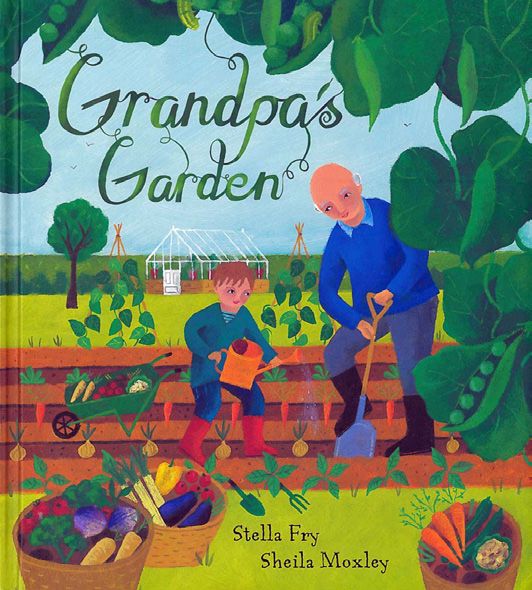
Grandpa’s Garden
 A RIF GUIDE FOR COMMUNITY COORDINATORS
    Themes: Family, Gardening, Ecosystems, Seasons         Author:
Grade Level: 2nd to 3rd grade                              Stella Fry

Book Brief: All year long, Billy and his grandpa           Illustrator:
		 work on preparing the soil, planting 		                 Sheila Moxley
		 seeds, and taking care of the plants
		              in Grandpa’s garden.

                          TIME TO READ!
                          Before reading: Ask if any children have gardens at home or have gardened before.
                          Talk about what usually grows in a garden. What does it take to have a successful
                          garden? What kind of care do plants need to be healthy?

 RELATED ACTIVITIES
CONTAINER GARDENS (AGES 7-9)                               Cut away some of the outer edges of the potato so
                                                           the design will show up. Dip the potato in paint and
Materials: large plastic pots, potting soil, vegetable
                                                           stamp it onto paper to make a potato print design.
seeds
                                                           Let children swap potato stamps to add to their
Use large pots to create a container garden for your       pictures.
center! Split children into small groups. Have each
group be responsible for planting one type of              VEGGIE BUFFET (AGES 7-9)
vegetable. Children should fill the containers with
potting soil, make small holes for seeds, then plant       Ingredients: your choice of
the seeds and gently cover with soil. Water the            vegetables that can be
seeds. Label the pot with the group name and type          eaten raw, ranch dressing
of vegetable. Place the containers in a sunny spot         or dip (optional)
and have children continue to care for them.               Split children into small
Observe and discuss your garden’s growth.                  groups. Give each group a
                                                           vegetable to be responsible
POTATO PRINTS (AGES 7-9)                                   for. Have them identify whether
                                                           their vegetable is part of the root, stem, flower,
Materials: potatoes, plastic knives, paper plate,
                                                           fruit, or leaves of the plant. Have them wash, peel
paint, paper
                                                           (if needed), and tear the vegetable into bite-sized
Give each child half a potato. Have them carve a           pieces. Let everyone try at least one piece of each
design onto the smooth end of the potato half using        vegetable. Which kind of vegetable did the kids like
a plastic knife. (Younger children may need help.)         best—seeds, roots, leaves, or stem?

 ADDITIONAL RESOURCES
OTHER BOOKS ABOUT GARDENING
Talia and the Rude Vegetables, Linda Elovitz Marshall (2011), Tops and Bottoms,
Janet Stevens (1995), The Vegetables We Eat, Gail Gibbons (2008).

TECHNOLOGY LINK FOR KIDS
www.rif.org/kids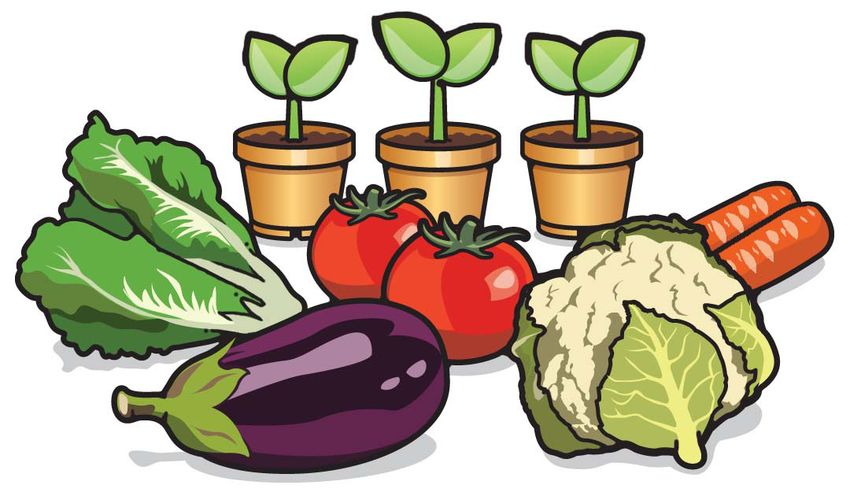
Grandpa’s Garden
 A RIF GUIDE FOR EDUCATORS
    Themes: Family, Gardening, Ecosystems, Seasons         Author: Stella Fry
Grade Level: 2nd to 3rd grade                              Illustrator:
Book Brief: All year long, Billy and his grandpa           Sheila Moxley
		 work on preparing the soil, planting 		                 Content
		 seeds, and taking care of the plants                    Connections:
		              in Grandpa’s garden.                       Science, Math, Social Studies

                          TIME TO READ!
                          BEFORE WE READ,                  Prior Knowledge: Do any of the students have
                          LET’S LOOK AT…                   gardens at home? Have they ever helped out
                                                           planting seeds or picking fruit or vegetables?
                        The Cover: What are the            What types of food can you grow in a garden?
                        boy and his grandpa
                        growing in their garden?           Vocabulary: pierced, compost, sprouted,
Do your students recognize any of the plants?              greenhouse, gauzy
The Pictures: Take a brief picture walk. Ask students      Purpose for Reading: “As we read, think about
what they can tell about the time frame of the story       why personal gardens are important, not just for
based on the illustrations. What changes in the            people like Billy and his grandpa, but for the whole
pictures?                                                  planet.”

 WHILE WE READ
MONITORING COMPREHENSION
u Where do you think Grandpa might live? Why?
u What can you infer about where Billy lives?
u What season do they start working in the garden?
u Why is the ground too hard? How does that hurt
  the plants?
u What do you think the compost might be like?
u How much care does a garden need to be healthy?

 LET’S THINK ABOUT
Our Purpose: Why are personal gardens important? How would it help the planet if everyone grew at least some
of their own food?
Extending Our Thinking: Not everyone has the space, time, or resources to grow and maintain their own garden.
Help students brainstorm ways to overcome those challenges. Can they start a communal garden? Can they grow
potted plants? If students can’t grow anything of their own, how can they help take care of other plants in their
community or at school?

NOTE TO EDUCATORS
u Extension Activities for Educators also available.
u Vocabulary Scaffolding Sheet also available.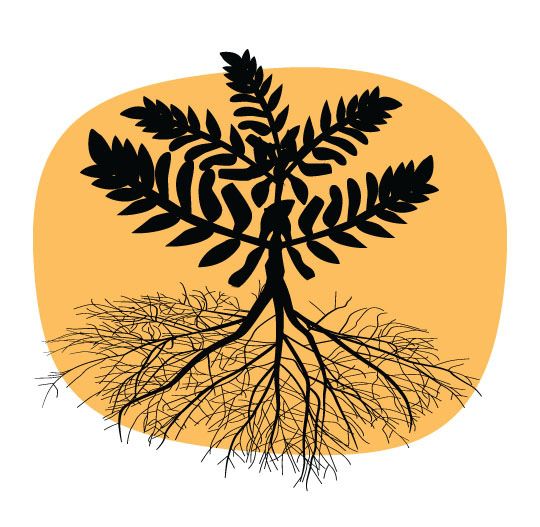
Grandpa’s Garden
A RIF GUIDE FOR PARENTS AND FAMILIES
Themes: Family, Gardening, Ecosystems, Seasons Author:
Grade Level: 2nd to 3rd grade Stella Fry
Book Brief: All year long, Billy and his grandpa Illustrator:
work on preparing the soil, planting Sheila Moxley
seeds, and taking care of the plants
in Grandpa’s garden.
TIME TO READ!
Before reading, look at the After reading, ask questions:
cover: Talk with your child
u Where do you think Grandpa lives?
about the kinds of food
you can see growing in u What about Billy?
Grandpa’s garden. Where
u Why is the ground too hard?
does our food come from?
u Do you think this is Billy’s first time helping
While reading, look at the pictures: How do the
illustrations help tell the story? How do the pictures Grandpa in the garden? Why or why not?
change throughout the book?
RELATED ACTIVITIES
GARDEN GRAPHING are tender. As you eat, can you tell the difference
between the fresh vegetables and the ones from
Gather some friends for this activity. Have each friend
the can?
bring a different garden vegetable to share. Wash,
peel, and chop each vegetable into bite-sized pieces.
Have a taste testing party! After everyone has tasted GEOMETRIC BEANS
the vegetables, let everyone vote on the two they Materials: 8" x 11" piece of heavy poster board,
liked the best. Make a chart or graph of the results. craft glue, paint brush, pencil, dried beans or seeds
Which veggie was the tastiest? Which veggie did (brown, green, yellow, white, orange, black)
everyone like least?
Draw a geometrical design on poster board. Brush
one section of the drawing with glue. Sprinkle beans
VEGETABLE SOUP onto the glue. Clean up any stray beans. Paint glue
Ingredients: 1 can vegetable soup, fresh veggies (such onto the next section and repeat the process with
as potatoes, carrots, celery, corn) a different bean color. Continue until design is
Spice up some canned vegetable soup by adding complete. Let dry and display!
your own fresh veggies! Cook soup on the stove
according to the directions. Add 1/2 cup of extra water. TECHNOLOGY LINK
Wash and peel your fresh vegetables. Cut into small Learn more about plants with a fun game in English
pieces and add to soup. Simmer until all vegetables or Spanish: www.urbanext.illinois.edu/gpe/gpe.html
ADDITIONAL RESOURCES
OTHER BOOKS ABOUT GARDENING
Talia and the Rude Vegetables, Linda Elovitz Marshall (2011),
Tops and Bottoms, Janet Stevens (1995),
The Vegetables We Eat, Gail Gibbons (2008).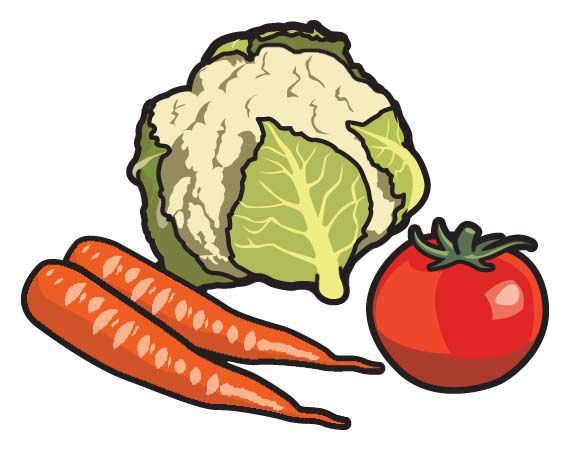
Grandpa’s Garden
A RIF VOCABULARY SCAFFOLD

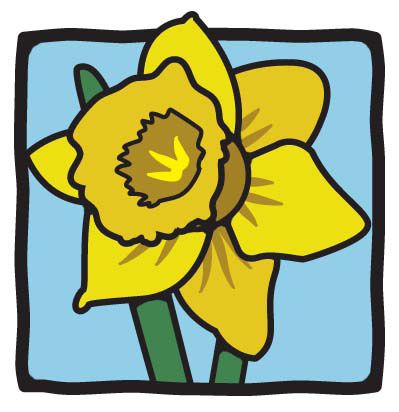
daffodil: a kind of
yellow flower

                            “keep at bay”:
soil: dirt                  to keep away,
                            hold back

wriggling:                  seam: the place
moving back and             where two parts of
forth, squirming            something meet

rake: a long pole with
metal “fingers” you         sink: to go
use to smooth out dirt      underwater, to
for planting or clean       go down
up fallen leaves

peep: to look at
                            autumn: fall,
something when
                            the season after
you’re not
                            summer
supposed to

frail: easy to break,
not strong
Grandpa’s Garden
 RIF EXTENSION ACTIVITIES FOR EDUCATORS
STEAM-THEMED: Science, Technology, Engineering, Art, Math

SCIENCE                                                TECHNOLOGY,
ROOT INVESTIGATION                                     SCIENCE
Have students go outside and carefully gather a        THE GREAT
weed for examination. (Watch them to be sure           PLANT ESCAPE
they don’t pick anything dangerous like Poison
                                                       Visit www.urbanext.illinois.edu/gpe/gpe.html
Ivy!) Instruct them to dig up the entire plant
                                                       and let your students help Detective Le Plant
system, keeping the roots
                                                       find clues, conduct experiments, and solve
intact. Have students use
                                                       plant-related problems. (In English and Spanish.)
magnifying glasses to
observe the root system
and rulers to measure                                  ART, MATH
lengths. They should
record their observations                              SEEDS OF GEOMETRIC PROPORTION
and sketch the plant.                                  Materials: 8" x 11" piece of heavy poster board,
                                                       craft glue, paint brush, pencil, dried beans or seeds
                                                       (brown, green, yellow, white, orange, black)
SCIENCE, WRITING
                                                       Draw a geometrical design on poster board. Brush
TALE OF A HITCHHIKER                                   one section of the drawing with glue. Sprinkle
Why are there weeds in a garden? Why do                beans onto the glue. Clean up any stray beans.
dandelions grow in our sidewalks? Discuss with         Paint glue onto the next section and repeat the
students how different seeds “hitchhike” to find       process with a different bean color. Continue until
their homes. Have students write a story from the      design is complete. Let dry and display!
perspective of the hitchhiking seed. Where did the
seed begin? What did the seed see on its travels?
Where and why did it finally decide to land?           MATH, SCIENCE
                                                       SPROUT RACE
ENGINEERING, SCIENCE,                                  Materials: 5 kinds of
                                                       seeds, 5 small pots or
MATH, WRITING
                                                       containers, ruler
GARDEN BY DESIGN                                       Begin with the
To begin the design process, have students think       question, “Do all plants
about a typical personal or family garden. How big     take the same amount
is it? What do all gardens have in common? Each        of time to sprout?” Have students plant five
student will design a garden for their favorite book   different seeds in separate, labeled containers.
character. Have students list some of the things       Put the containers by a window or in another
they think their character would like in the garden.   sunny spot. Let students predict which seed will
Let students look through garden magazines and         sprout first and explain their predictions. Have
seed catalogs for ideas. Students can use graph        students make daily observations of the seeds.
paper to create an aerial view landscape or blank      As seeds begin to sprout, record their daily
paper for a simpler representation. Be sure to         growth. Graph the progress of each plant’s growth.
encourage students to include features such as         Calculate the differences in height and present the
pathways, benches, fences, etc. When finished,         information in a chart. After a few
students should identify the character, write a        weeks, declare the winner!
description of the garden, and explain the
reasoning behind the design. Why would their
character like this garden?
You can also read


