GREECE: VIOLENCE, LIES, AND PUSHBACKS - REFUGEES AND MIGRANTS STILL DENIED SAFETY AND ASYLUM AT EUROPE'S BORDERS
←
→
Page content transcription
If your browser does not render page correctly, please read the page content below
GREECE: VIOLENCE, LIES, AND
PUSHBACKS
REFUGEES AND MIGRANTS STILL DENIED SAFETY AND ASYLUM AT
EUROPE'S BORDERS
Amnesty International is a movement of 10 million people
  which mobilizes the humanity in everyone and campaigns
  for change so we can all enjoy our human rights. Our vision
  is of a world where those in power keep their promises,
  respect international law and are held to account. We are
  independent of any government, political ideology, economic
  interest or religion and are funded mainly by our membership
  and individual donations. We believe that acting in solidarity
  and compassion with people everywhere can change our
  societies for the better.

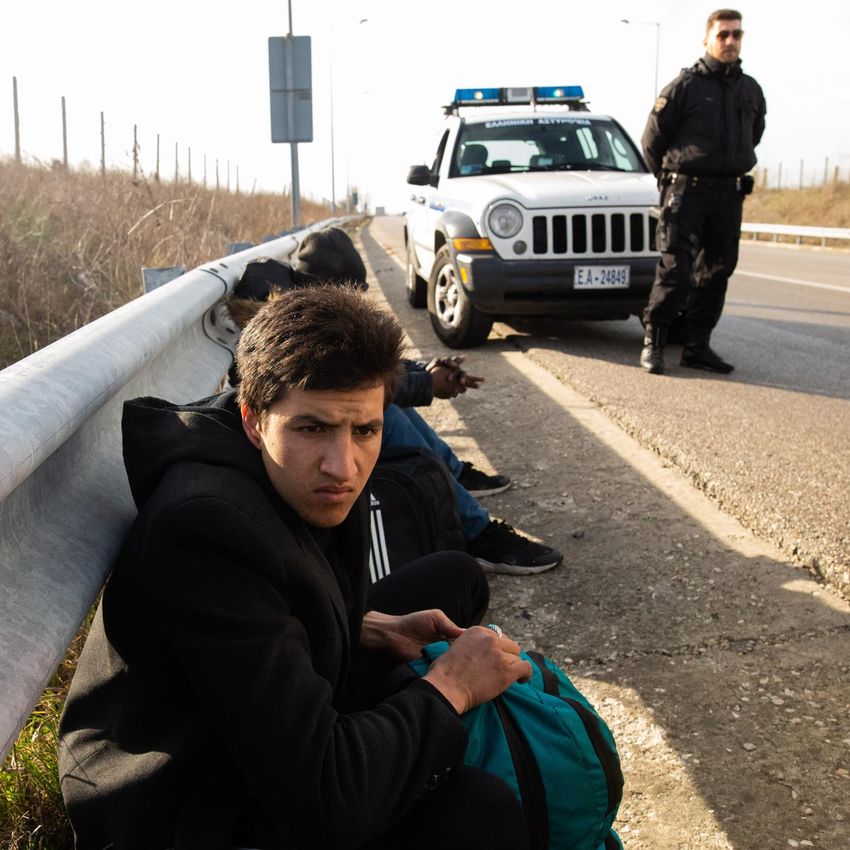
© Amnesty International 2021                                                                  Cover photo: “Two migrants are detained by Greek Police, near the village of Kavyli, in Evros, close to the
Except where otherwise noted, content in this document is licensed under a Creative Commons   Greek-Turkish borders, on 03 March 2020” © Achilleas Chiras/NurPhoto via Getty Images/
(attribution, non-commercial, no derivatives, international 4.0) licence.
https://creativecommons.org/licenses/by-nc-nd/4.0/legalcode
For more information please visit the permissions page on our website: www.amnesty.org
Where material is attributed to a copyright owner other than Amnesty International this
material is not subject to the Creative Commons licence.
First published in 2020
by Amnesty International Ltd
Peter Benenson House, 1 Easton Street
London WC1X 0DW, UK

Index: EUR 25/4307/2021
Original language: English

amnesty.org

CONTENTS

1.     EXECUTIVE SUMMARY                                                             5

2.     METHODOLOGY                                                                   8

3.     THE DE FACTO POLICY OF GREEK BORDER CONTROL: PUSHBACKS                       10
3.1 BACKGROUND                                                                      10
3.2 “UNOFFICIAL” POLICIES AND SYSTEMIC PRACTICES OF EXPULSION                       12
3.3 NO ACCESS TO ASYLUM OR DUE PROCESS                                              14

4.     PUSHBACKS FROM MAINLAND GREECE                                               16

5.     ‘LIKE ANIMALS IN A CAGE’: ARBITRARY ARRESTS AND DETENTION                    20
5.1 ARBITRARY DETENTION                                                             20
5.2 OFFICIAL AND UNOFFICIAL DETENTION SITES                                         22
5.3 LOCATIONS AND SITES IDENTIFIED BY THE SUBJECTS OF THIS RESEARCH                 23
5.4 CONDITIONS OF DETENTION                                                         25
5.5 DETENTION AND ILL-TREATMENT OF CHILDREN AND PEOPLE AT INCREASED RISK OF
    ABUSE                                                                 26

6.     PHYSICAL VIOLENCE AND ACTS PUTTING LIVES AT RISK                             27
6.1 BEATINGS AND OTHER ACTS CAUSING BODILY HARM                                     28
6.2 VIOLENT OR ABUSIVE SEARCHES, INCLUDING STRIP SEARCHES                           30
6.3 DEATH RESULTING FROM FAILURE TO RESCUE                                          32

7.     PUSHBACKS AND ABUSES BY TURKISH BORDER FORCES                                33
7.1 PUSHBACKS TO ISLETS AND DELAYED RESCUE                                          34
7.2 THREATS, INTIMIDATION, AND USE OF FIREARMS                                      35
7.3 DETENTION AND RETURNS BACK TO GREECE                                            35

8. PUSHBACKS AND ACCOUNTABILITY: THE BEST-DOCUMENTED HUMAN RIGHTS VIOLATIONS THAT
‘NEVER OCCURRED’                                                                    37
8.1 THE LACK OF EFFECTIVE REMEDIES                                                  38

GREECE: VIOLENCE, LIES, AND PUSHBACKS
REFUGEES AND MIGRANTS STILL DENIED SAFETY AND ASYLUM AT EUROPE’S BORDERS
Amnesty International                                                                3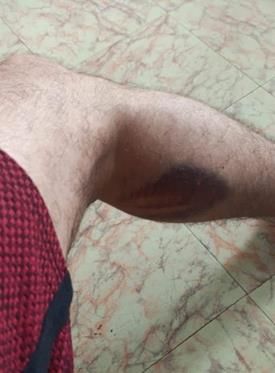
8.2 BEYOND PROSECUTIONS: CHALLENGES IN THE PROTECTION OF VICTIMS OF
    PUSHBACKS IN GREECE                                                    40
8.3 THE EU’S COMPLACENCY                                                   41

9. CONCLUSIONS AND RECOMMENDATIONS                                         43
TO THE GREEK AUTHORITIES                                                   43
TO THE TURKISH AUTHORITIES                                                 44
TO EU INSTITUTIONS AND MEMBER STATES:                                      44

GREECE: VIOLENCE, LIES, AND PUSHBACKS
REFUGEES AND MIGRANTS STILL DENIED SAFETY AND ASYLUM AT EUROPE’S BORDERS
Amnesty International                                                       4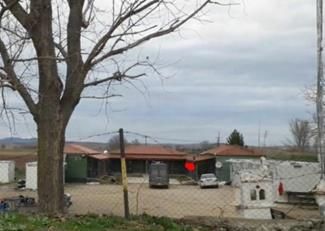
1. EXECUTIVE SUMMARY

In April 2020 Amnesty International and many others documented how, in the midst of escalating
political tensions with Turkey, Greece systematically used “pushbacks” and committed other
human rights abuses to prevent people from entering the EU. Months later, pushbacks continue
to regularly trample migrants and refugees’ rights, despite systematic official denials and aided by
a climate of impunity. This research documents 21 new pushback incidents and other abuses
occurring between June and December 2020, based on the testimonies of 16 individuals.
Through their experience and building upon the compelling body of evidence by international
human rights bodies, civil society, and journalists, it proves the continued, routine use of these
brutal tactics by Greece as an entrenched method of border control at land and sea. Amnesty
International’s research highlights the frequency and similarity of patterns of violation, focusing
primarily on the land border between Turkey and Greece (the “Evros” region).

The findings of the present research, together with the comprehensive body of evidence on the
subject, show that the use of pushbacks by Greece cannot be considered as a response to
exceptional events or the actions of rogue actors. Rather, it is a de facto policy of border
management that relies on the coordinated efforts of multiple authorities in Greece. The
pushbacks documented by Amnesty International for this report reveal that, prior to being
summarily expelled from Greece over the Evros river, individuals were often targets of complex
and coordinated operations across the country, aimed at transferring them within close proximity
to the Evros land border in order to expel them.

The incidents documented for this report all resulted in forced returns that violate Greek, EU and
international human rights law. Additionally, the methods used to intercept, apprehend, and
return migrants and refugees, which include the use of violence and arbitrary detention, ill-
treatment, and possibly torture, often amounted to violations in their own right.

Turkey’s practices, documented as part of the research, are also often problematic. While border
forces were described to sometimes assist victims of pushbacks by Greece, Amnesty International
documented incidents of seeming retribution against refugees and migrants. These included
threats or acts of violence and even unlawful returns to Greece.

PUSHBACKS AS A DE FACTO POLICY
Across cases documented, Amnesty International has identified a common thread of violations
and sequence of events leading up to pushbacks. In pushbacks at land, Individuals interviewed
described being apprehended on Greek territory, often detained arbitrarily, and ultimately
transferred across the Evros river into Turkey. In the majority of cases, they described
experiencing or witnessing violence at the hands of those conducting the pushback operations.
This common narrative is further supported by the organization’s findings in prior investigations
on the issue, as well as evidence by other actors mentioned above.

GREECE: VIOLENCE, LIES, AND PUSHBACKS
REFUGEES AND MIGRANTS STILL DENIED SAFETY AND ASYLUM AT EUROPE’S BORDERS
Amnesty International                                                                                5
The organization received consistent testimonies describing how return operations were
conducted by individuals appearing to belong to law enforcement, with the frequent participation
of individuals dressed in civilian or unmarked clothing (no uniforms or identifiable insignia).
Based on descriptions of their observable demeanor, clothing, actions, and coordination with
people described as uniformed officials, they appeared to be working in cooperation with and/or
at the behest of the latter. In the majority of cases, victims told Amnesty International that third
country nationals in civilian clothing operated the boats used to transfer them across the river.

From interviews, there was no information provided indicating that individuals, their family
members, or people in the group with them were provided with an individual assessment of their
need for protection ahead of return, even if they declared such a need or attempted to present
evidence of their documented status in Greece. All were denied their right to challenge their
return.

PUSHBACKS FROM MAINLAND GREECE
Contrary to the idea that pushbacks only affect people at the borders, Amnesty International
documented four cases where people and (if present) their accompanying family members were
apprehended from mainland Greece. In two of these cases, individuals had a registered
protection status in Greece.

ARBITRARY ARRESTS AND DETENTION
In 12 cases documented, individuals stated that, before being pushed back, they were held in
places of detention for periods ranging from a few hours to more than one day without access to
phone calls, lawyers, and without registration procedures. The organization has concluded that
every apprehension and detention reported occurred outside of identifiable legal procedures and
meets the definition of arbitrary arrest and detention. Every person interviewed was in the custody
of individuals whom they believed to be officials (usually described as police or military due to
appearance and behavior) and/or people in civilian clothing cooperating with the former.

Testimonies collected by Amnesty International indicate that Greece uses both “official” and
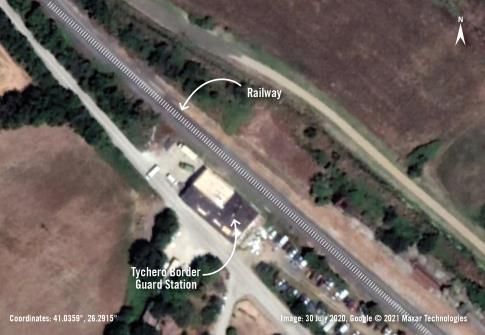
“unofficial” detention sites to hold people arbitrarily before pushbacks. Some interviewees
identified their places of detention as the Tychero border guard station and a detention site in
Poros. Inside the facilities, those interviewed overwhelmingly reported unhygienic and sometimes
overcrowded conditions, sometimes reporting a lack of clean water available or working toilets.

VIOLENCE AND ACTS AMOUNTING TO TORTURE AND OTHER INHUMAN OR DEGRADING TREATMENT
The use of violence and other acts that could amount to torture or inhuman or degrading
treatment featured prominently throughout the descriptions of pushbacks. The majority of people
interviewed witnessed or directly experienced violence. Abuses reported included blows with
sticks or truncheons, kicks, punches, slaps, and pushes.

Victims described the most brutal acts of violence as largely occurring during the final phase of
pushbacks, often at the riverbank. Officials, often described as “commandos” or “soldiers,” were
usually indicated as the perpetrators. Severe injuries, some requiring immediate medical
intervention such as a broken spine, hands, and extensive bruises were reported by those being
pushed back. Some acts may have also violated Greece’s obligations to protect the right to life.

Searches, including naked or strip searches, were also reported. Testimonies gathered described
rough treatment during searches, men conducting body searches of women, and strip searches -
sometimes violent - of men in full view of women and children.

Amnesty International believes that, due to the severity of the treatment reported, the intent to
harm or humiliate the victims, and the context in which they occurred, the acts of violence

GREECE: VIOLENCE, LIES, AND PUSHBACKS
REFUGEES AND MIGRANTS STILL DENIED SAFETY AND ASYLUM AT EUROPE’S BORDERS
Amnesty International                                                                                  6
documented, as well as the use and execution of searches, violated the prohibition of inhuman
and degrading treatment and could have, in some cases, constituted torture.

VIOLATIONS ALSO IN TURKEY
Amnesty International believes that Turkey also violated the rights of refugees and migrants at the
borders and exposed them to risks. The organization heard the testimonies of people who stated
that as they were returning from Greece to Turkey via the Evros river, including after a pushback
by Greece, they encountered Turkish “officers” who forced them or attempted to force them back
to Greece or to an islet in the river. On the islets, in some instances, Turkish authorities allegedly
refused to promptly rescue people or allow them on the shore. In one case, Amnesty International
heard allegations that a large group of people, including many small children, were held arbitrarily
at a Turkish “military base” after having been pushed back by Greece, and officers manning the
site attempted to force some of them back across the river.

LONGSTANDING LACK OF ACCOUNTABILITY
Greece’s regular failure to properly investigate the continued and mounting evidence of
pushbacks and other violations detailed above is unconscionable. The EU has also repeatedly
failed to hold Greece to account for these violations, ultimately reinforcing the practice and tacitly
giving permission for it to continue by way of inaction.

Victims are effectively prevented from seeking justice or to report violations for many reasons,
among them a lack of effective or accessible remedies in Greece and beyond.

The “elephant in the room” is the EU’s failure to reconcile its human rights commitments with its
role in Greece’s border control. From labelling Greece as “Europe’s shield” during the brutal
repression of refugees and migrants at the borders in 2020, to the half-hearted and ineffective
attempts to establish Frontex’s accountability, the EU has so far failed to resolutely condemn
pushbacks and other violent practices at its borders and demand actions to bring Greece’s
policies in line with the EU’s own founding values.

CONCLUSIONS AND RECOMMENDATIONS
Testimonies gathered by Amnesty International from victims, civil society organizations, and
lawyers illustrate how systematic pushbacks not only scar those who endure them but contribute
to creating and maintaining a climate of impunity and insecurity, fueled by the authorities’ failure
to acknowledge or effectively investigate pushbacks, a lack of effective remedies for victims, and
the continued criminalization of NGOs.

Amnesty International urges Greece to immediately halt all pushbacks from land and sea and
refrain from them in the future.

Greece must finally acknowledge the severity and pervasiveness of pushback practices in the
country and investigate allegations of unlawful returns, arbitrary detention and violence against
refugees and migrants.

Turkey must also halt all practices forcing or pressuring individuals to return to Greece or
otherwise exposing them to risks.

The EU and its member states should take urgent, effective measures to ensure that Greece stops
violating the rights of refugees and migrants at its borders. This should include the launch of
infringement proceedings against Greece and the creation of an effective, independent monitoring
mechanism for violations of human rights at the borders.

In view of the evidence of continuing human rights violations, Frontex should trigger Article 46 of
Regulation (EU) 2019/1896 with a view to suspending or withdrawing its deployment in Greece.

GREECE: VIOLENCE, LIES, AND PUSHBACKS
REFUGEES AND MIGRANTS STILL DENIED SAFETY AND ASYLUM AT EUROPE’S BORDERS
Amnesty International                                                                                    7
2. METHODOLOGY

This report documents pushbacks from Greece to Turkey and other violations of the rights of
refugees and migrants by both Greece and Turkey. It is based on research conducted between
November 2020 and April 2021, including first-hand interviews with rights-holders, lawyers, and
civil society organizations; examination of documents, audio-visual and other materials; as well as
official communications with Greek, Turkish and EU authorities, and UN agencies.

Due to the ongoing global COVID-19 pandemic, interviews were conducted via phone using
messaging apps with interpretation. The organization spoke with 16 people (ten men and six
women) who experienced, alone or together with family members, including small children, one
or more pushbacks (unlawful, summary forced returns) from Greece to Turkey.1 Through these
interviews, the organization documented in detail 21 separate incidents of pushbacks, including
two at sea, which occurred between April and December 2020. In total, interviewees stated that
they were part of at least 45 incidents of pushbacks, though not all documented in detail by
Amnesty International. In each case documented, those interviewed stated that they were
returned as part of a larger group. To protect the identities of the interviewees, throughout this
report all names have been changed and, when necessary, some identifying information has been
withheld.

Amnesty International corroborated first-hand testimonies by examining copies of official
identification documents, registration documents in Greece, audiovisual evidence including
pictures of bruises, or showing individuals in Greece and Turkey before and after the alleged
pushbacks. We received some geolocations of several points across the individuals’ route of
travel across the border in Turkey and Greece and locations within mainland Greece to verify
presence. Amnesty International is grateful to the organization Disinfaux Collective for their
contribution to investigations conducted for this research.

Amnesty International also conducted interviews with members of civil society organizations and
lawyers active in Greece and Turkey. This Information, where not explicitly referenced, informs
the conclusions and recommendations of this research. Amnesty International received
contributions and advice from lawyers at the Greek Council for Refugees, Human Rights 360,
HIAS and the Istanbul Bar Association, members of the NGOs Border Violence Monitoring
Network, Josoor, Mobile Info Team, the Racist Violence Recording Network and Lena
Karamanidou, Researcher at Glasgow Caledonian University. Amnesty International researchers
also examined reports and research by national and international organizations, academics, and
journalists, as well as information by state bodies in Greece and Turkey.

On 29 March 2021 Amnesty International shared the preliminary findings of this research and
requests for information with the Greek Minister of Migration and Asylum Policy, the Minister of

1
 Thirteen of the people interviewed originate from Syria, one from Morocco, one from Palestine, one Kurdish person from Turkey. In some
cases, those interviewed travelled with small children and other family members. At the time of interviews, individuals were in Turkey,
Greece, or another European country.

GREECE: VIOLENCE, LIES, AND PUSHBACKS
REFUGEES AND MIGRANTS STILL DENIED SAFETY AND ASYLUM AT EUROPE’S BORDERS
Amnesty International                                                                                                                     8
Citizen Protection, the Minister for Ministry of Shipping and Island Policy, the Minister of Justice,
as well as the Hellenic Police and Coast Guard. Responses were received by all authorities,
except for the Minister of Justice and are, as much as possible, reflected in the text.

Similarly, on 2 April, the organization shared preliminary conclusions and requests for information
with the Executive Director of Frontex and a response was received on 31 May.

On 4 May 2021, Amnesty International similarly informed the Turkish Minister of National
Defense and Minister of the Interior, but no response was received at the time of publication. The
organization also communicated information about incidents to the United Nations Refugee
Agency (UNHCR) in Greece and Turkey and to the International Organization for Migration (IOM).

Amnesty International has been documenting cases of pushbacks of refugees and migrants from
Greece to Turkey since 2013. Its findings were published in several outputs, including: Frontier
Europe: Human rights abuses on Greece’s border with Turkey (2014);2 Greece: Frontier of hope
and fear. Migrants and refugees pushed back at Europe’s border (2014);3 Europe: caught in a
political game: asylum-seekers and migrants on the Greece/Turkey border pay the price for
Europe’s failures (2020).4

The organization has been documenting the prevalence of pushbacks and other abuses against
migrants and refugees at land and sea borders across other European countries, including
Croatia, Bosnia-Herzegovina, Cyprus, France, Italy, Malta, Slovenia, and Spain. For an overview of
Amnesty International’s research in this sense see: Submission to the United Nations Special
Rapporteur on the human rights of migrants, Europe: pushback practices and their impact on the
human rights of migrants and refugees (February 2021).

2
  Amnesty International, Frontier Europe: Human rights abuses on Greece’s border with Turkey, (Index: EUR 25/008/2013), 9 July 2013,
amnesty.org/download/Documents/12000/eur250082013en.pdf.
3
  Amnesty International, Greece: Frontier of hope and fear. Migrants and refugees pushed back at Europe’s border, (Index: EUR
25/004/2014), 29 April 2014, amnesty.org/download/Documents/8000/eur250042014en.pdf
4
  Amnesty International, Europe: caught in a political game: asylum-seekers and migrants on the Greece/Turkey border pay the price for
Europe’s failures, (Index number: EUR 01/2077/2020), 3 April 2020, amnesty.org/download/Documents/EUR0120772020ENGLISH.PDF

GREECE: VIOLENCE, LIES, AND PUSHBACKS
REFUGEES AND MIGRANTS STILL DENIED SAFETY AND ASYLUM AT EUROPE’S BORDERS
Amnesty International                                                                                                                    9
3. THE DE FACTO POLICY
OF GREEK BORDER
CONTROL: PUSHBACKS

     “I have the feeling that everyone thinks pushbacks are a
     normal procedure for protecting the border. I think they have
     lost the measure of what is legal and what is not.”
     A Lawyer from the NGO Human Rights 3605

3.1 BACKGROUND
For years, Greece has been the primary receiving country for hundreds of thousands of refugees
and migrants travelling towards Europe on the eastern Mediterranean route. The country has
played a key role in the implementation of the EU-Turkey migration “deal,” enacted in March
2016, aimed at returning new, irregular arrivals to the Greek Aegean islands back to Turkey on
the ill-conceived notion that the country is safe for them.6 A policy of mass containment of newly
arrived refugees and migrants by Greece soon followed, in often inadequate and overcrowded
camps on the Aegean islands. From 2019, this was accompanied by the gradual but steady
degradation of migration policies in Greece, also facilitated by the lack of solidarity and assistance
from European countries.7
In 2020, the increased militarization of Greece’s borders with the declared aim to reduce arrivals, 8
including through new or reinforced surveillance or deterrent infrastructures and the increased
deployment of law enforcement personnel, bore testament to the tougher approach to migration

5
  Interview of 11 March 2021.
6
  European Council, EU-Turkey statement, 18 March 2016, consilium.europa.eu/en/press/press-releases/2016/03/18/eu-turkey-statement/.
Also: Amnesty International, A Blueprint for Despair: Human Rights Impact of the EU-Turkey Deal, (Index: EUR 25/5664/2017), 14
February 2017, at: amnesty.org/en/documents/eur25/5664/2017/en.
7
  See Amnesty International, A Blueprint for Despair, above and: Greece: Amnesty International’s submission to the Committee of Ministers
in the M.S.S. and Rahimi groups of cases v. Greece (applications no. 30696/09 and no. 8687/08), (Index: EUR 25/3063/2020), 15
September 2020, amnesty.org/en/documents/eur25/3063/2020/en/.
8
  Politico, “EU migration plan doomed to fail without solidarity, Greece says”, 7 October 2020,politico.eu/article/eu-migration-asylum-
seekers-plan-will-fail-unless-other-countries-share-burden-says-greek-migration-minister/

GREECE: VIOLENCE, LIES, AND PUSHBACKS
REFUGEES AND MIGRANTS STILL DENIED SAFETY AND ASYLUM AT EUROPE’S BORDERS
Amnesty International                                                                                                                  10
in the country.9 However, despite the Greek authorities’ repeated denial, from 2020 an increasing
number of reports emerged that the tightening of borders was achieved also through the use of
unlawful techniques to deter and counter the arrival of refugees and migrants, including violence
by border force officers, arbitrary detention, dangerous maneuvers at sea, and ultimately,
pushbacks.10
Greece is, regrettably, not alone in the use of pushbacks and violence to protect its borders. With
EU policies failing to deliver relocation or safe and legal routes, borders and their protection have
become a cornerstone of migration and asylum policy across countries in and the periphery of
Europe. In 2020, Amnesty International documented the prevalence of pushbacks and other
border practices preventing access to asylum across Europe, in countries including Bosnia and
Herzegovina, Croatia, France, Italy, Malta, Spain and Cyprus. 11
PUSHBACKS: WHAT THEY ARE AND WHY THEY ARE UNLAWFUL
The term “pushback” is colloquial but has become more common vernacular with the rise of practices to
repel, intercept, and forcibly return refugees and migrants across the globe. In this report, we employ the
term “pushback” to describe the summary, unlawful, forcible, and sometimes violent transfer of refugees
and migrants back across an international border without consideration of their individual circumstances,
often, but not exclusively, upon or shortly after they crossed it. The practice is unlawful because it deprives
people of the right to challenge the decision to return them as required by law12 making it impossible to
determine whether they would be at risk of refoulement.13 When, as it is often the case, the practice
concerns a group, pushbacks can amount to collective expulsions, which are prohibited under EU and
International law.14 Pushbacks and collective expulsions are illegal irrespective of when they happened or
whether returnees are undocumented.15
The various means by which pushbacks are carried out, ranging from the use or threat of physical
violence to arbitrary arrest and detention in inadequate conditions, can in themselves amount to violations
of rights, including the right to be free from torture and inhuman or degrading treatment or punishment
and the right to liberty and security. The lack of an institutional framework around the return operation also
means that individuals are often de facto deprived of the opportunity to access means of redress,
especially where the right to re-enter the country is concerned.
As an EU country and a signatory of international and European human rights instruments, Greece is
bound by law to respect and protect the above-mentioned rights, which are transposed into national
legislation, including through Article 20 and 41 of Law no. 3907 of 2011.16
While pushbacks at sea and other dangerous conduct towards migrants and refugees braving the
Aegean Sea have long been depicted in the media, apprehensions and pushbacks at land and
from mainland Greece are also, regrettably, not new. Amnesty International has documented
9
Among others: Keep Talking Greece, “Greece shields Evros border with blades wire, 400 new border guards”, 17 May
2020,keeptalkinggreece.com/2020/05/17/greece-shields-evros-border-blades-wire-400-border-guards/;
Lena Karamanidou, Twitter thread of 18 October 2020, twitter.com/lk2015r/status/1317840820771475458
10
Among others: UNHCR, “UNHCR concerned by pushback reports, calls for protection of refugees and asylum-seekers,” 21 August 2020,
unhcr.org/gr/en/16207-unhcr-concerned-by-pushback-reports-calls-for-protection-of-refugees-and-asylum-seekers.html; International
Organization for Migration (IOM), “IOM Alarmed over Reports of Pushbacks from Greece at EU Border with Turkey”, 11 June 2020,
iom.int/news/iom-alarmed-over-reports-pushbacks-greece-eu-border-turkey, Council of Europe, Committee for the Prevention of Torture
and Inhuman or Degrading Treatment or Punishment (CPT), Report to the Greek Government on the visit to Greece carried out from 13 to
17 March 2020, November 2020, bit.ly/3fCMPlz.
11
Amnesty International, Submission to the United Nations Special Rapporteur on the human rights of migrants, Europe: pushback
practices and their impact on the human rights of migrants and refugees, (Index number: IOR 40/3669/2021), February 2021,
amnesty.org/download/Documents/IOR4036692021ENGLISH.PDF
12
Among others, European Convention on Human Rights (ECHR), Article 13 (Right to an effective remedy) and equivalent provisions in the
EU Charter of Fundamental Rights (CFR), Article 47 (Right to an effective remedy and to a fair trial).
13
Meaning a real risk of a serious human rights violation in the country of return. The principle of non-refoulement is enounced, among
other instruments, under the 1951 Convention relating to the Status of Refugees, Article 33, and the UN Convention Against Torture and
Other Cruel, Inhuman or Degrading Treatment or Punishment (UN CAT), Article 3, and in the jurisprudence of the European Court on
Human Rights (ECtHR), under Article 2 and 3.
14
Including EU CFR, Article 19.
15
Amnesty International, Frontier Europe (previously mentioned), endnote 17 on the EU Prohibition of collective expulsion.
16
Greece, Law no 3907/2011 on the establishment of an Asylum and First Reception Service, adaptation of Greek legislation to the
provisions of Directive 2008/115/EC ‘on common standards and procedures in Member States for returning illegally staying third-country
nationals’ and other provisions, ilo.org/dyn/natlex/docs/SERIAL/89452/102770/F922547156/A-7.pdf.
GREECE: VIOLENCE, LIES, AND PUSHBACKS
REFUGEES AND MIGRANTS STILL DENIED SAFETY AND ASYLUM AT EUROPE’S BORDERS
Amnesty International 11cases as early as in 2013,17 more recently, media and civil society organizations have reported an
uptick in frequency,18 branding apprehensions from areas far from the land border as a “‘new
tactic’ of migrant expulsion” from mainland Greece.19
In a conversation with Amnesty International, a seasoned field reporter from the organization
Border Violence Monitoring Network (BVMN) suggested that several factors have increased the
frequency of pushbacks and the further entrenchment of this brazen tactic: “Initially [pushbacks]
were happening…to people in the vicinity of the crossing who would be apprehended in the
border area…[From January 2020] we saw everything changing with people on the move…We
started observing pushbacks from sites deep into the mainland. Previously, Thessaloniki would be
considered as a safe place along the route and people would be resting before moving further,
but we saw people apprehended and detained in Thessaloniki, then in pre-return facilities, and
we would discover them in Turkey.”20
3.2 “UNOFFICIAL” POLICIES AND SYSTEMIC
PRACTICES OF EXPULSION
“[…] During their management, the detected individuals, are treated with full respect of their
fundamental rights and dignity, without discriminatory behaviour and are registered in special
service records, following internal standard procedures. In addition, the right of telephone
communication is granted to them.”
Letter to Amnesty International, of 12 April 2021, by Police Major General Dimitrios Mallios, Head of Aliens and Border Protection
Branch of the Greek Police
The findings of this report point to the fact that Greek authorities continue to use pushbacks at
land and sea to thwart the rights of people on the move. Violations documented in this report are
aligned with patterns of abuse documented by Amnesty International in the past and with
incidents increasingly reported by other civil society actors, journalists and human rights bodies.21
Startling similarities emerge with regard to the abusive and violent techniques used to summarily
expel people, including beatings, excessive use of force and other forms of prohibited treatment,
arbitrary detention, lack of access to information or remedies, lack of registration, and
confiscation of personal property.
The continuation of previously documented practices and the consistency of the allegations
alarmingly reinforces the conclusion that coordinated efforts exist by law enforcement and other
authorities across different areas of Greece, often cooperating with unidentified individuals,
aimed at forcibly returning refugees and migrants at the border.
17
Amnesty International, Frontier Europe (previously mentioned), p. 15.
18
The NGO Border Violence Monitoring Network (BVMN) documented several such incidents: 1. BVMN, “Pushback from Lagadikia camp”,
16 September 2020, borderviolence.eu/violence-reports/september-16-2020-0000-lagadikia-greece/; 2. BVMN, “If we had known, we
would not have come to Thessaloniki. But I thought we have papers, we have UNHCR documents, nothing will happen to us!”, 27 August
2020, borderviolence.eu/violence-reports/august-27-2020-0900-thessaloniki-greece/; 3. BVMN, “They were beating them with the stick
when they passed near them you hear the sound of the electric gun”, 25 April 2020, borderviolence.eu/violence-reports/april-25-2020-
0000-evros-delta/; 4. BVMN, “Taken from Diavata camp (GRK) and pushed back violently to Turkey”, 31 March 2020,
borderviolence.eu/violence-reports/march-31-2020-0000-meric-river-btw-grk-tur/; 5. BVMN, “In ten minutes they took all people to
Turkey”, 28 April 2020, borderviolence.eu/violence-reports/april-28-2020-2200-evros-border/.
19
The New Humanitarian, “Greece’s ‘new tactic’ of migrant expulsion from deep inside its land borders”, 7 October 2020,
thenewhumanitarian.org/news-feature/2020/10/07/Greece-migrant-pushbacks-expulsion-Evros-Turkey
20
Interview by video call of 17 February 2021.
21
Reports by other actors include: Forensic Architecture, Pushbacks across the Evros/Meriç river: situated testimony, October 2020,
bit.ly/34nw2xL; Human rights 360, Defending human rights in times of border militarization, October 2020, https://bit.ly/2SmE5I1; Der
Spiegel, “EU Border Agency Frontex Complicit in Greek Refugee Pushback Campaign”, October 2020, bit.ly/2T40Sc2.
GREECE: VIOLENCE, LIES, AND PUSHBACKS
REFUGEES AND MIGRANTS STILL DENIED SAFETY AND ASYLUM AT EUROPE’S BORDERS
Amnesty International 12In each of the 21 incidents Amnesty International documented in detail, interviewees stated that
they were returned summarily to Turkey in larger groups of eight to over 170 people. Amnesty
International estimates that the 21 incidents likely affected over 1,000 people in total.22
Eight people interviewed stated that they were victims of multiple pushbacks, and two reported
that they have each been subjected to at least ten pushbacks. Amnesty International estimates
that the 16 people experienced a total of at least 45 incidents of pushbacks.
In most cases, those interviewed reported the presence of people they identified as officers at
different stages of their return, i.e. people who based on their demeanor, equipment and gear
appeared to belong to police or armed forces. Individuals in civilian clothing, often armed, were
also often described as participating in the forced return, working in cooperation with those
appearing as officers. Vehicles used by those carrying out the pushbacks included various sized
civilian cars, vans, military trucks, cars identified as police cars and a black bus marked with
police logos.
PRESENCE AND APPEARANCE OF LAW ENFORCEMENT AT GREECE’S BORDERS
The Aegean Sea and the Evros region are areas of considerable deployment of diverse national police and
army forces, as well as officers deployed under Frontex, the EU Border and Coast Guard, which has an
established presence both at sea and land borders. Therefore, it is not uncommon for officers with
different insignia, uniforms, or gear to be present in the area. The Hellenic police, including specialized
border police forces, operate under the direction of the Ministry of Citizen Protection. In Evros, the
presence of the Greek army, operating under the Ministry of National Defense, was also enhanced during
the increased land arrivals of refugees and migrants from February 2020.23 The presence of riot police was
also documented at the time.24 The Hellenic Coastguard falls instead under the Ministry of Shipping and
Island Policy.25
All of the land pushbacks documented (19) took place via the Evros river, at the border with
Turkey, even in cases where individuals had not crossed into Greece there or were apprehended
in areas of mainland Greece. At several points during the pushback operations, people were
submitted to body searches and subjected to beatings and/or rough treatment. The pattern that
emerged from the testimonies generally followed the same sequence of events leading up to their
expulsion:
An interception or arrest by uniformed individuals, in most cases described as police or military
officers:
• Most of the people were captured shortly after crossing the Evros river into Greece. Some described
an “ambush” by soldiers or police.
• The officers initially encountered by the group often summoned additional officers or civilians, who
usually brought a vehicle for transport.
Initial searches and transport to detention or directly to the riverbank:
• At the arrest/apprehension, in most cases officers demanded mobile phones, which were confiscated
and not returned. Most also had to turn over their backpacks and anything inside them, including ID
documents and personal belongings, to the officers.
• Disturbingly, even parents with infants or young children were forced to turn over their belongings
with supplies like food, diapers/nappies, bottles, and formula milk.
22
The number in question was calculated as follows: in each of the 21 forced return cases documented (indicated as C1 to C21), people
returned amounted to approximately: C1: 60-70 people, C2: 15-16 people, C3: over 100 people, C4: 32 people, C5: 17 people; C6: 70
people; C8: at least 15 people; C9: 45 people; C10: 60 people; C11: 11 people; C12: 8 people; C13: 60 people, C14: 45 people; C15: 22
people; C15-16-17: around 240 people in total; C18: 100 people, C19: 78 people, C20: 60 people; C21: 77 people.
23
Iefimerida, “Evros: Greek army strengthens - Framework operations at the border”, 1 March 2020, bit.ly/3wvilcs
24
Reuters, “Migrants clash with Greek police at border after Turkey opens floodgates”, 1 March 2020, reut.rs/35yB9eJ
25
Information regarding Greece’s Maritime authorities by the European Maritime Safety Agency (EMSA): bit.ly/3zyMqJM.
GREECE: VIOLENCE, LIES, AND PUSHBACKS
REFUGEES AND MIGRANTS STILL DENIED SAFETY AND ASYLUM AT EUROPE’S BORDERS
Amnesty International 13• Individuals were then boarded into vehicles and transported to a detention site or directly to the
river.26
Arbitrary, incommunicado detention with access to no or false information about the reasons for
arrest and detention:
• In the 14 cases where people were transported to detention sites, all appeared to be held
incommunicado with no access to lawyers or phone calls.
• None were informed that they were under arrest. Information provided regarding reasons for people’s
apprehension and detention was either false or completely absent.
• None were officially registered at detention sites.
• In detention, people were overwhelmingly held in unsanitary, crowded conditions without access to
clean water or toilets, hence exposed to heightened risks of COVID-19 infections.
• In some cases, civilians working with official-looking individuals were also present at detention sites.27
People were transported to the riverbank and expelled:
• If at a detention site, people were loaded into vehicles by individuals manning the site and taken to
the river, usually in the evening or night. People were generally treated roughly when made to board
vehicles and conditions were cramped and unsafe, with no proper restraints for adults or children.
• At the riverbank, in most cases, operations were conducted or overseen by groups of men in military
style or fully black uniforms and black balaclavas.
• All were ultimately boarded in boats and forced across the river in smaller groups. In some cases,
people were forced to ford parts or the whole of the river.
• Boats were, in most cases, operated by individuals in civilian clothing who appeared to be third
country nationals, rather than by uniformed officers or people involved in earlier stages of the return.
3.3 NO ACCESS TO ASYLUM OR DUE PROCESS
“I was still trying to speak to the person who looked in charge. I was trying to say: ‘you can’t
throw me back, this is against the law, you have to accept my asylum’. He said ‘ok, ok wait, the
chief is coming...ok we will not push you back’. They were giving us hope and I don’t know why
they were doing it. I then realized they wanted us to be silent so we won’t yell and scream,
because on the [Turkish] side there may be military outposts…The chief finally came…he told me
‘what do you want?’ and I said ‘I want to stay you can’t push me back, I want asylum here’…He
looked me in the eyes and said [in English] ‘this is my country, I don’t want you. Leave this place I
don’t want to see any of you again’”.
Azad, a 25 y.o. Kurdish man from Turkey who was pushed back in the summer of 202028
“Someone from the group asked for asylum, but they [referring to the individuals manning the
detention site] did not care”.
Amira, 24 y.o. Syrian woman pushed back in December 2020.29
26
The vehicles used to transfer refugees and migrants, based on the descriptions received, were often without seats, windows, ventilation
and were completely closed. The types of vehicles described included vans, military trucks, or vehicles resembling trucks/vans used to
transport meat or vegetables.
27
In one incident, a detention site was reportedly staffed by three armed civilians carrying out duties such as searches, while uniformed
officers came and went to bring people to the site or transfer them to the river.
28
Interviews of 17, 19 and 20 February 2021.
29
Interview of 23 February 2021.
GREECE: VIOLENCE, LIES, AND PUSHBACKS
REFUGEES AND MIGRANTS STILL DENIED SAFETY AND ASYLUM AT EUROPE’S BORDERS
Amnesty International 14Not one person that Amnesty interviewed reported being questioned about their need for
protection, asked about their migration status in Greece, or given an evaluation of their individual
circumstances. Even in the few cases where people challenged the officers pushing them back or
detaining them, they were all denied their rights. Notably, two of the cases documented included
a registered asylum-seeker and a recognized refugee in Greece who, despite producing evidence
of their status, were still expelled.
While people do not automatically have a right to receive protection, everyone has the right to
seek asylum, including in line with Article 18 of the EU Charter of Fundamental rights, and is
entitled to an individual evaluation of protection needs ahead of a return decision.30
Additionally, none of the individuals Amnesty interviewed, or their accompanying families, were
given access to their right to due process to challenge the reasons for their deportations: all of the
deportations were illegal under national and international human rights law. In particular, not
providing for an evaluation of individual circumstances and risks before the expulsion is a
violation of the principle of non-refoulement.31
30
Article 18, Right to asylum, EU CFR. Also: UN General Assembly, New York Declaration for Refugees and Migrants: resolution / adopted
by the General Assembly, 3 October 2016, A/RES/71/1, para. 27 and 67; UN General Assembly, Universal Declaration of Human Rights,
10 December 1948, 217 A (III), Article 14.
31
As defined in footnote n. 7. The need for an individual assessment of the individual circumstances of returnees ahead of a return decision
that could expose them to risks can be derived from the jurisprudence of the ECtHR under Article 3 and Article 4 of Protocol no 4
(Prohibition of Collective Expulsion), among others: ECtHR, F.G. v. Sweden, Application no. 43611/11, 16 January 2014,
hudoc.echr.coe.int/fre#{%22itemid%22:[%22001-140020%22]}, paras. 33-34. With regard to cases involving people at land and sea
borders see: ECtHR, Hirsi Jamaa and Others v. Italy, Application no. 27765/09, 23 February 2021,
hudoc.echr.coe.int/spa#{%22itemid%22:[%22001-109231%22]}; paras. 183-186 and ECtHR, N.D. and N.T. V. Spain, Applications nos.
8675/15 and 8697/15, 13 February 2020, hudoc.echr.coe.int/spa?i=001-201353, para. 178: “…the prohibition of refoulement includes the
protection of asylum-seekers in cases of both non-admission and rejection at the border…”.
GREECE: VIOLENCE, LIES, AND PUSHBACKS
REFUGEES AND MIGRANTS STILL DENIED SAFETY AND ASYLUM AT EUROPE’S BORDERS
Amnesty International 154. PUSHBACKS FROM
MAINLAND GREECE
“Before I entered the bus, I showed the police my asylum
card, but they took it from me, shredded it, and told me to
get into the bus.”
Nabil, a 31 y.o. Syrian, registered as an asylum-seeker in Greece
As an unlawful and aggressive means of border control, pushbacks tend to occur upon or shortly
after people cross a border. However, the practice of pushbacks in Greece is so entrenched that
Amnesty International researchers documented four cases where people affected had a
registered protection status in Greece or had been in the country days or weeks before, and were
apprehended well inland.32 In the first half of 2020, other NGOs also documented apprehensions
and pushbacks from facilities in the north of Greece, including from Diavata refugee camp and
Drama Paranesti pre-removal facility.33
Pushbacks of registered asylum-seekers and refugees violate the 1951 Refugee Convention,
related EU law, and the prohibition of collective expulsions, as the status of those affected proves
that Greece formally assumed responsibility towards them. 34 Pushbacks are unlawful irrespective
of when they happened or whether returnees are undocumented. Still, when they affect people
with an established presence or family ties in a country, these returns have an enormous impact
on the individuals and the community: they are tearing people away from one another after they
have found what they thought was safety.
NABIL: A REGISTERED SYRIAN ASYLUM-SEEKER IN GREECE, APPREHENDED IN IGOUMENITSA
Nabil, a Syrian man and registered asylum-seeker in Greece since late 2019, told Amnesty International
that as he entered the port of Igoumenitsa in the North-West of Greece on 24 July 2020, he was quickly
arrested by three police officers and his phone was taken from him.35
32
In these cases, people were apprehended in Alexandropouli, at the port of Igoumenitsa, at the entrance of the “Drama refugee camp”
near Drama city, and on a bus travelling to Kastoria. One of the people interviewed by Amnesty International was a recognized refugee and
a second was a registered asylum-seeker.
33
BVMN, “Documented pushbacks from centers on the Greek mainland”, 5 May 2020, borderviolence.eu/press-release-documented-
pushbacks-from-centres-on-the-greek-mainland.
34
Amnesty International, Frontier Europe, (previously mentioned) p. 16.
35
According to Nabil, “The arresting officers were the port police or guards. They were in police uniforms, which were blue/dark blue, with a
logo of the Greek police on the uniform”. Interview of 27 January 2021.
GREECE: VIOLENCE, LIES, AND PUSHBACKS
REFUGEES AND MIGRANTS STILL DENIED SAFETY AND ASYLUM AT EUROPE’S BORDERS
Amnesty International 16After the arrest, Nabil stated that he was detained for two days in a facility at the port with other men,
including Iraqi Kurds, Iranians, and Afghans. At the end of the second day the group had grown to 30
people. Nabil said the police told him that he had been arrested for entering the port illegally and he
would be transferred to Athens and released. According to him, his presence at the detention site in
Igoumenitsa was never registered.
On 27 July, the police forced all detainees to board a bus and drove them for approximately 10 hours to a
detention site in the Evros region.36 Nabil stated that, before entering into the bus, the police took his
asylum card and destroyed it.37 He also said that all 30 people with him had papers to show their
registered presence in Greece.
Nabil and the group were delivered to a detention site bearing no sign nor insignia, which he described as
a “prison near a camp.” Nabil and the group of detainees from Igoumenitsa were stripped searched and,
once allowed to dress, the officers from the bus, and the three soldiers struck them with
batons/truncheons.
In detention, Nabil was held with around 70 people, including children. In the evening of the same
day, the group was transported to the river and pushed back to Turkey.
HASSAN: A RECOGNIZED SYRIAN REFUGEE IN GREECE, APPREHENDED IN ALEXANDROPOULI
Amnesty International heard a similar story from Hassan,38 a 27-year old Syrian man who had been in
Greece since November 2019. He was a recognized refugee when he was apprehended and pushed
back to Turkey.
Hassan told Amnesty that on 26 September 2020, he reached Alexandropouli from a smaller city in
northern Greece where he was living. He was in a square in the city when he was approached by two
men in uniforms: “Suddenly two soldiers came; one wearing a light blue uniform, the second a
camouflage military uniform […] They had a van [similar to the ones] used to carry vegetables […]. They
didn’t show any badge, they just stopped me and asked to show my ID.” 39
Hassan was not carrying his original ID at this time, so he showed them a copy he had on his mobile
phone.40 Eventually, the soldiers made him board a van and drove to a site near the border, 25 minutes
away, described as a “police station.” Hassan told Amnesty International: “We arrived at the police station
at the border. There were military trucks full of ‘refugees’ […].”
At the site, officers tried to take Hassan into trucks with the other people: “I protested and said: ‘why you
are doing this to me, I have papers, I am legal.’” Hassan said that the “commander” got nervous and they
took him out of the truck and placed him in detention. He was detained for one day and, at night, was
pushed back across the river in a group of around 100 people, including children.
36
Nabil described the bus as black and marked with police logos: “[it was] closed, with no windows and just a small hole in the roof to
breathe.” Inside the bus, Nabil and the others were placed in small “cells.” Nabil reported that the bus driver was a policeman in the same
uniform as the officers at the port, and two more policemen were with them on the bus. Interview of 27 January 2021. The description of
the bus is consistent with that made by other victims of a pushback from Igoumenitsa in May 2020. BVMN, “100+ detained without food
for multiple days before pushback to Turkey”, 16 May 2020, borderviolence.eu/violence-reports/may-16-2020-0000-ladochori-greece/
37
Amnesty International saw the evidence of Nabil’s registered status in Greece.
38
Multiple interviews including on 4 and 9 February 2021, 17 and 26 March 2021
39
In Hassan’s memory, the officer in blue was around 50 years old and tall, wearing black military boots, carried handcuffs in his belt and a
pistol, and had a very aggressive attitude. The officer in camouflage was around the same age and carried handcuffs and a baton. Neither
the uniforms nor the van had logos, marks, or insignia.
40
Amnesty International saw the evidence of Hassan’s refugee status in Greece.
GREECE: VIOLENCE, LIES, AND PUSHBACKS
REFUGEES AND MIGRANTS STILL DENIED SAFETY AND ASYLUM AT EUROPE’S BORDERS
Amnesty International 17TARIQ AND RIMA; APPREHENDED NEAR DRAMA: “ONE OF THE TWO MEN IN CIVILIAN CLOTHES PUT
[COVID-19] MASKS ON OUR FACES WITH HIS HANDS. HE LOOKED ANGRY AND LOOKED AT US. I FELT HE
HATED US. HE SAID TO GET IN THE CAR.”
Tariq, Rima, photographed with the children who travelled with
them in the incident discussed and their newborn baby (June
2021)
Tariq and Rima, a young couple from Syria travelling with two small children, were apprehended under
false pretences at the accommodation site for refugees near the city of Drama in Northern Greece,
detained, and eventually expelled.41
They told Amnesty International that, after crossing into Greece from Turkey on 11 September 2020, they
reached the accommodation site in Drama with the intention to join Rima’s mother, a registered asylum-
seeker in the site, and to seek asylum there.42 The facility in Drama is run by Greece’s Reception and
Identification Services with the support of IOM.
The family stayed at Rima’s mother’s accommodation for a couple of days.43 On the following Monday
morning, 14 September, the family stated that they presented themselves to the staff of the camp,
including the camp manager, to be registered. Tariq reported that an English-speaking woman wearing a
interviewed them for around one hour; then she told him and the rest of the family that the police would
be coming to place them in quarantine, then they should register them and eventually bring them back to
the camp. Tariq described how, after 30 and 75 minutes, two police cars arrived at the site.44 One of the
cars then drove towards the city, while one policeman stayed back watching the family.
After this, a black BMW sedan car arrived with two men in black civilian clothes, carrying handcuffs and
guns. In the trunk of the car, Tariq saw what he believed were tools “for beating or torturing” and plastic
zip ties for handcuffs. “When I saw this, I felt that we would be pushed back”, he recalls, describing the
sinking feeling he had about their situation. “I told [Rima’s mother] that it was strange they were in civilian
clothes and there were wires in the car, but she said that she had spoken to the [female staff member]
and she said we would be going to Komotini or Kavala to be registered.”
The men drove Tariq, Rima, and the children to a place they described as a “detention centre” or “police
station” in the city of Komotini, as Tariq could see from the map on his phone at the time. At the station,
“police officers” searched them, took their phones and belongings, and then placed them in a cell. After
a few hours, some of the same police officers removed them from the cell and handed them over to two
men in civilian clothes and balaclava to board a van where more people were already present. The family
was taken to a remote facility in Poros, staffed by “soldiers,” detained with others for several hours until
nightfall, and ultimately pushed back across the river as part of a larger group.
41
The Drama reception facility, operational since 2017, is run by Greek authorities with the support of IOM, which provides Site
Management Support (SMS) services in the site. Information about the site is available at: greece.iom.int/el/locations/drama?page=3.
42
Multiple interviews conducted, including on 12 December 2020, 26 February 2021, 8 April 2021.
43
The family took several photographs of this reunion and showed this evidence, with both time/date stamps and location data near or in
the camp, to Amnesty International, including a photo showing the serial number of Rima’s mother room.
44
Tariq declared that both cars were marked with a “police” logo on the side and had red and blue lights. The policemen on the cars, two
in each, were also described as wearing dark blue uniforms marked with police logos on arm and shoulder and the writing “police” on the
back.
GREECE: VIOLENCE, LIES, AND PUSHBACKS
REFUGEES AND MIGRANTS STILL DENIED SAFETY AND ASYLUM AT EUROPE’S BORDERS
Amnesty International 18Amnesty International contacted IOM in Greece about the events reported above.45 Though IOM
maintains that none of their staff members were present at the arrival, the organization confirmed that the
Reception and Identification Service (RIS) of the accommodation site in Drama informed them that an
undocumented family of four (two adults and two children) “spontaneously arrived” to the site on 14
September and was “referred to the local police.” IOM also confirmed that a few days later, Rima’s
mother informed them separately about the family’s detention and pushback. IOM states that they raised
the incident with the RIS in October 2020, but they had received no response.
On 4 June 2021, Amnesty International informed the RIS in Greece and Drama about the incident,
questioning the failure to follow up IOM’s report. On 15 June 2021, the Director of the Drama reception
facility confirmed that an unregistered family of four had arrived at the site on 14 September 2020, and
that, in line with Greek legal procedures, the police had been informed of the arrival “as the competent
authority to lead the newly arrived persons to a Reception and Identification Center”.46
45
Amnesty International contacted IOM Greece via email on 12 April 2021. The query was addressed to IOM’s Chief of Mission in Greece,
Gianluca Rocco. In view of IOM’s SMS role in the reception site of Drama, we requested if they could verify the version of events received by
the individuals affected. After a few exchanges via email, on 29 May 2021 Mr Rocco confirmed the information reported in the text.
46
Email of 15 June 2021 by Toutountzoglou Dimitrios, Manager of the Migration Reception Facility of Drama. The communication provided
no information regarding the actions taken by the RIS in Drama following IOM’s incident report and failed to address the return of the family
to Turkey.
GREECE: VIOLENCE, LIES, AND PUSHBACKS
REFUGEES AND MIGRANTS STILL DENIED SAFETY AND ASYLUM AT EUROPE’S BORDERS
Amnesty International 19You can also read


