Groundwater Infiltration Management Plan Bicester System (Langford Brook) - July 2021
←
→
Page content transcription
If your browser does not render page correctly, please read the page content below
Groundwater Infiltration
  Management Plan
   Bicester System
   (Langford Brook)
         July 2021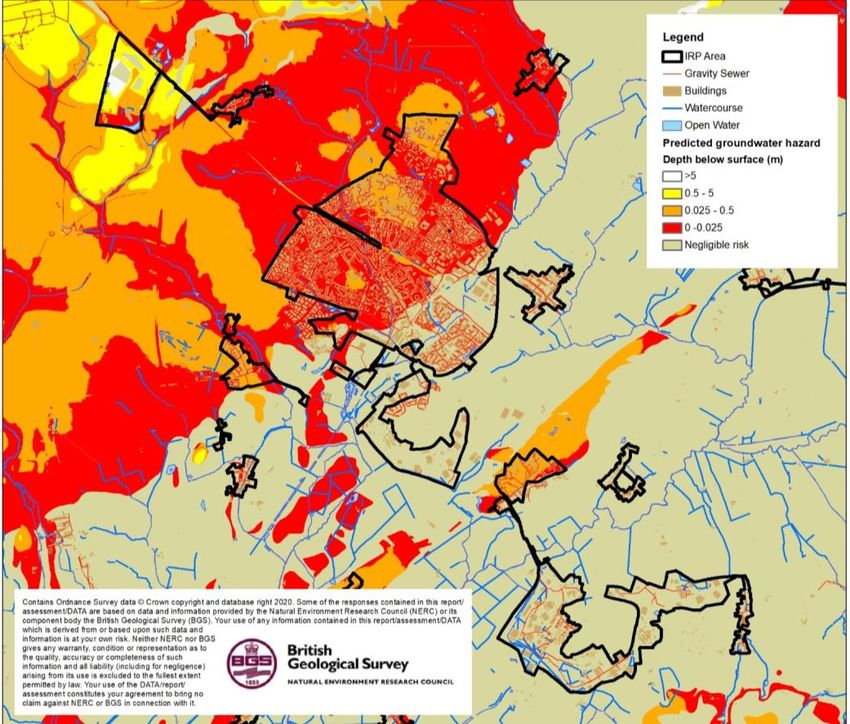
Version control

      Version     Date       Amendment         Author   Checked   Reviewed

       1-d1     16/06/2021   Draft for EA       AJ        SE        DJ

       1-d2     26/06/2021   Final Draft for    AJ        SE        DJ
                                   EA

       1-v1     28/07/2021     Version 1        AJ       SE/JO      DJ

2
Table of contents
Introduction 4
Brief description of Bicester catchment 6
Problem characterisation 6
General outline plan & timescale 9
Bicester Infiltration Management Plan 12
High level approach statement 12
Investigations 13
Monitoring 13
Mitigation 13
Updates 13
Appendix 14
Groundwater infiltration potential analysis 14
Investigations & remedial work undertaken since
15
2019/20 and future plans
3Introduction
This document sets out Thames Water’s sealing of manholes. This entails the
approach to the management of application of a synthetic liner within the
groundwater infiltration in sewerage pipe that creates a contiguous
systems where the influence of membrane for the length of the pipe or
groundwater infiltration is viewed as possibly section if the source of ingress
excessive and likely to be the source of can be narrowed down. For manholes it
uncontrolled escape of untreated or will typically entail sealing in a similar
partially treated sewage. manner.
All sewerage systems combined and To line all sewers and manholes within
separate will experience some most catchments would be prohibitively
groundwater infiltration1 and a nominal expensive to do so. Our approach to
allowance in design will be made for this. date has been centred on a ‘find and fix’
However, in some catchments the impact basis which has involved monitoring and
of groundwater infiltration can be investigating the networks in periods of
considerable leading to impacts on high groundwater to identify sources of
service during periods of high ingress and fix as we find them. This
groundwater, typically during the winter. approach is constrained for the reason
that investigations are typically limited to
Groundwater can enter the sewerage periods of high groundwater and when
system through the pipes and manholes, high groundwater occurs there are
this may occur at a defect (crack, hole, limited windows of time in which
displaced joint) or on a normal joint on investigations can be successfully
the sewer or in the manhole. A key point undertaken before flows either subside or
to note is that where infiltration occurs it the system is fully surcharged meaning
is not necessarily an indicator that the CCTV surveys are not possible2. Once
sewer is in poor structural state simply sections of sewers have been lined, it will
that jointing techniques used are not be a case of waiting until high
completely watertight. groundwater levels reoccur to assess the
effectiveness of the work undertaken,
Ingress of groundwater is not limited to which may not be the subsequent winter
the public system that Thames Water but several years later.
owns and maintains but potentially the
private drains, manholes and sewers that It is recognised that the approach to date
connect to our system. lacks a degree of certainty of resolution
and for this reason Thames Water has in
Preventing and reducing the impact of 2020 undertaken a different approach for
groundwater infiltration is predominately the medium to long-term management of
achieved through the lining of sewers and groundwater, which is covered within this
1Sewers for Adoption makes an allowance for 10% of normal wastewater flow to allow for
unaccounted flows such as groundwater infiltration.
2 On occasions it is possible to over-pump between manholes to isolate sections of sewer to
survey, this is not always feasible when the flows involved are simply too great to over-pump or
the location prohibits this approach.
4document under the plan section. These
plans require significant investment
which Thames Water will seek to secure.
In the meantime, we will continue to
investigate sources of infiltration when it
occurs and where feasible, undertake the
work through our capital maintenance
budgets. We refer to these as ‘minor
works’ opportunities i.e. where we have
high degree of certainty of reducing point
sources of infiltration and can do so with
reasonable costs and time.
The structure of this document has been
created with input from the Environment
Agency. Sections covered in this
document include our ‘Outline Plan’ with
timescales, Mitigation i.e. how we intend
to manage the risk until our plan is fully
implemented and when we will publish
future updates on progress against this
plan.
5Brief description of Bicester catchment
1.0 – Bicester catchment
Bicester is located in the Cherwell district of northeastern Oxfordshire, England,
approximately 10 miles north-east of Oxford. Bicester serves a population equivalent 3
of 58,913 with a predominantly separate sewerage network totaling some 368 km in
length excluding private drains and sewers. The extent of the catchment is shown in
Figure 1.0 above.
Problem characterisation
Groundwater can enter our sewers when levels are high and a positive head above the
soffit of the sewer is created. Significant groundwater ingress can impact sewer
capacity and increase the risk of flooding. There’s a strong link between rising river
levels and rising groundwater levels, particularly adjacent to the River Ray, and the
drainage issues some of our customers have experienced, including sewer flooding
and restricted use of their toilets and bathrooms.
3 Population equivalent or unit per capita loading, (PE), in waste-water treatment is the number
expressing the ratio of the sum of the pollution load produced during 24 hours by industrial
facilities and services to the individual pollution load in household sewage produced by one
person in the same time.
6Additionally, prolonged and heavy rainfall We believe it is likely that groundwater
and raised groundwater levels have infiltration in the Bicester catchment is
overwhelmed the sewer system causing the most probable cause of incidences
problems at the local pumping stations. where the network and the Sewage
Treatment Works (STW) has not been
The sewerage system is identified on the able to cope with all incoming flows,
public sewer records as being a partially triggering problems to homes and at the
separate foul system, rather than a STW in terms of spills to the environment.
combined system. We believe that The root causes of sewer surcharges
significant volumes of surface water require all stakeholders responsible for
runoff from surrounding saturated fields drainage in the catchment to resolve
and built-up land have entered the foul them together.
sewerage network during recent wet
winters, causing the network to become Our permit conditions for Bicester
overloaded and surcharge (mainly STW state:
through submerged manholes).
“The discharge shall only occur when
The historical surveys we have carried and only for as long as the flow passed
out have detected that there is some forward is equal to or greater than the
evidence of groundwater infiltration into overflow setting indicated due to rainfall
the foul sewer network when and/or snow melt.” and “Off-line storm
groundwater levels are high, and surface storage must be fully utilised before a
water inundation from highways, public discharge occurs. It shall only fill when
spaces and properties and fluvial the flow passed forward is equal to or
flooding from local watercourses. greater than the overflow setting
Surface water misconnections (i.e. down indicated due to rainfall and/or snow melt
pipes from roofs into the sewer network) and shall be emptied and its contents
are also suspected to be a contributing returned to the continuation flow as soon
factor, hence further analysis is required as reasonably practicable.”
to determine the extent to which this has
contributed to sewer flooding. The The Flood and Water Management Act
previous studies have identified areas of 2010 places a responsibility on Lead
Bucknell, Wendlebury, and Launton as Local Flood Authorities (LLFAs), to
particularly prone to groundwater manage flood risk from surface and
infiltration, however CCTV surveys groundwater, plus a duty on all Risk
currenlty ongoing will improve our Management Authorities (RMAs), to
understanding. cooperate regarding flood risk. In our role
as an RMA, Thames Water will work with
A limited number of our sewerage Cherwell District Council and Oxfordshire
systems include for overflows, these County Council and the Environment
structures are there to protect against Agency to ensure that a collaborative
sewer flooding as a result of rainfall or approach can be developed to address
equipment failure where appropriate. the problems.
Discharges from these structures should
not be impacted by excessive infiltration Thames Water also has a statutory
as detailed by the EA Regulatory Position obligation to comply with environmental
Statement on groundwater impacted legislation. The Water Framework
sewerage systems. The use of storm
sewage overflows is accepted by our
regulators, subject to conditions
7Directive establishes a strategic
approach to managing the water
environment, which the Environment
Agency achieves through River Basin
Management Plans and setting
environmental objectives for groundwater
and surface water. The environment is
also protected from adverse effects of
discharges of urban wastewater through
the Urban Wastewater Treatment
Directive, which requires us to improve
and extend the sewerage system
according to section 94 of the Water
Industry Act (1991).
Anticipated unavoidable discharges
Within recent years there have
been unplanned unconsented
unavoidable discharges in the network as
a result of surcharging manholes causing
pollution. This has been as a direct
result of the influence of
groundwater infiltration.
We anticipate that this situation
may continue until such time we are able
to implement a long-term solution.
8General outline plan & timescale
Figure 2.0 – Bicester monitoring plan area and infiltration zones
Key to bringing the impact of groundwater infiltration under control is an enhanced
monitoring regime. We have identified zones and areas over which telemetered depth
monitoring will be installed. Figure 2.0 presents a plan of currently proposed installation
locations.
Complimenting the flow [at the treatment works] and depth measurement [in the sewer
network] we will use pumping station run time data, rainfall data, river level data, and
groundwater level data to create a full picture of movement and source of flows around
the catchment.
Zones of Groundwater Risk
We engaged with JBA Consulting to develop plans for Bicester that identify zones of
groundwater risk, see Figure 2.0. These zones are modelled areas where the
groundwater has been determined to be above the sewer and hence pose a potential
risk for groundwater ingress.
The sewer depth monitors referred to earlier will be sited in and around these zones to
verify and calibrate the risk in each of the zones.
9If following the proposal to the sealing in has been brought under control, we will
part or wholly4 of the high risk zones in continue to monitor for potential trends in
AMP85, should it be required, the system infiltration suggesting the need for further
is found to be still experiencing excessive work. We also anticipate monitoring the
infiltration we would then look to response of the catchment to surface
potentially seal ‘private’ laterals and/or water and where appropriate will use the
drains along with starting to seal the monitor data to address this source of
medium to low risk zones. The decision storm flow.
on this will be based on information
obtained from the monitors and With this plan we remain committed to
depending on the scale of further work minimising the impact of groundwater on
required this may need to form part of the sewerage system in Bicester.
PR296 investment planning.
Our general medium to long term plan is
The monitors are also to be used to therefore to apply a hierarchy to sealing
monitor change within the system hence the sewer as follows:
even should we determine that infiltration
Activity When Description
JBA have been engaged to undertake modelling
activities to identify the areas (zones) to be
targeted for sealing in the 56 systems identified as
Model Zones 2020/21 being impacted by infiltration in the Thames Water
region.
Monitoring plans are being developed to help
calibrate and validate the zones. Each year
Install monitors 2021-2023 completeness / coverage monitors will be reviewed
and added to / or modified as necessary.
Following each winter, we intend to review the data
from the monitors and if necessary, redefine the
Calibrate zones Refined each year zones.
The look & lift surveys have two purposes, firstly to
compliment the monitoring and secondly to identify
Look & Lift Each winter ‘quick fixes’ that we would address through our
normal capital maintenance.
Required to confirm sewer condition and provide
CCTV 2020-2023 information to assist with costing any sewer lining.
4Decision of extent of sealing will be based on outcomes of works undertaken in AMP7, results
of monitoring and successful submission of our plans for investment for AMP8.
5 Asset Management Plan 8 – covering work between 2025-2030
6 Price Review 2029
10Activity When Description
As mentioned, if we detect minor works being
required, we will look to resolve these as and when
Minor works 2020-2023 we find them.
Ideally through monitoring and on-going
investigations work towards managing the
infiltration risk, in AMP7, will be successful.
However, in the absence of evidence justifying the
need not to undertake sealing of the high-risk zone
PR24 2023/24 this is to be included as part of PR24 investment
plan. This work will be subject to Cost Benefit
Analysis and Best Technical Knowledge Not
Entailing Excessive Cost (BTKNEEC assessments).
High risk zone sealing 2025-30 Sealing of high-risk zone undertaken subject to
need being demonstrated.
11Bicester Infiltration Management Plan
As detailed above the impact of We will also review results of Winter
infiltration is experienced in the network 2019/20 and 2020/21 with historic data
and at the STW. to build up evidence to support
interventions in the network (Autumn).
Our approach to the resolution of
infiltration impacting the Bicester 2. Where interventions can be
sewerage system is outlined below. undertaken as part of normal sewer
maintenance activities these will be
High level approach statement communicated and progressed.
For Bicester our approach to tackling 3. If significant investment is identified
infiltration will be undertaken as follows: as being required, then this will need
to be considered in terms of relative
1. We will investigate the network with a need compared to other systems
view to identifying sources of ingress being investigated for infiltration
of infiltration that are cost effective7 to reduction and need. Significant
address. To investigate the network, investment needs may need to be
we have: included in our next investment
planning cycle at PR24.
• Undertaken a desktop analysis to
determine infiltration high to low risk
zones (October 2020);
• Undertaken sample CCTV in the
high to low risk zones to assess the
general asset health of the sewers
and manholes (ongoing).
To investigate the network, we will:
• Install monitoring to back up the
analysis and to aide focusing of
locations for identification of
infiltration (2021 to 2023). Each
year we will assess the
completeness of monitoring and if
required add to or modify the
current locations.
7 Assessment of cost effectiveness is based on assessment of the ratio of the cost of a solution
to the monetised benefit gained from implementing the solution i.e. reduction in flood/pollution
risk and/or reduced operating costs.
12Investigations Mitigation
As mentioned above we have On occasions to avoid flooding of
commissioned JBA Consulting to properties or to manage the risk of
undertake an exercise involving damage to the environment we may
groundwater elevation data to determine undertake tankering from within the
which areas of the network are network, make use of pumps to contain
potentially below the groundwater table flows or deploy settlement tanks to part
during high groundwater periods. treat sewage before release to the
environment.
Site investigations, undertaken by Dene-
Tech and our Customer Field Services With regard to Bicester we do not
(Thames Water Operations) have envisage needing to undertake mitigation
included ‘look & lift’ surveys, CCTV and work within the network.
where necessary dye tracing to confirm
connectivity. Updates
A table of the work undertaken is Work on the Groundwater infiltration
included in the appendix to this report. management plan will continue, and we
will aim to provide updates annually by
Monitoring the end of October each year.
Sewer Depth Monitors will be installed in
the catchment in between 2021 and
2023. These devices are telemetered
and provide real time data on the level of
flow in the sewer.
The purpose of these units is to act as
alerts for high groundwater impact in the
sewer, calibration of the zones of
infiltration risk and to demonstrate benefit
gained from work undertaken to reduce
infiltration. They will also provide
evidence in the future of further need to
manage the impact of infiltration.
13Appendix
Groundwater infiltration potential analysis
The sewer network classified by the groundwater infiltration risk zones. The lengths of
sewers within these zones are presented in the table below.
Risk category Description Length (km) Percentage
High Predicted groundwater
extreme >1m above pipe 83.20 56.8
invert
Medium Predicted groundwater
extreme 0-1m above pipe 4.18 2.9
invert
Low Predicted groundwater
extreme 0-1m below pipe 10.99 7.5
invert
Very Low Predicted groundwater
extreme >1m below pipe 48.12 32.8
invert
Total
146.48 100.0
In addition, the table below presents the surface water flood risk classification for
manholes within the catchment.
Manholes by Surface Water Inundation Risk Category
Risk category Description Number Percentage
High Inundation risk in 3.3%
AEP fluvial or pluvial 307 5.8
event
Medium Inundation risk in 1% AEP
302 5.7
fluvial or pluvial event
Low Inundation risk in 0.1%
AEP fluvial or pluvial 890 16.8
event
Very Low All other manholes
3796 71.7
Total
5295 100.0
14Investigations & remedial work undertaken since 2019/20 and future plans
At the time of writing we are currently on site undertaking lift and look and
CCTV surveys in the Bicester system. A summary of findings will be provided in the
next update of this report.
15Glossary of terms
AEP – Annual Exceedance Potential
AMP – Asset Management Programme
CCTV – Closed Circuit Television
EA - Environment Agency
IRP – Infiltration Reduction Plans
MH – Manhole
STW – Sewage Treatment Works
WINEP – Water Industry National Environment Programme
16You can also read


