HE ARATAKI I TE KOPA ITI - A POCKET MONEY GUIDE TIKANGA HOU, ORANGA HOU - Whai Rawa
←
→
Page content transcription
If your browser does not render page correctly, please read the page content below
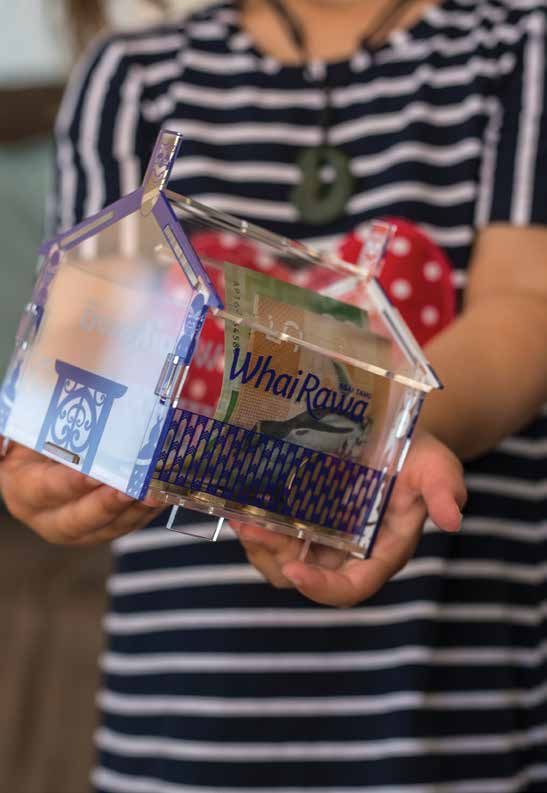
HE ARATAKI
I TE KOPA ITI
A POCKET MONEY GUIDE

                       TIKANGA
                                     H
                       ORANGA OU,
                       Changing
                                     HOU
                                habi
                              ts, changi
                                        ng lives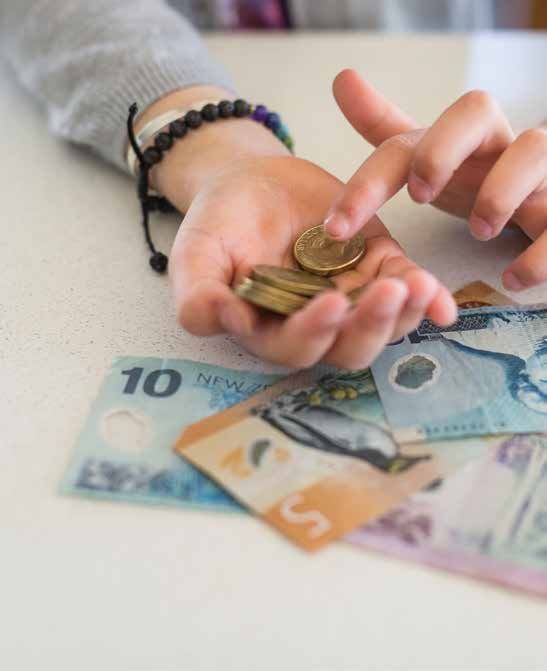
TOKONA TE
    TAHUA, TOKONA
    TE TAKATA
    Tēnā koutou
    Helping our tamariki and mokopuna to               DID YOU KNOW
    learn about how money is earned and
                                                         FINANCIAL
    spent, enables them to develop
    important skills, including:
                                                      LITERACY IS PART
                                                       OF THE SCHOOL
    »» saving
                                                        CURRICULUM?
    »» planning ahead
                                                     If your school doesn’t teach it,
    »» decision making                                      ask them about it.
    »» delayed gratification (feeling good
       when you buy something you’ve
       saved for)
    »» understanding what things cost

    This guide provides suggestions to
    make pocket money a winner for
    the whole whānau.

    Whatever you decide, make sure
    you talk about options and choices.

    Learning about money
    early helps us to make
    good decisions about
    money and other stuff
    throughout our lives.

                       TOKONA TE TAHUA, TOKONA TE TAKATA
          Support and uphold the fund (harvest), support and uphold the person

2
WHAT TO TEACH WHEN?
From around 3 years of age, tamariki
are ready to learn about money.
Use regular activities like shopping and cooking to teach
them about money. Once the basics have been learnt,
they’ll be hungry for more.

 WHAT TO TEACH         AGES 3-6             AGES 7-16

 WHAT’S MONEY?         »» Coins and         »» Other forms
                          notes we use         of money like
                       »» Coins and            cheques and
                          notes from           eftpos
                          different
                          countries

 WHERE DOES            »» Working           »» Pocket money
 MONEY COME            »» Koha              »» Wages and
 FROM?                                         Salaries
                       »» Pocket money
                                            »» Benefits and
                                               pensions
                                            »» Insurance

 WHERE DOES            »» Needs –           »» Needs
 MONEY GO?                food, clothes,       and wants
                          transport,        »» Taxes
                          power
                       »» Wants –
                          toys, pets

 HOW DO YOU            »» Use a             »» Keep money
 LOOK AFTER               money box            in the bank
 MONEY?                »» Open a            »» Check bank
                          savings              statements
                          account
                       »» Investment
                          Funds

 HOW DO YOU            »» Pay for           »» Pay for
 USE MONEY?               things now           things now
                       »» Save for          »» Save for
                          the future           the future

                                                               1
POCKET MONEY AND MAHI
    There is no right age to start giving tamariki pocket
    money, but once they want to buy things, it’s a great
    time to start.
    It’s important that some mahi is done       This table shows how these two
    with no expectation by tamariki and         concepts of how the mahi aroha
    mokopuna for financial reward (he mahi      and he mahi pūtea could work:
    aroha). Utu is a useful concept in this
    regard. While utu is often portrayed as      HE MAHI AROHA      HE MAHI PŪTEA
    being about revenge, it can also mean
    the opposite. When something good is         Manaakitanga       Clean the car
    done it will be rewarded sooner or later.
                                                 Help with the      Do all the
                                                 veggie garden      washing up

                                                 Help with clothes Vacuum the house
                                                 washing (e.g. put
                                                 clothes in the
                                                 machine, hang out
                                                 and put away)

                                                 Help with kai      Put out rubbish
                                                 preparation and    bins
    LINKING SOME MAHI                            dishes
    TO POCKET MONEY
     CAN HELP TEACH                                                 Mow the lawn
     TAMARIKI ABOUT
    THE LINK BETWEEN
       MAHI AND PAY

2
HOW MUCH POCKET MONEY?
Start with what is affordable in your budget. If they
understand there are lots of things to pay for, they
will be more accepting of what they get.
You can increase their pocket money as they get older, often in line with mahi that
has more responsibility. This can help them appreciate the benefits, as well as the
responsibilities that come with age.

The teenage years can also be the time to start an allowance for things they need
– such as clothing. This helps them to budget, learn from mistakes and how to get
a bargain, e.g. buy clothes at the hokohoko (second-hand) shop!

When tamariki are old enough to get a job, it’s time to start weaning them off their
pocket money. Make sure they continue to help at home, and have a good balance
between school and socialising.

                                                                                       3
CAN I SPEND ALL
    MY POCKET MONEY?
    Pocket money can teach tamariki to balance spending,
    saving and helping others.
    IT’S A GOOD IDEA TO SET GUIDELINES WITH TAMARIKI AROUND:

                   How much they will spend each week

                   How much they will save up for short term goals (small toys
                   and games) and long term goals (bigger purchase items); and

                   How much they will contribute to whānau goals or to
                   manaaki others e.g. saving for university or for a house.

    Setting guidelines like this can help develop a sense of responsibility and the
    importance of caring for others. Once they get the hang of it they should make
    smarter decisions about their spending.

4
POCKET MONEY DO’S AND DON’TS
DO DON’T
Give it on the same day Don’t link with school
each week – regularity performance
is crucial to good money
habits Don’t give advances
or loans
Be clear what it can be
spent on (e.g. treats, Don’t worry if they ‘waste’
toys, savings) money – encourage
them to learn from their
Expect spending mistakes
mistakes and encourage
learning Don’t give them more
than you can afford
Praise good decisions
Talk about how you
manage the whānau
finances
Show tamariki how to
keep pocket money
records
Support tamariki to make
good money decisions
SUPPORT TAMARIKI
TO MAKE GOOD
MONEY DECISIONS
5All about
Ngā Kaitiaki
Moni!
Ngā Kaitiaki Moni is our
Whai Rawa Kids Club, a fun and
interactive space for Whai Rawa
tamariki aged 5-15 to engage with
financial capability learning.
It is a platform for Whai Rawa
to connect with and teach them
about saving in an enjoyable way
with activities, mail to their
home, competitions and more!
Ngā Kaitiaki Moni means ‘the Money
Guardians’ which reflects the aim for this
initiative – tamariki taking ownership
of and engaging in financial learning.
This is an important kaupapa, as by age
seven most tamariki grasp the value of
money and understand that money
can be earned, saved and spent.
Through fun resources, tamariki will
learn about and practise with money,
saving and helping whānau around
the home. This will develop financial
capability and long-term goal setting
within tamariki and enable them to
engage in financial conversations
JOIN NGĀ KAITIAKI MONI FOR HEAPS OF with whānau.
FUN ACTIVITIES, QUIZZES AND GAMES:
whairawa.com/tamariki
6sign up to
W hen you
’ll get to
the club you
r favourite
pick you
we know
character so
t like!
who are mos
Ngā Kaitiaki Moni has a bunch of cool tamariki
who will help you on your learning journey.
Te Hau, Waitaki, Tāne and Mārama along with their kurī Manawa are
tamariki with natural superpowers to fight and protect Aotearoa.
7Triangle
Puzzle
Add the numbers at opposite points of the triangle
to fill in the connecting blank boxes in between.
7 10
11 16
5 4 4 6
6 8
5 9 11 7
7 18 11 9 14 5 6 10 4 4 9 5
15 19 15 11 16 14 11 12
8 6 10 7
8Wordfind
Game
Find the hidden words on the list:
COINS GOALS KAITIAKI
MANAWA MONI SAVING
TAHU TANE TAUTOKO
WAITAKI
9WE HOPE YOU FOUND THIS GUIDE USEFUL AND WELCOME ANY FEEDBACK ON: P 0800 942 472 or +64 3 366 4344 E whairawa@ngaitahu.iwi.nz A PO Box 13046, Christchurch 8141
You can also read


