Health and Safety Strategy - 2016-2019 ambulance.vic.gov.au - Ambulance Victoria
←
→
Page content transcription
If your browser does not render page correctly, please read the page content below
Health and Safety Strategy
    2016–2019

ambulance.vic.gov.au
  Safety is everyone’s responsibility
2

    Foreword
    As the Chair of Ambulance Victoria (AV) I am proud of our
    organisation’s continuing delivery of world class pre-hospital care
    to the Victorian community. The time has come, however, to look
    after our own people as well as we care for our patients.

    Along with every member of the AV Board, I will no longer accept
    the current level of injury of AV employees. Injuries that impact not
    only our paramedics but also their families.

    The only way we will reduce harm to our paramedics is to create
    a culture where paramedic safety is front and centre to all our
    thinking and actions. We simply can’t continue to trade health and
    safety performance for good performance in other areas. We must
    become an organisation in which outstanding clinical performance
    and safety go hand in hand. The AV Health and Safety Strategy is
    the road map to achieving this.

    In partnership with the final report of the Ambulance Performance
    and Policy Consultative Committee, ‘Victoria’s Ambulance Action
    Plan: Improving Services, Saving Lives’, the AV Health and Safety
    Strategy strives to make safety an everyday way of life at AV,
    included in all our decision making and in everything we do.

    Sustained safety improvement can only be realised through
    strong leadership combined with clear safety accountabilities for
    executives, managers and all employees within the organisation.

    Reform is underway at AV. We are serious about safety and
    about building safety accountability and ownership at all levels
    of the organisation.

    AV’s Board is not only providing its support for this strategy –
    we are driving it.

    Ken Lay
    Chair of Ambulance Victoria Board

    Ambulance Victoria Heath and Safety Strategy 2016–2019
3

                             Contents
                             Foreword                                              2

                             Message from the CEO                                  4

                             AV Health and Safety Strategy at a glance             5

                             About this strategy                                   6

                             Building a stronger safety culture                    7

                             We must look after people better                      8

                             Major causes of injury we will address                9

                             Aims of AV Health & Safety Strategy                  12

                             Focus Area 1

                                      Safety Culture, Leadership and Engagement   14

                             Focus Area 2

                                      Risk Management                             16

                             Focus Area 3

                                      Injury Management                           18

                             Focus Area 4

                                      Continuous Safety Improvement               19

                             Measures of Success                                  20

                             Appendices
                             Definitions                                          21

Safety is everyone’s responsibility
4

    Message from the CEO
    Great patient care can only be provided by a safe, engaged and
    operationally ready workforce.

    Providing the best care for our patients and the safest possible
    workplace for our staff must be the foremost priorities for all of
    us at AV.

    We are facing a period of unprecedented change with a number
    of challenges to manage through an ageing population, increased
    demand for services and the changing nature of our workforce. In
    the midst of these challenges we must remember to focus on our
    greatest responsibility, the safety of our people.

    Everyone at AV must take ownership of our safety performance
    and be responsible for our own safety and the safety of our
    workmates. This will allow us to achieve a zero harm culture and
    work towards our goal of no workplace injuries.

    To improve workplace safety and the health of all our staff, we
    have developed the AV Health and Safety Strategy. This strategy
    describes how we will build the safety awareness, capability and
    accountability that is necessary to achieve our strategic goals over
    the next three years, 2016 to 2019, while providing the safest
    workplace possible.

    We will build a safety first culture where everyone is committed
    to AV’s safety expectations and has the knowledge and skills to
    do their jobs safely. We will appropriately fund and implement
    targeted preventative programs to improve the health and safety
    of our workforce.

    So that our employees can be proud of our efforts to keep
    ourselves and each other safe – like we’re justifiably proud of the
    care we offer the community – I encourage all of our people to
    support the AV Health and Safety Strategy.

    Tony Walker
    Acting CEO
    Ambulance Victoria

    Ambulance Victoria Heath and Safety Strategy 2016–2019
5

AV Health and Safety Strategy at a glance

     Safety accountability framework                                    Manual handling
     Safety key performance indicators                                  Mental health and wellbeing
     Safety leadership program                                          Occupational violence
     Annual safety forum                                                Alcohol and other drugs

                                               1.              2.
                                         Safety Culture,      Risk
                                           Leadership      Management
                                         and Engagment

                                               4.               3.
                                           Continuous         Injury
                                             Safety        Management
                                          Improvement

     Safety system review                                               Early intervention
     Safety consultation framework                                      Transitional duties project
     Safety incident and claims                                         Preferred treaters network
     management platform
                                                                        WorkCover agent partnerships
     Incident investigation framework                                   arrangement

Safety is everyone’s responsibility
6

    About this strategy
    The AV Health and Safety Strategy details AV’s plans to improve
    the health, safety and wellbeing of our people and describes the
    actions the organisation will take over three years from 2016
    to 2019.

    Delivery of the strategy will ensure AV can meet the expectations
    of the Victorian Government, the people of Victoria and our own
    employees in taking better care of our people in their workplace.

    The AV Health and Safety Strategy was developed with wide
    consultation across the operational business and with key external
    stakeholders and experts. It builds on AV’s focus on safety to
    enable a more strategic use of our resources to improve health and
    safety outcomes. Achieving a healthier workforce is not only the
    right thing to do, it will also contribute to a more reliable service.

    The AV Health and Safety Strategy has been developed to achieve
    one of the major themes in our AV Corporate Plan January 2016
    – June 2017: ‘Improving paramedic health, safety, wellbeing and
    capability.’ It takes a strong initial focus on safety as a critical
    foundation for building more proactive health and wellbeing
    systems and culture.

    AV has also accepted the final report of the Ambulance
    Performance and Policy Consultative Committee (APPCC) that was
    handed down in December 2015 – ‘Victoria’s Ambulance Action
    Plan: Improving Services, Saving Lives’. The AV Safety Strategy
    is in line with the Action Plan’s second action area ‘Improving
    paramedic health and wellbeing and training’.

    Implementation of the AV Health and Safety Strategy is subject to
    oversight by the AV Executive team and the AV Board of Directors
    including a program of quarterly and annual reporting. The strategy
    is supported by a full implementation plan and progress will be
    measured against identified key performance indicators.

    Ambulance Victoria Heath and Safety Strategy 2016–2019
7

Building a stronger safety culture
The AV Health and Safety Strategy recognises                         Organisations that have built a strong safety culture have
                                                                     progressed through the development levels of the Safety Maturity
we can improve our safety outcomes by                                Model (See Figure 1 below). Currently, based on self-assessment,
building our safety culture. We need to move                         our safety culture reflects vulnerable and reactive characteristics.
on from a culture that has primarily been                            We do meet the basic legal compliance requirements with safety
                                                                     policies, procedures, reporting systems and communication
focused on patient safety first and paramedic                        channels in place as required by the OHS Act 2014 and
safety second, where injuries were widely                            WorkSafe Victoria.
accepted as part of the job.
                                                                     The AV Health and Safety Strategy is the roadmap that will enable
To be successful in improving safety and reducing harm to our        AV to move to a proactive culture through targeted investment in
people, we need to mature our safety systems. We also need           a series of key initiatives over a three year period.
to build a culture where safety is understood as everyone’s
responsibility and we are continually improving practices and
performance beyond compliance. This will put us on a pathway
to building our safety resilience.

  Behavourial

                                                                                                                    A
                                                                                             B                  Resilient
                                                                                          Proactive             Safety is how we
                                                                       C                  We continually        do our business
                                                                                          improve practices     around here.
                                                                    Compliant
  Systems & Processes                                 D             We have               and perfomance
                                                                                          beyond
                                                                    systems in place
                                                   Reactive         to meet legal         compliance.
                                                   Safety is        requirements.
                                      E            important. We
                                                   do a lot every
                                Vulnerable         time we have
  Legal Compliance              It’s part of the   an accident.
                                job. It was
                                unavoidable.

Figure 1:
AV is committed to moving up the safety maturity curve to be more proactive and to put us on the path to being more safety resilient.

Safety is everyone’s responsibility
8

    We must look after our people better
    Delivery of excellent patient outcomes should
    not come at a cost to our own people’s safety,
                                                                             Safety to me is ensuring my
    health and wellbeing.                                                    team, my partner and I go home
    AV’s workforce has experienced an unacceptable level of injury,          to our families in the same
    violence and psychological distress, which impacts on our people’s       condition we were in when
    health and wellbeing and on our ability to deliver a health service to
                                                                             commencing work. It is having
    the community.
                                                                             the confidence to challenge
    AV has significant opportunities to improve our safety performance       unsafe practices and to work
    and look after our people better through the AV Health and               together to achieve our goals
    Safety Strategy.
                                                                             while looking after the physical
    For example, we can: *                                                   and mental health of each other.
    ►►   Reduce the rate of injuries to our people, which is currently       Olivia Howarth
         1,600 employees each year
                                                                             Senior Team Manager (Acting)
    ►►   Enhance operational reliability by reducing the number of shifts    Yarra Junction/Millgrove
         lost to injury each year, which currently sits at 15,000 shifts

    ►►   Improve our lost time injury frequency rate (LTIFR), which is
         currently greater than 100

    ►►   Reduce workers’ compensation claims, which currently occur
         at a rate of eight standard claims per 100 full time employees
         per year.

    * All data current at January 2016

    Ambulance Victoria Heath and Safety Strategy 2016–2019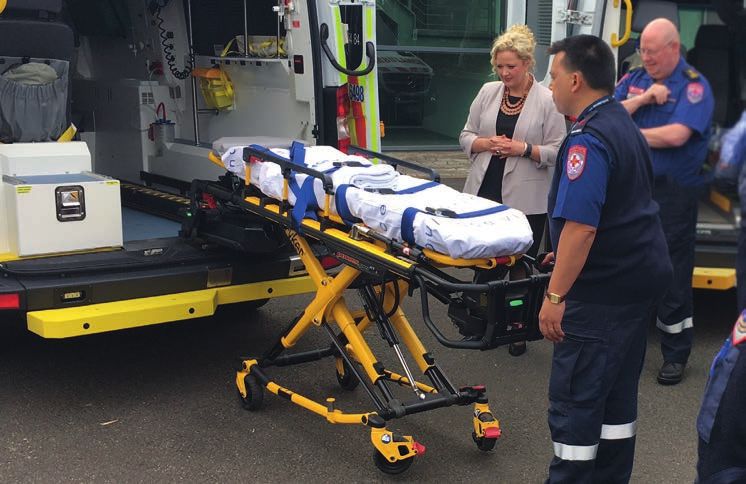
9

Major causes of injury we will address
Disclosure of our current state is an important
baseline for measuring the impact of the AV
                                                                                                        As an ambulance service we
Health and Safety Strategy. We’re committed                                                             have a basic ethos of caring for
to being transparent about the safety issues                                                            the welfare of others, therefore
AV is seeking to address and improving our                                                              the welfare of our own staff
safety performance.                                                                                     should also be held in the same
There are a range of causes of injury to be addressed, with manual                                      high regard. The reasons for
handling injuries making up the vast majority of compensation                                           making workplace safety a
claims for the past two financial years:                                                                priority include: the cost both
                                                                                                        financially and personally to
                                                                                                        employees through reduced
                                                                                                        quality of life as a result of
                   Fall/Slip/Trip
                   8.2%
                                      Psychological
                                      8.2%
                                                                                                        workplace trauma, both physical
                                                      Others                                            and mental; the financial costs
                                                      6.0%
                                                                                                        to the organisation and the
                                                               Occupational Violence
                                                               4.1%                                     community in rehabilitation,
                                                                  Hitting/Being Hit by Object
                                                                  2.9%
                                                                                                        insurance and legal liability;
                                                                     Vehicle Incident
                                                                     1.3%
                                                                                                        and the lost time and reduced
                                                                                                        productivity of staff due to
                                                                     Exposure to Chemical Substance
                                                                     0.9%
                                                                                                        absent staff, retraining of
                                                                     Exposure to Biological Substance
                                                                     0.8%                               new staff and loss of skilled
                                                                     Exposure to Infectious Disease
                                                                     0.7%                               staff. Most importantly, our
                                                                     Fatigue
                                                                     0.1%                               staff should feel safe in their
                                                                                                        workplace knowing their
 Manual Handling
 66.9%
                                                                                                        welfare is important to
                                                                                                        Ambulance Victoria.
Figure 2: Claims profile 2013-2015
                                                                                                        Paul Felicetti
                                                                                                        MICA Paramedic

Safety is everyone’s responsibility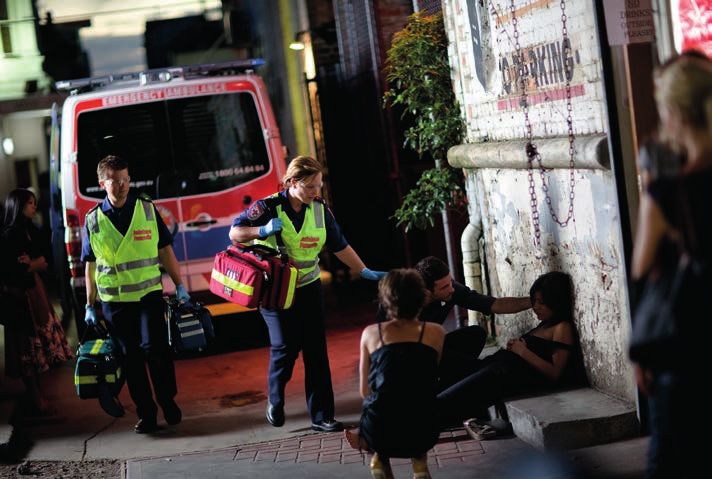
10

     Manual Handling                                                         Psychological Injury
     A strong focus is required to address preventable manual handling       Our care for the safety and wellbeing of our people must also cover
     injuries given the impact to our people as well as the workforce        their psychological health and wellbeing.
     availability and financial cost.
                                                                             ►►   A National Coronial Information System (NCIS) report published
     ►►   Over the past two financial years 67% of injuries at AV were            in June 2015 indicated that the suicide rate among paramedics
          manual handling injuries.                                               is four times higher than the Victorian average and three times
                                                                                  higher than other emergency services personnel such as police
     ►►   Handling of patients and stretchers are the two highest reported        and fire services.
          causes of manual handling injuries.
                                                                             ►►   First responder employees may have higher rates of
     ►►   The most common injury is back pain/strain.                             depression, anxiety, post-traumatic stress disorder (PTSD),
                                                                                  stress and fatigue.
     ►►   As well as the impacts on injured employees, which can
          sometimes be career ending, manual handling has a significant      ►►   Some research indicates that paramedics tend to experience
          financial impact with claims accounting for more than 60 per            higher rates of PTSD than fire-fighters.
          cent of AV’s WorkCover premium in 2014-15.
                                                                             ►►   Paramedics tend to experience higher levels of organisational
     ►►   The number of compensable days lost due to manual handling              stress in comparison to those in other occupations according
          injuries in AV for WorkCover claims received in 2014-15                 to some research. This may include risk factors such as:
          was 8,875, which is approximately $5.3 million in employee
          replacement costs (As at 30 November 2015).                             • shift-work
                                                                                  • long working hours
                                                                                  • repeated exposure to death, violence and trauma
                                                                                  • difficult interactions with members of the public
                                                                                  • high levels of responsibility
                                                                                  • lack of rostering flexibility
                                                                                  • frequent shift extensions.

     Ambulance Victoria Heath and Safety Strategy 2016–2019
11
Occupational Violence
AV has zero tolerance to violence against our paramedics and Safety in the workplace is
volunteers and our people should not have to accept occupational important to me for many
violence as part of their workplace. reasons, the most important
►► The Victorian Auditor General’s Report Occupational Violence reason is being to be able to
Against Healthcare Workers found that paramedics, alongside return home to my family at the
other healthcare workers, face particular risk of occupational end of the day. As a mum of a
violence because they often deal with people in stressful, seven-month-old baby boy, my
unpredictable and potentially volatile situations
most important job in life is to
►► There is a general trend of increasing occupational violence care for him, love him and guide
towards paramedics him as he grows up. Safety in
►► Metro regions have the highest rates of incidents my workplace ensures that I
can return home to be there for
►► The top five suburbs with the highest incident rate are within
my son as well as my husband.
5kms of the Melbourne central business district
Additionally my career as a
►► The highest level of aggression occurs on Friday and paramedic is very important
Saturday nights to me, it is a needed financial
►► Over the past three years the total claims cost in relation to source as well as an enjoyable
occupational violence translates to 711 operational shifts lost. and rewarding career that I
hope to be doing for many
years to come.
Katie Wilson
Paramedic Kyneton
Safety is everyone’s responsibility12
Aims of the AV Health and Safety Strategy
The AV Health and Safety Strategy is the We will know our safety culture
roadmap to sustainably improving the health
and safety of paramedics and making AV a is improving when:
safer place to work. ►► Safety leadership is evident at all levels of the organisation.
It provides an agreed set of priorities for the years 2016 to 2019 ►► Workplace health and safety is valued and considered in all
on which AV, unions representing our staff, and other stakeholders decision making.
can focus to improve the health and safety of all AV paramedics.
►► Individuals hold themselves accountable with few ‘at risk’
The AV Health and Safety Strategy will guide all aspects of our behaviours occurring. They look out for each other’s safety.
commitment to the health and safety of AV paramedics – our
investment decisions, strategic planning, policy development and ►► Safety is embedded into everyday work practices.
operational matters.
►► Senior leaders communicate to employees about safety
AV will measure and report on our safety performance using regularly, consistently and clearly.
detailed key performance indicators (KPIs) that align with the four
Focus Areas in this strategy. The high level KPIs are included on
►► We have a collective understanding of key risks and measures
page 20. to mitigate them.
The AV Health and Safety Strategy adheres to the following
►► We develop and implement health and safety initiatives that are
principles of person-centred care: targeted at key risk areas.
►► Principle 1 – Affording people dignity, respect and compassion
►► We regularly monitor the impact and effectiveness of initiatives.
►► Principle 2 – Offering coordinated care, support or treatment
►► There is regular communication with employees regarding
safety risks.
►► Principle 3 – Offering personalised care, support or treatment
►► Our people receive prompt medical treatment, which reliably
►► Principle 4 – Being enabling. informs return to work pathways.
►► We have an injury management system that delivers early
intervention strategies and flexible return to work options.
►► We achieve sustainable return to work outcomes for
There are many aspects of my our workforce.
role as a paramedic that have
►► We have a collaborative partnership with our WorkCover agent
the potential to cause a career
ensuring excellent service delivery and best possible financial
changing physical or mental outcomes for AV.
injury. By keeping safety at
the forefront of my role and ►► AV has policies, procedures and systems that enable effective
safety management.
always practising a dynamic
risk assessment, I am able to ►► It’s easy to be informed, easy to communicate and easy to
keep safe and ultimately return share learnings about safety.
home fit and well to my family ►► We understand what knowledge and skills are needed.
and friends while maintaining
►► Our systems inform our workforce regarding safety.
longevity in a career that I love.
►► We have high functioning safety consultation mechanisms.
Rene McGrath Ambulance
Paramedic Castlemaine
Ambulance Victoria Heath and Safety Strategy 2016–201913 Safety is everyone’s responsibility
14

                 1.                2.
           Safety Culture,        Risk
             Leadership        Management
           and Engagment

                  4.                3.
              Continuous          Injury
                Safety         Management
             Improvement

     Focus Area 1
     Safety Culture, Leadership                                               ► Actions
     and Engagement                                                           Safety accountability framework: Establish a Safety
     Leadership, communication and training are essential to create           Accountability Framework that clearly defines roles, responsibilities
     an effective safety culture. Strong safety leadership must be            and accountabilities to build accountability and ownership of safety
     role-modelled by the Board of Directors, the Executive team and          across the organisation.
     managers, and be visible through all levels of the organisation. A
     culture of safety in our organisation means everyone is accountable      Safety key performance indicators: Establish detailed KPIs
     for their own safety and for that of their colleagues. Safety is a       aligned to the four Focus Areas that represent the organisational
     whole of organisation responsibility.                                    commitment to improved safety performance.

     The introduction of an AV Safety Accountability Framework                Safety leadership training: Establish Safety Leadership
     will clearly define expected safety roles, responsibilities and          Training Days based on best practice research that is tailored
     accountabilities. All employees will have the safety responsibilities    to the ambulance service environment, risks and experiences.
     of their delegation clearly identified to ensure that we can recognise   Delivery of this safety culture and engagement program to all
     and hold people accountable for fulfilling these responsibilities.       operational staff to commence in 2016 Continuous Professional
     Management of safety performance against these responsibilities          Development program.
     will be measured and included in performance reviews and career
                                                                              Annual Safety Forum: Establish an annual Safety Forum,
     progression considerations.
                                                                              starting in 2016. Include a safety leadership reward and
     At an organisational level, we will track our progress and maintain      recognition program.
     momentum by introducing revised organisational safety key
                                                                              Safety performance linked to position descriptions and
     performance indicators aligned to the four Focus Areas in the
                                                                              performance reviews: Safety delegations and accountabilities
     AV Health and Safety Strategy that will drive ownership and
                                                                              to be clearly articulated in position descriptions and link these
     accountability for AV’s safety performance. The high level KPIs are
                                                                              responsibilities to performance reviews to ensure employees can
     included at page 20.
                                                                              be recognised and held accountable for their safety performance.
     Safety Leadership Training Days have now been introduced
                                                                              Safety communication program: Support the implementation of
     to engage our workforce and build ownership of safety by
                                                                              the AV Health and Safety Strategy through effective delivery of key
     our people for ourselves and our colleagues. This training is
                                                                              safety messages.
     designed to demonstrate the importance of safety culture and
     safety leadership, and how it can be applied at AV. It also lays
     the foundation for a tailored safety leadership program to further
     enable our senior leadership team to lead AV’s safety
     performance improvement.

     To acknowledge our achievements and maintain organisation-wide
     commitment to continuous safety improvement, annual Safety
     Forums will start in 2016. These forums will encourage the ongoing
     integration of work health and safety principles into work practices.

     Ambulance Victoria Heath and Safety Strategy 2016–2019
15 Safety is everyone’s responsibility
16

                  1.               2.
            Safety Culture,       Risk
              Leadership       Management
            and Engagment

                   4.               3.
               Continuous         Injury
                 Safety        Management
              Improvement

     Focus Area 2
     Risk Management                                                       ► Actions
     AV will take a strong risk management approach to safety,
                                                                           Causal factors analysis: Undertake comprehensive causal factors
     which means that high and frequently occurring risk activities
                                                                           analysis to develop a deeper understanding of our risk factors and
     must be identified and targeted for reduction. Risks are identified
                                                                           the interrelationship between them.
     through communication with employees and analysis of incident
     data and trends.                                                      Manual Handling: Develop a multi-pronged approach to
                                                                           minimising manual handling risks. This includes: ongoing design
     The major safety risks for AV that are identified and addressed
                                                                           and equipment improvements such as the $18 million roll out over
     in this strategy are:
                                                                           18 months of powered stretchers into the entire fleet of Victoria’s
     ►►   Manual Handling                                                  ambulances; paramedic task specific pre-employment physical
                                                                           capacity assessments; a revised manual handling education
     ►►   Occupational Violence                                            strategy and an infield manual handling training model.

     ►►   Alcohol and other Drugs.                                         Mental health and wellbeing: AV’s Mental Health and Wellbeing
                                                                           Strategy 2016-2019 will operationalise support for the mental
     Our risk-based approach will develop and implement solutions          health and wellbeing of AV paramedics, first responders, non-
     to eliminate or control safety risks based on risk assessment.        operational staff and family members. The strategy is based on
     This assessment and treatment of risk will draw upon expertise        three key principles:
     from across all sectors of the organisation to ensure that risks
     are appropriately identified and managed. Planning for future         ►►   Mental Health is everybody’s responsibility
     prevention initiatives will be informed by comprehensive causal
     factors analysis to more deeply understand our risk factors. The      ►►   A person-centred approach to mental health and recovery
     risk management approach will be supported by an organisational
                                                                           ►►   Individual’s needs change throughout their employee life cycle.
     commitment to fund programs to improve the overarching health
     and safety of our people.                                             Occupational Violence: Deliver the Occupational Violence
                                                                           program, which implements recommendations of the Victorian
     Risk reduction initiatives may include investments in things such
                                                                           Auditor General’s Report ‘Occupational Violence Against
     as new equipment, training and awareness.
                                                                           Healthcare Workers’. This includes reviewing the effectiveness of
                                                                           our policies and procedures to minimise occupational violence
                                                                           exposure and incidents. A targeted training program will be
                                                                           rolled out to address the specific needs of paramedics. Ongoing
                                                                           community engagement and education regarding AV’s zero
                                                                           tolerance to violence is also a key feature of this program.

                                                                           Alcohol and Other Drugs: Develop and implement AV’s Alcohol
                                                                           and Other Drugs policy and procedures; and deliver education and
                                                                           training for managers and employees to ensure the safety of our
                                                                           workforce and the community we serve.

                                                                           Occupational Vaccinations: AV is committed to protecting
                                                                           our staff, our patients and the community from illnesses such
                                                                           as influenza. In the Department of Health and Human Services’
                                                                           ‘Statement of Priorities’ a 75% vaccination rate of all AV
                                                                           paramedics is stipulated.
     Ambulance Victoria Heath and Safety Strategy 2016–2019
17 Safety is everyone’s responsibility
18

                 1.                2.
           Safety Culture,        Risk
             Leadership        Management
           and Engagment

                  4.                3.
              Continuous          Injury
                Safety         Management
             Improvement

     Focus Area 3
     Injury Management                                                       ► Actions
     AV is committed to ensuring the best quality support services are
                                                                             Early intervention program: Establish an early intervention
     provided to our people when they are injured in order to promote
                                                                             program to identify and implement opportunities to provide injury
     their recovery and return to work. The response, support and
                                                                             management services as early as possible – within the first 24-48
     services provided to an employee who has been injured sends
                                                                             hours of an injury occurring.
     a powerful message of value and respect to our paramedics.
                                                                             Preferred Treaters Network: Establish a network of preferred
     Effective injury management is not only the right thing to do for our
                                                                             treatment providers so that injured employees receive medical
     people, it also makes good business sense. Supportive leadership
                                                                             assistance from healthcare professionals who understand AV
     as well as early and effective injury management processes and
                                                                             duties and work collaboratively with AV’s injury management team.
     procedures will deliver the best return-to-work outcomes for our
     people, ensure as many employees are operationally available as         WorkCover agent partnership: Strengthen partnership with
     possible and help reduce compensation costs.                            our work cover agent to create better workplaces to support
                                                                             our injured staff. Establish joint KPIs covering strategic claims
     The provision of opportunities to resume on-road duties is essential
                                                                             management and medical and like claims, and related services.
     to achieving our workforce availability KPI of a 10 per cent
     reduction per annum in hours lost to injury.                            Transitional duties: Review and enhance arrangements to ensure
                                                                             the timely, transparent and consistent management of ill and
                                                                             injured employees, including provision of transitional duties and
                                                                             safe duties to help staff remain at work or return to work as soon
                                                                             as possible following an injury.

     Ambulance Victoria Heath and Safety Strategy 2016–2019
19 Safety is everyone’s responsibility
20

                 1.                2.
           Safety Culture,        Risk
             Leadership        Management
           and Engagment

                  4.                3.
              Continuous          Injury
                Safety         Management
             Improvement

     Focus Area 4
     Continuous Safety Improvement                                       ► Actions
     Achieving continuous improvement is an important aspect of          Safety System Review (AS/NZS 4801): Implement an annual
     developing our safety maturity. The review of AV’s policies,        comprehensive review of AV’s OHS Management System. All
     procedures and systems will help us drive and enable continuous     assessments to be aligned to AS 4801, relevant OHS legislation,
     performance improvement across all Focus Areas of the AV Health     occupational health systems and accepted industry standards.
     and Safety Strategy.
                                                                         Health Safety Claims System (HSCS): Full implementation and
     We will undertake a comprehensive audit of AV’s current safety      use of the HSCS, AV’s safety incident and claims management
     management system to provide clarity regarding current strengths    platform, to improve data capture capability and identification
     and opportunities for improvement.                                  of trends and emerging risks.
     A high-functioning safety management system makes it easier for     Incident Investigation Framework: Introduce a model for
     everybody to manage the business of safety. It makes our system     conducting incident investigations with the goal of improving
     auditable, which will allow us to track and benchmark performance   systemic organisational learning from hazards, incidents and
     over time. A high functioning safety management system drives       near misses.
     consistency, accountability and performance.
                                                                         Safety Consultation Framework: Undertake a comprehensive
                                                                         review of safety consultation mechanisms to improve
                                                                         safety performance.
                                                                         Review of Designated Work Groups (DWG): Review DWGs to
                                                                         ensure they continue to be fully representative of the workforce.
                                                                         Health and Safety Representative (HSR) engagement and
                                                                         empowerment: Renew focus on HSR engagement to build
                                                                         advocacy for the AV Health and Safety Strategy and delivery
                                                                         of key safety messages.
                                                                         Safety training needs analysis: Develop a clear understanding
                                                                         of the safety training required at each delegation across
                                                                         the organisation.

     Ambulance Victoria Heath and Safety Strategy 2016–2019
21 Safety is everyone’s responsibility
22

     Measures of Success
     AV will measure and report on our safety performance using key performance indicators that align with the four Focus Areas in the AV
     Health and Safety Strategy. These are the high level KPIs.

      Safety Leadership
      This includes leading indicators that measure and encourage safety behaviours and the
      quality of actions that transform performance.
      Current Rating                                   Measurement                               Target
      OHS Management System maturity                   Yearly incremental increase in OHS        FY 2016 - 2017
                                                       Management System maturity                D Rating Achieved – Reactive

                                                                                                 FY 2017 – 2018
                                                                                                 C Rating Achieved – Compliant

                                                                                                 FY 2018 – 2019
                                                                                                 B Rating Achieved – Proactive

                                                                                                 We continually improve practices and
                                                                                                 performance beyond compliance.

      Workforce availability
      This measures the time from employees being injured using data related to
      WorkCover claims.
      Current Rating                                   Measurement                               Target
      Reduction in hours lost to injury                Performance is compared to past years     10% reduction per 100 FTE per annum
                                                       and month-by-month progress can be
                                                       tracked
      Hours lost to workplace injury is significant
      for AV and impacts workforce availability
      and operations

      Cost Reduction
      Claims costs directly impact premium and are readily monitored, and interventions by AV can
      have direct impact of this measure.
      Current Rating                                   Measurement                               Target
      Total claims costs paid for the policy period    Claims costs are tracked to previous year’s 10% reduction per annum
                                                       performance and by month for current year.

     Ambulance Victoria Heath and Safety Strategy 2016–2019
23
APPENDIX
Definitions
Term Definition
Claims costs The sum of payments made: including compensation, medical, rehabilitation
and legal payments.
Designated Working Group (DWG) A Designated Working Group is an agreed or determined group of employees who
share similar workplace health and safety interests and conditions. A DWG may be
made up of employees in one or more workplaces operated by a single employer or
employees of multiple employers at one or more workplaces. There can be more than
one DWG in a workplace.
Full Time Equivalent (FTE) Full Time Equivalent. One FTE is one full time job for one financial year. Claims and shifts
lost are presented as a rate per 100 FTE. This method provides balanced performance
comparisons between organisational units.
Goals Results the organisation is working to accomplish.
Health Safety Claims System (HSCS) AV internal technology platform for the end-to-end management of safety incidents
and claims.
Health and Safety Representative (HSR) A Health and Safety Representative is an employee who has been elected by the
members of their Designated Working Group (DWG) to represent them, providing a way
for their views and concerns about health and safety to be heard by the organisation.
Key Performance Indicators (KPIs) Agreed measurable goals established at the commencement of the strategy to monitor
its progression and success.
Lost Time Injury (LTI) Lost time injury is an occurrence that resulted in time lost from work of one day/shift
or more.
Lost Time Injury Frequency Rate (LTIFR) Lost time injury frequency rates – the number of lost time injuries per million
hours worked.
Median hours lost per claim The median identifies the mid-point in the time lost claim population.
Median claim duration The median identifies the mid-point in the length/duration of claims.
Occupational Health and Safety OHSMS is made up of policies and procedures to assist an organisation manage risks
Management System (OHSMS) to employee health and safety. The system is usually based on AS/NZ:4801.
Premium Amount charged for workers compensation cover.
Safety culture Reflects the attitude, beliefs, perceptions and values that employees share in relation to
safety. It is an organisational atmosphere where safety and health is understood to be,
and accepted as, a high priority.
Safety leadership The process of defining the desired state and engaging in discretionary efforts that drive
the safety value i.e. engaging in and maintaining behaviours that help others achieve our
safety goals.
Safety is everyone’s responsibilityIn an emergency call Triple Zero (000) Ambulance Membership 1800 64 84 84 Ambulance Victoria PO Box 2000 Doncaster VIC 3108 T 03 9840 3500 © Ambulance Victoria 2016 ambulance.vic.gov.au
You can also read


