Health Canada Update Healthy Eating Strategy - February 2019 Dr. Hasan Hutchinson, Director General Office of Nutrition Policy and Promotion ...
←
→
Page content transcription
If your browser does not render page correctly, please read the page content below
Health Canada Update
Healthy Eating Strategy
        Dr. Hasan Hutchinson, Director General
       Office of Nutrition Policy and Promotion

                      February 2019
The Healthy Eating Strategy was launched October 2016

    Vision: Make the healthier choice the easier choice for all Canadians

      Collaboration with other federal initiatives such as A Food Policy for Canada

 Better nutrition        Improve food          Protect vulnerable       Improve food
  information               quality               populations             access &
                                                                         availability

 Revise Food Guide       Reduce Sodium
                            in Food           Restrict Marketing of
Improve Food Labels                            Unhealthy Food &       Expand and update
                        Prohibit Industrial                             Nutrition North
 Front-of-Package                             Beverages to Children
                            Trans Fat                                      Canada
     Labelling

        Meaningful impacts on long-term health outcomes for Canadians

          Mutually-reinforcing initiatives developed using strong evidence
              and meaningful, open, and transparent consultations
                                                                                          2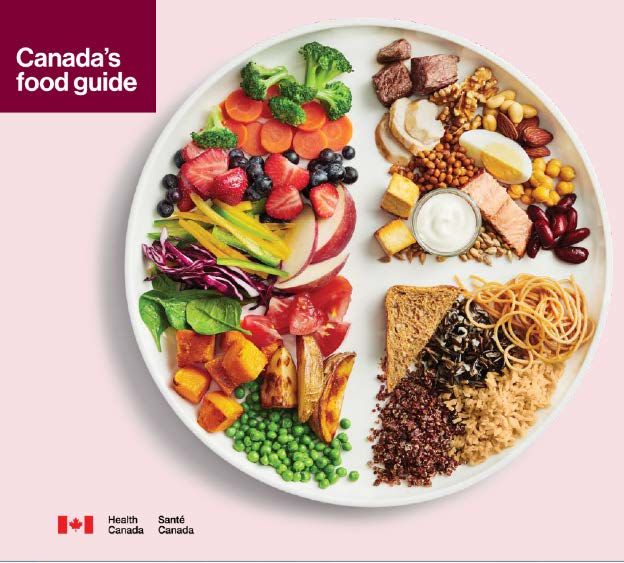
Openness & Transparency
• On October 24th, 2016 the Minister of Health announced a new approach
  regarding transparency of stakeholder communications for healthy eating
  initiatives.

• All meetings and correspondence in which views, opinions, information
  and requests for information are relayed with the intent to inform
  development of policies will be published on a searchable / sortable table
  on the Canada.ca website, including the name of the organization as well
  as the topics and purpose of discussion.

• Exemption: formal submissions of
  feedback on policy proposals during
  consultation periods.

                                                                               3 3
Canada’s Food Guide at a Glance
• The new Food Guide is an online suite of resources that better meets
  the needs of different users including the general public, policy makers,
  and health professionals. Highlights include:

    • Actionable advice for Canadians on healthy food choices and healthy eating
      habits including cooking more often and being mindful of eating habits.

    • Updated recommendations on saturated fat, sodium, and sugars including
      guidance on confectioneries and sugary drinks such as soft drinks,
      sweetened milk and juice.

    • Mobile-responsive web content to support Canadians
      to eat healthy whenever, and wherever they go.

                                                                                   4
                                                                                       4
Why the Food Guide matters to
          Canadians?
• Integrated widely by governments and stakeholders into
  nutrition policies, programs, and resources.

• Taught in schools and promoted by health professionals
  when supporting Canadians to eat well.

• Can help influence the foods served and sold in Canada’s
  public institutions from day cares and schools, to long-
  term care facilities, as well as the foods Canadians
  choose for themselves and their families.

                                                             5
Solid Evidence

• The best available evidence was considered, including:

   • only high-quality scientific reports on food and
     health from respected authorities including
     systematic reviews on over 100 food-related topics
   • over 400 convincing conclusions

• The Evidence Review for Dietary Guidance 2015 and
  the Food, Nutrients and Health: Interim Evidence
  Update 2018, form the foundation of the new Food
  Guide.

• Industry-commissioned reports were excluded to
  reduce the potential for, or the perception of, conflict
  of interest.

                                                             6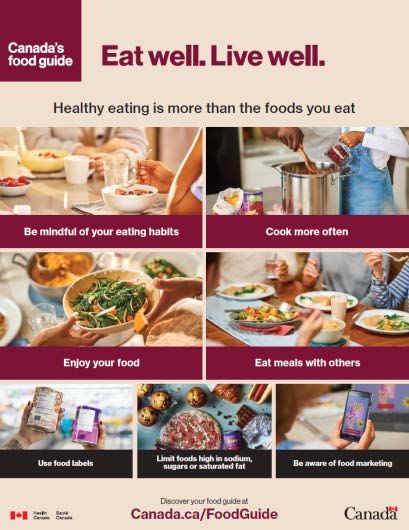
Resources

• Canada’s Dietary Guidelines for
  Health Professionals and Policy
  Makers
• Food Guide snapshot
• Videos, recipes and actionable
  advice
• Evidence including the Evidence
  Review for Dietary Guidance 2015
  and the Food, Nutrients and Health:   Canada.ca/FoodGuide
  Interim Evidence Update 2018

                                                              7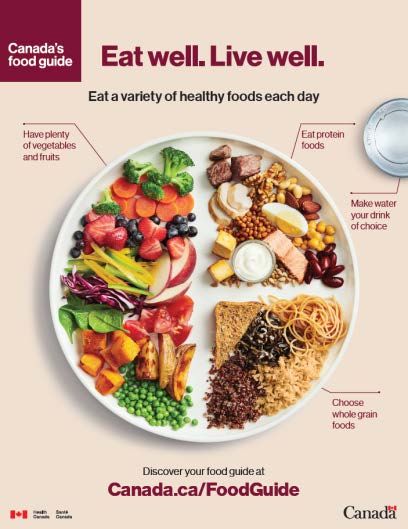
Canada’s Dietary Guidelines
• For Health Professionals and Policy Makers
• For use when developing policies, programs,
  and educational resources.
• Forms the foundation for the Food Guide
  resources.
• Provides guidance on:
    • Nutritious foods and beverages that are
       the foundation for healthy eating
    • Foods and beverages that can have a
       negative impact on health when
       consumed on a regular basis
    • Food skills as a practical way to support
       healthy eating
    • Supportive environments for healthy
       eating

                                                  8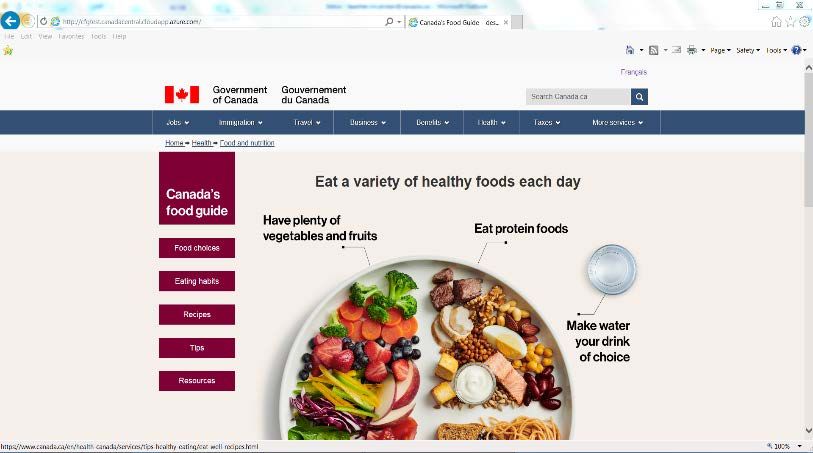
Guideline 1: Foundation for healthy eating
Vegetables, fruit, whole grains, and protein foods should be consumed regularly.
Among protein foods, consume plant-based more often.
Why? Patterns of eating that emphasize plant-based foods typically result in higher intakes of vegetables
and fruit, nuts, soy protein, and fibre; and lower intake of processed meats and foods that contain mostly
saturated fat.
Eating more vegetables and fruit is linked to a lower risk of cardiovascular disease.
Eating more nuts or soy protein is linked to improved blood lipid levels.
Higher fibre intake is linked to improved blood lipid levels and a lower risk of cardiovascular disease,
colon cancer, and type 2 diabetes.
Processed meat has been linked to colorectal cancer and foods that contain mostly saturated fat are
linked to unfavourable blood lipid levels and a higher risk of type 2 diabetes.
Protein foods include legumes, nuts, seeds, tofu, fortified soy beverage, fish, shellfish, eggs, poultry, lean red
meat including wild game, lower fat milk, lower fat yogurts, lower fat kefir, and cheeses lower in fat and
sodium.
9
Guideline 1: Foundation for healthy eating

Foods that contain mostly unsaturated fat should replace foods that contain mostly
saturated fat.
Why? Cardiovascular disease is one of the leading causes of death in Canada.

Water should be the beverage of choice.
Why? Water supports health and promotes hydration without adding calories to the diet.

                                                                                         10
Guideline 2: Foods and beverages that
undermine healthy eating
Processed or prepared foods and beverages that contribute to excess sodium, free
sugars, or saturated fat undermine healthy eating and should not be consumed
regularly.
Why? Canadians are purchasing more highly processed foods.
Considerations
There are health risks associated with alcohol consumption.
Why? Alcoholic beverages can contribute a lot of calories to the diet with little to no nutritive value.
They also increase the risk of developing chronic disease.
Foods and beverages offered in publically funded
institutions should align with Canada’s Dietary Guidelines.
Why? Offering healthier options and limiting the availability of
highly processed foods and beverages, such as sugary drinks and
confectioneries, creates supportive environments for healthy
eating.
11Guideline 3: Importance of food skills
Cooking and food preparation using nutritious foods should be promoted as a practical
way to support healthy eating.
Why? There has been a shift from cooking meals with basic ingredients towards use of highly processed
products, which requires fewer or different skills.
Food labels should be promoted as a tool to help Canadians make informed food choices.
Why? Food labels can help Canadians make informed food choices in various settings, such as grocery
stores.
12Food Guide Snapshot
• For Canadians
• At-a-glance presentation of
food choices and eating
habits.
• An interactive, mobile-
responsive online resource
that is also printer-friendly.
• Online entry point to
Canada’s healthy eating
recommendations.
13Healthy Eating Recommendations
• Make it a habit to eat a variety of healthy foods each day.
• Eat plenty of vegetables and fruits, whole grain foods and protein foods.
Choose protein foods that come from plants more often.
• Choose foods with healthy fats instead of saturated fat.
• Limit highly processed foods. If you choose these foods, eat them less
often and in small amounts.
• Prepare meals and snacks using ingredients that have little to no
added sodium, sugars or saturated fat.
• Choose healthier menu options when eating out.
• Make water your drink of choice.
• Replace sugary drinks with water.
• Use food labels.
• Be aware that food marketing can influence your choices.
14Healthy Eating Recommendations
• Healthy eating is more than the foods you eat. It is also
about where, when, why and how you eat.
• Be mindful of your eating habits.
• Take time to eat.
• Notice when you are hungry and when you are full.
• Cook more often.
• Plan what you eat.
• Involve others in planning and preparing meals.
• Enjoy your food.
• Culture and food tradition can be a part of healthy
eating.
• Eat meal with others.
15Restrict Advertising to Children of Foods that
meet Certain Nutrient Criteria
Government of Canada commitment on food in health (2015)
• Introduce new prohibitions on the advertising of certain foods and beverages that
meet nutrient criteria for advertising restrictions, similar to those in place in
Quebec.
• Key element of the Healthy Eating Strategy.
Bill introduced in Parliament - September 2016
• Senator Greene Raine introduced Bill S-228 – the Child Health Protection Act – in
the Senate.
• Aims to protect children’s health by prohibiting the advertising of certain foods
and beverages that meet nutrient criteria for advertising restrictions to
children under 13.
Broad Public Consultation (Summer 2017)
• 1,146 submissions from consumers, health professionals, food industry, advertising
sector, sport and non-governmental organizations.
• Input from all the above stakeholders helped inform the Government’s approach.
• Update on policy direction published on May 8, 2018 + webinar with stakeholders. 16Development of Health Canada’s Proposed
Policy Approach for Restricting Advertising to
Children
Determine if an advertisement is primarily directed
at children INFORMED BY:
Consultation
Set out the nutrient criteria for foods that would be feedback
Expert advice
subject to advertising restrictions
The latest
scientific
Define exemptions such as children’s sporting evidence
activities
Where applicable, Quebec’s model helped inform
Health Canada’s proposal
17
18Determining Advertising Directed at Children
• The impact of advertising to children is a result of both exposure to
unhealthy food ads and the power of the techniques used.
• The proposed approach addresses both by considering the context of
the ad’s presentation, in particular, the following three factors:
PROPOSED APPROACH
1) The setting of the advertisement (include places, events or
activities);
2) The medium used to deliver the advertisement (includes
Internet, TV, films, radio, print, websites and digital
applications); and
3) The message, design, characteristics and techniques of the
advertisement (includes a wide range of powerful and
influential mechanisms and tactics)
18
18Foods that would not be allowed to be
advertised to children
Health Canada is proposing the following criteria to determine if a food
would be subject to advertising restrictions:
PROPOSED APPROACH
• food with added sodium and where the total sodium exceeds thresholds2, or
• food with added fat and where the total saturated fat exceeds thresholds2, or
• food with free sugars1 and where the total sugars exceeds thresholds2
1 Freesugars include sugars, except those naturally present in whole or cut fruits; whole or cut
vegetables; dairy products; grains; legumes; or nuts and seeds.
2 Proposed thresholds equivalent to the thresholds for the nutrient content claims “low in sodium”,
“low in saturated fatty acids”, and “low in sugars”.
18
19Sponsorship of Children’s Sporting Activities
Health Canada proposes to exempt, subject to conditions, children’s
sport sponsorship.
For many Canadian families, access to and participation in sports is an
important part of maintaining an active lifestyle.
PROPOSED APPROACH
Conditions of exemption would include:
• Cannot depict food that meets the nutrient criteria for advertising
restrictions;
• Cannot depict or use child-directed characters, animals, creatures,
mascots or celebrities;
• Cannot offer voucher or coupon for free or discount food that meets
the nutrient criteria for advertising restrictions;
20
18Advertising to Children: Next Steps
• Refine policy approach and regulatory proposal based on further evidence
development and what we are hearing through consultations with
stakeholder groups.
• Royal assent of Bill S-228.
• Seek feedback on detailed regulatory proposal through Canada Gazette,
Part I.
• Monitoring will be a critical element for the successful implementation of
marketing regulations.
21Current Nutrition Information:
Useful but has Limitations
Mandatory
Voluntary Nutrition
Nutrient Facts table
Content & • Location on
Health Claims side/back limits
visibility when
• Highlights positive consumers are
attributes of a food making choices
• Used as marketing • Complexity makes
tool it difficult for
some consumers
to understand
• Amount of detail
can overwhelm
some consumers
Front-of-package labelling will complement existing nutrition information 18
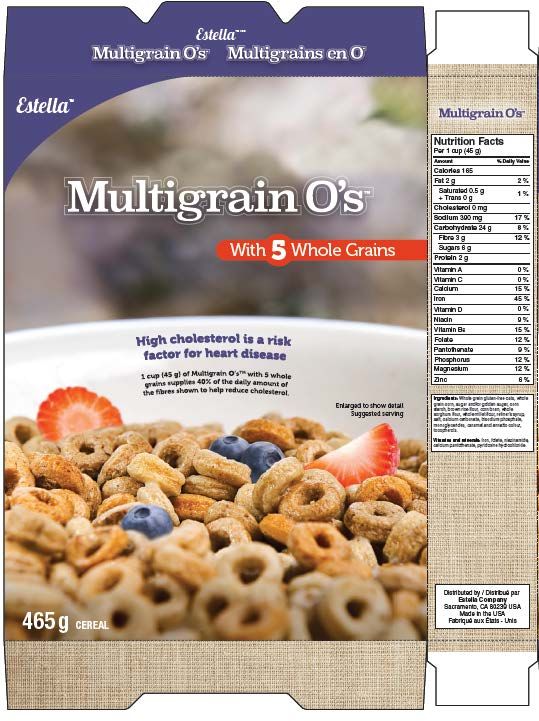
22Front-of-Package Labelling: a quick and easy tool
that will change grocery shopping experience
• Proposed regulations would require mandatory front-of-package nutrition symbol on
foods high in sodium, sugars or saturated fat.
• Received approximately 16,000 responses from Canadians on the design of the proposed
front-of-package nutrition symbol; ~7800 comments on proposed regulations (222 unique
submissions).
• These responses as well as consumer research informed the final regulatory proposal.
Publish final regulations in Canada Gazette, Part II in the near future
18
23Banning Partially Hydrogenated
Oils: Trans Fat recent action
• Published a Notice of Modification in September 2017 to
prohibit the use of PHOs in foods by adding them to Part 1 of
the List of Contaminants and Other Adulterating Substances in
Foods.
• New prohibition took effect in September 2018.
24Sodium Reduction in Processed Foods
For example: For example:
• Cottage cheese • Dry cured and
• Bacon bits fermented deli
• Tomato paste meats
• Toddler mixed • Refrigerated and
dishes frozen appetizers
and entrees (>170 g)
• Frozen potatoes
For example:
• Cookies For example:
• Ready-to-eat • Breads
cereals • Crackers
• Vegetable juices • Hot instant cereals
• Canned vegetables
The targets were designed to impact the and legumes
most popular foods within a category and
to have the greatest influence on
Canadians’ sodium intakes. 25Sodium Intake of Canadians in 2017:
Overall Results
• The average daily sodium intake of Canadians is 2760mg, which is
higher than the established goal of 2300mg per day.
• Sodium reduction in processed foods contributed an 8% reduction
in intakes.
26Sodium Intake of Canadians in 2017:
Overall Results
27Sodium in Restaurant and Foodservice
Sectors
• Canadians are eating out more frequently, and when they do,
they consume more sodium from foods prepared in restaurants
and foodservices settings.
• Health Canada held a targeted online survey from September 20
to November 20, 2017 to collect information on sodium reduction
in the foodservices sector.
Next steps
• Work towards establishing new/updated targets for
restaurants and pre-packaged foods and monitor progress.
28The Healthy Eating Strategy was launched October 2016
Vision: Make the healthier choice the easier choice for all Canadians
Collaboration with other federal initiatives such as A Food Policy for Canada
Better nutrition Improve food Protect vulnerable Improve food
information quality populations access &
availability
Revise Food Guide Reduce Sodium
in Food Restrict Marketing of
Improve Food Labels Unhealthy Food & Expand and update
Prohibit Industrial Nutrition North
Front-of-Package Beverages to Children
Trans Fat Canada
Labelling
Meaningful impacts on long-term health outcomes for Canadians
Mutually-reinforcing initiatives developed using strong evidence
and meaningful, open, and transparent consultations
18 29Thank You!
You can also read


