HEART DISEASE FO RUM 19 JUNE 2019, SYD NEY
←
→
Page content transcription
If your browser does not render page correctly, please read the page content below
WOMEN &
HEAR T D I S E A S E
           FORUM
 19 J U N E 2019, SY D N E Y

  Major supporters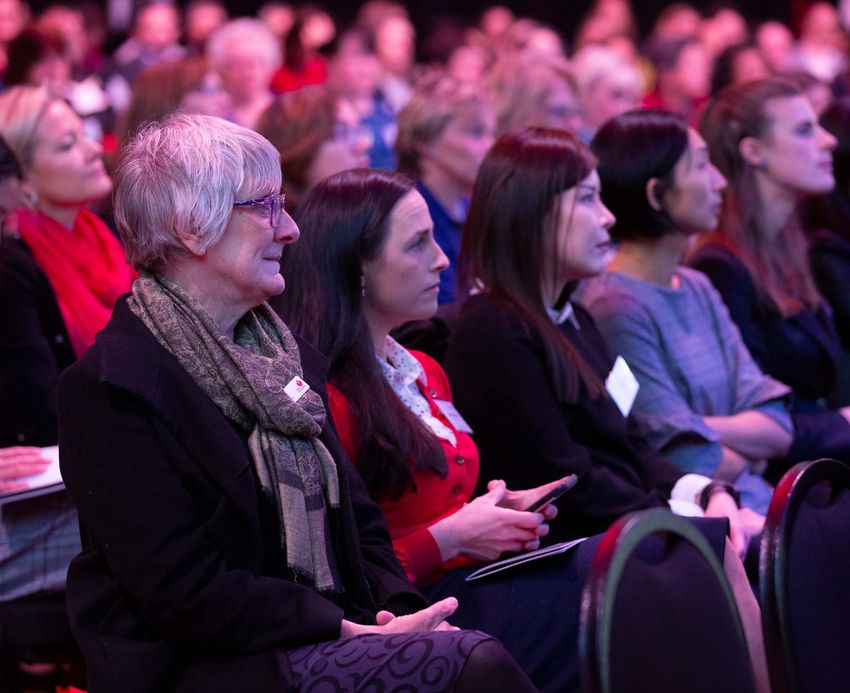
For heart information and support,
    call our Helpline on 13 11 12 or visit
    heartfoundation.org.au

    Suggested citation :
    National Heart Foundation of Australia. Title : The Women and Heart Disease Forum 2019 Report:
    National Heart Foundation of Australia 2019

    © 2019 National Heart Foundation of Australia, ABN 98 008 419 761 (Heart Foundation)

    Terms of use: This material has been developed for information and educational purposes only. It does not constitute
    medical advice.
    Please consult your health care provider if you have, or suspect you have, a health problem. The information contained
    in this material has been independently researched and developed by the Heart Foundation and is based on the
    available scientific evidence at the time of writing. It is not an endorsement of any organisation, product or service.
    The Heart Foundation and its employees do not accept any liability, including for any loss or damage, resulting from the
    reliance on the content, or in regards to its accuracy, currency and completeness. Any use of Heart Foundation material
    by another person or organisation is done at the user’s own risk.
    This work, except as identified below, is licensed by the Heart Foundation under a Creative Commons Attribution –
    Non commercial – No Derivative Works (CC BY-NC-ND) 4.0 Australia licence. To view a copy of this licence, visit: http://
    creativecommons.org.au/. You are free to copy and communicate this publication (however in no way commercialise
    the material), in accordance with the rules of attribution set out at https://creativecommons.org.au/learn/howto/.
    Third party material that is not licenced under a Creative Commons licence may be referenced within this document.
    All content not licensed under a Creative Commons licence is all rights reserved. Please contact the relevant third-party
    copyright owner if you wish to use this material.

    The Heart Foundation acknowledges the Traditional Owners and custodians of Country throughout Australia and their continuing
    connection to land, waters and community. We pay our respect to them and their cultures, and Elders past, present and future.

      WOMEN & HEART DISEASE FORUM 2019
2
CO N T E N T S
Introduction 4
Objectives 4
The day 5
Progress on actions 5
Delegates involvement 6
Identified issues 7
Conclusion 8
Heart disease in women
Thank you 9
is not just a women’s issue.
It is a societal problem Appendices 10
Forum attendee
Key Note speaker Professor Robyn Norton AO
WOMEN & HEART DISEASE FORUM 2019
3
The Honourble Bronnie Taylor MP
NSW Minister for Women opening
INTRODUCTION the 2019 forum
In June 2019 the Heart Foundation, in collaboration
with the George Institute for Global Health, held a
one-day forum to showcase emerging research and
clinical advances in the prevention, treatment and
management of heart disease among women.
Multidisciplinary in focus, this followed the Heart
Foundation’s inaugural Women and Heart Disease
Forum held in June 2017, where five priorities for
action were identified. Namely to:
1. Advocate for a federally funded national
campaign to raise awareness of heart disease in
women;
2. Facilitate health system changes and sustainable
programs to better support women in relation
to the prevention, treatment and management
of heart disease, including those with vascular
complications in pregnancy;
3. Promote greater investment in gender specific
research;
4. Ensure future clinical guidelines address sex and
gender related issues; and
5. Review relevant undergraduate and post
graduate education and training for medical
and nursing staff and insert gender related CVD
issues into the curriculumi.
OBJECTIVES
In holding the 2019 forum our objectives were to:
Report on the progress made on the above
priorities over the last 2 years;
Shine a greater light on the impact of sex and
gender on heart disease;
Showcase programs and initiatives that have
recognised a life course approach to women’s
heart health; and
Agree on our next set of priorities.
WOMEN & HEART DISEASE FORUM 2019
4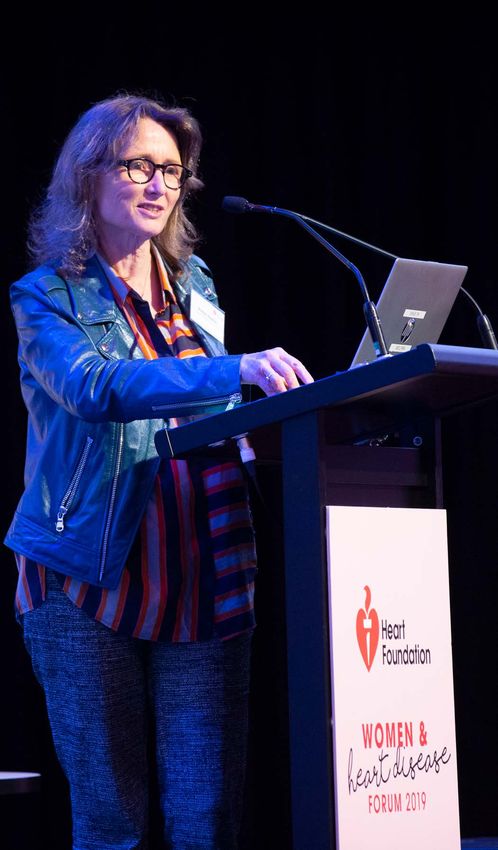
THE DAY
The Program
In developing the program, we consciously sought to provide sessions on women’s heart health from a range of
perspectives. This included clinicians, researchers, community health professionals and women themselves. For a
copy of the program please see Appendix 1. To watch individual presentations, from the Forum please visit the Heart
Foundation website and click here
www.heartfoundation.org.au/for-professionals/clinical-information/women-and-heart-disease
We were fortunate in having the Hon. Bronnie Taylor MLC, NSW Minister for Mental Health, Regional Youth and
Women, officially open the event, with her account of having been a Breast Care Nurse in the Illawarra for many
years and thus knowing the needs to continually advocate for women’s health in rural and regional areas of
Australia.
It was also a pleasure to have Professor Robyn Norton AO, Principal Director of the George Institute give the keynote
presentation on why disaggregated analysis of sex and gender in cardiovascular research and practice across the
life course is so essential to our understanding of heart disease in women, both locally and globally.
Participants
Over 260 delegates registered for the day, with representatives from Nursing (36%), Research (24%), Cardiology
(12%) and General Practice (6%). See Appendix 2 for a full breakdown by profession and the organisations they
represented. This was a significant increase on the 170 delegates who attended the 2017 forum and there were
many comments made that with more publicity, the forum could have been run on a larger scale and held over 2
days – such is the interest in the topic.
PROGRESS ON ACTIONS SINCE THE
WOMEN AND HEART DISEASE FORUM IN JUNE 2017
The Forum commenced with a reflection on how far we had progressed on actions taken over the last two years.
Delegates heard that the NSW branded campaign #womenshearts; Making the invisible Visible had resonated well
with the 3 target groups in mind; women, clinicians and researchers, describing in 7 simple words the essence of
what we are collectively trying to do. Its success had also formed the basis of an advocacy strategy to the federal
government, under the National Women’s Health Strategy 2020-2030 to fund a national women and cardiovascular
disease (CVD) campaign.
Secondly, they heard how elements of the NSW Women and Heart Disease Equity Program had been scaled to a
national approach under the Heart Foundation’s national One Heart Strategy 2018-2020 and that the community
grants made available under the NSW program had strengthened community ownership of this issue locally and
resulted in initiatives and programs that were being showcased as part of the 2019 forum.
In terms of impact on clinicians, researchers and health practice, delegates heard that:
the NSW Hearts and Heels female cardiology roundtable had inspired other clinicians around the country to
establish a female cardiology network in their jurisdiction, such as VicWIC in Victoria;
the two awarded Women and Heart Disease research grants in NSW (2016 and 2017) had resulted in an
overwhelming number of applications for both rounds and had inspired other CVD researchers to look more
closely at this issue within their own sphere of work;
That work nationally and internationally on the potential risk of vascular complications in pregnancy was now
recognised and reflected in specific resources for women and for GP’s and being made available through
Health pathways and other networks, and
The Australian Institute of Health and Welfare (AIHW) had updated its inaugural 2010 Report on the profile of
Cardiovascular Disease in Australian Women and would be releasing key findings as part of the forumii.
WOMEN & HEART DISEASE FORUM 2019
5
DELEGATE’S INVOLVEMENT IN PRIORITY
SETTING FOR 2019
One of the key objectives of this Forum was to identify a set of priority
actions to inform future planning. Formally delegates were asked to identify
what they considered their first, second and third priorities to improve heart
health among women as part of their evaluation form. See Appendix 3
for a summary of their responses. But calls for action were also made
by experts in the field and in the discussion that followed some of the
presentations.
To begin with there were several issues that were consistently identified as
key contributors to disparities in care and poor outcomes observed among
women with heart disease.
These included:
1. Poorly understood pathophysiology frequently observed in women eg.
Myocardial infarction with non-obstructive coronary arteries (MINOCA,)
Atherosclerosis, Spontaneous Coronary Artery Dissection (SCAD), and
Heart Failure with preserved Ejection Fraction (HFpEF).
2. Low levels of personal awareness of heart disease in women and the
competing priorities that many women must attend to.
3. Lack of awareness/bias at a physician level of sex-specific factors in
clinical presentation and management.
4. Lack of acknowledgement/understanding of and response to sex-
specific CVD risk factors.
5. A paucity of gender disaggregated analyses in research studies
and inadequate female representation in preclinical and clinical
cardiovascular research.
Responders were keen to emphasise that these should not be seen
as isolated issues as they are interrelated in many ways and that an
overarching comprehensive approach to address each area is the most
effective way to improve the prevention, treatment and management of
heart disease in Australian women.
However, to guide health policy responses, key issues and actions to
address these issues have been grouped under the following four
headings:
Research
Implementation of evidence-based practice
Public awareness/education
Equity
We have the data to identify the
discrepancies in women’s health, but we
need to incorporate this into practice
WOMEN & HEART DISEASE FORUM 2019
6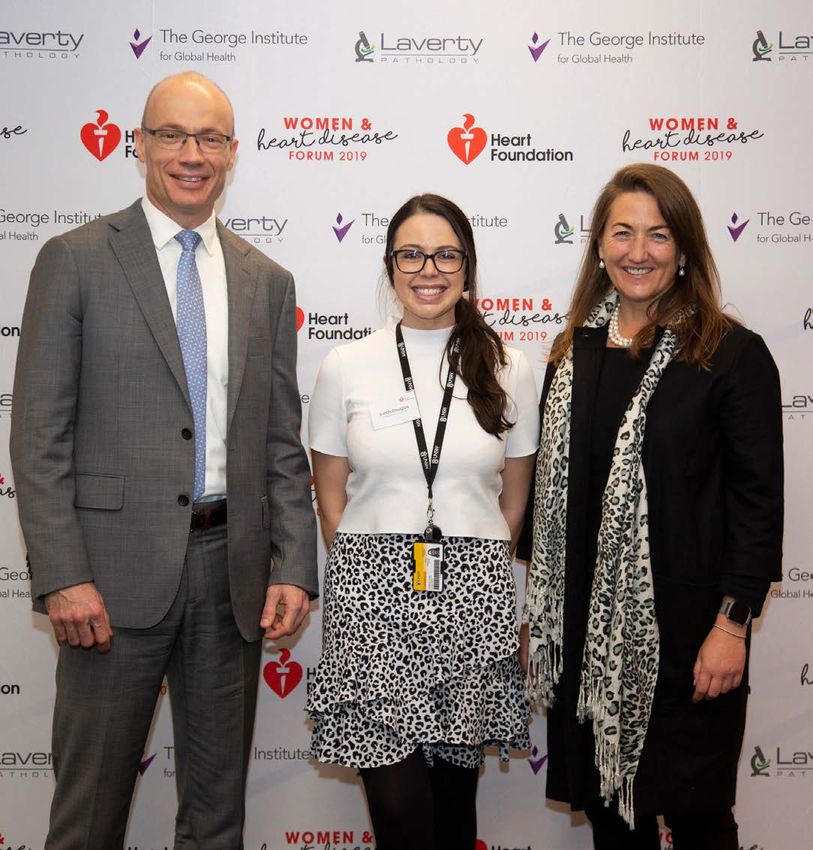
IDENTIFIED ISSUES AND PRIORITIES
FOR ACTIONS
1. RESEARCH
Identified issues:
Poorly understood pathophysiology eg. MINOCA, SCAD, atherosclerosis, HFpEF;
Paucity of gender disaggregated analyses, lack of female representation in preclinical and
clinical cardiovascular disease (CVD) research; and
Less adherence to guideline-based care for women.
Priority ACTIONS:
1. Ensure requirements for sex and gender analysis be a mandatory requirement for CVD
research funding and publication.
2. Enhance efforts to discover and apply new blood, and imaging markers [eg. mammography,
coronary calcification] of subclinical disease and risk relevant to women.
3. Enhance fundamental biological research to unravel sex-specific differences in
cardiovascular signalling and pathophysiology that may point to new therapies and
strategies of prevention.
4. Establish a national network of multi-disciplinary women’s cardiovascular health clinics, for
coordinated efforts aimed at examining the potential benefits of using non-traditional risk
factors such as pregnancy events, to risk stratify and alter management in women, and to
specifically care and study women who have suffered heart disease or stroke.
5. Investigate reasons why gender disparities continue for in-hospital and post discharge CVD
care.
2. IMPLEMENTATION OF EVIDENCE-BASED PRACTICE
Identified issues:
Lack of awareness/bias at a physician level of sex-specific factors in clinical presentation,
course and management; and
Lack of acknowledgement/understanding of and response to sex-specific CVD risk factors.
Priority ACTIONS:
1. Improve adherence to current clinical guideline recommendations.
2. Increase commitment to ensuring future Australian clinical guidelines (Absolute Risk,
Hypertension, Heart Failure) take into account the impact of sex and gender in their
recommendations, through.
a) Review of existing guidelines based on sex-specific data from meta analyses.
b) Addition of gender-specific CV risk factors to current guidelines and CV risk assessment.
3. More investment in inclusion of sex and gender in undergraduate, post-graduate, fellowship
training and above.
4. Expand strategies that use a multidisciplinary, life course approach to identify women at
risk as they engage with the health system through Obstetrics & Gynaecology, Oncology,
Endocrinology & Women’s Health). Priorities include care for women who experience
vascular conditions of pregnancy.
5. Greater support for improving gender equity in the cardiology profession in Australia.
WOMEN & HEART DISEASE FORUM 2019
7
3. PUBLIC AWARENESS-RAISING
Identified issues:
Low levels of awareness & competing priorities among women
Priority ACTIONS:
1. Greater advocacy for implementation of a national women and CVD campaign as stated in the National
Women’s Health Strategy 2020-2030.
2. Expand NSW Community Grant Program into other jurisdictions to improve community engagement with high risk
populations.
4. EQUITY
Identified issues:
Low levels of awareness & competing priorities among women.
Lack of awareness/bias at a physician level
Lack of acknowledgement/understanding of and response to sex-specific CVD risk factors
Priority ACTIONS:
1. Greater commitment and action to close the gap on Aboriginal and Torres Strait Islander women’s heart health.
2. Continued attention paid to the elimination of Rheumatic Heart Disease and acknowledgement of the impact of
this condition on childbearing for Aboriginal & Torres Strait Islander women.
3. Expand NSW Community Grant Program into other jurisdictions to improve community engagement with high risk
populations.
CONCLUSION
In the time between 2017 and 2019 we have seen interest in women and heart disease escalate, both nationally
and internationally. It is a program priority for most state, national and international heart health organisations and
research institutes, and it is a subject of lively debate on twitter and other forms of social media.
In terms of next steps, the Heart Foundation commits to holding another forum in 2 years eg in 2021. We will continue
to advocate for the 4 priorities articulated at this forum (research; implementation of evidence-based practice;
public awareness raising and equity) and encourage you to do the same. We will work with others in responding
to the Federal Minister for Health’s public request to work with CVD researchers to identify research priorities to help
improve women’s diagnosis and care in acute medical settingsiii. We will also look to strengthen our relationships
with women’s health organisations more generally to ensure our messages are integrated into a more holistic
approach to women’s health across the life course.
If you were unable to attend the 2019 forum or would like to see presentations from concurrent sessions you were
unable to attend, please view these presentations on
our website.
www.heartfoundation.org.au/for-professionals/clinical-information/women-and-heart-disease
Otherwise we wish you well in your efforts to ‘make the invisible visible’.
WOMEN & HEART DISEASE FORUM 2019
8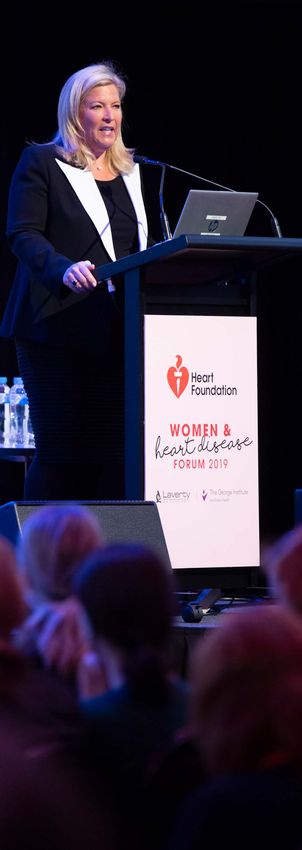
THANK YOU
On behalf of the Heart Foundation I would like to extend our
appreciation to the following:
OUR COLLABORATOR: The George institute for Global Health
for their energy and support in helping us stage this event.
OUR SPONSORS: Major sponsor, Laverty Pathology for their
kind support and UNSW medicine for their session support.
THE HEART FOUNDATION DONORS AND SUPPORTERS: Our
donors and supporters who have enabled the NSW Women
& Heart Disease Program 2015-2018 to be rolled out as a
comprehensive program working with community, clinical
and research partners and helped light the spark that has
become a movement.
THE HEART COLLECTIVE: who are an inspirational group of
women living with heart disease who support this cause
with passion, advocacy, commitment and generosity. It’s
been their stories that have been an inspiration to much of
what we have done. Thank you for sharing your personal
experiences and stories and helping other women feel not
so alone.
MEMBERS OF THE HEARTS AND HEELS CARDIOLOGY
ROUNTABLE: Female cardiologists who belong to this group
helped us shape the 2019 program and gave their time
willingly to present and chair various sessions throughout the
day. It was invaluable. Thank you in particular to A/Professor
Lynne Pressley for her guidance and generosity.
FORUM PRESENTERS: There were many presenters from a
range of disciplines we reached out to both in NSW and
in other jurisdictions such as Queensland, Victoria, South
Australia, ACT and Northern Territory. Thank you for your time
and willingness to share your expertise.
THE HEART FOUNDATION TEAM: Thank you to all of the Heart
Foundation staff who contributed to making this Forum
happen. Special thanks is extended to Angela Hehir, Women
& Heart Disease Manager, along with the Event team Jayne
Farley, and Celeste Ambalong, who made the day the
success that it was.
Julie Anne Mitchell
Director of Prevention
August 2019
This was one of the most
rewarding conferences
I have attended WOMEN & HEART DISEASE FORUM 2019
9
Forum attendee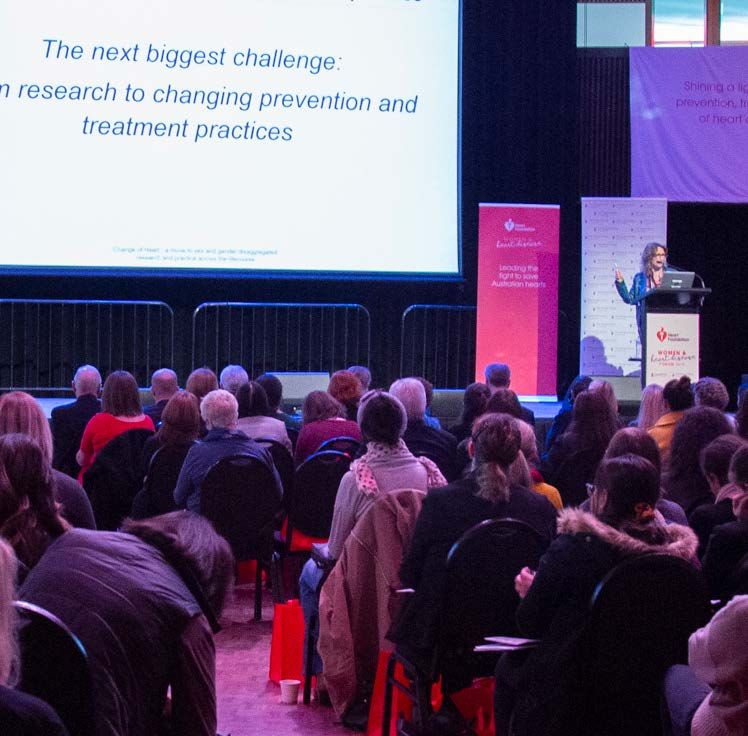
APPENDIX 1:
1. Program for The Day
CONCURRENT SESSION 1 – DELEGATES TO SELECT ONE OUT OF THE THREE LISTED
11.40 – 12.40
HYPERTENSION IN PREGNANCY – THE IMPACT ON HEART HEALTH • Chair: Dr Clare
WOMEN &
HEART DISEASE
Arnott
This session sponsored by The University of New South Wales
Introduction by Jonathan Pheasant; UNSW Medicine Faculty Executive Director
The P4 & BP2 Study into reducing women’s risk post preeclampsia
F O R U M 2 019 Dr Amanda Henry; Senior Lecturer, School of Women’s and Children’s Health, UNSW, Senior Research Fellow, Global
Women’s Health Program, The George Institute
J U N E 19 , 2 019 | 9 A M - 5 P M Impacts of preeclampsia on the long-term health of mothers and their children
A/Prof Vincent Lee; Renal Physician, Westmead Hospital
The COFFEE clinic: cardiovascular assessment after obstetric complications - follow up education and evaluation
A/Prof Margaret Arstall; Director of Cardiology, NALHN, Associate Professor, University of Adelaide
Major supporters
Supporting women with preeclampsia to reduce their risk through healthy lifestyle change
Dr Melinda Hutchesson; Senior Lecturer (Nutrition and Dietetics) University of Newcastle
ASK THE EXPERTS PANEL
PROGRAMME
POPULATIONS OF WOMEN AT RISK • Chair: Dr Marcus Ilton
9.00 - 9.15 Welcome Rheumatic Heart Disease
Sophie Scott, National Medical Reporter, ABC Dr Marcus Ilton; Interventional Cardiologist, Darwin Private Hospital
Official opening Cardiovascular Disease: Protective and risk factors for Aboriginal women
The Hon. Bronnie Taylor MLC, NSW Minister for Mental Health, Regional Youth and Women Katharine McBride; Research Officer, SAHMRI
Welcome to Country HeartSmart – Prevention and awareness for Women from CALD communities
Ms Yvonne Weldon Sharda Jogia; Senior Women’s Health Promotion Program Manager, SWSLHD
9:15 – 9:30 Women & Heart Disease Healthy hearts for women in custody
Julie Anne Mitchell; Director of Prevention, Heart Foundation Shani Prosser; Manager Health Advancement, Justice Health and Forensic Mental Health Network
Sophia Malie and Doris Williams; Tharawal Aboriginal Corporation
Michelle Hampton; Founder Magnum & Co Rural and remote issues: distance and the heart – a film project of women’s stories
Nerida Colley; Health Promotion Projects Officer, Lismore Women’s Health and Resource Centre
9.30 - 9.55 KEYNOTE PRESENTATION:
ASK THE EXPERTS PANEL
Change of Heart: a move to sex and gender disaggregated cardiovascular research and practice
across the life-course
Prof Robyn Norton AO; Principal Director, The George Institute for Global Health
HEART DISEASE IN WOMEN – WHAT DOES IT LOOK LIKE & HOW IS IT DIFFERENT
• Chair: Dr Elizabeth Shaw
PLENARY SESSION 1
Presentation and diagnosis of ACS in the ED: Are Women really that different to men?
THE FEMALE PATTERN OF CORONARY HEART DISEASE – WHAT DOES THIS LOOK LIKE AND HOW DO WE TREAT IT? Prof Louise Cullen; Pre-Eminent Staff Specialist Emergency and Trauma Centre,
Royal Brisbane and Women’s Hospital
10.00 - 10.15 Heart disease in women: from diagnosis to treatment to outcomes Sex differences in Acute Coronary Syndromes
Dr Clare Arnott; Cardiologist, Royal Prince Alfred Hospital, Dr Sarah Zaman; Interventional and Consultant Cardiologist, MonashHeart and Monash University
Senior Research Fellow, Cardiovascular Division, The George Institute
Sex difference in heart failure risk factors and phenotype: what we know and the implications for women
10.15 - 10.30 Treatment of MI in women – why is it different and what is the impact? Dr Anna Beale; Cardiology Advanced Trainee, Alfred Hospital and PhD candidate, Monash University/Baker
Prof Clara Chow; Professor of Medicine and Academic Director Heart and Diabetes Institute
Westmead Applied Research Centre, University of Sydney
Sex differences in inherited heart diseases and sudden cardiac death
10.30 - 10.45 Chest pain and normal angiography in women – could it be cardiac? A/Prof Jodie Ingles; Head, Clinical Cardiac Genetics Group, Centenary Institute
Prof John Beltrame; Head of Discipline of Medicine, Queen Elizabeth Hospital, Adelaide
Mapping coronary artery disease reveals fundamental gender differences
10.45 - 11.00 Sex and the myocardium - insights from cardiovascular magnetic resonance imaging Dr Susann Beier; Principle Investigator, Coronary Atlas UNSW
Prof Martin Ugander; Professor of Cardiac Imaging, Department of Cardiology,
Royal North Shore Hospital, University of Sydney ASK THE EXPERTS PANEL
11.00 – 11.10 Questions
Lunch: 12.40-1.20
Morning tea: 11.10-11.40 • Level 1 Lounge
PLENARY SESSION 2
CONCURRENT SESSION 2 - DELEGATES TO SELECT ONE OUT OF THE THREE LISTED
WOMEN & HEART DISEASE RESEARCH REPORTS
1.20 – 2.20 2.50 – 3.00 Women’s experiences of heart disease in pregnancy
Prof Liz Sullivan; Deputy Head, Faculty of Health and Medicine, University of Newcastle
HEART HEALTH ALONG THE LIFE COURSE • Chair: Dr Amanda Beech 3.00 – 3.10 Using big data to inform our understanding of heart disease in Australian women
Gestational Diabetes: A Red Flag Prof Emily Banks; Professor of Epidemiology, Australian National University
Dr Amanda Beech; Obstetric Medicine Physician & Endocrinologist, Staff Specialist Royal Hospital for Women and
CVD in Australian women – a snapshot of national statistics
3.10 – 3.20
Prince of Wales Hospital
Miriam Lum On; Cardiovascular, Diabetes and Kidney Unit, Health Group, Australian Institute of
The National Gestational Diabetes Register: overview, evaluation & next steps Health and Welfare (AIHW)
Dr Melinda Morrison; National Program Leader, NDSS Diabetes in Pregnancy Program
HEART DISEASE IN WOMEN & THE IMPACT OF GENDER
Polycystic Ovary Syndrome – the risk factor you may not have heard about
A/Prof Lisa Moran; Head, Healthy Lifestyle Research Program, Heart Foundation Future Leader Fellow, Accredited Matters of the heart and mind: how mental health impacts women’s heart health
3.25 – 3.35
Practising Dietitian; Monash Centre for Health Research & Implementation, School of Public Health & Preventive A/Prof Adrienne O’Neil; Director of Heart and Mind Research, Deakin University and Heart
Medicine, Monash University – in partnership with Monash Health Foundation Future Leader
Breastfeed to your heart’s content 3.35 – 3.45 Women in cardiology – why is this important?
Dr Binh Nguyen; Research Fellow, Prevention Research Collaboration, Sydney School of Public Health, Dr Sonya Burgess; Interventional cardiologist and consultant cardiologist,
University of Sydney Nepean Hospital and Sydney South West Hospital
Hormones and heart health across the life-course
Dr Anastasia Mihailidou; Senior Hospital Scientist, Cardiology Department, RNS and Head, 3.45 – 3.55 Break
Cardiovascular & Hormonal Research Laboratory, Kolling Institute
ASK THE EXPERTS PANEL 3.55 – 4.05 Sex and Gender Differences – why research is important
Dr Jenny Yu; Interventional Cardiologist, Prince of Wales Hospital
WOMEN’S ULTIMATE STRESS TESTS • Chair: Prof Gemma Figtree 4.05 – 4.15 My take-outs from the day
Pregnancy: Women’s ultimate stress test A/Prof Lynne Pressley AM; Chair, Heart Foundation Hearts and Heels Cardiology Roundtable
Prof Gemma Figtree; Prof in Medicine Uni of Sydney; Interventional Cardiologist Royal North Shore Hospital 4.15 – 4.45 EXPERT PANEL AND OPEN DISCUSSION:
Update on the final ROPAC [Registry of Pregnancy and Cardiac Disease] Facilitated by Sophie Scott, National Medical Reporter, ABC
Prof Will Parsonage; Senior Staff Cardiologist, Royal Brisbane & Women’s Hospital, Clinical Director AusHSI,
IHBI, Queensland University of Technology Prof Chris Semsarian AM; Chair, CSANZ Scientific Committee
Denele Crozier AM; CEO Women’s Health NSW
Advances in management of pregnancy in women with congenital disease
Leah DSouza; Patient Representative
Dr Rachael Cordina; Cardiologist, Royal Prince Alfred Hospital
Dr Linda Mann; GP, Young Parents Pregnancy Clinic, Royal Prince Alfred Hospital
Heart of the female athlete David Lloyd: CEO Jean Hailes Foundation
Dr Belinda Gray; Cardiologist at Royal Prince Alfred Hospital, NHMRC Early Career Fellow at University of Dr Melina Georgousakis; Founder, Franklin Women
Sydney Dr Sarah Zaman; Chair, Women in Cardiology
Spontaneous Coronary Artery Dissection 4.45 – 5.00 Summary of Priority Actions and Final Words
Dr Clare Arnott; Cardiologist, Royal Prince Alfred Hospital, Senior Research Fellow, Cardiovascular Division, Angela Hehir; Manager, Women & Heart Disease, Heart Foundation
The George Institute Prof Garry Jennings; Chief Medical Advisor, Heart Foundation
ASK THE EXPERTS PANEL Jo Dean; Heart Collective
HEALTH SYSTEM RESPONSES & BREAKING DOWN SILOS • Chair: Denele Crozier AM
5.00 – 6.00 POST FORUM NETWORKING DRINKS AND CANAPES
Women’s heart health: and the importance of a cross disciplinary approach
Annie Flint; Manager Women’s Health, Child Youth & Family, Southern NSW LHD and
Denele Crozier AM; CEO Women’s Health NSW
WOMEN &
T DISEASE
NSW Health: what the health system can do
HEAR
Dr Marianne Gale; Medical Advisor in the Office of the Chief Health Officer, NSW Ministry of Health
Women’s Health NSW – piloting a strategy to assess & manage cardiovascular risk For bookings - www.trybooking.com/462470
Debra Pittam; Principal Consultant Coach and Facilitator, Person Centred Leadership
Beyond the Health System to end RHD
Dr Rosemary Wyber; GP and Head of Strategy END RHD, PhD Student, Office of the Chief Scientist, F O R U M 2 019
The George Institute
Cancer and the Heart
Prof Liza Thomas; Conjoint Professor at Sydney University and University of NSW, Clinical Lead for non- invasive Major supporters Session supporter
cardiac imaging, Westmead Hospital
ASK THE EXPERTS PANEL
Afternoon tea: 2.20-2.50
WOMEN & HEART DISEASE FORUM 2019
10APPENDIX 2: Attendees
This was the breakdown by profession of those who attended on the day.
Listed below are the organisations they represented.
Delegates
3% 3%
4% Video
6% Research
6%
36% Cardiology
GP
6%
Health Promotion
Other Specialty
12% Consumer
Project Officer
24% Policy
HOSPITALS UNIVERSITIES
Albury Hospital, AWH Australian National University
Alfred Hospital, Melbourne Deakin University
Bankstown Hospital Flinders University
Bankstown-Lidcombe Hospital Macquarie University
Bowral and District Hospital Monash University
Cabrini Hospital/Victorian Heart & Lung Clinic The University of Sydney
Cardiac Rehab Sutherland Hospital University of Adelaide
Children’s Hospital Westmead University of Newcastle
Darwin Hospital University of Technology Sydney
Fiona Stanley Hospital University of Wollongong
Jessie McPherson Private Hospital University of NSW
Lake Macquarie Private Hospital Centenary Institute
Maitland Hospital Western Sydney University
North Shore Private Hospital Coronary Atlas - UNSW
Nepean Hospital
Prince of Wales Hospital PRIMARY HEALTH
Queen Elizabeth Hospital, Adelaide
RNS Hospital Barton Lane Practice
Royal Hospital for Women Tharawal Aboriginal Corp AMS
Royal Melbourne Hospital Balmain Community Pharmacy
Royal North Shore Hospital
Royal Prince Alfred Hospital CARDIOLOGY SERVICES
St George Private Hospital Capital Cardiac Centre, Canberra
St Vincent’s Private Hospital Mosman Cardiology
Sunshine Coast University Hospital Eastern Health, Bond Cardiology
Sutherland Hospital
Sydney Adventist Hospital
The Canberra Hospital PRIVATE ORGANISATIONS
The Queen Elizabeth Hospital Australian American Media
Westmead Hospital Laverty Pathology
LDS Consulting
Magnum & Co
Person Centred Leadership
WOMEN & HEART DISEASE FORUM 2019
11HEALTH DEPARTMENTS / SERVICES WOMEN’S HEALTH
Illawarra Shoalhaven Local Health District Bankstown Women’s Health Centre
Lower Hunter Community Health Franklin Women
Murrumbidgee Local Health District Her Heart
National Aboriginal Community Controlled Health Illawarra Women’s Health Centre
Organisation Jean Hailes for Women’s Health
Northern NSW Local Health District Lismore Women’s Health and Resource Centre
National Rural Health Alliance Liverpool Women’s Health centre
NSW Ministry of Health Penrith Women’s Health Centre
NSW Multicultural Health Communication Service School of Women’s and Children’s Health
Office for Health and Medical Research Women’s Health NSW
Office of Preventative Health Women’s Health, South Eastern Sydney LHD
SA Health
South East Sydney LHD COMMUNITY / NON-GOVERNMENT / PROFESSIONAL
South West Sydney LHD ORGANISATIONS
Sydney North Health Network
Health Clinical Academic Group CASS
Western Sydney Local Health District END RHD
Australian Institute of Health and Welfare Heart Foundation
Australian Centre for Heart Health Heart Research Institute
Bendigo Health Heart Research Institute
Central Adelaide Local Health Network Victor Chang Cardiac Research Institute
Central Coast Local Health District Young Hearts
Coffs Harbour Health Campus CSANZ
Commonwealth Department of Health
Department of Health
George Health Technologies
George Institute for Global Health
HNE Health
Justice Health
NSW Ambulance
Nepean Blue Mountains Local Health District
Central Adelaide Local Health Network
Diabetes NSW
SAHMRI
WOMEN & HEART DISEASE FORUM 2019
12Appendix 3: Evaluation
Attendees were invited to complete a feedback/evaluation form on the day or via Survey Monkey posy event.
A total of 92 completed surveys were received and responses are summarised below.
RESEARCH “There is an enormous gap in female cardiovascular research”
“Women are not adequately represented in the data”
“Sex and gender disaggregated research is important”
AWARENESS-RAISING CAMPAIGN “Teach women that they may experience different chest pain to men”
“Spread the word”
“Giving patients an awareness of gender and heart”
“Creating awareness of risk factors”
“Public awareness campaign”
IDENTIFICATION OF THOSE AT RISK “Continuing to raise awareness especially to pregnant women”
“Increase community awareness of the long-term CV risk of women after
a complicated pregnancy”
“Addition of pregnancy related risk factors into GP screening and checks”
“Higher risk in Aboriginal people and CALD community”
“Indigenous women have a very different view of heart health”
INHOSPITAL CARE “Low rates of referral for rehab and prescription of medication”
“Encourage women to attend cardiac rehab”
“Lower participating in cardiac rehab – unpack”
PROFESSIONAL DEVELOPMENT “How few cardiologists are female”
“Cardiology trainee gender disparity”
“Better training of GPs awareness of cardiac risk in women”
“Having more female doctors at the first point of contact for a woman
experiencing chest pain”
“Get more male cardiologists on the page”
“Engaging men would be great to see more at the forum”
EQUITY “Women are a high-risk group, especially Aboriginal and refugee
populations”
“Programs for populations of women at risk”
“Higher risk in Aboriginal people and CALD community”
“There is significant community interest in this area”
“There has been very little research with CALD and refugee women”
“Indigenous women have a very different view of heart health”
“Aboriginal model of health”
“Various strategies to engage and educate CALD communities”
General Feedback:
“We need to keep working to overcome the barriers women face everywhere!”
“This was one of the most rewarding conferences I have attended”
“We need to encourage more male doctors to be attending in order to reduce the gaps in women’s health”
“Heart disease in women is not just a women’s issue. It is a societal problem.”
“Having more female doctors at the first point of contact for a woman experiencing chest pain”
“We have the data to identify the discrepancies in women’s health, but we need to incorporate this into practice”
“Ensuring equitable access to services and supports”
“Excellent day – very thought provoking”
“Insightful and relevant”
“This seems to be gaining momentum and the hearts of the researchers”
“Lets expand the forum to 2 days and make it truly national in focus.”
WOMEN & HEART DISEASE FORUM 2019
13Evaluation
Responses from delegates to the evaluation questions
1. Change in Awareness About Impact of Sex and Gender:
% Aware of impact of sex and gender on the experience of heart disease
100
90
80
70
60
50
40
30
20
10
0
Very Aware Aware Not Very Aware Not Aware Unsure
Before Today After Today
2. Likelihood of considering sex and gender in future everyday practice:
% Likely to consider sex and gender in future practice
1% 3%
14%
82%
Very Likely Likely Unlikely Not applicable
3. Awareness of the major sponsor of the event
73% of survey respondents identified Laverty Pathology as the major sponsor for the event.
WOMEN & HEART DISEASE FORUM 2019
144. Survey respondents were asked to identify their first, second and third priorities to improve heart health among
women. Their responses are summarised below:
First Priority
RAISE AWARENESS 23.75%
NETWORKING 0%
MEN ENGAGEMENT 3.75%
INTERVENTION, PREVENTION 13.75%
GENDER-SPECIFIC RESEARCH 26.25%
FUNDING AND GUIDELINES 5%
COLLABORATE, IMPLEMENT 6.25%
CLINICAL EDUCATION 15%
0 5 10 15 20 25 30
Second Priority
RAISE AWARENESS 29.58%
NETWORKING 2.82%
MEN ENGAGEMENT 0%
INTERVENTION, PREVENTION 14.08%
GENDER-SPECIFIC RESEARCH 16.9%
FUNDING AND GUIDELINES 12.68%
COLLABORATE, IMPLEMENT 0%
CLINICAL EDUCATION 23.94%
0 5 10 15 20 25 30
Third Priority
RAISE AWARENESS 33.33%
NETWORKING 0%
MEN ENGAGEMENT 0%
INTERVENTION, PREVENTION 10.42%
GENDER-SPECIFIC RESEARCH 12.5%
FUNDING AND GUIDELINES 2.08%
COLLABORATE, IMPLEMENT 6.25%
CLINICAL EDUCATION 29.17%
0 5 10 15 20 25 30 35
Post Forum Action Survey: % Priorities Identified 2019
35
30
25
20
15
10
5
0
Gender-specific Raise Clinician Intervention, Funding and
Research Awareness Education Prevention Guidelines
Priority 1 Priority 2 Priority 3
References
i Heart Foundation Report on the 2017 Women and Heart Disease Forum understanding risk, diagnosis and management
ii AIHW Cardiovascular disease in women Report released 22 July 2019 www.aihw.gov.au/reports/heart-stroke-vascular-diseases/
cardiovascular-disease-in-women-main/contents/summary
iii Newscorp article published 3rd March 2019 www.news.com.au/lifestyle/health/women-are-dying-because-of-endemic-health-system-
discrimination/news-story/0037ea9a864ec31e30200ad2f1c9769
WOMEN & HEART DISEASE FORUM 2019
15HH-PRISK-021.1.1219
You can also read


